logo elektroda
logo elektroda
X
logo elektroda

Has anyone had a problem with Fibaro dimmers overheating after 2 years of use?

zendenman 7125 12
ADVERTISEMENT
Treść została przetłumaczona polish » english Zobacz oryginalną wersję tematu
  • #1 15181307
    zendenman
    Level 15  
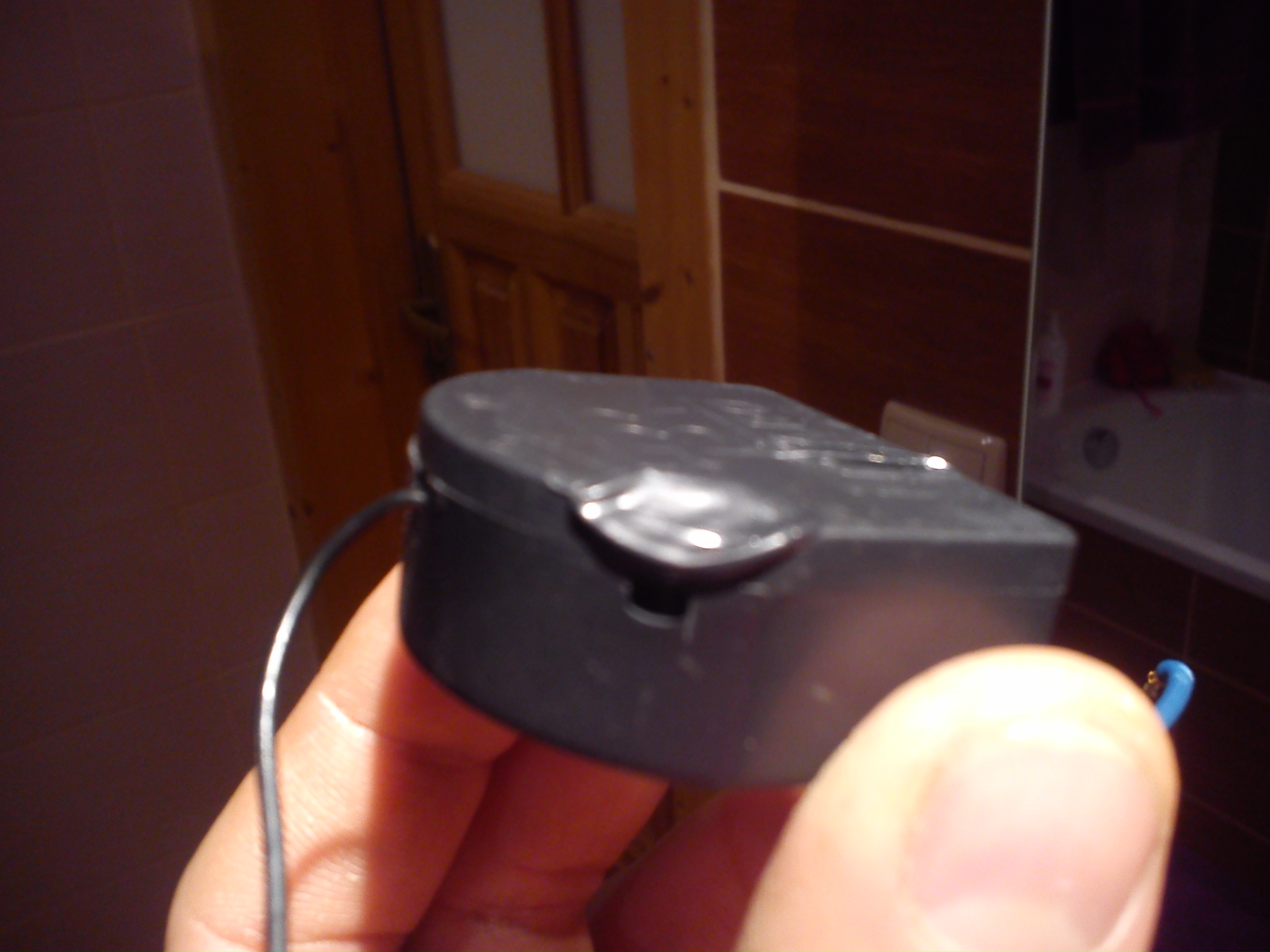
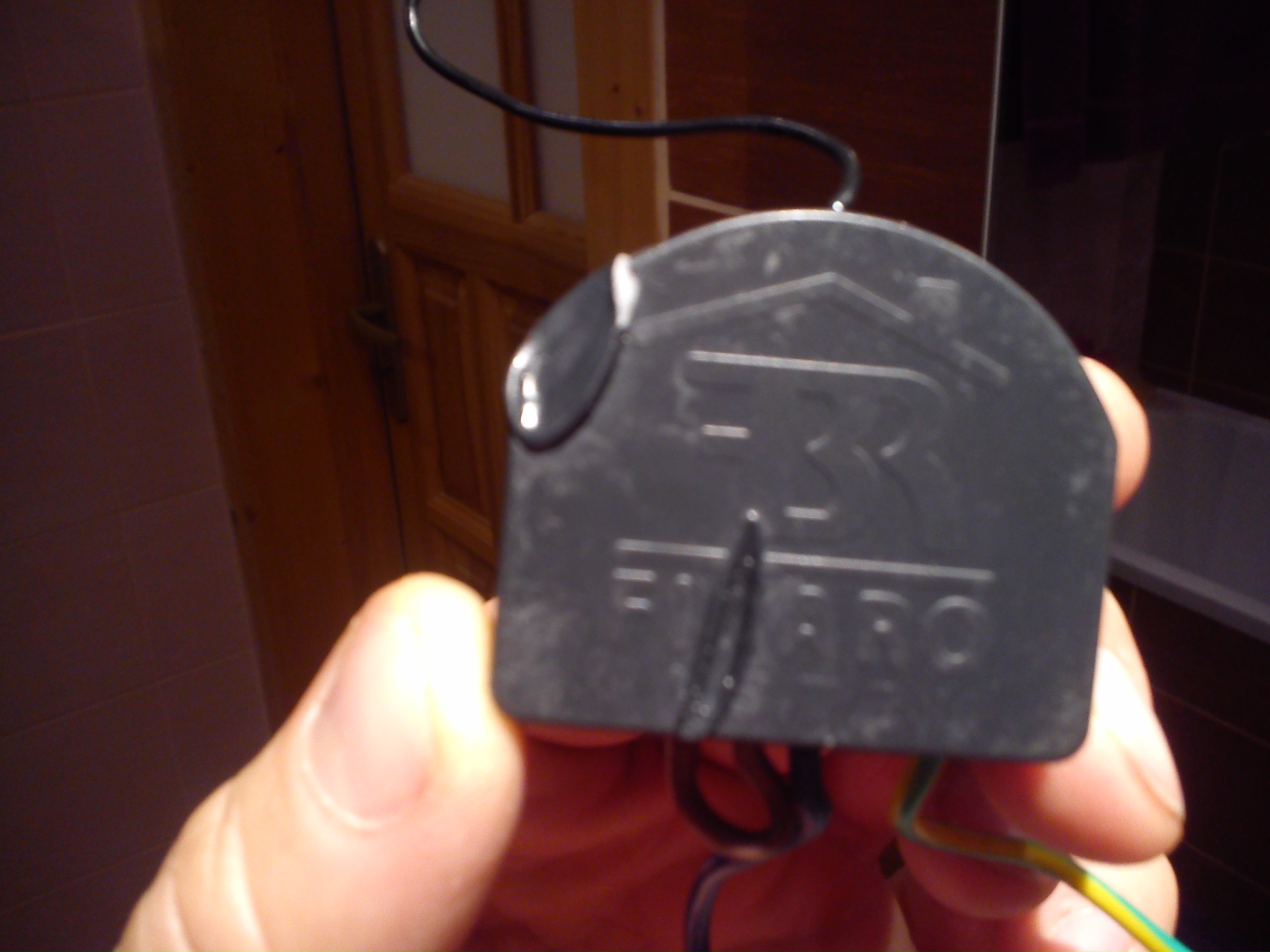
    Hello to all Fibaro users. I have owned a system from this particular company for over 2 years. About a week ago, I decided to replace the switches with monostable ones and accidentally saw that there was something wrong with my cube. The wires had melted into the housing. I opened a second switch in a different room that also has a dimmer and it was exactly the same. The manufacturer wrote me to send the devices to them and they will check why this happened. I refused because who is going to pay for the installation, removal of the devices. Secondly, I have monostable switches so I will be without light (knowing the response time of their service, it will probably be 2 months). Thirdly, they will consider that they are out of warranty and will not take any action.
    I'm curious if your dimmers also get so hot that the casing melts. Normally I wouldn't worry about it but I live in a wooden house and it worries me that something that is supposedly safety certified is melting in the wall.
  • ADVERTISEMENT
  • #2 15211298
    Anonymous
    Anonymous  
  • ADVERTISEMENT
  • #3 15222482
    zendenman
    Level 15  
    I have one in the bedroom , which has a 60-watt bulb. The other I have on the stairs and it serves two 20 watt bulbs.
  • #4 15222909
    Anonymous
    Anonymous  
  • #5 15223551
    zendenman
    Level 15  
    I had already found another post on the electrode in which someone wrote that the dimmers draw a lot more current than the manufacturer states hence this heating of the devices Of course I approached the manufacturer who wanted me to send the devices for testing. I would have to buy two switches and redo the installation to temporarily have current in the cross connection on the stairs. The other issue is that if it is indeed the case that the appliances are unsafe then I will lose possible evidence.
  • #6 15226014
    zendenman
    Level 15  
    I have just removed one of the cubes from the wall. My first impression was that the electrician had screwed something wrong and the wires were heating up, but I checked and the other cube has exactly the same melting where it touches the wires.
    This only happens with dimmers.


    Has anyone had a problem with Fibaro dimmers overheating after 2 years of use? Has anyone had a problem with Fibaro dimmers overheating after 2 years of use?

    To quote colleague Mvawe , who has already made such po
    measurements and described in a post :
    https://www.elektroda.pl/rtvforum/topic2050795.html

    Quote :
    " I, like this Leonardo do not take my word for it (especially a certain company which I will not name :-D ).
    I took a power meter, connected to the cubes of a company I won't name and here's what I came up with:
    The dimmer (not to be confused with the fidme "dimmer") draws 2.3W which is almost 40 times more than fidme declared.
    This measurement confirmed the earlier "organoleptic measurements" - all modules heat up strongly
    (40C in free space and 55C when boxed in)
    - which could not be the case at 100mW but at 2300mW it could.
    The double on/off switch consumes without relays 0.6W (600mW not 60!) which is 10 times more than declared by fidme.
    the same switch with 1 relay on 0.9W (900mW)with two relays on 1W (1000mW).
    All measurements at 230V - presumably fidme forgot that he stated the wattages at ~24V :D "
  • ADVERTISEMENT
  • #7 15304942
    Jacek Rutkowski
    Level 28  
    Hello,
    with which meter were the measurements taken?
    Does the meter measure cosΦ?
    What is the minimum power measured by the meter?
    If you know the model of the meter then we can continue the thread....

    I don't know these fibaro modules inside out but if there is a transformerless power supply sitting inside on a capacitor etc then the offset between current and voltage will be significant and the reactive power could be 2.3VA and the active power 0.1W....
  • #8 15317143
    zendenman
    Level 15  
    Then why the melting of the cubes?
  • #9 15319196
    Jacek Rutkowski
    Level 28  
    Maybe a resistor and capacitor were used in series inside a transformerless power supply. A weak capacitor can get punctures from overvoltage on the power supply and overload the resistor causing it to overheat which does not occur during normal operation.
    Without opening the circuit and at least looking at the components, further "fortune-telling" does not make any sense :) ........
  • ADVERTISEMENT
  • #10 19737832
    wryszard
    Level 12  
    I am not opening a new topic.
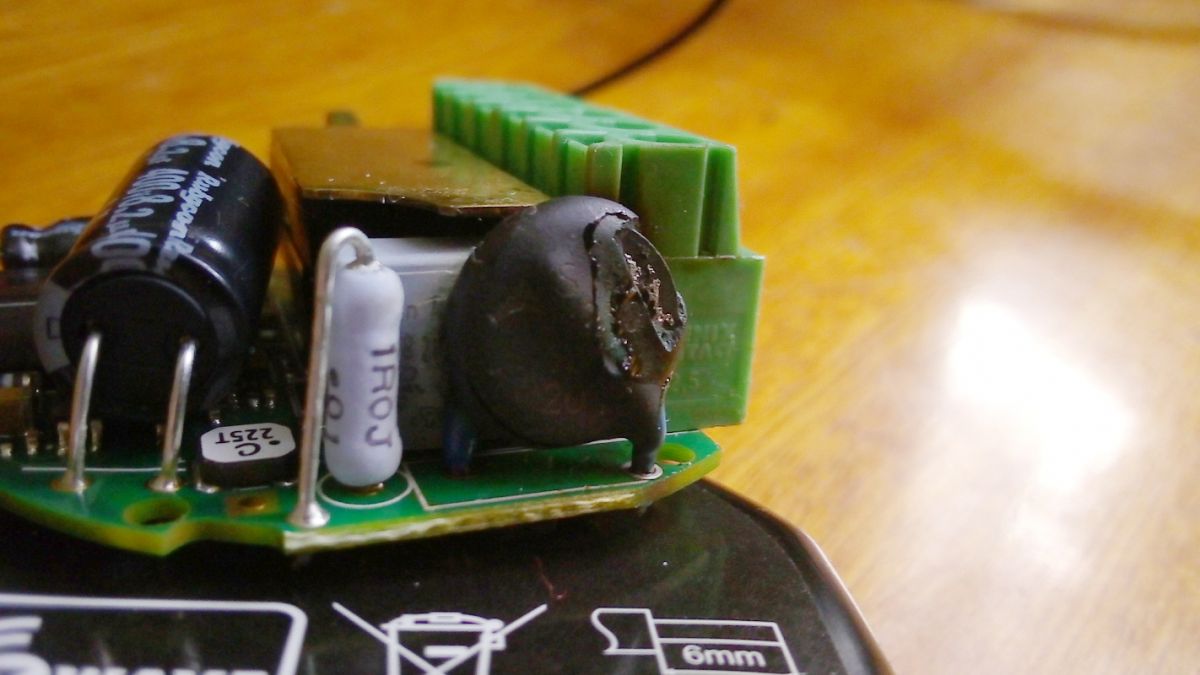
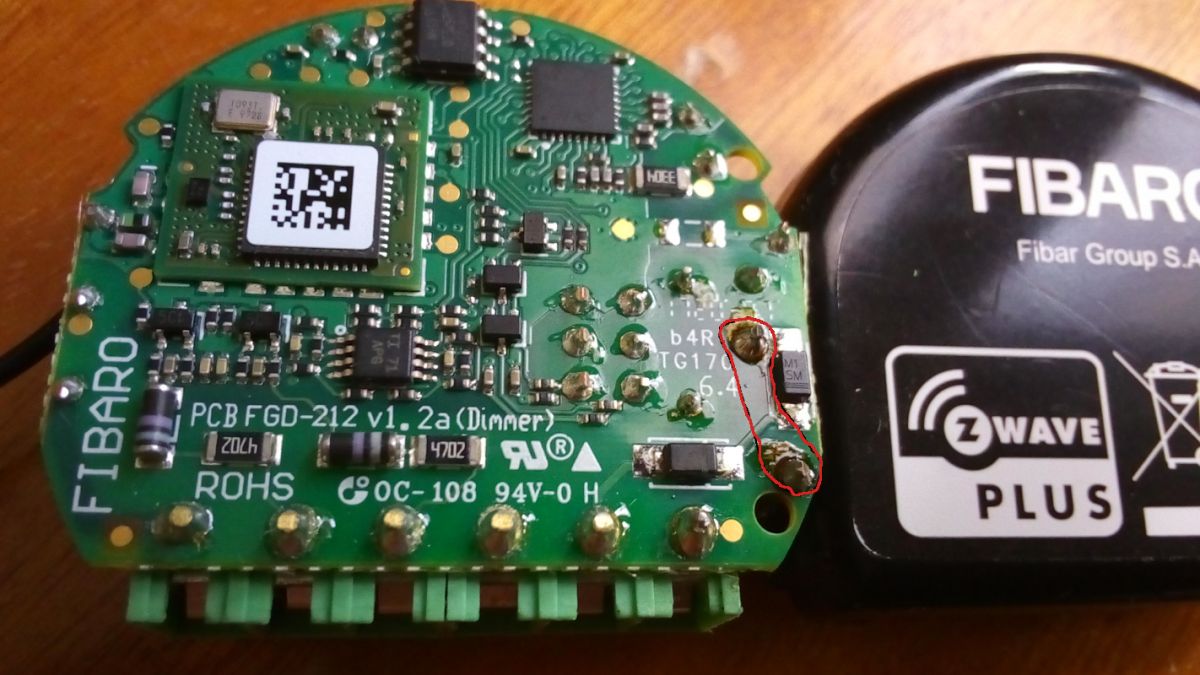
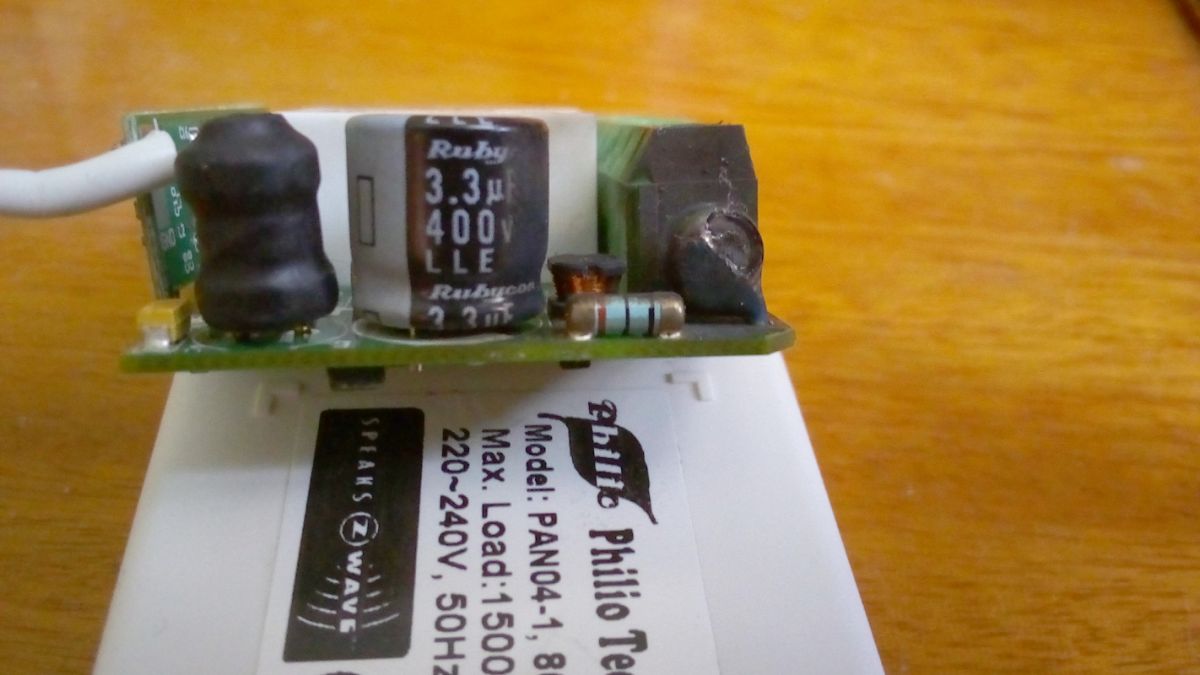
    Cause of casing melting, not just in fibaro. Has anyone had a problem with Fibaro dimmers overheating after 2 years of use? Has anyone had a problem with Fibaro dimmers overheating after 2 years of use?
    Has anyone had a problem with Fibaro dimmers overheating after 2 years of use?
    Has anyone had a problem with Fibaro dimmers overheating after 2 years of use?
    Is it worth attempting a repair? If so, on which components? Will using other components improve reliability (durability)?
  • #11 19738444
    Jacek Rutkowski
    Level 28  
    This fried element is not a varistor by any chance? Isn't it plugged into the input terminals in parallel? Do you have another unit for comparison?
  • #12 19739627
    wryszard
    Level 12  
    Yes they are varistors, unfortunately I cannot read their markings – operating parameters, they are fused.
    In the case of the fibaro drimmer 2 the fried varistor is in the output circuit, whereas in the philio it is on the power supply but I could be wrong. As for the parallel connection to the power supply terminals, I can't tell 100%, In my opinion they are not connected in parallel.
    Layman's conjecture.
    A mismatched photovoltaic within one transformer (or building at the beginning of a long line) of the mains can result in a rise in mains voltage of up to about 270V. This affects the operation of the varistors if their saturation voltage is 270V. Very rapid degradation of the carrier layer occurs.
    Topic: https://www.elektroda.pl/rtvforum/topic1269718.html
    http://yadda.icm.edu.pl/yadda/element/bwmeta1...tech-article-BSW4-0062-0006/c/Jaroszewski.pdf
  • #13 19740374
    Jacek Rutkowski
    Level 28  
    That would be correct, varistors at 270VAC are usually used and solar farms over-voltage the grid beyond the norm and this is an obvious problem of not holding the grid parameters.
ADVERTISEMENT