logo elektroda
logo elektroda
X
logo elektroda

Is It Feasible to Build a Smart Home System Using Old Windows Laptops or Tablets?

biomaniak 5355 16
ADVERTISEMENT
Treść została przetłumaczona polish » english Zobacz oryginalną wersję tematu
  • #1 15629716
    biomaniak
    Level 9  
    Parents in their old age are building up. So I'm thinking about a smart home.
    I don't understand why at a time when an old laptop can be had for < 300pln they don't use one?
    I'm not talking about TV sticks or tablets like lenovo helix, z20t or even asus transformer on atom.

    It would be sufficient to connect a controller with relays to such a tablet via USB.
    A second board with sensors for CO2, humidity, flooding etc. would be sufficient.
    And ordinary, cheapest USB cameras for 50pln

    And we have a very good system.

    Either I don't find this type of design or there is something wrong with my thinking.
    But these types of tablets 1 have quite a big battery which works as a UPS. They also often have a GSM connection.
    And a touchscreen so we have a touch control centre.
    For up to £1,000.

    -----------------------------------------------
    Thinking about what I would like to have :
    RFID simple cheap pastille type
    Door opening sensor.
    External cameras 2 pcs.
    Internal cameras 2 pieces
    CO detector
    Smoke detector
    Flooding detector
    Possibility of cutting off the power supply to the entire house except for the kitchen (fridge, etc.)
    2 PIR sensors at the stairs illuminating the stairs
    Weather station. Here was a very cool project on 1 wire.
    Temperature and humidity sensor.
    GSM
    Bell / intercom
    Movement sensor
    Control of backlighting in up to 2 rooms.
    I would make a speaker output from the DAB radio right away
    HDMI output for TV and use of computer for streaming films from CDA
  • ADVERTISEMENT
  • #2 15629760
    Strumien swiadomosci swia
    Level 43  
    Mate , sensor and software costs are xxx times higher than an old laptop and windows, which I hate, is unpredictable.

    But way to go.
  • #3 15629767
    sanfran
    Network and Internet specialist
    It is already better to do something like this on a Raspberry Pi.
    More reliable and much cheaper.
  • #4 15629773
    biomaniak
    Level 9  
    Well, which system will supposedly work?

    I was interested in the xiaomi system. But these are systems good for a 1 room flat.
    And such a laptop / tablet can be used immediately as a smart TV.
    In addition, nowadays you don't even need a cable to the TV, because you can stream via miracast.

    On aliexie there are low priced relay strips for rj 45, so it is not too expensive to connect everything you want. Such a 32 relay strip is 600pln

    @Sarfan is not cheaper.
    My toshiba z20t tablet draws max 15w on average about 5w. The battery lasts according to the manufacturer for 17H in practice for 12.
    You will save on rabsbery maybe 300pln. While you don't even have a touch display for it.

    And such a hp 2760p costs 700pln!
    Besides, you can use such a thing quietly for movies and media centre. And rabsbery can barely handle xbmc.

    That's why I'm surprised to find only 1 project of this type

    The cost of any sensor for any system is minimum 20$
    While you can buy any sensor for max 20pln. For 20$ you can buy 50 sensors for arduino and there is no problem to use in Windows.

    Count wifi, bluetooth and gsm modules for rabsbery. It will come out much more expensive than a tablet on windows.

    Not to mention that the cost of surveillance cameras and recorder is on average 5 thousand PLN.
    For that you will buy the whole system I am thinking of.

    So jw there are so many capable developers why no such solutions? There should already be dozens of ready-made programs for such systems.
  • ADVERTISEMENT
  • #5 15630466
    ditomek
    Level 22  
    Explain one thing to me, please.
    You are buying a "strip with relays", I don't know what exactly you want to connect to it but I assume probably lights and maybe roller blinds.....
    How are you going to switch on the lights in the rooms if everything is controlled from the PCet via this strip? A touch panel (tablet) in each room instead of a switch?
  • #6 15630477
    biomaniak
    Level 9  
    No.
    For the lights you have to use special switches that have an additional control.
    And relays have additional separation.

    And additional relays for the rest. In style to control the water shut-off. Controlling all the sockets in the house, etc. Sprinkling the lawn and whatever else you want.

    If it was going to be lighting alone then you would only need a set of switches with controls + controls for that.

    Although in principle I don't think you need to. And I have seen designs here for using ordinary light switches and instead of a relay a triac.

    In fact, you have attached yourself to the least important element :)
    Because there are wifi light switches too.

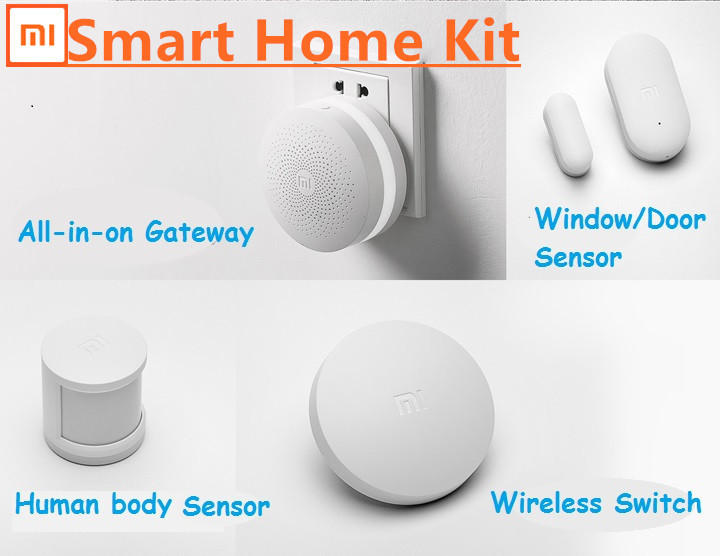
    Many people here get excited about fibaro. While the xiaomi smart home is almost the same. And 3 times cheaper. In terms of current capabilities.
    Fibaro is not using almost and inside almost that pc.
    Why?
    Soft

    Jw unbundled soft for tablets would be what is needed. Could be on linux not windows. But the point jw. Executive board + sensor board. GSM you have implemented normally by the system. Cameras too. Only a question of a nice interface and system stability.

    Sockets controlled by wifi as in fibaro can be bought for $10 and those controlled by other frequencies for $15 each

    So jw my question was simply why didn't some Russian brothers from xda for example take care of it ?

    For the price of fibaro smart home 2000pln I have hp 2760p 750pln max.
    All the sensors I can think of. And a small relay strip. And even a full power reading if you fit the SDM itself into the junction box. For 2 3 lifecam 5000 style cameras will also be enough.

    Not to mention that you can do it on wifi for a ridiculously low price:

    6 czujników otwarcia drzwi 40 $ http://www.aliexpress.com/item/4PCS-Wireless-...mp;btsid=d99e24ca-068f-4ffe-a21e-8a07b4ce3802

    Light switch on wifi $8 10pcs I once saw for $50
    http://www.aliexpress.com/item/ITEAD-WiFi-Wir...mp;btsid=d99e24ca-068f-4ffe-a21e-8a07b4ce3802

    Pan tilt cameras as low as $35
    Pir around $20
    wifi socket 10 15$
    skirting board $30
    gas wifi $ 20

    Of course you will spend the other amount on wiring. But in the firbaro I have ? 1 door sensor 1 socket 1 anti-flooding 1 smoke sensor.

    For £5,000 you can put together separate systems, i.e. one for alarm and one for smart.

    One thing remains.
    The question of software. And I can't cope here.

    And that is basically what my topic is about.

    For flats ok wireless. But $50 for anything on z-wave is overkill.
  • #7 15630781
    ditomek
    Level 22  
    I think you are trying to cover too much material at once. Take a deep breath then choose any topic from the list of many you have given and start implementing. Implement this one first so that the customer (not you) is happy with it. So that it works stably under all conditions and you don't need to be a technician to operate it.
  • #8 15631207
    biomaniak
    Level 9  
    Firstly, the customer is me.
    Secondly, as you can see for me the only problem is the software that would take care of it.

    For the time being I bought myself a xiaomi just for fun. I personally don't need anything else for my flat and the cost?

    Is It Feasible to Build a Smart Home System Using Old Windows Laptops or Tablets?

    Basic set
    Bell, Pir, mother, doorbell $40
    Temperature sensor $7
    3 sockets $35
    Camera 2x $28
    Additional PIR for bathroom $12
    Total = $150 = 585p or the price of the lite alone. Or 2 wireless plugs.

    And I have everything except a smoke, chad and flood detector. And RFID for the entrance. But so far this system doesn't have that.

    It works simply before entering the house you turn off the alarm via tel.
    If you don't turn it off the PIR detects you and the control panel howls. The camera makes a recording to your card + in addition you get a notification on your tel.
    If I normally open and it is dark through the pir it turns on my central light.
    The camera is on the entrance and the other on the bed so that the girl does not cheat.
    24 hours a day you can watch the house from your phone.
    The pir by the bathroom always turns on the light.

    And the last socket I don't know why I need it. But it will come in handy. It was supposed to be for turning the bedside lamp on and off. But I think I'll add a pir and put it under the bed in case I get up and let it somehow light the way to the bathroom with LEDs.
    The temperature and humidity it just shows me.

    Oh, and I would forget. The control unit simply serves as a bedside lamp.
    And the button simply rings a bell > the control unit makes a sound.

    Here is a video from the manufacturer
    https://www.youtube.com/watch?v=T8xjVYWukrE
    and here is another :
    https://www.youtube.com/watch?v=uUT9MflCl9k

    For 600pln it's really not much considering what you pay here.
    And I would forget.
    The whole system is without a single cable. Only the control unit is plugged into a socket. And the cameras are powered.
    And the talk that professional systems are safer?
    For x thousand pln if you get robbed, you get robbed. Adding a power backup to the camera is not a problem. A regular powerbank is enough. A 32GB card is sufficient for 7 days of recording. The camera consumes 2W so ... hmm out of curiosity I will test how long my 10 000mAh powerbank will last.

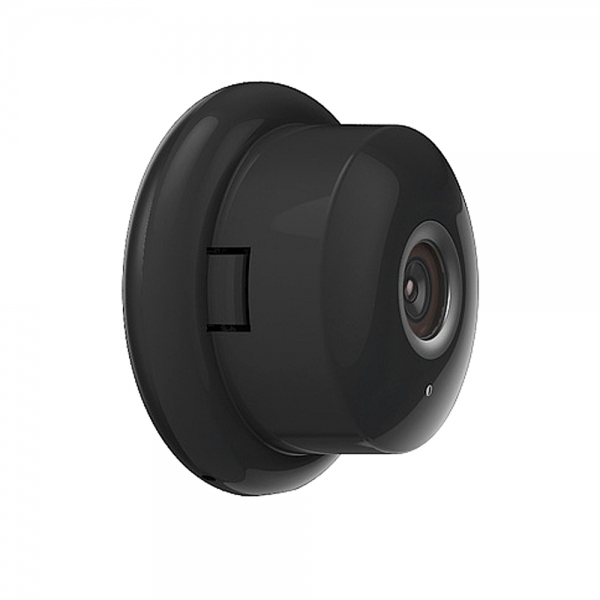
    The camera is so small that some people put it in the opening of a bird feeder. One man on ebay sells fake radios with room for a camera.
    The camera is almost woodproof but there are $30 professional outdoor covers with heating
    Is It Feasible to Build a Smart Home System Using Old Windows Laptops or Tablets?

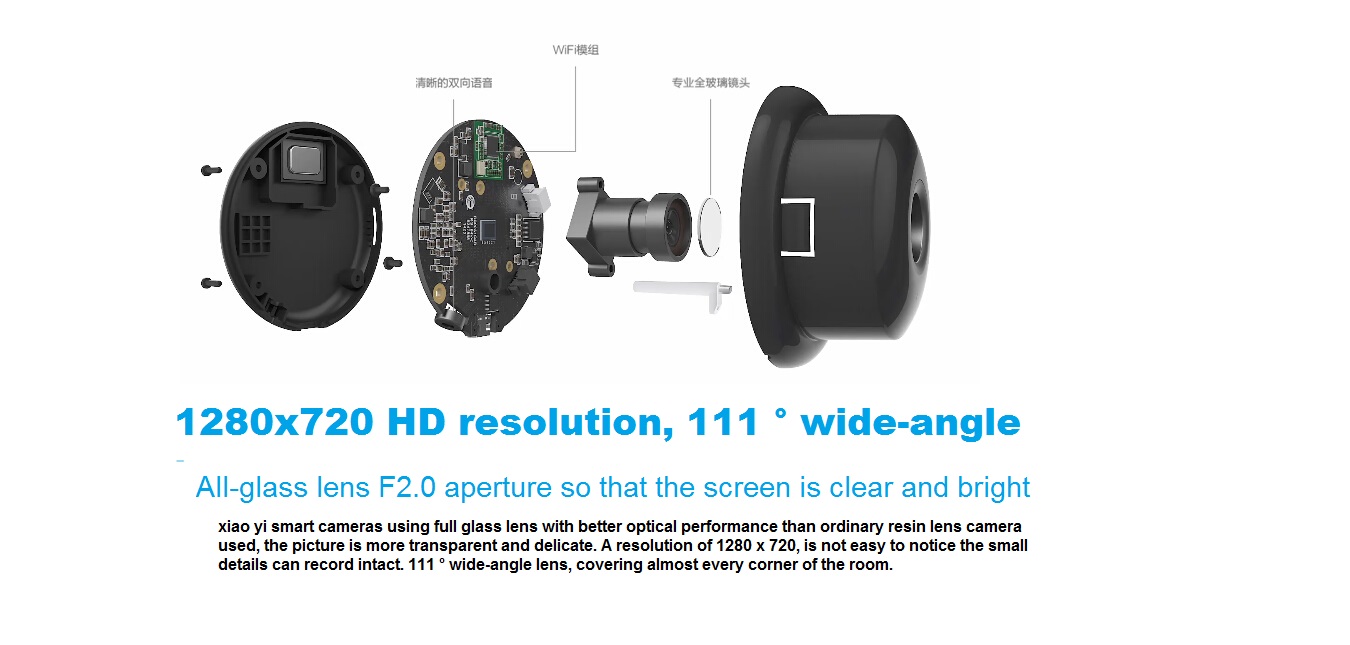
    It comes with 4 screws and you take it apart and mount it in whatever you want:
    Is It Feasible to Build a Smart Home System Using Old Windows Laptops or Tablets?

    Disadvantages of the system ?
    No sensors
    No PC monitoring only tel.
    No PTZ cameras
    Chinese plugs
    Software not fully translated
    No preview of house power consumption.

    And then there is the dependence on the manufacturer. As far as the Russian brothers do what they want with the soft. E.g. there is a full release of this camera. And you can view via a browser from anywhere in the world. But you are still dependent on whether the manufacturer adds new sensors or not. And I'm talking about manufacturer dependency in general:
    phone, wristband, home planner weight. And this doesn't come from worshipping and exalting a brand but simply price/quality.

    So far, only the scale has a sick price because it costs about 20-30$ which is cool while no one sends it from china other than DHL and this doubles the price.
    Still hard to find a smart scale for 200pln.

    I'm sorry, there is also an android module for tv and then you can buy voice control. A total of something around $100.

    That's why maybe I'm looking from a different perspective than you are and that's why outside of this product only the pc makes sense to me?

    Oh and I would forget things that this system has and others don't even socket timers. The system is max six months maybe a year old. The Russian brothers will work it out and it will be cacy :)


    On the other hand, in a newly built house the situation is different. And the cost of a twisted pair is not much more than for 200 300pln of twisted pair you are not able to consume.
  • #9 15631273
    Strumien swiadomosci swia
    Level 43  
    You know the only sensor you need is a smoke detector coupled to GSM.

    I know of 2 houses that had a water main burst in the winter and flooded the house with 3 metres of water from the basements to the windows on the parera, the guy from the waterworks called the pool and asked why they were filling it without contacting the waterworks. :) . Because so much water goes non-stop.

    Then they were just waiting where it would spill :) .
  • ADVERTISEMENT
  • #10 15631298
    biomaniak
    Level 9  
    Well, yes no..
    Plus a smoke and smoke detector with GSM
    And some kind of alarm system coupled with a security company.
    And in principle, most people do not need anything else.

    In fact, buying this kit with the mother only extends the range and is in the price of the sensors.
    No other system will hook up a PIR sensor with a socket / switch on something for 60pln.

    Only that jw I would want contacts and sensors in this system.... they will probably make them at some point. They finally got the temperature about 2 months ago. And an IR controller for the whole house to control air conditioning, tv etc. not long ago.

    A lot of roller shutter systems work on ir so we have roller shutter control.
    So in MY opinion this is the best price/quality system on the market.
    But everyone praises what they have.

    If I had the programming skills I would do it as I wrote a tablet with windows + relays, RS232 connected to ready control panels and smoke and heat sensors, and analog to digital converters for temperature, humidity sensors co....

    I'm convinced that the installation of all possible sensors, including flue gas, rfid and whatever else you want, would not cost more than 1000pln + 1k for a computer. For the house we are talking about, it would be about 70m2.
  • ADVERTISEMENT
  • #11 15631305
    Strumien swiadomosci swia
    Level 43  
    It's a simple matter of taking an atmega with a usb port and doing whatever you want. You have ports in abundance.
  • #12 15631315
    biomaniak
    Level 9  
    Jw no programming skills. :)

    Make me a programme so that I only set myself on the principle of

    port 21 > select sensor > list of sensors > calibrate.
    Port 18 > relay > what it should be > lamp > select icon

    This is what I was writing about and what is missing from the market.
    And whether it will be an atmega or what.
    Simply, someone should sell a box clipped on USB to a PC + soft. And that's it. For the majority of electronics engineers nothing more is needed.

    Set notifications and alerts in the style of sensor above level > notification> type of notification > audible/ sms/ emeil etc.

    I suspect that on atmeda you could actually create a system that is also compatible with all communications on the market 433, wifi bt etc.

    This is why people like me need a pc based box or ala arduino. And just putting in the modules.
    A usb cable to any pc.
    And the software, which is the most important thing. A software simple enough that the man behind the fence will know that, for example, strip 1 = sensors plugged in, pulls out the icon and has it.

    And here was my question why nobody has done it?

    The xiaomi system is a copy of the US wine.
    So I suspect the manufacturer will soon add what wink offers. And this one offers everything.Compatibility with philips bulbs, ge. Biometric door locks.
    The camera is a copy of the NEST cam. Which costs 5 times as much.
    The only difference found is that xiaomi also works on 5GHz :)
    Well, and there is already Russian soft. Though on nesta it's a matter of time.

    Compatibility with RF +
    Wink also offers a smoke detector. CO does not.
    Nest, on the other hand, offers both.
    The only question is whether xiaomi will be more nest or more wink :) And from whom does it copy more.
    https://www.youtube.com/watch?v=METDdcmklVE
    But rather a CO sensor for 100L I can't afford $200 cameras either so....

    If in a year they add light switches also 5 times cheaper than wink (50$) I won't even think about it just do it on xiaomi.
  • #13 15633368
    Dariusz Goliński
    Level 22  
    I ran through the whole post in a cursory glance because I didn't want to read it in its current form.
    You asked the question why not on Windows and you're trying to prove to everyone that your concept is better than those who others on the forum advise you.
    But let's change the subject.

    Briefly about me.
    I am an automation professional. So PLC, HMI etc. Apart from that I am an installer of SATEL, SLICAN etc products also. I am an electronics hobbyist and built myself a house some time ago in which I upgrade something all the time.

    Now the answer to your question.
    Why aren't windows installed in cars, e.g. as MMC in an Audi or Passat, or why is SIEMENS, after many years of cooperation with Mikroshit, parting with HMI panels, and finally why are only SCADA and not machine control installed in machines running on Windows, why aren't server farms running on windows?

    Precisely because ( as colleagues have already mentioned ) that windows is unpredictable and za.............iście unstable and has hardware requirements disproportionate to the effects it represents ( capabilities to hardware beeee ).

    The second magic word is autonomy. Do not make your system (e.g. home automation) dependent on the stability of the tablet. Imagine that you have a hard disk failure or the lift has just downloaded an update or some kind of a whirlwind from the net and there is no power to the house. That's a bit of a bummer.

    That is why, when building any automation system, you should take care of its safety and stable operation. How? E.g. by using a Rasberry PI or a PLC or some other ready-made solution, and your tablets and laptops as the control and visualisation end, i.e. SCADA. Take my word for it. What you carve out on your own will keep you happy until 3 crashes or some other failure. After that it will only raise your blood pressure.

    Conclusion:
    I also have a bungalow and I also nail it.
    I have a SATEL INTEGRA 32 control panel as my alarm system, with a LAN connection and 2 keypads. The control panel when in standby disconnects my electricity in the house except for the fridge, dishwasher and DVR. It also controls the central heating and DHW pumps. The Bosch sensors have an additional 5V output which I use to control the lighting of stairs, hallways, etc. For this I have several controllers on atmega, temperature measurement in 16 places. Atmegas connected via RS485. Visualisation on an old HP terminal, debian on it, apache with PHP and off to work.
    I don't have time to do all this stuff, but I create something in my spare time.
    As for the software, this may be a problem. But one learns all one's life. And in your case it is even better. You create from scratch and you have a goal.
    I can't learn programming from exercises. I build the circuit and write the soft.

    And that's all I have to say. If I offended anyone's feelings then sorry, that was not my intention.
  • #14 15636365
    stkop
    Level 15  
    biomaniak wrote:


    So jw there are so many capable programmers why is there a lack of such solutions? There should already be dozens of ready-made programs for such systems.


    I don't sit too much in these open IT platforms for home automation... but there are some.... i think the two leading ones are www.openhab.org and domoticz.com

    As for the hardware layer... it's seemingly no space tech.... but still, if you want to make and forget for years [and that's what customers usually want] it's a bit of an uphill battle.... especially as it's supposed to be a stable operation, really, of as many as ten separate devices. Check out the links on my blog.... you may find them useful.
  • #15 15638141
    pawel3110
    Level 15  
    This fellow biomaniac must have searched poorly if you can't find the software.
    Here is a small list: https://www.mysensors.org/controller/

    But your assumptions, for me, are a bit wrong: a building automation controller (not to be confused with intelligence") should be something like an Rpi (energy efficient and reasonably reliable), and not loaded with other silly things that can affect its stability. Some tablet on the wall should just be a 'terminal' for viewing and control and not a control unit.
  • #16 15653617
    masterpascaler
    Level 11  
    I will add my three cents on this subject. Following my colleagues Dariusz and Paul - this is not the way to go. I am a computer scientist (programmer) and electronics engineer. I created a smart home myself - topic here . My initial thoughts were just that, what the heck, I'll write myself a program, add a USB relay circuit, add some nice icons and in the configuration files it will be set that on this output I have a light, on this one something there etc. At first I was delighted, especially as I had set the whole thing up on a £200 laptop (with Windows), the relay chip cost about £70 and I wrote the program myself. Until then. One morning I get up (and it's only been a few days since I've run it), the system doesn't respond, I look at the laptop and a beautiful blue BSOD. Oh, about the fact that the relay circuit on the USB after rebooting the laptop (e.g. no power) does not always switch on correctly not to mention. Imagine that after a power outage at home, you have to physically walk up to the control laptop and unplug and plug the cable several/some times until Windows shows you that it didn't recognise the USB device. Of course, the USB cable works, the circuit is ready assembled, not something you make yourself. I wouldn't install something like that myself, let alone for a customer. If it was so easy, every 16-year-old would be building a smart home system in their house, but this is not the way. Personally, I recommend Raspberry - it's cheap, stable (mine has been working for probably 6 months now, 24/7, with some 2-3 power failures), you can even write executable programs in shell and call them remotely - from any computer with any system you want, even Windows. Remember that, just like detectors, Raspberries can communicate with each other wirelessly (also with detectors on Wi-Fi) - buy a touchscreen display for one, mount it on the wall, upload Linux and use it with e.g. Home Genie, if you want to use cool stuff. Home Genie if you want a cool look Link or any other automation system, of which there is no shortage on Linux : Link
    You will have a system that is stable, energy efficient, and fully configurable. For a motion detector, for example, you will pay 5 PLN/piece already in Poland. If 200 PLN for Raspberry is a lot, then buy OrangePi PC on Ali - it costs 15 USD and is fully compatible with Raspberry (I use it myself in my flat). By the way, it's a pity that there is no data on the internet regarding the number of downloads of Linux vs Windows 10 IoT images on Raspberry. Surely such a comparison would speak for itself :)
  • #17 15653751
    PiotrPitucha
    Level 34  
    Hello
    Biomaniak you surprised me with this Raspberry's failure to work with XBMC :D
    I have several Raspberries at home, starting from the oldest version, and they all handle video playback better than all my laptops, I'll admit that to my surprise they even play smoothly files from my camera in FullHD, which Windows has serious problems with.
    It is not true that there are no touchscreens for the Tiny, there are loads of them and relatively cheap, they work well which I have found practically.
    Why not a laptop and Windows for automation?
    First of all, times in automation are important, the first suspend situation puts the system on its shoulders, restarting is a few minutes for an old laptop, in this time you can make a good mess.....
    Secondly, the power consumed, I am surprised by the cheerful information about 12 hours on battery, probably in sleep and without a monitor, older laptops can hardly last 2 hours.
    Thirdly the cooling, the system running non-stop collects a lot of dust and hairs on the delicate fan, then the fan stops and at best the system crashes, at worse it dies....
    Fourthly, there is no GPIO, even for the most powerful system you have to somehow get in and out of sensors and actuators, in a laptop you have to think hard.
    The little one has no such problems, there is passive cooling, power consumption is symbolic, GPIO is available and in the event of a system hang-up Watch Dog can raise the system in no time.
    The biggest advantage is the free software available, to choose from.
    I recommend taking a look at Nettemp :)
    Regards
ADVERTISEMENT