Hello,
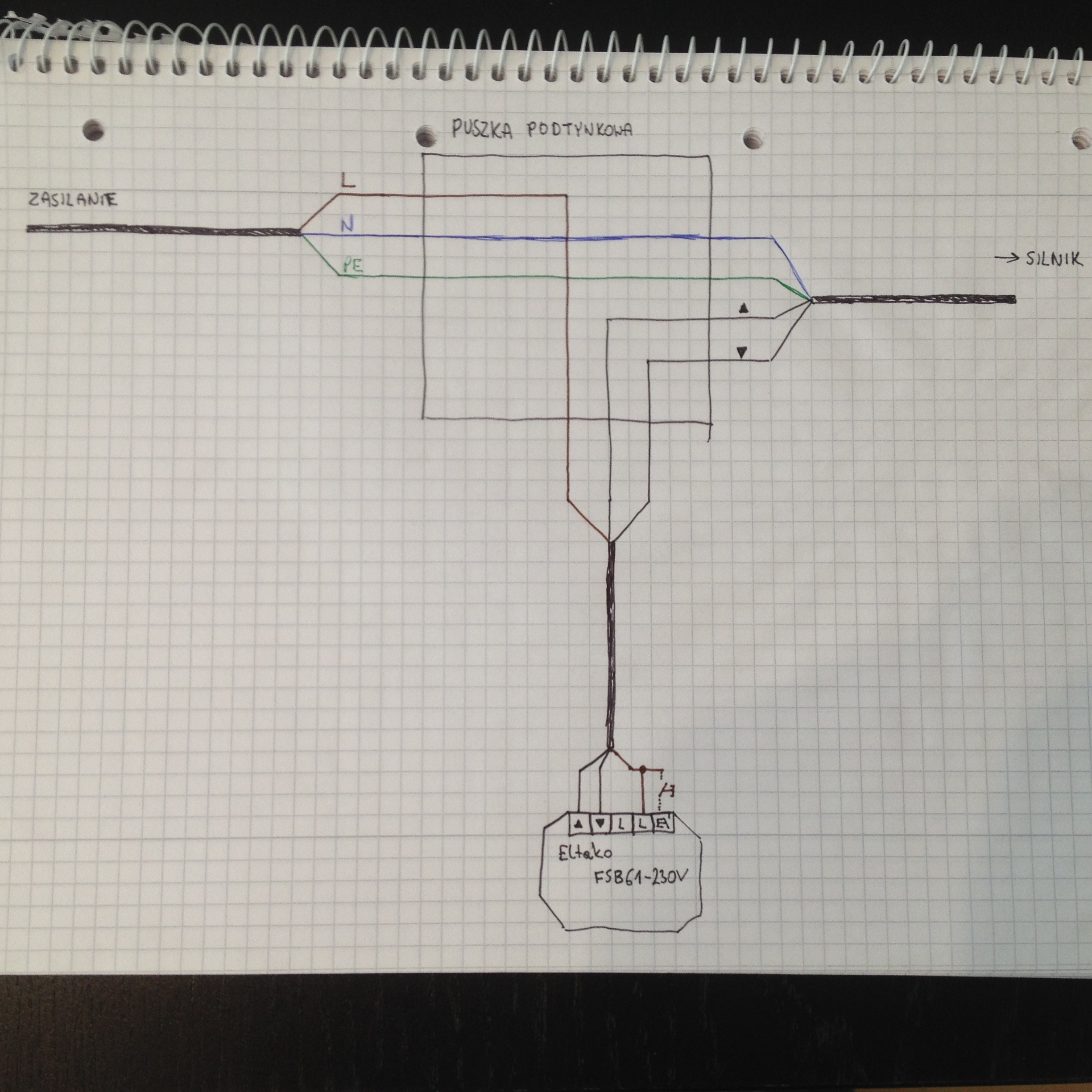
my question is more in the nature of a curiosity that does not give me peace of mind, rather than a technical problem. But to cut to the chase: I have found two similar roller shutter actuators that can be operated by remote control. The first one does not have a neutral terminal and the second one does. In the technical specifications of the first actuator, I only found information that due to the lack of a neutral terminal, it cannot be used for all motors. So here is my question: to which motors can such an actuator be used and how is it actually supposed to work without a neutral wire? (Where does it take the earth potential from?)
If someone could explain this to me, preferably on a diagram, I would be obliged.
Below are links to technical descriptions of both actuators (unfortunately only in German).
Thank you in advance for your help.
1. http://www.eltako.com/fileadmin/downloads/de/_bedienung/FSB61-230V_30200432-1_dt.pdf
2. http://www.eltako.com/fileadmin/downloads/de/_bedienung/FSB61NP_4824_internet_dtsch.pdf
my question is more in the nature of a curiosity that does not give me peace of mind, rather than a technical problem. But to cut to the chase: I have found two similar roller shutter actuators that can be operated by remote control. The first one does not have a neutral terminal and the second one does. In the technical specifications of the first actuator, I only found information that due to the lack of a neutral terminal, it cannot be used for all motors. So here is my question: to which motors can such an actuator be used and how is it actually supposed to work without a neutral wire? (Where does it take the earth potential from?)
If someone could explain this to me, preferably on a diagram, I would be obliged.
Below are links to technical descriptions of both actuators (unfortunately only in German).
Thank you in advance for your help.
1. http://www.eltako.com/fileadmin/downloads/de/_bedienung/FSB61-230V_30200432-1_dt.pdf
2. http://www.eltako.com/fileadmin/downloads/de/_bedienung/FSB61NP_4824_internet_dtsch.pdf