
logo elektroda
logo elektroda
X
logo elektroda

How to isolate the relay contact in a bistable switch for LED lighting?

q111q 3045 12
ADVERTISEMENT
Treść została przetłumaczona polish » english Zobacz oryginalną wersję tematu
  • #1 15924749
    q111q
    Level 9  
    hello, Gentlemen I would like some advice on what to do
    - well, I would like to do lighting in the garden (4-5 LED lights powered by 230V)
    I bought a bistable switch (ON/OFF switch) i.e. switched on by a bell switch and it seemed to me that the contact in this circuit is isolated from the voltage but I guess this is not the case because when I plugged a meter into this contact it showed 150V.
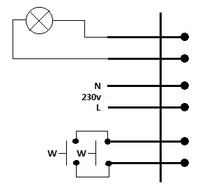
    How to isolate the relay contact in a bistable switch for LED lighting?
    I would care to reduce this voltage to zero so that there is only a contact.
    as I only have twisted pair wiring at this point, which incidentally will go the 12V power supply to the intercom, and behind the intercom would be hidden a micro contact from the garden lighting control

    i don't know whether I should install another relay or buy a special separate one, or whether it is possible to do it somehow on the one I already have?
  • ADVERTISEMENT
  • #2 15924831
    mawerix123
    Level 39  
    The whole statement is incomprehensible, what kind of photo are you presenting :?:

    q111q wrote:
    I thought the contact in this circuit was isolated from the voltage but I guess that is not the case because when I plugged a meter into this contact it showed 150V.


    Where did you plug this meter in :?:

    What is the type of relay :?:

    q111q wrote:
    because I only have twisted-pair wiring at this point, which incidentally will go 12V power to the intercom, and behind the intercom would be hidden a micro contact from the garden light control


    How does this relate to the lighting circuit :?:
  • #3 15924952
    jesion40
    Level 27  
    One possible solution is to use the power supply of the intercom to circuit a simple switch controlling a small relay whose contacts will be connected to the control terminals of the bistable switch you have bought. This will always work, regardless of the type of bistable switch, and will guarantee you complete safety, because the relay will galvanically separate the external circuit from the lighting circuits.

    If you don't want to use an additional circuit with separation, then you need to look at a bistable switch. Specify its type. The switch may or may not have the control circuit separated from the power supply. On the other hand, the voltage you measured doesn't tell you anything, as it could be due to crosstalk between the components and the control input of the switch. Try connecting this line through an ordinary low-power bulb to the N wire of the mains and see what the voltage will be then.
  • ADVERTISEMENT
  • #4 15926319
    jesion40
    Level 27  
    Of course, it does not matter how many different relays you use to control a bistable switch. You simply connect their contacts in parallel and then whichever one generates the pulse the switch will treat them the same.

    You must, however, remember that the relays should generate impulses and not switch themselves for longer, because any switched contact blocks the possibility of generating impulses from the other sources.
  • #5 15927637
    retrofood
    VIP Meritorious for electroda.pl
    mawerix123 wrote:
    The whole statement is incomprehensible, what kind of son-in-law are you presenting :?:

    Matrimonial office?

    q111q wrote:

    I bought a bistable switch (ON/OFF switch) i.e. switched with a bell switch and I thought the contact in this circuit was isolated from the voltage but I guess this is not the case because when I plugged a meter into this contact it showed 150V.
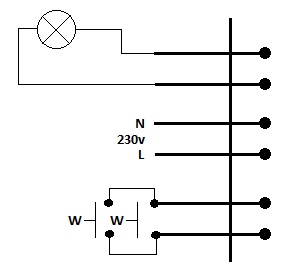

    Bistable relays have the ability to be driven by both voltage and zero potential. Give us the symbol of your device, we will check it.

    q111q wrote:

    I would care to reduce this voltage to zero so that there is only contact.
    because I only have twisted-pair cabling at this point, which incidentally will go the 12V power supply to the intercom, and behind the intercom would be hidden a micro contact from the garden lighting control


    You are playing with death, not just your own, but that of your own children. Think five times about whether it's worth carrying that on your conscience for the rest of your days.
  • #6 15928323
    mawerix123
    Level 39  
    q111q if something can be recommended I would suggest the current one (presented in the lost post).....

    http://www.elkosmito.pl/index.php?id=produkt.php&produkt=9

    .... replace the bistable switch with this one if you want to control it with a "twisted pair"

    http://pozostala-elektryka.sklep-outlet.pl/ou...rzekaznik-bistabilny-elektroniczny-ep411.html

    http://www.fif.com.pl/pub/File/download/INSTR.../FF%20BIS-411%2024V%20inst%20D160121%20PL.pdf

    q111q wrote:
    because I only have twisted pair cabling at this point, which incidentally will go the 12V power supply to the intercom


    What is the length of this "twisted pair" :?:

    retrofood wrote:

    mawerix123 wrote:
    The whole statement is incomprehensible, what kind of a son-in-law are you presenting

    A matrimonial office?


    Thank you for your sophisticated attention ... dyslexia.
  • #7 15928480
    q111q
    Level 9  
    "The whole statement is incomprehensible, what kind of son-in-law are you presenting"
    This is a circuit connection diagram that I bought from a well-known auction site

    I do not know what to explain here I want to control the lights in the garden this short-circuit switch could be mounted behind the intercom, or eventually I can do it on the remote control but I would prefer not to because with the remote control is always a problem that you do not know where it is :D , and when someone comes I am at the intercom anyway so it is probably quite logical that the switch could be in the intercom one even is there but I will use it to open and close the entrance gate.
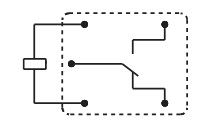
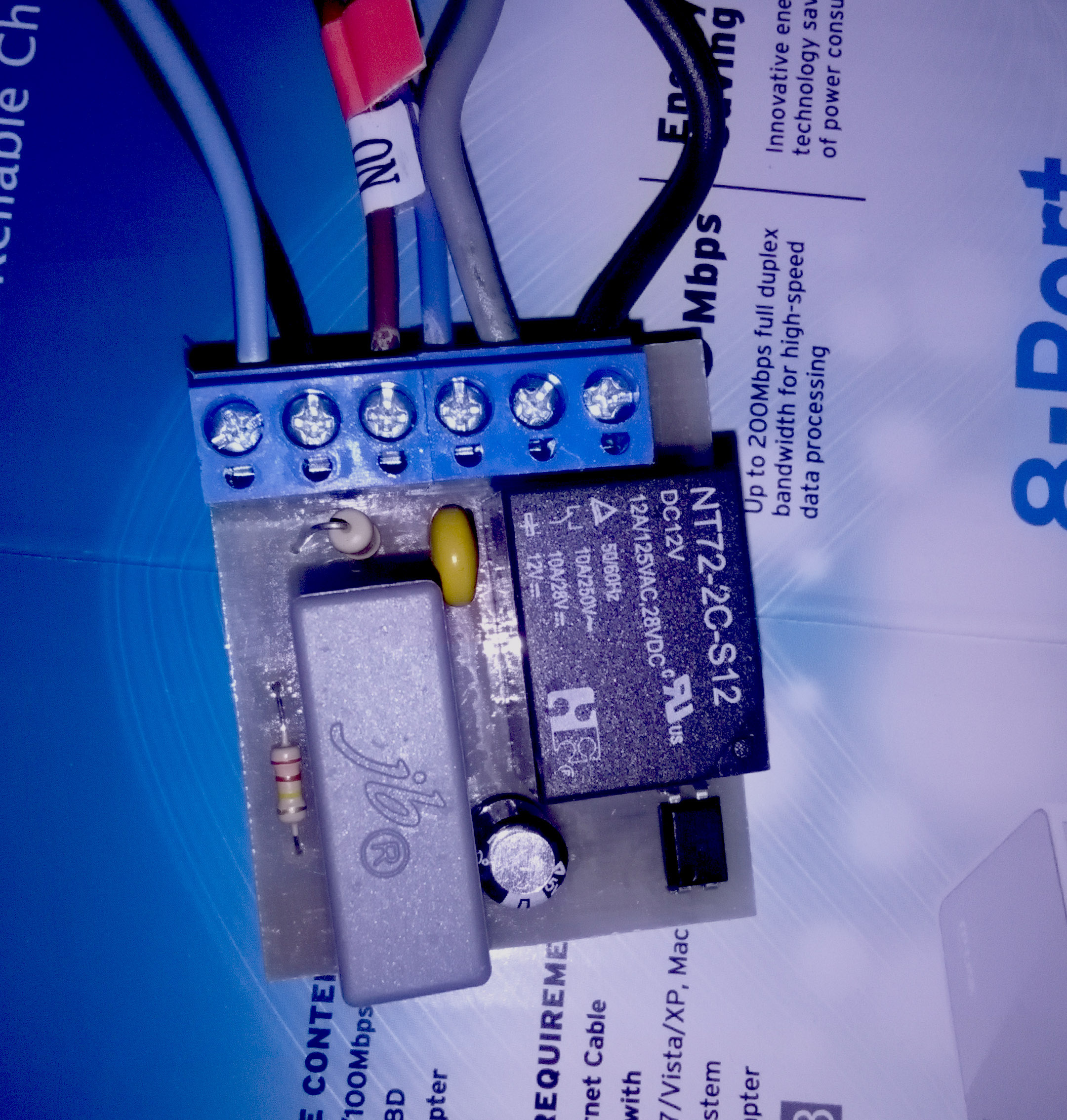
    I have a twisted-pair cable from the distributor to the intercom, one to the gate and one from the power supply to the intercom 12V.

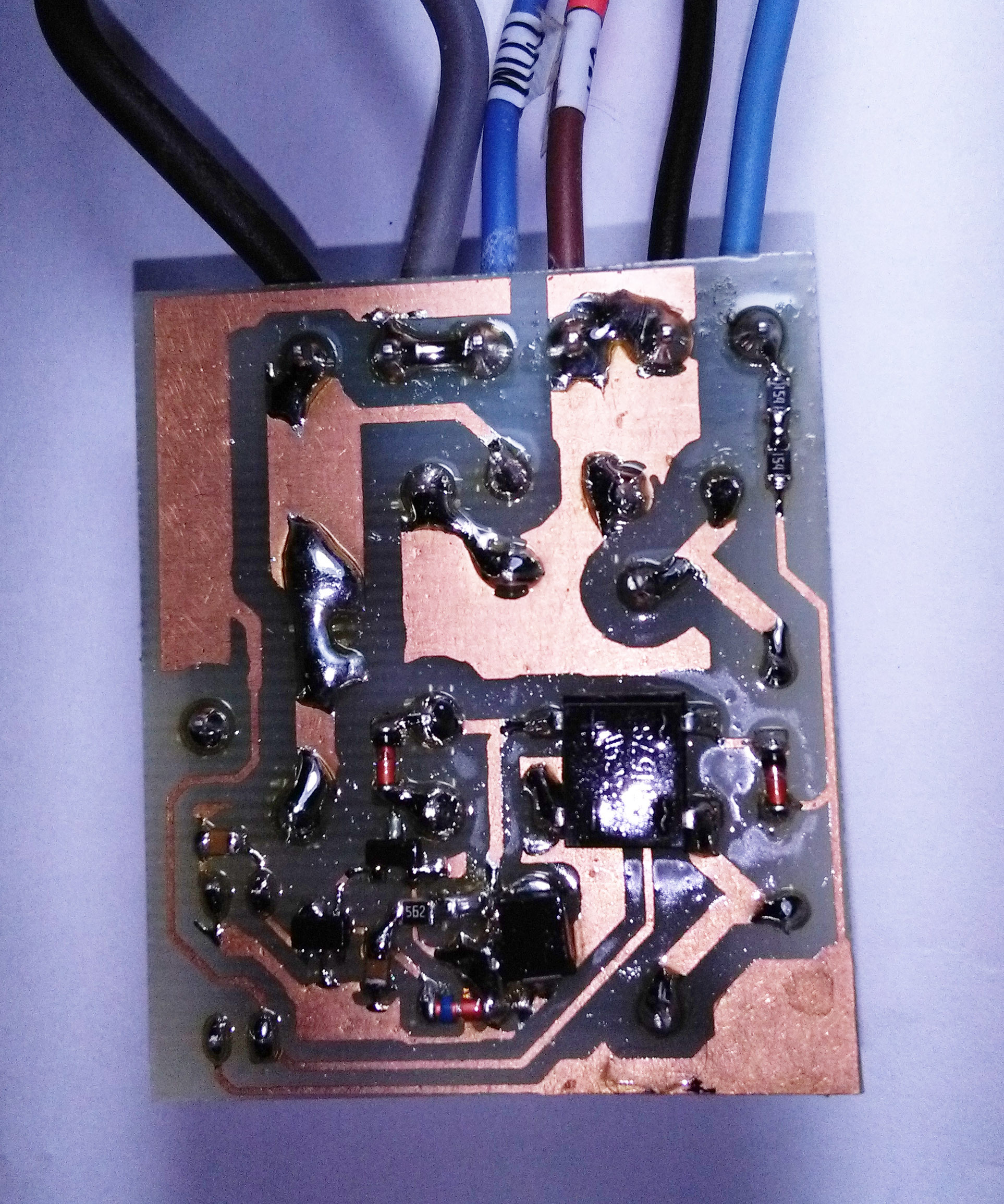
    Below are photos of this miracle. I've already found out that there are 100% no isolated contacts and supposedly you can solder the relay off the board and just connect the power supply to it on the cables (I think it's the relay)
    How to isolate the relay contact in a bistable switch for LED lighting?

    then it will be isolated :D , however I wonder if by chance it would be possible to cut some tracks without soldering ?

    Also, I don't know what you have to do with a twisted pair as a wire for the control (the impulse itself) I think you are exaggerating slightly. This is how I have, for example, a roller shutter control for a gate etc.

    The length of the twisted-pair cable in this case is about 25m maximum, it is a black gel twisted-pair, the one to the ground.
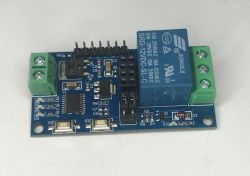
    How to isolate the relay contact in a bistable switch for LED lighting?

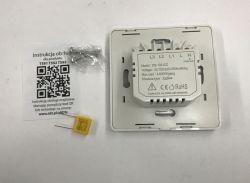
    How to isolate the relay contact in a bistable switch for LED lighting?
  • ADVERTISEMENT
  • #8 15928835
    mawerix123
    Level 39  
    q111q wrote:
    Otherwise I don't know what you have to do with twisted pair cable as a control wire (pulse alone) I think you're exaggerating a bit


    The thing is that the relay you have uses 230V for control so how do you want to use a "twisted pair" for that</>:?:

    I don't know what kind of lights you have and the distances between them but maybe a motion sensor would be a better solution.
  • ADVERTISEMENT
  • #9 15929152
    kortyleski
    Level 43  
    If you have a 12 volt supply available then isolate with an additional relay and you're done. On the board shown I see a transformerless power supply, this does not provide galvanic separation and therefore safety.
  • #10 15929265
    q111q
    Level 9  
    The thing is, the relay you have uses 230V for control so how do you want to use a "twisted pair" for that :?:

    well maybe I don't know, but I am aiming for no voltage at the end of the twisted pair !!! as I have it in the garage door, the door is 230V but I have the control itself is a short circuit of two wires, is it so difficult to understand the contact itself, maybe there is some small current, but quietly as there was no bell switch on the wall in the garage I always shorted it with my fingers - so I guess it was safe, in life I would not connect 230V to a twisted pair of wires

    I don't know what kind of lights you have and the distance between them but maybe a motion sensor would be a better solution[/quote]

    maybe so, but I would still like to be able to switch them on from home or remotely via the GSM module which I already have and which controls the roller shutters.
    the outdoor lights are on a 1.5 yky cable there will be 5 -6 LEDs (although that probably doesn't matter)

    Added after 6 [minutes]:

    kortyleski wrote:
    If you have a 12 volt supply available then isolate with an additional relay and you're done. On the board shown I see a transformerless power supply, it doesn't provide galvanic separation and therefore safety.

    so I will probably do, and maybe buy something safe I do not believe that there is no such bistable switch to control 230V and there is no voltage on the contact at a reasonable price because the one given by colleague mawerix123 is about 200 PLN is a bit excessive :D
  • #11 15929675
    mawerix123
    Level 39  
    q111q wrote:
    as I have it in the garage door, the door is on 230V but I have the control itself is a short circuit of two wires, is it so difficult to understand the contact itself, maybe there is a small current, but quietly as there was no bell switch on the wall in the garage I always shorted it with my fingers - so I guess it was safe, in life I would not connect 230V to a twisted pair


    The gate is indeed on 230v but the control circuits are on less than 24V VOLTAGE not current ;) Having seen various installations where 230V was prevalent, don't be surprised if one reacts with suspicion....

    q111q wrote:
    because the one given by colleague mawerix123 is about 200 PLN is a bit excessive


    And the other suggestion for 50 pln doesn't suit :?: by the way, you already acquired one for 32 pln ;)

    PS: When quoting statements do not copy and paste into your post.... highlight the part of the text you are interested in and click on the icon next to the yellow star, it will be clearer ;)
  • #12 15929778
    q111q
    Level 9  
    mawerix123 wrote:
    And the other proposal for 50 pln doesn't suit anyway you already purchased one for 32 pln


    well i don't know it's probably from the same family from one factory :) maybe something else i'll look for and something like that i found LC EPN 510 (can't work with backlit buttons. it's probably suitable :)
  • #13 15929797
    mawerix123
    Level 39  
    This LC is a Hager fake but of course it is a bistable relay controlled by a bell button only its control circuit is however 230V ;)
    You stubbornly try the cheapest line of resistance all the time....
ADVERTISEMENT