logo elektroda
logo elektroda
X
logo elektroda

Wireless Doorbell Signal Transmission from Garage to Flat

grabsoon 1605 15
ADVERTISEMENT
Treść została przetłumaczona polish » english Zobacz oryginalną wersję tematu
  • #1 18966878
    grabsoon
    Level 11  
    Posts: 9
    Rate: 2
    Good morning.

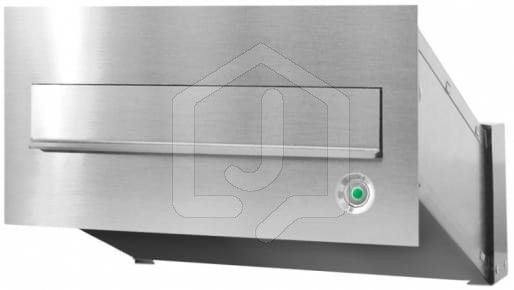
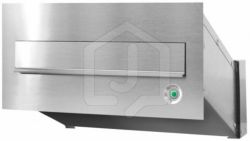
    I would like to install a letterbox in a fence post along with an illuminated bell button.
    The instructions say to supply the illuminated button with 24V.
    I have a 3x2x0.5mm cable connected to the post (I assume 2 wires will supply voltage to the backlight LED and 2 wires will supply voltage to the jumper button).
    Wireless Doorbell Signal Transmission from Garage to Flat .

    Unfortunately I can no longer run the wire from the fence post (where the box is to be located) to the flat.
    I can, however, pull it into the garage where I obviously have access to sockets and 230V power supply.

    I'm looking for a solution that will allow me to wirelessly transmit the signal from the garage to the doorbell in the flat so that when I press the button on the letterbox, a relay will wirelessly communicate between the garage and the flat and trigger the doorbell signal there.
    I would be grateful for any help as my experience in this subject is quite limited.
  • ADVERTISEMENT
  • #2 18966934
    dufek
    Level 32  
    Posts: 2050
    Help: 175
    Rate: 405
    The simplest way is to use a wireless bell.
    Connect the coil of the relay to the wires in the garage pulled from the button on the box, and connect the contacts to the wireless bell button.
  • #3 18966941
    Rysiek2
    CCTV and Stationary Alarms specialist
    Posts: 3399
    Help: 447
    Rate: 655
    You can implement this by using a radio link between the house and the garage.
    A receiver in the house and a transmitter in the garage, where the entrance is short-circuited with wires from the gate.
    ZAMEL makes something like the RNP-1 transmitter and the receiver probably the ROP-1

    The effect will be the same as if you led a wire from the gate to the house
  • #4 18966979
    grabsoon
    Level 11  
    Posts: 9
    Rate: 2
    dufek wrote:
    The simplest way is to use a wireless bell.
    Connect the coil of the relay to the wires in the garage pulled from the button on the box, and connect the contacts to the wireless bell button.


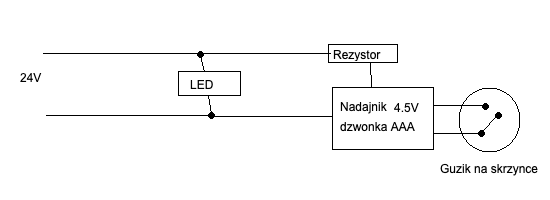
    What if the 24v power fed into the slop could be used to power the bell transmitter hidden inside?

    As far as I can see, 90% of wireless bell transmitters run on 3xAAA (4.5v) batteries and here I could use the 24v sent to the backlight, select a suitable resistor and achieve 4.5v for the "factory" transmitter which would mimic a 3xAAA battery.

    Wireless Doorbell Signal Transmission from Garage to Flat .


    Problems I see:

    - whether such transmitters are easily disassembled at all or whether half of them will be destroyed if you try to tamper with the casing
    - whether there is a chance that such a transmitter will work for years without failure and even after sealing the roof of the pole (no access to the inside) I am not shooting myself in the knee

    As I wrote, I am a layman in these matters so I can write silly things. But as they say if something is stupid but works .... it is not stupid :)
  • ADVERTISEMENT
  • #5 18966986
    dufek
    Level 32  
    Posts: 2050
    Help: 175
    Rate: 405
    Obtain the voltage using a suitable stabiliser.
    Bell transmitters are seamlessly disassembled.
    One works for years and the other doesn't - it's Chinese and you never know.
  • #6 18966991
    grabsoon
    Level 11  
    Posts: 9
    Rate: 2
    dufek wrote:
    Provide voltage with a suitable stabiliser.
    .

    Thanks for the tip. As a layman I have no idea about such solutions.
    Would you suggest any link to a proven product? :)

    dufek wrote:
    .
    One works for years and the other doesn't - it's Chinese and you never know.


    Agreed - but I count on the fact that in most cases these are outdoor and relatively uncomplicated products.
    Arguably the quality is most influenced by price so maybe if you buy a bell for > 100 PLN it has a chance to last a while.
  • Helpful post
    #7 18967001
    dufek
    Level 32  
    Posts: 2050
    Help: 175
    Rate: 405
    grabsoon wrote:
    How about a link to a proven product?

    https://abc-rc.pl/product-pol-9164-Przetwornica-DC-DC-1-5A-4-2-40V-step-down-LM317.html

    Added after 3 [minutes]:

    grabsoon wrote:
    Probably the quality is most influenced by price so maybe if you buy a bell for > 100 PLN it has a chance to last a while.
    .
    There is no rule, a cheaper one may also be sufficient.
    Better to install the transmitter in the garage, always a little better working conditions (less temperature and humidity changes).
  • ADVERTISEMENT
  • #8 18990522
    grabsoon
    Level 11  
    Posts: 9
    Rate: 2
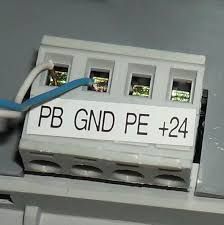
    In your opinion, would the powering of the relay and the LED on the button on the letterbox with one power source, such as an automatic garage door operator Mido 600

    Wireless Doorbell Signal Transmission from Garage to Flat .

    is this a good idea? But is it better to buy a dedicated power supply for this?
  • Helpful post
    #9 18990535
    dufek
    Level 32  
    Posts: 2050
    Help: 175
    Rate: 405
    There is no need to buy a separate power supply, the power consumption will be so low that the one from the machine will suffice.
  • ADVERTISEMENT
  • #10 18990820
    grabsoon
    Level 11  
    Posts: 9
    Rate: 2
    Another academic question. I'm afraid that during the work I'll accidentally short-circuit and break something in the gate operator. Is there any possibility of installing "something" which will protect me from such a scenario? The manual says that the 24 volts is connected to the photocells. Do you think the operator already has some kind of protection against an accidental short circuit?
  • #11 18991118
    dufek
    Level 32  
    Posts: 2050
    Help: 175
    Rate: 405
    It should be protected but it is better to fit an additional fuse.
  • #12 18991182
    grabsoon
    Level 11  
    Posts: 9
    Rate: 2
    dufek wrote:
    It should be protected but it is better to install an additional fuse.


    Am I right in thinking that in order to select such a fuse I need to know what fuse is built into the machine anyway and use a cut-out fuse at a current lower than the built-in one? Otherwise I will "blow" the fuse in the automat and not the external one?
  • #13 18991391
    bhtom
    Level 39  
    Posts: 4480
    Help: 444
    Rate: 600
    Welcome,

    grabsoon wrote:
    I am afraid that while working I will accidentally make a short circuit and break something in this automatic gate.


    The power supply should absolutely be switched off during the installation work.

    Regards.
  • #14 19009767
    grabsoon
    Level 11  
    Posts: 9
    Rate: 2
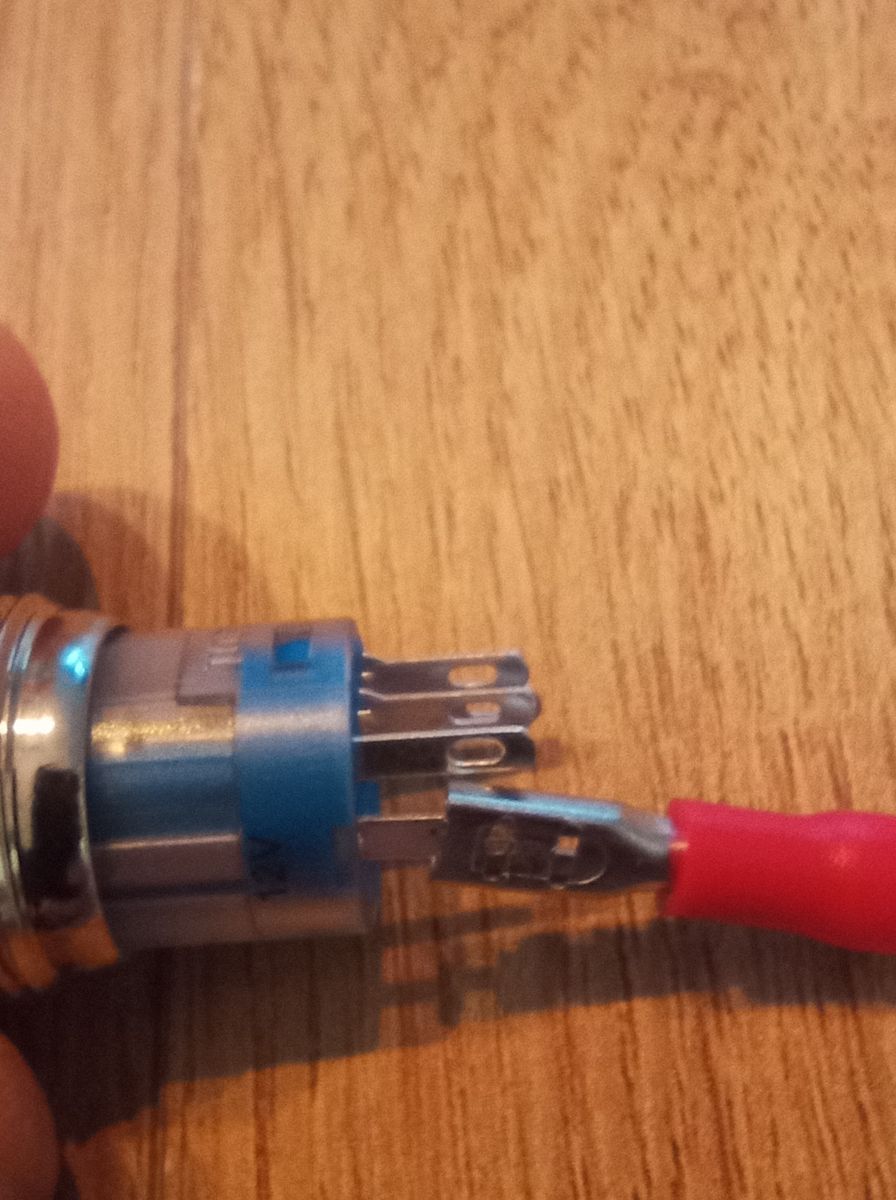
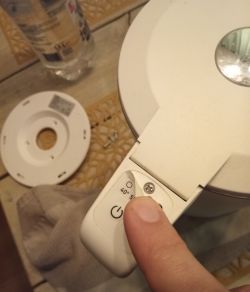
    And do you perhaps know if there are any such small connectors on sale. The one pictured is 2.8mm wide and is too big for the male connectors sticking out of the bell button.


    Wireless Doorbell Signal Transmission from Garage to Flat .
  • #15 19009820
    dufek
    Level 32  
    Posts: 2050
    Help: 175
    Rate: 405
    grabsoon wrote:
    And do you perhaps know if there are any such small connectors on sale.
    .
    They do exist.
  • #16 19010493
    grabsoon
    Level 11  
    Posts: 9
    Rate: 2
    dufek wrote:
    grabsoon wrote:
    <br/span>And do you know if there are any such small connectors for sale.
    .
    There are.


    Kingdom for the link.

Topic summary

✨ The discussion revolves around the installation of a wireless doorbell system that transmits signals from a garage to a flat. The user seeks to connect an illuminated bell button in a letterbox, powered by 24V, but cannot run wires directly to the flat. Suggestions include using a wireless bell system, such as a transmitter and receiver setup, with brands like ZAMEL mentioned for their RNP-1 transmitter and ROP-1 receiver. The user considers powering a wireless bell transmitter using the 24V supply, with advice on using a voltage stabilizer to convert it to the required 4.5V for typical battery-operated transmitters. Concerns about the reliability of such transmitters and the need for protective measures during installation are also discussed, along with the possibility of using existing power supplies from devices like garage door operators. The conversation concludes with inquiries about suitable connectors for the installation.
Generated by the language model.

FAQ

TL;DR: Need a 24 V letterbox bell to ring in your flat without new cabling? "The simplest way is to use a wireless bell." Use a relay to trigger a wireless transmitter (4.5 V) or a ZAMEL RF link—for homeowners retrofitting garage-to-flat bells. [Elektroda, dufek, post #18966934]

Why it matters: You can finish the job without opening walls by safely reusing existing 24 V wiring and a wireless bridge.

Quick Facts

What’s the simplest way to link my letterbox button to a flat doorbell?

Use a wireless doorbell and drive its transmitter with a relay. Connect the relay coil to the button leads that reach the garage. Wire the relay’s normally open contacts across the wireless transmitter’s button input. The transmitter will send the chime to the receiver in your flat. This avoids running new cable to the flat. [Elektroda, dufek, post #18966934]

How do I wire a relay to trigger a wireless doorbell transmitter?

  1. Connect the relay coil to the two wires coming from the letterbox button.
  2. Open the wireless transmitter and locate its pushbutton contacts.
  3. Wire the relay’s normally open contacts across those contacts, then test. This setup makes the letterbox button “press” the transmitter electronically. [Elektroda, dufek, post #18966934]

Can I power a wireless transmitter from the 24 V LED feed?

Yes. Use a voltage stabilizer to derive 4.5 V for a 3xAAA-based transmitter. A regulator keeps the output steady under changing load. Place the regulator in the garage for better conditions and service access. Avoid running unregulated 24 V to the transmitter. [Elektroda, dufek, post #18966986]

Which step-down module works for 24 V to 4.5 V?

An adjustable LM317-based DC-DC step-down board works well. Feed it from the 24 V accessory output and set it to 4.5 V with a meter. Connect its output to the transmitter’s battery terminals, matching polarity. Enclose the board in a small box for safety. [Elektroda, dufek, post #18967001]

Is it better to hide the transmitter in the post or mount it in the garage?

Mount it in the garage for lower humidity swings and easier servicing. "Better to install the transmitter in the garage, always a little better working conditions." This location improves reliability and range consistency. It also keeps electronics out of harsh weather. [Elektroda, dufek, post #18967001]

Can I avoid hacking a bell and use a ready RF I/O link?

Yes. Use a radio transmitter in the garage and a receiver in the flat. Short the transmitter input with the letterbox button leads. A ZAMEL RNP-1 with ROP-1 replicates the wired button press over radio. The receiver triggers the chime like a cable would. [Elektroda, Rysiek2, post #18966941]

Do I need to cut power during installation?

Yes, disconnect power before wiring to prevent damage or shock. "The power supply should absolutely be switched off during the installation work." Restore power only after double-checking connections. This step reduces short-circuit risks and protects the operator electronics. [Elektroda, bhtom, post #18991391]

Should I add an inline fuse on the 24 V accessory line?

Yes, add a fuse on the accessory feed to protect the operator. "It should be protected but it is better to fit an additional fuse." Install the fuse close to the supply. This helps isolate faults in your added wiring and devices. [Elektroda, dufek, post #18991118]

How do I size the inline fuse so it blows first?

Select a fast-acting fuse rated slightly above normal load current, yet below the operator’s accessory-fuse rating. Place it near the supply for best protection. This coordination lets the inline fuse clear before upstream protection. Verify the load current with a meter during testing. [Littelfuse, 2021]

What wireless range should I target between garage and flat?

Choose a system rated around 150–200 m line-of-sight, then test in place. Honeywell Series 9 specifies up to 200 m range, a useful benchmark. Walls and metal reduce range, so verify before sealing the post. Relocate the transmitter if signal drops. [Honeywell Home, 2023]

Can I disassemble a wireless transmitter to access its button contacts?

Yes, bell transmitters open easily for wiring across the button contacts. Reliability varies; one unit may work for years, another may fail early. Plan for service access or install it in the garage. Seal external enclosures carefully to prevent moisture ingress. [Elektroda, dufek, post #18966986]

Are smaller push-on connectors than 2.8 mm available for bell buttons?

Yes. Smaller connectors matching narrow male tabs are available. Bring the button or measure tab width to match sizes. Ask for miniature female push-on terminals at electronics suppliers. Proper fit reduces intermittent contacts and corrosion issues. [Elektroda, dufek, post #19009820]

Can my Mido 600 gate opener’s 24 V output power the relay and LED?

Yes. A separate power supply is unnecessary because the current draw is low. Use the operator’s 24 V output to feed both the button LED and the relay. Keep wiring neat and fused as recommended. [Elektroda, dufek, post #18990535]
Generated by the language model.
ADVERTISEMENT