logo elektroda
logo elektroda
X
logo elektroda

Gate operator HATO 180 - Connection of an external 230V lamp via relay

shl222 2055 17
Best answers

How can I use the 24 V lamp output of a HATO 180 gate operator to switch an external 230 V lamp through a relay?

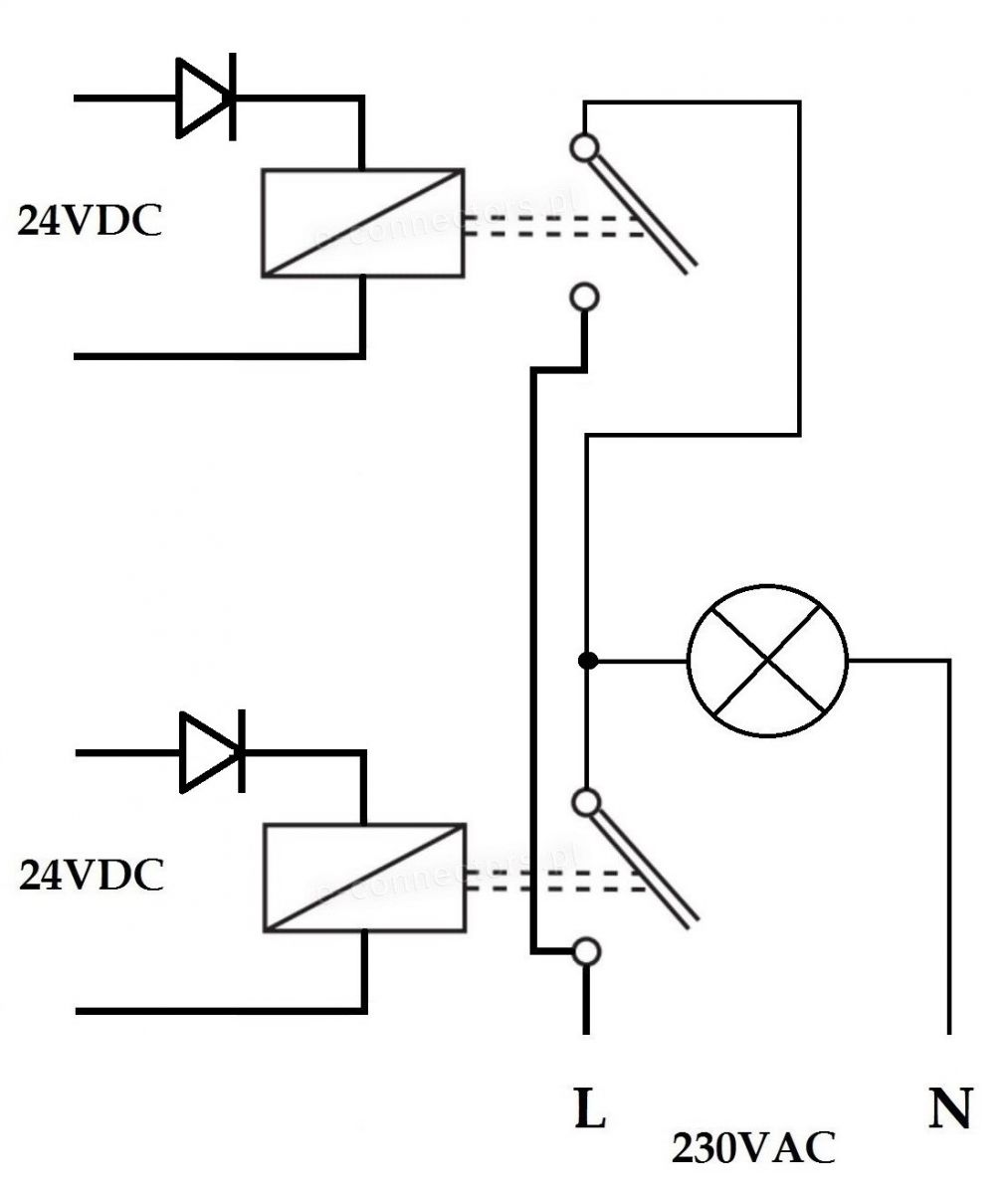
Assuming the gate output is 24 V DC, connect a 24 V DC relay coil in parallel with the existing bulb, and use the relay contacts to switch the 230 V lamp [#19778965] A Finder 40.61, 24 V DC relay was suggested as an example [#19779177] If you want one lamp to be triggered by two drives, use one relay per drive and connect the relay contact outputs in parallel; isolation diodes on the coils are not needed when the coils are powered from two different drives [#19779269][#19781313]
Generated by the language model.
ADVERTISEMENT
Treść została przetłumaczona polish » english Zobacz oryginalną wersję tematu
  • #1 19778819
    shl222
    Level 10  
    Posts: 89
    Help: 1
    Rate: 15
    Welcome.

    I'd like to ask you for help, I'm an amateur hence I'm asking, I have some idea about electrics and electronics, I can do something but not everything and that's why I'm asking for help.

    I have a HATO 180 gate operator, there is no output for any warning light etc., but there is a light bulb which illuminates for 3 minutes after the gate is opened and this time is sufficient for me. But the light is not enough for me because it is dark and I would like to connect an external lamp instead of this bulb. I know that this can be done via some kind of relay, but I don't know what kind and where and how to plug it all into the relay.

    So the output from the lamp is 24 volts. The power supply to the lamp is 230 volts.

    Can anyone help what to buy and how to connect it?
  • ADVERTISEMENT
  • #2 19778887
    78db78
    Level 43  
    Posts: 10531
    Help: 1791
    Rate: 3229
    But 24 volt alternating or constant lamp power?
  • #4 19778952
    shl222
    Level 10  
    Posts: 89
    Help: 1
    Rate: 15
    78db78 wrote:
    But the power supply to the lamp 24 V variable or fixed?
    Probably fixed on the bulb.
  • ADVERTISEMENT
  • #5 19778965
    gumisie
    Level 43  
    Posts: 17874
    Help: 1667
    Rate: 2480
    shl222 wrote:
    Probably fixed on the bulb
    Probably, there is a big difference.
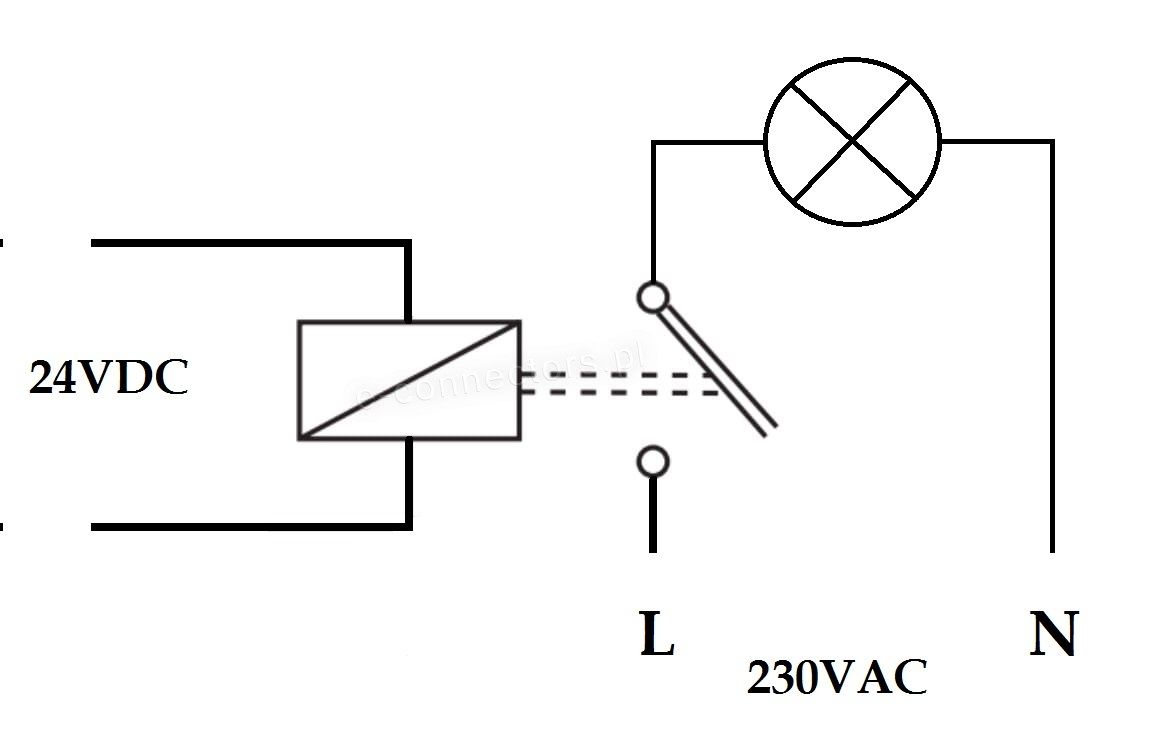
    You could connect the coil of the relay (24 V DC), in parallel with the bulb and the lamp to the contacts:
    shl222 wrote:
    Power supply to the lamp at 230 V.
    .

    Gate operator HATO 180 - Connection of an external 230V lamp via relay .
  • ADVERTISEMENT
  • #6 19778967
    shl222
    Level 10  
    Posts: 89
    Help: 1
    Rate: 15
    Sam Sung wrote:
    Is there such electronics? https://sklep.hato.com.pl/elektronika/156-elektronika-do-napedu-hato-180c.html
    Do you have assembly instructions, especially a description of the connectors?
    .

    Yes it is.
    Attachments:
    • Gate operator HATO 180 - Connection of an external 230V lamp via relay Screenshot_20211223-153928_Chrome.jpg (330.34 KB) You must be logged in to download this attachment.
    • Gate operator HATO 180 - Connection of an external 230V lamp via relay Screenshot_20211223-153955_Chrome.jpg (209.26 KB) You must be logged in to download this attachment.
  • ADVERTISEMENT
  • #7 19779132
    shl222
    Level 10  
    Posts: 89
    Help: 1
    Rate: 15
    gumisie wrote:
    shl222 wrote:
    probably fixed on the bulb
    Probably, there's a big difference.
    You could connect the coil of the relay (24VDC), in parallel with the bulb and the lamp to the contacts:
    shl222 wrote:
    Power supply to the lamp at 230V.
    .

    Gate operator HATO 180 - Connection of an external 230V lamp via relay
    .

    Something like that?
    Attachments:
    • Gate operator HATO 180 - Connection of an external 230V lamp via relay Screenshot_20211223-170750_Chrome.jpg (424.52 KB) You must be logged in to download this attachment.
  • #8 19779175
    gumisie
    Level 43  
    Posts: 17874
    Help: 1667
    Rate: 2480
    shl222 wrote:
    Such a thing?
    I won't answer you unequivocally, but I suppose it could be 'suitable'.
  • #10 19779183
    shl222
    Level 10  
    Posts: 89
    Help: 1
    Rate: 15
    Okay, and now I'll add something else. One 230 volt lamp so that it lights up from two drives/bulbs alternately. Because I have two drives. ;) .
  • #11 19779190
    alster1
    CCTV and Stationary Alarms specialist
    Posts: 2103
    Help: 352
    Rate: 540
    shl222 wrote:
    Something like this?
    .
    This relay is not suitable for switching 230 V circuits.
  • #12 19779193
    78db78
    Level 43  
    Posts: 10531
    Help: 1791
    Rate: 3229
    But how do you alternate?
  • #13 19779199
    alster1
    CCTV and Stationary Alarms specialist
    Posts: 2103
    Help: 352
    Rate: 540
    shl222 wrote:
    Good, and now I'll add something else. One 230 volt lamp so that it lights up from two drives/bulbs alternately. Because I have two drives. ;)
    .
    A separate relay for each drive, and their actuating contacts connected in parallel.
  • #14 19779218
    gumisie
    Level 43  
    Posts: 17874
    Help: 1667
    Rate: 2480
    alster1 wrote:
    This relay is not suitable for switching 230 V circuits.
    Hence:
    gumisie wrote:
    I will not answer you unequivocally,
    But, in my opinion, the lack of description: 230 V AC does not prove anything.
    In the case of this relay, it's rather more about the ceki voltage and the maximum contact current at 24 V DC. :cry: .
  • #15 19779243
    shl222
    Level 10  
    Posts: 89
    Help: 1
    Rate: 15
    78db78 wrote:
    But how to alternate?


    Two gates one lamp. And once one opens the other time the other, but the light is supposed to come on one
  • Helpful post
    #16 19779269
    gumisie
    Level 43  
    Posts: 17874
    Help: 1667
    Rate: 2480
    shl222 wrote:
    Two gates one light. And once will open one other time the other but the light has to light up one
    alster1 wrote:
    For each drive a separate relay, and their actuating contacts connected in series
    Rather; Parallel and separate the relay coils with diodes?

    E.g.: Gate operator HATO 180 - Connection of an external 230V lamp via relay .
    :?: .
  • #17 19779405
    alster1
    CCTV and Stationary Alarms specialist
    Posts: 2103
    Help: 352
    Rate: 540
    gumisie wrote:
    Rather; In parallel and separate the relay coils with diodes?
    .
    Actually, a slip of the tongue, sorry already corrected.
  • #18 19781313
    pafciowaw
    Automation specialist
    Posts: 2439
    Help: 480
    Rate: 364
    These isolation diodes (in post #16) are unnecessary...since the coils are fed from two different drives.

Topic summary

✨ The discussion revolves around connecting an external 230V lamp to a HATO 180 gate operator, which lacks a dedicated output for warning lights. The user seeks guidance on using a relay to achieve this connection. Various responses suggest using a relay with a 24V DC coil connected in parallel with the existing bulb. Recommendations include specific relay models and configurations for alternating the lamp between two gate operators. The importance of ensuring the relay can handle 230V circuits is emphasized, along with the potential use of isolation diodes for separate relay coils.
Generated by the language model.

FAQ

TL;DR: Use a relay: “connect the coil of the relay (24 V DC) in parallel” with the HATO 180 courtesy light, and switch the 230 V lamp on the relay contacts. This keeps wiring simple and safe for one or two drives. [Elektroda, gumisie, post #19778965]

Why it matters: DIY HATO 180 owners can add brighter outdoor lighting for safety without modifying the controller or losing the built‑in behavior.

Quick Facts

How do I connect a 230 V lamp to my HATO 180’s 24 V light output?

Use an interface relay. Connect a 24 V DC relay coil in parallel with the operator’s courtesy bulb. When the bulb energizes, the relay pulls in. Wire the 230 V lamp through the relay’s NO contacts. This keeps low‑voltage control isolated from mains. [Elektroda, gumisie, post #19778965]

Is the HATO 180 light output AC or DC, and which relay coil do I need?

Use a 24 V DC relay coil, as recommended. Match the coil type to the output type to ensure proper operation. Verifying the output avoids nuisance chatter or mis‑triggering. A DC coil in parallel with the bulb is the intended approach. [Elektroda, gumisie, post #19778965]

What relay model is a good choice for this job?

Finder 40.61 with a 24 V DC coil is a solid option. It offers an SPDT contact rated around 16 A for mains switching. Pairing it with a compatible base simplifies wiring and service. This model was specifically suggested for visibility and reliability. [Elektroda, 78db78, post #19779177]

Why can’t I use a random small relay board for 230 V?

Some small relays are not rated for 230 V AC circuits or safe mains isolation. Using them risks arcing, overheating, or insulation failure. Choose a relay explicitly specified for 230 V AC switching. Ensure proper creepage, clearance, and enclosure for safety. [Elektroda, alster1, post #19779190]

Can one 230 V lamp be triggered from two HATO drives?

Yes. Use a separate relay for each drive, with each coil fed from its own courtesy‑light output. Connect the relays’ NO contacts in parallel to the same lamp circuit. Either operator will then light the lamp when active. [Elektroda, alster1, post #19779199]

Should the two relays’ contacts be wired in series or parallel?

Wire them in parallel, not series. “Parallel” lets either operator power the lamp independently. Series wiring requires both relays closed and defeats the purpose. Parallel contacts deliver the expected either‑or behavior safely. [Elektroda, gumisie, post #19779269]

Do I need diodes to isolate the relay coils when using two drives?

No. If each coil is powered by its own drive’s courtesy‑light output, isolation diodes are unnecessary. The coils do not backfeed each other in that setup. Keep coil circuits separate and use one relay per operator. [Elektroda, pafciowaw, post #19781313]

What if I worry about backfeed between boards—any mitigation?

If you suspect a shared common or cross‑coupling, add series diodes to each coil feed. As one expert noted, “separate the relay coils with diodes?” This simple measure blocks backfeed while keeping operation independent. [Elektroda, gumisie, post #19779269]

Will the external lamp follow the same on‑time as the internal bulb?

Yes. Because the relay coil mirrors the courtesy‑light circuit, the external lamp follows that timer. The internal lamp stays on for about three minutes after opening. Your external lamp will match that behavior when wired as described. [Elektroda, shl222, post #19778819]

Where do I find HATO 180C board documentation and connector info?

Check the HATO 180C electronics page and assembly instructions referenced in the thread. Review connector labels for the courtesy‑light output before wiring. Confirm polarity or output type to select the correct relay coil. [Elektroda, Sam Sung, post #19778901]

How do I wire this—quick 3‑step guide?

  1. Isolate power and open the operator enclosure.
  2. Connect a 24 V DC relay coil in parallel with the courtesy bulb wiring.
  3. Wire the 230 V lamp through the relay’s NO contacts, using a proper enclosure and cable management. [Elektroda, gumisie, post #19778965]

Can I power a 230 V lamp directly from the 24 V output?

No. The 24 V output is only for the small courtesy bulb. Use it to drive a relay instead. Switch the 230 V lamp on the relay’s mains‑rated contacts to stay safe and compliant. [Elektroda, gumisie, post #19778965]
Generated by the language model.
ADVERTISEMENT