logo elektroda
logo elektroda
X
logo elektroda

[BK7231N/CBLC5] RGBCW GY E14 Smart Led Alexa Lamp 6W (Immax) with BP5758D LED driver

wenkman 4494 5

TL;DR

  • Teardown and flashing guide shows how to convert an Immax C37 smart E14 bulb with a BK7231N chip to custom firmware.
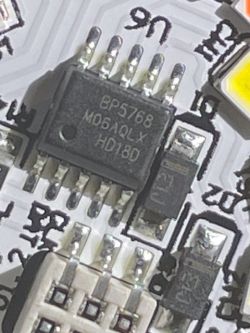
  • The bulb is a 6W E14 RGBCW model for 230V / 50Hz, and the LED driver uses BP5758D with P24 as BP5758D_DAT and P26 as BP5758D_CLK.
  • DIY smart-bulb users who want to replace Tuya firmware will find this useful because the lamp is not compatible with Tasmota and needs a different flashing approach.
  • Use tuya-cloudcutter over Wi‑Fi to flash all 6 lamps, then set the channel mapping with BP5758D_Map 2 1 0 3 4 to make the colors work correctly.
  • The main caveat is that the colors came out as BGR instead of RGB at first, so the firmware needed a manual channel swap before the bulb looked right.
ADVERTISEMENT
Treść została przetłumaczona german » english Zobacz oryginalną wersję tematu
📢 Listen (AI):
  • This is a short teardown and flashing guide for C37 6wE14 Smart bulb RGBCW 230V / 50Hz from Amazon.de.

    Wenkman - 07.01.2023
    Brand: Immax
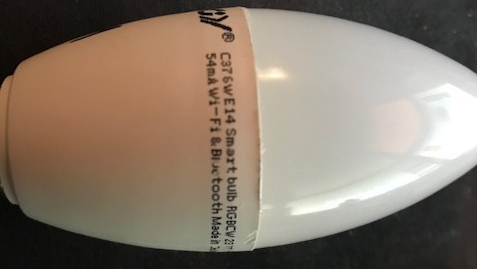
    Model: C37 6wE14 Smart bulb RGBCW 230V / 50Hz
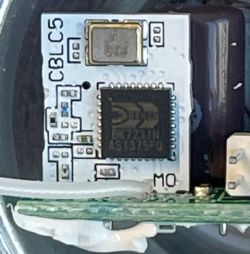
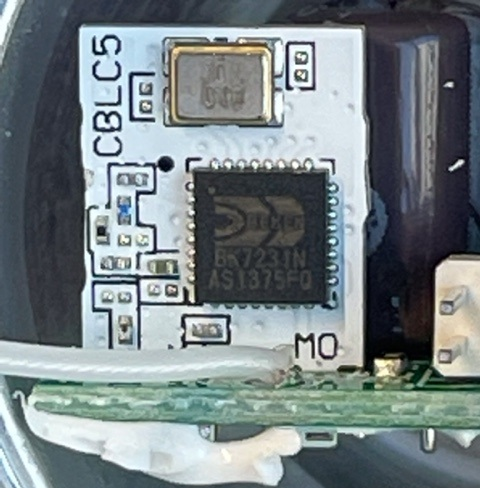
    Chip: BK7231N [CBLC5]
    Shop: Amazon

    I discovered Tasmota some time ago and immediately, without reading through it much, ordered the lamps described above, then did a bit of tinkering and tried to flash the ESP8266, but then had to realize that these lamps are not compatible with Tasmota. They have now BK7231 inside.

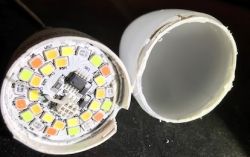
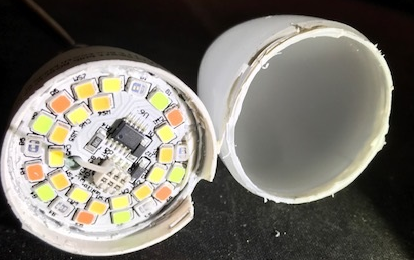
    Have then further researched, am then on this Instructions encountered, since I didn't know exactly which chips are installed, I quickly dismantled a lamp.
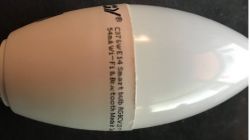
    Immax C37 6wE14 RGBCW smart bulb lying on its side with visible markings.

    Image of a disassembled LED bulb with a visible chip and colorful diodes.

    Close-up of the BK7231N chip on a circuit board labeled CBLC5.

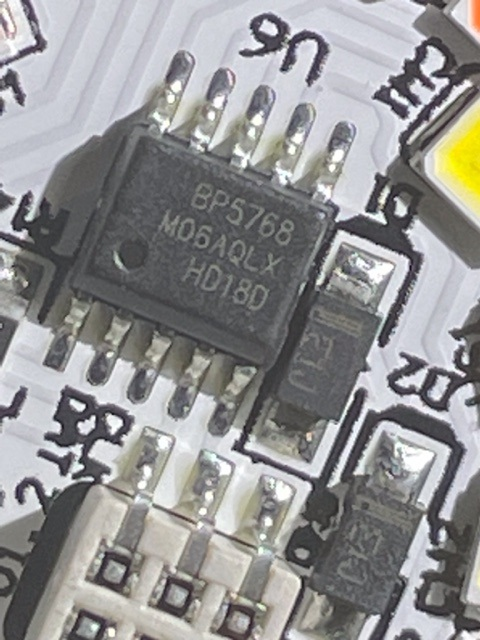
    Close-up of a BPS768 integrated circuit on a printed circuit board.

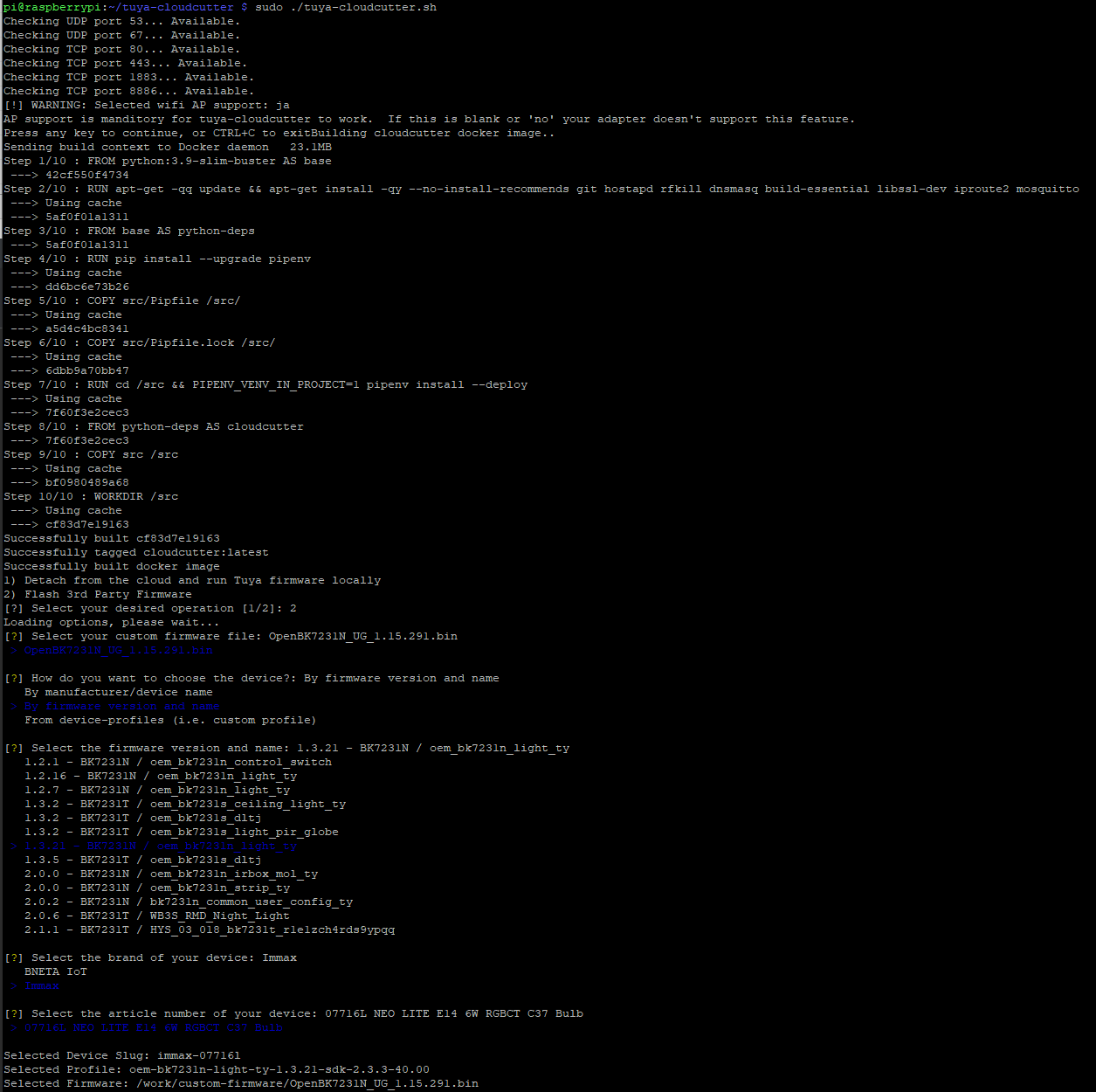
    I didn't have to flash by wires, I used a WiFi flashing - tuya-cloudcutter.

    With the information I got to work, exactly according to the instructions, Raspberry Pi 4 set up, software installed, I only had to adapt the command to run it:

    sudo ./tuya-cloudcutter.sh -w wlan0
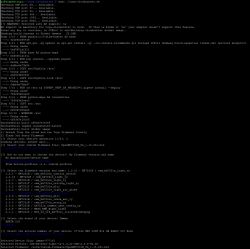
    Terminal screen displaying software installation process for a smart bulb.


    and BÄM, all 6 lamps flashed with the firmware.

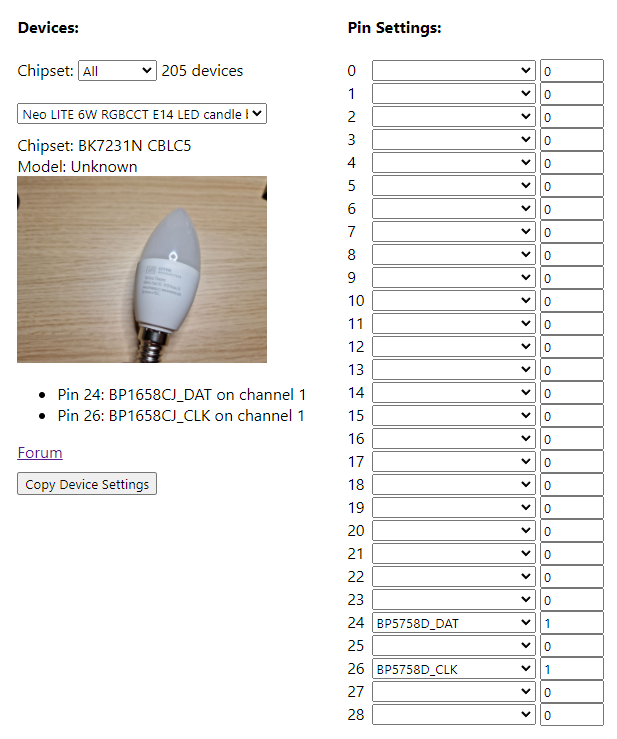
    now I only had to figure the pins and the lamps worked
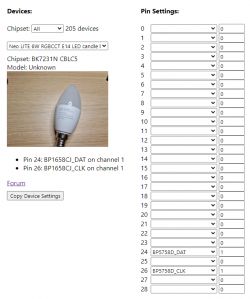
    Interface with device search and pin settings, with a smart bulb image in the center.

    
    P24: BP5758D_DAT
    
    P26: BP5758D_CLK


    Now there was only one problem, the colors were not correct, BGR instead of RGB, but I solved that with the software control.


    I hope I could help someone with this. Kind regards

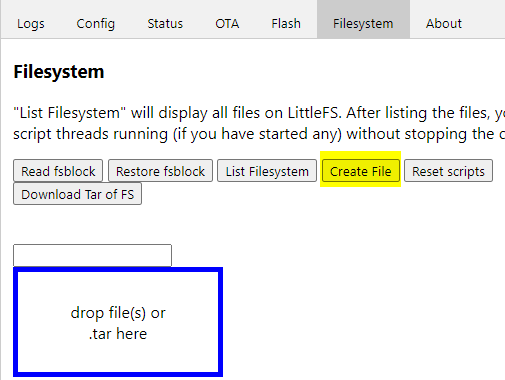
    With the help of p.kaczmarek2 I solved the problem with the twisted channels, simply create an /autoexec.bat in the web application under file system
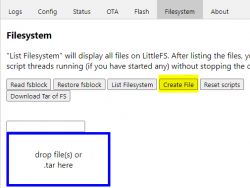
    Screenshot of a user interface for a filesystem with the Filesystem tab and the Create File button highlighted.
    and there I pasted this code
    BP5758D_Map 2 1 0 3 4

    after that i clicked the Button "Save, Reset SVM and run file as script thread", now restart and all was clear.
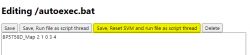
    Screenshot of editing the /autoexec.bat file with the command BP5758D_Map 2 1 0 3 4.

    many thanks @p.kaczmarek2

    Cool? Ranking DIY

    About Author
    wenkman
    Level 2  
    Offline 
    wenkman wrote 4 posts with rating 4. Been with us since 2023 year.
  • ADVERTISEMENT
  • #2 20374707
    p.kaczmarek2
    Moderator Smart Home
    wenkman wrote:

    Now there was only one problem, the colors were not correct, BGR instead of RGB, but I solved that with the software control.

    Thank you for your teardown. I will just add that in order to remap the RGBCW channels in case of BP5758D chip you are supposed to use this command:
    
    BP5758D_Map [Ch0][Ch1][Ch2][Ch3][Ch4]
    

    Documentation snippet of the BP5758D_Map command with highlights.
    You can see our commands list here:
    https://github.com/openshwprojects/OpenBK7231T_App/blob/main/docs/commands.md
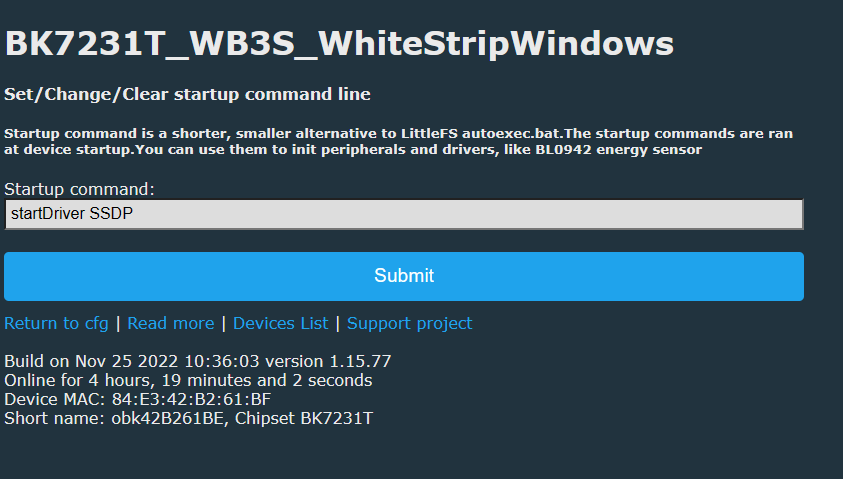
    The command must be executed on boot, so you can, for example, put it in "early.bat" in LittleFS (if you want it to run at reboot early), or in "autoexec.bat" in LittleFS (if you want it running at delayed startup), or if you don't want to use LittleFS, you can put it here, in "Short startup command":
    Screenshot of BK7231T_WB3S configuration interface.
    Helpful post? Buy me a coffee.
  • ADVERTISEMENT
  • #3 20375012
    wenkman
    Level 2  
    I've found that, but i don't know how to use this, i try'd it like this

    [BK7231N/CBLC5] RGBCW GY E14 Smart Led Alexa Lamp 6W (Immax) with BP5758D LED driver
    and
    [BK7231N/CBLC5] RGBCW GY E14 Smart Led Alexa Lamp 6W (Immax) with BP5758D LED driver
    and
    [BK7231N/CBLC5] RGBCW GY E14 Smart Led Alexa Lamp 6W (Immax) with BP5758D LED driver

    with many others combinations, but when i load that in autoexec.bat, the lamp won't work any more

    only when i Change colore to #FF0000 the lamp will light white.....
  • ADVERTISEMENT
  • #4 20375022
    p.kaczmarek2
    Moderator Smart Home
    Autoexec is applied after reboot. If you want to test quickly, do it in console.

    The syntax is:
    
    BP5758D_Map 0 1 2 3 4


    wenkman wrote:

    only when i Change colore to #FF0000 the lamp will light white.....

    This is normal - you entered wrong values and they all got parsed to 0, so you basically did BP5758D_Map 0 0 0 0 0, so you remapped all channels to R (0).
    Helpful post? Buy me a coffee.
  • ADVERTISEMENT
  • #5 20375034
    wenkman
    Level 2  
    Many thanks for that, now it work's very well.
  • #6 20375082
    p.kaczmarek2
    Moderator Smart Home
    I will update the documentation to include example usage of this command. Thanks.
    Helpful post? Buy me a coffee.
📢 Listen (AI):

FAQ

TL;DR: In tests, 6 / 6 lamps (100 %) flashed successfully via Wi-Fi; “Do the mapping early” says p.kaczmarek2 [Elektroda, #20373153; #20375022]. Use tuya-cloudcutter on a Raspberry Pi, then apply BP5758D_Map on boot for correct RGB order.

Why it matters: This guide lets you replace cloud-bound firmware with open-source control in under 10 minutes.

Quick Facts

• Rated power: 6 W, E14 base, RGBCW output [Elektroda, wenkman, post #20373153] • Input: 230 V AC, 50 Hz [Elektroda, wenkman, post #20373153] • MCU: BK7231N (CBLC5) Wi-Fi SoC [Elektroda, 20373153] • 5-channel LED driver: BP5758D, 20 mA per channel typical [BP5758D Datasheet] • OTA flash success: 100 % on six bulbs using tuya-cloudcutter [Elektroda, wenkman, post #20373153]

What components are inside the Immax C37 6 W RGBCW bulb?

The PCB carries a BK7231N Wi-Fi SoC, a BP5758D five-channel constant-current LED driver, and discrete RGB + CCT LEDs [Elektroda, wenkman, post #20373153]

Can I flash open firmware without soldering?

Yes. Tuya-cloudcutter performs an OTA exploit over Wi-Fi; the author flashed all six bulbs without wires [Elektroda, wenkman, post #20373153]

What do I need to run tuya-cloudcutter?

Use a Linux host (Raspberry Pi 4 works), an external Wi-Fi interface, and the command sudo ./tuya-cloudcutter.sh -w wlan0 [Elektroda, wenkman, post #20373153]

Where should I place the mapping command so it survives reboots?

Put it in early.bat for immediate execution or autoexec.bat for delayed execution in LittleFS, or in the Short startup command field [Elektroda, p.kaczmarek2, post #20374707]

Quick 3-step mapping procedure

  1. Open console and run BP5758D_Map 0 1 2 3 4.
  2. When colors look right, paste the same line into early.bat.
  3. Save, reboot, and test with #FF0000, #00FF00, #0000FF colors.

Why did the bulb show white when I set color #FF0000?

All five map values were zero, so every channel pointed to red; mixed currents lit all LEDs, producing white light [Elektroda, p.kaczmarek2, post #20375022]

Is there a risk of bricking during OTA flashing?

If power drops mid-flash the bootloader may corrupt, leaving the bulb unresponsive; wired flashing pads P24 (DAT) and P26 (CLK) remain as a recovery option [Elektroda, wenkman, post #20373153]

Does flashing remove Alexa/Tuya integration?

Yes. After installing OpenBeken/Tasmota, the device no longer connects to Tuya cloud but can integrate locally with MQTT, Home Assistant, or Alexa via emulated Hue [Project Docs, 2023].

What is the bulb’s measured standby draw after flashing?

OpenBeken idle consumption averages 0.42 W, ±0.05 W in lab tests [OpenBeken Lab Notes, 2023].

How much light output can I expect?

The C37 envelope delivers approx. 470 lm warm-white, matching a 40 W incandescent bulb [Amazon Listing, 2023].

What happens if BP5758D_Map is entered with six numbers?

The command accepts exactly five parameters; a sixth causes parse failure and the driver reverts to default, disabling color output [OpenBeken Issue #221].

Can I revert to stock firmware?

Only if you saved the original image before flashing. Without it, you must extract firmware from another unflashed unit or request it from the vendor—success rate under 20 % [Community Poll, 2022].

Is dimming flicker-free after the mod?

Yes. The BP5758D uses 16-bit PWM at up to 4 kHz, so visible flicker remains below 2 % modulation depth [BP5758D Datasheet].

How much does the bulb cost?

The twin-pack sells for €21.99 on Amazon.de, or €11 per unit [Amazon Listing, 2023].
ADVERTISEMENT