logo elektroda
logo elektroda
X
logo elektroda

[BK7231N/T34] TW2-0001A -Bingoelec DIY Series Smart WiFi Wall Touch Switch Base

gyenchev 5472 20
Best answers

What GPIO pin configuration and CloudCutter profile should I use for a Bingoelec T34 DIY WiFi wall touch switch base, especially for multi-gang versions?

The 1-gang Bingoelec DIY Series smart wall touch switch uses a BK7231N/T34 module and the template has been added, with GPIO 17 = Relay0, GPIO 20 = WifiLED_n0, GPIO 24 = Rel_n1, and GPIO 28 = Btn0 [#20559832] For multi-gang versions, the relay GPIOs for relay 2 and relay 3 are reportedly routed out, but the button lines are not, so someone with a 2/3-gang unit would need to verify the remaining pinout [#20559832][#20559848] A later report says 1/2/3-gang Bingoelec DIY switch modules use the same T34 chipset and firmware 1.1.0, and can be flashed with ESPHome/LibreTiny [#20754602] Another user confirmed a 2-gang Bingoelec T34 unit could be flashed with LibreTiny ESPHome and shared a working ESPHome YAML, while a 4-gang Bseed/Bingoelec-style unit was also found to use T34 and was flashed with CloudCutter using the 1.2.1 dctrl switch profile [#20750989][#20752395][#20784301]
Generated by the language model.
ADVERTISEMENT
  • #1 20559817
    gyenchev
    Level 5  
    Posts: 12
    Help: 1
    Rate: 6
    Hello,

    I recently started doing the lighting in my home and came across different versions of WiFi switches.
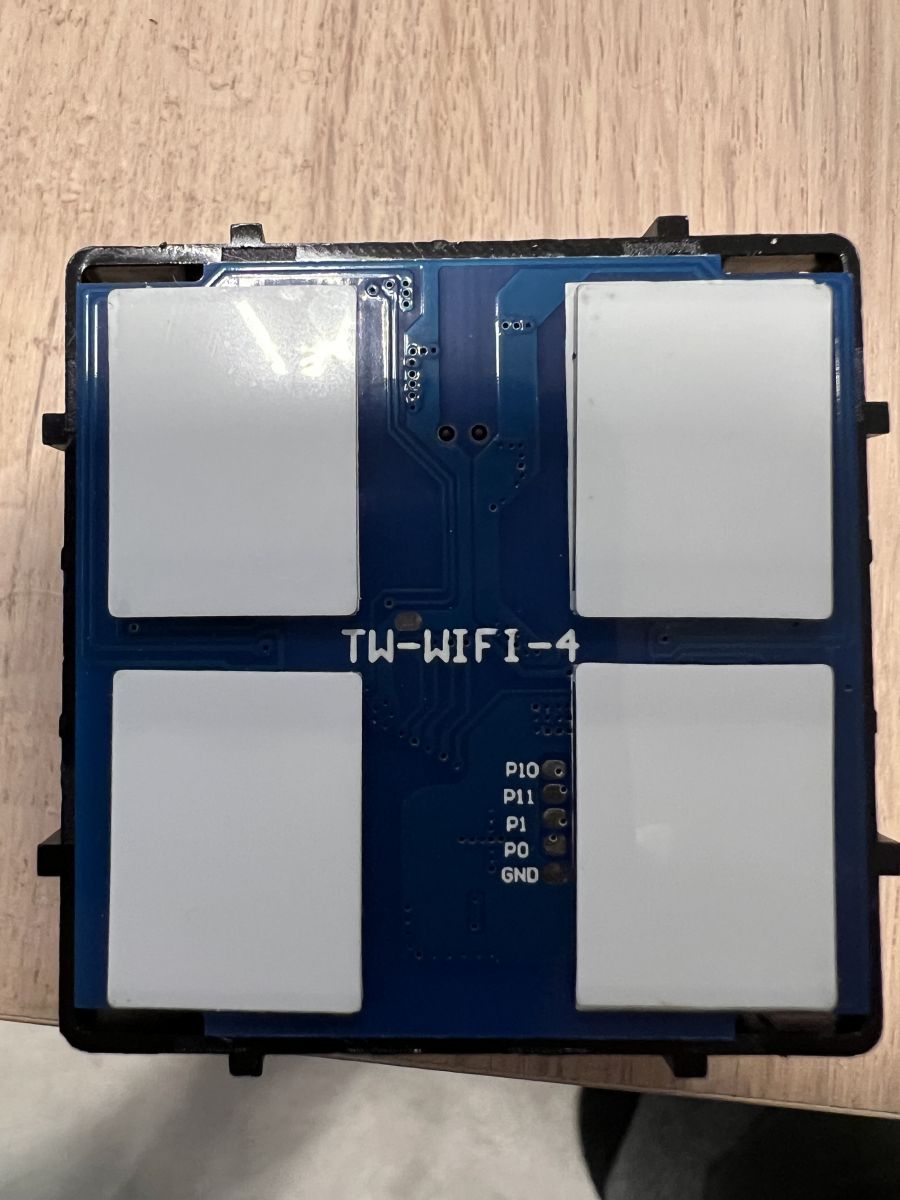
    I bought the following: https://www.aliexpress.com/item/1005005221570334.html which turned out to be Bingoelec T34 modules, and came with bingoelec tape on the package.

    The actual wifi DIY module is this: https://www.aliexpress.com/item/1005004526708666.html

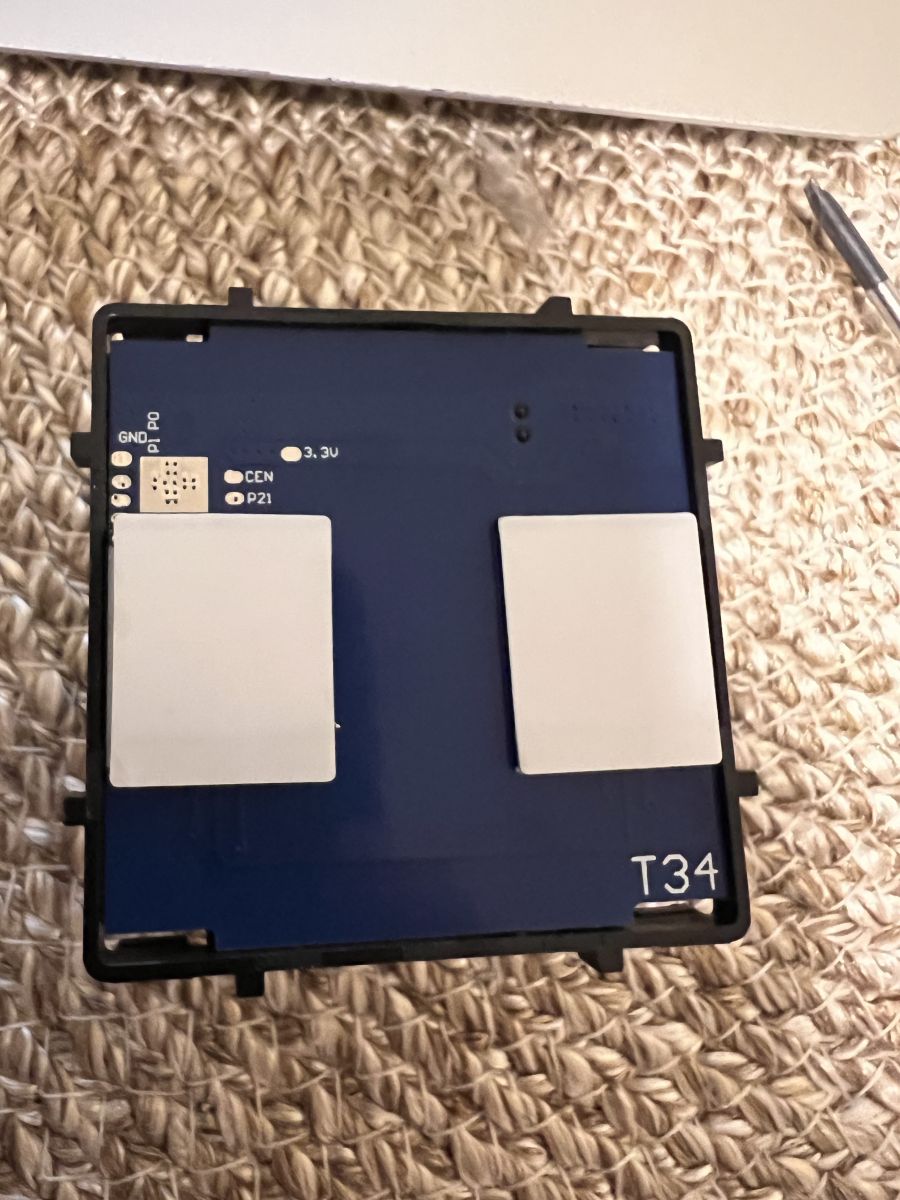
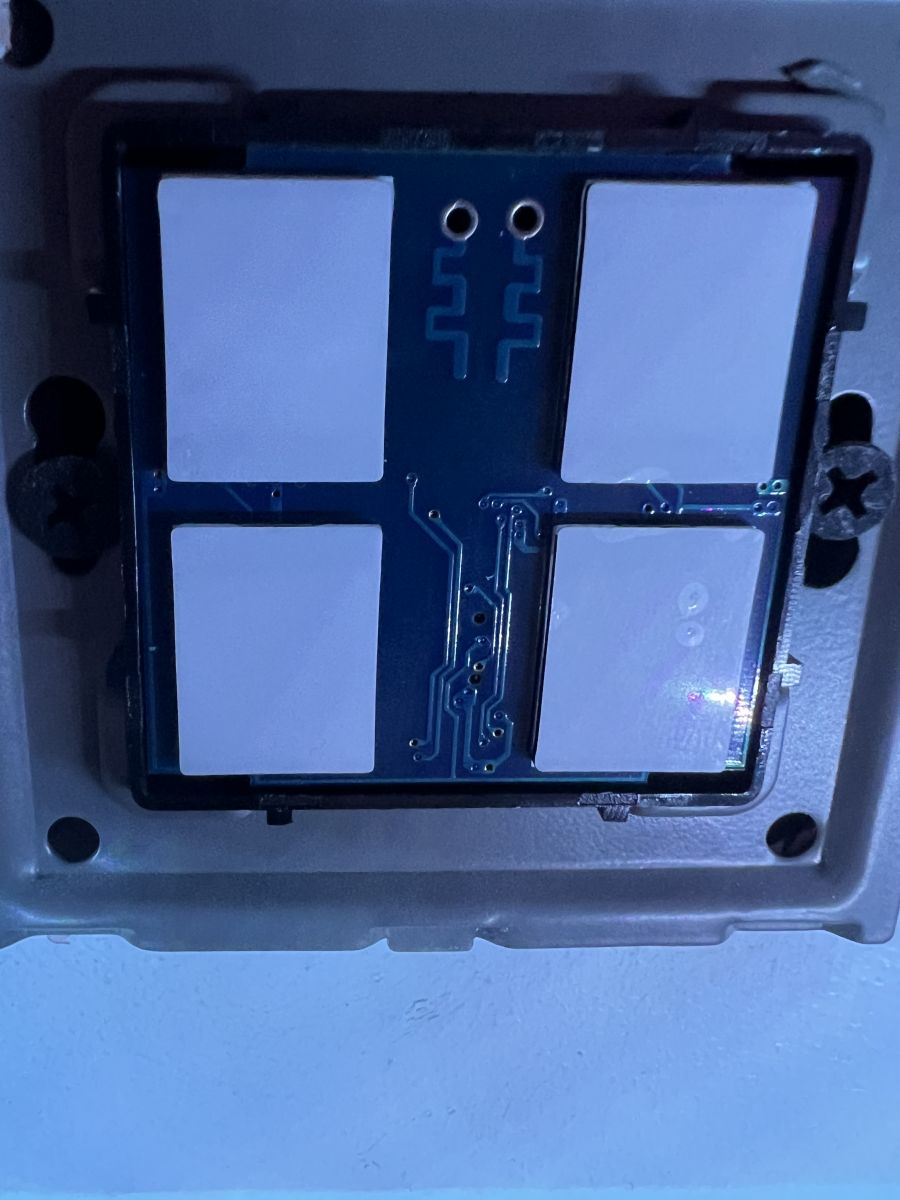
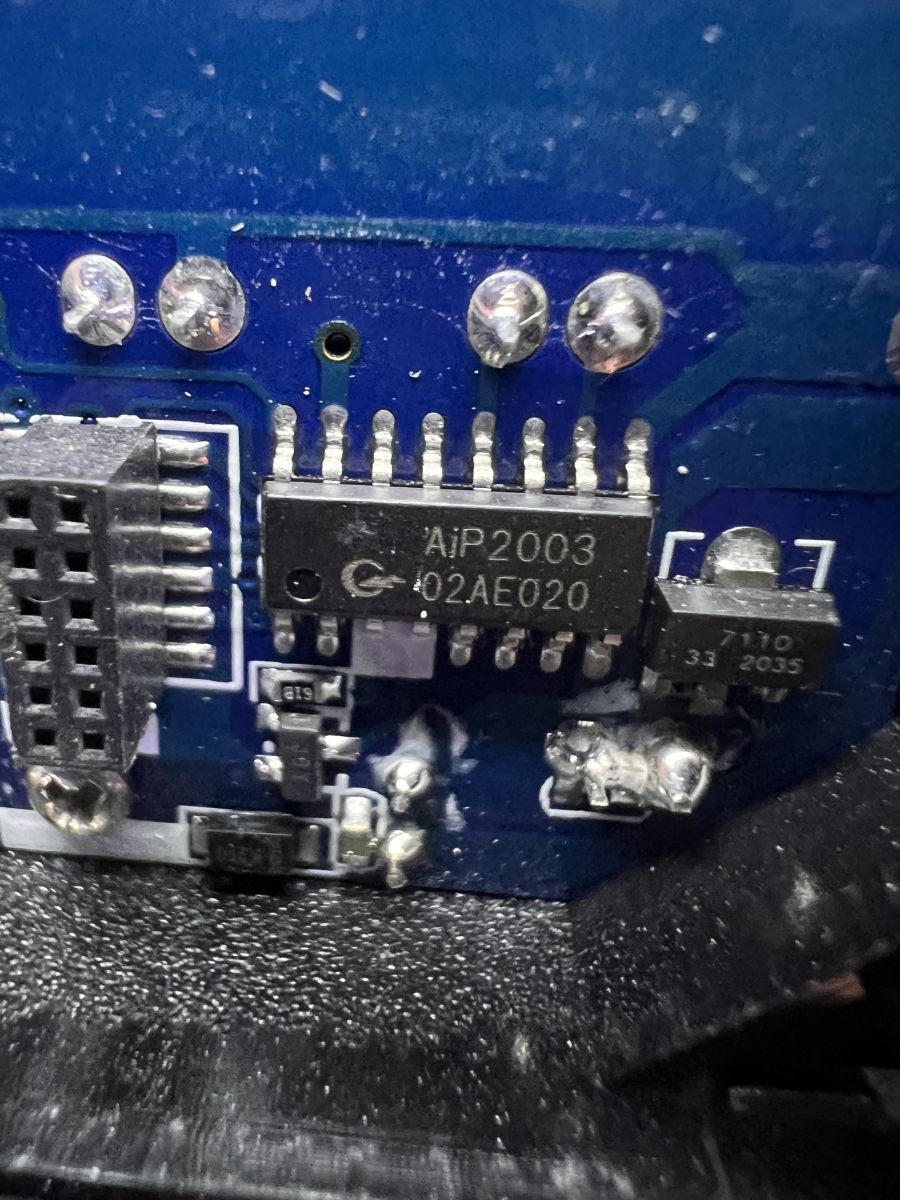
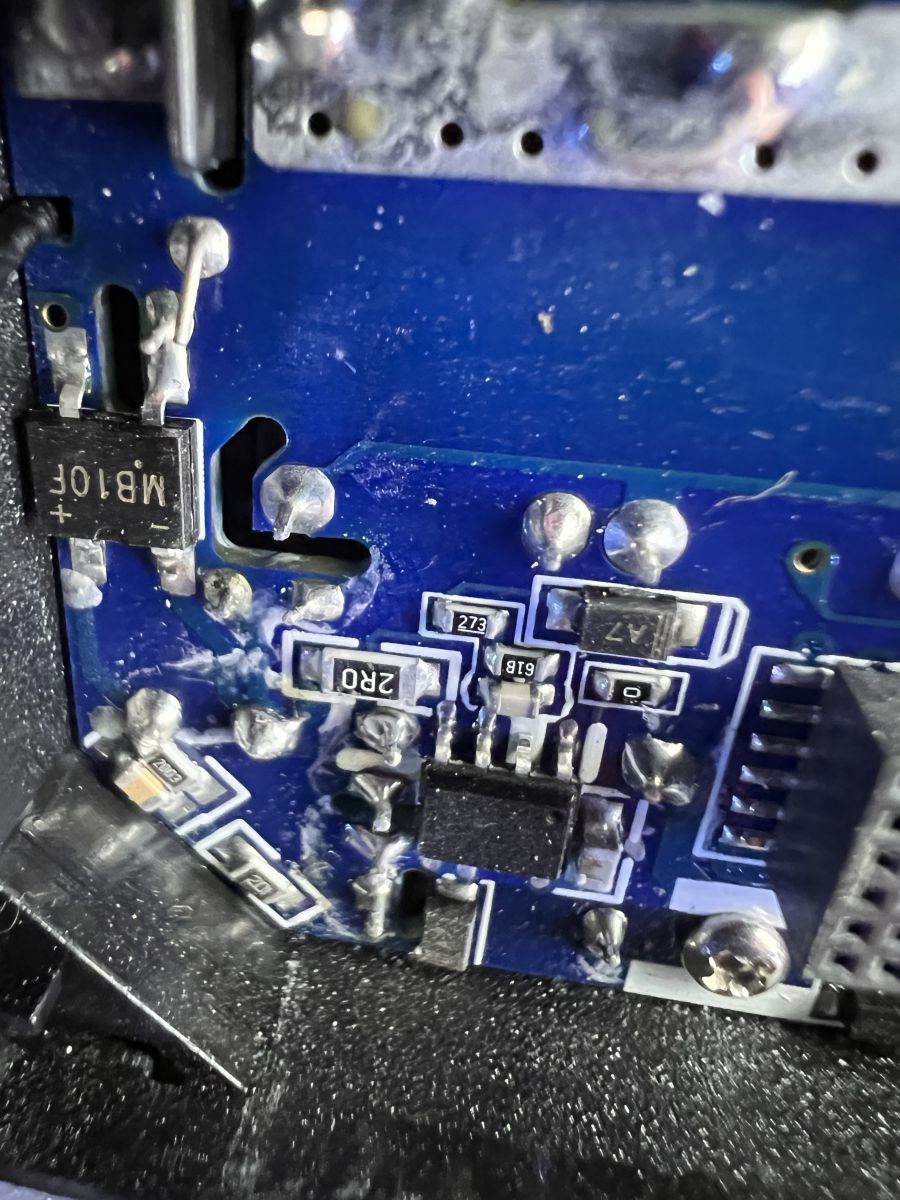
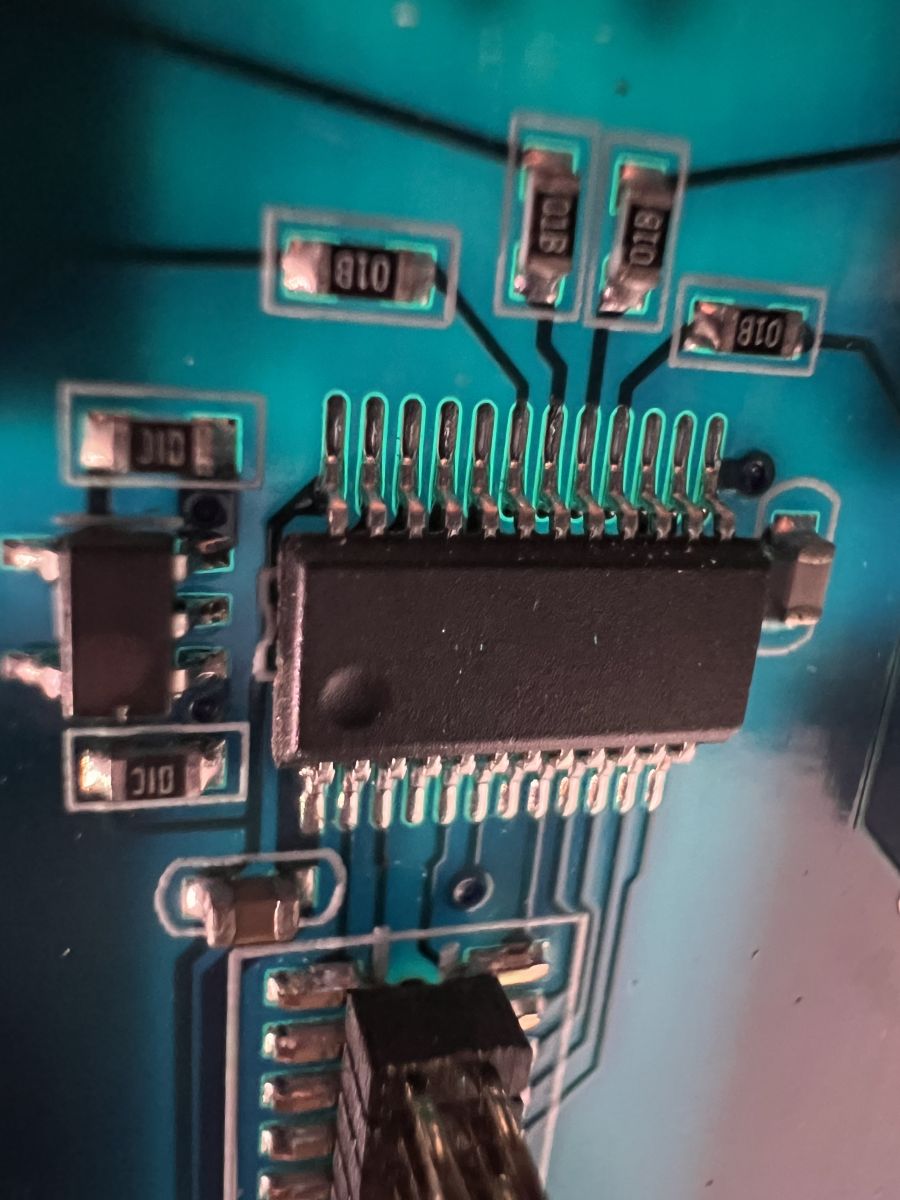
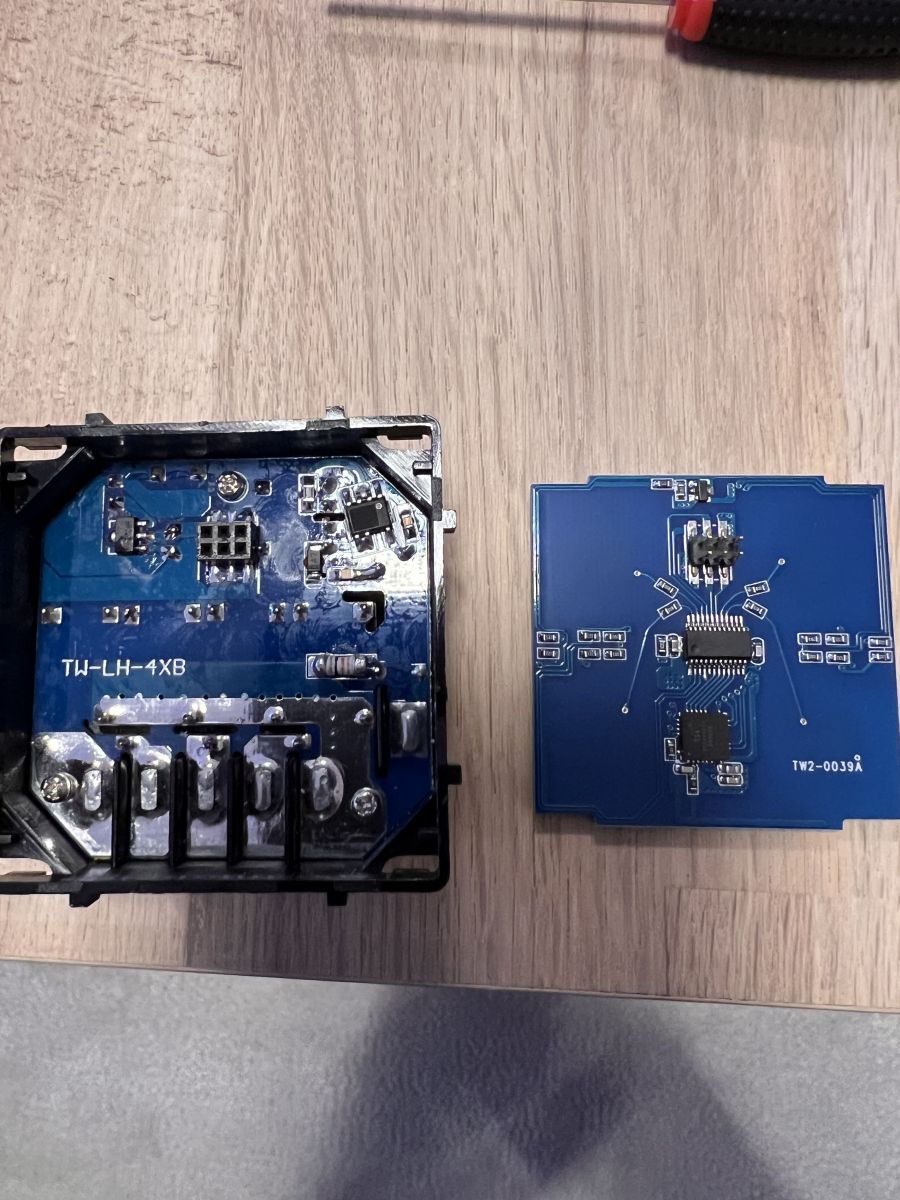
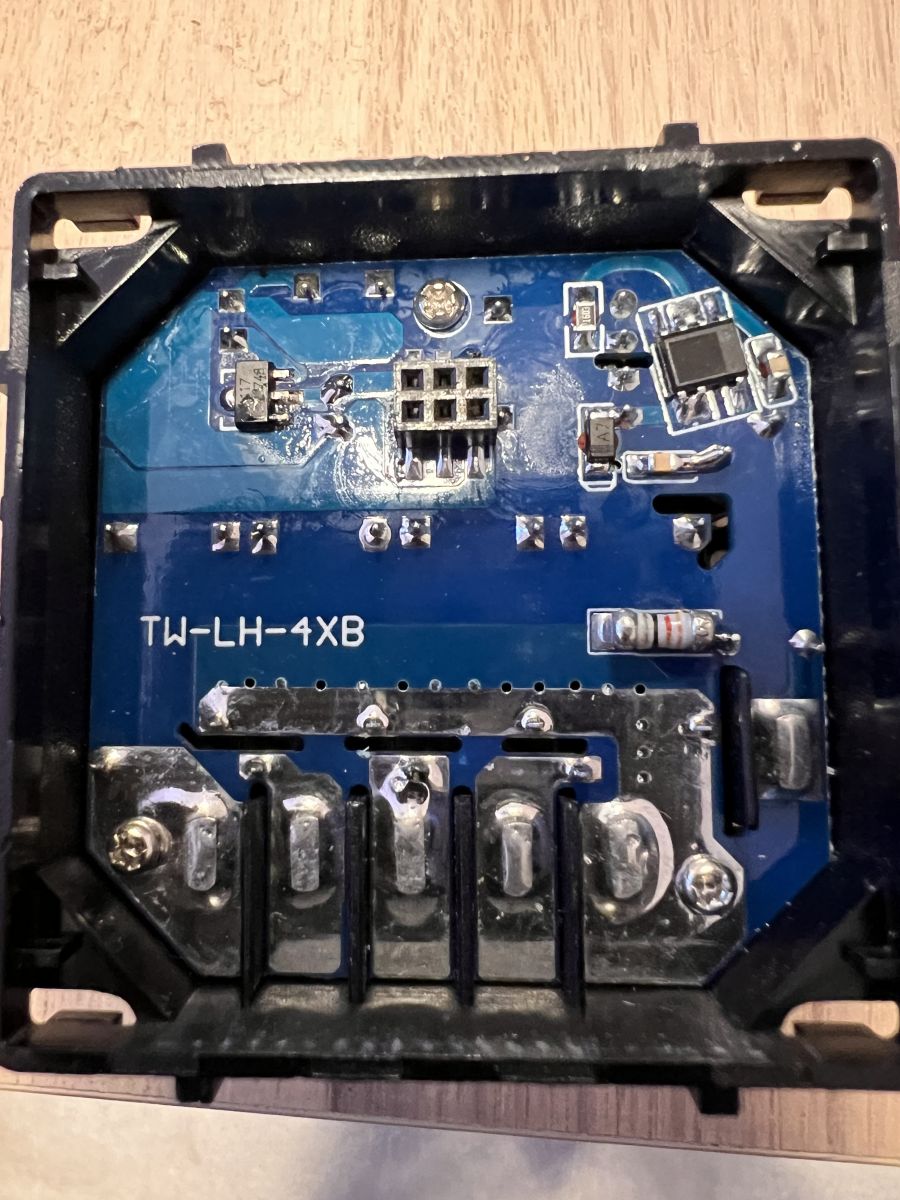
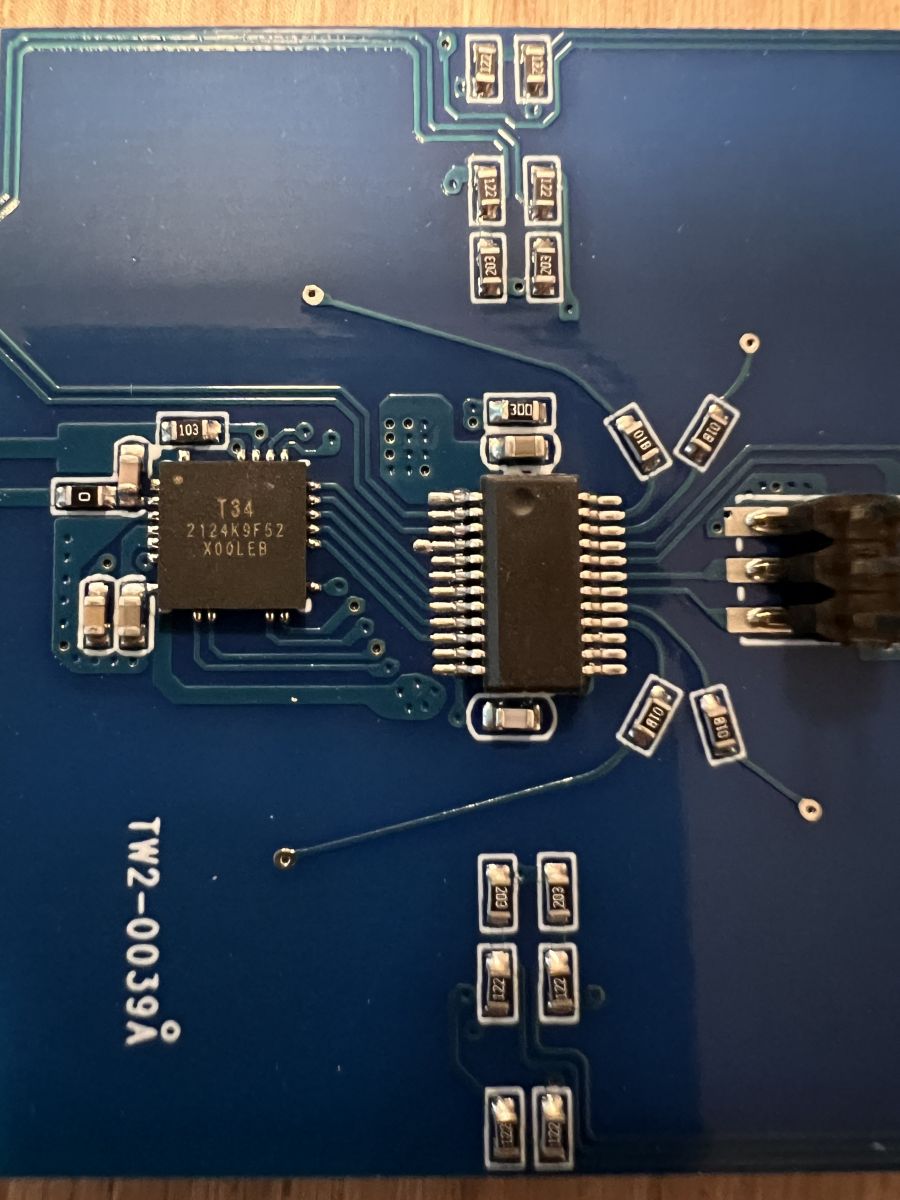
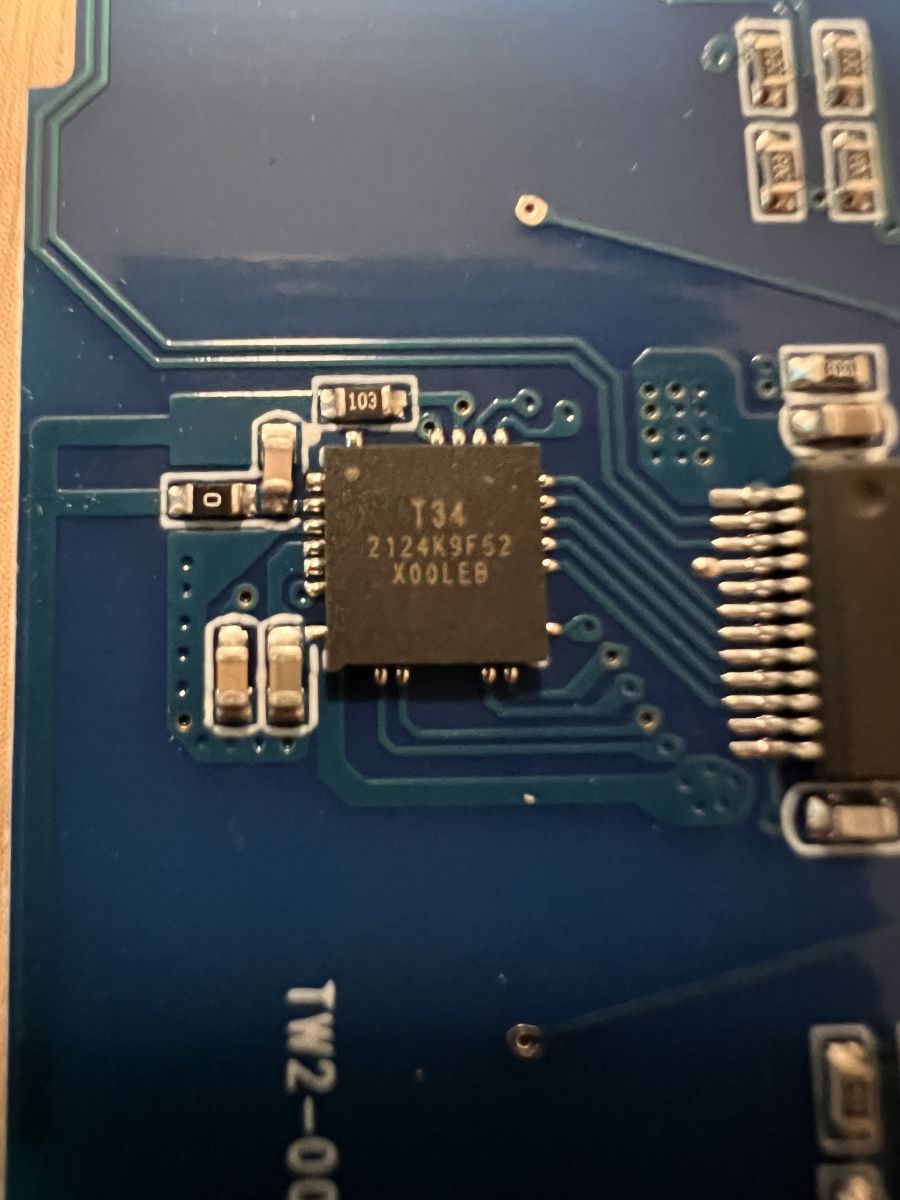
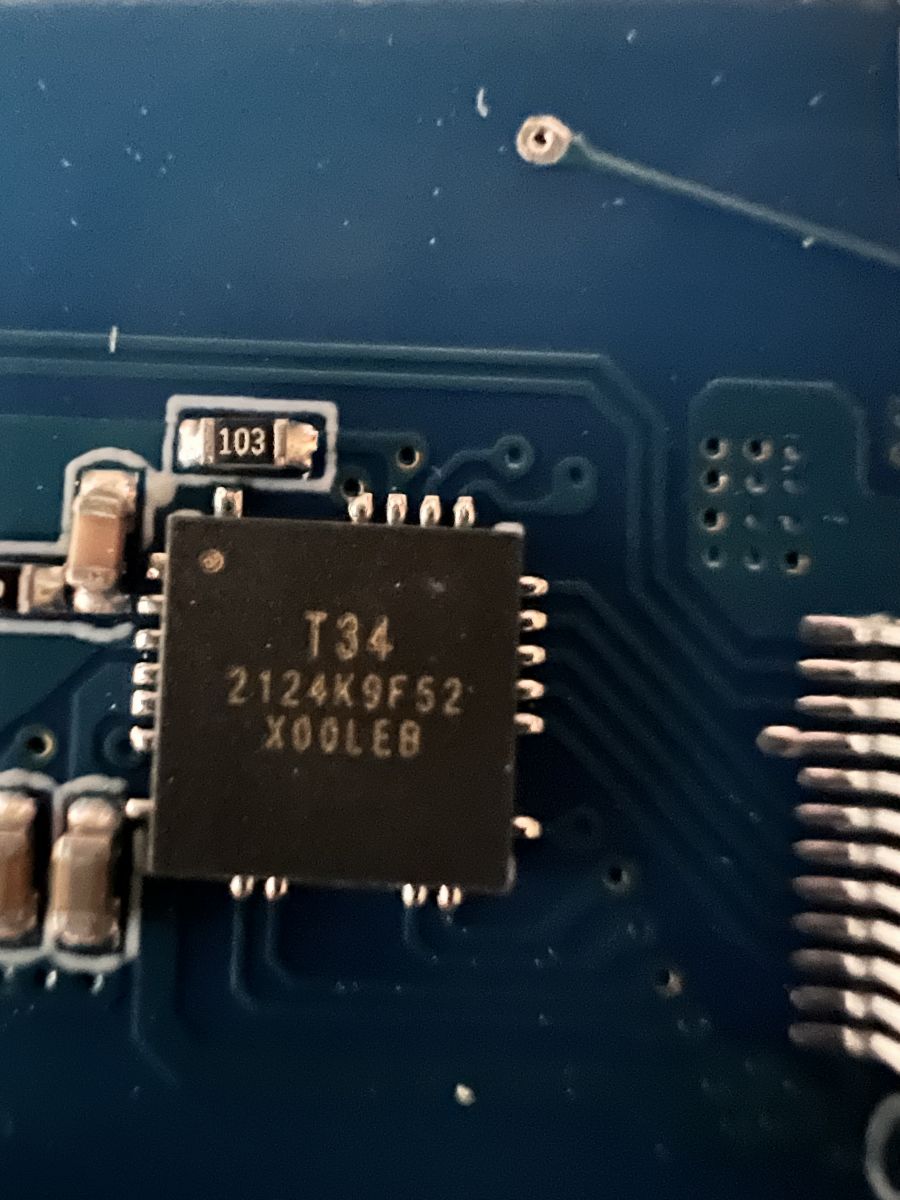
    Here are some pictures of the module:
    [BK7231N/T34] TW2-0001A -Bingoelec DIY Series Smart WiFi Wall Touch Switch Base [BK7231N/T34] TW2-0001A -Bingoelec DIY Series Smart WiFi Wall Touch Switch Base [BK7231N/T34] TW2-0001A -Bingoelec DIY Series Smart WiFi Wall Touch Switch Base [BK7231N/T34] TW2-0001A -Bingoelec DIY Series Smart WiFi Wall Touch Switch Base

    I did not want to reverse engineer the board so that I can flash it, but I tried and successfully flashed them with cloudcutter.

    Cloud Cutter option: 1.1.0 - BK7231N / oem_bk7231n_dctrl_switch

    Here is the config dump I made for the 1-Gang where Toggle 0 is the integrated relay and Toggle 1 is the backlight of the switch.
    Quote:

    {
    "vendor": "Tuya",
    "bDetailed": "0",
    "name": "Bingoelec DIY Series Smart WiFi Wall Touch Switch Base",
    "model": "DIY Series Smart WiFi Wall Touch Switch",
    "chip": "BK7231N",
    "board": "TW2-0001A",
    "flags": "1024",
    "keywords": [
    "Bingoelec",
    "DAJIMEI",
    "T34",
    "TW2-0001A"
    ],
    "pins": {
    "17": "Rel;0",
    "20": "WifiLED_n;0",
    "24": "Rel_n;1",
    "28": "Btn;0"
    },
    "command": "",
    "image": "https://obrazki.elektroda.pl/8186154900_1682756167.jpg",
    "wiki": "https://www.elektroda.com/rtvforum/topic3974861.html"
    }


    I don't have and don't need 2 and 3 gang modules, so I cannot provide pin configuration for them. If anyone is willing to provide the config feel free to reply to this thread.
  • ADVERTISEMENT
  • #2 20559832
    p.kaczmarek2
    Moderator Smart Home
    Posts: 14395
    Help: 650
    Rate: 12319
    Thanks. Actually, your module seem to have GPIO routed out for relay 2 and relay 3, so you should be easily able to check the GPIO required for Relay 2 and Relay 3 in the multi-gang modules, if you want, but that's not required.

    The template has been added.
    Helpful post? Buy me a coffee.
  • ADVERTISEMENT
  • #3 20559848
    gyenchev
    Level 5  
    Posts: 12
    Help: 1
    Rate: 6
    Yes, but the buttons are not routed, so I would prefer someone with the multi-gang module to check them.
  • #4 20750792
    danbratu
    Level 6  
    Posts: 10
    Rate: 1

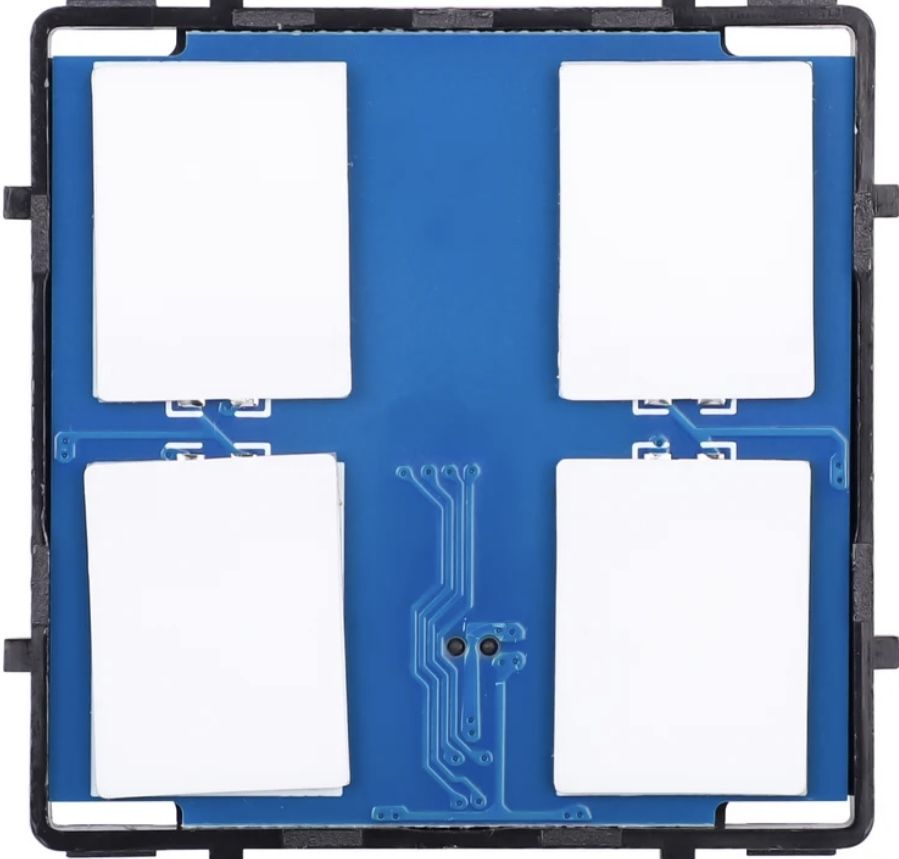
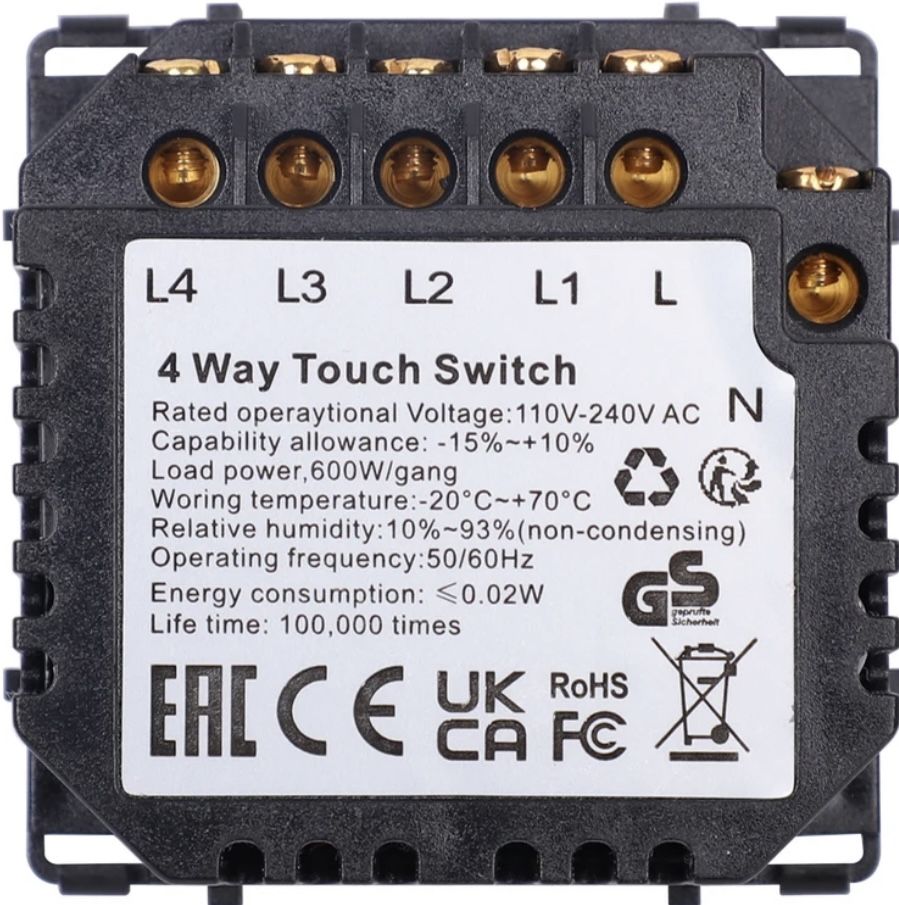
    I have a 2-gang switch Bingoelec T34. What do you need to check on it to create a template? I have no skills in electronics :) Double switch Bingoelec T34 with exposed electronics.
  • #5 20750920
    p.kaczmarek2
    Moderator Smart Home
    Posts: 14395
    Help: 650
    Rate: 12319
    Here is an easy way to get GPIO template:


    Helpful post? Buy me a coffee.
  • #6 20750989
    danbratu
    Level 6  
    Posts: 10
    Rate: 1
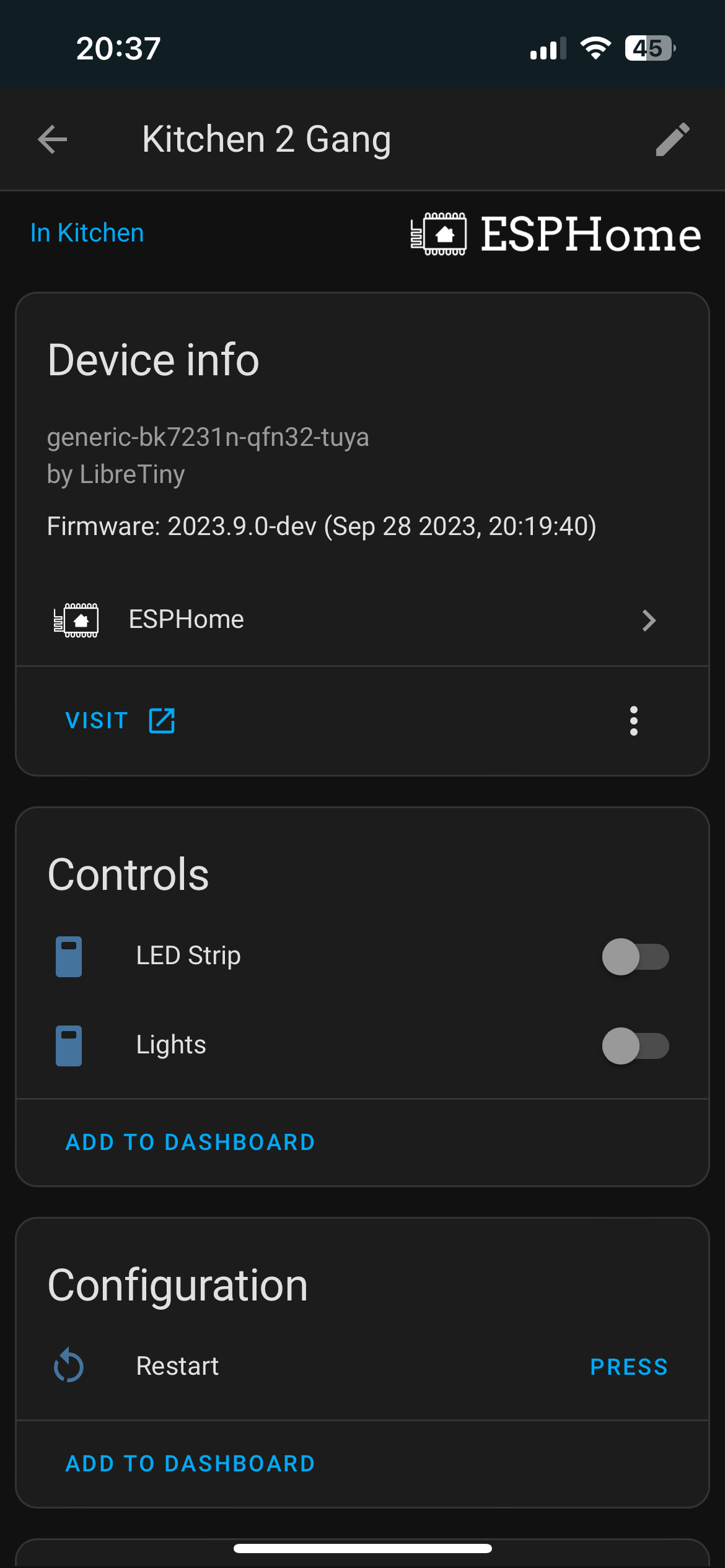
    Managed to flash it with libretiny ESPHome and it works like a dream, so I don't really need a new profile for CloudCutter. :)

    Screenshot of the ESPHome app showing device information in the kitchen.
  • #7 20752395
    danbratu
    Level 6  
    Posts: 10
    Rate: 1
    my esphome yaml for 2 gang switch:


    Code: YAML
    Log in, to see the code
  • #8 20754602
    danbratu
    Level 6  
    Posts: 10
    Rate: 1

    1/2/3 gang bingoelec diy switch modules use the same chipset T34 FW version 1.1.0 (as 1 and 2 gang), so easy to flash it with esp home/libretiny, but 4 gang I believe it uses a different chip as fw is 1.0.6 and there's no mark with T34 on the board and due to touch buttons can't see anything.
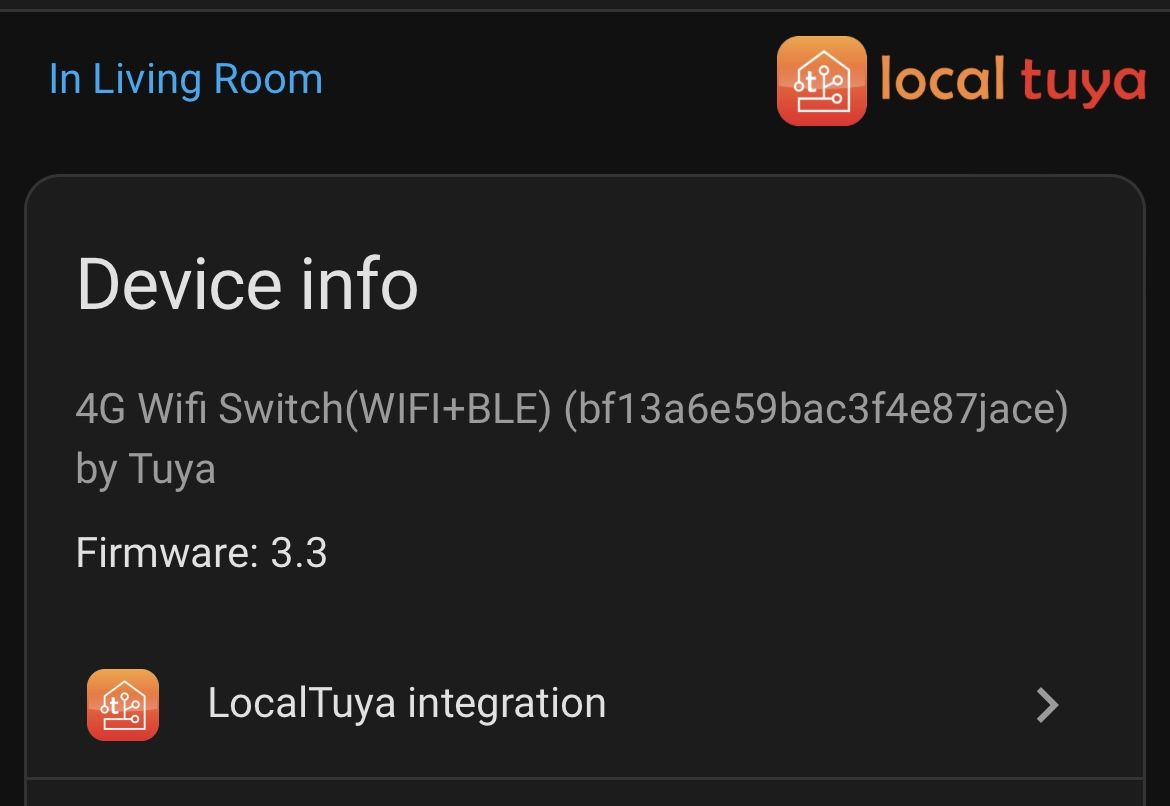
    Some data from tuya cloud for 4 gang (maybe someone will manage to identify the chip based on this data):
    "product_id": "vinqmcfbtepzjbw7"
    "product_name": "四路开关(WIFI+BLE)"
    "name": "4G Wifi Switch(WIFI+BLE)"
    "category": "kg"

    Also found that BSEED switches use the same diy switch modules: https://www.bseed.com/collections/wifi-light-switch
    So if anyone is willing to create profiles for these... I don't have the knowledge to do it myself :)
    They seem to be very popular in the UK
  • #9 20755135
    gyenchev
    Level 5  
    Posts: 12
    Help: 1
    Rate: 6
    Can you post pictures of the internals for 4 gang switch?
  • #11 20755179
    gyenchev
    Level 5  
    Posts: 12
    Help: 1
    Rate: 6

    The board can be removed from the power supply part. The microcontroller is on the other side. You can disassemble it and identify the controller. :)
  • ADVERTISEMENT
  • #12 20756213
    danbratu
    Level 6  
    Posts: 10
    Rate: 1

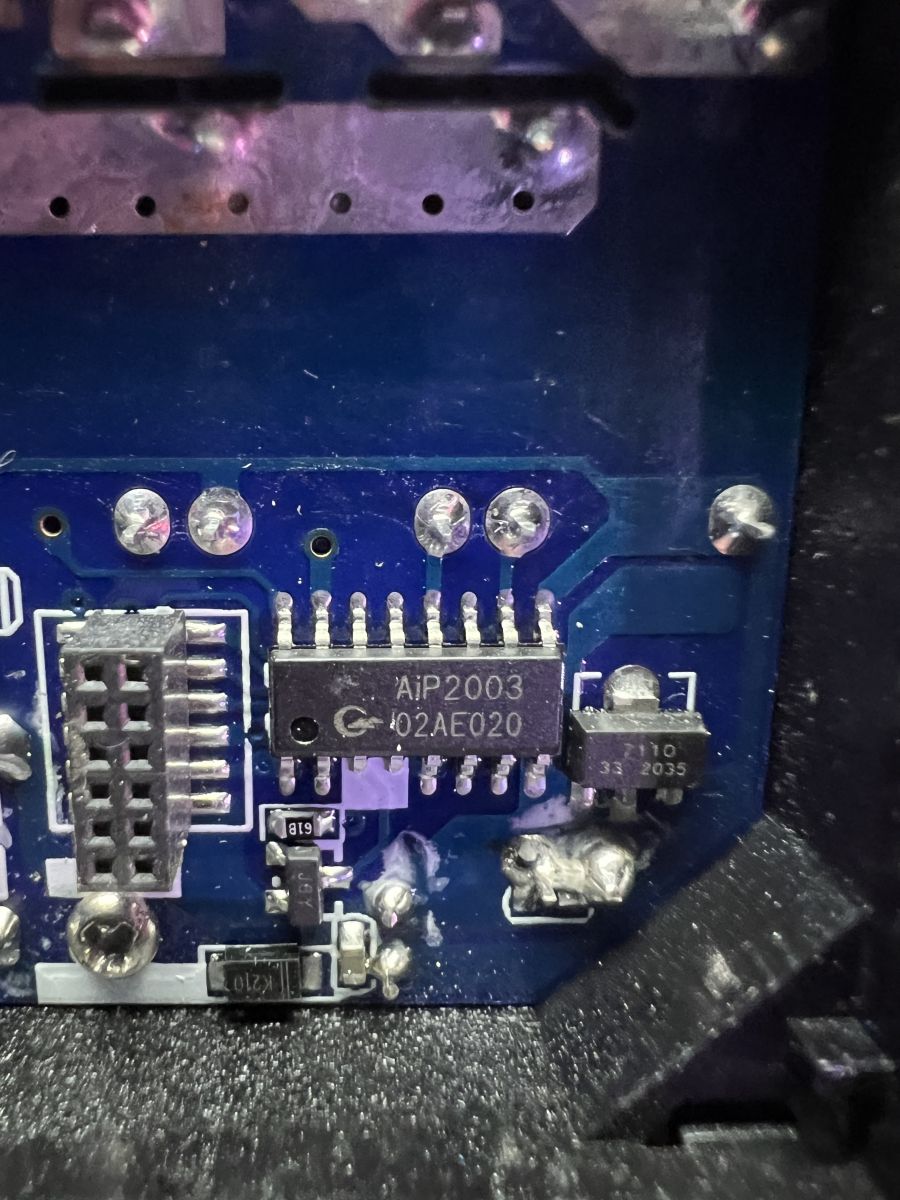
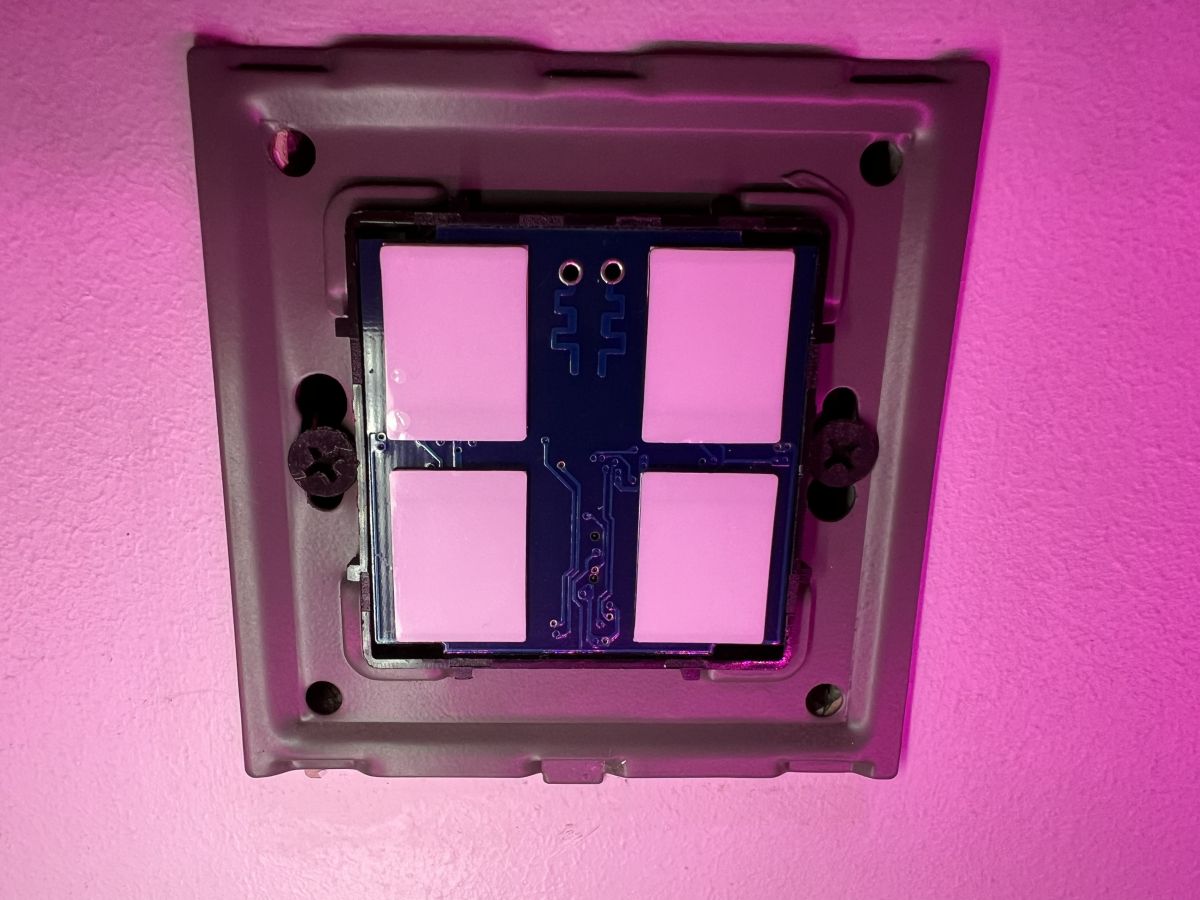
    Close-up of a circuit board with four large white rectangles and two round holes at the top. Close-up of an electronic board with a visible chip marked AiP2003. Close-up of the internal side of a blue printed circuit board with various electronic components. Close-up of a circuit board with an integrated circuit and resistors. Close-up of an AIP2003 integrated circuit on a blue printed circuit board with various electronic components.

    no luck finding the chip... it might be on the other side of the internal board. there are two versions though (first pic is from another switch bought from the same supplier 1 week before the second one but atm i don't have access to it to check the back of the board - it is installed at a different location)...
  • #13 20756414
    p.kaczmarek2
    Moderator Smart Home
    Posts: 14395
    Help: 650
    Rate: 12319
    Are you sure it's a WiFi version?
    Helpful post? Buy me a coffee.
  • #15 20756739
    gyenchev
    Level 5  
    Posts: 12
    Help: 1
    Rate: 6
    Can you give overview pictures of the module that has the buttons on it? Front and Back. Most of the pictures you gave seem to be of the power supply side which we are currently not that interested in :D
  • #16 20756945
    danbratu
    Level 6  
    Posts: 10
    Rate: 1
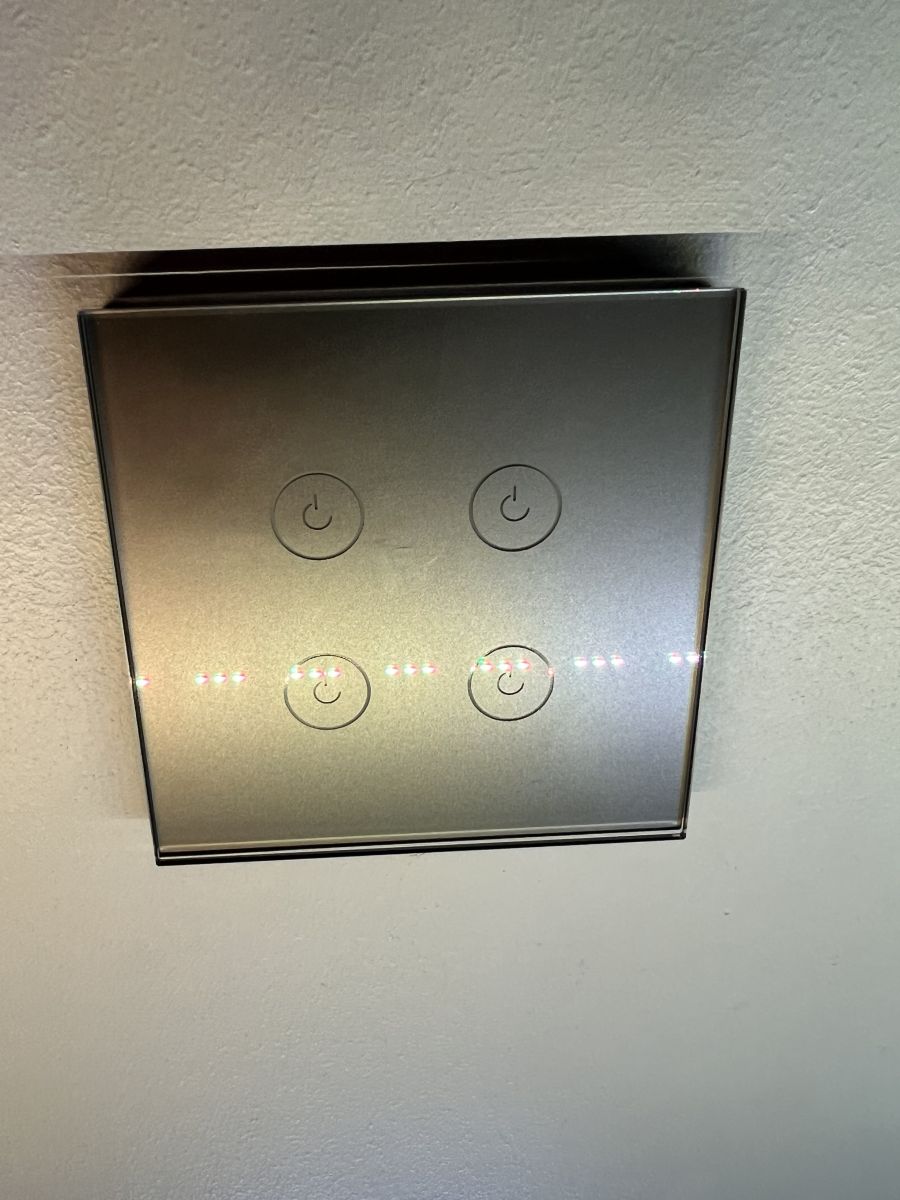
    One pic is from the front panel (the one with touch buttons) and one from the power supply. I'll take some better pictures later in the evening though.


    Added after 8 [hours] 8 [minutes]:

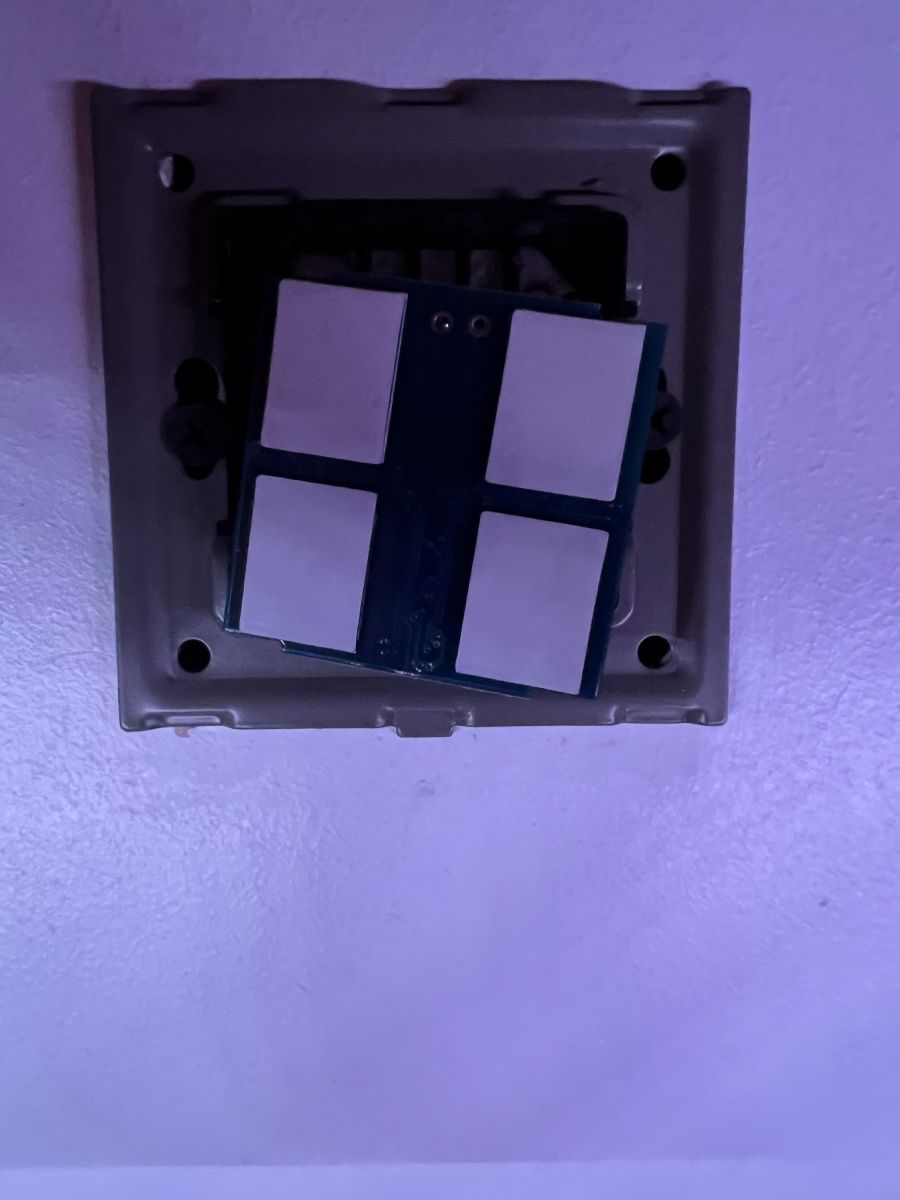
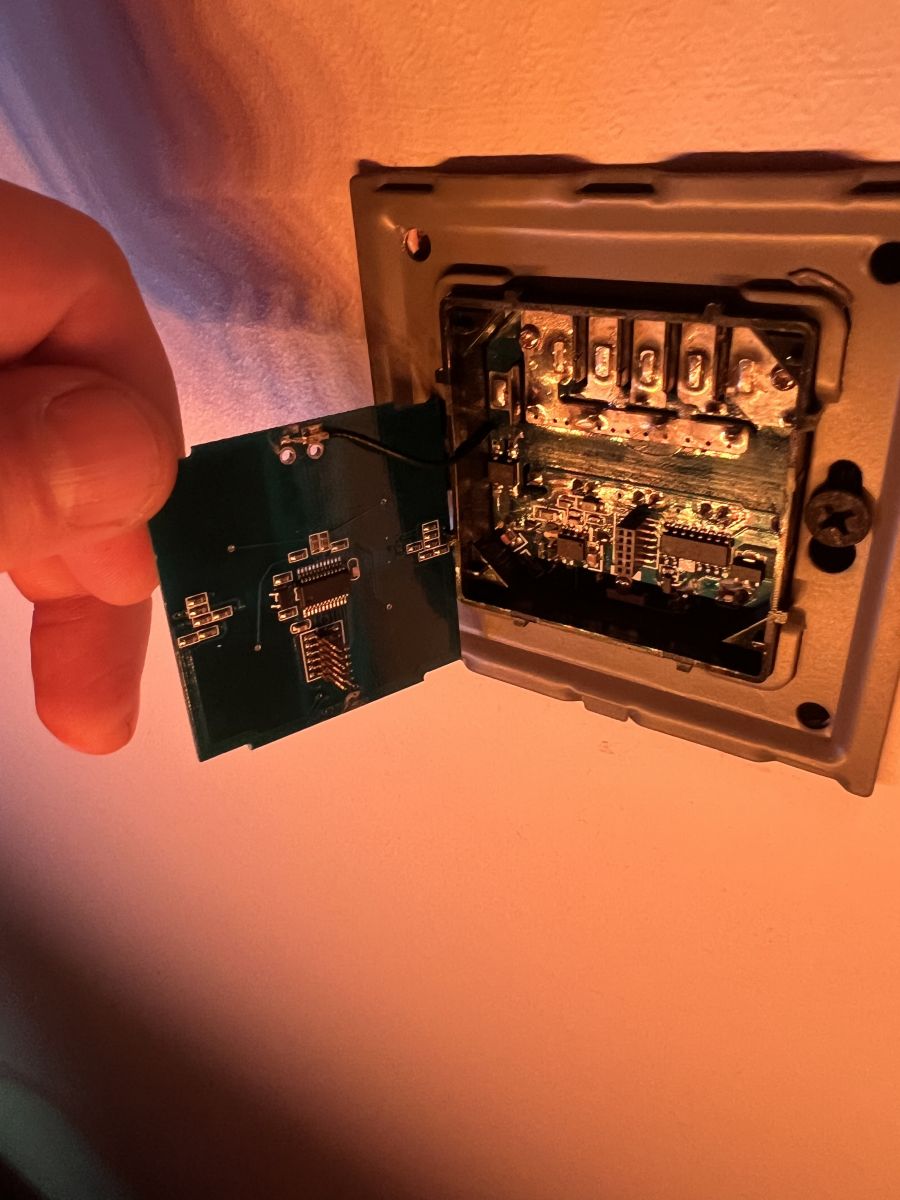
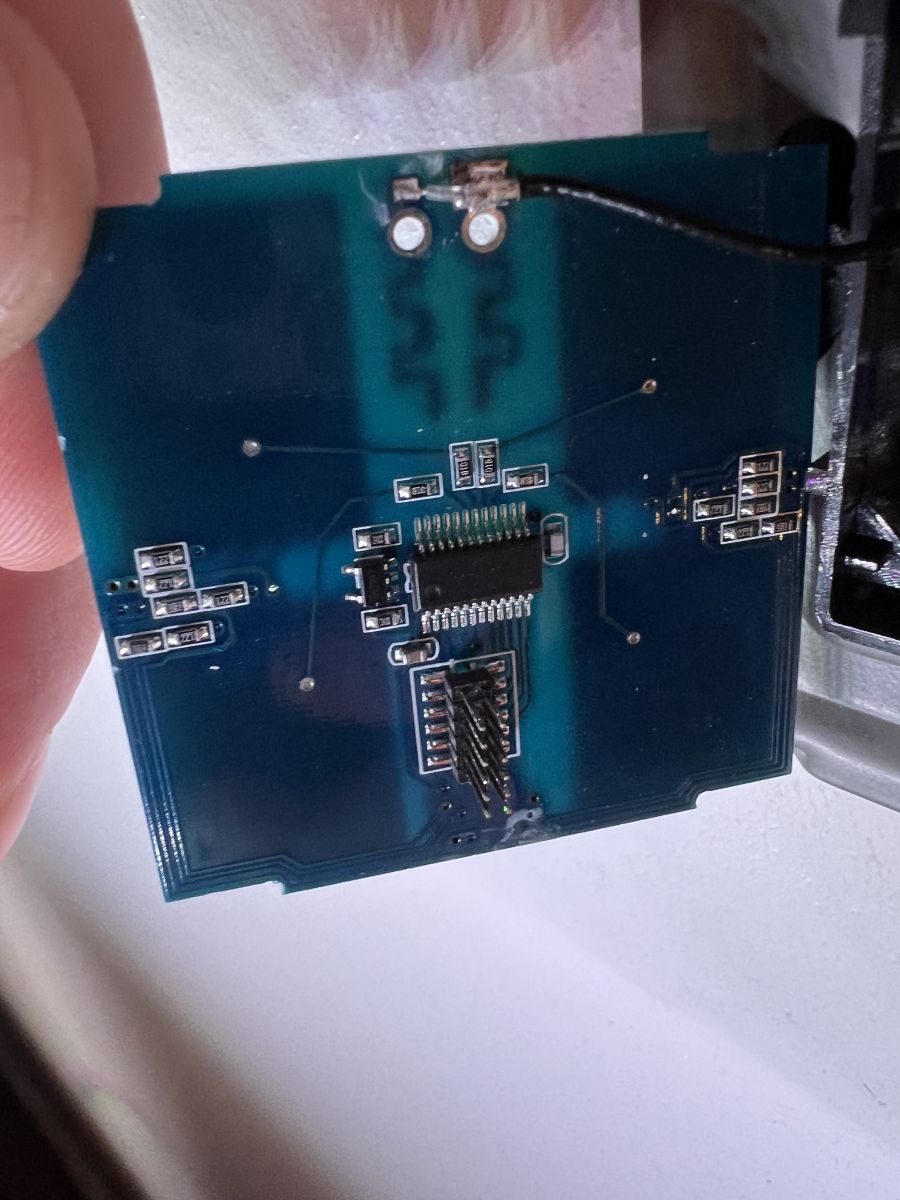
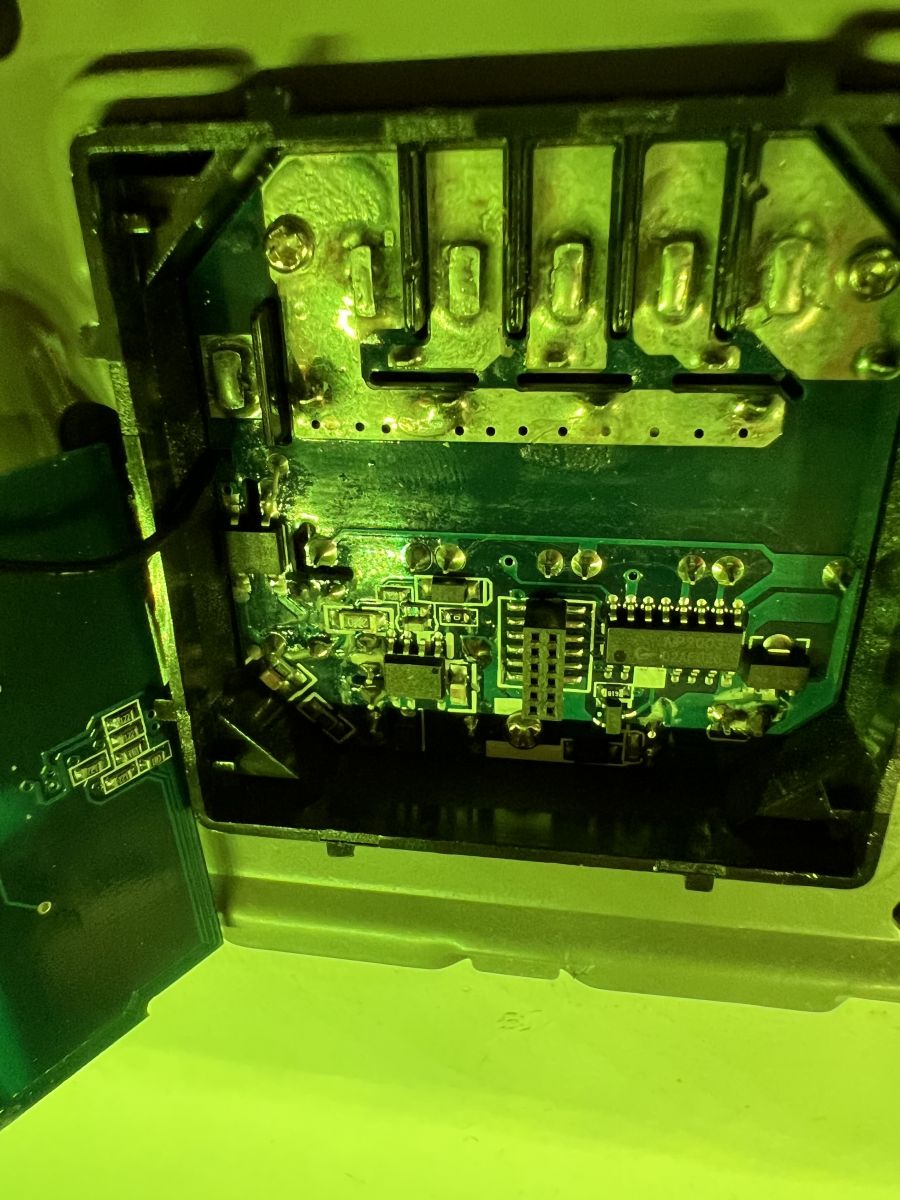
    Touch panel with four round buttons on a wall. Front panel with touch buttons mounted on a wall with purple lighting. Front panel with touch buttons on the wall. Person holding an electronic circuit board next to a wall-mounted panel. The image shows a section of a printed circuit board with electronic components and soldered connectors. Interior of an electronic device with visible circuit elements and connections.
  • ADVERTISEMENT
  • #17 20774888
    gyenchev
    Level 5  
    Posts: 12
    Help: 1
    Rate: 6

    Sorry for the late reply, but I have noticed that you sent photos. Looking at where the WiFi antenna cable is going, I believe that the actual microcontroller is on the power board on the back. As far as I can see from the traces on the board with the buttons, there are just the buttons, the controller that takes the signal from them, and the WiFi antenna. So I would guess that the actual microcontroller is on the back of the internal board.
  • #18 20774998
    danbratu
    Level 6  
    Posts: 10
    Rate: 1

    I'll try to remove the switch and reveal the microcontroller once I get back home somewhere around 1st of Nov.
  • #19 20784301
    danbratu
    Level 6  
    Posts: 10
    Rate: 1
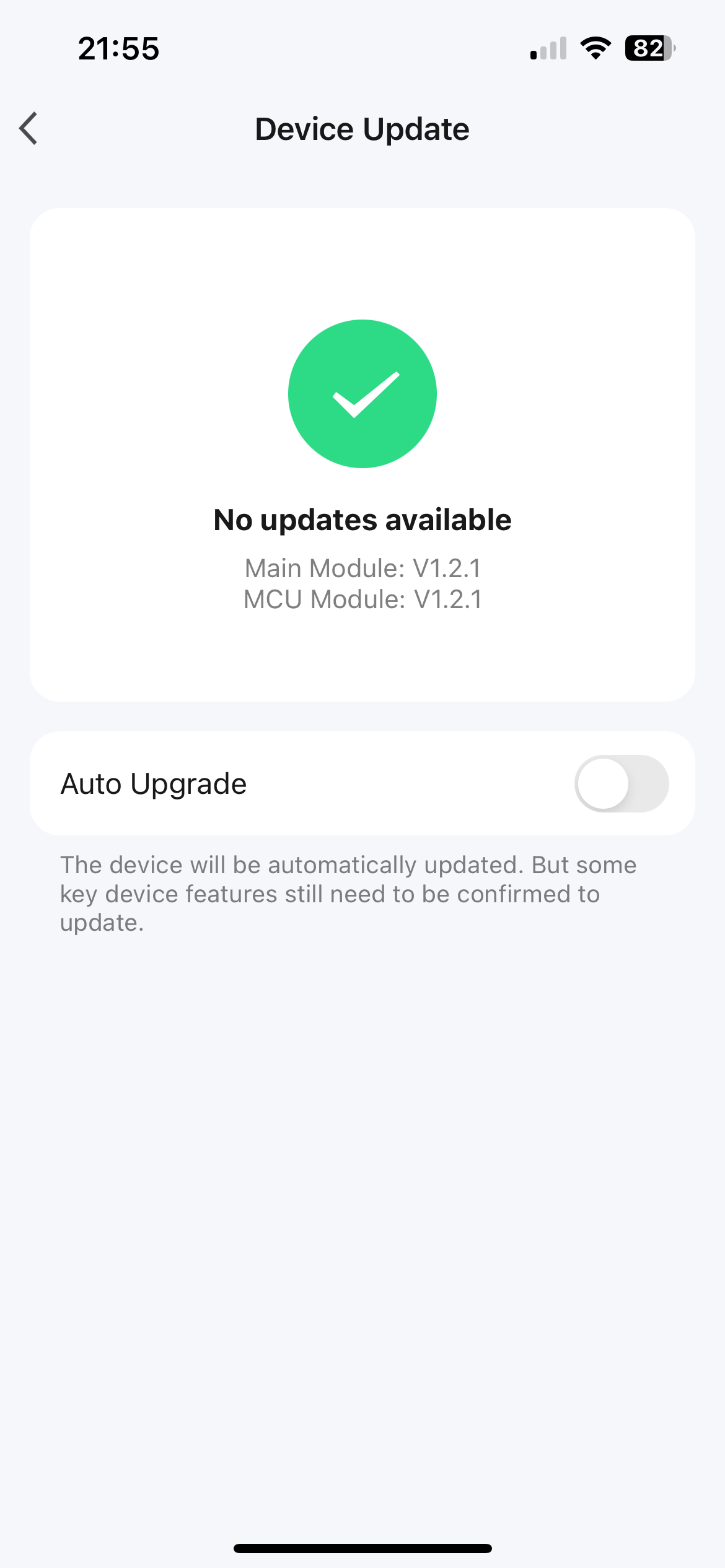
    Electronic board labeled TW-WIFI-4 viewed from above. Two Bseed 4Gang electronic modules on a table, showing components and circuitry. Interior of a Bseed 4Gang device with visible circuit board and electronic components. PCB with mounted electronic components, including a T34 microcontroller. Close-up of a circuit board with a T34 microcontroller visible. Close-up of T34 microcontroller on a circuit board. Device update screen showing no updates available.

    This is one of the two Bseed 4Gang I have. Microcontroller is T34 so easy to flash with ESPhome (chosen fw 1.2.1 dctrl switch in cloudcutter)
    Working like a charm :)
    The other one I'll dismantle it to identify the microcontroller when I'll be at the location where it is installed (pics posted in previous posts)

    ESPhome yaml (for 4gang with T34 microcontroller):

    Code: YAML
    Log in, to see the code
  • #20 20911947
    alan807571
    Level 1  
    Posts: 1
    Rate: 1

    Hi guys, this is Tangwo Electric Technology Co., Ltd, manufacturer of smart switches and sockets from China. Bseed and Bingoelec smart switches are the same, both manufactured by our factory. Have you seen the letter TW on the chip? It's the abbreviation of Tangwo.
    So, any assistance needed from us? You can reach us at email: sale02(_at_)tangwoia.com or WhatsApp: 0086-18969742816.
  • #21 20911970
    p.kaczmarek2
    Moderator Smart Home
    Posts: 14395
    Help: 650
    Rate: 12319
    @alan807571 would you be able to provide T34, BK7231N or TW module datasheet here?
    Helpful post? Buy me a coffee.

Topic summary

✨ The discussion revolves around the Bingoelec T34 smart WiFi wall touch switch modules, specifically the TW2-0001A model. Users share experiences with flashing the modules using CloudCutter and ESPHome, highlighting the ease of accessing GPIO for multi-gang configurations. There are inquiries about the internal components, particularly the microcontroller, with suggestions to identify it by disassembling the units. Users also note that Bseed switches utilize the same modules as Bingoelec, and there is a mention of the manufacturer, Tangwo Electric Technology Co., Ltd. The conversation includes requests for templates and configurations for different gang switches, with shared YAML configurations for ESPHome.
Generated by the language model.

FAQ

TL;DR: 4 relays on the 4‑gang T34 map to P26/P24/P14/P28; "Microcontroller is T34 so easy to flash with ESPhome" via Cloudcutter. [Elektroda, danbratu, post #20784301]

Why it matters: This helps DIYers flash Bingoelec/Bseed T34 wall switches safely and map buttons, relays, and LEDs.

Quick Facts

What chip and board does the Bingoelec DIY T34 1‑gang use?

It uses Tuya BK7231N on board TW2‑0001A. The sample was flashed using Cloudcutter option 1.1.0. The device name was 'Bingoelec DIY Series Smart WiFi Wall Touch Switch Base'. The config showed WiFi LED, button, and relay pins. The backlight toggles separately from the main relay. [Elektroda, gyenchev, post #20559817]

How do I flash a T34/BK7231N switch with Cloudcutter?

Users flashed these switches over-the-air with Cloudcutter. Select profile 1.1.0 'oem_bk7231n_dctrl_switch' for T34 BK7231N. Then follow pairing and cut procedures. After flashing, configure GPIOs per your gang count.
  1. Pair the switch to Tuya and connect it to Wi‑Fi.
  2. Run Cloudcutter and select 1.1.0 oem_bk7231n_dctrl_switch.
  3. Execute the exploit, then apply your template and test. This sequence worked for the 1‑gang TW2‑0001A. [Elektroda, gyenchev, post #20559817]

What GPIO template fits a 1‑gang TW2‑0001A?

Map P17 as Relay 0. Set P24 as inverted relay/backlight channel. Set P20 as WiFi LED (active low). Set P28 as Button 0. Name matches 'Bingoelec DIY Series Smart WiFi Wall Touch Switch'. [Elektroda, gyenchev, post #20559817]

Do 1/2/3‑gang units share the same chipset?

Yes, reports show 1/2/3‑gang use T34 with firmware 1.1.0. A 4‑gang unit was noted with different firmware and possibly a different chip. Touch glass hid markings, complicating identification. Treat 4‑gang as an edge case when choosing profiles. [Elektroda, danbratu, post #20754602]

What’s the ESPHome/LibreTiny config for the 2‑gang T34?

Two touch inputs use P28 and P14 with pull‑ups and inversion. Relays drive P17 and P15. The status LED sits on P20. The posted YAML added a Restart button and uptime sensors. This configuration worked on a Bingoelec 2‑gang. [Elektroda, danbratu, post #20752395]

Which Cloudcutter profile worked for a 4‑gang Bseed/Bingoelec?

A Bseed 4‑gang with T34 flashed using Cloudcutter firmware 1.2.1 'dctrl switch'. ESPHome support followed immediately. The author reported it working smoothly. Use this when your 4‑gang has the T34 marking. [Elektroda, danbratu, post #20784301]

How do the 4‑gang touch buttons and relays map to GPIO?

Buttons map to P6, P7, P8, and P9. Relays map to P26, P24, P14, and P28. The status LED uses P23. That is four inputs and four outputs total. Configure these in ESPHome as shown. [Elektroda, danbratu, post #20784301]

Can I use ESPHome with LibreTiny on these modules?

Yes, users flashed BK7231N T34 based units with LibreTiny ESPHome. One 2‑gang user said it "works like a dream." No extra profile was required after flashing. Web server and API features worked as expected. [Elektroda, danbratu, post #20750989]

Is there an existing template for this module?

Yes. A maintainer acknowledged the module and added the template. "The template has been added." You can build on it for multi‑gang variants. [Elektroda, p.kaczmarek2, post #20559832]

Can I convert a 1‑gang into a multi‑gang using spare GPIOs?

Some single‑gang boards expose extra relay GPIOs. However, the touch button lines for other gangs are not routed. Without those, adding buttons is impractical. Use a genuine multi‑gang board for full function. [Elektroda, gyenchev, post #20559848]

How do I identify the microcontroller on a 4‑gang board?

Remove the logic board from the power supply section. The microcontroller is on the other side. Disassemble carefully to reveal markings. Photos in the thread show this approach. [Elektroda, gyenchev, post #20755179]

How can I confirm my 4‑gang switch is the Wi‑Fi version?

Check the product label and app pairing. The referenced unit shows 'WiFi' on the label. That confirms the radio type before flashing. Photograph labels for future reference. [Elektroda, danbratu, post #20756463]

How can I find unknown GPIOs without schematics?

Use the suggested video method to probe and log GPIO changes. It helps build a template quickly. You only need basic tools and patience. Follow the demonstrated steps. [Elektroda, p.kaczmarek2, post #20750920]

Are Bseed and Bingoelec the same, and what does 'TW' stand for?

The manufacturer confirmed both brands use the same modules. 'TW' on the chip abbreviates Tangwo, their factory name. They also offered direct technical assistance. [Elektroda, alan807571, post #20911947]
Generated by the language model.
ADVERTISEMENT