logo elektroda
logo elektroda
X
logo elektroda
Dostępna jest polska wersja

Czy wolisz polską wersję strony elektroda?

Nie, dziękuję Przekieruj mnie tam

Flashing Wi-Fi RF 433 Smart Switch with T34 Chip: Locating CEN Pin Without Visible Pads

antoninoa973 294 3
ADVERTISEMENT
  • #1 21836195
    antoninoa973
    Level 2  
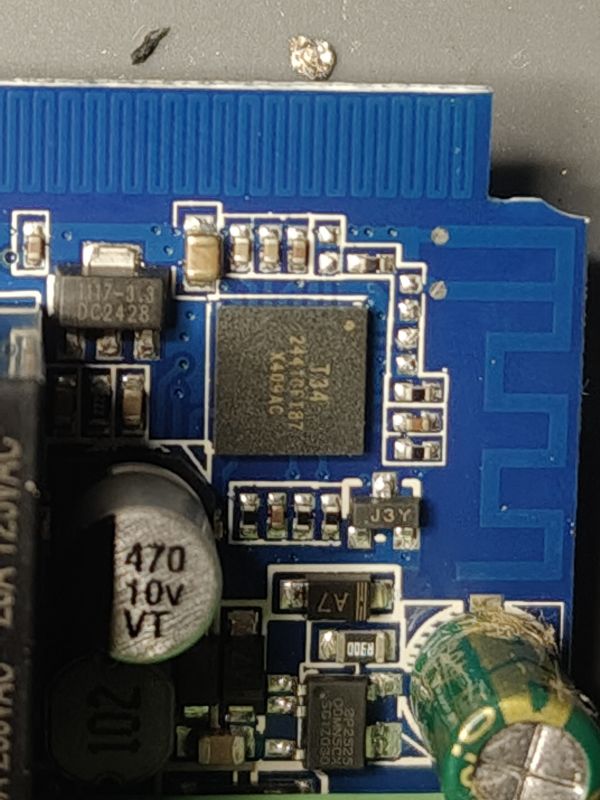
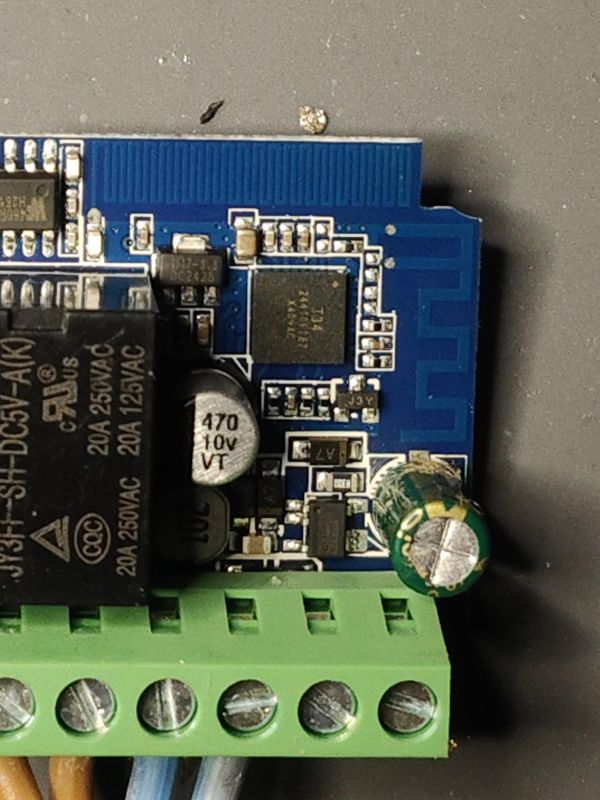
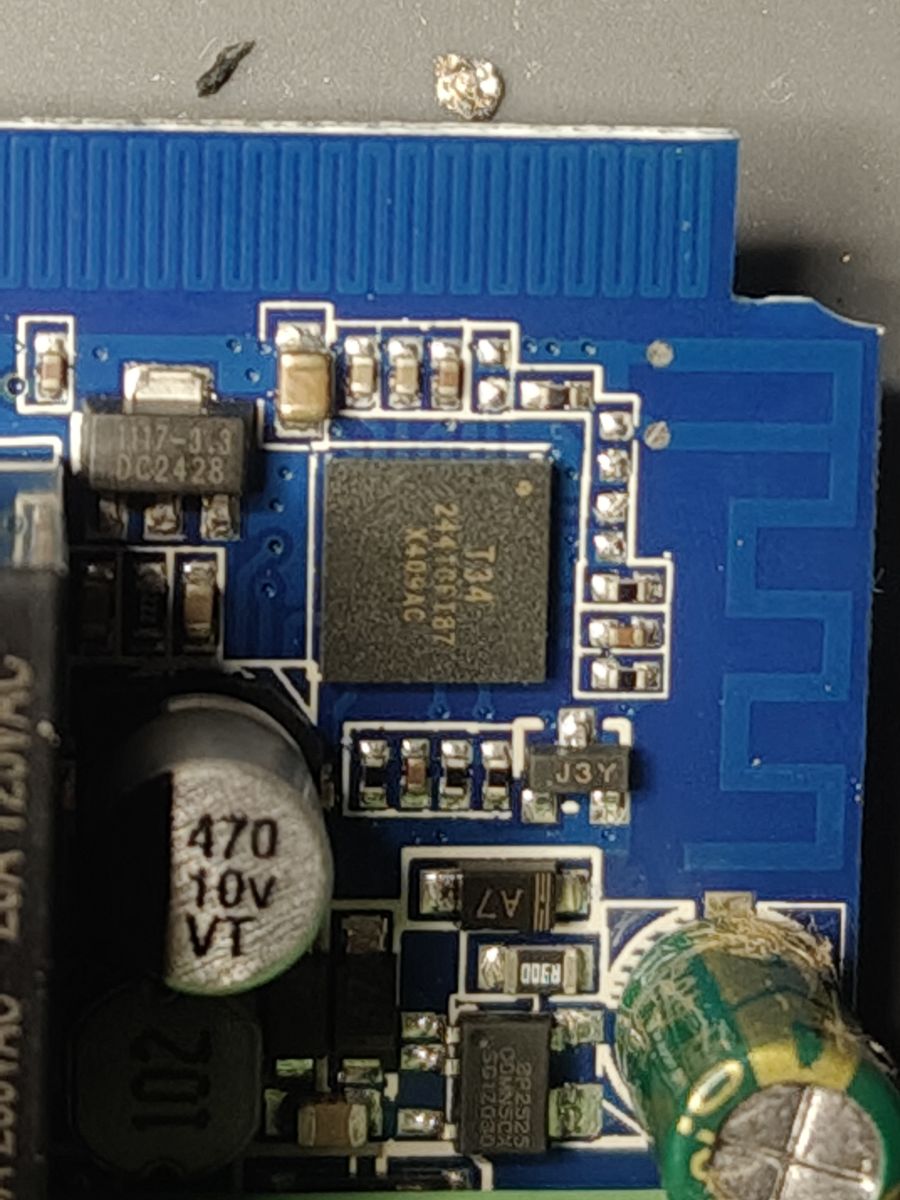
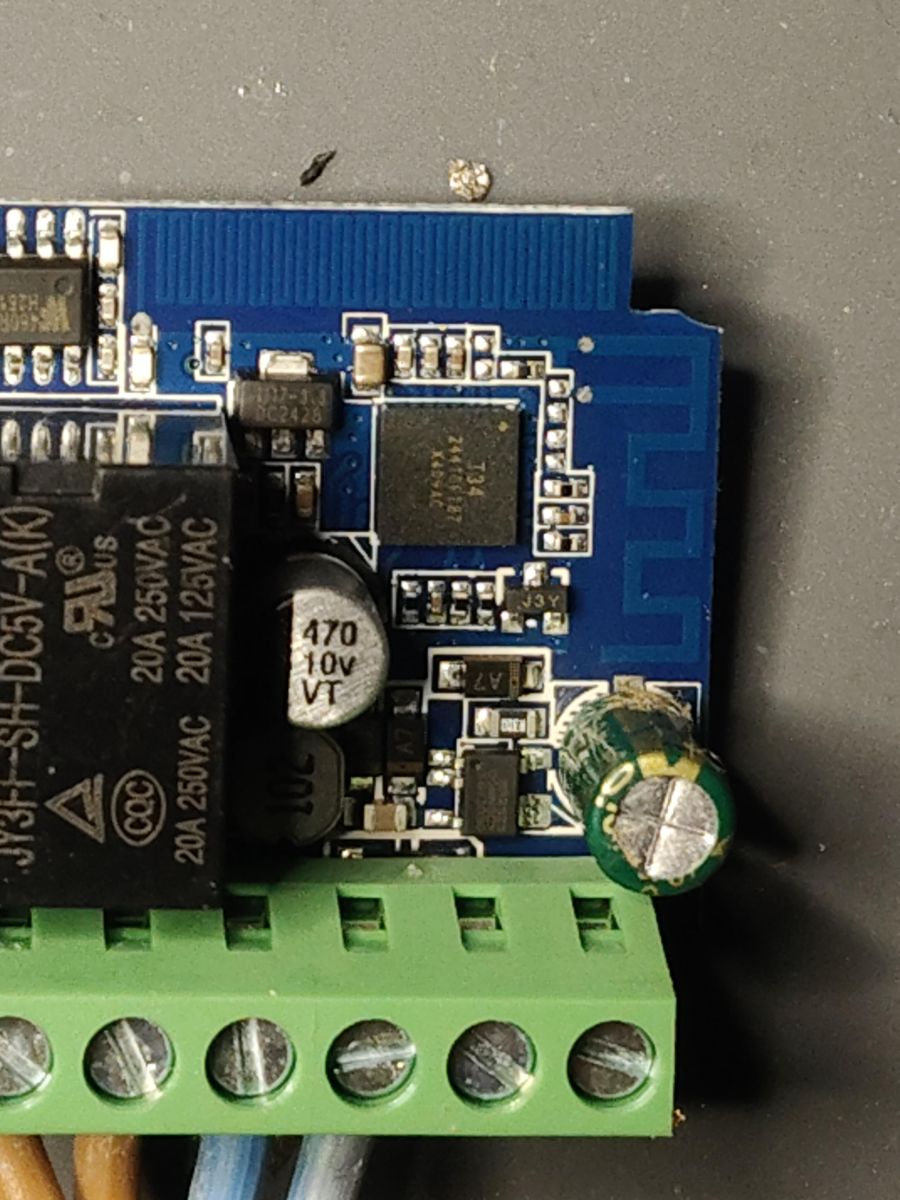
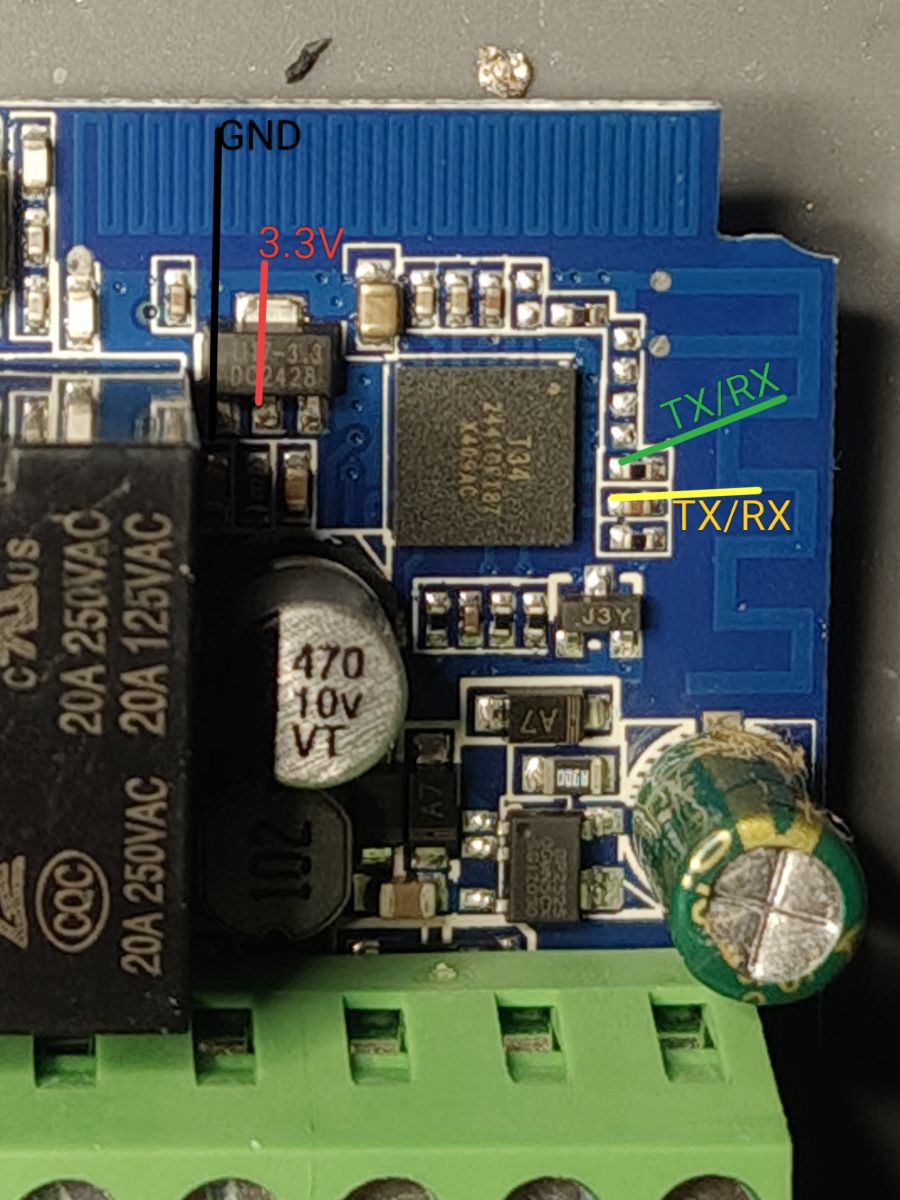
    A smart switch device with Wi-Fi and RF 433. It uses a T34, but the pins are not visible. I managed to figure out the 3.3 V, GND, TX, RX pins, but I still need to figure out where the CEN is connected to boot the flash chip. Has anyone managed to flash this device where the T34 pads are not visible? I've attached some images to help you understand better.
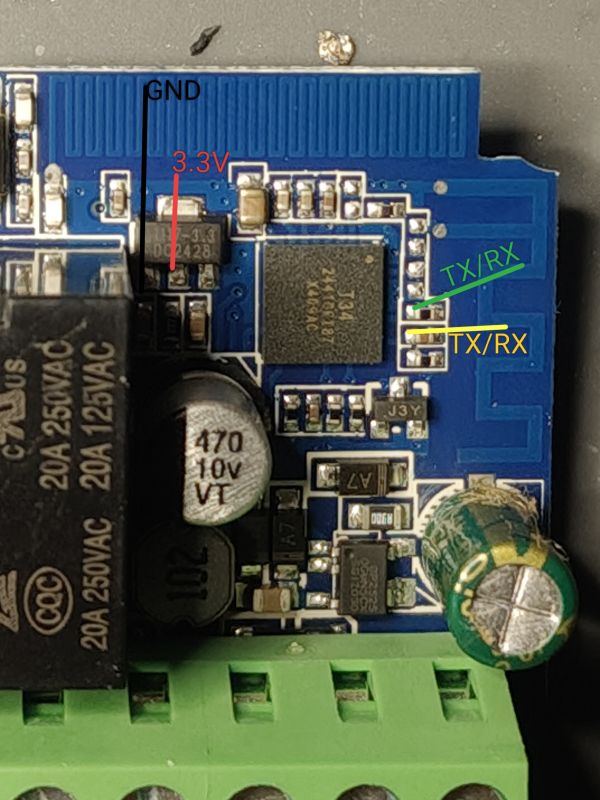
    Close-up of a PCB with a T34 chip and marked pads for GND, 3.3V, and TX/RX.
    Close-up of a blue PCB with an IC, SMD parts, and a printed antenna trace
    Close-up of a smart switch PCB with T34 chip, relay, electrolytic capacitors, and green screw terminal block

    AI: Have you already tried tracing the PCB or using a multimeter to locate the CEN pin, or checked the T34 datasheet for possible pinouts? If so, what did you find?
    I have already tried to use the multimeter and by using it I was able to find the 3.3 V, GND, TX and RX pins, but I can't find the CEN pin
  • ADVERTISEMENT
  • #2 21836371
    divadiow
    Level 38  
    CEN is not essential. You can simply power-on (3.3v) or power-cycle the device while Easy Flasher is waiting for connection
  • ADVERTISEMENT
  • #3 21837009
    DanTheDerg
    Level 1  
    I've recently ordered a bunch of the same switches in the hope of receiving a version where flashing would be relatively easy, but instead I got this version with the T34 too.
    There already is a forum post on flashing this exact type of Wi-Fi smart switch:
    https://www.elektroda.com/rtvforum/topic4079733.html#21705064
    There are blue and green PCBs with identical layouts.

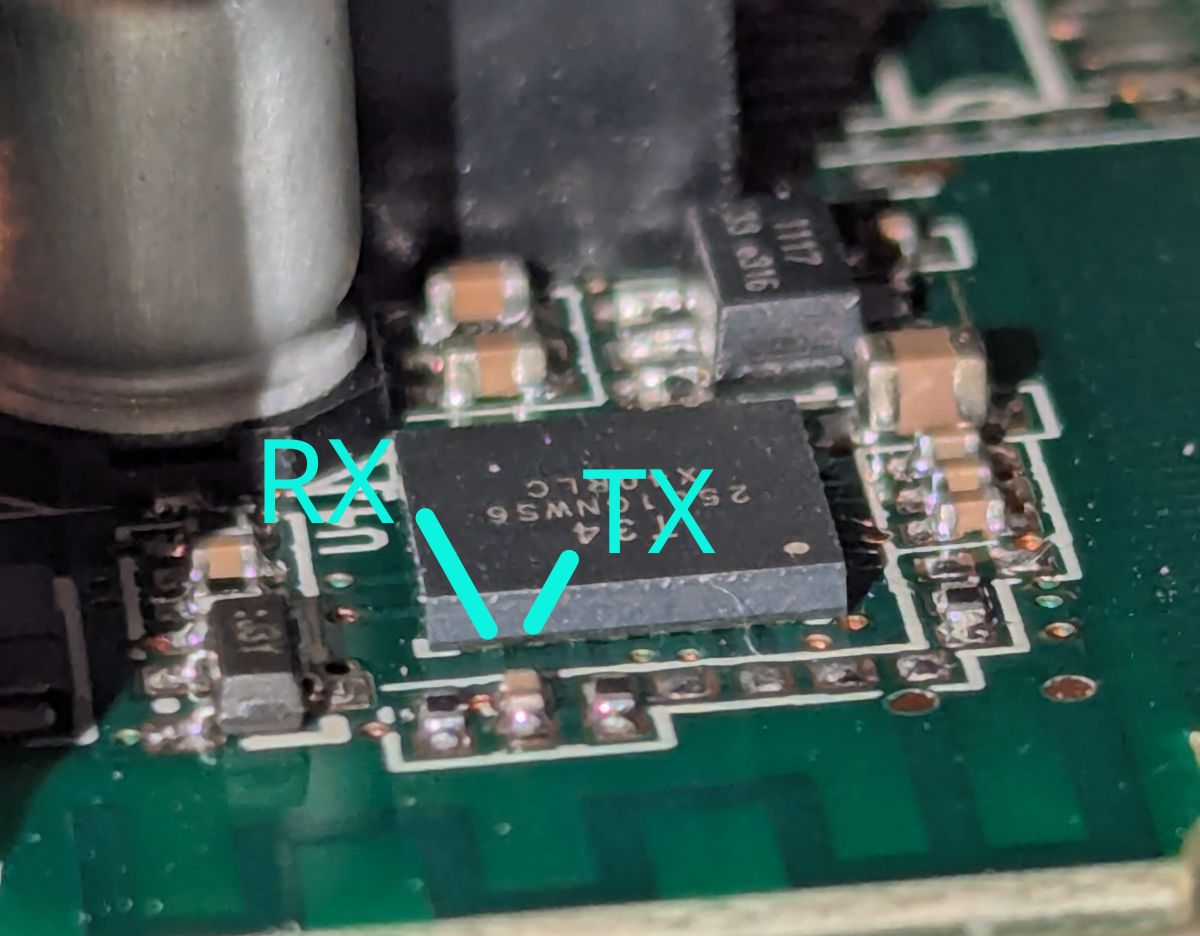
    Sadly, you have misidentified one of the pins. The one you've marked in yellow is RX, while TX is the pin between the two you've marked. It is completely hidden under the chip, hence there is almost no option other than desoldering and resoldering it using hot air. Someone managed to flash it by sticking a very thin wire underneath, just enough to make contact with the TX pad. However, I myself did not have any success with this method.

    Below is the correct location of the RX/TX pins from one of the boards I got. The batch was mixed with green and blue boards.
    Close-up of a PCB with an IC and overlaid RX and TX labels pointing to pins
  • #4 21837056
    antoninoa973
    Level 2  
    Desoldering and re-soldering the T34 chip correctly is too difficult and risky for me because I've never done it before, so I'll just use it as is. Thanks, everyone, for the replies.
ADVERTISEMENT