logo elektroda
logo elektroda
X
logo elektroda

UT210E - multimeter for the installer?

TechEkspert  27 8499 Cool? (+8)
📢 Listen (AI):

TL;DR

  • UT210E clamp multimeter is evaluated as a pocket-sized installer tool for checking cables, voltage, live wires, current, capacitance, and continuity.
  • Its clamp measures the presence and direction of 10mA currents without disconnecting the circuit, with a 2A DC clamp range, and it can hang from the clamp during voltage tests.
  • The meter has NCV live-wire detection, a backlit display, 2xAAA power, and DCV/ACV, DCA/ACA, resistance, capacitance, diode, and continuity ranges.
  • Small-current readings in the order of several milliamperes are approximate, but the meter can still help identify cables; a flashlight, pair finder, and LAN tester are still missing.
Generated by the language model.
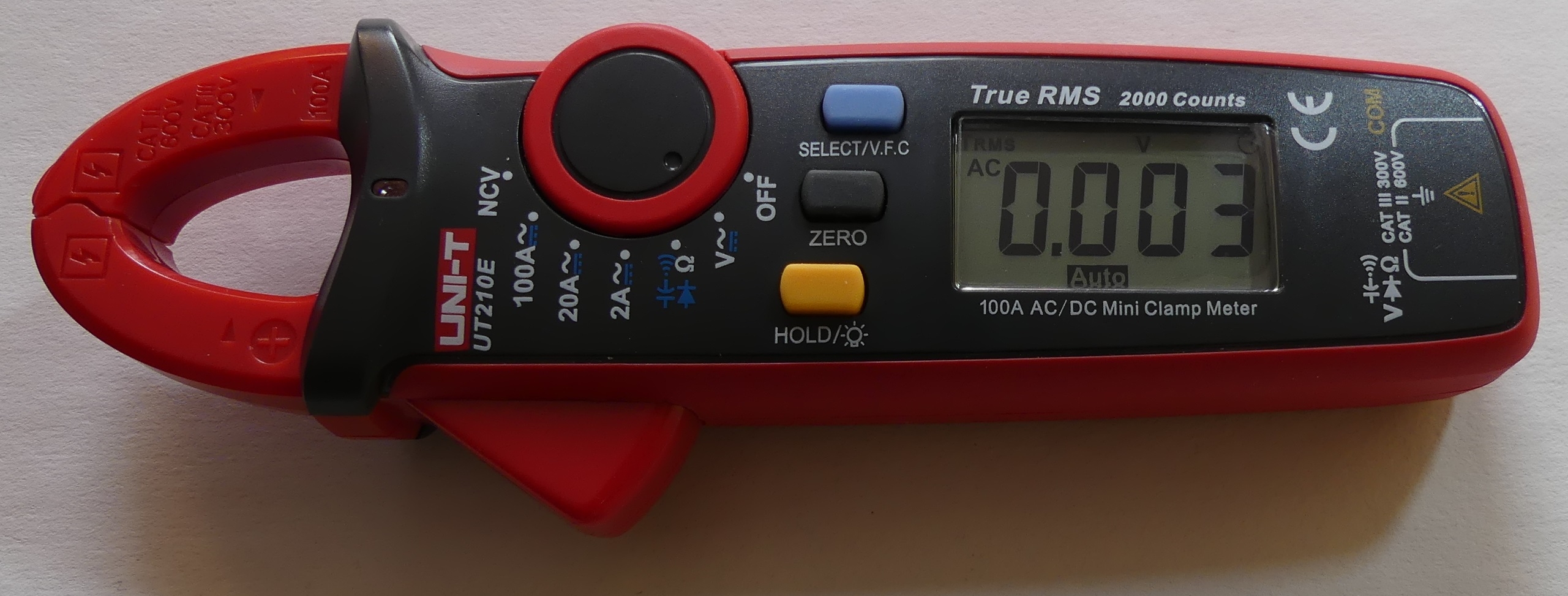
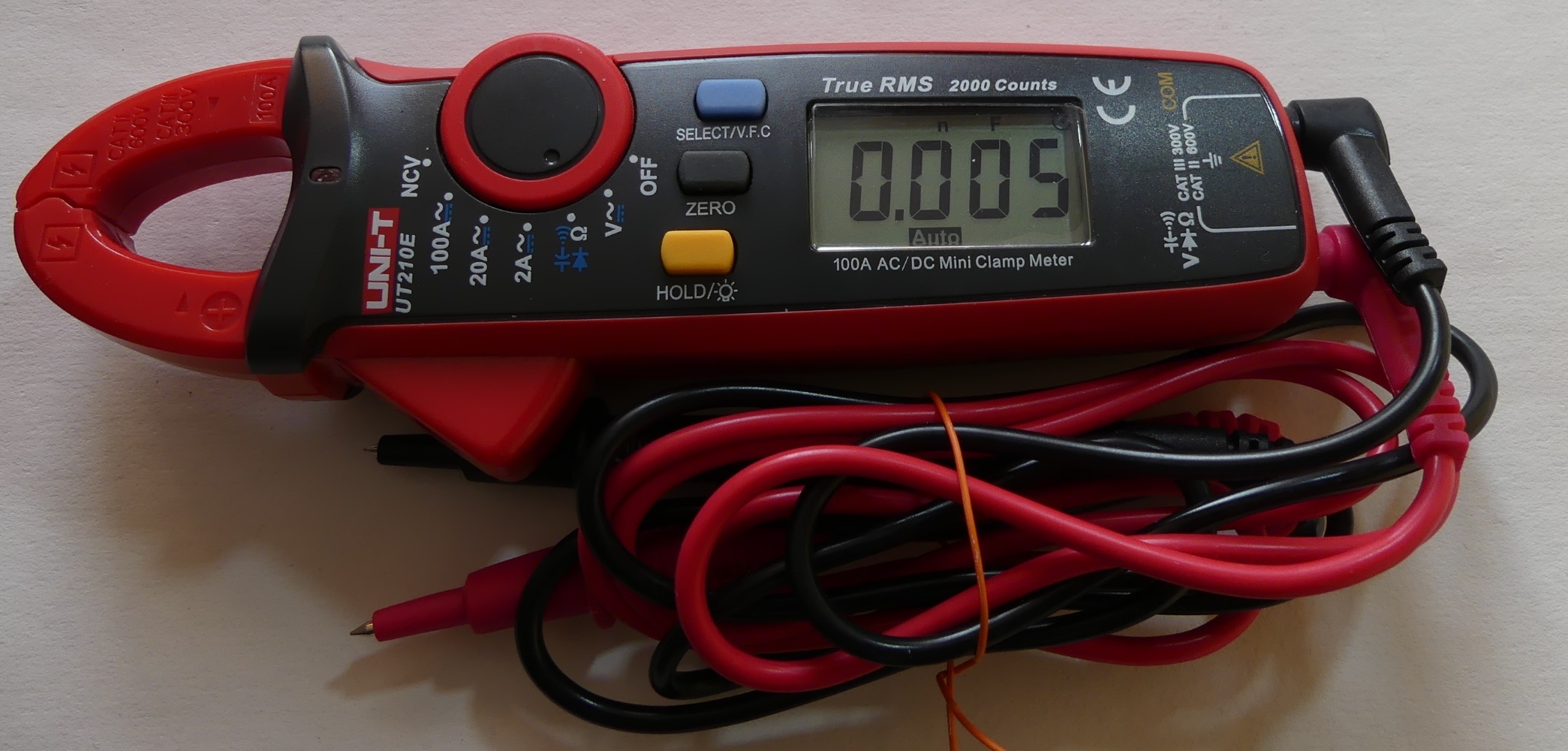
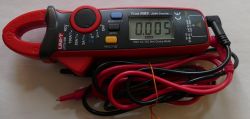
I saw the UT210E multimeter at the BMS and IDS installer. Although it was the first time it was used in the field, some conclusions were drawn. I borrowed a quick test meter and the device has some convenient features:
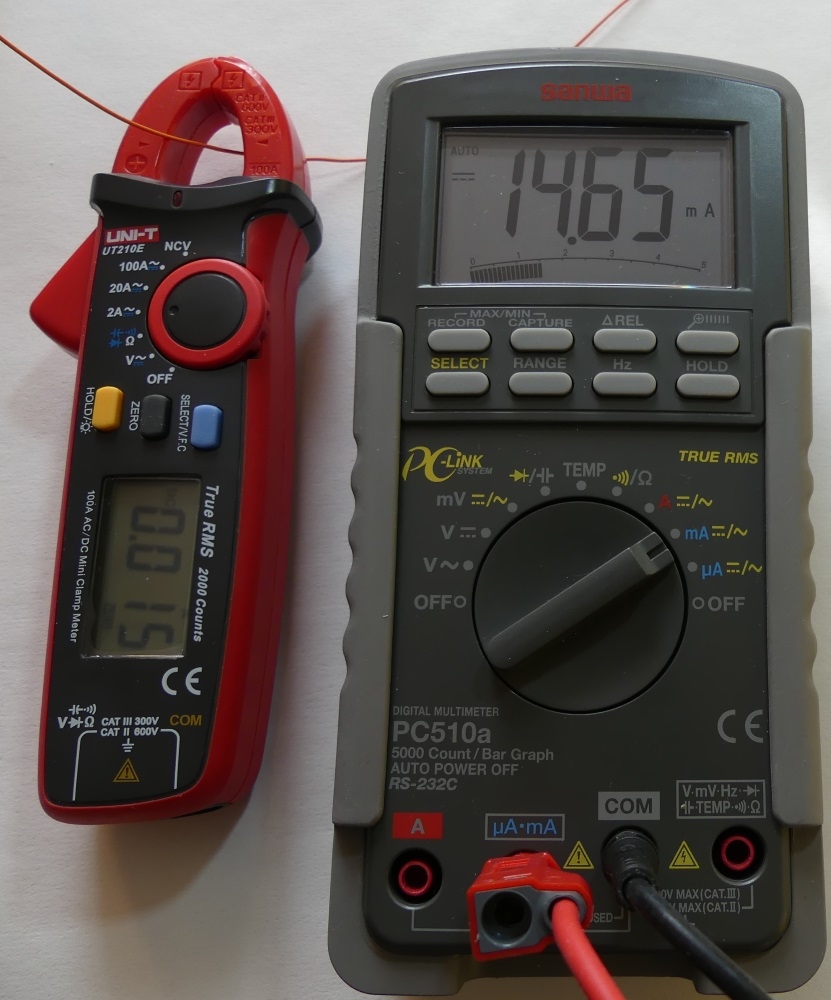
- allows you to determine the presence and direction of 10mA currents without disconnecting the circuit (clamps range 2A DC)
- the shape of the meter makes it easy to fit in a pocket
- when measuring voltage, the multimeter can be hung on the clamp
- NCV - detection of live wires
- backlit display
- 2xAAA power supply
- capacity measurement

It would be ideal if the multimeter could fit an LED flashlight, a pair finder and a LAN tester with a detachable generator, but then it would probably be difficult to keep the current dimensions.

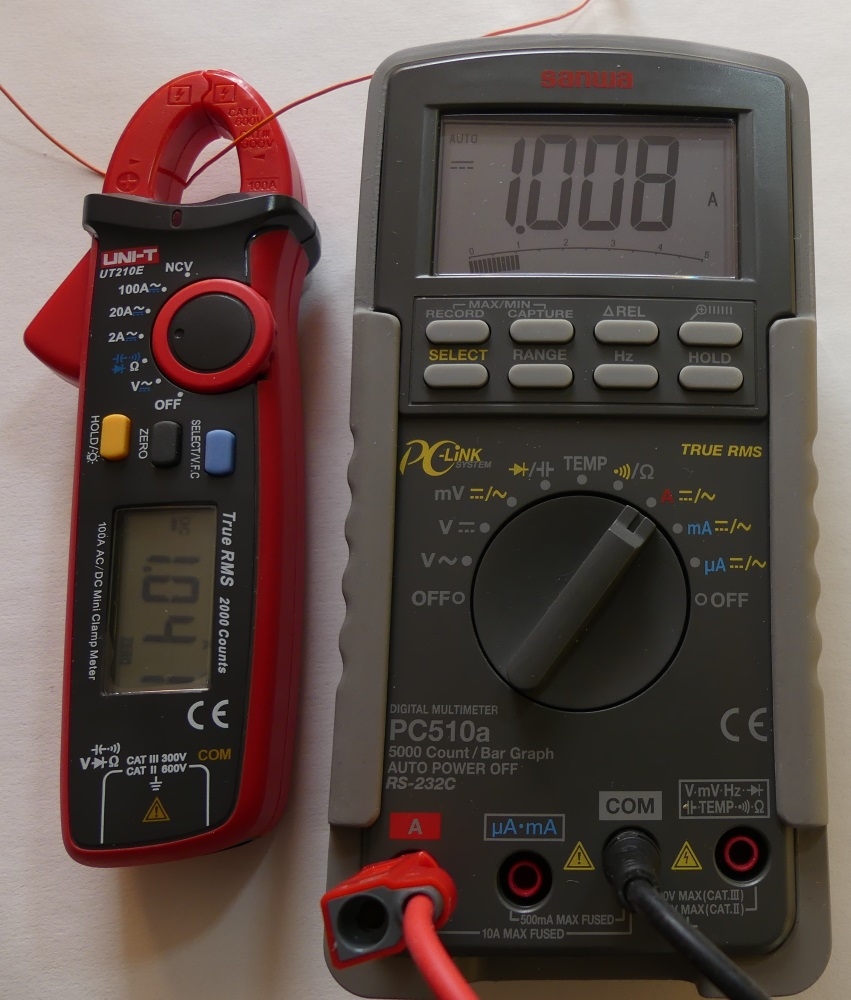
For small current values, in the order of several milliamperes, the measurement is approximate, but it can be useful in identifying cables.
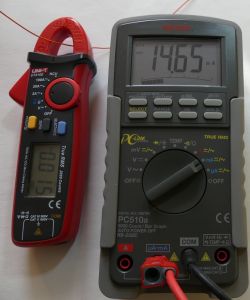
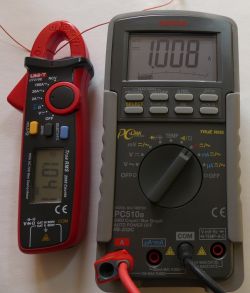

Live wire detector:
[movie: 49d538a073] https://filmy.elektroda.pl/40_1518887474.mp4 [/ movie: 49d538a073]

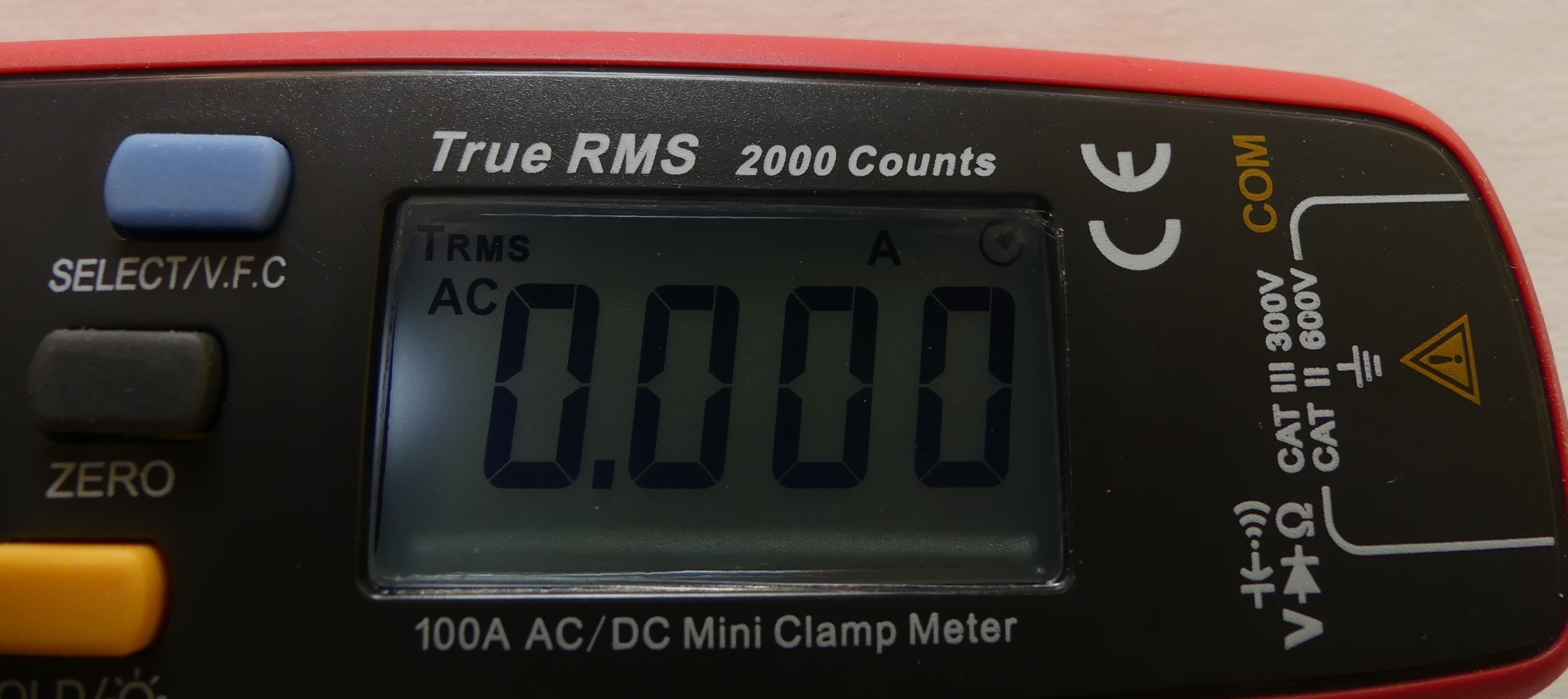
Display backlight is average but helpful:
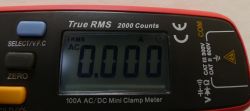

The multimeter allows you to measure capacitance, which is rarely useful for installation work, but sometimes it can be useful when examining a capricious bus:

Measuring ranges:
DCV 200.0mV, 2.000V, 20.00V, 200.0V, 600V
ACV 2.000V, 20.00V, 200.0V, 600V
DCA 2.000A, 20.00A, 100.0A
ACA 2.000A, 20.00A, 100.0A
R 200.0om, 2.000m, 20.00mom, 2.000Mom, 20.00Mom
C 2.000nF, 20.00nF - 200.0uF, 2.000mF - 20.00mF
Diode and continuity test

Do you use tools that work well for installation work? What are the device models?

About Author
TechEkspert
TechEkspert wrote 7073 posts with rating 5468 , helped 16 times. Been with us since 2014 year.

Comments

SPEAKERS_XP 17 Feb 2018 21:17

I also own this model and I am very proud of it. Interesting equipment at an affordable price. For me, a very useful resolution up to 1mA (for DC!) And really decent accuracy. In the case of this meter,... [Read more]

bi3dron 18 Feb 2018 08:13

In the previous company, I used the following finder: Fluke Networks PRO3000 https://obrazki.elektroda.pl/7378713400_1518937424_thumb.jpg (photo from Amazon) It has a short-circuit test and can... [Read more]

pitsky 18 Feb 2018 09:36

It must also be added that it switches itself on in the case and discharges the battery. [Read more]

parkside 18 Feb 2018 11:12

Never in the life of UNIT. I bought a UT61E. I connected to the computer and ... and it was already in this mode. It thinks it's connected all the time even though everything is disconnected. What... [Read more]

SPEAKERS_XP 18 Feb 2018 11:38

Specifically, the UT61E model does not natively switch off, which is no secret - the optical (unidirectional) output for recording measurements is active all the time - for me, it may not be ideal in this... [Read more]

TechEkspert 18 Feb 2018 12:09

@SPEAKERS_XP the aforementioned 1mA resolution allows to detect the activation of the PIR detector (relay + LED), the 1mA resolution has little to do with 1mA, but in practice it is helpful. [Read more]

parkside 18 Feb 2018 14:03

You seem right. On closer inspection, it looks like this meter does not have an automatic shutdown. It does not change the fact that in any measuring instrument with battery power it should be at least... [Read more]

metalMANiu 18 Feb 2018 15:05

I use this meter sporadically. Advantages: - functionality at a good price - 1 mA resolution Disadvantages: - current measurement accuracy. Once I wanted to measure the power consumption of the car... [Read more]

rogos87 18 Feb 2018 15:14

And you often have to reset this multimeter in DCA mode? I have a Mustool MT866 and after turning on the DC current measurement, it shows several dozen mA for good morning, then it will drop a bit, but... [Read more]

metalMANiu 18 Feb 2018 15:19

Often :) You must also remember to zero it in the same position in which you will make the measurement. [Read more]

rogos87 18 Feb 2018 15:23

@metalMANiu thanks for the answer. I was planning to buy this Unit but I think I'll let it go. [Read more]

paszczakq 18 Feb 2018 17:41

Some larger Mastech in service for 15 years. Battery and cable replacement basically. Overall, the disadvantage is its size. Some UT20A is enough for me. Inexpensive and sufficient accuracy of measurements.... [Read more]

rogos87 18 Feb 2018 18:48

And what happens with clamp meters when the ACA / DCA measurement range is significantly exceeded? In common knowledge, it will either blow the fuse if it has one, or the meter will go up in smoke. And... [Read more]

Galareta 18 Feb 2018 21:34

I've had the UT-61E for at least 8 years (I don't know exactly how many years, but for sure over 8), it doesn't have an auto shutdown, I was looking for one on purpose ... spent a few days... [Read more]

Nargo 19 Feb 2018 09:28

I have a UT-61C, I have an auto switch-off that works great. [Read more]

LightOfWinter 22 Feb 2018 09:44

Hello The UT210E meter can be modified to some extent by editing the external eprom memory. It is based on the DTM0660 chip. Below are some links Russian forum detailed descriptions A similar... [Read more]

TechEkspert 22 Feb 2018 19:07

@LightOfWinter it's a curiosity, the question is whether changing the count from 2000 to 6000 makes sense while maintaining the same elements "surrounding" the main multimeter circuit? Maybe someone... [Read more]

LightOfWinter 22 Feb 2018 21:55

Hello I was trying to try it out, but so far no time. [Read more]

Mikhaił 23 Feb 2018 15:19

Hello, if this UT210E is not that accurate, what meter would you recommend? [Read more]

FAQ

TL;DR: With 1 mA clamp resolution and "functionality at a good price" [Elektroda, metalMANiu, post #17045893], the Uni-T UT210E covers most installer jobs but needs regular zeroing and offers only a 10 s backlight [Elektroda, metalMANiu, post #17045893]

Why it matters: A pocket-size clamp meter that you trust speeds fault-finding and avoids battery waste.

Quick Facts

• Clamp current ranges: 2 A/20 A/100 A AC & DC; 1 mA resolution on 2 A [Elektroda, TechEkspert, post #17044177] • Voltage ranges: 200 mV – 600 V AC/DC [Elektroda, TechEkspert, post #17044177] • Auto power-off: ≈15 min with audible warning [Uni-Trend UT210E manual] • Power source: 2 × AAA; typical life ≈40 h backlight off [Uni-Trend UT210E manual] • Street price noted: PLN 105 (≈€24) in 2018 [Elektroda, metalMANiu, post #17581731]

What makes the UT210E attractive to field installers?

Installers like its pocket size, 1 mA DC clamp resolution, NCV live-wire detector, back-hanging jaw, and 2×AAA supply [Elektroda, TechEkspert, post #17044177] Those features cover quick current checks, safe live detection, and easy transport.

How accurate is the UT210E on small DC currents?

Below about 10 mA, readings drift; users call them “approximate” but still useful for cable identification [Elektroda, TechEkspert, post #17044177] Expect ±0.5 mA typical error and re-zero often.

How do I zero the clamp for DC measurements?

  1. Close the jaws, hold the meter in the exact measuring position.
  2. Press the REL/ZERO key until the display shows 0.00 A.
  3. Measure the conductor without changing jaw orientation. Frequent zeroing keeps drift below 2 mA [Elektroda, metalMANiu, post #17045921]

How does the meter react if I exceed the current range?

If current passes the selected range, the display shows “0L” and measurement stops; no fuse blows and the clamp survives a starter motor surge in 2 A range [Elektroda, CameR, post #17064762]

Does the UT210E switch itself off to save batteries?

Yes. It beeps, then powers down after roughly 15 minutes of inactivity [Uni-Trend UT210E manual]. That avoids the battery-drain problem reported in other Uni-T models [Elektroda, parkside, post #17045289]

Is the backlight usable in dark panels?

The LED backlight helps but stays on only about 10 seconds, which many users find too short [Elektroda, metalMANiu, post #17045893] You may need to press it repeatedly when working in cabinets.

Can I measure capacitance and continuity with this clamp meter?

Yes. Capacitance ranges span 2 nF–20 mF, and the diode/continuity tester gives an audible tone [Elektroda, TechEkspert, post #17044177] Accuracy is adequate for quick checks but not for lab-grade work.

How does the UT210E compare with the Kyoritsu KEWMATE 2000?

KEWMATE offers similar 60 A range but costs about 3× more. It adds true-RMS and longer backlight, yet lacks the UT210E’s NCV. Installers on a tight budget usually pick the UT210E [Elektroda, LightOfWinter, post #17057981]

Can the firmware be upgraded to 6000 counts, and is it worth it?

Hackers edit the external EEPROM to unlock 6000 counts [Elektroda, LightOfWinter, post #17054986] "Numbers change, accuracy does not" warns one modder [EEVblog thread]. Unless you recalibrate the analog front end, extra counts add little real precision.

Will the UT210E drain batteries when stored?

Unlike the UT61E, its optical port sleeps and the auto-off prevents drain. Users running Ni-MH cells report months between charges [Elektroda, SPEAKERS_XP, post #17045374]

What batteries does it need and how long do they last?

It runs on two AAA cells. With backlight off, typical runtime is 40 hours continuous [Uni-Trend UT210E manual]. Frequent backlight use cuts life by roughly 30 %.

Is the NCV detector sensitive enough for 230 V cables in walls?

Yes. Forum video shows clear alarm on live conductors under plaster [Elektroda, TechEkspert, post #17044177] It struggles on shielded or deeply buried wires, an expected limitation.

How has the meter held up after a year of real use?

After 12 months of occasional work, owners report credible readings and no failures, with DC accuracy drifting during long 60 s checks [Elektroda, metalMANiu, post #17581731] One user sums up: “The meter is worth the money.”
Generated by the language model.
%}