Hello electrodes.
This time, the aim of the article will be to introduce you to another cheap and very useful programmer from our slant-eyed brothers.
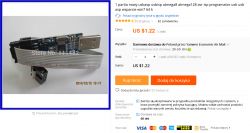
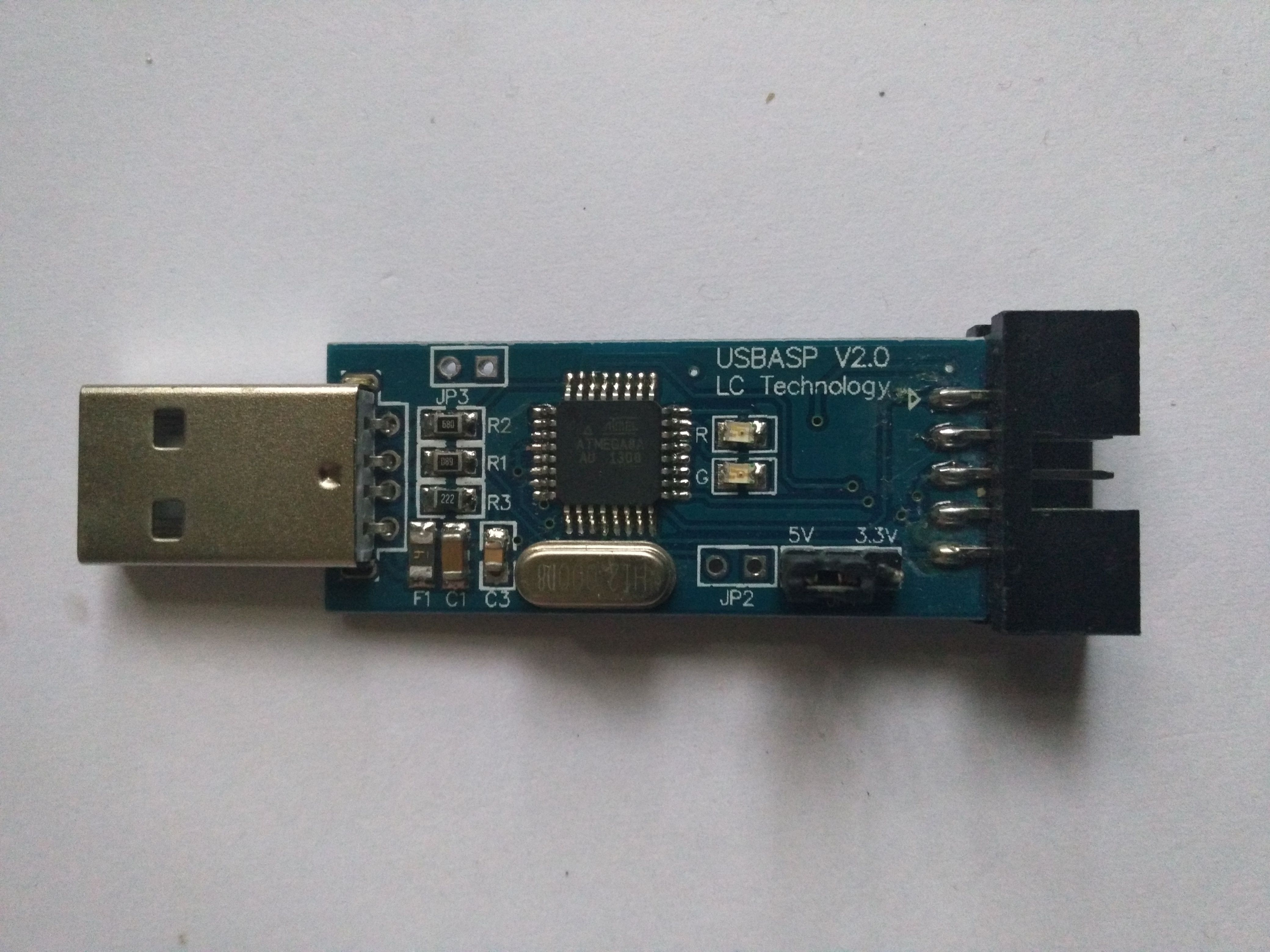
It is a UBSASP programmer, version 2.0, designed to work with AVR systems manufactured by Atmel.
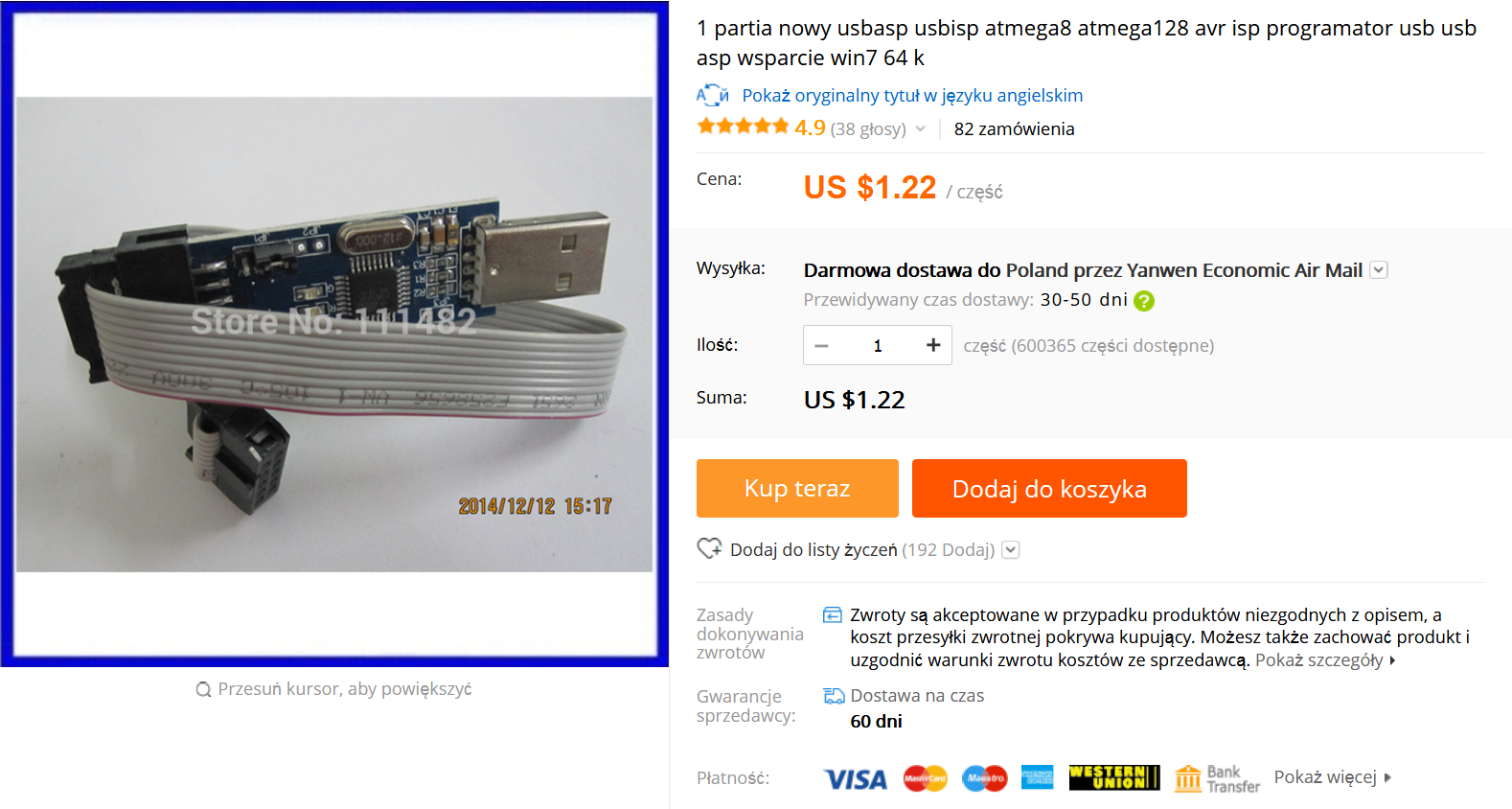
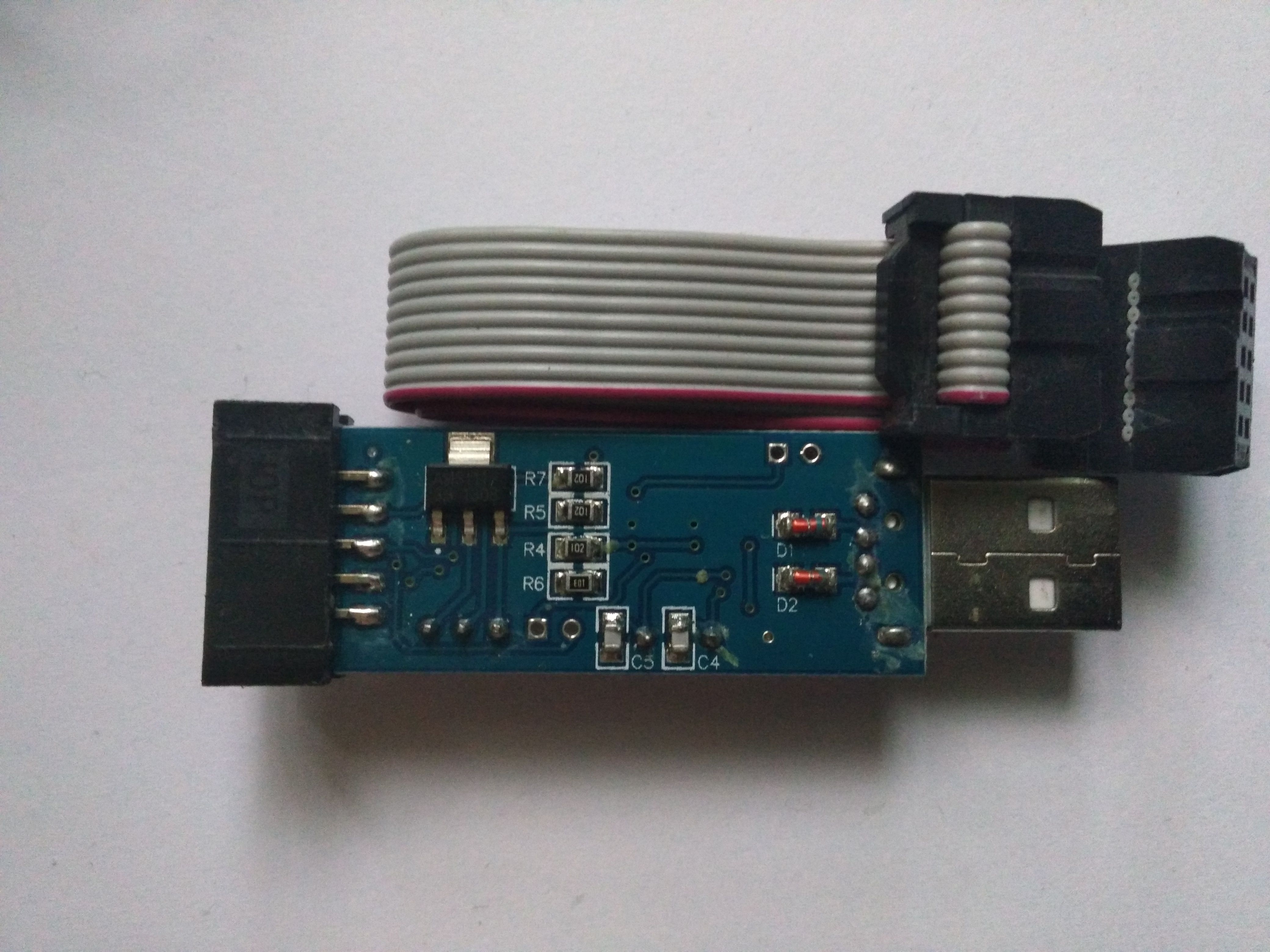
After purchase, we receive a programmer in the form of a USB "dongle" and a cable / ribbon with a standard 10-pin Kanda connector.
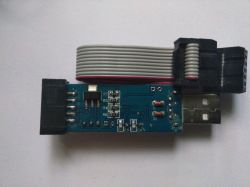
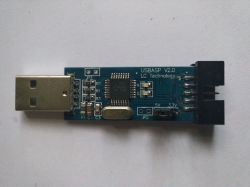
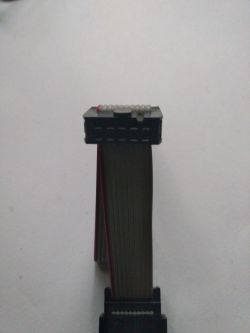
As you can see in the pictures, the workmanship is quite correct, although we already know that sometimes they can do it better.
The programmer is based on the Atmega8A microcontroller, and the source codes can be found at
http://www.fischl.de/usbasp. Which suggests that once again we are dealing with a cheap clone.
In the attachment you have a PDF with instructions in English.
Let's move on to the capabilities of the device. The programmer supports the following systems:
Mega series:
ATmega8, ATmega8A, ATmega8U2, ATmega8HVA, ATmega16, ATmega16A,
ATmega16HVA, ATmega16HVB, ATmega16M1, ATmega16U2, ATmega16U4,
ATmega32, ATmega32A, ATmega32C1, ATmega32HVB, ATmega32M1, ATmega32U2,
ATmega32U4, ATmega32U6, ATmega48, ATmega48P, ATmega48PA, ATmega64, ATmega64A,
ATmega64C1, ATmega64M1, ATmega88, ATmega88P, ATmega88PA, ATmega103, ATmega128,
ATmega128A, ATmega128RFA1, ATmega161, ATmega162, ATmega163, ATmega164P, ATmega164PA,
ATmega165, ATmega165P, ATmega168, ATmega168P, ATmega168PA, ATmega169, ATmega169P,
ATmega323, ATmega324, ATmega324PA, ATmega325, ATmega325P, ATmega328P, ATmega329,
ATmega329P, ATmega406, ATmega640, ATmega644, ATmega644P, ATmega644PA, ATmega645,
ATmega649, ATmega1280, ATmega1281, ATmega1284P, ATmega2560, ATmega2561, ATmega3250,
ATmega3250P, ATmega3290, ATmega3290P, ATmega6450, ATmega6490, ATmega8515, ATmega8535,
Tiny series:
ATtiny10, ATtiny11, ATtiny12, ATtiny13, ATtiny13A, ATtiny15, ATtiny22, ATtiny24, ATtiny24A,
ATtiny25, ATtiny26, ATtiny28, ATtiny43U, ATtiny44, ATtiny44A, ATtiny45, ATtiny48, ATtiny84,
ATtiny85, ATtiny88, ATtiny167, ATtiny261, ATtiny261A, ATtiny461, ATtiny861, ATtiny861A, ATtiny2313, ATtiny2313A
Classic series:
AT86RF401, AT90S1200,
AT90S2313, AT90S2323, AT90S2343, AT90S4414, AT90S4433,
AT90S4434, AT90S8515, AT90S8535, AT90SCR100H, AT90USB82,
AT90USB162, AT90USB646, AT90USB647, AT90USB1286, AT90USB1287,
CAN series:
AT90CAN32, AT90CAN64, AT90CAN128
PWM series:
AT90PWM2, AT90PWM2B, AT90PWM3, AT90PWM3B,
AT90PWM81, AT90PWM216, AT90PWM316
As for a device for PLN 4, we have quite a large range of microcontrollers at our disposal.
A very useful, for some, functionality may be the ability to upload Boot Loaders to microcontrollers for Arduino.
The programmer offers us the following options:
- upload to the microcontroller the contents of the EEPROM and the appropriate firmware;
- setting fuste bits and lock bits;
- reading the contents of the above;
- work in Windows systems (including all sevens, for the higher ones, I don't know), Linux, Mac OS X;
- declaring the voltage of the programmed microcontroller, we have 5V, 3.3V and no power supply (set with a jumper), if, for example, the system is soldered into the board of a working device and powered directly from it;
- "for bajeru" we have two more LEDs, RX and TX, signaling receiving and transmitting data.
The older version also had a jumper slowing down the hardware clock speed below 1.5MHz, for programming low clock speeds. In version 2.0, the slowdown occurs automatically.
We have a number of programs to operate the programmer, or rather graphic overlays for AVRDude. The most popular of them are:
- SinaProg
- eXtreme Burner - AVR
- Khazama AVR Programmer
Summarizing. A small and very useful programmer, which should appear with every electronics in a drawer / suitcase / pocket (it will easily fit in the pocket next to the one described last week).









Comments
In most of these Chinese programmers, you need to upgrade the firmware because the Chinese for some unknown reason pack the oldest software into these programmers. It manifests itself with the following... [Read more]
I bought my programmer a few years ago and I have not encountered such a problem. However, this is very valuable information. Thank you. [Read more]
You were lucky and found a normal Chinese ;) Greetings [Read more]
I recently acquired such programmers. Only at once with an aluminum colored housing. There is atmega 88 inside and as the name suggests it is usbisp, not asp. Does not work with avrdude. But I found the... [Read more]
I have an identical programmer. Automatic slow SCK does not work after a successful firmware update. However, it is enough to shorten JP3 and the problem is over. Maybe I have an extremely Chinese version,... [Read more]
I had one until he gave up his ghost (by my fault, anyway). It fulfills its task and at the same time is cheaper than ATMega8 itself in retail :) [Read more]
Then you managed to test it well. What is the real reason for writing a test after so long on a product that is in the drawer of everyone programming microcontrollers? [Read more]
Hello. The same thing occurred to me. :D Lest it were - I have the same one too. Nice, but I switched to AVRISP mkII quickly, mainly due to being limited to 8-bit only. I think that this type of... [Read more]
I have had it for a long time and I have already tested it. Note, however, that we have beginner electronics on the forum who do not have such a device, and after reading the article, they will find out... [Read more]
In fact ... none. :D Since I haven't found a similar review anyway, it's pretty ok. :) [Read more]
Colleague @CMS he does a lot of good work reviewing various devices extensively, estimate, because not everyone would like to ;) Greetings [Read more]
I have such a programmer. Additionally, in the version with the Canda / 6pin adapter, useful for Arduino, large programs load much faster, just select an external programmer. And by the way that this... [Read more]
Yes, I did update, hence download http://www.fischl.de/usbasp/usbasp.2011-05-28.tar.gz If someone needs it, we have soft compiled also under atmege328. Greetings [Read more]
It is possible to check what version was uploaded - avrdude command ?. Mine is just flying and I am curious if the older or the latest version will be uploaded. What could be the reason for uploading older... [Read more]
"Maybe it won't drip ..." be laziness or beaker. It can be different with them. Added after 2 [hours] 32 [minutes]: It is worth paying attention to one more thing about this programmer - relatively... [Read more]
I do not know if I was unlucky, but in my copy there was (before the amendment) a terribly strangely soldered KANDA socket. The distance of the upper row of pins from the lower row of the KANDA socket... [Read more]
And out of curiosity, the reviewers need a product that has been on the market for ... a long time and everything is known about it. [Read more]
If you don't know what's going on, it's about money :) And seriously, I have already spoken on this issue before. I have known this product for years, and you have known it for a long time.... [Read more]
I bought this programmer a moment ago and I am very pleased. I use the best program in my opinion "eXtreme Burner - AVR 1.4.3" with modified files "chips.xml" and "fuselayout.xml" (in the "Data" directory),... [Read more]