In the next article devoted to the gadget that has a chance to appear in the Elektrody shop, I would like to present you a very small and handy multimeter (or actually a "multimeter") of Chinese production (of course, of course).
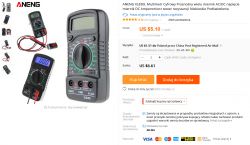
For the price of about five dollars, we can buy a very cheap and tiny "gauge".
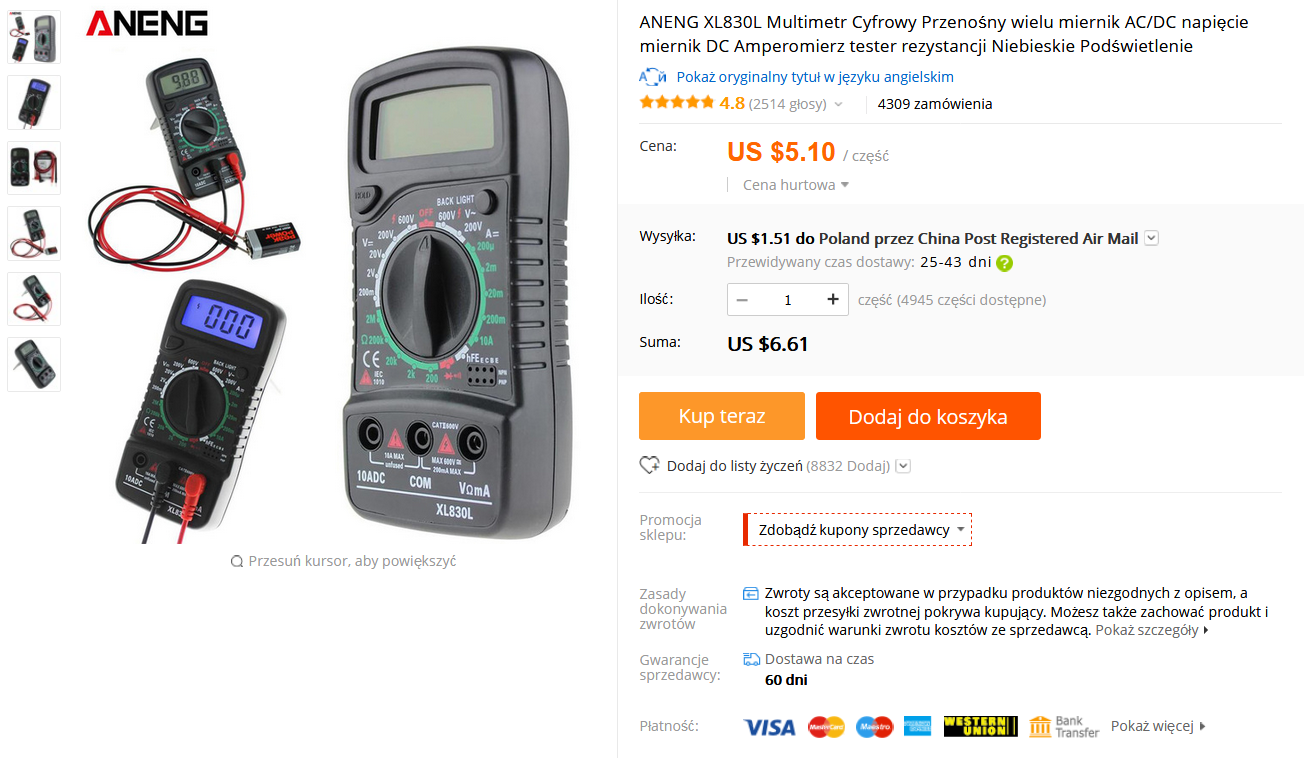
Although this "toy, together with the 6F22 battery (which is not included), weighs more or less as much as the battery, to my surprise it is quite a functional multimeter. However, for less than PLN 20 with shipping, there is nothing to complain about. it even had boxes, was wrapped in shrink wrap and wrapped in bubble wrap.
The set also includes "test leads". However, their quality leaves much to be desired. So I used my own.
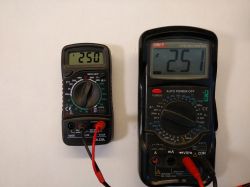
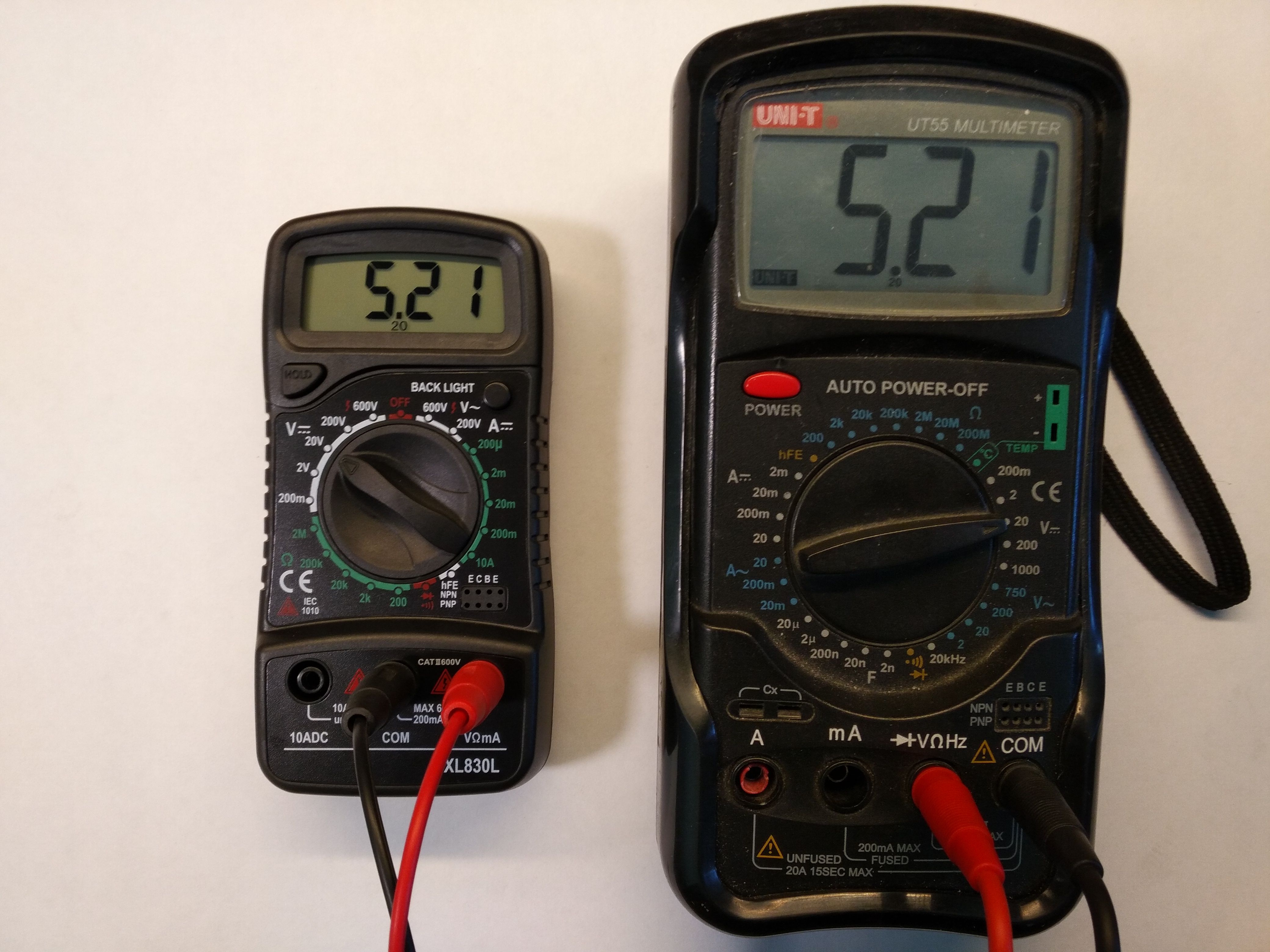
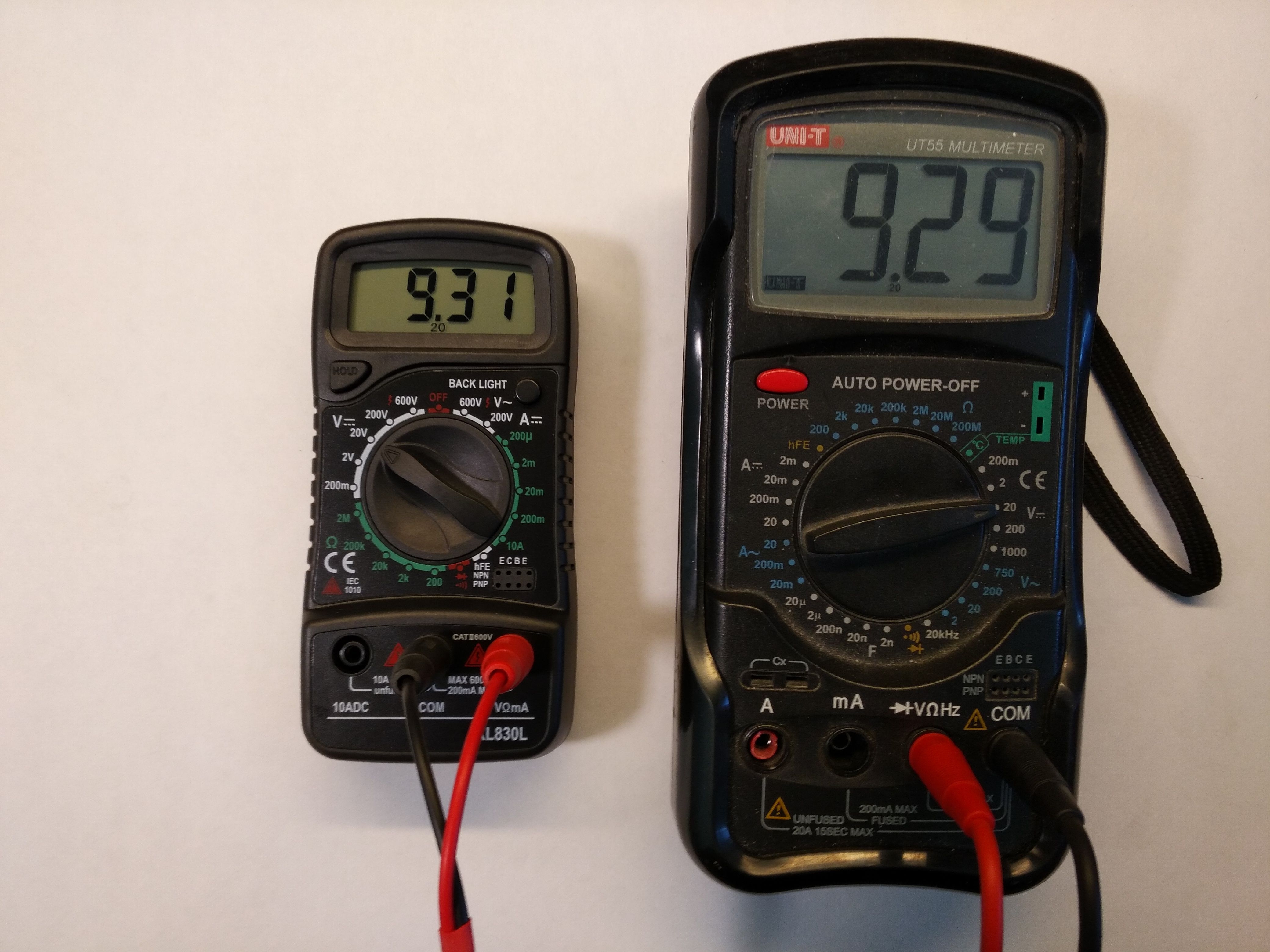
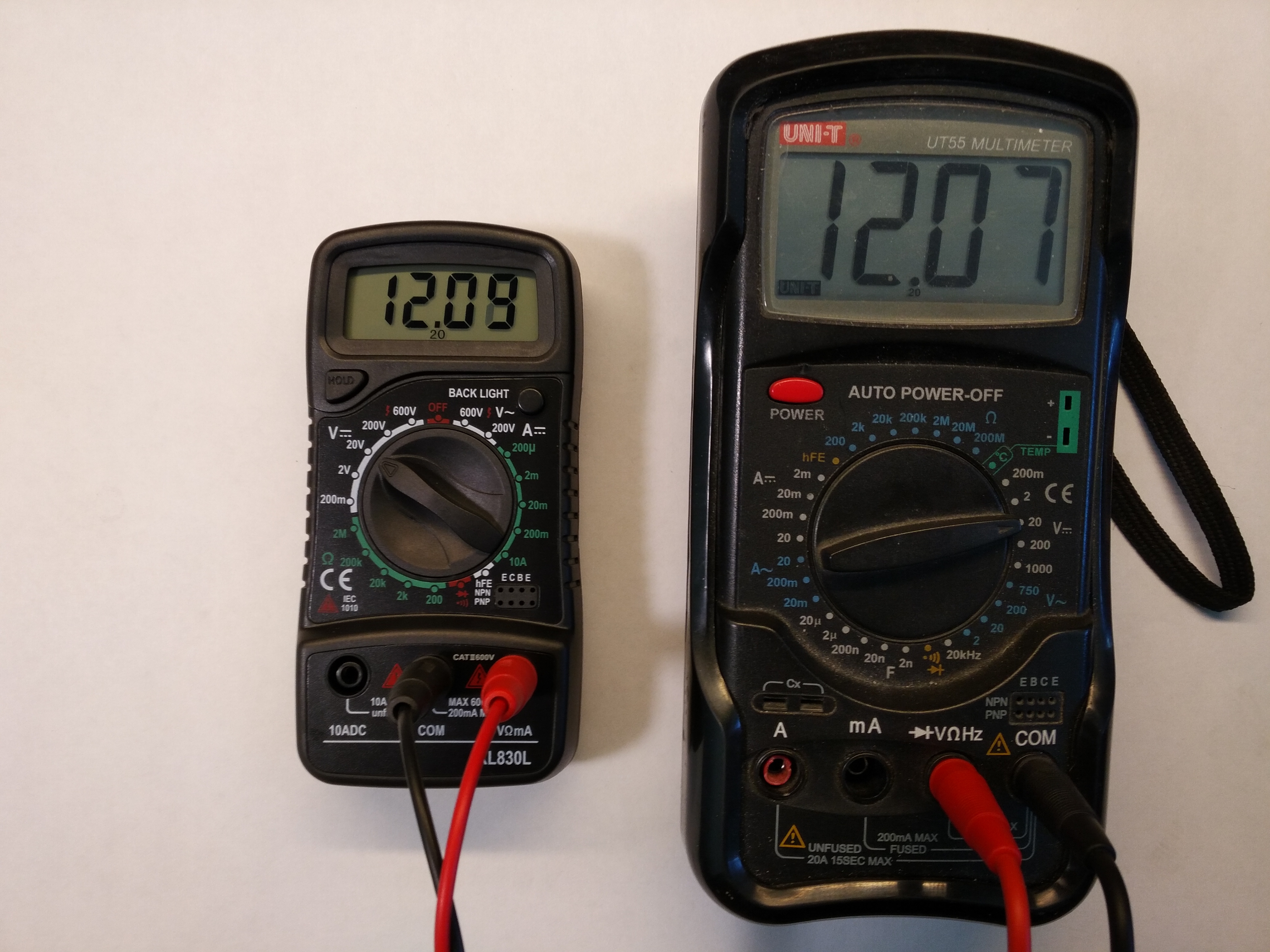
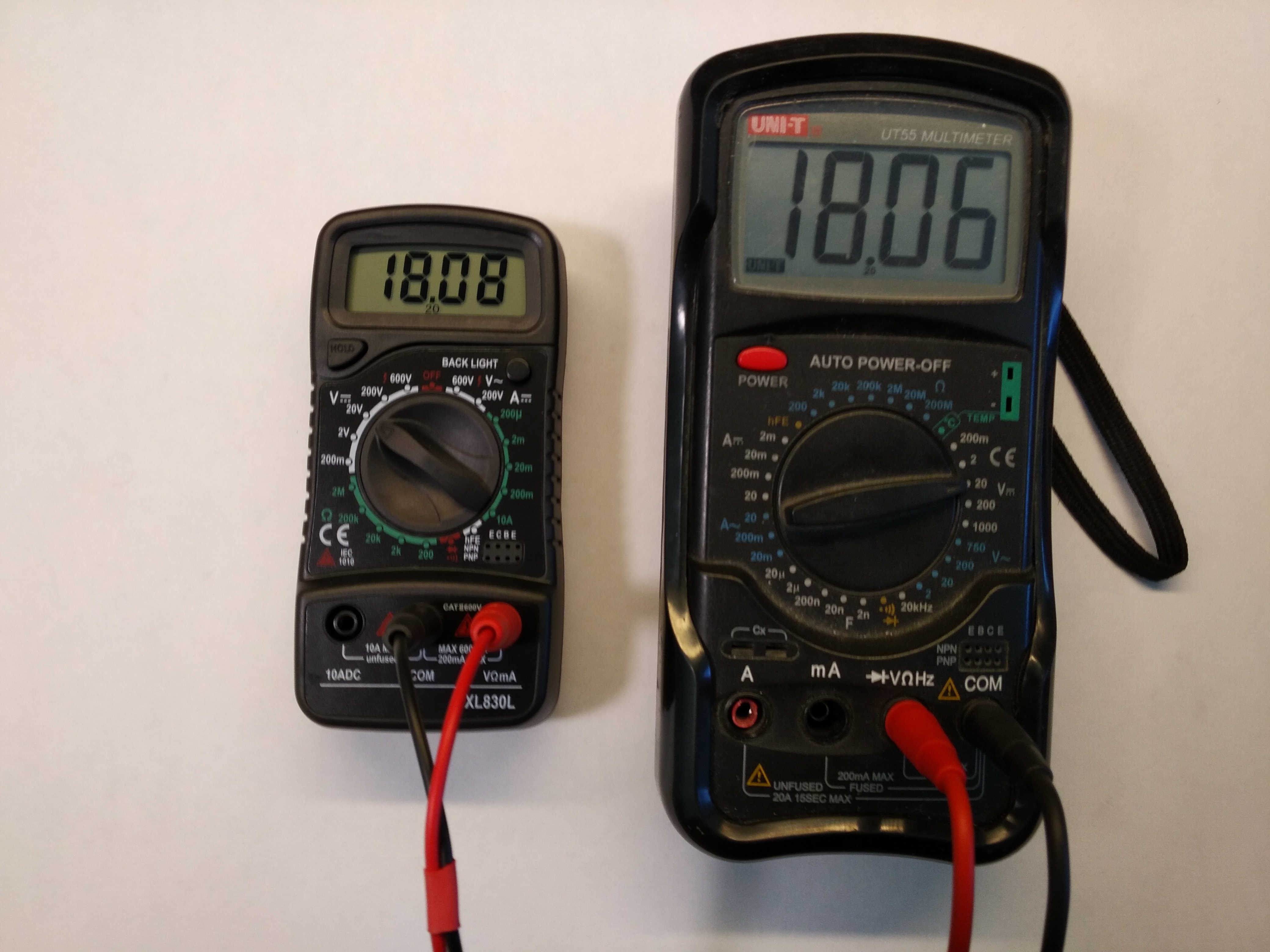
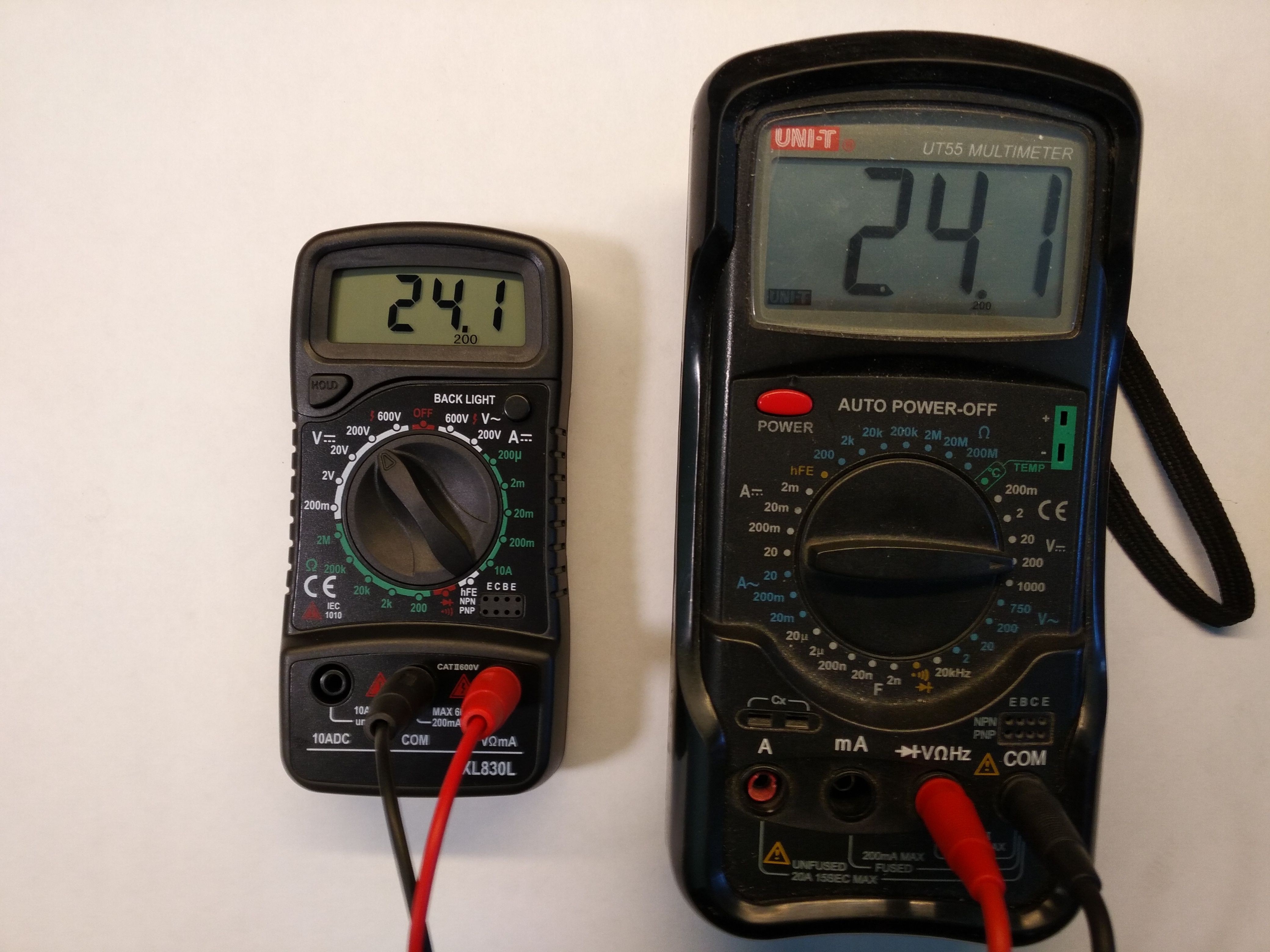
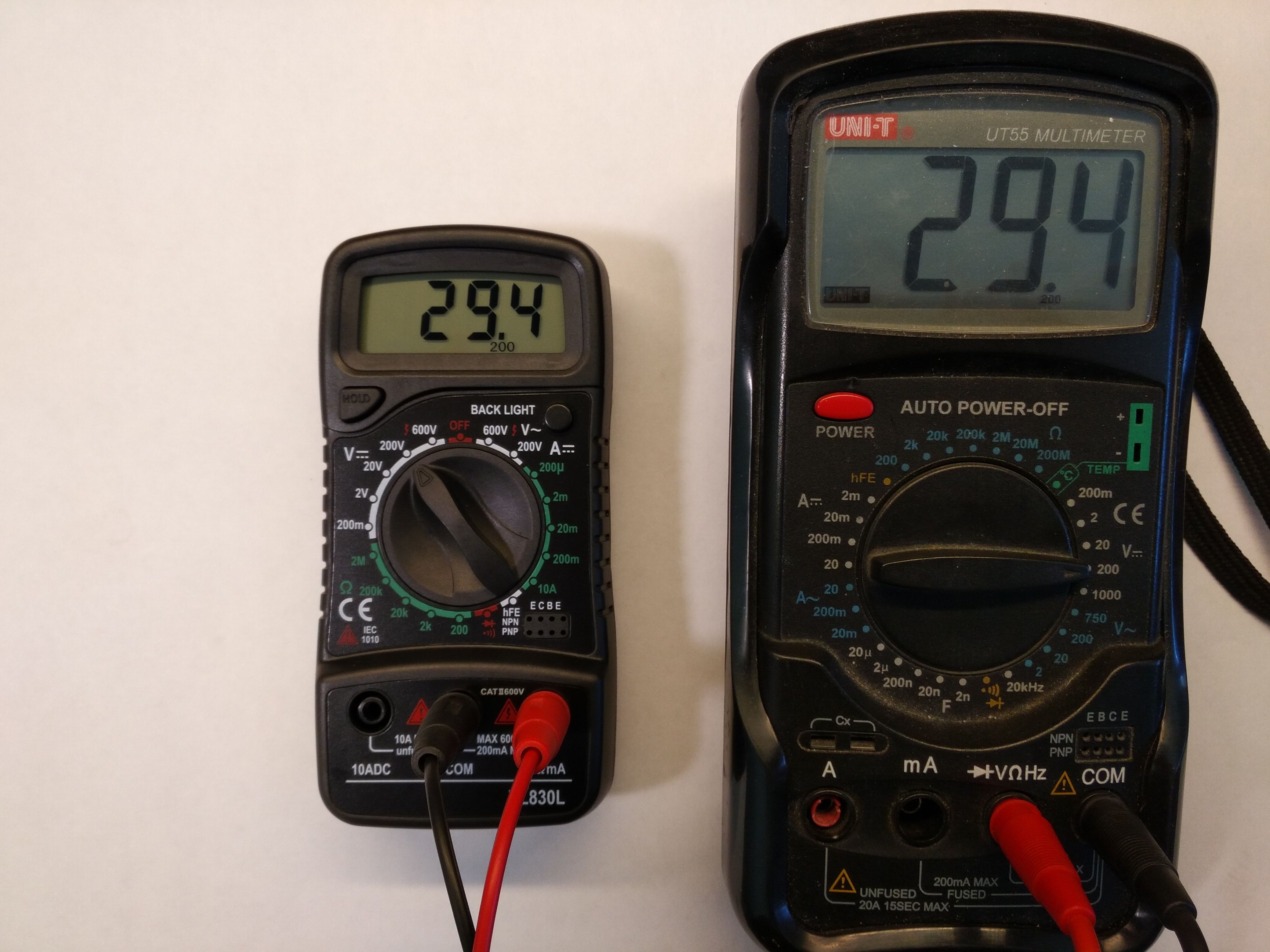
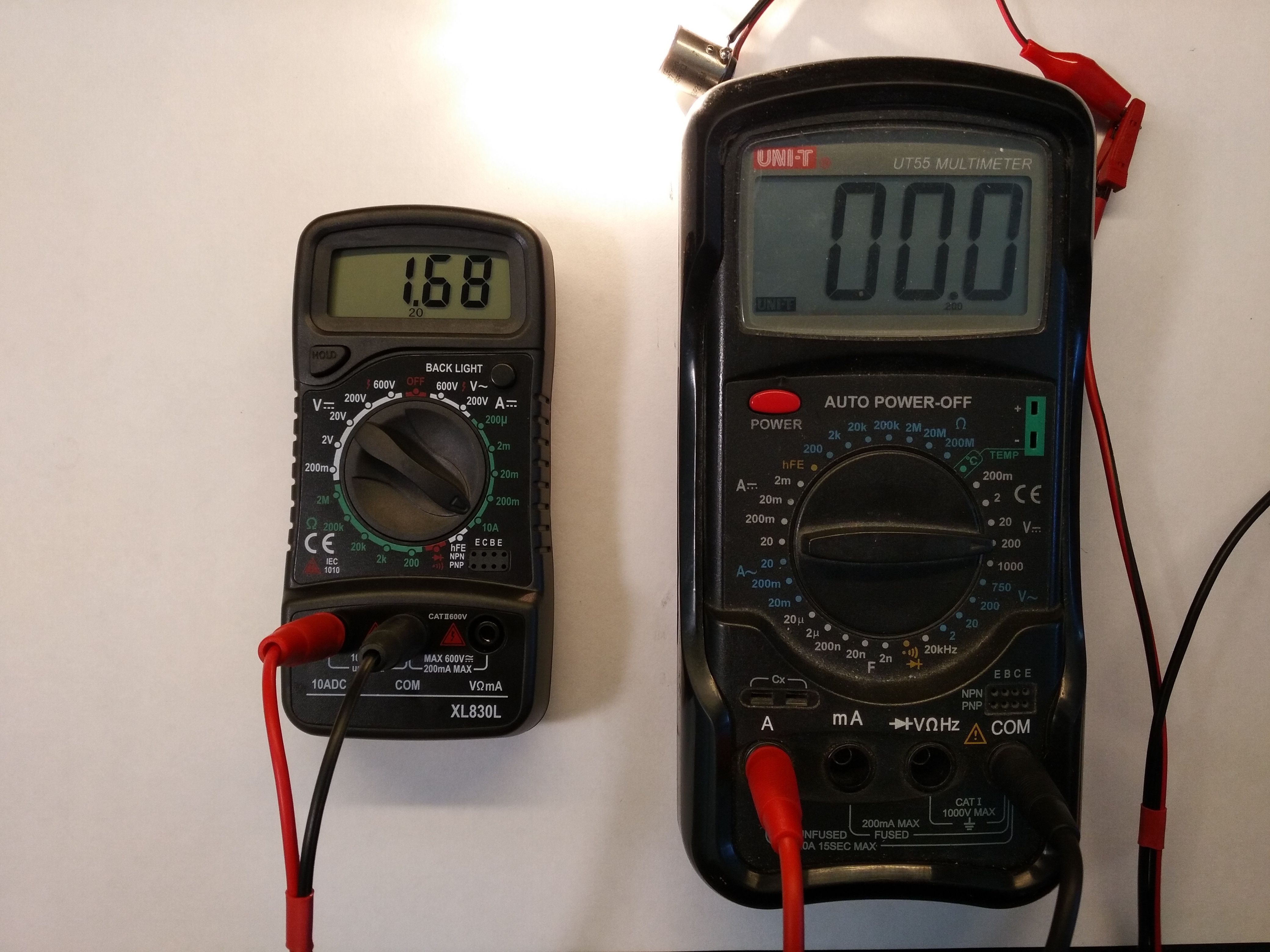
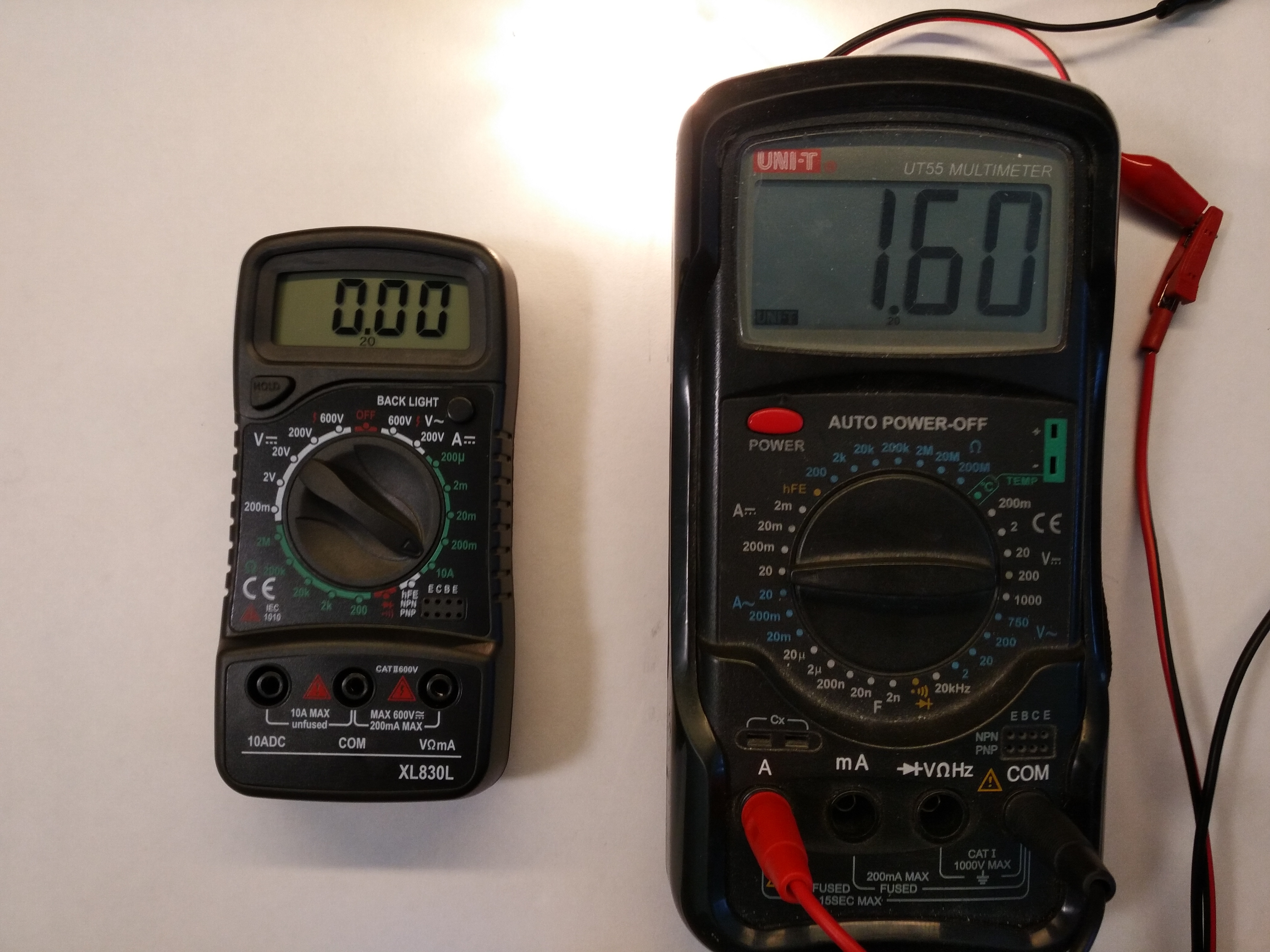
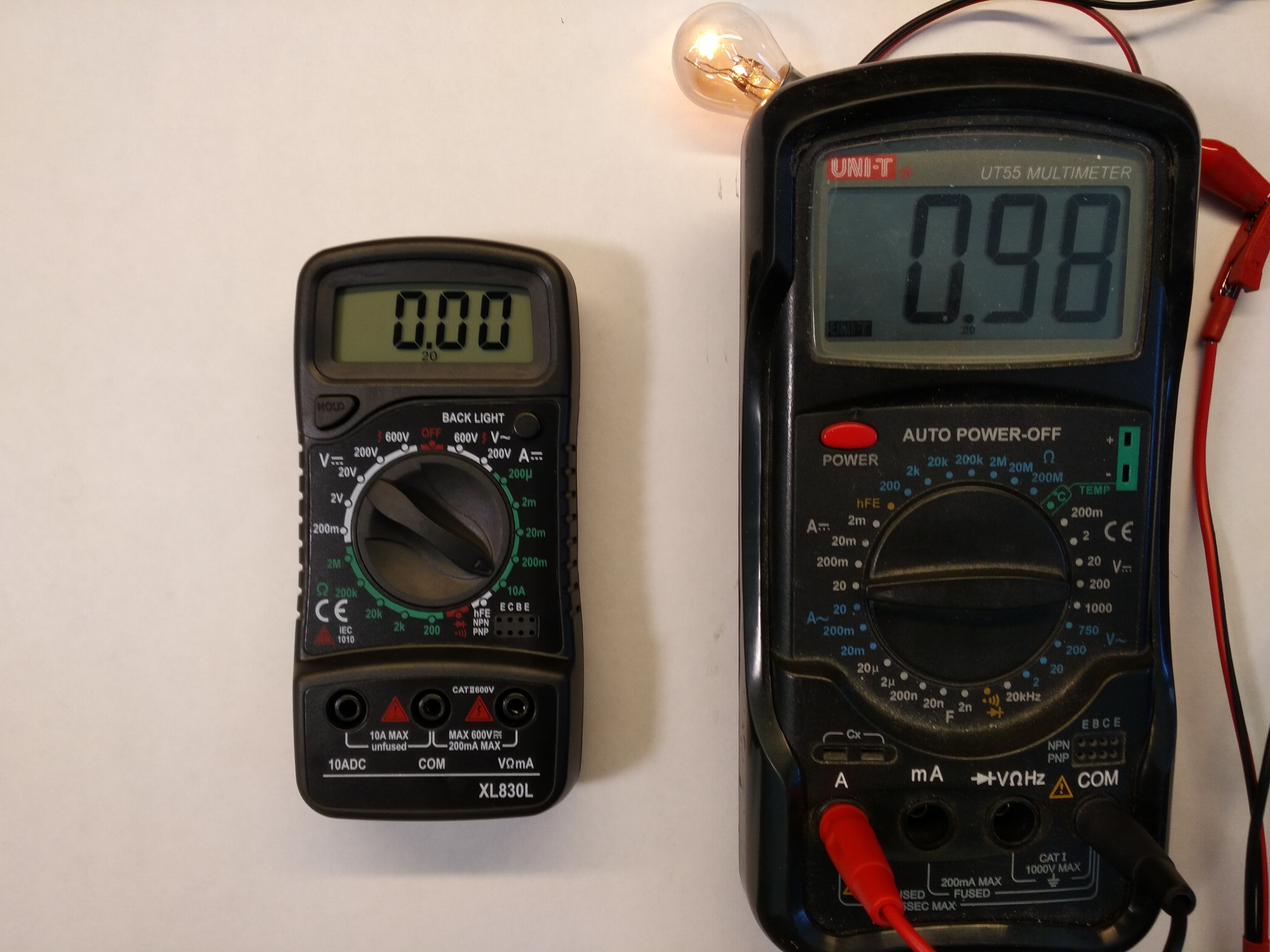
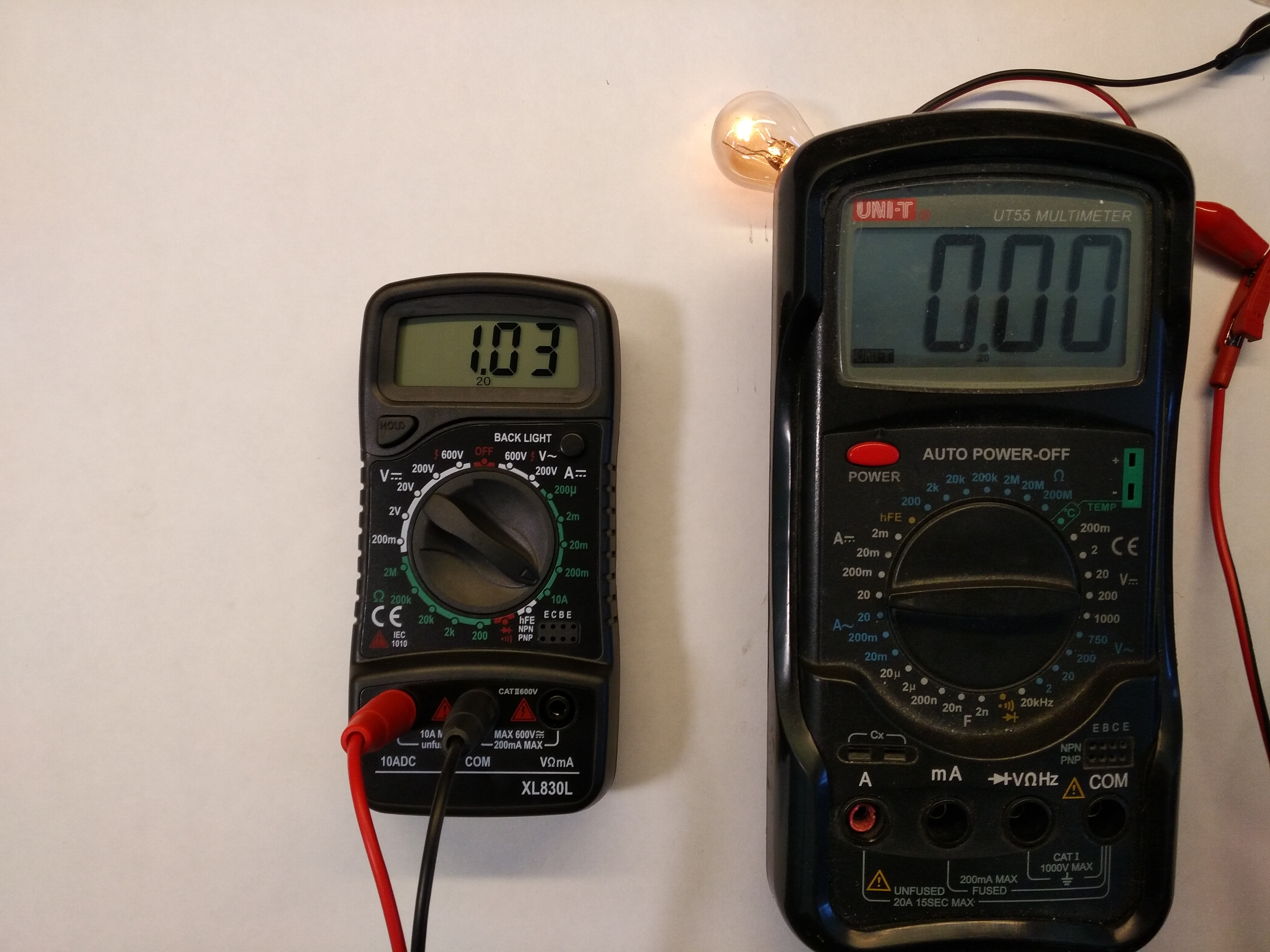
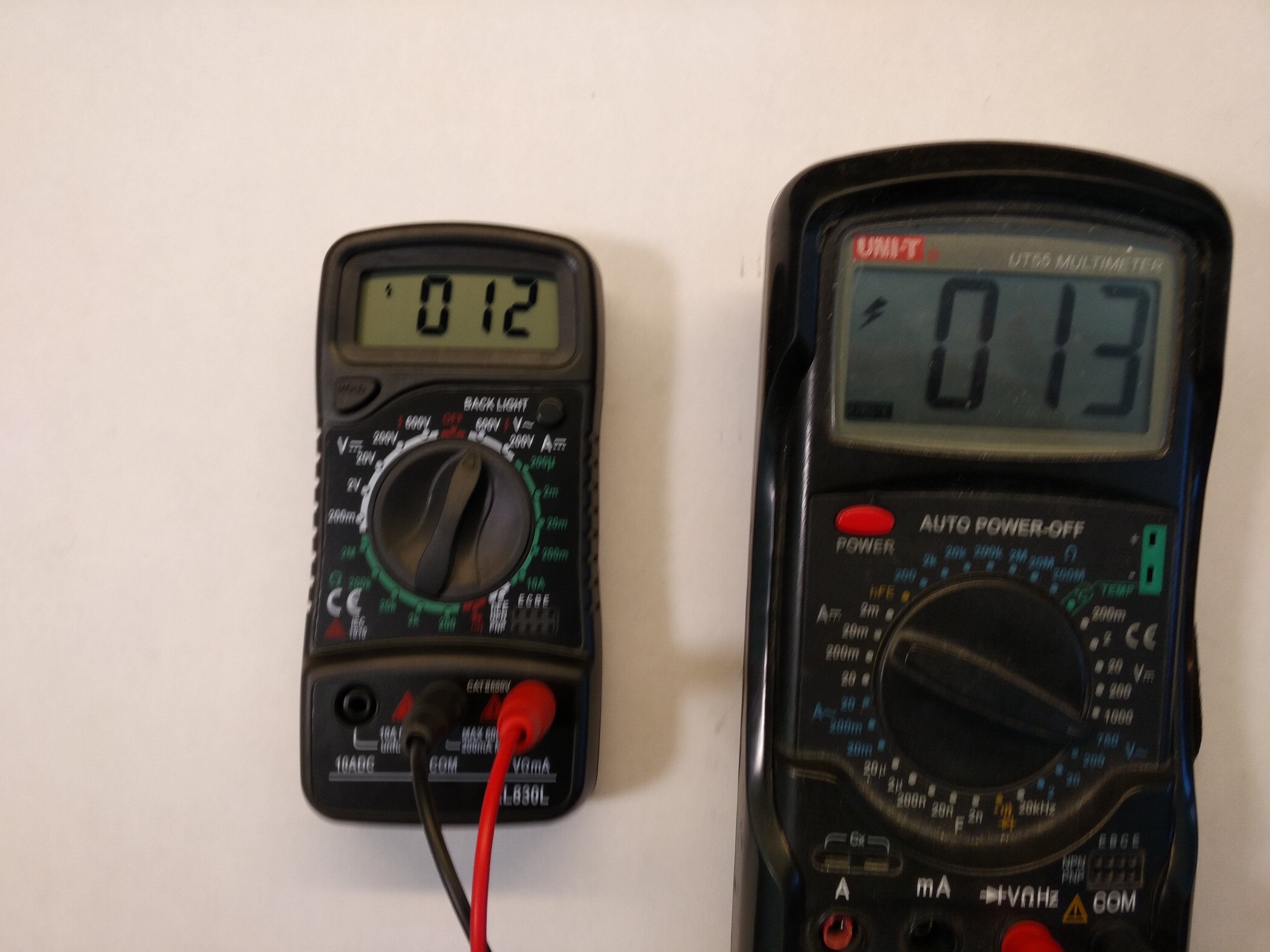
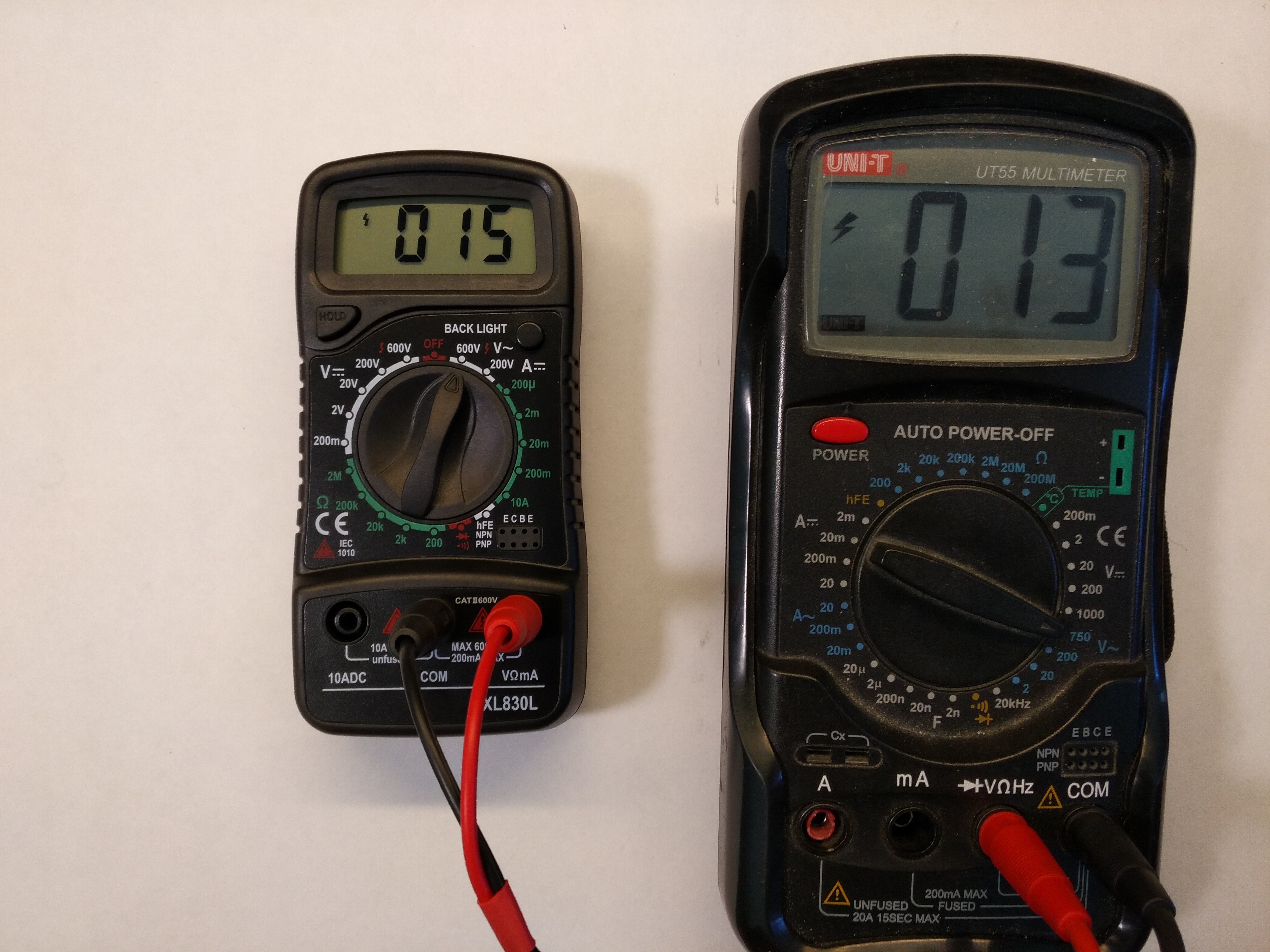
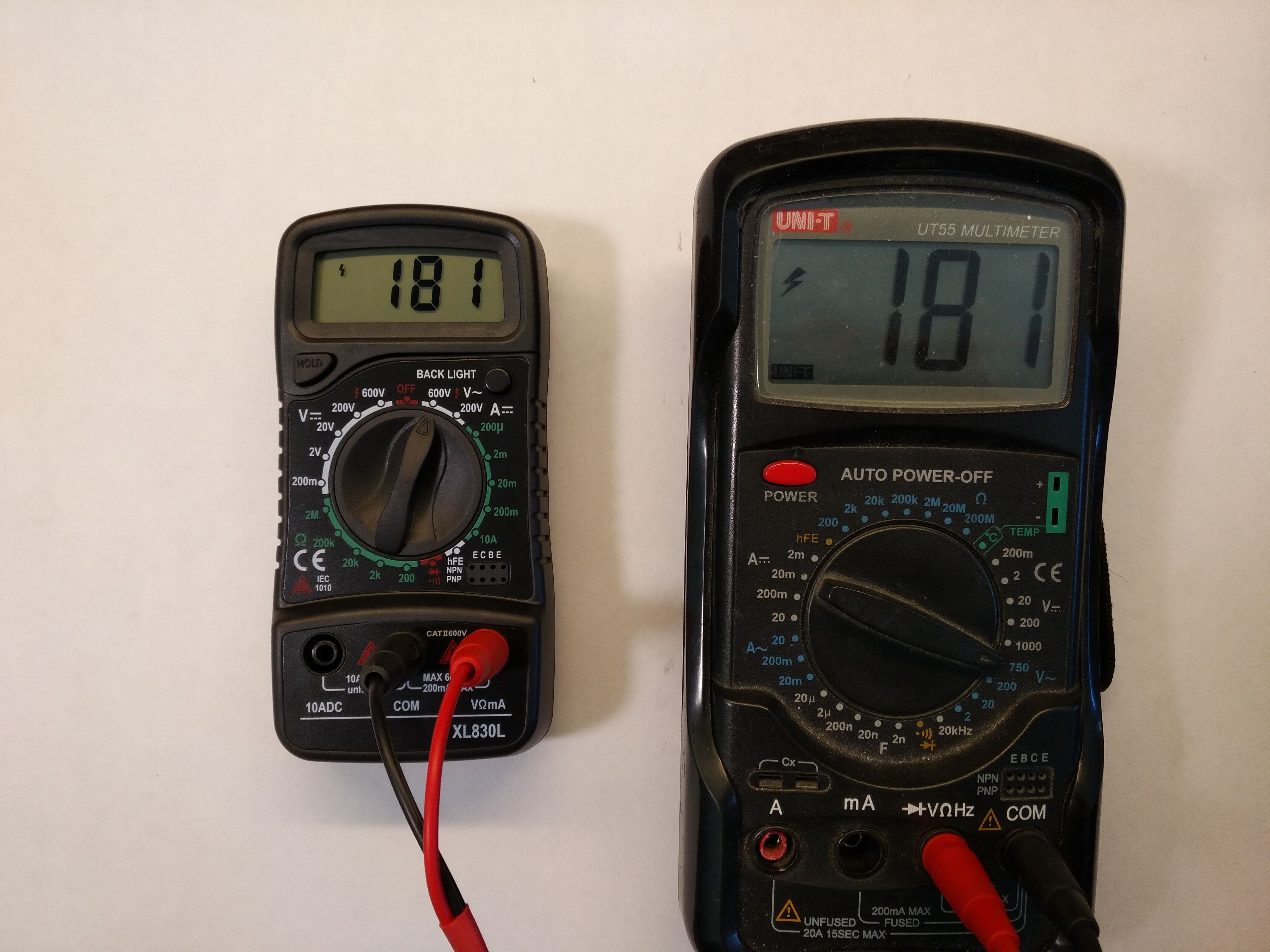
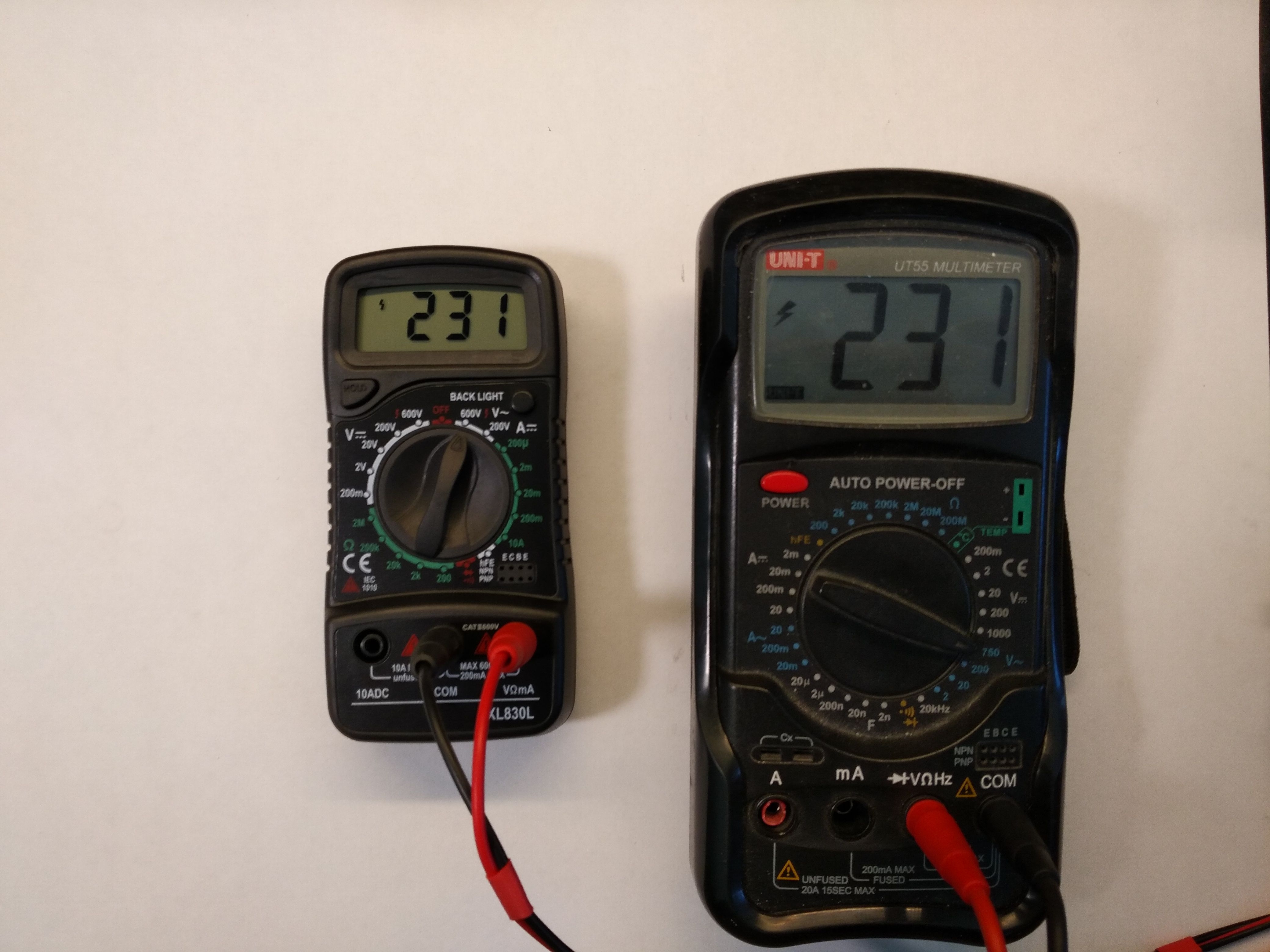
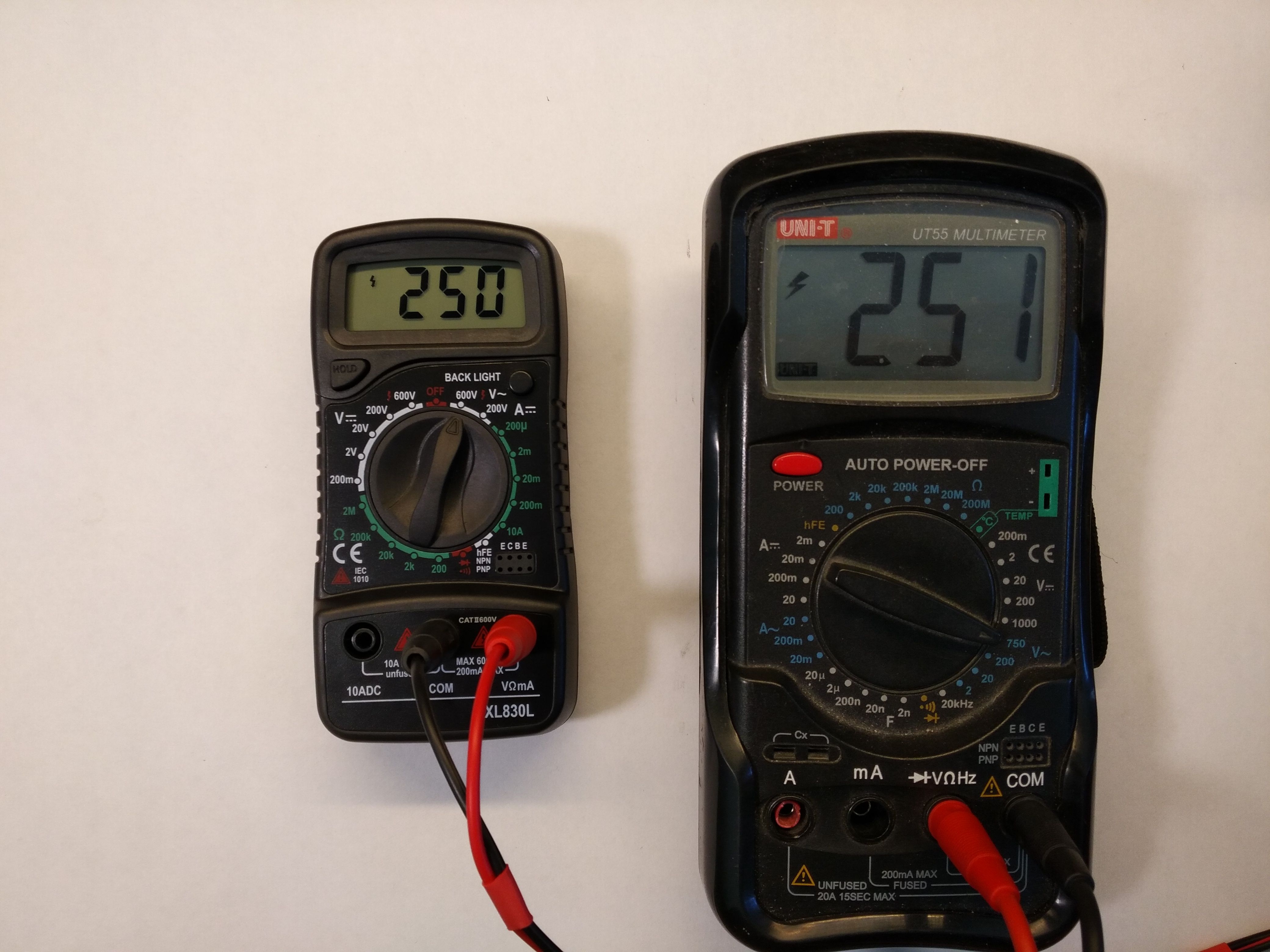
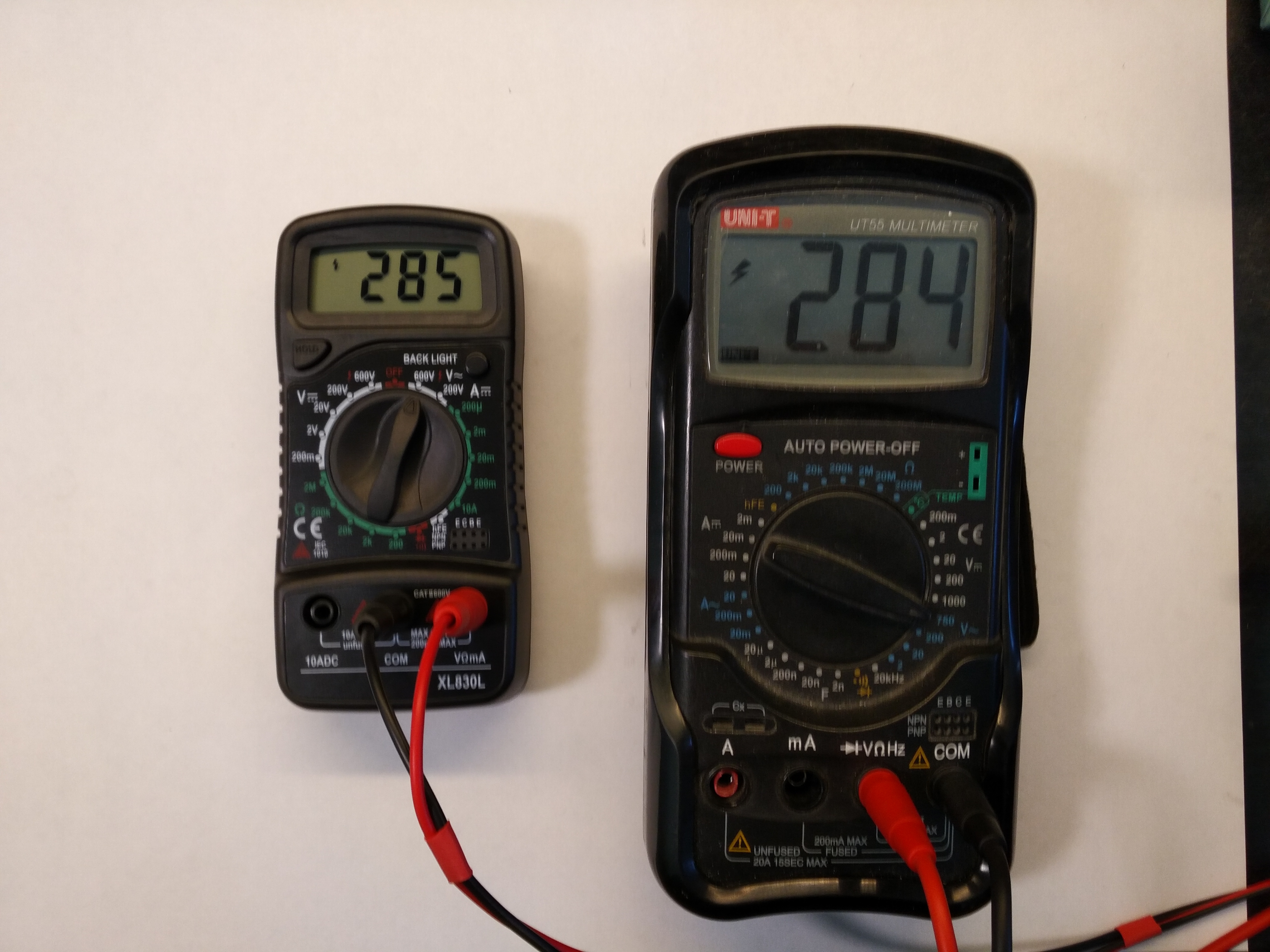
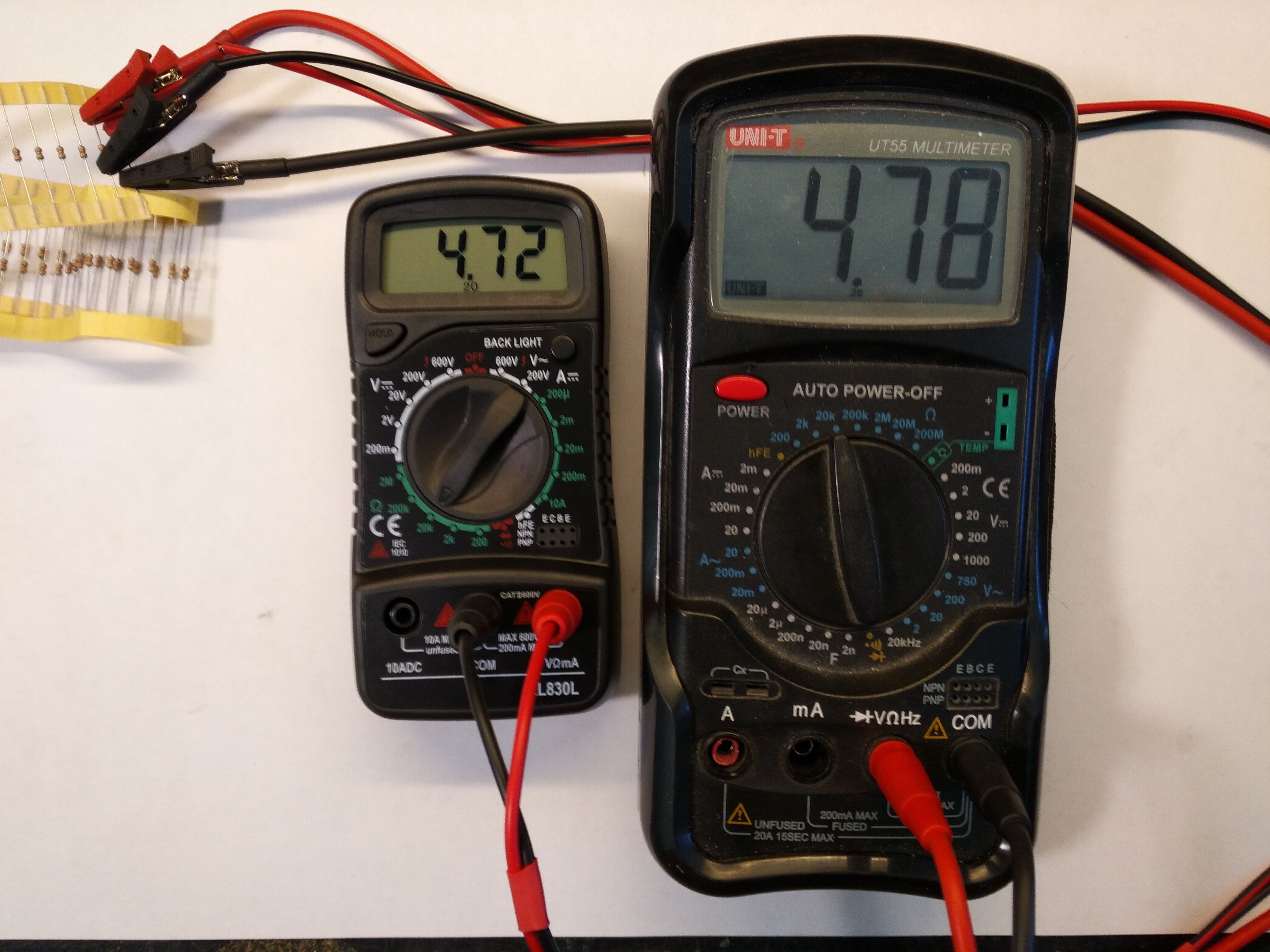
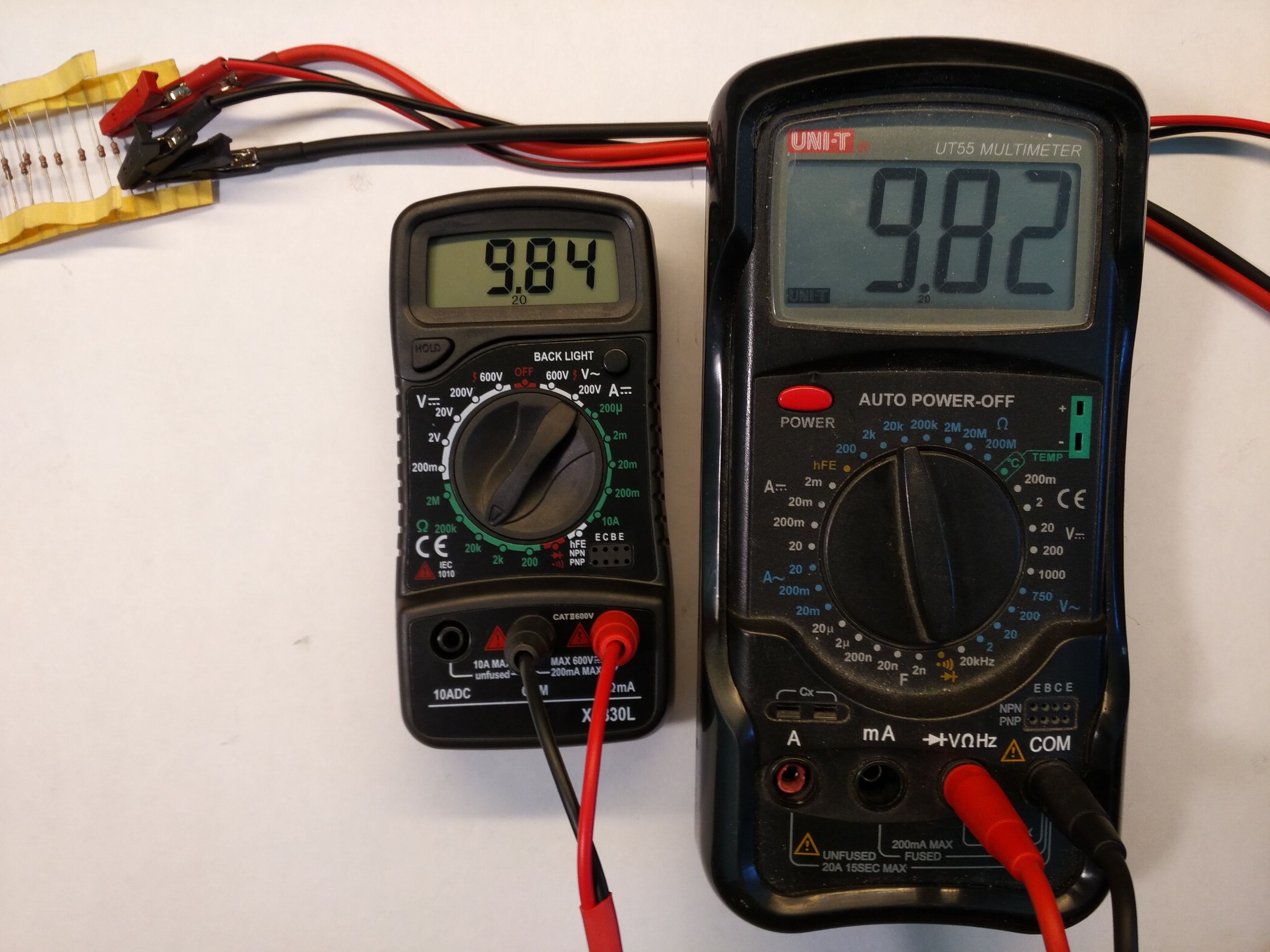
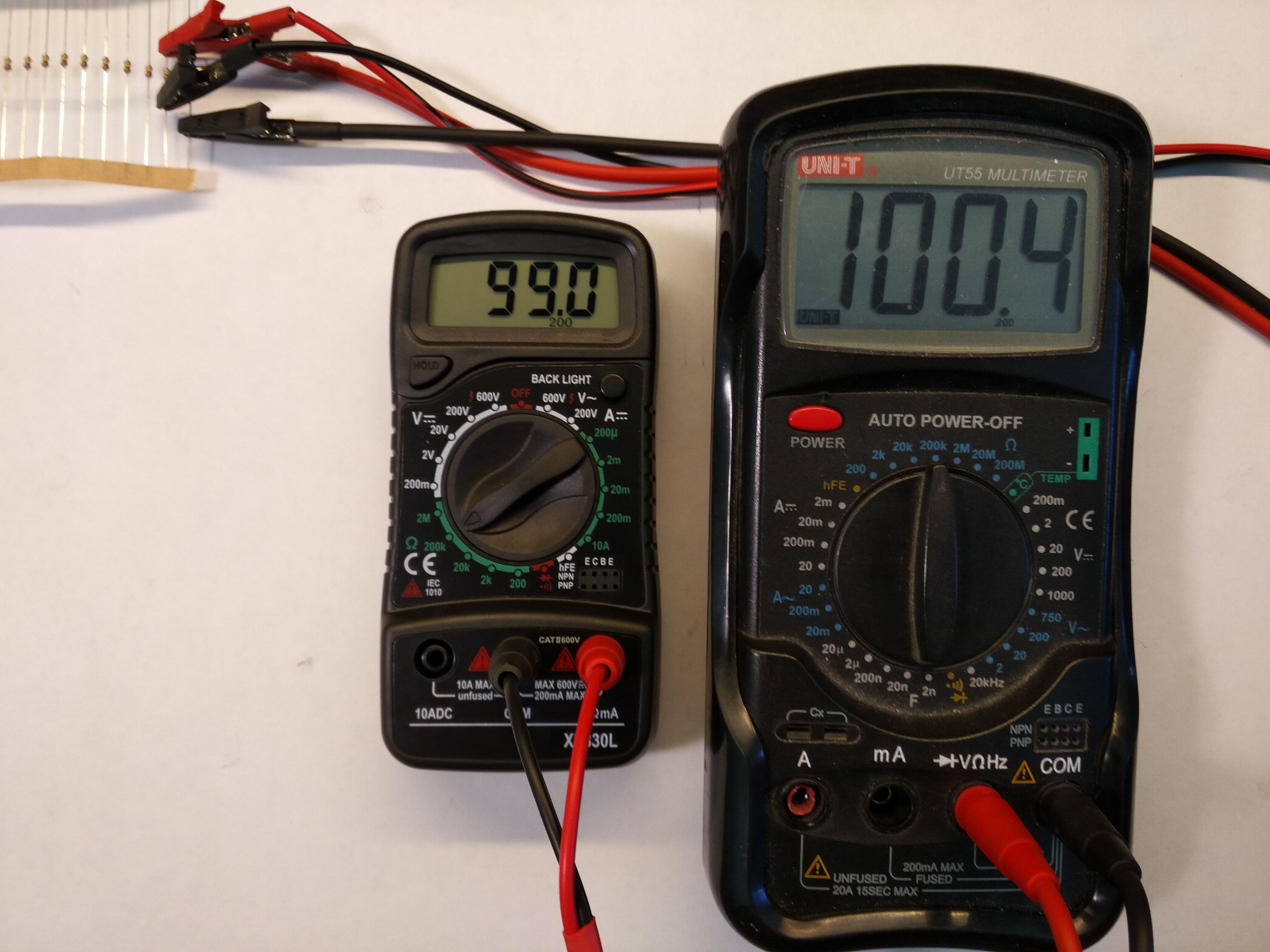
Below, I present a dozen or so photos showing the comparison of measurements with the "meter" that I use every day. It is impossible to disagree with the facts. This little Chinese "cockroach" looks perfectly correct as far as the measurement results are concerned.
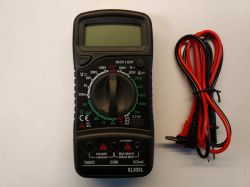
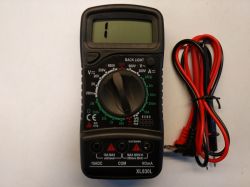
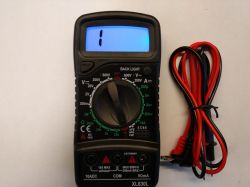
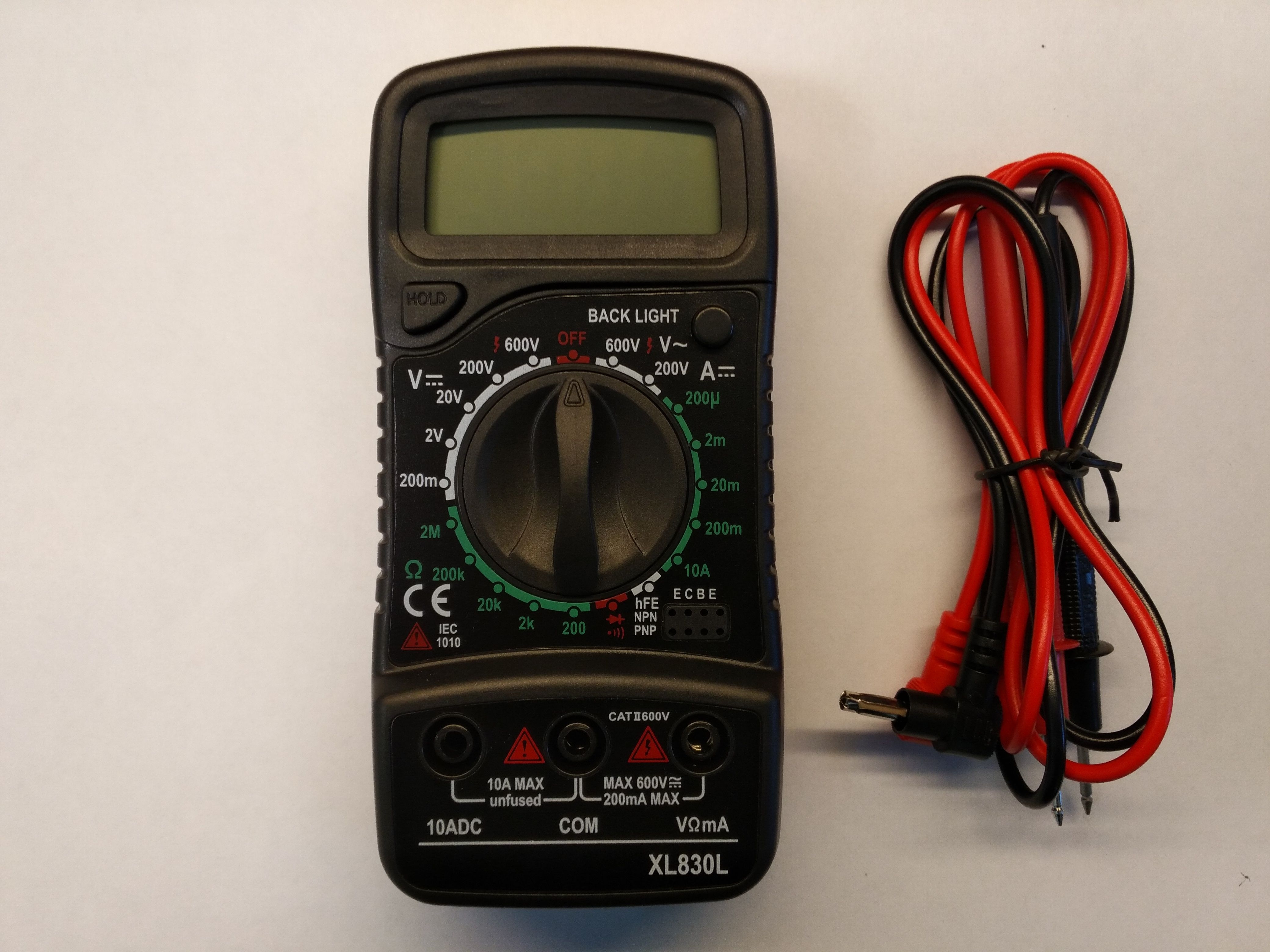
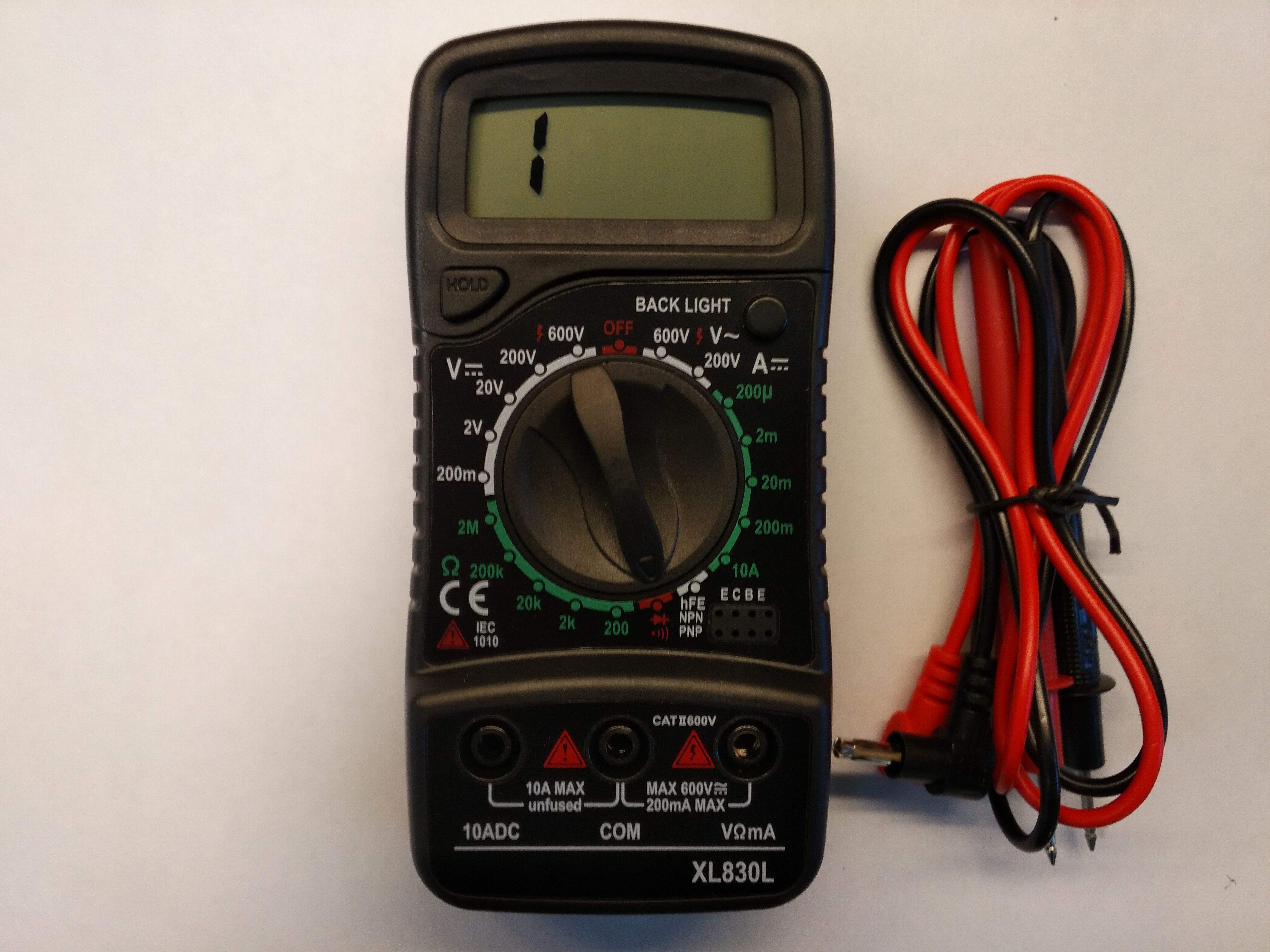
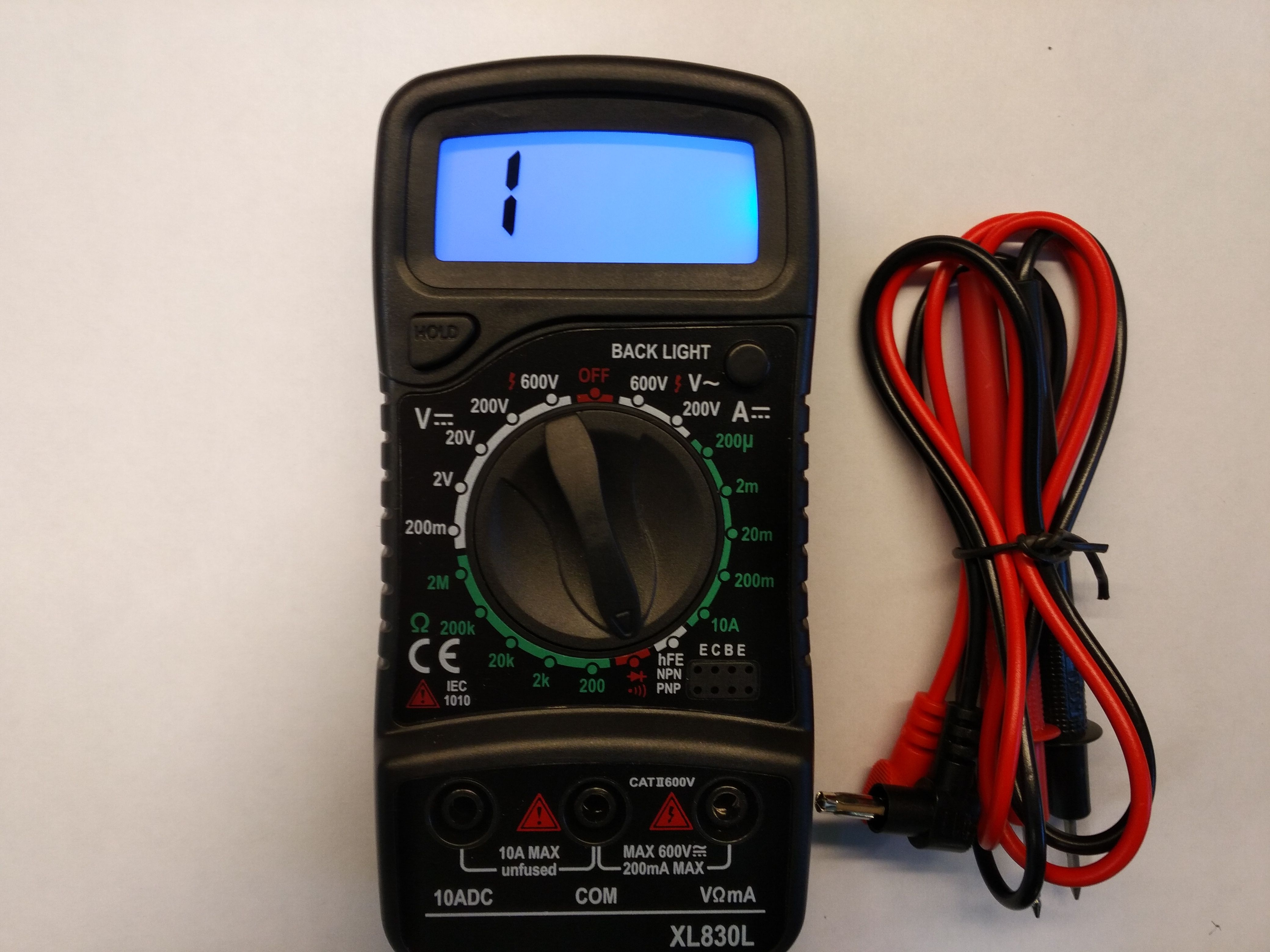
On the above photos you can clearly see how tiny this "multimeter" is. Unfortunately, the thickness is close to "standard" multimeters. You can also see that it has a screen backlight. However, once it is turned on, it cannot be turned off. You have to set the selector knob to OFF, thus turning off the entire device. When turned on again, the backlight will be off by default.
There is also a HOLD button that allows you to "freeze" the result of the current measurement.
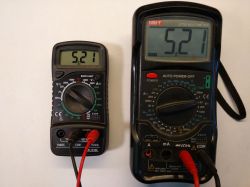
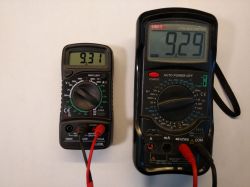
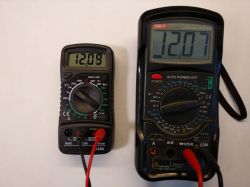
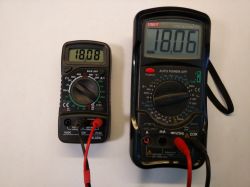
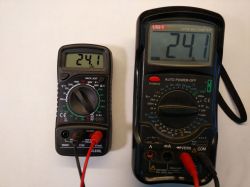
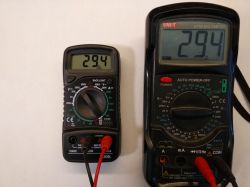
The photos at the top show a comparison of DC voltage measurements ranging from five to thirty volts. My power supply doesn't really give the full 30V, but we can skip that.

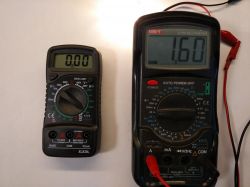
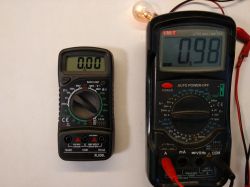
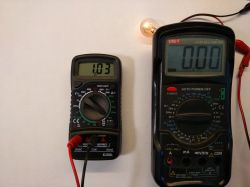
Here (above) we can see the current measurement (interestingly, the meter "can" measure only direct current),. As you know, ammeters should not be connected in parallel or in series (and here you have a chance to prove yourself and write why). Therefore, the measurement is performed alternately on both multimeters. On the same test leads.
A 12V 21W car bulb was used as the load. The supply voltage in the first case was 12V, and 5V in the second.
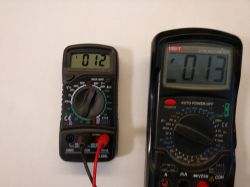
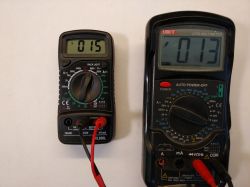
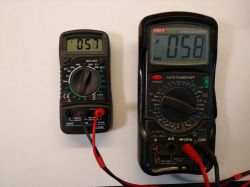
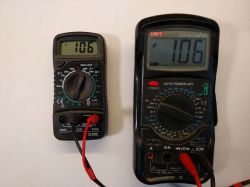
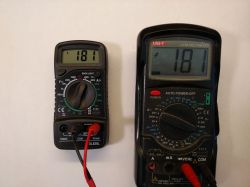
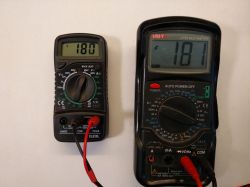
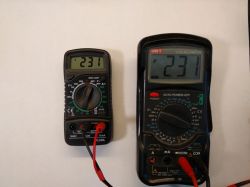
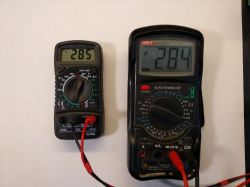
Alright. DC voltage, it measures quite correctly. So let's see how this little one deals with AC. In the pictures above I have recorded a comparison of measurements in the range of 12VAC to 285VAC.
Now it's time to test the ohmmeter:
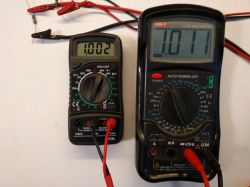
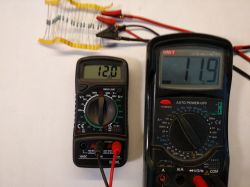
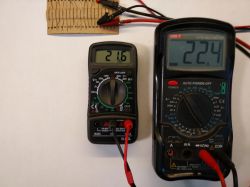
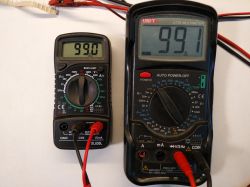
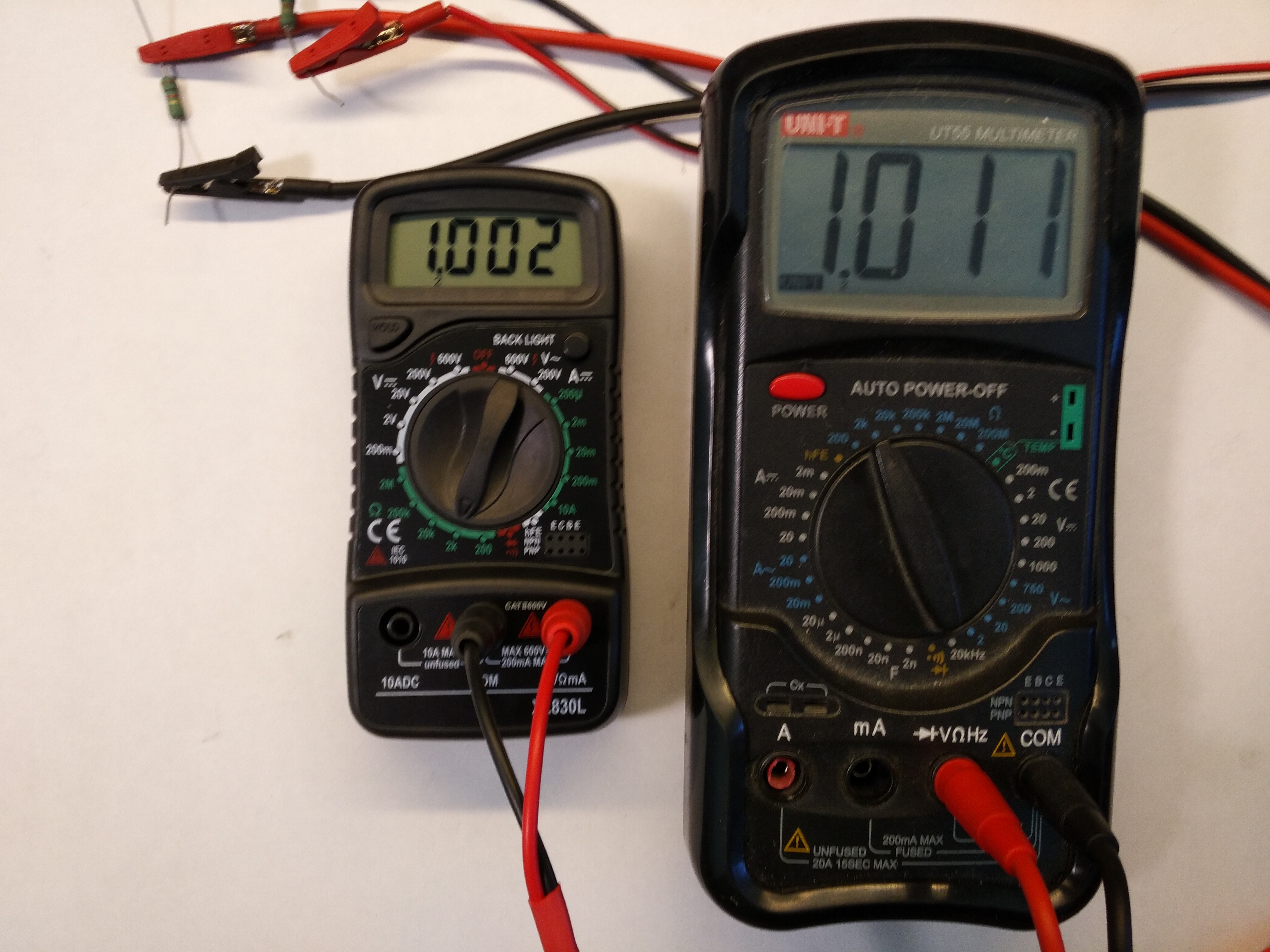
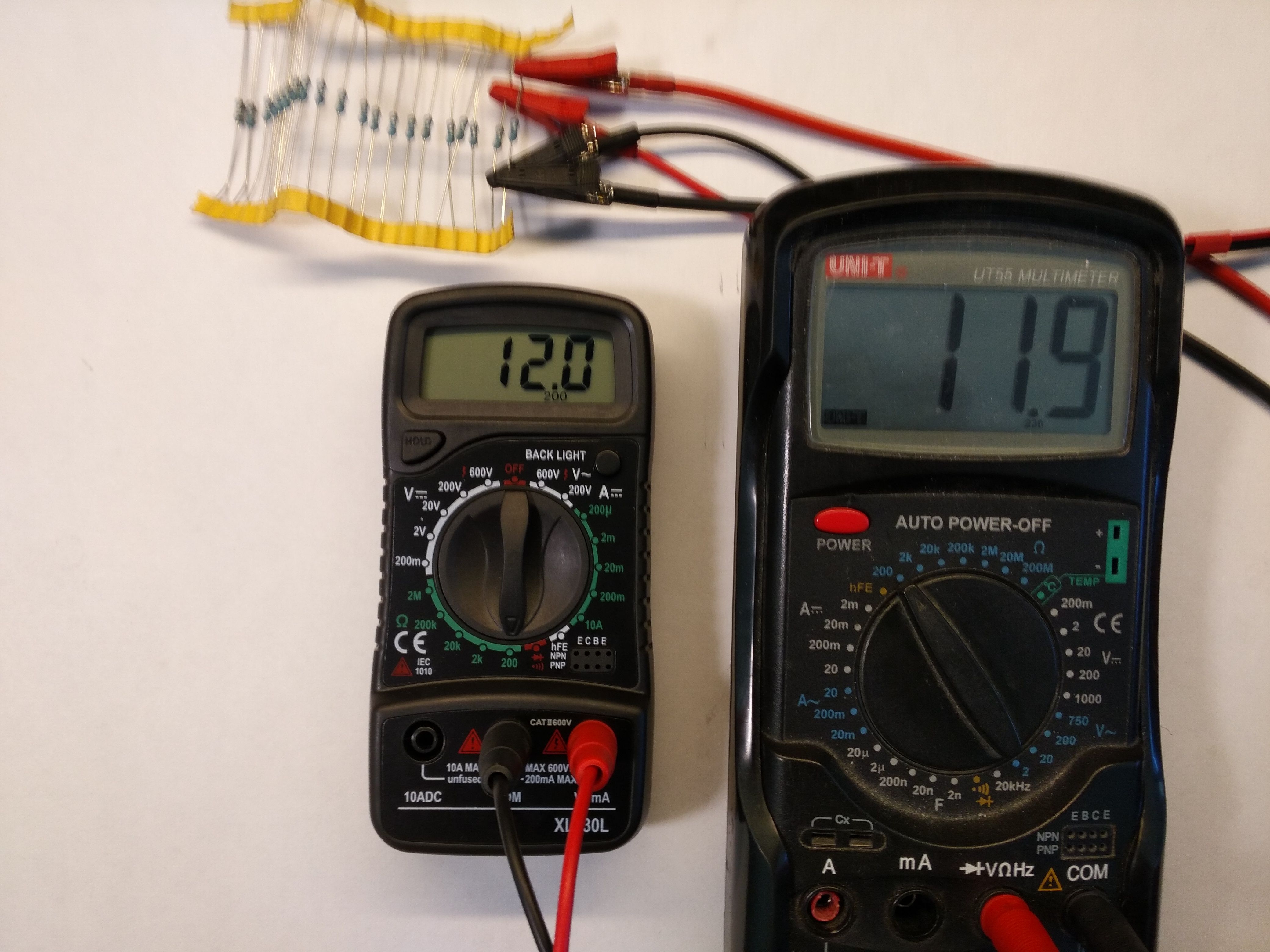
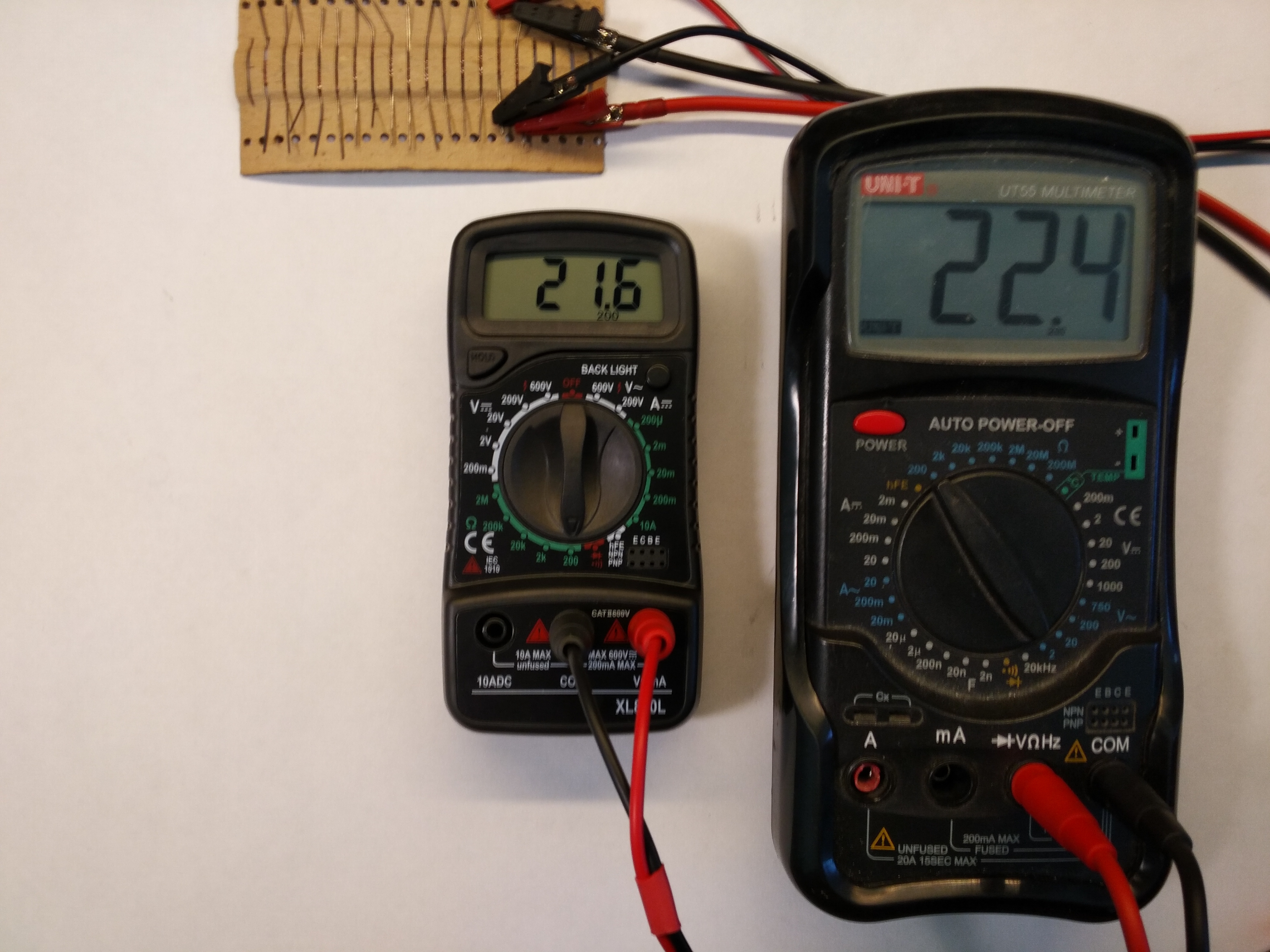
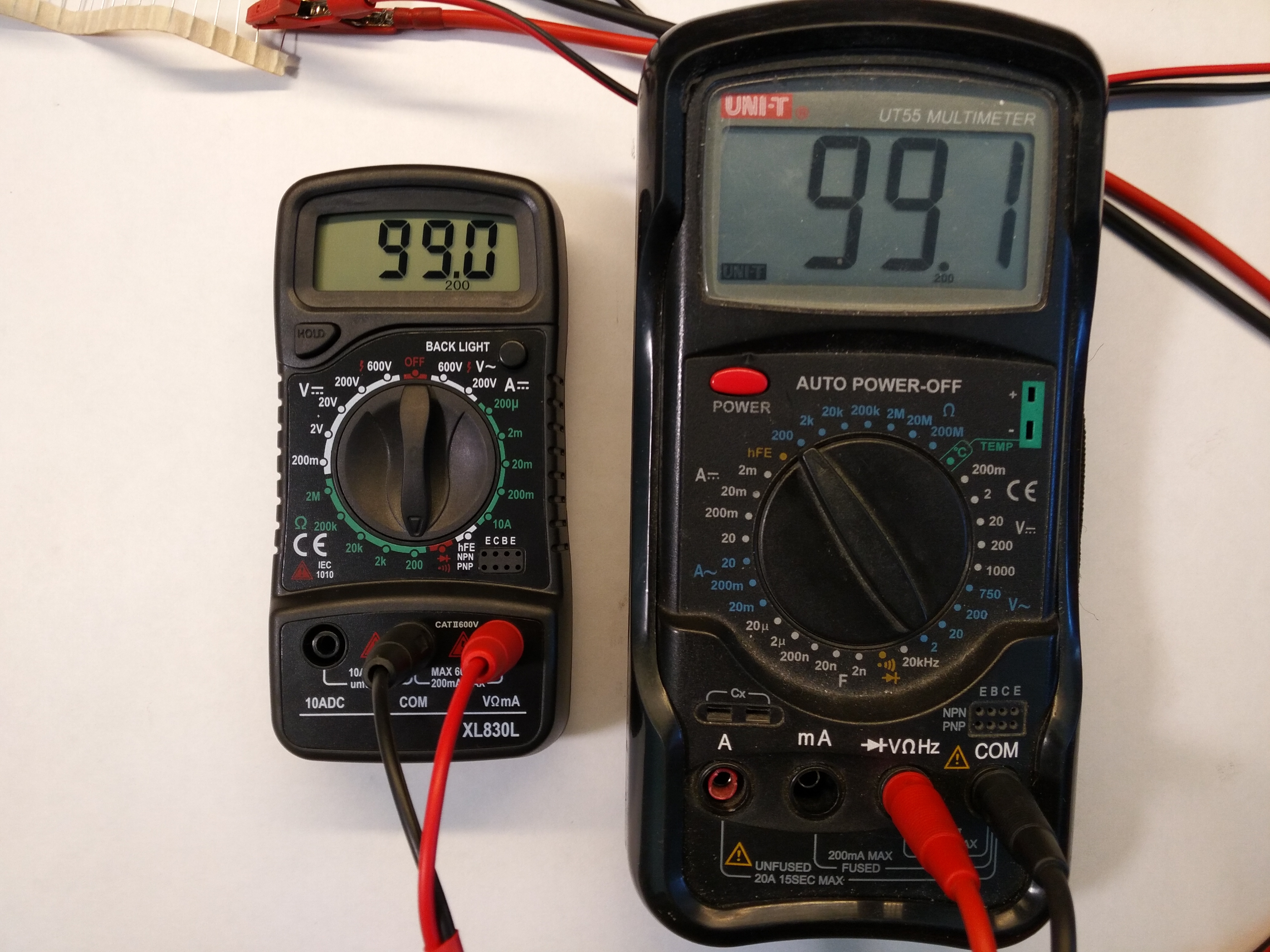
As you can see in the photos above and below, when measuring resistance, the results are perfectly acceptable. Especially since, as you probably noticed, the measurements (due to my laziness) were made on two different resistors from the same package. And we know that even in one "strip" of 100 pieces, they will be different.
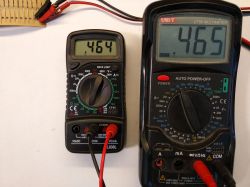
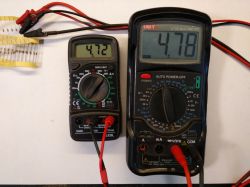
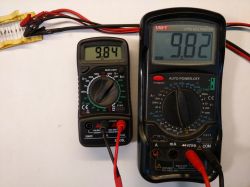
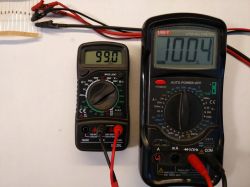
I have not tested the HFE measurement of transistors, because although I have this function in all my multimeters, I have never used them in my professional or amateur career.
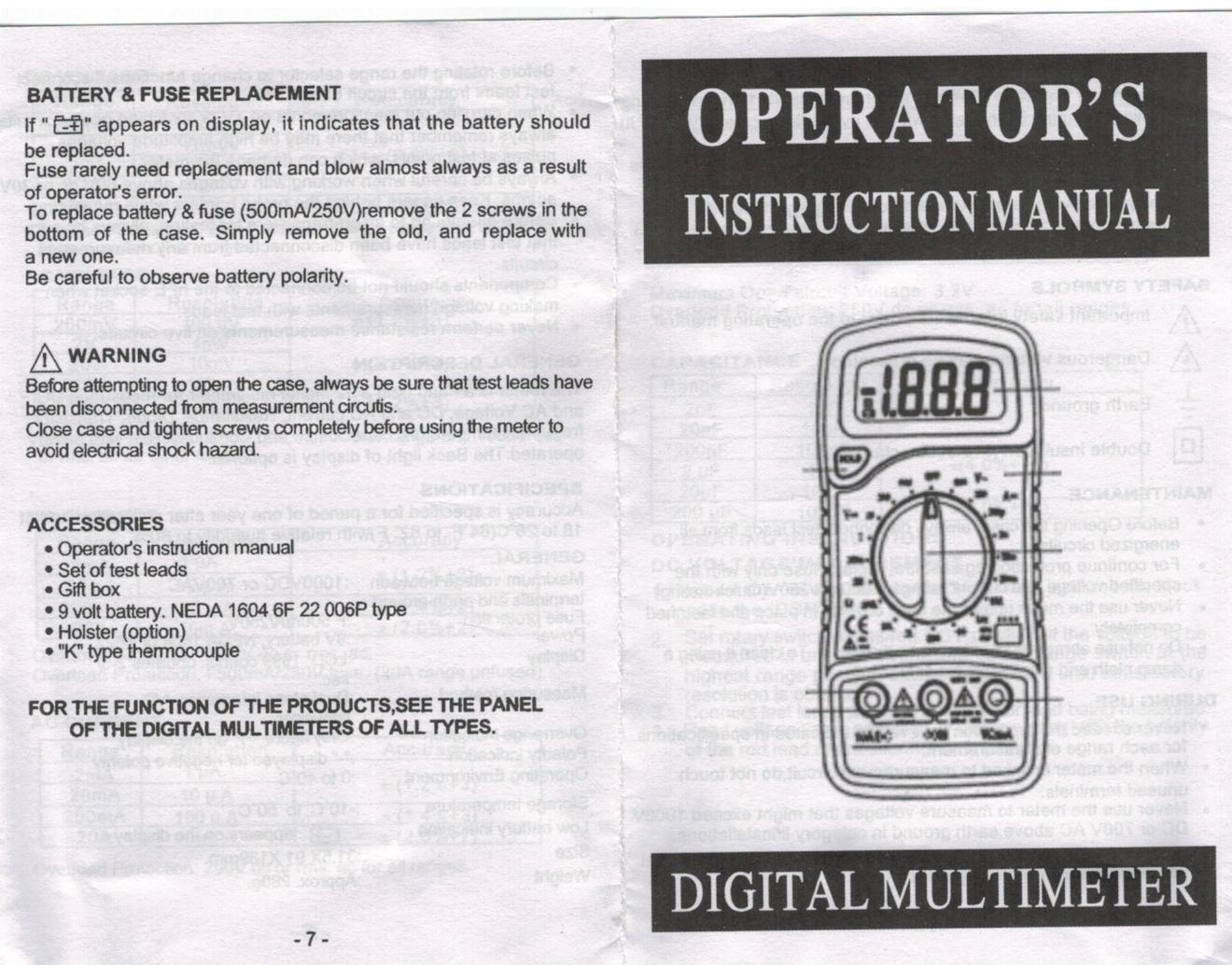
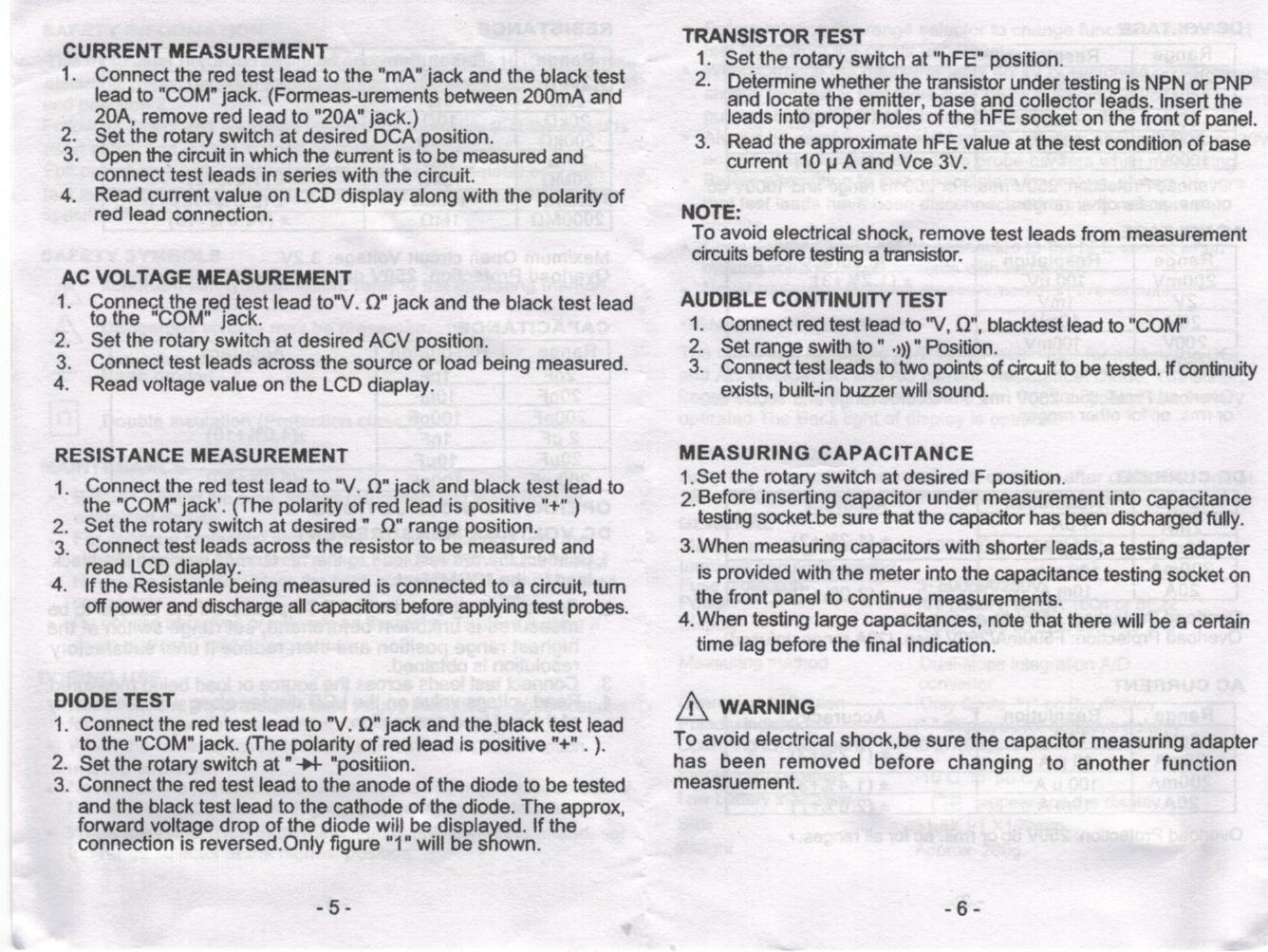
I forgot one more important thing. I scanned the user manual for you.
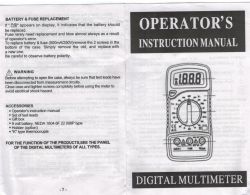
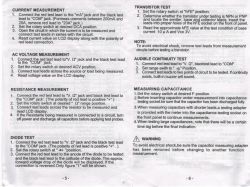
Summarizing.
It is quite a useful tool (apart from the tragic quality of test leads). If it appears in the electrode shop, it will certainly be useful to many young electronics enthusiasts. And even if someone spends the $ 5 and buys them on their own, and then "measures", for example, the resistance in a 230V socket, it will not be a regret.
Best regards.
CMS
EDIT: 2018-07-26 16:53
At the user's request, I add photos from the center of the multimeter.
piotr_go wrote: Please pics from inside.
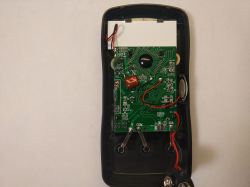
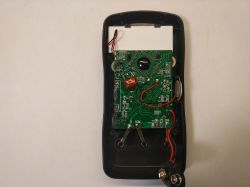
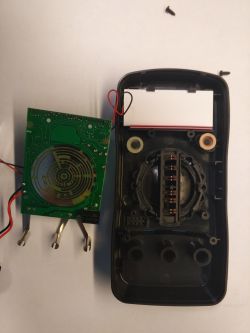
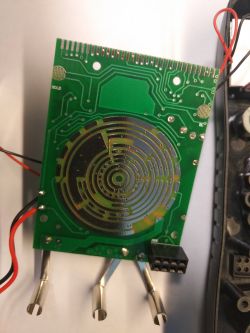
As you suspected, we will not find out what integrated circuit the meter is built on, because we only have a "black dot".











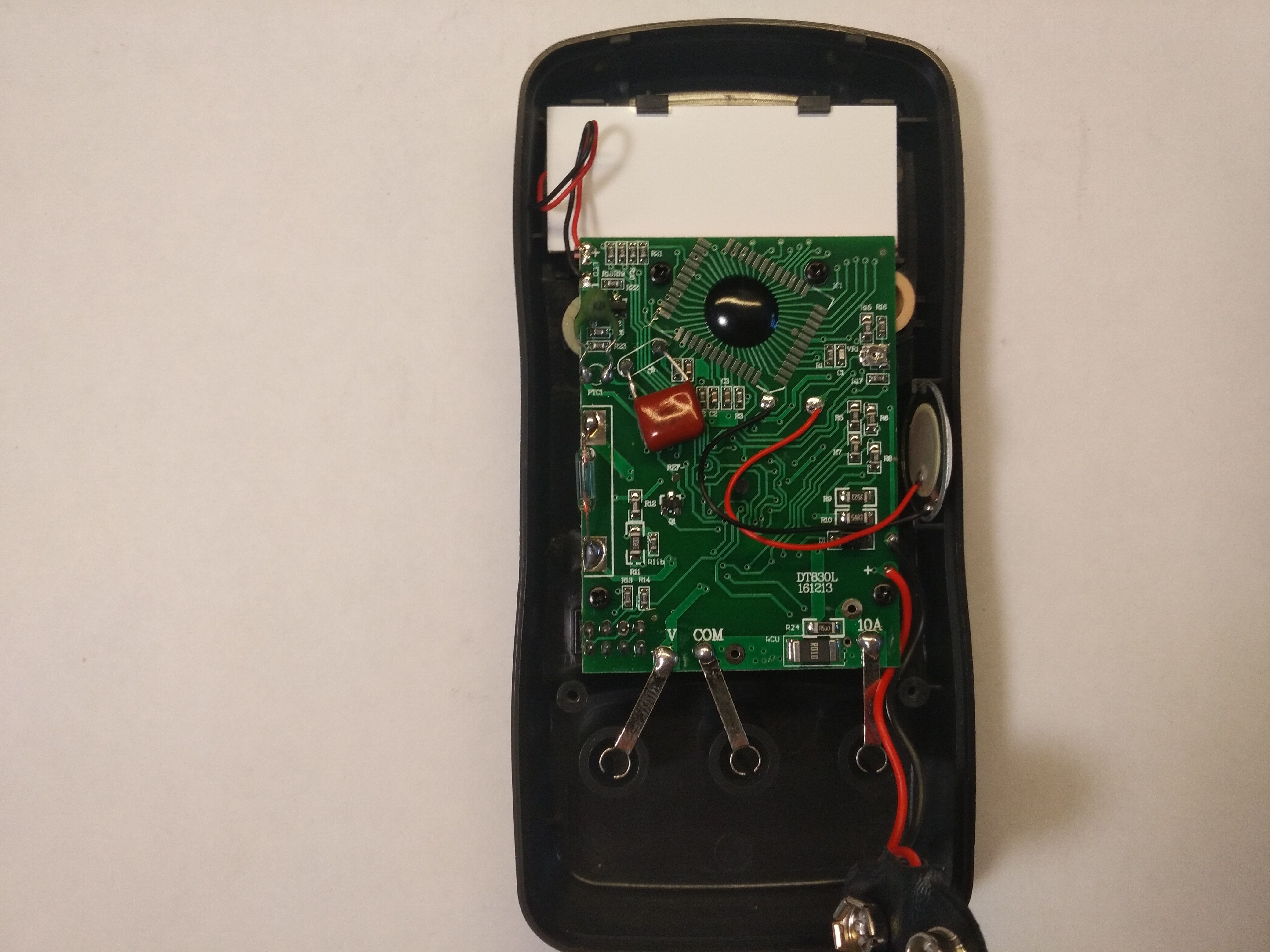
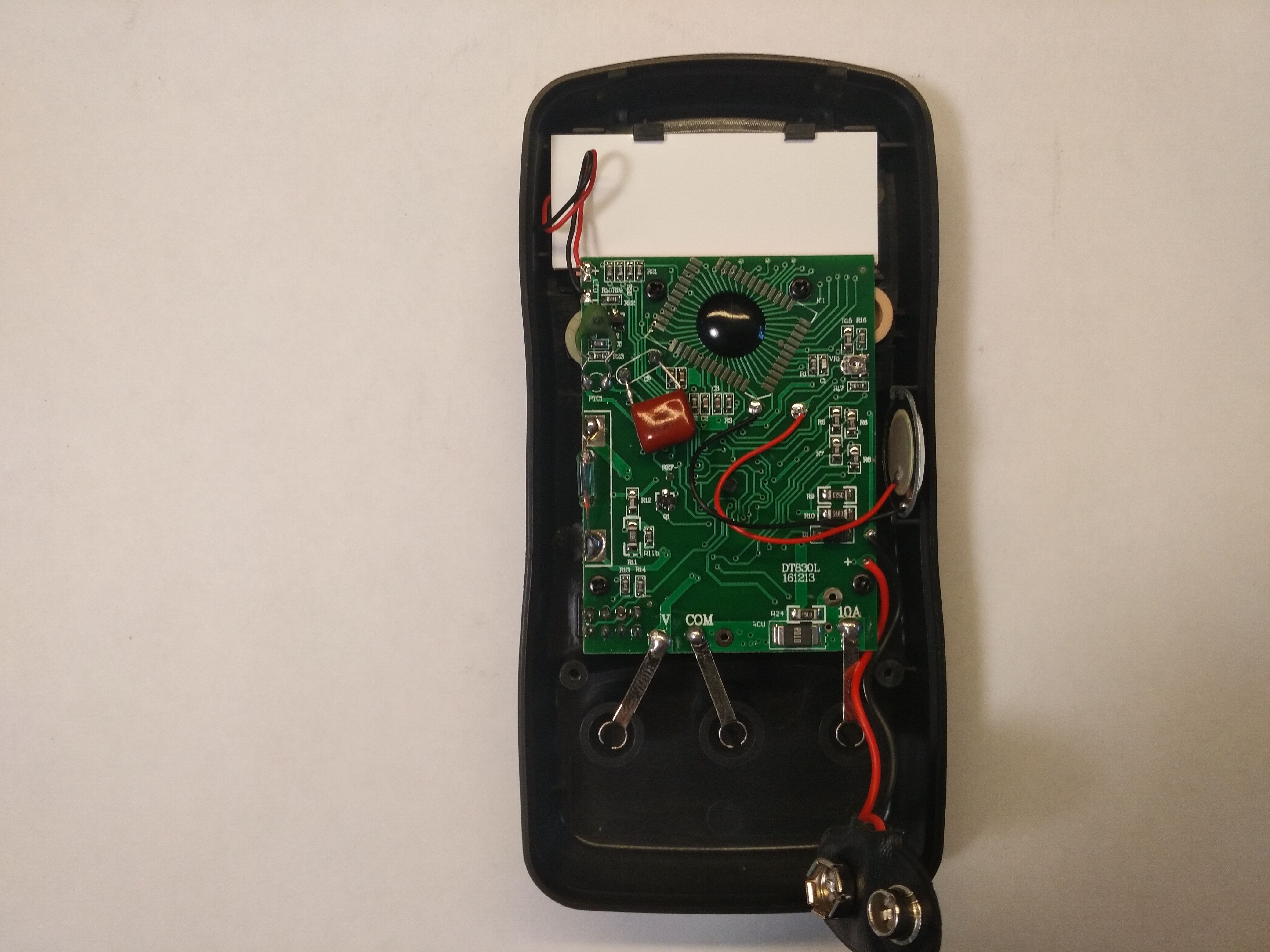

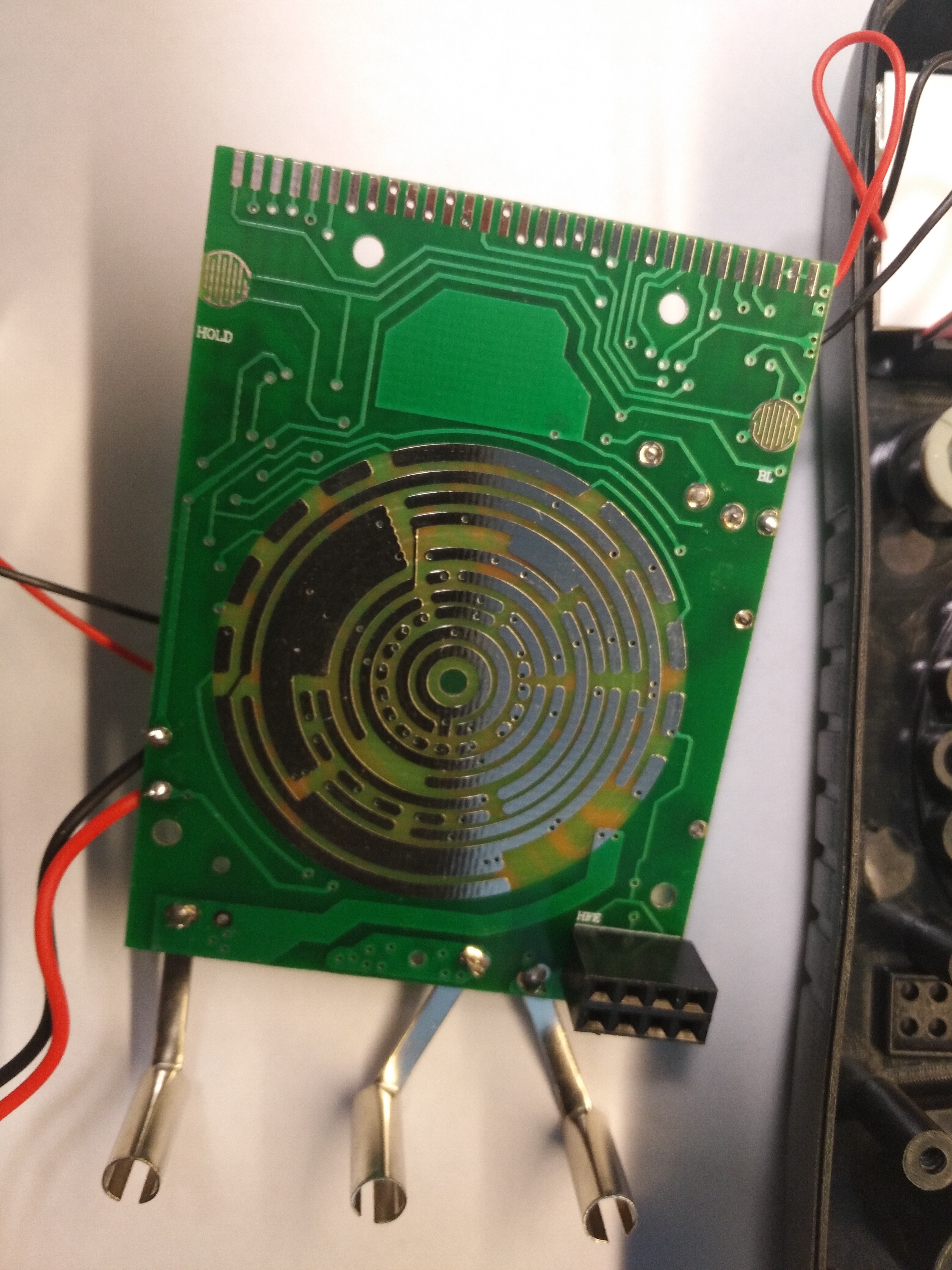

Comments
It's worse if someone tries to measure the current, because resistance can still be done with the right setting. [Read more]
Either way, if the magic smoke leaves our multimeter, it will stop working. it does not change the fact that you will not regret such a cheap gauge. [Read more]
It will most certainly regret it when it goes to the afterlife. :D [Read more]
Echhh, 5 baksów - in 93, probably, when I bought the first digital multimeter, the successor of the C4353 (hallelujah, no longer needed a calculator!) I paid almost 700,000 for it. PLN - the teacher then... [Read more]
Parallel connection of ammeters does not make much sense, but you can check the readings in series. The same is with voltmeters. You can check it in parallel, in series - it doesn't make sense. [Read more]
But you will not correctly measure the current flowing in the circuit you are going to check it. The instruments should show the same value, but it won't be the true size. [Read more]
This article was about the comparative measurement of two measures, I suppose. [Read more]
Do not scare. After all, it's some antique scrap. The pocket UNI-T was 100 times better. Please pics from inside. [Read more]
I am waiting for reviews of a decent multimeter at an affordable price. Yes, in the range of PLN 200-300 [Read more]
The author compared rather two unknown integrated circuits - possibly - the same type - inside these devices - one probably in a large standard housing and the other in the form of a plastic drop on the... [Read more]
I have a Sanwa RD701, indication up to 4000, measurement of frequency, capacity, temperature, true rms, nice meter. Possibly newer CD771 / CD772 but somehow I'm not convinced by their appearance. ... [Read more]
It can be done Send it :) I will review. :) I received the meter from Gulson for testing. Today I will describe another small meter with True RMS and 6000 resolution. But I cannot promise that... [Read more]
UT136 good price / quality ratio (automat, backlight). UT61E (resolution 22'000) of course automatic, TrueRMS, unfortunately there is no backlight. Protection on everything 600V, fuses in ranges 1... [Read more]
For me, I always have two meters on the table: the first is the Fluke 289, and the second is the Mastech M-830B, but the latter is most often used because it costs pennies. In addition, I also have a drawer... [Read more]
I added in the first post. [Read more]
Well, the set with the meter should also include a soldering iron to replace the fuse and the IC looks like an ICL7116 clone [Read more]
The fact that this fuse made me laugh too. [Read more]
However, as it happens in cheap meters, the fuse in the 10A range will never blow. [Read more]
I am more "stuck" red large capacitor. :D [Read more]