logo elektroda
logo elektroda
X
logo elektroda

Nous Smart Socket A1 (BK7231)

AcuarioCat  9 5757 Cool? (+10)
📢 Listen (AI):

TL;DR

  • The Nous Smart Socket A1 uses a soldered BK7231N and BL0942 power monitor inside a three-PCB layout.
  • A switched-mode 12V supply feeds an intermediate relay board, then an S47B DC/DC module generates 3.3V for the top control board.
  • Flashing uses the Python uploader, with 3V3 from the USB dongle, a 10K pullup from CEN to 3V3, and a switch to pull CEN low for reset.
  • The board maps Relay to P26, Switch to P9, and LED to P6, and the BL0942 calibration program works correctly; power detect feeds the BL0942.
Generated by the language model.
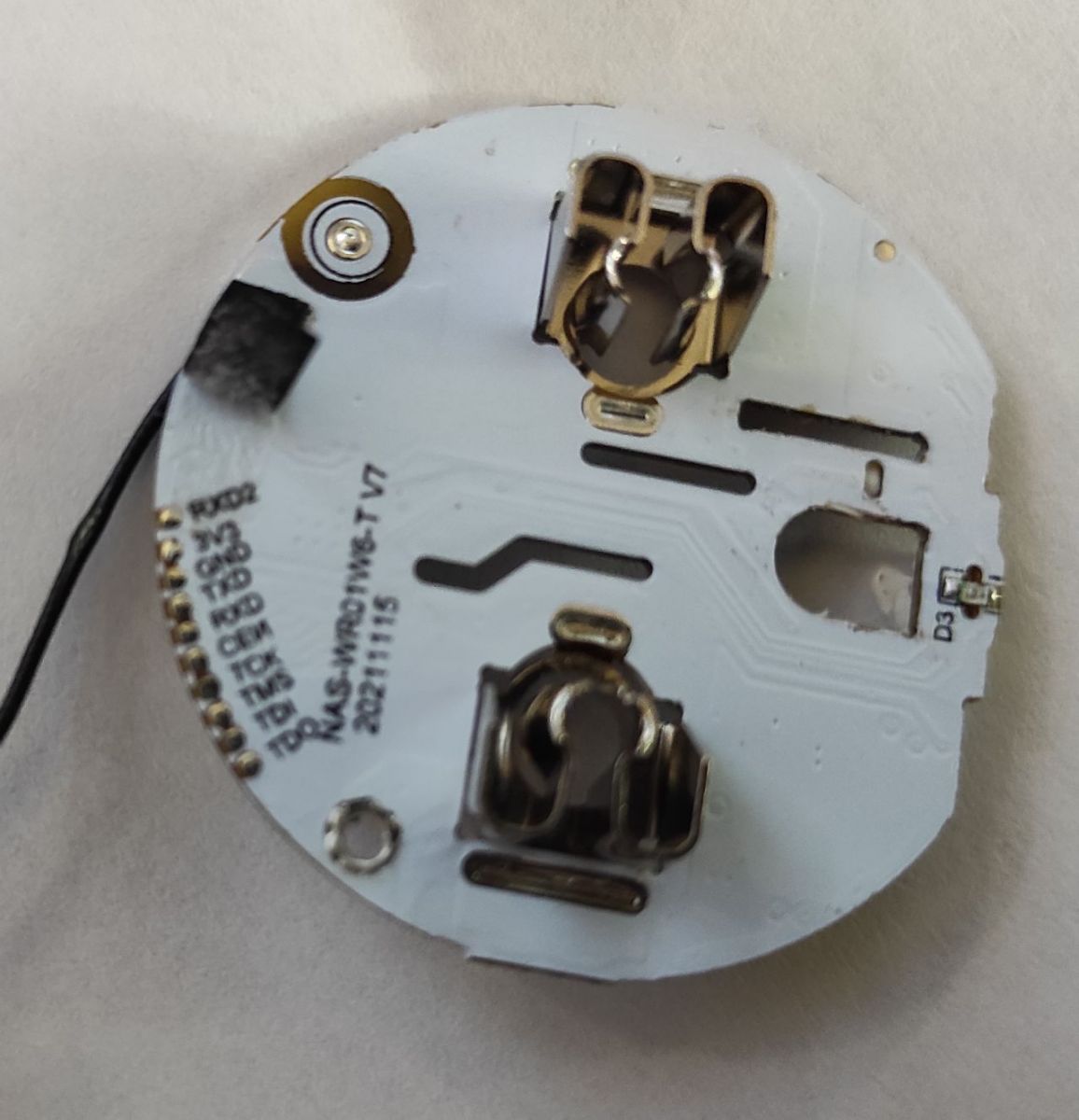
The Nous Smart socket A1 contains a BK7231N and BL0942 power monitor. The BK7231N is soldered to one of the pcbs and is not on a separate module.

Disassembly of the device is easy as there is a triangular screw under a paper label stuck onto the transparent plastic part of the socket.

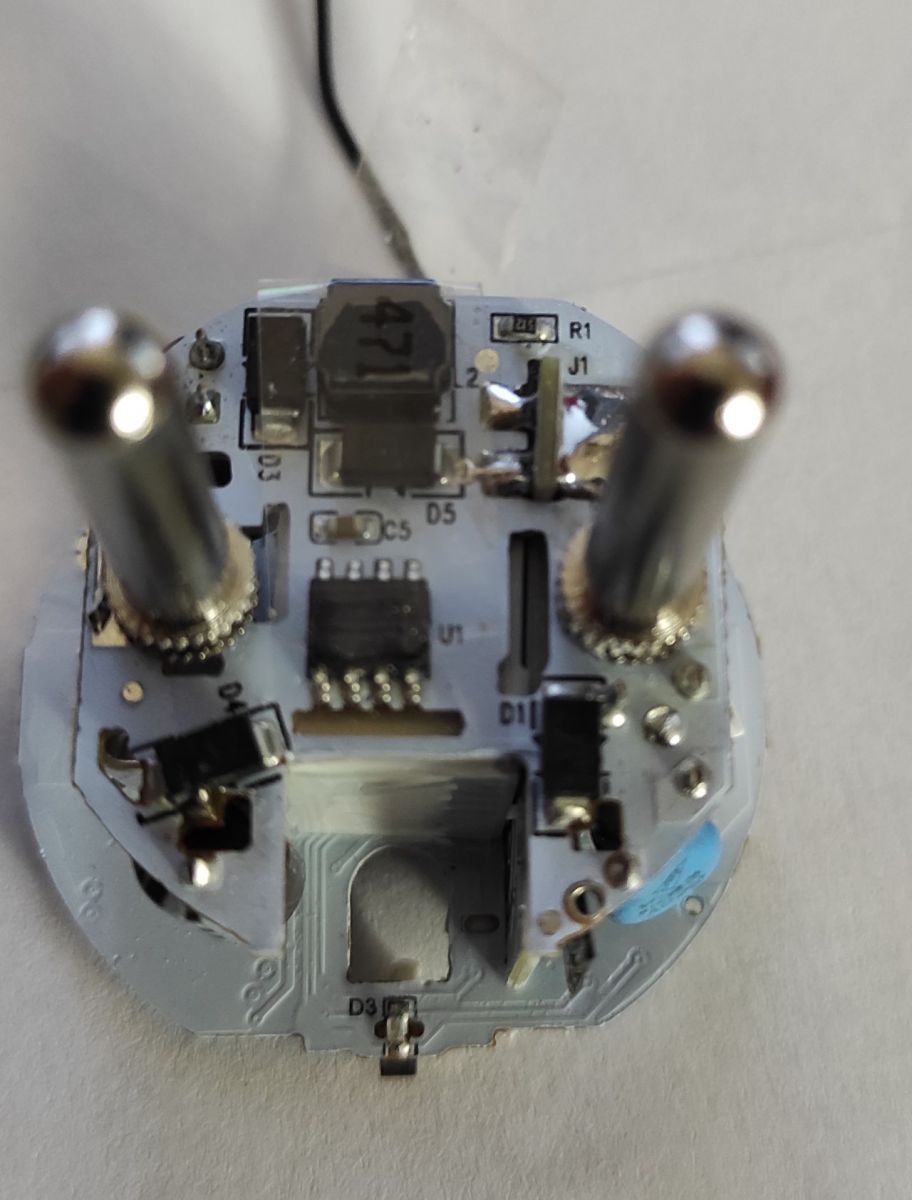
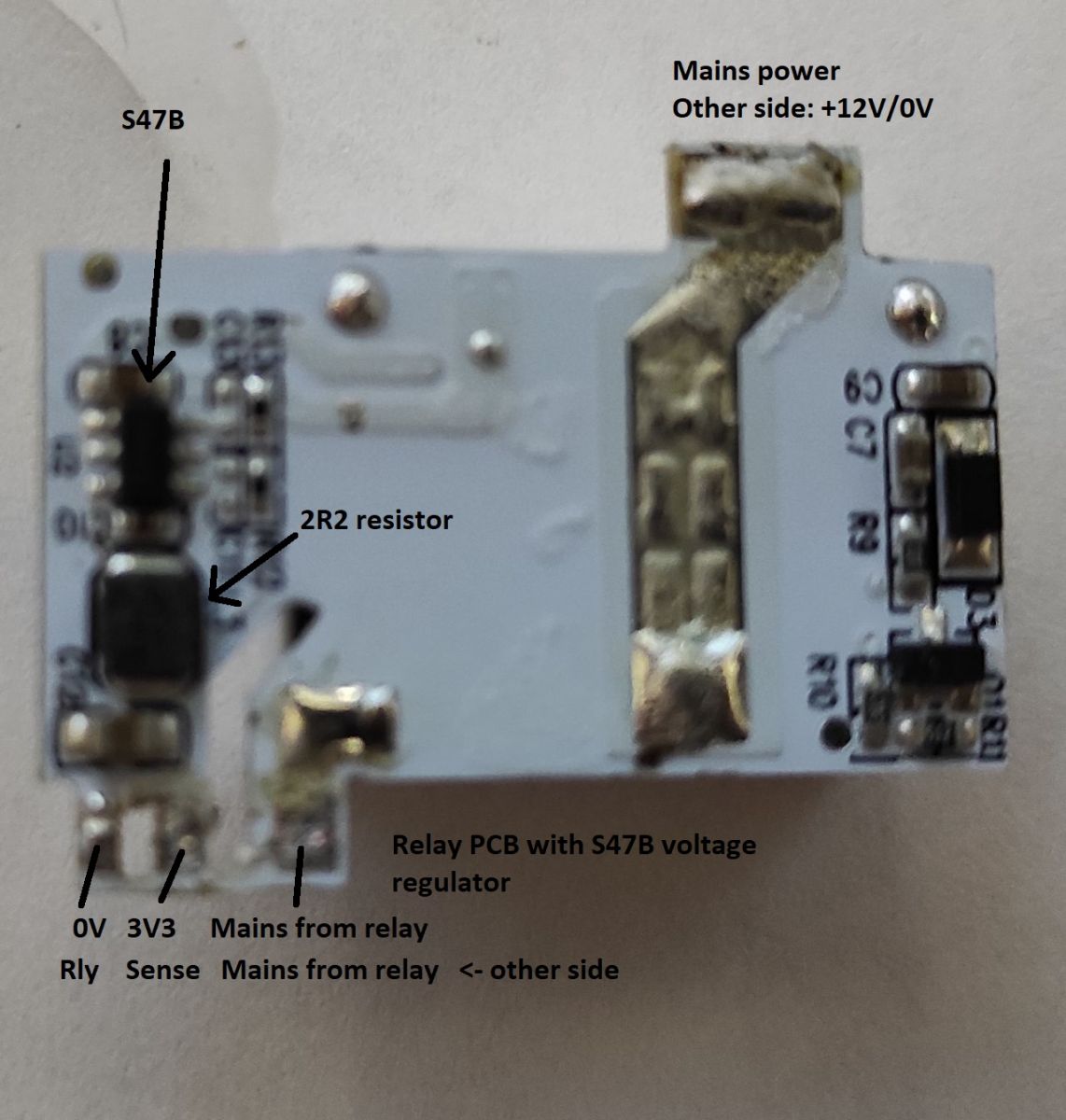
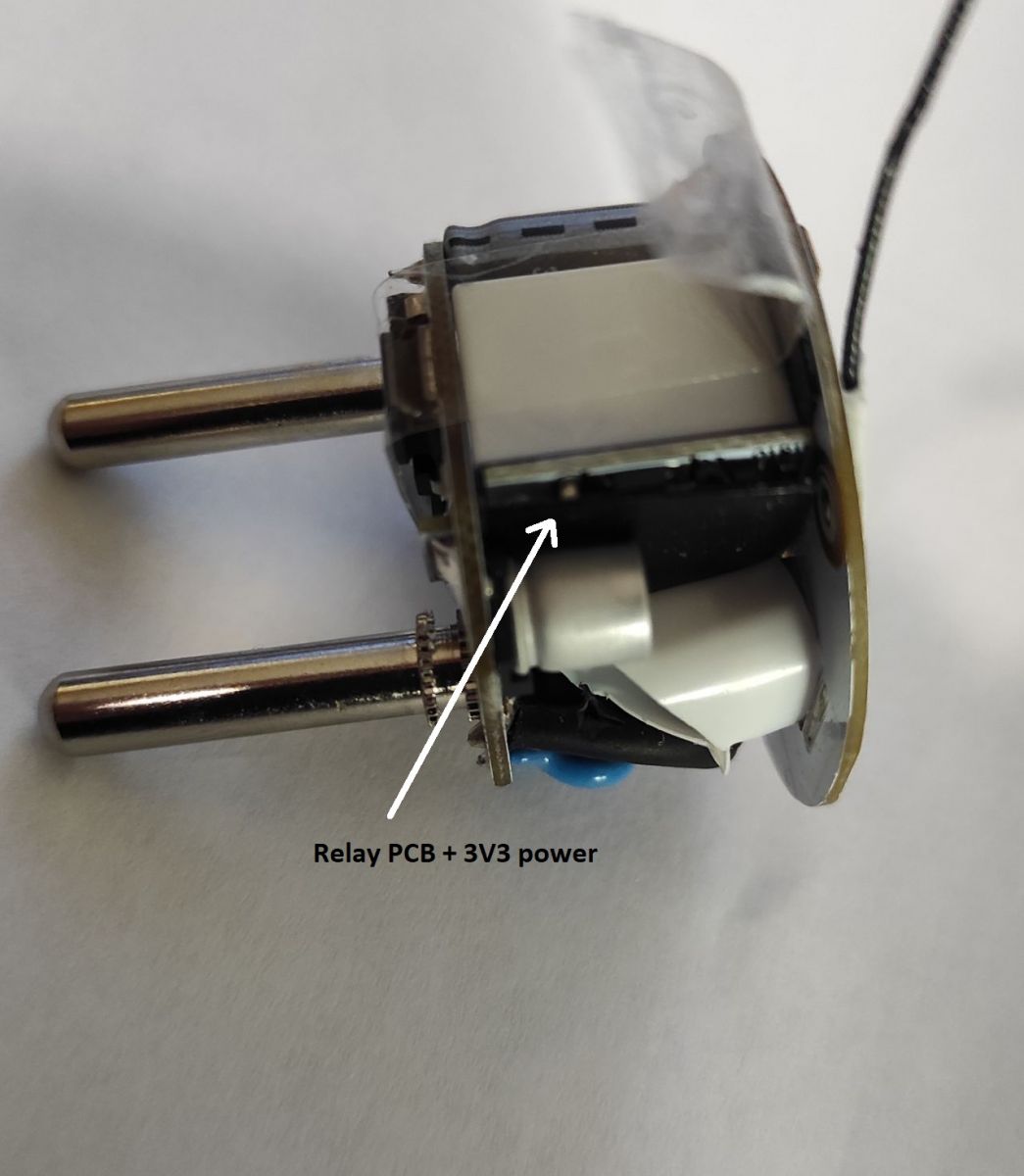
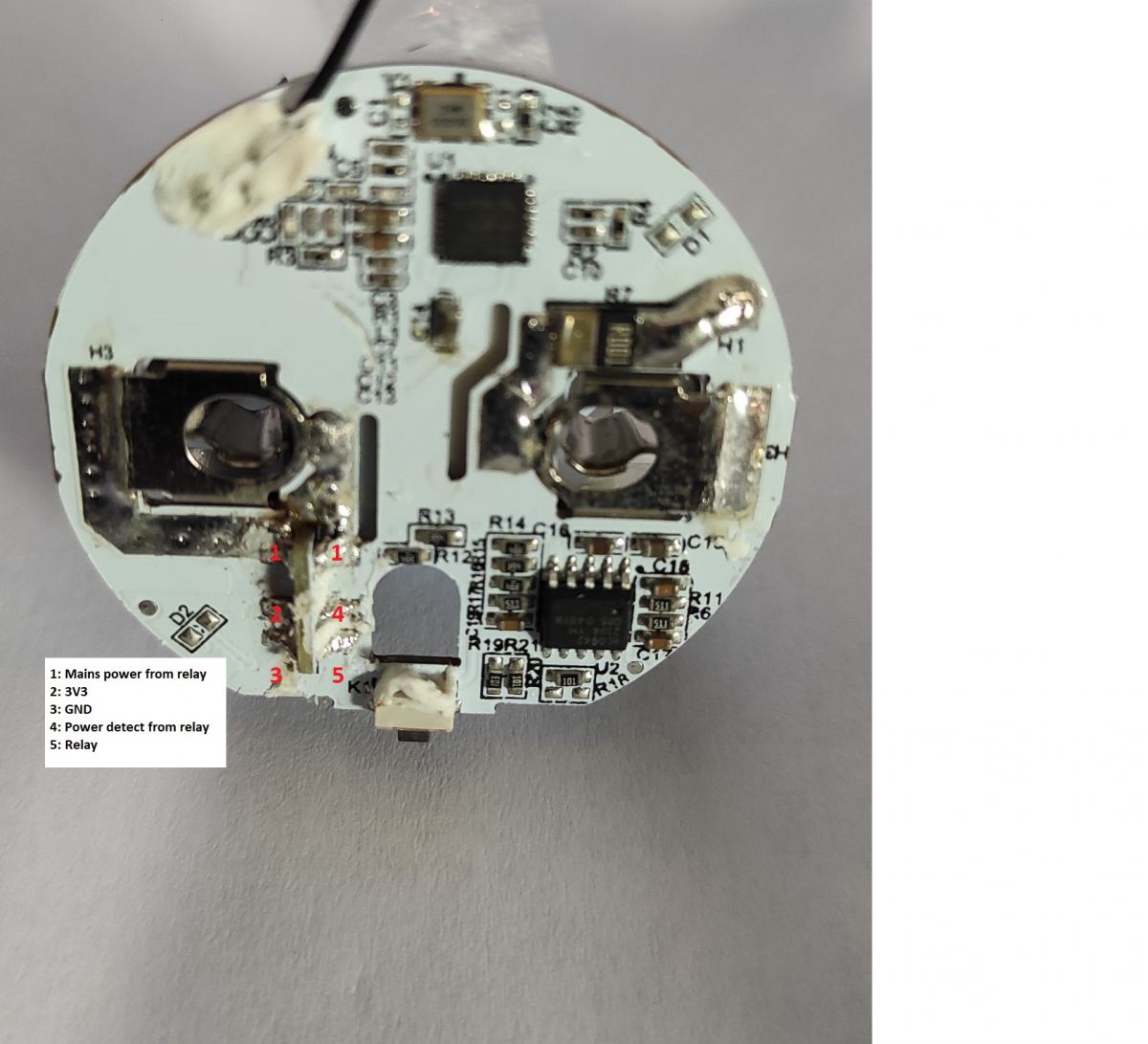
Inside are 3 pcbs, one contains a switched mode 12V power supply, an intermediate board has the device relay and a S47B dc/dc power supply providing 3.3V to the top board that contains the BK7231N and BL0942.

Flashing the chip is achieved using the python uploader

Connections are as the same as described in the Qiachip Smart Switch - BK7231N / CB2S - interior, programming post with the exception of the 5V supply which is 3V3 from the 3V3 connection on the USB dongle.

I also had to add a 10K pullup resistor from CEN to 3V3 and a switch to pull down to 0V to reset.

Connections on the unit are:
Relay: P26
Switch: P9
LED: P6

There are mountings on the device for 3 leds although only D3 is mounted. The other leds are all wired in parallel.
The BL0942 calibration program works correctly as described elsewhere.


The power detect is the feed to the BL0942

About Author
AcuarioCat wrote 8 posts with rating 10 . Live in city Tortosa. Been with us since 2022 year.

Comments

Anonymous 24 Jun 2022 12:44

To tłumaczenie jest bez sensu. What kind of python uploader? The title of this article (in Polish) is about firmware updates, but there is hardly anything about it in the article itself. [Read more]

speedy9 24 Jun 2022 13:37

Doesn't it use OpenBK7231T developed by our colleague @p.kaczmarek2? [Read more]

AcuarioCat 24 Jun 2022 18:17

Yes it uses the firmware OpenBK7231T - in this case it's an N chip so uses the N SDK. I tried to post links but I can't as I don't have enough posts. Sorry, my Polish, like my Greek is zero. It would... [Read more]

interim 05 Dec 2024 21:56

By the way, what is that antenna in the patch? It rips horribly on removal. [Read more]

AcuarioCat 06 Dec 2024 08:26

On the unit I have it is a very thin plastic, what is known as a flexible PCB. It might have changed since I had my device which was in 2022. [Read more]

hedo77 12 Jan 2025 20:34

Welcome, Thanks for sharing, it saved me a lot of time with investigating where the power is.... I programmed this into homessistent, esphome below my config file. I got into programming mode by turning... [Read more]

interim 13 Jan 2025 07:51

Can you show a close-up of where you soldered? In my case, part of it is covered by black "tape" [Read more]

hedo77 14 Jan 2025 18:34

Hi, TX2 RX2 are side by side at my place they were not sealed.... i have it already sealed i am waiting for another such plug maybe then i will throw you in [Read more]

jbornema 02 Nov 2025 14:03

I tried that but get wired 0x0A7 != 0x00 crc missmatch errors from bl0942 and all values are NA... tried different bus settings, all kinds of different pins and after many hours trying to get energy meter... [Read more]

FAQ

TL;DR: 3-PCB Nous A1 sockets flash reliably once a 10 kΩ pull-up is added—“works every time” [Elektroda, AcuarioCat, post #20072823] OpenBK7231 firmware + BK7231N pins (Relay P26, Button P9, LED P6) unlock full local control.

Why it matters: one evening’s work replaces cloud lock-in with open automation.

Quick Facts

• SoC: BK7231N, Wi-Fi 4, 32-bit 120 MHz MCU [Beken DS, 2022]. • Power monitor: BL0942, ±1 % active-energy accuracy [Belling DS, 2021]. • GPIO map: Relay P26, Button P9, LED P6 [Elektroda, AcuarioCat, post #20072823] • Flash voltage: 3.3 V; supply ≥ 200 mA during TX [Elektroda, hedo77, post #21389980] • Street price: €12–15 (EU, Jan 2025) [AliExpress listing, 2025].

3-step flashing guide

  1. Solder 3.3 V, GND, RX, TX and CEN to header pads. 2. Hold CEN low, power the board, release after 2 s. 3. Run LTChipTool "flash write openbk.bin" (≈35 s) [Elektroda, AcuarioCat, post #20072823]

Do I need extra components for programming mode?

Yes. Add a 10 kΩ pull-up from CEN to 3.3 V; pulling CEN low resets into UART boot. Without it, flashing fails every time [Elektroda, AcuarioCat, post #20072823]

How do I calibrate the BL0942 meter?

Use the built-in OpenBK "startBl0942" command, apply a known 100 W load for 30 s, then save the factors; accuracy ±1 % after calibration [Belling DS, 2021][Elektroda, AcuarioCat, post #20072823]

What is the flat antenna patch and can I remove it?

It is a flexible PCB trace antenna bonded to the shell; removing it tears easily and degrades Wi-Fi by ≈8 dB [Elektroda, interim, post #21334842]

Can I program the socket without desoldering?

Yes. Users powered the board through the mains pins and clipped onto TX2/RX2 test pads, then flashed with an ESP-Prog adapter [Elektroda, hedo77, post #21389980]

What failure modes should I watch for?

Edge case: If CEN remains low after flashing, the socket stays in bootloader and appears "dead" until the pin floats high [Elektroda, AcuarioCat, post #20072823]

Is the A1 safe for 16 A loads?

Relay is rated 16 A/250 V AC; keep the enclosure intact and ensure screws are tight to handle continuous 3.6 kW safely [Songle SRD spec, 2023].
Generated by the language model.
%}