FAQ 
TL;DR: For DIY users flashing the Tongou TO-Q-SY1-JWT, the reliable path is UART on the BK7231N: use 3.3 V, RX1/TX1, and pulse CEN to enter boot. One expert summary from the thread says, "UART flashing method" is the recommended approach, especially after CloudCutter failures on firmware 1.0.18. [#20974510]
Why it matters: This FAQ turns a long mixed-success forum thread into a fast, citation-ready guide for flashing, configuring, calibrating, and safely using Tongou DIN-rail switch/meter devices.
| Method |
Works on non-metering 1.0.2 |
Works on metering 1.0.18 |
Case opening needed |
Reliability in thread |
| Tuya CloudCutter |
Yes |
Often no |
No |
Mixed |
| UART flashing |
Yes |
Yes |
Usually yes |
High |
Key insight: P24 and P26 drive a bistable relay through an H-bridge, so treating them like a normal single-pin relay causes wrong startup behavior, heat, or no state restoration. [#21188194]
Quick Facts
- The posted OpenBeken pin map for the metering SY1 uses P9 =
LED_n, P15 = WifiLED_n, P17 = Btn, P24 = BridgeFWD, and P26 = BridgeREV, with startDriver BL0942 for metering. [#20663290]
- A working UART setup was reported at 921600 baud with BK7231N, using 3.3 V, GND, TX1, RX1, and a brief CEN-to-GND reset during “Getting bus...”. [#21173683]
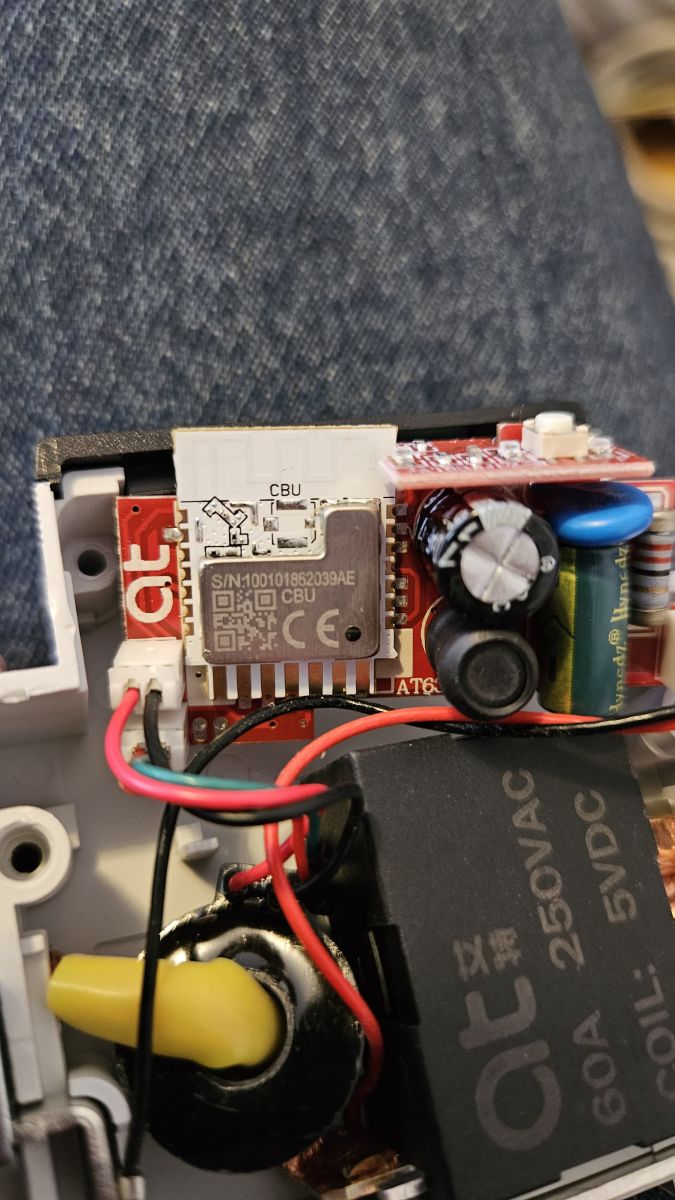
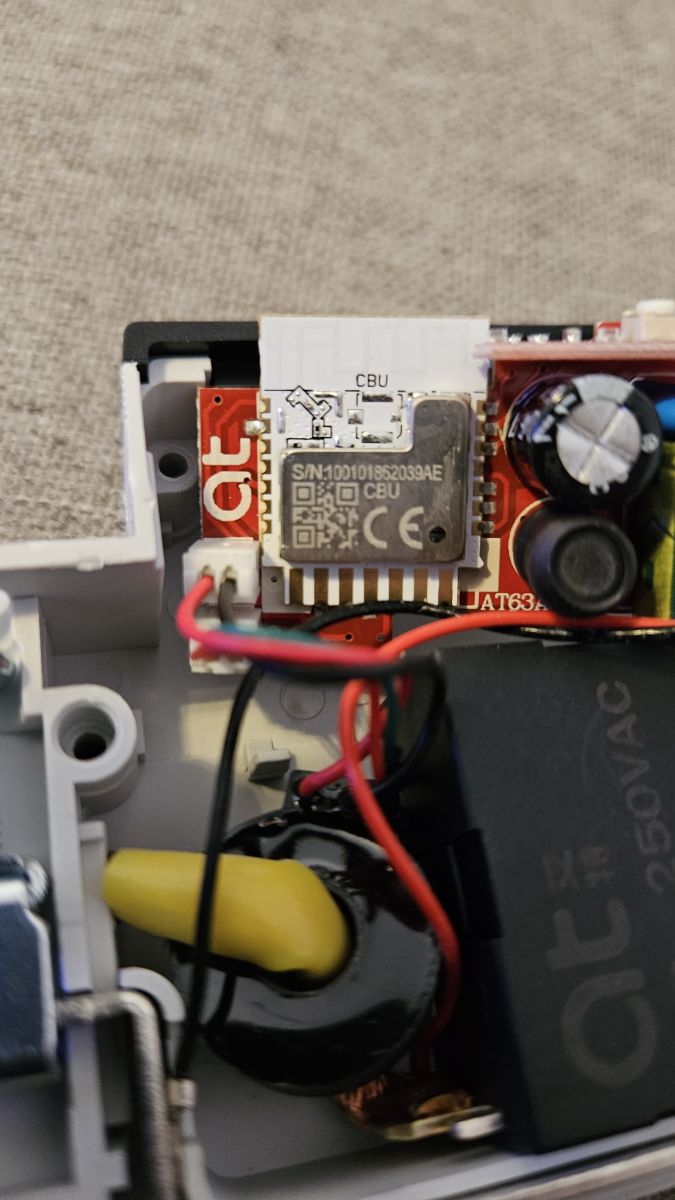
- Field reports show at least two hardware versions of similar Tongou/Erau units: green vs red PCB, and even 12 V vs 5 V DC coil variants. [#20677316]
- One flashed TO-Q-SY2-JWT showed a relay coil temperature around 55 °C with no load when the bridge appeared to be driven incorrectly. [#21263275]
- After opening the case by destroying rivets, users resealed it with M2.5x10 hardware or uninsulated ferrules around 1.50 mm², 18 mm long, 2.00 mm outer diameter. [#21080758]
How do I flash the Tongou TO-Q-SY1-JWT with OpenBeken over UART, step by step, using a BK7231 flasher?
Use UART flashing on the BK7231N module with 3.3 V power. 1. Open the case, connect 3.3 V, GND, TX1, and RX1 to the CBU module. 2. In BK7231 Easy UART Flasher, select BK7231N, set a tested baud such as 921600, then start read or write. 3. When the tool shows “Getting bus...”, briefly short CEN to GND or power-cycle the board, then flash OpenBK7231N and apply the SY1 template. This method worked on the metering version that failed with CloudCutter.
[#21173683]
Which CBU pins should I use to flash the Tongou TO-Q-SY1-JWT, and what are RX1/TX1 versus RX2/TX2 used for?
Use RX1 and TX1 for flashing, plus 3.3 V, GND, and CEN for reset. RX2/TX2 are not the programming UART on this device. TX2 is used for debug log output, while RX1/TX1 are the pins used by the BK7231 flasher to read and write firmware. One user also noted that test pads near the BL0942 are easy to grab, but the labels are from the metering chip side, so TX and RX route oppositely to the CBU.
[#20807122]
Why does BK7231GUIFlashTool get stuck on "Getting bus failed" when flashing a Tongou TO-Q-SY1-JWT, and how can I fix it?
It usually fails because the boot sequence, wiring, or 3.3 V supply is wrong. Common fixes are short wires, solid contacts, a stronger 3.3 V source, trying another USB-UART adapter, and pulsing CEN to GND exactly when the flasher says “Getting bus...”. The thread also mentions BL0942 activity may interfere, and one user fixed the issue after finding a broken RX connection into the CBU. If one baud rate fails, test another.
[#21402384]
What is the correct OpenBeken template for the Tongou TO-Q-SY1-JWT with BL0942 power metering and bistable relay control?
The working OpenBeken template uses P9
LED_n;1, P15
WifiLED_n;0, P17
Btn;1, P24
BridgeFWD;1, and P26
BridgeREV;1, with the command
backlog startDriver BL0942; startDriver NTP. That setup gives LED control, button input, bistable relay pulses, and BL0942 metering on the BK7231N version. Earlier posts showed
Rel and
Rel_n, but later testing on this model confirmed the bridge mapping is the correct control method for the relay hardware.
[#21118531]
Why should P24 and P26 be configured as BridgeFWD and BridgeREV instead of Rel on the Tongou TO-Q-SY1-JWT?
They should use
BridgeFWD and
BridgeREV because the device drives a bistable relay through an H-bridge, not a standard hold-coil relay.
"Bistable relay" is a latching relay that changes state with a short pulse, then stays there mechanically without continuous coil power. On this Tongou design, P24 and P26 go to the MD7620A driver inputs, so single-pin
Rel logic can leave state tracking wrong or drive the hardware incorrectly. Users also linked wrong bridge handling to hot coils and bad reboot behavior.
[#21487925]
How can I make the bistable relay on a Tongou TO-Q-SY1-JWT restore the correct state after a power loss or reboot?
Set the channel startup behavior carefully, because
SetStartValue 1 0 did not fully work with the bridge driver in early builds. In testing,
SetStartValue 1 1 restored ON correctly, and
SetStartValue 1 -1 correctly remembered the last state, while
SetStartValue 1 0 left OpenBeken thinking the channel was OFF without sending the bridge pulse. A workaround used two boot events: pulse ON at 1 second, then OFF at 2 seconds. That workaround toggles the relay if it was already OFF before reboot.
[#20700999]
What does OpenBeken Flag 41 "Ignore all button events" do, and why can it make the TO-Q-SY1-JWT button stop working?
Flag 41 disables button handling entirely, so the front button changes GPIO state but does nothing in normal control. On one SY1 unit, P17 clearly changed Low/High in GPIO Doctor only when configured as
dInput, yet the button still did not switch the relay. The user found Flag 41, labeled child lock, was checked by default. After clearing that flag in Configure General, the button started toggling the switch normally.
[#21118531]
What is a bistable relay or H-bridge driver in the context of the Tongou TO-Q-SY1-JWT, and how does it differ from a normal relay output?
A bistable relay here is a latching power relay driven by two pulse directions through an H-bridge, not by one sustained ON pin.
"H-bridge driver" is a motor-or-coil driver stage that reverses current direction, letting one coil pulse set the relay ON and the opposite pulse set it OFF. A normal relay output usually holds one coil energized continuously. The Tongou uses two control lines, so firmware must send short forward or reverse pulses instead of holding one GPIO high.
[#21188194]
How do I open the Tongou TO-Q-SY1-JWT case without damaging it too much, and what can I use to reseal it afterward?
Most users opened it by drilling out the factory rivets, because there was no simple non-destructive method reported. After flashing, users resealed the case with either M2.5x10 hardware or uninsulated ferrules matching the original pins closely. One tested ferrule option was 1.50 mm², 18 mm long, with a 2.00 mm outer diameter, and it reportedly worked perfectly. Expect some cosmetic damage, but the enclosure can be closed securely again.
[#21080758]
What are the hardware differences between the Tongou TO-Q-SY1-JWT and TO-Q-SY2-JWT, including coil versus shunt-resistor versions?
SY1 and SY2 are similar in software, but the thread reports several hardware variants. Users saw red, green, and yellow PCBs, plus metering versions with either a current coil or a shunt resistor. A manufacturer-linked discussion also says SY2 adds over/under-voltage or overcurrent protection features compared with SY1. However, one board inspection found the BL0942 CF1 protection pin left unconnected, suggesting any “protection” may depend on firmware logic rather than separate fast hardware cut-off.
[#21487925]
Tuya CloudCutter vs UART flashing for Tongou TO-Q-SY1-JWT — which method is more reliable for metering and non-metering firmware versions?
UART flashing was the more reliable method across the thread. CloudCutter worked for some non-metering units on Tuya firmware 1.0.2, and one metering dump later helped add support. But multiple users still failed on metering firmware 1.0.18 and ended up opening the case and flashing successfully by UART. The clearest recommendation in the thread is that CloudCutter is not reliable because many devices are patched, while UART remains the suggested path for both metering and non-metering variants.
[#20974510]
How can I extract the original BL0942 calibration values from Tuya firmware and apply them in OpenBeken or ESPHome?
You can extract the original BL0942 calibration data from a backup of the Tuya firmware, then reuse those values in ESPHome or OpenBeken calibration commands. The thread documents finding per-device values such as
voltage_ref 15990,
current_ref 124380,
power_ref 309.8, and
energy_ref 2659, then applying them in the BL0942 configuration. Users also confirmed that if extraction is unavailable, calibration with a known load, such as a 60 W incandescent lamp, gives acceptable results.
[#21193078]
Why does the Tongou power reading show negative values in OpenBeken, and how can I correct the AC power direction when Flag 48 has no effect?
Negative power usually means the measurement direction or sign handling is wrong, not that the relay is reversed. On SY2 units, one user fixed unrealistic standby readings after enabling Flag 25, “Allow negative current/power,” and then recalibrating voltage, current, and power against known values. Another later report said Flag 48 did not correct AC direction on that device. The practical fix in the thread is calibration plus checking the metering sign configuration, because stock and flashed firmware may interpret direction differently.
[#21556434]
How can I save OpenBeken logs from a Tongou TO-Q-SY1-JWT to a file or external storage so I can investigate random relay shutoffs later?
The thread does not provide a finished OpenBeken method for saving logs from this device to a file or external storage. It only confirms that TX2 outputs debug logs and can be captured externally over serial. For on-device retention of several hours, no posted solution shows SD, flash file logging, or network syslog in OpenBeken for this Tongou case. If you need evidence after random shutoffs, the thread’s only concrete logging path is monitoring the debug UART on TX2.
[#20813668]
What safety limitations should I know before using a Tongou TO-Q-SY1-JWT or TO-Q-SY2-JWT as a DIN-rail switch, especially compared with a real circuit breaker?
Treat it as a DIN-rail switch with metering, not as a true protective breaker. Users explicitly stated the SY1 is not a circuit breaker, and one report says Tuya only offered software-set alarm limits with 1 A resolution. Another user warned never to use the relay as a safety device, and reverse-wiring for calibration apparently damaged one relay so it clicked without making contact. If overcurrent or overvoltage cut-off matters, verify hardware support first instead of assuming breaker-grade protection.
[#20714066]
AI summary based on the discussion. May contain errors.






Comments
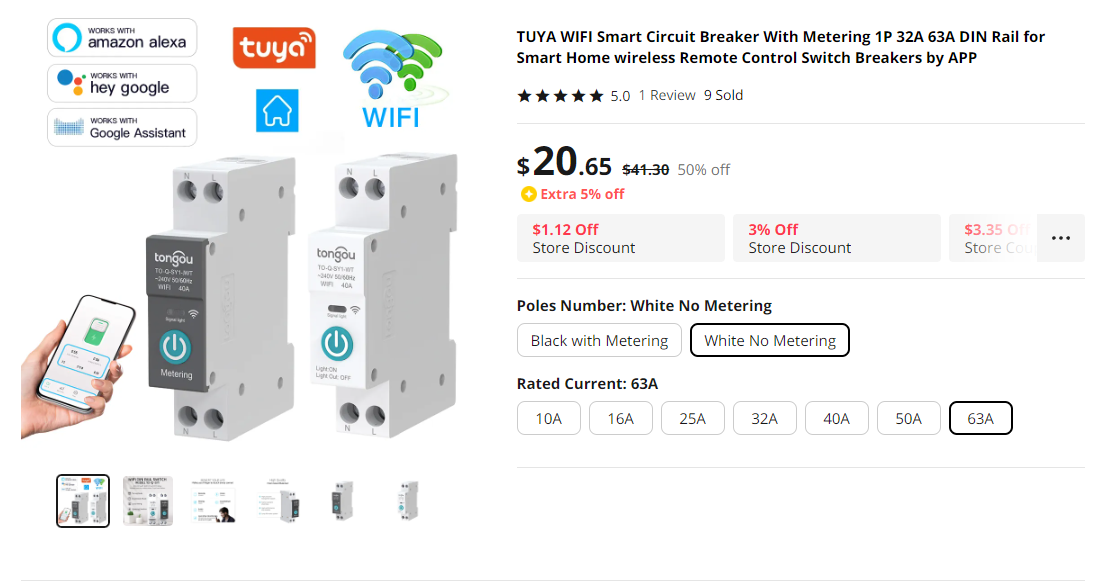
Thank you, just for the clarity, I will add here some screenshot from device seller's page: https://obrazki.elektroda.pl/5593422200_1690005185_thumb.jpg Here is template within post: { "vendor":... [Read more]
użyłem do tego modelu "24": "BridgeFWD;1", "26": "BridgeREV;1" nie tak jak w powyższym template ustawiłem ze po zaniku zasilania przekaźnik ma się wyłączyć SetStartValue 1 0 przekaźnik włączony,... [Read more]
I don't know if the bridge driver author added support for initial state. Maybe we can try to make some kind of work around... Create autoexec.bat with the following script: // turn off... [Read more]
Yes, brigde is setup on channel 1 manualy "save and run as script" working properly, but after disconnect and connect AC, state of switch and LED is off, but bridge doesn't react, and relay remain closed. It's... [Read more]
An interesting module, the price is the same regardless of the current - I wonder if they are identical inside? [Read more]
There is a minimum two hw version, with green paint of solder mask, and the second one with red. I saw pictures with 12V and 5V DC coil [Read more]
new software Build on Aug 20 2023 06:10:59 version 1.17.223 - the same issue i play with commands: SetStartValue 1 0 setchannel 1 1 Info:GEN:CHANNEL_Set channel 1 has changed to 1 (flags... [Read more]
I understand that this device has a relay/contactor inside, a current measurement module and a Bekken circuit in a housing with dimensions that fit the Din rail and looks like an overcurrent switch, but... [Read more]
this is not a circuit breaker that's right, the only thing that can be done is to set an alarm for exceeding the current threshold in Tuya with a resolution of 1A, but I have not checked whether... [Read more]
Setting the limits in A/W in the software works because I just checked it, I have this device. [Read more]
I have erau and tongou models , in one the green plate and in the other the red plate. I import them from Tuya to HA but it does not show me in HA the measurement entity, only the switch, the sockets... [Read more]
I launched this device only to check its correct operation after receiving the shipment from the Chinese. I checked how it worked through the tuya app. I guess it was automatically detected in ha through... [Read more]
Just wondering have anyone successfully flashed it through tuya-cloudcutter OTA? I tried mine (I have the non-metering version btw) but I get an exploit not successful message. [Read more]
Which firmware version is shown by Tuya app? [Read more]
It's 1.0.2 [Read more]
I had the mettering version and yes, I uploaded the dump and could flash it https://github.com/tuya-cloudcutter/tuya-cloudcutter/issues/505 [Read more]
The support for your device has been added to the cloudcutter. Thank your for submitting the flash dump. [Read more]
Hi i tryed to flash the openbeken it worked fine, but now i cant write the configuration on it throws an error. and same thing if i try to read it gives an error. what difference is the rx1 tx1 and rx2... [Read more]
TX2 is a debug log output, it is not used for flashing. Can you configure device via OBK page? [Read more]