Older 2-pack Taloya clone 14-inch 35W 4000LM WiFi LED flush mount ceiling lights with RGB backlight use a WB3S (BK7231T) controller.
Remove eight screws, peel the double-sided tape, then flash the board through pogo pins with the BK7231 GUI flash tool and an FD232 USB adapter.
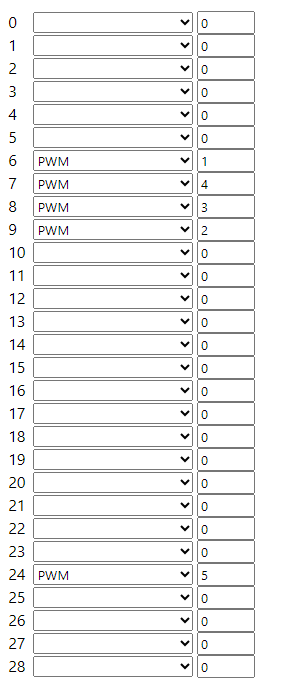
Extracted pins map LED Cool to P7, Blue to P8, Red to P6, Green to P9, and Warm to P2; Flag 12 preserves the last power-on setting.
It is rated at 35W versus the 24W Taloya, and it stays super bright on all settings without needing Flag 11.
AI summary based on the discussion. May contain errors.
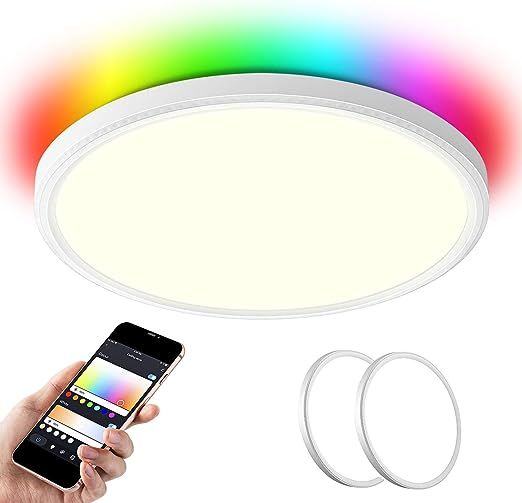
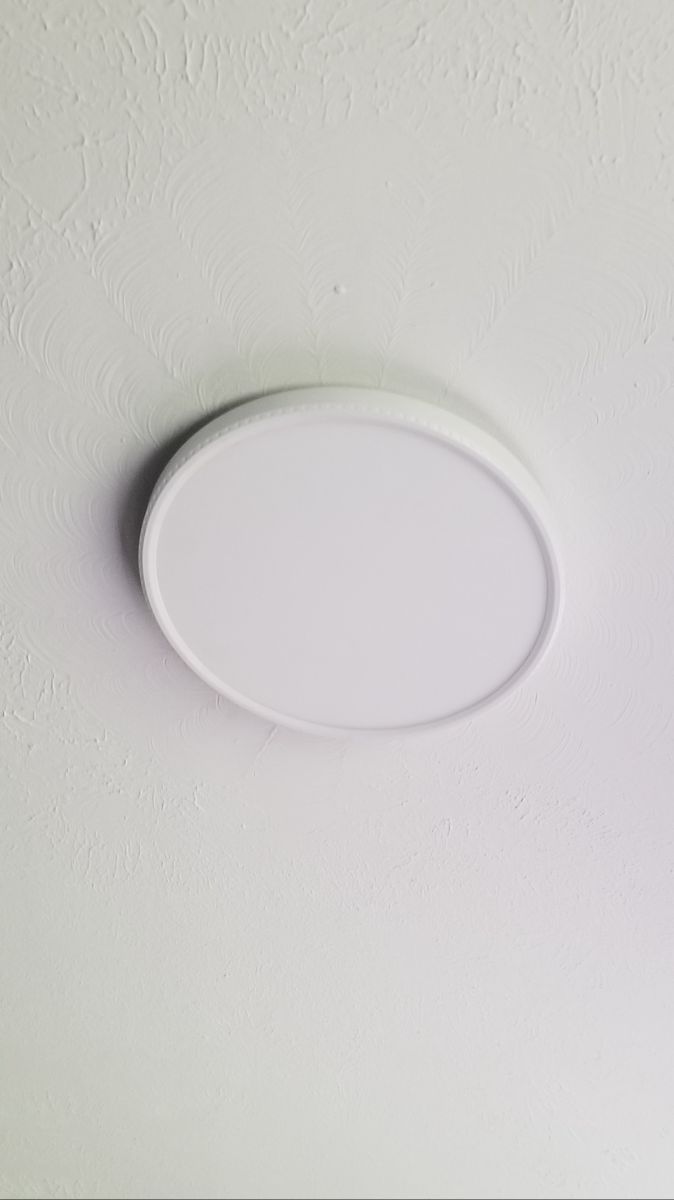
This is an older 2 pack Taloya Ceiling Light clone I bought back in '21 while the tuya chip flashing was just starting out, and shelved them. They are no longer available on Amazon https://www.amazon.com/Ceiling-Backlight-compatible-ambiance-ceiling/dp/B08T75TY8K but am posting in case this board shows up in other clones. It's using the WB3S (BK7231T) chip.
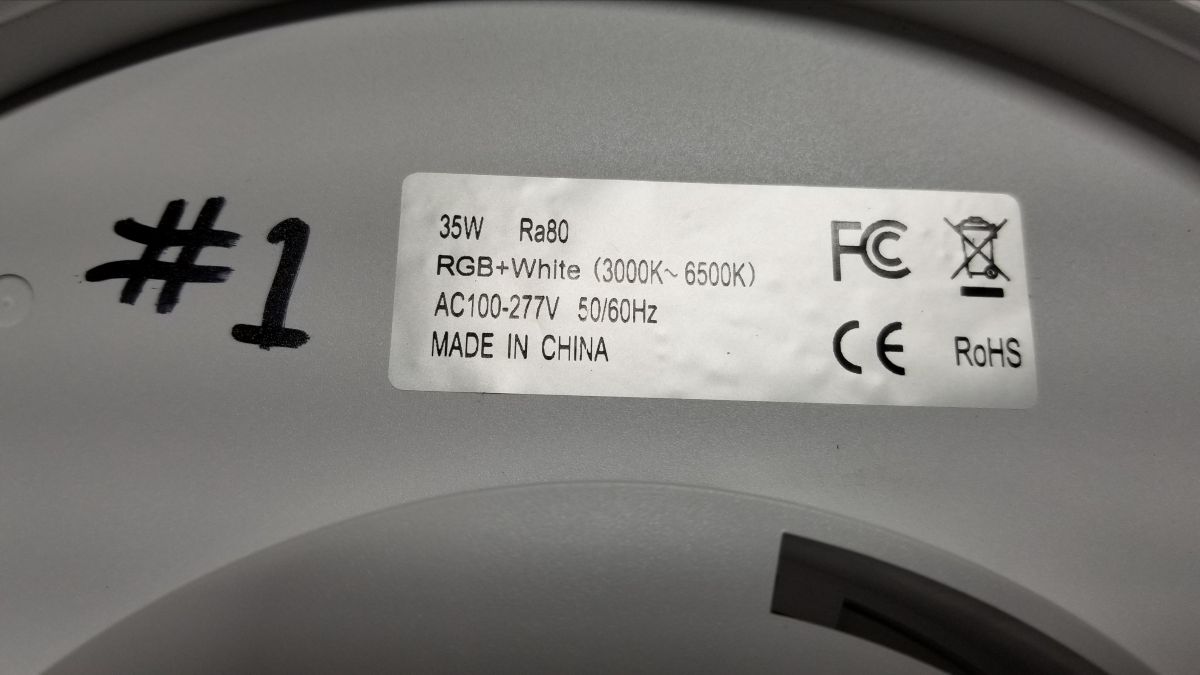
This one is 35W compared to the 24W Taloya.
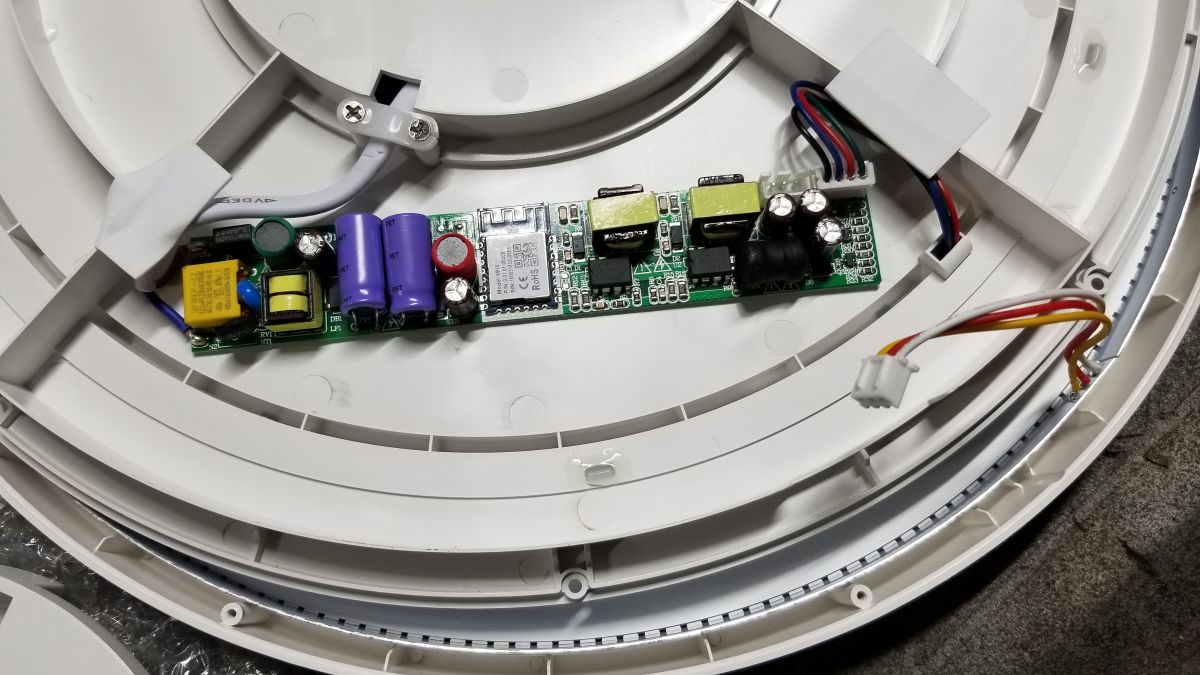
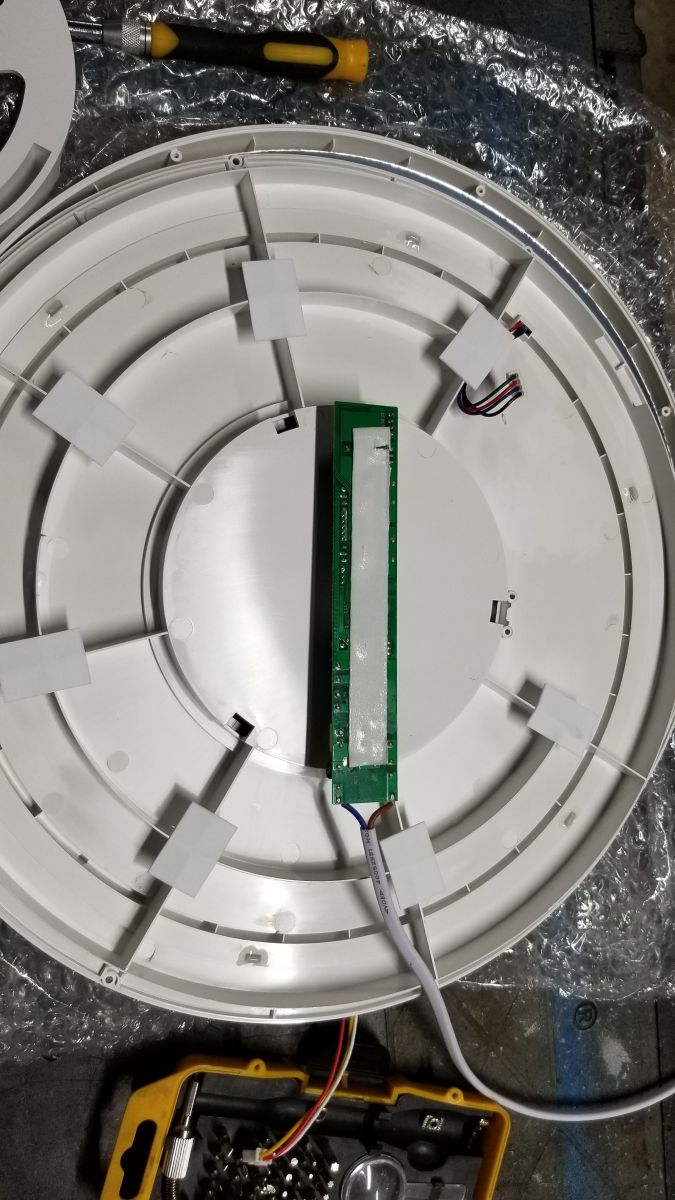
Opening is the same as Taloya, remove the 8 screws.
Secured with double-sided tape so just pull off to remove.
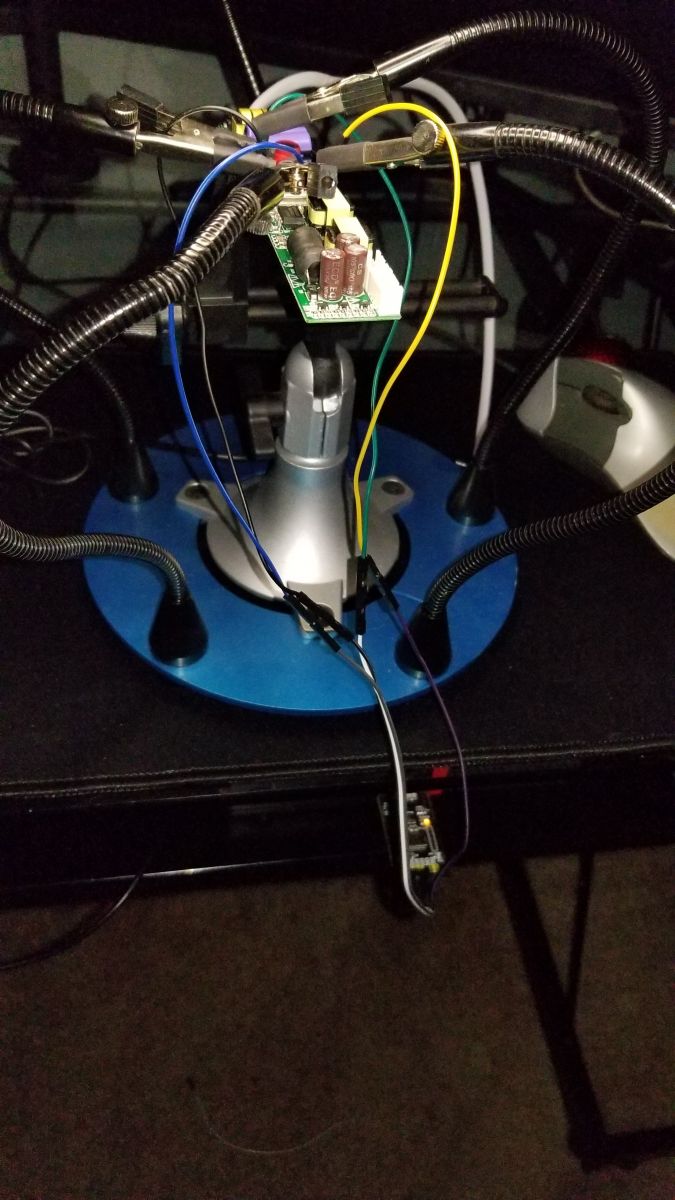
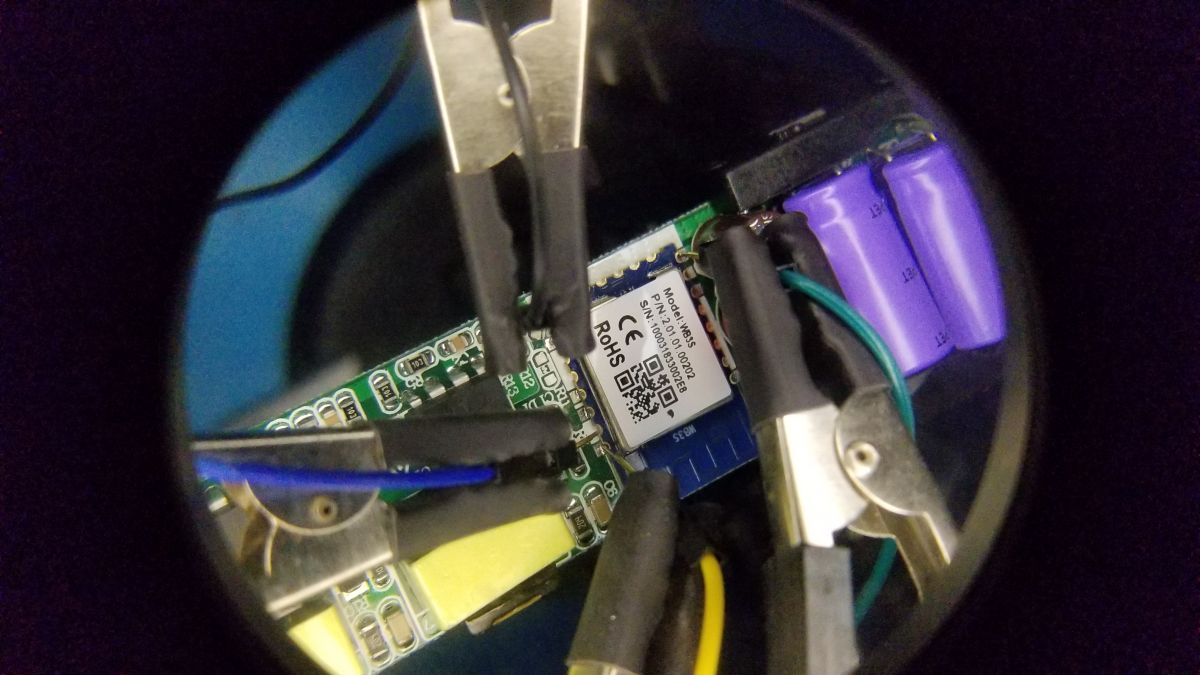
As you can see the pads are really close to the capacitors, so rather than trying to solder wires, I used a third hand holding Dupont style breadboard jumper wires with 1.27mm pogo-pins stuck in one side, hooked up to an FD232 USB adapter and flashed with the BK7231 GUI flash tool.
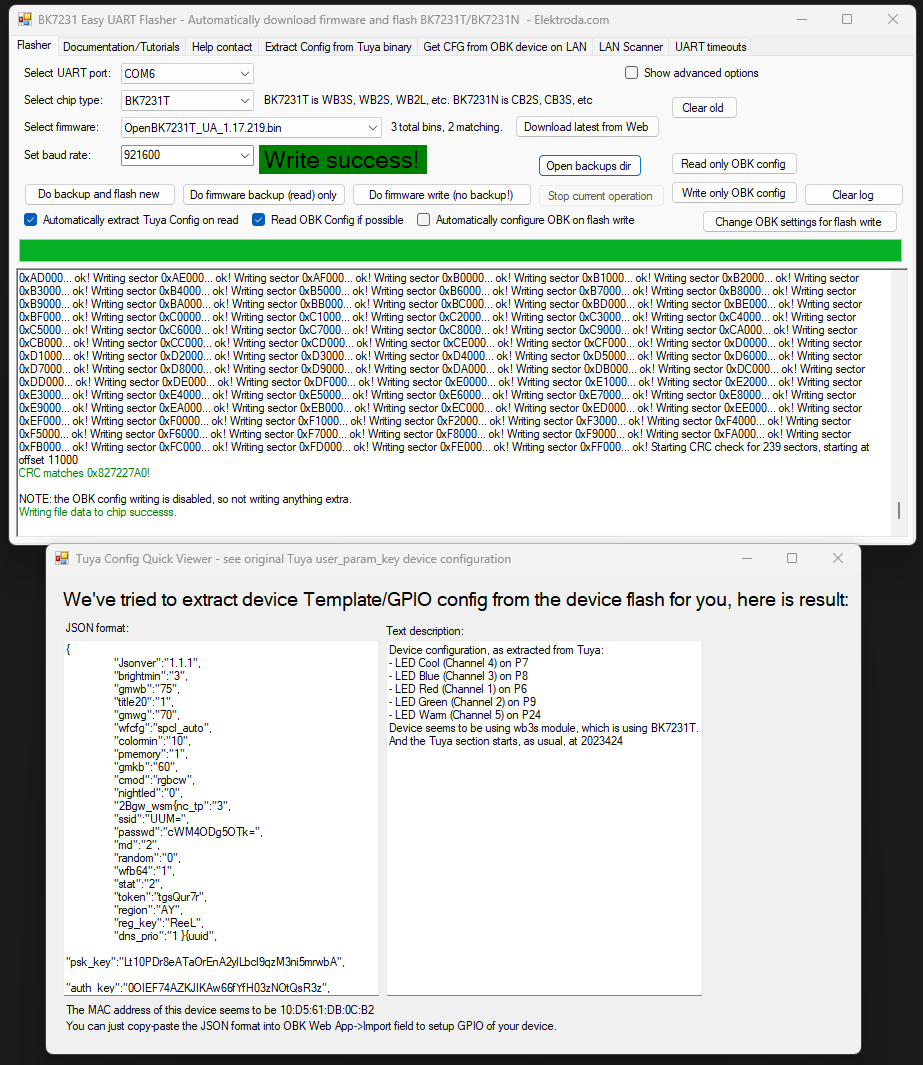
After you flash, use the extracted pin configuration from the GUI Flash tool to set pins:
- LED Cool (Channel 4) on P7
- LED Blue (Channel 3) on P8
- LED Red (Channel 1) on P6
- LED Green (Channel 2) on P9
- LED Warm (Channel 5) on P2
Flag 12 to remember the last setting at power on.
I did NOT have to set Flag 11 as I do not have an issue with the brightness, it's super bright on all settings.
JSON Template:
Code: JSON
Log in, to see the code
About Author
natepalm wrote 3 posts with
rating 1 .
Been with us since 2023 year.
Thank you, can you also include JSON template from the Web App, so it's easier for new users to copy settings? [Read more]
FAQ
TL;DR: This 14-inch, 35W Taloya-clone ceiling light uses a WB3S/BK7231T module, and “it’s super bright on all settings.” This FAQ helps OpenBeken users flash it safely, map all 5 LED channels, and recreate the Web App JSON for the discontinued B08T75TY8K light. [#20697444]
Why it matters: This thread documents a discontinued Tuya ceiling light whose board, pinout, and opening method may reappear in other clones.
Feature
Modern/lfxbb clone
Taloya reference
Rated power
35W
24W
Form factor
14-inch flush mount
Taloya-style flush mount
Opening method
Remove 8 screws
Same opening style
Board family
WB3S / BK7231T
Similar layout implied
Key insight: The most valuable takeaway is the confirmed OpenBeken pin map: P6 red, P7 cool, P8 blue, P9 green, and P2 warm. That saves guesswork when this WB3S board appears in other ceiling-light clones. [#20697444]
Quick Facts
The product name in the shared JSON is Modern/lfxbb Two Pack 14inch 35W 4000LM WiFi LED Flush Mount Ceiling Light + RGB Backlight, model B08T75TY8K, with vendor Tuya. [#20697444]
The board uses a WB3S module with a BK7231T chip, and the extracted OpenBeken flags value shown in JSON is 5120. [#20697444]
Physical access is Taloya-style: open the light by removing 8 screws, then lift the LED board, which is held by double-sided tape. [#20697444]
The flashing setup used an FD232 USB adapter, Dupont-style jumper wires, and 1.27 mm pogo pins because the pads sit very close to nearby capacitors. [#20697444]
The thread confirms a 5-channel LED map: cool white P7, blue P8, red P6, green P9, and warm white P2; Flag 12 stores the last power-on state. [#20697444]
How do I flash a Modern/lfxbb 14-inch 35W 4000LM WiFi LED flush mount ceiling light with a WB3S BK7231T chip using the BK7231 GUI flash tool?
Flash it by opening the lamp, contacting the WB3S pads, and then loading the extracted pin map into OpenBeken.
Remove the 8 screws and lift the taped board carefully.
Touch the tiny pads with 1.27 mm pogo pins on Dupont jumpers connected to an FD232 adapter.
Flash with the BK7231 GUI tool, then assign P7 cool, P8 blue, P6 red, P9 green, and P2 warm. [#20697444]
What pin configuration should I use in OpenBeken for the Taloya clone ceiling light with WB3S so the cool, warm, red, green, and blue channels work correctly?
Use P7 for cool white, P8 for blue, P6 for red, P9 for green, and P2 for warm white. The thread maps them as LED Cool on Channel 4, Blue on Channel 3, Red on Channel 1, Green on Channel 2, and Warm on Channel 5. The matching JSON pins are 6=PWM;1, 7=PWM;4, 8=PWM;3, 9=PWM;2, and 24=PWM;5. [#20697444]
What is the WB3S module, and how does it relate to the BK7231T chip in Tuya-based ceiling lights?
The WB3S is the onboard radio/control module, and this light’s WB3S carries a BK7231T chip. "WB3S" is a Tuya Wi‑Fi module that hosts the main control chip, exposes flashing pads, and lets firmware such as OpenBeken drive PWM lighting channels. In this ceiling light, the post explicitly identifies the board as WB3S and the chip as BK7231T. [#20697444]
What is Flag 12 in OpenBeken, and how does it make the ceiling light remember the last power-on setting?
Flag 12 stores the last setting so the lamp restores its previous state at power-on. The thread says to set Flag 12 specifically “to remember the last setting at power on.” The shared JSON also shows flags value 5120, which matches the posted configuration for this ceiling light. [#20697444]
Why would someone not need to set Flag 11 on this BK7231T ceiling light, and how does it affect brightness behavior?
You may not need Flag 11 if brightness already behaves correctly. The poster states they did not set Flag 11 because they had no brightness issue and the lamp was “super bright on all settings.” For this exact 35W board, that means the default flashed behavior was already acceptable after the pin mapping was applied. [#20697444]
What is the safest way to open this Taloya-style ceiling light and remove the LED board without damaging the double-sided tape or components?
Remove the 8 screws first, then pull the board off gently because double-sided tape holds it down. The thread says the opening method matches Taloya and warns by example that the board is secured with tape, not only screws. A slow, even lift reduces stress on the board and nearby components. [#20697444]
How can I connect to tiny flashing pads that sit close to capacitors when reflashing a WB3S board, and why use pogo pins instead of soldering wires?
Use 1.27 mm pogo pins on Dupont-style jumper wires instead of soldering directly. The pads are very close to capacitors, so the poster avoided soldering and held the pogo-pin leads with a third-hand tool. That approach gives temporary contact on cramped pads and avoids heat or mechanical stress near the surrounding parts. [#20697444]
Which USB-to-serial adapter and jumper setup works best for flashing a WB3S ceiling light board, such as an FD232 with Dupont wires and 1.27 mm pogo pins?
An FD232 USB adapter with Dupont-style breadboard jumpers and 1.27 mm pogo pins is the proven setup in this thread. The poster used exactly that combination and held the contacts with a third hand while flashing the WB3S board. For this lamp, that setup worked because the programming pads were too tight for easy wire soldering. [#20697444]
How does this 35W Modern/lfxbb Taloya clone compare with the 24W Taloya version in power, brightness, and board layout?
It is rated higher at 35W instead of 24W, while the opening and general layout are described as Taloya-like. The poster says, “This one is 35W compared to the 24W Taloya,” and later notes the light is super bright on all settings. They also say the opening is the same as Taloya, which suggests a closely related mechanical design. [#20697444]
Where can I find or recreate the JSON template for the Modern/lfxbb B08T75TY8K ceiling light so new users can easily copy the Web App settings?
You can recreate it directly from the thread’s posted JSON and the follow-up request to include the Web App template. The shared template names model B08T75TY8K, board WB3S, chip BK7231T, flags 5120, and the 5 PWM pin assignments. A second post explicitly asks to include the JSON template from the Web App so new users can copy the settings more easily. [#20697510]
How do I map OpenBeken PWM channels to the RGB backlight and warm/cool white LEDs on a Tuya ceiling lamp based on the extracted pin configuration?
Map Channel 1 to red on P6, Channel 2 to green on P9, Channel 3 to blue on P8, Channel 4 to cool white on P7, and Channel 5 to warm white on P2. The thread says to use the extracted pin configuration from the GUI Flash tool, then assign those five channels exactly. That gives separate control of RGB backlight plus tunable white output. [#20697444]
Why is this older Taloya clone board layout useful to document even if the Amazon listing is no longer available?
It is useful because the same board can reappear in other clone lights even after the original listing disappears. The poster says the light is no longer available on Amazon but still shared the board details “in case this board shows up in other clones.” That makes the pin map, opening method, and flashing approach reusable documentation. [#20697444]
What troubleshooting steps help when a BK7231 GUI flash tool setup does not detect or reliably flash a WB3S ceiling light module?
Start by improving pad contact, not by changing the pin map. The thread shows the main risk: the flashing pads sit very close to capacitors, so soldering is awkward and poor contact is more likely. Use a third hand, Dupont jumpers, and 1.27 mm pogo pins on the WB3S pads, then retry the BK7231 GUI flash tool with the same FD232 adapter. [#20697444]
What is a Tuya chip flashing setup, and why did users start reflashing BK7231T-based smart lights instead of keeping the stock firmware?
A Tuya chip flashing setup is the hardware and software used to reprogram the Tuya module directly. "Tuya chip flashing setup" is a reflashing workflow that connects a USB serial adapter to a Tuya module’s pads so alternate firmware can replace the stock firmware and expose manual pin control. The poster bought these lights back in 2021 when “tuya chip flashing was just starting out,” then later flashed the BK7231T board with the GUI tool. [#20697444]
How can I identify whether another ceiling light clone uses the same WB3S board and pinout as the Modern/lfxbb B08T75TY8K model?
Check for the same WB3S module, a Taloya-style construction, and the same 5-channel LED behavior. This light opens with 8 screws, uses a taped LED board, and maps P6 red, P7 cool, P8 blue, P9 green, and P2 warm. If another clone matches those physical and electrical details, it is a strong candidate for the same board family and pinout. [#20697444]
AI summary based on the discussion. May contain errors.







Comments
Thank you, can you also include JSON template from the Web App, so it's easier for new users to copy settings? [Read more]