logo elektroda
logo elektroda
X
logo elektroda

Programming ESP12/TYWE3S/CB3S/WB3S/etc. without soldering - solderless motherboard

p.kaczmarek2  7 8265 Cool? (+5)
📢 Listen (AI):

TL;DR

  • Solderless USB-to-UART motherboard for ESP12-compatible modules, including ESP8266, ESP-WROOM-32, ESP32-WROVER, TYWE3S, CB3S, and WB3S.
  • It uses spring contacts instead of solder pads, plus RESET and GPIO0 buttons, so modules can be swapped quickly without soldering.
  • The board comes in three versions, and the listed price is over €6.
  • ESP8266 programming worked many times, and CB3S flashed and operated on the board without problems.
  • A version supporting different pin types at the same time would be better, and removing some modules may require hot air.
Generated by the language model.
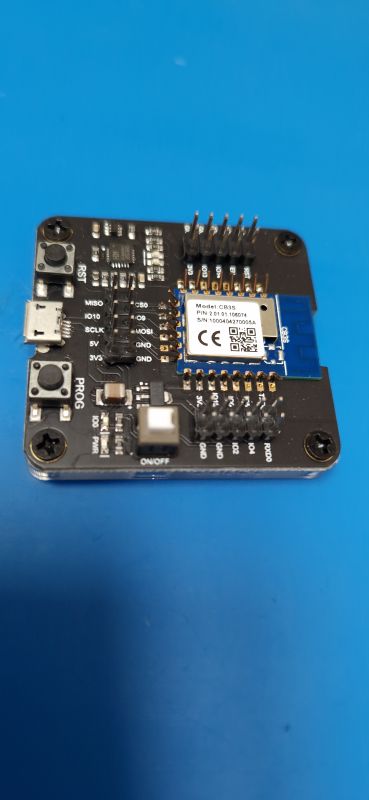
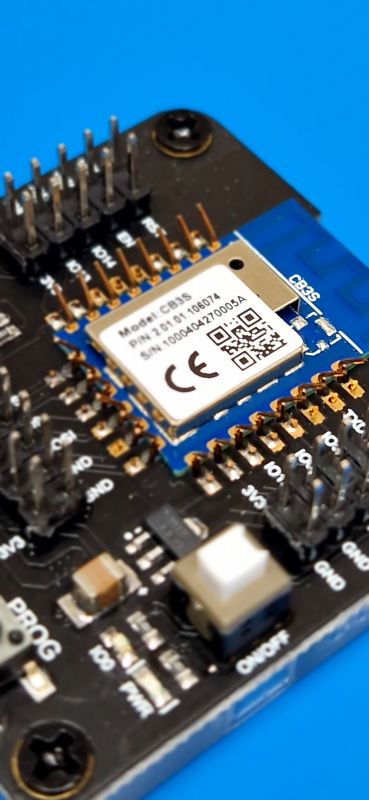
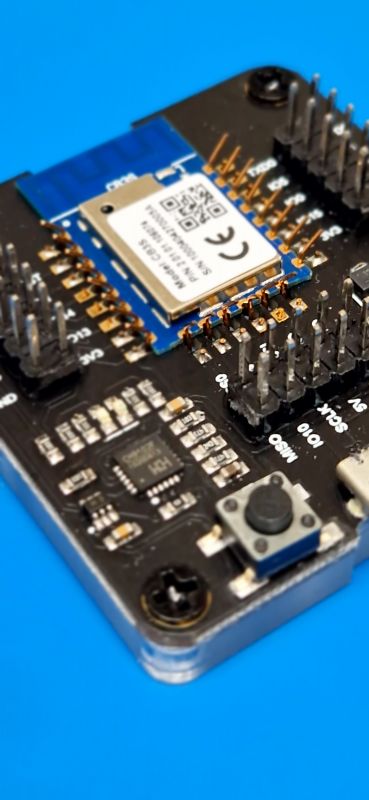
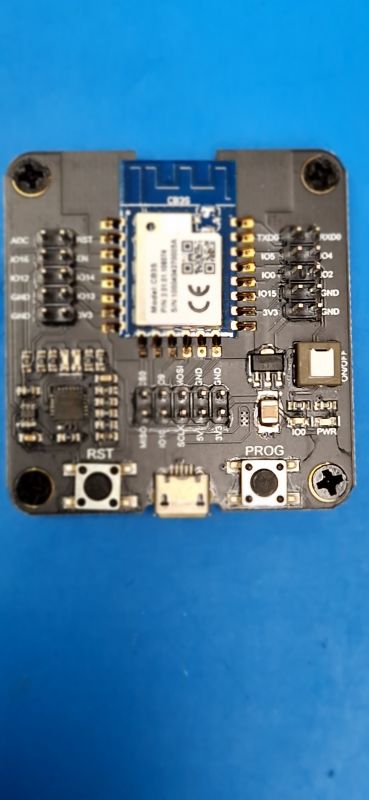
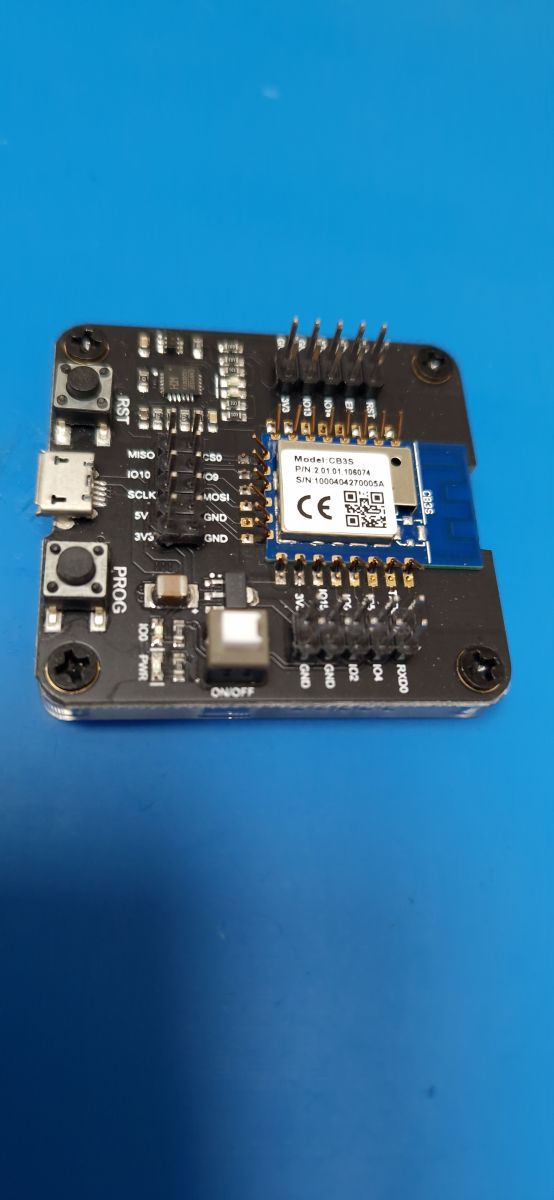
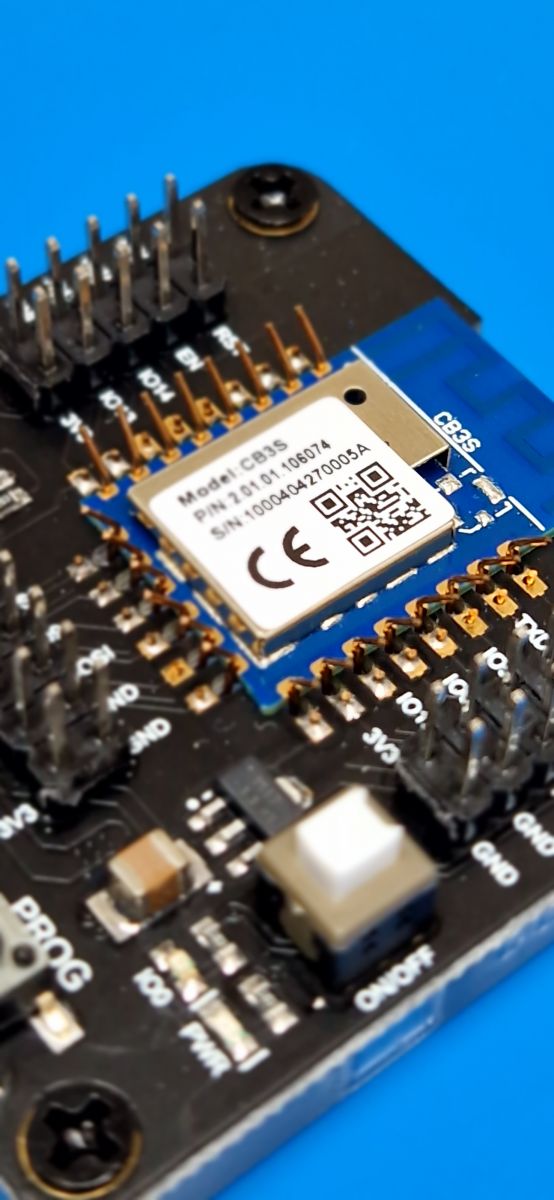
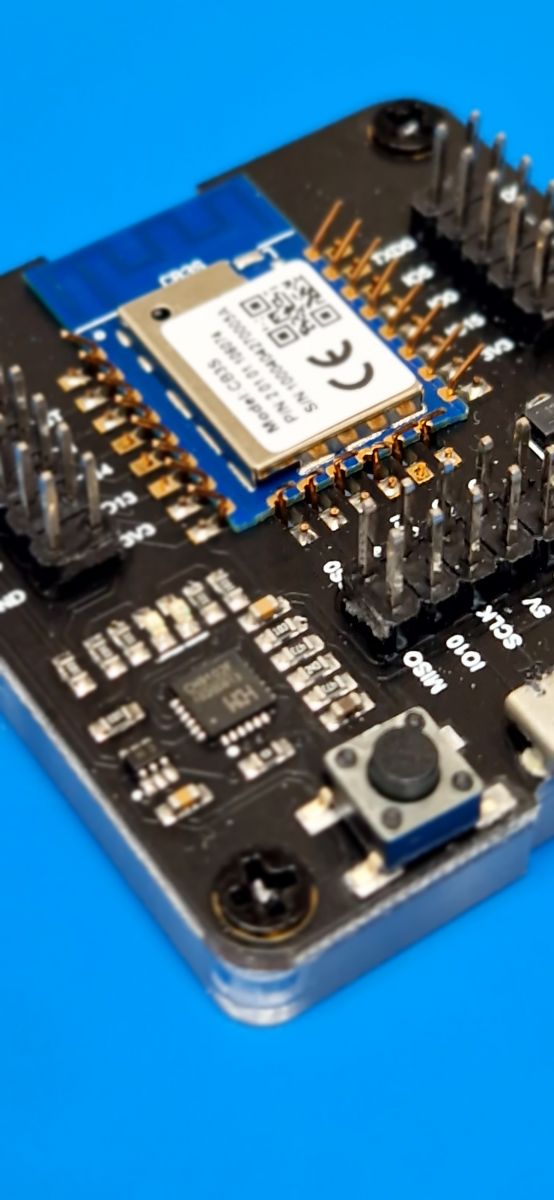
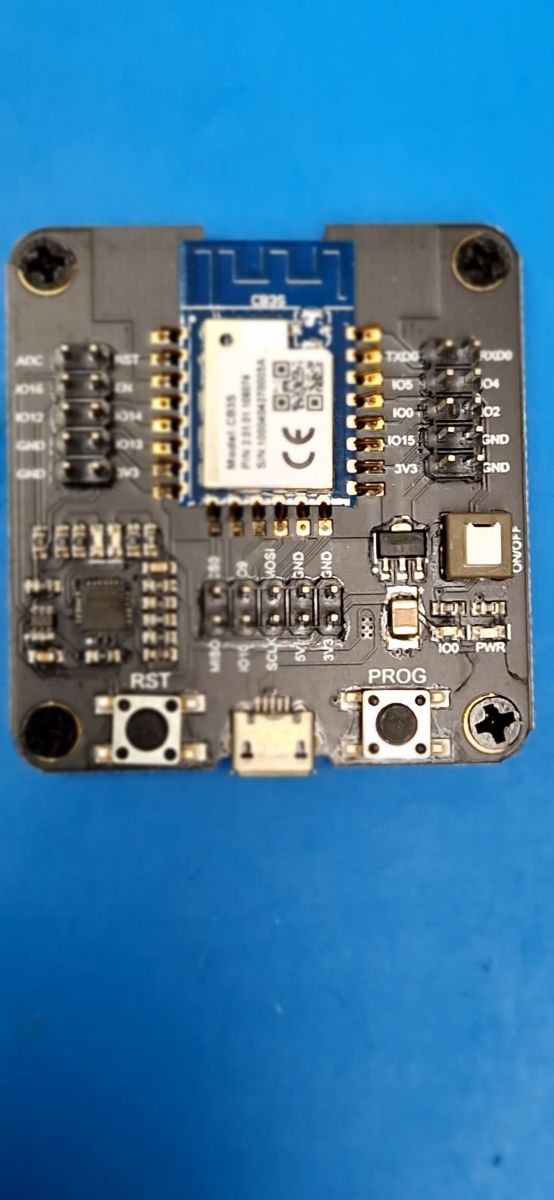
USB to UART converter board with CB3S module.
Hello, today I will briefly show you a useful board that is essentially a USB to UART converter, but is distinguished by the fact that you can place a module with ESP12-compatible pins without soldering.

We found the tile in China under the slogan: ESP8266 ESP-WROOM-32 ESP32-WROVER Development Board Test Burning Base Fixture Tool Downloader for ESP-12F ESP-07S ESP-12S . However, I didn't order it myself, my friend from Serbia, @DeDaMrAz, ordered it and I got the photos from him. I tested it with him remotely.
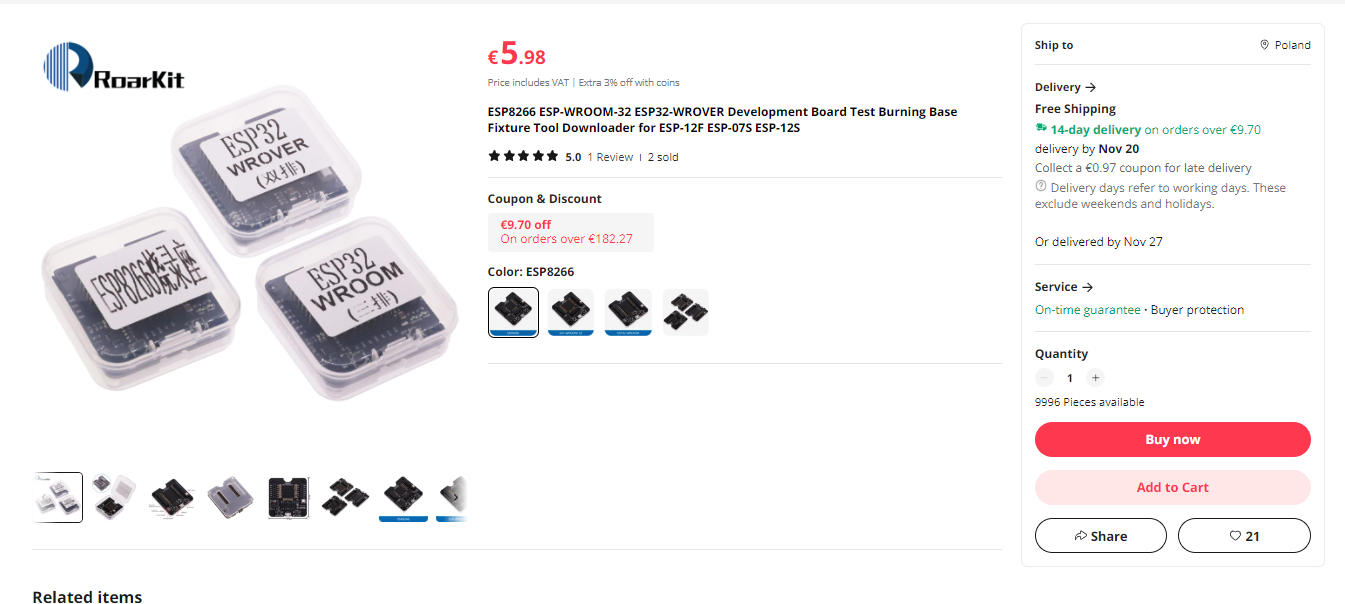
Below are screenshots of the offer:
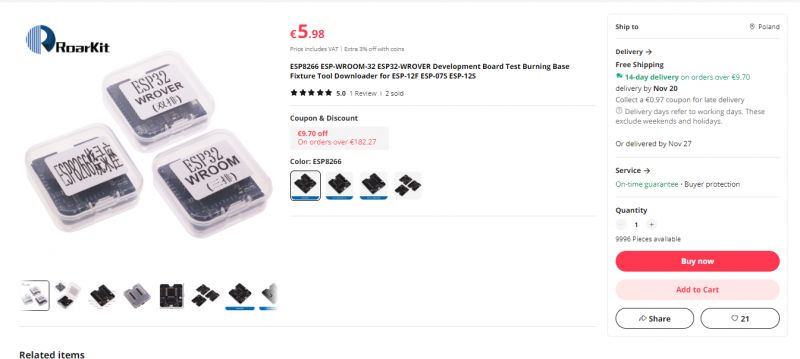
Set of three development boards in boxes: ESP8266, ESP32 WROOM, and ESP32 WROVER
It may not be the cheapest board, it costs over €6, but what makes it unique is that instead of regular soldering pads, it has springs that allow you to quickly replace the module on board.
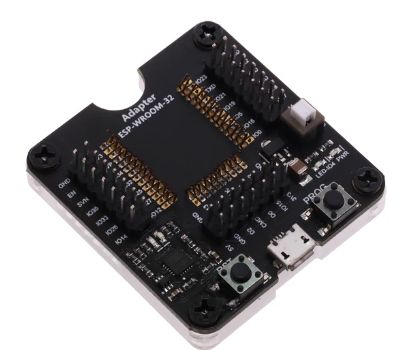
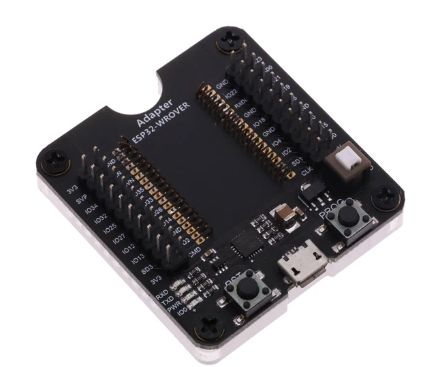
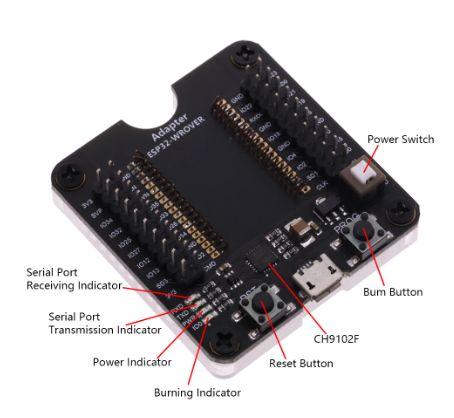
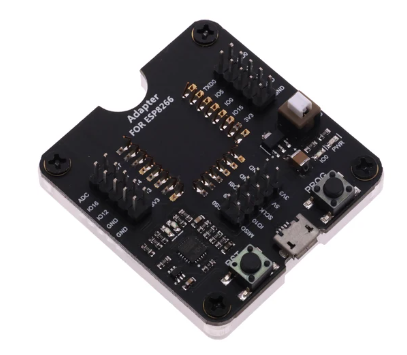
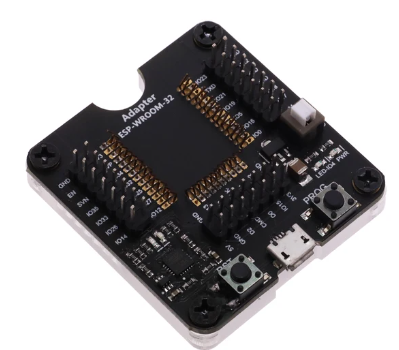
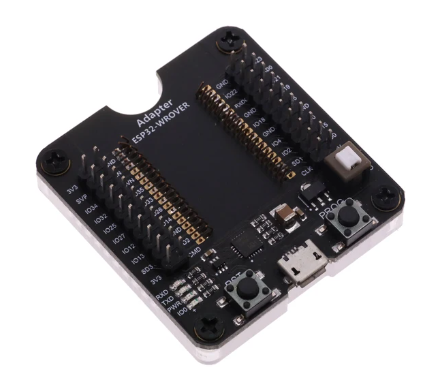
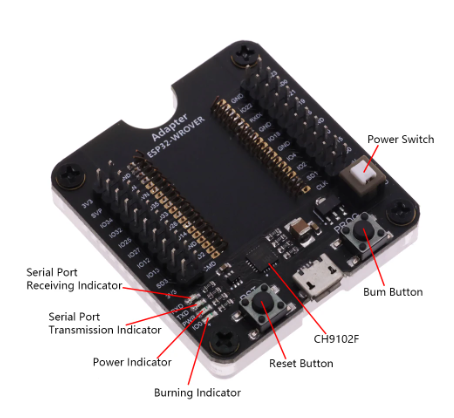
It is available in three versions: ESP8266, ESP-WROOM-32, SP32-WROVER:
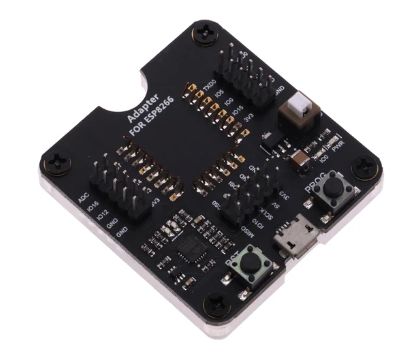
USB to UART adapter for ESP8266 modules.
ESP-WROOM-32 adapter with spring connectors and two buttons
ESP32-WROVER adapter with buttons and micro USB port
Description from the seller:
Development board with a slot for an ESP module and various components.
The board board includes:
- RESET button
- GPIO0 button (to enter ESP into programming mode; unnecessary in the case of BK7231)
- USB to UART converter
I also saw a hybrid version on sale, with places for various modules. Perhaps this would be more economical, but my friend happened to take what was available.

What is compatible with this board?
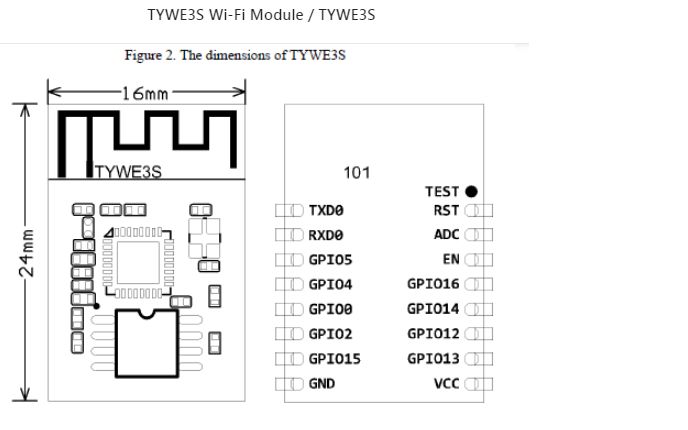
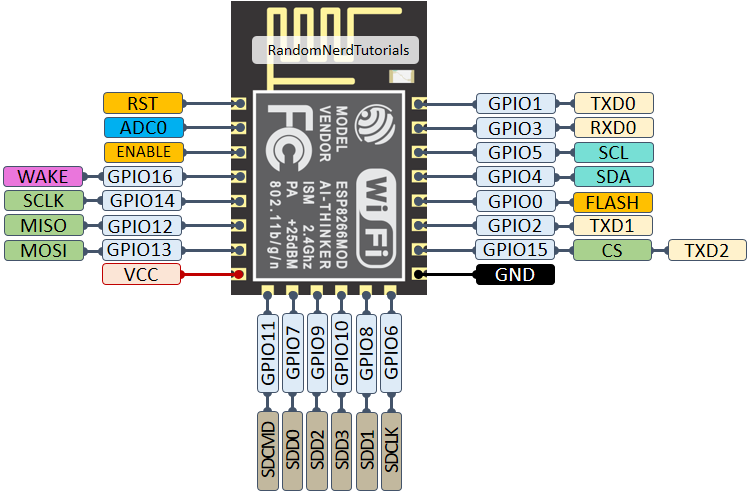
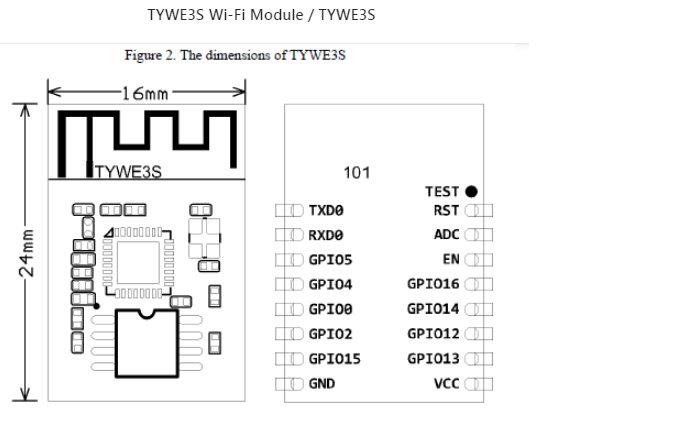
First of all - ESP8266, just like in the name. That is, all modules like ESP12, TYWE3S, below the pinout:
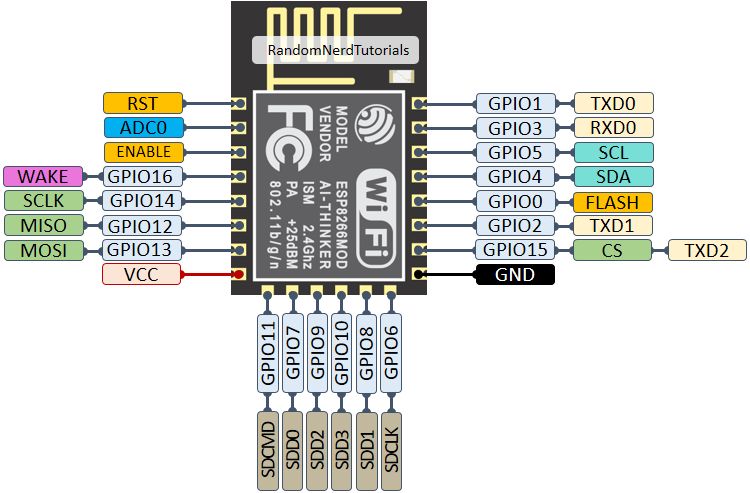
Pinout diagram of the ESP8266 module with pin labels.
Details of the dimensions and pins of the TYWE3S Wi-Fi module.
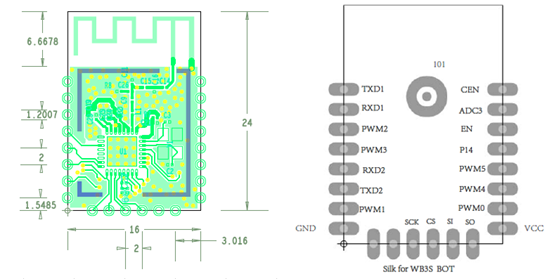
The most important pins here are power, ground, RESET and UART1 - RX and TX. The WB3S (BK7231T) are compatible with TYWE3S:
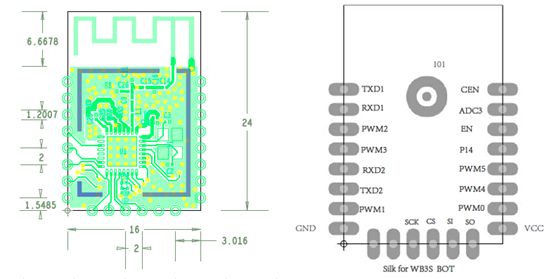
Electrical schematic of a module with pin layout.
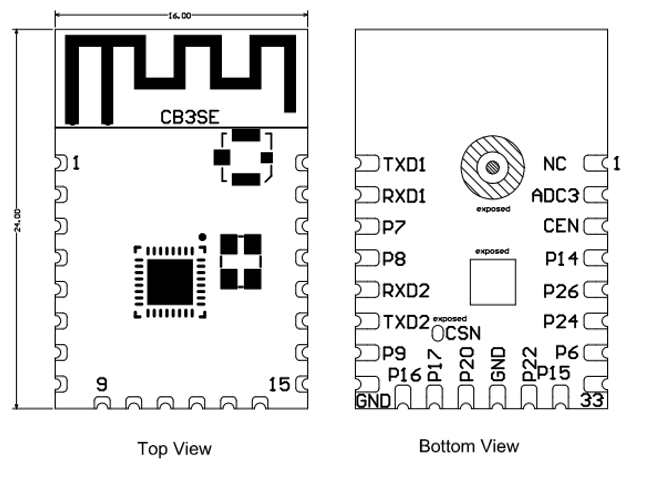
So WB3S fits too. Inevitably, CB3S and related ones are similar:
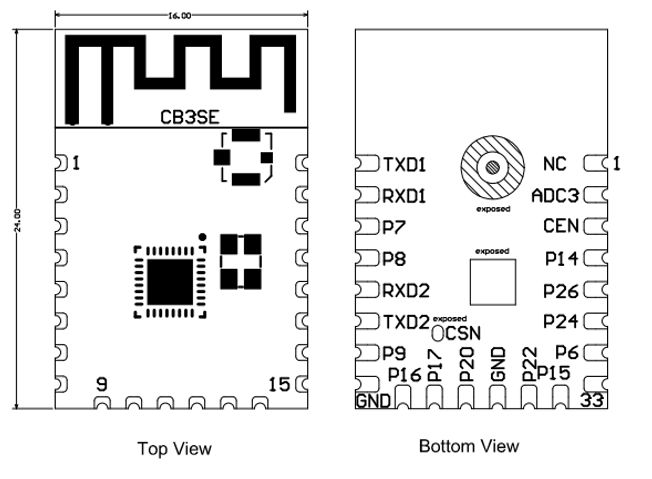
Pin diagram of CB3SE module top and bottom view.
Over time, I also encountered modules based on other microcontrollers with similar pinouts. There was even something with the W600 or W800 from WinnerMicro, and the ground/power supply and UART positions were the same, so this board would be useful even for them.

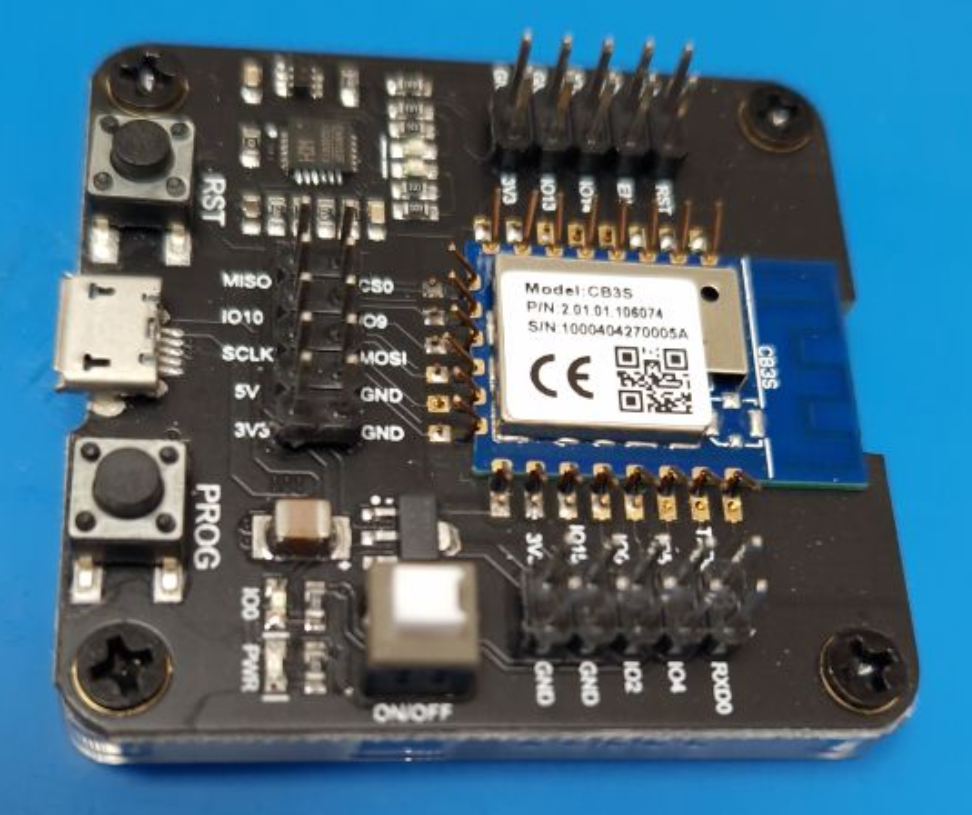
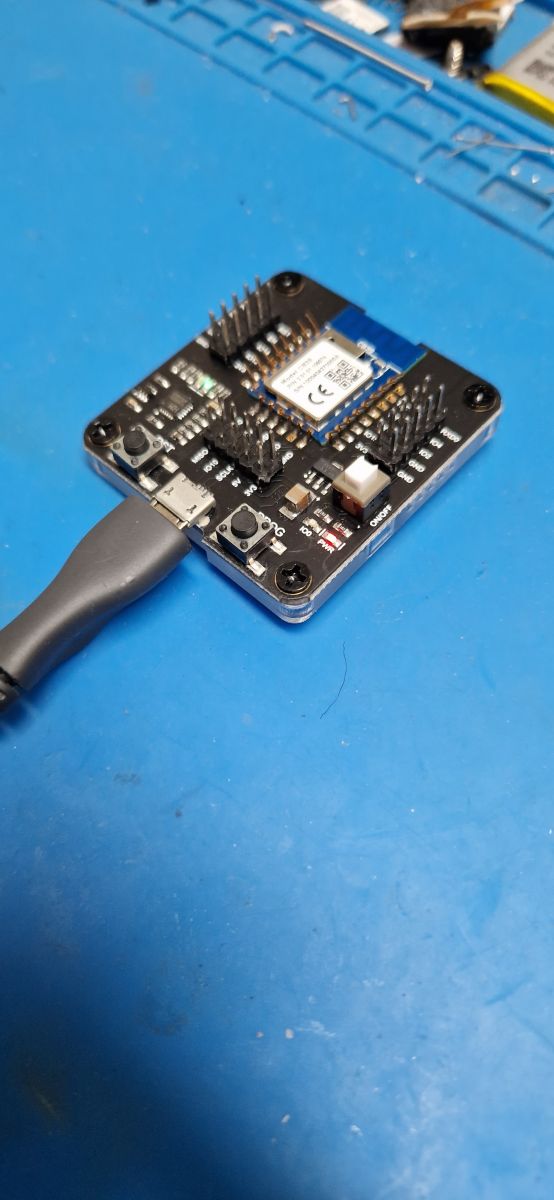
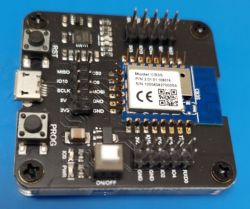
Here are photos of the board in action - with the CB3S module:
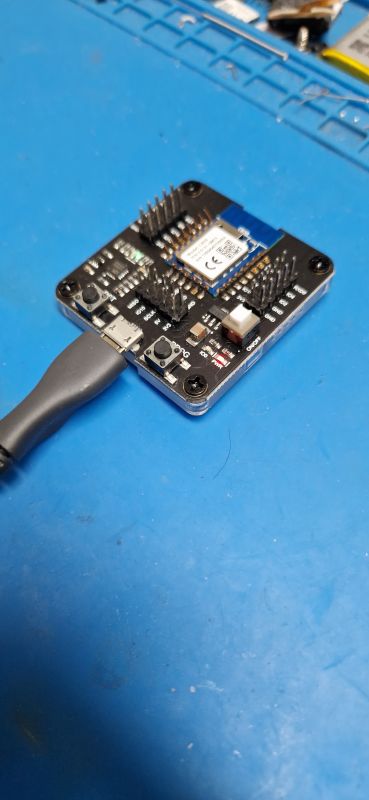
Development board with an inserted ESP module, connected to a USB cable. USB to UART converter board with CB3S module. Close-up of a development board with a CB3S module. Development board with a CB3S module mounted on springs. USB to UART converter board with CB3S module in a no-solder socket.
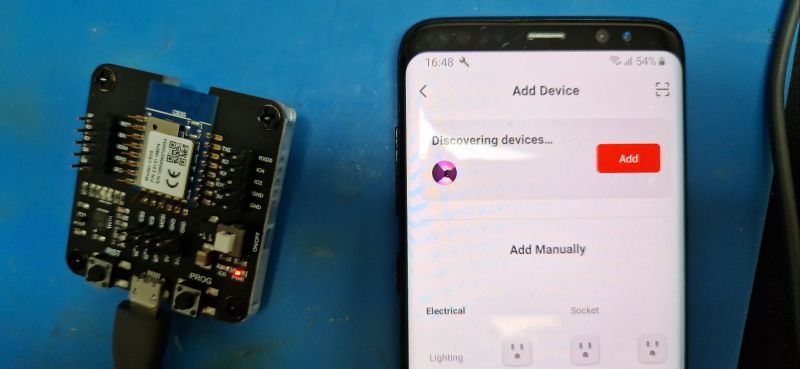
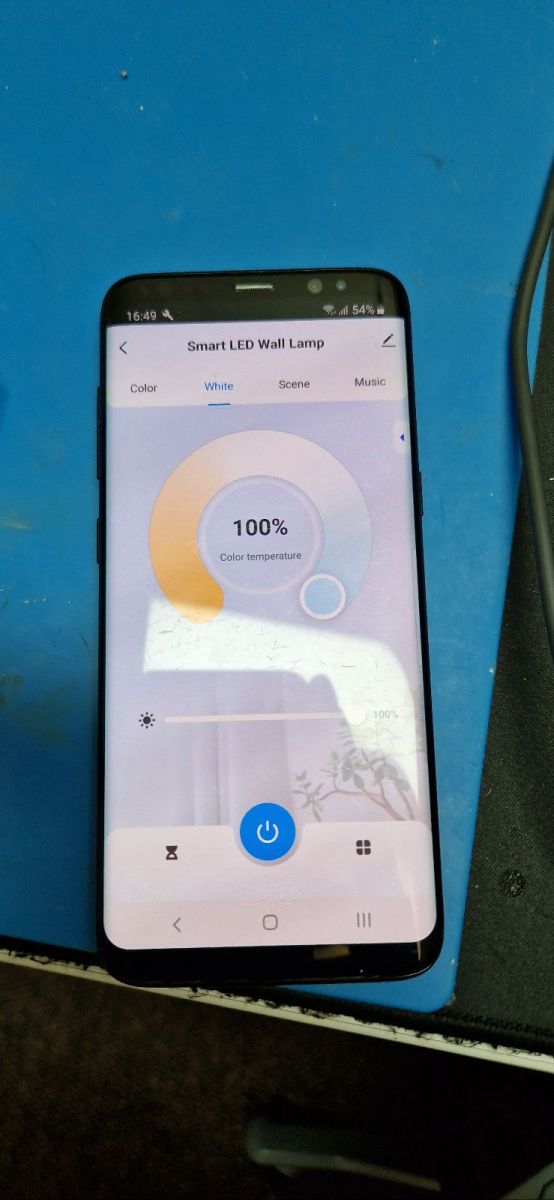
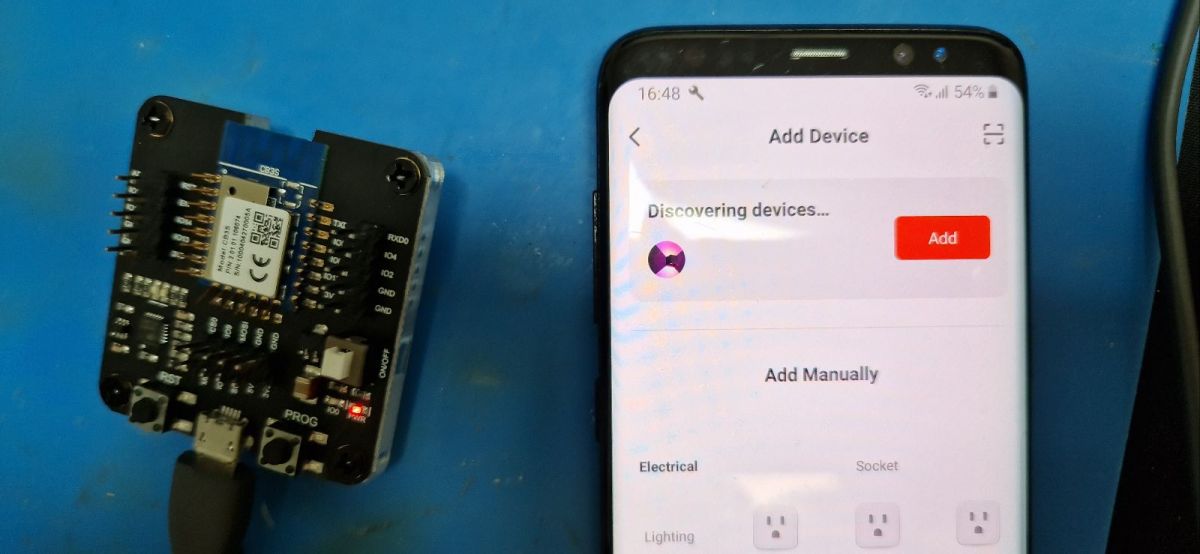
Together with @DeDaMrAz we checked and it is possible to flash and operate CB3S in this board without any problems. Here is an example of a photo after uploading the CB3S batch of the Tuya lamp whose communication protocol we will be examining:
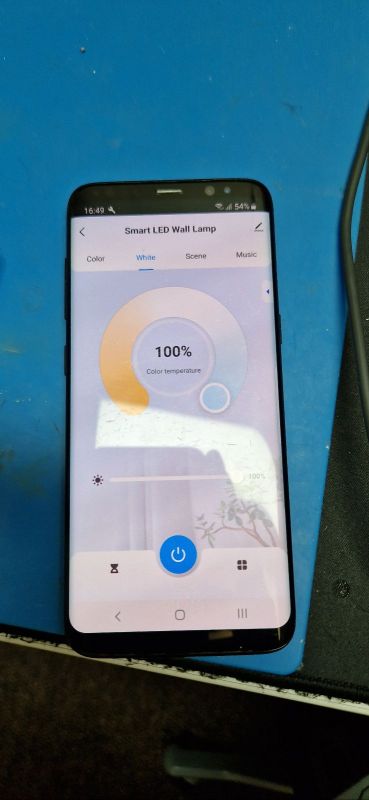
Smartphone with LED lamp control app on a blue background. Test board with CB3S module and a phone displaying the device addition screen
In this situation, the CB3S in the photo is new, and we have uploaded the user's input to it, but that is not important for this topic...
We uploaded with my flasher:
https://github.com/openshwprojects/BK7231GUIFlashTool
For ESP8266, you can look at:
- How to easily install Tasmota - online installer tasmota.github.io/install via a web browser
- SmartLife switch - test, interior and programming of a WiFi light switch

Summary
A convenient and useful board, although perhaps a version supporting different types of pins at the same time would be better. With ESP8266 (and esptool.py or any other programmer) it has been checked many times, with BK7231 I checked it with @DeDaMrAz and it also works. It's worth having at least one piece, at least if you don't like soldering. The outlet of this type of module may require hot air.
What can this plate be used for? I see, among others: such possibilities:
- if we are making a DIY device and do not want to program it in the system, it can be used to program the module before soldering it to the board (but I would rather not do that, it is always worth outputting the UART to the PCB)
- if we have one motherboard and several modules (say TYWE3S, CB3S, WB3S), we can easily replace them
- if, for example, we are flashing a smart device that has blocked UART lines (e.g. through TuyaMCU or something else that makes flashing difficult), it may be more convenient to desolder the entire module, program it in this board and solder it into place, although in such a situation you can also just temporarily cut the UART paths...
Do you see any practical use for this type of tiles? I invite you to discuss.

About Author
p.kaczmarek2
p.kaczmarek2 wrote 14409 posts with rating 12351 , helped 650 times. Been with us since 2014 year.

Comments

Anonymous 28 Oct 2023 21:38

These mini test boards are also briefly described here: https://www.elektroda.pl/rtvforum/topic3601409.html [Read more]

urkotrebor 28 Oct 2023 22:57

I came up with something like this quite by accident https://sklep.msalamon.pl/produkt/adapter-modulow-esp12-esp32-i-esp01-do-programowania-i-testowania/, but it does not seem as refined as the one from... [Read more]

krzbor 29 Oct 2023 17:24

Such programming boards are ideal for OTA-based applications. For example, we make an initial project in Arduino (WiFiManager + OTA). Then we upload it to ESP and we can now solder it to the target place.... [Read more]

DJ_KLIMA 06 Nov 2023 20:58

Yes, OTA is great, but if we mess up something in the code and it hangs or does not enter OTA mode, there will be no intervention. Therefore, whenever possible, I always leave some connection to TX/RX,... [Read more]

krzbor 06 Nov 2023 21:48

I check the OTA at startup in the setup() function, right after WiFiManager. It's hard to mess it up (you'd have to try really hard). It's easier to simply forget about it, change the internal... [Read more]

Anonymous 06 Nov 2023 22:36

Therefore, in the case of ESP32, it is worth implementing OTA based on BLE. [Read more]

Daro1003 09 Nov 2023 21:08

I've had the board for about 2 years now - it's a great thing, I use it to load various loads onto "bare" ESP8266 12F boards and I still use it to build various structures, you could say that without... [Read more]

FAQ

TL;DR: A €6 spring-pin "solderless motherboard" lets you program ESP8266/TYWE3S/CB3S/WB3S modules in seconds [Elektroda, p.kaczmarek2, post #20789400] “It’s worth having at least one piece” [Elektroda, p.kaczmarek2, post #20789400]

Why it matters: You can swap, flash and debug Wi-Fi modules without touching a soldering iron.

Quick Facts

• Price per board: €6–€7 on Chinese marketplaces [Elektroda, p.kaczmarek2, post #20789400] • Supported footprints: ESP-12, ESP-07S, TYWE3S, WB3S, CB3S [Elektroda, p.kaczmarek2, post #20789400] • On-board parts: CH340 USB-UART, RESET button, GPIO0 button [Elektroda, p.kaczmarek2, post #20789400] • Typical flashing speed: up to 921 600 baud with esptool.py [Espressif, 2023] • Spring-pin lifetime: approx. 10 000 insertions [Mill-Max, 2022]

What exactly is the ESP12/TYWE3S solderless motherboard?

It is a USB-to-UART test fixture with pogo-pin contacts that match the 1.27 mm pitch pads of ESP-12-compatible modules. You press the module onto the spring pins, connect USB, and flash or monitor serial data without soldering [Elektroda, p.kaczmarek2, post #20789400]

Which modules fit the fixture out of the box?

Any module using the ESP-12 pinout fits: ESP8266-12F/S, TYWE3S (Tuya), WB3S and CB3S (BK7231 family), plus some W600/W800 boards that copy the same power, ground and UART layout [Elektroda, p.kaczmarek2, post #20789400]

Does it really work with BK7231-based WB3S/CB3S?

Yes. @p.kaczmarek2 and @DeDaMrAz flashed CB3S successfully using the board and BK7231GUIFlashTool without extra wiring [Elektroda, p.kaczmarek2, post #20789400]

What features are on the PCB?

The board integrates a CH340 USB-UART bridge, a RESET button, and a GPIO0 button that pulls IO0 low for ESP8266 bootloader mode. BK7231 modules ignore GPIO0, so the button is optional for them [Elektroda, p.kaczmarek2, post #20789400]

How do I enter flashing mode on an ESP8266 with this board?

  1. Hold GPIO0 button.
  2. Press RESET.
  3. Release GPIO0, then RESET. The module boots into the UART bootloader and is ready for esptool.py [Elektroda, p.kaczmarek2, post #20789400]

Could you outline a 3-step flashing workflow?

  1. Drop the module onto the pogo pins and lock the latch.
  2. Connect USB and select 921 600 baud in esptool.py.
  3. Run write_flash; verify, then unplug and remove the module. Total time ≈ 25 s for a 1 MB image [Espressif, 2023].

Is the fixture useful when I rely on OTA updates?

Yes. Many users pre-flash WiFiManager + OTA, solder the module into the product, and update wirelessly later [Elektroda, krzbor, post #20790913] The fixture handles that first load quickly.

What if my OTA code bricks the device?

Leaving test pads for TX/RX or 0 Ω jumpers lets you recover via serial if OTA fails, as @DJ_KLIMA advises [Elektroda, DJ_KLIMA, post #20802979]

Are there alternative adapters?

Forum members mention 3-D-printed ESP-12 adapters using a Wemos D1 mini and a commercial clamp-style fixture that holds ESP32 boards firmly [Elektroda, urkotrebor, post #20789892]

What baud rate is safe?

921 600 baud is the highest reliable speed recommended by Espressif for ESP8266/ESP32 bootloaders; slower rates like 115 200 work on noisy cables [Espressif, 2023].

Do the spring pins wear out?

Gold-plated pogo pins are rated for about 10 000 compression cycles before contact resistance rises [Mill-Max, 2022]. Heavy use labs may need a spare board.

Is there a hybrid fixture for multiple footprints?

Sellers offer a hybrid base with breakouts for ESP-12, ESP-WROOM-32, and ESP32-WROVER on one PCB; it costs slightly more but saves bench space [Elektroda, p.kaczmarek2, post #20789400]

What practical projects benefit most?

Smart-home tinkerers flash bare ESP8266-12F for switches, lamps, sensors, then reuse the fixture daily. One user says he feels “like without a hand” when it’s missing [Elektroda, Daro1003, post #20807393]

What edge cases should I watch for?

If a device’s UART lines are tied to a co-processor (e.g., TuyaMCU), serial flashing in-circuit may fail. In that case, desolder the module, program it in the fixture, and resolder or bridge the cut UART traces [Elektroda, p.kaczmarek2, post #20789400]
Generated by the language model.
%}