FAQ
TL;DR: For users flashing a Schneider Wiser 550B6000, this teardown identifies a 10-pin BL0942 meter and states, "worked nicely," after flashing OpenBK7231N_QIO_1.17.437.bin over 3.3V UART. It solves the core jobs: opening the case, finding CB3S serial pins, mapping GPIOs, and enabling local setup or MQTT-based Home Assistant use. [#20937705]
Why it matters: This gives a repeatable path from a stock Tuya-based smart plug to a locally configurable OpenBK device with relay, LED, button, and power-meter support.
| Method |
What the thread confirms |
Best use |
| OpenBK local web interface |
Browse to the device IP and set parameters |
Fast local configuration |
| Home Assistant via MQTT |
A linked YouTube video shows MQTT connection to HA |
Ongoing integration in HA |
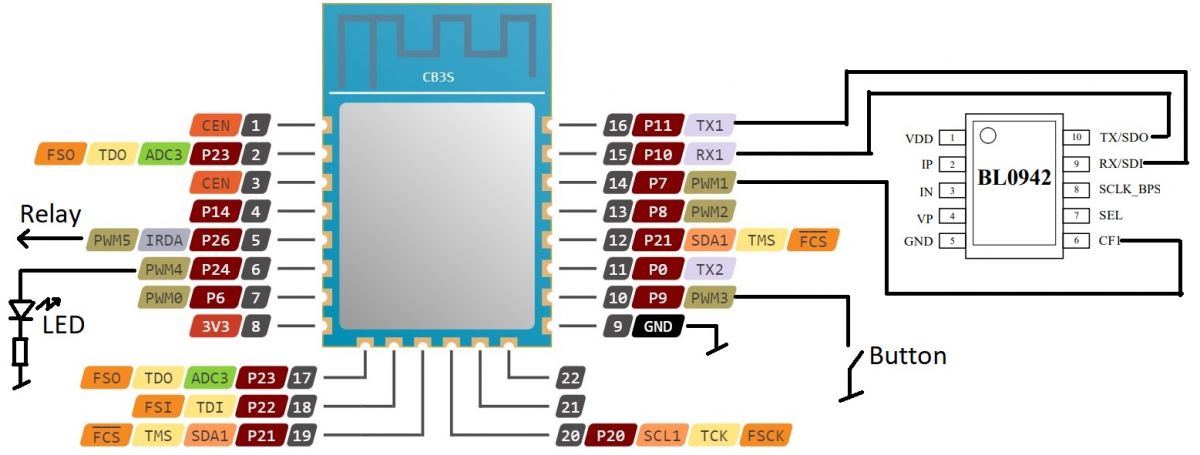
Key insight: The most valuable finding is the confirmed CB3S pin map: P11 RX, P10 TX, P9 button, P24 LED, P26 relay, plus P7 for BL0942 CF1. That turns a generic teardown into a directly usable OpenBK profile.
Quick Facts
- Model
550B6000 uses a CB3S board with a BK7231N chip, and the shared JSON template names BL0942 as the metering IC. [#20937705]
- The board exposes clearly recognizable
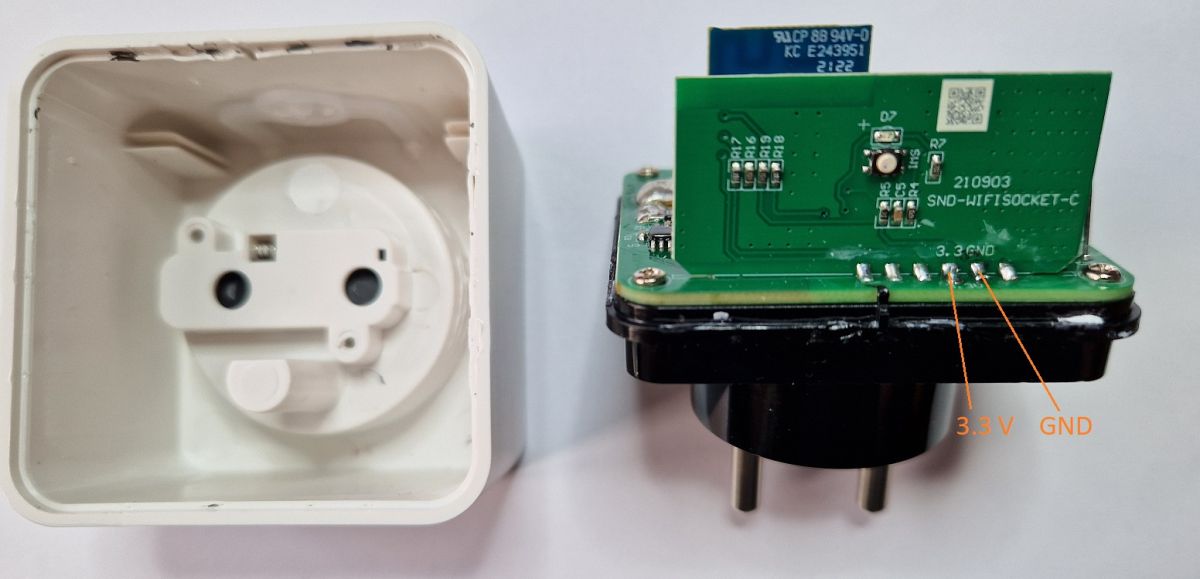
GND and 3.3V points, which enabled flashing with a USB-to-3.3V UART converter. [#20937705]
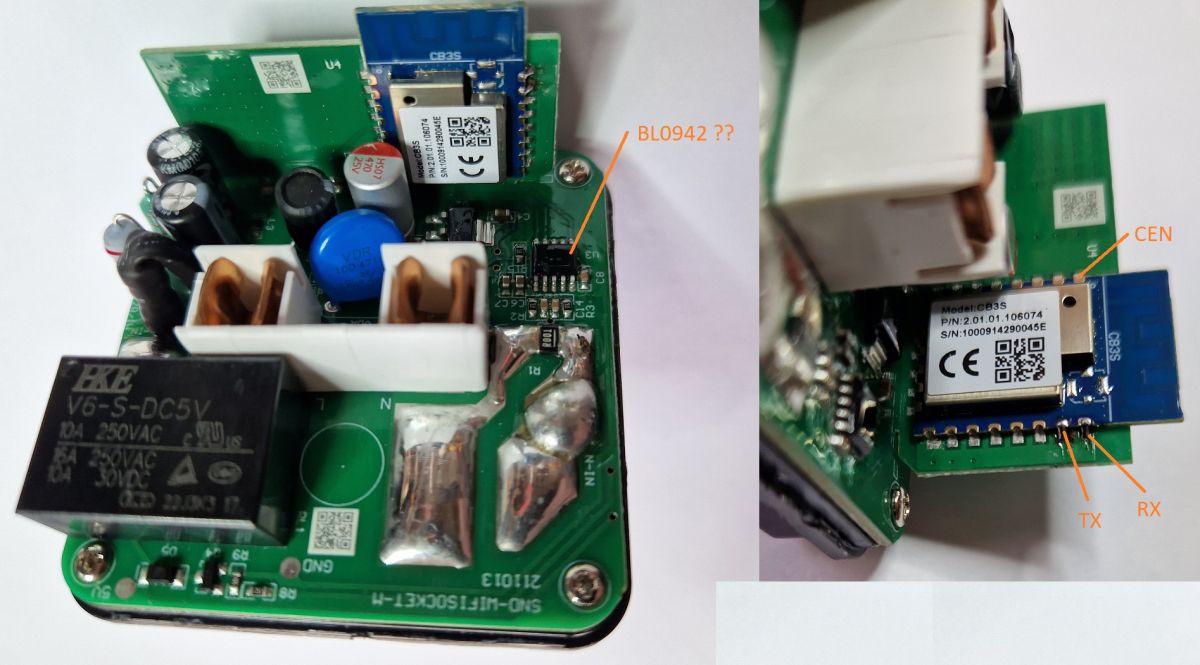
- The meter IC is described as a 10-pin chip, and wire tracing identified
BL0942 RX, TX, and CF1 connections on the PCB. [#20937705]
- Confirmed GPIO assignments are
P11 RX, P10 TX, P9 button active low, P24 LED active high, and P26 relay active high. [#20937705]
- The follow-up request for the Web App JSON template was resolved after 4 hours 22 minutes, and the first post was updated to include a readable JSON block for device-list reuse. [#20937858]
How do you open the Schneider Wiser smart socket 550B6000 without damaging the case or PCB?
Open it by working the seam with a hobby knife and a small flat screwdriver until the bottom and top parts separate. The thread confirms that this method was enough to access the PCB on the Schneider Wiser 550B6000. Once open, stop prying near the board and immediately identify the visible
GND and
3.3V pads before doing any wiring.
[#20937705]
What are the GND, 3.3V, RX, and TX pin locations on the CB3S module inside the Schneider Wiser 550B6000 smart plug?
GND and
3.3V are easy to recognize on the opened board, and the CB3S serial pins are mapped as
P11 = RX and
P10 = TX. The teardown photos show these points directly on the module and PCB. That gives you the four essential connections for UART work: power, ground, receive, and transmit.
[#20937705]
How do you flash OpenBK7231N_QIO_1.17.437.bin onto a BK7231N-based CB3S module using a USB-to-3.3V UART converter?
Use a USB-to-
3.3V UART adapter connected to the CB3S serial pads, then flash
OpenBK7231N_QIO_1.17.437.bin. 1. Open the plug and locate
GND,
3.3V,
P11 RX, and
P10 TX. 2. Wire the UART converter to those points. 3. Run the flash program, then browse to the device IP and set parameters in the OpenBK web interface. The thread states the flash tool could also retrieve Tuya parameters from the original firmware.
[#20937705]
What pin configuration works for the Schneider Wiser 550B6000 with CB3S and BL0942, including button, LED, relay, and metering pins?
The working map is
P11 RX,
P10 TX,
P9 button active low,
P7 BL0942 CF1,
P24 LED active high, and
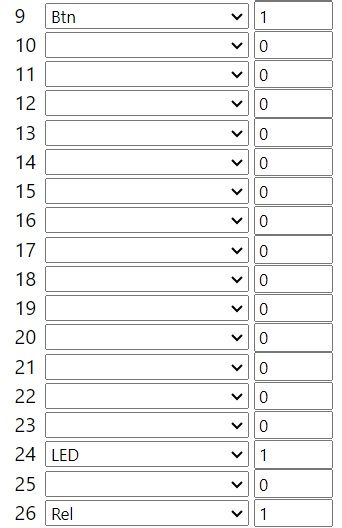
P26 relay active high. The JSON template also maps
9 to
Btn;1,
24 to
LED;1, and
26 to
Rel;1. This is the confirmed configuration for the Schneider Wiser
550B6000 on a
CB3S board.
[#20937705]
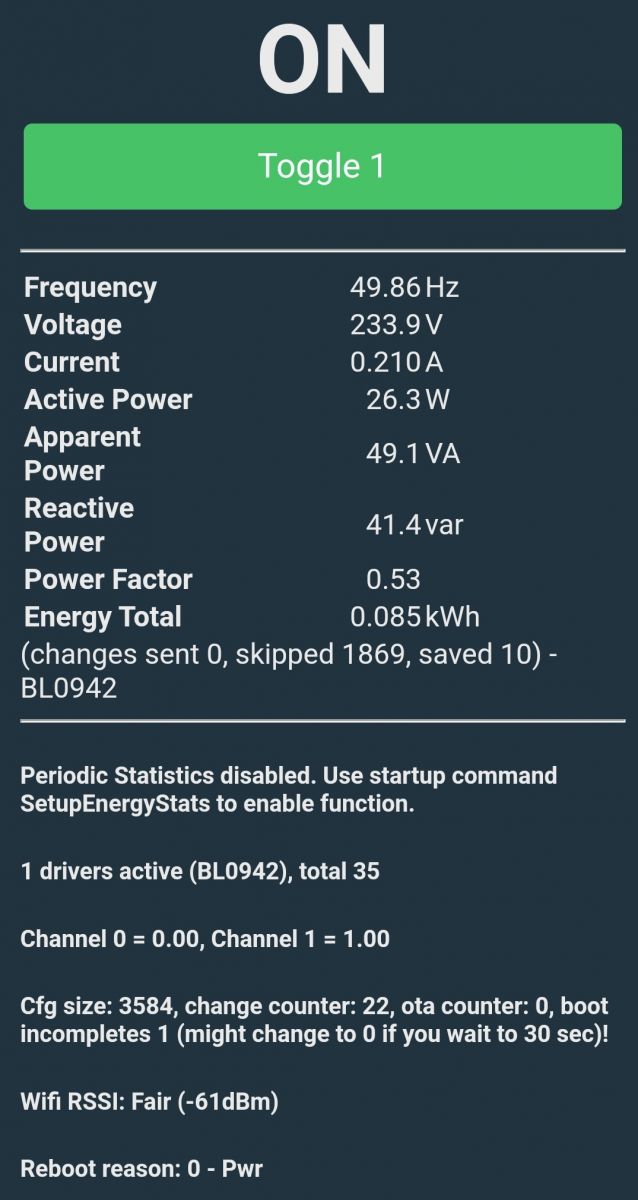
How do you configure the BL0942 power metering chip in OpenBK for the Schneider smart plug 550B6000?
Configure it by starting the BL0942 driver in OpenBK and using the traced metering connection. The posted JSON template sets the command to
startDriver BL0942, and the teardown identifies
P7 as
BL0942 CF1. That is the exact OpenBK-side configuration shown for the Schneider Wiser
550B6000.
[#20937705]
What is the BL0942 chip, and what does it measure in a smart plug?
"BL0942 is a power-metering chip that handles electrical measurement in the smart plug, with traced serial and CF1 connections on the PCB." In this teardown, it is the
10-pin metering IC identified on the board, and OpenBK uses it for the device’s power-metering function. The thread does not list individual measured quantities beyond confirming metering support.
[#20937705]
What is the CB3S module, and how is it related to the BK7231N chip in Tuya-based devices?
"CB3S is a Tuya Wi-Fi module that carries the BK7231N chip and exposes GPIO and UART pins used for flashing and device control." In the posted JSON, the device is identified as
chip: BK7231N and
board: CB3S. That means the Schneider plug uses a CB3S module built around the BK7231N platform.
[#20937705]
How does OpenBK retrieve Tuya parameters from the original firmware during flashing, and what can you do with those parameters afterward?
The flash program can read Tuya parameters from the original firmware during the OpenBK flashing process. After that, you can browse to the plug’s IP address and apply or verify settings in the local OpenBK interface. The author reports that this workflow "worked nicely" on the
550B6000.
[#20937705]
What JSON template from the OpenBeken Web App should be used to add the Schneider Wiser 550B6000 to the devices list?
Use the JSON template posted in the thread for
Schneider smart plug with power metering, model
550B6000. It specifies
vendor: Tuya,
chip: BK7231N,
board: CB3S, keyword
BL0942, pins
9 Btn;1,
24 LED;1,
26 Rel;1, and command
startDriver BL0942. A follow-up post explicitly asked for this Web App template so it could be copy-pasted into the devices list.
[#20937705]
How do you identify the BL0942 RX, TX, and CF1 connections on a smart plug PCB by tracing wires?
Identify them by tracing the PCB runs from the
10-pin metering IC to the module pins and nearby test points. The teardown says that "a bit more wire tracking" revealed the
BL0942 RX,
TX, and
CF1 pins. In this plug, that tracing produced a confirmed
CF1 assignment on
P7.
[#20937705]
Why is the button configured as active low and the LED and relay as active high in this CB3S setup?
They are configured that way because that is how the board wiring behaves on this device. The confirmed map labels
P9 as
Button active low, while
P24 and
P26 are
LED active high and
Relay active high. In practice, that means the button asserts on a low state, while the LED and relay respond to a high state.
[#20937705]
What does the CF1 pin do on the BL0942, and how is it used by OpenBK for power monitoring?
In this device,
CF1 is the traced BL0942 metering connection that OpenBK uses together with the BL0942 driver. The teardown explicitly finds
BL0942 RX,
TX, and
CF1, then assigns
P7 to
BL0942 CF1 and starts the driver with
startDriver BL0942. That is the complete metering hookup shown in the thread.
[#20937705]
What is the best way to connect an OpenBK-flashed Schneider Wiser smart plug to Home Assistant over MQTT?
The thread’s recommended path is to use the linked YouTube guide that shows MQTT connection to Home Assistant. The post says the video demonstrates how to connect the OpenBK-flashed plug to HA via MQTT. Use the local web interface first for basic setup, then follow that MQTT workflow for Home Assistant integration.
[#20937705]
What troubleshooting steps help when a BK7231N or CB3S device does not respond after flashing OpenBK over UART?
Start by re-checking the four essential UART points:
GND,
3.3V,
P11 RX, and
P10 TX. Then confirm you flashed
OpenBK7231N_QIO_1.17.437.bin and try reaching the device by its IP address to set parameters. If the flash tool did not retrieve the Tuya parameters, or the local settings were not completed, the plug may not behave as expected after flashing.
[#20937705]
How does configuring the Schneider Wiser smart plug through its local OpenBK web interface compare with integrating it through MQTT in Home Assistant?
The local OpenBK web interface is the faster setup path, while MQTT is the integration path for Home Assistant. The thread says configuration worked by browsing to the device IP and setting parameters locally. It separately points to a YouTube video for HA over MQTT, so the two methods complement each other rather than replace each other.
[#20937705]
AI summary based on the discussion. May contain errors.








Comments
Thanks, but can you also include JSON template from the Web App, so I can copy-paste it to our devices list? https://openbekeniot.github.io/webapp/devicesList.html Added after 4 [hours] 22 [minutes]:... [Read more]