logo elektroda
logo elektroda
X
logo elektroda

Celma PRCb - retro drill from electro-junk - simple repair and teardown - is it worth it?

p.kaczmarek2  43 7641 Cool? (+12)
📢 Listen (AI):

TL;DR

  • A Celma PRCb single-speed, no-impact drill from electro-junk gets a full inspection, teardown, and repair after its worn nameplate and missing switch made it suspect.
  • The repair starts with meter checks for shorts or housing punctures, then gearbox inspection, brush removal, and a look inside a badly contaminated trigger switch.
  • The drill's trigger had no contact, one plastic part broke during disassembly, and the switch offered momentary operation plus a lock-in pin.
  • After cleaning with IPA and a sander, shortening overlong screws, and securing parts with glue, the drill powered up and worked again.
  • Replacement switches and brushes are available, but the drill remains a very basic on-off tool with no speed control, raising doubts about whether it's worth keeping.
Generated by the language model.
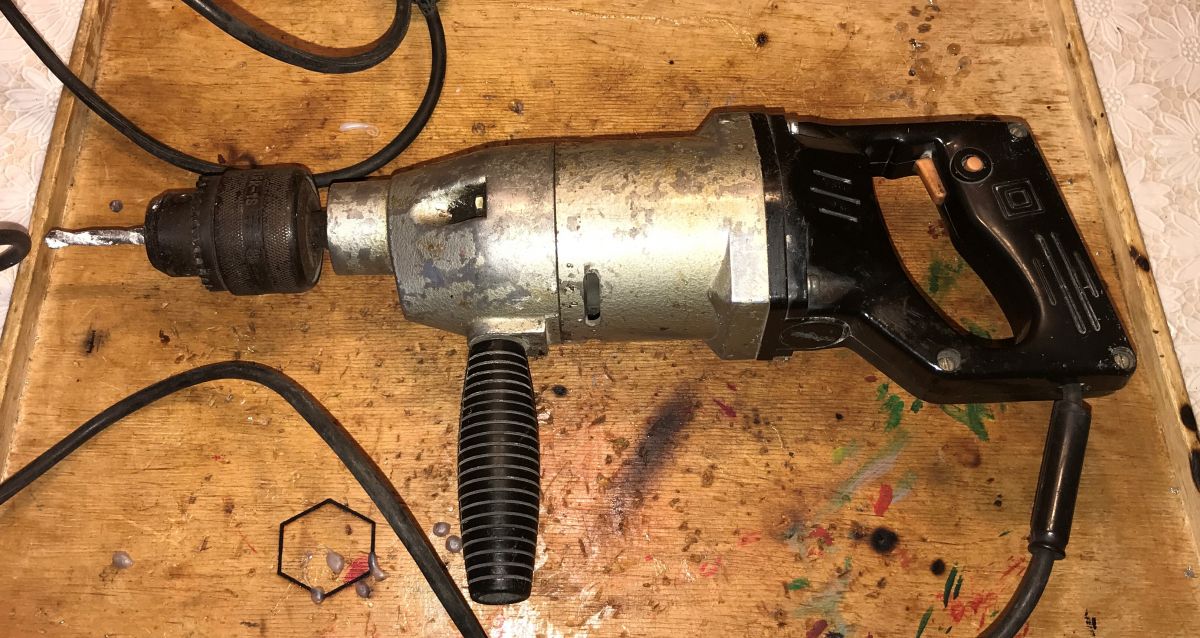
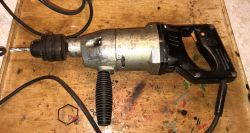
Old Celma PRCb single-speed drill on a wooden table. .
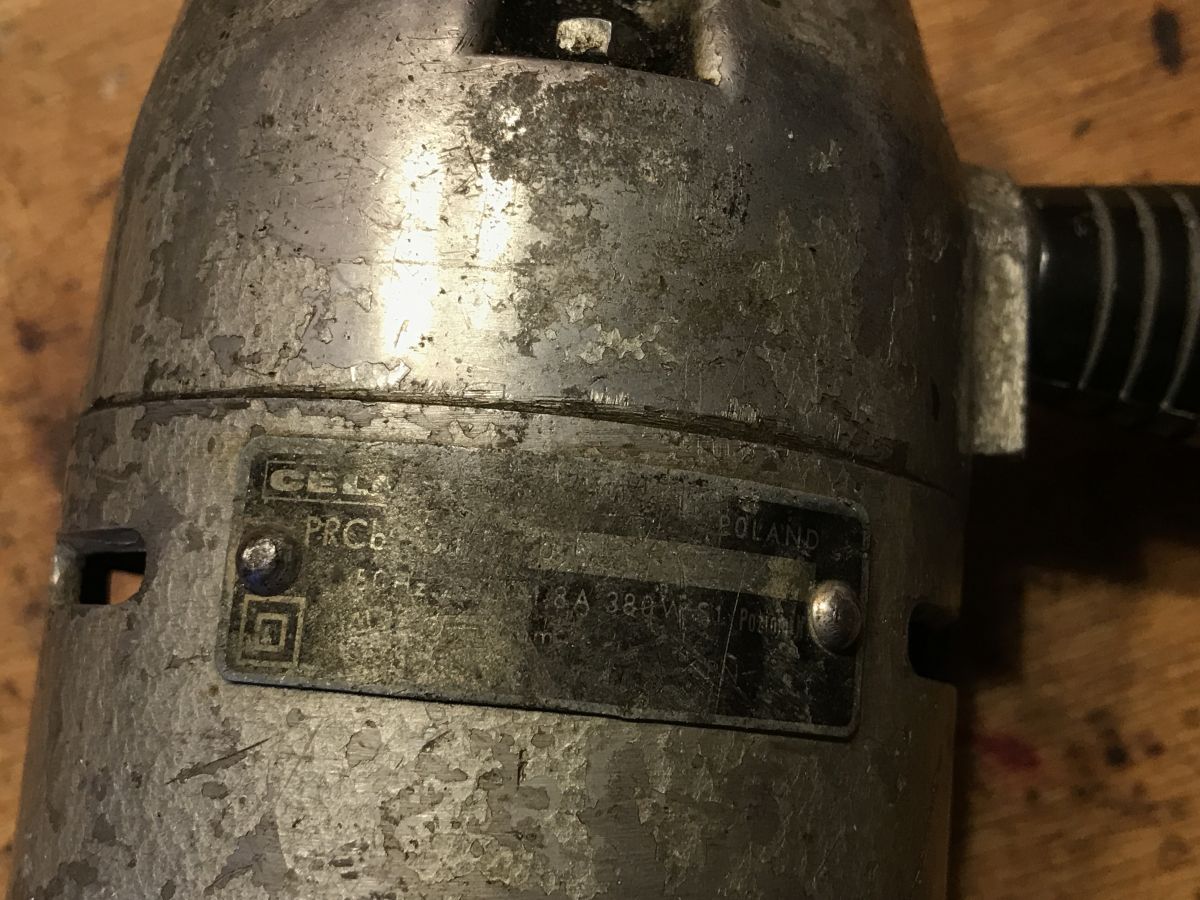
Today we are going to look at a single-speed, no-impact drill from a bygone era. This is another old piece of equipment that I will try to run here. I have identified the model of the equipment as a Celma PRCb, although the nameplate is partially worn out:
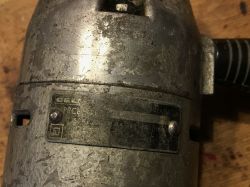
Old Celma PRCb drill with partially worn nameplate. .
The first thing I started with was checking the whole thing with a meter. I wanted to check if there was by any chance a short circuit or a puncture on the housing. It appears that everything is fine.
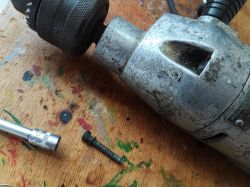
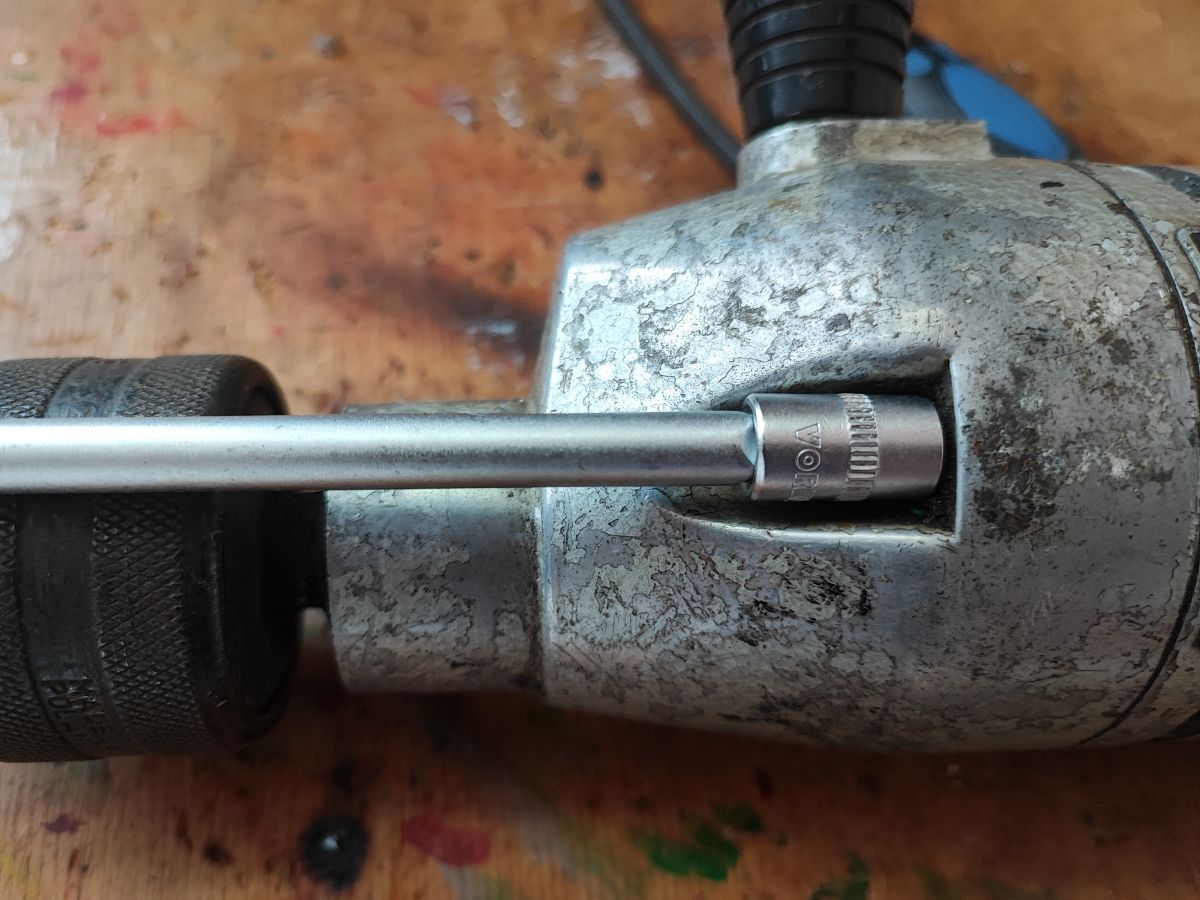
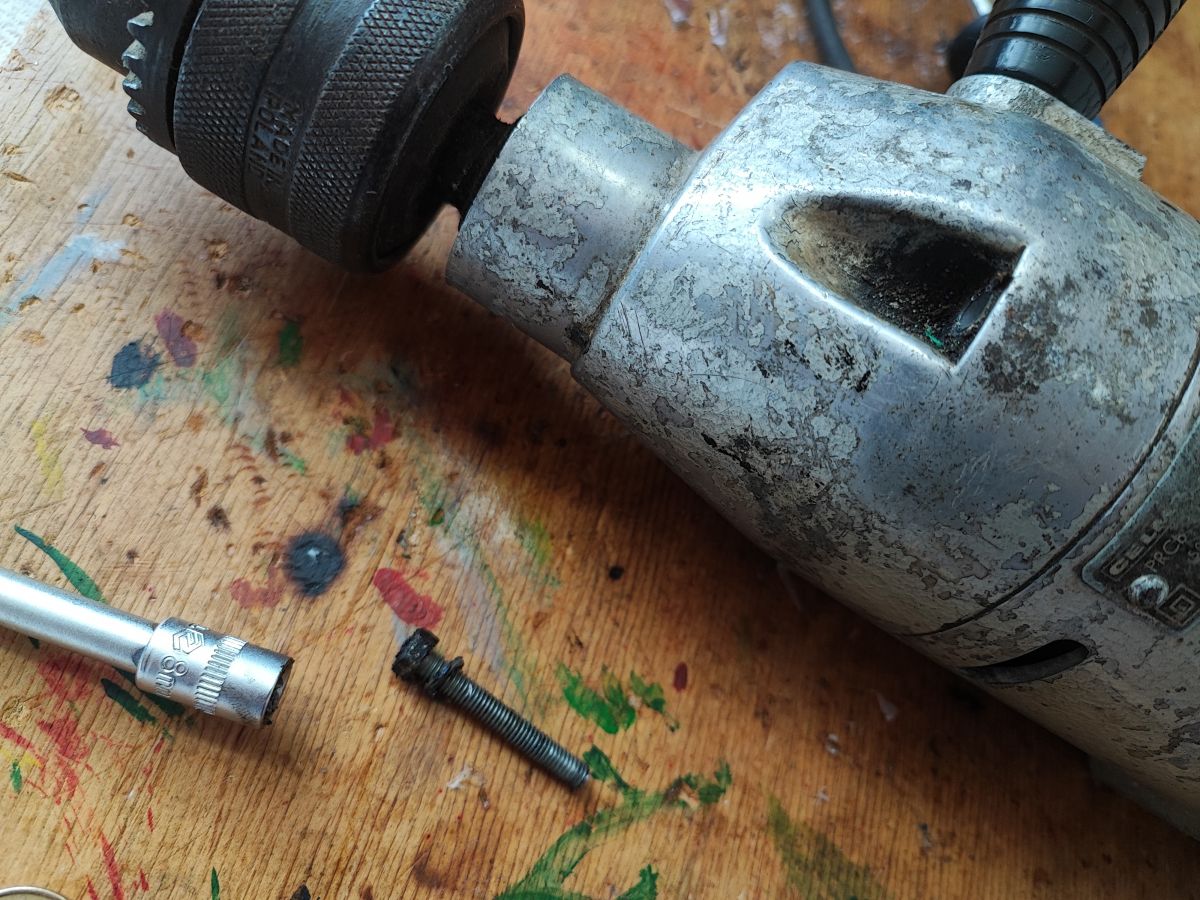
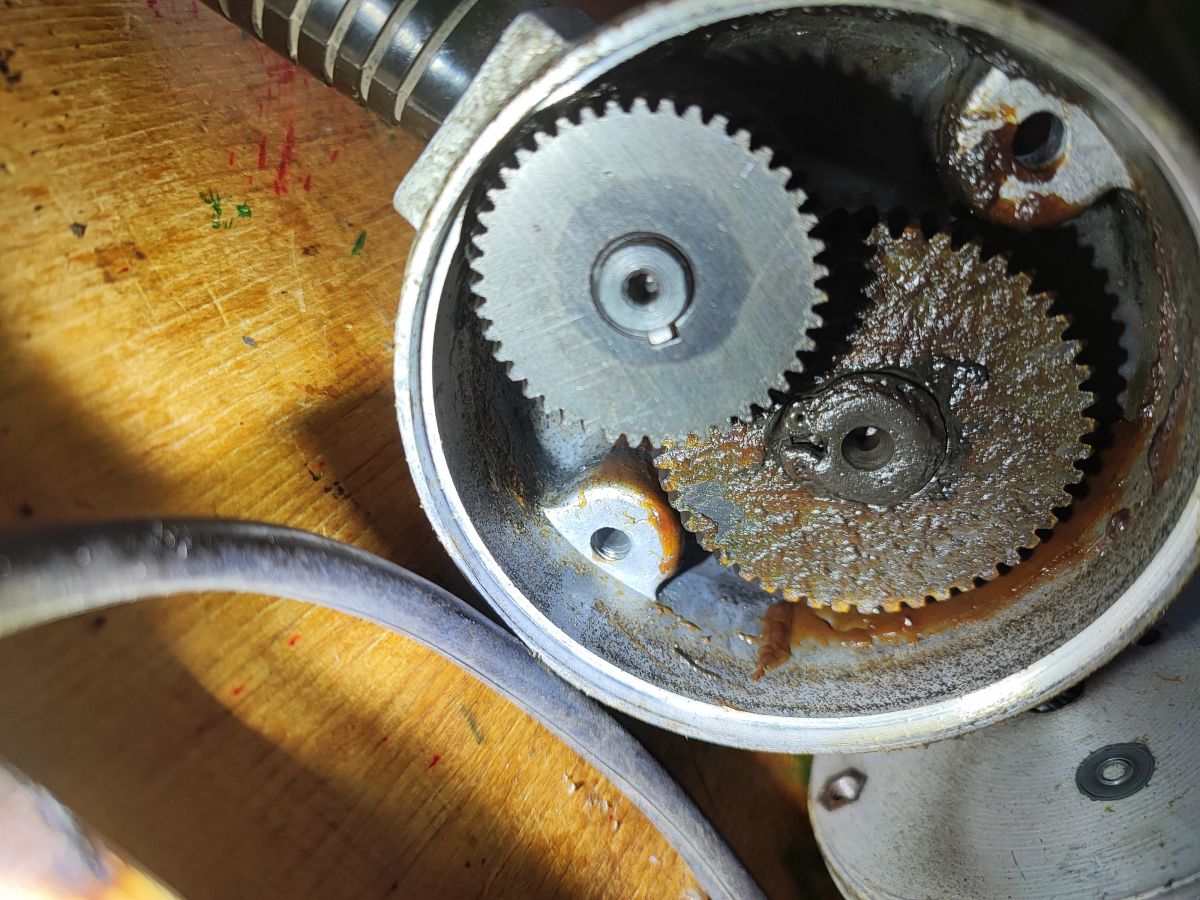
Next, I checked the gears. A socket spanner will come in handy:
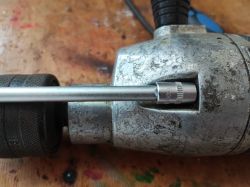
Celma PRCb drill with a socket wrench attached. Old Celma PRCb drill on a wooden table, with a socket wrench and a screw nearby. .
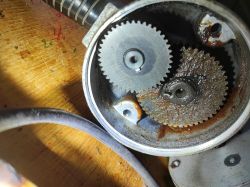
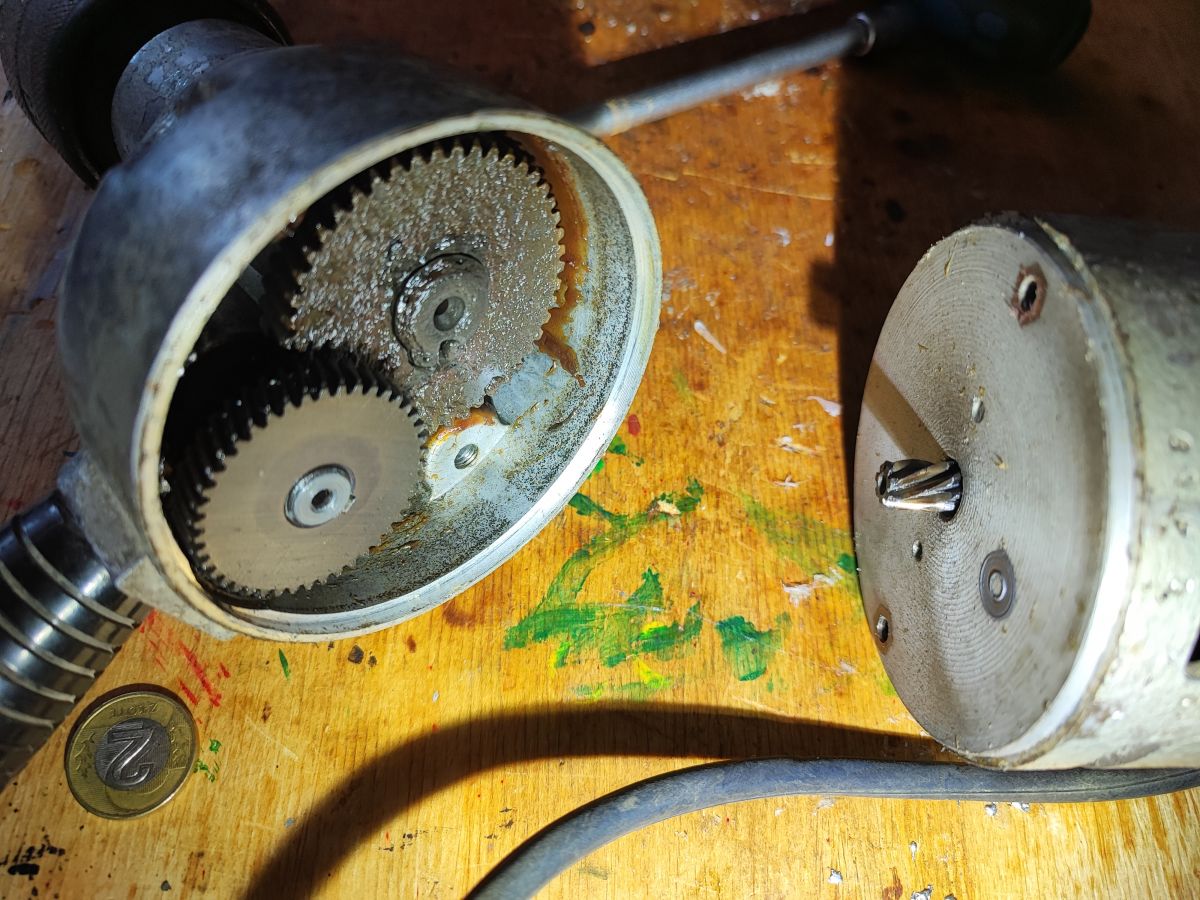
I don't see the damage, the grease should be changed, but I need to buy or borrow any first:
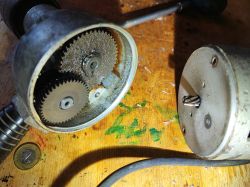
Open gear housing of a Celma PRCb drill on a wooden surface with a coin nearby. Open gearbox housing of a Celma PRCb drill showing the gear mechanism. .
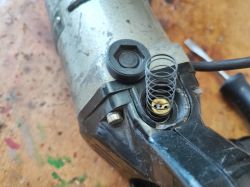
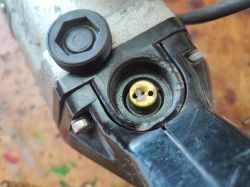
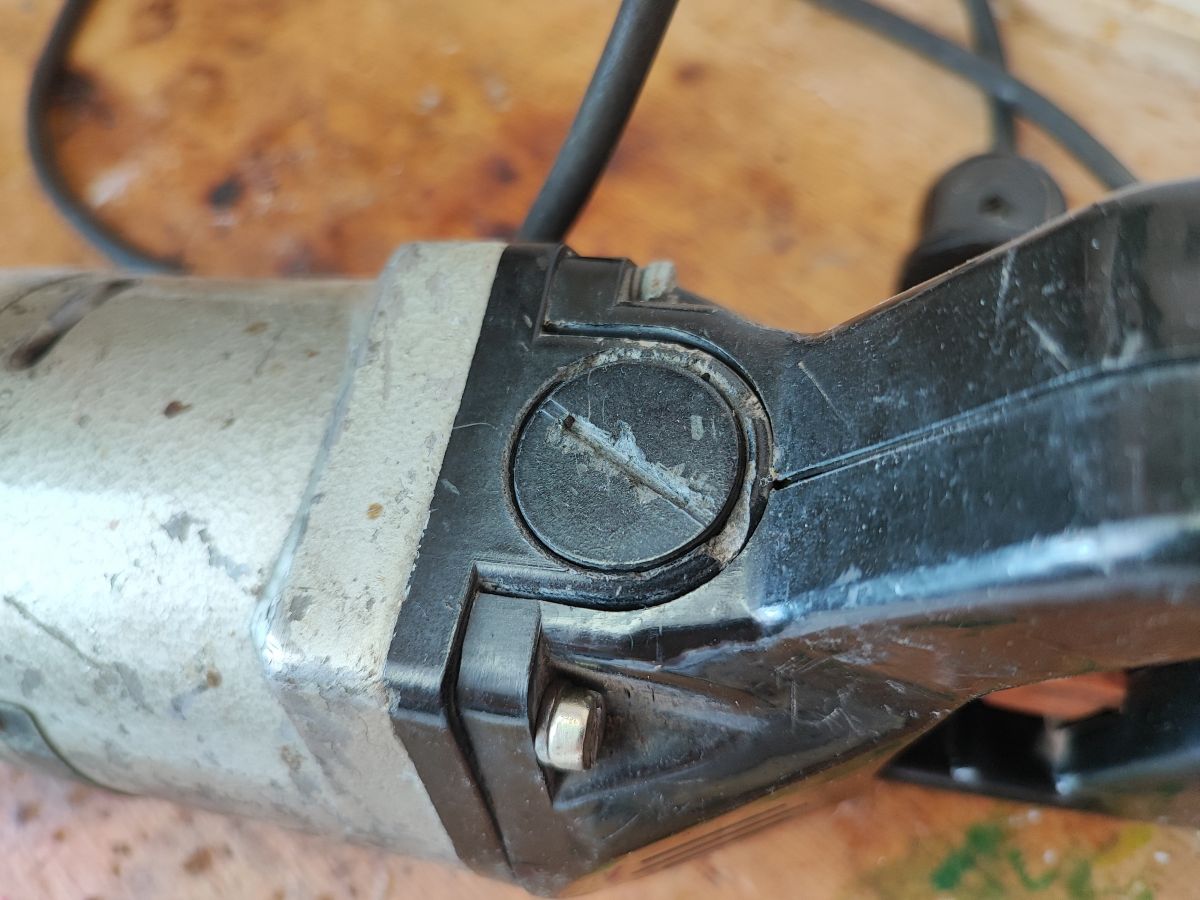
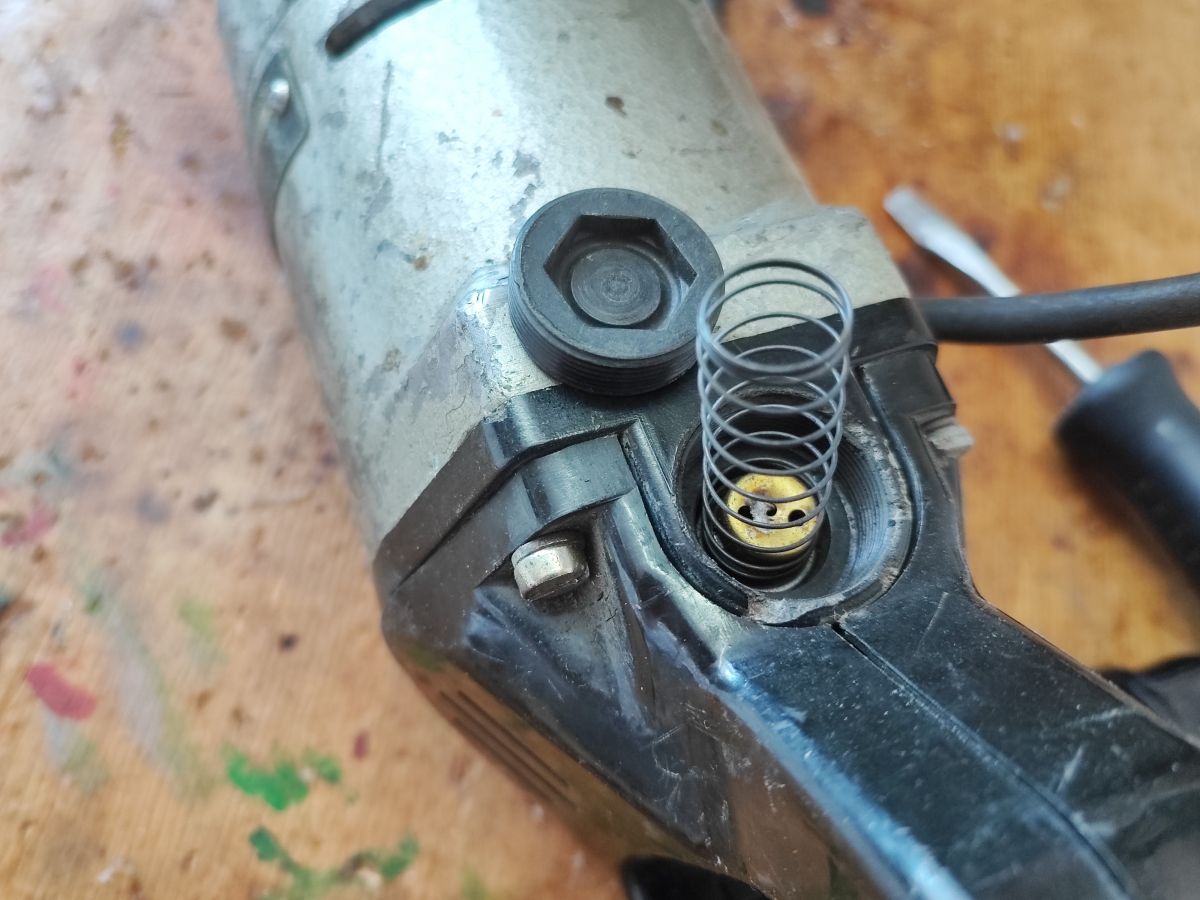
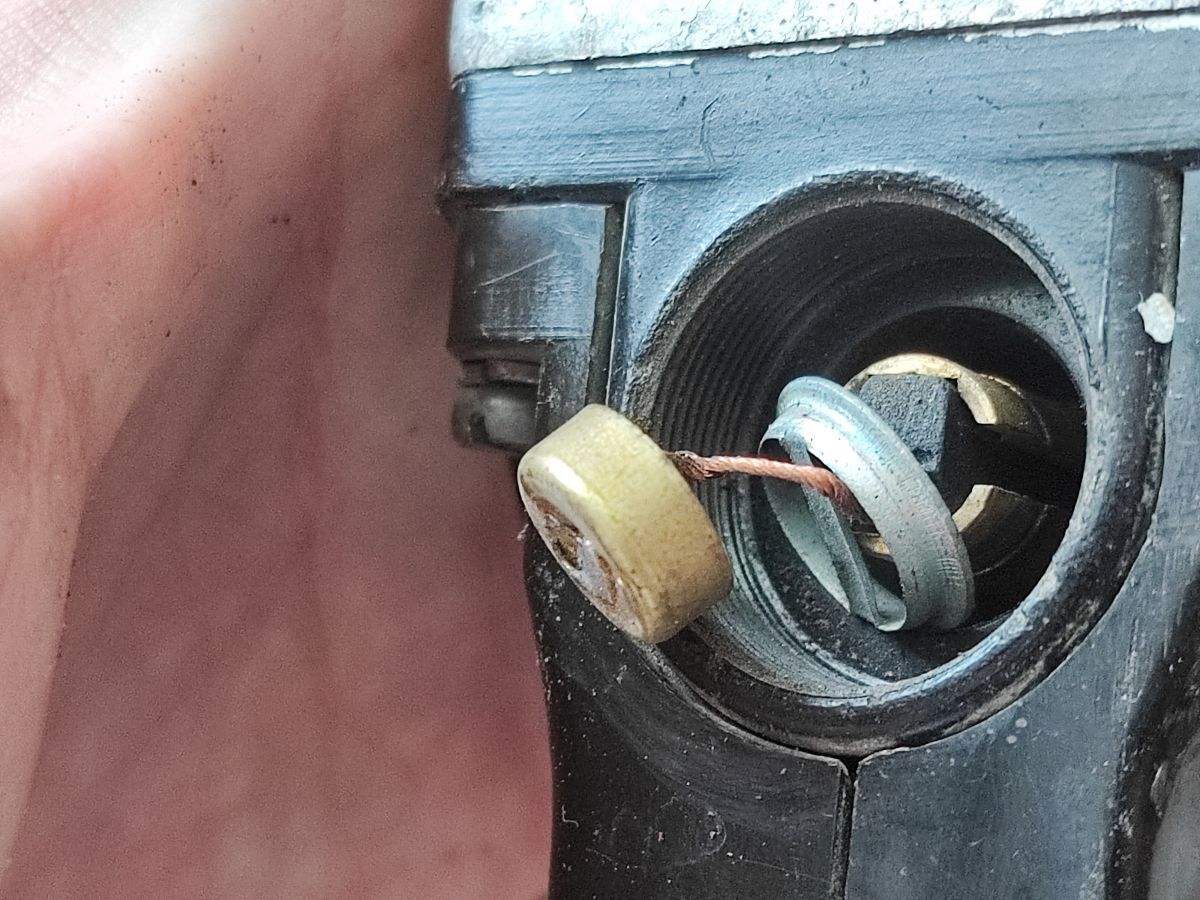
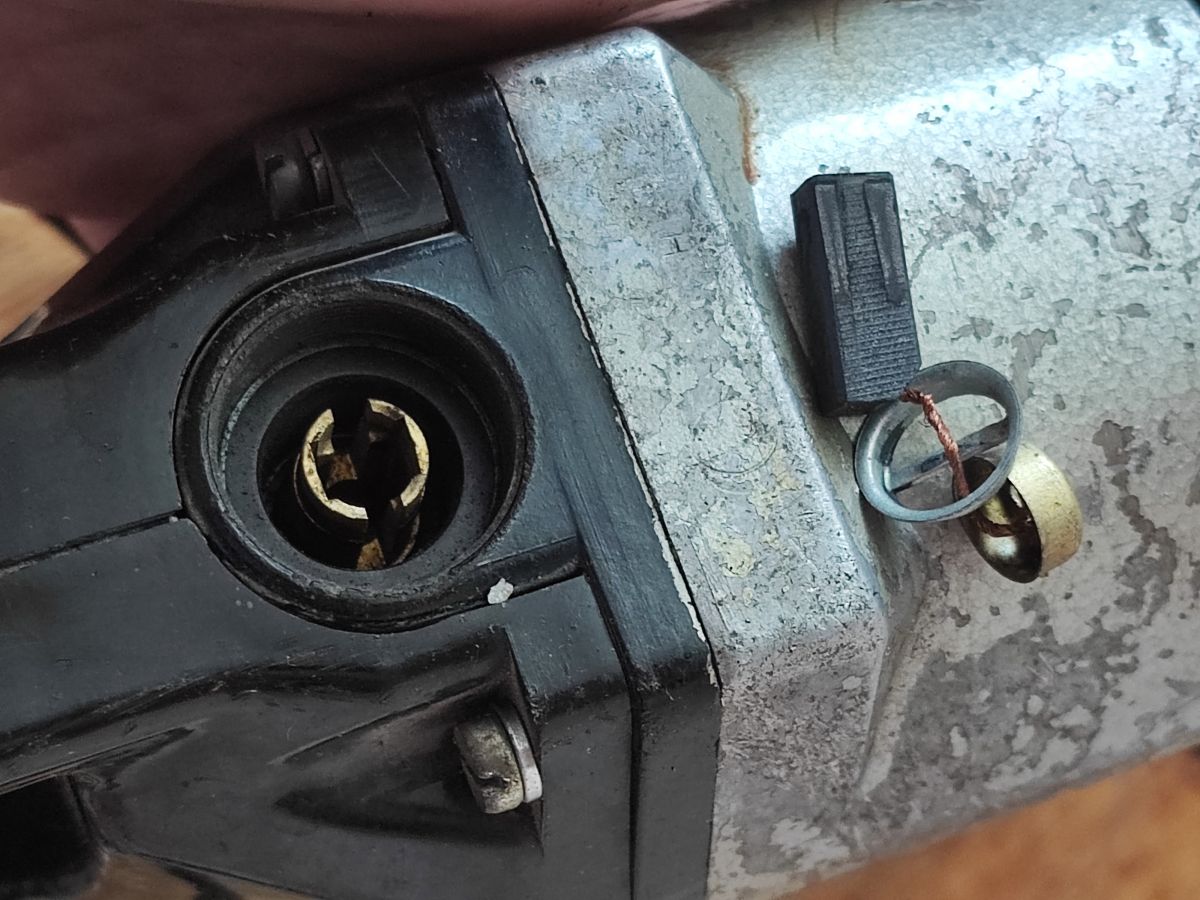
Then it was time for the brushes. We unscrew them, carefully so that the spring doesn't pop out:
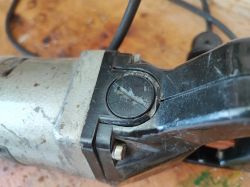
Close-up of a damaged plastic component on an old Celma PRCb drill. .
About her:
Spring and internal housing of the old Celma PRCb drill. Close-up view of Celma PRCb drill with a damaged button.
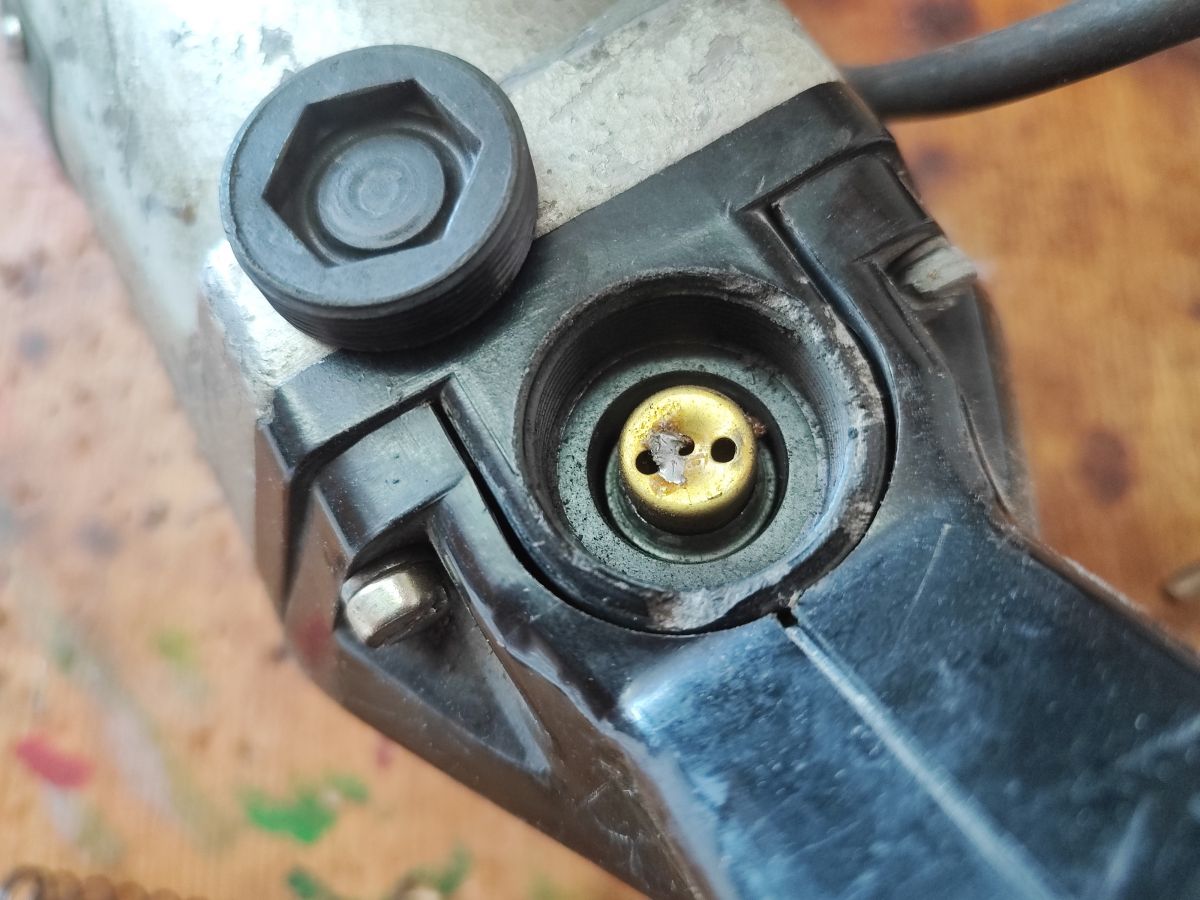
Here's the carbon brush. It's not that bad:
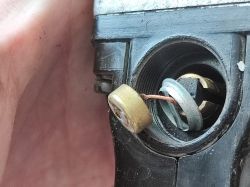
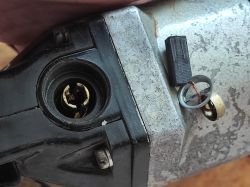
View of connector with wire in old electrical equipment View of a drill with switch components on a metal casing. .
Then I decided to connect the whole thing to the power supply and.... works! But what do you mean, without a button?
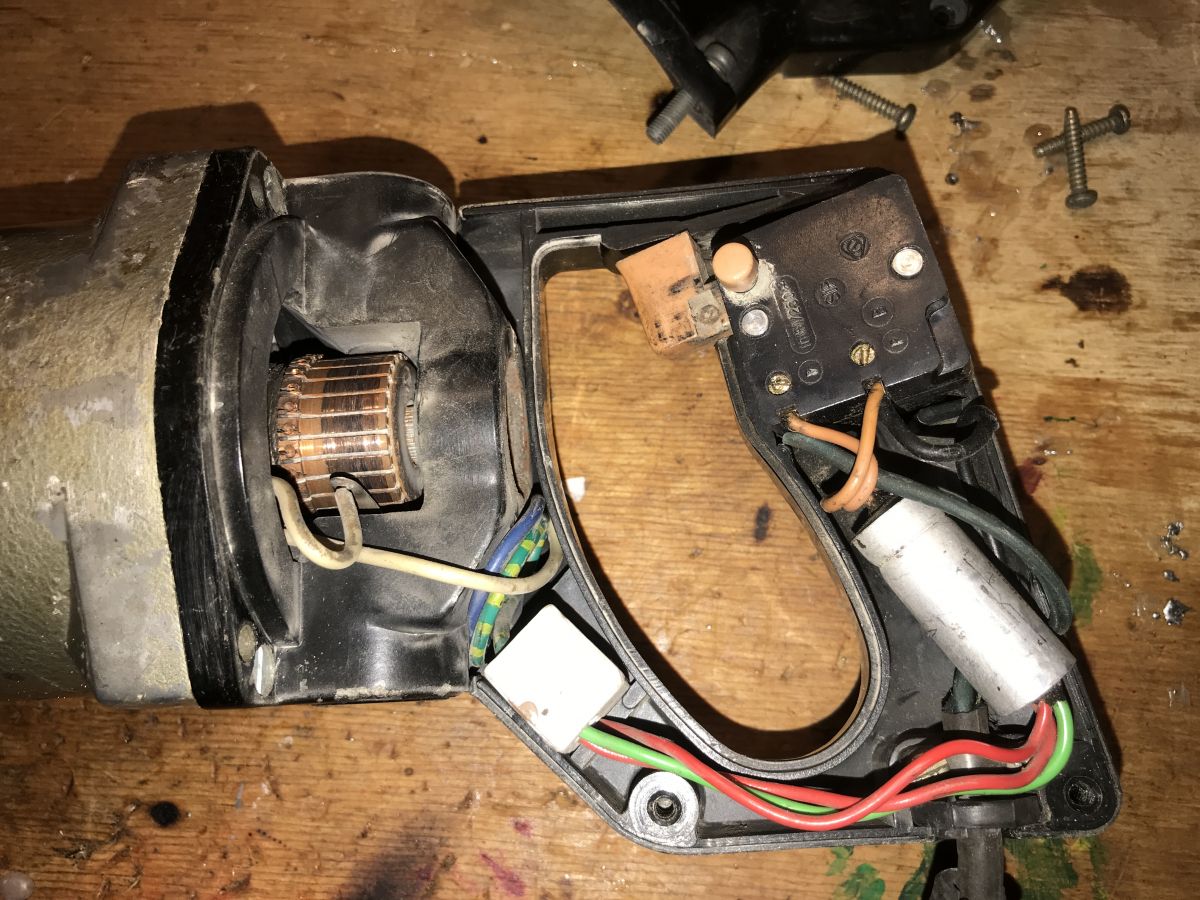
The button must be faulty or someone has shorted it out. Let's check.
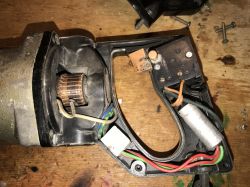
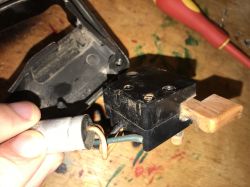
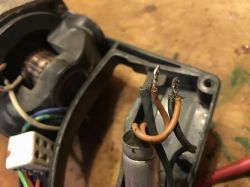
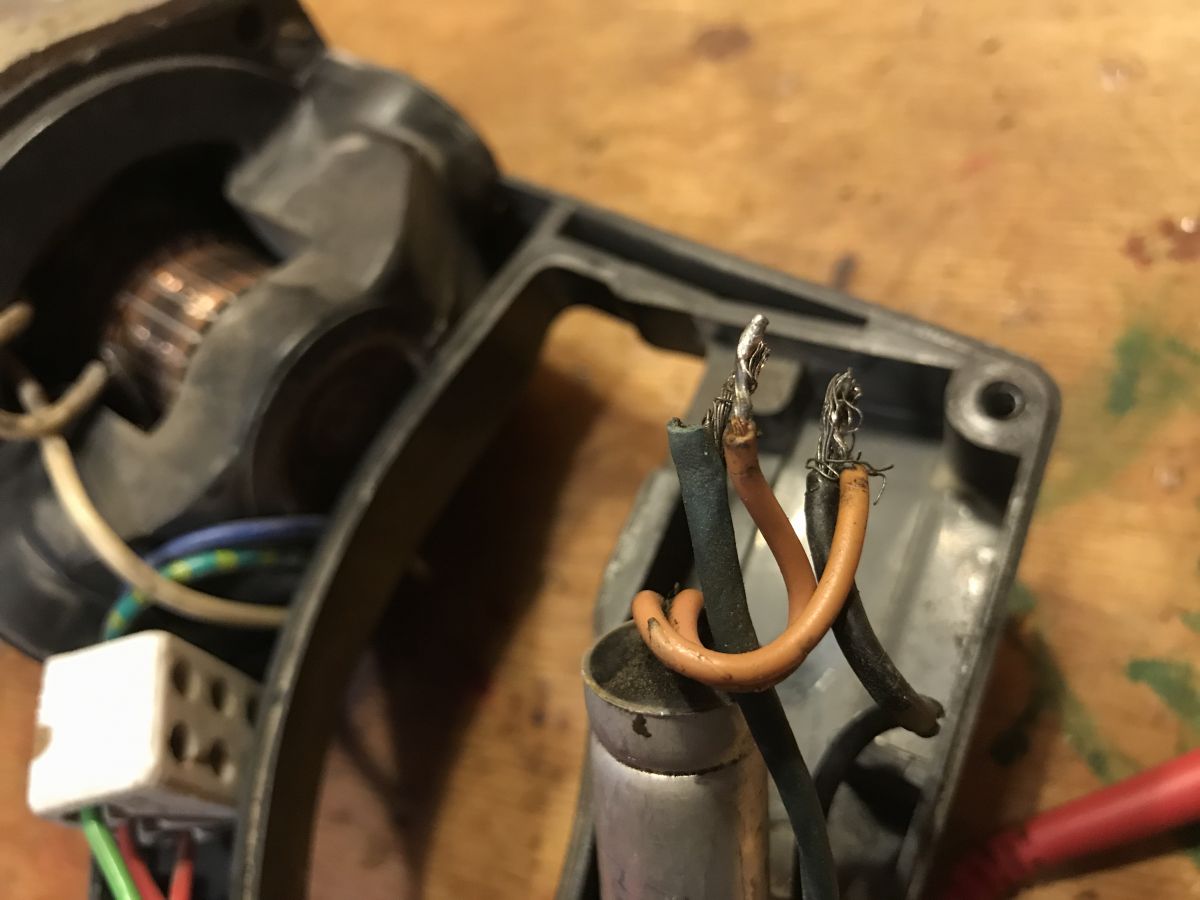
Interior of an old Celma PRCb drill showing the motor and wiring. Close-up of an old switch with partially connected wires. Disassembled electric drill with visible wires and motor fragment. .
Indeed... someone has deliberately omitted the button, is it defective?
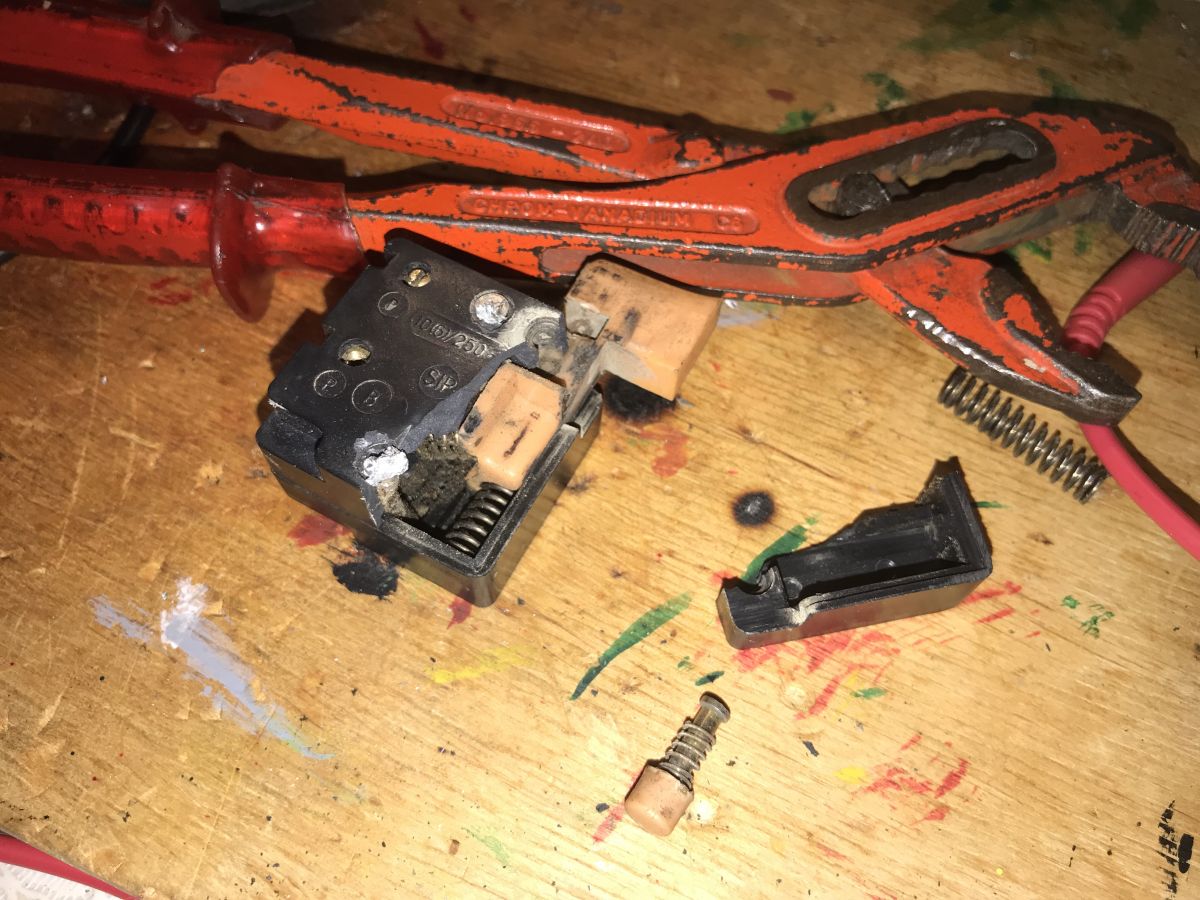
Unfortunately in the process of taking it apart the plastic broke:
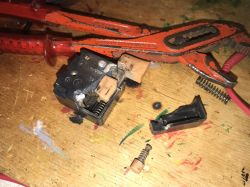
Disassembled switch components with damaged plastic on a workbench. .
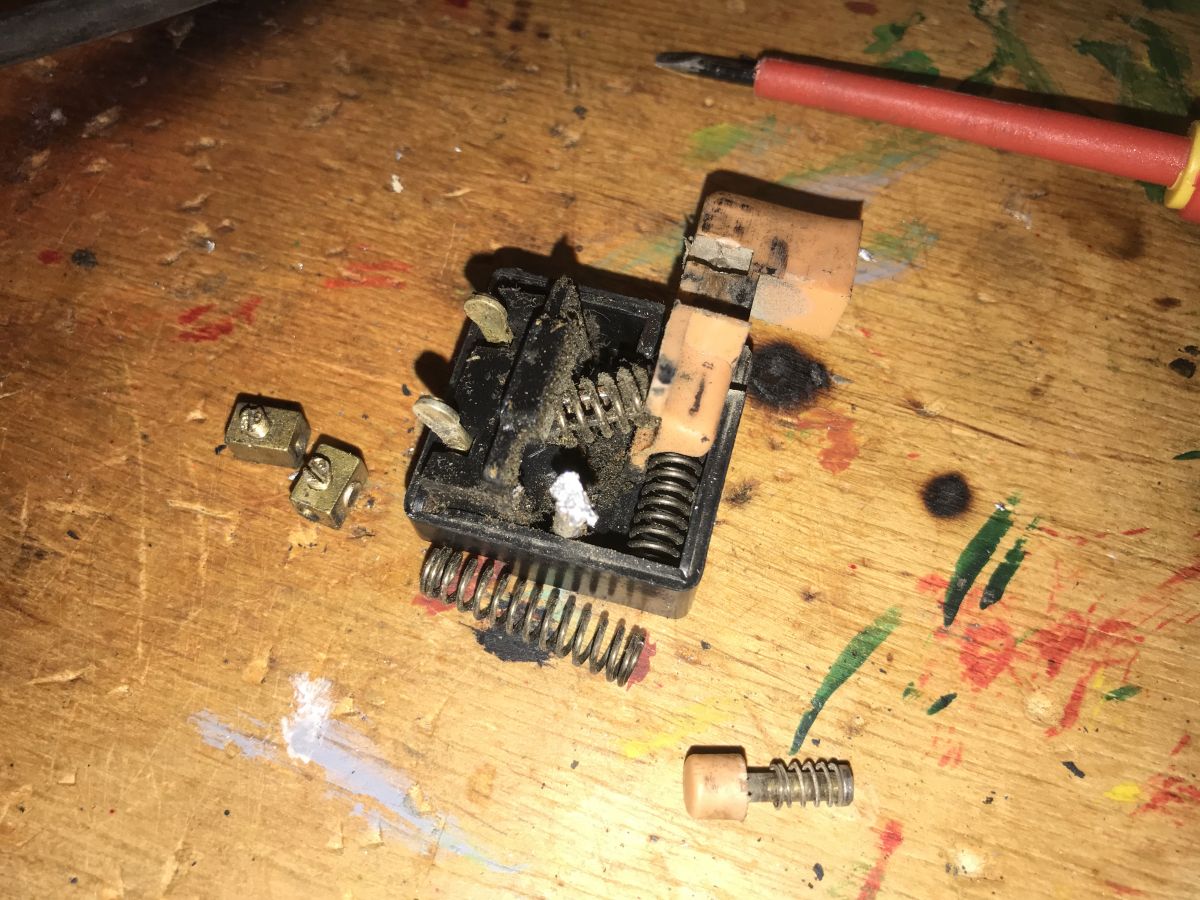
However, this is a great opportunity to look inside:
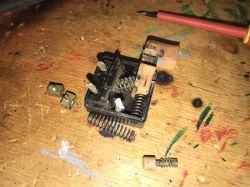
Dismantled drill switch on a wooden table. .
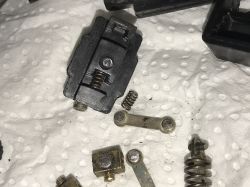
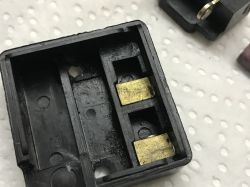
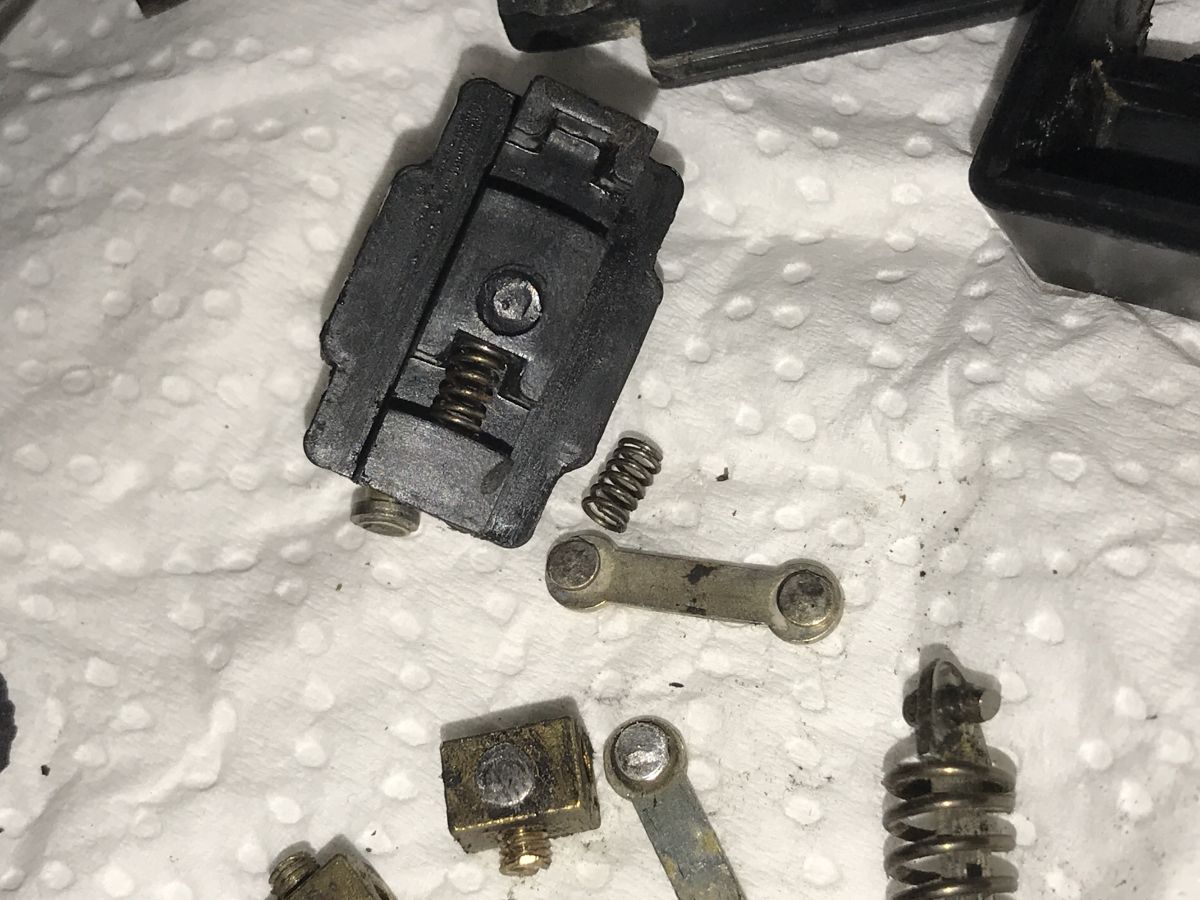
With this amount of dirt, it is not surprising that this button did not short circuit. I checked with a multimeter. Indeed, there is no contact.
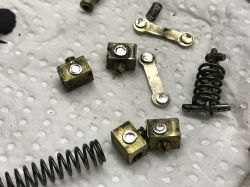
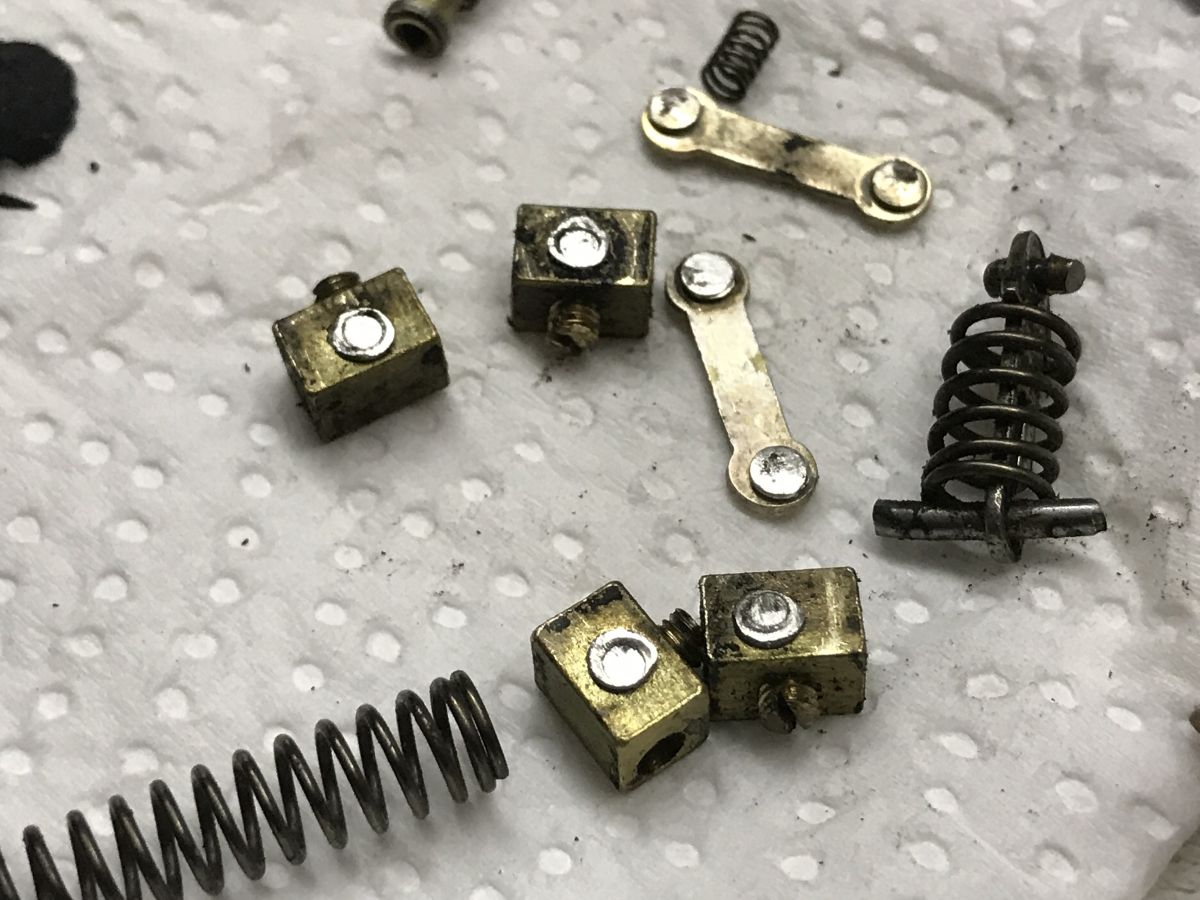
Metal parts and springs lying on a paper towel. Switch components, including springs and metal elements, on a paper towel.
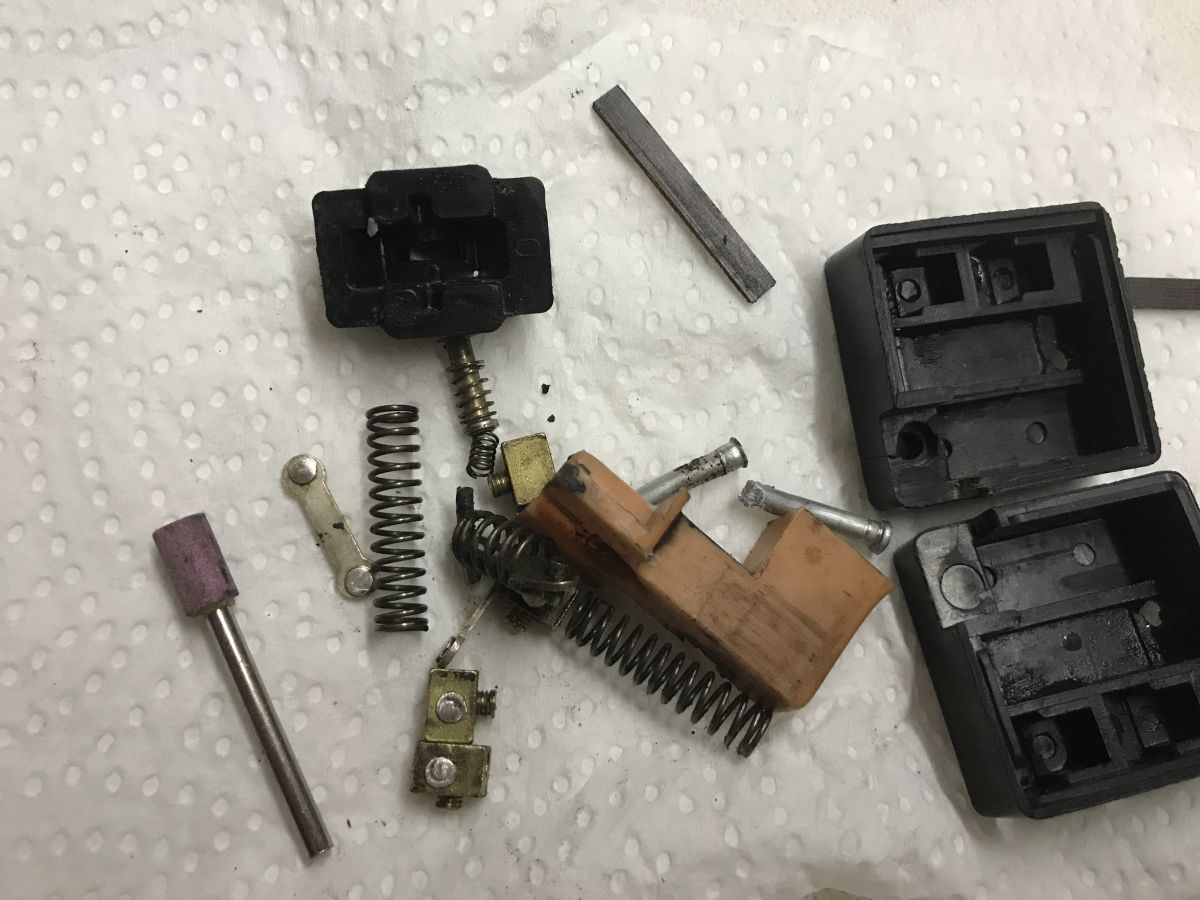
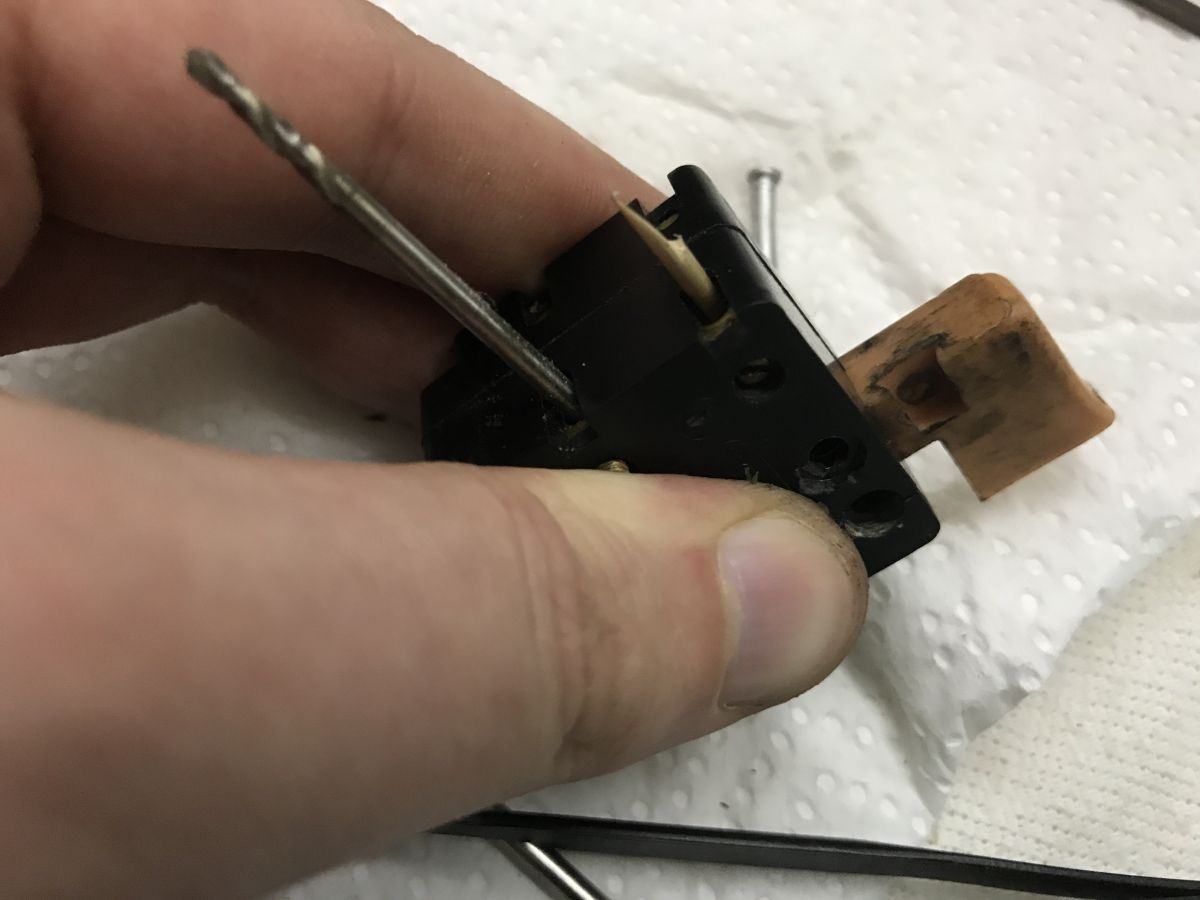
How dirty it all is.... I took a cloth, IPA, a sander and started to gently remove the dirt. By the way, this switch has two modes - either momentary, or you can also push in the pin and lock it temporarily in a shorted state.
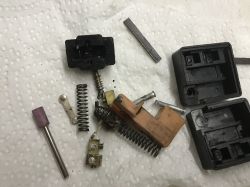
Disassembled drill parts on a paper towel. .
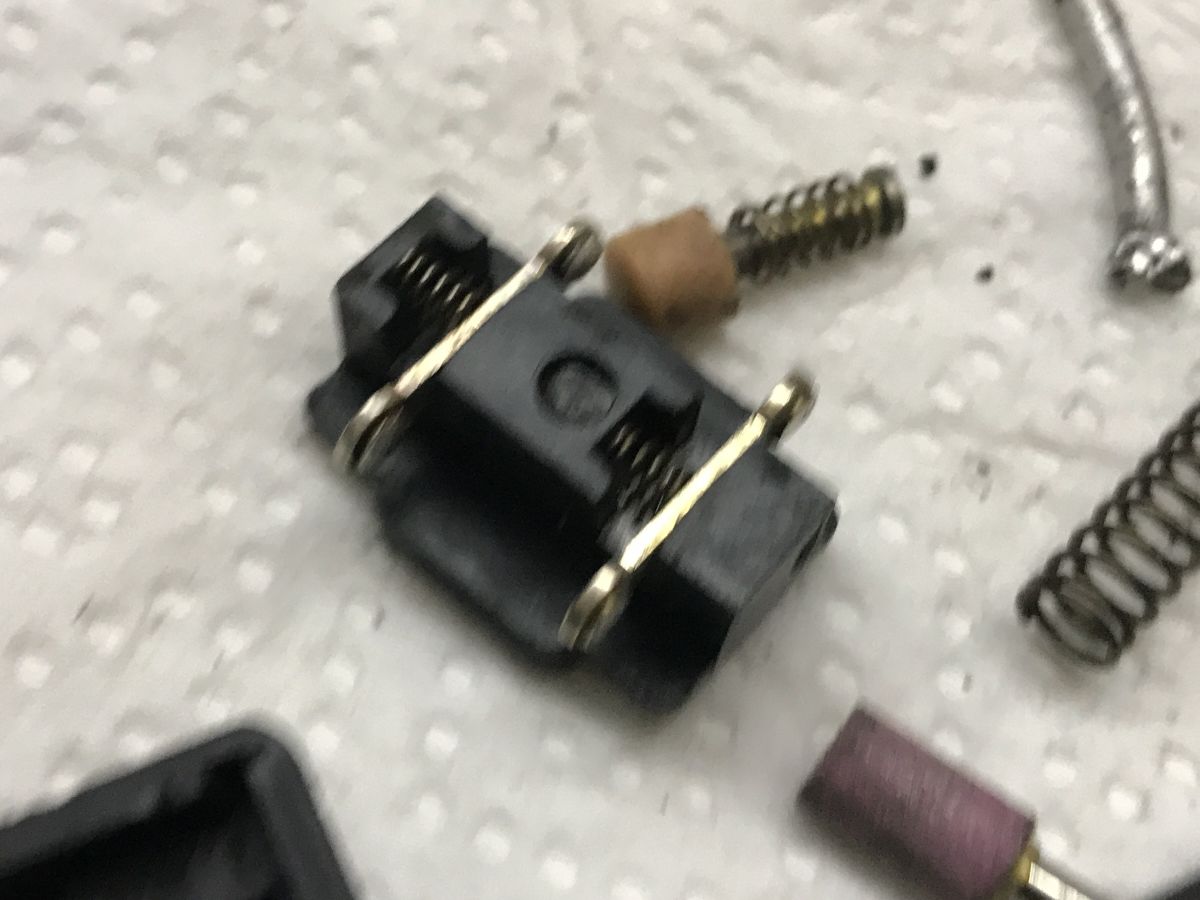
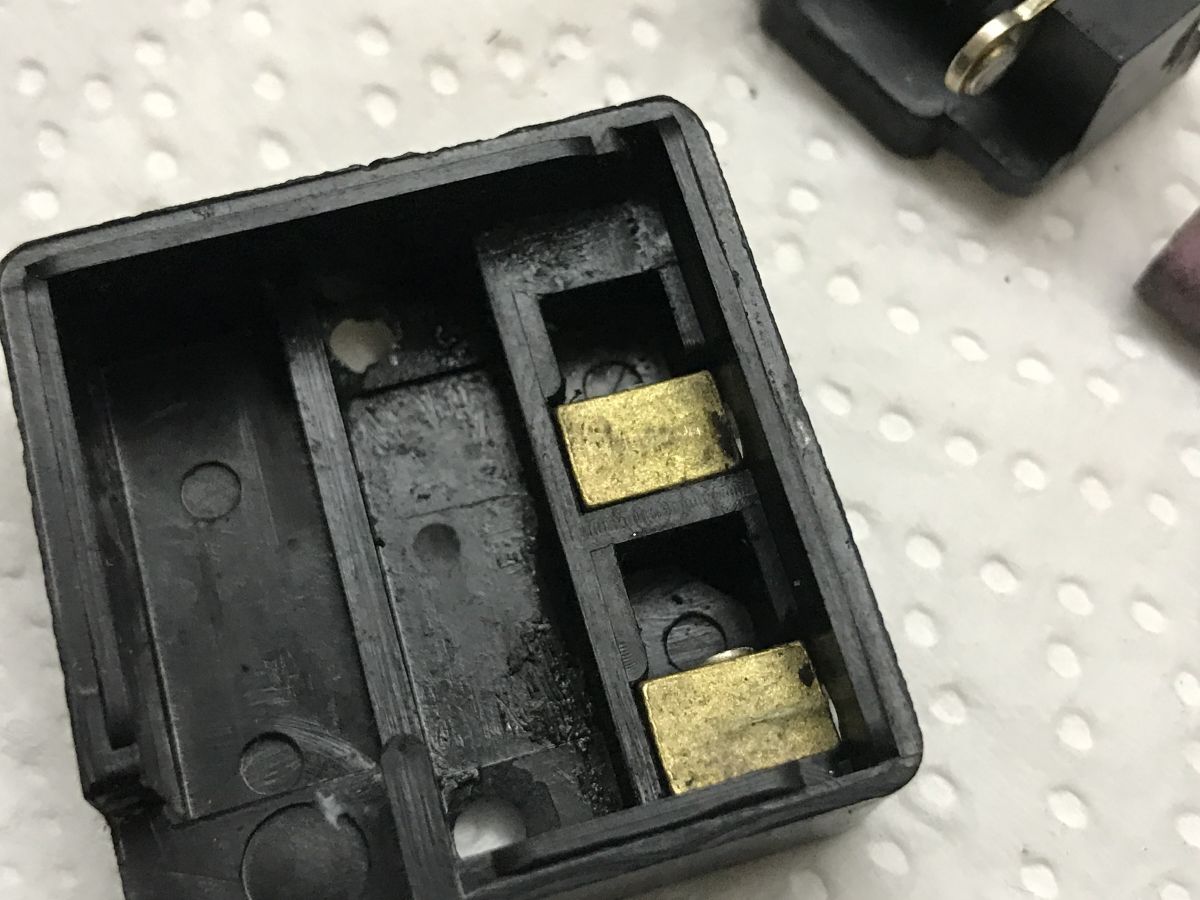
Pictured in the process of fitting the switch back on:
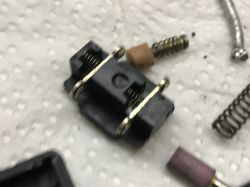
Disassembled switch from a Celma drill on a paper towel. Inside of a plastic switch casing with visible contacts.
Here a toothpick temporarily holds one of the elements for me:
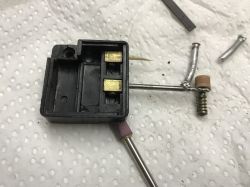
Disassembled switch of Celma PRCb drill with internal components on paper. .
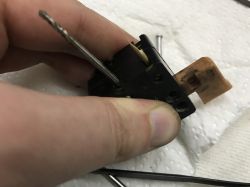
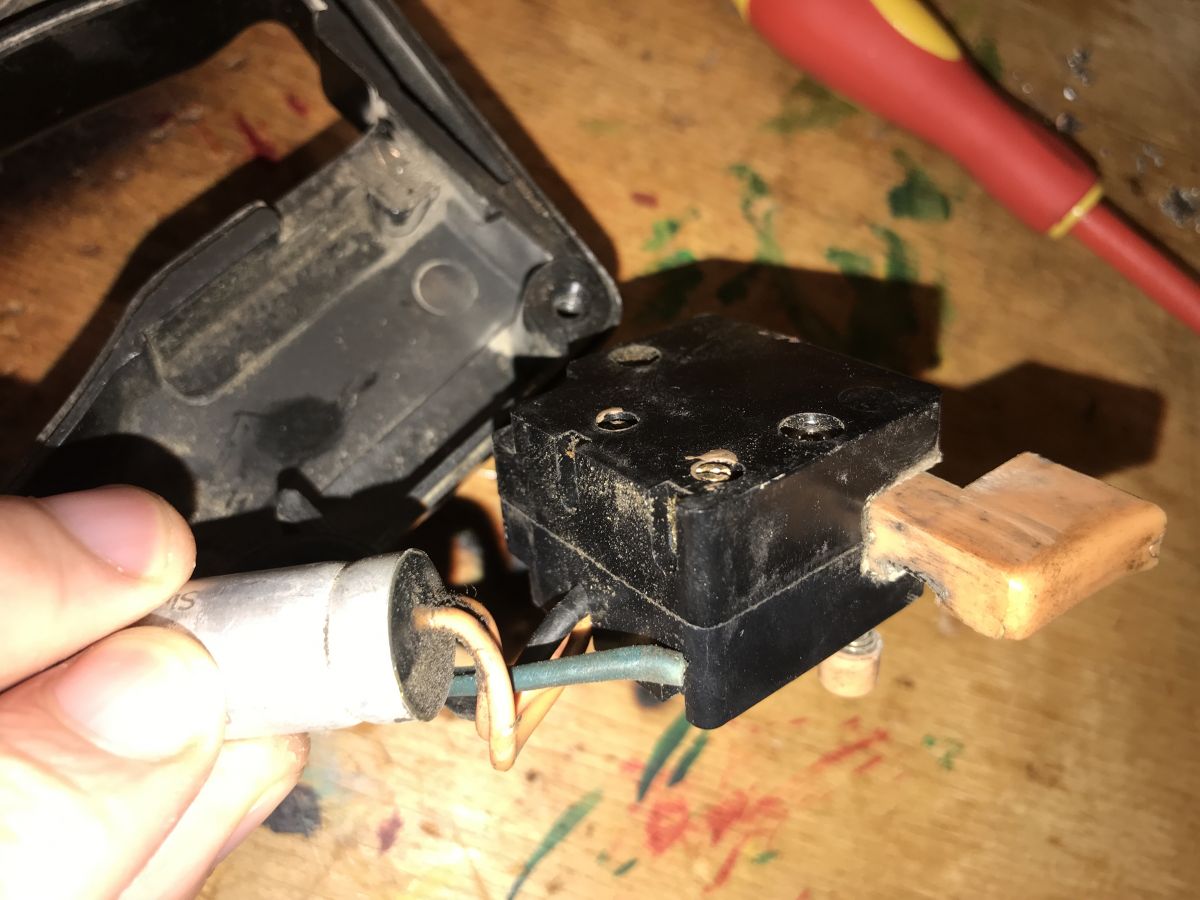
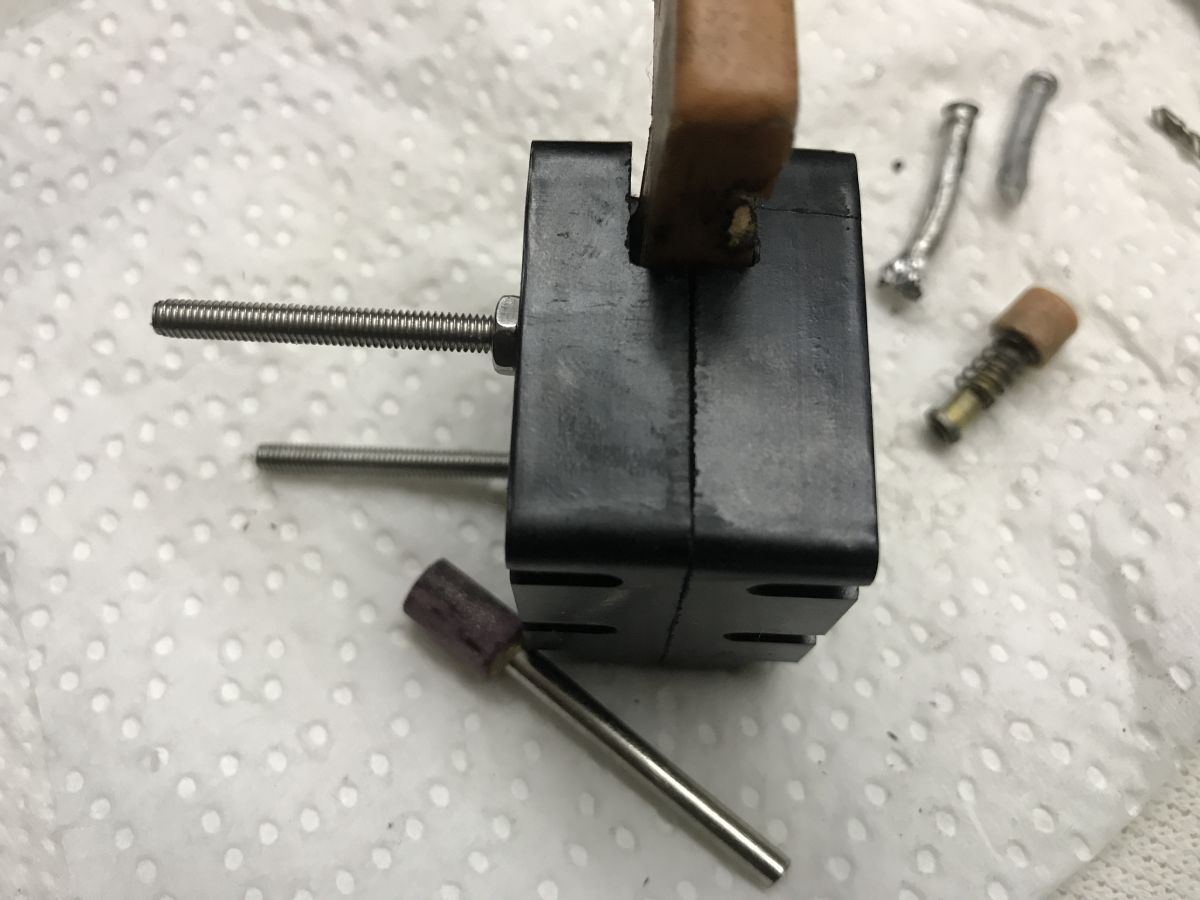
Turning:
Person holding a disassembled switch of a device on a paper towel. View of an electrical switch with protruding screws and components on a paper background. .
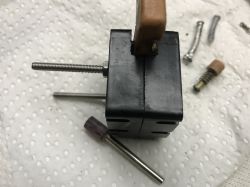
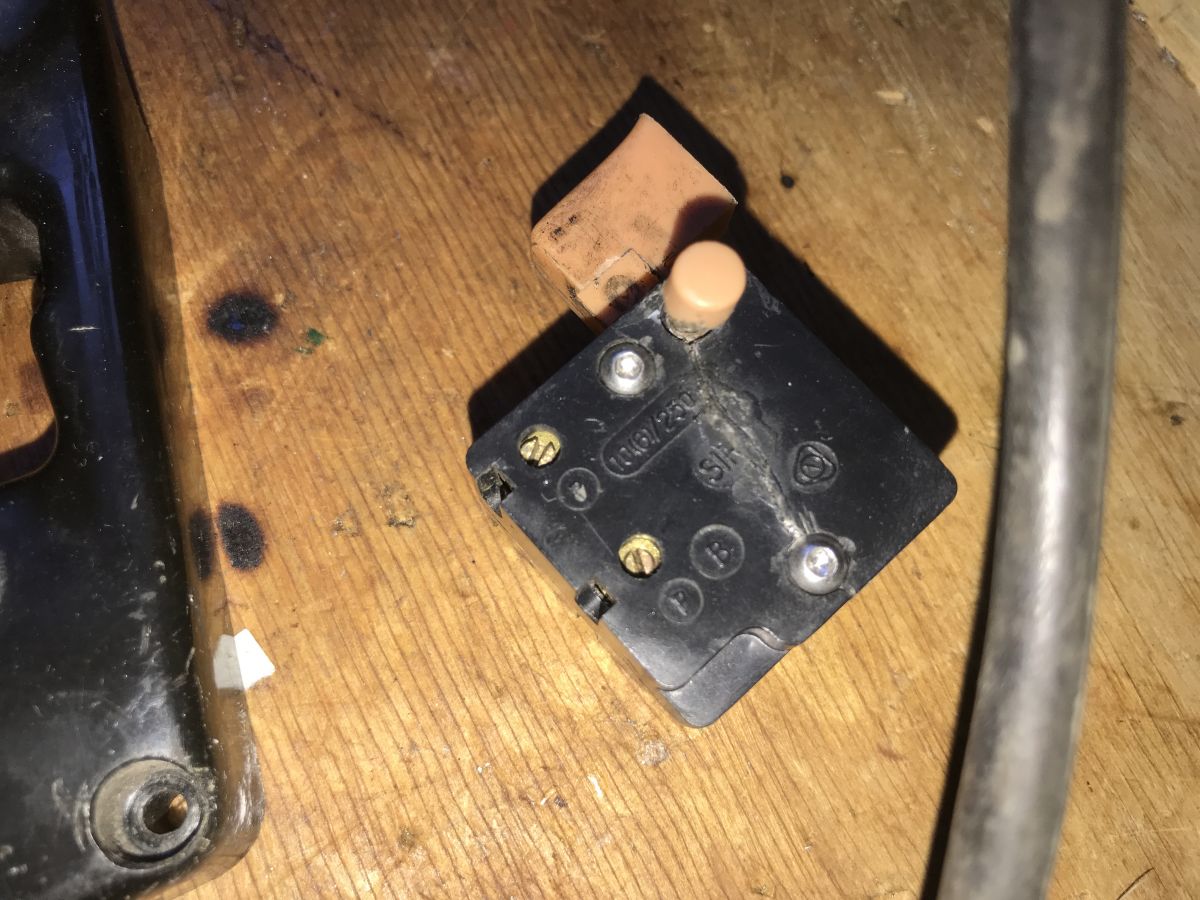
I shortened the screws, which were too long, and prevented them from dislodging with a drop of glue.
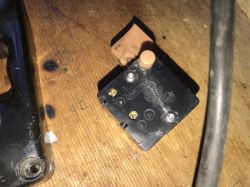
Close-up of a plastic electrical switch on a wooden table.
And all this fun was actually a bit of art for art's sake, as the switch can be bought new:

Photo of a listing for a switch for an old Celma drill, priced at 10.90 PLN. .
Nevertheless, I gave my "sculpture" a chance and success - it works ! Looks like my new old Celma is working.
By the way, I can see brushes to buy too, not bad.

Summary .
This gear is just having a blast. And you can feel that lack of control, because as you've all probably noticed, there's no adjustment here, it's a simple 'on-off' switch. So what if it works and will probably last longer than many Chinese products? And maybe I'm wrong, what are your experiences with the Celma? Is it worth investing in this find? For me personally, this is unfortunately too old a piece of equipment for me to have as I remember, so it's hard for me to determine and I just don't know enough.
Feel free to comment, any advice would certainly be appreciated.

About Author
p.kaczmarek2
p.kaczmarek2 wrote 14413 posts with rating 12366 , helped 650 times. Been with us since 2014 year.

Comments

Simon79 19 Aug 2024 18:47

In my opinion, it is ALWAYS WORTH saving an old appliance from disposal, even if it no longer has any use value but only sentimental value :) . [Read more]

p.kaczmarek2 19 Aug 2024 18:59

I think so too, and in addition I always try to upload some photos to the forum in our "Appliance Interiors" section, to which all readers are warmly invited. [Read more]

Mastertech 19 Aug 2024 19:07

The insulation will get punctures very quickly, it is the weakest point of the age-old equipment. [Read more]

chemik_16 19 Aug 2024 19:34

Nothing prevents giving a triac adjustable switch from some newer drill :) [Read more]

E8600 19 Aug 2024 19:47

Power 380 W, 580 rpm - very useful, whereas today you can find maximum rpm close to 4000 in drills. This type of drill construction is still popular today in Pakistani films of repairing various machines,... [Read more]

tompaw 19 Aug 2024 20:15

Hello Of course it is worth repairing such equipment and of course it is not museum equipment. A fortnight ago I repaired a colleague the same one, the colleague replaced the rotor because it was burnt... [Read more]

bearq 19 Aug 2024 22:32

These drills were probably made under licence from Bosch, and there were several or maybe a dozen "modules" on this basis alone. There were two types of drills with different speed ranges, there were angle... [Read more]

E8600 19 Aug 2024 23:35

. Elprom, on the other hand, is a licence probably from AEG. Elprom has 'rebranded' itself as Sparky. I wonder if this plethora of attachments for the Celma was also due to the licence or were they... [Read more]

tesla97 20 Aug 2024 07:58

. I have an old Russian drill (probably from the celma years) it has two handles on the sides but not on the top, the drill is turned with two frog keys or a hammer. It is not very powerful but its... [Read more]

lopr_pol 20 Aug 2024 10:09

My father had such a drill, I used it myself when I was young to make holes for cans in suporex ;) precisely because it was powerful and had a slow speed. [Read more]

Zbigniew Rusek 20 Aug 2024 10:56

The slow speed is advantageous when drilling in hard metals (steel, cast iron) and (if a percussion cap is fitted) - in concrete. The disadvantage of these drills was that they were about 2 times heavier... [Read more]

bulek01 20 Aug 2024 13:55

I observe that you upload a lot of cool descriptions with the demolition of old equipment. How do you manage to source them ? In my town you can't get anything from the electro rubbish collection point,... [Read more]

Inkwizycja 20 Aug 2024 18:36

I don't know maybe I'm a hoarder but I have: one like this, a similar Soviet one, 2 green Celmis, 2 East German ones similar to the Celmis and one Soviet one on the top of the range i.e. with variable... [Read more]

Zbigniew Rusek 20 Aug 2024 20:23

Too bad it's far away (Legnica). I would gladly exchange my Bulgarian for one green Celma (my Bulgarian has 1 gear and the green Celma has 2 gears, I think). [Read more]

ptero 21 Aug 2024 09:36

An old Celma is always worth saving, only that anti-interference capacitor I would replace, they tend to explode from old age. I have not found an adjustable switch that will fit without modifications.... [Read more]

Anonymous 21 Aug 2024 09:45

Oj, the "old" Celma is a beautiful invention. It has a relatively low RPM compared to modern equipment, the power may not knock you out, but the torque and instantaneous overload capability makes it an... [Read more]

tank_driver 21 Aug 2024 18:12

One thing's for sure - it's not a wrist-saving drill for working at height - dangerous. The modern ones have smaller rotors with much less inertia, not to mention wrist-saving protection (I have this on... [Read more]

PPK 21 Aug 2024 18:42

My CELMA PRC-10 (green), is almost 40 years old. It has even undergone welding of the housing plastic (handle). Brushes fitted 3 times already. Bearing replacement. Replacement of cable. Replacement of... [Read more]

Frog_Qmak 21 Aug 2024 18:53

We still have one at my parents' house :D It actually "kicks" on take-off, I hadn't noticed it before :) [Read more]

FAQ

TL;DR: A 380 W, 580 rpm Celma PRCb can still be worth reviving if you want slow-speed drilling, mixing, or bench use. One expert-style takeaway from the thread is: "It has torque." This FAQ helps buyers, restorers, and hobbyists decide what to inspect, repair, replace, and avoid before regular use. [#21196458]

Why it matters: Old Celma drills can out-pull many modern high-speed tools, but their switchgear, insulation, and wrist-safety are much worse.

Option Speed / control Best use from thread Main drawback
Celma PRCb Approx. 580 rpm, simple on-off Large holes in steel, mixing, drill stand Heavy, strong kickback
Modern Bosch / Milwaukee Up to about 4000 rpm, electronic safety Everyday handheld work Less suited to slow heavy drilling feel
Celma in drill stand Slow, controllable with stand Bench-drill style work Lower portability

Key insight: The thread treats the Celma PRCb as repairable and still useful, but only after checking insulation, switch condition, brushes, cable, and operator safety. Its value is highest for slow, high-torque jobs, not routine handheld drilling.

Quick Facts

  • The most concrete thread figure is 380 W and 580 rpm, which users describe as unusually useful for slow heavy drilling compared with modern drills nearing 4000 rpm. [#21196458]
  • One user mixed adhesive for about 160 m² of wall insulation with this type of Celma, showing strong continuous-duty behavior in real work. [#21196495]
  • Owners report successful use with drill bits around 16 mm, enlarged 13 mm shanks, and even 20–30 mm holes in thicker material when held firmly. [#21196976]
  • Flea-market pricing mentioned in the thread is roughly 20–30 zł, which makes repair attractive if the motor, gearbox, and spindle are still sound. [#21197665]

How do you safely diagnose and revive an old Celma PRCb drill before first power-up?

Start with electrical safety checks, not the plug. 1. Measure for short circuits and any leak to the metal housing. 2. Open the gearbox and inspect gears, grease, brushes, and the switch. 3. Power it only after those checks pass. The original teardown followed exactly that order and found no short to the housing, healthy-looking gears, usable brushes, and a dead switch bypassed by a previous owner. [#21196249]

What usually causes the switch to fail in a vintage Celma PRCb drill, and how can you clean or rebuild it?

The switch usually fails because dirt blocks contact surfaces and the old mechanism stops closing the circuit. The teardown found a heavily contaminated switch with no continuity on a multimeter, then restored operation by cleaning with cloth, IPA, and light abrasion. The same switch had two modes: momentary action and a lock-on pin. Rebuilding worked, but the plastic cracked during disassembly, so buying a new switch was also shown as a valid fallback. [#21196249]

Which grease should be used in the gearbox of an old Celma drill, and how often is it worth replacing?

Use fresh gearbox grease, but the thread does not name a specific product or grade. The practical takeaway is to replace old grease when you open the drill and see aged lubricant, dirt, or dry gear surfaces. The teardown judged the gears mechanically sound but flagged the grease for replacement before regular use. That makes servicing condition-based, not calendar-based: open, inspect, and renew grease whenever contamination or age is obvious. [#21196249]

How do you check whether the brushes and brush pressure parts in a Celma drill still make proper contact with the commutator?

Remove the brushes and inspect both brush length and spring pressure hardware. One repair report found the switch damaged and the brush-pressure "washers" bent, so the brushes no longer touched the commutator correctly. Another owner reported replacing brushes three times over almost 40 years, which shows they are a normal wear item. If pressure parts are crooked or weak, contact becomes intermittent even when brush carbon still looks usable. [#21196495]

What is an anti-interference capacitor in an old drill, and why do users say it should be replaced before it explodes?

Replace it as preventive maintenance. "Anti-interference capacitor" is a suppression component that reduces electrical noise on the mains, usually mounted in older power tools near the switch or supply wiring, and age makes its dielectric unstable enough to fail violently. A user who often repairs old Celma drills explicitly advised replacing this capacitor first because these old parts "tend to explode from old age." [#21198298]

What is a series motor in drills like the Celma PRCb, and why does it produce such high starting torque?

A Celma PRCb uses a series motor, which is why it feels so strong at startup and under overload. "Series motor" is a commutator motor whose field winding is connected in series with the armature, giving very high starting torque and very high overload capability, but also making runaway speed and kickback bigger risks. One poster linked the Celma’s behavior directly to this motor type, its high starting torque, and the lack of protective electronics. [#21207203]

How can you add speed control to a Celma PRCb using a triac or thyristor regulator without ruining the motor?

You can add external control, but do not assume every method is equally safe for this drill. One experienced service-related post stated these aluminum Celmas were not suitable for use with the original speed-control switch and that motors burned. Another post suggested a triac adjustable switch from a newer drill, while later replies recommended cheap thyristor regulators or soft starters as external add-ons. The safest thread consensus is: keep the original motor healthy, use external control carefully, and avoid unsupported internal conversions. [#21203498]

Celma PRCb vs a modern Bosch or Milwaukee drill — which is better for large holes in steel, mixing mortar, and everyday safe use?

The Celma is better for slow heavy work, while modern Bosch or Milwaukee tools are better for routine safe handheld use. Users praised the Celma’s 580 rpm behavior for thick steel, mixers, and big bits, but multiple posts warned about wrist injuries and poor ergonomics. Modern Bosch and Milwaukee were cited for anti-rotation clutch and AUTOSTOP-style protection. Choose Celma for torque-heavy niche tasks; choose modern tools for daily drilling, safety, and comfort. [#21207446]

Why do old low-RPM drills like the Celma feel stronger than many modern high-speed drills even when the wattage looks lower?

They feel stronger because low speed, gearing, and overload behavior put more force into the cut instead of just rpm. Thread users contrasted roughly 580 rpm Celmas with modern drills near 4000 rpm and said the older machine handles big drills, hole saws, glue mixers, and thick steel more confidently. One poster also credited the gearbox directly for that feeling of strength. Lower listed wattage does not cancel higher usable torque at low speed. [#21207424]

What safety risks do old metal-body Celma drills pose for wrists, insulation, and work at height?

They pose real kickback, insulation, and shock risks, especially on ladders or roofs. Users described blocked bits twisting hands, twisting the whole drill body, and even spinning an operator with a ladder after the bit hit rebar. Another warning was insulation aging in very old tools, especially metal-bodied ones. These risks are worse because the Celma lacks modern anti-rotation shutoff, overload clutch behavior, and ergonomic control found in newer tools. [#21207136]

How well does a Celma PRCb work in a drill stand as a bench drill compared with handheld use?

It works very well in a stand and often makes more sense there than in handheld use. Multiple posters said the drill is strong, heavy, and awkward by modern standards, but very useful when fixed in a stand for stationary work. One owner keeps his mounted permanently, replaced only brushes and gearbox grease, and reports no issue with continuous operation. The thread repeatedly treats stand use as the best way to exploit the Celma’s torque while reducing handheld kickback risk. [#21207278]

Where can you still buy replacement parts for old Celma drills, such as switches, brushes, cables, and gearbox parts?

You can still find parts from Celma-related service channels, online listings, and the secondary market. The teardown itself showed a new replacement switch for sale, and the author also found brushes available. Another poster said parts could still be sourced from the company service center in Goleszów and from Celma’s web shop, including support around old machines. Practical thread items include switches, brushes, cables, bearings, and gearbox grease-related service parts. [#21203498]

What should you inspect in an old Celma drill’s wiring and insulation after decades of storage to avoid shocks or punctures to the housing?

Inspect the power cable, internal insulation, housing leakage, and any old plasticized wire first. The opener’s first test checked for short circuit and any puncture or leak to the housing with a meter before further work. Another repair-oriented post warned specifically about old anti-interference capacitors and old plastic power cords from the communist era. If the cable is stiff, cracked, or twisted from past abuse, replace it before regular use. [#21198298]

How do external soft starters, dimmer-style speed controllers, and autotransformers affect old universal drill motors?

They reduce effective voltage and can tame startup, but they are not the same as proper modern protection. The thread explicitly says dimmer-style regulators work by clipping the AC waveform, and later clarifies that handheld drills use commutator motors rather than asynchronous motors. One owner controlled inherited Celma speed with a TaR-1.6 or TaR-2.5 lab autotransformer, while another noted modern thyristor regulators and soft starters cost only a few tens of złoty or under 20 zł. [#21207905]

How do people source old drills and other interesting tools from electro-scrap, flea markets, and service leftovers when collection points do not allow retrieval?

They usually buy from flea markets, exchanges, service leftovers, or private owners rather than from restricted collection points. One poster said interesting tools cannot be retrieved locally from electro-waste depots, while another answered indirectly by mentioning many old drills at major flea markets. A collector also wrote that he cannot ignore examples priced around 20–30 zł at markets or exchanges. In practice, the thread’s sourcing channels are flea markets, swaps, inherited tools, and service contacts. [#21197665]
Generated by the language model.
%}