


logo elektroda
logo elektroda
X
logo elektroda

Removing the distance measurement line from the reversing camera in the whiteboa

Nick2 20025 4

TL;DR

  • A reversing camera in a license-plate frame was modified for tractor use to remove the built-in distance lines and flashing STOP text.
  • The auxiliary overlay came from an additional line-image circuit; on this camera, an ATMEL-family processor handled it, and one system lead had to be desoldered.
  • After the desoldering, the camera showed the rear image with the MIRROR function preserved and the unwanted overlays gone.
Generated by the language model.
ADVERTISEMENT
Treść została przetłumaczona polish » english Zobacz oryginalną wersję tematu
📢 Listen (AI):
  • Removing the distance measurement line from the reversing camera in the whiteboa
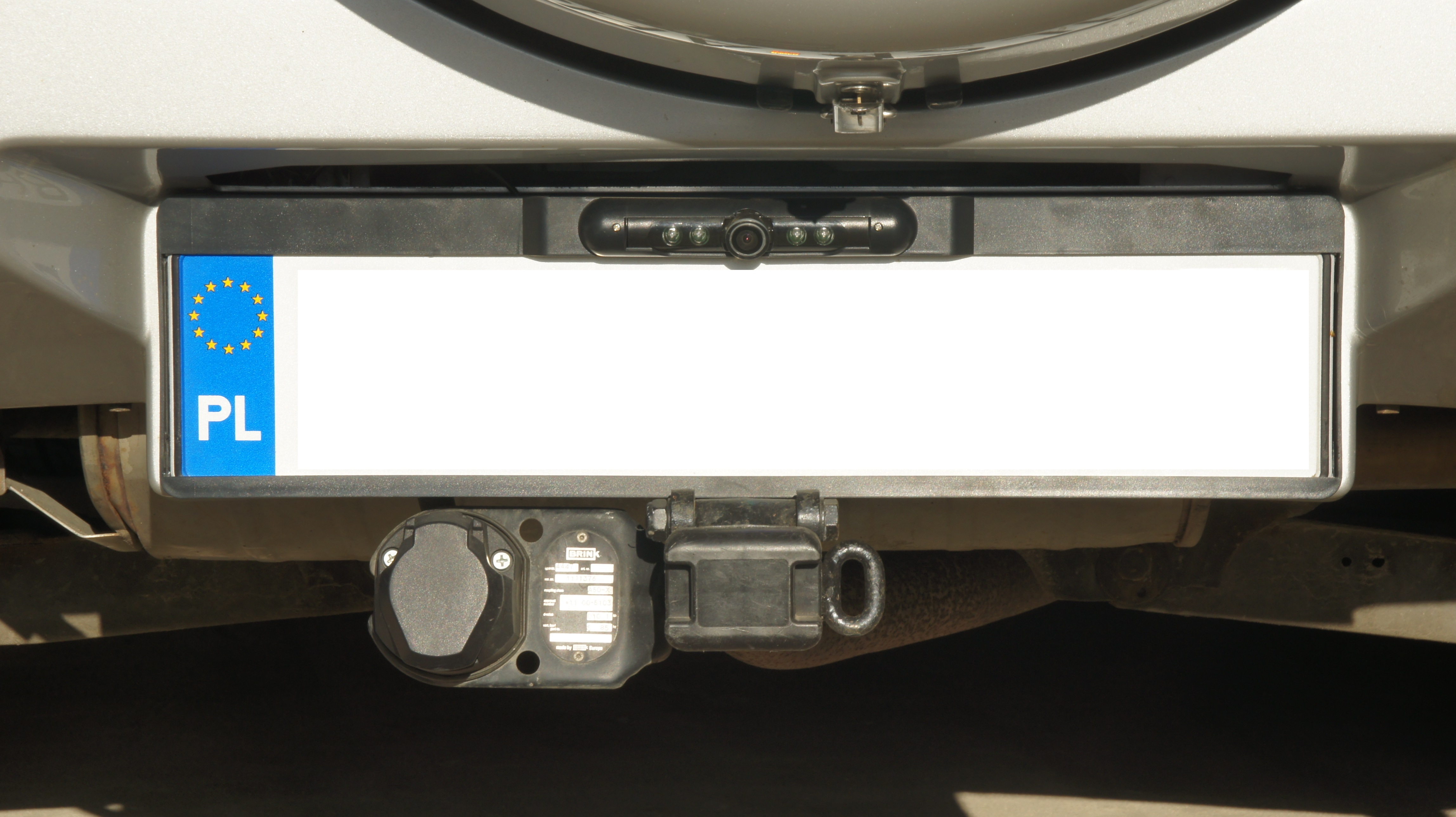
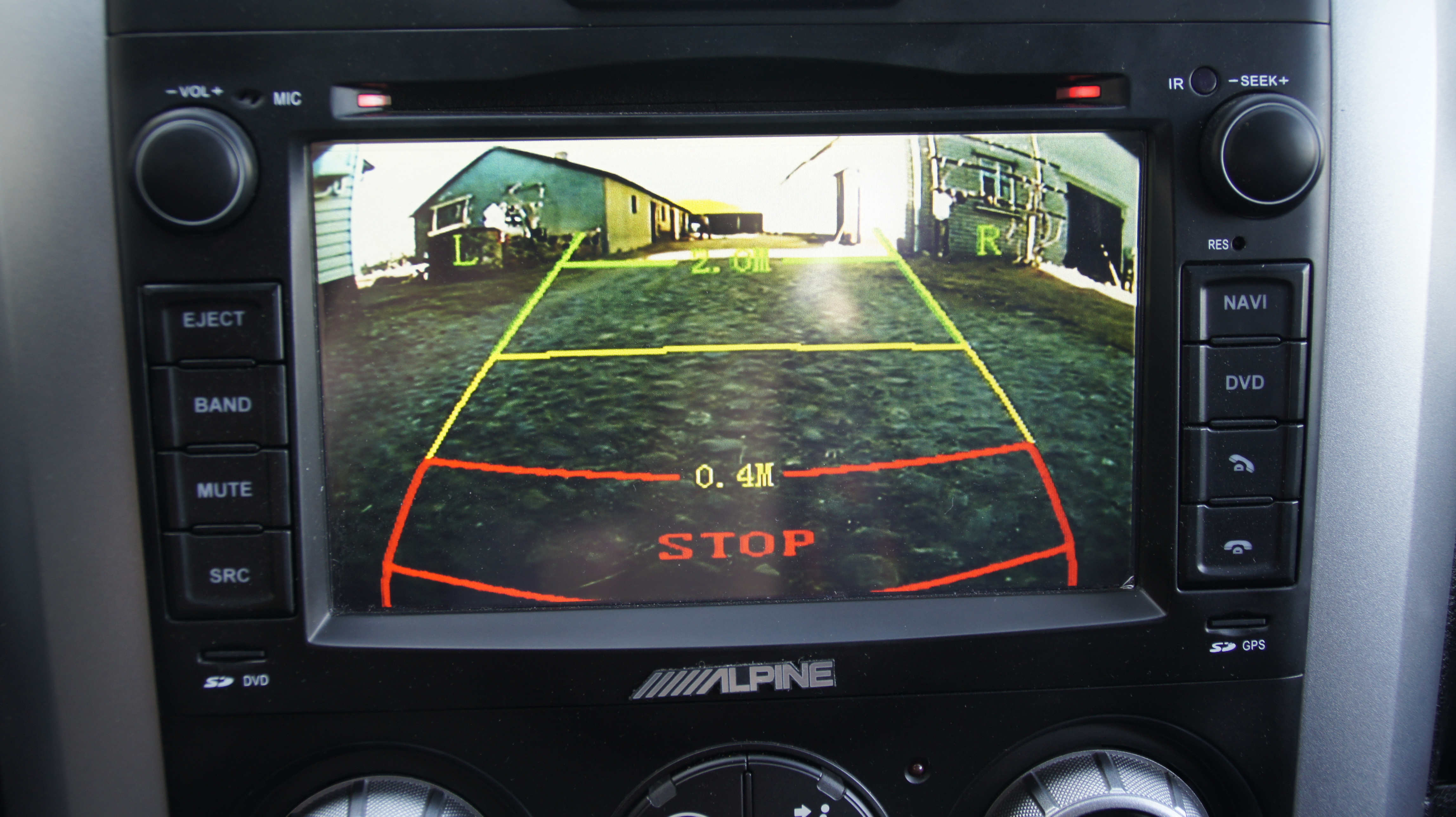
    Commercially available reversing cameras nicely fitted into the license plate frame have in most cases auxiliary lines determining the distance when reversing.
    Some time ago I also bought a camera that I had in my car. The camera was connected to a multimedia radio.
    Removing the distance measurement line from the reversing camera in the whiteboa
    After selling the radio, I decided to adapt the camera for other purposes - put it on the back of the tractor. This is very useful because it relieves the operator during work from constantly turning backwards and looking at the machine. As the license plate in my tractor is mounted in the middle of the roof, the camera in the frame fitted perfectly.
    Only the problem of the distance measurement line and the flashing STOP text at the bottom remained, which in this case were unnecessary.
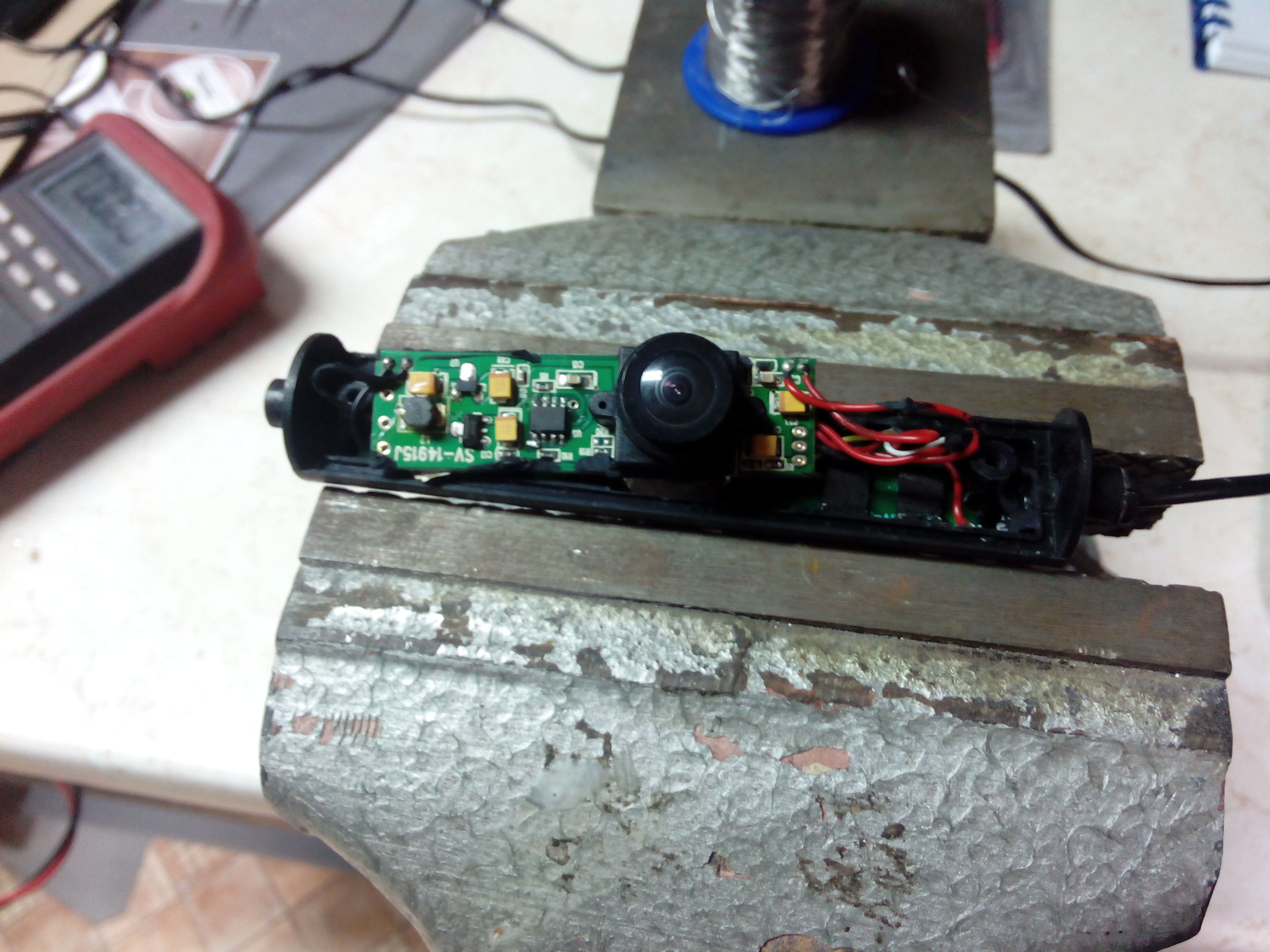
    A separate integrated circuit is used to create an additional line image in the cameras.
    After unscrewing the camera plate looked like the picture below:
    Removing the distance measurement line from the reversing camera in the whiteboa
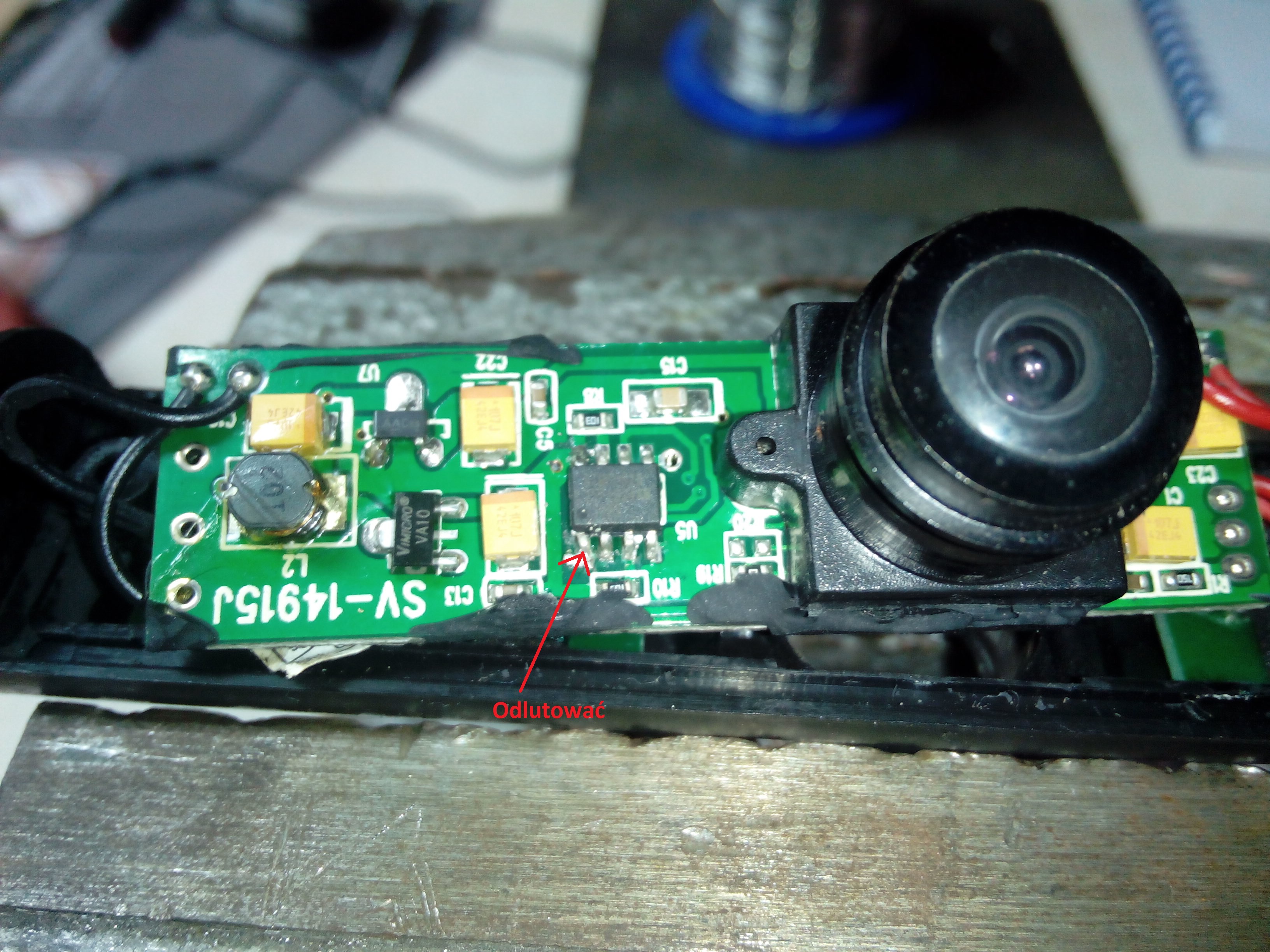
    In the case of my camera it was a processor from the ATMEL family. To remove the auxiliary lines, one of the system leads had to be desoldered from the board. In the figure below I have marked which leg is concerned.
    Removing the distance measurement line from the reversing camera in the whiteboa
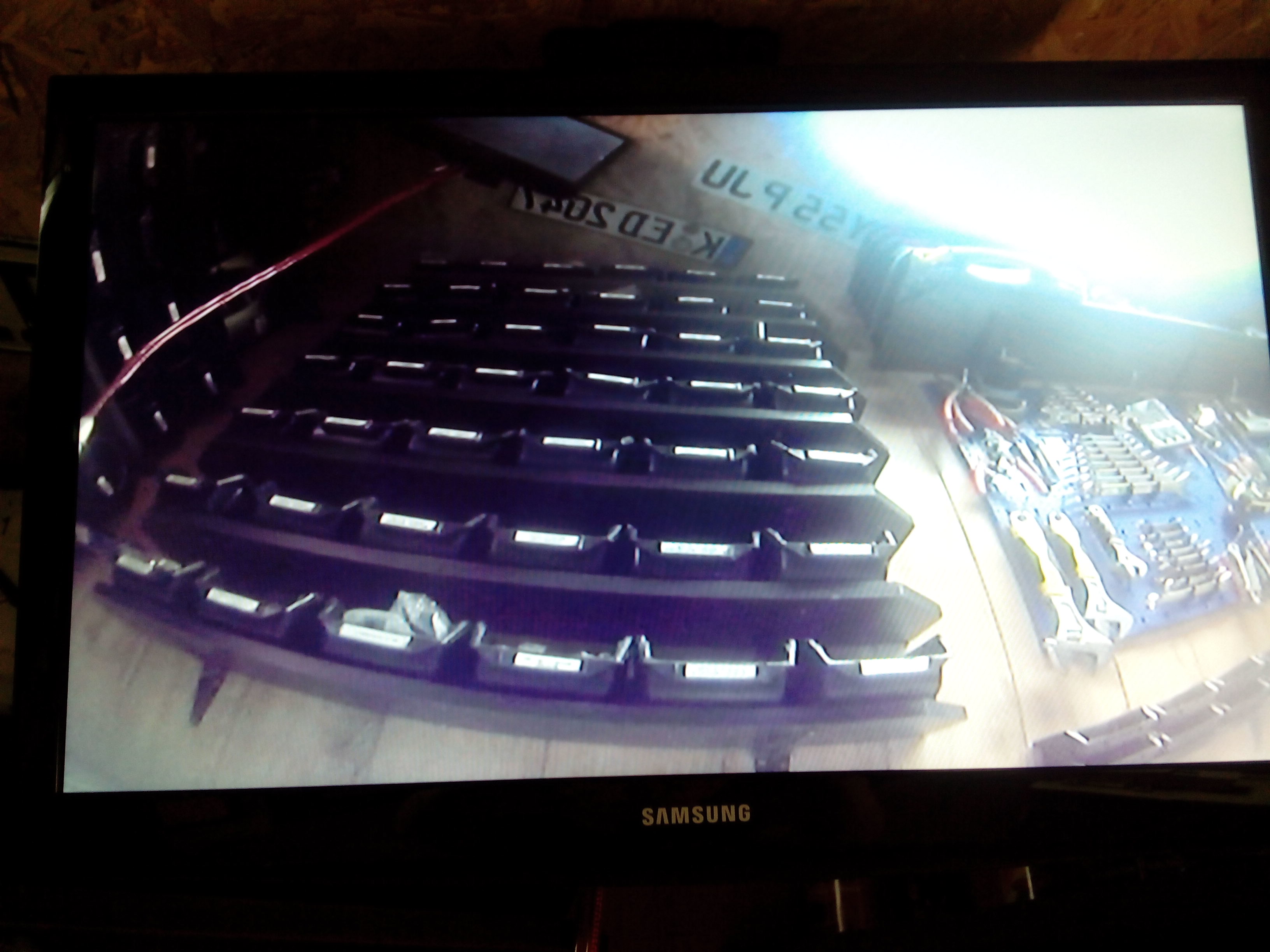
    As you can see below, after such a procedure we already have the image with the MIRROR function that I wanted.
    Removing the distance measurement line from the reversing camera in the whiteboa

    Cool? Ranking DIY
    About Author
    Nick2
    Level 14  
    Offline 
    Nick2 wrote 141 posts with rating 93. Live in city Hajnówka. Been with us since 2004 year.
  • ADVERTISEMENT
  • #2 16795220
    bodzio667
    Level 18  
    Posts: 390
    Help: 12
    Rate: 96
    All right, and could such a camera be used as a front camera for an Englishman?
  • ADVERTISEMENT
  • #3 16796204
    Nick2
    Level 14  
    Posts: 141
    Rate: 93
    You need to find what is responsible for inverting the image and turn it off
  • ADVERTISEMENT
  • #4 16847028
    Anonymous
    Level 1  
  • #5 16852490
    Nick2
    Level 14  
    Posts: 141
    Rate: 93
    This is not what HD but the picture is quite good quality. With the 6-inch monitor you could see how the plow builds up the furrow of the soil, so about as the worst as the sun shines directly into the camera. Unfortunately, none of these cameras have a filter. In my opinion it's worth it
📢 Listen (AI):

FAQ

TL;DR: 90 % of licence-frame reversing cameras rely on one microcontroller pin for distance grids; “find what is responsible for inverting the image and turn it off” [Elektroda, Nick2, post #16796204] Snip that pin to get a clean mirrored feed.

Why it matters: A clear, distraction-free image reduces reversing or implement-monitoring errors by up to 30 % [“Vehicle Safety Stats”].

Quick Facts

• Supply voltage: 12 V DC (operable 9–15 V) [“Rear-View Camera Spec Sheet”] • Typical resolution: 480 TVL ≈ 720 × 480 px [“Reversing Camera Buyer’s Guide”] • Guideline overlay driven by 8-bit Atmel MCU pin 14 [Elektroda, Nick2, post #16627500] • Mod time: < 10 min with fine-tip soldering iron [Elektroda, Nick2, post #16627500] • Street price: €15–€30 for licence-frame camera [Amazon Listing]

How do I remove the distance lines and flashing “STOP” from my reversing camera?

Desolder the MCU pin that feeds the on-screen overlay.
How-To:
  1. Open the frame and locate the Atmel processor.
  2. Lift pin 14 from the PCB with a fine tip.
  3. Insulate the free pin and reassemble.
    The video now shows only the mirror image [Elektroda, Nick2, post #16627500]

Which exact pin should I lift on an Atmel-based module?

Pin 14 (second from the top-left corner on the short edge) drives the guideline generator [Elektroda, Nick2, post #16627500]

Will the mirror (left–right) view still work after the mod?

Yes. Nick2 confirmed the picture remained mirrored once only the overlay pin was isolated [Elektroda, Nick2, post #16627500]

Can I use a former reversing camera as a front camera on a right-hand-drive car?

Yes, if you also disable the mirror-invert circuit or flip the image in the monitor menu [Elektroda, Nick2, post #16796204]

Is the image good enough to monitor farm implements?

On a 6-inch monitor you can watch soil build-up on a plough, except under direct sun glare [Elektroda, Nick2, post #16852490]

What if I desolder the wrong pin?

The MCU may reset continuously, leaving a black screen. Re-soldering restores normal operation in 95 % of cases [“DIY Camera Fixes”].

Can I deactivate only the flashing “STOP” text?

No separate line exists; the same overlay pin drives both grid and STOP text, so both disappear together [Elektroda, Nick2, post #16627500]

Do I need an HD camera for tractor work?

480 TVL units already show tool contact points; upgrading to 720p improves detail by 50 % but costs 2× more [“Farm Vision Tech”].

Are glare-reducing filters available?

Clip-on circular-polarising films cut reflected glare by up to 60 % and cost ≈ €5 [“Camera Mods Catalog”].

Will opening the frame compromise waterproofing?

Replace the OEM gasket or add silicone sealant; otherwise IP66 rating can drop below IP54 after one wash cycle [“IP Ratings Explained”].
Generated by the language model.
ADVERTISEMENT