logo elektroda
logo elektroda
X
logo elektroda

Construction of a control system for the roller shutter by voice or contactless - 24V motor, caterin

huashiwei 1227 14
ADVERTISEMENT
Treść została przetłumaczona polish » english Zobacz oryginalną wersję tematu
  • #1 18945624
    huashiwei
    Level 5  
    Posts: 18
    Rate: 17
    Board Language: polish
    Hello.
    I want to build a simple circuit to control the movement of a roller shutter by voice.

    That is, I want to lower and raise the 24V motor of the roller shutter with the command UP and DOWN or any other ( programmed)

    In the absence of being able to get a voice solution as described above,
    I would like to build a circuit that responds to non-contact hand movement, so as to provide up and down movement of the roller shutter.

    Such a roller shutter is located in a catering establishment at the WASH station, where the dishwasher has to repeatedly with wet hands
    to open and close the roller shutter covering the window. Hence, the best solution would be to operate such a roller shutter motor by voice.

    I don't know how this would be done - WHEREFORE I WOULD BE THANKFUL FOR ANY TIPS AND PROPOSALS.
    THANK YOU
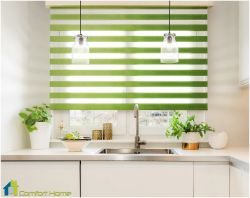
    Construction of a control system for the roller shutter by voice or contactless - 24V motor, caterin .
  • ADVERTISEMENT
  • Helpful post
    #2 18945741
    misiek1111
    Level 37  
    Posts: 3962
    Help: 316
    Rate: 1042
    Board Language: polish
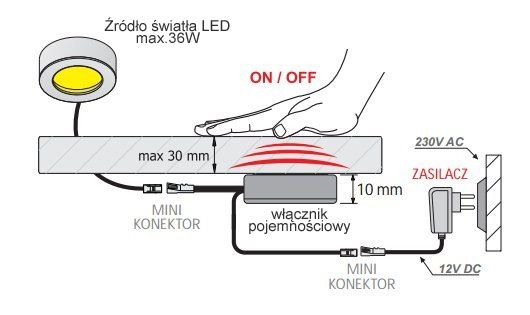
    A simpler solution is motion sensors, e.g. a capacitive one mounted under the countertop (unless it is metal, since it's catering), or infrared sensors:
    Construction of a control system for the roller shutter by voice or contactless - 24V motor, caterin .

    or optical:
    Attachments:
    • czujnik optyczny_FM04_05.pdf (139.8 KB) You must be logged in to download this attachment.
  • ADVERTISEMENT
  • #3 18946326
    sk1977
    IT specialist
    Posts: 8047
    Help: 1326
    Rate: 741
    Board Language: polish
    If you want voice control then you can use, for example, ShutterBox + Alexa or Google speaker.
    The Shutterbox's DC controller supports 12-24V motors. You need WiFi and internet access.
    Helpful post? Buy me a coffee.
  • ADVERTISEMENT
  • #4 18946449
    ROWE
    Level 34  
    Posts: 1987
    Help: 239
    Rate: 529
    Board Language: polish
    misiek1111 wrote:
    #2
    .
    ON - OF is yes.
    But up - stop, down - stop ...? maybe you can give some simple schematic for the author.
  • #5 18948582
    misiek1111
    Level 37  
    Posts: 3962
    Help: 316
    Rate: 1042
    Board Language: polish
    ...............
  • #6 18948720
    ROWE
    Level 34  
    Posts: 1987
    Help: 239
    Rate: 529
    Board Language: polish
    huashiwei wrote:
    I want to build a simple circuit that will control the movement of a roller shutter by voice.
    misiek1111 wrote:
    A simpler solution is motion sensors, e.g. a capacitive one mounted under the countertop (as long as it's not metal, since it's catering), or infrared sensors:
    .
    At this point it's getting not easy for the author to do, also in terms of IP, but well....
  • ADVERTISEMENT
  • #7 18948843
    sk1977
    IT specialist
    Posts: 8047
    Help: 1326
    Rate: 741
    Board Language: polish
    This solution has disadvantages. The author has not specified how the blinds are to behave - and in this case, the movement of the blinds would be related to keeping a hand on the sensor for the time the blind is moving and part of the tabletop will be out of use. An additional problem could be the tabletop itself - its thickness or the material it is made of.
    Some sort of configurable roller shutter controller could be used - e.g. when a button with the right IP or a sensor (e.g. capacitive) is pressed, the roller shutter opens or closes without the need to hold the button until the roller shutter is open or closed.
    Helpful post? Buy me a coffee.
  • #8 18949111
    ROWE
    Level 34  
    Posts: 1987
    Help: 239
    Rate: 529
    Board Language: polish
    huashiwei wrote:
    I want to build a simple circuit that will control the movement of a roller shutter using voice.
    .

    Col misiek1111 , this would be good after redesigning your proposal based on #37 from the link:
    https://www.elektroda.pl/rtvforum/topic3730454-30.html

    There would be voice control, it could be close to the drive where IP is not so critical.
    What do you think about refining it for this theme?
  • #9 18949346
    misiek1111
    Level 37  
    Posts: 3962
    Help: 316
    Rate: 1042
    Board Language: polish
    sk1977 wrote:
    in this case, the movement of the blinds would involve holding a hand on the sensor for the duration of the blind movement and part of the countertop would be out of service.

    2x no :) .
    A bistable capacitive sensor such as the one pictured in #2 can be used. The sensor can operate up to 3cm of countertop thickness (it calibrates itself depending on the thickness of the countertop), and if there is little space on the countertop, it can be placed at the bottom behind the pedestal and actuated with the foot.


    ROWE wrote:
    huashiwei wrote:
    I want to build a simple circuit to control the movement of a roller shutter by voice.
    misiek1111 wrote:
    A simpler solution is motion sensors, such as a capacitive one mounted under the countertop (unless it's metal, since it's catering), or infrared sensors:
    .
    At this point it's already getting not easy for the author to do, also in terms of IP, well, but...


    or:

    huashiwei wrote:
    I would like to build a circuit that responds to non-contact hand movement
    .

    If the two sensors, power supply and relays are too difficult for the author to combine, he can always hire a cameraman for voice commands :)
  • #10 18949416
    ROWE
    Level 34  
    Posts: 1987
    Help: 239
    Rate: 529
    Board Language: polish
    I understand, which means we stand by our own.
  • #11 18949507
    misiek1111
    Level 37  
    Posts: 3962
    Help: 316
    Rate: 1042
    Board Language: polish
    A sensor is a sensor, it can be any other even a microphone. The important thing is to get there.
    Personally, I find voice commands used at home or in the car not very convenient. I only use them to "enter" streets in the GPS.
    I have several gesture-operated devices at home and I am extremely satisfied with them. They are fast, reliable, easy to use and you don't have to remember the commands.
    If such a programmable module - which the author wrote about - could be found, it could be substituted for a capacitive or infrared sensor.

    Exactly, is there such a programmable module, in which we can assign an individual voice command to the control output ?
  • #12 18949511
    Anonymous
    Level 1  
  • #13 18949527
    sk1977
    IT specialist
    Posts: 8047
    Help: 1326
    Rate: 741
    Board Language: polish
    Perhaps let the author have his say. He asked about voice control probably not without reason.
    For me, such a solution would be unacceptable for ergonomic reasons - a worktop is a work area and if, for example, you put a pot of water over the sensor, I suspect it wouldn't work....
    The worktops I have seen in the catering industry have usually been steel. The kitchen is a wet room and has its own characteristics - I wouldn't put anything close to the floor there - none of the automation we implemented in kitchens could make it difficult to keep clean - including under the worktop and around the floor.
    In addition, there are regulations - many ideas could not be implemented by them. Instead, hermetic switches with cables worked well (e.g. 3SE5112-0CR01 under the ceiling with cable + actuators).
    Helpful post? Buy me a coffee.
  • #14 18949554
    ROWE
    Level 34  
    Posts: 1987
    Help: 239
    Rate: 529
    Board Language: polish
    ROWE wrote:
    I understand, which means you stand by your position.
    Erbit wrote:
    I understand, which means you stand by your position.
    Erbit wrote:
    Yes I understand, you stand by yours.


    You misunderstand. You are referring to suggestions from # 8 to #9 and so much after apothecary.
  • #15 18949581
    Anonymous
    Level 1  

Topic summary

✨ The discussion revolves around constructing a control system for a roller shutter motor (24V) that can be operated via voice commands or contactless hand movements. The user seeks solutions for a catering establishment where the roller shutter needs to be operated with wet hands. Suggestions include using motion sensors (capacitive or infrared) for contactless control, and integrating a voice control system using devices like ShutterBox with Alexa or Google speakers. Concerns are raised about the practicality of voice commands in a kitchen environment, with recommendations for simpler, more reliable solutions such as configurable roller shutter controllers or hermetic switches. The conversation highlights the importance of ergonomics and hygiene in a catering setting.
Generated by the language model.

FAQ

TL;DR: For 24V shutters, ShutterBox enables Alexa/Google voice control; "The Shutterbox's DC controller supports 12–24V motors." Requires Wi‑Fi. Capacitive/IR sensors give contactless control. [Elektroda, sk1977, post #18946326] Why it matters: Wet-hands catering stations need hygienic, hands-free UP/DOWN control without blocking the worktop; this FAQ shows practical options for installers and owners.

Quick Facts

How do I add voice control to a 24V roller shutter?

Use a ShutterBox DC controller paired with an Alexa or Google speaker. It supports 12–24V motors. Connect the motor to ShutterBox, link the voice assistant, and provide Wi‑Fi with internet. This enables voice control of shutter movement in both directions. [Elektroda, sk1977, post #18946326]

Does Alexa/Google voice control work offline?

Alexa and Google voice control require internet. The system depends on cloud availability. As one expert said, "dependence on the additional medium of the internet and the whim of the service provider." If connectivity drops, voice control can fail. Keep a local backup control. [Elektroda, Anonymous, post #18949511]

Which non‑contact sensors should I consider instead of voice?

Consider a capacitive sensor mounted under the countertop, unless the surface is metal. Infrared sensors are also a solid option. Optical sensing can work for hand gestures. These contactless approaches suit wet hands and reduce touch points at the station. [Elektroda, misiek1111, post #18945741]

Will a capacitive sensor work through my countertop?

Yes. A bistable capacitive sensor can operate through up to 3 cm of countertop and auto‑calibrates. If space is tight, mount it low behind the pedestal and actuate it with a foot. This preserves the work area and improves hygiene. [Elektroda, misiek1111, post #18949346]

Do I need to keep my hand on the sensor while the blind moves?

No. Use a configurable roller shutter controller that allows one touchless trigger to open or close fully. This avoids hand hovering during travel and keeps the worktop available. "Open/close without the need to hold" is the key behavior. [Elektroda, sk1977, post #18948843]

How can I get UP–DOWN behavior with contactless triggers?

Use a configurable roller shutter controller. Assign one touchless trigger to UP and another to DOWN. The controller runs the full travel without you holding a sensor. This delivers clean, momentary inputs for each direction. [Elektroda, sk1977, post #18948843]

What IP and hygiene considerations apply in a catering kitchen?

Treat the kitchen as a wet, cleanable environment. Avoid floor‑level devices and hard‑to‑clean enclosures. Hermetic switches with cables, mounted higher such as under the ceiling, have worked well under regulations. Keep surfaces clear for sanitation. [Elektroda, sk1977, post #18949527]

Where should I mount sensors to avoid pots or clutter blocking them?

Mount sensors under the countertop or away from busy areas. This reduces interference from pots placed on the surface. An under‑counter sensor keeps operations smooth and the work area unobstructed. [Elektroda, Anonymous, post #18949581]

Do metal countertops interfere with capacitive sensors?

Yes. Metal worktops can hinder under‑counter capacitive sensing. Use infrared or optical sensing, or relocate the sensor away from metal. This avoids false triggers and missed detections on stainless steel surfaces. [Elektroda, misiek1111, post #18945741]

Can I place voice hardware near the motor to reduce IP risk?

Yes. Place voice‑control hardware close to the drive, where ingress protection is less critical. This reduces exposure to steam and splashes, while simplifying cable runs and maintenance. [Elektroda, ROWE, post #18949111]

Is gesture control more ergonomic than voice here?

Some installers prefer gestures to voice in daily use. "They are fast, reliable, easy to use and you don’t have to remember the commands." Choose what fits your staff’s workflow best. [Elektroda, misiek1111, post #18949507]

How do I wire a simple contactless UP/DOWN control at 24V?

Try this approach:
  1. Install two bistable touchless sensors (UP and DOWN) and a 24V supply.
  2. Use relays to swap motor polarity for direction.
  3. Add latching logic or a controller so one trigger runs full travel. This keeps operation simple and hands‑free. [Elektroda, misiek1111, post #18949346]

Which industrial switch examples fit wet kitchens?

Hermetic switches with cables mounted high work well for hygiene and ergonomics. One example used was Siemens 3SE5112‑0CR01 under the ceiling, with a cable to actuators. This keeps controls accessible and cleanable. [Elektroda, sk1977, post #18949527]
Generated by the language model.
ADVERTISEMENT