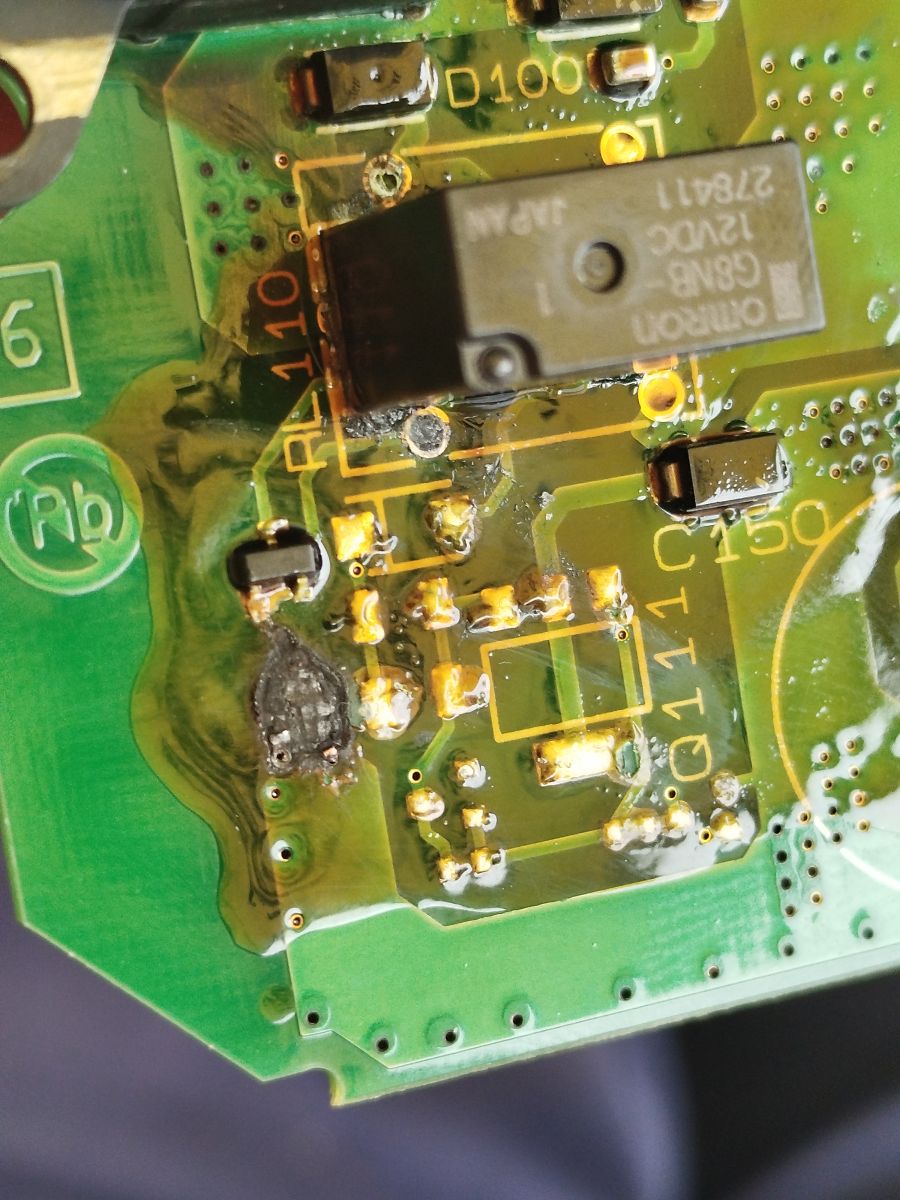
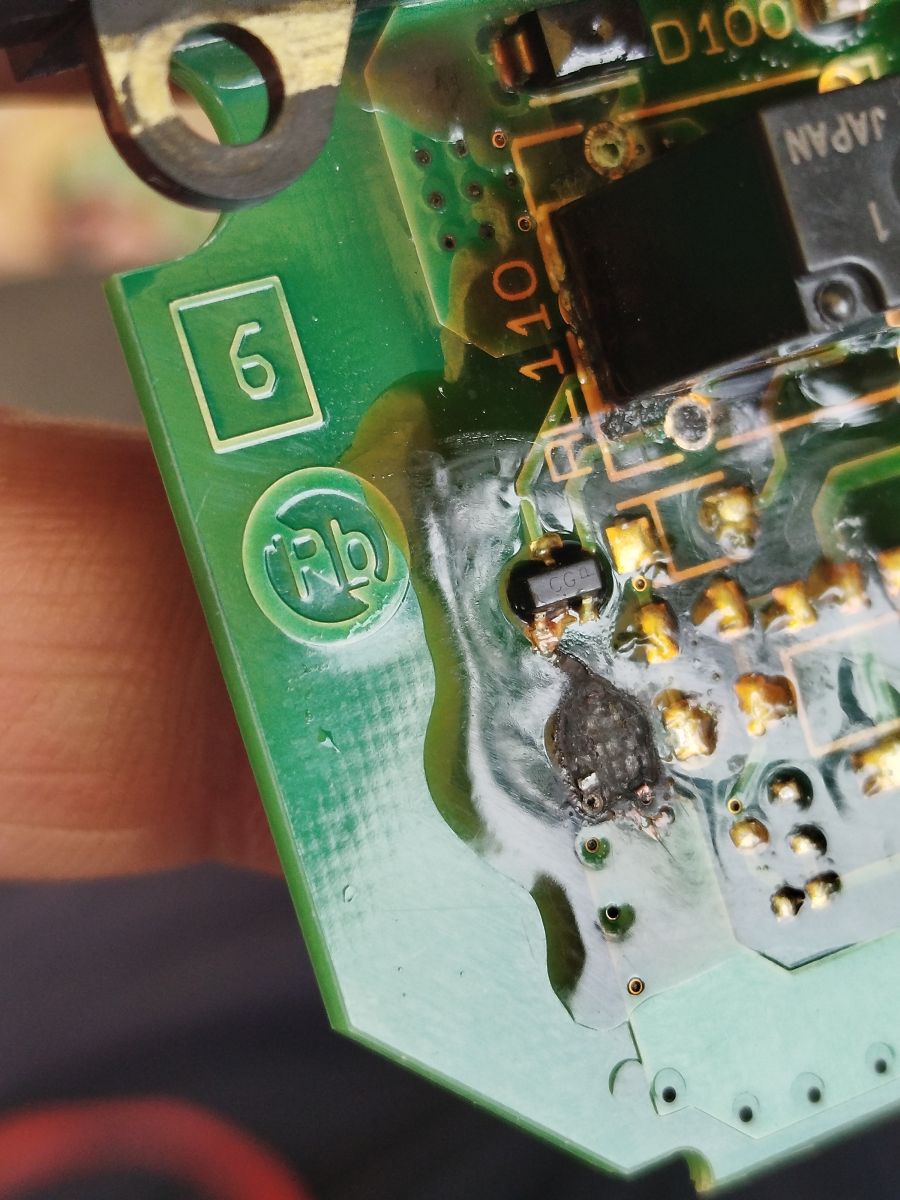
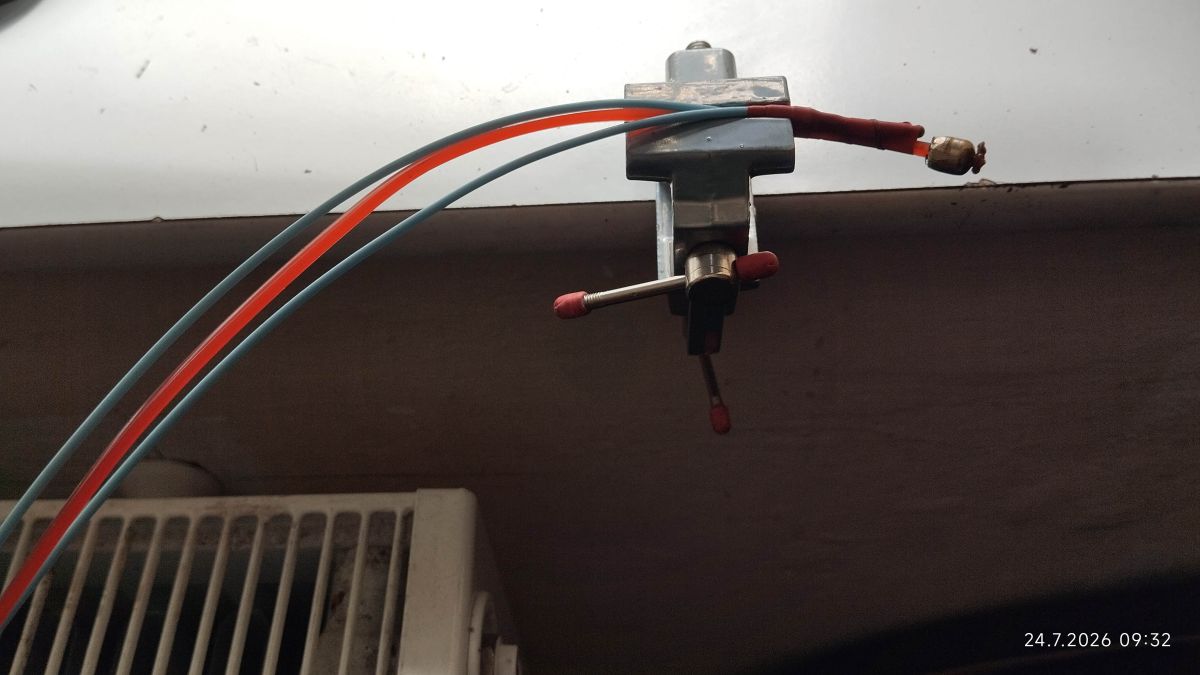
>>21921115 OK, I think I’m starting to get the hang of how it works… I reckon Gemini AI has really helped me out here, I could paste it here, but I think I’d be cluttering up the forum, so I’ll just paste a snippet – but it makes sense, i.e. that component on the heater isn’t actively involved in controlling it, which is why soldering in a resistor or thermistor ‘works’.
Gemini:
The component you’re asking about (a distinctive, elongated, metal part soldered directly onto the flexible or rigid heating plate in PSA Group – Peugeot/Citroën – AdBlue tanks) is a thermal fuse (thermal cut-out), not a temperature sensor.
Here is a detailed explanation of its role and the difference between these components in this specific system:
1. What is this component responsible for?
It is a reusable (bimetallic) thermal protection device or a single-use thermal fuse. Its main task is to protect the plastic tank and the heating mat itself from melting or fire in the event of a controller failure.
If, for any reason (e.g. a relay malfunction or software error), the system were to supply a continuous current to the heater, the temperature could rise to a dangerous level. When the temperature exceeds a certain threshold (usually around 70–80°C), this fuse disconnects the heater’s power circuit, cutting off the current supply.
2. Why is this NOT a temperature sensor?
Temperature sensor (NTC/PTC): Used to continuously measure the fluid temperature and transmit this data to the controller (indicating, for example, whether the fluid is at -5°C and the heater needs to be switched on, or whether it is already at +15°C and can be switched off). In PSA tanks, the temperature sensor is usually a tiny, black or blue component (often a drop-shaped thermistor) soldered onto a different part of the board or integrated directly into the wiring harness/level sensor.
Thermal fuse: Operates on a binary basis (closed/open). It does not measure the temperature value, but merely reacts to a critical rise in temperature.
A common problem in Peugeot / Citroën cars (error P20C2 and related)
This component is very often damaged by corrosion (AdBlue fluid is extremely corrosive and penetrates the circuit board through micro-leaks) or simply blows due to age.
When this fuse blows or corrodes, the heater circuit is permanently interrupted. The engine control unit immediately detects the break in the heater circuit, resulting in:
1 The "Urea" / "Engine Management" warning light coming on.
2 A message counting down the kilometres until the engine start is blocked.
3 The heater-related faults being logged in the memory (e.g. P20C2 – heater control, open circuit).
Inserting a 10 kΩ thermistor in place of the thermal fuse and placing it in the duct is extremely dangerous and carries a huge risk of melting the tank or even causing a car fire.
Unfortunately, there are many misleading guides on this subject circulating online, which stem from confusing two different components. Here’s why this solution is a ticking time bomb:
1. Complete confusion of component functions
You are replacing a fuse (emergency cut-off switch) with a measuring component (sensor).
A thermal fuse acts as a protective shield – in the event of a fault, it cuts off the power so that the heater does not heat up indefinitely.
A 10 kΩ thermistor is a resistor whose resistance changes with temperature. It cannot cut off the power. Worse still, if you solder it in series into the heater’s power circuit, it will burn out very quickly, because it is not designed to carry high currents (the heater draws several amps, whereas a small thermistor can only handle fractions of an amp).
2. Why does this risk melting the tank?
The heating mat in the AdBlue tank is very powerful. If the controller (computer) fails and gets stuck in the ‘continuous heating’ mode, the heater will operate non-stop.
Under normal conditions, a thermal fuse would cut the circuit at around 75°C. If you fit a thermistor (or a simple ‘short-circuit’ jumper) in its place, the heater will have no protection whatsoever. The temperature of the plastic inside the tank will quickly exceed 100°C–150°C. The tank’s plastic will start to melt, AdBlue fluid will leak onto the electrical system, leading to a short circuit and a potential fire.
This is about a quarter of what I managed to get out of Gemini
Conclusions: does the power supply to the heater flow through this circuit (yellow cables) and is the thermal fuse part of this circuit? If we bypass it by soldering in a thermistor or another resistor, we are simply bypassing this safety feature and have no protection in the event of a control failure – whether from the AdBlue module or a MOSFET failure – and the heater remains on a constant power supply.
The temperature we see on the diagnostic boxes probably comes from that second thermistor, which is slightly away from the heater itself, and that’s what got me thinking... why would there be two thermistors in the tank? According to AI, the component we’re replacing isn’t a thermistor... And the bimetallic temperature fuse – it doesn’t read the temperature, so it’s no use to us checking it in the DB. Ah, it reads 22°C after soldering in the thermistor... and that it’s OK.
In the event of errors or faults, Diagbox shows 0, but I assume this is simply the result of the entire system being put on hold and does not mean that it was a faulty reading from the ‘thermistor on the heater’ and once, for example, a resistor has been soldered in, the module doesn’t detect the faulty resistance from the damaged fuse, so it assumes everything is OK, and this actual thermistor, located away from the heater, can once again display the correct temperature - does this mean that it is the thermistor we have just soldered in that is showing this, because it has probably only been soldered by us into the heater’s power supply circuit and does not actually perform any measurement functions?
Gemini states that the heater’s power supply is a PWM signal and that in the event of a controller failure or a transistor short-circuit in the module, a constant 12V supply is provided – which, with our heater safety bypass... unfortunately, would result in... THE TANK MELTING AND A POSSIBLE CAR FIRE!!!! /the heater burning out.
So, at the end of the day... if, after this repair, everything else in the AdBlue tank is OK – i.e. the heater control – that’s great, but if the electronics fail, the car could catch fire... and lead to a tragedy.
I had another look at the photo of the heater and it contradicts what Ai suggested, namely that this "temperature fuse" is directly in the heater's power circuit, because I can see in the photo two wires – blue and green – connected to the heater's circuit, and this temperature sensor/ fuse has its own two yellow wires. Now I’m not sure if everything I’ve posted above is just speculation, and what the actual role of this component in the heater is.
IMPORTANT!!
I don’t even know if this information from AI is true... I can see some logic in it, but I’M NOT AN ELECTRONICS EXPERT, so I’d ask more experienced people to comment on this. It would be a bit risky to do without any fire protection in the event of a heater control failure; it’s been on my mind I can’t help thinking that quite a few people take the soldering of the thermistor/resistor as a given, and that it is this component that reads the fluid temperature; but if it is located on the heater, how is it supposed to provide the controller with the actual temperature when the heater is, say, 70°C? And all the more so because, as the thread author mentioned, there is a second thermistor located away from theand reading the AdBlue temperature. I hope I haven’t made a complete fool of myself with this post, but I’m a total amateur – at worst, you’ll just laugh at me

.
Added after 2 [hours] 36 [minutes]: When I asked again, Gemini gave a contradictory answer – I suppose it’s still useless for such purposes – it often gets it wrong and even makes things up.
It stated that yes, it is a thermistor and that soldering the thermistor into this conduit works, and the heater itself is further protected by an algorithm that monitors the maximum continuous operating time of the heater even if the data from this thermistor is incorrect, i.e. the temperature does not rise as quickly as in realitythe heater does not heat up, and the thermistor itself is responsible for three basic functions: protecting the heater from running ‘dry’ and from burning out in the event that air enters the tank or the fluid level is too low, self-diagnostics, whereby supposedly every time the car is started, the system checks all circuits, including firing up the heater for a few seconds, and this thermistor is supposed to detect the change in temperature; otherwise, the system is supposed to determine that the circuit is faulty and trigger urea service errors, etc. (i.e. would a new soldered-in thermistor work reasonably well and register this temperature change in those few seconds?) So soldering in just the resistor itself probably wouldn’t work then, as it wouldn’t pass this initial diagnostic test? And the third function is ‘ice-to-liquid phase control (Local temperature)’ - the controller receives a signal from the thermistor that the ice has already melted locally near the pump and can start the pump, and the heater does not need to run at full load.
I received these two versions

, so the previous post may be out of date, but I still don’t really know, whether to believe that this algorithm – even though we are unable to mount this thermistor precisely on the heater without cutting open the tank – if it does indeed temporarily limit the power supply to the heater, then it will protect the tank from the worst-case scenario — such as the tank melting or a fire.