logo elektroda
logo elektroda
X
logo elektroda

TL;DR

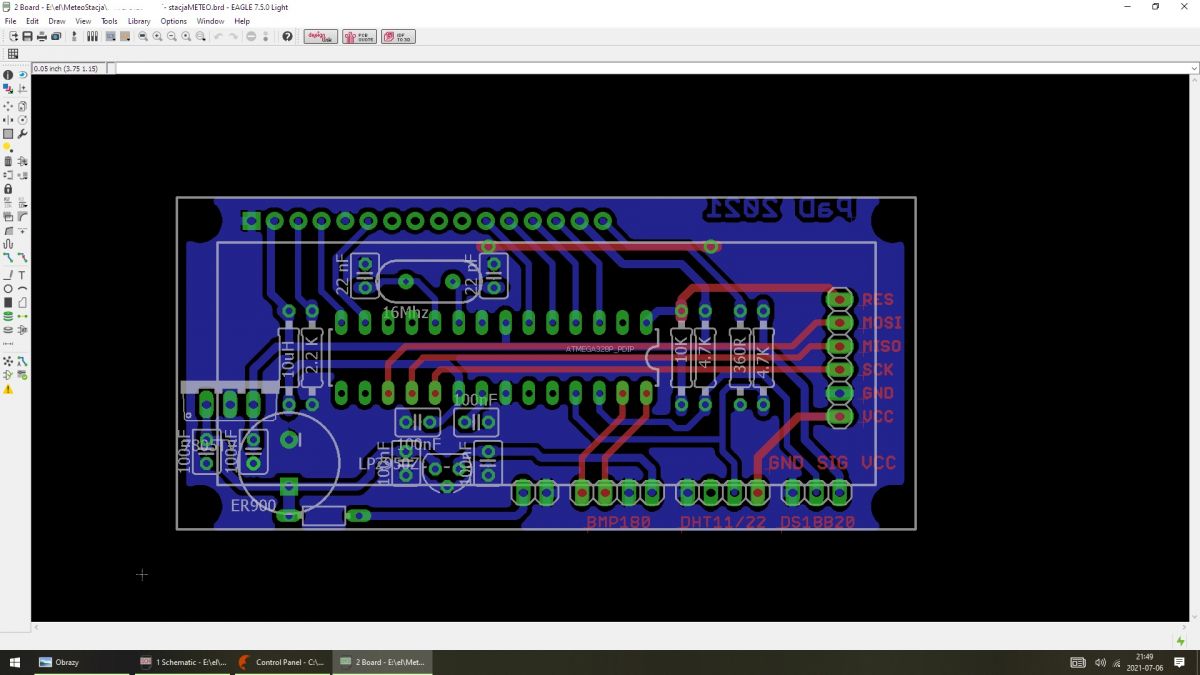
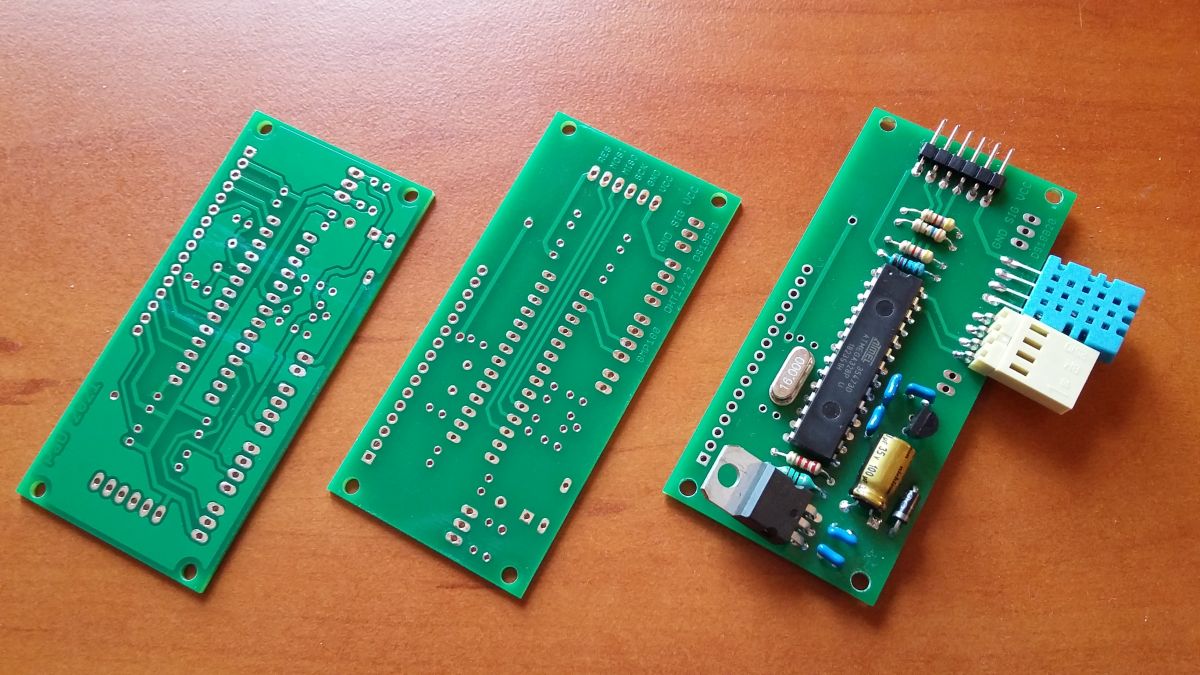
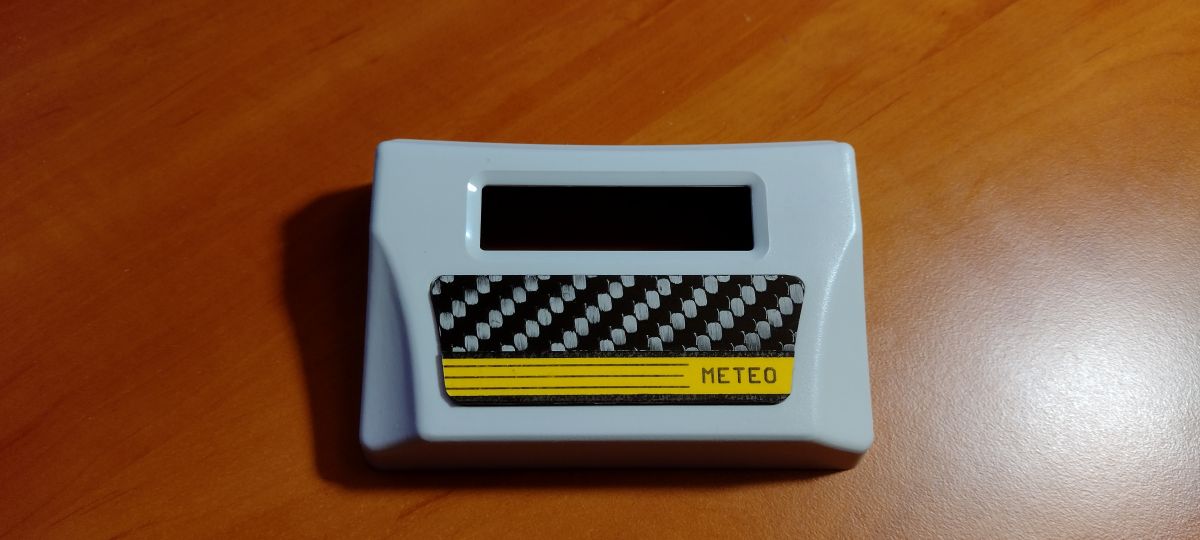
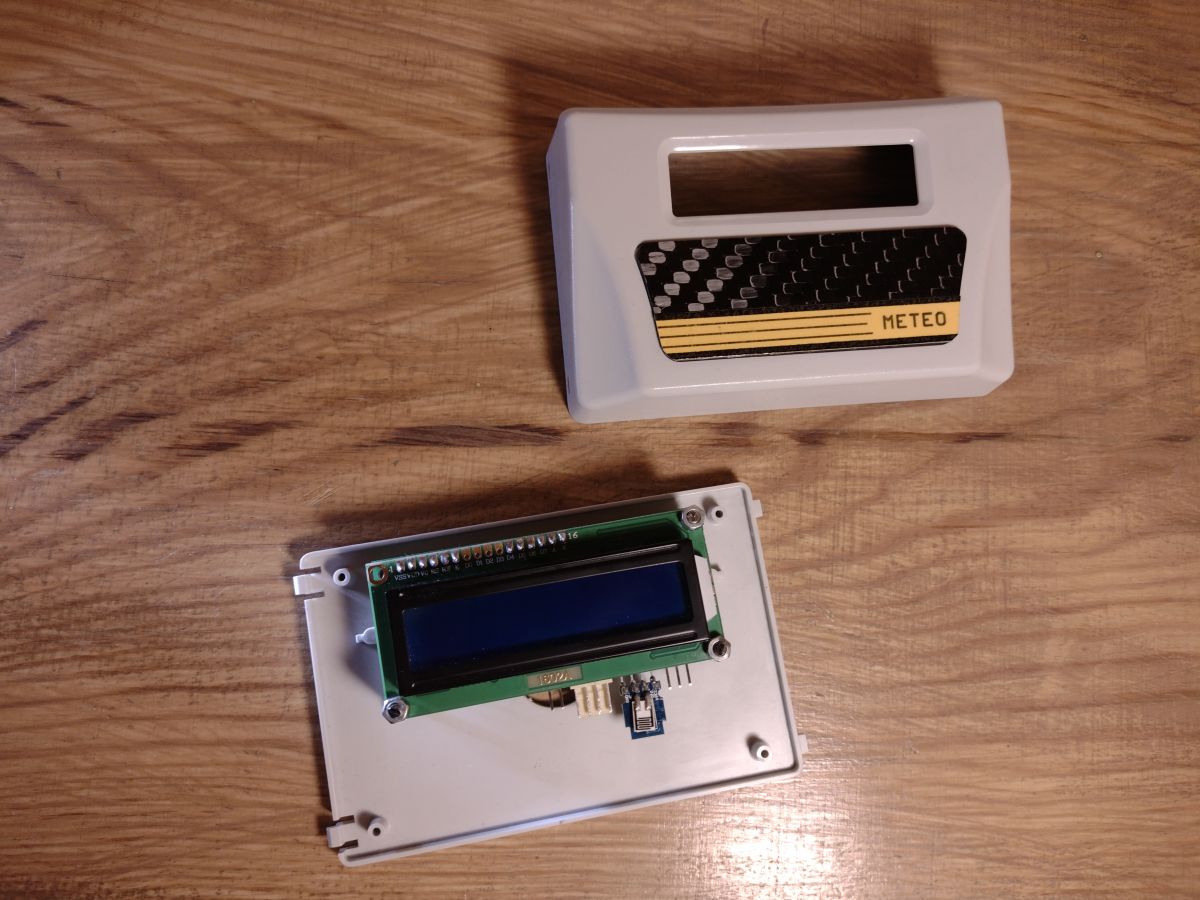
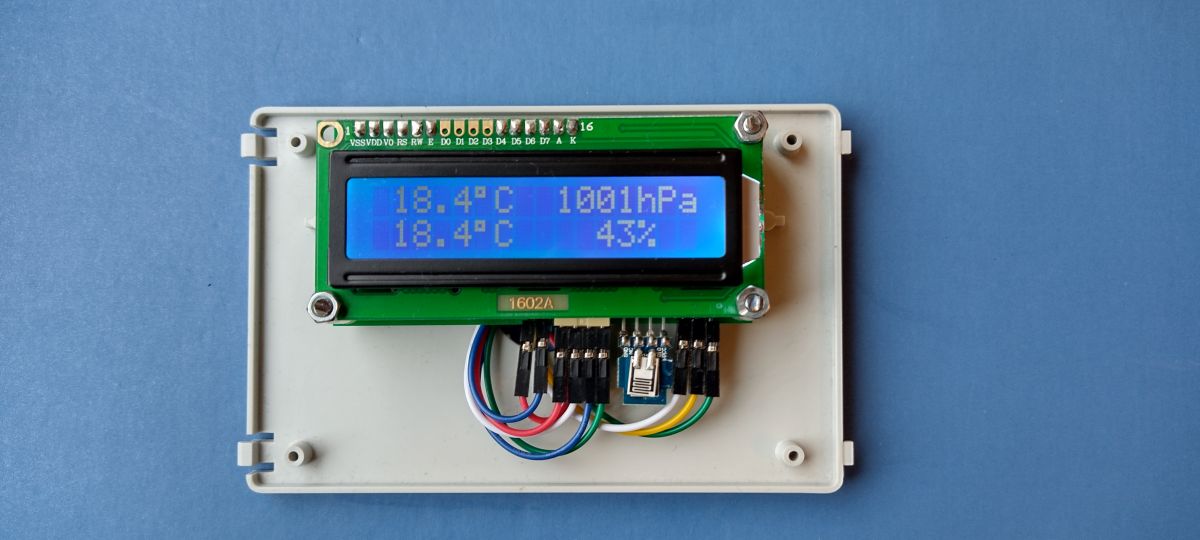
  • A wall-mounted weather station uses DS18B20, BMP180, and DHT11 sensors in a KM-111 enclosure to show indoor and outdoor temperature, pressure, and humidity.
  • The design prioritizes readability over graphics, with a simple LCD display, no trends, no screen-clearing flicker, and an Arduino mix of prefabs and custom code.
  • BMP180 pressure needed a 1.013 correction factor, and comparisons with METAR reports showed about 1 hPa error above 1000 hPa and 1-2 hPa below it.
  • Both thermometers read practically identically, but the cheapest blue LCD modules refresh sluggishly, taking up to a second.
Generated by the language model.
ADVERTISEMENT
Treść została przetłumaczona polish » english Zobacz oryginalną wersję tematu
📢 Listen (AI):
  • About Author
    Anonymous
    Level 1  
    Anonymous wrote 0 posts with. Been with us since 1978 year.
  • ADVERTISEMENT
  • #2 19869291
    pier
    Level 24  
    Posts: 2444
    Help: 40
    Rate: 1891
    Board Language: polish
    Hi
    With pressure measurement you are fine. The sensor simply measures absolute pressure and the pressure above sea level is commonly used.
    Check with this calculator if it is correct.
    If you want, I can send you a piece of code that calculates it taking into account the temperature.
    I would get rid of the DHT11 right away, it's a toy piece of plastic that shows random values, especially when it comes to humidity.
    Plus for a well-chosen housing, the whole thing looks nice.
  • #3 19869348
    Tomekob
    Level 15  
    Posts: 204
    Help: 1
    Rate: 47
    Board Language: polish
    "pier", but you made me happy with this calculator, I needed it and I didn't know it was and where. THANKS!
  • ADVERTISEMENT
  • #4 19869383
    ArturAVS
    Moderator
    Posts: 25984
    Help: 2292
    Rate: 7706
    Board Language: polish
    Minimalistic workmanship and good functionality, a big plus from me. Very good selection of electronics housing.
  • #5 19869486
    efi222
    Level 21  
    Posts: 654
    Help: 12
    Rate: 1057
    Board Language: polish
    As my colleague @pier noticed, the DHT11 is a toy, although you can find a good one. As for the BMP180, they have factory spreads of up to 3 hPa. And here only a software correction can help.
    Make the station neat and aesthetic.
  • #6 19870491
    Slawek K.
    Level 35  
    Posts: 3015
    Help: 259
    Rate: 1297
    Board Language: polish
    Such a small note, the station does not measure the temperature in the room (room), but the temperature of the electronics inside the housing. The sensor should be placed outside, at the bottom of the housing - so that it does not heat up from the electronic system.

    Besides, a very nice housing ;)
  • #7 19870617
    Anonymous
    Level 1  
  • ADVERTISEMENT
  • #8 19871177
    Slawek K.
    Level 35  
    Posts: 3015
    Help: 259
    Rate: 1297
    Board Language: polish
    You write about the DS18B20, which I see on the board, and the DHT and BME sensors are on the outside of the board, but still inside the housing. I don't know which sensor you are taking the temperature measurement from, but both are inside a closed housing. So, as I wrote above, you measure the temperature of the electronics that heats the air inside the case, not the room temperature. The temperature sensor should be outside the housing, from the bottom.
  • #9 19871358
    Anonymous
    Level 1  
  • ADVERTISEMENT
  • #10 19871382
    pier
    Level 24  
    Posts: 2444
    Help: 40
    Rate: 1891
    Board Language: polish
    Oh, the BMP180 will not measure the pressure correctly, how will it be in the housing?
    As for DHT11 I already wrote, it does not measure moisture.
  • #11 19871394
    Anonymous
    Level 1  
  • #12 19871413
    pier
    Level 24  
    Posts: 2444
    Help: 40
    Rate: 1891
    Board Language: polish
    It's cool, I forgot about the temperature measured by BMP, but I won't let DHT go away, it's crap.
    And how do you tend to calculate the NPM pressure as I wrote?
  • #13 19871732
    Slawek K.
    Level 35  
    Posts: 3015
    Help: 259
    Rate: 1297
    Board Language: polish
    PablitoX wrote:
    Believe me they are not :) The device is wall mounted, but this "wall" is a plate with a hole underneath (old wardrobe), so the sensors are on wires outside the casing (and also outside the wardrobe). The device is wall mounted, but it is better if it is not a solid wall, but some plasterboard, or a partition wall with the possibility of releasing dallas and Bosch somewhere where they will not stick around. Only DHT11 remained "on the plate", but he only measures the humidity (which, due to the hole and inaccurate adherence to the plate, does not distort the result at all).

    In an earlier post you wrote that I should look at the photo, the photos show where the sensors are, so I wrote my comments on this basis. If you wrote in the description that the sensors are on the wires, this would not be this discussion ;)
    In conclusion, I would definitely prefer to measure both temperatures with 2 DS than BMP.
📢 Listen (AI):

Topic summary

✨ A user designed a simple wall-mounted weather station utilizing DS18B20, BMP180, and DHT11 sensors, focusing on readability by displaying only essential data: indoor and outdoor temperature, pressure, and humidity. The software is a mix of Arduino libraries and custom code, ensuring accurate temperature readings without display flicker. Discussions highlighted the BMP180's need for pressure correction and the DHT11's unreliability for humidity measurements. Concerns were raised about sensor placement, emphasizing that temperature sensors should be positioned outside the housing to avoid heat interference from electronics. Suggestions included using two DS18B20 sensors instead of the BMP180 for temperature measurement.
Generated by the language model.

FAQ

TL;DR: A dual-voltage Arduino weather station shows ±1 hPa above 1000 hPa after a 1.013 software factor [Elektroda, Anonymous, post #19868303] "DHT11 is crap" [Elektroda, pier, post #19871413] Use sea-level correction and place sensors outside the case for believable data.

Why it matters: Calibrated hobby sensors can rival airport METAR reports for day-to-day forecasting.

Quick Facts

• BMP180 absolute pressure accuracy: ±1 hPa typical, ±3 hPa max (300–1100 hPa) ["BMP180 Datasheet"]. • DS18B20 temperature accuracy: ±0.5 °C from −10 °C to +85 °C ["DS18B20 Datasheet"]. • DHT11 humidity accuracy: ±5 % RH within 20–90 % RH ["DHT11 Datasheet"]. • KM-111 ABS enclosure size 110 × 60 × 30 mm, cost ≈ €3 [Maszczyk Catalogue, 2022]. • 16×2 blue LCD refresh time 0.5–1 s [Elektroda, Anonymous, post #19868303]

How do I convert BMP180 absolute pressure to sea-level (QNH) pressure?

Use the barometric formula: P₀ = Pabs / (1 – h/44330)⁵·²⁵, where h is elevation in metres. Insert outdoor temperature for higher accuracy. Elevation 200 m shifts readings by ≈24 hPa [Elektroda, pier, post #19869291]

Why did the author multiply BMP180 readings by 1.013?

Their sensor showed 1.3 % low. Multiplying by 1.013 aligned values with nearby airport METAR; error stayed <1 hPa above 1000 hPa [Elektroda, Anonymous, post #19868303]

What accuracy can I really expect from BMP180?

Factory spread is up to 3 hPa across the range [Elektroda, efi222, post #19869486] Typical units stay within ±1 hPa after one-point calibration ["BMP180 Datasheet"].

Is the DHT11 suitable for reliable humidity readings?

No. Forum testers call it “random values” [Elektroda, pier, post #19869291] Datasheet lists ±5 % RH, but the sensor drifts and freezes above 80 % RH—an edge case that wrecks long-term logs ["DHT11 Datasheet"].

Where should I place the temperature sensors?

Mount DS18B20 and BMP180 outside the enclosure bottom so electronics heat does not bias readings [Elektroda, Slawek K., post #19870491] Keep them shaded from sun and rain.

Can one PCB support both 3.3 V and 5 V modules?

Yes. The author used a dual-voltage board; 3.3 V feeds BMP180, while an optional LM78L05 can provide regulated 5 V for other parts [Elektroda, Anonymous, post #19868303]

Which housing fits this simple station?

A Maszczyk KM-111 ABS box was chosen for wall mounting; it costs about €3 and drills cleanly for a 16×2 LCD window [Maszczyk Catalogue, 2022].

How do I stop a 16×2 LCD from flickering during updates?

Avoid lcd.clear() calls; update only changed characters. This keeps the screen steady and refresh under one second [Elektroda, Anonymous, post #19868303]

What cable length can DS18B20 handle?

With 5 V power and a 4.7 kΩ pull-up, the sensor works over 100 m of CAT5e routinely [Maxim, 2015].

How do I add software pressure calibration?

  1. Log airport QNH, sensor absolute pressure, and outdoor temperature.
  2. Compute correction factor: Factor = QNH / Pabs.
  3. Multiply future readings by Factor inside loop(). This three-step method reduced error below 1 hPa in the thread station [Elektroda, Anonymous, post #19868303]

What happens if DHT11 faces saturated humidity?

Above ≈80 % RH the polymer capacitor swells; output locks at 99 % until dried, creating multi-hour data gaps ["DHT11 Datasheet"].

Can I replace DHT11 with a better sensor?

Yes. Pin-compatible DHT22 offers ±2 % RH and −40 °C operation for under €5; or switch to Bosch BME280 for combined T/RH/P logging via I²C [Bosch, 2018].
Generated by the language model.
ADVERTISEMENT