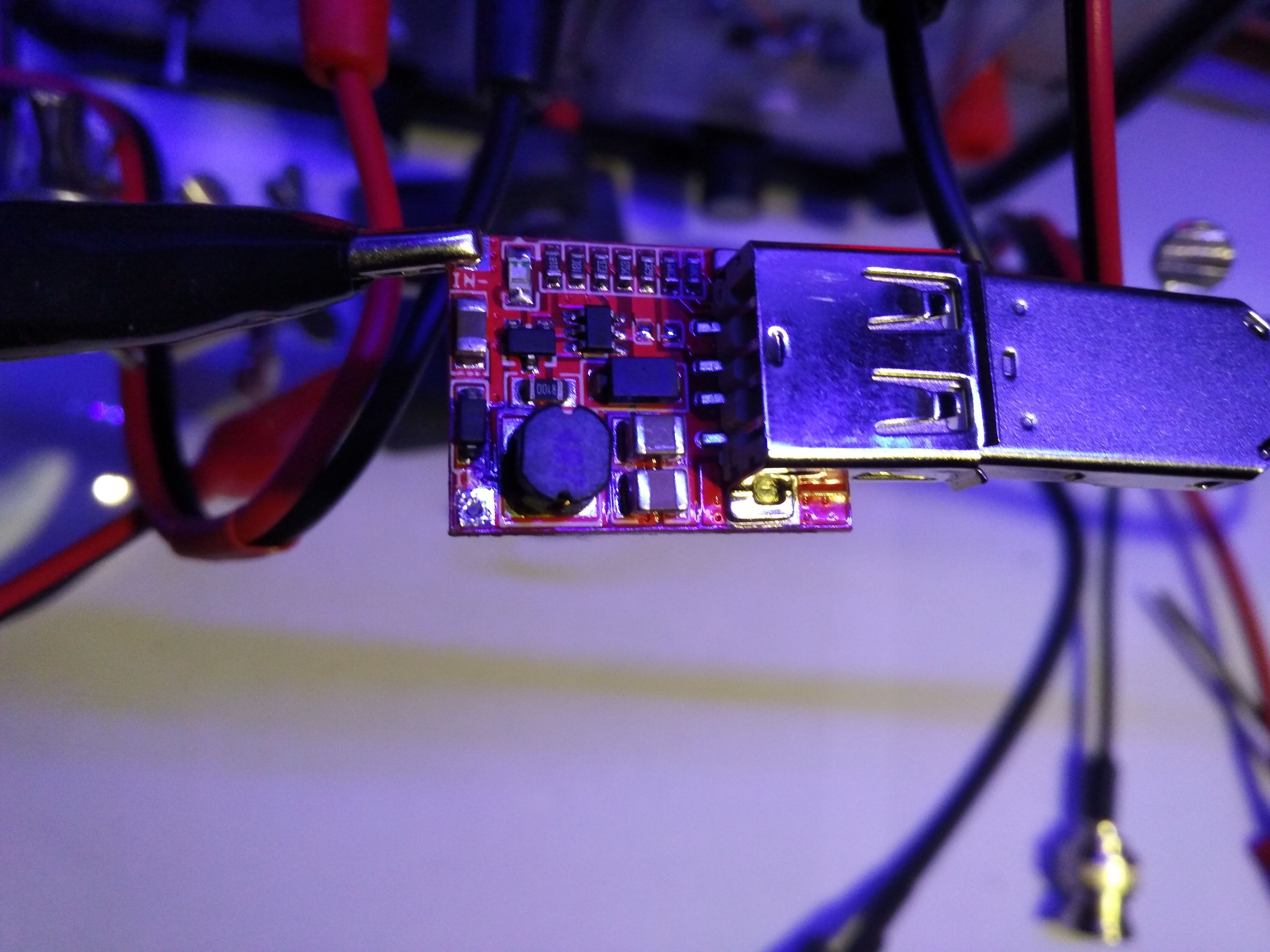
This time it was one of the drivers that Kamil gave me for testing.
It is a tiny module designed for PowerBanks.
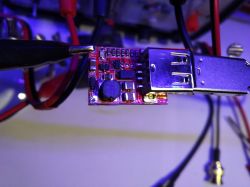
Interestingly, the invoice shows as:
"STEP-UP PowerBank 2V-5V to 5V 1500mA converter".
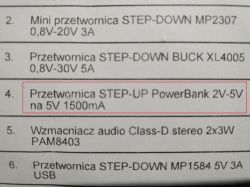
So far, I have bought these boards as DC-DC converters, 2.5V - 5V, for 5V, 1000mA. Well, we'll see. Unfortunately, when I connected the converter for tests, my tiny oscilloscope got tangled in the spider's web of wires and fell to the floor.
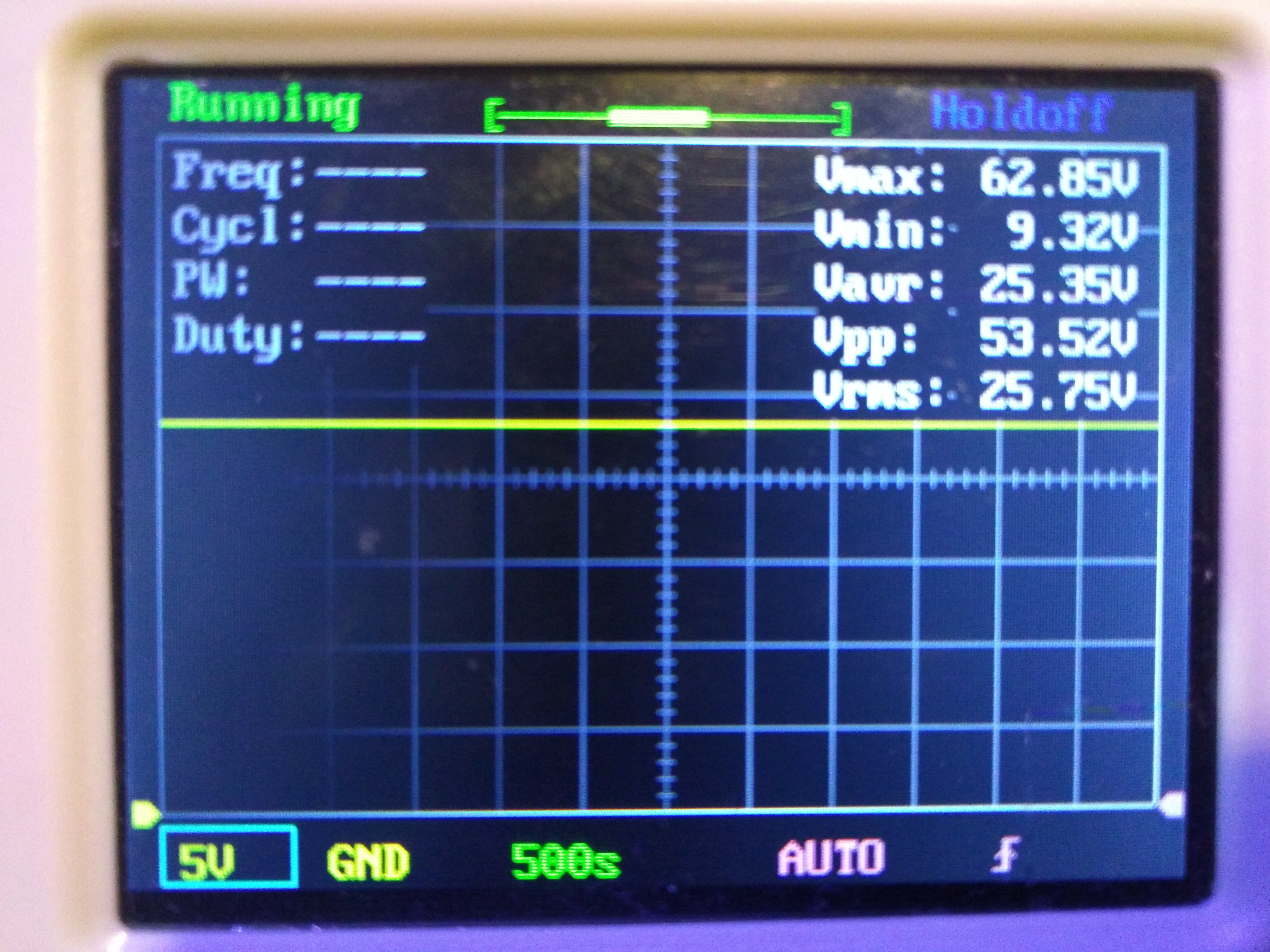
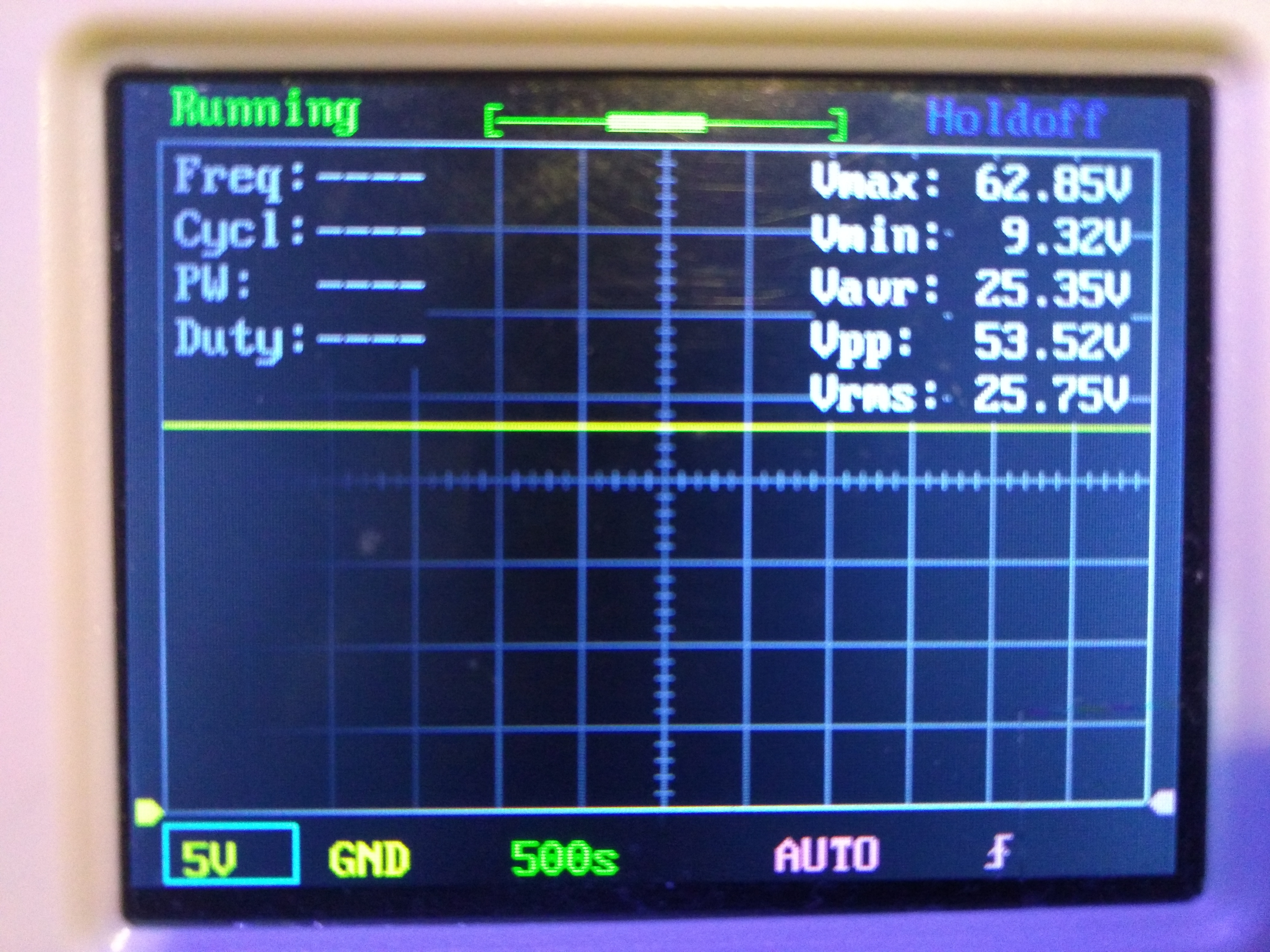
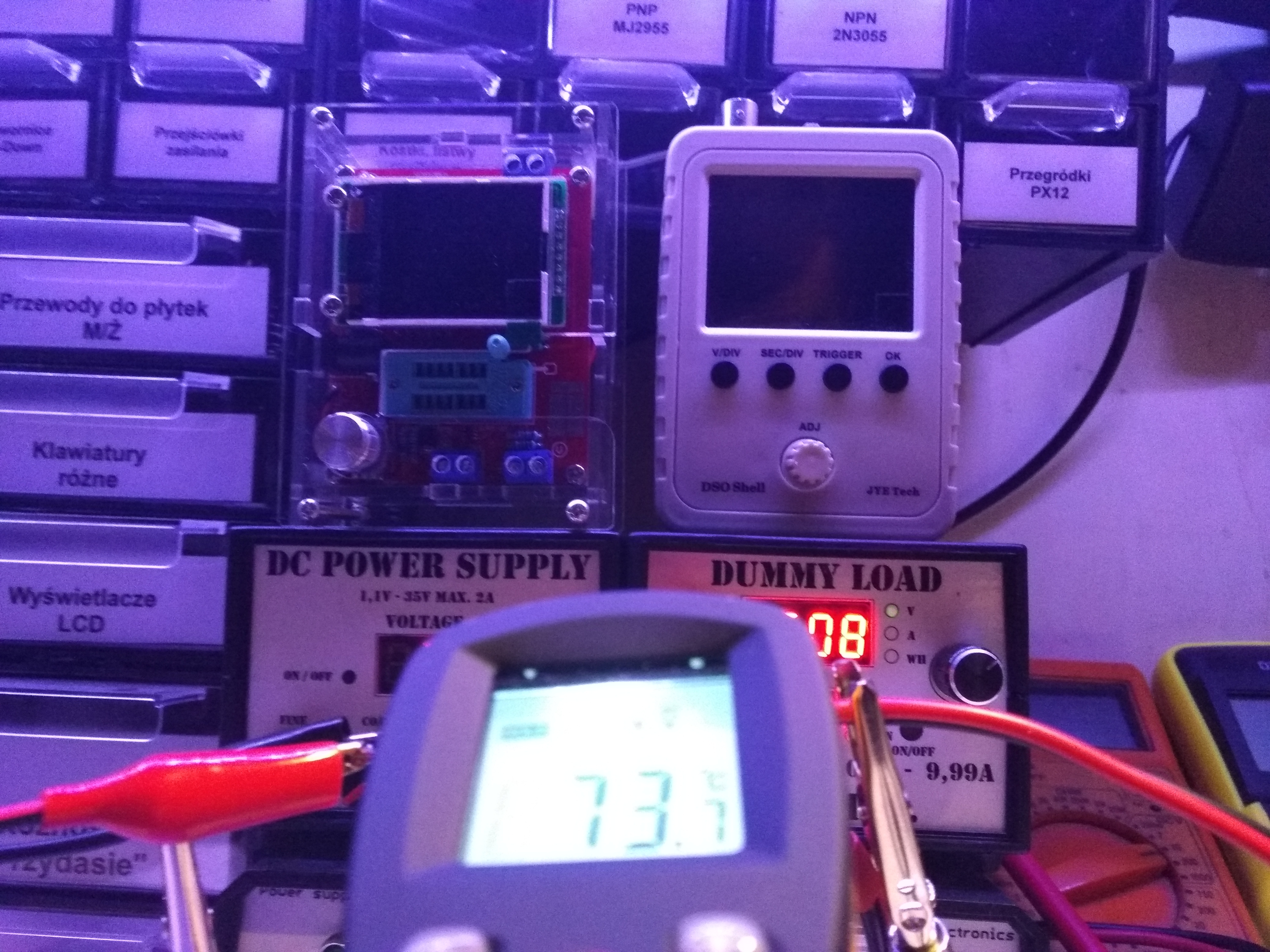
I think something broke inside, because now it displays something like this all the time:
Chinese February will probably need to be improved.
Well, never mind the oscilloscope, after a while I find that I received a terrible crap specimen, because the previous ones, which I did not test, but used to a greater or lesser degree, did not make any (at least audible to me) sounds.
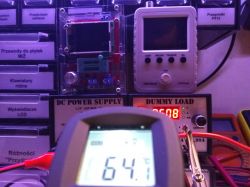
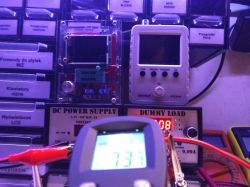
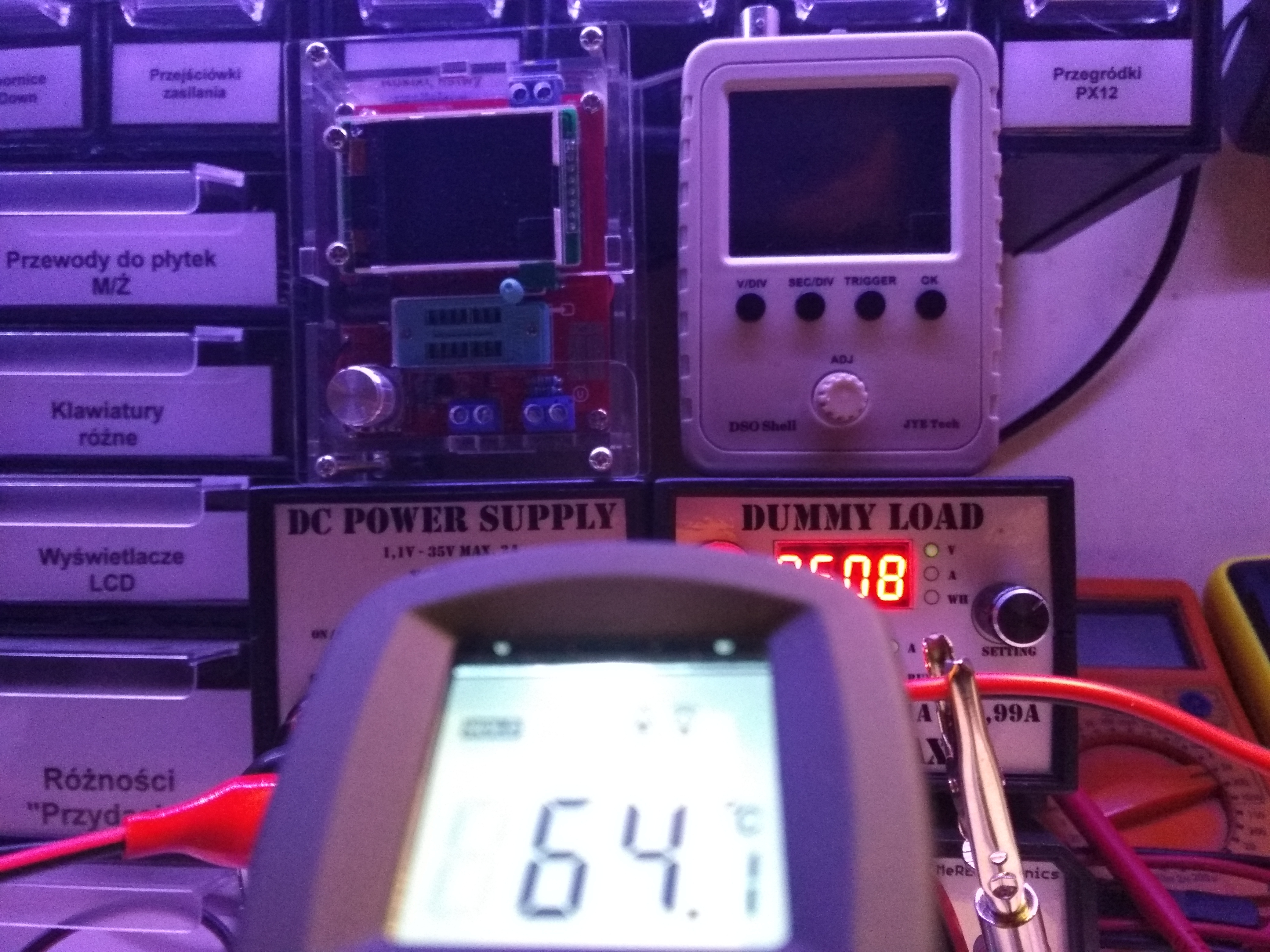
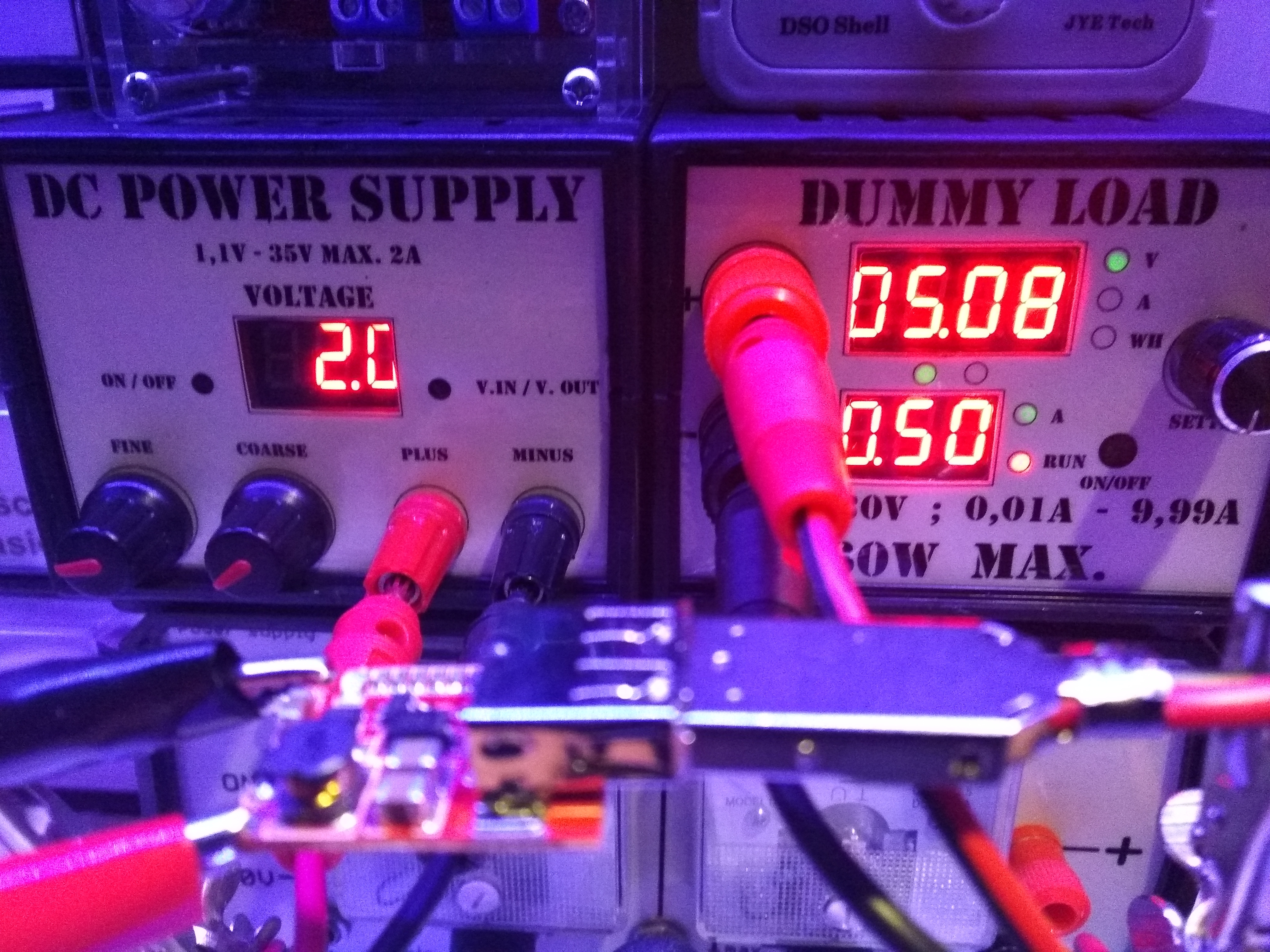
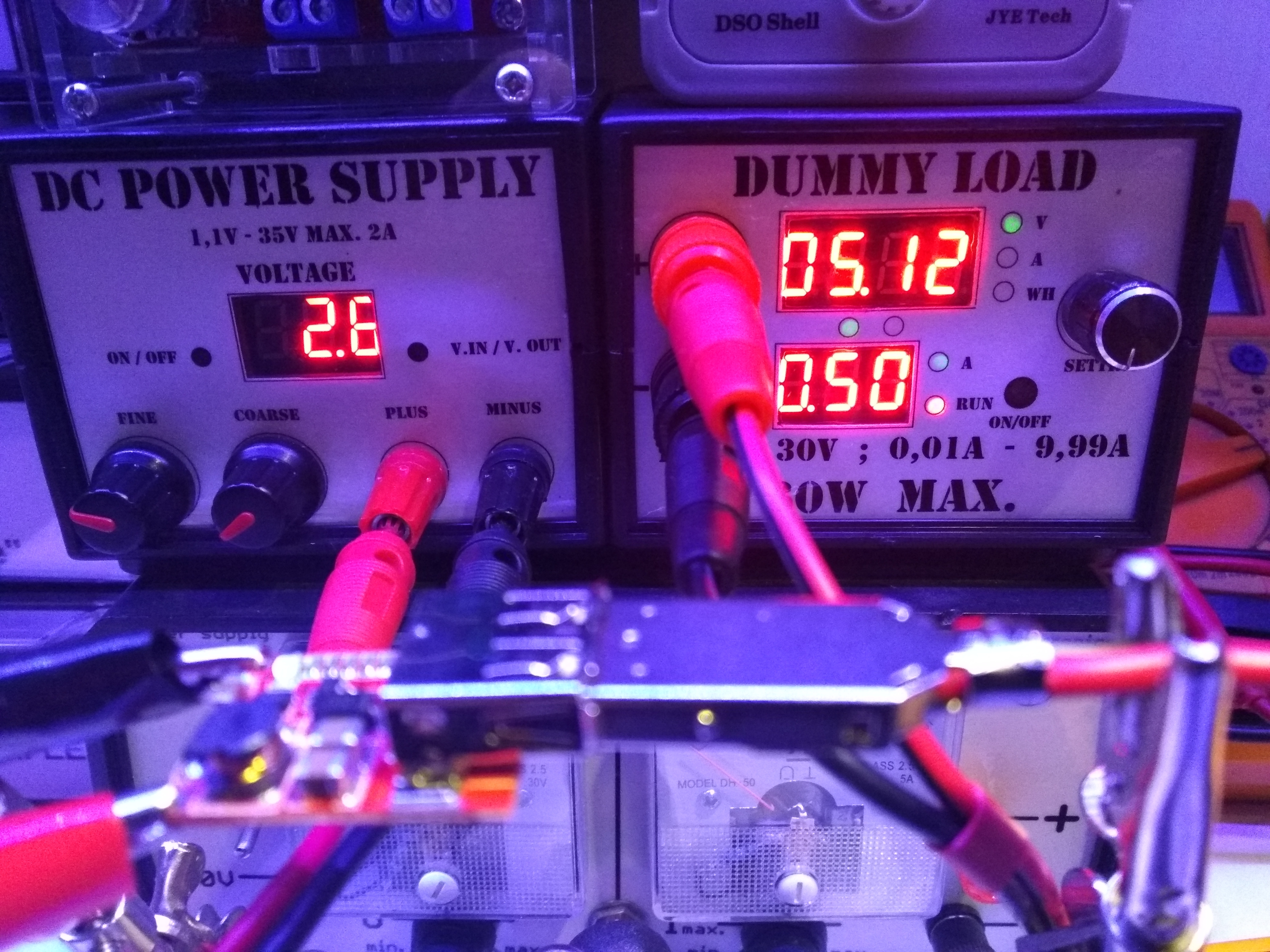
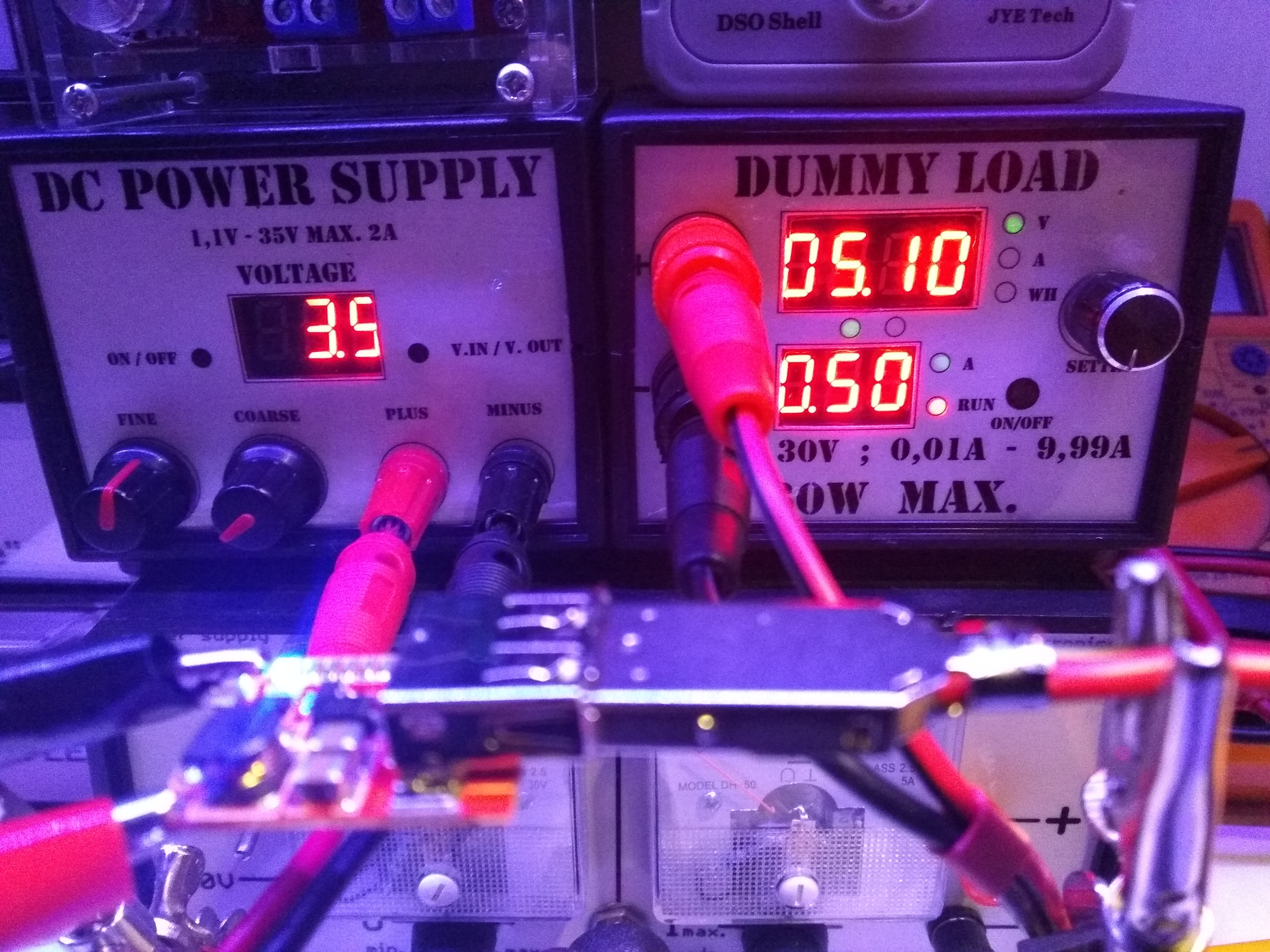
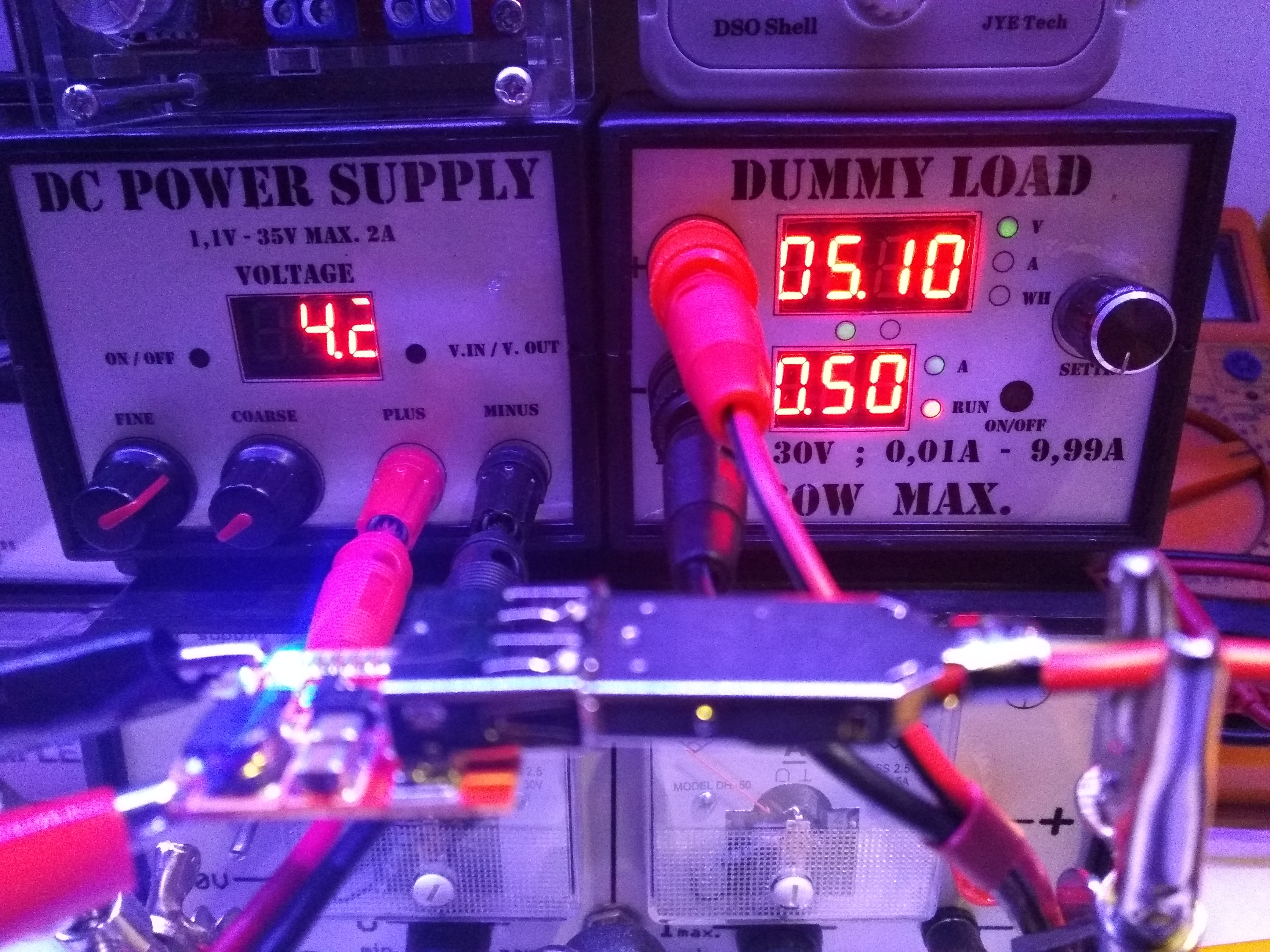
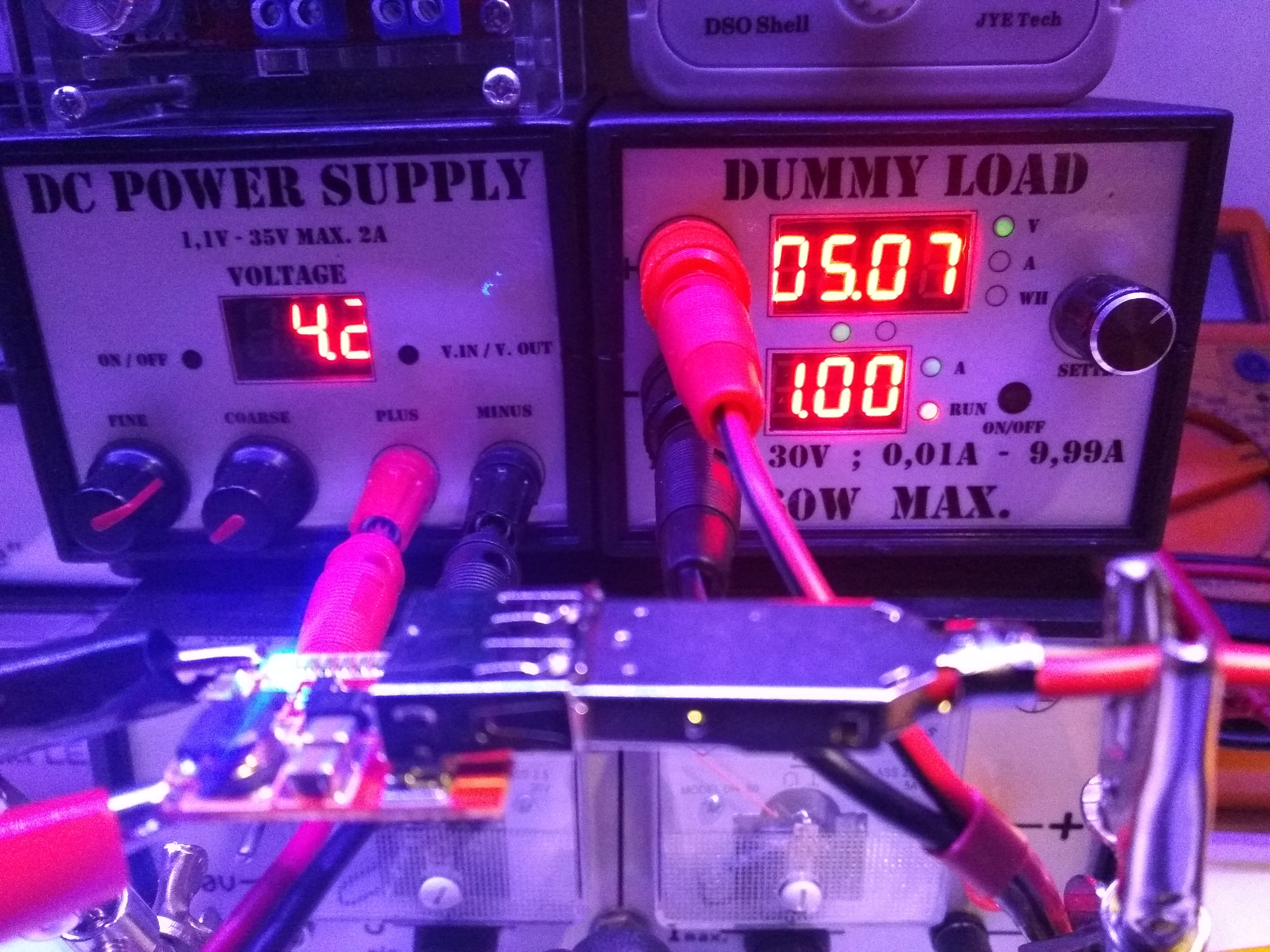
The tested converter maintains the correct voltage under load, which is confirmed by the photos. But after a few minutes it gets very hot.
With a load of 0.5A after approx. 3 minutes of operation:
With a load of 1A after approx. 3 minutes of operation:
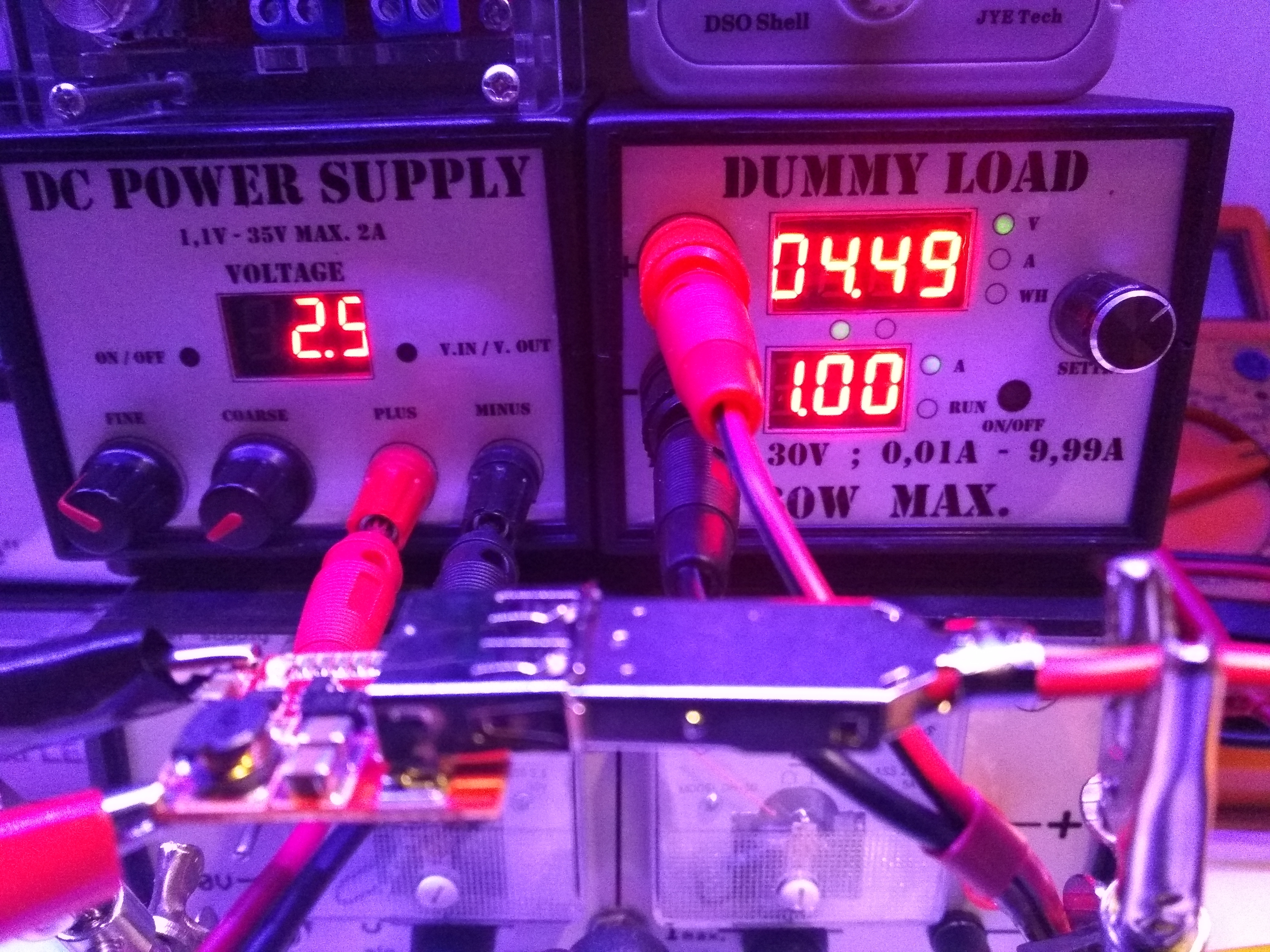
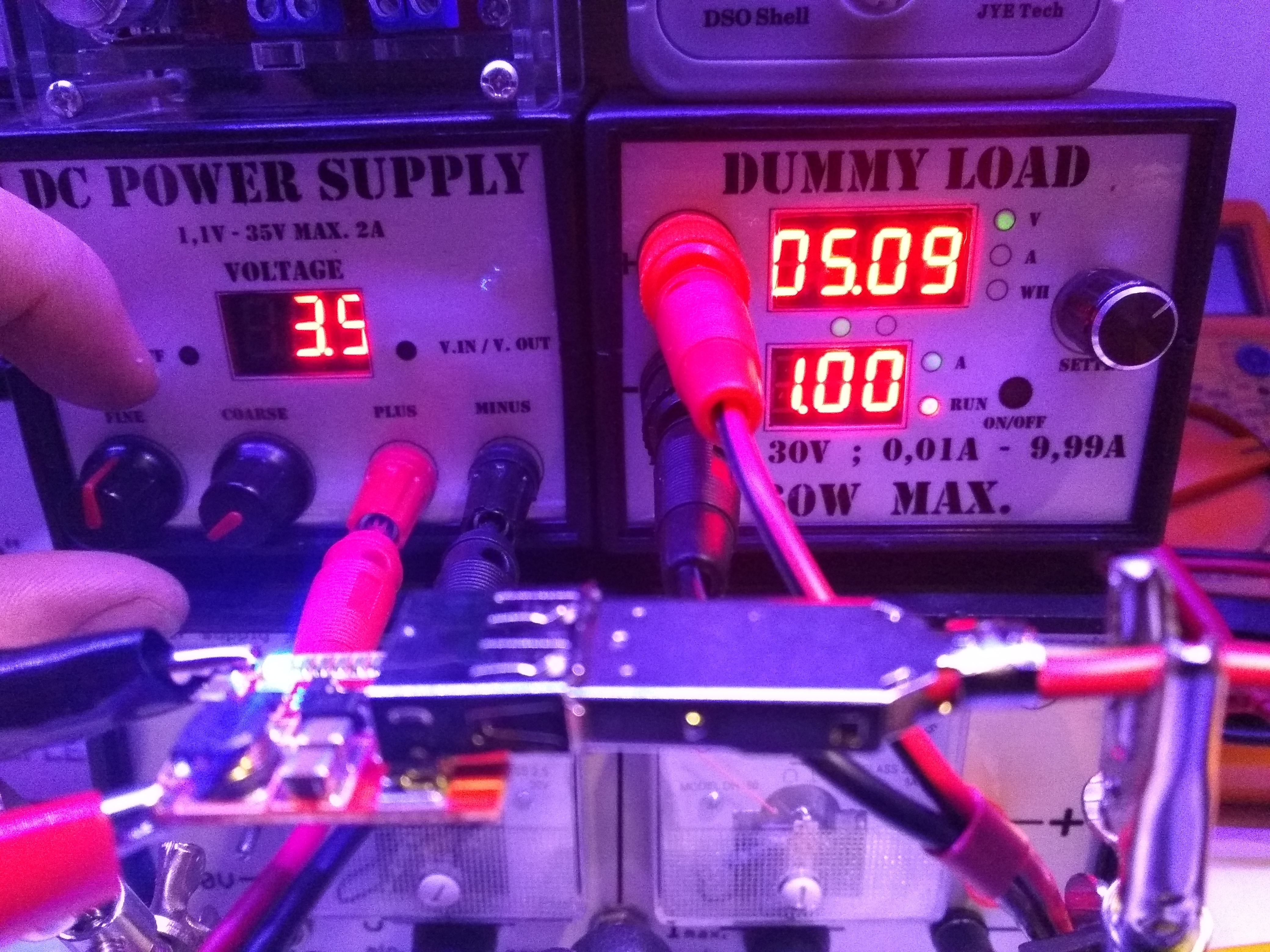
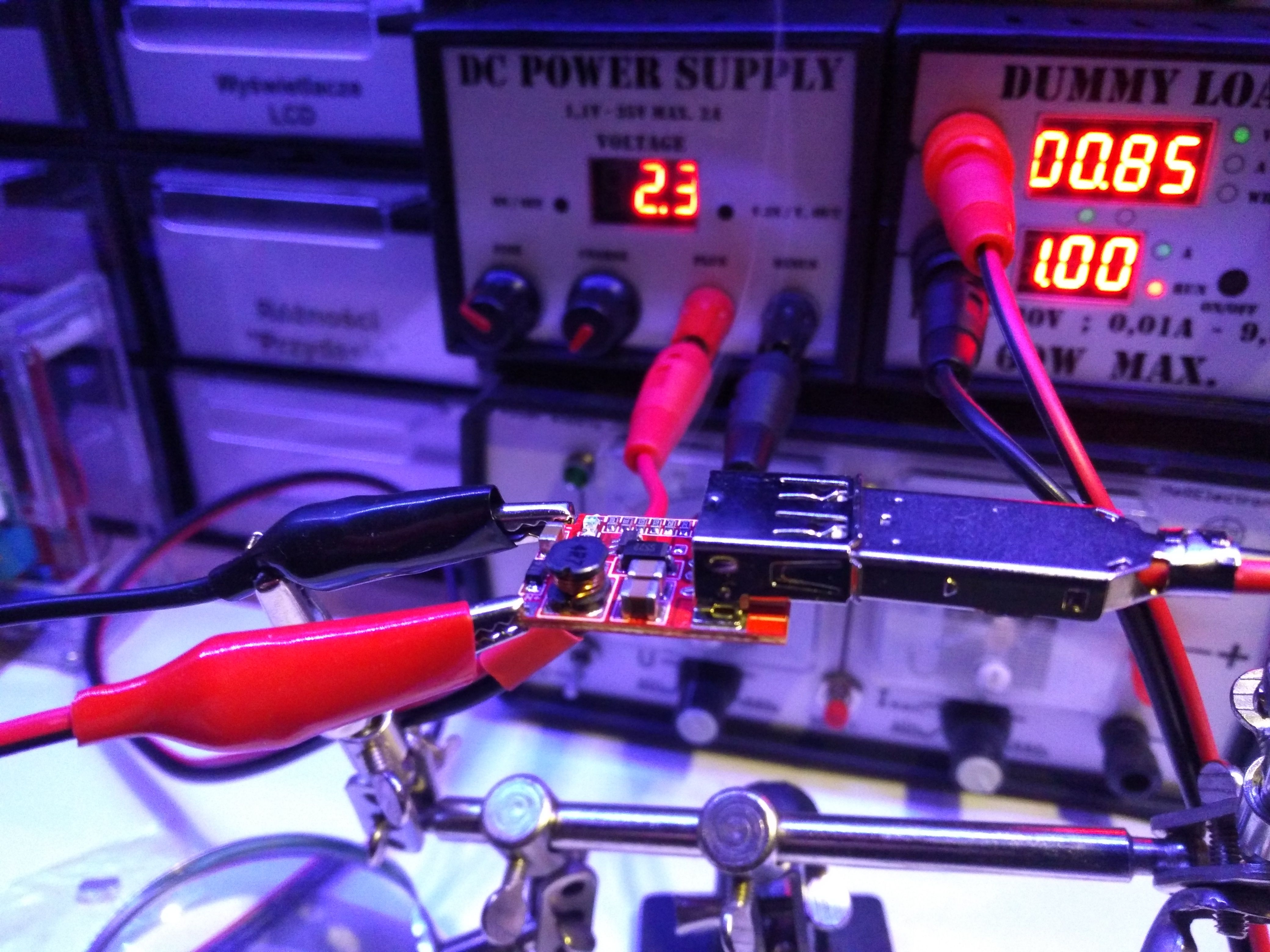
During the tests, I did not dare to "reach" the "promised in writing" 1500mA, because while the voltage was stable, the converter literally sang in a large input voltage range. The sound effects occurred at both 500mA and 1000mA loads.
Now a few photos, so that it would not be that I made it all up

and finally two videos presenting the "singing" of this converter.
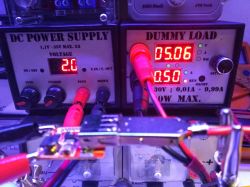
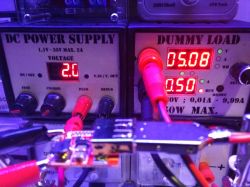
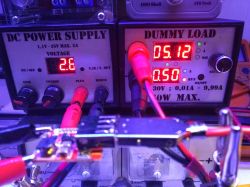
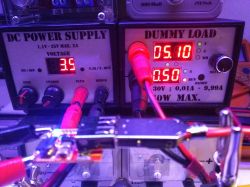
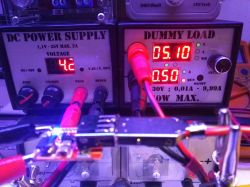
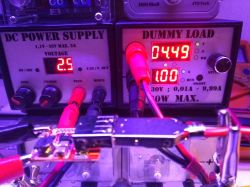
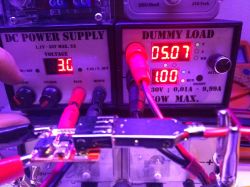
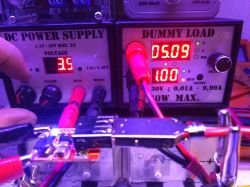
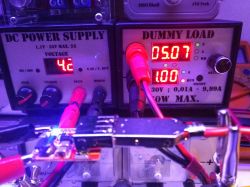
Because the converter heats up very much, which in the case of these particular converters (and as I mentioned, I have already used the exact same model several times already) is quite normal, but I have never encountered a chance that it warms up so quickly. Additionally, it makes suspicious sounds. I wonder if I should send it to the land of eternal power supplies and transformers using the "let's see how much we can squeeze out before the magic smoke disappears from the chip" method. :)
Do you want such a trial?
And now the promised movies. In the background you can hear the fans from the power supply and the artificial load, but I'm sure you will easily recognize the "twitter" of the converter, especially since you can hear that the modulation changes in relation to the voltage change.
Here the inverter is loaded with 0.5A and starts its correct operation from 2V.
Here we take 1A and the converter starts working correctly only at 2.8V
You can't hear it that clearly in the movie, but believe me, this sound is very unpleasant and really loud.
Now imagine a PowerBank next to your head, in a tent, in the beautiful wilderness of the Bieszczady Mountains, for example ... And this cruel whistle of the converter.
EDIT:
Unfortunately, after about an hour under a load of 1000mA, the converter turned off. I wasn't in the room, so I don't know what temperature it got. When I got back it was 61 ° C and it started.
EDIT 2:
And it happened. This time I was fortunately next door when I noticed the characteristic smell of magic smoke. I even managed to take a few photos, but unfortunately you can see anything at all on only one. But I managed to capture the soul of this converter. Hehehe ...
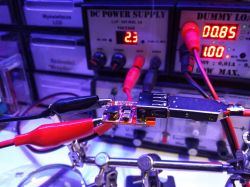
It had to "jerk" a lot of electricity, because the voltage on the power supply dropped by 0.5V.










Comments
Offtop: how does this oscilloscope perform for you? By the logo on the casing, I conclude that it is an original from JYETech. Recently, I received my copy (without the logo on the housing ...). Unfortunately,... [Read more]
These things happen when the battery is not working. I am very happy with mine, unfortunately after yesterday's fall he went stupid. In my free time, I have to undress it. I think so too. ... [Read more]
I definitely have a counterfeit. I power it from an external 9V adapter - I didn't use a battery. Basically, I only need to suspect the encoder signal during on-site service, without messing with their... [Read more]
But mine is already working properly. I'm going to write an article about him next week, let me mention something about fakes. Unfortunately, I will not make oscillograms from the tested converter,... [Read more]
Hi I am not writing this maliciously. You should work on the white balance of your photos. I like reading your posts, I look forward to the next ones and best regards. [Read more]
Pictures taken with the phone. The lighting is an RGB LED strip in which white escapes quite strongly towards blue / purple. [Read more]
If you don't know what to do with time, see advanced settings / professional mode in the camera. There should be WB settings. You choose Custom or K ° and mix with the ? slider Have a nice day [Read more]
Here is some info about DSO I have a counterfeit but mine does not distort me during measurements, and I mainly use it to "see" various signals. Such an offtop. [Read more]
I have this topic in the watch, practically from its publication. Let's finish OffTopic. There will be an article about the oscilloscope, we'll discuss it. [Read more]
When giving data, the Chinese forget about the most important thing, that at higher currents, additional cooling is required, which is not included in the set. It is commonly duplicated at various auctions,... [Read more]
This is interesting because I used to use such a PowerBank https://obrazki.elektroda.pl/9952595200_1518192226_bigthumb.jpg and nothing squealed, and the inverter was able to charge two phones in... [Read more]
The choke was apparently more tightly wound or the converter itself operated at a lower frequency. Rather, this "oscilloscope" with this converter would not be much useful (it works outside the DSO150... [Read more]
So far, only this converter has been from Kamil, the rest are my toys. No BT or other wireless, I have no plans in the near future. I have up to 60Mhz at work :) [Read more]
Can you count on the charger description on the left? :) I have a similar one, but I do not know what the OUT + and OUT- outputs are for, when I connect a receiver there (say Arduino), I cannot charge... [Read more]
Let's not expect miracles from such a simple and cheap charger. The OUT outputs are for the receiver and B for the battery. To be able to charge and use, you would have to connect the batteries and... [Read more]
Well, but if there is an output to the receiver, there is something for it, unless I have to unplug the receiver during charging? [Read more]
I'm not entirely sure, but I suspect it was the converter's singing and its premature death during your research, that might not be her fault. This particular converter is based on the RT9266... [Read more]
No problem, but I'm on my way to Sweden right now. I'm back on Monday night. [Read more]
And this is the squeaking of the inverter does not come from the impulse load ?? [Read more]