logo elektroda
logo elektroda
X
logo elektroda

Tesla Electronic Miniature Coil - Assembly Kit

TechEkspert  10 9204 Cool? (+10)
📢 Listen (AI):

TL;DR

  • A Tesla electronic miniature coil assembly kit builds a compact Tesla-coil-style high-voltage generator for entertainment and high-voltage experiments.
  • It runs from 15-24V DC and uses a minijack audio input to modulate the corona discharge to music.
  • The supply current is about 0.6A-1A, and the transistor heatsinks can exceed 60°C during operation.
  • The free end of the air coil produces corona, and a nearby neon lamp glows, but it can interfere with electronics and pose pacemaker risks.
Generated by the language model.
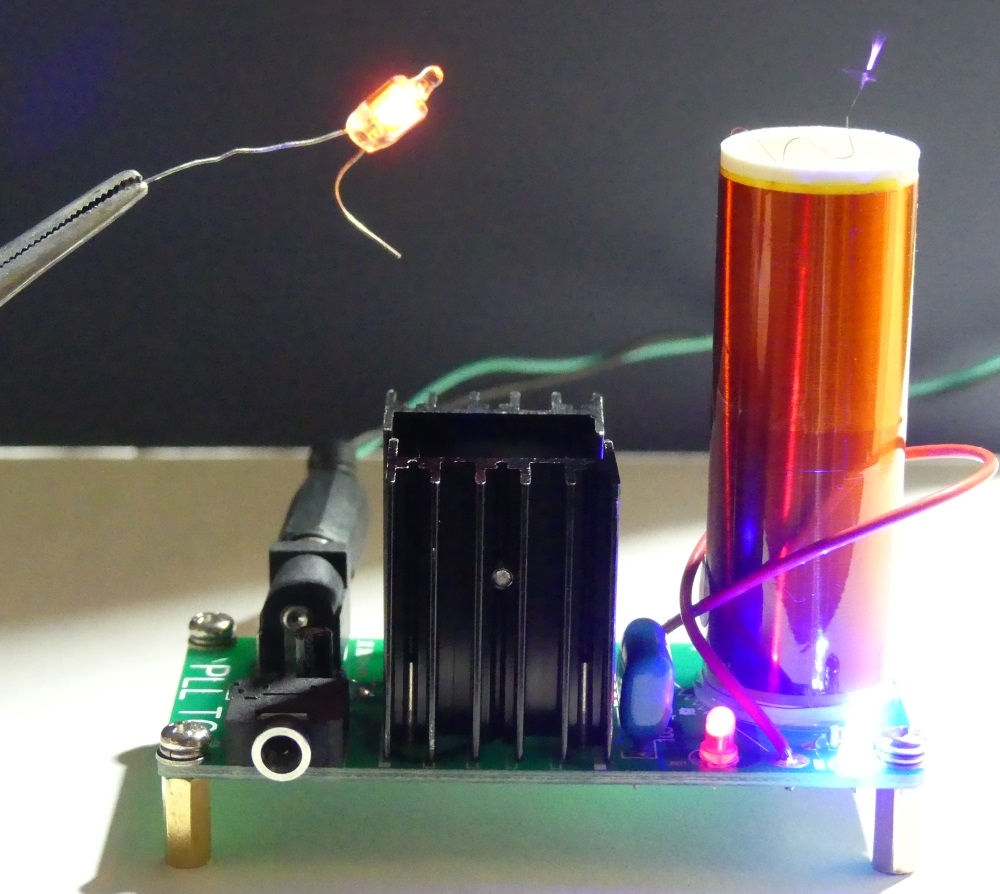
A Tesla transformer (TC) is usually a large, heavy device that draws a lot of power and produces voltage pulses of the order of MV. The presented assembly kit allows you to build a device referring to TC. The system can be powered with 15-24V DC, the current consumption depends on the supply voltage and amounts to 0.6A-1A. The system generates high voltage which produces a corona discharge, additionally we can control the intensity of the discharge using the audio signal (minijack input). The kit can be found at auctions by searching for the phrase electronic tesla coil .

Despite the low power of the system, one should be careful about the voltage present in the system (possibly dangerous to people with a pacemaker), which is dangerous to life and health, and one should also be careful about the possibility of damage to electronic devices and a high level of electromagnetic interference.

The assembled Tesla electronic coil can be used for entertainment or high voltage experiments.

[movie: fb07ae4943] https://filmy.elektroda.pl/44_1525019427.mp4 [/ movie: fb07ae4943]

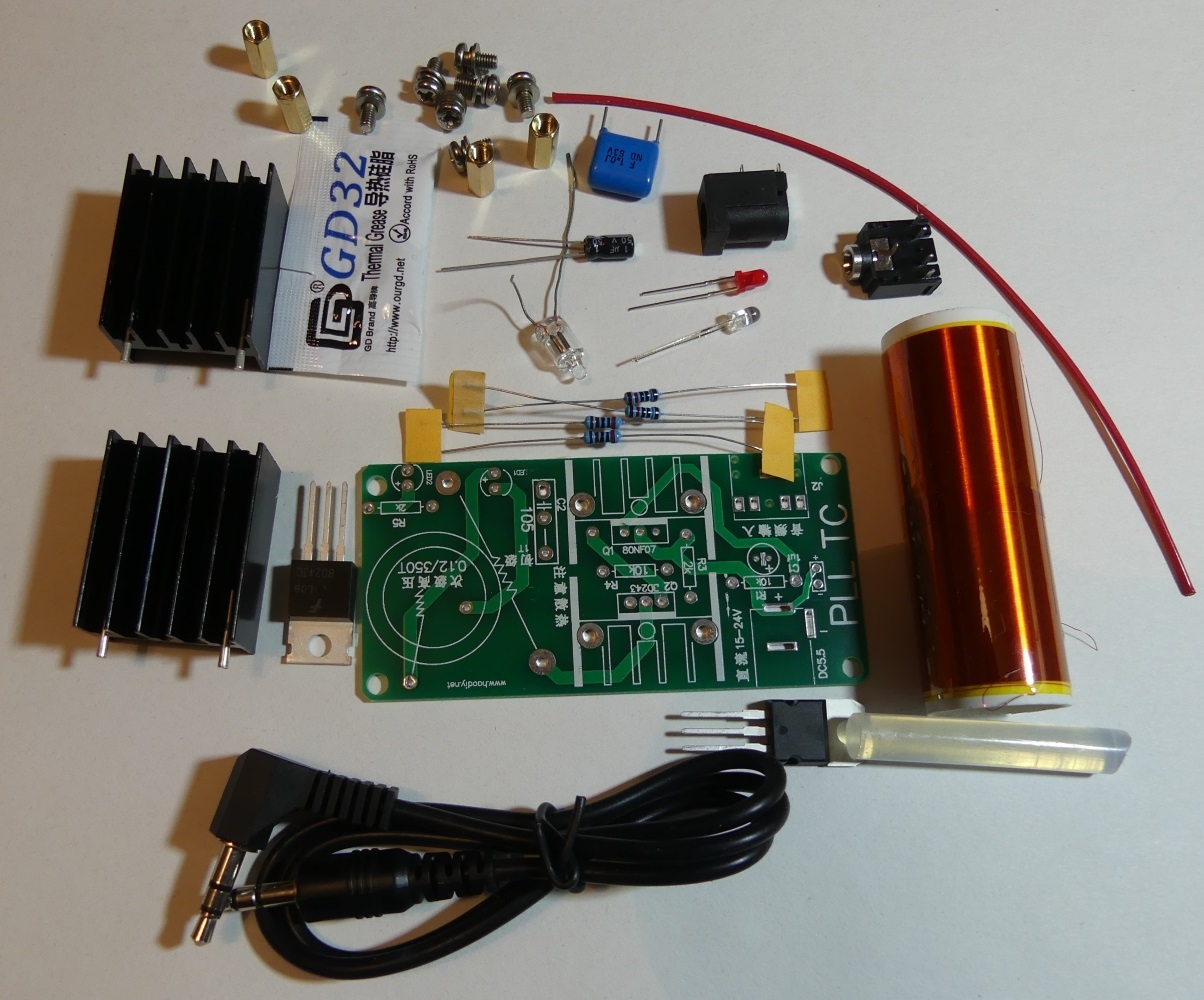
The set includes a plate, a set of elements, thermal glue for mounting the coil, thermal paste for mounting transistors on heat sinks and a neon lamp to check the operation of the device.
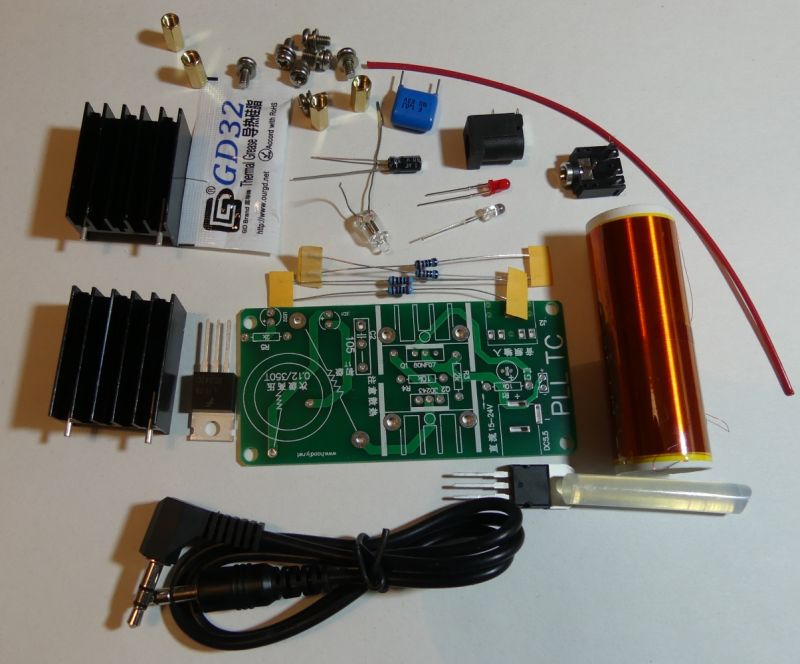

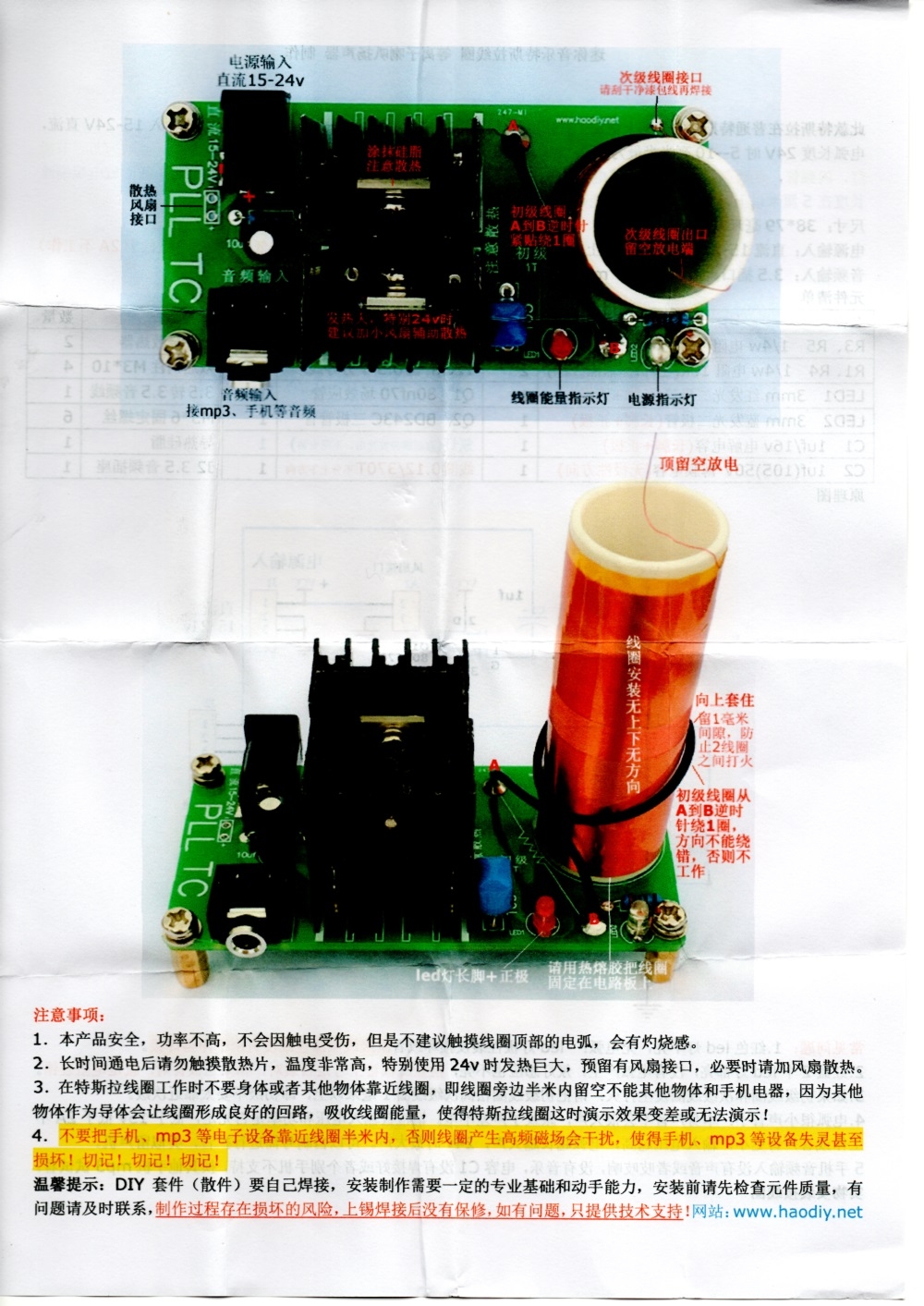
The assembly should begin with the smallest elements (resistors), through connectors, capacitors, etc. The transistors should be mounted on the heat sinks using screws (apply silicone paste to the contact surface before assembly). The coil of the air transformer is ready and secured with Kapton tape. One end of the coil is soldered to the board as described, the other end is left in the air (there will be a corona discharge on it). The assembly is carried out as described on the PCB. Surround the air coil with one turn of the attached wire and solder it as described on the board.
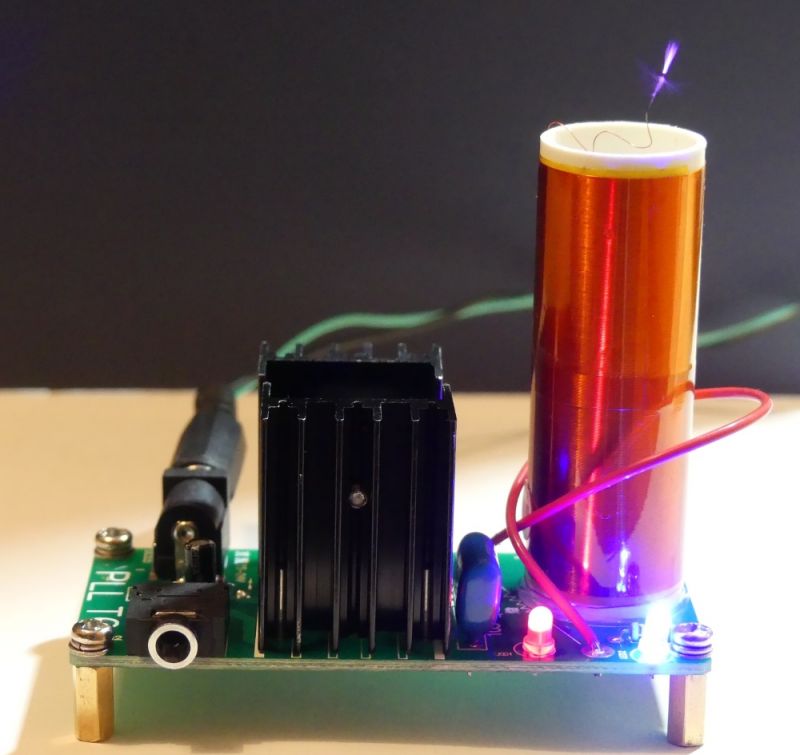
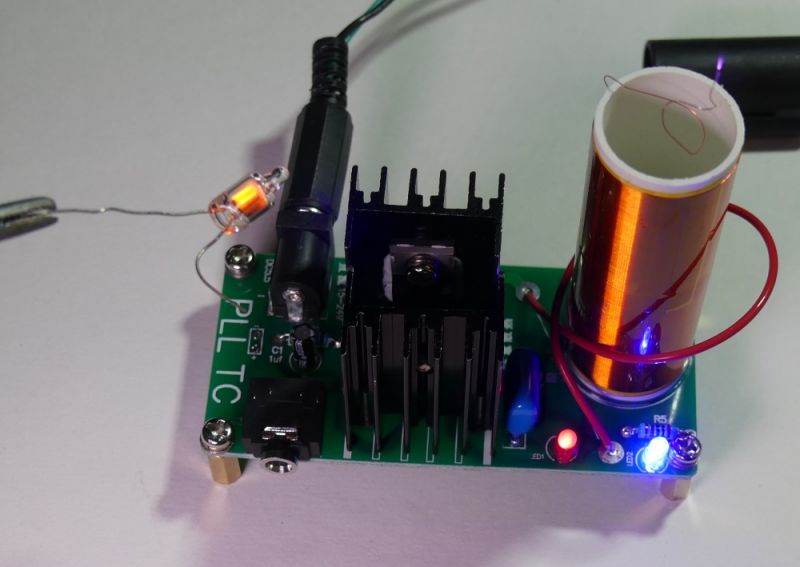


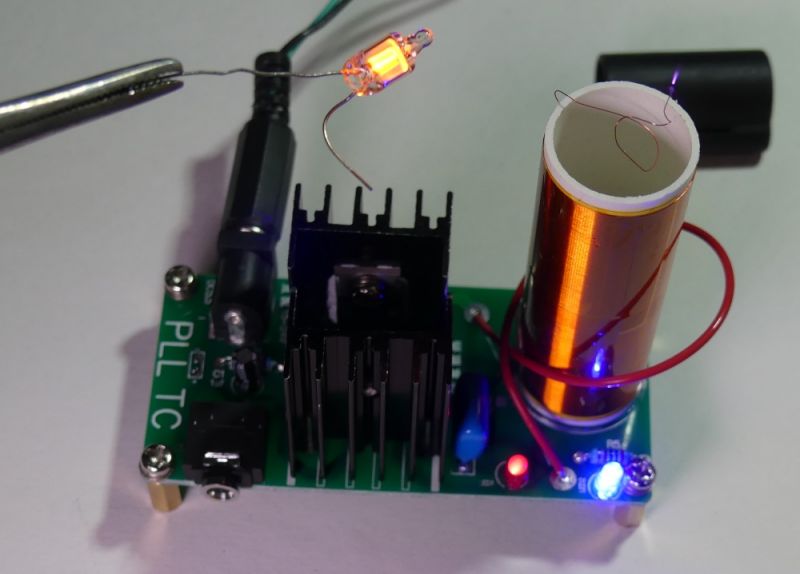
When energized, a corona discharge will appear at the free end of the air coil. When we give the audio signal to the minijack input, the discharge will be modulated to the beat of the music. Placing a neon lamp near the coil will cause the gas to glow. The transistor heat sinks heat up quite strongly during operation to over 60 ° C.
A rather inexpensive MP3 player should be used as an audio signal source due to the possible risk of damage to the connected device. In similar, more powerful designs, optical fiber is used to transmit the signal to the MSTC.


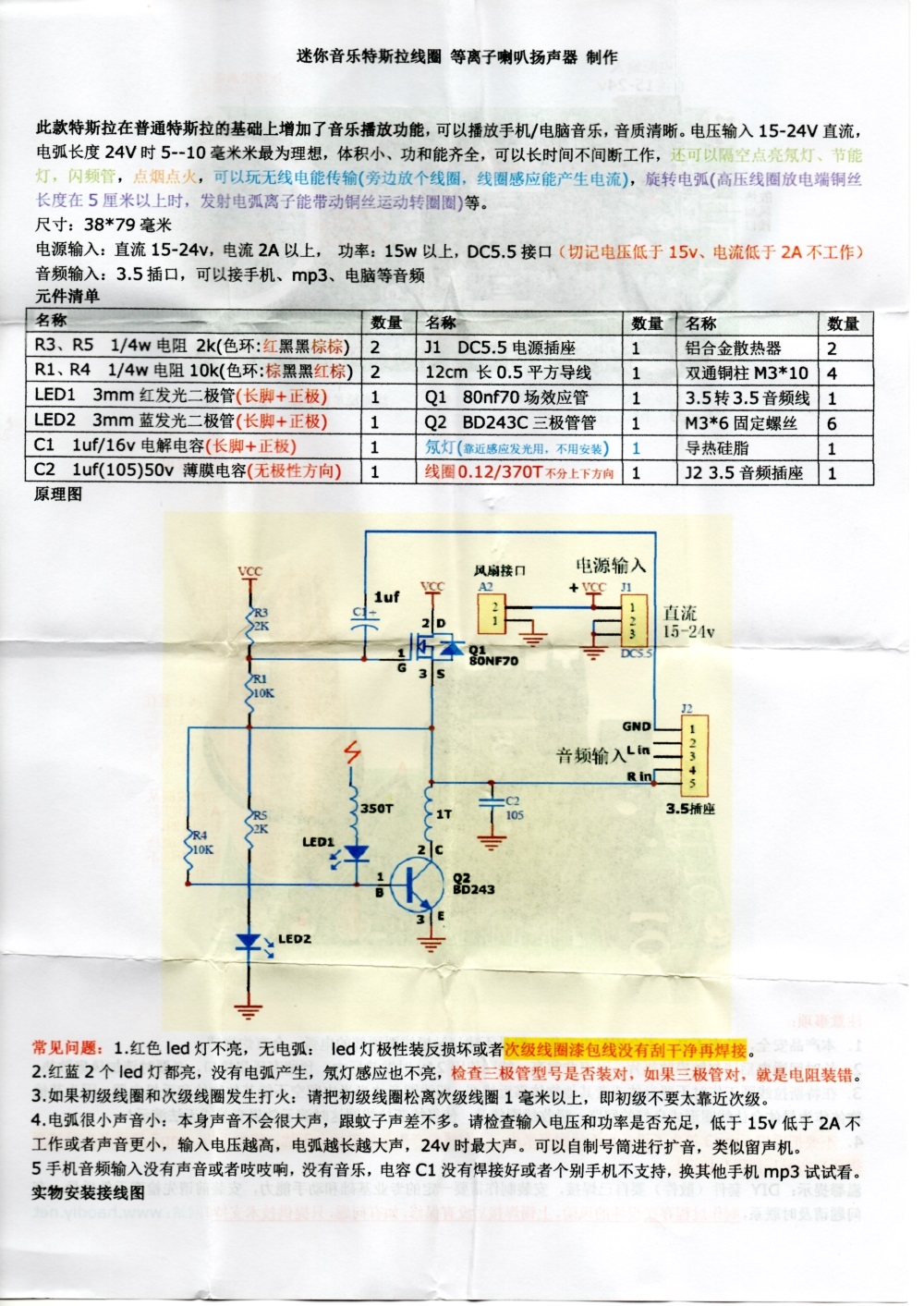
The set includes a manual in Chinese, you can see the assembly of the system (in particular, the method of making the primary winding of the air transformer). The manual also includes a schematic diagram of the device.
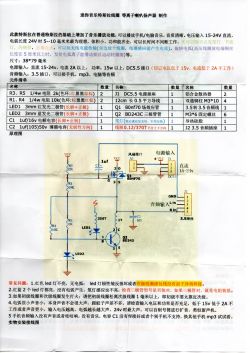
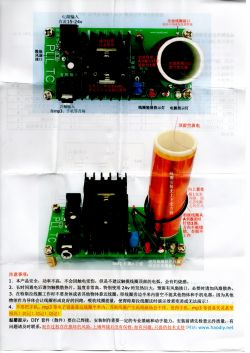
What do you think about such a simple system, what can it be useful for, can it be an introduction to experiments with other types of Tesla transformers, e.g.. SSTC, DRSSTC?

About Author
TechEkspert
TechEkspert wrote 7109 posts with rating 5485 , helped 16 times. Been with us since 2014 year.

Comments

nez 01 May 2018 13:24

As an ignoramus who has two left hands I really like it And there are a lot of experiments with Tesla coils -------------------------------------------------- - now a joke / it's TAKIE MEMENTO... [Read more]

TechEkspert 01 May 2018 17:28

For example, on aliexpress cost 10-20 $: https://pl.aliexpress.com/wholesale?SearchText=electronic+tesla+coil The electric field near the device is so large that similar fluorescent and compact fluorescent... [Read more]

nez 01 May 2018 23:08

Thank you very much for your answer best regards nez [Read more]

kassans 02 May 2018 01:26

Very simple layout, reproducible at home. The coolest thing is a ready-made coil on a tube with which I always have a problem; / [Read more]

rb401 02 May 2018 01:42

A slightly different wording of the query shows that in several (also slightly more serious) stores the price for this kit is even below $ 5: https://en.aliexpress.com/wholesale?SearchText=diy+tesla+coil ... [Read more]

Rezystor240 02 May 2018 09:07

Why? winding the coil in all this construction is the most fun. If anyone knows how to do it, he can do it without any problem. Maybe I will show my Tesla coil which I made some time ago. [Read more]

TechEkspert 02 May 2018 10:32

They are also available directly in Poland, which probably has a positive effect on the delivery time, for example, one of the companies advertising on the home page of elektroda.pl has such sets on offer. ... [Read more]

nez 04 May 2018 16:20

I have a question Is it possible to draw some relatively constant voltage from this (from these Tesla coils)? If so, what? How long can it last? I saw on AliE ... also the 5V-powered coil itself,... [Read more]

TechEkspert 04 May 2018 17:05

Perhaps it would be possible to straighten the output voltage from the coil with the HV diode (diodes), and then smooth it with the HV capacitor, but I have no idea what parameters the output voltage has.... [Read more]

nez 04 May 2018 20:25

TechEkspert Thank you very much for your reply and warning Indeed, such measurements are not that simple I found a page from the high voltage measurement lab I need specialized equipment here are... [Read more]

FAQ

TL;DR: A 15-24 V DIY Tesla coil kit draws 0.6–1 A and costs as little as $4.80; "this circuit causes real damage" [Elektroda, TechEkspert, post #17202976] Hobbyists get corona arcs and audio-driven plasma in under an hour [Elektroda, 17196167]. Why it matters: The kit lets beginners explore high-frequency, high-voltage phenomena without building a full-size coil.

Quick Facts

• Supply: 15–24 V DC, 0.6–1 A [Elektroda, TechEkspert, post #17196167] • Input power peaks at ~24 W (24 V×1 A) [Elektroda, TechEkspert, post #17196167] • Heatsink temperature > 60 °C after minutes of run-time [Elektroda, TechEkspert, post #17196167] • Street price: $4.80–$20, worldwide shipping [Elektroda, rb401, #17198459; TechEkspert, #17197632] • 3.5 mm audio input for plasma music modulation [Elektroda, TechEkspert, post #17196167]

What parts are included in the Tesla electronic miniature coil kit?

The package holds a pre-etched PCB, all through-hole components, two TO-220 transistors, small heatsinks, silicone grease, hot-melt glue, a pre-wound secondary coil wrapped in Kapton tape, one piece of hookup wire for the primary, and a neon test lamp [Elektroda, TechEkspert, post #17196167]

How do I assemble the board correctly?

  1. Solder resistors and small parts first. 2. Bolt the transistors to heatsinks with silicone paste applied. 3. Insert and solder the secondary’s grounded end; wrap one turn of the supplied wire around its base for the primary, then solder the ends as marked [Elektroda, TechEkspert, post #17196167] "Winding the coil is the most fun" [Elektroda, Rezystor240, post #17198596]

Which power supply should I use?

Use a 15-24 V DC source capable of 1 A continuous current. At 24 V the kit draws 24 W, so a 30 W desktop adapter works safely [Elektroda, TechEkspert, post #17196167]

What visual effects can I expect?

You will see a 5–15 mm corona discharge from the free coil end. Nearby fluorescent or CFL lamps glow without wires, and an incandescent bulb shows plasma-ball-like filaments [Elektroda, TechEkspert, post #17197632]

How much does the kit cost and where can I buy it?

Marketplace searches for “DIY Tesla coil” show prices between $4.80 and $20, depending on extras and shipping. Both AliExpress and some Polish retailers stock the board, which cuts delivery to a few days [Elektroda, rb401, #17198459; TechEkspert, #17197632; #17198688].

How hot do the transistors get during operation?

During continuous arcs the heatsinks exceed 60 °C. Touch risk is high; allow airflow or add larger fins if you run longer than 2–3 minutes [Elektroda, TechEkspert, post #17196167]

Is the device safe for users and nearby electronics?

The field can upset pacemakers, induce currents in cables, and destroy sensitive ICs. TechEkspert warns the circuit "causes real damage" to nearby electronics [Elektroda, TechEkspert, post #17202976] Keep phones, credit cards, and laptops at least 50 cm away, and never touch the secondary tip while powered.

Can I extract a steady high voltage output?

Rectifying the RF output with high-voltage diodes and smoothing with HV capacitors is theoretically possible, yet waveform, frequency, and peak value remain undefined. Without laboratory probes rated above 1 kV, expect unstable DC and significant ripple [Elektroda, TechEkspert, post #17202976]

Does the number of primary turns matter?

Performance changes, but the circuit is tolerant. Online listings show 0.5–3 primary turns for the same PCB, indicating loose coupling still produces arcs [Elektroda, rb401, post #17198459] More turns lower current but reduce arc length; experiment within that range.

Is this kit a good step toward SSTC or DRSSTC projects?

Yes. It introduces resonant tuning, insulation handling, and RF safety at low power. Skills transfer directly to solid-state Tesla coils that use similar driver concepts but higher voltages and feedback networks [Elektroda, TechEkspert, post #17196167]

Can I power the board from a 5 V USB source?

Not directly. Output shrinks sharply below 12 V, and most USB supplies cannot deliver the 3–4 A needed after boosting. Use a 5 V-to-15 V step-up converter rated ≥25 W if 5 V is your only option; expect shorter arcs.
Generated by the language model.
%}