Hi! Another project for my workshop equipment is MPCNC, i.e. a CNC milling machine printed on a 3D printer, today I will share my humble opinion with you (no time for testing, session at PW

).
I always wanted to be able to precisely cut elements in wood, plexiglass and aluminum. I couldn't afford ready-made milling machines, so I decided to build my own

The milling machine elements were printed on the printer which he writes about here:
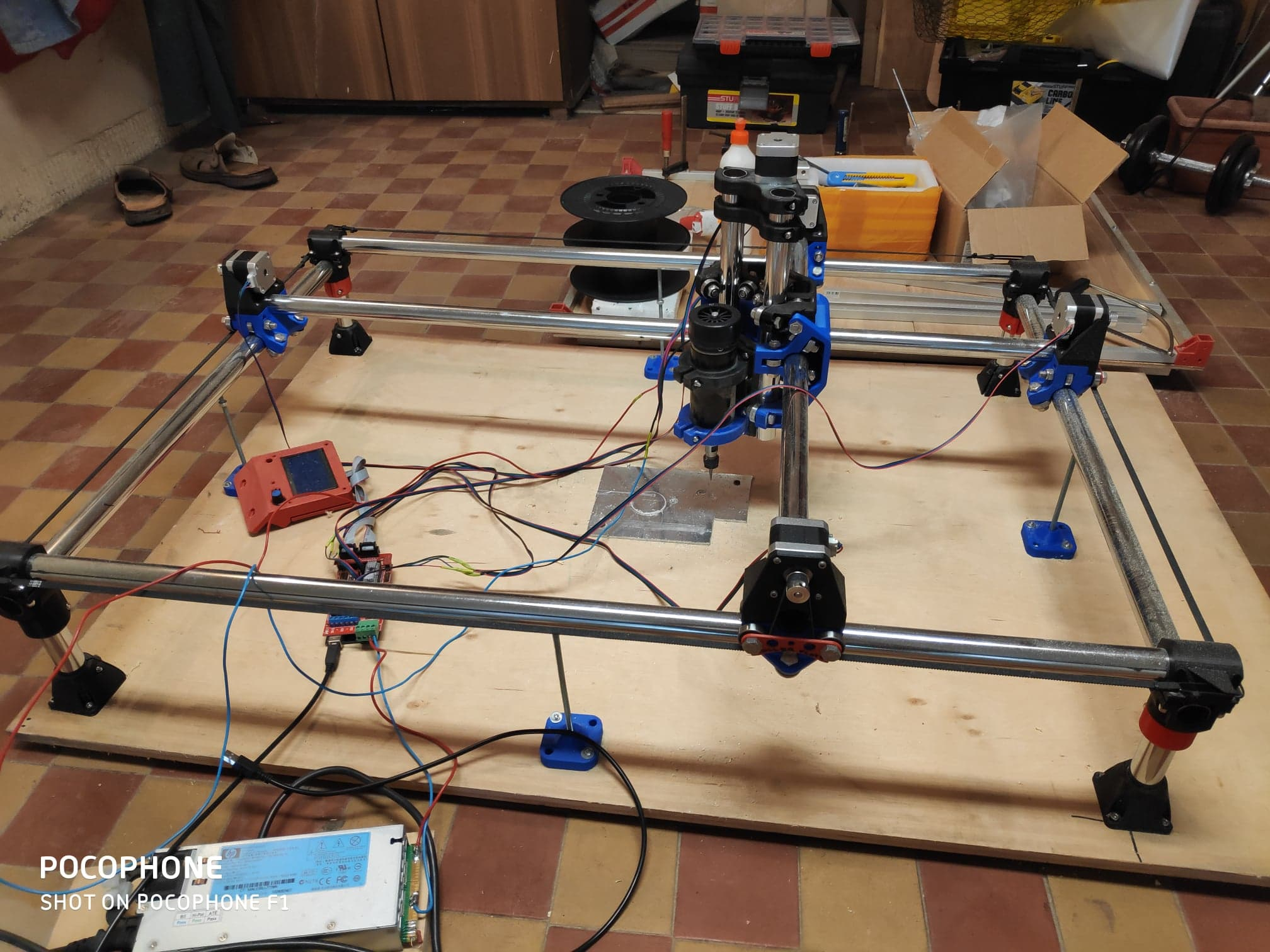
Link Before further reading I present the still not finished MPCNC:
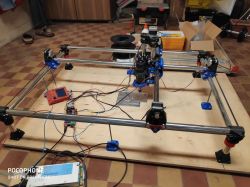
THE PROJECT IS NOT MINE AND IS GENERALLY AVAILABLE AT THIS LINK:
Link Elements needed for construction:
- PLA 2kg about PLN 120
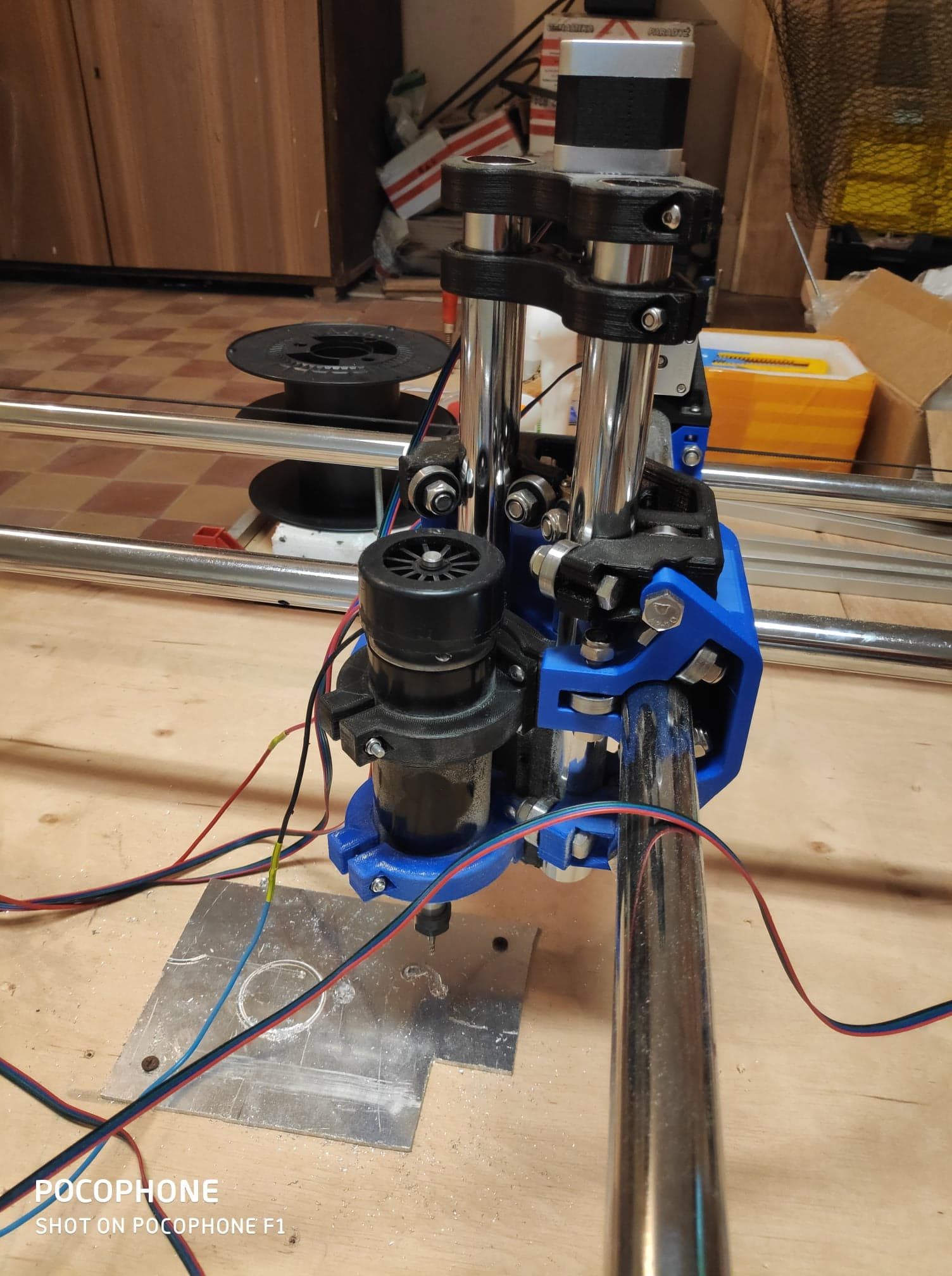
- 500W air-cooled spindle 350 PLN
- Nema 17 engines 5 pieces PLN 150
- Belts and gears about PLN 20
- Pipes (I had) the approximate cost is about PLN 50 for the pipes that I used
- Bearings, probably 608RS 60 pieces, about PLN 60
- Screws (various types) about PLN 50
- T8 trapezoidal screw about PLN 10
- Flexible coupling to nema 17 about PLN 2
- 12v 500W power supply (I have from old servers from my dad from work)
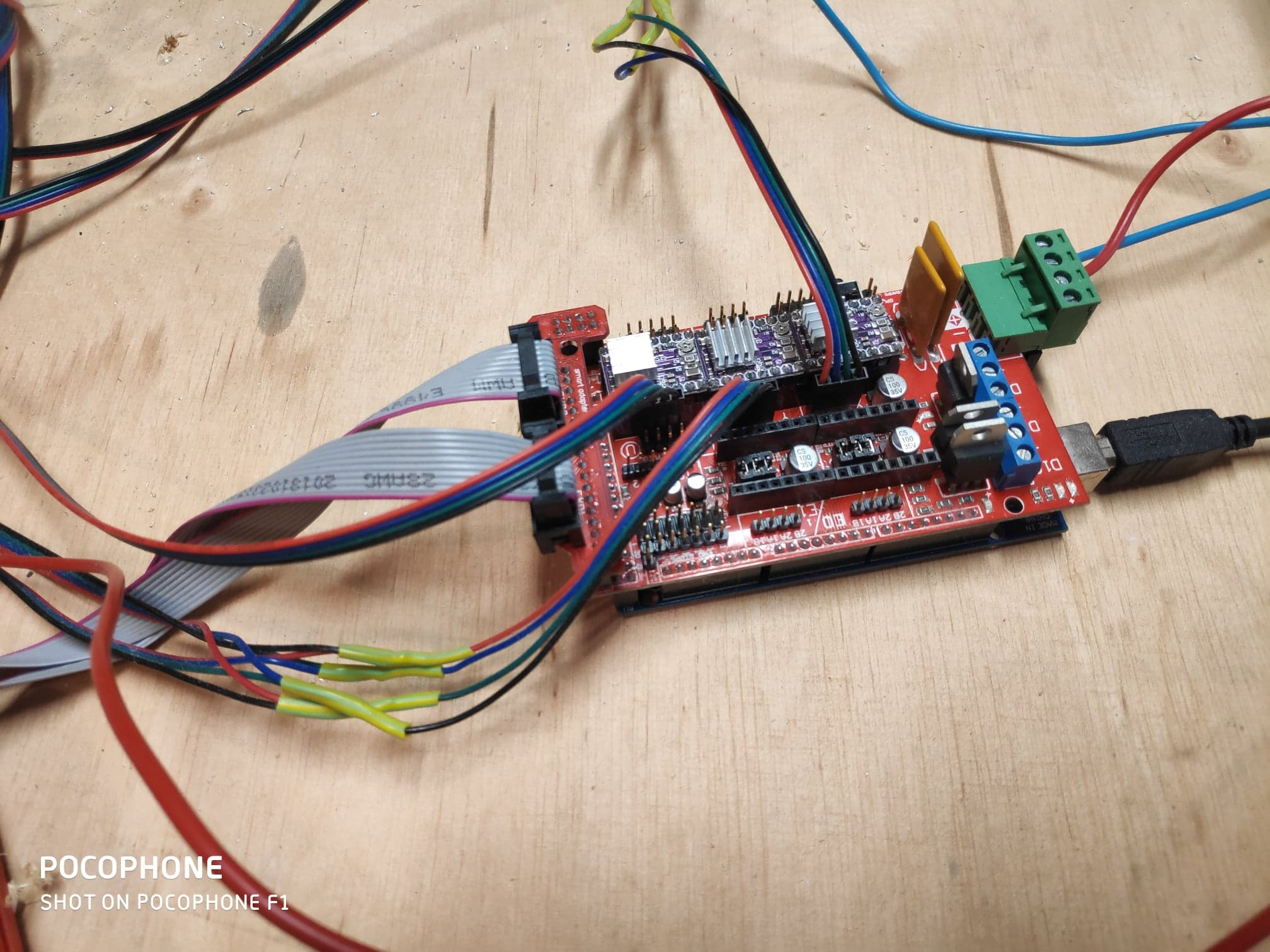
- Ramps 1.4 + Arduino Mega 2560 about PLN 60
- DRV8825 stepper motor drivers 3 pieces about PLN 10
The total cost, not counting the plywood as a table top, is about PLN 900
Before I start talking about whether it is worth mentioning a few more nice and thoughtful aspects of the machine.
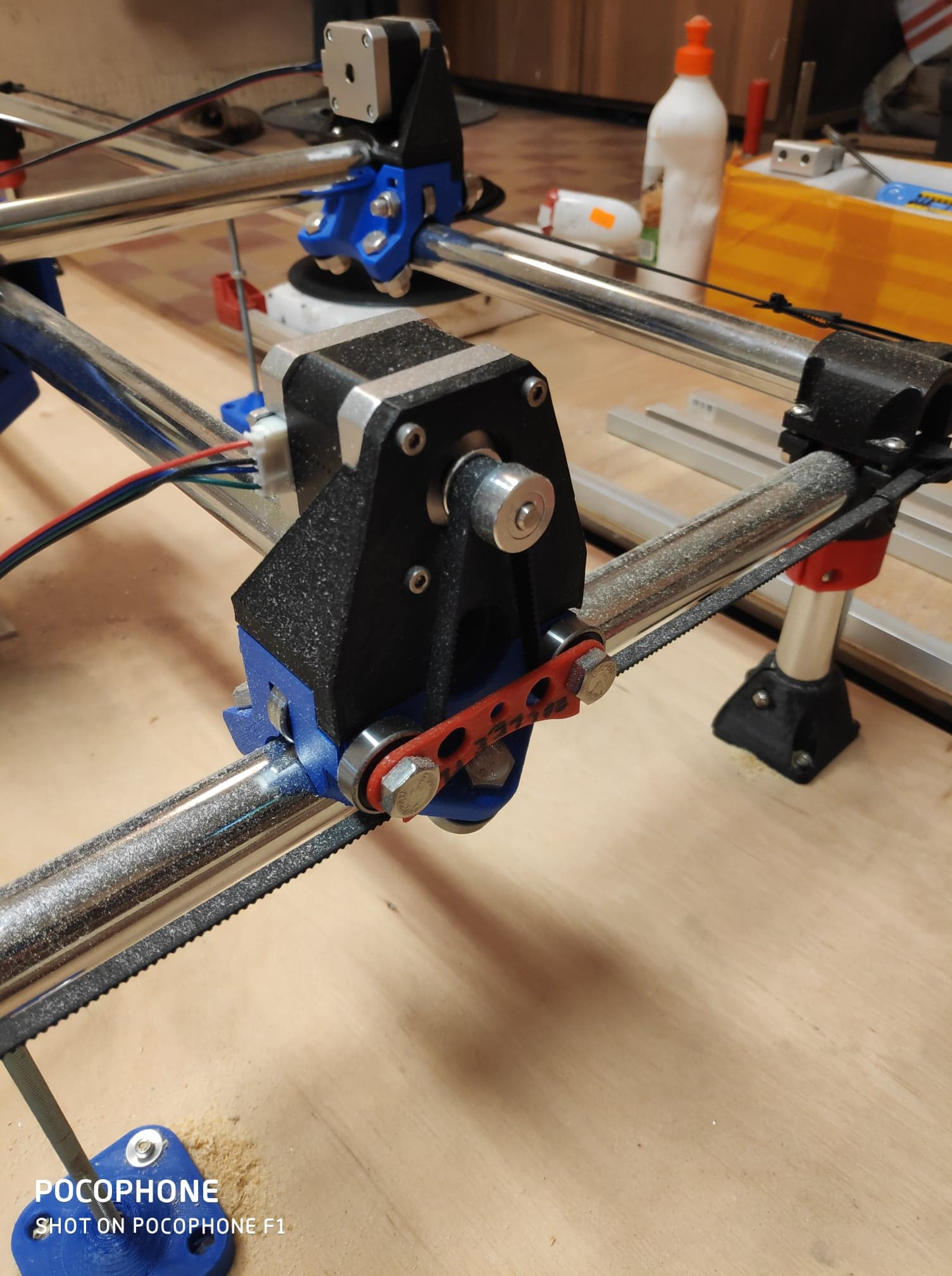
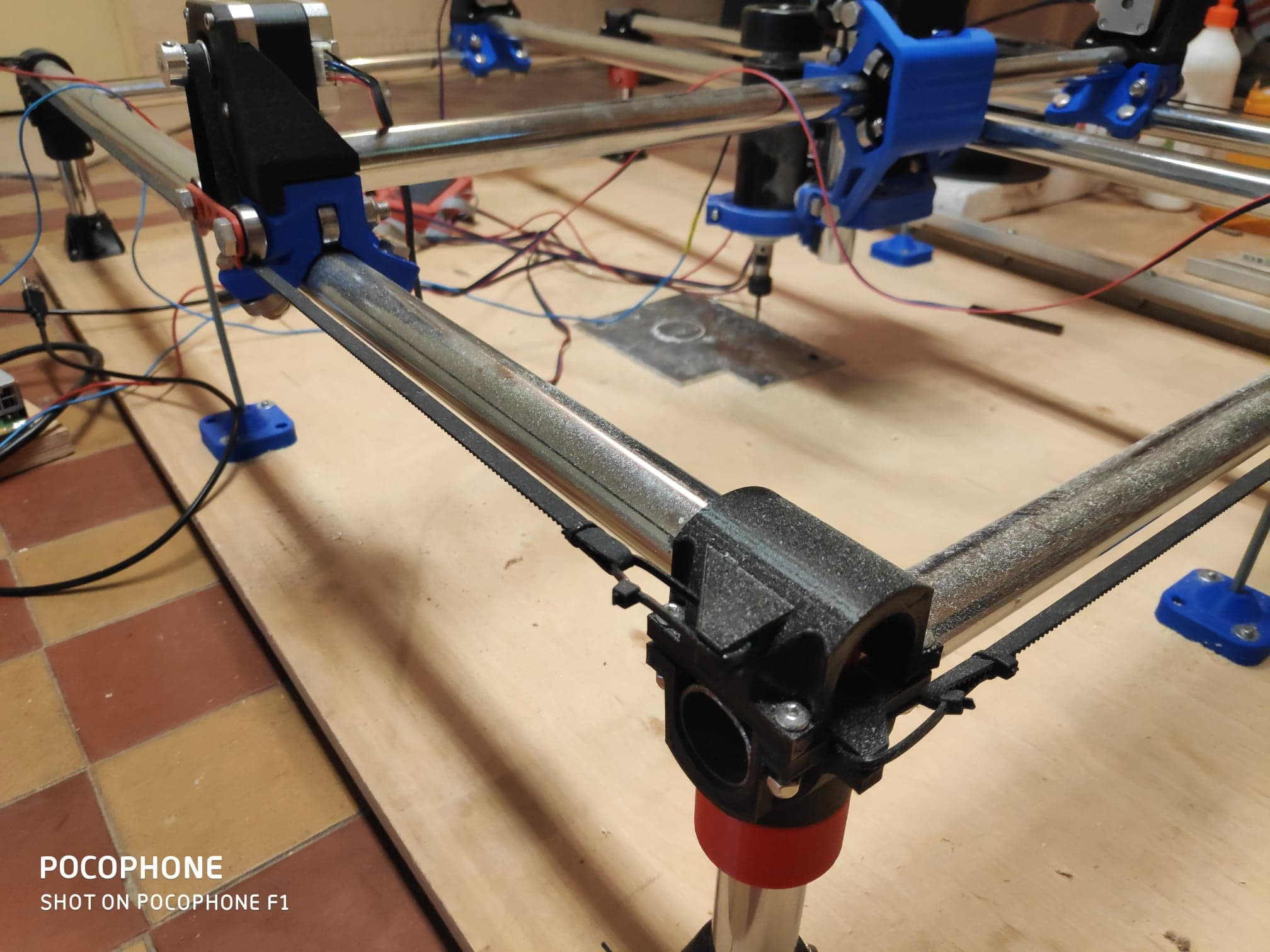
The first thing is fixing the straps on the cable ties, there is no problem with tightening them:
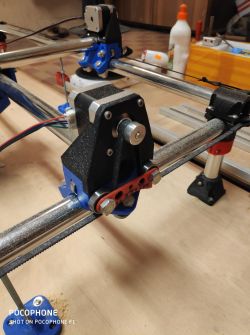
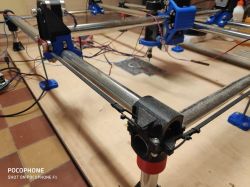
Second thing is nema 17 motors, no need nema 23 because of two motors on X and Y axis.
Easy to use and build for everyone, there are tons of descriptions and tutorials on the internet
and some of the works that someone squeezed out of this machine are beyond belief
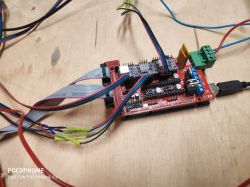
Due to the large number of guides on how to assemble and configure the machine, I will skip this topic, but I will only mention that there is a modified marlin on the arduino
An important aspect of the machine is that you can theoretically get an unlimited working area, it is enough to buy longer pipes (for me the working area is about 70x50cm)
but everyone knows that this is not possible mainly due to the lack of stiffness, so the smaller and lower the better
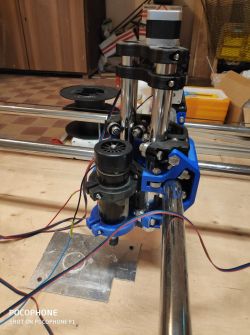
No more praising, time for machine trouble. The first main problem is the low stiffness of the original structure, you have to add some improvements here
Another problem is the pace of work, which is mainly due to the rigidity of the machine and the spindle used
Can MPCNC be recommended and is it worth investing?such money into a "toy"? At the moment, it is difficult for me to judge due to the lack of time to test the machine, at the moment it looks promising for amateur and hobby applications
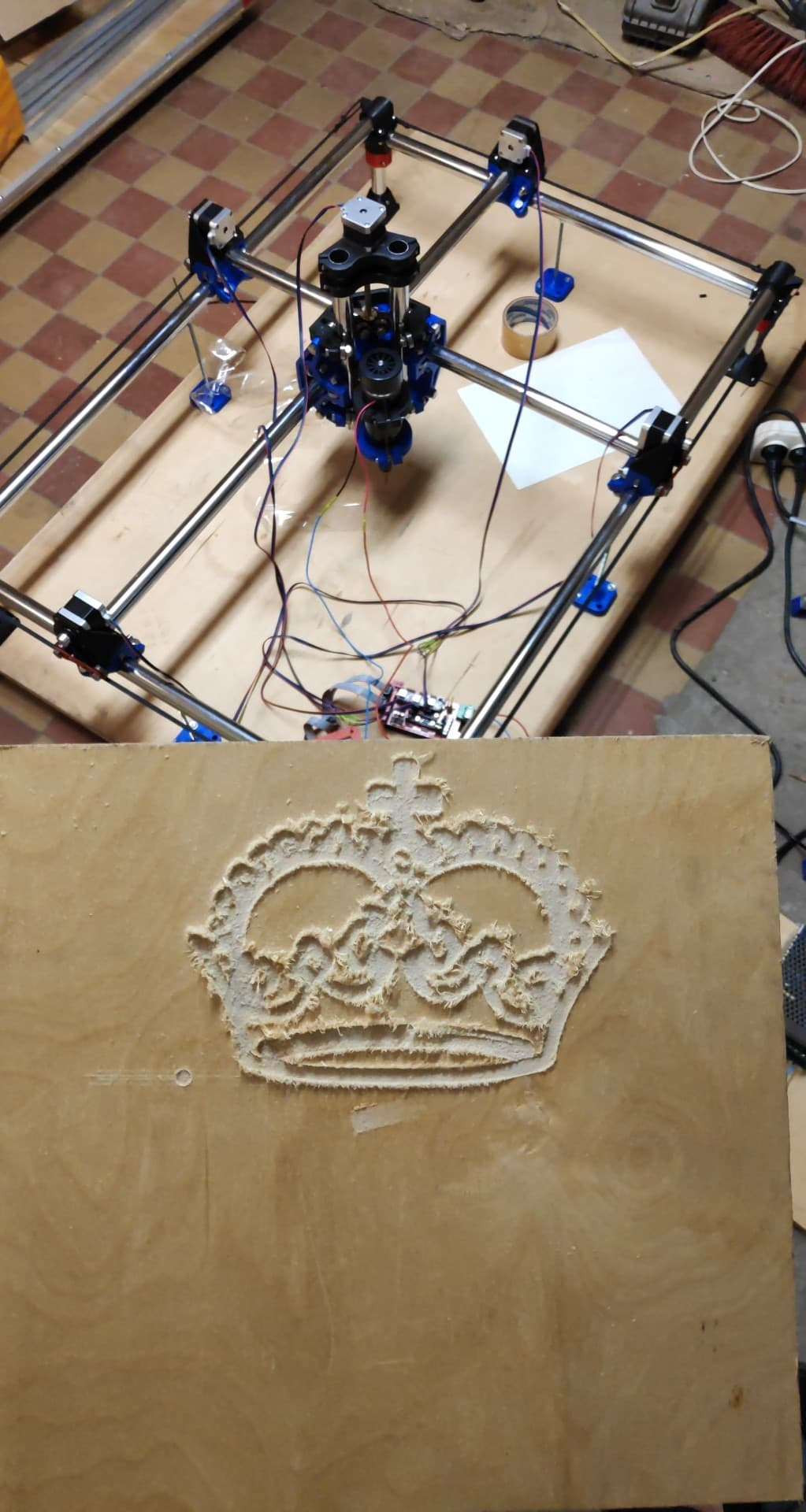
The only test I was able to do was the crown engraving (done with a 6mm cutter, I had no other
)
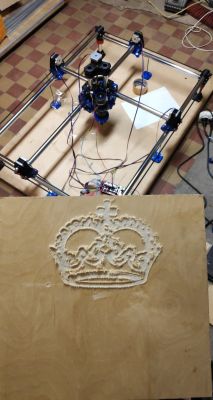
I was quite positively surprised that I didn't improve the machine, I just plugged everything in and let the milling go
In my spare time, I start milling aluminum, we'll see how he can handle it
The software I use is AutoCad, NX, Fusion360 and EstlCam.
If I did not write something, please let me know, I will be happy to answer questions and any comments, criticism is welcome







Comments
The stripes disqualify this design from precision milling due to the complete lack of stiffness, unless someone is satisfied with the tolerance measured in mm, and several ;) For the fun and satisfaction... [Read more]
How does this spindle work? Will you provide his model? I am of this opinion too. I have an identically made laser plotter and after running the same pattern twice, you can see the shift. And you... [Read more]
The spindle is a Chinese that I had at hand, it's hard to say if it has a model, in the evening I will upload a link to the store where I used to buy it :) is doing well so far. The power in the... [Read more]
Hello Regarding the spindle, I bought this model over 6 years ago, if I remember correctly 400W. During this time, the spindle in my amateur machine worked about 400 hours and never caused any problems.... [Read more]
What is the tolerance of this device? What is the minimum thickness of the cutter (it is important for rectangular holes)? Is it accurate enough that it can be used for milling, for example, the front... [Read more]
My MPCNC version: https://obrazki.elektroda.pl/6588798700_1559898210_thumb.jpg The dimensions are 60x60cm, but with this construction the working area is very smaller, it is about 25x30cm if... [Read more]
For me, the external dimensions are about 100x75cm, i.e. the working area is about 70x50cm :) I recommend buying cable guides in China, a meter costs about PLN 15, so I do not know whether PLA or what... [Read more]
Slawek K. on YT you have homemade 3D dukarki milling PCBs for LQFP and everything on strips. Stiffness is a problem, but you can get good precision. [Read more]
If there is no stiffness, then there is no precision, it goes straight hand in hand. Greetings [Read more]
What kind of pipes did you use? I can't find the right size. I only found such chrome tubes for hangers 25x1mm do you think it's enough? The working area is 1000x1000mm. It will serve as a home... [Read more]
I used pipes for hangers 25x1mm, it's not bad in general. The plasma cutter should be fine :) [Read more]
Hello. "- Bearings, probably 608RS 60 pieces, about PLN 60" Where does this number - 60 pcs - of bearings in this project come from? [Read more]
Another question. What software do you use? I especially mean the cam. [Read more]
I use Artcam Express 2015. Greetings [Read more]
AVE ... I have such a spindle in my milling machine - it works efficiently and without problems. Before that, I managed to burn the 300W spindle, although I only cut 5mm plywood. I was thinking about... [Read more]
This machine is based on the bearings, they are just used for smooth movement on the pipes, you just need to look at the design creator's website and see how the machine is broken :) the exact number... [Read more]
I used tubes with a 2mm wall - despite the fact that I have a small working area, I preferred to add a bit and increase the stiffness. [Read more]
Hi. For 1 set you can buy a milling machine from a Chinese on screws, on linear bearings, and with a driver. I don't know if this one is worthwhile. I have built 4 CNC milling machines and I... [Read more]
I have one, after modifications - it is not worth the effort, unless you are at the stage of learning. For me, of course, the milling machine turned out to be "too soft", but the number of "accidents"... [Read more]