logo elektroda
logo elektroda
X
logo elektroda
Dostępna jest polska wersja

Czy wolisz polską wersję strony elektroda?

Nie, dziękuję Przekieruj mnie tam

CNC plotter with drag knife + CAM software

drzasiek  34 12468 Cool? (+32)
📢 Listen (AI):

TL;DR

  • A home-built CNC plotter with a drag knife cuts paper decorations for a spouse, replacing a Brother Scanncut that had become loud, slow, and too small.
  • It uses a reinforced OpenBuilds frame, a custom 3D-printed Z axis, a stepper-driven knife, and a push-back spring to set cutting pressure.
  • The machine is built on a 165 x 85 cm frame, and the custom CAM tool CuterCam took about 1.5 months to write.
  • CuterCam loads DXF or SVG files, arranges shapes automatically, and generates g-code in a few clicks for very complicated drawings.
  • The first light-servo Z-axis idea failed, and the frame was considered too flexible for a drag knife, so it was strengthened.
Generated by the language model.

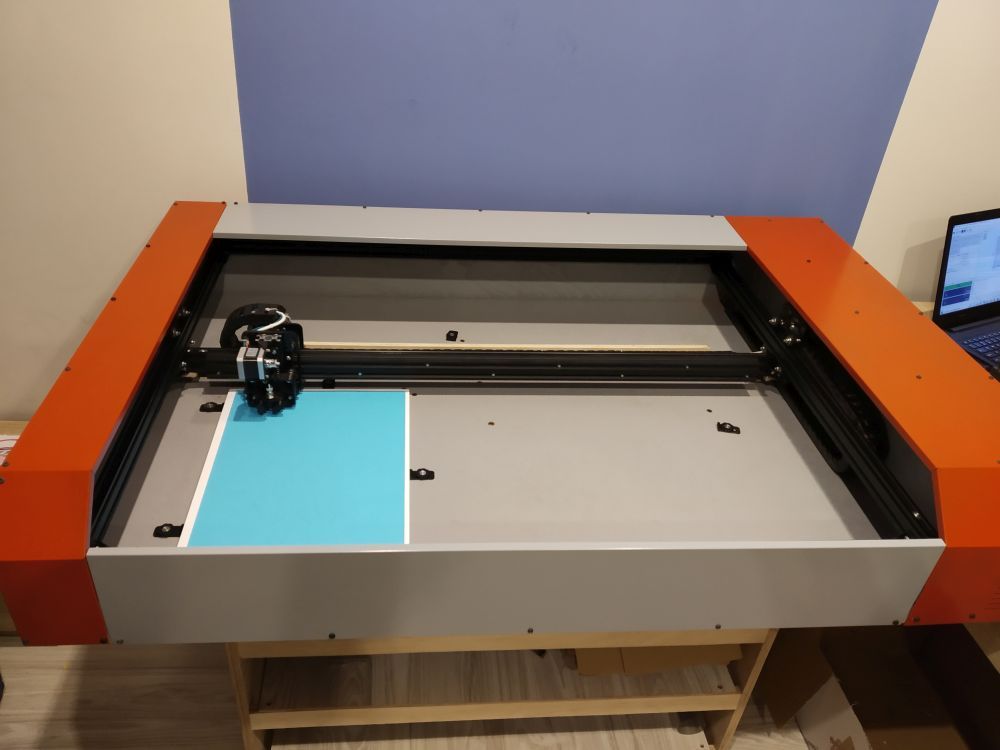
Today I present a CNC machine - a plotter with a drag knife which I made for my own use (for my spouse).
The spouse designs and cuts out decorations from paper. So far, he uses the Brother Scanncut plotter. The machine works quite well, although after cutting, I think that already thousands of decorations show some wear. In addition, it works quite loudly, which is a bit disturbing because the studio is at home (the engines probably work at full speed, the housing vibrates a lot) is slow and the working area sufficient for an A3 sheet has started to be insufficient.
A decision was made to build a new machine with a larger working area.
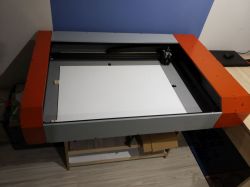
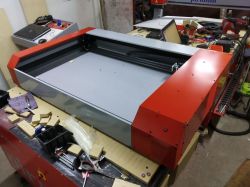
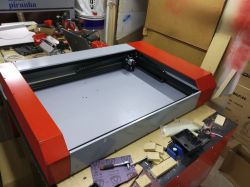
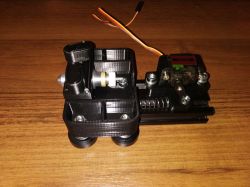
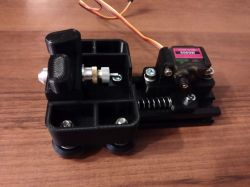
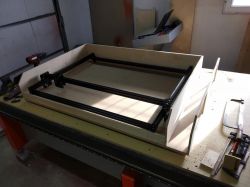
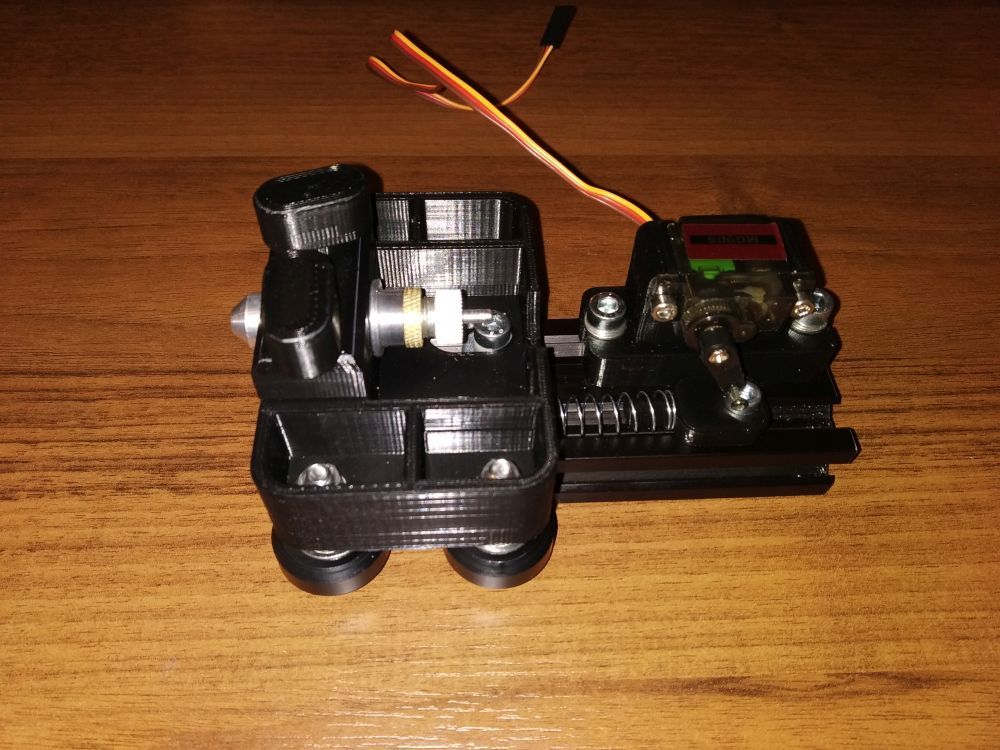
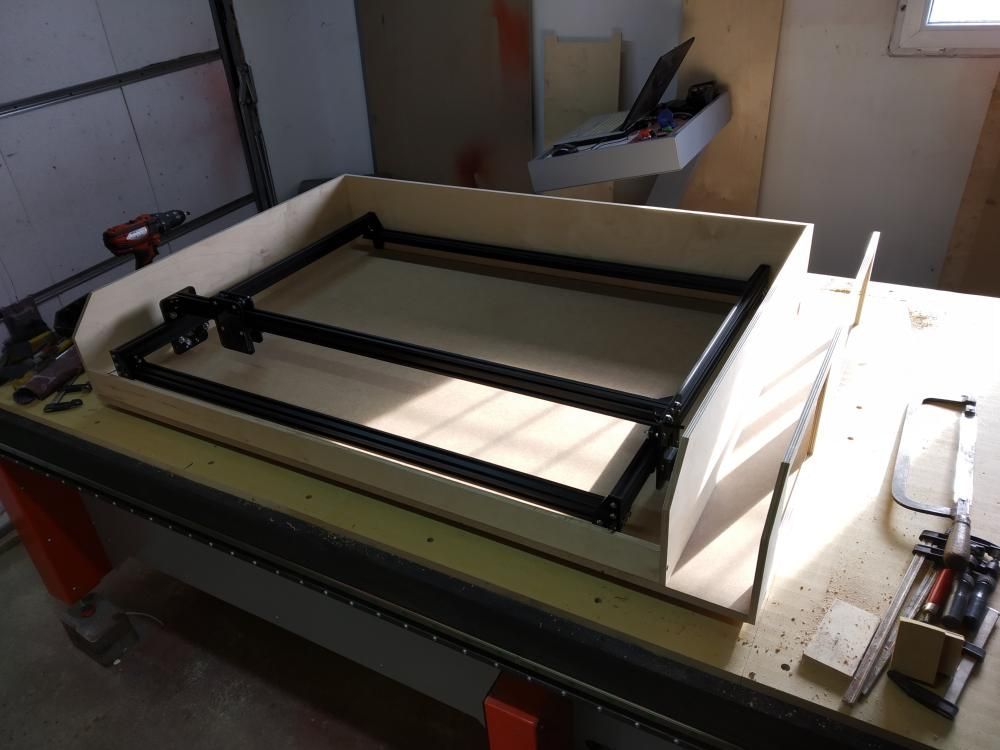
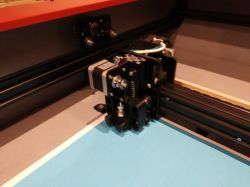
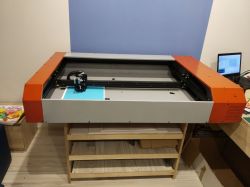
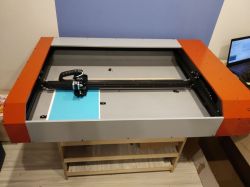
Initially, the idea was for a laser. Despite my concerns about inserting the laser into the house (need for extraction, flammable material, etc.), I took the first steps. I bought a 30W laser and to speed up my work a bit, I also bought a 165 x 85 cm frame according to the openbuilds project. In the meantime, however, it was decided that a drag knife would be the best solution for this application. The already purchased frame, a bit too flexible for a drag knife, but for the one without the Z axis, I decided to use it. I made the Z axis myself, a trolley with a head holder printed on a 3D printer. I strengthened the frame and mounted it in the reverse position. Initially, I wanted the axle to be light and I wanted to use a modeling servo as a drive (see the photo), but I quickly found out that it was a bad idea. Finally, the Z axis drives the stepper motor, the pressure of the knife by a push back spring.
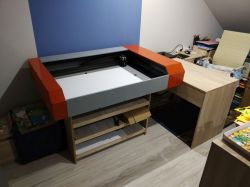
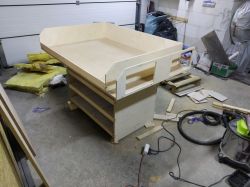
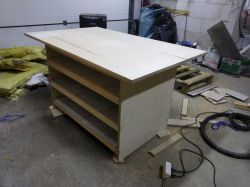
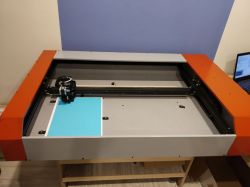
The housing is mainly plywood and MDF (used scraps and waste that I had) and 0.5mm steel sheets as covers. There is also a table with shelves for mats and paper.
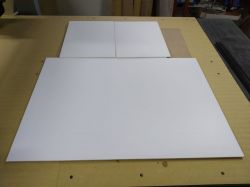
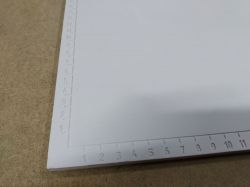
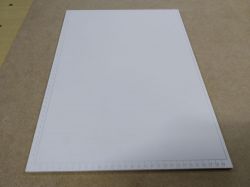
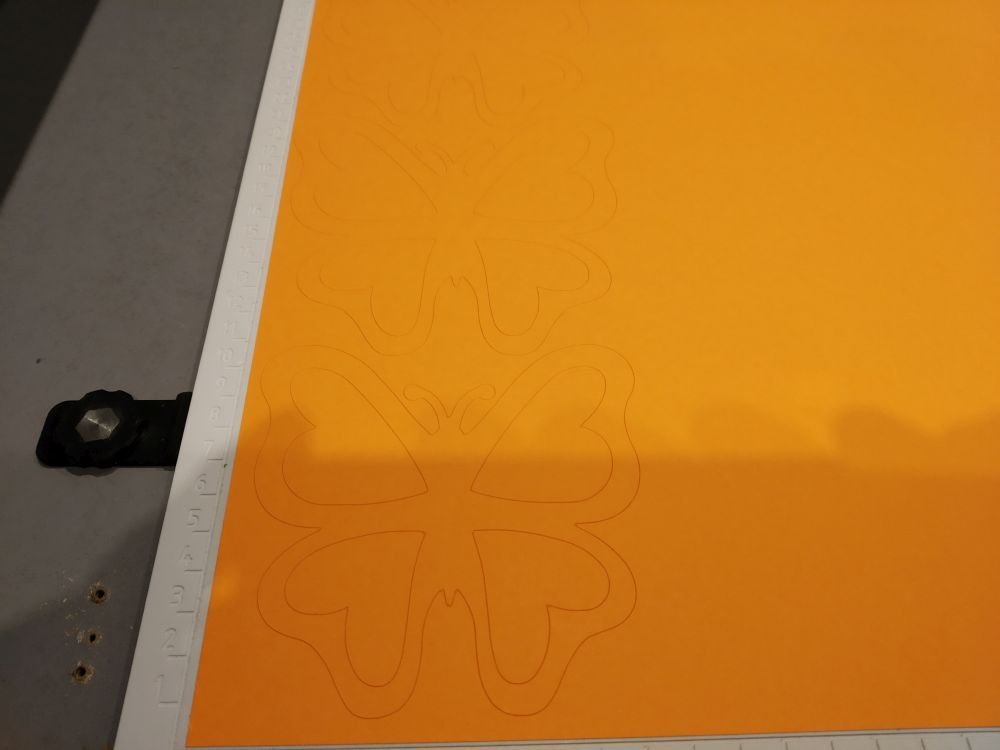
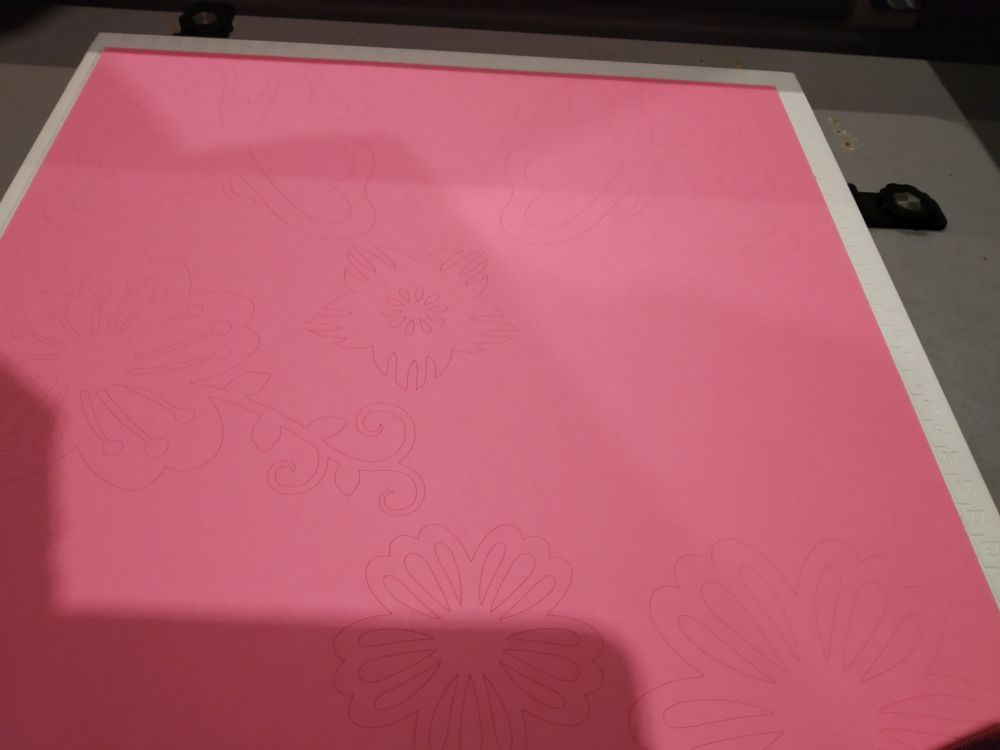
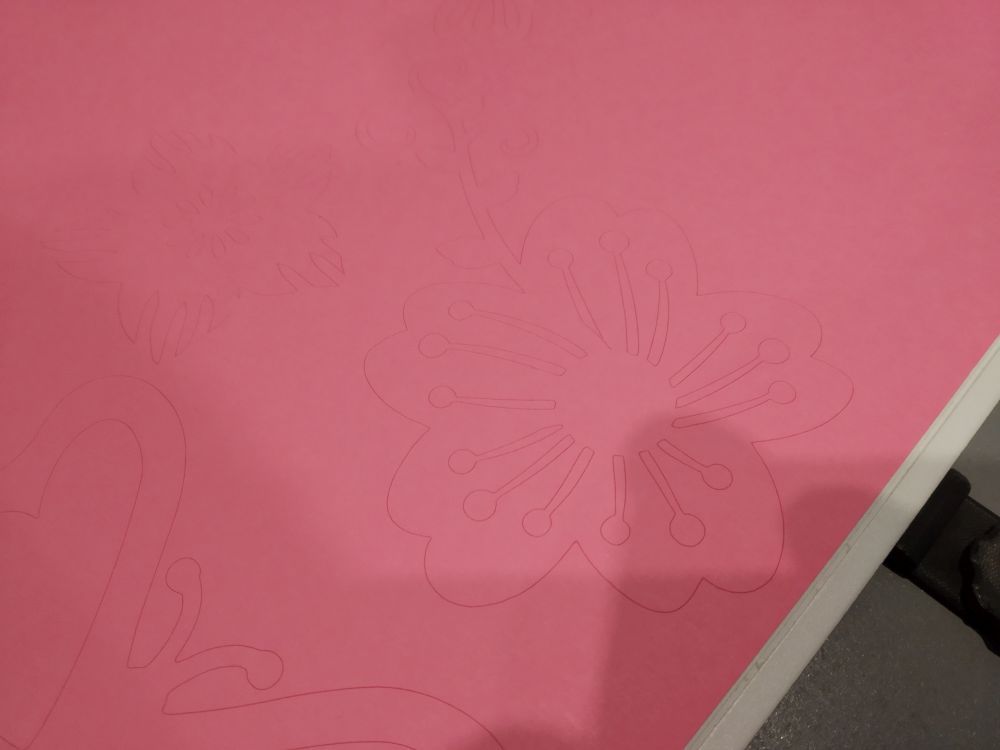
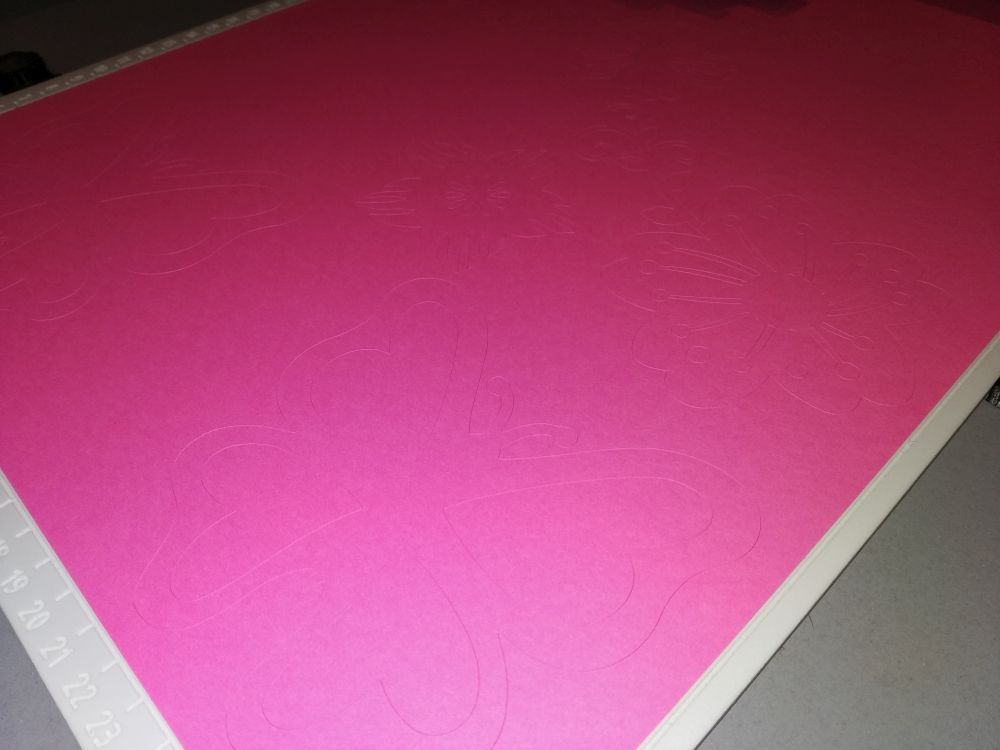
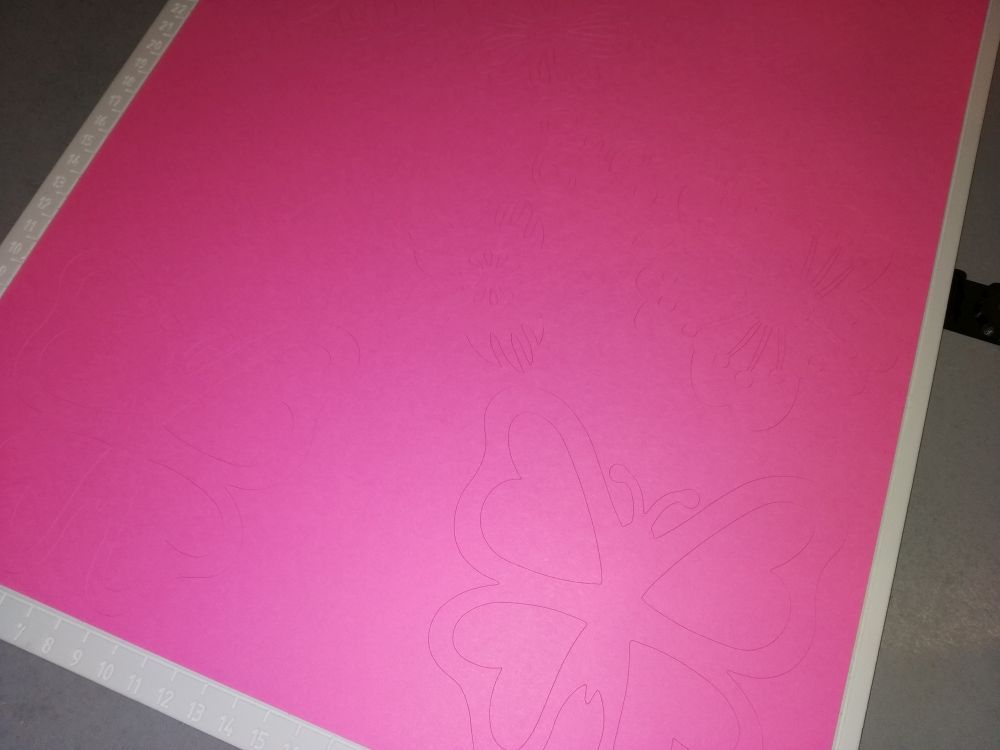
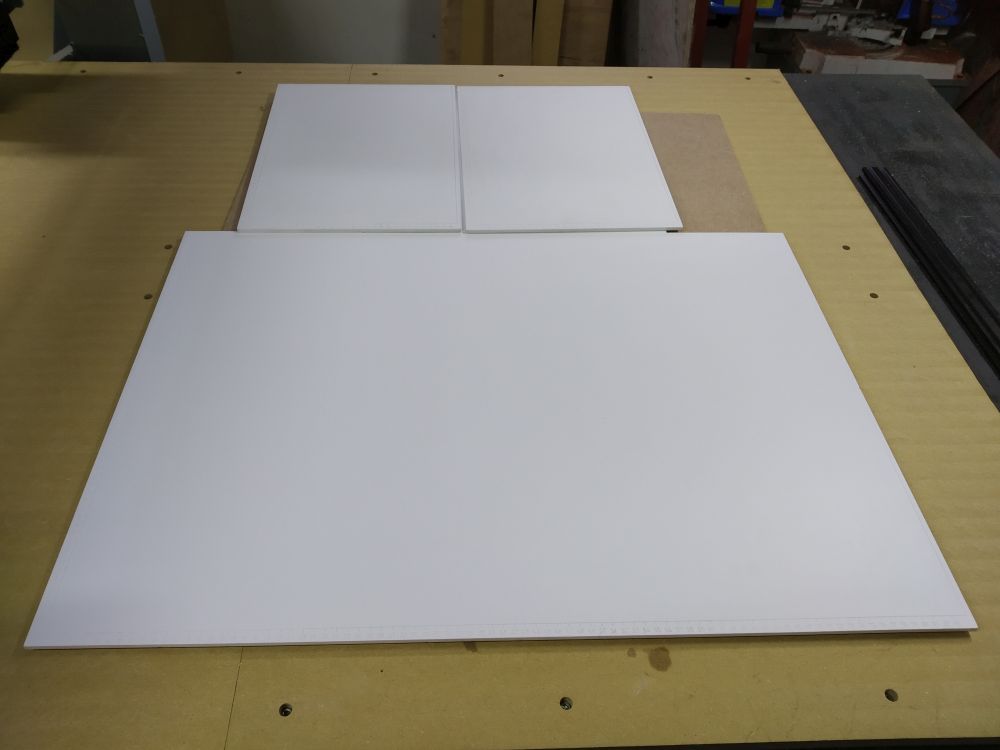
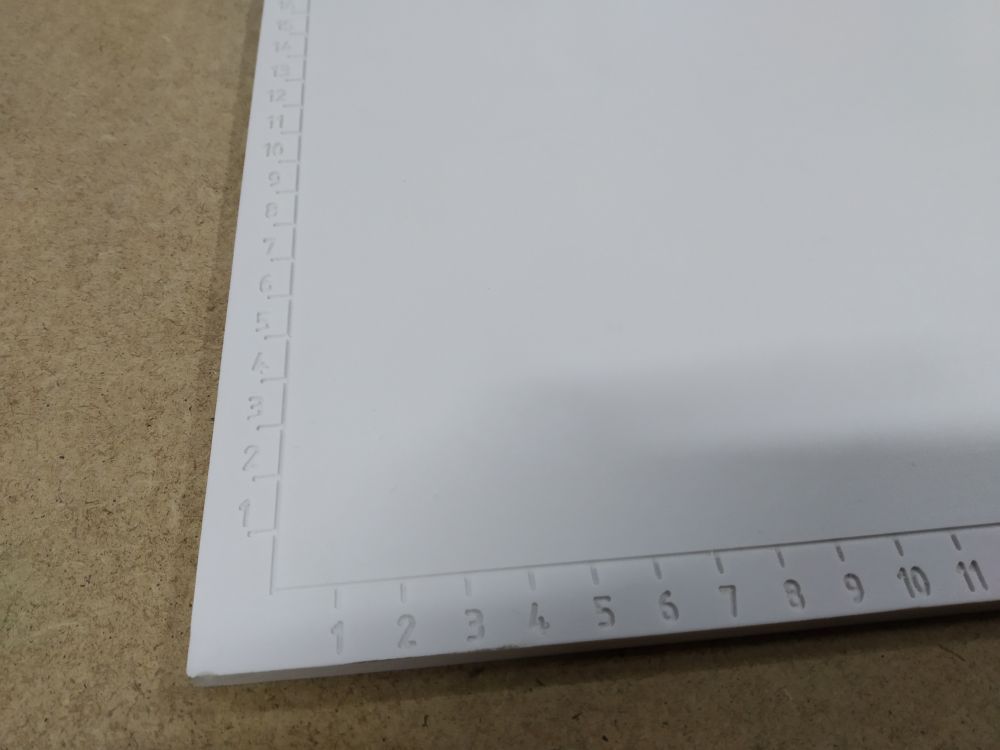
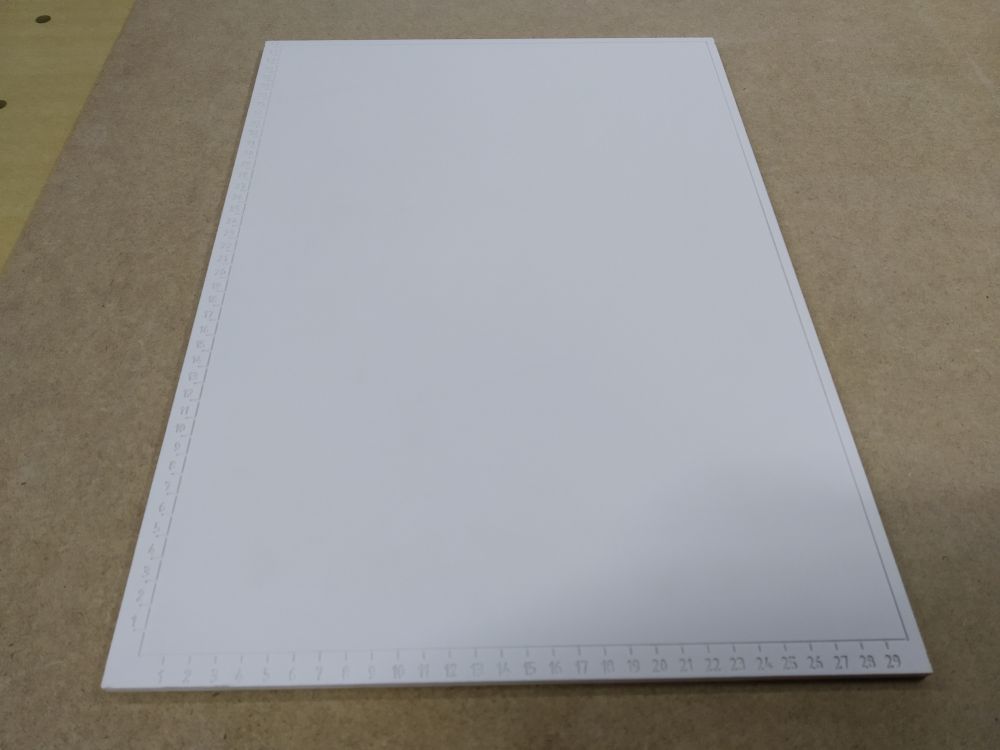
The paper mats are 6mm foamed PVC with scales engraved on the milling machine to make it easy to arrange the paper.
Controls are GRBL and CNC Shield, on Universal gcode sender computer.
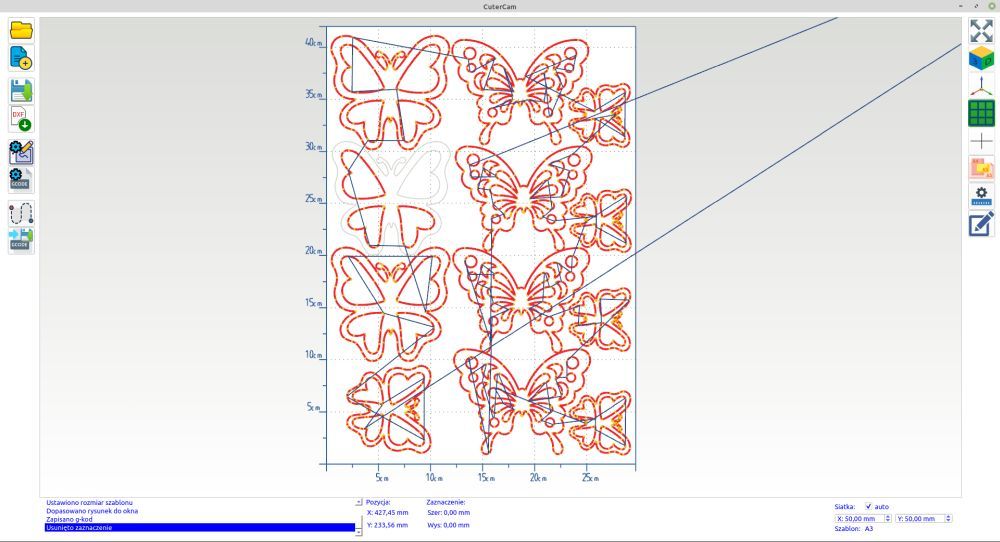
Since it was hard for me to find a tool that would be simple, easy and quick to generate the toolpath, I did my job. This is the program I called CuterCam and it was this stage that took the longest (about 1.5 months).
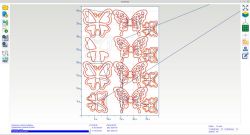
The program loads a dxf or svg drawing, detects the shapes itself, determines the order based on the algorithm. Shapes can be moved, rotated, duplicated, deleted, hidden, grouped etc. and arranged freely on the selected mat. In fact, it takes just a few clicks and the g-code is ready for a very complicated drawing. The program has a wizard of post-processors, you can create and save many of them. Shapes are cut out according to one of 3 algorithms:
- internal first
-external first
-nearest shape
In addition, the program allows you to control the angle of the knife entry. After completing the previous shape, the program saves the knife setting angle (angle of the last vector of motion) and starts the next shape from the place where the angle of the first vector of motion is as close to it as possible. This allows the knife to be lowered immediately to the cutting direction, it does not have to turn back in place, so there is no risk of breaking it or tearing the material out when turning.

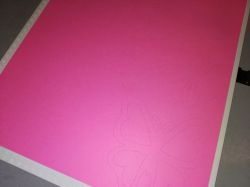
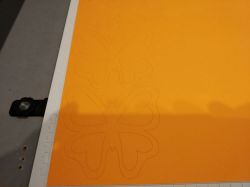
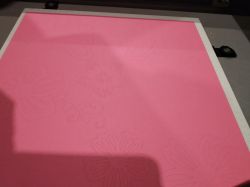
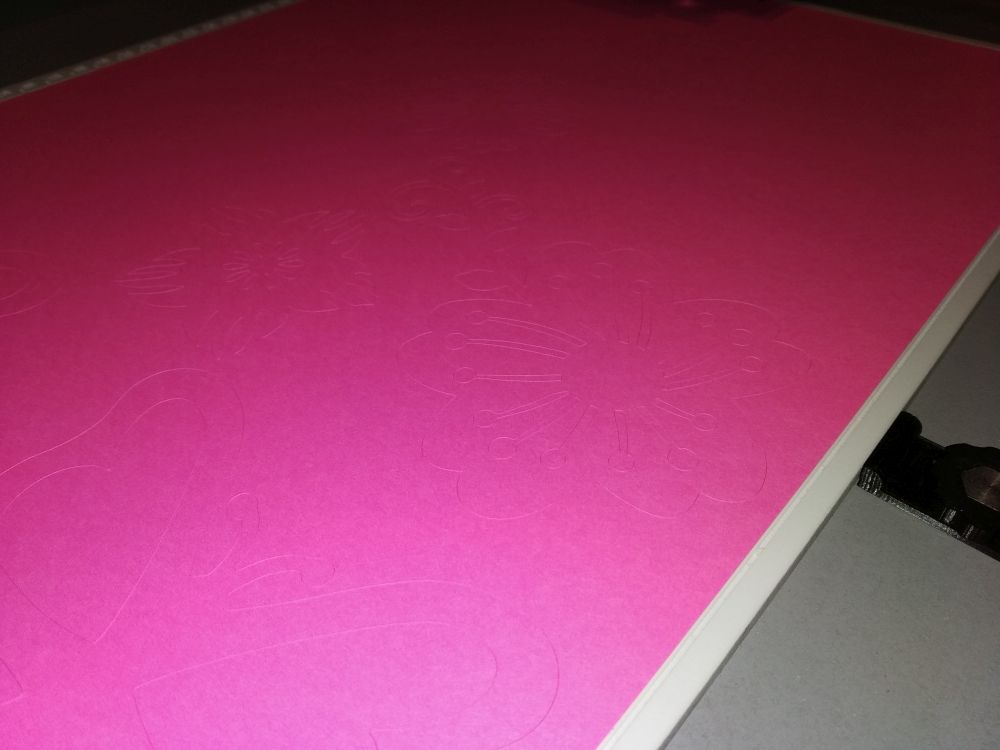
Below are some photos that have survived from the construction and a video of cutting out and the work of the CuterCam program.

About Author
drzasiek wrote 2209 posts with rating 3232 , helped 106 times. Been with us since 2009 year.
Comments

miszcz310 09 Mar 2021 16:12

I don't know anything about it, but wouldn't an ordinary servo (control 0, 1) be enough for the Z axis? The advantage would be to reduce the weight of the ambulance. [Read more]

CMS 09 Mar 2021 16:29

How did you solve the knife contact pressure adjustment and cutting depth for different materials? Typically these applications use a coil and you have a stepper motor. [Read more]

drzasiek 09 Mar 2021 17:50

Gentlemen, I don't think you've read it :) Originally there was an idea to use a servo (you can see it in the photo) but it was too slow and too weak (you killed yourself by lifting the head pressed... [Read more]

Przybyłek 09 Mar 2021 18:13

Write something more about underlays, how the underlay sticks to your table and how the undercoat sticks to your table. [Read more]

drzasiek 09 Mar 2021 19:52

The mat is made of 6mm thick foamed PVC. I have mats in sizes A3, A2 and A1. The mat is simply placed on the table against the base stops (Left and Bottom). On the right and top there are locks with butterflies.... [Read more]

Przybyłek 10 Mar 2021 12:52

Please write me what is this glue? Could this foundation be thinner? Do you buy ready-made ones with measuring cups, or do you somehow mill the measuring cups yourself? [Read more]

drzasiek 10 Mar 2021 13:33

Temporary glue for paper, on but ... it's full of it. The backing could be thinner and it could be thicker :) I chose 6mm because I thought it would be thin enough not to be too expensive and thick... [Read more]

CMS 10 Mar 2021 18:23

And everything is clear. When it comes to holding the paper, I repaired the plotter (drawing in ten different colors with pens) several times, probably Roland, where the worktop was made of "electrifying"... [Read more]

drzasiek 10 Mar 2021 19:32

I have to be interested in this because it sounds interesting. The glue is good and reliable, but every few dozen sheets of mate you have to clean and apply glue. When drawing, the forces on the paper... [Read more]

Przybyłek 10 Mar 2021 19:48

I have exactly this Roland, and I have the same frame as the author. That is why I am asking, because the PVC would stick electrostatically thin and the paper with glue. [Read more]

CMS 10 Mar 2021 19:58

Looking at the date of your joining the group of our forum members, I do not exclude that your plotter could also be hosted on my operating table at one time. :) . Unfortunately, I had the last case of... [Read more]

Przybyłek 10 Mar 2021 21:56

I am 32 years old and have known the stories of this plotter since almost I was born. He was at the Lodz University of Technology, he had a converted holder in which you put a marker pen and drew PCBs... [Read more]

drzasiek 10 Mar 2021 22:04

I do not know what model you have, but somewhere I saw Roland's plotter drawing, he was murdering himself terribly, in the sense he drew all the gaps with lines and he slowed down terribly. Additionally,... [Read more]

Przybyłek 10 Mar 2021 22:09

I associate the number 980 in the name with something. That's right, when I drew a PCB in protel99 and it was controlled by the Windows driver, it was a bit like that. But with the Autotrax, or rather... [Read more]

Slawek K. 11 Mar 2021 06:10

Great performance ;) I am planning to make such a plotter for cutting stickers for models in a 1:14 scale. In my concept, it will be a cutting plotter on a roller because the foil is rolled up and it is... [Read more]

drzasiek 11 Mar 2021 07:09

There is no shortage of plotters that cut the foil from the roll. I don't know if it will pay off wasting time building your own, unless there are specific requirements that trading plotters do not... [Read more]

Slawek K. 11 Mar 2021 08:09

I know, but I do all the machines myself, such a deviation ;) I don't need a plotter for profit and hobby purposes, so the economy doesn't matter here :D Greetings [Read more]

Przybyłek 11 Mar 2021 11:08

It's not about earnings, but you'll probably get one for free or for PLN 100-200. I had two old A1 cars and they were scrapped last year because there were no volunteers. [Read more]

Slawek K. 11 Mar 2021 11:32

Ok, I suggest you respect your friend's thread and not drag on Offtop ;) Greetings [Read more]

FAQ

TL;DR: Drag-knife plotters cut 170 g/m² cardstock up to A1 size while staying under 60 dB [Elektroda, drzasiek, post #19306777]; “the motor works reliably, quietly” [Elektroda, drzasiek, post #19307243] Purpose-built CAM trims corners, preventing knife breakage. Why it matters: Makers gain quiet, low-cost cutting without lasers.

Quick Facts

• Work area: 165 × 85 cm OpenBuilds frame [Elektroda, drzasiek, post #19306777] • Z-axis: stepper lift, spring-loaded pressure (manual screw adjust) [Elektroda, drzasiek, post #19307243] • Cutting mats: 6 mm foamed PVC with engraved grid [Elektroda, drzasiek, post #19307528] • Control electronics: Arduino + GRBL + CNC Shield + UGS sender [Elektroda, drzasiek, post #19306777] • In-house CAM development time: ≈1.5 months (CuterCam) [Elektroda, drzasiek, post #19306777]

What is a drag-knife CNC plotter and how does it differ from a laser or pen plotter?

A drag-knife plotter moves a small, swivelling blade that trails its pivot. Unlike a laser, it uses no heat, so it stays safe in home studios and generates no fumes. Compared with a pen plotter, the blade must arc through corners and compensate for its offset to avoid tearing paper [Elektroda, drzasiek, post #19310023] Typical 45° blades cut vinyl, paper and thin fabric at speeds similar to hobby lasers—100–500 mm/s [Make:, 2023].

Why was a stepper motor used for the Z-axis instead of a hobby servo or electromagnet?

Tested RC servos proved “too slow and too weak” to lift the spring-loaded head, and internal potentiometers wear out quickly [Elektroda, drzasiek, post #19307243] Electromagnets of similar size overheated during long strokes. The stepper lifts quietly, releases tension during cutting, and needs no feedback sensor.

How is cutting depth and pressure adjusted for different materials?

Depth is set once by screwing the knife farther in or out of its holder; pressure comes from an adjustable compression spring on the head [Elektroda, drzasiek, post #19307243] For new materials you: 1. raise knife flush with mat, 2. advance 0.1–0.3 mm, 3. test-cut a small square, increasing spring preload until clean separation.

What methods hold paper or fabric flat on the bed?

The build uses light tack aerosol adhesive on 6 mm PVC mats; sheets release after cutting and mats clean every few dozen jobs [Elektroda, drzasiek, #19307528; #19309603]. Alternatives include electrostatic beds found in Roland plotters, which “literally sucked the paper to the table top” [Elektroda, CMS, post #19309443] Vacuum tables also work but add noise and cost.

Can soft, stretchy materials such as felt or synthetic wool be cut?

Yes, provided the material is immobilised. Use stronger temporary adhesive or carrier tape and choose a longer, steeper-angle blade (60–70°) to shear fibers. Industrial drag-knife cutters process upholstery and garment fabrics this way [Gerber, 2022]. Cut slower—below 100 mm/s—to stop snagging. Thick felt over 3 mm may need two passes.

What is CuterCam and how does it speed up tool-path creation?

CuterCam is a custom C++/Qt CAM tool that loads DXF/SVG, groups shapes, optimises order and generates G-code in “just a few clicks” [Elektroda, drzasiek, post #19306777] It offers three sequencing modes (inner-first, outer-first, nearest-shape) and matches knife entry angle to the exit of the previous cut, reducing turnaround and breakage.

3-step How-To: Generate ready-to-cut G-code in CuterCam

  1. Import DXF/SVG; auto-detect shapes.
  2. Pick mat size, then drag, copy or rotate parts until the sheet fills.
  3. Select post-processor, choose ‘Internal first’ and click Export—G-code with correct knife offset and arc commands (G02/G03) saves automatically.

Why are arc commands (G02/G03) preferable to many short line segments?

Sending pure linear segments forces firmware to start/stop at each node, causing vibration and longer jobs. GRBL supports G02/G03, then internally subdivides with constant speed, so the machine glides through curves [Elektroda, drzasiek, post #19334628] “Throwing a program that contains only linearly interpolated motions is a feature of a weak CAM program.” [Elektroda, drzasiek, post #19334628]

How much does building a hobby drag-knife plotter cost?

A 165 × 85 cm OpenBuilds frame kit is about US $200, electronics US $40, motors US $60, and misc. plywood/steel sheets US $100. Total ≈US $400–450, excluding spindle tools [OpenBuilds Store, 2024]. Commercial vinyl cutters of similar width start at US $250 but lack large flat beds [SignWarehouse Guide, 2023].

What maintenance is required?

  1. Reapply tack adhesive after 30–50 sheets to keep grip uniform [Elektroda, drzasiek, post #19309603]
  2. Replace blades every 500 m of cut or when corners fray; tips cost US $1–2 each [Roland DG, 2023].
  3. Vacuum PVC dust weekly to prevent roller slip.
  4. Check belt tension monthly.

What edge cases can damage the knife?

Failing to round sharp 90° corners can snap the blade or tear paper because the tip trails the rotation axis [Elektroda, drzasiek, post #19310023] Always let CAM add corner loops or over-cuts. Cutting thick laminate without slowing feed below 50 mm/s also chips edges.

Can an old Roland pen plotter be converted for cutting?

Yes. Design or buy an offset knife holder that fits the pen mount, then use software to add knife offset compensation. One builder exported HPGL from AutoCAD, rewrote vectors for the offset, and re-sent HPGL to the plotter [Elektroda, koczis_ws, post #19334172] Ensure the firmware supports continuous curves or expect stair-stepped arcs.
Generated by the language model.
%}