Let me present my own constructions of my own performance.
I have presented them very briefly / roughly in another topic, not in this section, here they will probably be subject to professional evaluation / criticism.
Maybe they will inspire someone, help someone, building prototypes is really difficult, but users of the DIY Constructions section probably know that.
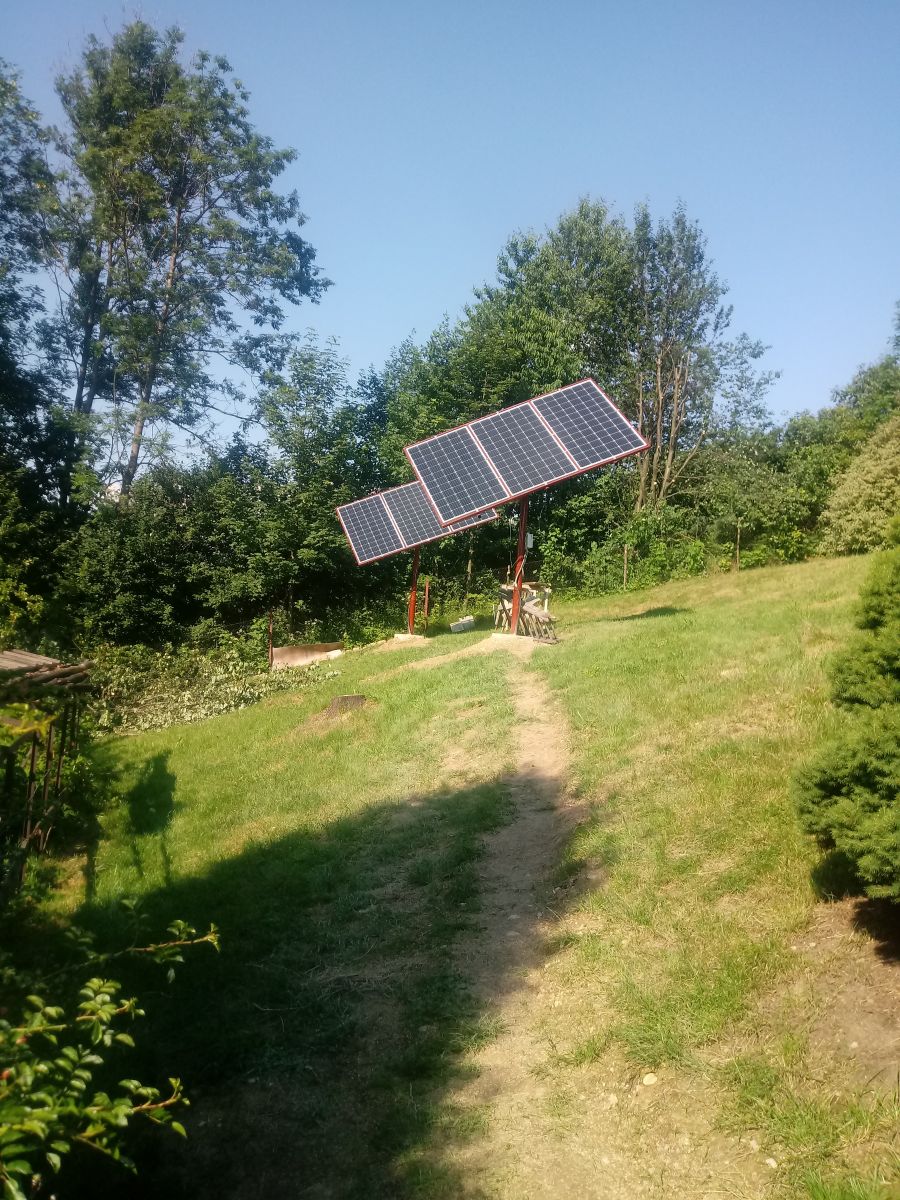
Two single axis trackers:
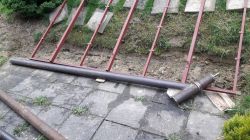
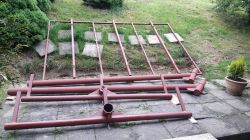
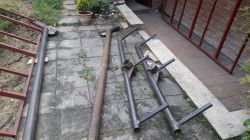
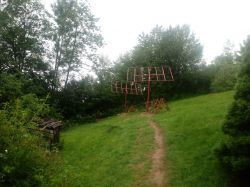
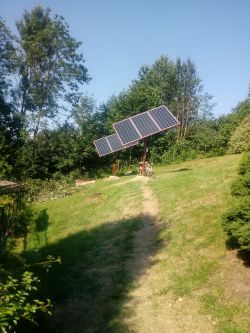
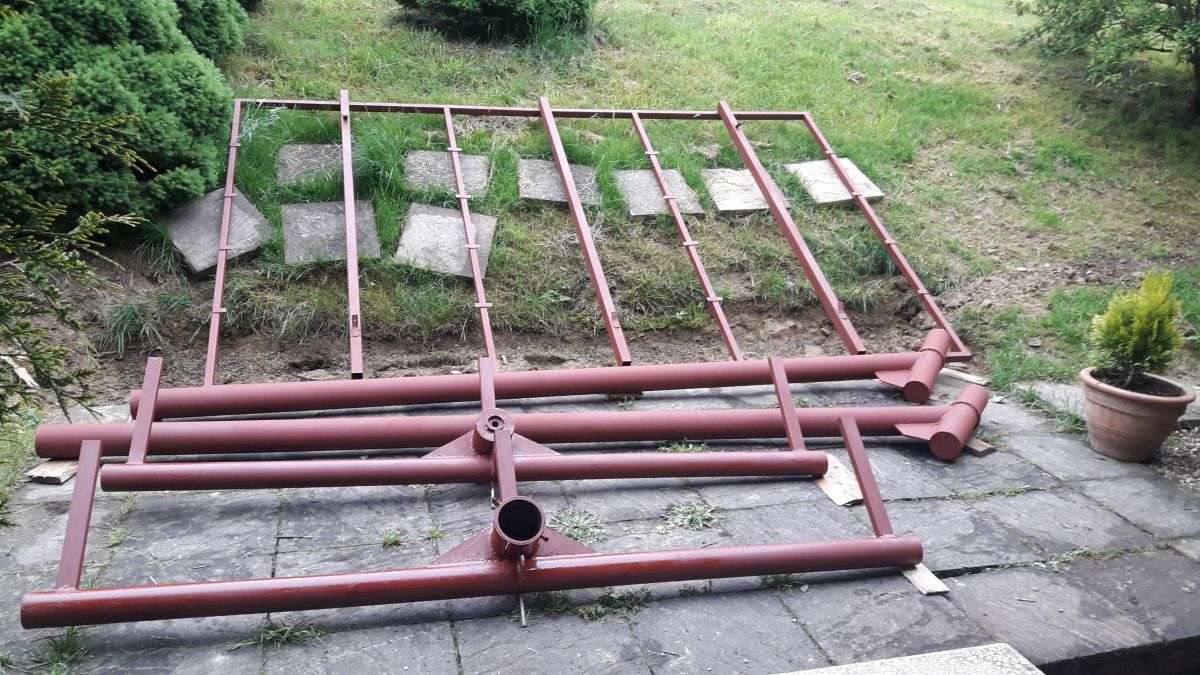
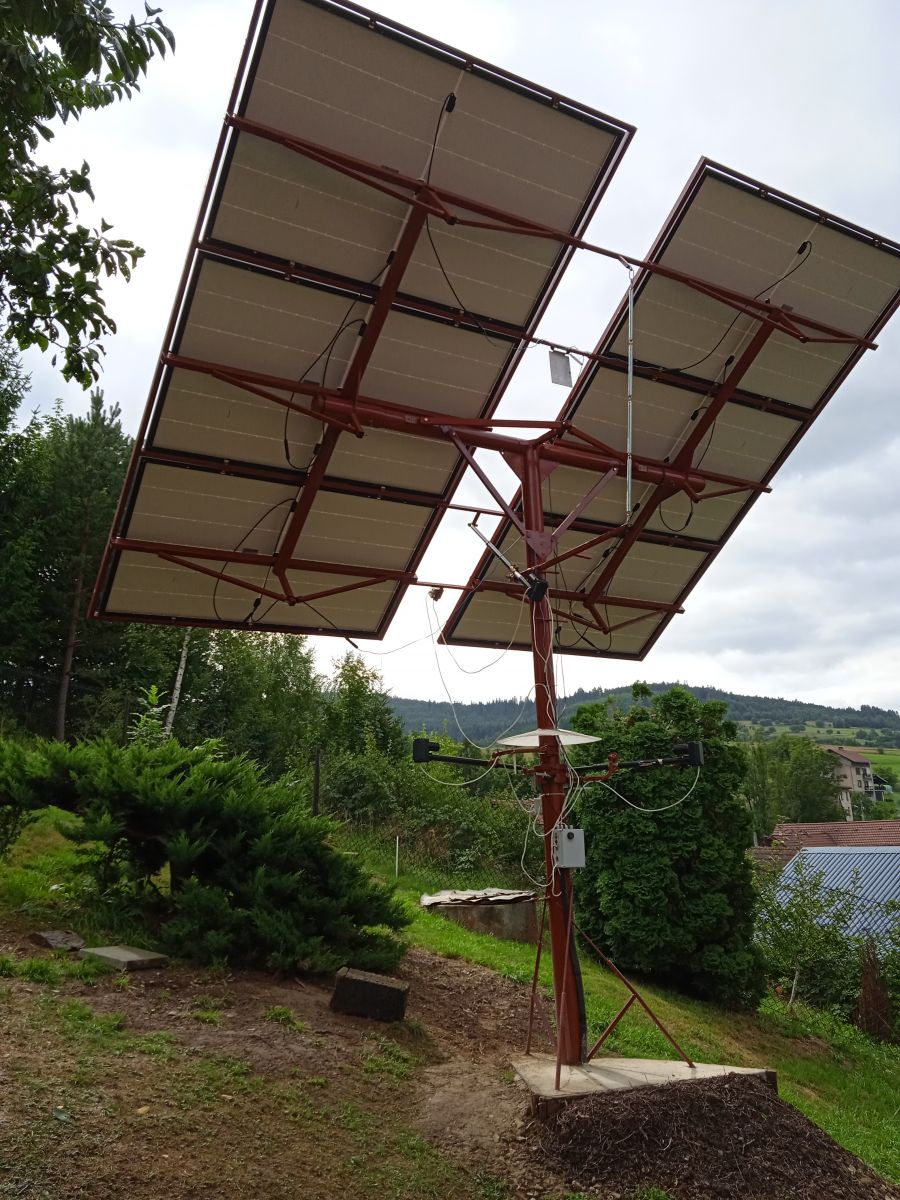
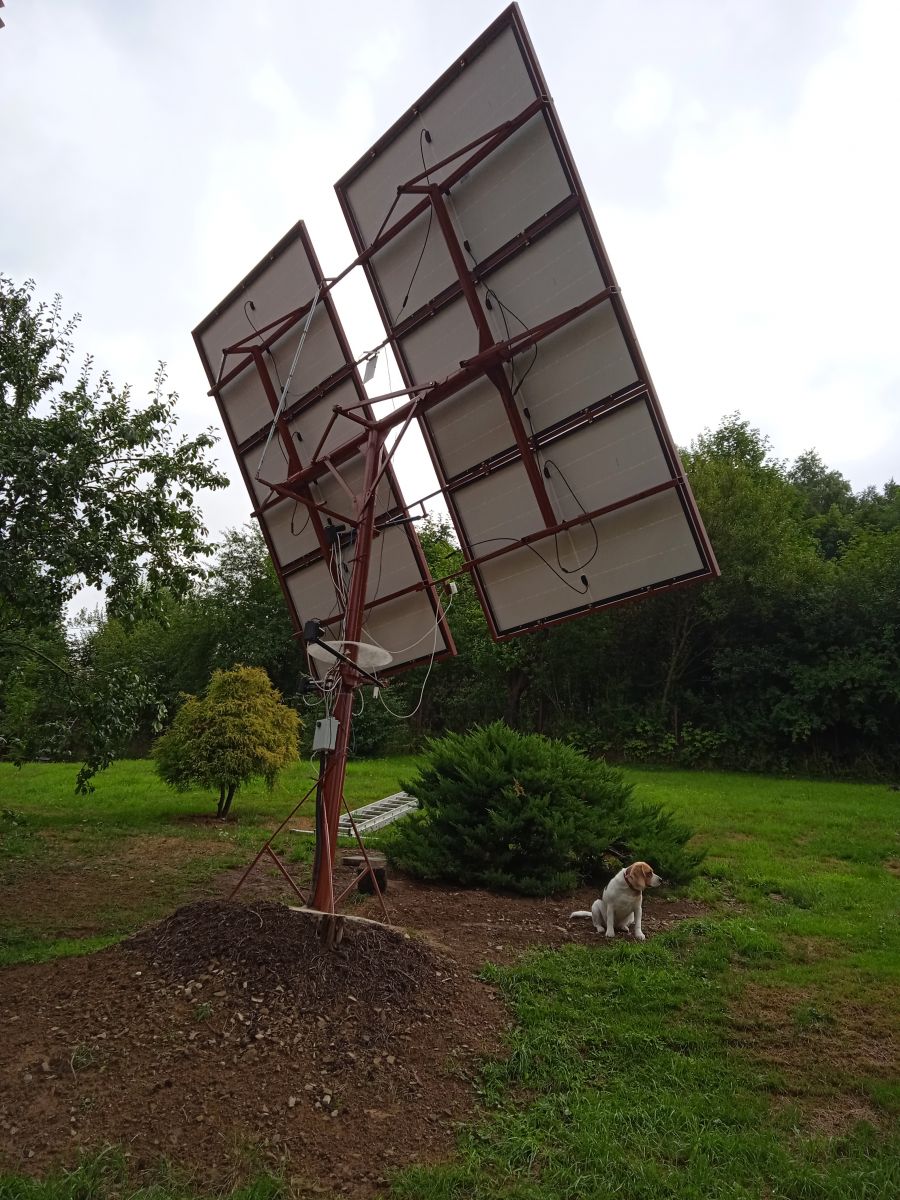
Two-axis tracker, trusses based on uniaxial:
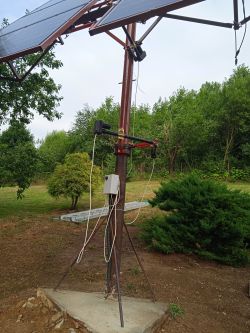
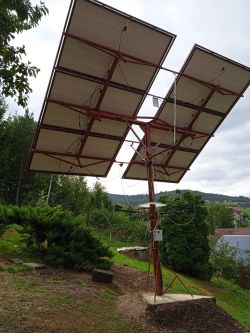
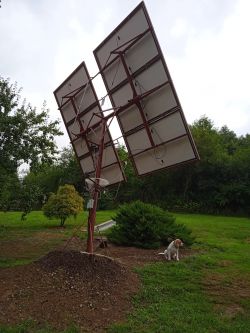
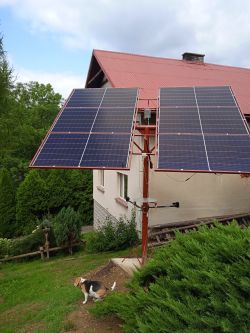
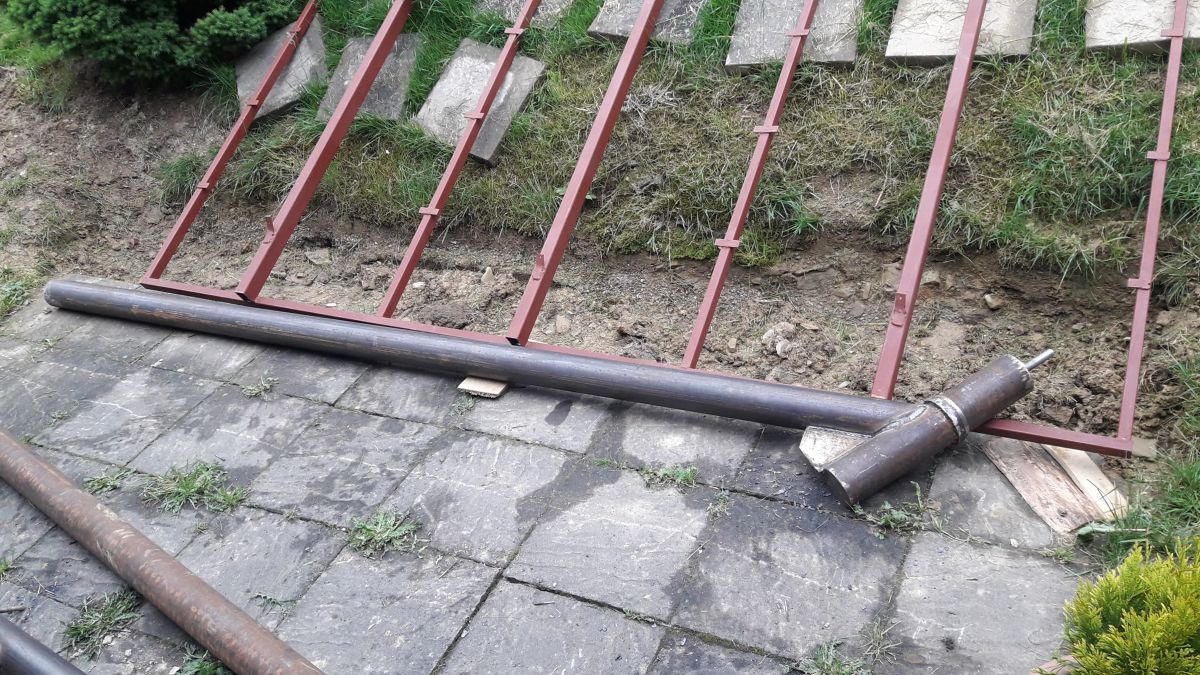
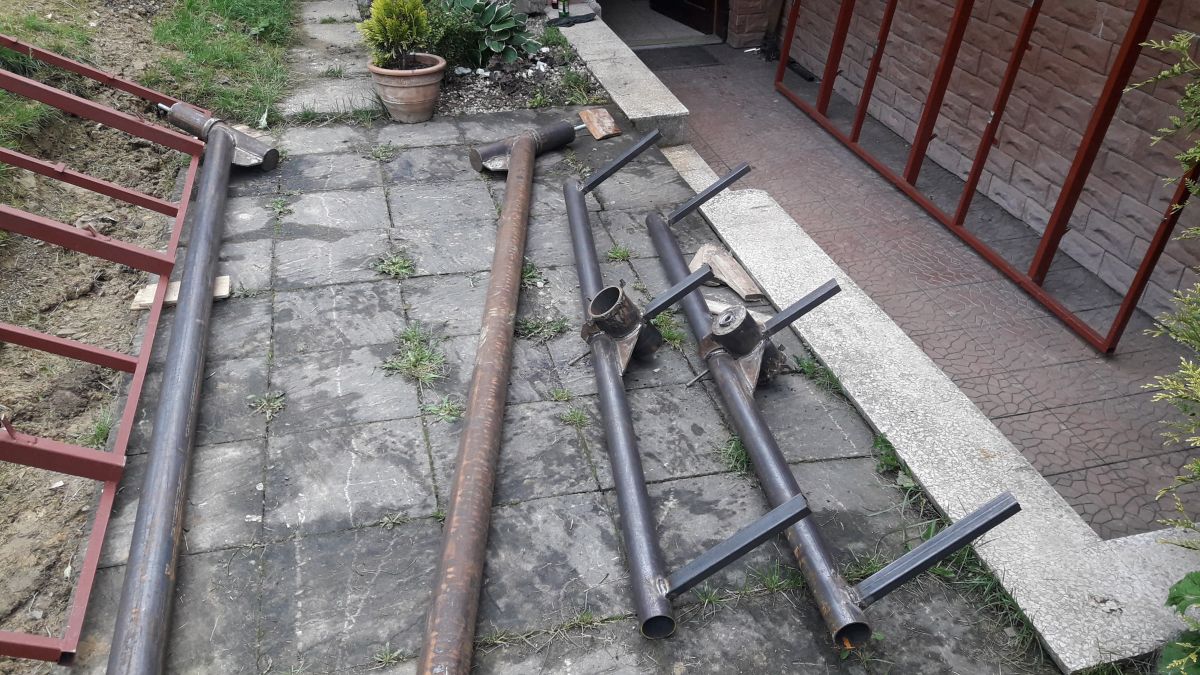
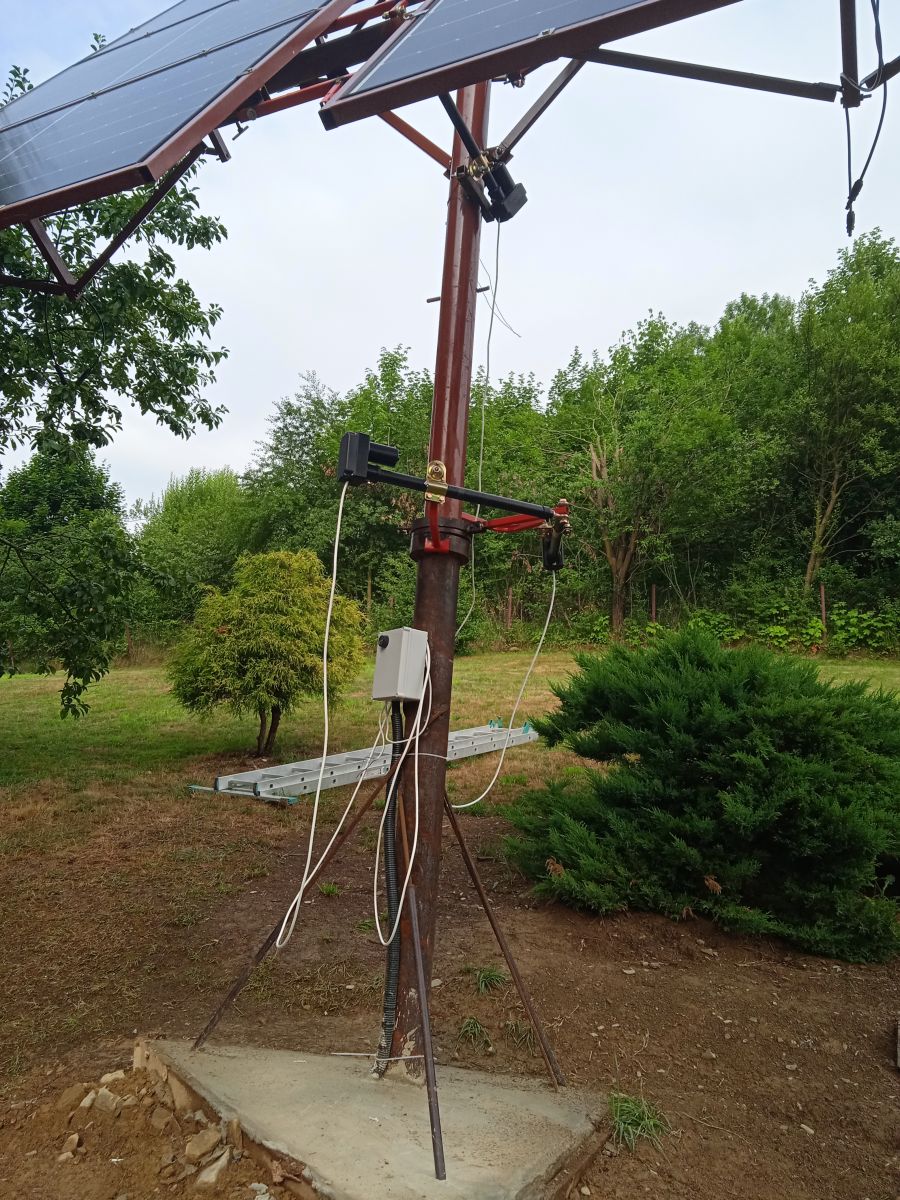
The structures use actuators as a drive.
The uniaxials have a tracking range of about 150 degrees, a constant angle of inclination of about 40 degrees and a total power of 2.4kW, at the beginning the 9-channel second controller gives 8 seconds after time intervals. impulses. In addition to the limit switches in the actuators, the system with two reed switches on the first tracker, the second one works synchronously.
The two-axis can track up to 200 degrees, the limit switches are set at about 170 degrees due to the terrain conditions, its power is 3.0 kW. The second 16-channel driver (for now), gives 6 sec. impulses. A unique system of two actuators rotates the load-bearing structure sequentially: first one works, after the work is finished the other. When polarity is reversed, reverse.
The second axis is moved by the third actuator via the sun tracking controller. At the top, the wind force sensor, which activates the third actuator, works until the pulses are flattened and the pulses are disconnected, to restore the functions, it must be done manually with the "work" button.
There is a box on the main pole, it has switches, but they are only for service.
Costs:
2020 - around 7,000 zloty.
2021 - considerable, around 9,000 + 5,000 inverter zloty
Does it all make sense? only thanks to the contribution of my own work.
I have orders locally, but there are other ideas in my head.









Comments
Impressive structure, or rather structures. What is "second driver" - is this some kind of photovoltaic slang? I am worried about cables - they look ordinary, indoor installation, and hang freely, susceptible... [Read more]
Yes, it's the jumper cables, they'll be different, connected. The complete flattening in the case of wind takes as much, depending on the initial position, as max. actuator operation time 24 ",... [Read more]
PLN 21k (i.e. PLN 7k + PLN 9k + PLN 5k) is the cost of both structures + an inverter that supports both masts? [Read more]
I wonder if it pays off. I mean, isn't it cheaper to install more panels on the roof? [Read more]
Aren't you afraid of higher winds that it might act like a sail and fly? [Read more]
Allow me to insert a photo of the construction that I had the pleasure to create some time ago. Two tables on separate trackers, 15 340W panels each. https://obrazki.elektroda.pl/9108151800_16302... [Read more]
To this "power plant" you have to add two previously placed, such as those from 2020, with a total capacity of 2KW for 5k PLN. The roofs are different, I have a gable but unfavorably oriented, the neighbor... [Read more]
And I am curious what this wind strength sensor looks like. Because it would be useful for my project. [Read more]
Trackers made any sense from 20 years ago, when the panels were terribly expensive. Today for the 21 thousand. PLN, you can order a team that will install a 5kW installation without moving your butt.... [Read more]
This sensor is not extremely precise, but it works fine. Tiltable, i.e. a plate with a selected surface with an integrated magnet, a reed switch on the side boom. I see these teams of pullers, in my... [Read more]
It is not always possible to add an infinite number of panels, because there is no space on the roof, no space on the plot, etc. etc. - then the tracker makes sense, because it is basically the only solution... [Read more]
As for the economy, let's take a two-axis tracker made with our own work - PLN 9k. - 4k PLN for the inverter panels also, because it is always needed, so we are talking about 5k PLN. For 8 hours work... [Read more]
Oh, and you assume that every installer is a liar, bastard and thief? Because I don't understand - could you specify what exactly you wanted to say? Why the belief that everyone else is definitely... [Read more]
Nobody attacks, I just referred to the fact that the hobby is not always about money and economic sense. If you do everything just to make it profitable and beneficial, then I feel a little sorry ;) I... [Read more]
Well, but I agree with this from the very beginning - if it is a form of hobby that someone wants to do it themselves - then only congratulations. Because every hobby costs money - and it's not about... [Read more]
Colleagues, you are a bit detached from reality. The power industry will force the storage of electricity and with the tracker, the production will be spread more evenly, you need a smaller warehouse. ... [Read more]
I will only refer to this, on other points I fully or partially agree (not the 35% difference). I did not write that they are all bunglers and liars, but there are probably a lot of them, because in a... [Read more]
So what's the difference in your opinion? [Read more]
From my observations and comparisons to my neighbors, I have over 40% of them, but this difference will not be everywhere. The photos show the topography and vegetation. Those who have panels low to the... [Read more]