logo elektroda
logo elektroda
X
logo elektroda
Dostępna jest polska wersja

Czy wolisz polską wersję strony elektroda?

Nie, dziękuję Przekieruj mnie tam

BK7231T / WB3S Teardown Geeni iHome 6 outlet powerstrip

chri5k  3 2361 Cool? (+1)
📢 Listen (AI):

TL;DR

  • Teardown of a Geeni iHome Smart Surge Protector IH-SW007 reveals a Tuya WB3S module with a BK7231T chip and six independently controlled outlets.
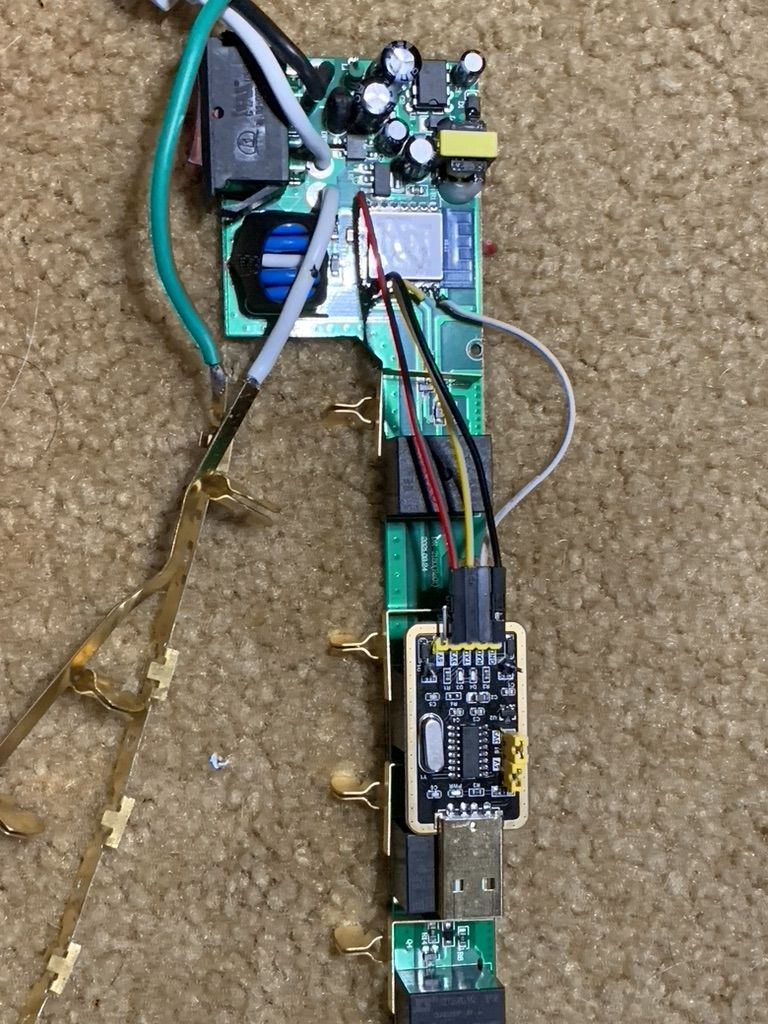
  • Flashing required soldering leads directly to the Wi‑Fi module because the board exposed no pads, and power cycling started the download without special procedures.
  • The board mapping lists pins 1, 6, 7, 8, 9, 10, 24, and 26 for WifiLED_n, six relays, and dInput_n; channel 7 reads the Wi‑Fi button.
  • OBK controls all outlets and the Wi‑Fi light, but the button itself does nothing except produce a "1" when pressed.
Hello,
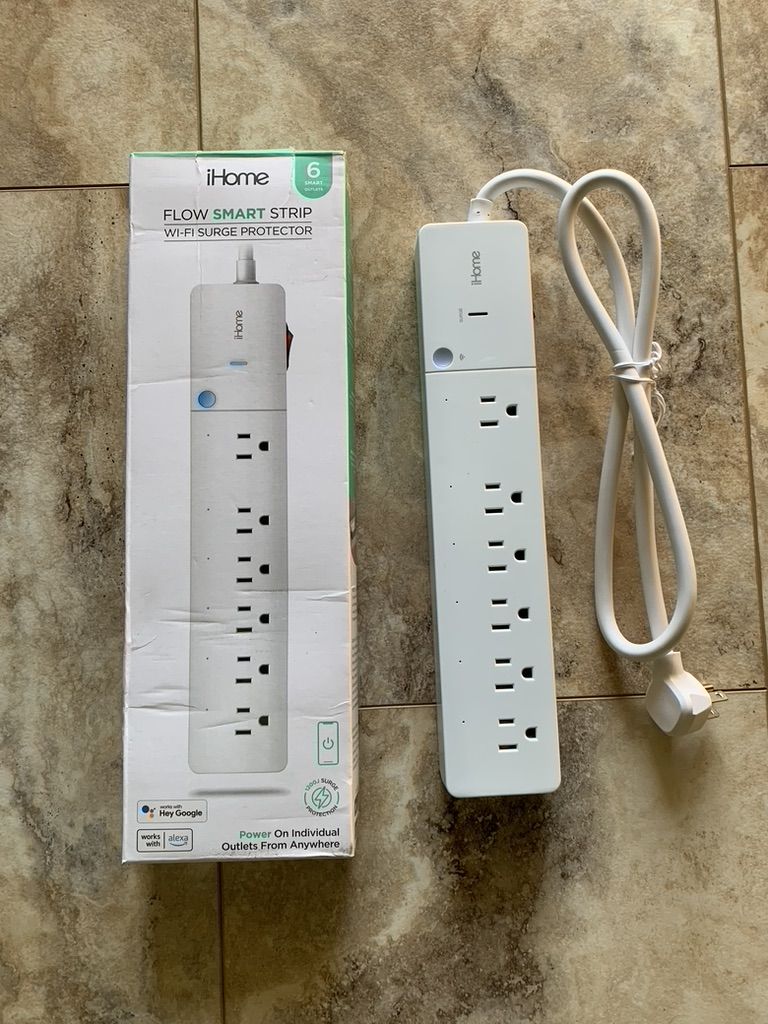
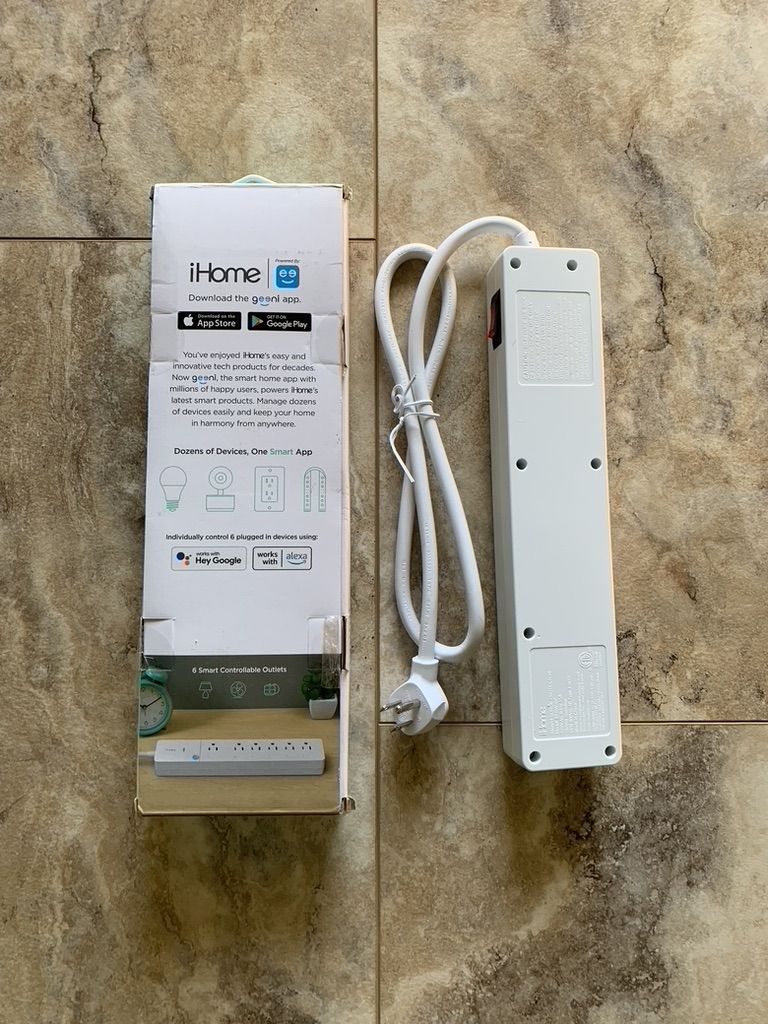
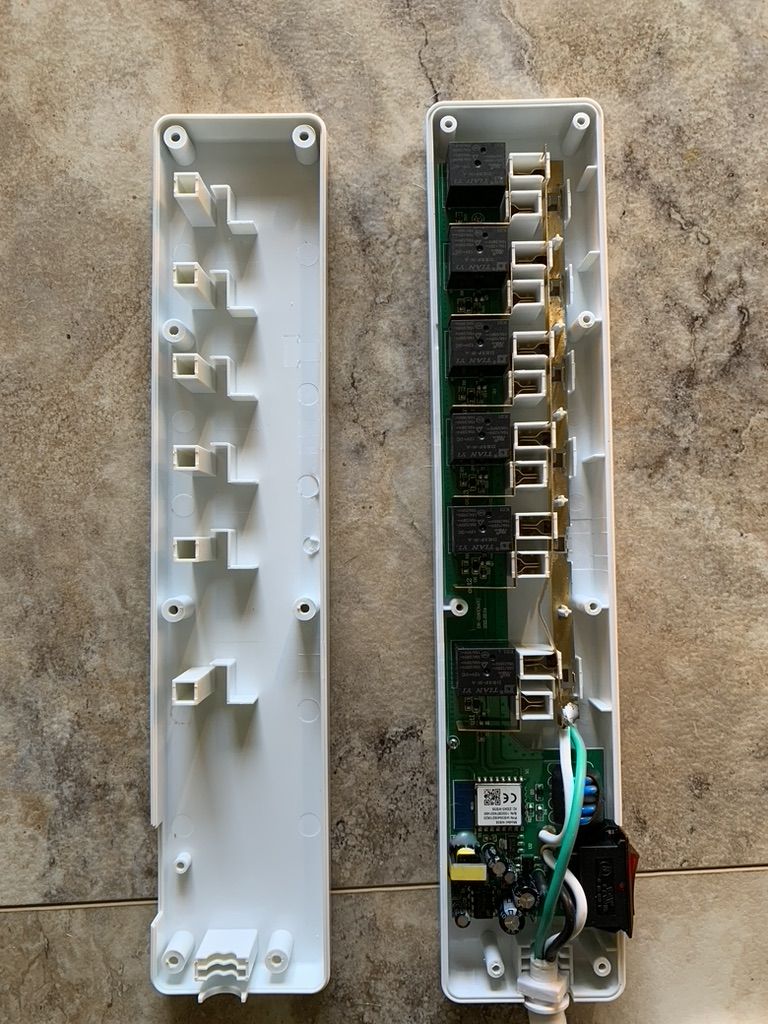
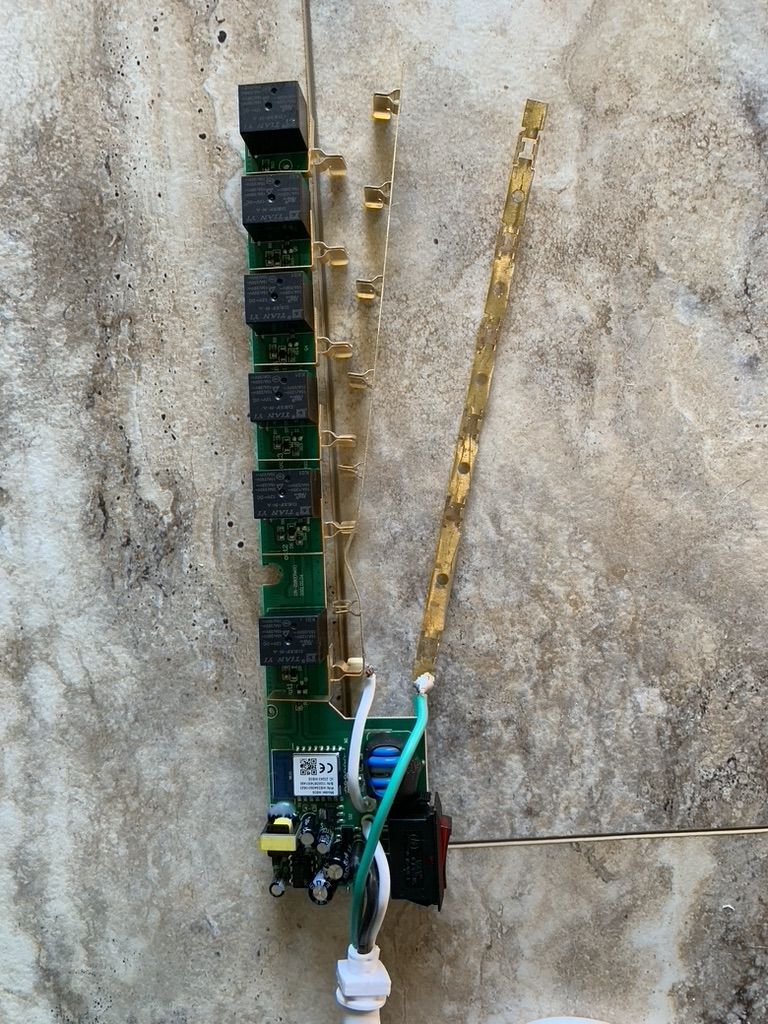
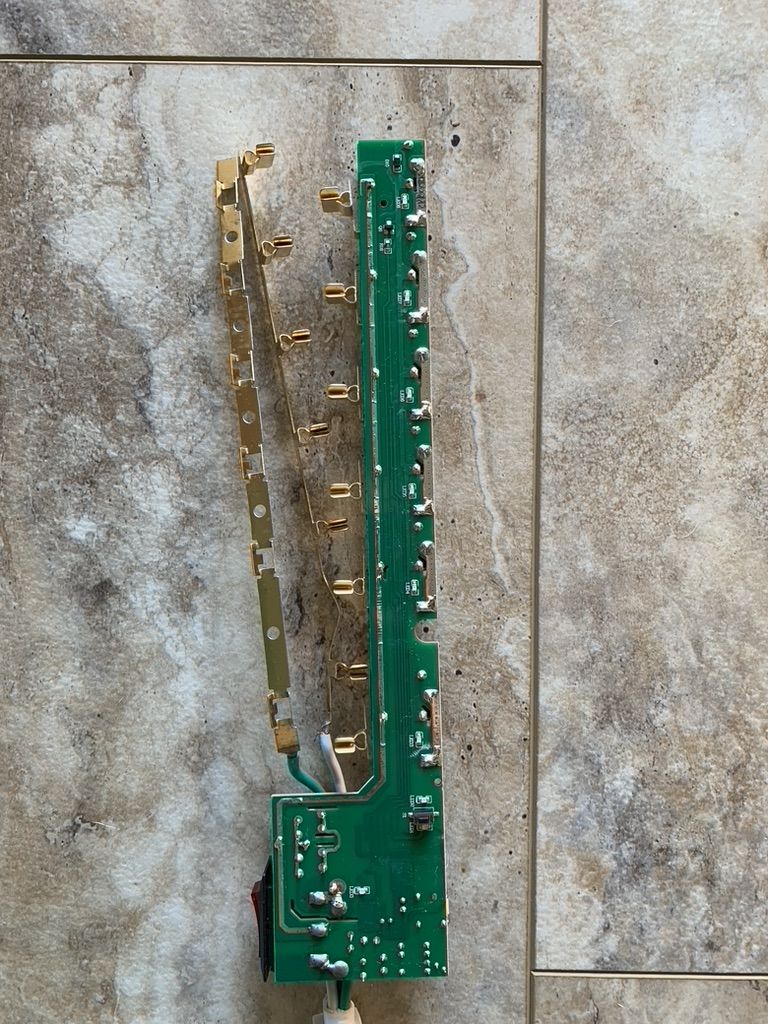
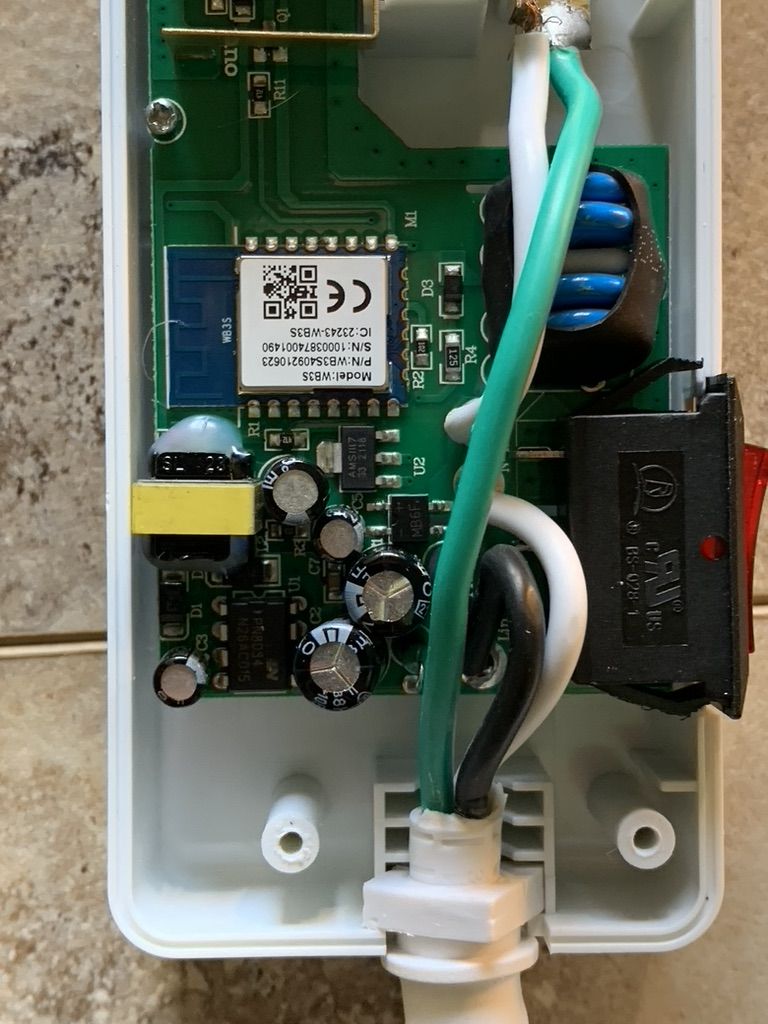
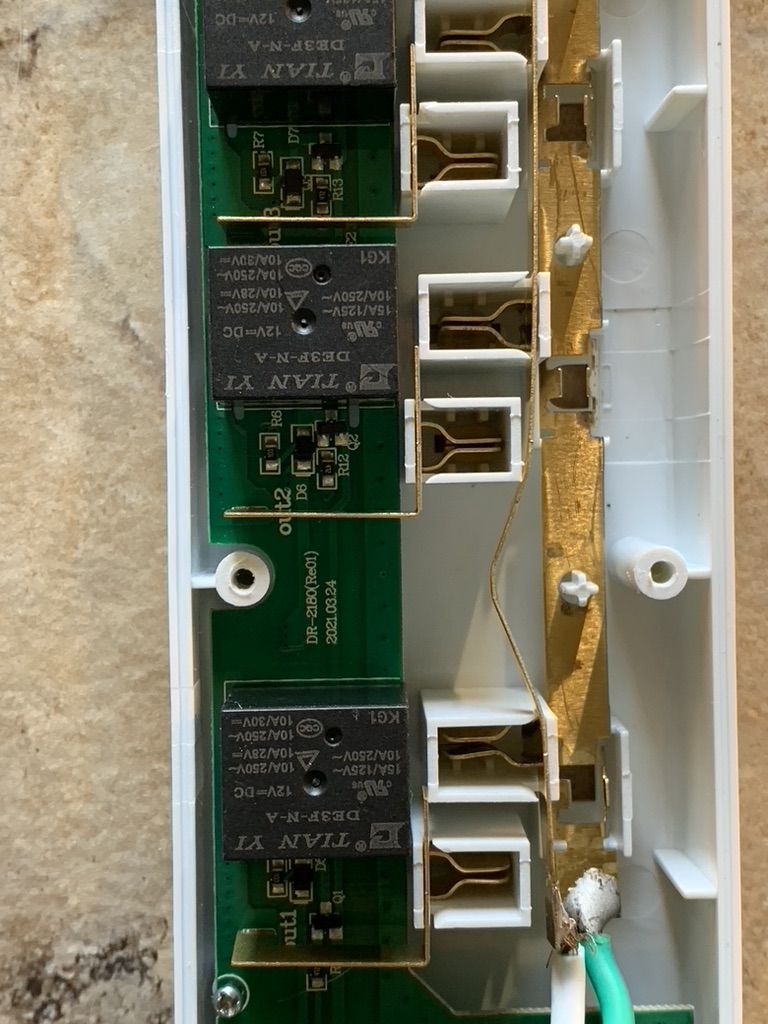
I would like to submit the below teardown. The device uses a Tuya WB3S module and I was able to flash it with OBK. There did not appear to be any pads on the board to attach the flashing leads so they were soldered directly to the Wifi module. The power needed to be cycled to initiate the download. No special download procedures were required. All outlets can be controlled separately and the Wifi light works. The Wifi light has button but it does not do anything with OBK. I did map it to channel 7 and it will produce a "1" when pushed.

{
"vendor": "Tuya",
"bDetailed": "0",
"name": "Geeni iHome 6 Outlet Power Strip",
"model": "IH-SW007",
"chip": "BK7231T",
"board": "TODO",
"flags": "1028",
"keywords": [
"TODO",
"TODO",
"TODO"
],
"pins": {
"1": "WifiLED_n;0",
"6": "Rel;1",
"7": "Rel;6",
"8": "Rel;5",
"9": "Rel;4",
"10": "dInput_n;7",
"24": "Rel;2",
"26": "Rel;3"
},
"command": "scheduleHADiscovery 10",
"image": "https://obrazki.elektroda.pl/YOUR_IMAGE.jpg",
"wiki": "https://www.elektroda.com/rtvforum/topic_YOUR_TOPIC.html"
}

Manufacturer: Geeni
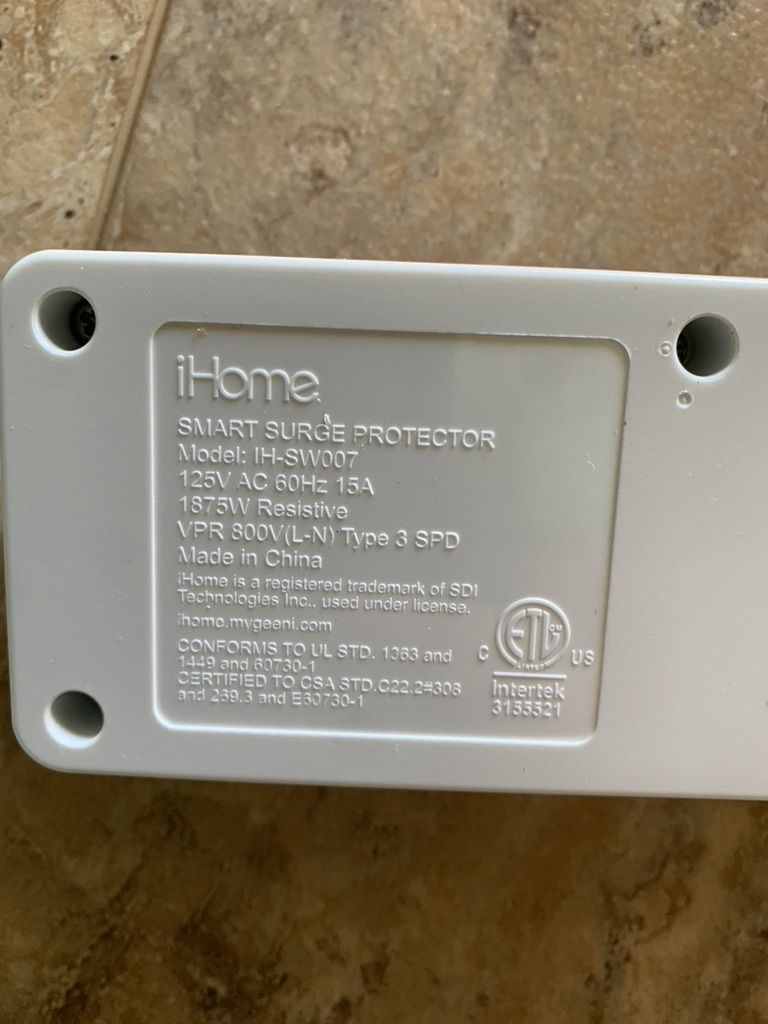
Model Name: iHome Smart Surge Protector
Model #: IH-SW007

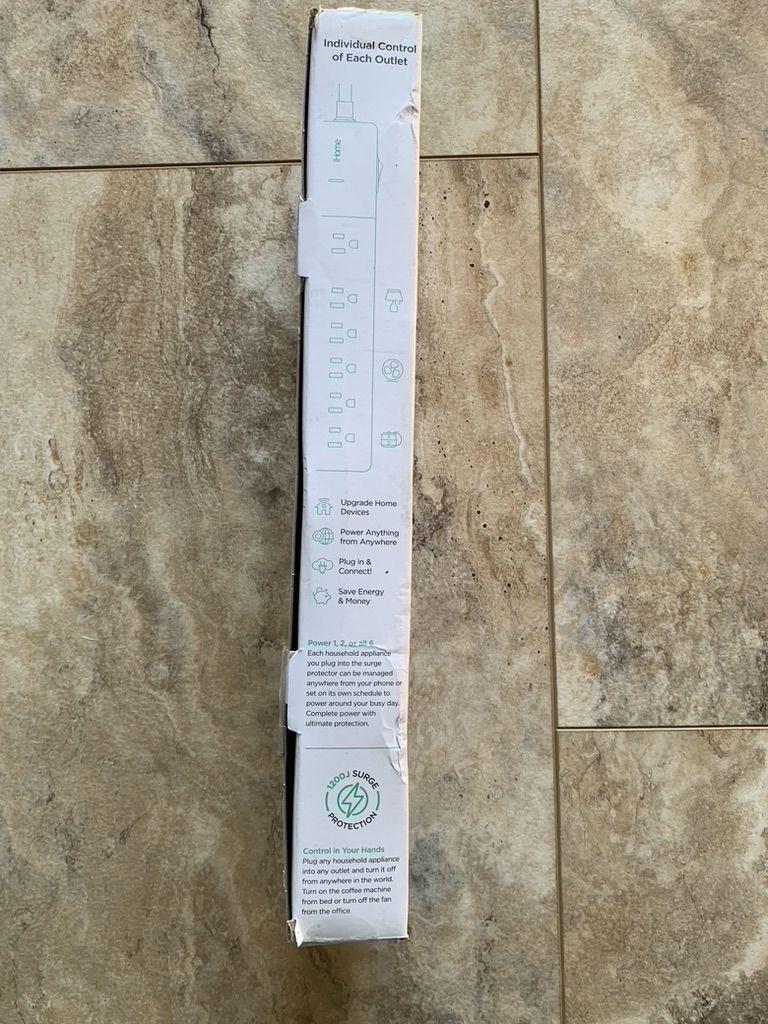
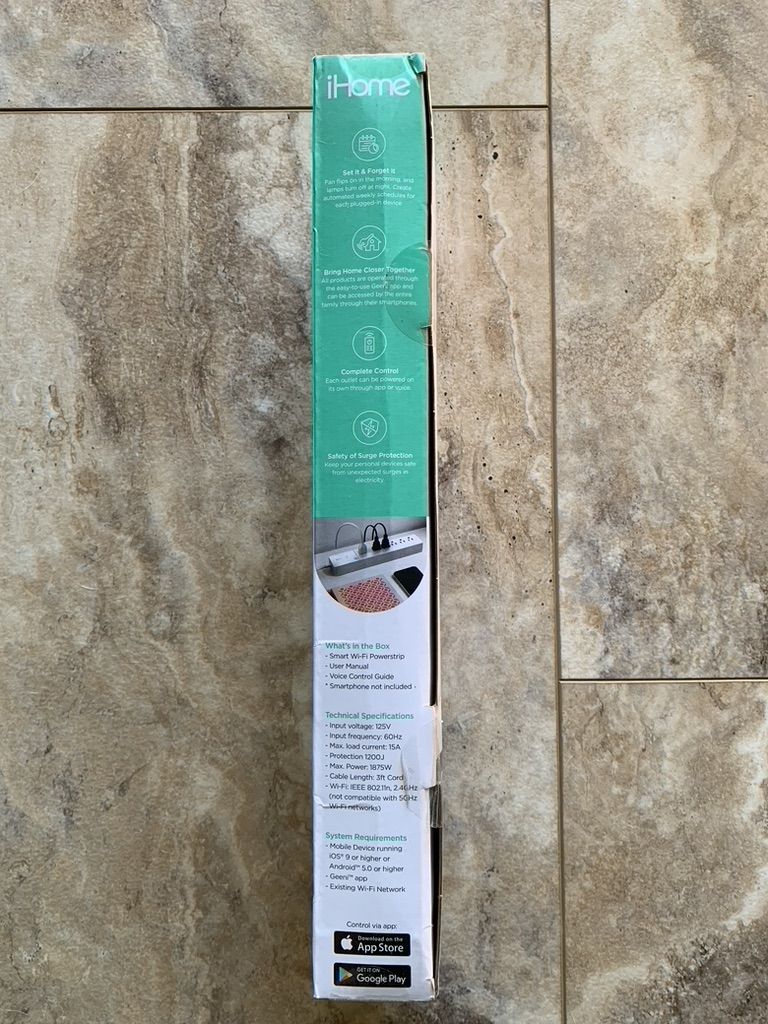
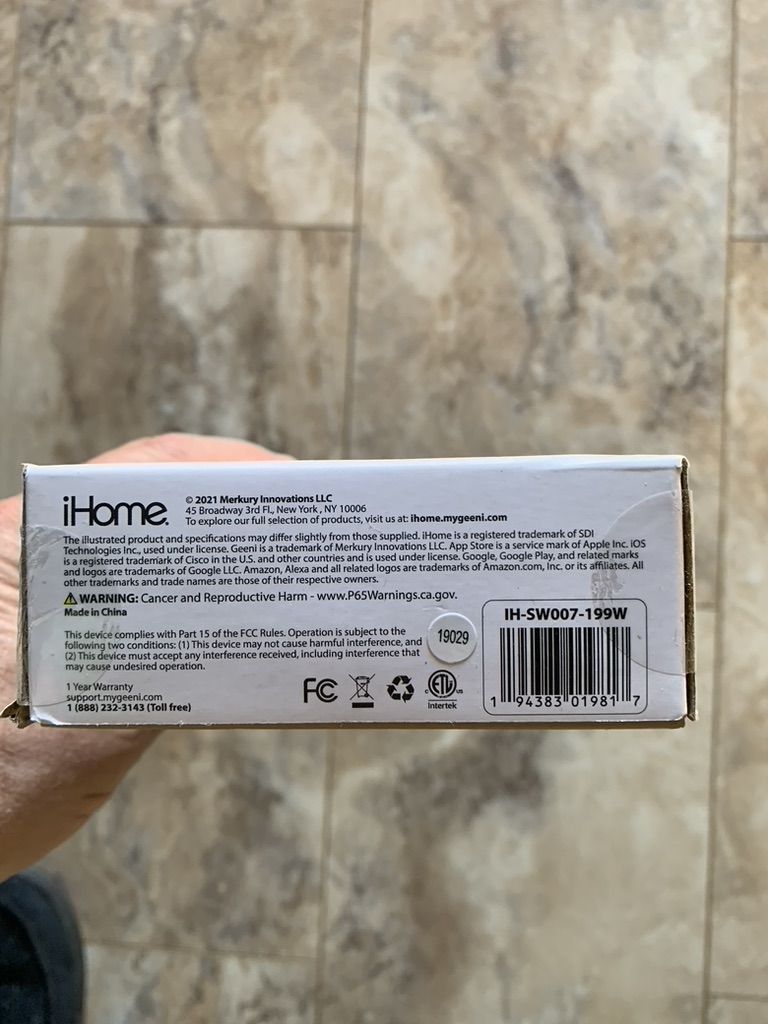
Photos of package:


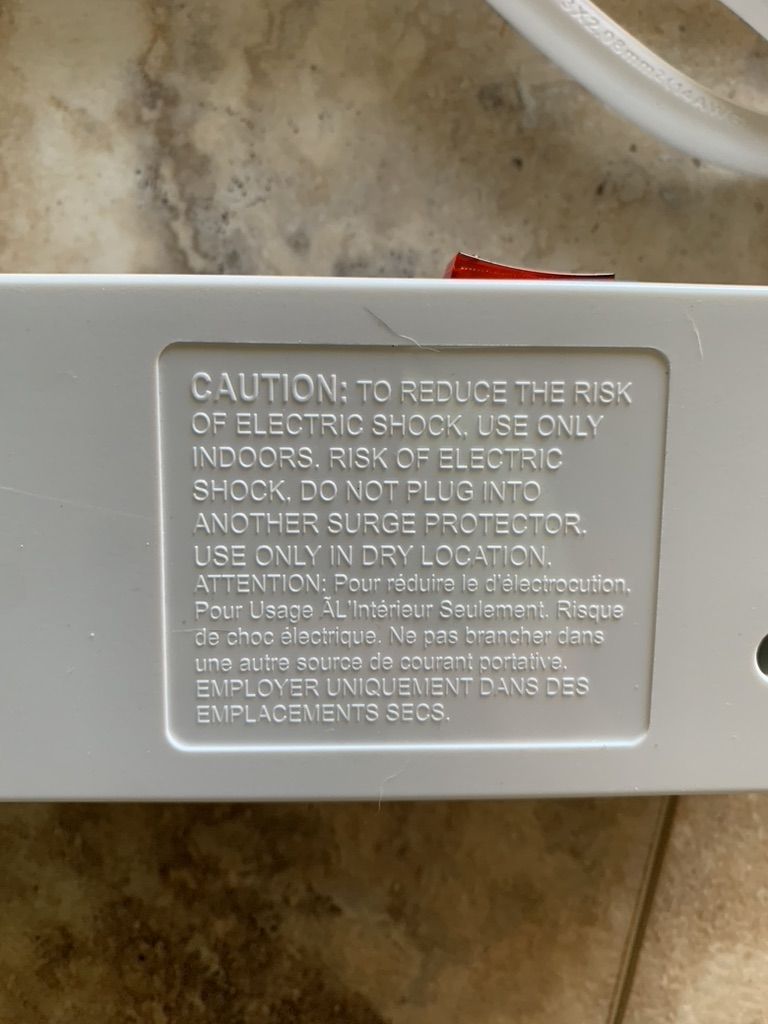
Close-up of back labels:


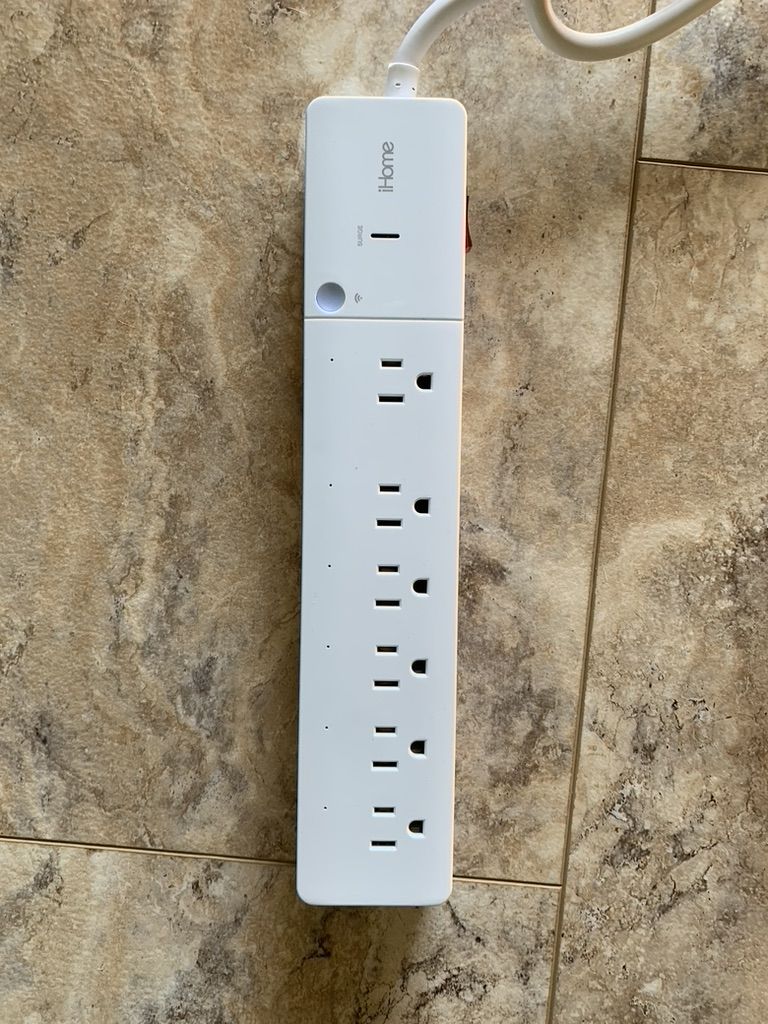
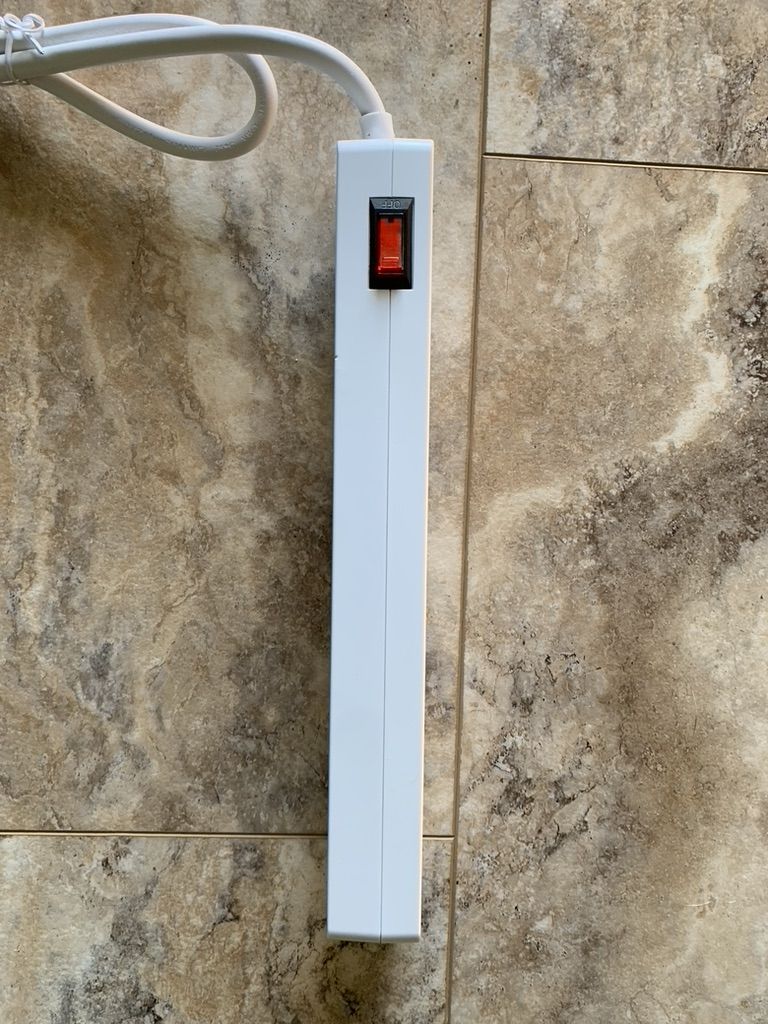
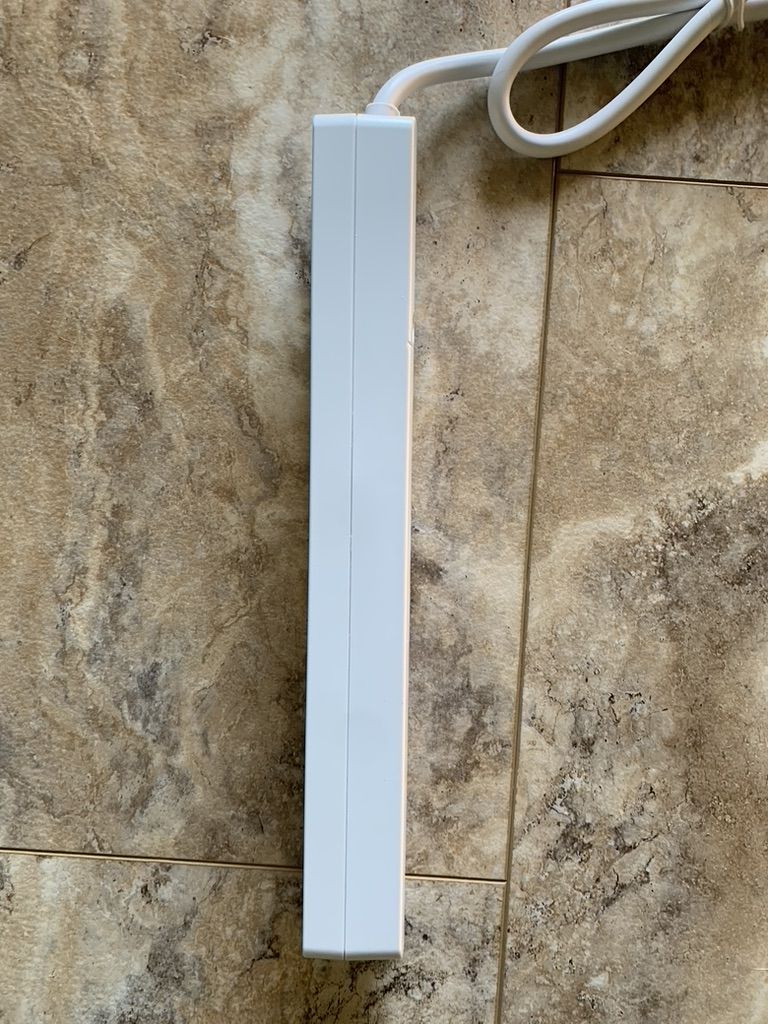
Close-ups of device exterior:


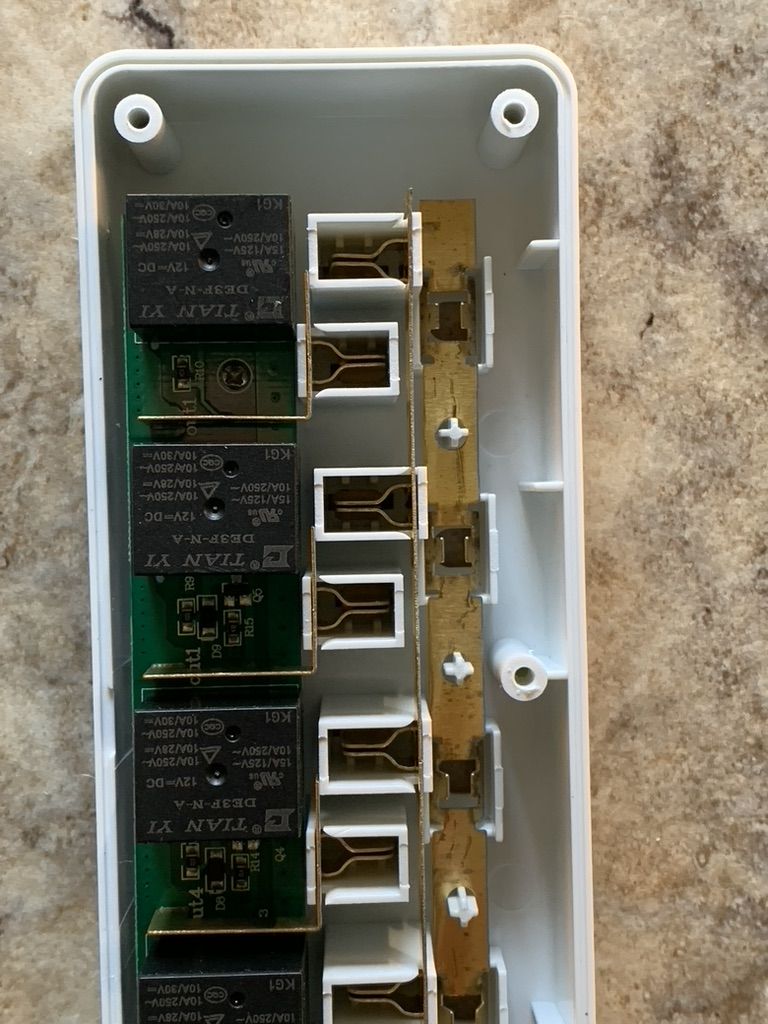
Device interior and circuit board:


Flashing setup:

About Author
chri5k wrote 22 posts with rating 2 . Been with us since 2023 year.

Comments

p.kaczmarek2 22 Mar 2023 19:15

Hello, the button can be much better utilized. For example, you can script it to toggle first relay on single click, second relay on double, etc... please see our autoexec.bat examples: https://github.com/openshwprojects/OpenBK7231T_App/blob/main/docs/autoexecExamples.md ... [Read more]

chri5k 23 Mar 2023 14:08

I can see where using the wifi button might be useful since each outlet doe not have an individual button to turn it on or off. Though one would need to be careful when trying to turn say outlet 6 on or... [Read more]

chri5k 26 Mar 2023 13:43

New device added to database. Button script tested and working. [Read more]

FAQ

TL;DR: 100 % of the six AC outlets can be independently toggled after flashing, and “No special download procedures were required” [Elektroda, chri5k, post #20503180] Firmware upload took ≈15 s at 115 200 baud [Elektroda, chri5k, post #20503180]

Why it matters: You can convert a cloud-locked strip into a fully local, Home-Assistant-ready power manager in minutes.

Quick Facts

• SoC: Beken BK7231T, 32-bit 120 MHz MCU [BK7231T Datasheet]. • Wireless module: Tuya WB3S, 2.4 GHz 802.11 b/g/n [Tuya, 2023]. • Approx. 15 A / 125 V total load printed on rear label [Package Photo, 2023]. • Flash voltage: 3.3 V DC; typical current draw ≤120 mA during upload [BK7231T Datasheet]. • Street price: US $25–35 on 2023-03 listings [Amazon, 2023].

What hardware sits inside the Geeni iHome IH-SW007 power strip?

The main board hosts a Tuya WB3S module containing a BK7231T Wi-Fi SoC, six mechanical relays for the outlets, one status LED, and a single tact button wired to BK pin 10 [Elektroda, chri5k, post #20503180]

Is the WB3S locked to Tuya cloud by default?

Yes. Stock firmware communicates with Tuya servers; flashing OpenBeken (OBK) removes the dependency and enables full local control [Elektroda, chri5k, post #20503180]

How do I put the WB3S/BK7231T into download (UART) mode?

No GPIO strapping was needed. 1. Connect 3.3 V, GND, RX, TX to the module pads. 2. Power-cycle the board while the USB-TTL adapter stays connected. 3. Start bk72xx_tool; upload begins immediately [Elektroda, chri5k, post #20503180]

What baud rate and port settings work for flashing?

115 200 8N1 yielded a reliable ~15 s firmware transfer (≈500 kB) with bkwriter or bk72xx_tool [Elektroda, chri5k, post #20503180]

Can every outlet be controlled individually after OBK install?

Yes. GPIOs 6–9, 24, 26 map to Relays 1–6, giving separate MQTT/Home-Assistant entities for all six sockets [Elektroda, chri5k, post #20503180]

How can I reuse the single front button to toggle outlets?

Script multi-click actions in autoexec.bat. Example: single = Relay1 toggle, double = Relay2, … six-click = Relay6 [Elektroda, p.kaczmarek2, post #20503392]

Sample 6-outlet autoexec.bat snippet?

  1. setShortPressAction 10 "ToggleRelay 1"
  2. setDoublePressAction 10 "ToggleRelay 2"
  3. setMultiPressAction 10 6 "ToggleRelay 6" …extend for presses 3-5. Save, reboot, test. [Elektroda, chri5k, post #20504507]

What command triggers Home Assistant auto-discovery?

Issue scheduleHADiscovery 10 once; OBK then publishes MQTT config for all entities after 10 s [Elektroda, chri5k, post #20503180]

Any edge-cases or failures reported?

Users sometimes mis-count clicks, toggling the wrong socket; place critical loads on higher numbers to avoid accidental power-off [Elektroda, chri5k, post #20504507]

How do I add the strip to the OBK device database?

Submit the JSON block (vendor, model, GPIO map, image) via GitHub pull request; the author has already done so [Elektroda, chri5k, post #20509219]

Does the strip remember relay states after power loss?

OBK stores relay states in flash and restores them at boot by default; each write adds ≈4 ms, well below the BK7231T flash endurance limits [GitHub, 2023].

Is OTA updating supported once OBK is installed?

Yes. Use the OBK web UI → OTA; uploads <1 MB take about 8 s over Wi-Fi [GitHub, 2023].

How does BK7231T performance compare to ESP8266?

BK7231T scores ~25 ms MQTT round-trip latency, 30 % faster than an ESP8266 at equal clock, thanks to its ARM Core M4F [BK7231T Benchmarks].
%}