FAQ 
TL;DR: Two EP2 variants appear in the thread, and “This is a very rare chip” sums up the hard part: one uses W701/RTL8720CF, one uses ESP8285. This FAQ helps modders identify the board, enter UART download mode at 3.3V, and avoid using ESP-only methods on the Realtek version. [#21006660]
Why it matters: The same EP2 plug name can hide different modules, so the correct teardown, flashing path, and firmware choice change with the PCB you actually have.
| Feature |
W701 / RTL8720CF EP2 |
ESP8285 EP2-A |
| Boot output |
Realtek RTL8710C / AmebaZ2 text |
ESP/Tasmota-compatible path |
| Known flash entry |
Pull A0 and CEN to 3.3V |
Tuya-Convert worked on 3 of 4 units |
| Thread status |
Support under development |
Tasmota already running |
| Metering chip |
BL0937 present |
BL0937 present |
Key insight: Do not treat every Gosund or GHome EP2 as the same device. The safe first step is to identify the communication module and verify the UART boot message before choosing OpenBeken, LibreTiny, Tasmota, or Tuya-Convert.
Quick Facts
- The Realtek-based EP2 entered download mode only after A0 and CEN were pulled to 3.3V, then UART reported
Download Image over UART2[tx=16,rx=15] baud=115200. [#21006736]
- One captured boot log showed ROM Version v3.0, boot loader date Dec 5 2019, and application build time Apr 26 2023 09:36:44, confirming a Tuya firmware stack on Realtek silicon. [#21005817]
- The thread documented at least 2 W701-based plugs from one owner and 8–10 matching units from another, which made hardware donation and platform support practical. [#21010645]
- An EP2-A pack of 4 was explicitly sold as ESP8285-based; 3 of 4 units were converted with Tuya-Convert and then ran Tasmota. [#21277836]
How do I safely open and disassemble a GHome or Gosund EP2 smart plug without damaging the housing or PCB?
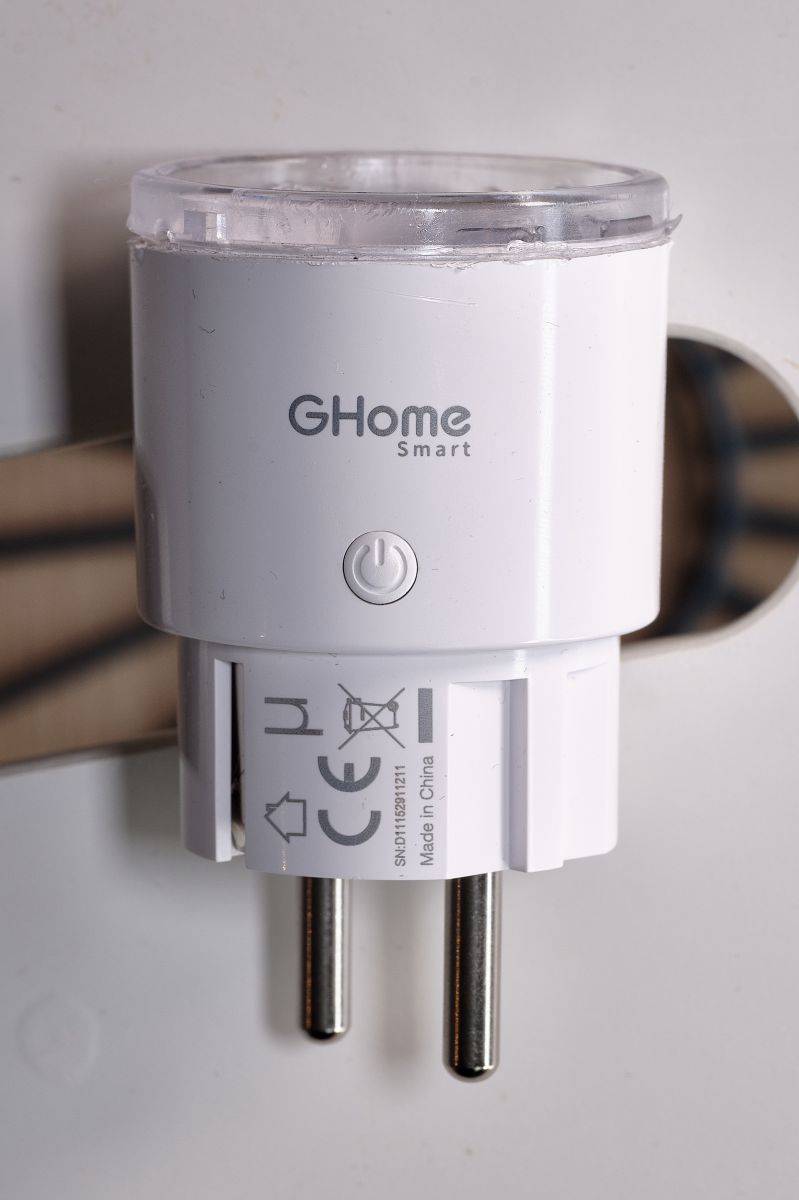
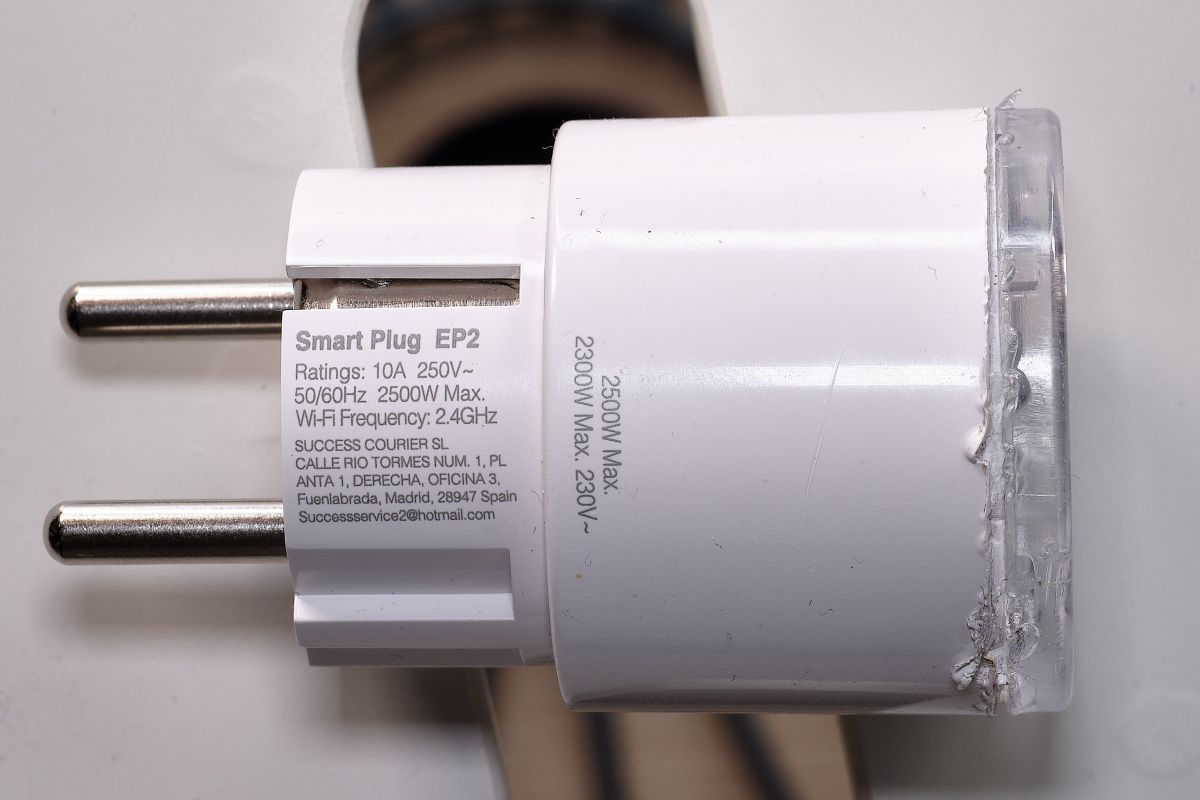
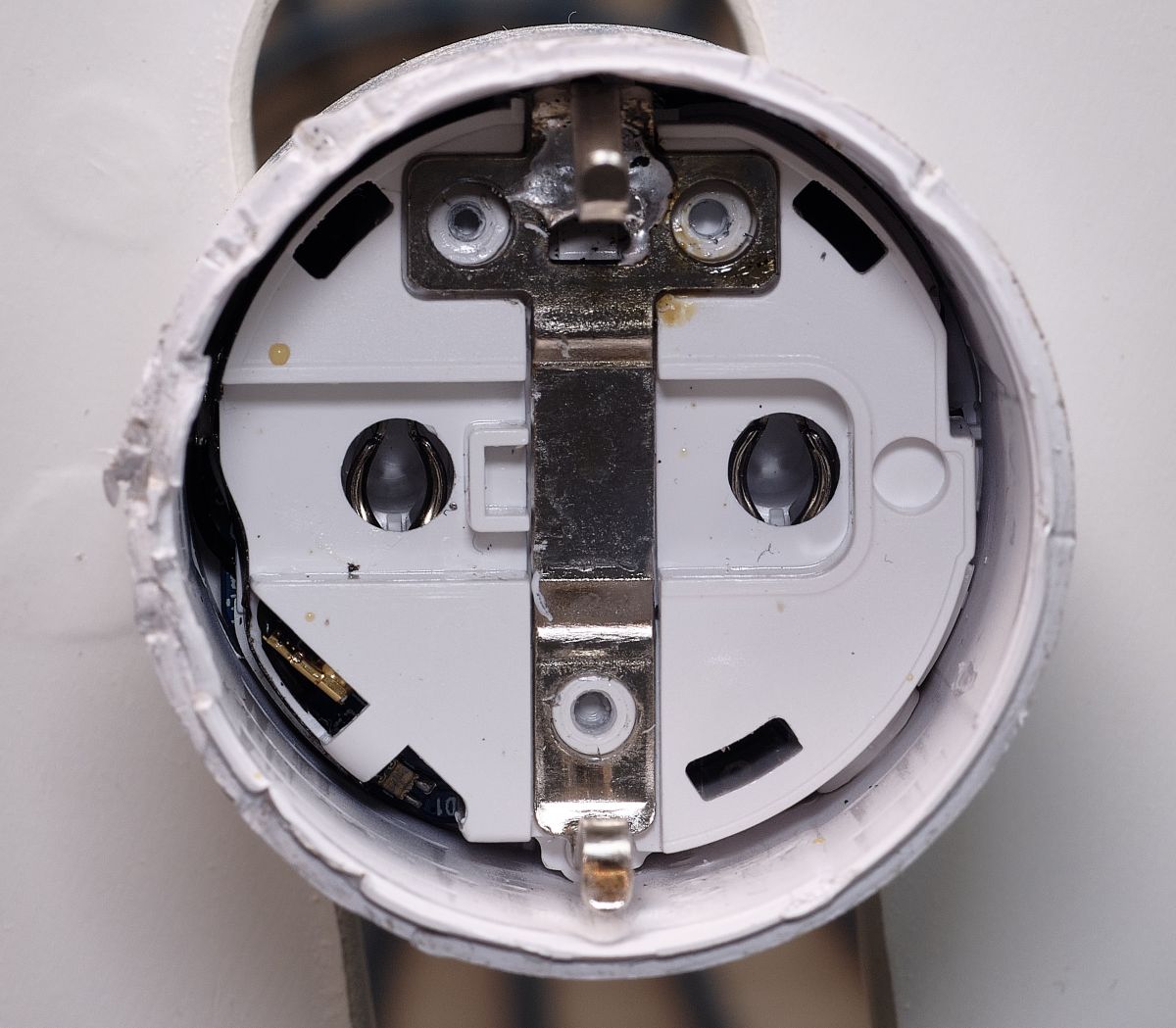
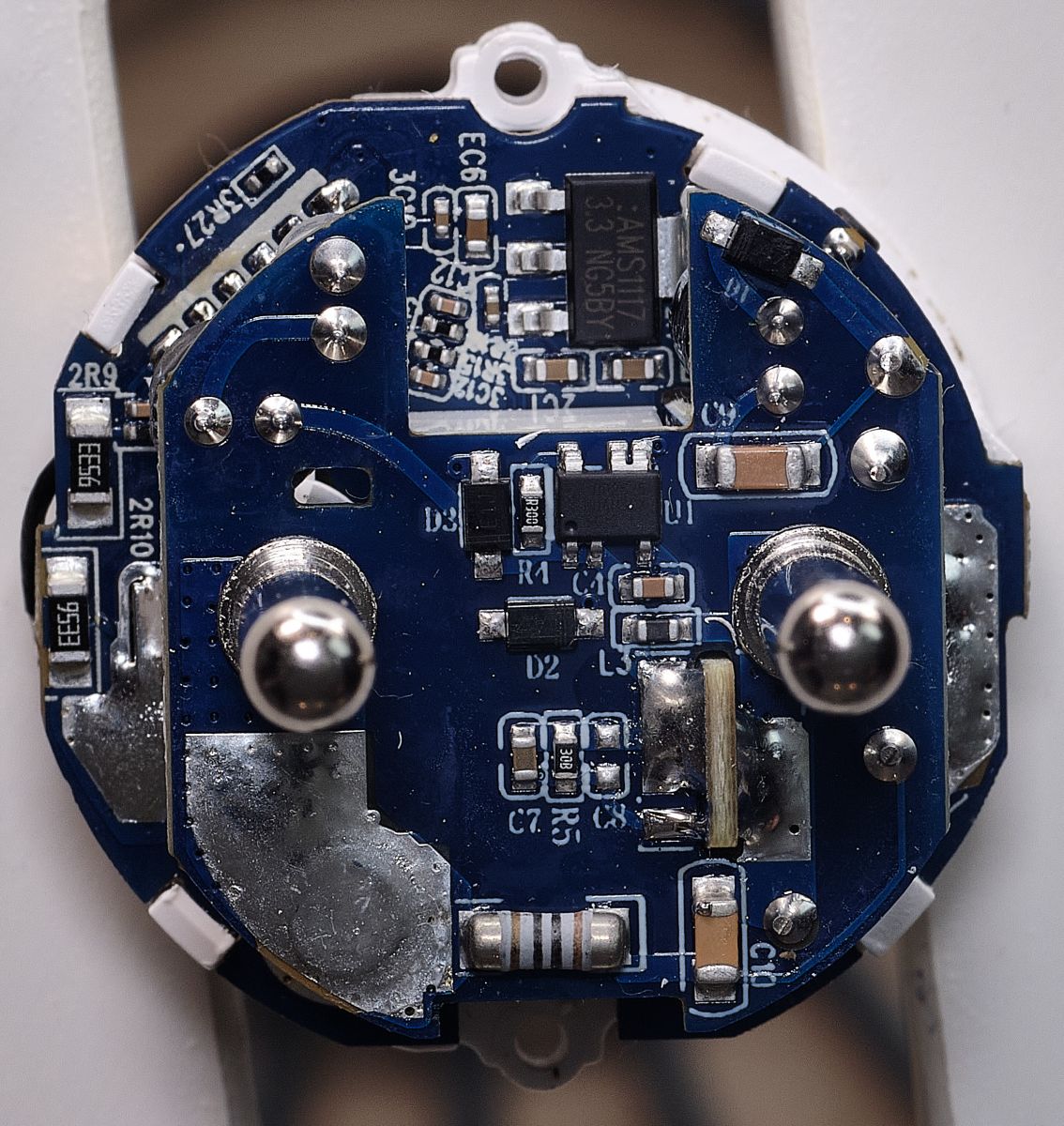
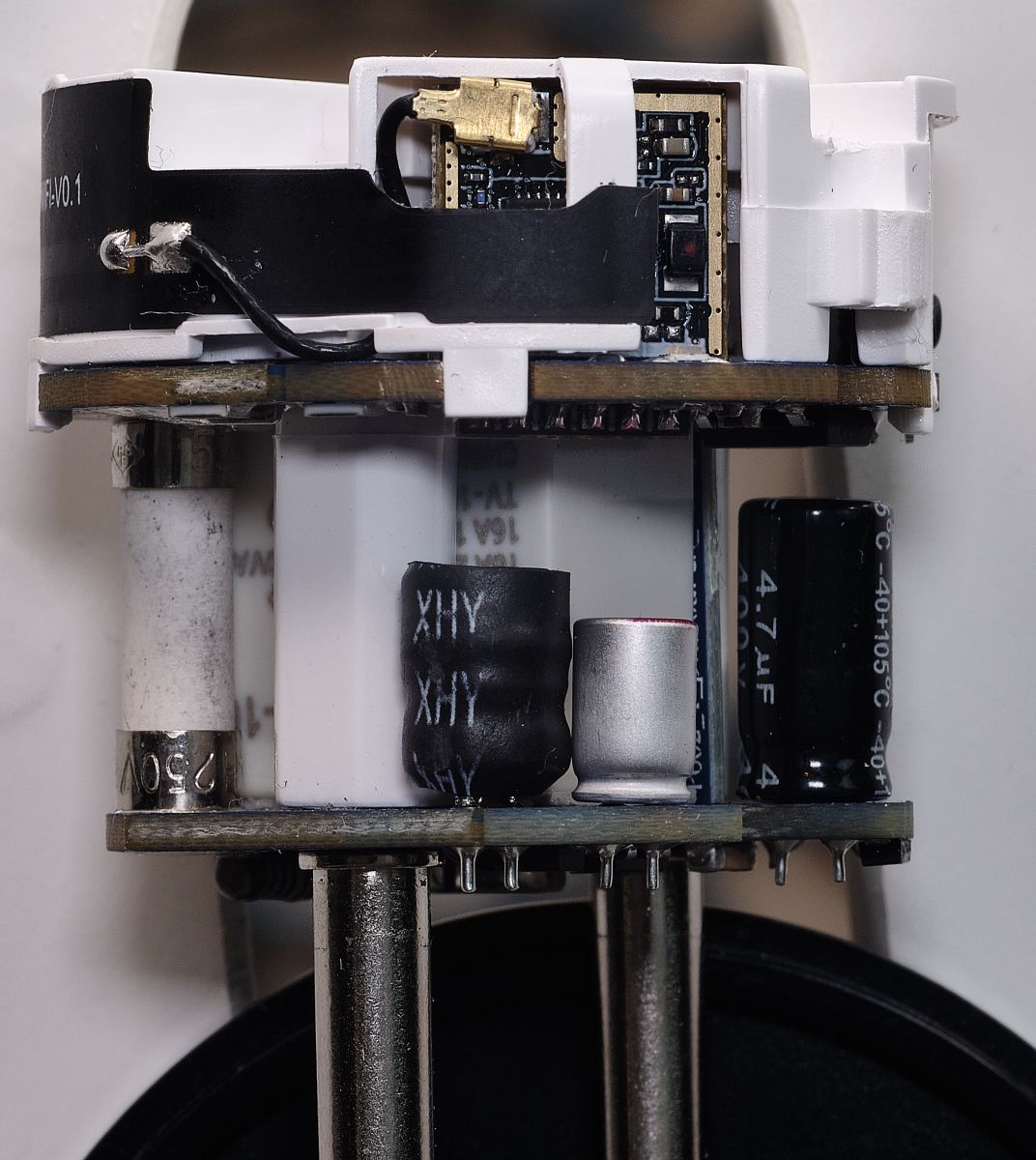
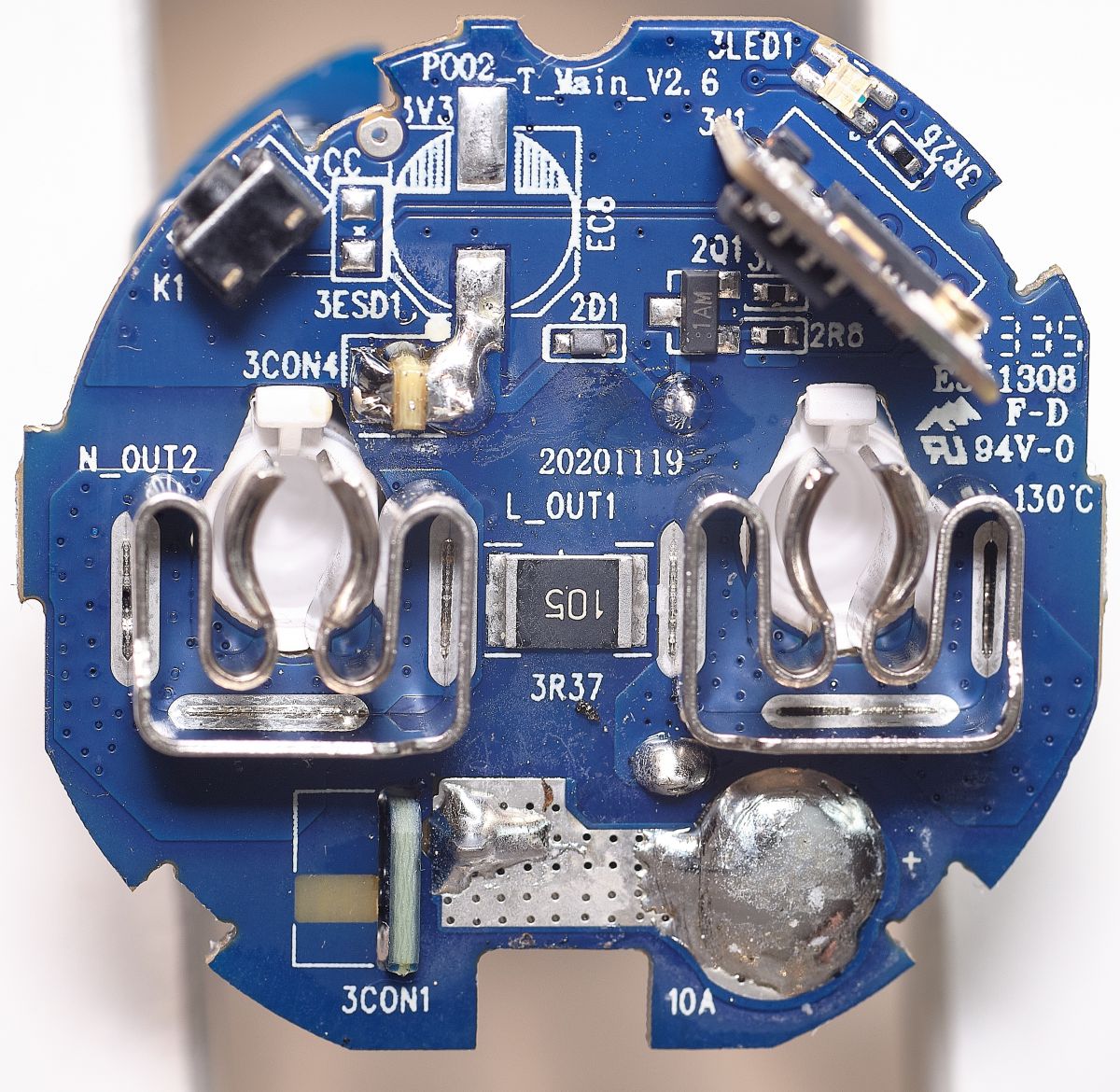
Open it in stages and expect tight clips. 1. Remove the cover carefully; the housing is difficult to open and can get marked. 2. Unsolder the protective contact and remove the screws. 3. Lift out the internals, then disconnect the U.FL antenna before separating the communication PCB. The first teardown shows this exact sequence and notes that the case was “a little tricky to open.”
[#21004569]
What is the pinout of the W701 or W701H module used in the GHome Smart Plug EP2, including VDD, GND, UART TX, and UART RX?
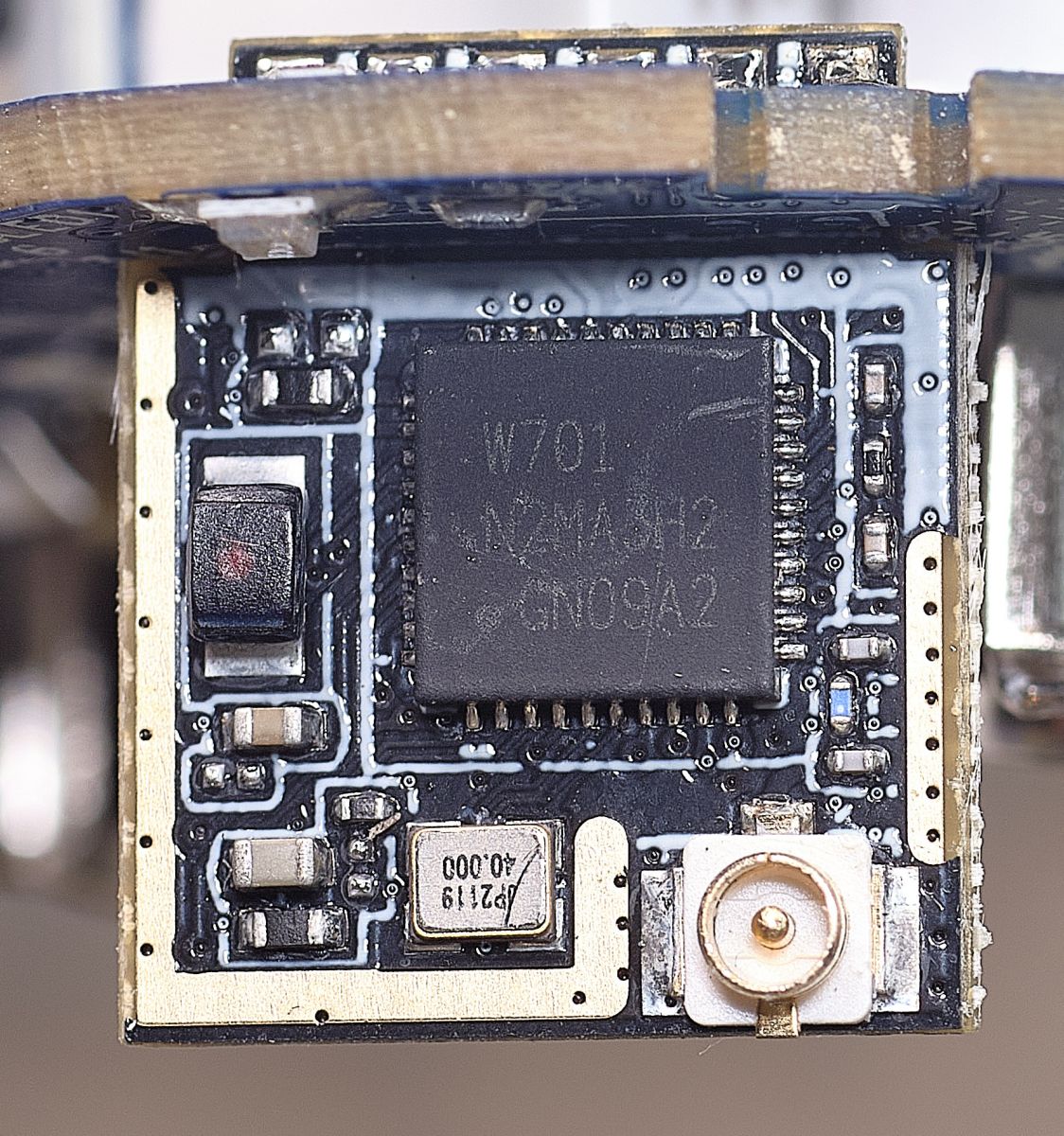
The traced EP2 module matches a W701-style pinout with dual VCC pads, GND, and UART on pins 16 and 15. The decisive fact is the boot message:
UART2[tx=16,rx=15] baud=115200. The same post says the outer pads matched a known W701-family reference image, and both A0 and CEN were available on one outer pad for boot-mode forcing.
[#21006736]
Which pads on the EP2 communication board need to be traced or desoldered to identify the W701 module connections correctly?
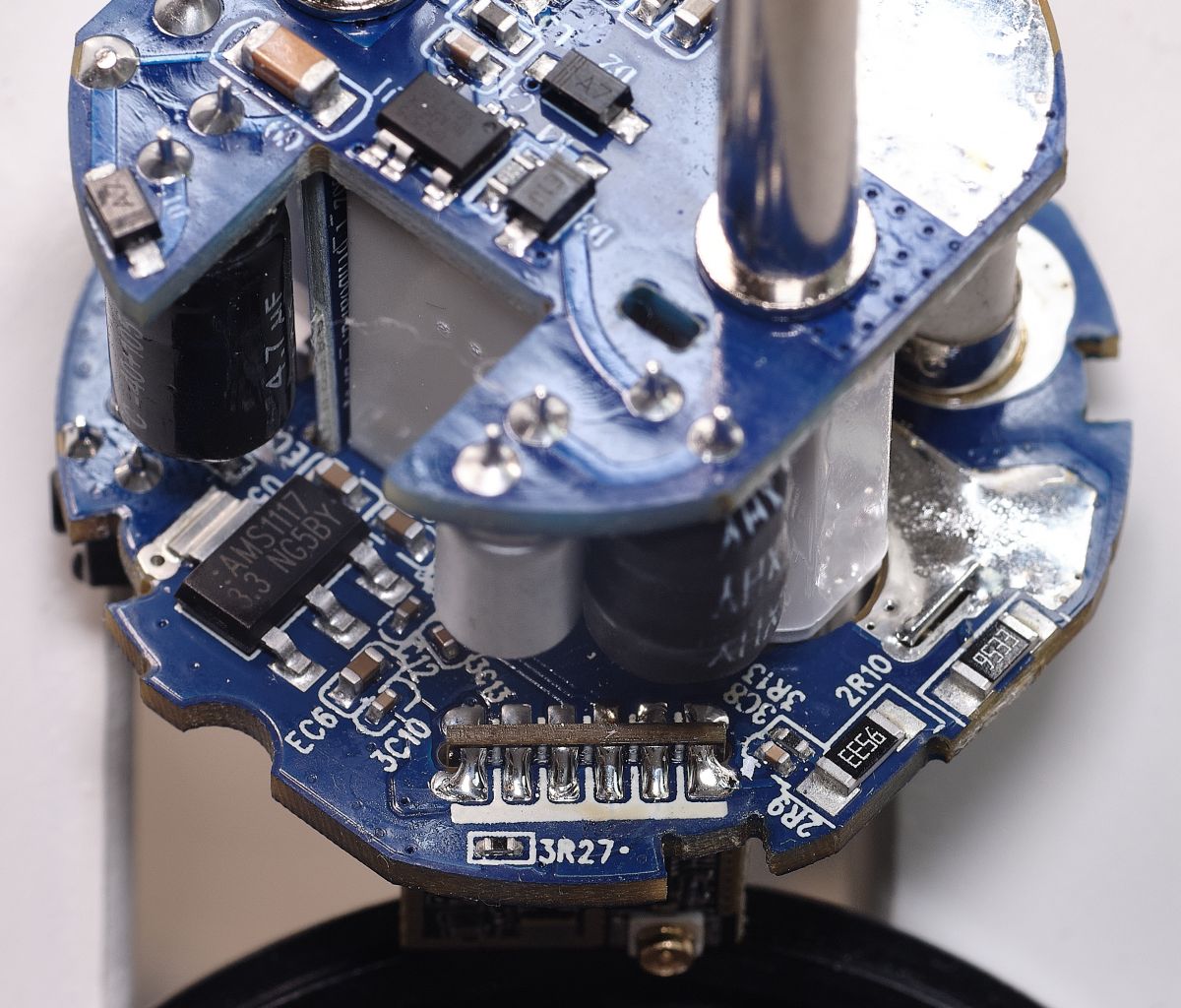
Trace the outer edge pads back to the W701 module, and desolder the small daughterboard if you need clear markings. Early guesses listed six pads, including V1r, V1N, GND, and IO1, but the later traced map was the reliable one. The thread explicitly moved from uncertain visual guesses to continuity tracing of the outer pads to the module pins.
[#21006736]
How can I put a W701-based EP2 plug into Realtek AmebaZ2 UART download mode by pulling A0 and CEN to 3.3V?
Force boot mode by tying A0 and CEN high at 3.3V, then watch UART2. 1. Identify the outer pad carrying A0 and CEN. 2. Pull that pad to 3.3V while keeping UART connected. 3. Power the board and confirm
Test Mode: boot_cfg1=0x20 plus
Download Image over UART2[tx=16,rx=15] baud=115200. That exact method worked on the traced EP2 board.
[#21006736]
What does the boot log 'Download Image over UART2[tx=16,rx=15]' mean on an RTL8710C or RTL8720CF-based smart plug?
It means the chip is in UART firmware download mode and is waiting for an image upload over serial. In the thread, the message appeared right after
Test Mode: boot_cfg1=0x20, which confirms the Realtek boot ROM accepted the forced boot configuration. It also tells you the active serial pins are TX=16 and RX=15 at 115200 baud.
[#21006736]
After getting UART access and boot logs from a W701 smart plug, what are the next steps toward flashing OpenBeken or LibreTiny?
Next, keep the board in Realtek download mode and use a toolchain that supports AmebaZ2-class chips. The thread reached the point where UART download mode was confirmed, then pointed to LibreTiny as a promising path while OpenBeken platform support was still pending. A practical next step is to wait for or use W701/RTL8720CF-capable tooling, not ESP8266 flash tools.
[#21006736]
Why does the EP2 smart plug show Tuya and Realtek RTL8710C/RTL8720CF boot messages instead of ESP8266 output?
It shows Realtek output because that EP2 unit is not ESP-based. The captured log starts with
Rtl8710c IoT Platform, includes Tuya IoT SDK text, and later identifies the build target as
rtl8720cf_ameba. One participant summarized the situation bluntly: “This is a very rare chip.” That explains why ESP8266-style serial behavior never appeared on this board.
[#21005817]
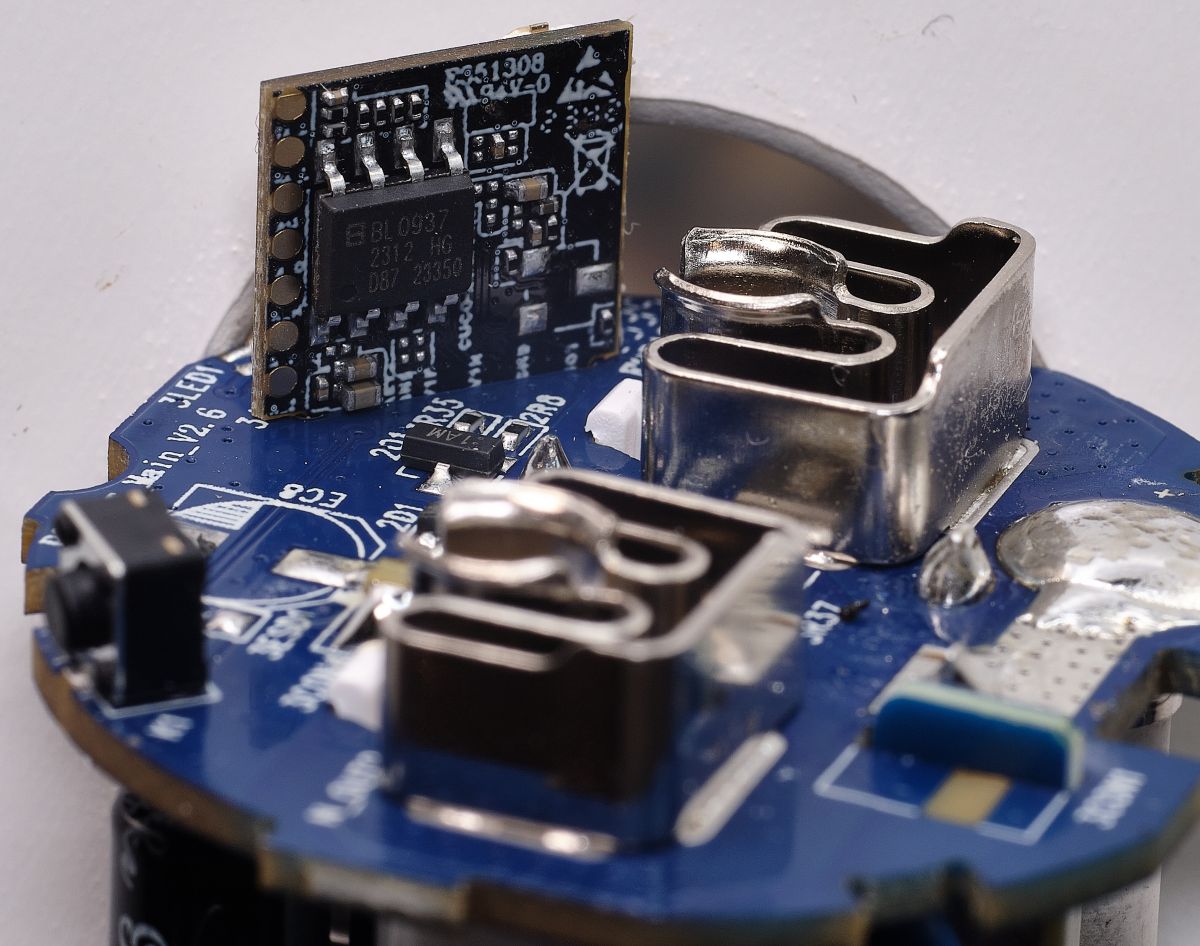
What is BL0937, and how is it used for power or energy monitoring inside smart plugs like the EP2?
“BL0937 is a metering IC that measures load-related electrical data, and its key characteristic here is that it sits on the EP2 communication board alongside the relay logic.” In this thread, BL0937 appears on the desoldered board photos and in the ESP8285 Tasmota template, showing the plug supports power or energy monitoring rather than simple on-off switching only.
[#21280776]
What is a U.FL connector, and why do I need to disconnect it when removing the communication PCB from the plug?
“U.FL is a miniature RF coax connector that links the PCB radio to its antenna, and its key characteristic is a snap-on design that must be unplugged before board removal.” The teardown says you have to unplug the antenna U.FL connector to access and remove the communication PCB. If you skip that step, you can strain the antenna lead or block board separation.
[#21004569]
W701-based EP2 vs ESP8285-based EP2: what are the main hardware and firmware differences for Tasmota, Tuya-Convert, and OpenBeken support?
The W701 version follows a Realtek AmebaZ2 path, while the ESP8285 version follows the familiar ESP/Tasmota path. In the thread, the W701 unit needed UART tracing and boot-mode forcing, and support was still being added. The ESP8285 EP2-A, by contrast, was converted with Tuya-Convert and then ran Tasmota. Both versions kept similar external hardware and even similar internal layout, which makes misidentification easy.
[#21277836]
Why do some EP2-A smart plugs come with an ESP8285 module while others use a W701 or RTL8720CF-based module?
The thread shows at least two production variants, but it does not give a manufacturer rule for the split. One owner received EP2-A units explicitly advertised as ESP8285, while earlier teardown work found W701/RTL8720CF-based hardware in a visually similar EP2 shell. The safest conclusion is batch or vendor variation: the same product family name does not guarantee the same module.
[#21279586]
How do I use Tuya-Convert to flash an ESP8285-based EP2-A smart plug, and when will that method not work?
Use Tuya-Convert only on the ESP8285 variant, not on the Realtek W701 version. In the thread, an ESP8285-based 4-pack yielded 3 successful Tuya-Convert flashes that ended up on Tasmota. That method will not fit the W701/RTL8720CF hardware, because its confirmed path is Realtek UART download mode at 115200 baud, not the ESP8266 flashing workflow.
[#21277836]
What Tasmota template should I use for an EP2-A smart plug with ESP8285, relay, LED, button, and BL0937 metering?
Use this template exactly for the ESP8285 EP2-A version:
{“NAME”:“EP2-A”,“GPIO”:[576,1,320,1,2656,2720,1,1,2624,32,1,224,1,1],“FLAG”:0,“BASE”:18}. The thread presents it as a working custom template for relay, LED, button, and BL0937-capable metering hardware on that module variant. Do not assume it maps correctly to the W701 board.
[#21280776]
Why would a BP2525 regulator fail in an EP2 smart plug after unstable mains power or rapid on-off wall socket contact?
A fast, repeated power bounce can overstress the onboard supply stage. The reported failure happened on a wall socket with bad contact, where mains power went up and down rapidly whenever it was touched. The owner traced the dead EP2 to the BP2525 regulator and ordered a replacement part, which strongly suggests the unstable input event damaged the regulator first.
[#21280776]
Where can I find datasheets, pinout references, and flashing guides for WBR2, WBR3, WBRU, and W701-VA2-CG modules used in Tuya smart plugs?
The thread points to a dedicated guide titled
WBR2, WBR3, WBRU, W701-VA2-CG pinout, datasheet, flashing for Home Assistant. It was posted on January 5, 2025 as the recommended reference for these Tuya-related modules. If you are working on W701-family hardware, that guide is the thread’s clearest source for pinout and flashing details.
[#21379253]
AI summary based on the discussion. May contain errors.







Comments
I haven't seen that kind of W701 module before. Can you desolder it and show the high quality photos of the pad markings, where is VDD, GND, etc? [Read more]
Mmmhhh I am trying to desolder at the moment. It is difficult to reach the back side of the solder spots. The front side is pretty clean. Already tried hot air and soldering iron with desolder wire... [Read more]
I had a similiar device some time ago. It was based on ESP8266. Here you can see my teardown: https://www.elektroda.pl/rtvforum/topic3941251.html I just desoldered top board from the bottom board. [Read more]
I managed to get this nasty little fella out. First the side with the W701 https://obrazki.elektroda.pl/1143914600_1710535968_thumb.jpg And now the other side with the BL0937 and some labels. The... [Read more]
found elsewhere but looks to be a W701H, so maybe pins are diff https://obrazki.elektroda.pl/2716082100_1710537491_thumb.jpg https://obrazki.elektroda.pl/8406209200_1710537501_thumb.jpg from... [Read more]
Nice find. Thanks a lot. What means 2x VCC ? 6,6V? Edit: I got it. Both pins are VCC. Sorry. I mean i could solder some wires and see if the thing draws current ... Added after 1 [minutes]:... [Read more]
Excellent and exciting!! I'm not sure what's next tbh. Ideally I'd be a developer and I'd help with OBK expansion, but I'm not at that point just yet. [Read more]
This is a very rare chip. You need to wait a bit for us to add support for this platform. How many pieces of this plug do you have? [Read more]
So i inspected the PCB a little further and traced the outer pads to the W701. That is what i got: https://obrazki.elektroda.pl/7050653700_1710610265_thumb.jpg So it seems to have the same pin out... [Read more]
I have 8-10 of that model. I'd be happy to send you one if you want to give it a try [Read more]
Thanks, are you somewhere near Poland? I don't know how high the shipping ratio would be if you're outside EU. [Read more]
I live in Sweden so I don't think shipping will be that expensive [Read more]
Got some EP2-A recently in a pack of 4 explictly advertised as runnning an ESP8285. The full teardown will be exactly the same. The internal and external is the same device, except the module, is... [Read more]
https://obrazki.elektroda.pl/4797252600_1730074652_thumb.jpg [Read more]
Interesting, so you've got a different or older batch? When are they using W701, and when ESP? Do you have Tasmota template? [Read more]
Hard to say why there is two versions of these plugs ... The Amazon vendor explicitly advertised it as it can be Tasmota converted with Tuya-Convert. See this : https://amzn.eu/d/4jDsu5C Here is... [Read more]
This sounds very interesting. Once you finish your repair, can you consider posting it as step by step tutorial in our Smart Home Tutorials section? I would like to make some more repairs too, but... [Read more]
https://www.elektroda.com/rtvforum/topic4093142.html - RTL8720CF development underway [Read more]
New guide for those WBR3 chips: WBR2, WBR3, WBRU, W701-VA2-CG pinout, datasheet, flashing for Home Assistant [Read more]