logo elektroda
logo elektroda
X
logo elektroda

Interior of Monika radio from Eltra Audiox, model 410, FM/LW

p.kaczmarek2  17 2298 Cool? (+8)
📢 Listen (AI):

TL;DR

  • Interior of the Monika radio from Eltra Audiox, model 410, a portable FM/LW receiver with 230V mains, three LR14 batteries, and a 3.5 mm headphone jack.
  • The set uses a CD2003 tuner chip, a TDA2822M audio amplifier, and a mains transformer with a centre-tapped secondary plus a two-terminal rectifier.
  • Eltra lists the product as archived, and the available manual is dated 2015.
  • The construction is very simple, the soldering looks poor, and it closely resembles other generic CD2003 radios with only minor battery-supply differences.
Generated by the language model.
.
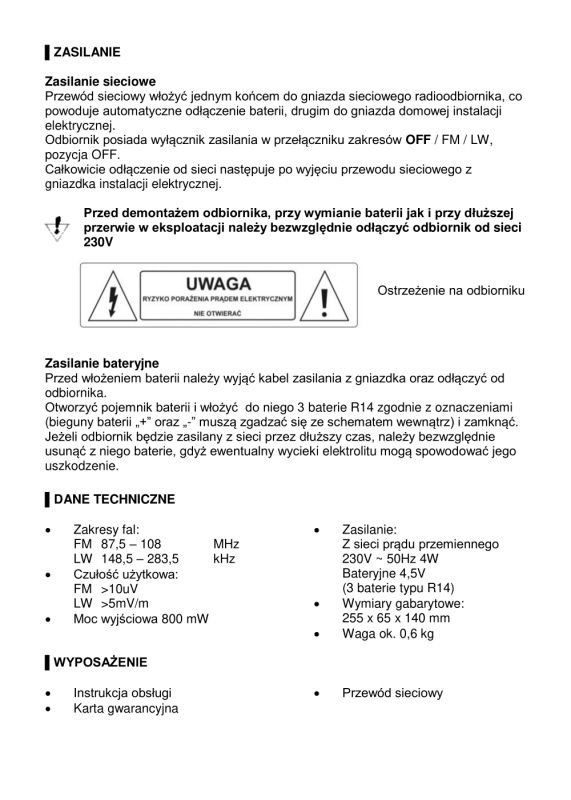
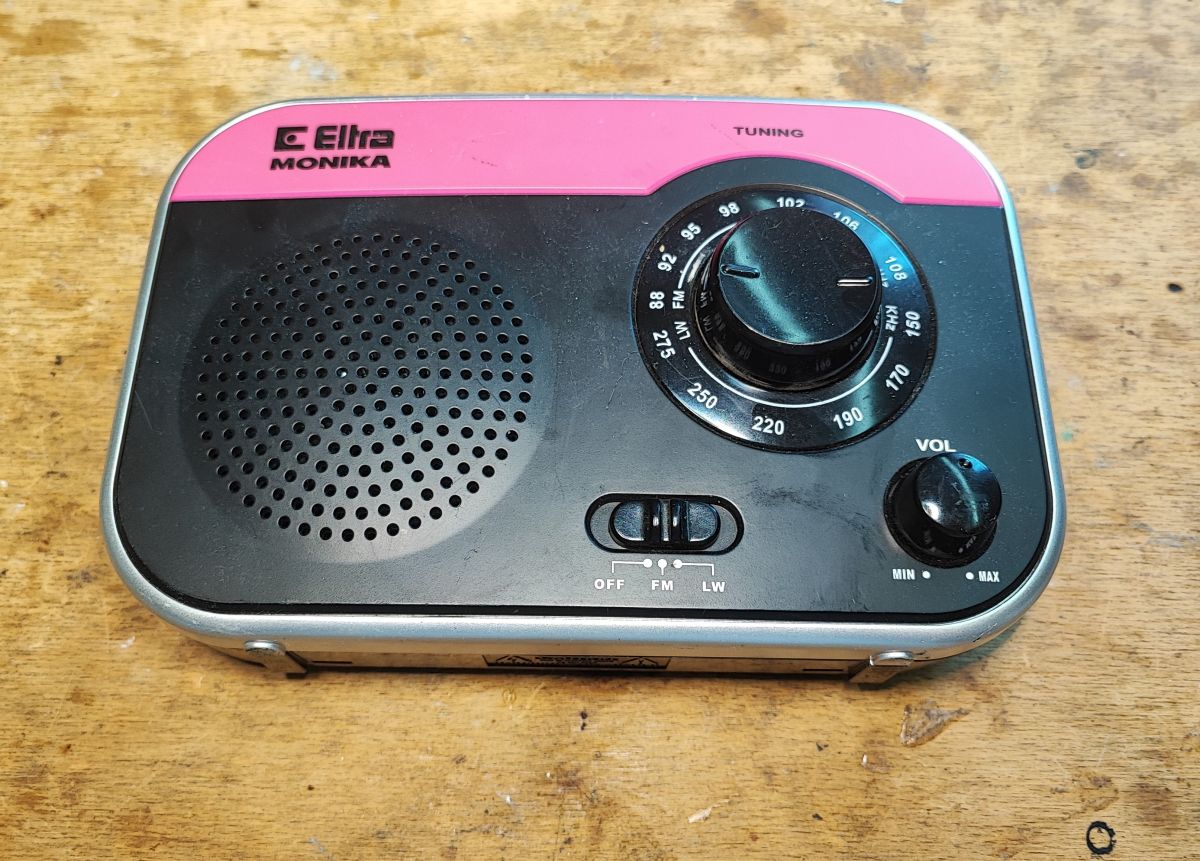
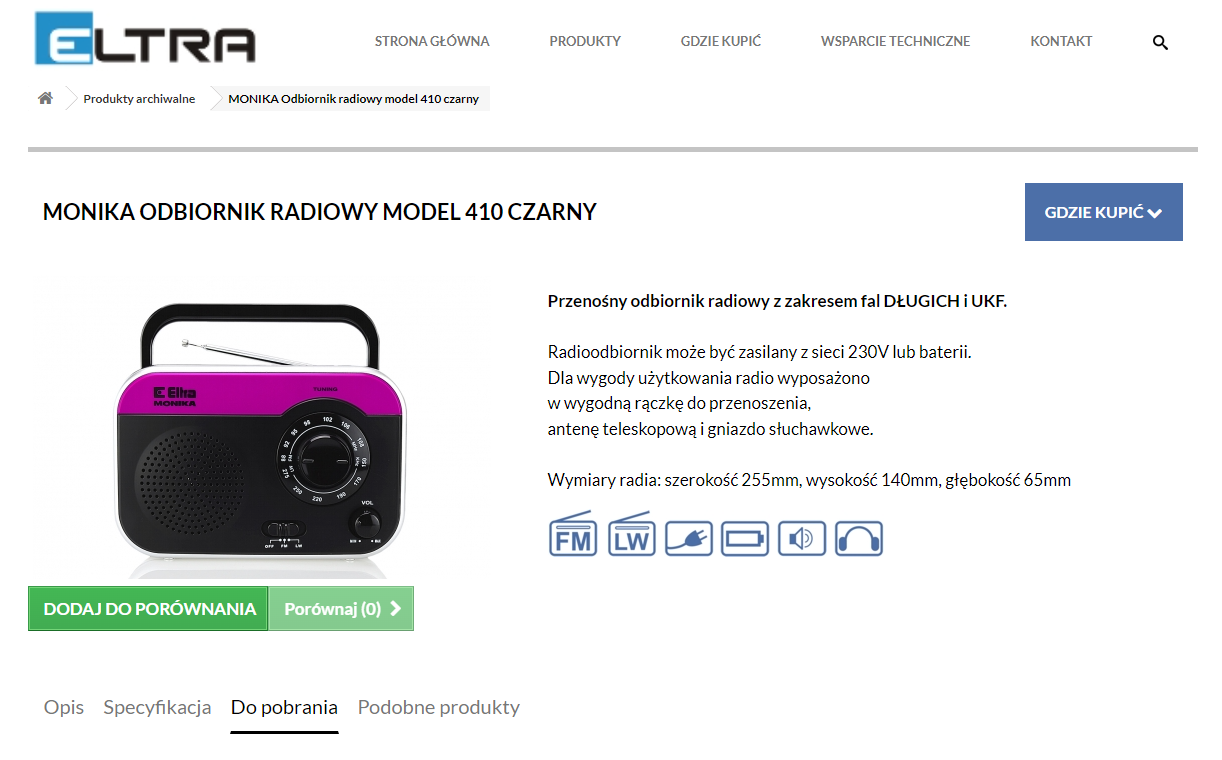
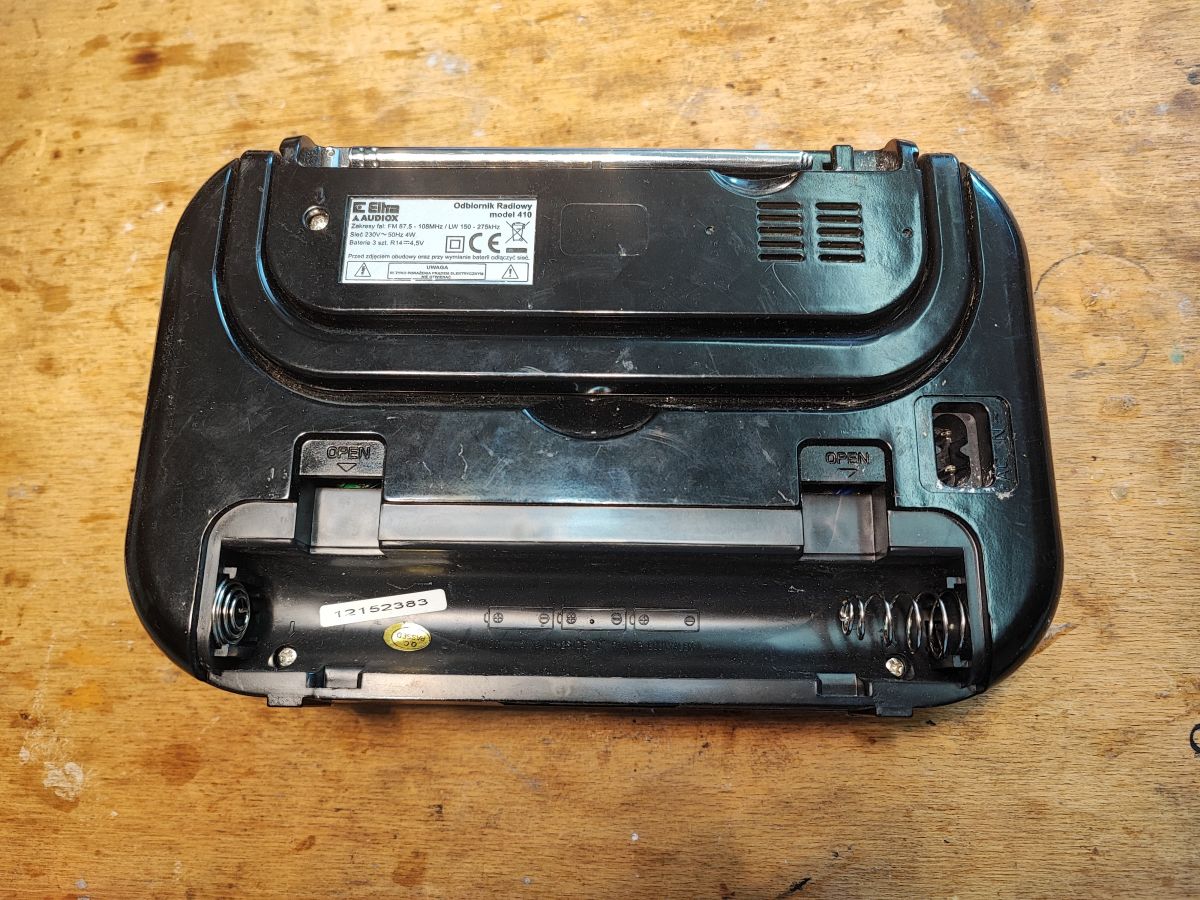
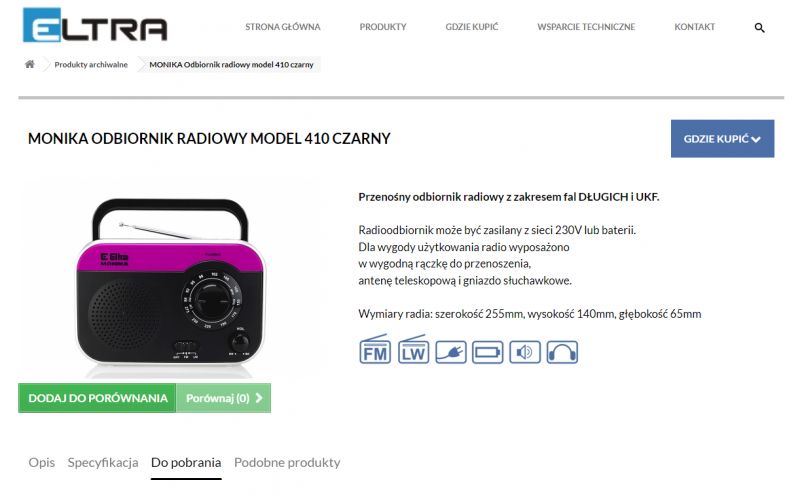
I've already shown some older radio receivers, so this time it's time for something more contemporary. Here's a simple budget allotment from Eltra, a portable radio receiver with a long wave and UKF range. Powered by 230V or three LR14 batteries, plus offering a 3.5mm jack headphone socket. I got the equipment from a friend who heard that I like Polish radio receivers, which is not what I had in mind, but let's have a look.... The product is listed on Eltra's website as archived:
.
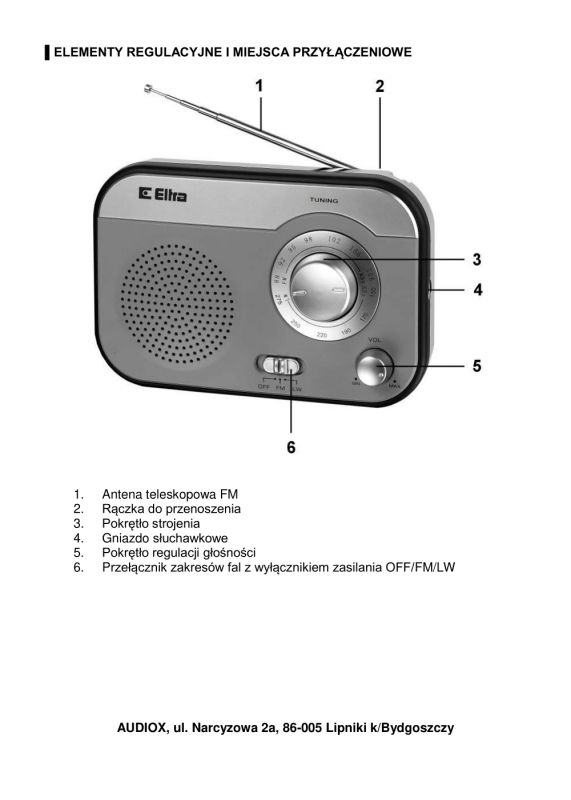
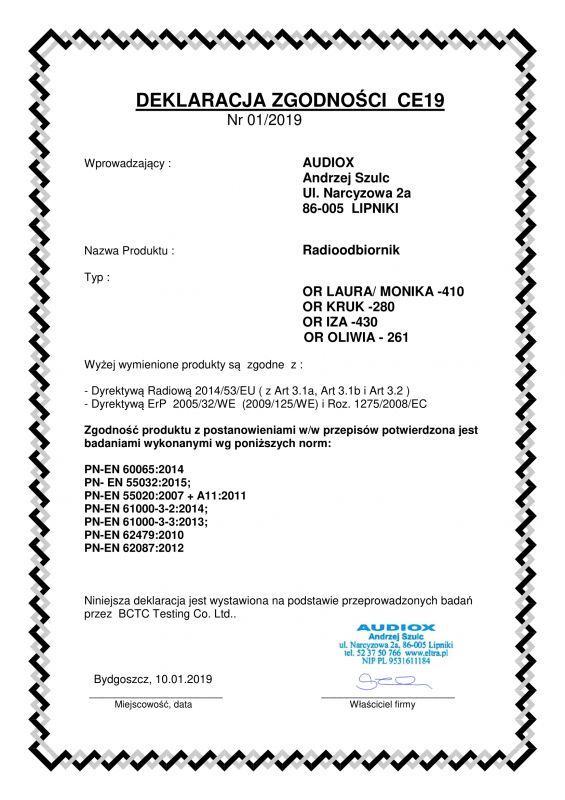
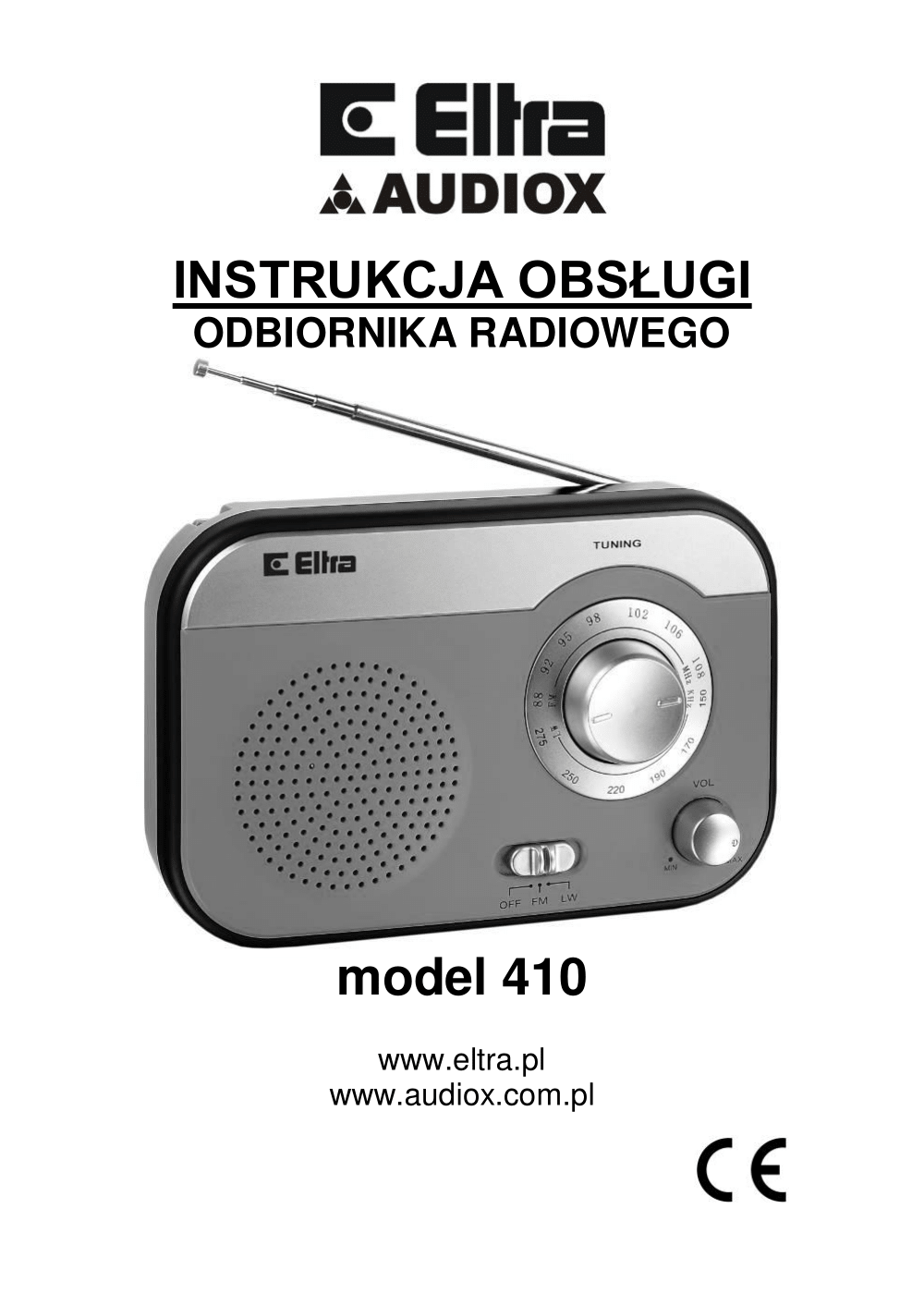
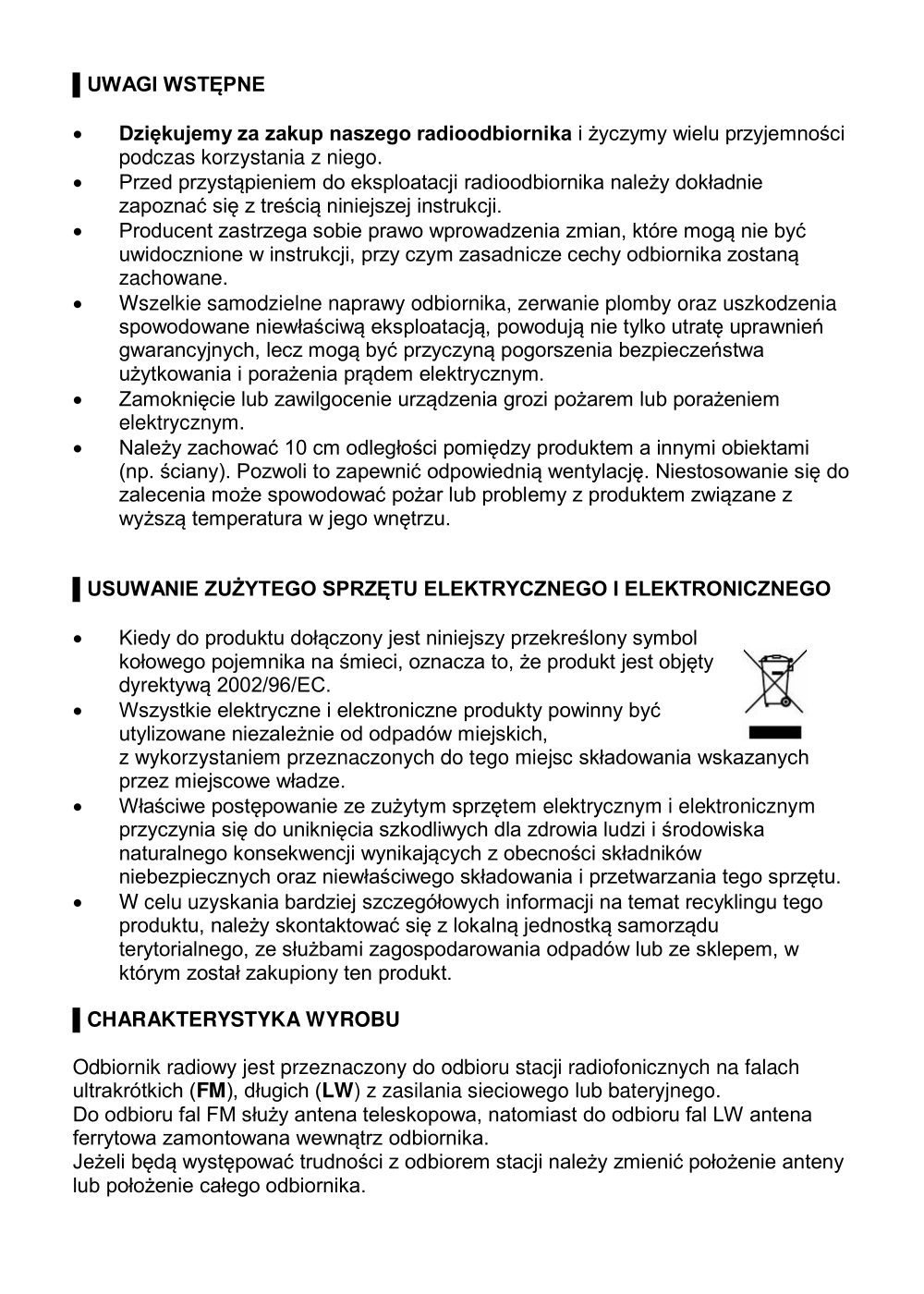
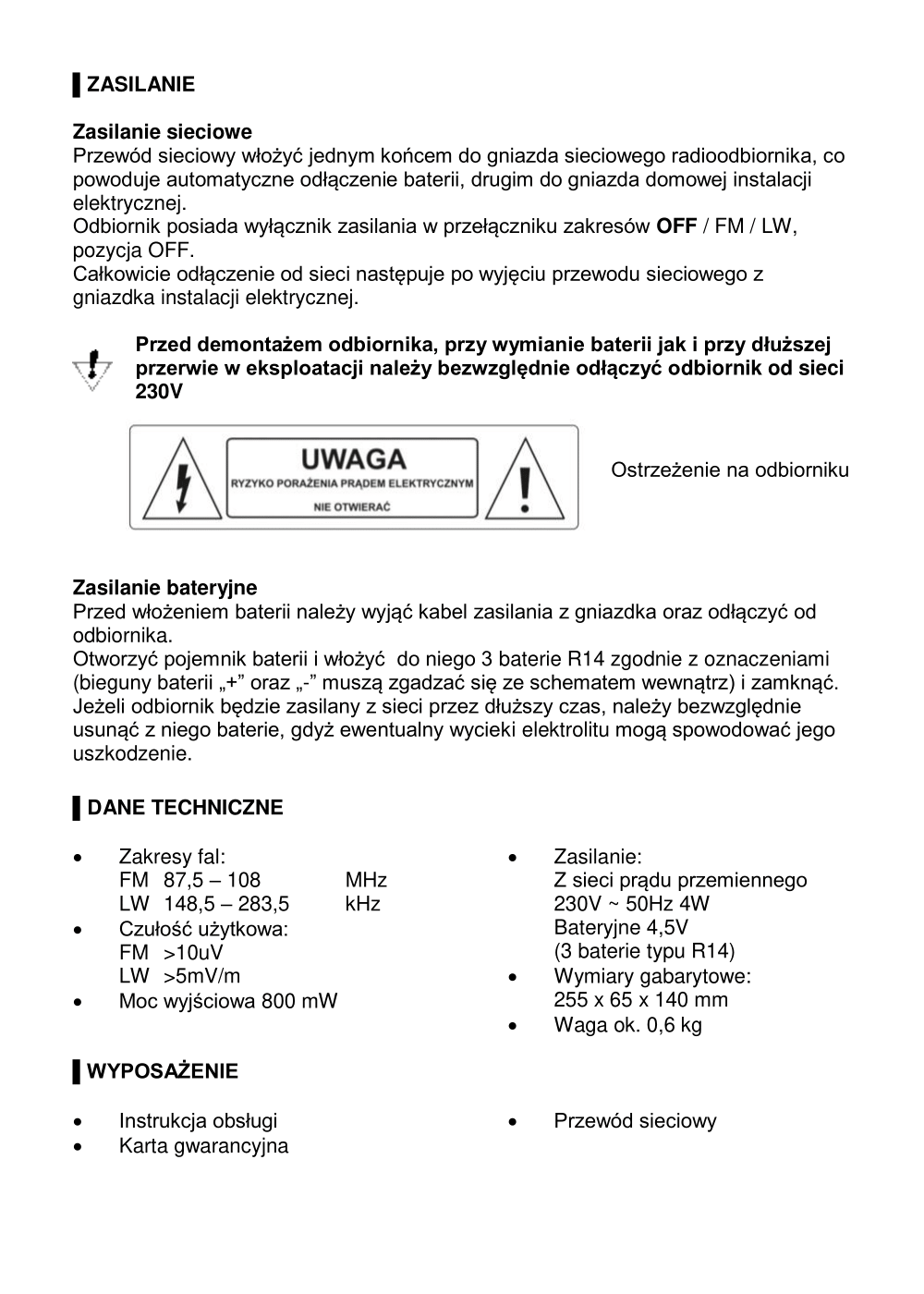
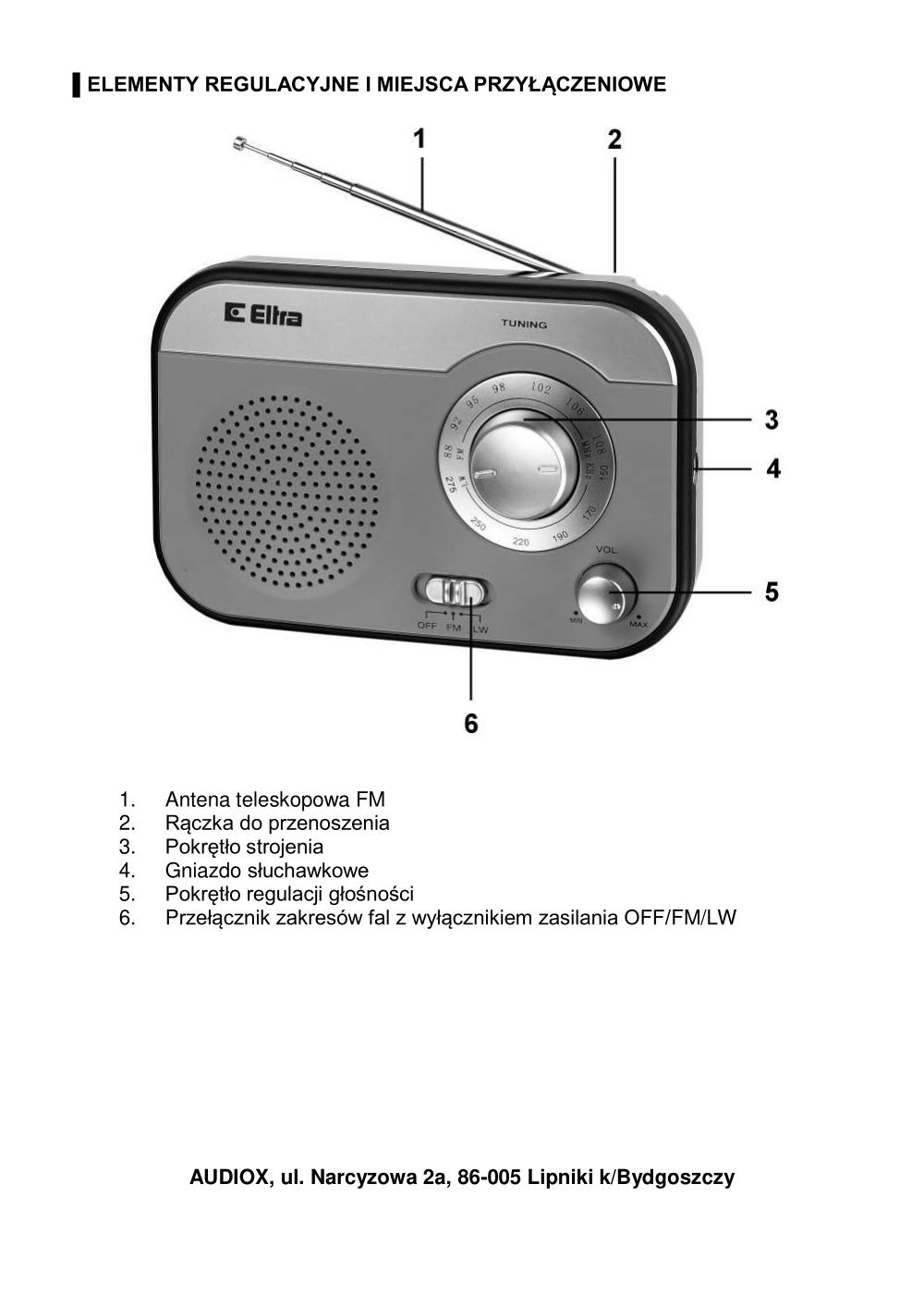
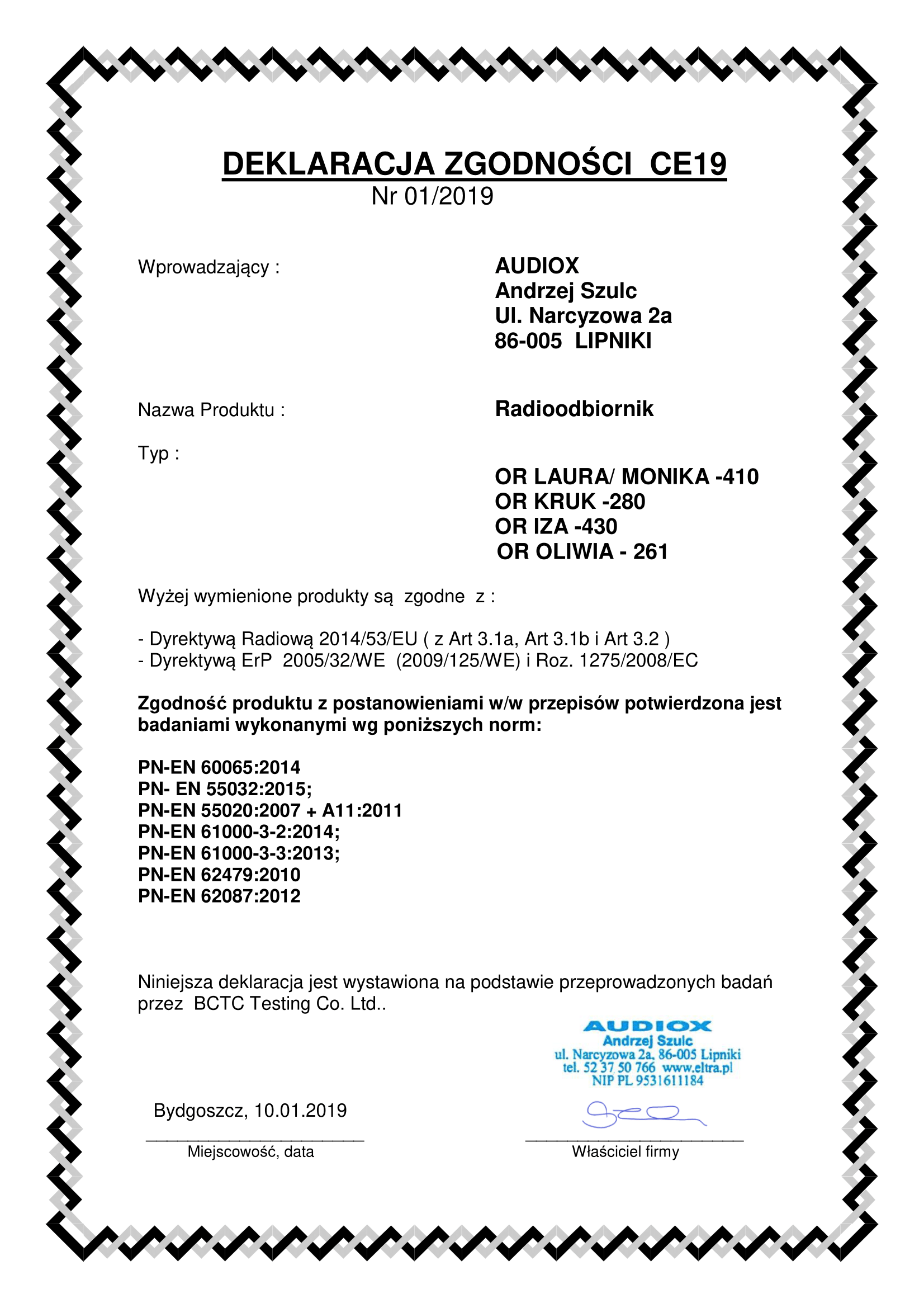
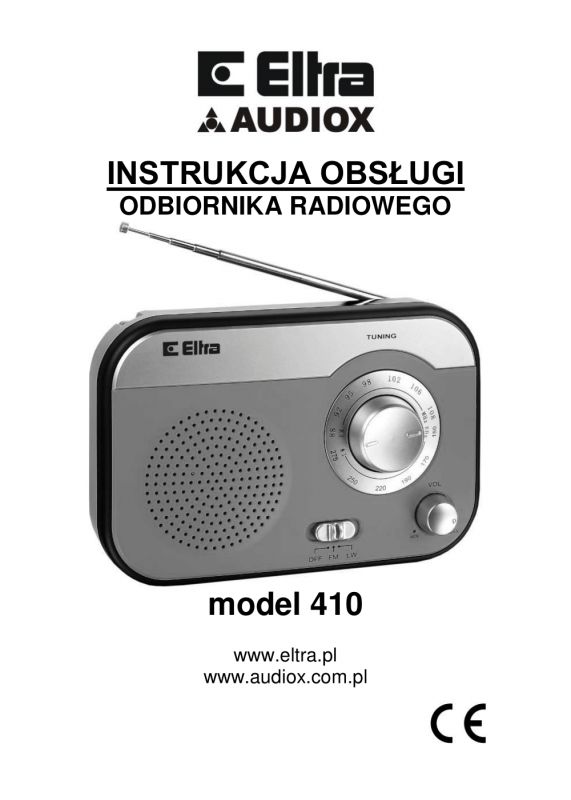
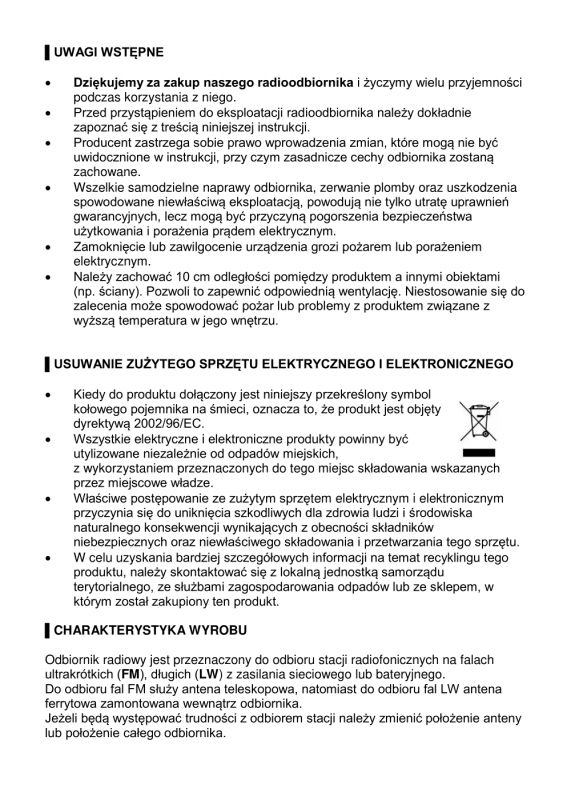
Unlike completely 'no-name' Chinese products, here you can even download the manual and declaration of conformity:
.
Manual dated 2015.
.
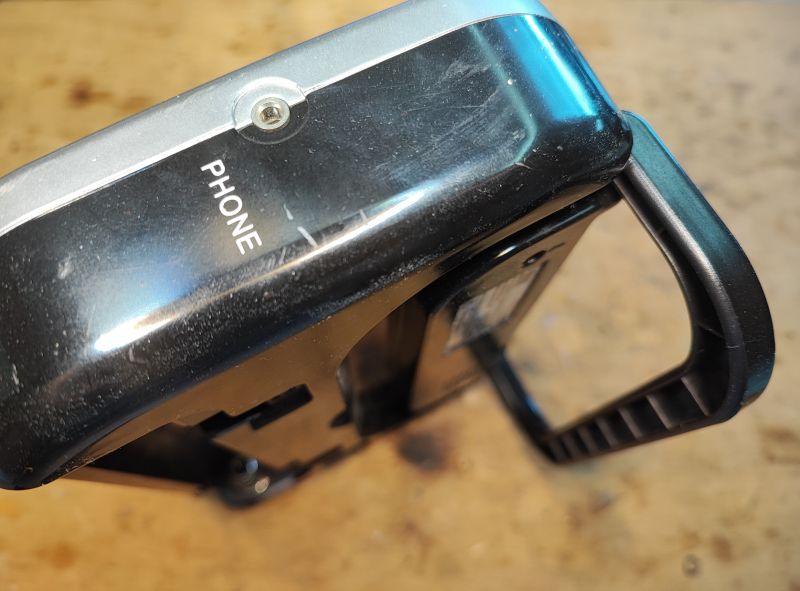
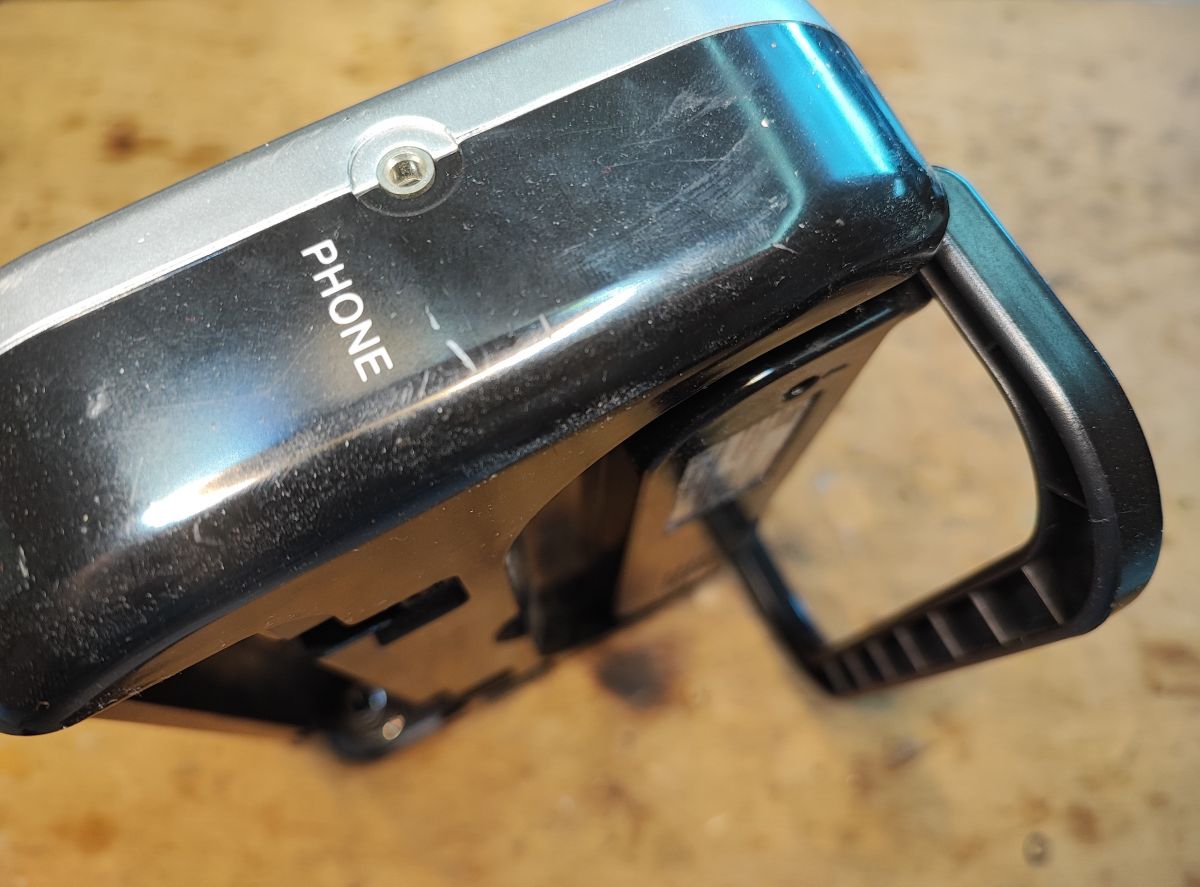
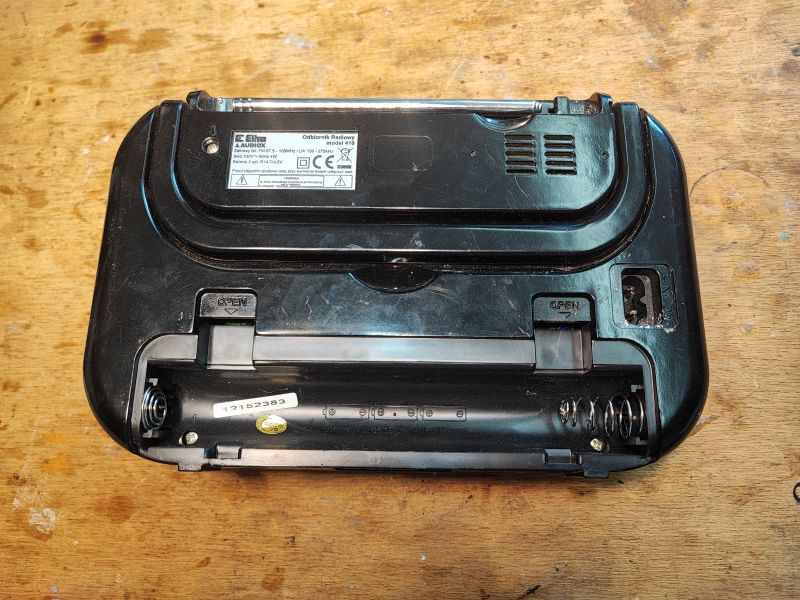
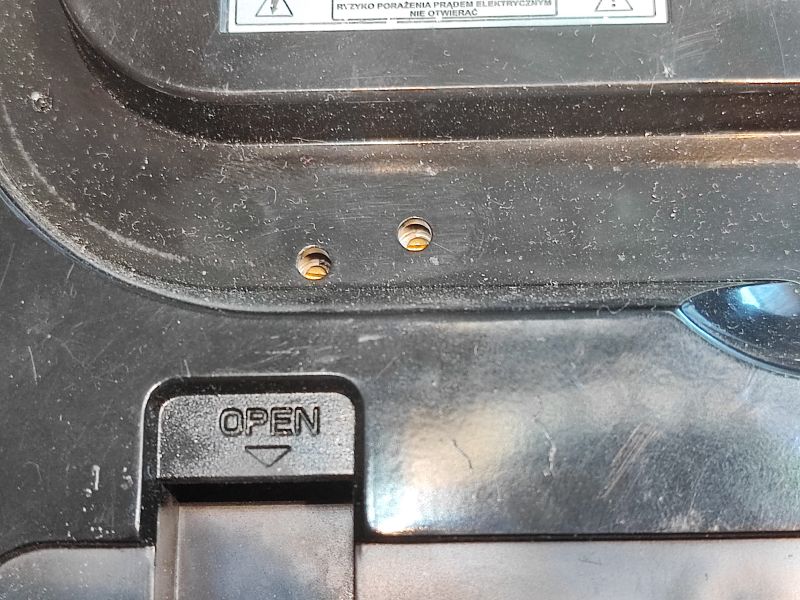
There is a tuning barrel on the housing:
.
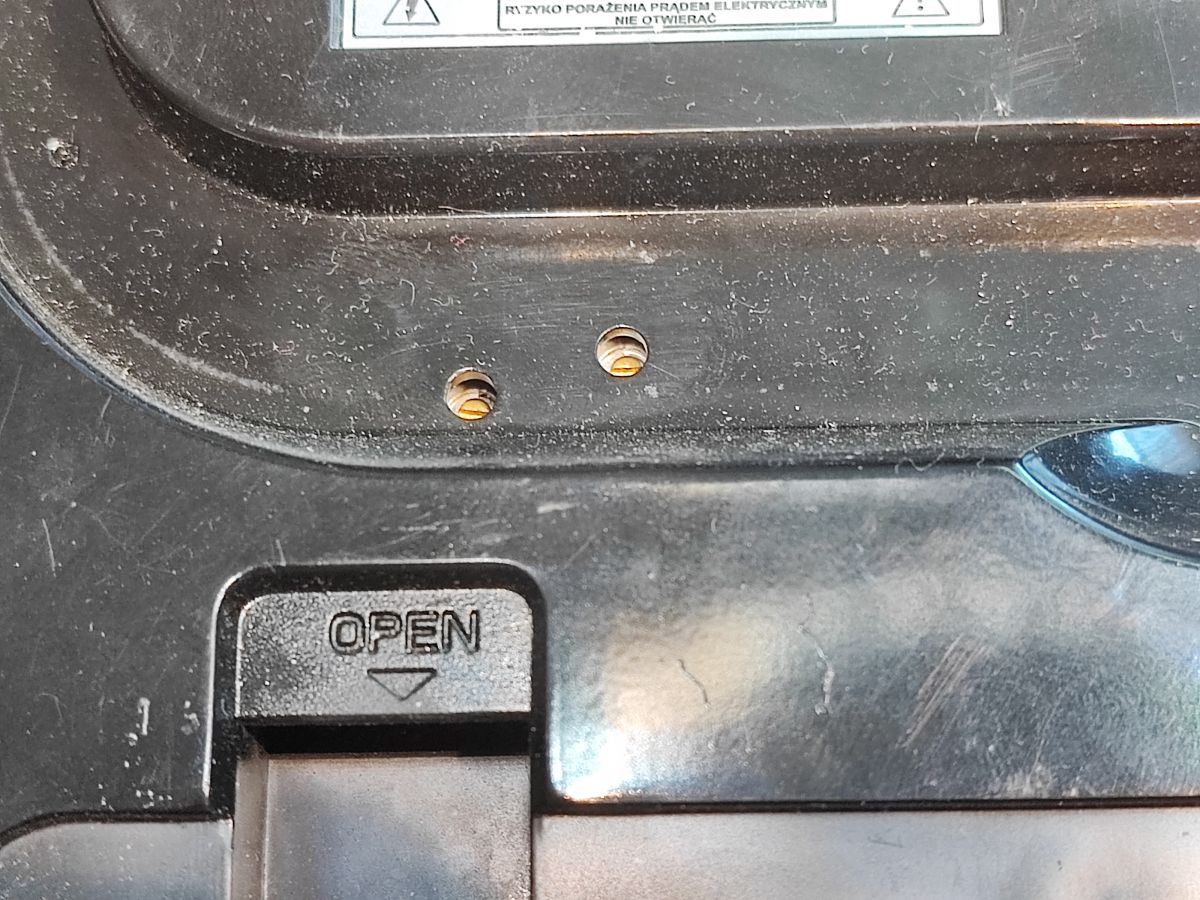
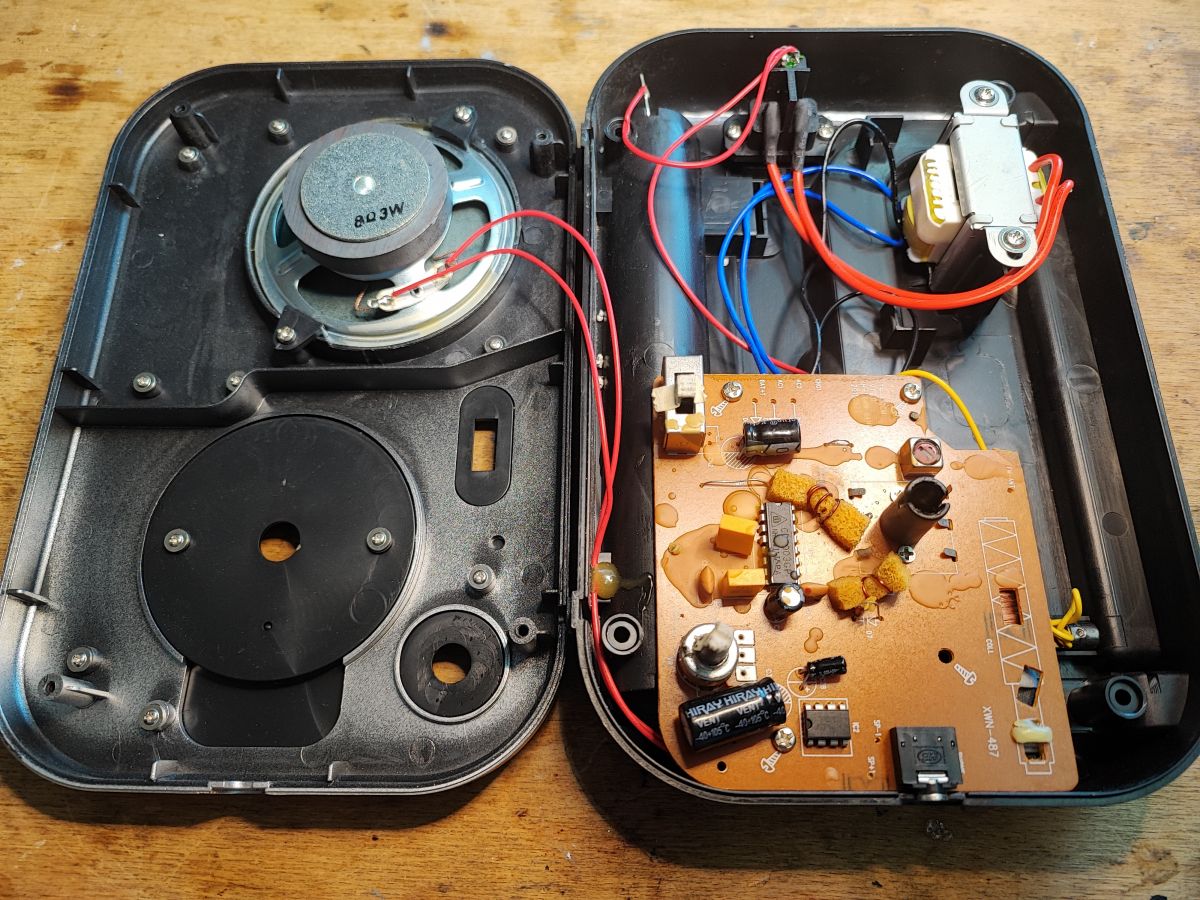
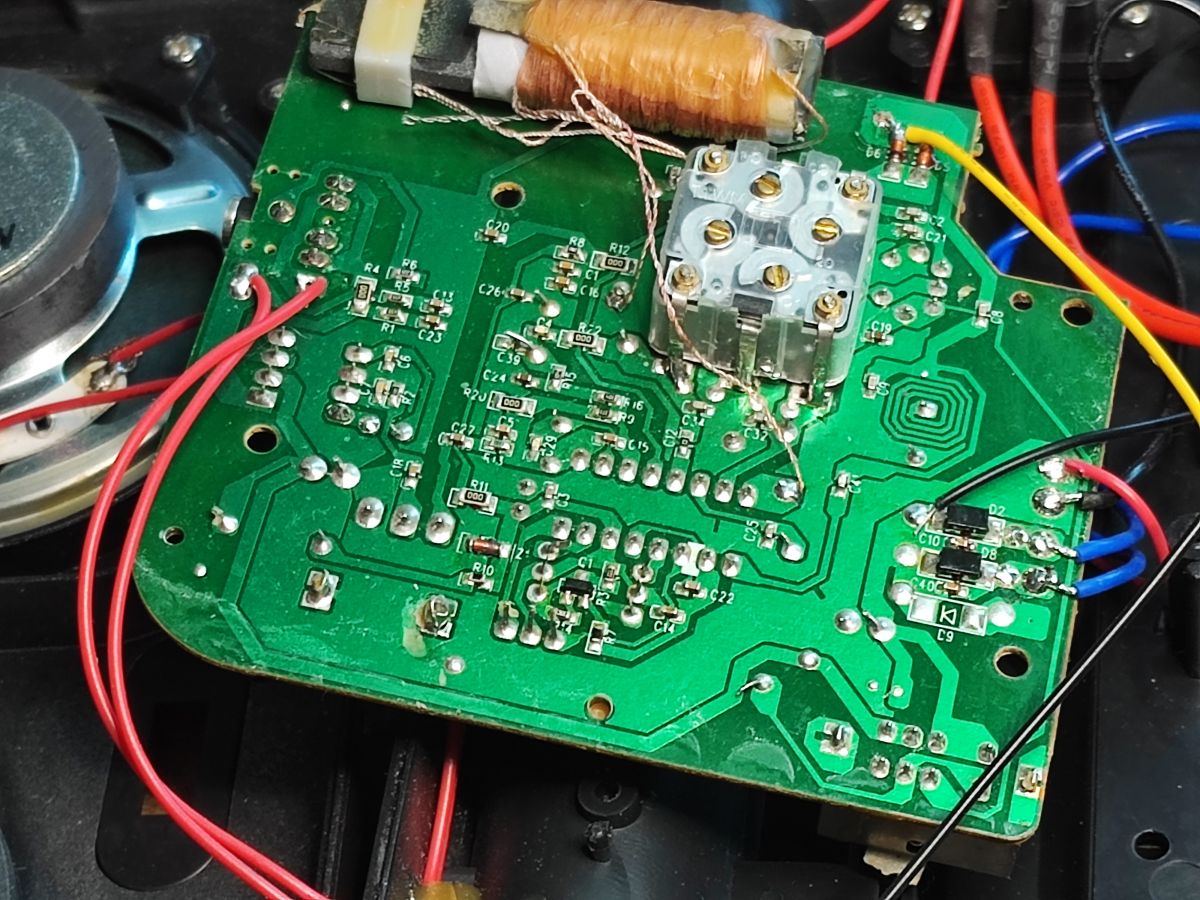
Now let's take a look inside:
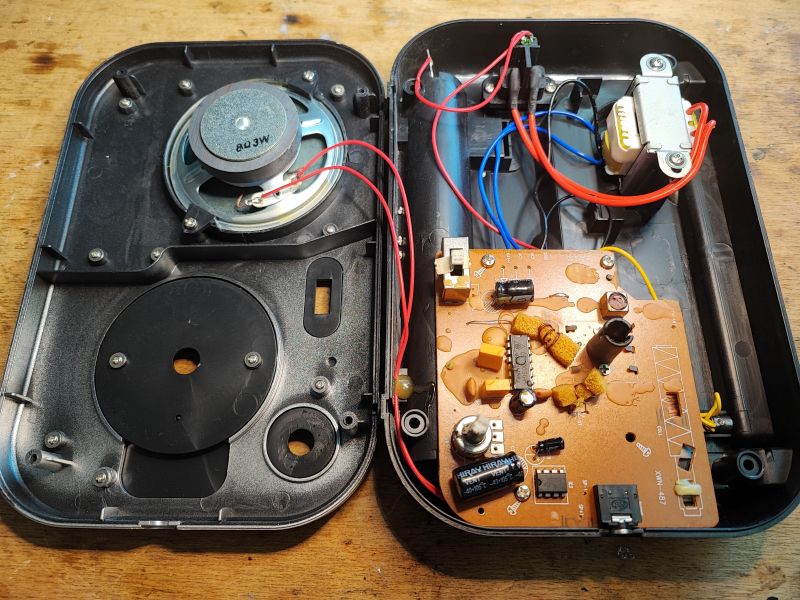
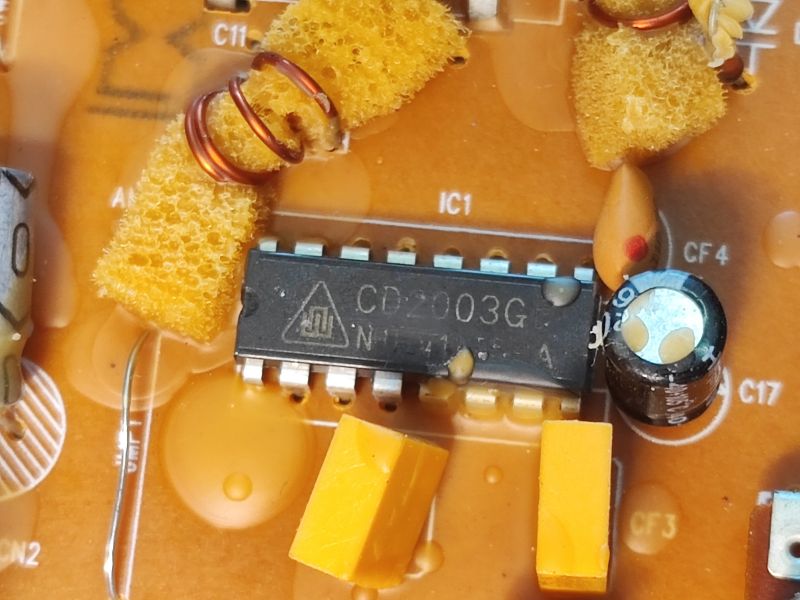
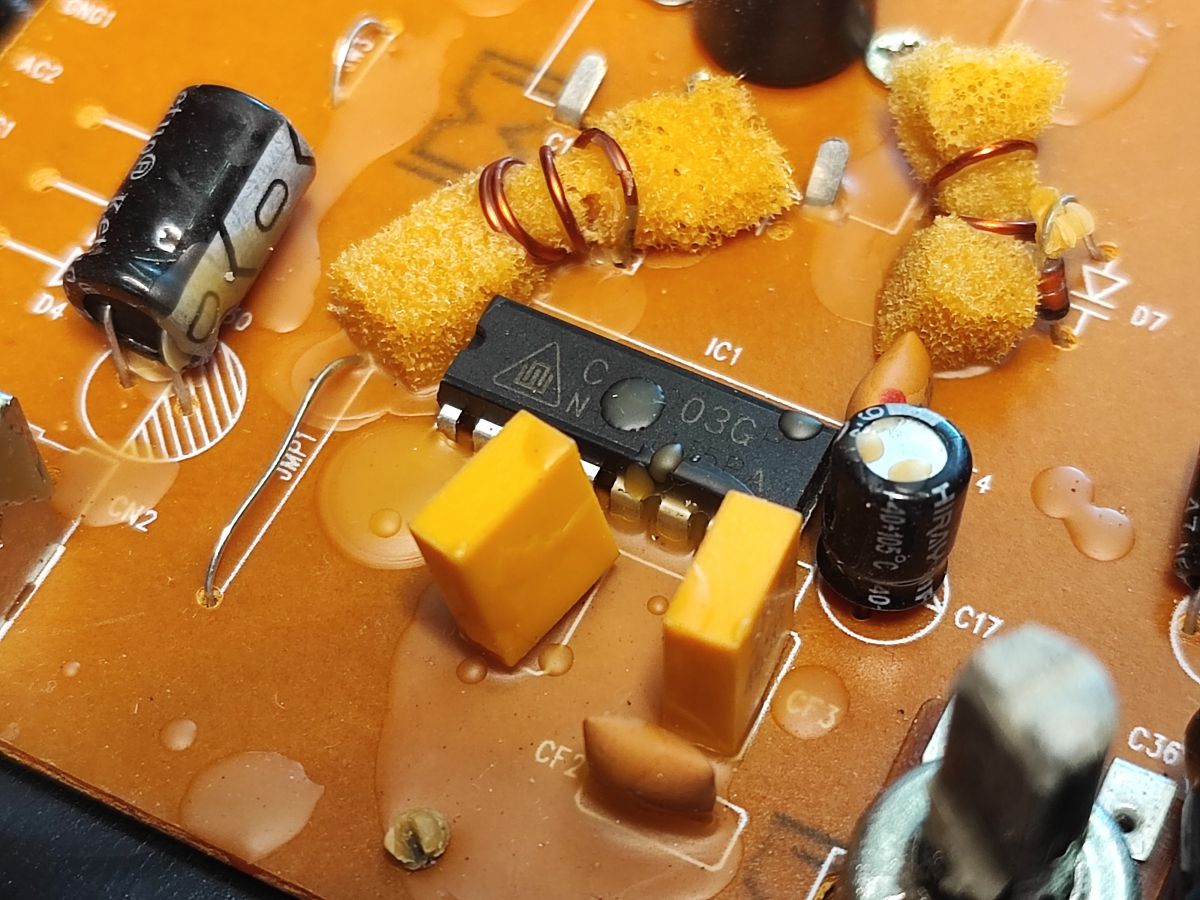
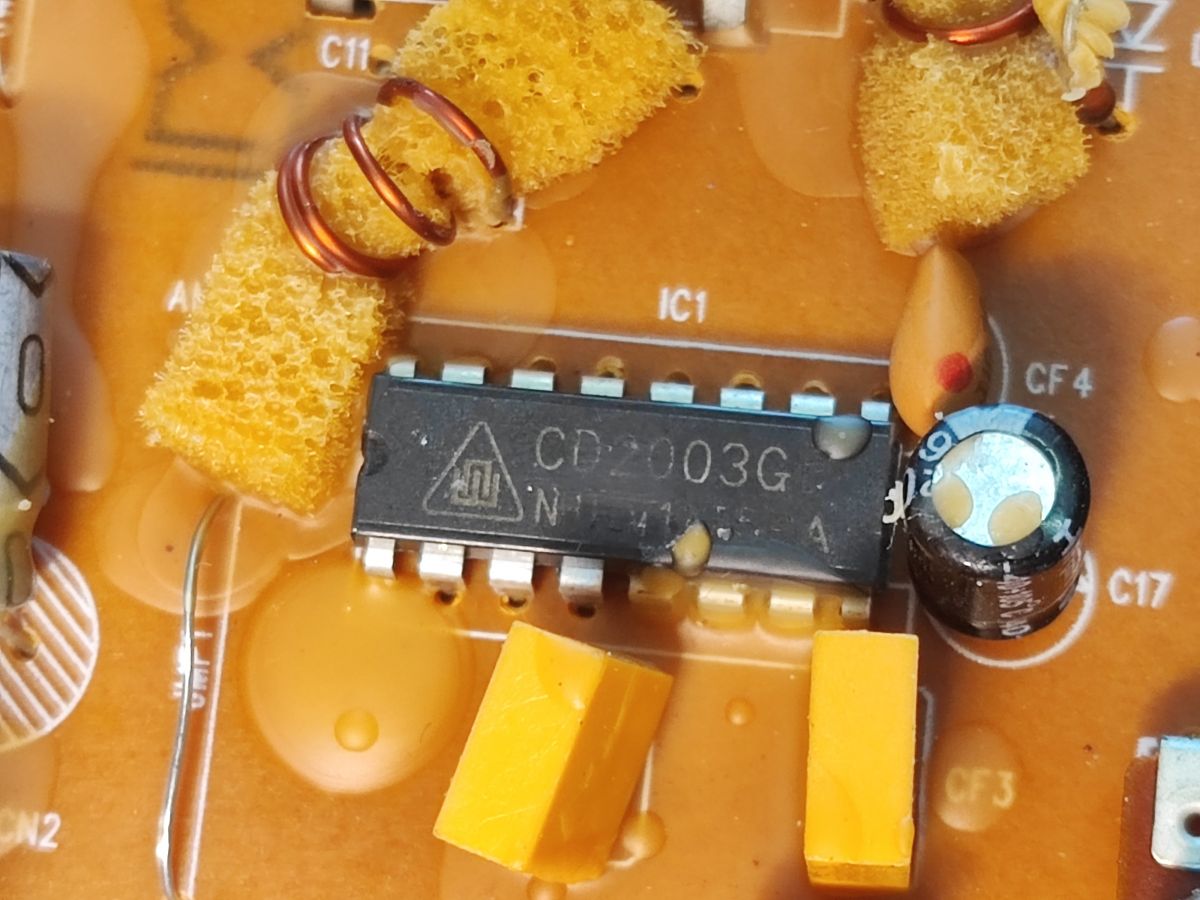
The radio is based on the CD2003:
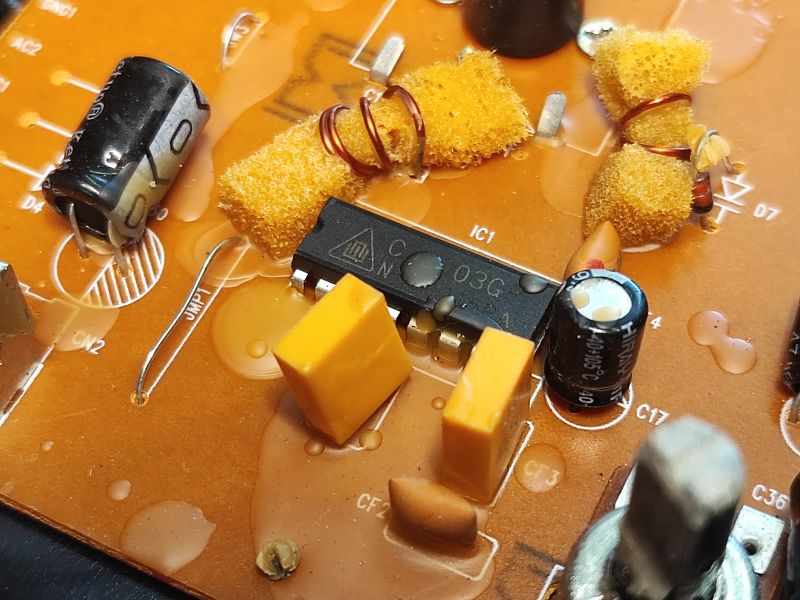
.
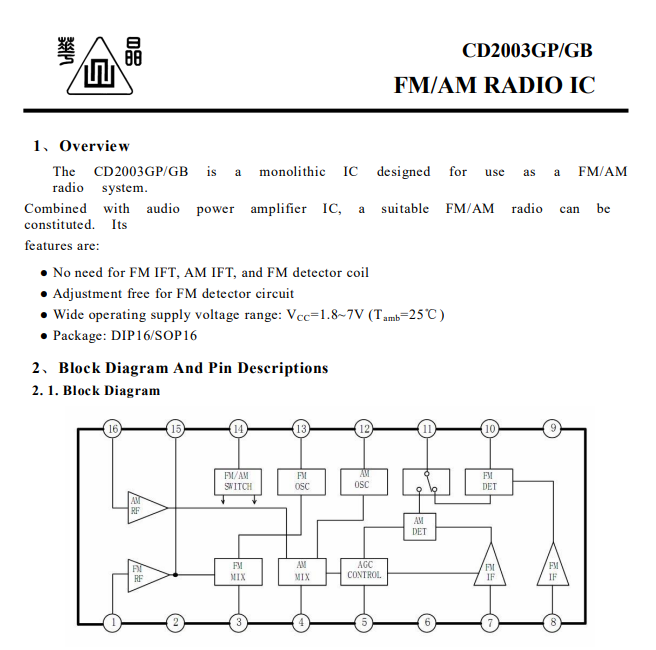
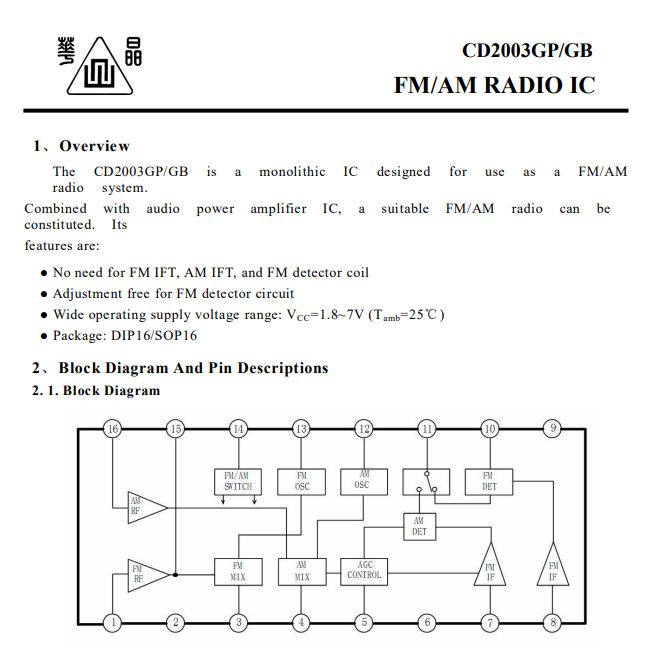
A very popular FM/AM receiver chip, available in DIP16/SOP16 housings, operating at 1.8V-7V.
.
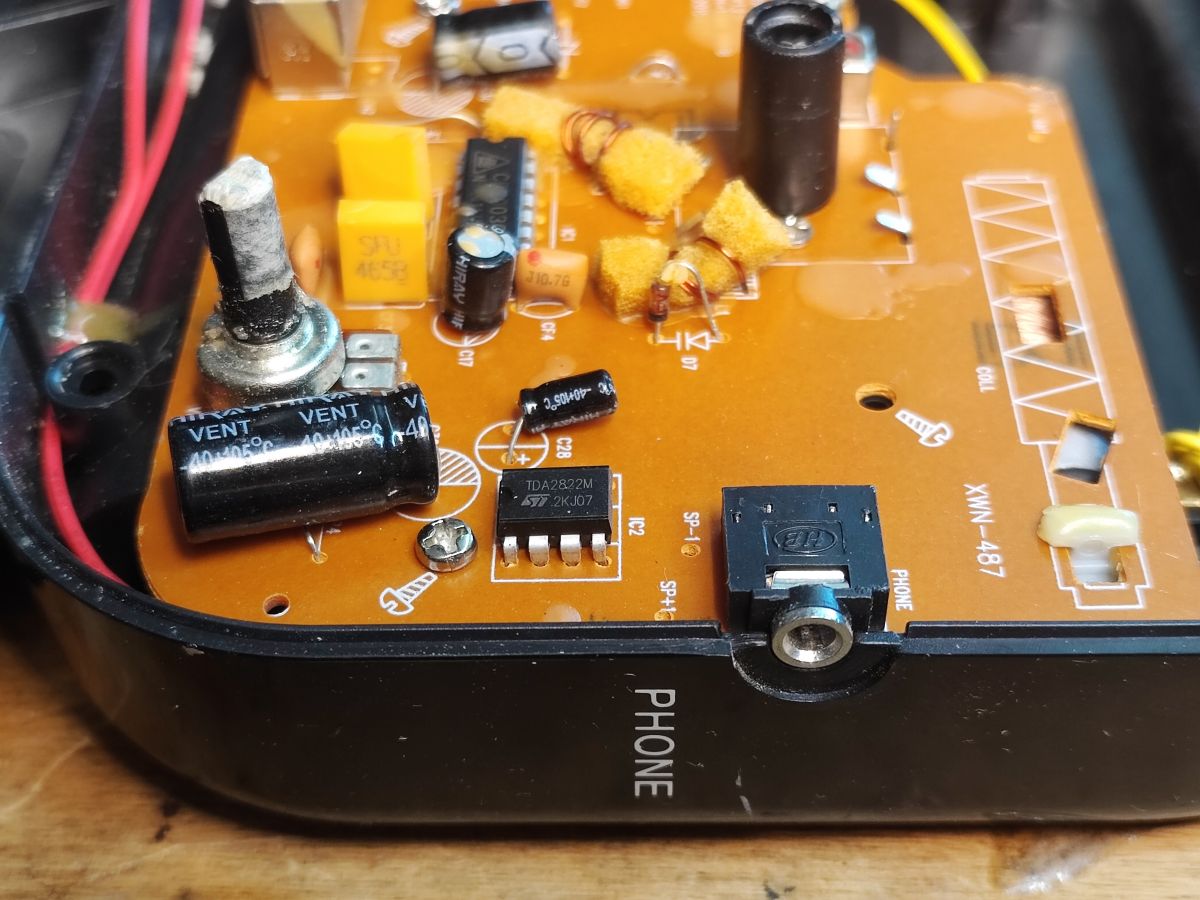
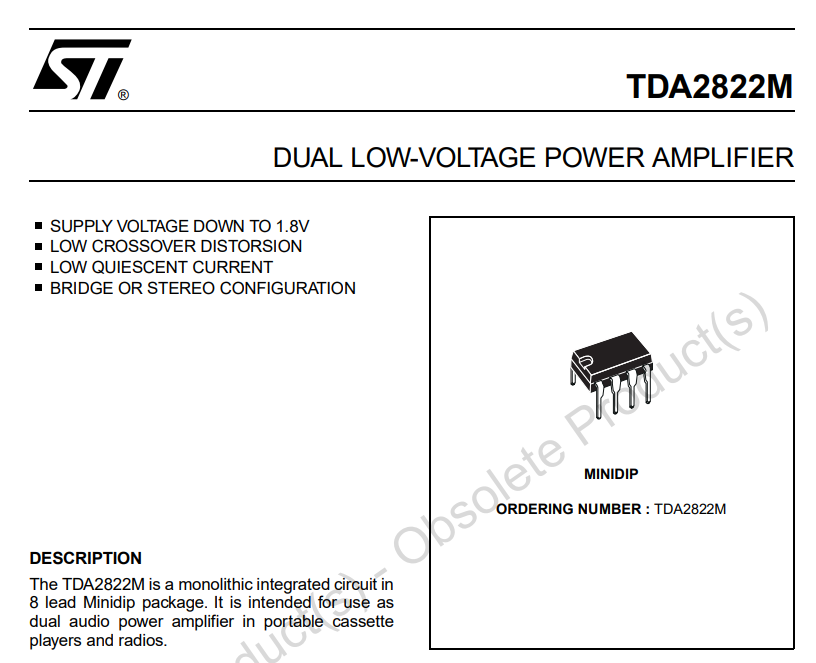
Also inside here is a single-channel audio amplifier, a TDA2822M:
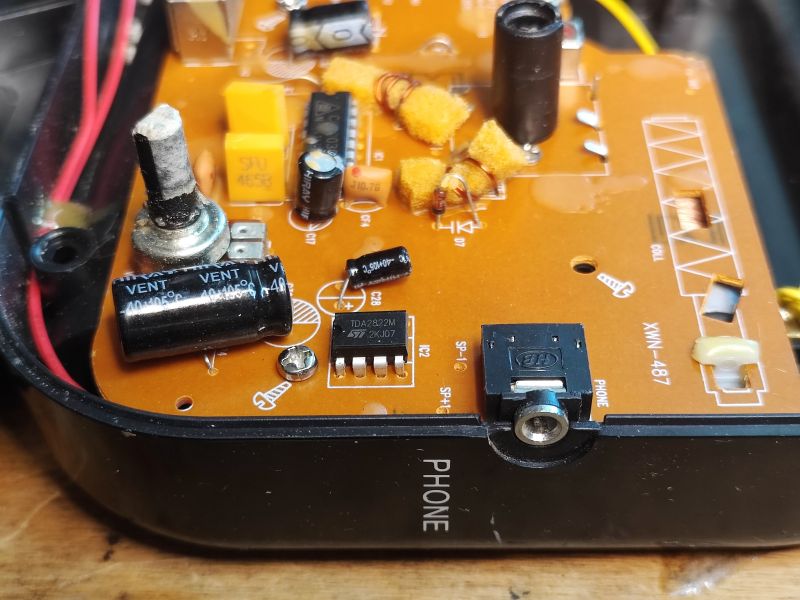
.
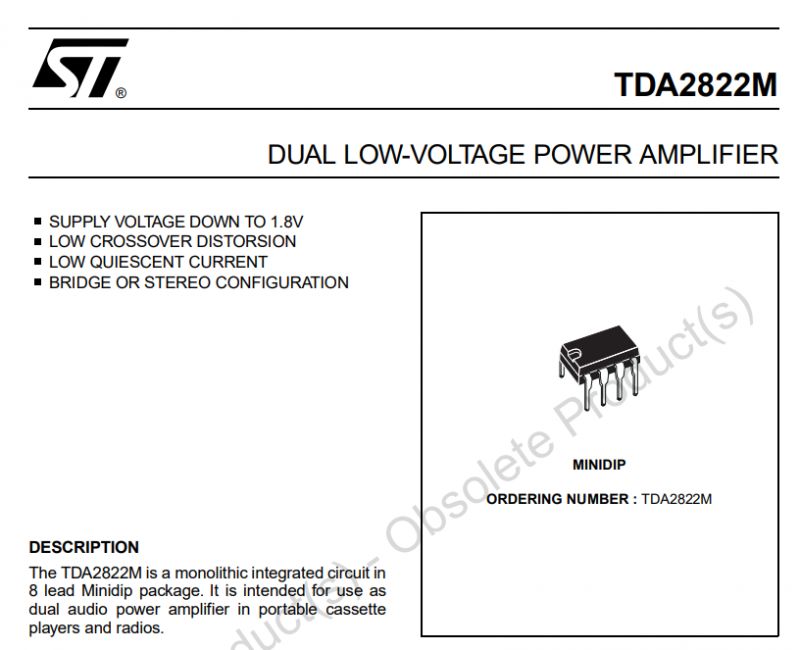
.
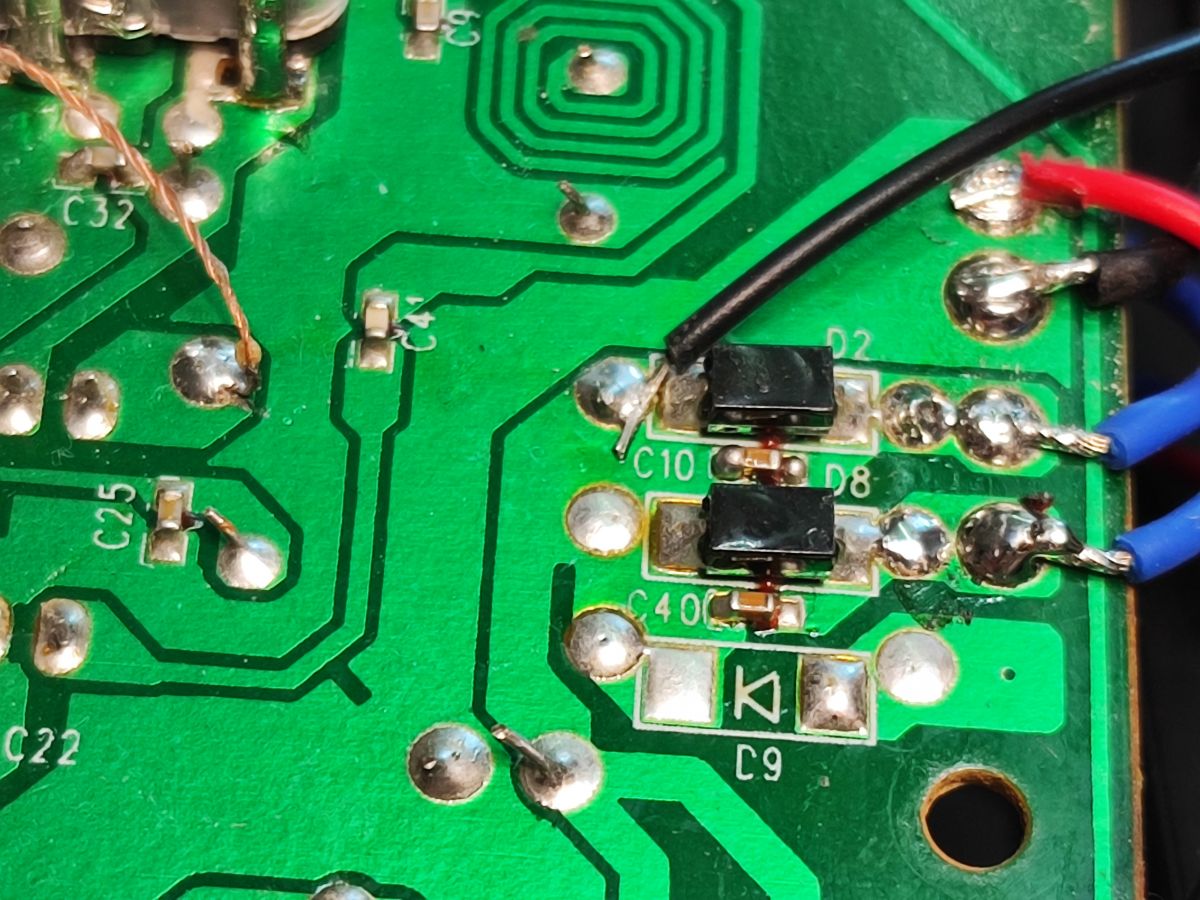
A mains transformer is used for the power supply, there is no switching power supply. It is interesting to note that the transformer used is with a centre tap on the secondary winding, there is no four diode rectifier bridge, there is but a two-terminal rectifier:
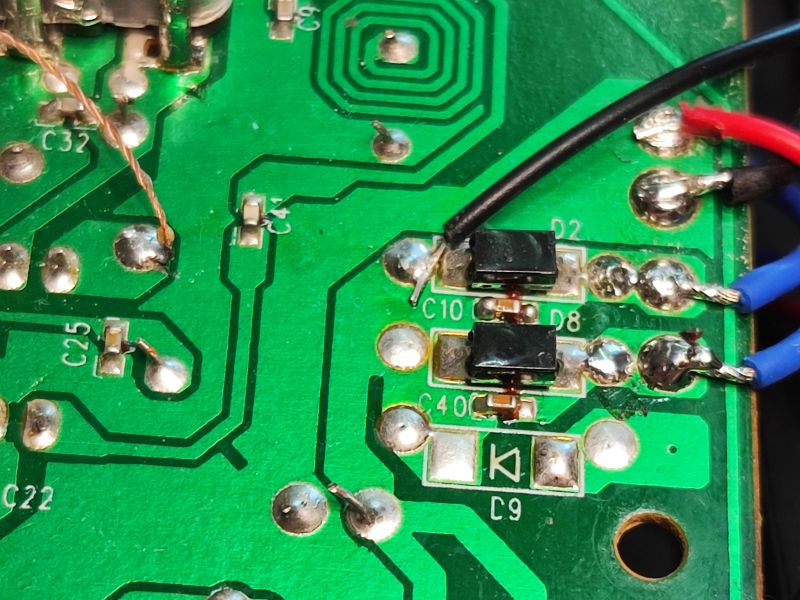
.
Quite poorly these solders look.
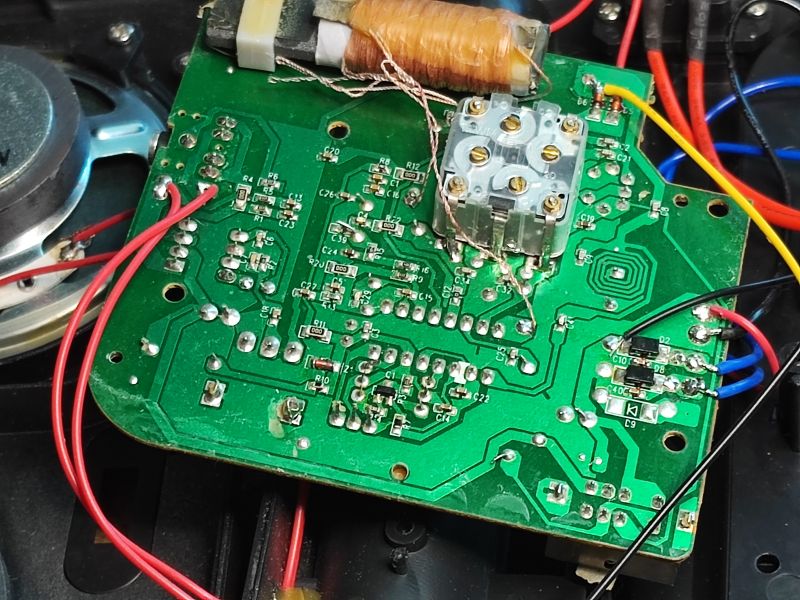
.
And that's pretty much it... This is not the first time I show the simplest receiver, already before there was also a "typical Chinese" on CD2003, here:
Simple AM/FM radio - Lowry - CD2003GP and D2822A - SC3610D connectable .
The audio amplifier also matches. Only that there is one less rectifier diode here - the battery supply is wired differently.
All in all, no surprises, I wonder if it is possible to find a 1:1 receiver from another seller, without Polish name and markings....


About Author
p.kaczmarek2
p.kaczmarek2 wrote 14394 posts with rating 12314 , helped 650 times. Been with us since 2014 year.

Comments

szymon122 22 Oct 2024 11:47

What use are sponges in coils? Stabilisation of the winding? [Read more]

TechEkspert 22 Oct 2024 12:07

Is long wave reception possible or is it drowning in interference? I wonder how much such a radio can play on battery power. The lack of a switching power supply may make LW reception easier. [Read more]

Andrzej Ch. 22 Oct 2024 12:17

. Yes, exactly. When the radio was dropped or bumped, for example, the coils were not jittered. [Read more]

tos18 22 Oct 2024 12:25

. The sponges are soaked in something paraffin-like - the idea is to dampen the vibration of the coil. The voice coil vibrating on impact will detune the circuit and the vibration will be heard in the... [Read more]

gemiel 22 Oct 2024 14:12

Unfortunately, shoddy receivers have been produced for years in which the tuning knob is attached directly to the rotary capacitor. In addition, you have to buy batteries or have access to mains power. I... [Read more]

James596 22 Oct 2024 14:37

This is exactly what I wanted to point out - no gear between the tuning unit and the dial, thus zero tuning precision, just to save a few pennies on hardware and scale. It would be interesting to know... [Read more]

kris8888 22 Oct 2024 22:45

. Of course you can, after all it is a typically Chinese cheap product, mashed up on behalf of many companies. Examples: https://www.mediaexpert.pl/telewizory-i-rtv/drobny-sprzet-rtv/radia/radio-nedis-rdfm1340gy-czarno-szary https://www.sencor.pl/przenosne-radio/srd-210-b The... [Read more]

Olkus 22 Oct 2024 23:54

The radio inside is typical Chinese, I've seen and dismantled more than one such radio. Nothing particularly interesting. I have also seen trafka with double winding in this type of equipment, I wonder... [Read more]

kris8888 23 Oct 2024 14:34

. Rather it holds because you can see that there is an ARCz circuit with an additional capacitive diode in the FM oscillator circuit. Thanks to this, you also don't have to precisely tune into the station... [Read more]

szeryf3 28 Oct 2024 16:48

Radio very minimalist because the price is also very low. But no one has paid attention to the very extended manual attached to this radio. Now such instructions are not included. [Read more]

398216 Usunięty 04 Nov 2024 13:43

. Error. The TDA 2822M itself is a stereo (two-channel) power amplifier, only with the ability to bridge both channels. This manages to produce more power with the same load and power supply parameters. Apologies... [Read more]

efi222 04 Nov 2024 23:13

That paraffin must have been spilled by someone after a few deep :D [Read more]

szeryf3 05 Nov 2024 07:54

@efi222 in older radios it was common to find such paraffin glutes. [Read more]

Mateusz_konstruktor 08 Nov 2024 12:43

I found a very similar one branded Blaupunkt. I am posting a photo gallery. [Read more]

398216 Usunięty 08 Nov 2024 14:14

Well actually - similar enclosure but different board different scale .... But similar . Even the size is the same (I think?). Only are they VERY similar? [Read more]

kris8888 08 Nov 2024 16:02

Based on a completely different circuit, the C9616. It appears to be an SDR type chip, the tuning is voltage-based (with a potentiometer), there are no variable capacitances, filters, coils in the circuit.... [Read more]

398216 Usunięty 09 Nov 2024 14:35

As an excuse for my last post.... A long time ago I bought a cassette player (something a'la WALKMAN) at the local bazaar. Contrary to my earlier fears, it had a very good mechanism with auto-reverse,... [Read more]

FAQ

TL;DR: For buyers and repairers of the Eltra Audiox Monika 410, this FAQ explains a 230V, three-LR14 portable radio built around CD2003. "Zero tuning precision" was criticized, but the simple analog design, transformer supply, and no switching PSU make its strengths and likely failures easy to understand. [#21272879]

Why it matters: This thread shows what budget FM/LW radios really contain, what usually fails first, and when a simple analog design is still the better choice.

Design Tuning method Main radio IC Power-supply style Main takeaway
Eltra Audiox Monika 410 Analog variable capacitor CD2003 Transformer, two-diode rectifier Simple, familiar, easy to inspect
Similar OEM radios under other brands Usually same analog layout CD2003-class or similar Varies by seller Same case does not guarantee same PCB
Similar-looking Blaupunkt example Voltage tuning with potentiometer C9616 Not detailed in thread More integrated DSP/SDR approach

Key insight: In this radio class, the biggest long-term issue is not the RF chip. It is low-cost assembly quality: poor lead-free soldering, cheap capacitors, and OEM variation between brands. [#21274033]

Quick Facts

  • The Monika 410 is a portable FM/LW radio powered from 230V AC or three LR14 batteries, and it also includes a 3.5 mm headphone jack. [#21272592]
  • Its receiver section uses the CD2003, a very common FM/AM chip available in DIP16 and SOP16 packages and operating from 1.8V to 7V. [#21272592]
  • The audio stage uses TDA2822M. One correction in the thread matters: the IC itself is stereo, but small radios may use it in other configurations, including bridge mode. [#21289142]
  • The mains supply is linear, not switching. The set uses a transformer with a center-tapped secondary and a two-diode rectifier instead of a four-diode bridge. [#21272592]
  • A similar-looking radio discussed later used a C9616 DSP/SDR-style chip clocked by a 32.7 kHz crystal, showing that similar cases can hide very different electronics. [#21294425]

What is the CD2003 chip in the Eltra Audiox Monika 410, and how does it handle FM and LW reception?

The CD2003 is the Monika 410’s main FM/AM receiver IC. In this radio it handles the RF and IF work for the FM and long-wave sections, while the separate TDA2822M handles audio amplification. The thread identifies CD2003 as a very common chip sold in DIP16 and SOP16 packages, with a 1.8V-7V operating range, which fits low-cost portable sets powered from batteries or a simple low-voltage supply. [#21272592]

How is the TDA2822M actually used in small portable radios like the Monika 410, and why do people say it can work in bridge mode?

The TDA2822M is used as the radio’s low-power audio amplifier. One poster corrected the thread: the IC itself is a stereo, two-channel power amplifier, but designers can also wire both channels in bridge mode to get more output from the same supply and load. In a small portable radio, that flexibility makes it useful whether the set has a single speaker or a different compact audio layout. [#21289142]

Why are foam or sponge pieces placed inside radio coils, and how do they prevent detuning after bumps or drops?

Foam pieces are placed in coils to mechanically stabilize the winding. Posters explain that the foam is often soaked in a paraffin-like material, which damps vibration so the coil does not shake when the radio is bumped or dropped. That reduces momentary detuning and helps the tuned circuits keep their set alignment instead of drifting every time the cabinet gets hit. [#21272759]

What is 'coil miking' in a radio receiver, and why is it most noticeable around the heterodyne coil?

Coil miking is a microphonic effect in which a vibrating coil modulates the radio signal path. "Coil miking" is a mechanical microphony effect that converts coil vibration into audible or frequency modulation, causing the receiver to react to shock or cabinet vibration instead of only RF signals. The thread says it is strongest in the heterodyne coil because that coil directly affects oscillator frequency, so vibration adds extra FM in step with the movement. [#21272759]

How does the Monika 410 power supply work with a center-tapped transformer and a two-diode rectifier instead of a full bridge?

It uses a center-tapped secondary so it does not need a four-diode bridge. The thread shows a mains transformer with a center tap on the secondary winding and notes that the rectifier is only a two-terminal, two-diode arrangement. That is a standard full-wave approach for a center-tapped transformer: each half-cycle uses one half of the secondary, so two diodes are enough. [#21272592]

Why would a radio without a switching power supply have an advantage for long-wave reception and lower interference?

A radio without a switching supply has an advantage because it avoids a common internal noise source on long wave. One poster explicitly notes that the lack of a switching power supply may make LW reception easier, and the Monika 410 uses a linear transformer supply instead. On a sparse, interference-prone band like LW, less internal hash can matter more than advanced circuitry. [#21272729]

How long can an Eltra Monika 410-style portable radio typically run on three LR14 batteries in real use?

The thread does not provide a measured runtime for the Monika 410. It only confirms the radio uses three LR14 batteries and asks how long it can play, but no one posts test hours, current draw, or a battery-life measurement. For this specific model, the safe answer from the thread is that runtime remains unverified rather than documented. [#21272729]

What affects long-wave reception quality in cheap FM/LW radios like the Eltra Monika 410, especially in noisy environments?

Long-wave quality depends mainly on interference, power-supply noise, and mechanical stability in the tuned circuits. The thread highlights one advantage here: no switching power supply, which can reduce internal noise on LW. It also notes that precise tuning matters less on LW because there are few stations, but shocks, poor soldering, and general cheap construction can still hurt stable reception in noisy environments. [#21274033]

Why does a tuning knob mounted directly on the variable capacitor make tuning feel imprecise in budget radios?

It feels imprecise because there is no reduction gear between your hand and the variable capacitor. Two posters criticize this exact layout, saying the tuning knob is attached directly to the capacitor shaft, which gives “zero tuning precision” and makes fine station setting harder. The design saves parts and money, but it reduces tuning finesse compared with geared or electronically tuned radios. [#21272879]

What is ARCz in an FM radio, and how does it help the receiver stay locked to a station even with coarse tuning?

ARCz is the FM automatic frequency control function that pulls the tuning back toward the station center. "ARCz" is an FM automatic correction circuit that adjusts oscillator frequency toward the received station, using a reactive tuning element so the radio stays centered even when manual tuning is coarse. One post says this radio has ARCz with an additional capacitive diode in the FM oscillator circuit, so slight knob error matters less. [#21274033]

How do you identify and rework poor lead-free solder joints in a cheap portable radio before they start causing failures?

You identify them by visual inspection and rework them before intermittent faults appear. The thread directly calls the soldering “extremely poor” and warns it will become a problem sooner or later. 1. Open the set and inspect dull, uneven, or thin joints. 2. Focus on stressed points like the transformer, jack, and controls. 3. Reflow the suspect joints carefully before cracks become functional failures. [#21274033]

Which is better in a simple portable radio: an analog CD2003-based design or a DSP/SDR chip like the C9616?

The better choice depends on whether you value simplicity or integration. The thread presents the CD2003 set as straightforward analog hardware with visible coils, variable capacitor tuning, and easy inspection, while the C9616 example is described as a more technologically advanced DSP/SDR-style solution clocked by a 32.7 kHz crystal and controlled internally. The same poster warns that reception quality, sensitivity, and interference immunity may vary in digital SDR designs. [#21294425]

How can you tell whether two radios sold under different brands like Eltra, Nedis, Sencor, or Blaupunkt are actually the same OEM design inside?

You can tell only by checking the internal board and circuit, not by the case alone. One poster lists Nedis and Sencor examples as likely rebadged cheap Chinese products, but later posts show that even very similar housings can hide a different PCB, scale, or even a completely different radio IC such as the C9616. In this market, identical styling does not prove identical electronics. [#21294425]

What usually fails first in low-cost Chinese portable radios after a few years: solder joints, electrolytic capacitors, or something else?

Poor solder joints are presented as the first major failure risk, with cheap electrolytics close behind. A poster says the extremely poor lead-free soldering “will sooner or later become a problem” and adds that Chinese electrolytic capacitors will probably die after a few years. That makes assembly quality, not the CD2003 receiver chip, the main life-limiting factor in these radios. [#21274033]

How would you safely open and inspect an Eltra Audiox Monika 410 to check the transformer supply, tuning mechanism, and headphone jack wiring?

You should open it as a mains device first and an audio gadget second. 1. Unplug the 230V cord and remove all three LR14 batteries. 2. Open the cabinet and visually trace the transformer, center-tapped rectifier wiring, tuning barrel, and 3.5 mm jack leads. 3. Inspect for poor soldering before touching or powering anything, because the thread already flags visibly weak joints in this set. [#21272592]
Generated by the language model.
%}