logo elektroda
logo elektroda
X
logo elektroda

Presentation of my SE EL34 tube amplifier

woda400 32344 17

TL;DR

  • A single-ended EL34 tube amplifier with triode/pentode switch, ECC82 white follower preamp, EM84 indicator, and EAA91 rectifier.
  • It uses a semiconductor bridge only for anode-voltage rectification, plus CLC filtering for the power stage and CLCRC filtering for the preamplifier.
  • The anode supply uses 362 uF total capacitance and an 8.1H choke rated at 140 mA, with 20 mA reserve.
  • The amplifier started working on the first try, with only single-mV hum and no oscillation at low or high audio frequencies.
  • The only noted drawback is slightly weak bass, and the remaining hum comes from magnetic coupling between the loudspeaker and mains transformers.
Generated by the language model.
ADVERTISEMENT
Treść została przetłumaczona polish » english Zobacz oryginalną wersję tematu
📢 Listen (AI):
  • Presentation of my SE EL34 tube amplifier

    Hello to all forum members, I am writing my first post so please be understanding! I would like to present my amplifier and get your opinion on the appearance and used lamps and other components.

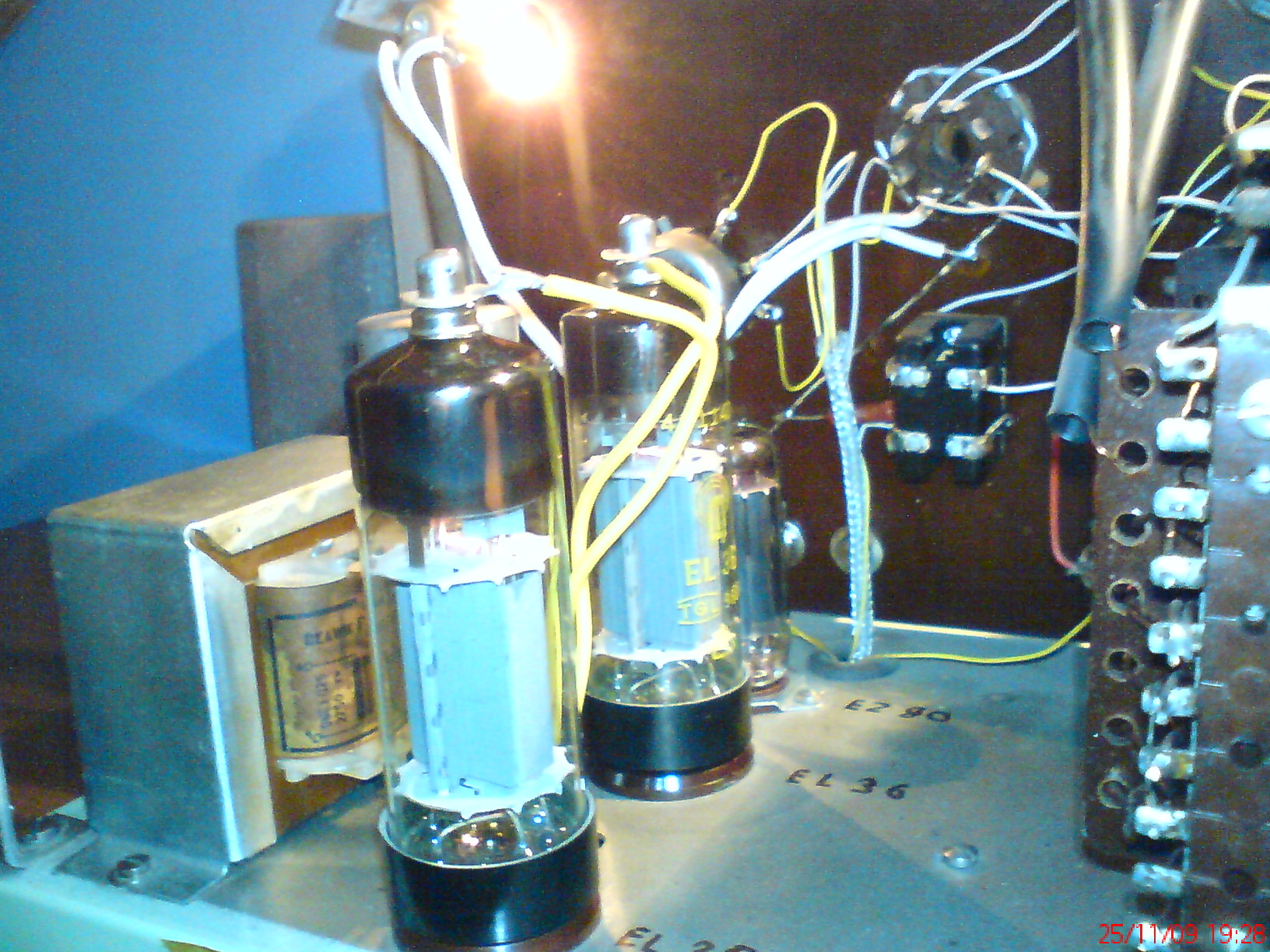
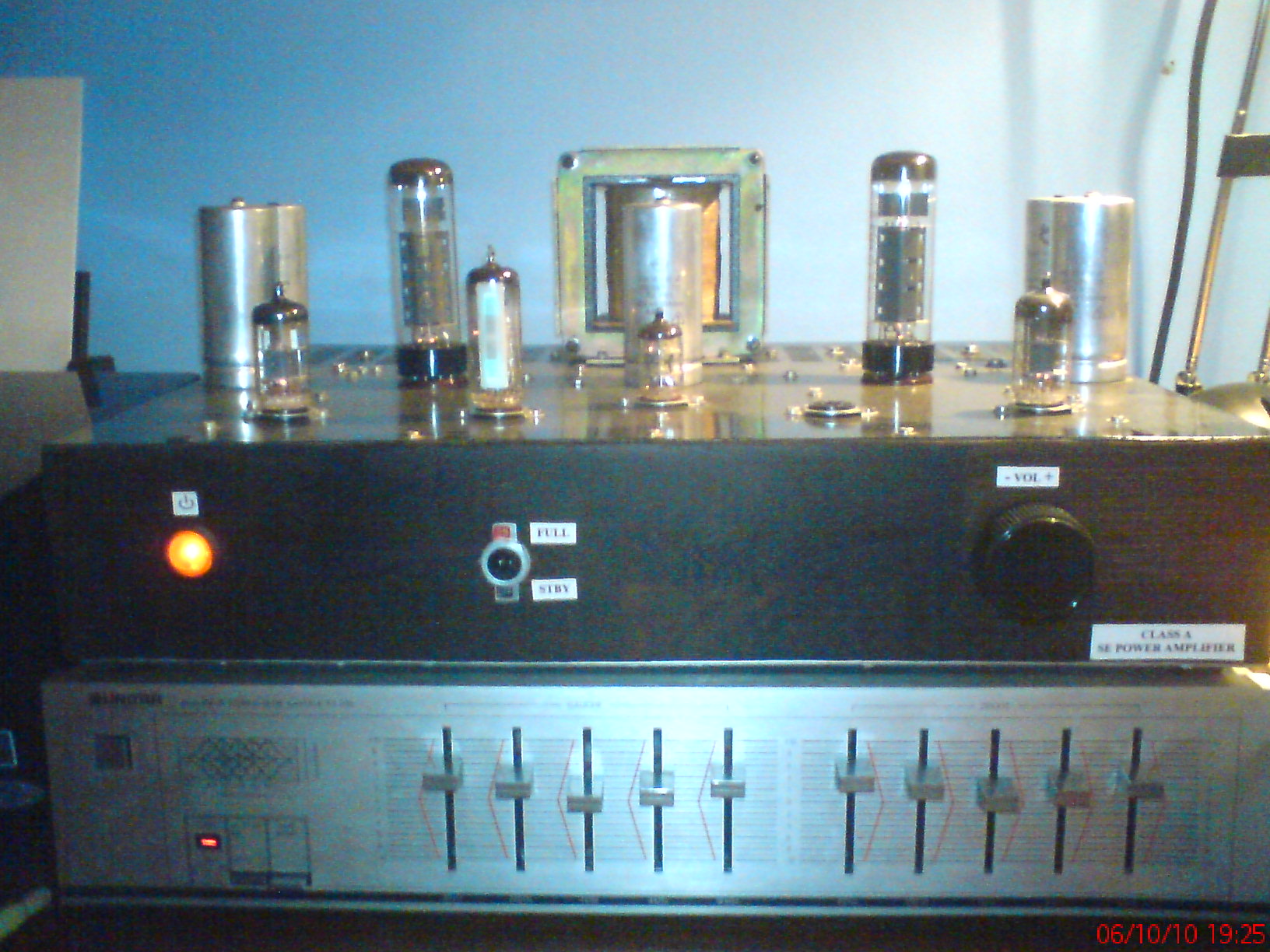
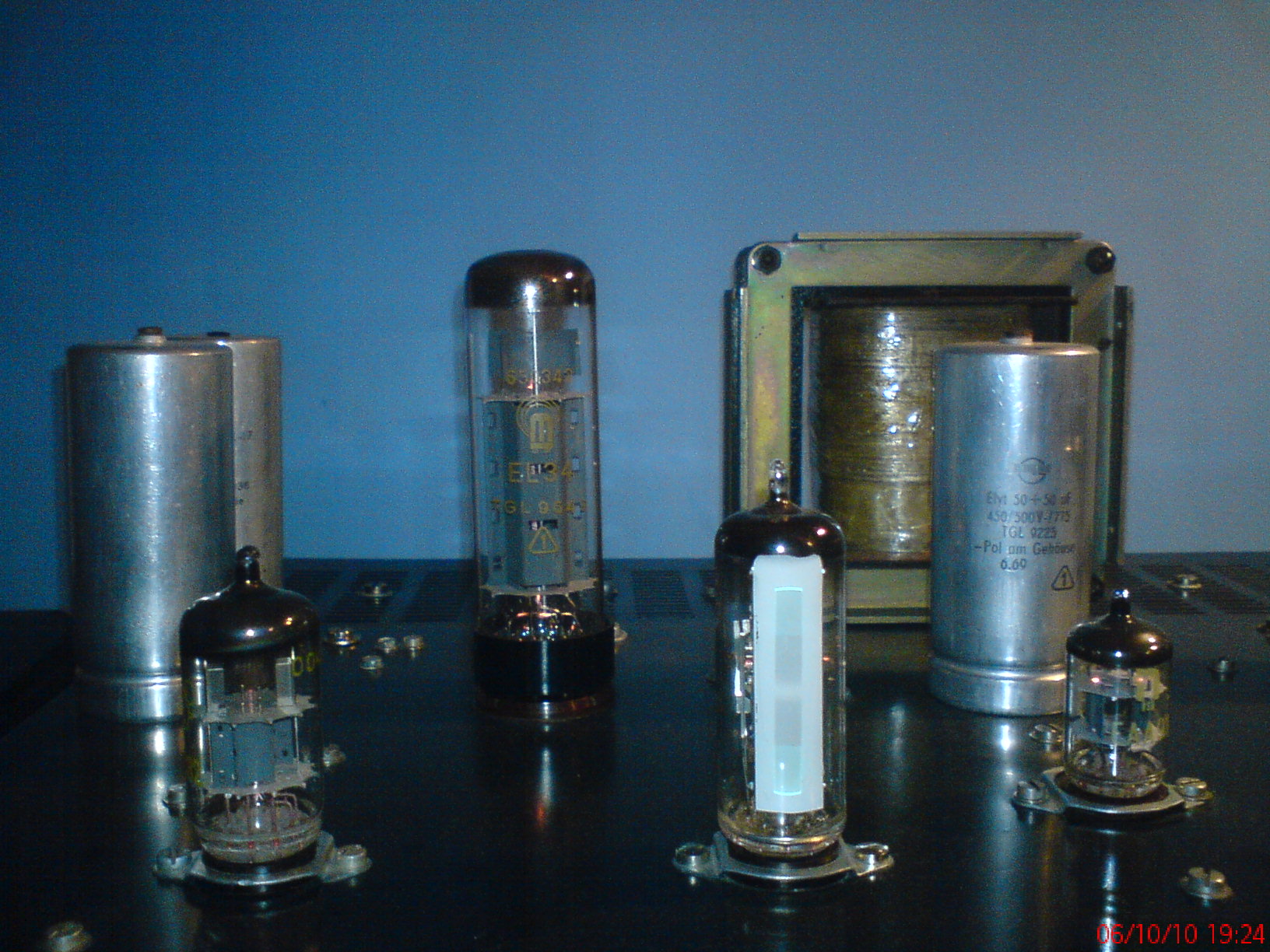
    The amplifier is a typical Single Ended based on EL34 tubes in the power stage operating in triode and pentode mode (change with a switch) and ECC82 in the preamplifier working as a white follower, EM84 as a drive indicator and one EAA91 as a signal rectifier for EM84 tubes. The amplifier has a semiconductor bridge rectifying to the anode voltage and it is the only semiconductor used in it. I decided to use a CLC filter for the power amplifier and a CLCRC filter for the preamplifier. The total capacity of the capacitors for the anode voltage is 362 uF. The capacity is sufficient because the only hum comes from the magnetic coupling between the loudspeaker and mains transformers (I checked). The choke has 8.1H and 140mA of allowable current, 20mA reserve. The anode voltage at the first electrolyte is 270V and about 245V at the EL34 anode. Ug1 = -14.5V.

    Initially, it was powered by an Elpo stabilized power supply, and then from a network transformer scrolled on request, its power was about 100VA, Ua = 230V, Uż = 6.3V, measured under load. A loudspeaker from Telto, I had tubes.

    The amplifier worked from the first start:
    - hum is a single mV
    - no excitation at low and above acoustic frequencies, measured with an oscilloscope

    I did not measure the power and I will not say about the sound because it is the first tube amplifier I have ever heard, but it satisfies me (a bit weak bass but without exaggeration)

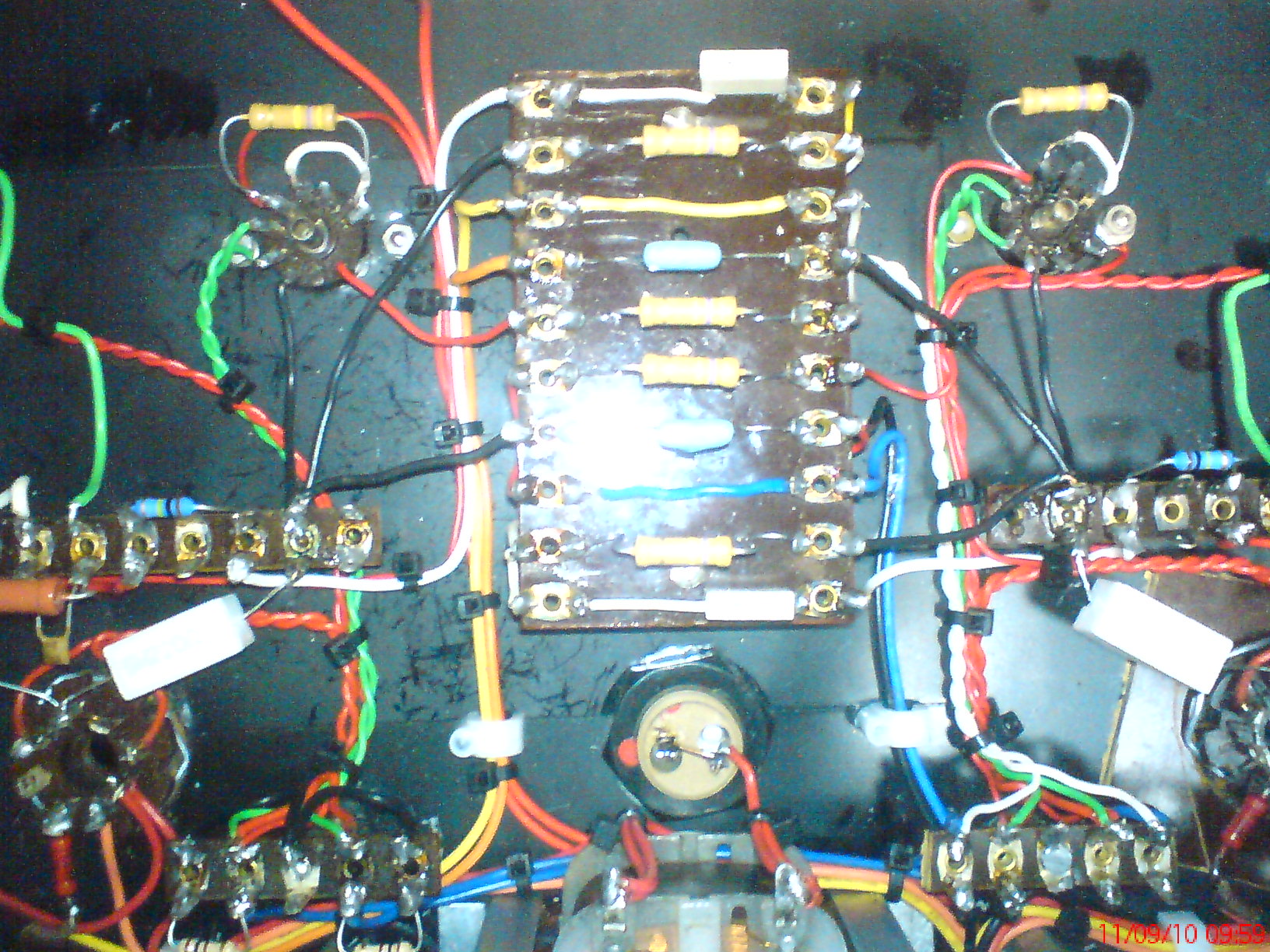
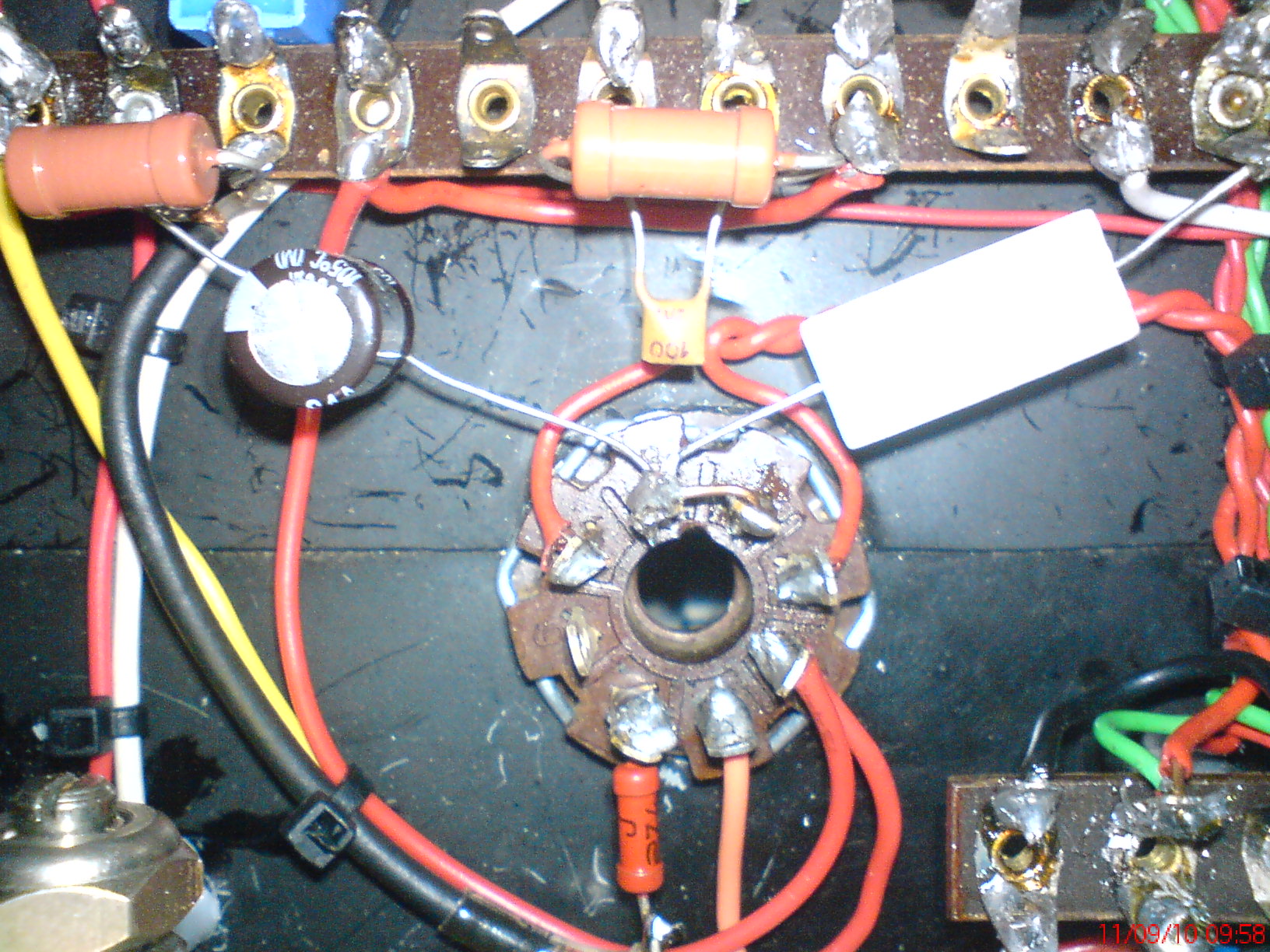
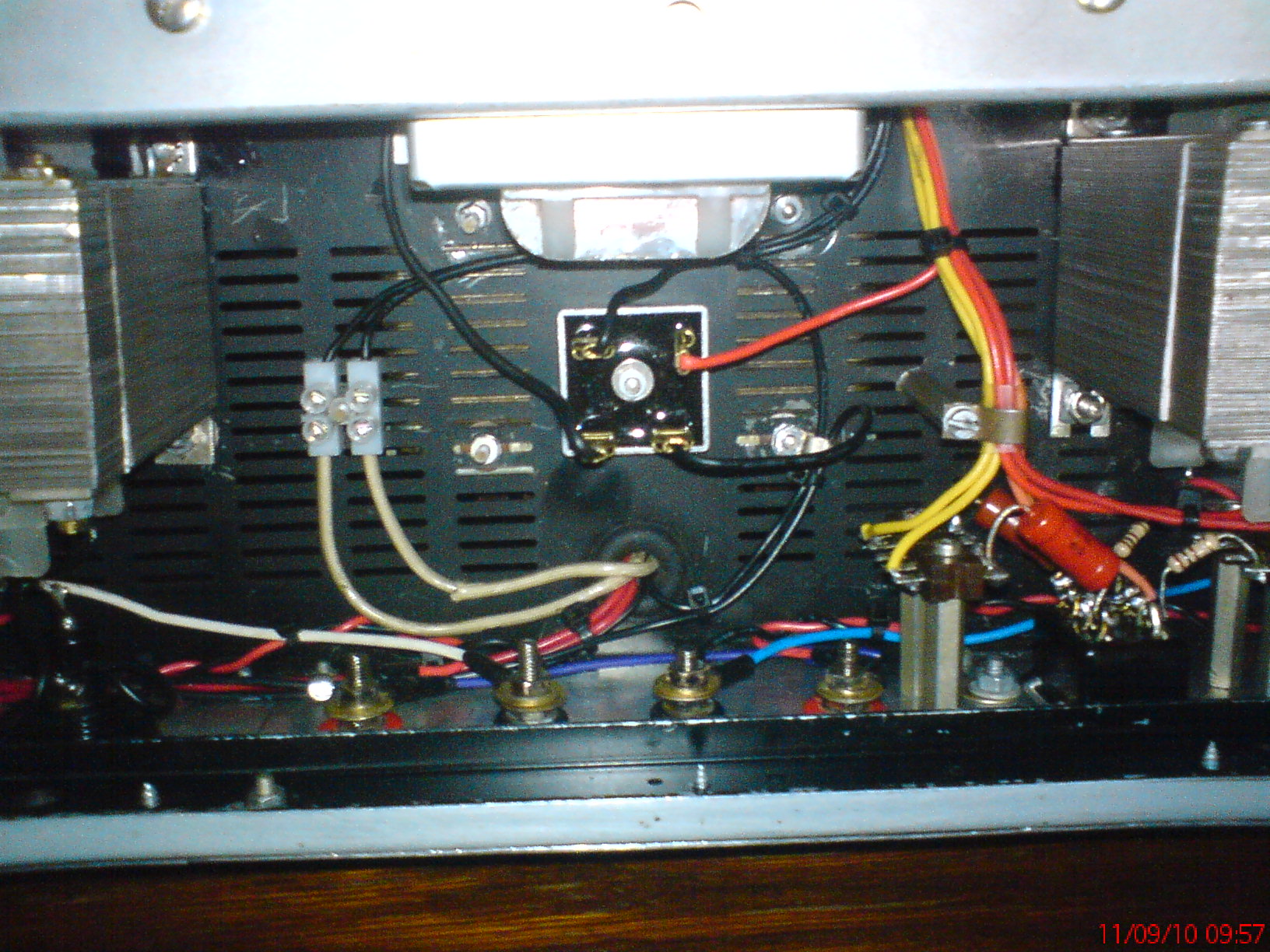
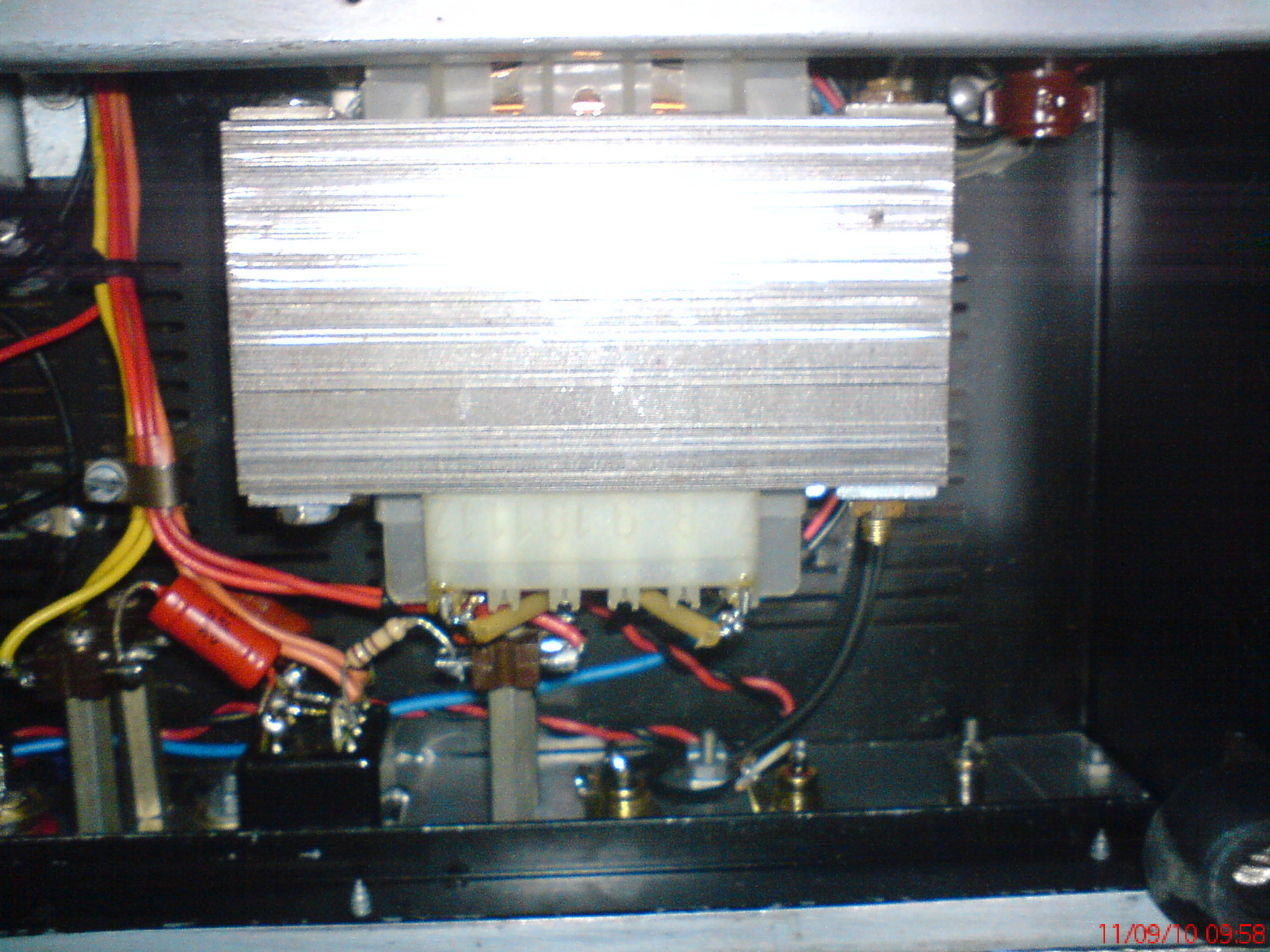
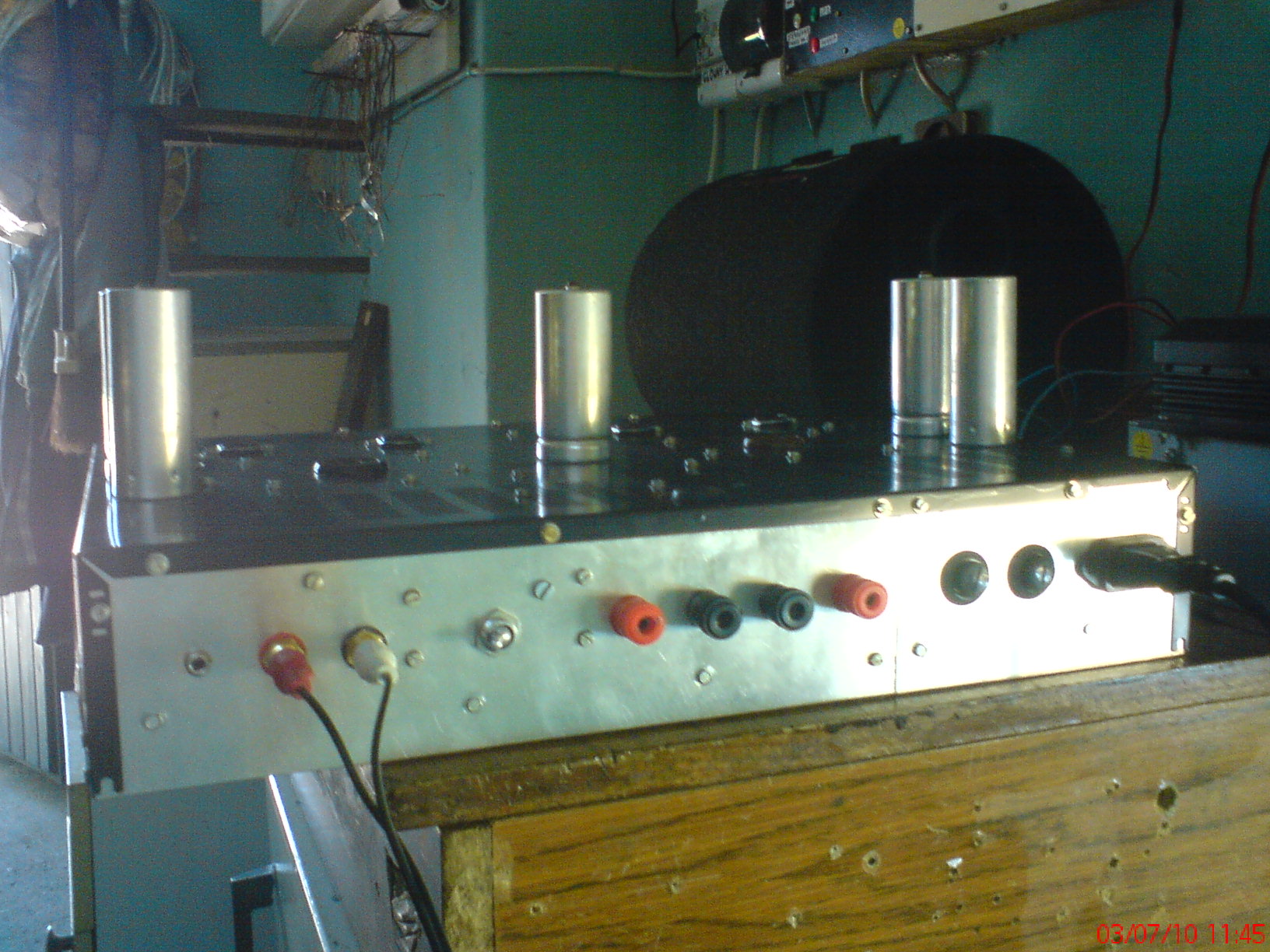
    Here are photos from the completed project:
    Presentation of my SE EL34 tube amplifier Presentation of my SE EL34 tube amplifier Presentation of my SE EL34 tube amplifier Presentation of my SE EL34 tube amplifier Presentation of my SE EL34 tube amplifier
    Presentation of my SE EL34 tube amplifier Presentation of my SE EL34 tube amplifier Presentation of my SE EL34 tube amplifier Presentation of my SE EL34 tube amplifier Presentation of my SE EL34 tube amplifier

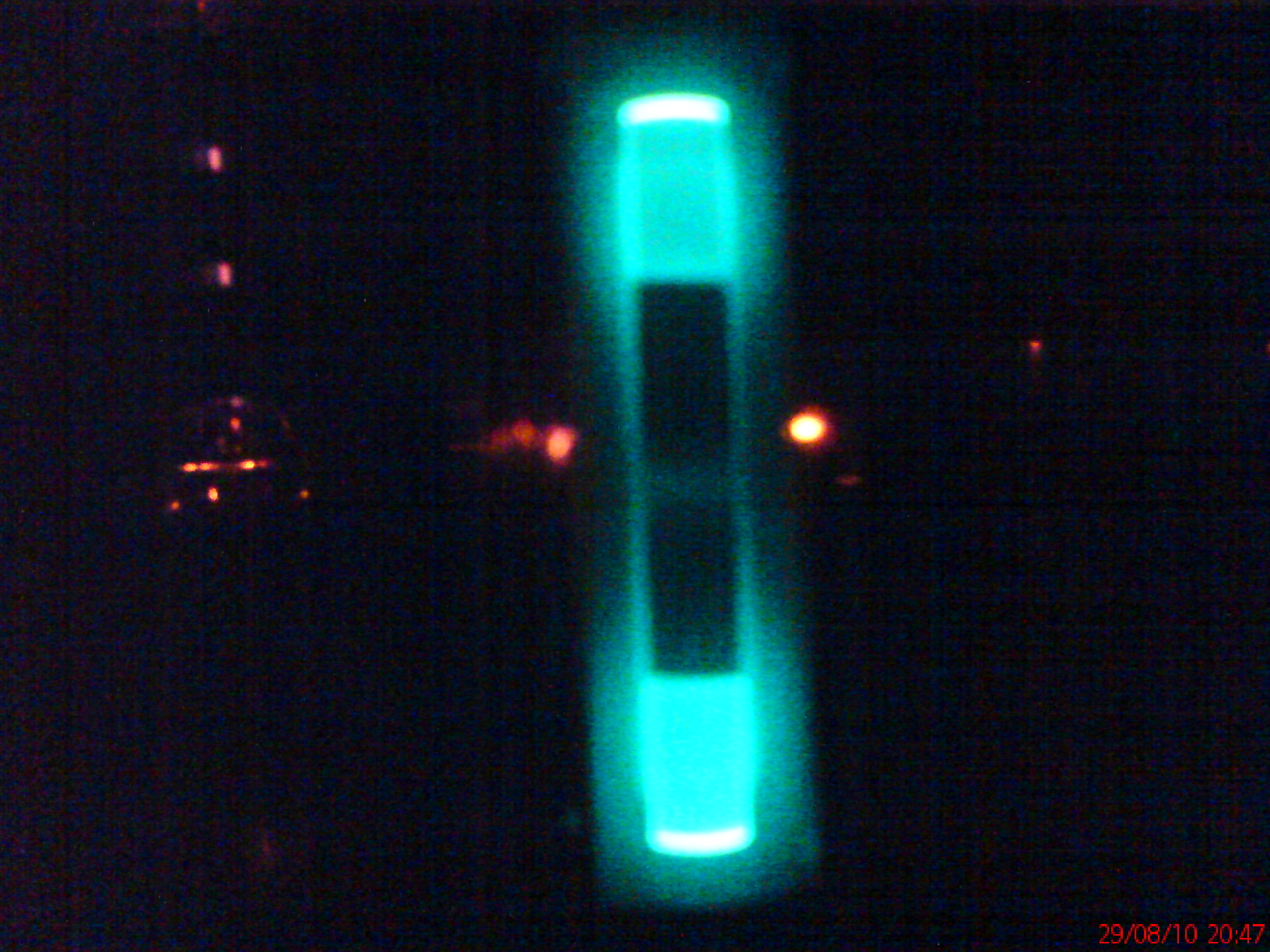
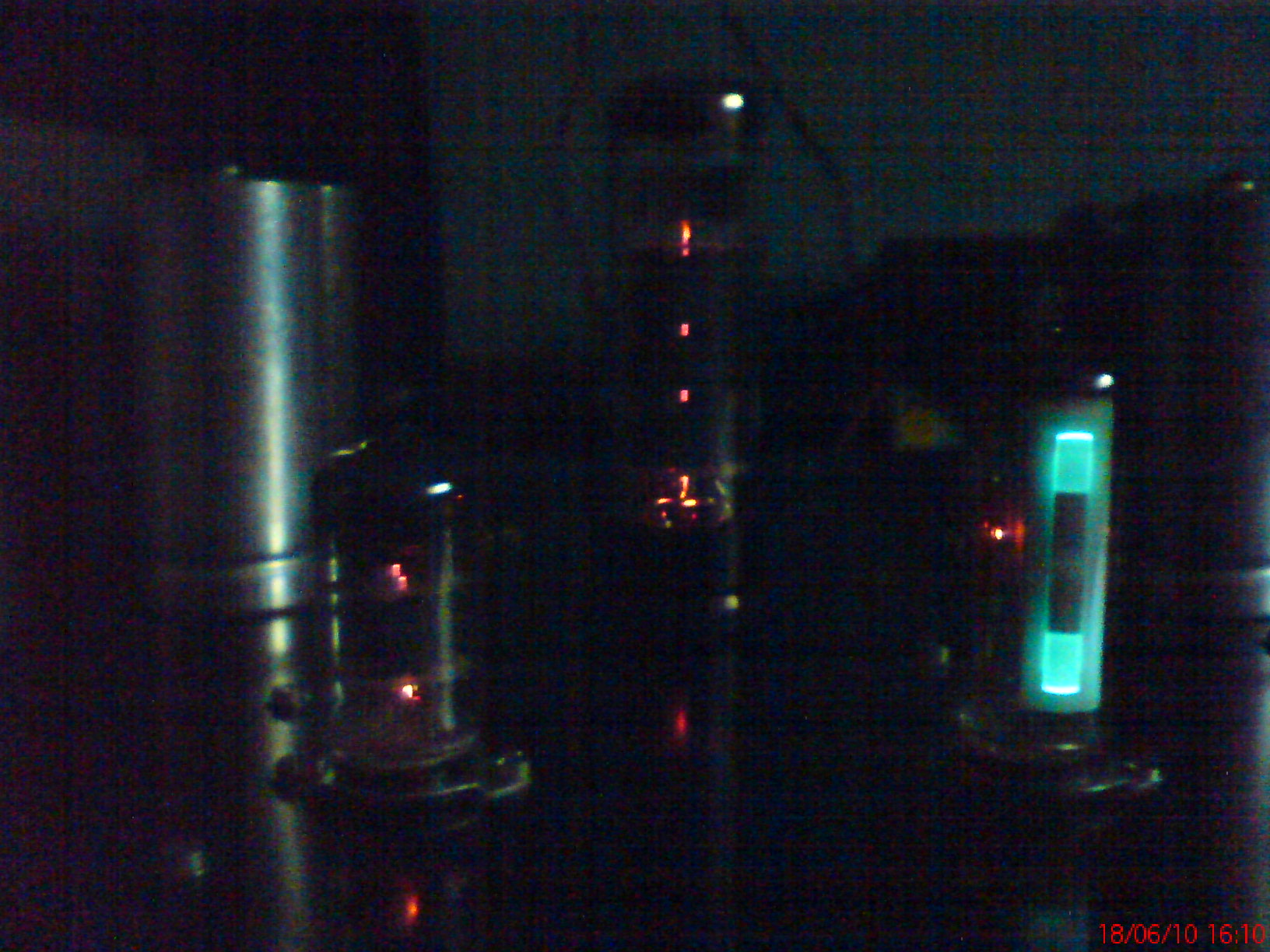
    And here are photos from the formation and others:
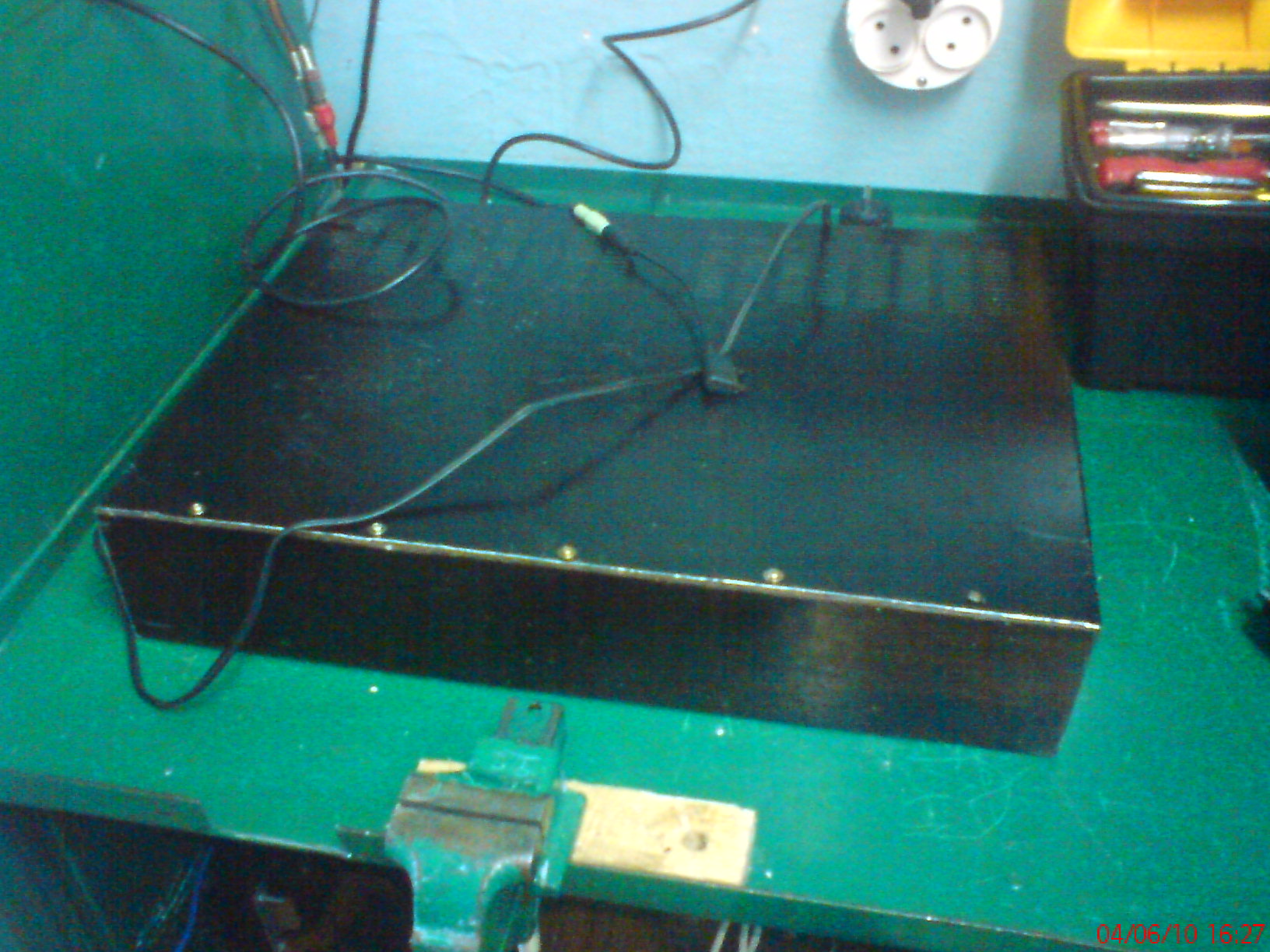
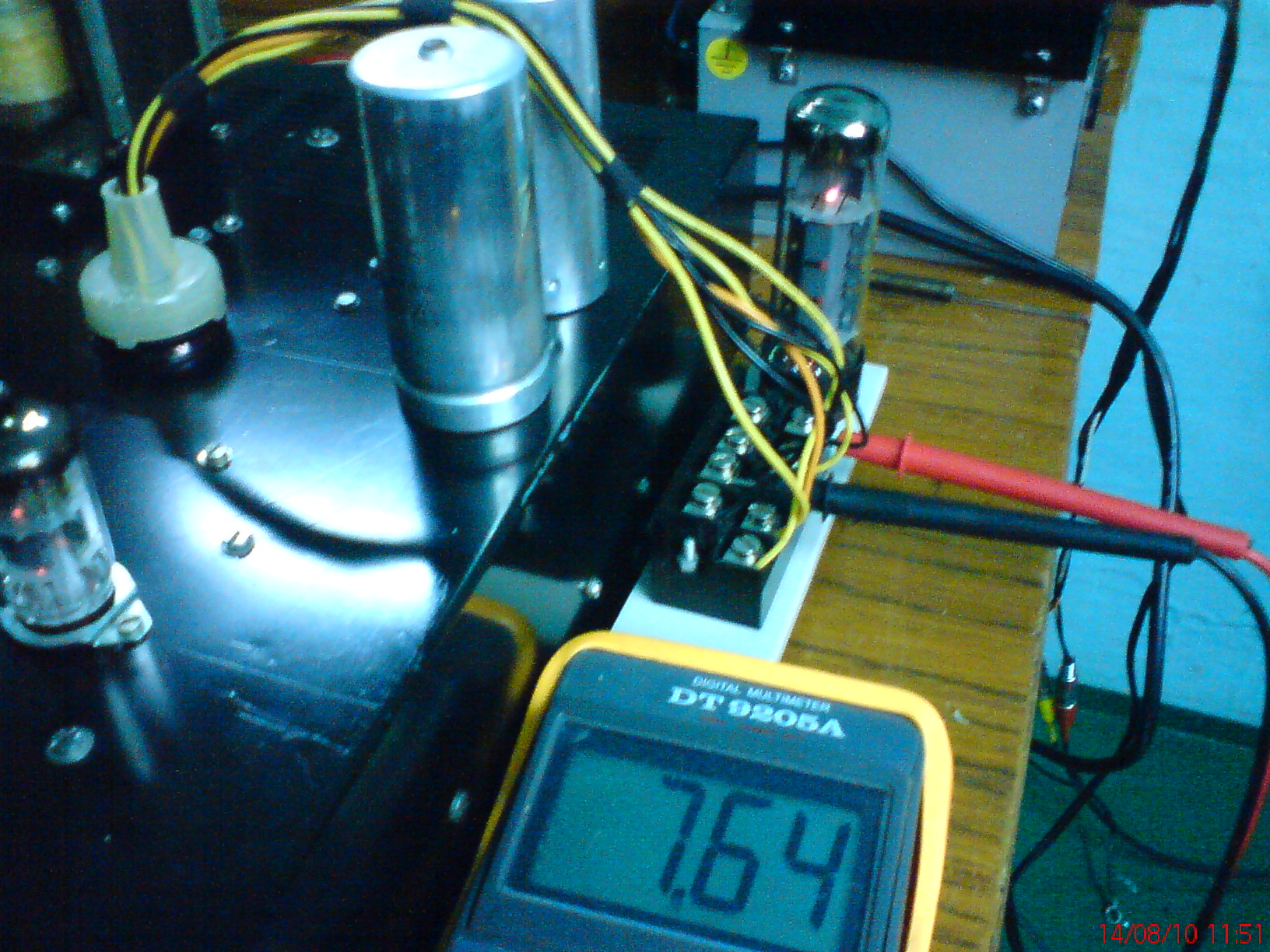
    Presentation of my SE EL34 tube amplifier Presentation of my SE EL34 tube amplifier Presentation of my SE EL34 tube amplifier Presentation of my SE EL34 tube amplifier

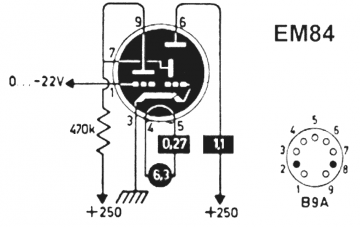
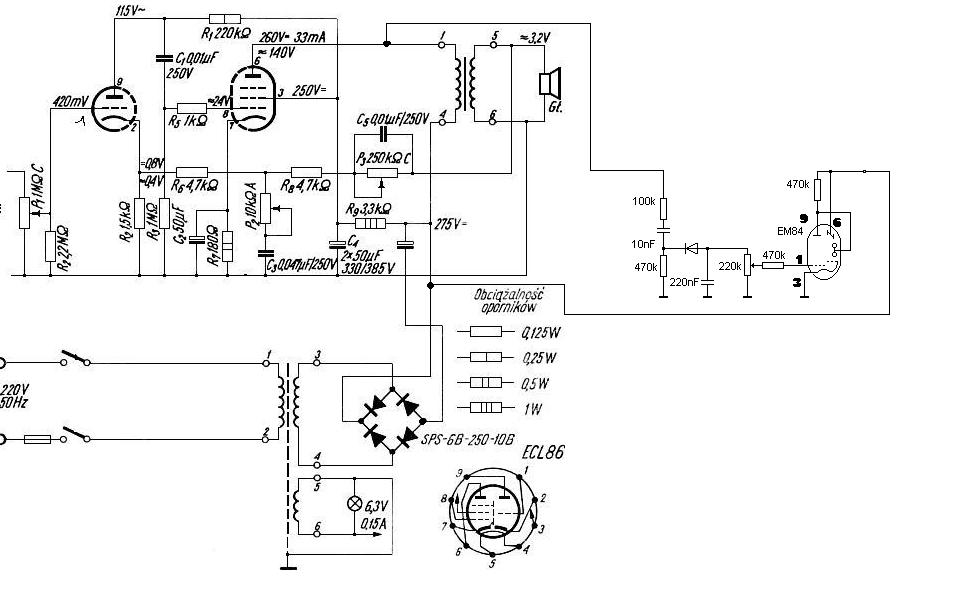
    And here are the diagrams from which I was based, but I changed them a bit (e.g. adding a triode / pentode switch)
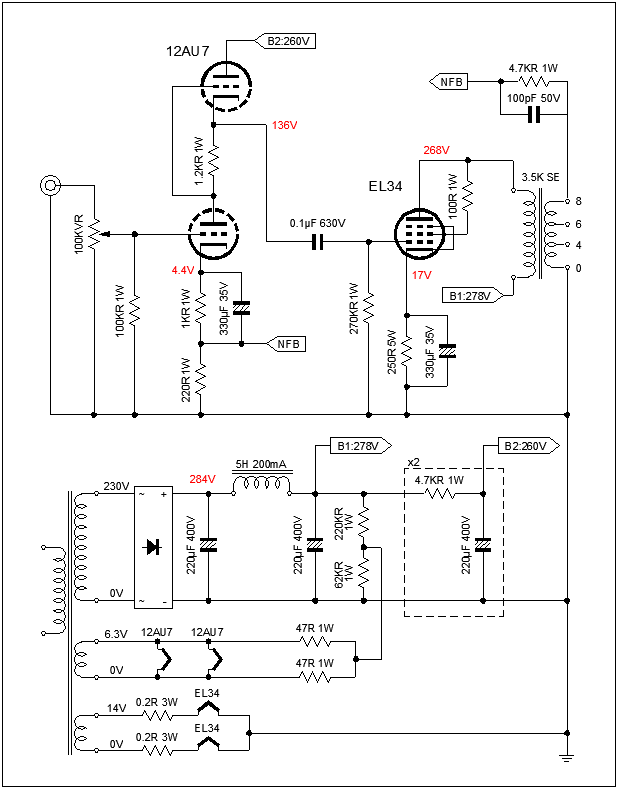
    Presentation of my SE EL34 tube amplifier Presentation of my SE EL34 tube amplifier Presentation of my SE EL34 tube amplifier

    If you have any questions, write to us.

    Cool? Ranking DIY
    About Author
    woda400
    Level 11  
    Offline 
    woda400 wrote 63 posts with rating 147. Live in city Tarchały Małe. Been with us since 2009 year.
  • ADVERTISEMENT
  • #2 8720387
    yogi009
    Level 43  
    Posts: 14667
    Help: 848
    Rate: 2646
    And another DIY lamp looks interesting. Did you have any fun with finding the optimal weight during startup? What are the costs of its implementation?
  • #3 8720574
    Mark II
    Level 22  
    Posts: 528
    Help: 8
    Rate: 172
    The gain stage is not a duplicate, but a WK with an active load.
  • #4 8720652
    painlust
    Guitar amplifiers specialist
    Posts: 4981
    Help: 345
    Rate: 746
    When it comes to looks, it's not a revelation. I would do something like this myself, but I don't have time. Why did you choose the ECC82 in this configuration? I keep wondering what to put in the preamplifier. if I replicated your idea for a preamplifier, I would put the 6N8S (octal equivalent of the ECC82). I was also thinking about PCC88, E180F or EF804. I will remember about your project.
  • ADVERTISEMENT
  • #5 8721771
    yogi009
    Level 43  
    Posts: 14667
    Help: 848
    Rate: 2646
    Saying "I would do it myself, I just don't have time" reminds me a bit of the old Soviet saying at a party meeting in a factory: "we would make canned food if we had meat, but we did not have a tin." It doesn't do anything.
  • #6 8721962
    woda400
    Level 11  
    Posts: 63
    Rate: 147
    Speaking of the appearance, I am not so proud of myself, but I wanted to do something on the tubes, I chose the ECC82 because I have several of them, and besides, I read that in this configuration you will get the appropriate gain to drive the EL34.
    The costs I incurred are about PLN 350 and besides, a lot of my own parts, a total of about PLN 450 would come out. (speaker transformers PLN 200 a pair, network PLN 80 switching in the plant)

    I had no problems with the weight, the whole housing is negative (the main point), the screens of the wires are grounded only at one end and there is really silence
  • #7 8721981
    nitros66
    Level 26  
    Posts: 927
    Help: 58
    Rate: 39
    Hello. Congratulations on the committed amplifier. What does the colleague drive with this system and in what room?
    Regards
    nitros66
  • ADVERTISEMENT
  • #8 8721988
    woda400
    Level 11  
    Posts: 63
    Rate: 147
    I would like to add that I do not have one EM84 lamp, as you can see in the photos, I have to buy it someday, but when you put it on the other side, it also works properly.

    Added after 6 [minutes]:

    I drive 8ohm columns in a 16 sqm room. The loudspeakers I have do not have written power, they are made by Schneider, while the power of the amplifier is about 8W in pentode mode, but it sounds really loud, I am pleased with the volume and sound quality.
  • #9 8722074
    Anonymous
    Anonymous  
  • ADVERTISEMENT
  • #10 8722147
    woda400
    Level 11  
    Posts: 63
    Rate: 147
    Mark II admits my mistake this configuration is actually WK with active load, I confused these two configuration names.
    I am waiting for further opinions and questions.

    Regards, Woda400!

    Added after 4 [minutes]:

    I'm just starting with tubes so I expect that I make mistakes, so I described my amplifier to get to know the opinion of forum users.
  • #11 8723372
    kaukubin1234
    Level 11  
    Posts: 33
    Help: 1
    Hello

    I would like to know where you obtained / where did you buy a choke from the power supply
    (in older descriptions it was an ordinary mains transformer with the primary winding used) because apart from the inductance and load of the choke used, I do not know any additional information.

    Regards Kaukubin1234
  • #12 8723663
    woda400
    Level 11  
    Posts: 63
    Rate: 147
    kaukubin1234 wrote:
    Hello

    I would like to know where you obtained / where did you buy a choke from the power supply
    (in older descriptions it was an ordinary mains transformer with the primary winding used) because apart from the inductance and load of the choke used, I do not know any additional information.

    Regards Kaukubin1234


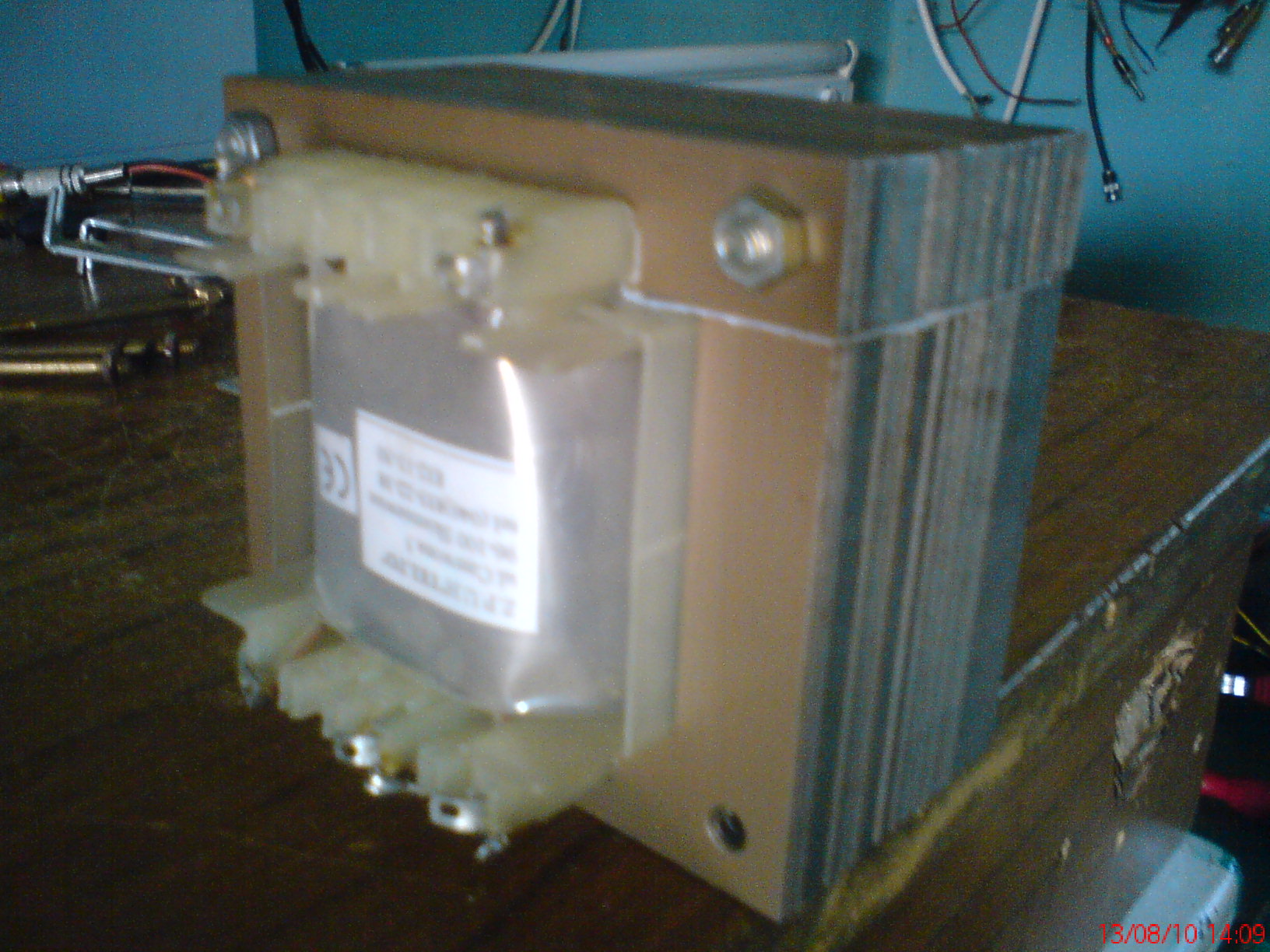
    The choke comes from the school's type 2 anode power supply, here is the photo of this power supply:
    Presentation of my SE EL34 tube amplifier

    As for the network transformer in its role, it would have to be complex with a slot in the core and that it would not be too weak
  • #13 8724022
    Andrev1991
    Level 13  
    Posts: 70
    Rate: 230
    in my opinion, the stickers on the front panel do not fit a bit, but overall a good job ;)
  • #14 8726765
    raczek3
    Level 22  
    Posts: 698
    Help: 9
    Rate: 31
    Hello, you came out with a very nice amplifier, a simple simple circuit (in my opinion the best, especially when it comes to tube designs), instead of stickers on the front panel, make this panel on your computer, print it, laminate it and stick it.
    PS. I have the same equalizer ;) (Unitra FS 032)?
  • #15 8726892
    woda400
    Level 11  
    Posts: 63
    Rate: 147
    raczek3 wrote:
    Hello, you came out with a very nice amplifier, a simple simple circuit (in my opinion the best, especially when it comes to tube designs), instead of stickers on the front panel, make this panel on your computer, print it, laminate it and stick it.
    PS. I have the same equalizer ;) (Unitra FS 032)?


    I know that the stickers came out lame and in addition they came off, so I peeled them off and I'll think something about it. Yes, you are right, the equalizer is Unitra FS 032, age-old, which fits the tubes and works great.
  • #16 8729280
    nico41
    Level 13  
    Posts: 63
    Rate: 1
    The amplifier is almost nice, but it almost makes a big difference. Can anyone answer the question why almost all tube amplifiers are mounted on a "spider" and almost always unsightly?
  • #17 8729687
    thereminator
    Conditionally unlocked
    Posts: 4129
    Help: 218
    Rate: 647
    nico41 wrote:
    The amplifier is almost nice, but it almost makes a big difference. Can anyone answer the question why almost all tube amplifiers are mounted on a "spider" and almost always unsightly?


    And where do you see the "spider" mount here? This is a traditional spatial assembly on connectors, next to turrets, the best way to build lamp devices.
  • #18 8734999
    woda400
    Level 11  
    Posts: 63
    Rate: 147
    nico41 wrote:
    The amplifier is almost nice, but it almost makes a big difference. Can anyone answer the question why almost all tube amplifiers are mounted on a "spider" and almost always unsightly?

    You know, this is only my first larger project, you have to learn everything one by one to get to the practice. Only then can something look like a factory product. I'll try more for the future, but thanks for your opinion!
📢 Listen (AI):

Topic summary

✨ The discussion revolves around a user's presentation of their SE EL34 tube amplifier, which operates in both triode and pentode modes. The amplifier features ECC82 in the preamplifier stage, EM84 as a drive indicator, and EAA91 for signal rectification. The user describes the construction, including a semiconductor bridge rectifier and CLC/CLCRC filtering, and shares insights on the amplifier's performance and sound quality. Forum members provide feedback on the amplifier's aesthetics, component choices, and layout, with suggestions for improvement and inquiries about specific components like the choke and transformers. The user also discusses the costs incurred in building the amplifier and the speakers used in conjunction with it.
Generated by the language model.

FAQ

TL;DR: A home-built Single-Ended EL34 stereo amp delivers approx. 8 W/channel and hum under 1 mV; "there is really silence" [Elektroda, woda400, post #8721962] Switchable triode/pentode, ECC82 driver, parts cost ≈ PLN 450 [Elektroda, woda400, post #8721962]

Why it matters: the design shows how low-noise valve sound is attainable on a student budget.

Quick Facts

• Topology: SE EL34, triode/pentode switch, ECC82 white-cathode follower preamp [Elektroda, woda400, post #8720160] • Output power: ≈ 8 W pentode, ≈ 4 W triode (typ.) [Elektroda, woda400, post #8721988] • Anode supply: 270 V first cap, 245 V at EL34 plate, bias –14.5 V [Elektroda, woda400, post #8720160] • PSU reservoir: 362 µF total, CLC + CLCRC, 8.1 H/140 mA choke [Elektroda, woda400, post #8720160] • Build cost: ~PLN 450 including iron and small parts [Elektroda, woda400, post #8721962]

What circuit topology does the amplifier use?

It is a classic Single-Ended output stage with one EL34 per channel. A white-cathode follower (WK) using an ECC82 drives the EL34. The driver runs with an active load for low distortion [Elektroda, Mark II, post #8720574] EM84 provides visual level indication, while an EAA91 rectifies the EM84 control signal [Elektroda, woda400, post #8720160]

Why was the ECC82 selected as the driver tube?

The builder already owned several ECC82s and found that, in the WK configuration, its µ≈17 gives enough voltage swing to reach –14.5 V grid bias on the EL34 without needing an additional gain stage [Elektroda, woda400, post #8721962]

How much did the project cost to build?

Speaker output transformers cost PLN 200/pair, the mains transformer PLN 80; total expenditure including passive parts was about PLN 450 (≈ €100) [Elektroda, woda400, post #8721962]

How was hum kept below 1 mV?

  1. A CLC filter feeds the power stage; a CLCRC feeds the preamp, giving 362 µF total smoothing.
  2. An 8.1 H choke rated 140 mA reduces ripple.
  3. All cable shields are grounded at one end only, and the metal chassis is the single star ground point. These measures yielded measurable hum of “a single mV” [Elektroda, woda400, #8720160; #8721962].

What speakers and room size suit this amplifier?

The builder drives 8 Ω Schneider floor-standers in a 16 m² room and reports more than adequate loudness at 8 W/channel [Elektroda, woda400, post #8721988] Sensitivity above 90 dB/W is recommended for similar rooms [Hi-Fi Collective, 2020].

How does switching between triode and pentode modes change performance?

Pentode mode gives the quoted ≈ 8 W with higher headroom; triode wiring typically halves power to ≈ 4 W but lowers distortion and output impedance [Mullard EL34 Data, 1962]. Users report fuller mids in triode and crisper highs in pentode [Elektroda, yogi009, post #8720387]

Where can I source a suitable choke, or can I use a repurposed transformer?

The showcased 8.1 H choke came from a surplus school laboratory HV supply [Elektroda, woda400, post #8723663] You can reuse a mains transformer primary as a choke if it has an air-gap and current capacity ≥ load current; otherwise it saturates and hum rises sharply [Valve Wizard, 2019].

Which alternative preamp valves fit the same role?

Octal 6N8S, PCC88, E180F, or EF804 will work if you adjust socket, heater supply, and bias. The 6N8S offers similar gain; PCC88 provides lower noise but needs 300 mA heater current; E180F yields higher transconductance suitable for wide-bandwidth builds [Elektroda, painlust, #8720652; Siemens Data, 1971].

What performance figures can I expect beyond power?

Bandwidth with standard SE output iron is typically 30 Hz–20 kHz (–3 dB) at 1 W [Lundahl LL1663 Datasheet, 2018]. Total harmonic distortion is around 2 % at 1 W in pentode and 1 % in triode. The 362 µF reservoir keeps residual ripple below 2 mV [Elektroda, woda400, post #8720160]

What are common failure modes and how can I avoid them?

• Edge case: if the 8.1 H choke saturates (load >140 mA), ripple increases by >20 dB and the EL34 can hum audibly. • Operating EL34 above 25 W plate dissipation causes red-plating and can destroy the tube [Mullard EL34 Data, 1962]. Set bias correctly and ensure ventilation. “Never run a glass bottle without airflow,” notes a veteran tech [AudioXpress, 2015].

How do I set the correct cathode bias on an EL34 Single-Ended stage?

  1. Measure cathode resistor voltage; target 28 V for ≈65 mA plate current at 245 V supply.
  2. Adjust resistor value: R = V/I → 28 V/0.065 A ≈ 430 Ω.
  3. Re-check voltage after 10 minutes warm-up; stay within ±5 %. [How-To based on Mullard EL34 Data, 1962].

Any quick tips to improve the front-panel aesthetics?

Printing the panel artwork on photo paper, laminating it, and bonding it with double-sided tape replaces peeling stickers and delivers a factory look [Elektroda, raczek3, post #8726765]
Generated by the language model.
ADVERTISEMENT