logo elektroda
logo elektroda
X
logo elektroda

Commercialisation of a WiFi plug-in on the ESP8266 - what features would be of interest?

lukaszrzepinski 6981 70
ADVERTISEMENT
Treść została przetłumaczona polish » english Zobacz oryginalną wersję tematu
  • #1 15643955
    lukaszrzepinski
    Level 10  
    Hello,
    i had a big desire to build a smart home on OpenHab and I built something there.... OpenHab on Raspberry, sensors and switches on ESP8266, one thing worried me a lot - open relays: not very elegant, safe, etc. And if so, a safe and robust solution was needed. So there you have it: a manufacturer sold me a batch of plug-ins for the ESP: it's nice and solid and works. What's more, I can get the software written at the factory.

    Now I would like to commercialise something like this and the question:
    - would you find such an element interesting?
    - what would be interesting? persuading the manufacturer to put out a USB so that everyone can program it? (manufacturer reluctant)
    - or to upload the software (as I have written it) for automatic integration with OpenHab or e.g. Domoticz?
    - a complete pre-configured Raspberry Pi point-to-point kit with a nice GUI?
    - or maybe a total cloud like ThingSpeak?

    What do you find interesting, which way to go with it?

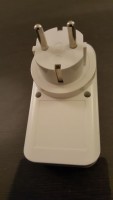
    It looks like this:
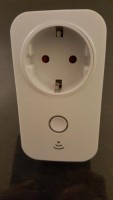
    Commercialisation of a WiFi plug-in on the ESP8266 - what features would be of interest?wtyk1.jpg Download(10.43 kB) Commercialisation of a WiFi plug-in on the ESP8266 - what features would be of interest?wtyk2.jpg Download(9.88 kB)
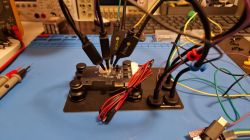
    And here inside: we see the ESP8266 and the circuit with the relay (the wires soldered are mine for reprogramming)
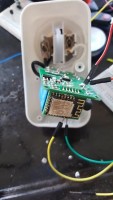
    Commercialisation of a WiFi plug-in on the ESP8266 - what features would be of interest?wtyk3.jpg Download(24.79 kB)
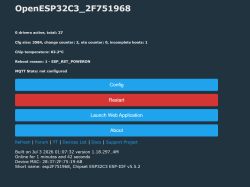
    Screen from myOpenHab app : lamp works for me on this, plug integrated with OpenHab over MQTT (temperature is from a disconnected thermometer, so silly)

    Commercialisation of a WiFi plug-in on the ESP8266 - what features would be of interest?wtyk4_sc..n.png Download(21.47 kB)
  • ADVERTISEMENT
  • #2 15643994
    Anonymous
    Anonymous  
  • #3 15644221
    don diego
    Level 32  
    I would be interested in the hardware itself, with the possibility of uploading my own software. What would be the price for 10 units?
  • #4 15644224
    TvWidget
    Level 38  
    turlam.dropsa wrote:
    If you want to make a product for the casual user then you are faced with making the whole ecosystem + CE mark.

    There might be a problem with that. The plugin is probably not compatible with the Polish standard.
  • #5 15644229
    lukaszrzepinski
    Level 10  
    that's exactly what I was thinking, for DIY it would be interesting to have a whole plug with a usb connector, unfortunately the circuit doesn't have one, but maybe I can agree with the manufacturer; retail price of one such a device will be around 100-120zl, more expensive than RF-based ones, but you know - here we have ESP

    Added after 1 [minute]:

    TvWidget wrote:
    turlam.dropsa wrote:
    If you want to make a product for the casual user then you are faced with making the whole ecosystem + CE mark.

    There might be a problem with that. The plugin is probably not compatible with the Polish standard.


    this plug is in german standard, the manufacturer has also in french standard - it seems that it corresponds to polish standard
  • #6 15644387
    TvWidget
    Level 38  
    Measure how much current the electronics draw. With such products, the price of the device is often low and the running costs high.
  • ADVERTISEMENT
  • #7 15644520
    Anonymous
    Anonymous  
  • #8 15644535
    don diego
    Level 32  
    lukaszrzepinski wrote:
    100-120zl, more expensive than RF-based but you know - here we have ESP

    I wonder how much a WiFi module with a built-in microcontroller, costing $3 at retail, increases the cost of the design compared to RF.
    A 433MHz kit from the market, with a remote control and four receivers, two of which have dimming capability, costs about £70.
  • #9 15644538
    lukaszrzepinski
    Level 10  
    pay attention to commercial WIFI plug-ins - here it is the lack of this commodity on the market that drives the price up, not the components themselves; not to mention the fact that there is no such open-hardware; on the market there was some Chinese stuff with ESP available in retail but with closed software; people hacked it because it had a permanently loaded password of some kind
  • #10 15644568
    piotrva
    VIP Meritorious for electroda.pl
    What the device must have in my opinion:
    Required certifications
    Appropriate safety features
  • #11 15644659
    Anonymous
    Anonymous  
  • #12 15644713
    lukaszrzepinski
    Level 10  
    In Ali? A link, please (it looks like I may have worked a bit hard and I'm not sure)
    and I would also be happy to join the mentioned forums
  • #13 15644755
    Anonymous
    Anonymous  
  • #14 15644929
    lukaszrzepinski
    Level 10  
    i can't get the link to work with this number, can you give me the name of the equipment?

    Hm, it's interesting, on more solid equipment than ESP rarely any Chinese manufacturer lets go below 15USD in the equipment and even ESPs go for so much, but maybe I searched wrong (nevertheless I put in a tender on ali )
  • #15 15645052
    Anonymous
    Anonymous  
  • ADVERTISEMENT
  • #16 15645062
    lukaszrzepinski
    Level 10  
    oh that Orvibo, I didn't know they had dropped so much in price
    Orvibo is hacked (e.g. on OpenHab) and is actually running on ESP8266

    well... thanks for the factual comments

    Added after 5 [minutes]:

    this is what I will ask - why is the UDP packet inferior to Z-wave?
  • #17 15645081
    TvWidget
    Level 38  
    lukaszrzepinski wrote:
    oh it's Orvibo, I didn't know they dropped the price so much

    Consider what chance there is of selling a product in Poland with a plug-in like the one in the link. Will the price in this case be decisive ?
  • ADVERTISEMENT
  • #18 15645089
    Anonymous
    Anonymous  
  • #19 15645091
    TvWidget
    Level 38  
    lukaszrzepinski wrote:
    oh that's Orvibo, I didn't know they dropped the price like that

    Consider what chance there is of selling a product in Poland with a plug-in like the one in the link. Will the price in this case be decisive ?
    I have no idea for what reason a UDP package is supposed to be a bad solution. As far as security is concerned it is more important what is sent and not how.
  • #20 15645102
    Anonymous
    Anonymous  
  • #21 15645362
    lukaszrzepinski
    Level 10  
    and who says that in Poland :) I live in Norway, WIFI plugs are 200zl each, the whole Tellstick set: that is the home computer plus 3 wifi plugs is 700zl
  • #22 15645417
    Anonymous
    Anonymous  
  • #23 15645424
    TvWidget
    Level 38  
    lukaszrzepinski wrote:
    and who says that in Poland :) I live in Norway

    In your profile you entered "City: Warsaw"
  • #24 15645448
    lukaszrzepinski
    Level 10  
    Different indeed, as I was planning on doing just that:
    - for the common user: home computer on Raspberry as output to the cloud, plus plugins on local WIFI; so far I'm running it on OpenHab but there are issues of lack of commercial support - plugins wifi connected
    - the usual user version2: plug-ins directly integrated into the cloud and some kind of configuration and control environment
    - for do-it-yourselfers, developers etc. - plug-ins with a) a usb connection for programming or b) software for pre-integration into typical environments such as OpenHab, Domoticz - choice of software on start-up

    so far I have developed version 1, the screen comes from the android application myOpenHab
  • #25 15645562
    Jado_one
    Level 22  
    I'm afraid that the functionality of this type of plug-in, in practice, is quite limited - simply switching on the current for many devices is not enough to "override" it.
    The most suitable for this is probably a bedside lamp ;-)
    What about the radio, TV, washing machine, fridge and dishwasher, etc...?
    In a little while, manufacturers will probably start releasing new versions of these types of equipment en masse with wifi control already built in.
    This idea probably still has its roots in the 1980s ;-)
  • #26 15645887
    Anonymous
    Anonymous  
  • #27 15646153
    lukaszrzepinski
    Level 10  
    I too have made self-builds integrated with OpenHab, but the very purpose of my activity was to make a factory device.

    To summarise:
    - i can see interest for the developer/tinkerer market if it is a device with USB output for standalone software; then the security issues are removed as everyone does it on their own responsibility
    - for the whole ecosystem: security issues and liability for hacking
    - functionality should be enhanced

    No, not just a bedside lamp - first and foremost in Norway 100% of the heating is electric and this is the primary use. I plan to include thermometers also on the wifi and on the cloud or on the local Raspberry it will be possible to configure rules such as switch on the heating in the kitchen if it is below 15 degrees Celsius.

    A legal issue to be resolved (as even our power station does not switch on the power remotely, although they could)
  • #28 15646229
    TvWidget
    Level 38  
    lukaszrzepinski wrote:
    Norway 100% of heating is electric and this is the primary application. I plan to include thermometers also on the wifi and on the cloud or local Raspberry will be able to configure regulations such as turn on the heating in the kitchen if below 15 degrees C.

    Are these heaters connected to the mains via a conventional plug?
    Have you thought about how much power you need to switch on and what kind of relay/contactor this requires ?
    For what reason is a solution via WiFi supposed to be better than a classic thermostat with a wireless temperature sensor ?
    Remember that the manufacturer bears OC liability for his product. If you have provided for the possibility for the user to enter their firmware then you are also responsible for a product with modified firmware.
  • #29 15646239
    lukaszrzepinski
    Level 10  
    yes, under a classic plug - usually appliances of several hundred to 1000 watts
    The manufacturer of the plug states that the device can be plugged in up to 2200W, but I have to test it.

    Indeed, when we are at home, a wifi solution does not have much of an advantage over a thermostat.
    However, there have been many times when I've travelled on business and left the flat: it takes several hours to reheat in cold Norway - the idea is to warm up the flat before returning. Norwegians have millions of cottages in the woods where they go at weekends - same problem. So remote switching of heating in this country has a future.
    The Norwegians plug in timers: they are not sophisticated devices - ticks for 20PLN each and they switch the heating on and off. However, this can only be used for going to work etc., with a fixed daily cycle.
  • #30 15646298
    DarekMich
    Level 15  
    i myself have been "tinkering" with the subject of switching on the heating in relation to temperature and I can assure you that if you only switch on when the temperature drops e.g. 15 degrees and switch off as above, you will be surprised how quickly these "switches" will fail, I mean the switching elements themselves, not counting the heaters/plugs. The temperature can change very quickly. It is important to know at what intervals you check the temperature (every 1s, 30s, etc.) what inertia the thermometer itself will have, how isolated it will actually be from the environment (e.g. inside the casing) and whether the user switches it on too close to the heating element itself. You will also need to define some kind of software hysteresis (e.g. switch on when it falls below 14.9, switch off when it rises above 15.2).

    Obviously there will be a lot more to it than that, and it was just meant to be a simple switch on when it drops below 15 degrees.

    UDP itself is threatening in principle. These packets have no verification, etc. in such a simple device as ESP "fluctuations" of power supply, interference from a relay, etc. may cause that not all the message will arrive or it will arrive but it will be inconsistent with what it was supposed to receive. with TCP in a way the standard imposes that packets are verified before the final "release" of them, in UDP you have to do crc sums, etc. so de facto something that is supposed to work simpler and faster is dangerous in itself. Even switching on a 40W heater can burn down your house, now what happens if you don't switch it off in time (after all, it's only UDP).

    and the price of 120 PLN? In Norway there are different wages, different taxes, different everything, I live in the UK, here you also overpay for some things and pay less for others. In my opinion, the price of the parts alone, even for a single plug in 3D printing, should not exceed 30 PLN as an assembled and running device. It is natural to make money on something like this, but by raising the price 4x and more to the top you should expect a large non-refundable investment. A customer will always be found. At the end of the day, it will be a device to "save money", but the average Polish family will not be able to afford it, as they will not be able to afford a series of such devices, including the cost of the controller and the Internet charges. Anyway, the idea is interesting - you forget to pay the internet bill and the heating does not work :)
ADVERTISEMENT