logo elektroda
logo elektroda
X
logo elektroda

TL;DR

  • Built a budget metal cutter for an angle grinder to improve straight, angled cuts after welding a vise.
  • The grinder mounts on three drilled flat bars, while a rectangular-profile arm with a 20 mm shaft runs in two self-aligning bearings.
  • Scrap profiles and flat bars cost PLN 1.50 per kilogram, and the whole build stayed under PLN 50.
  • The cutter handles 90 and 45 degree cuts, and a gas cylinder keeps the grinder from falling.
Generated by the language model.
ADVERTISEMENT
Treść została przetłumaczona polish » english Zobacz oryginalną wersję tematu
📢 Listen (AI):
  • While I was doing a vise recently, I noticed that my cutting line was not straight. After putting two elements together, it turned out that there was a gap and then they had to be filled with a weld. So without thinking long, I decided that as soon as I finished the vice, I would start building a metal cutter.
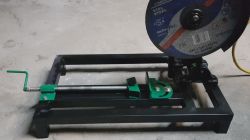

    Metal cutter from an angle grinder

    As the budget for this project was quite limited, instead of combining with an engine, septic tanks and belts, I decided to use an angle grinder, which was used once a year anyway. The grinder mounting was made of three pieces of a flat bar in which I drilled holes for the mounting screws. If necessary, the grinder can be dismantled by unscrewing three screws.
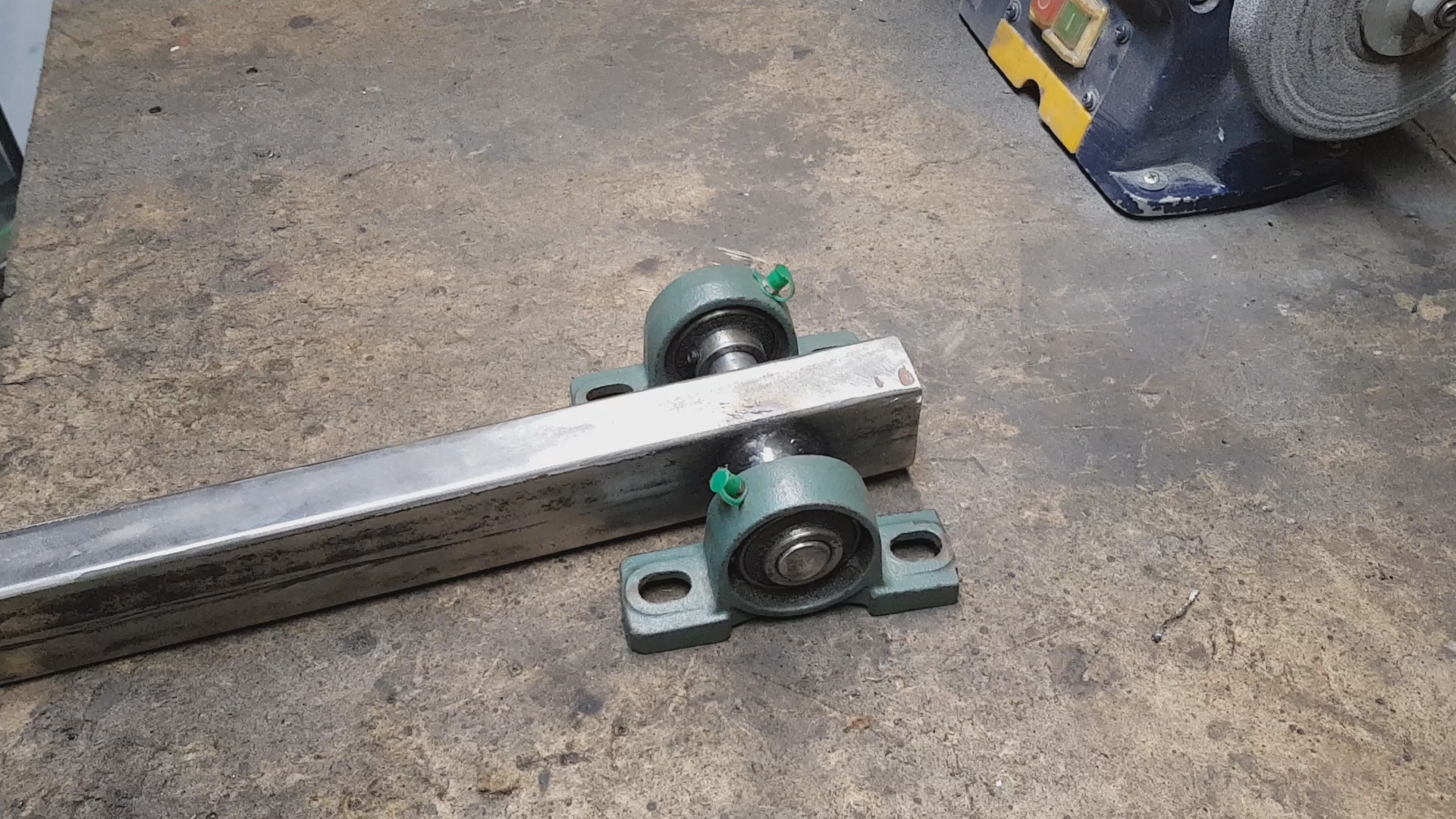
    The arm is a rectangular profile with a 20mm diameter shaft, placed in two self-aligning bearings.
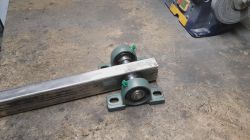
    Metal cutter from an angle grinder


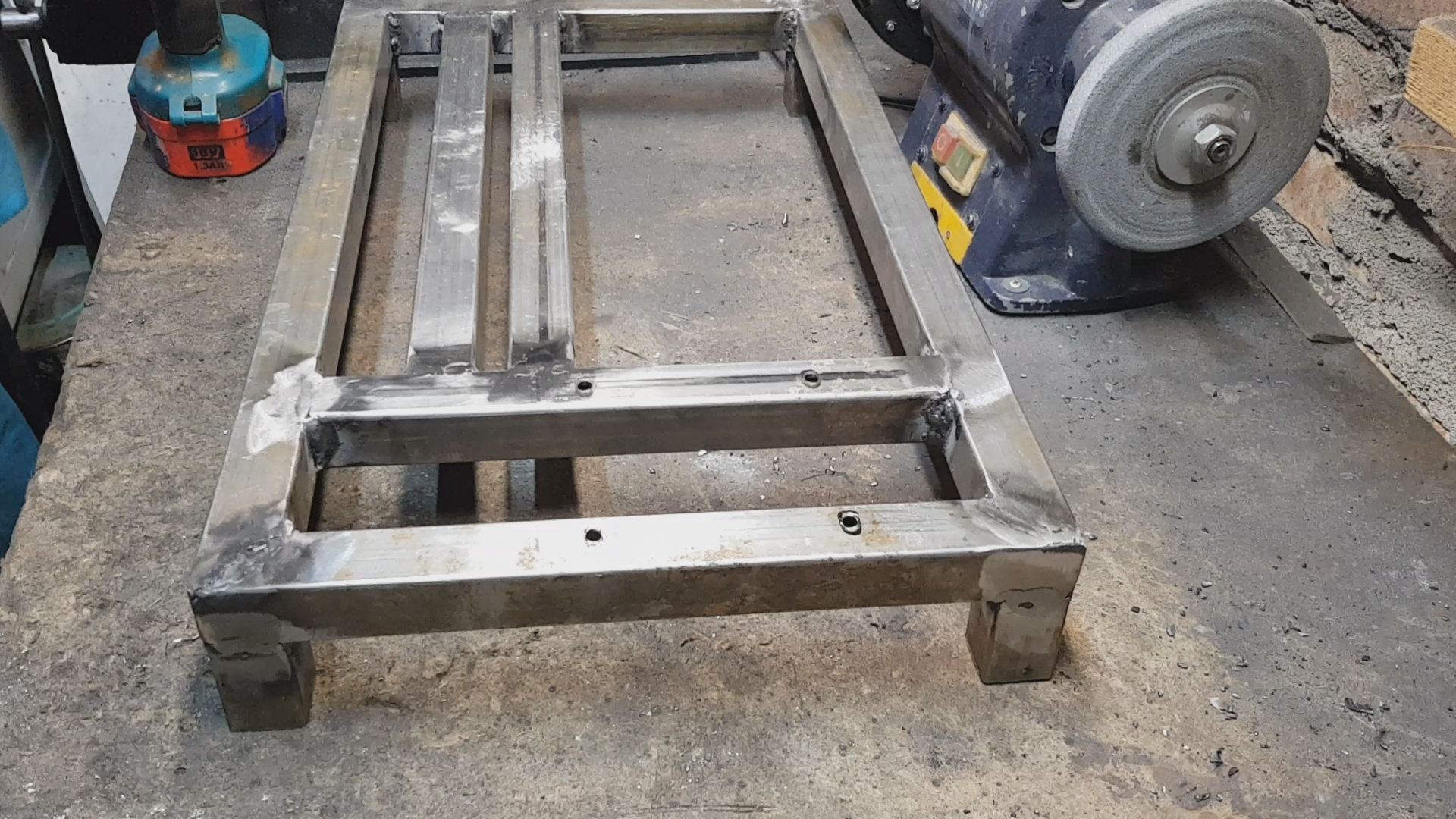
    The top and legs are made of 30mm profiles.
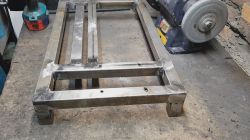
    Metal cutter from an angle grinder


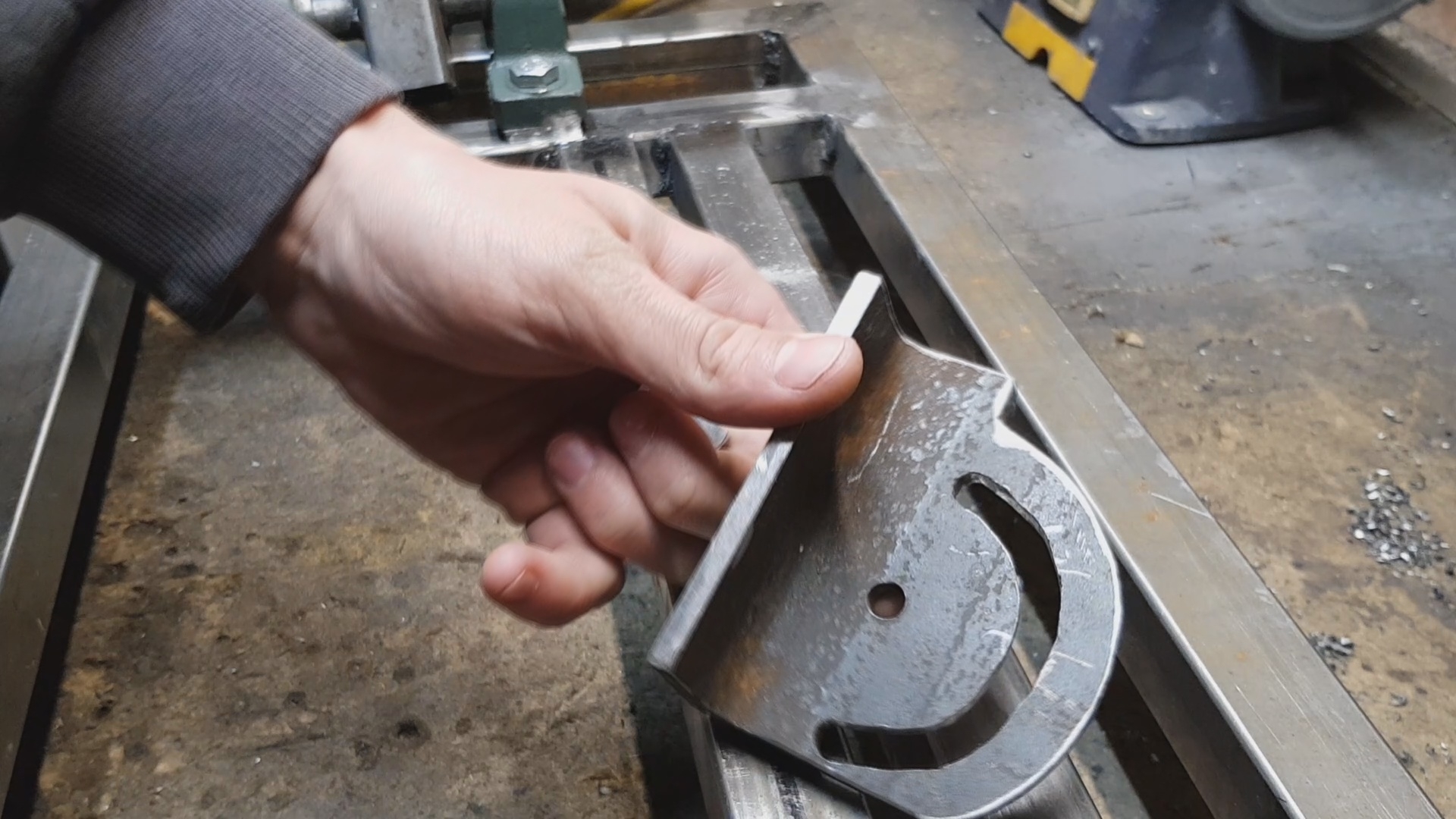
    The support of the cut element is an angle that I carved for half a day to get a given shape.
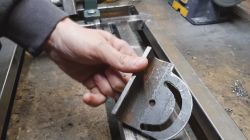
    Metal cutter from an angle grinder

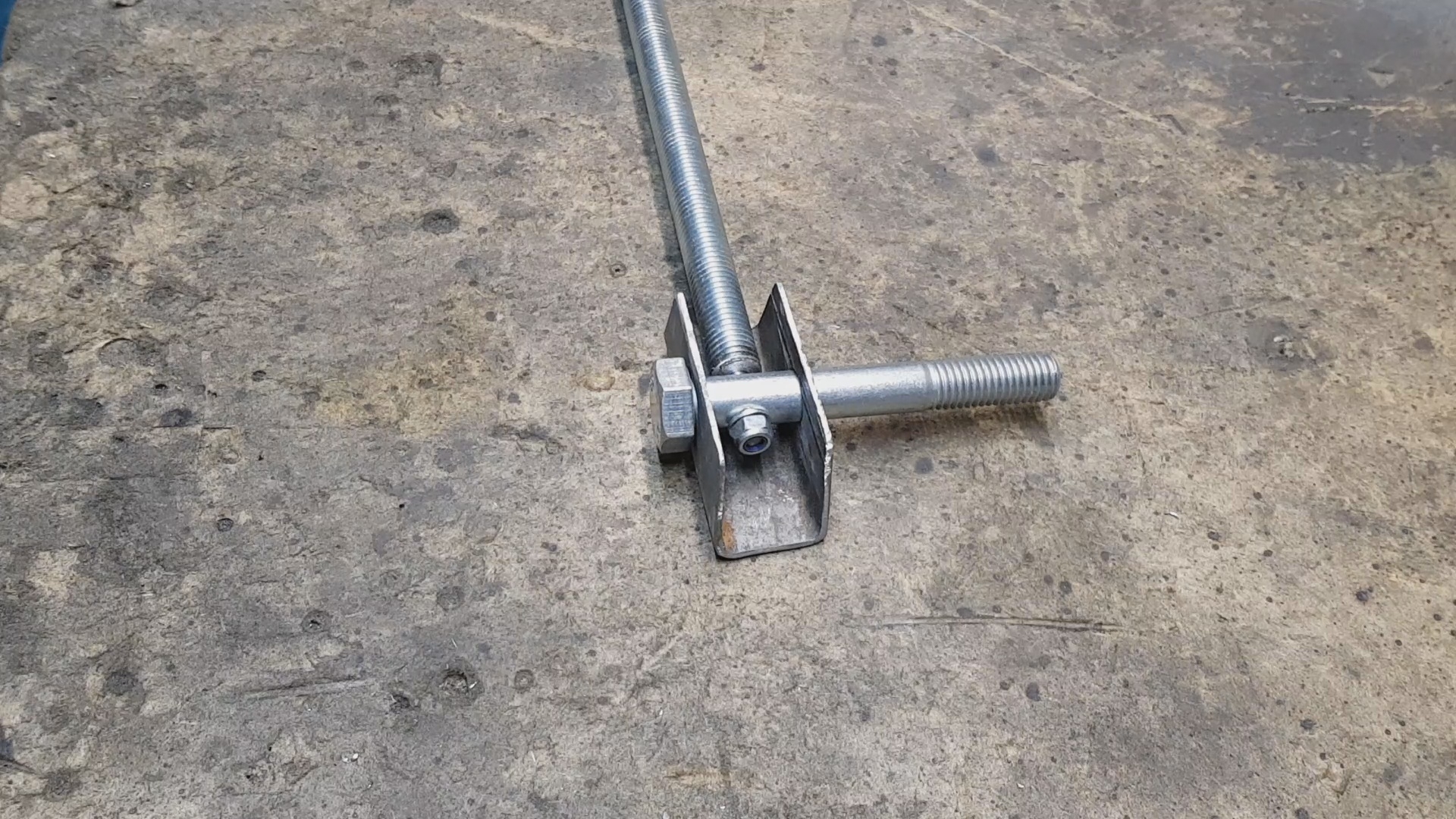
    The clamp is a piece of the profile shot through with a screw which was also shot with a piece of threaded rod.
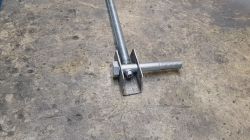
    Metal cutter from an angle grinder


    In order for the grinder not to fall, I used a gas cylinder found on the scrap metal.
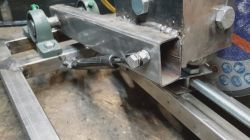
    Metal cutter from an angle grinder


    As for the costs, they are negligible.
    Scrap profiles and flat bars PLN 1.50 per kilogram.
    I had a 20mm shaft at home.
    The self-aligning bearings lay in the shed.
    So adding everything up did not exceed PLN 50.

    To sum up, the project was successful and it meets my requirements, such as cutting at an angle of 90 and 45 degrees, which can be seen in the attached construction video. I'm waiting for opinions.
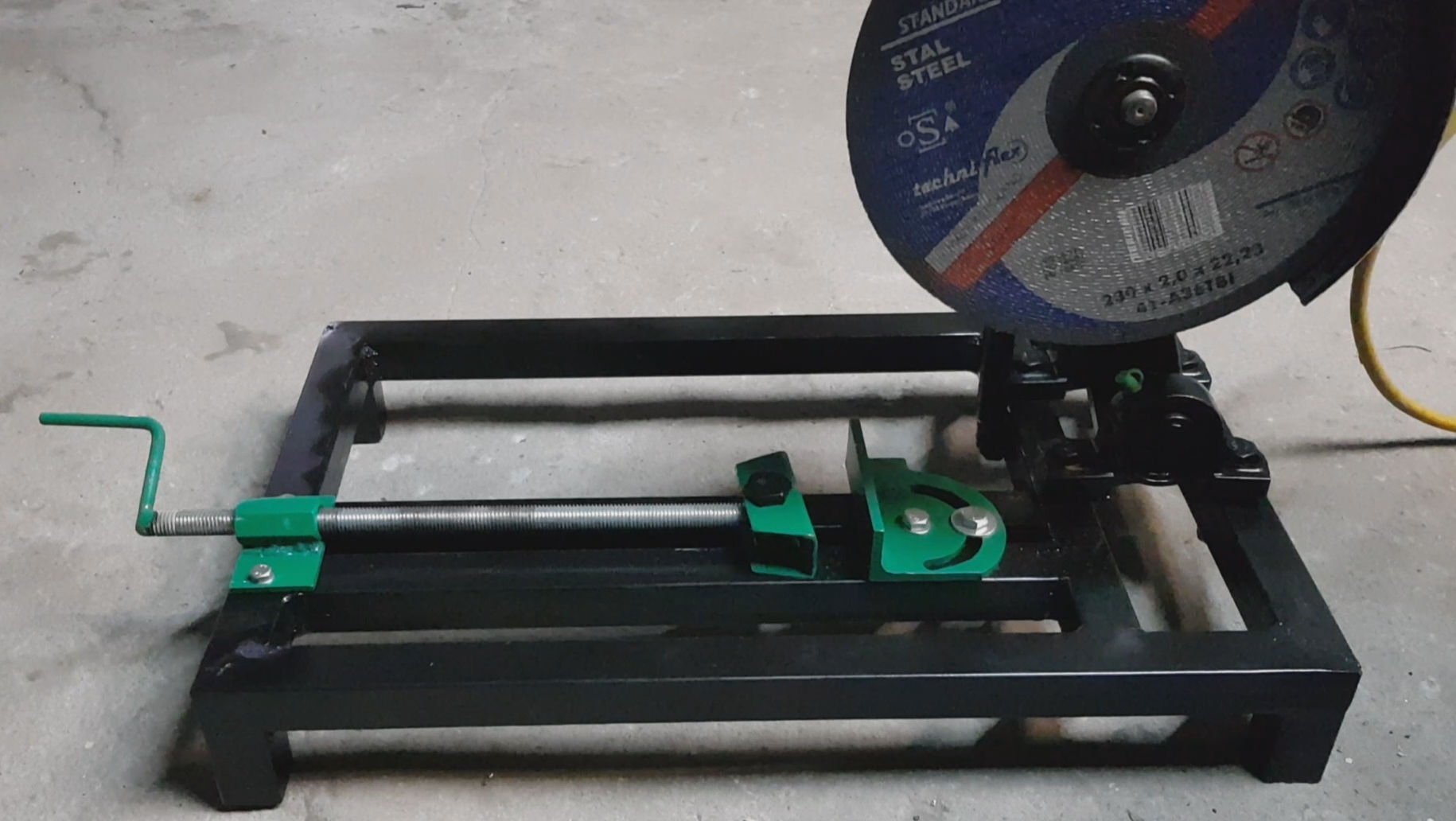


    Cool? Ranking DIY
    About Author
    Sqerty
    Level 18  
    Offline 
    Sqerty wrote 436 posts with rating 593, helped 5 times. Live in city Ostrowy nad Okszą. Been with us since 2009 year.
  • ADVERTISEMENT
  • #2 17880159
    oskar777

    Level 26  
    Beautiful construction, each such film encourages me more and more to buy a welding machine.
    Company Account:
    Oskar-info
    Gidzińskiego 24/1, Warszawa, 02-293 | Tel.: 501XXXXXX (Show) | Company Website: http://oskar-info.pl
  • #3 17880177
    Sqerty
    Level 18  
    I refused to buy a welder for several years and I must be honest that those were lost years.
  • ADVERTISEMENT
  • #4 17880873
    szeryf3
    Level 30  
    @Sqerty your next interesting project.
  • #5 17881133
    dprzyb
    Level 22  
    Congratulations on concept and execution!
  • ADVERTISEMENT
  • #6 17881303
    Anonymous
    Level 1  
  • #7 17881886
    nanab
    Level 27  
    Sqerty wrote:
    So adding everything up did not exceed PLN 50.

    So similar to such a device bought in a store. In addition, a whole day of work, so twice as much.
    I also wanted to build something like that, but after thinking it over, I found it a waste of money and I'd rather buy it ready. On the other hand, your structure is probably much more solid and with less play.
    Sqerty wrote:
    I refused to buy a welder for several years and I must be honest that those were lost years.

    I have the same thing with each subsequent larger tool, a migomat, a table drill, a plasma cutter, a milling machine, a 3d printer. If a man had enough space and money, he would have built a workshop larger than a house :D

    I would add a laser sight, it makes it much easier to precisely set the detail. Now you probably need to take the grinder down and aim the shield at the mount.
    Instead of legs, for ease of use, I would simply drill the frame, underneath it thick rubber pads (old tires, rugs) and the whole thing screwed directly to the table through these holes. Well, unless the disc is greater than the thickness of the rubber and the frame, then the legs will actually be useful, or a hole in the table.
  • #8 17881912
    Sqerty
    Level 18  
    Yes, a laser sight would come in handy. As for the legs, they must be of this height, because the shield goes about 4 cm under the table top. And with this place, there is always not enough of it.
  • #9 17881930
    398216 Usunięty
    Level 43  
    Now that you've mastered the construction of the vice, you should do more with this project. It's something with a handle - it doesn't look very solid (jaws) ...
    How much lateral play do you have on the grinder?
    It would be useful to think about fixing this structure to the countertop. With longer and heavier profiles cut, it can be a nice ride * ...

    * this also applies to the jaws.
  • #10 17883505
    siewcu
    Level 35  
    Have you not thought about moving the handle away from the grinder and changing this gas spring to an efficient one / with greater ejection force? A digital protractor would also be useful ...
  • #11 17884282
    Sqerty
    Level 18  
    This actuator is operational.
    Digital Protractor .... people.
    Or maybe CNC right away?
  • ADVERTISEMENT
  • #12 17884695
    siewcu
    Level 35  
    The actuator looks out of order because in some shots it looks as if the grinder was pulled downwards there. And the digital protractor ... I meant one with numbers :D I got it wrong, it's just about being able to set the angle just like that, not on a digital measurement screen - although on the other hand with some arduino or esp it can be cheap and simple ...
  • #13 17884875
    Sqerty
    Level 18  
    When the grinder is lowered, the actuator is almost parallel to the arm and therefore does not raise it up. This is useful when positioning the blade where the line of the marked cut is.
    As for the angles, you can not see it in the video, but I have 45 and 90 degrees marked so the setting takes less than a minute.
  • #14 17895003
    pawlik722
    Level 27  
    A git machine as it used to be called. I built a much larger one with a belt drive, it did the job, but it was a huge rotation angle of the cut, I would have a cut under the arm, which made it easier to cut long profiles, but the machine, because one big job was put away, because it took up valuable space. now I'm trying to build a small one like yours. It's actually your merit. You motivated me ?
    Is the arm not too big peoples?
  • #15 17895150
    Sqerty
    Level 18  
    If you just take my word for it, I'll tell you that there is no slack. It doesn't even twitch to the side, thanks to the bearings in the housing. However, I noticed that I have a slight play in the grinding wheel and I will have to replace the bearings in it.

    Good luck with your construction.
  • #16 19533721
    Andzek
    Level 8  
    Hello, you can have some design dimensions
📢 Listen (AI):

Topic summary

✨ The discussion revolves around the construction of a metal cutter using an angle grinder, initiated by a user who faced issues with cutting straight lines while building a vise. The user opted for a budget-friendly solution by repurposing an angle grinder, which was infrequently used. The design includes a mounting system made from flat bars, a rectangular profile arm with a 20mm diameter shaft, and self-aligning bearings. Various responses highlight the construction's quality, suggest improvements like adding a laser sight for precision, and discuss the potential for further projects. Concerns about stability and play in the grinder are also addressed, with suggestions for enhancements such as a digital protractor and efficient actuators.
Generated by the language model.

FAQ

TL;DR: DIY chop-saw adapter built from scrap costs < PLN 50 (~€11) and cuts 90°/45° accurately; "It doesn't even twitch to the side" [Elektroda, Sqerty, post #17895150] Bearings, 20 mm shaft and gas strut give stable, low-budget performance.

Why it matters: It turns an idle angle grinder into a precise metal-cutting station for <4 % of the price of a commercial saw.

Quick Facts

• Budget: < PLN 50 (~€11) [Elektroda, Sqerty, post #17879788] • Pivot: 20 mm steel shaft in two self-aligning bearings [Elektroda, Sqerty, post #17879788] • Pre-marked angles: 90° & 45°; setup < 1 min [Elektroda, Sqerty, post #17884875] • Typical 125 mm grinder speed: 11 000 rpm (no-load) [Bosch GWS 750 Datasheet] • Scrap steel price used: PLN 1.50 /kg (≈€0.35) [Elektroda, Sqerty, post #17879788]

Which parts were used and what did they cost?

The frame, arm and clamp came from scrap 30 mm profiles and flat bar bought for PLN 1.50 /kg. A 20 mm shaft, two self-aligning bearings and a salvaged gas spring were already on hand. Only fasteners and discs were new. Total spend stayed under PLN 50 (~€11) [Elektroda, Sqerty, post #17879788]

How is the angle grinder mounted and can I remove it quickly?

Three flat-bar brackets bolt directly to the grinder's gearbox housing. Undoing three M6 screws frees the tool, so the same grinder can still be handheld when needed [Elektroda, Sqerty, post #17879788]

What cutting angles are possible and how do I set them?

Fixed stops at 90° and 45° are scribed on the support. Setting takes under one minute [Elektroda, Sqerty, post #17884875] How-To set 45°:
  1. Loosen the clamp screw.
  2. Slide the workpiece until its face aligns with the 45° mark.
  3. Retighten the clamp and lower the arm to cut.

Is there lateral play in the arm during cutting?

No noticeable side play occurs. "It doesn't even twitch to the side," the builder notes, thanks to the twin bearing pivot [Elektroda, Sqerty, post #17895150]

Does the gas spring hold the grinder safely?

Yes; the strut balances the grinder above the work. However, gas springs can lose 10 % force after ~50 000 cycles, so inspect it yearly and replace if drop-force increases [Stabilus Tech Note, 2022].

Can I add a laser guide for better alignment?

Yes. Users suggested a cheap red cross-line module. Mount it beside the guard and power it from a 5 V phone charger. Align the beam to the disc kerf, then epoxy the bracket in place [Elektroda, nanab, post #17881886]

What disc size and speed should I use?

A 125 mm cutting disc is common; most 720–900 W grinders spin 10 500–12 000 rpm no-load [Bosch GWS 750 Datasheet]. Keep the original guard and never exceed the disc’s rated speed.

Should I bolt the cutter to my workbench?

Yes. Without anchoring, heavy profiles can tip the frame. Drill four 8 mm holes through the base, place rubber pads, and screw it to the bench to stop “a nice ride” during long cuts [Elektroda, 398216, post #17881930]

Are self-aligning bearings required for the pivot?

They simplify alignment and eliminate binding when the arm deflects. Plain bushings work, but you’ll need exact coaxial holes and frequent greasing; otherwise cutting accuracy drops by up to 0.5 mm per 100 mm cut length [Machinery Design Handbook].

What approximate dimensions can I follow to replicate this build?

The author did not publish drawings. Photos show an arm about 400 mm long, base 350 × 250 mm and vertical clearance 90 mm under the disc—enough for 40 × 40 mm box-section. Maintain at least 4 cm gap below the tabletop because the disc dips that far [Elektroda, Sqerty, post #17881912]

How does this DIY cutter compare to a budget store-bought chop saw?

Entry-level 230 mm metal chop saws sell for ~PLN 300 (≈€65) and weigh 15 kg [Allegro listings 2024]. The DIY unit costs 80 % less, has zero plastic hinges, and offers similar 45° accuracy, but lacks safety interlocks and factory warranty.

What safety precautions are essential?

  1. Wear a full-face shield and gloves; discs can shatter.
  2. Use only reinforced metal-cutting discs.
  3. Keep the guard fitted and clear sparks frequently.
  4. Disconnect power before changing discs.
  5. Check the gas spring and pivot bolts weekly for looseness or leaks [Elektroda, Sqerty, post #17881912]
Generated by the language model.
ADVERTISEMENT