logo elektroda
logo elektroda
X
logo elektroda

Query: Tuya Led Controller DC5-12v Compatibility with Cloudcutter Flash BK7321 and OBK Drivers

MnM1 10503 136
Best answers

Can I flash this Tuya LED controller with Cloudcutter on BK7231N/BK7231T and get the needed OpenBK drivers and GPIO settings working?

Yes — the device in the thread was ultimately identified as a BK7231N TuyaMCU-based controller, and Cloudcutter was used successfully to detach it from Tuya and flash OpenBK [#20661998][#20684927][#20685629] The important catch is that it is not a simple direct SM16703 LED-output device; the attempted SM16703 driver path did not work because the LEDs are driven through TuyaMCU, so the right approach is the OpenBK TuyaMCU driver rather than raw GPIO mapping [#20685629][#20685646] Once the fnIDs/DPs were captured, it became controllable with `startDriver TuyaMCU`, `tuyaMcu_defWiFiState 4`, `tuyaMcu_setBaudRate 115200`, and `tuyaMCU_setupLED 24 1`, plus scripts/buttons for the different modes and scenes [#20720196][#20720438] The device was later described as fully supported in OpenBK, with power, scenes, color picking, brightness, and music mode working, although warm/cold white handling was still not working and does not seem to be present in the original Tuya app either [#20713971][#20721021][#20817640] If you want to check Cloudcutter compatibility first, the advice was to use the cloudcut-only option and select the matching N/T profile based on the Tuya firmware prefix [#20661998]
Generated by the language model.
ADVERTISEMENT
  • #31 20685681
    p.kaczmarek2
    Moderator Smart Home
    Posts: 14615
    Help: 655
    Rate: 12632
    Well, we can either guess, or if you have a backup - do you? You can flash the backup, then test device with Tuya app so we can do packets capture and write down how do they control colors, and then try to send the same packets from OBK.

    Maybe we could try without original 2MB flash if we manage to find some information how to send data to your device.
    I've tried searching but I only found devices that seem to have simple RGB/CCT control like that one:
    https://templates.blakadder.com/polux_313911.html
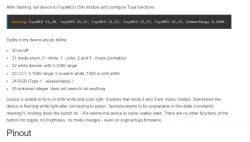
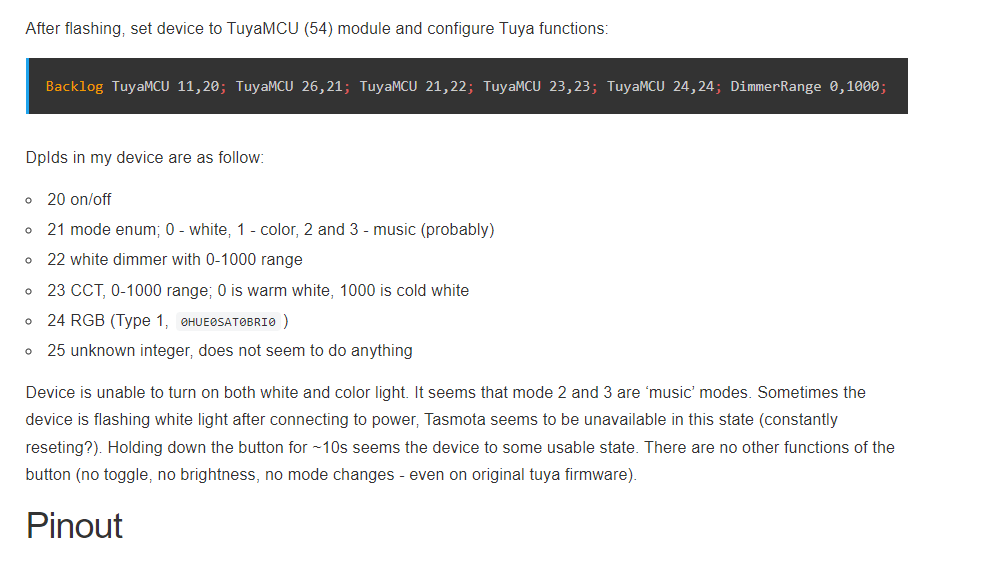
    Screenshot showing TuyaMCU configuration with function descriptions and settings.

    We could try searching Tasmota code, maybe they support it:
    https://github.com/arendst/Tasmota/blob/0ac5d...ta/tasmota_xdrv_driver/xdrv_16_tuyamcu_v1.ino
    but it doesn't look like it?
    https://tasmota.github.io/docs/TuyaMCU/#tuyasend-command

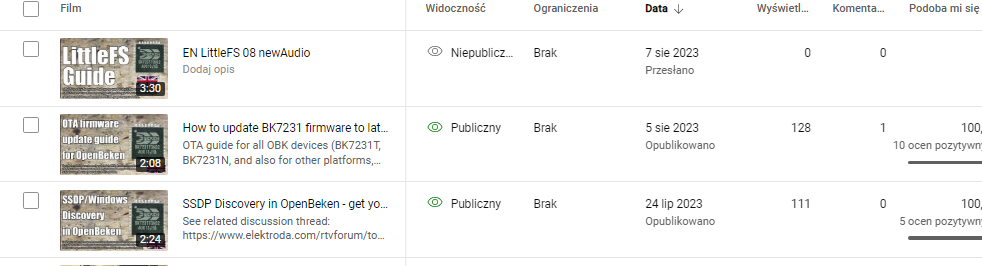
    So most likely restoring the Tuya firmware for further analysis is the way to go. If you don't have a backup, we could ask our dedicated Serbian tester and contributor, @DeDaMrAz to consider ordering this device and doing some captures. I also could do that myself, but I am not sure if you're willing to wait few weeks for me to have a free slot on my table. I am currently making a series of video tutorials for OBK and also I am focusing on code issues related to current features. Here's a sneak peak of what I am working on:
    Spoiler:
    Screenshot of a YouTube video list related to firmware update guides.

    Psst, remember to visit our Elektroda channel and like and subscribe: https://www.youtube.com/@elektrodacom


    MnM1 wrote:

    In regards to the individual addressable LED - I was only going by what you said in post number 2 in this thread (https://www.elektroda.com/rtvforum/topic3990646.html#20661340) :) and from the information I got from the sellers - "New information - they tell me that the driver is 16703. I assume it's SM16703."
    But maybe it is not?

    well, the question is simple - can this device display multiple colors on multiple LEDs at once?
    If it can display multiple colors on multiple LEDs at the same time then it's individual addressable LED

    This topic got kinda messy because it's now about two devices so I wanted to make sure we're on the same page.
    Helpful post? Buy me a coffee.
  • ADVERTISEMENT
  • #32 20685725
    MnM1
    Level 10  
    Posts: 175
    Help: 4
    Rate: 13

    I will try to reply to all the questions :)

    Original Firmware backup - unfortunately, no, I don't have a backup of the original firmware.
    Tasmota - I have no idea if any of these work.

    Looking through the forums, this is the closest I can find to my device:

    [url=]https://www.elektroda.com/rtvforum/topic3982779.html[/url]

    I have tried a few commands from that thread with some success and others without:

    1. This one didn't work
    setChannelType 21 toggle
    linkTuyaMCUOutputToChannel 21 1 21


    2. This worked - it changed the color on the LEDs (from a multicolor pattern that I selected with the IR remote) to blue.
    tuyaMcu_sendState 25 3 ff0000646464ff


    3. From that thread, all the
    tuyaMCU_sendColor *******
    seem to work, but some of them produced different colors on the LEDs. This actually might be a device problem as even when I use the IR remote, some colors are not right - red = purple, blue = yellow, green = green, yellow = light blue.

    4. From the same thread -
    tuyaMCU_setupLED 24 0
    it does add the Dimmer/Brightness, RGB Color, and Temperature Slider on the front www page of the device. The Temperature Slider does not work at all.
    However, if I try to use them, they don't operate as they should. If I use the RGB color to pick a color, the device goes blank. Only with the IR remote can I get it to display colors again.
    If I use the Dimmer/Brightness - it does dim the LEDs, but it never increases the intensity back.
    If I use the Temperature Slider, it turns off the LEDs. And they never come back. I have to cut the power to the device and do some sort of a reset from the IR remote to get it back.

    In regards to individual addressable LEDs - yes, it does look like the LEDs can display different colors.

    If @DeDaMrAz or you would consider looking at this device, that would be great.

    Looking forward to your new YouTube videos :)
  • ADVERTISEMENT
  • #33 20685736
    p.kaczmarek2
    Moderator Smart Home
    Posts: 14615
    Help: 655
    Rate: 12632
    MnM1 wrote:

    2. This worked - it changed the color on the leds (from a multicolor pattern that I selected with the IR remote) to blue.
    tuyaMcu_sendState 25 3 ff0000646464ff

    It may be just a fluke. You can try with that command and multiple dpIDs:
    
    tuyaMCU_sendColor dpID red01 green01 blue01 tuyaRGB
    tuyaMCU_sendColor 25 1 0 0 1
    tuyaMCU_sendColor 25 0 1 0 1
    

    RGB values are in 0-1 range, so "1 0 0" is red, "0 1 0" is green, etc.

    Try those commands and let us know whether they give consistent results or do they give, for example, always blue...

    I think that it is very possible that someone somewhere in the web has documented this TuyaMCU format already and we just need to find it. Otherwise... it would mean that we are the first ones investigating that kind of device.

    Added after 51 [seconds]:

    Btw what if you use: tuyaMcu_sendQueryState command?

    Added after 0 [seconds]:

    Btw what if you use: tuyaMcu_sendQueryState command?
    Helpful post? Buy me a coffee.
  • #34 20685750
    MnM1
    Level 10  
    Posts: 175
    Help: 4
    Rate: 13

    I tried the suggested commands - both of them just dimmed the LEDs.

    tuyaMcu_sendQueryState:

    Debug:CMD:cmd [tuyaMcu_sendQueryState]
    Info:CMD:[WebApp Cmd 'tuyaMcu_sendQueryState' Result] OK
    Info:TuyaMCU:TUYAMCU received: 55 AA 03 07 00 05 14 01 00 01 01 25 
    Info:TuyaMCU:TuyaMCU_ProcessIncoming[ver=3]: processing command 7 (State) with 12 bytes
    Info:TuyaMCU:TuyaMCU_ParseStateMessage: processing dpId 20, dataType 1-DP_TYPE_BOOL and 1 data bytes
    Info:TuyaMCU:TuyaMCU_ParseStateMessage: raw data 1 byte: 
    Info:TuyaMCU:TUYAMCU received: 55 AA 03 07 00 05 15 04 00 01 01 29 
    Info:TuyaMCU:TuyaMCU_ProcessIncoming[ver=3]: processing command 7 (State) with 12 bytes
    Info:TuyaMCU:TuyaMCU_ParseStateMessage: processing dpId 21, dataType 4-DP_TYPE_ENUM and 1 data bytes
    Info:TuyaMCU:TuyaMCU_ParseStateMessage: raw data 1 byte: 
    Debug:TuyaMCU:TuyaMCU_ApplyMapping: id 21 with value 1 is not mapped
    Info:TuyaMCU:TUYAMCU received: 55 AA 03 07 00 08 1A 02 00 04 00 00 1F 40 90 
    Info:TuyaMCU:TuyaMCU_ProcessIncoming[ver=3]: processing command 7 (State) with 15 bytes
    Info:TuyaMCU:TuyaMCU_ParseStateMessage: processing dpId 26, dataType 2-DP_TYPE_VALUE and 4 data bytes
    Info:TuyaMCU:TuyaMCU_ParseStateMessage: raw data 4 int: 8000
    Debug:TuyaMCU:TuyaMCU_ApplyMapping: id 26 with value 8000 is not mapped
    Info:TuyaMCU:TUYAMCU received: 55 AA 03 07 00 09 33 00 00 05 00 00 01 01 00 4C 
    Info:TuyaMCU:TuyaMCU_ProcessIncoming[ver=3]: processing command 7 (State) with 16 bytes
    Info:TuyaMCU:TuyaMCU_ParseStateMessage: processing dpId 51, dataType 0-DP_TYPE_RAW and 5 data bytes
    Info:TuyaMCU:TUYAMCU received: 55 AA 03 07 00 09 34 00 00 05 00 00 01 01 00 4D 
    Info:TuyaMCU:TuyaMCU_ProcessIncoming[ver=3]: processing command 7 (State) with 16 bytes
    Info:TuyaMCU:TuyaMCU_ParseStateMessage: processing dpId 52, dataType 0-DP_TYPE_RAW and 5 data bytes
    Info:TuyaMCU:TUYAMCU received: 55 AA 03 07 00 08 35 02 00 04 00 00 01 2C 79 
    Info:TuyaMCU:TuyaMCU_ProcessIncoming[ver=3]: processing command 7 (State) with 15 bytes
    Info:TuyaMCU:TuyaMCU_ParseStateMessage: processing dpId 53, dataType 2-DP_TYPE_VALUE and 4 data bytes
    Info:TuyaMCU:TuyaMCU_ParseStateMessage: raw data 4 int: 300
    Debug:TuyaMCU:TuyaMCU_ApplyMapping: id 53 with value 300 is not mapped

  • #37 20686161
    DeDaMrAz
    Level 22  
    Posts: 603
    Help: 34
    Rate: 129
    Exact same order placed, be patient, we will work on supporting this device once it arrives. Estimated delivery time is August 28th
  • #38 20686165
    MnM1
    Level 10  
    Posts: 175
    Help: 4
    Rate: 13
    Thank you :)
  • ADVERTISEMENT
  • #39 20695349
    DeDaMrAz
    Level 22  
    Posts: 603
    Help: 34
    Rate: 129
    Device arrived, interesting construction but we can probably work on it.

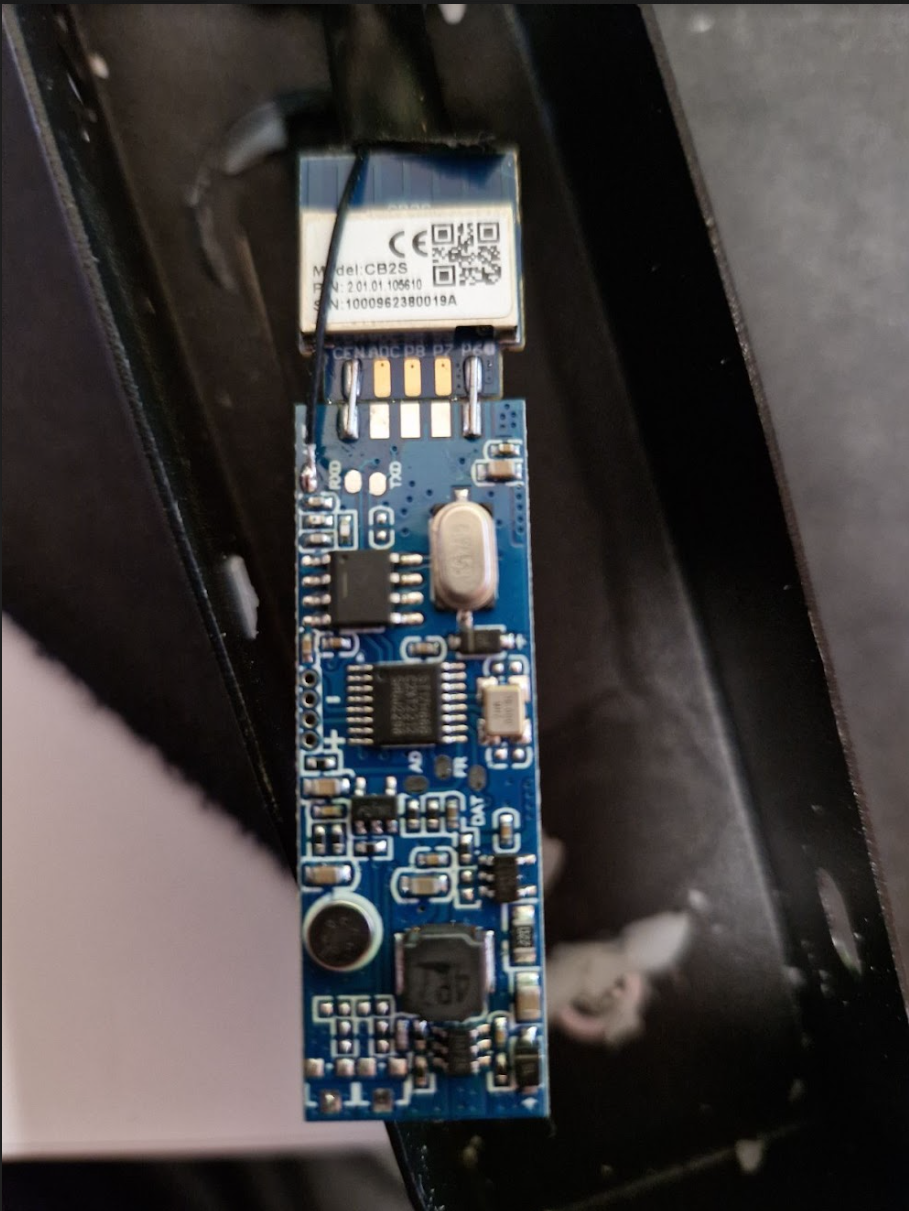
    It has a TuyaMCU, a microphone(???) and the LED driver is blank - no markings on it so it will be interesting to figure out how to deal with it. Stand by and we will update this post once we get to it.

    Circuit board with TuyaMCU module and unmarked LED driver.
  • #40 20695358
    p.kaczmarek2
    Moderator Smart Home
    Posts: 14615
    Help: 655
    Rate: 12632
    Prepare your scope and let's look at the waveforms. This will tell us whether they are WS2812b-compatible or something else.

    You can also later try swapping LED strip with WS2812B....

    Also, your one is CB2S? So BK7231N? So SM16703P driver will work without porting, or at least I hope so.
    Helpful post? Buy me a coffee.
  • #41 20695731
    MnM1
    Level 10  
    Posts: 175
    Help: 4
    Rate: 13

    That was fast delivery :)

    Hope you guys can figure it out - me, I tried my best and all I could do is flash it to T via cloudcutter and firmware version, start TuyaMCU driver, and get the ON/OFF toggle. I could not figure anything further. But then again, I don't have your experience....
  • ADVERTISEMENT
  • #42 20711720
    MnM1
    Level 10  
    Posts: 175
    Help: 4
    Rate: 13
    Hi @DeDaMrAz how is it going?
    Did you get a chance to have a look at this device? Any progress?

    Cheers - appreciate it.
  • #43 20711749
    DeDaMrAz
    Level 22  
    Posts: 603
    Help: 34
    Rate: 129

    @mnm11

    Unfortunately, no progress yet - because life, and job, and heat :)

    But there will be something soon, and we will post updates here. You can count on that, just not as fast as we (and probably you) imagined. Sorry for that.
  • #44 20711837
    MnM1
    Level 10  
    Posts: 175
    Help: 4
    Rate: 13
    Is all good buddy :)
    I fully understand what you mean as I am in the same boat as you - family. job, life in general - need abut 48 hours in a day to do all what I want :)
    No heat here yet but is coming... NOT looking forward to that!

    When you have the time - looking forward to it.
  • #45 20711866
    p.kaczmarek2
    Moderator Smart Home
    Posts: 14615
    Help: 655
    Rate: 12632
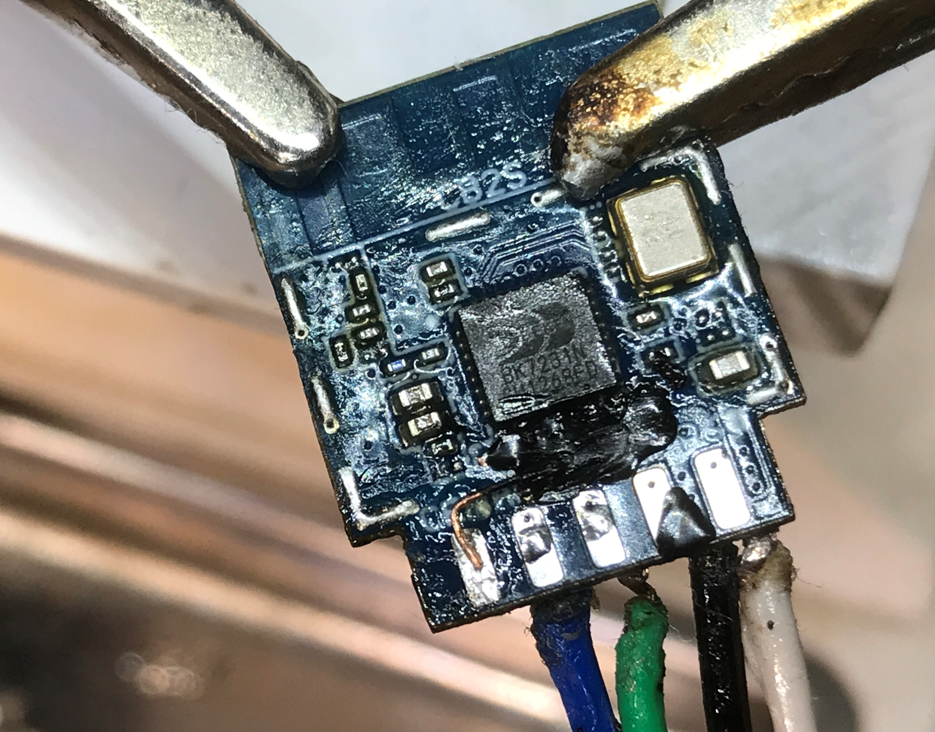
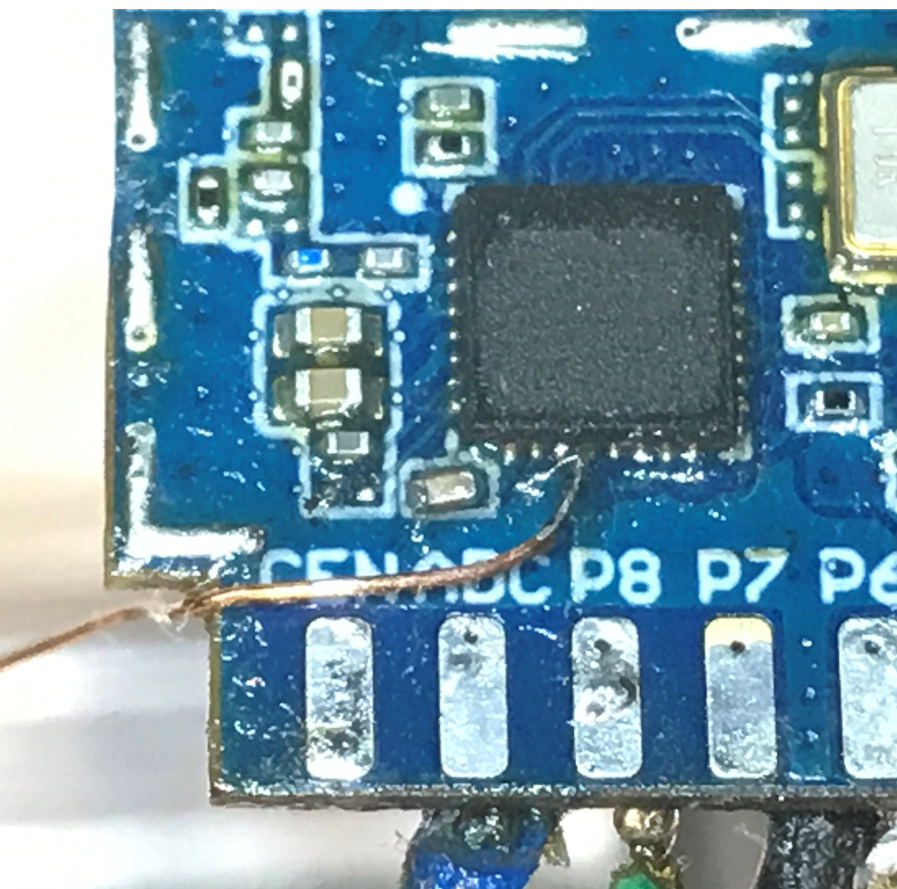
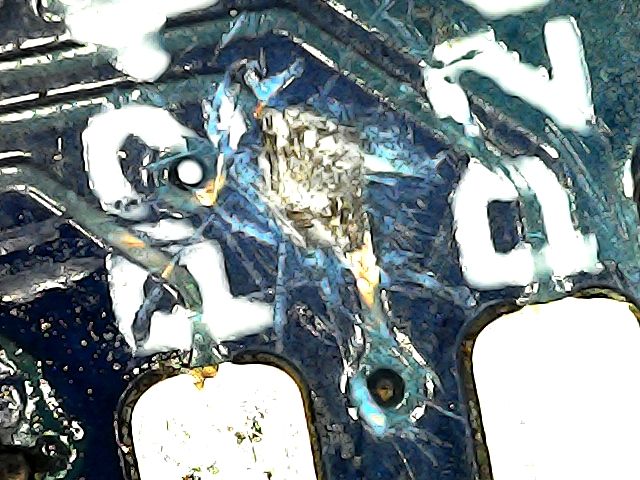
    I am also slowly building up time and equipment to test the "direct" (without TuyaMCU) SM16703P and possibly WS2812B driver, but it's very hard. It has turned out that hardware SPI, required for such driver, is using P16 which is not available on CB3S and CB2S, so I had to solder directly to QFN pin and route out wire myself:
    Close-up of an electronic circuit with soldered wires. Close-up of an electronic module with a thin wire soldered to a pin.
    It is soldered now, soon I will test it with WS2812B and maybe attempt to port driver to BK7231T as well.
    Helpful post? Buy me a coffee.
  • #46 20711872
    MnM1
    Level 10  
    Posts: 175
    Help: 4
    Rate: 13
    Ohhh wow - looks very involved.
    I know how hard it to find free time these days for everything we "wish" to do :)
    So plz guys don't be sorry - I fully understand. When you get the chance - and again thank you both for helping with this!!!
  • #47 20711886
    p.kaczmarek2
    Moderator Smart Home
    Posts: 14615
    Help: 655
    Rate: 12632
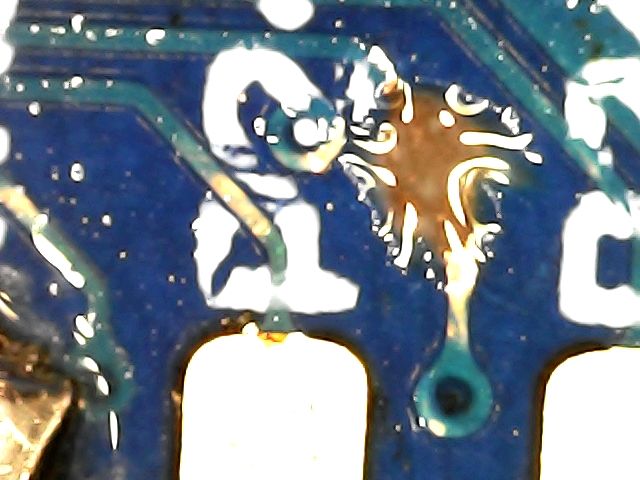
    I have basically first disconnected the trace to CEN pad:
    The image shows a damaged printed circuit board with visible traces, mounting holes, and signs of modification. Close-up of circuit traces on a printed circuit board.
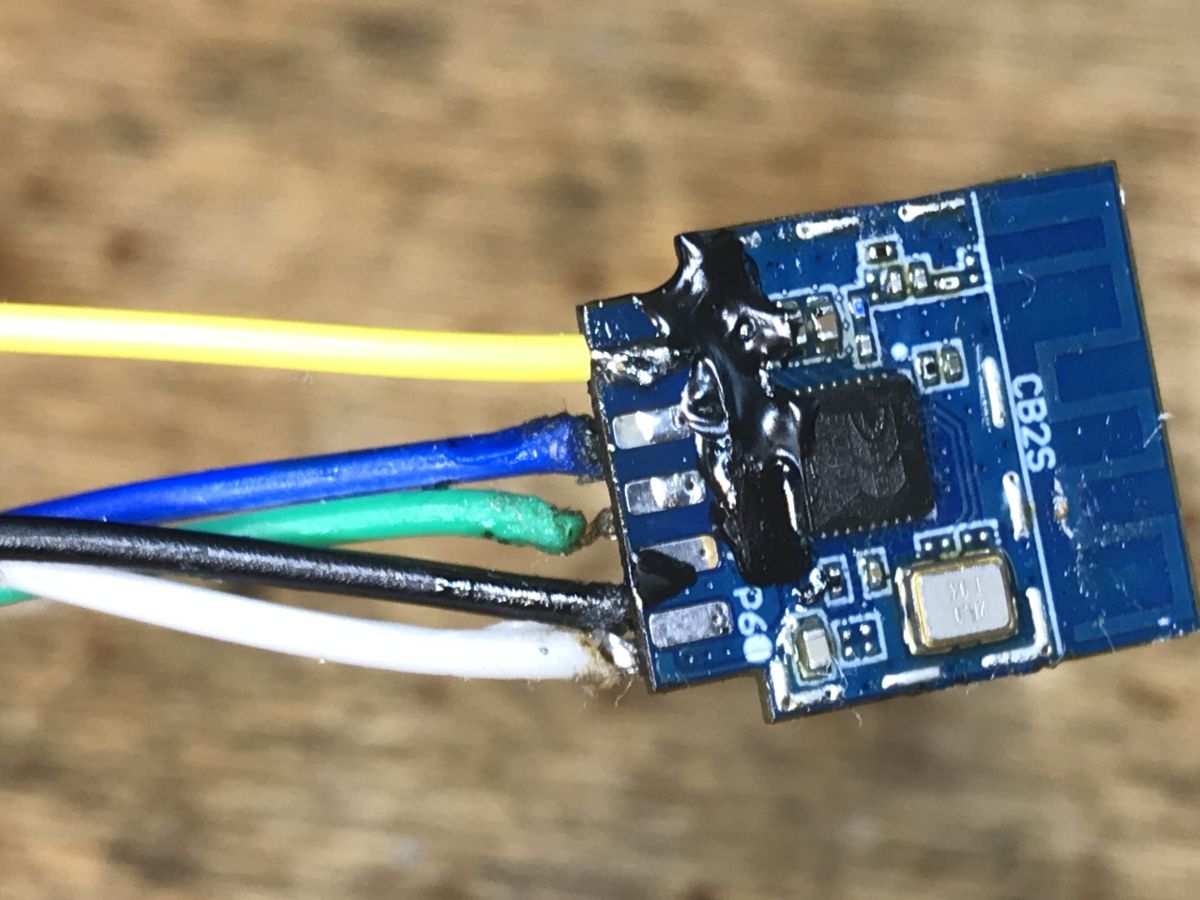
    Then I routed P16 to CEN pad, which is now P16:
    Close-up of a blue PCB with several connected colored wires and CB2S marking.

    I know this is not directly related to the device from this topic (TuyaMCU one), but maybe we could also just skip TuyaMCU there and wire a jumper directly to addressable LEDs... there are many options
    Helpful post? Buy me a coffee.
  • #48 20711889
    MnM1
    Level 10  
    Posts: 175
    Help: 4
    Rate: 13
    Hopefully for this device we will still use the MCU - I am not good with soldering at that small scale. And as the firmware can be flashed with cloud-cutter then I wont have to open the device at all :)
  • #49 20712157
    DeDaMrAz
    Level 22  
    Posts: 603
    Help: 34
    Rate: 129

    Some small progress in this regard - backing up of original firmware is done.
    Attachments:
    • readResult_BK7231N_QIO_led_strip_light_2023-28-8-20-10-21.bin (2 MB) You must be logged in to download this attachment.
  • #50 20713960
    MnM1
    Level 10  
    Posts: 175
    Help: 4
    Rate: 13
    @DeDaMrAz here the dpIDs:

    Dreamlight scene mode(51)
    ON/OFF(20)
    Dreamlight built-in music sync(52)
    Mode(21)
    Strip light pixel number set(53)
    Color(24)
    Scene(25)
    Timer(26)
    Music sync of microphone(42)
    Music(27)
    Adjust(28)


    I also got a JSON file with more information from Tuya IoT - not sure if it helps but here it is in any case:

    Spoiler:
    Code Type Values
    switch_led Boolean
    "{true,false}"
    work_mode Enum
    {
    "range": [
    "white",
    "colour",
    "scene",
    "music"
    ]
    }
    colour_data Json
    {
    "h": {
    "min": 0,
    "scale": 0,
    "unit": "",
    "max": 360,
    "step": 1
    },
    "s": {
    "min": 0,
    "scale": 0,
    "unit": "",
    "max": 1000,
    "step": 1
    },
    "v": {
    "min": 0,
    "scale": 0,
    "unit": "",
    "max": 1000,
    "step": 1
    }
    }
    scene_data Json
    {
    "scene_num": {
    "min": 1,
    "scale": 0,
    "max": 8,
    "step": 1
    },
    "scene_units": {
    "unit_change_mode": {
    "range": [
    "static",
    "jump",
    "gradient"
    ]
    },
    "unit_switch_duration": {
    "min": 0,
    "scale": 0,
    "max": 100,
    "step": 1
    },
    "unit_gradient_duration": {
    "min": 0,
    "scale": 0,
    "max": 100,
    "step": 1
    },
    "bright": {
    "min": 0,
    "scale": 0,
    "max": 1000,
    "step": 1
    },
    "temperature": {
    "min": 0,
    "scale": 0,
    "max": 1000,
    "step": 1
    },
    "h": {
    "min": 0,
    "scale": 0,
    "unit": "",
    "max": 360,
    "step": 1
    },
    "s": {
    "min": 0,
    "scale": 0,
    "unit": "",
    "max": 1000,
    "step": 1
    },
    "v": {
    "min": 0,
    "scale": 0,
    "unit": "",
    "max": 1000,
    "step": 1
    }
    }
    }
    countdown Integer
    {
    "min": 0,
    "max": 86400,
    "scale": 0,
    "step": 1
    }
    music_data Json
    {
    "change_mode": {
    "range": [
    "direct",
    "gradient"
    ]
    },
    "bright": {
    "min": 0,
    "scale": 0,
    "unit": "",
    "max": 1000,
    "step": 1
    },
    "temperature": {
    "min": 0,
    "scale": 0,
    "unit": "",
    "max": 1000,
    "step": 1
    },
    "h": {
    "min": 0,
    "scale": 0,
    "unit": "",
    "max": 360,
    "step": 1
    },
    "s": {
    "min": 0,
    "scale": 0,
    "unit": "",
    "max": 255,
    "step": 1
    },
    "v": {
    "min": 0,
    "scale": 0,
    "unit": "",
    "max": 255,
    "step": 1
    }
    }
    control_data Json
    {
    "change_mode": {
    "range": [
    "direct",
    "gradient"
    ]
    },
    "bright": {
    "min": 0,
    "scale": 0,
    "unit": "",
    "max": 1000,
    "step": 1
    },
    "temperature": {
    "min": 0,
    "scale": 0,
    "unit": "",
    "max": 1000,
    "step": 1
    },
    "h": {
    "min": 0,
    "scale": 0,
    "unit": "",
    "max": 360,
    "step": 1
    },
    "s": {
    "min": 0,
    "scale": 0,
    "unit": "",
    "max": 255,
    "step": 1
    },
    "v": {
    "min": 0,
    "scale": 0,
    "unit": "",
    "max": 255,
    "step": 1
    }
    }
  • #51 20713962
    DeDaMrAz
    Level 22  
    Posts: 603
    Help: 34
    Rate: 129
    @MnM1

    For some reason I am unable to pair my device to TuyaAPP (or SmartLife app) I asked about the dpID's but saw a bit latter that you already posted that.

    How did you device behave on the first power up? Before you linked it to the APP? Did it fast blink red color?
  • #52 20713963
    MnM1
    Level 10  
    Posts: 175
    Help: 4
    Rate: 13

    Yes, I think I had that issue too initially.
    I asked the vendor for instructions back then, and they sent me a file (see below).

    Basically, the easiest way was to LONG Press the Music Button on the remote - that put it in pairing mode right away.
    Attachments:
    • TUYA说明书.pdf (1.02 MB) You must be logged in to download this attachment.
  • #53 20713965
    p.kaczmarek2
    Moderator Smart Home
    Posts: 14615
    Help: 655
    Rate: 12632
    What features are exactly available in Tuya App for this device? I am curious how much real control over color we have... hopefully @DeDaMrAz will manage to check
    Helpful post? Buy me a coffee.
  • #54 20713968
    DeDaMrAz
    Level 22  
    Posts: 603
    Help: 34
    Rate: 129
    MnM1 wrote:
    Yes I think I had that issue too initially.
    I asked vendor for instructions back then and they sent me a file (see below).

    Basically the easiest way was to LONG Press the Music Button on the remote - that put it in pairing mode right away.


    FFS never in a million years would I guess to hold down the music button... tried holding PWR button, light button....

    Thanks for this tip!

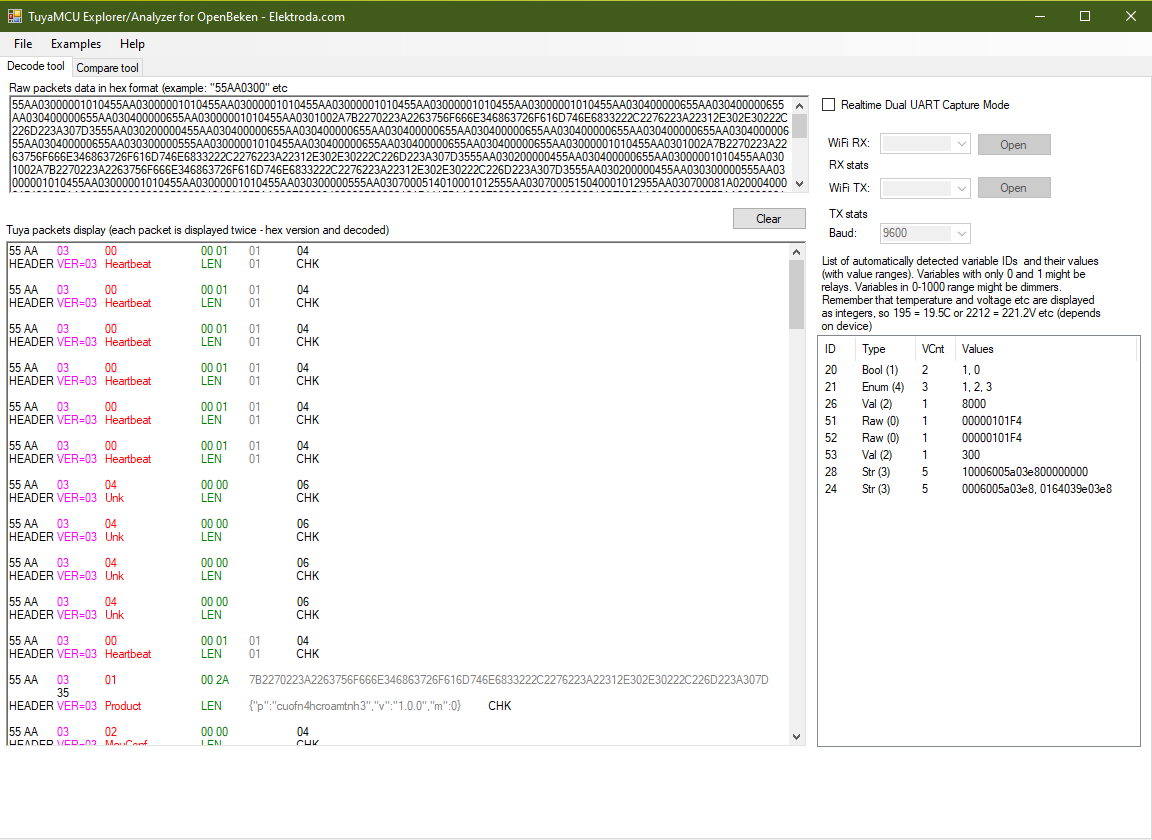
    We can finally do some tests now :)

    TuyaMCU Explorer/Analyzer program interface with packet data in hex format.
  • #55 20713970
    MnM1
    Level 10  
    Posts: 175
    Help: 4
    Rate: 13
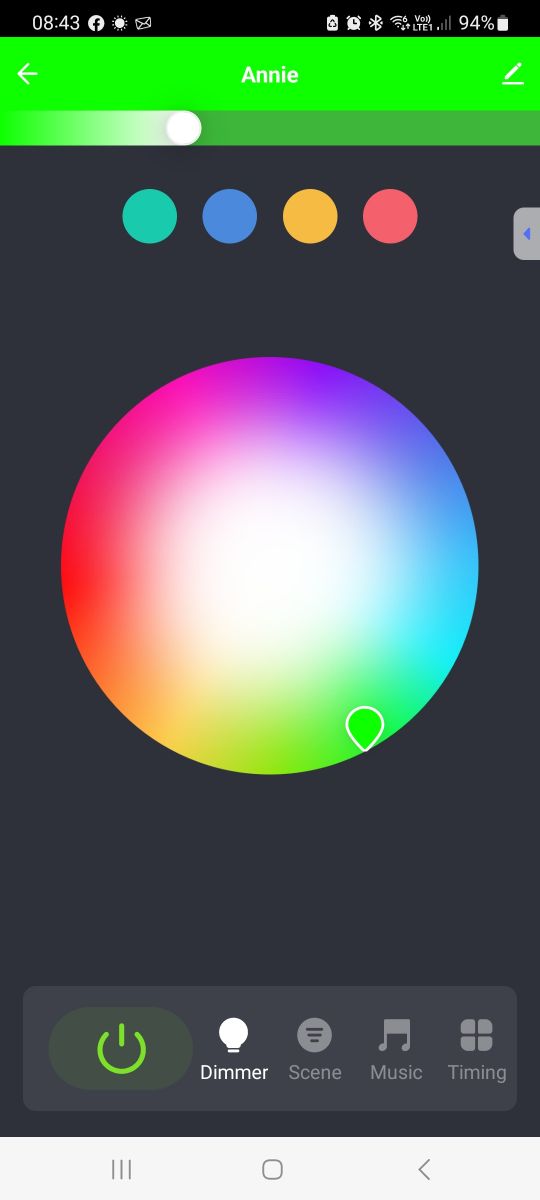
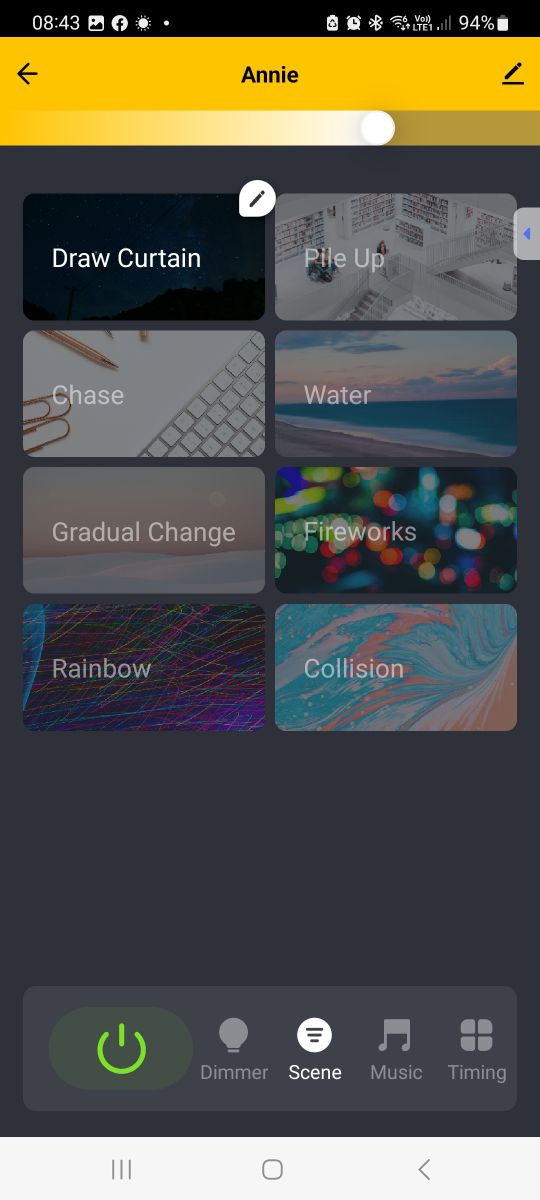
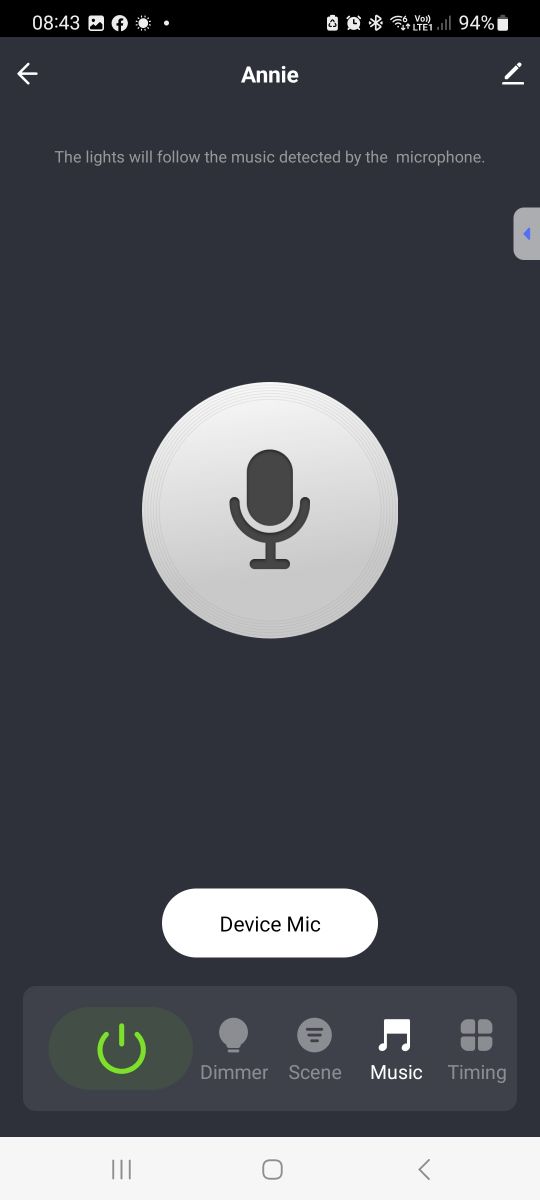
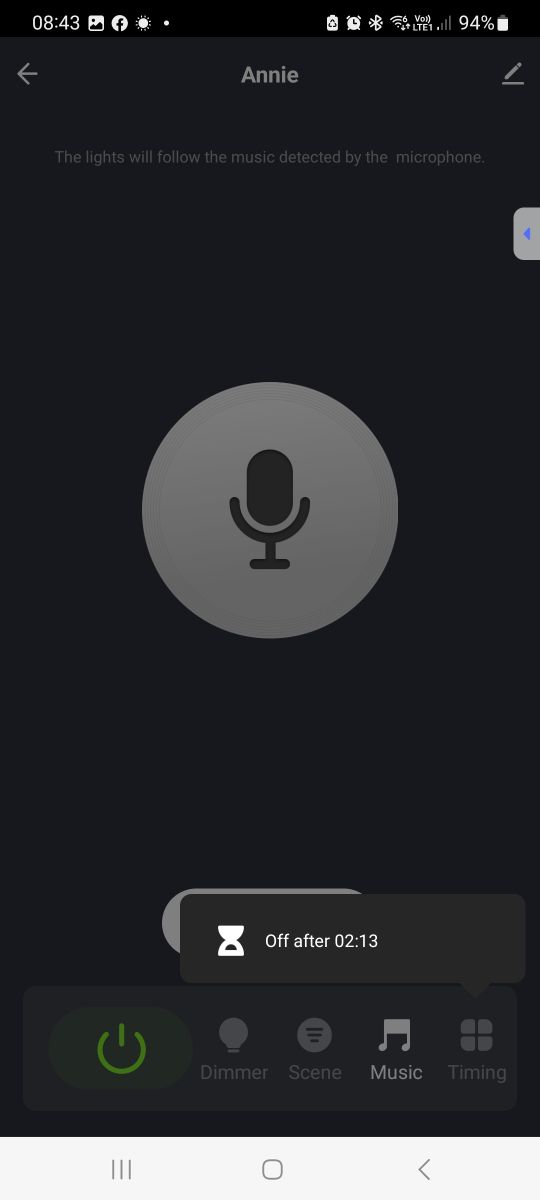
    Once you get into the Tuya app this is what is there:

    Tuya app screen with color and brightness selection. Tuya app interface with lighting scene selection. Tuya app interface with music-synchronized lighting feature. Tuya app interface with a microphone icon.
  • #56 20713971
    DeDaMrAz
    Level 22  
    Posts: 603
    Help: 34
    Rate: 129

    This device will be fully supported. It's not going to be straightforward, but @p.kaczmarek2 has some ideas already, and we will work on implementing support for it.
  • #57 20713973
    p.kaczmarek2
    Moderator Smart Home
    Posts: 14615
    Help: 655
    Rate: 12632
    So there is only a predefined set of animations?

    With a direct connection to SM16703, we could do much more.
    Helpful post? Buy me a coffee.
  • #58 20713974
    MnM1
    Level 10  
    Posts: 175
    Help: 4
    Rate: 13

    In the 2nd picture I posted, I think there are 8 "scenes" - assuming that is what you meant?
  • #59 20713976
    p.kaczmarek2
    Moderator Smart Home
    Posts: 14615
    Help: 655
    Rate: 12632
    Yes, this is most likely what I mean.

    With a direct connection to SM16703, we could have created our own scenes, fully customizable. With a TuyaMCU in a way, we have to use the scenes that Tuya created.

    We will try both approaches.
    Helpful post? Buy me a coffee.
  • #60 20713978
    MnM1
    Level 10  
    Posts: 175
    Help: 4
    Rate: 13

    p.kaczmarek2 wrote:
    With a direct connection to SM16703, we could have created our own scenes, fully customizable. With a TuyaMCU in a way, we have to use the scenes that Tuya created.


    I see what you mean.
    Yes, that will be great to have this device working with the Tuya "way" as well as a more customized version (for later when I will be brave enough to open it and use my stone-age soldering skills :) )

Topic summary

✨ The discussion centers on the compatibility and firmware flashing of a Tuya waterproof LED light purchased from AliExpress, featuring BK7231N chipset and controlled via a TuyaMCU with an SM16703 LED driver. The main focus is on using Cloudcutter to flash OpenBK (OBK) firmware, determining whether the device uses the N or T version, and verifying driver support and GPIO configurations. Initial attempts to use the SM16703P driver in OBK showed limited success due to the device employing a TuyaMCU protocol rather than direct LED driver control. The device supports multiple DPIDs for functions such as power toggle, mode selection, color, scenes, timer, and music sync via microphone. Users successfully detached the device from the Tuya cloud using Cloudcutter, retaining full local functionality controlled through LocalTuya in Home Assistant (HA). Color control commands were developed and tested, revealing color channel mismatches (BGR vs RGB) adjustable via remote settings. Warm/cold white temperature control is not supported in the original firmware and remains unimplemented in OBK. Firmware backups were made to facilitate analysis. Advanced users explored hardware modifications to bypass TuyaMCU for direct SM16703 or WS2812B LED control, but this requires complex soldering due to unavailable SPI pins on the CB2S/CB3S modules. A comprehensive autoexec.bat script was shared to enable LED control, scene selection, and music mode via OBK commands. Issues such as LED blinking during pairing, color inversion, and device behavior after mode changes were addressed with command sequences and flag settings (e.g., TuyaMCU queue flag 43). Integration with HA was improved with MQTT commands and button configurations. The community continues to refine support, with ongoing development to rewrite the TuyaMCU driver and enhance device functionality, including animation triggers and improved color temperature handling. The device's IR remote has advanced features that can alter button functions and color mappings, which may cause unexpected behavior if misconfigured. Overall, the device is now operable with OBK firmware, supporting most Tuya app features locally, though some advanced functions like color temperature remain under development.
Generated by the language model.

FAQ

TL;DR: For owners of sealed DC 5–12 V Tuya dreamlight controllers, the safest path is: verify Cloudcutter first, then treat the device as TuyaMCU-based, not direct SM16703. As one developer put it, "The SM driver will not work for this device"; working control came from dpIDs, scene scripts, and Flag 43 queue support. [#20685629]

Why it matters: This thread shows how to free a waterproof Tuya light from the cloud without opening it, while avoiding the biggest failure mode: flashing a device that still lacks the right driver path.

Option What the thread found Practical result
BK7231N + TuyaMCU path Working support arrived first; test device reported BK7231N and later got scenes, color, brightness, and music mode working Best current route for this light
BK7231T + direct SM16703 tests Early SM16703 builds for T were missing or not ported; 202 T even returned 404 for one file Not the safe first choice
Direct SM16703 control Promised more customization, but this device turned out to use TuyaMCU in front of the LEDs Not the right control path for this product
Tuya app / LocalTuya only Full original behavior stays after cloud detachment, but you still rely on TuyaMCU datapoints Useful for testing before flashing

Key insight: The breakthrough was identifying the controller as a TuyaMCU light with dpIDs and 115200 baud, not a simple BK-to-LED direct driver design. Once the project switched from SM16703 experiments to TuyaMCU scripting, core functions started working. [#20685629]

Quick Facts

  • The Tuya IoT dump exposed 11 functional dpIDs on this device, including 20, 21, 24, 25, 26, 27, 28, 42, 51, 52, and 53, which made reverse-mapping possible in OpenBeken. [#20685592]
  • The pixel-count datapoint reported dpID 53 = 300, giving a concrete strip-length parameter for scene logic and timing tests. [#20685592]
  • The working TuyaMCU setup used 115200 baud and required tuyaMcu_defWiFiState 4 to stop the power-up blinking that looked like pairing mode. [#20720438]
  • A tested product variant was the RGB, 30 cm, 9 W, waterproof model from AliExpress, used as the sacrificial device for reverse-engineering. [#20686151]
  • Early queue-related instability showed up after roughly 7–8 color changes in Home Assistant on one tester’s setup, which is why Flag 43 became important. [#20722415]

1. How can I tell whether a Tuya LED controller on firmware 1.1.12 is compatible with Tuya Cloudcutter, and how do I choose between the BK7231N and BK7231T profile?

Use Cloudcutter in detection mode first, not full flashing. 1. Select the Cloudcutter-only option. 2. Try both the T and N profile for that exact firmware. 3. If one profile shows an “A-xx” prefix, use that platform for flashing. The thread’s practical rule was to avoid guessing before detection, because picking the wrong platform can strand a sealed device with no easy recovery path. [#20661998]

2. What is OpenBeken (OBK), and how does it work with TuyaMCU-based LED controllers like BK7231N or BK7231T devices?

OpenBeken is replacement firmware that runs on Beken Wi‑Fi chips and can control a separate TuyaMCU over serial. "TuyaMCU is a serial control MCU that handles device features through dpIDs, while the BK chip provides Wi‑Fi, scripting, and UI logic." In this thread, OBK worked by starting the TuyaMCU driver, setting Wi‑Fi state, mapping dpIDs, and sending scene or color commands instead of talking to LEDs directly. [#20720438]

3. What is an individually addressable LED driver such as SM16703P, and how is it different from simple RGB or CCT LED control?

An individually addressable LED driver such as SM16703P lets one strip show multiple colors on different LEDs at the same time. "SM16703P is an addressable LED driver that controls per-pixel color data, unlike simple RGB or CCT control where the whole strip changes together." The thread used a simple test: if one device can display several colors at once, it is addressable; if it only changes as a whole, it behaves like basic RGB/CCT lighting. [#20685681]

4. Why did the SM16703P test commands fail on some OpenBK builds, and which builds added working support for BK7231N versus BK7231T?

They failed because support landed unevenly across platforms and some builds missed the latest commit. One tester got SM16703P_Init NOT found, then found 1.17.202 T unavailable with a 404, while the maintainer confirmed the contributor had only provided a working version for N at that point. Later, a tester on BK7231N flashed 1.17.206 and could at least load the driver, while T support still needed porting. [#20669569]

5. How do I safely test a sealed waterproof Tuya light with Cloudcutter and OpenBeken without opening the device or risking permanent loss of functionality?

Test cloud detachment first and keep original behavior available as long as possible. 1. Verify Cloudcutter compatibility without flashing. 2. Add the light to Tuya and, if needed, LocalTuya first so you can inspect dpIDs. 3. Do not flash experimental direct LED drivers unless you have a backup or a cheap sacrificial unit. The maintainers explicitly recommended a 2 MB firmware backup before risky tests because support was incomplete early on. [#20662154]

6. Why do the LEDs start blinking blue immediately after power-up on this Tuya light, and how does the tuyaMcu_defWiFiState 4 command stop the pairing-style blinking?

They blink because the TuyaMCU thinks the device is still in Wi‑Fi pairing mode. The fix is to tell the MCU it is already paired and cloud-connected by sending tuyaMcu_defWiFiState 4. In the thread, the maintainer identified the blue blinking as MCU-side status behavior, not LED driver failure, and said the blinking would stop as soon as that command was applied. [#20685629]

7. How can I determine from Tuya Config data and dpIDs whether a light uses direct SM16703 control or a separate TuyaMCU controlling the LEDs?

Look for Tuya serial metadata and stateful dpIDs instead of raw LED pin control. In this case, the Tuya Config partition exposed a baud rate, and the live device reported dpIDs such as 20, 21, 24, 25, 51, 52, and 53, which confirmed a TuyaMCU path. The maintainer concluded that direct SM16703 commands would not work here because the LEDs were not being driven straight from the BK chip. [#20685629]

8. What do the Tuya dpIDs 20, 21, 24, 25, 27, 28, 51, 52, and 53 do on this dreamlight-style TuyaMCU LED controller?

They map the device’s main functions. 20 is power, 21 is mode, 24 is color/brightness data for light mode, 25 is scene data, 27 is phone-microphone music data, 28 is color-wheel control data, 51 is dreamlight scene mode, 52 is dreamlight music data, and 53 is pixel-number or timing-related control. The reverse-engineering notes also tied 21 values to 1 = light, 2 = scenes, and 3 = music. [#20720196]

9. How do I create a working autoexec.bat for this TuyaMCU RGB light in OpenBeken with Light mode, Music mode, and custom scene buttons like Curtain, Rainbow, and Firework?

Start with TuyaMCU, set Wi‑Fi state and baud, then bind HTTP buttons to mode and scene scripts. The working template used startDriver TuyaMCU, tuyaMcu_defWiFiState 4, tuyaMcu_setBaudRate 115200, tuyaMCU_setupLED 24 1, then scene buttons that first sent tuyaMcu_sendState 21 4 2 and next pushed scene payloads on dpID 25. A published example already included Music mode, Light mode, Curtain, Collision, Rainbow, Pile, Firework, and Chase buttons. [#20721021]

10. Why does the warm white and cool white temperature slider turn the LEDs off in OBK or Home Assistant on this device, and what does that imply about native Tuya support?

It turns the LEDs off because this device does not expose a real warm/cool white channel in its native Tuya behavior. After reviewing the original app, the developers concluded there was no CW slider at all there, only a color picker and preset modes. That means OBK or Home Assistant may show a white-temperature control, but on this product it is not backed by a valid Tuya datapoint and should not be treated as supported. [#20777571]

11. How can I fix swapped colors such as red showing as blue and blue showing as yellow on a TuyaMCU light, and when is the remote's RGB order setting involved?

Fix the RGB order in the remote’s hidden configuration, not in OBK first. One tester proved the mismatch was local to the lamp because tuyaMCU_sendColor 24 1 0 0 1 produced blue, 0 1 0 1 produced green, and 0 0 1 1 produced red. Later, the same user corrected the order by revisiting the remote/manual settings and confirmed the colors became correct without a firmware rewrite. [#20721099]

12. What is the difference between LocalTuya and TuyaLocal in Home Assistant, and which one fits a cloud-detached Tuya light after using Cloudcutter?

LocalTuya was the path discussed for a cloud-detached light in this thread. After detaching from the cloud, a contributor said the device would keep full functionality, but you would need LocalTuya to control it because it would no longer connect to the Tuya cloud. The thread mentions confusion with TuyaLocal, but the only concrete recommendation here was LocalTuya plus the device ID and dpIDs discovered during setup. [#20663292]

13. How do I use Home Assistant and MQTT to trigger TuyaMCU animations from OBK, including scene commands that need manual YAML or dashboard buttons?

Use MQTT publish actions from Home Assistant buttons and send the same OBK commands that work in the web UI. The maintainer said animation triggering still needed manual YAML or dashboard-button service actions, and later showed Home Assistant buttons sending MQTT commands. For example, scene buttons can publish a mode change to dpID 21 = 2 and then the required dpID 25 scene payload for Curtain, Rainbow, or Firework. [#20818136]

14. Why would color changes stop working after several tries in Home Assistant, and how does enabling OpenBeken flag 43 'TuyaMCU Use queue' affect reliability?

They can stop because back-to-back TuyaMCU writes collide or arrive in the wrong order. One tester reported color changes failing after about 7 or 8 tries until the lamp was power-cycled, which led to a test build and the new Flag 43: TuyaMCU Use queue. After enabling that queue flag, another tester reported that color changes and dimming worked every time from both the device page and Home Assistant. [#20766386]

15. What can I do if a TuyaMCU light powers back on after a reboot or power cut even with startup settings changed, and how can autoexec or SetStartValue be used as a workaround?

Use autoexec to force an OFF command after boot, because SetStartValue did not solve this TuyaMCU case. The reported workaround was: query state, wait about 1 second, then send tuyaMcu_sendState 20 1 0. The maintainer called it a temporary fix and noted the lamp may flash on briefly before turning off again, but it reliably restored the desired post-reboot OFF state until a firmware-side fix could be worked on. [#21275570]
Generated by the language model.
ADVERTISEMENT