logo elektroda
logo elektroda
X
logo elektroda

[BL2028N/BK7231M] Flashing Dogness D07 (Belon Chip) - Boot Issues

terryb8s 4842 56
Best answers

Why does my Dogness D07 stop booting after flashing OpenBeken, and what flash layout should I use so it starts correctly?

The device needs its original RT-Thread bootloader layout preserved; it is not a standard Tuya-style flash map, and flashing the app at the wrong offset or overwriting the bootloader causes the no-boot symptom [#21096057][#21096267][#21109139] The working fix was to do a full erase, restore the factory 0x0–0x10000 bootloader from the backup, and then flash OpenBK7231N_App_QIO_1.0.0.bin starting at 0x10000 [#21108271][#21108341] The OpenBK flasher was later changed to skip the bootloader portion by default for BK7231N, because overwriting bootloader is usually a mistake on this device [#21109139] If you build a combined image manually, the thread shows the bootloader can be inserted with the zero-keys build, but the safer route is to leave the factory bootloader in place [#21108341] Wi‑Fi AP/UAP problems can still happen after it boots; in this case, “Restore RF” or writing only the OBK config SSID/password was used to get networking working [#21108271][#21109280][#21109319]
Generated by the language model.
ADVERTISEMENT
  • ADVERTISEMENT
  • #32 21108367
    p.kaczmarek2
    Moderator Smart Home
    Posts: 14451
    Help: 650
    Rate: 12433
    Thank you. I am not sure about that wifi, we may need to check where this message originates from. Currently I am looking into adding those new binaries to Github releases.
    Helpful post? Buy me a coffee.
  • #33 21108741
    divadiow
    Level 38  
    Posts: 4882
    Help: 427
    Rate: 869
    please fix title of post to BL2028N :) :)

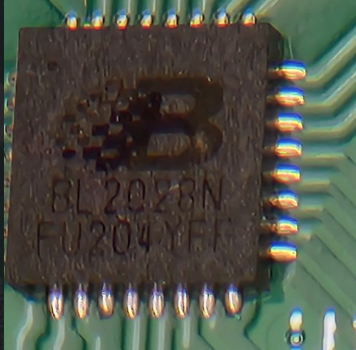
    Microchip labeled BL2028N on a circuit board.
  • #34 21108759
    p.kaczmarek2
    Moderator Smart Home
    Posts: 14451
    Help: 650
    Rate: 12433
    sure, fixed

    @terryb8s if you still have some time, can you restore 2MB factory dump and check this guide:
    https://www.elektroda.com/rtvforum/topic4058227.html
    this is supposed to download 00000 00000 keys build from web in flash it in BK7231M mode (not N, M), does it work for you?
    Helpful post? Buy me a coffee.
  • #35 21108974
    divadiow
    Level 38  
    Posts: 4882
    Help: 427
    Rate: 869
    p.kaczmarek2 wrote:
    sure, fixed

    Header about flashing OpenBeken on Dogness D07 with Belon BL8082N.

    🤔
  • ADVERTISEMENT
  • #36 21109066
    terryb8s
    Level 4  
    Posts: 41
    Help: 1
    Rate: 8

    Sorry you are correct @divadiow not sure how I didn't notice the topic being incorrect previously.

    Tried changing it but it doesn't take for me.

    I imagine this is better given other posts syntax @p.kaczmarek2 (currently its still wrong as divadiow mentioned)
    [BL2028NBK7231M] Flashing Dogness D07 (Belon Chip) - Boot Issues

    I'm at work at the moment, will try the new Easy BK7231 Flash tool when I'm home, maybe the tool needs renamed too, to just Beken Easy UART Flasher
    Helpful post? Buy me a coffee.
  • #37 21109139
    p.kaczmarek2
    Moderator Smart Home
    Posts: 14451
    Help: 650
    Rate: 12433
    It is important to note that in the past this flasher was overwriting bootloader for BK7231N and now I changed behaviour so it always skips bootloader portion, even when flashing QIO. You can change this behaviour via a checkbox.

    It seems that overwriting a bootloader is a mistake, I guess the one we have is also encrypted, that's why it's better leave a factory one.
    Helpful post? Buy me a coffee.
  • #38 21109194
    terryb8s
    Level 4  
    Posts: 41
    Help: 1
    Rate: 8

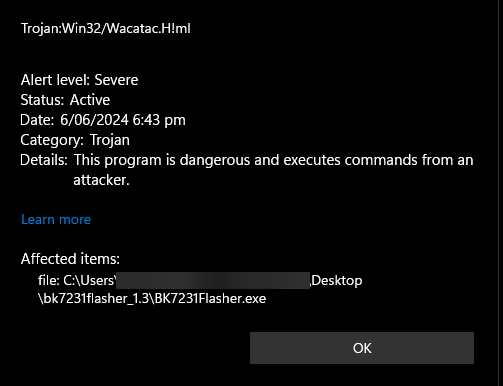
    Seems to have worked, this was without the check box ticked, boot log attached, I was about to copy the flasher log but Defender closed it with the following message.

    Screenshot of a Windows Defender alert about the detection of Trojan Win32/Wacatac.H!ml. Screenshot of a system log excerpt.
    I assume it's a false positive but the loss of the log reveals a feature that would be helpful, which is a log file.
    Attachments:
    • Boot-Flash1.3.txt (7.8 KB) You must be logged in to download this attachment.
    Helpful post? Buy me a coffee.
  • #39 21109212
    terryb8s
    Level 4  
    Posts: 41
    Help: 1
    Rate: 8

    Wireless issues still persist after flash, UAP not working, unable to connect or connect with no access to web app, flashed obk config for SSID connected and working.
    Helpful post? Buy me a coffee.
  • #40 21109280
    p.kaczmarek2
    Moderator Smart Home
    Posts: 14451
    Help: 650
    Rate: 12433
    I had only BK7231M to test (which seems to use the same encryption keys) and AP worked for me. I don't know how to solve AP problem at the moment.

    Can you confirm, that AP does not work even after doing restore RF? So you can only configure SSID/PASS through flasher itself and then it connects to your WiFi correctly in STA mode?

    Does log say anything interesting? On my device, I am getting "mutex" messages as well, but AP works for me.

    Regarding antivirus warning - of course you should not trust me, it's the basic rule on the web. You can check out the source code at Github. Still, I think I know what causes this warning. This flasher also has "scan network for Tasmota/OBK devices and backup" feature. So it sends commands over HTTP. I guess it tips the antivirus.
    Helpful post? Buy me a coffee.
  • #41 21109319
    terryb8s
    Level 4  
    Posts: 41
    Help: 1
    Rate: 8

    >>21109280

    Agreed about not trusting the web much 😛 but then again I have about 14 OBK devices and counting on my network so I must have a little trust for your code 😛

    I did actually look into it a little and I believe it's been flagged because there are several items that stack to make it look like a Trojan or malware of some description but all make sense given what the software does, communication to several unknown IPs, hints of reverse engineering, DLL side loading but all legit reasons for this. The only reason I mentioned it was because Imagine other people may ask about it.

    Yes flashed in this way and also after performing the restore RF UAP still doesn't work.
    Flashing was
    1. Factory clean dogness fw
    2. Flash latest QIO using BK7231M chip selection
    3. UAP not working on 2 android phones.
    4. RF Restore
    5. UAP still not working
    6. Write SSID via Write OBK Config
    7. Connected in STA mode yay!

    I will take another look at the wireless issue soon and report back in regards to the UAP side, currently trying to investigate what each of the GPIOs do as I haven't really done any of that yet bar finding one PWM LED.

    I did also see it reboot a while after flashing, was talking with my wife and it logs said something about a low heap warning just before rebooting, it's been about an hour and not seen it since, not sure what that's about, haven't looked into it yet forum wise, but will so I wouldn't worry about this too much.

    Still can't change the topic not sure if you can was going to change it to [BL2028N/BK7231M] Flashing Dogness D07 (Belon Chip) - Boot Issues
    Helpful post? Buy me a coffee.
  • #42 21111254
    terryb8s
    Level 4  
    Posts: 41
    Help: 1
    Rate: 8
    have been testing the UAP, have trouble connecting with anything but my computer and my computer connects and I can eventually get to the device but it's very slow to load, the latency for it is 900ms+, Wireshark shows a considerable amount of retransmits as well.

    Going to try some other things but thought I would report back.


    Added after 3 [hours] 14 [minutes]:

    Maybe its just me but I tried to restore the obk config for my device and I think it wrote it to 0x0, is this possible with the new version of easy flasher?
    Helpful post? Buy me a coffee.
  • #43 21111462
    divadiow
    Level 38  
    Posts: 4882
    Help: 427
    Rate: 869
    I don't know what RF calibration entails when they make these things but I was under the assumption that the content of the RF partition might be tailored to the device it was intended.

    I'd be curious to know how a generic RF partition (from the restore function in Easy Flasher) compares to your factory original.

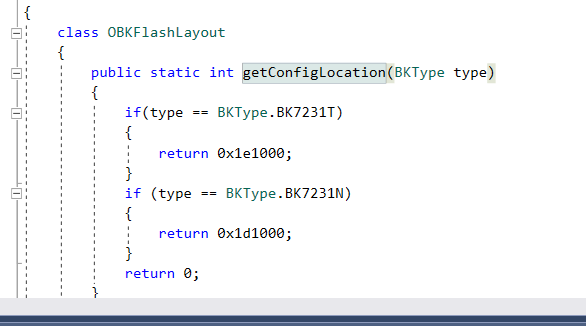
    Actually, I have a question. Where is the data the restore function in Easy Flasher uses from? @p.kaczmarek2
  • ADVERTISEMENT
  • #44 21111468
    p.kaczmarek2
    Moderator Smart Home
    Posts: 14451
    Help: 650
    Rate: 12433
    Nice spotting, thank you!
    C# code with a class definition and getConfigLocation method.
    Helpful post? Buy me a coffee.
  • #45 21112188
    terryb8s
    Level 4  
    Posts: 41
    Help: 1
    Rate: 8

    Question for someone, what's the best option for a PWM controlled water pump, it seems to use P8 and P9 for control, both seem to attach to a PWM controller Marked 3403D (Seems to be https://fordevices.com/UploadFiles/2022-07/16570260675800306.pdf)

    I obviously don't want it to get mixed in with LED control and would prefer slider for the pump but also still be able to use LED control for LEDs as there is a set of them that appear to be PWM controller on the edge of the PCB, I was able to use them In LibreTiny but haven't got them going again since flashing everything over and over (they do work with factory fw on though)

    I'm using Flag 3 for now but I'd prefer not to, I tried using the Dimmer option in Channel Types but then the Toggle LEDs button changes the relay on P28 which turns the pump off for some reason... little confused about that one.

    Starting to feel like I need an oscilloscope as it's hard to figure out what's going on with just tracing and using my multi-meter, was looking at the Rigol DHO804 but it's a pipe dream at the moment as I don't have that kind of money.
    Helpful post? Buy me a coffee.
  • ADVERTISEMENT
  • #46 21112193
    p.kaczmarek2
    Moderator Smart Home
    Posts: 14451
    Help: 650
    Rate: 12433
    What is your full config? Is P28 on the same channel?

    Maybe custom driver can help? See tutorial: https://www.elektroda.com/rtvforum/topic4056286.html
    Helpful post? Buy me a coffee.
  • #47 21112205
    terryb8s
    Level 4  
    Posts: 41
    Help: 1
    Rate: 8

    Both the P8 and P9 are Channel 4 and P28 is set to Channel 5, there is still a lot I haven't figured out yet so most of the rest are set to either LED or Relay and their own separate channels or not configured.

    Code: Text
    Log in, to see the code

    My understanding is that P7 is the LED Ring on the PCB but haven't got it working, I'm assuming 6 is likely the brightness but unsure as yet.

    I will look at the driver route but unsure I have the skill for that as yet.
    Helpful post? Buy me a coffee.
  • #48 21112216
    divadiow
    Level 38  
    Posts: 4882
    Help: 427
    Rate: 869
    terryb8s wrote:
    Tried changing it but it doesn't take for me.


    Even if you edit your whole first post from the edit link at the bottom rather than using the pencil next to the title?
  • #49 21112217
    p.kaczmarek2
    Moderator Smart Home
    Posts: 14451
    Help: 650
    Rate: 12433
    @terryb8s ok then maybe we can try to write your autoexec.bat together, step by step? You just need to be able to separate issues, because with so many pins I feel confused.

    So the first step is to get LED controller working along with extra, custom slider?
    I can look into that for you.

    So you need 3 PWMs for RGB + 1 independent slider?
    Helpful post? Buy me a coffee.
  • #50 21112233
    terryb8s
    Level 4  
    Posts: 41
    Help: 1
    Rate: 8

    >>21112216 >>21112217
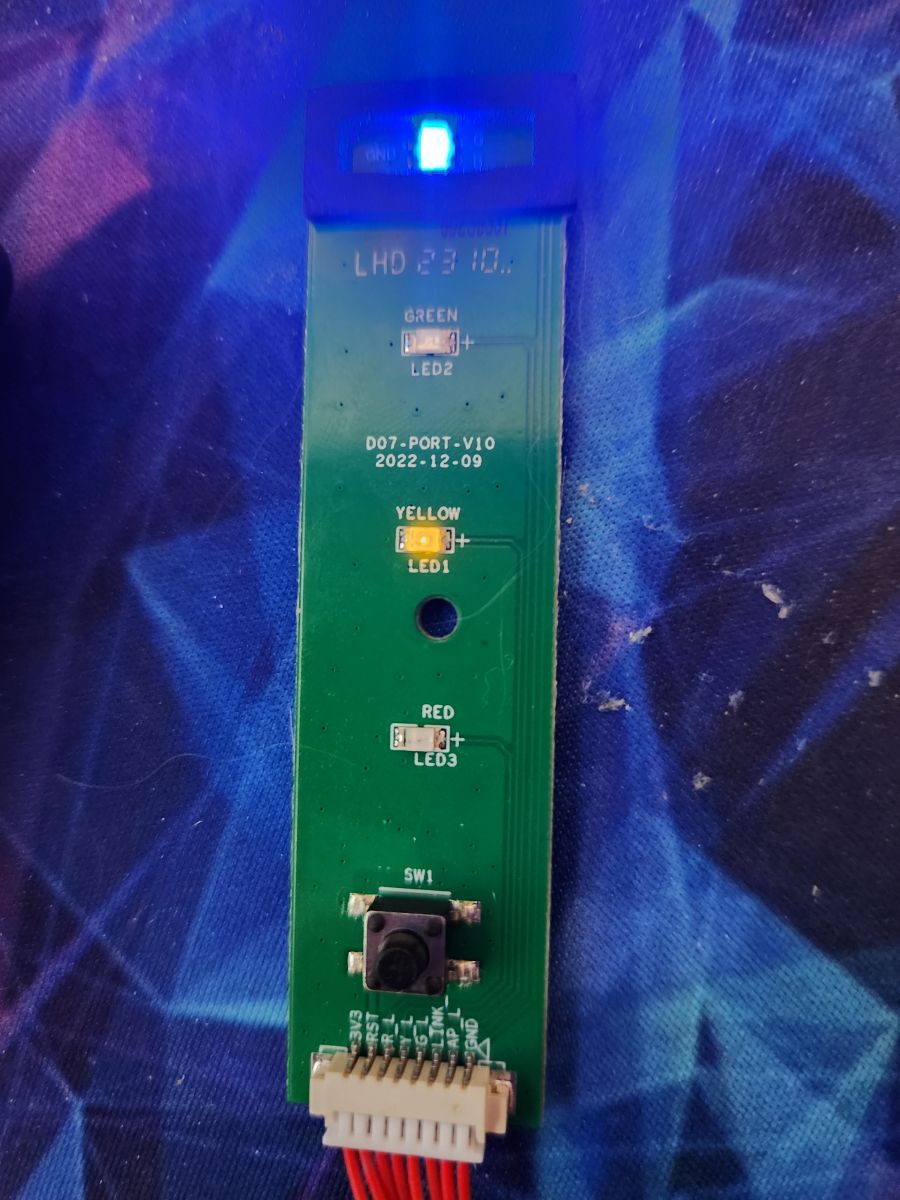
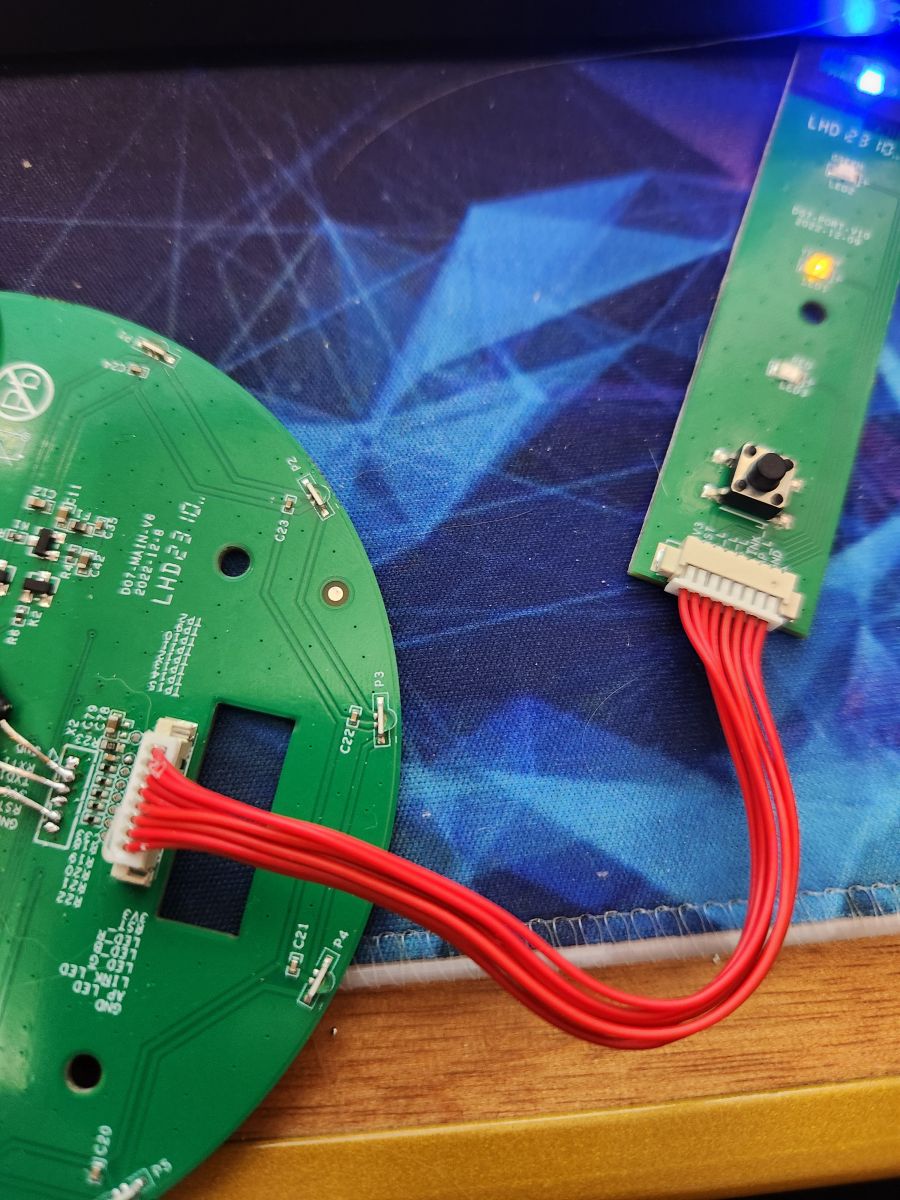
    I would say so, that would be handy if you could, the I have just found P6 is the button on the small control board, again weird as pushing it seems to control Channel 5 even though the channel for the button is 2 at the moment. Give me a sec will post some photos of that.

    Added after 2 [minutes]:

    >>21112216 Thank you divadiow, I didn't realize the title would be available in the first post but that makes sense now that you say it... fixed the title now.
    Helpful post? Buy me a coffee.
  • #51 21112253
    divadiow
    Level 38  
    Posts: 4882
    Help: 427
    Rate: 869
    terryb8s wrote:
    >>21112216 Thank you divadiow, I didn't realize the title would be available in the first post but that makes sense now that you say it... fixed the title now.

    yay thanks. sorry to be a pain. it kept niggling me :)
  • #52 21112254
    terryb8s
    Level 4  
    Posts: 41
    Help: 1
    Rate: 8

    Calmed down the config, the button still triggers channel 5

    Code: Text
    Log in, to see the code

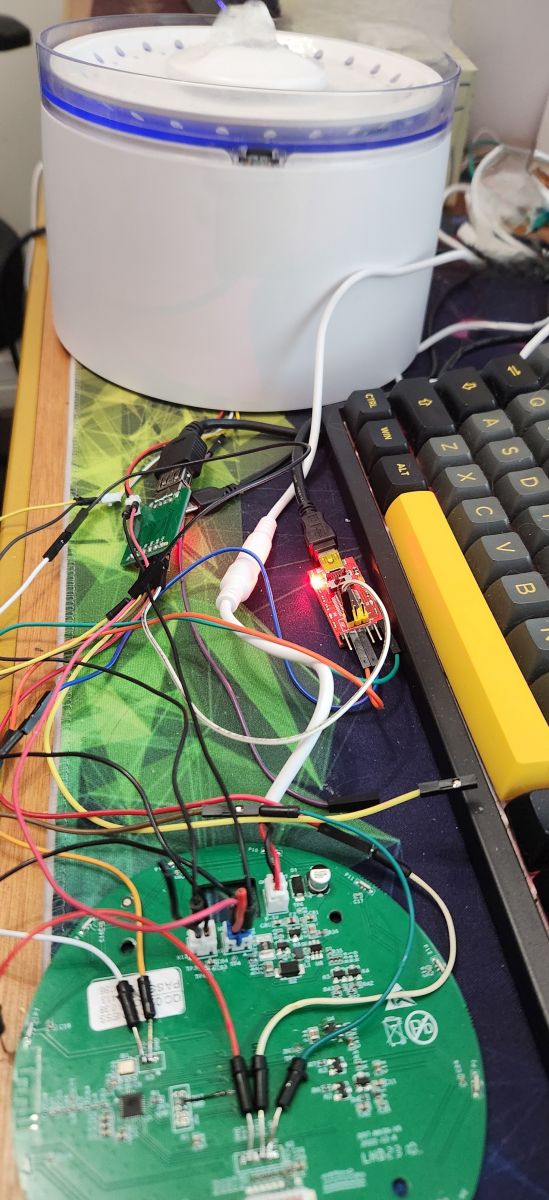
    You will have to excuse my setup, can only wish I had some sort of electronics workshop hahaha
    Electronic setup with visible circuit board on a desk.Close-up of an electronic module with three LEDs and a button.Close-up of two green printed circuit boards connected by red wires.

    Added after 1 [minutes]:

    >>21112253 All good divadiow, once you pointed out the title I was the same, I have tried to change it 4-5 times now.
    Helpful post? Buy me a coffee.
  • #53 21112302
    p.kaczmarek2
    Moderator Smart Home
    Posts: 14451
    Help: 650
    Rate: 12433
    When you strip down to:
    
      "pins": {
        "6": "Btn;2",
        "28": "Rel;5"
      },..
    

    does button also trigger channel 5? I don't think so.

    So most likely LED driver is guilty.


    Still, the obvious workaround is to use Btn_ScriptOnly. and manually script the button interaction
    Helpful post? Buy me a coffee.
  • #54 21112364
    terryb8s
    Level 4  
    Posts: 41
    Help: 1
    Rate: 8
    OK sounds good I will look at using that then haven't used Btn_ScriptOnly but have used autoexec on other devices so should be able to sort something out.


    Added after 12 [minutes]:

    p.kaczmarek2 wrote:
    does button also trigger channel 5? I don't think so.

    You are correct about this, damn looks like I need to do some reading on channels is there a place in the docs that tells me about why this might happen so I can have a read through it?
    Helpful post? Buy me a coffee.
  • #55 21316817
    terryb8s
    Level 4  
    Posts: 41
    Help: 1
    Rate: 8
    Found some additional time to look into this device again this weekend, I was able to get it hooked up to my new oscilloscope and check out some of the PWM signals being sent with stock firmware loaded.

    It looks like there are two waveforms one triangle and an overlapping sawtooth waveform, is there a way to reproduce this sort of waveform with OBK and a BK7231N? I see there is PWM groups but not sure how the waveform would be changed?

    The reason I ask is that using PWM within OBK results in a louder pump noise so I'm wondering if one of the stock waveforms are mitigating this, P8 and P9 are possibly creating one each.
    Helpful post? Buy me a coffee.
  • #56 21316886
    p.kaczmarek2
    Moderator Smart Home
    Posts: 14451
    Help: 650
    Rate: 12433
    I've never seen such waveforms generated by BK7231, are you sure that you've disconnected the GPIO from the trace before measuring? Maybe there are some extra parts like capacitors that affect the measurement?
    Helpful post? Buy me a coffee.
  • #57 21453281
    divadiow
    Level 38  
    Posts: 4882
    Help: 427
    Rate: 869
    boot log from original firmware
    Code: Text
    Log in, to see the code

Topic summary

✨ The discussion addresses boot issues encountered when flashing the Dogness D07 device, which uses a Belon BK7231N chip, with custom firmware such as OpenBeken and LibreTiny. The device is not a standard Tuya device, leading to challenges due to different partition layouts and an RT-Thread-based bootloader. Flashing attempts with various OpenBeken versions and Tuya backups resulted in non-booting devices showing only garbled serial output. Key findings include the necessity to preserve the original encrypted bootloader (occupying 0x0 to 0x11000) and flash the application firmware starting at offset 0x11000 or 0x10000. Full flash erases require manual RF partition restoration to recover WiFi functionality and unique MAC addresses, as the RF calibration data is device-specific and stored separately. The community developed a solution involving a combined binary with the original bootloader and OpenBeken application, enabling successful boot and WiFi connectivity, though some warnings like "TCPIP mutex is NOT locked" persist. The Easy BK7231 GUI Flash Tool was updated to support reading encryption keys and skipping bootloader overwrites. Additional challenges include unstable or slow WiFi Access Point (UAP) functionality, which improves after RF data restoration but is not fully resolved. The discussion also covers PWM control for the water pump and LEDs on the device, with attempts to configure PWM channels and button inputs, noting unexpected channel interactions and waveform characteristics observed via oscilloscope. The community continues to refine firmware builds and flashing tools to support this off-brand device, emphasizing the importance of preserving bootloader and RF partitions and adapting encryption keys for successful firmware deployment.
Generated by the language model.

FAQ

TL;DR: With a 2 MB flash dump and the factory bootloader preserved, the workable fix was: "leave the factory one" and flash OpenBeken as a QIO app instead of replacing boot code. This FAQ is for Dogness D07 and similar BL2028N/BK7231M-style devices that boot to garbage UART output or lose Wi‑Fi after flashing. [#21109139]

Why it matters: This thread shows how to recover and modernize an RT-Thread-based BK7231 device without destroying the original boot path.

Option Boot result Required special settings Reported issues
Standard BK7231N OpenBeken flash from 0x0 No boot None UART shows squares, no AP
LibreTiny/ESPHome UF2 with zeroed crypto settings Boots Custom key/IV and 0x132000+0xAE000 download map Initial Wi‑Fi issues
OpenBeken QIO while preserving factory bootloader Boots Keep factory bootloader, then flash app RF restore may still be needed

Key insight: The decisive fix was not a different UART adapter or more power. The device used a nonstandard RT-Thread bootloader and partitioning, so preserving the original bootloader and app layout mattered more than flashing another generic BK7231N image. [#21096057]

Quick Facts

  • The device flash identified as TH25Q_16HB reported szMem: 1000000, which corresponds to a 16 Mbit / 2 MB flash size used throughout the recovery attempts. [#21096016]
  • Stock firmware logs showed go os_addr(0x10000) and RT-Thread OTA init, indicating the original application booted from 0x10000, not a typical plain Tuya-style layout. [#21453281]
  • A working OpenBeken path used full erase, then factory bootloader region from 0x0 to 0x10000, then OpenBK7231N_App_QIO_1.0.0.bin; later confirmation said the build process used 0x10000. [#21108341]
  • The BK7231N partition map discussed in-thread listed bootloader 0x00000000–0x11000, application start 0x11000, OTA at 0x12A000, and RF firmware at 0x1D0000 with NET info at 0x1D1000. [#21105157]
  • When RF data was missing, one observed MAC ended with 00:00:00 and UAP became unreliable; after RF restore, a unique MAC returned and STA mode connected correctly. [#21108271]

How do I flash OpenBeken on a Dogness D07 with a BL2028N/BK7231M-style RT-Thread bootloader without bricking the original bootloader?

Preserve the factory bootloader and flash OpenBeken only as the application. Use this 3-step method: 1. Back up the full 2 MB flash. 2. Keep or restore the factory region from 0x0 to 0x10000. 3. Flash the OpenBeken QIO app without overwriting boot code. Later flasher changes explicitly skipped the bootloader by default because overwriting it was considered a mistake on these devices. That approach solved booting on the Dogness D07 while keeping the RT-Thread startup path intact. [#21109139]

Why does a Dogness D07 only show square characters on UART after flashing BK7231N OpenBeken builds, and what does that usually indicate?

It usually indicates the flashed image is not booting correctly, not just a wrong terminal setting. The thread tied the square characters to a mismatch between the Dogness RT-Thread bootloader and standard BK7231N OpenBeken images. Once the factory bootloader path was preserved, the device booted normally. One early expert summary said the device had “different bootloader” and uncertain firmware start offset, which matches the no-boot symptom seen after generic flashes. [#21096057]

What flashing layout finally worked for the Dogness D07 — full erase, factory bootloader region, QIO image, and RF restore?

The working layout was full erase, then factory boot region, then OpenBeken QIO, then RF restore if Wi‑Fi was broken. The confirmed sequence was: 1. Erase all. 2. Flash the factory dump from 0x0 to 0x10000. 3. Flash OpenBK7231N_App_QIO_1.0.0.bin, then restore RF/Net if needed. A later code note confirmed the combined image used 0x10000, not 0x11000, when overwriting the bootloader section in the build workflow. [#21108341]

Which UART pins should I use on BK7231-based devices for flashing versus boot logs, especially when stock firmware logs appear on TX2/RX2?

Use the normal flashing UART for programming, but expect stock firmware logs on UART2 on some Beken devices. In this thread, the stock Dogness firmware printed readable logs from the alternate TX2/RX2 pair, while flashing still used the regular UART. A moderator explicitly noted that Beken firmware logs on BK7231T come from TX2/RX2 and that this UART differs from the one used for flashing. The same distinction helped interpret the Dogness D07 serial behavior. [#21096055]

Why did restoring the RF partition fix Wi-Fi issues like a MAC address ending in 00:00:00 and a broken AP on this Dogness device?

Restoring RF data fixed missing radio identity and calibration data after a full erase. The clearest symptom was a MAC ending in 00:00:00, plus a UAP that either failed to load or connected with no usable web app. After RF restore, the device regained a unique MAC and connected correctly in STA mode. The thread also noted that full erase wipes the RF partition, while later OpenBeken flashing does not recreate its original contents automatically. [#21105171]

What is the RF partition on BK7231N/BK7231M devices, and what kinds of calibration or network data does it usually store?

“RF partition” is a flash storage area that keeps radio-related calibration and network identity data, including MAC-related values, RF firmware, and network parameters. In this thread, the posted BK7231N map placed RF firmware at 0x1D0000 with length 0x1000, and NET info at 0x1D1000 with length 0x1000. The original Dogness logs also showed missing or defaulted calibration items such as TX power tables, thermal values, and XTAL settings when reading flash. [#21453281]

What does UAP mean on BK7231/OpenBeken devices, and why would UAP connect slowly or fail to open the web app even when STA mode works?

UAP is the device’s own Wi‑Fi access point mode used for local setup. In this case, UAP was unstable even when STA mode worked after writing SSID and password through the flasher. One report measured more than 900 ms latency and many retransmits in Wireshark, while another noted Android phones could connect yet not reach the web app. That pattern suggests the OpenBeken AP path booted, but the radio or network stack remained degraded on this specific Dogness platform. [#21111254]

How can I read or verify the encryption keys and efuse data on a Belon or Dogness BK7231 device with BK7231GUIFlashTool or Easy UART Flasher?

Use the updated flasher and run a firmware backup read to display the key-related data. The thread states that encryption key reading was added to BK7231GUIFlashTool v1.2, and the requested method was “Do firmware backup (read) only.” A follow-up screenshot confirmed the feature worked on the Dogness device. This was presented as a useful way to inspect unusual non-Tuya devices and compare their efuse or key setup before flashing alternate firmware. [#21108341]

LibreTiny vs OpenBeken on a Dogness D07 — which is easier to get booting first when the device uses non-Tuya partitions and RT-Thread OTA?

LibreTiny with a custom ESPHome UF2 was the first working route reported in the thread. It booted after setting zeroed bkcrypt_coeffs, custom OTA key and IV, and a nonstandard 0x132000+0xAE000 download map. OpenBeken also worked later, but only after preserving the factory bootloader path or using adjusted builds. If your goal is first boot on this exact Dogness D07, LibreTiny reached a working state earlier in the troubleshooting timeline. [#21103253]

What does the 'TCPIP mutex is NOT locked' warning mean in OpenBeken boot logs, and how likely is it to be related to AP instability?

It is a network-stack warning seen during UAP setup, but the thread did not prove it was the root cause. The message appeared as WARN: TCPIP mutex is NOT locked (1) caller 53D07 while the AP initialized, yet another tester reported seeing similar “mutex” messages on a different device where AP still worked. That makes it a plausible clue, not a confirmed diagnosis. On the Dogness D07, AP instability persisted even after RF restore, so the warning alone does not explain everything. [#21109280]

How do I generate a LibreTiny or ESPHome UF2 for a BK7231N device that needs zeroed bkcrypt coefficients, custom OTA key/IV, and a nonstandard download offset?

Create an ESPHome config that explicitly sets zeroed crypto coefficients, a custom OTA key and IV, and the Dogness download map. The successful config used board_build.bkcrypt_coeffs: "000...000", board_build.bkota.key: "0123456789ABCDEF0123456789ABCDEF", board_build.bkota.iv: "0123456789ABCDEF", and board_flash.download: "0x132000+0xAE000". Then generate the UF2 and flash it with ltchiptool. That produced a bootable image on the Dogness D07 and enabled further LibreTiny or OpenBeken testing. [#21103253]

What is RT-Thread OTA on BK7231 devices, and how is it different from the usual Tuya/OpenBeken boot and partition scheme?

RT-Thread OTA is the stock update and boot framework used by this device instead of the usual Tuya-style scheme. The Dogness logs showed RT-Thread OTA package(V0.2.4) and booting with go os_addr(0x10000), which already differs from typical plain OpenBeken assumptions. “RT-Thread OTA is a firmware update framework that boots applications from a defined offset and manages packaged images, using its own partition expectations and metadata.” That difference explains why a generic BK7231N image failed until the factory boot path was respected. [#21453281]

Why is preserving the factory bootloader recommended on some BK7231N/BK7231M devices instead of overwriting it with a standard OpenBeken QIO image?

Preserving it is recommended because some devices use encrypted or vendor-specific boot code that generic OpenBeken images do not replace correctly. The maintainer later changed flasher behavior so it skips the bootloader portion by default, even for QIO images. He also stated that overwriting the bootloader seemed to be a mistake and suggested the vendor bootloader was encrypted. On the Dogness D07, keeping the original bootloader was the turning point between repeated no-boot failures and a working OpenBeken startup. [#21109139]

What is the best way to control a PWM-driven water pump separately from LEDs in OpenBeken, including using custom sliders, channel mapping, or Btn_ScriptOnly with autoexec.bat?

Use separate channels and, if button behavior gets mixed with LED logic, switch to Btn_ScriptOnly plus autoexec.bat. In the Dogness config, pump control used P8 and P9 on channel 4, while P28 was a relay on channel 5. The user found that a normal button mapping still triggered channel 5, but stripping the config showed the LED driver caused that interaction. The maintainer’s recommended workaround was Btn_ScriptOnly and manual scripting so the pump slider stays independent from LED toggles. [#21112302]

How can I reproduce the stock Dogness D07 pump drive waveforms — like overlapping triangle and sawtooth PWM seen on P8 and P9 — to reduce pump noise in OpenBeken?

You cannot reproduce that waveform from this thread alone, and OpenBeken did not offer a confirmed method here. The user measured two overlapping shapes on P8 and P9 with an oscilloscope in November 2024, hoping to reduce pump noise versus plain PWM. The maintainer replied that he had never seen BK7231 generate such waveforms and asked whether the GPIO had been isolated before measurement, suggesting passive components on the board may have altered the observed shape. That leaves the waveform unconfirmed and unreproduced. [#21316886]

Generated by the language model.
ADVERTISEMENT