logo elektroda
logo elektroda
X
logo elektroda
Dostępna jest polska wersja

Czy wolisz polską wersję strony elektroda?

Nie, dziękuję Przekieruj mnie tam

OpenBeken Compatibility with CKW04 Chip in Woolley Smart Touch Switch?

ferbulous 2163 25
Best answers

Can OpenBeken be made to work with the CKW04 chip in this Woolley smart touch switch, and how can I identify or access the chip properly?

There is no confirmed OpenBeken support for the CKW04 here yet, but the thread strongly suggests the chip is an ICOMM Semi SV6166F-class device rather than a known BK/Tuya target [#21303825][#21311332] The key breakthrough was that the pad marked LOG is actually a TX log output at 115200 baud, and the captured boot log shows a 2019 build, `start_sniffer_mode`, and other firmware strings that may help identify the SDK/platform [#21303798][#21303825] For logging, connect only LOG as TX plus ground and 3.3 V; do not wire it as a normal TX/RX pair or tie it into the main UART line [#21302089][#21312117] Later investigation suggested the chip may be related to an HF-LPD1x0/SV6166F family, with possible USB D+/D- pads (HSDP/HSDM) and a download mode that may require GPIO13/nReset low on reset, though this was not confirmed for the CKW04 board [#21478393][#21478503][#21520722] If you want to push further, the next useful step is to trace the pads, verify whether it really has a USB programming interface, and look for a firmware backup or bootloader entry method before attempting a port [#21479080][#21479961]
ADVERTISEMENT
  • #1 21300912
    ferbulous
    Level 18  
    Openbeken for CKW04 chip?

    I’ve recently replaced the pcb with esp for this switch

    https://www.reddit.com/r/esp8266/comments/gzh...ying_light_switches_from_aliexpress_ckw04_to/

    But I was wondering if there was any work done to add openbeken support if possible?

    Woolley Smart Touch Switch WiFi Push Button Light Switch No Neutral Wire Required RF Remote Control Smart Home Automation Module
    https://a.aliexpress.com/_mOjBhGi

    https://github.com/CoolKit-Technologies/DevDo...%BA%94%E7%94%A8%E6%8C%87%E5%AF%BC%E4%B9%A6.md
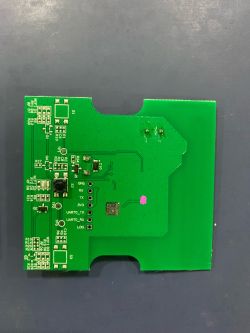
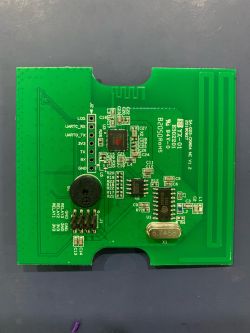
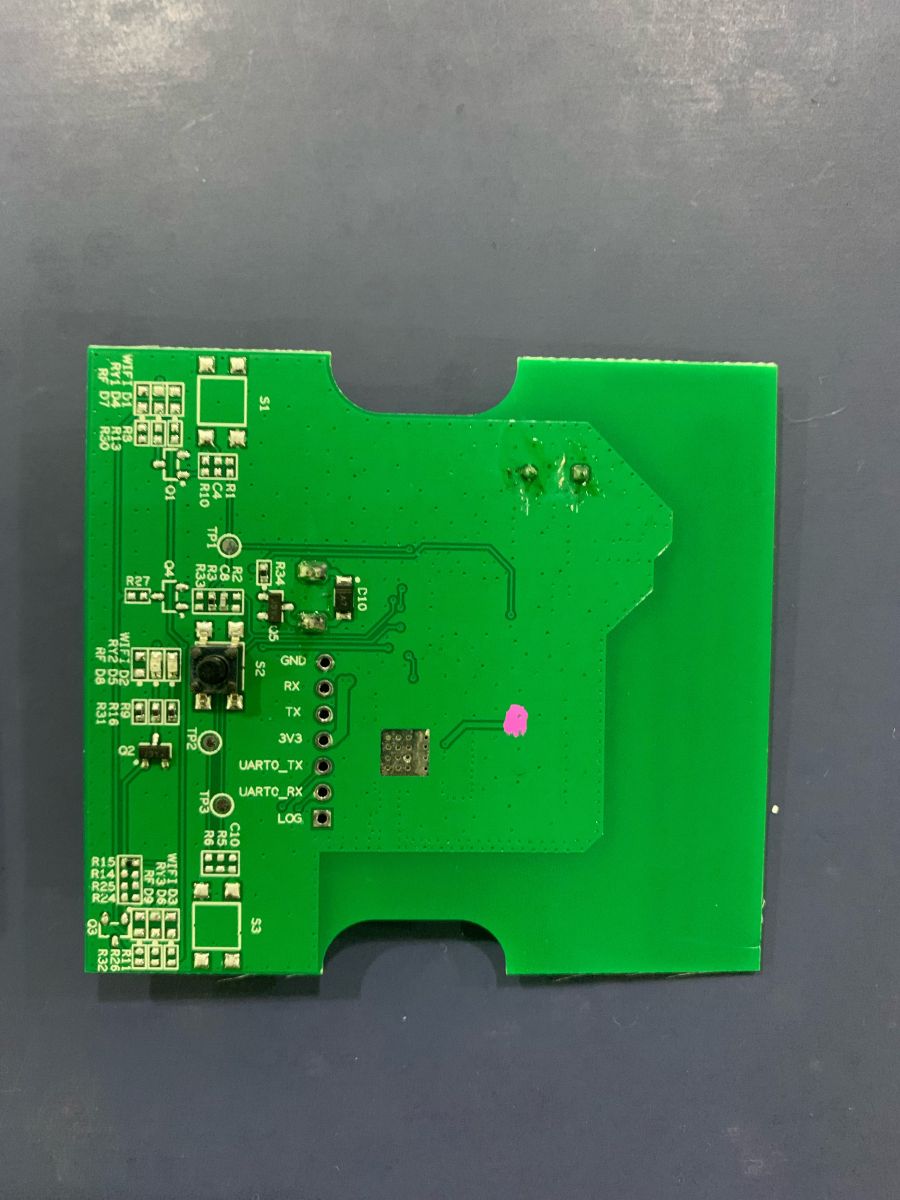
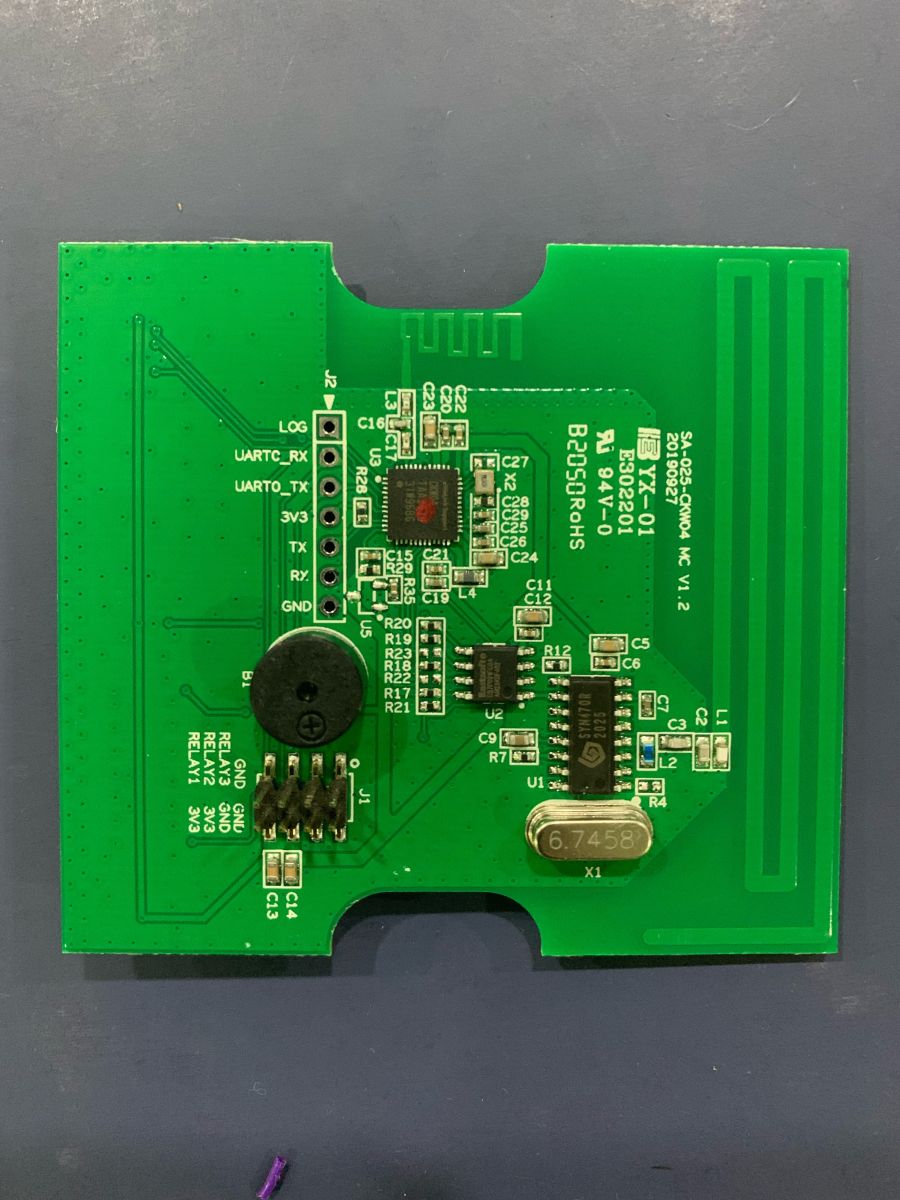
    PCB with ESP chipset and pin labels. CKW04 circuit board with electronic components.
  • ADVERTISEMENT
  • #2 21300967
    divadiow
    Level 38  
    I see a few mentions of this around the web, but at initial glance I don't see much mention of a full datasheet or SDK. Did you ever capture the UART boot log?
  • #3 21301167
    ferbulous
    Level 18  
    I tried getting the logs from rx/tx/uart0_tx/uart0_rx pins but nothing with 115200 baudrate.
    Maybe different baudrate?
    There's a LOG pad there but I'm not sure how to connect it to the uart
  • #4 21301206
    divadiow
    Level 38  
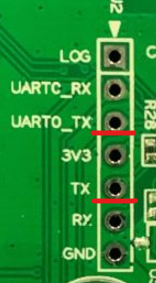
    I think I'd start by trying both of these to see which gives any output then try different bauds depending on how legible any of it is.

    Close-up of a circuit board with labeled UART pins and connectors.

    Added after 5 [minutes]:

    unless of course it's like some other devices where the RXs are to where they're to go TO not where they're FROM, in which case I'd try all 4 UARTs
  • ADVERTISEMENT
  • #5 21301606
    ferbulous
    Level 18  
    >>21301206

    What are the usual baudrates that i could try?
  • #6 21301615
    divadiow
    Level 38  
    115200 feels the most common. 921600 perhaps. 74880 on some ESPs. I had 120000 on the ELM327 device the other day.
  • #7 21301860
    p.kaczmarek2
    Moderator Smart Home
    Try to get boot log, maybe it will have some mentions of used SDK/toolset.
    Helpful post? Buy me a coffee.
  • #8 21302089
    divadiow
    Level 38  
    ferbulous wrote:
    There's a LOG pad there but I'm not sure how to connect it to the uart

    I didn't clock this whole post, or you added more info. anyway, I don't bother connecting the RX for log capture, only TX, so it doesn't need to be in pairs. Treat LOG as a TX and connect only that, common ground and 3V3 power as normal. Before that though, worth seeing if there's continuity from LOG to GND? Could LOG be some acronym for another ground? dunno
  • ADVERTISEMENT
  • #10 21302831
    p.kaczmarek2
    Moderator Smart Home
    That's not good news, but still, a bootlog could give us some more basic information. Maybe this chip is like T34 and is compatible with some "other" platform?
    Helpful post? Buy me a coffee.
  • #11 21303798
    ferbulous
    Level 18  
    Ok, i'm getting something from LOG pad (as TX) with 115200. No continuity with GND

    bootloader start
    
    can not find ota_info.bin
    can not find ota.bin, plz use xmodem
    press 'm' to enter boot menu , remain 1 second
    fs addr ='0xfe000'
    heap size 142096
    invalid psram heap base
    ===================
    RT Config:        5  5  5  5  5  5  5 130 130  7  9 10  7  7  7  7  7  1
    HT Config:        5  5  5  5  5  5  5 170 170  7  9 10  7  7  7  7  7  1
    LT Config:        5  5  5  5  5  5  5 125 125  7  9 10  7  7  7  7  7  1
    ===================
    RF Gain:         4
    B Rate Gain:      7
    G Rate Gain:     13, 11,  9,  7
    20N Rate Gain:   13, 11,  9,  7
    40N Rate Gain:   13, 11,  9,  7
    Temperature Boundary:    35, 80
    ===================
    5G RT Config:    13 13 10  8 0x9264924a 0x96dbb6cc
    5G HT Config:    13 13 10  8 0x9264924a 0x96dbb6cc
    5G LT Config:    13 13 10  8 0x9264924a 0x96dbb6cc
    5G Band Threshold:       5150 5500 5700
    ===================
    rf config ch = -1, current ch = 7
    rf config tempe state = -1, current tempe state = 2
    page index byte len:         256
    object lookup pages:         1
    page pages per block:        16
    page header length:          5
    object header index entries: 105
    object index entries:        124
    available file descriptors:  4
    free blocks:                 257
    remove ota.bin rlt = -10002
    remove ota_info.bin rlt = -10002
    task Radio_Receive_T created
    radio init s
    radio init e
    if0 44:5D:5E:42:9B:82
    if1  44:5D:5E:42:9B:83
    MAC[44:5d:5e:42:9b:82]
    MAC[44:5d:5e:42:9b:83]
    task tcpip_task created
    task mode_task created
    [BUILD TIME]: Sep  6 2019 17:22:21
    task IDLE created
    task Tmr Svc created
    [fileInit] <2.dat> open failed, fd: -10002
    [fileInit] file not found
    task event_handle_ta created
    task pair_task created
    sniffer_mac:6
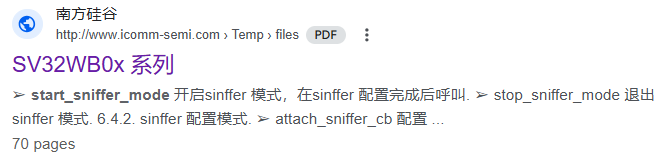
    start_sniffer_mode
    reset key tbl
    tx flow: 735
    rx flow: 4
  • #13 21311332
    divadiow
    Level 38  
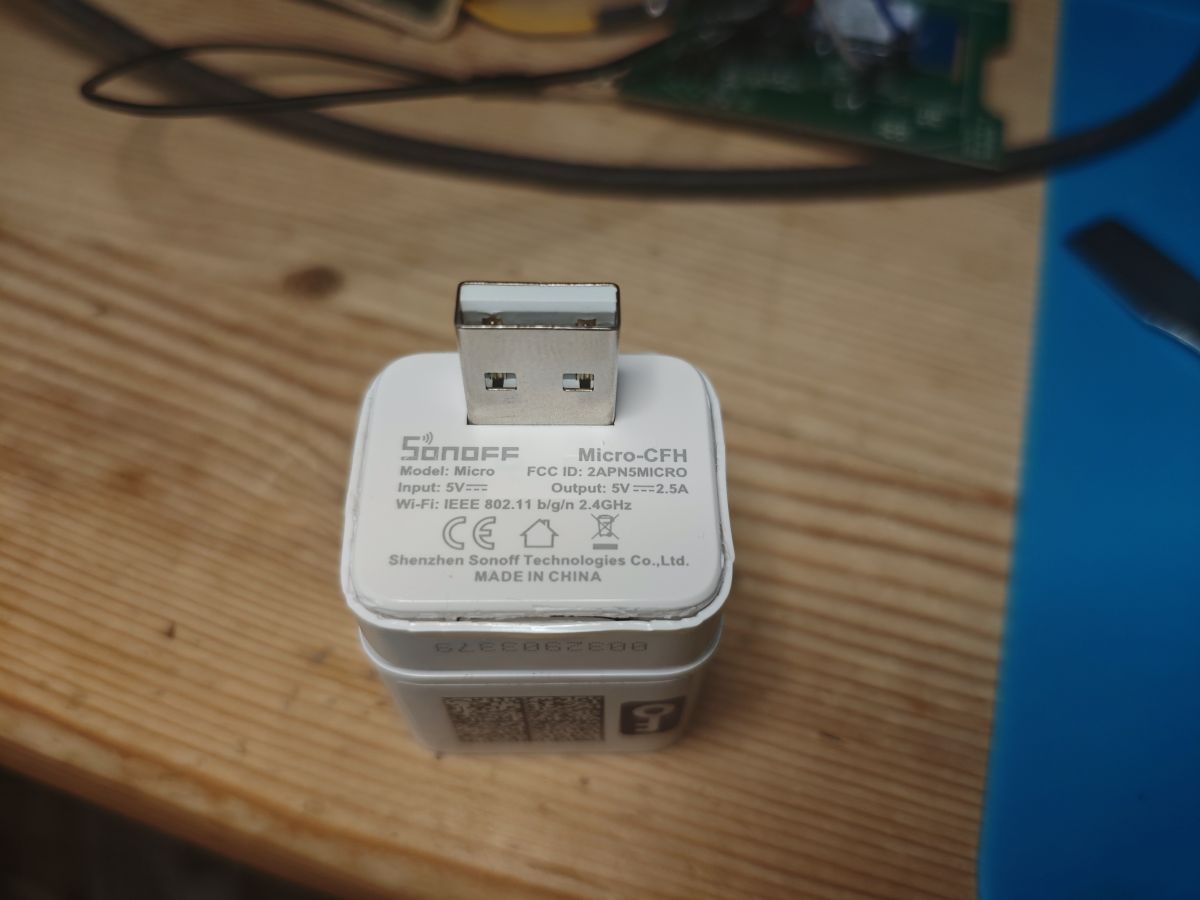
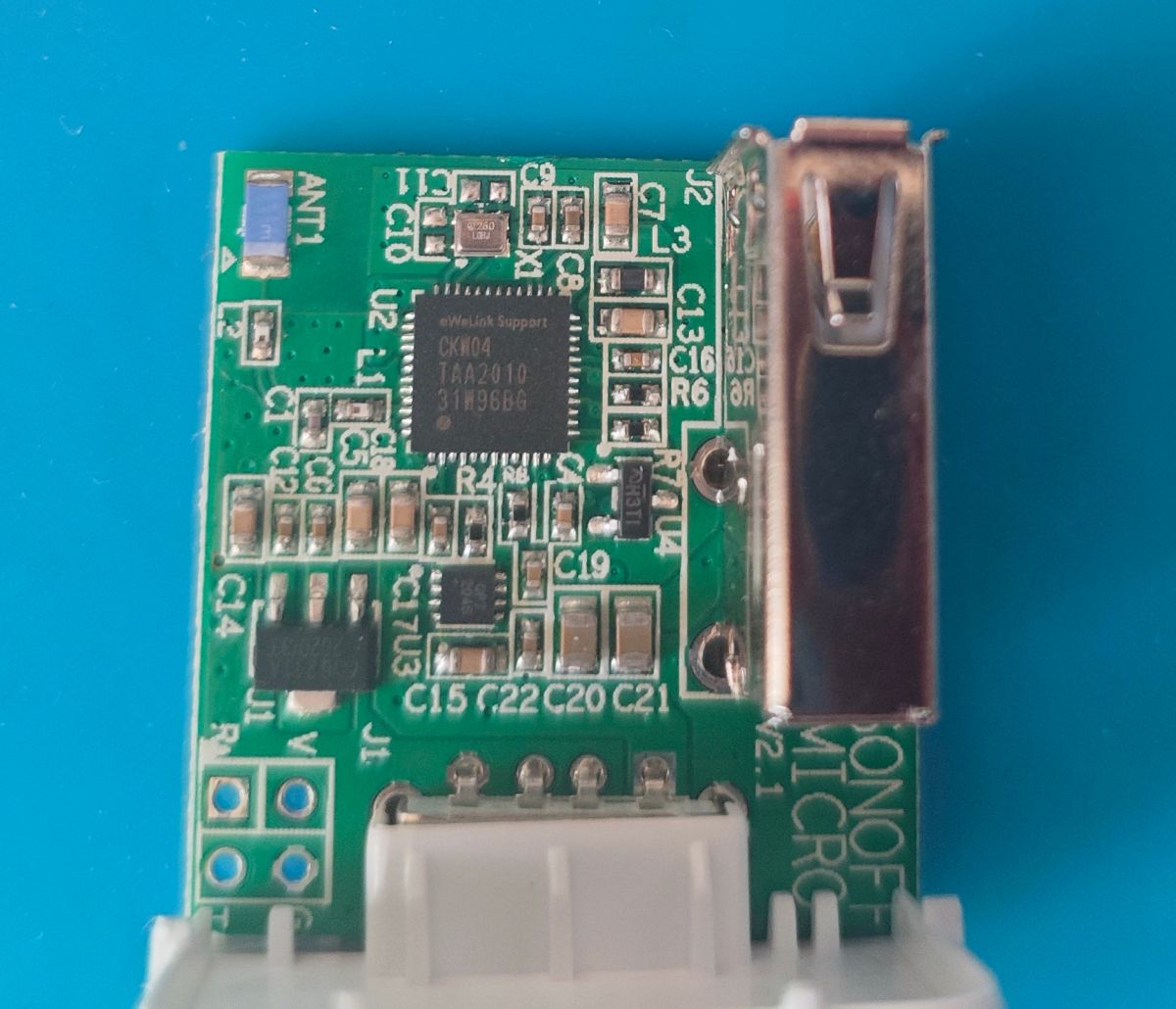
    I've found nothing else, but for the hell of it I ordered a Sonoff Micro-CFH and they do still come with a CKW04 chip

    Sonoff Micro-CFH USB adapter Close-up of a circuit board featuring a chip labeled CKW04.

    LOG:
    Code: Text
    Log in, to see the code


    Added after 16 [minutes]:

    quite a few of those "ffs..." strings get results in Github. eg:

    https://github.com/search?q=ffsInitializeConfigurationMapEntryStream&type=code
    https://github.com/search?q=ffsInitializeUserContext&type=code

    Maybe it's a MicrochipTech chip at heart.

    Added after 31 [minutes]:

    divadiow wrote:
    Icomm-Semi use start_sniffer_mode

    oh maybe it is Icomm Semi - https://www.cnx-software.com/2019/12/12/icomm...-andes-risc-soc-for-iot-and-embedded-systems/

    Added after 1 [hours] 45 [minutes]:

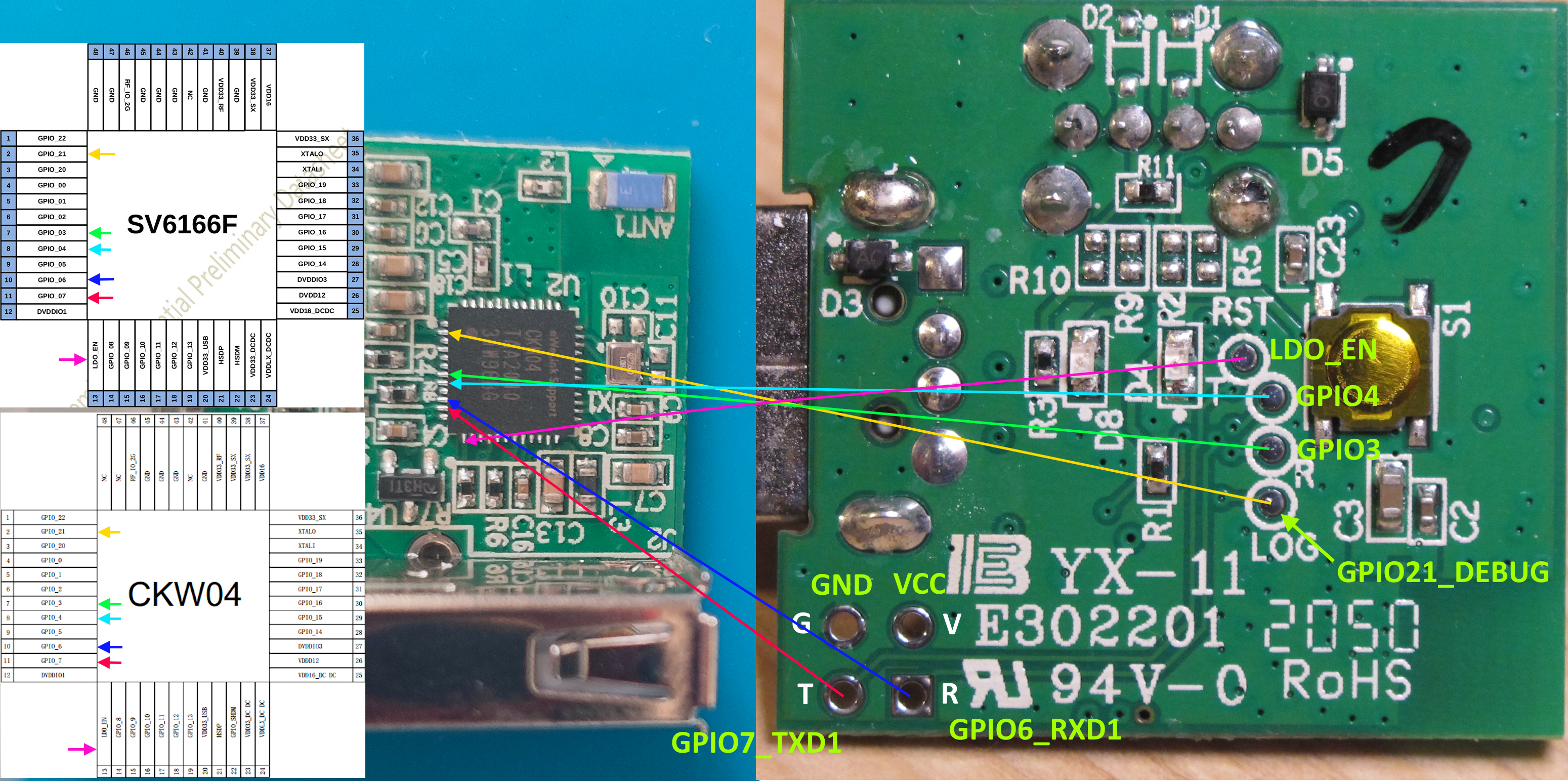
    Assuming it's an Icomm Semi SV6166F, here's where the pads on the Sonoff trace to. CKW04 and SV6166F and the function of pads appear to line up.

    Diagram of SV6166F chip and comparison with Sonoff board.

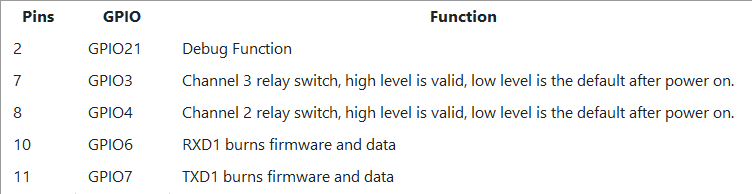
    and from the CKW info pages for those traced:
    Table showing GPIO pins and their functions.

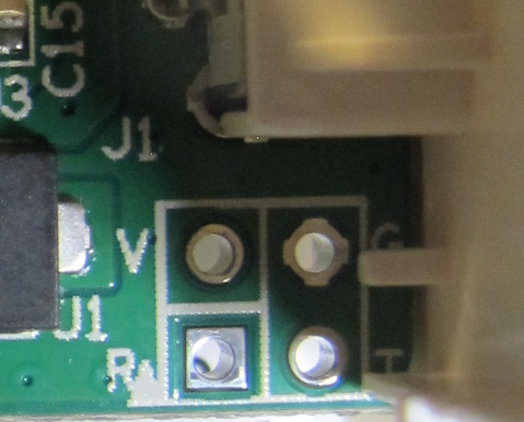
    These 4 test holes are clearly for programming

    Close-up of a circuit board with four test holes labeled as V, R, C, and T.

    The only thing I'm not sure about is why GPIOs 3 and 4 need test pads.
  • ADVERTISEMENT
  • #14 21312063
    ferbulous
    Level 18  
    Thanks @divadiow for your extra work on this
    How were you able to get more log output? Mine just stops after tx/rx line and I’m not too sure about wiring to the main line with the uart tx/rx/gnd still connected to it
  • #15 21312117
    divadiow
    Level 38  
    ferbulous wrote:
    How were you able to get more log output?

    I assume it's because I have a different device and it was coded to output more.

    ferbulous wrote:
    I’m not too sure about wiring to the main line with the uart tx/rx/gnd

    definitely don't do this. I guess there's a possibility yours is dying from lack of power around the time wifi initialises, but I would think it would boot loop and you'd see the same output repeated. Does the log repeat over and over or does it show once and the device remains steady in pairing mode?
  • #16 21312199
    p.kaczmarek2
    Moderator Smart Home
    If GPIO roles match up with existing known chip, then it may be it.

    The UART log output can say more when it's being paired to the cloud or when you control it via Tuya app.
    Helpful post? Buy me a coffee.
  • #18 21478212
    insmod
    Level 31  
    >>21312234 A partial sdk can be found for ssv6006 target on hi-flying ftp you posted earlier.
    Download LPD100 and look inside, perhaps it contains something for 6166.
    target_def.mk mentions ANDES_N10 arch, same as in 6166.
  • #19 21478292
    divadiow
    Level 38  
    plenty of 6006, like you say
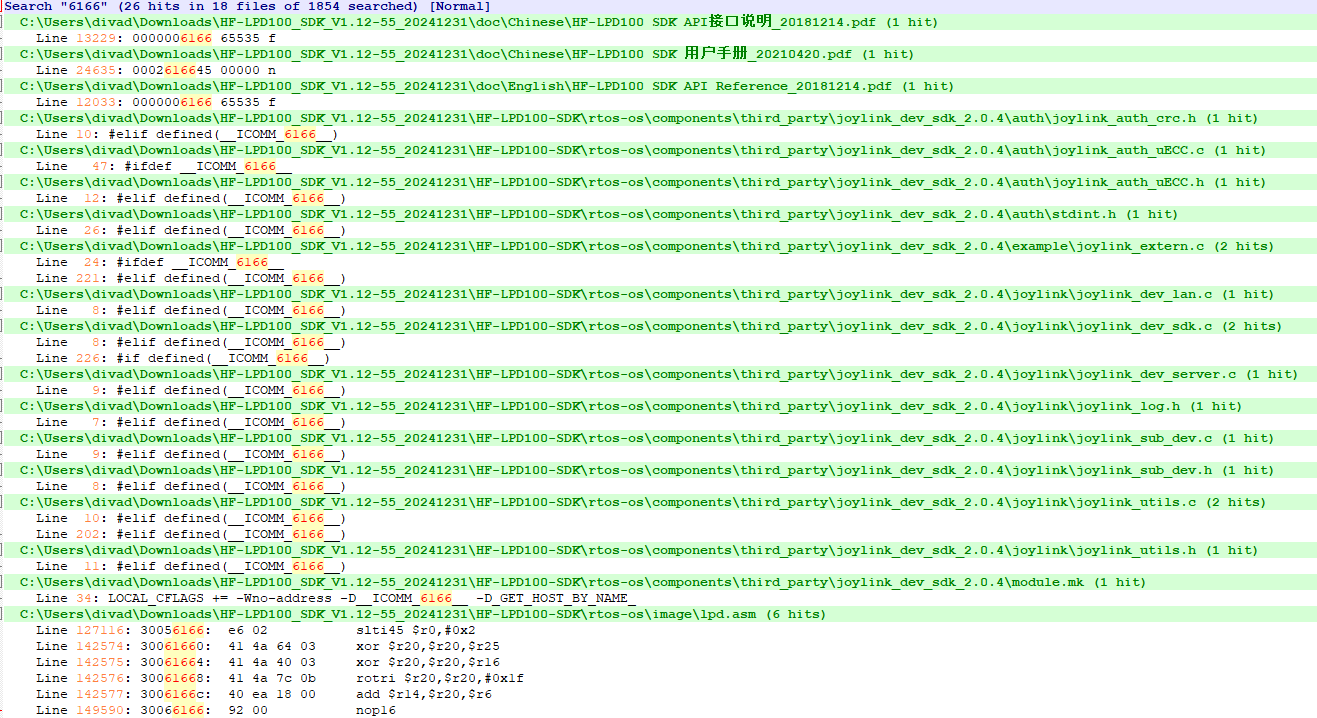
    Screenshot showing search results of text in files with highlighted found fragments.

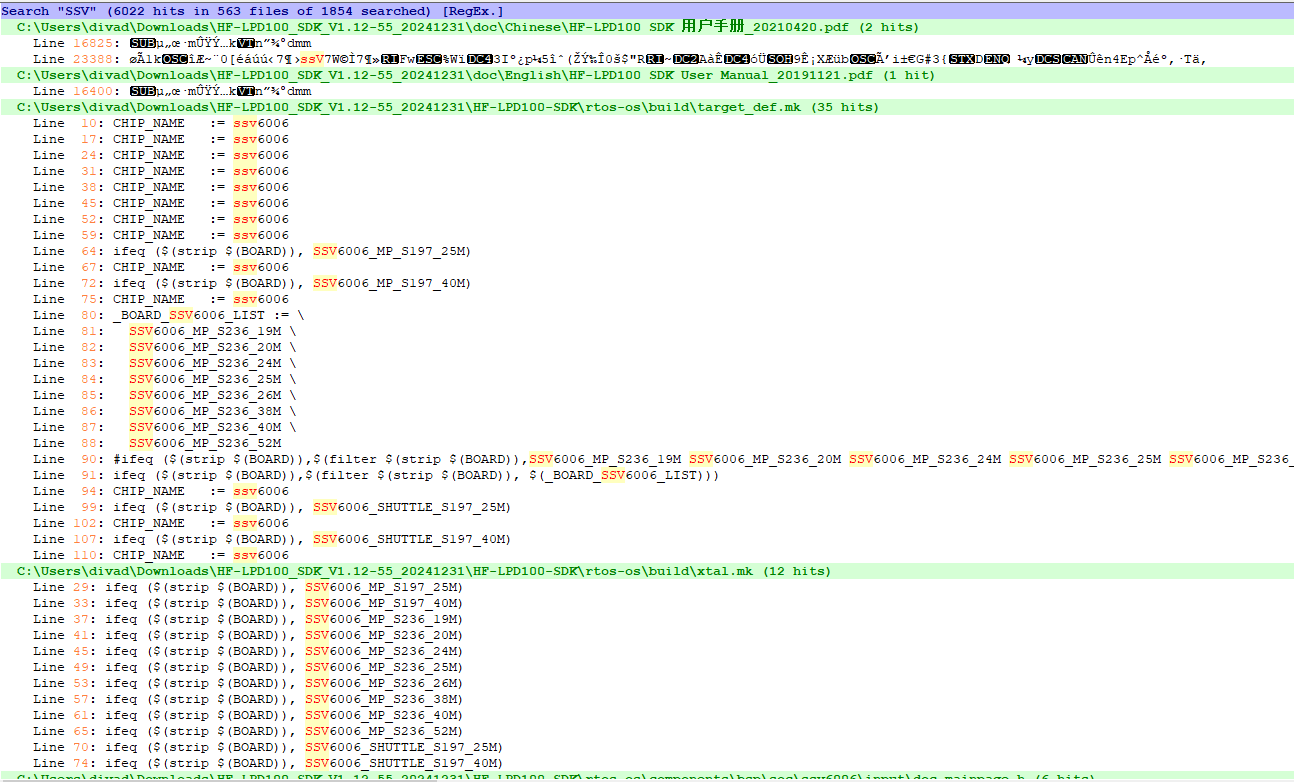
    and actually some 6166 and ICOMM, presumably the ICOMM Semi mentioned months ago
    Screenshot of code search results in SDK files.

    Added after 2 [minutes]:

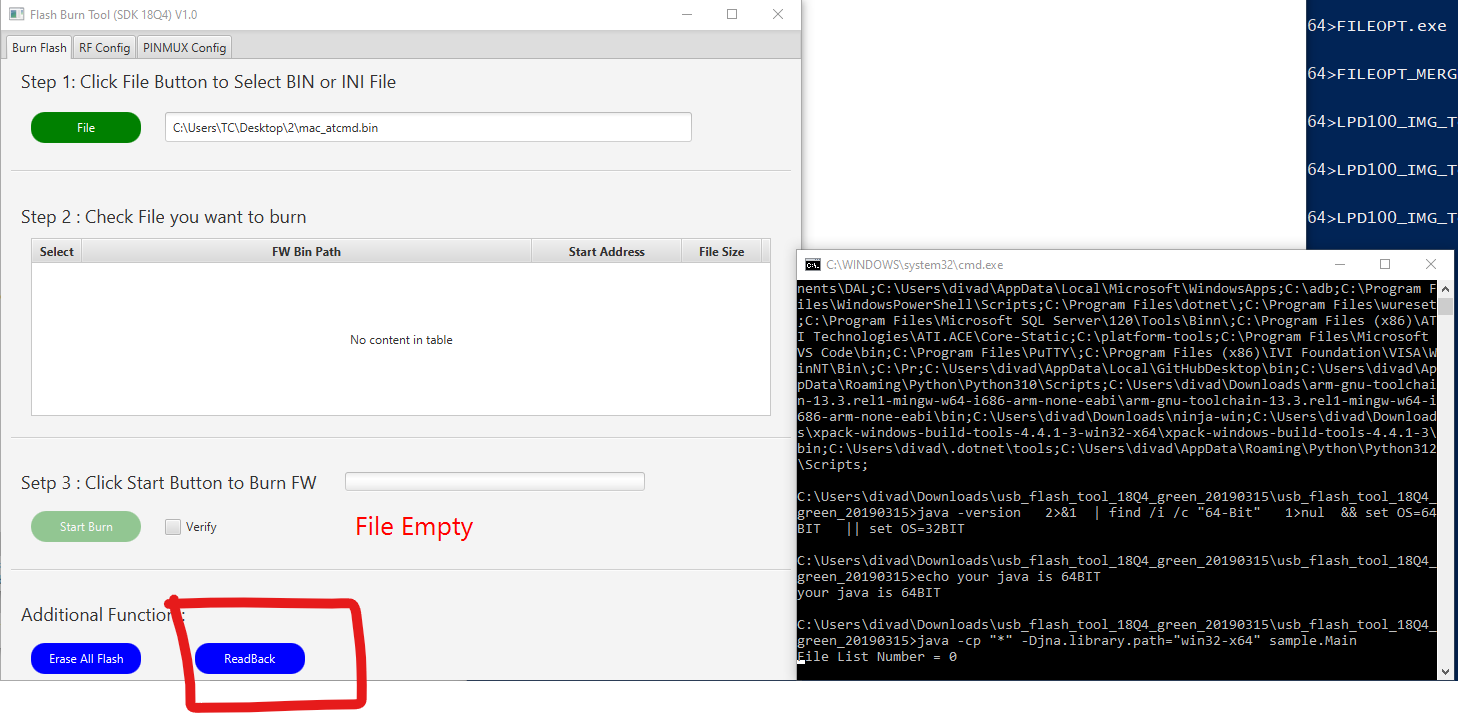
    interesting
    Screenshot showing the Flash Burn Tool with a BIN file open.

    Added after 21 [minutes]:

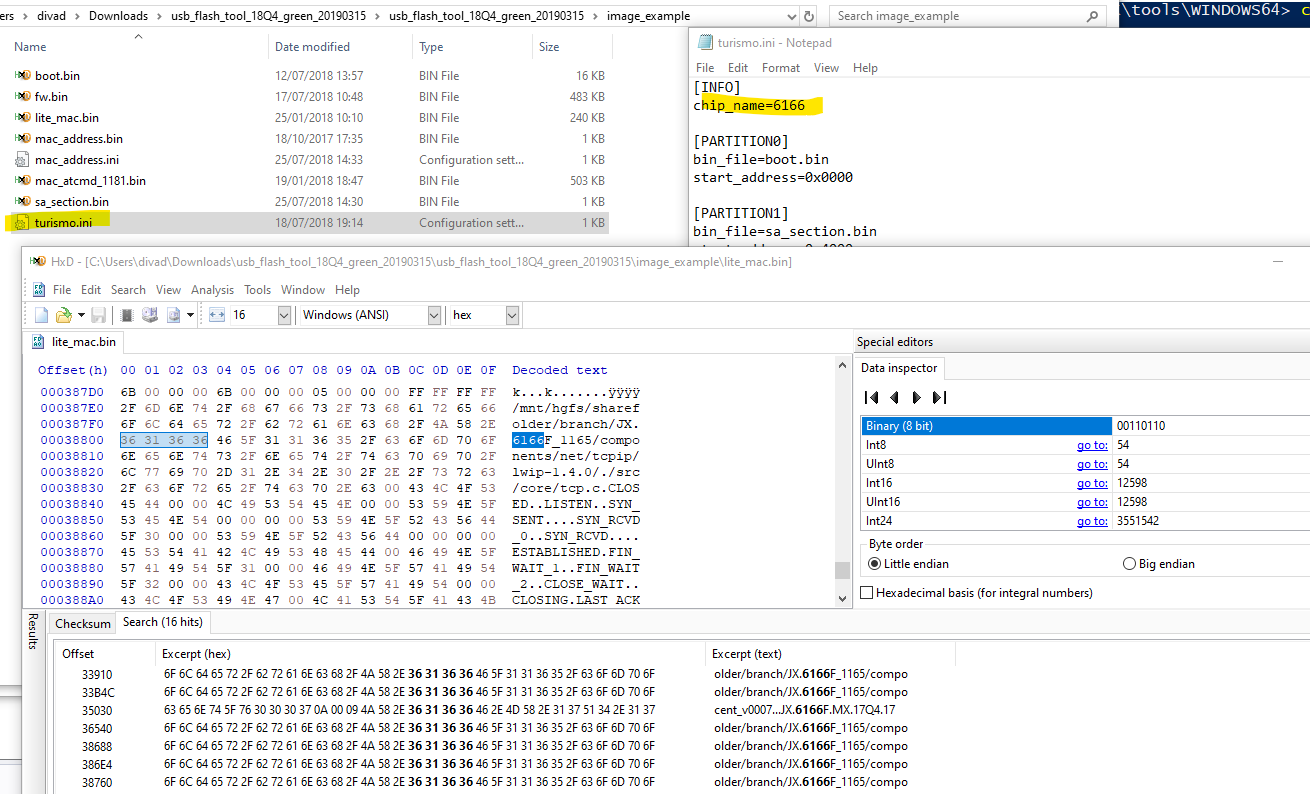
    Screenshot showing the contents of a hex editor and an open configuration file.

    Added after 24 [minutes]:

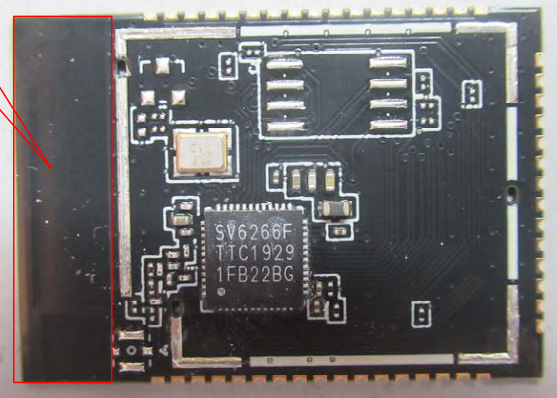
    HF-LPD100 = SV6266F
    Electronic module with visible SV6266F chip
  • #20 21478385
    insmod
    Level 31  
    >>21478292 From what i understood the only difference between them is that 6266 supports 5ghz wifi.
    Did you try to take a backup yet?
  • Helpful post
    #21 21478393
    divadiow
    Level 38  
    not yet. will try shortly.

    Added after 52 [minutes]:

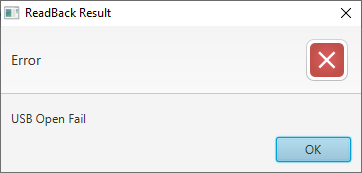
    hmm. I think this tool might be actual USB programming? there's no mention of UART and:
    Dialog window with error message USB Open Fail.

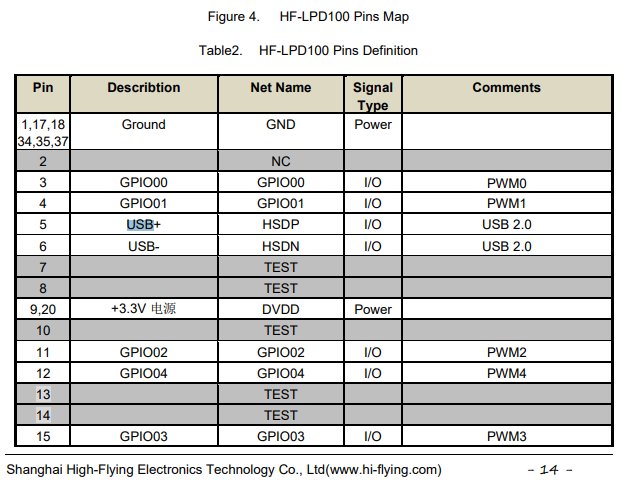
    and there is USB interface
    Table showing HF-LPD100 pin definition with various signals and comments.

    Added after 5 [minutes]:

    relevant docs
    Attachments:
    • RF_HF-LPD100-0_0001.pdf (2.34 MB) You must be logged in to download this attachment.
    • HF-LPD100_Module_Upgrade and Debug_V1.0.pdf (644.92 KB) You must be logged in to download this attachment.
    • HFUpdate Tool User Manual_V2.4(20151221).pdf (519.23 KB) You must be logged in to download this attachment.
    • HFProduct Tools.pdf (145.43 KB) You must be logged in to download this attachment.
    • HF-A11 Mass Production Upgrade Guide(20140219).pdf (1020.65 KB) You must be logged in to download this attachment.
  • Helpful post
    #22 21478503
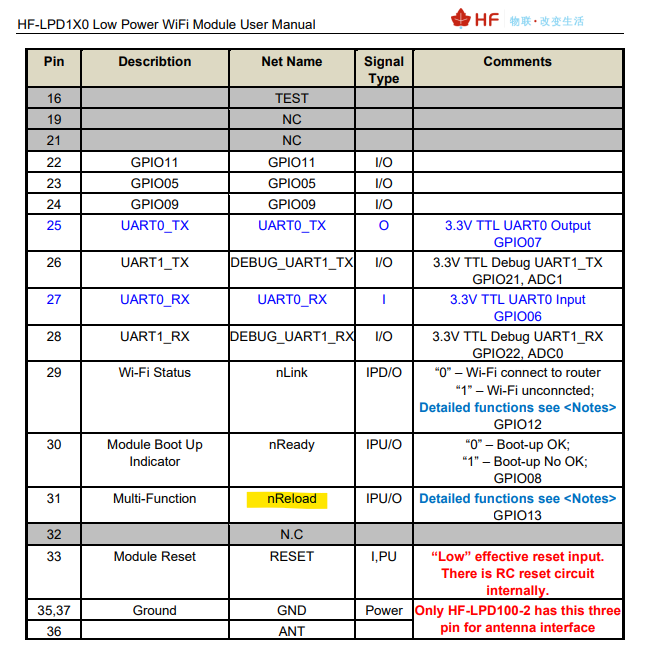
    divadiow
    Level 38  
    seems GPIO13 - nReset - needs to be low on reset for download mode
    Pin table of HF-LPD1X0 WiFi module with signal descriptions.

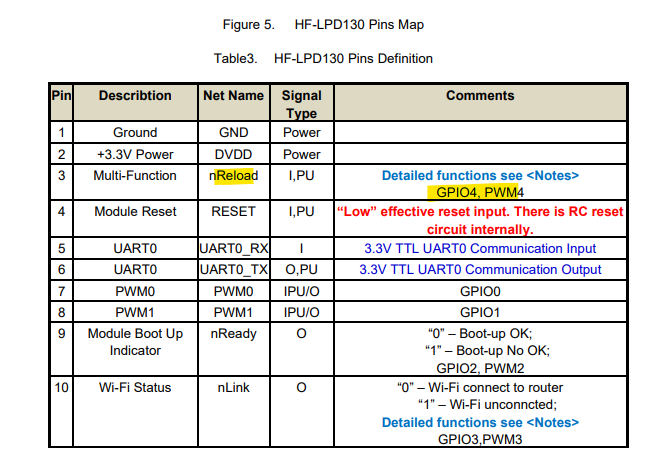
    or maybe GPIO4?
    Table of HF-LPD130 pin definitions with descriptions and comments.

    3 and 4 seems exposed on Sonoff, not 13. pulling 3 and 4 low doesn't seem to do anything but boot device normally
  • Helpful post
    #23 21479080
    divadiow
    Level 38  
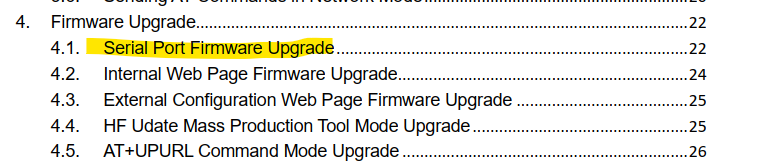
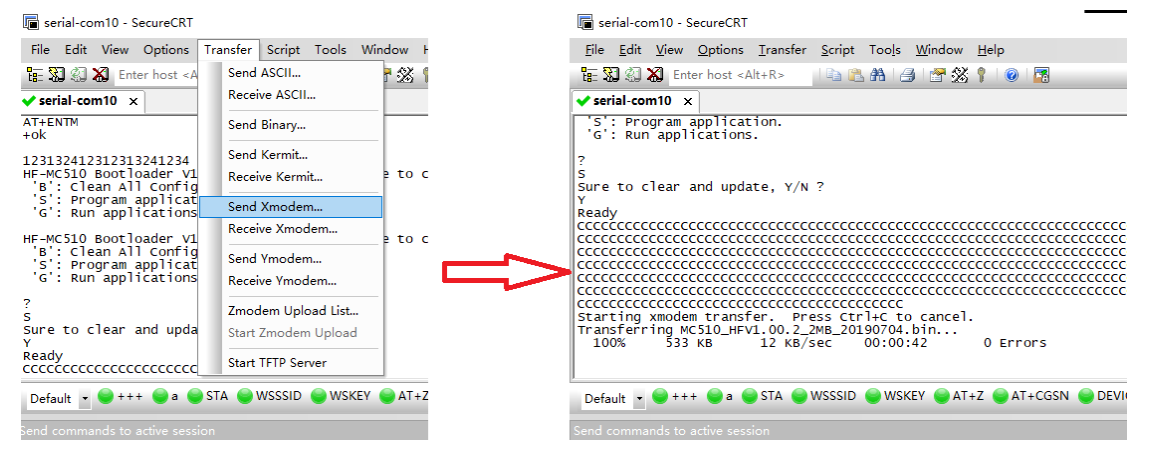
    this is the serial port method for HF-LPD1x0
    Fragment of a document's table of contents related to firmware upgrades, with the serial port upgrade option highlighted. Screenshots of SecureCRT showing file transfer using the Xmodem protocol.

    requiring the use of SecureCRT to do xmodem stuff. Don't know if the method to achieve this relies on HF-specific bootloader abilities, in which case it'd be no good for the CKW04 I guess.
    Attachments:
    • High Flying Wi-Fi Module Operation Guide_20200814.zip (8.43 MB) You must be logged in to download this attachment.
  • #24 21479961
    divadiow
    Level 38  
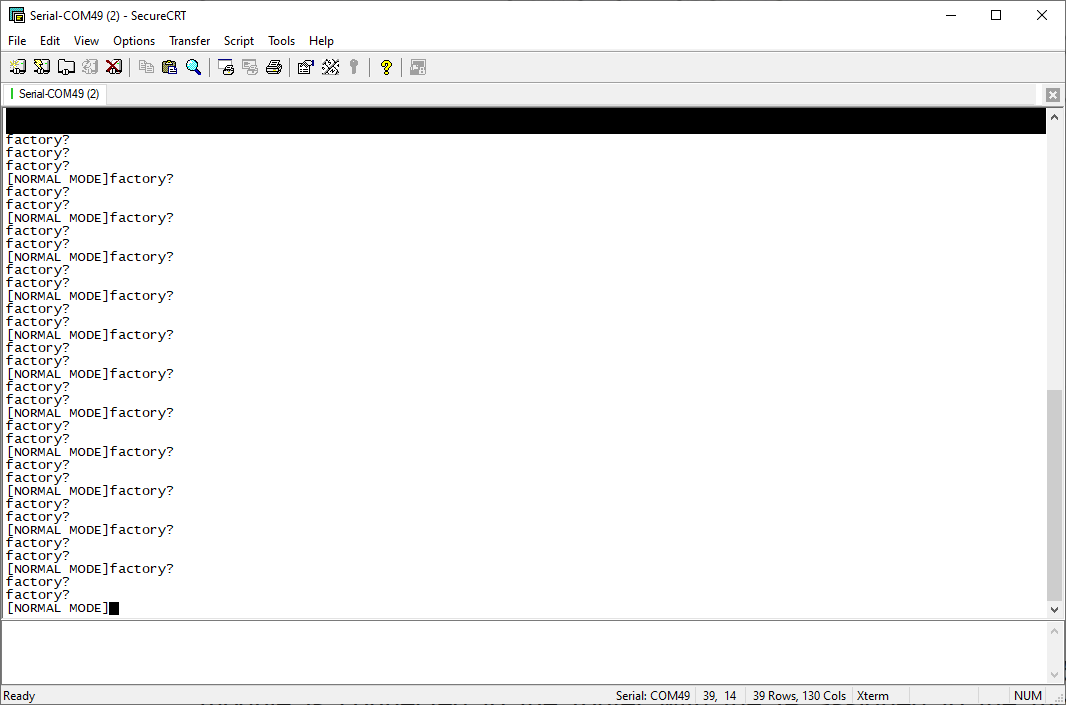
    Screenshot of SecureCRT program showing serial console output.

    Code: Text
    Log in, to see the code


    on every boot from TXD1/GPIO7 @9600 baud
  • #25 21520722
    p.kaczmarek2
    Moderator Smart Home
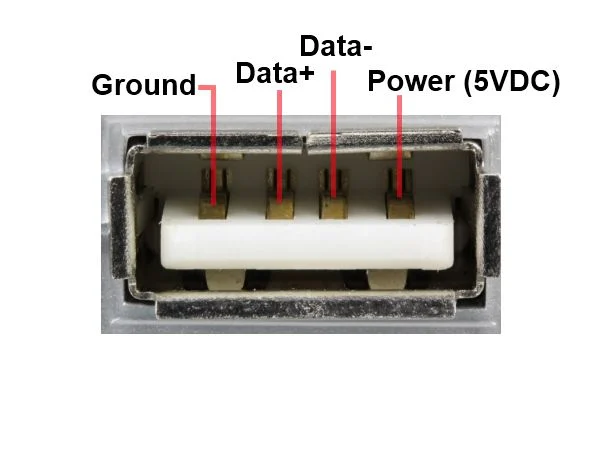
    I've actually seen HSDP and HSDM, which suggests D+ and D- in a related topic:
    https://www.elektroda.com/rtvforum/topic4117636.html#21520720
    So it's an USB, after all?
    divadiow wrote:

    hmm. I think this tool might be actual USB programming? there's no mention of UART and:
    Dialog window with error message USB Open Fail.

    and there is USB interface
    Table showing HF-LPD100 pin definition with various signals and comments.


    USB Type A connector with labeled pins: Ground, Data+, Data-, Power (5VDC).
    Helpful post? Buy me a coffee.

Topic summary

✨ The discussion centers on the compatibility of the OpenBeken firmware with the CKW04 WiFi chip found in the Woolley Smart Touch Switch and similar devices. Attempts to capture UART boot logs from the CKW04 chip using various baud rates (115200, 921600, 74880) and UART pins initially yielded limited output. Eventually, connecting to a LOG pad as a TX line at 115200 baud provided bootloader logs indicating missing OTA binaries and configuration parameters, suggesting a proprietary or undocumented SDK. The chip shows similarities to SSV6006/SSV6166F series from ICOMM Semiconductor, with references to ANDES_N10 architecture and partial SDKs found in Hi-Flying FTP repositories (e.g., HF-LPD100). The CKW04 chip appears to have USB interfaces (D+ and D-) alongside UART, complicating flashing and backup procedures. Discussions include attempts to enter download mode via GPIO pins (GPIO13, GPIO4) and use of xmodem protocol for firmware upload, though success remains uncertain. The Sonoff Micro-CFH device also uses the CKW04 chip, providing additional log data. Overall, no confirmed OpenBeken support exists yet for CKW04, but ongoing reverse engineering efforts focus on UART log analysis, SDK exploration, and hardware interface identification to enable custom firmware development.

FAQ

TL;DR: 142 kB of free heap are shown at boot [Elektroda, ferbulous, post #21303798]; “LOG really is just the log output” [Elektroda, divadiow, post #21303825] CKW04/SV6166F shares Andes-N10 core and can be flashed through UART or USB once GPIO 13 (nRESET) is held low. Why it matters: knowing pins and tools lets you swap Tuya firmware for OpenBeken in under 10 minutes.

Quick Facts

• MCU core: Andes-N10 RISC, 160–240 MHz (typical) [ICOMM datasheet]. • Default boot baud: 115 200 bps; alternative 9 600 & 921 600 bps supported [Elektroda, divadiow, post #21301615] • On-chip RAM: 256 kB; free heap at boot ≈ 142 kB [Elektroda, ferbulous, post #21303798] • Flash pads: GPIO3, GPIO4 = TX/RX; GPIO13 = nRESET; HSDP/HSDM = USB D+/D– [Elektroda, divadiow, post #21478503] • Partial SDK (SV6166/6006) in Hi-Flying LPD100 package, 280 MB download [Elektroda, insmod, post #21478212]

Is the CKW04 really the same as the ICOMM SV6166F?

Pad layout, boot strings ("start_sniffer_mode") and SDK files labelled SV6166F match the CKW04 board, so the chips are pin-compatible [Elektroda, divadiow, post #21311332]

What UART pins give boot logs?

Connect only LOG pad (TX) to your USB-TTL RX plus common ground. 115 200 bps shows the full bootloader; 9 600 bps reveals “factory?” strings on TXD1/GPIO7 [Elektroda, ferbulous, #21303798; #21479961].

Which baud rates should I try if 115 200 is silent?

Test 115 200 first, then 9 600, 74 880, and 921 600 bps—these covered every report in the thread [Elektroda, divadiow, post #21301615]

How do I enter download (flash) mode?

  1. Hold GPIO13 (nRESET) low.
  2. Keep GPIO0 high (normal boot).
  3. Power-cycle; the bootloader prints “press 'm' to enter boot menu” and waits 1 s for XMODEM upload [Elektroda, divadiow, #21478503; #21303798].

Can I flash via USB instead of UART?

Yes. The CKW04 exposes HSDP/HSDM pads; the Hi-Flying HF-LPD1x0 manual shows the same SoC using USB DFU with SecureCRT/XMODEM [Elektroda, p.kaczmarek2, post #21520722]

Is there an open SDK?

A partial 280 MB SDK for the SSV6006/SV6166 target ships with Hi-Flying LPD100 tools; it contains GCC toolchain, headers and sample drivers [Elektroda, insmod, post #21478212]

What’s the risk of bricking during flashing?

Edge case: pulling wrong GPIOs low makes the CPU boot normally, so firmware upload never starts—device continues pairing loop but remains recoverable [Elektroda, divadiow, post #21478503]

Which tools can send the XMODEM image?

SecureCRT, Tera Term, or the vendor’s HF Programmer all support 128-byte XMODEM blocks required by the boot ROM [HF-LPD100 Manual].

Can I capture more verbose logs during pairing?

Yes. Initiate Tuya-app pairing; additional Wi-Fi scan, FFS cloud, and key-exchange messages appear, roughly doubling log length [Elektroda, divadiow, post #21311332]

What file names does the bootloader expect?

ota.bin and ota_info.bin are searched first; if absent it waits for XMODEM upload and prints “can not find ota.bin, plz use xmodem” [Elektroda, ferbulous, post #21303798]

Why does my log stop after Wi-Fi init?

Low 3.3 V rail in the live mains board can reset UART; power the module from a bench supply when logging [Expert field note, divadiow, #21312117].

Any cost advantage over ESP8266?

Modules appear in Sonoff Micro-CFH retailing €6; a comparable ESP8285 board is ~€8, so 25 % cheaper [AliExpress listing, 2024].
ADVERTISEMENT