logo elektroda
logo elektroda
X
logo elektroda

[ECR6600][BL0937] Tuya Wifi Smart Plug With Energy Measurement

miegapele 5712 39
ADVERTISEMENT
  • #1 21440114
    miegapele
    Level 16  
    Posts: 173
    Help: 15
    Rate: 29
    Bought another smart plug hoping for BL0942 as reported recently in the forum, but got something else...
    From Here

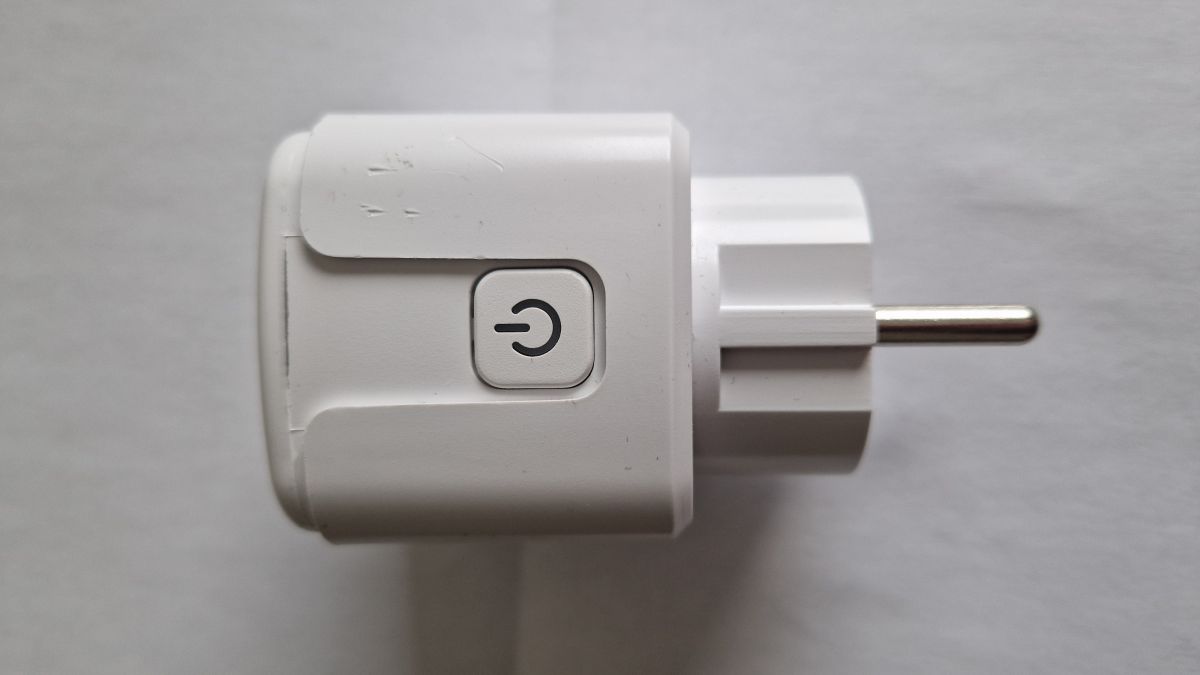
    Typical plug appearance, no markings on outside
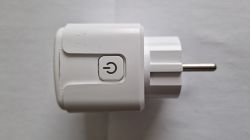
    White smart plug with a power button on the side.

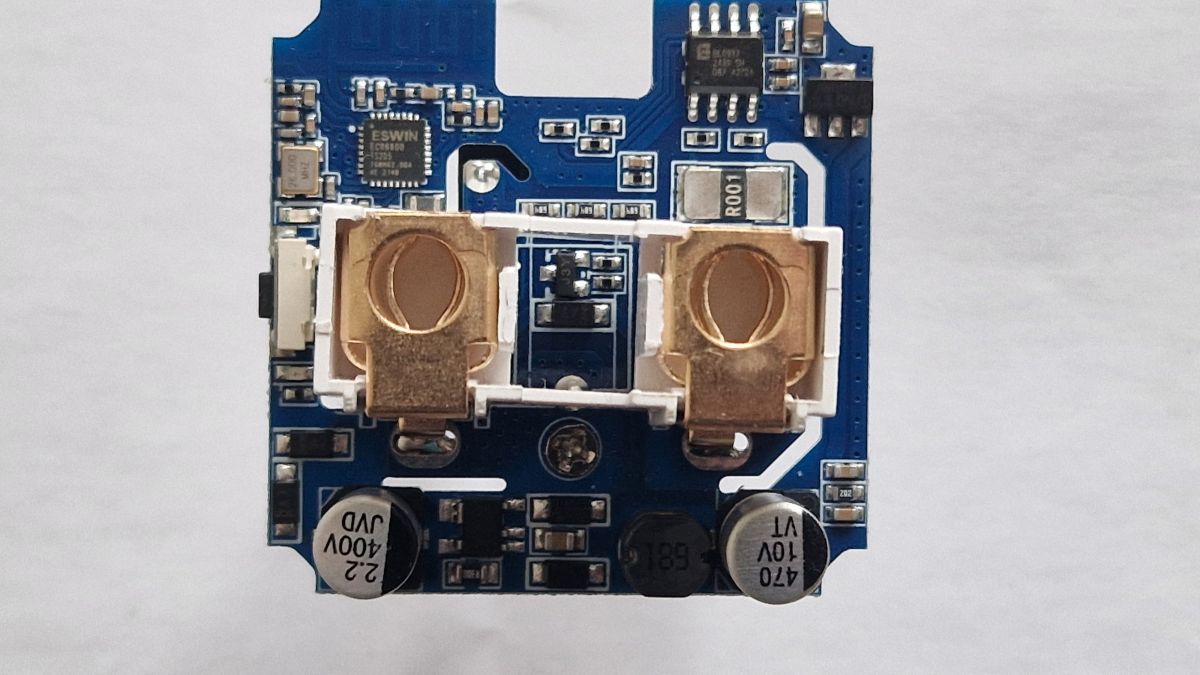
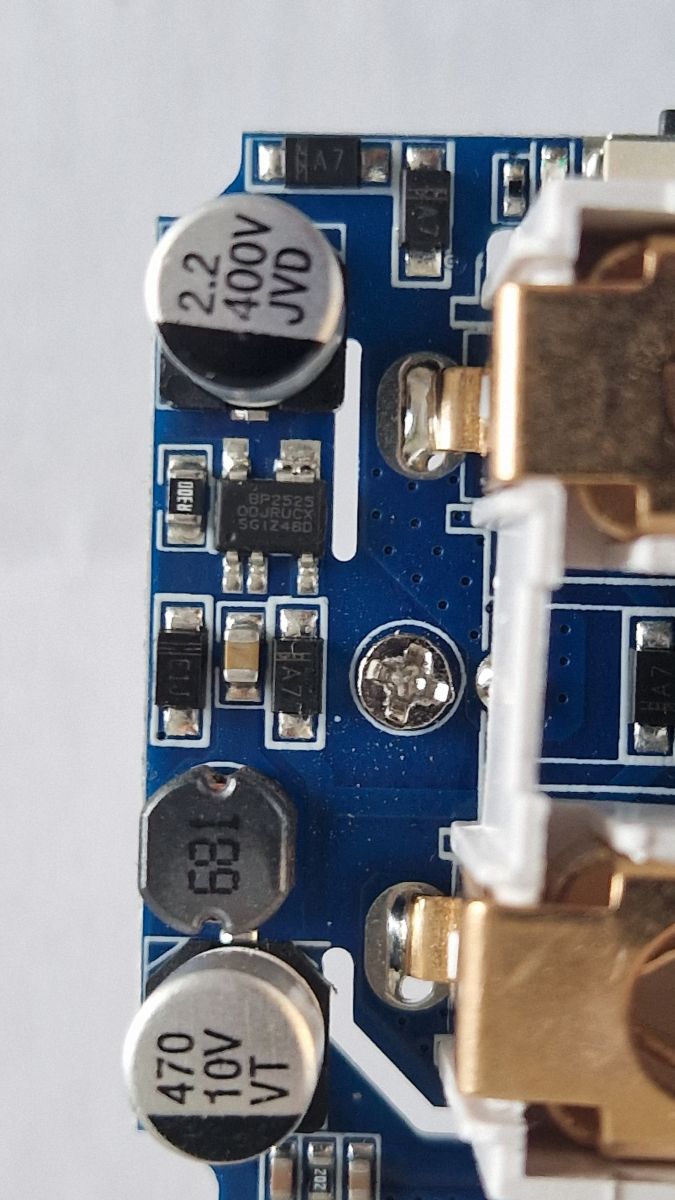
    Better polymer capacitors maybe, but no fusible resistor or MOV, but two LEDs
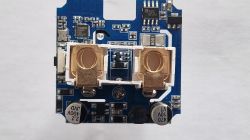
    Image of a smart plug's printed circuit board with various electronic components.

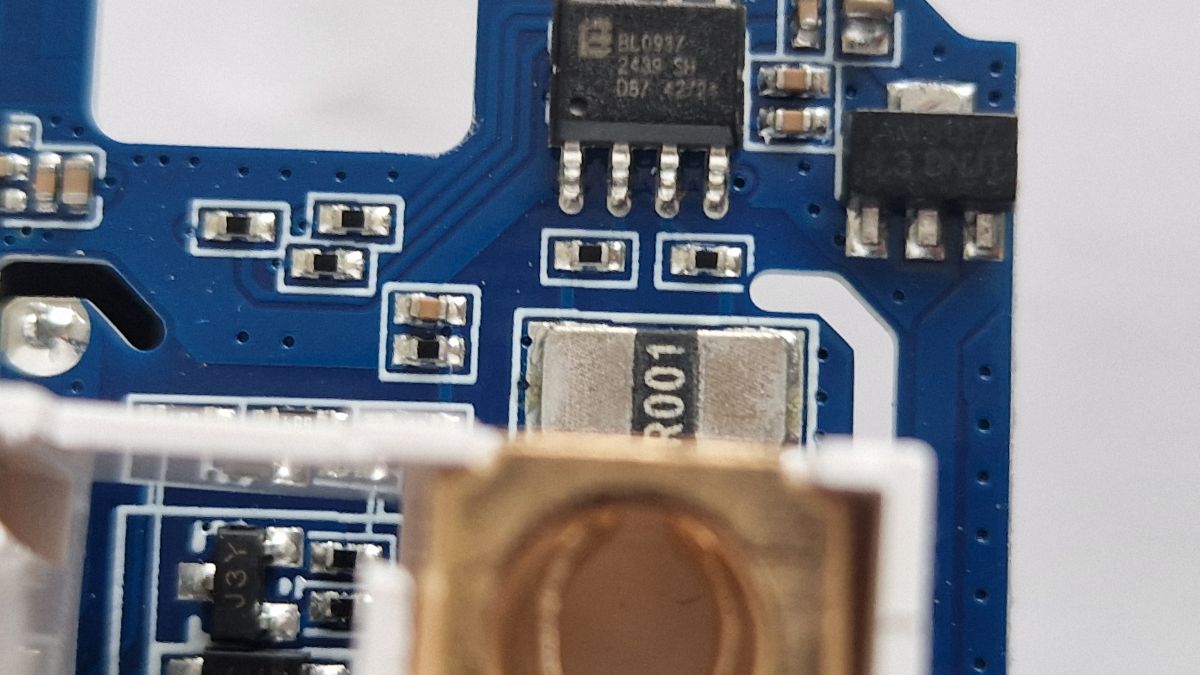
    Usual BP2525, BL0937, and AMS1117 (hardly visible)
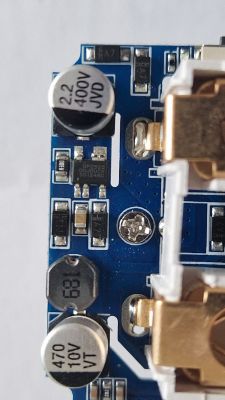
    Close-up of the interior of a smart plug showing electronic components such as capacitors and transistors.
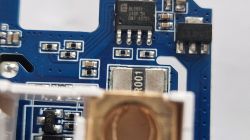
    Close-up of a circuit board showing electronic components, including a BL0937 chip.

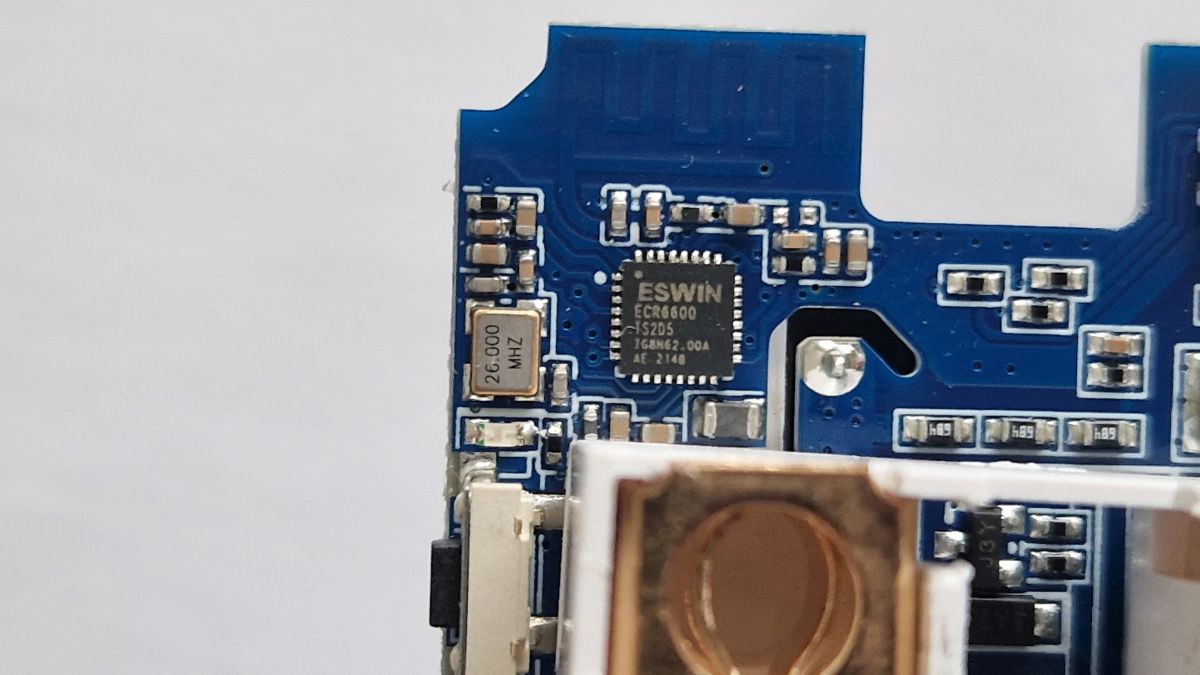
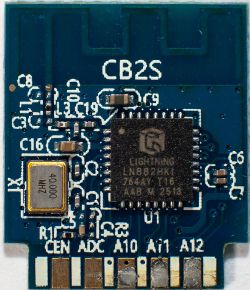
    New ECR6600 chip, not supported, but already reported in this forum:
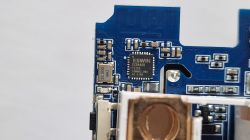
    Close-up of a circuit board with ECR6600 ESWIN chip.

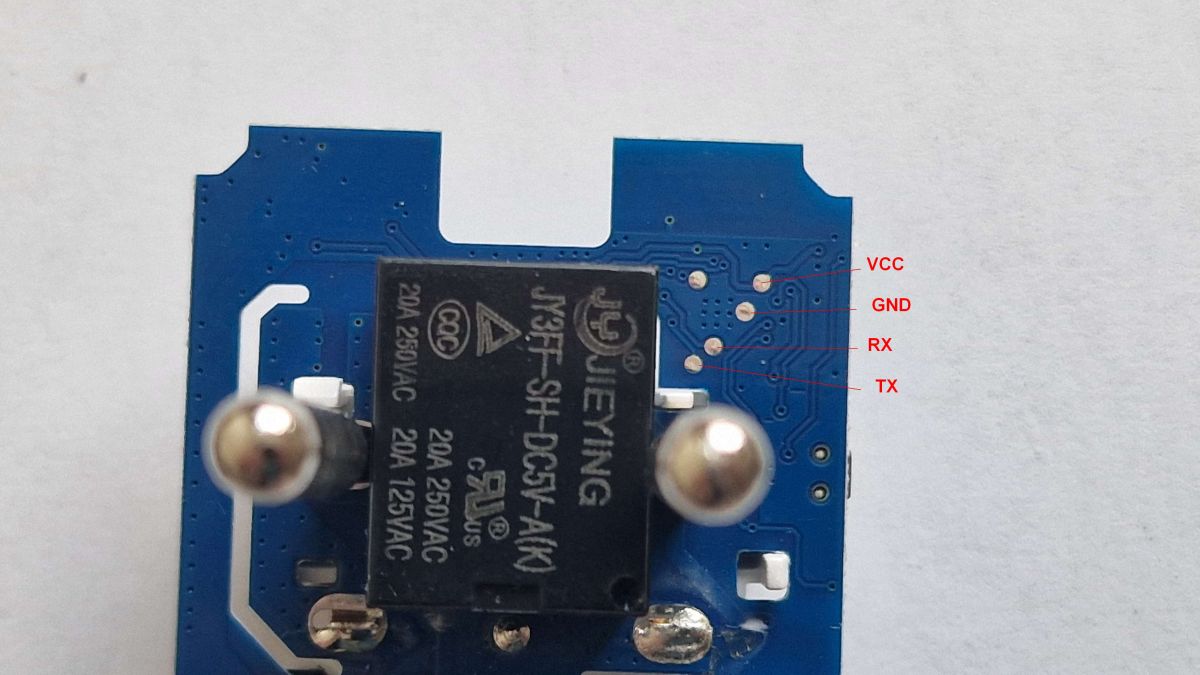
    Might be easy to flash, 5 pads, could be VCC, GND, TX, RX, BOOT
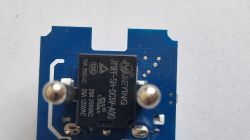
    Smart plug PCB with JIEYING relay.

    Don't have much time to investigate further these days, maybe sometime in spring...
  • ADVERTISEMENT
  • #2 21440126
    divadiow
    Level 38  
    Posts: 4839
    Help: 420
    Rate: 852
    nice.

    *instantly orders*
  • #3 21441278
    p.kaczmarek2
    Moderator Smart Home
    Posts: 14394
    Help: 650
    Rate: 12314
    Is there a datecode on the PCB?

    I wonder if it was produced after T34 batch or before.
    Helpful post? Buy me a coffee.
  • #4 21441371
    miegapele
    Level 16  
    Posts: 173
    Help: 15
    Rate: 29
    PCB has no marking at all. BL0937 has date code 2439, so this must be made after week 39, 2024.
  • #5 21444672
    Jamiwi
    Level 2  
    Posts: 3
    Rate: 2
    Board Language: german
    You don't have to wait until spring, here is some information from me about this plug
    Close-up of a PCB with marked VCC, GND, RX, and TX pins.
    Attachments:
    • original_flash.bin (2 MB) You must be logged in to download this attachment.
  • #6 21444695
    p.kaczmarek2
    Moderator Smart Home
    Posts: 14394
    Help: 650
    Rate: 12314
    How did you take flash backup? Can you share boot log?
    Helpful post? Buy me a coffee.
  • #7 21444703
    divadiow
    Level 38  
    Posts: 4839
    Help: 420
    Rate: 852
    >>21444672

    cool, thanks. another one for the ECR6600 collection

    List of binary files on a computer screen.
  • #8 21444748
    Jamiwi
    Level 2  
    Posts: 3
    Rate: 2
    Board Language: german
    No flashback was attempted, there is no boot log. The power supply to the module had to be established separately, the voltage from the serial converter was not sufficient.
  • ADVERTISEMENT
  • Helpful post
    #9 21444807
    divadiow
    Level 38  
    Posts: 4839
    Help: 420
    Rate: 852
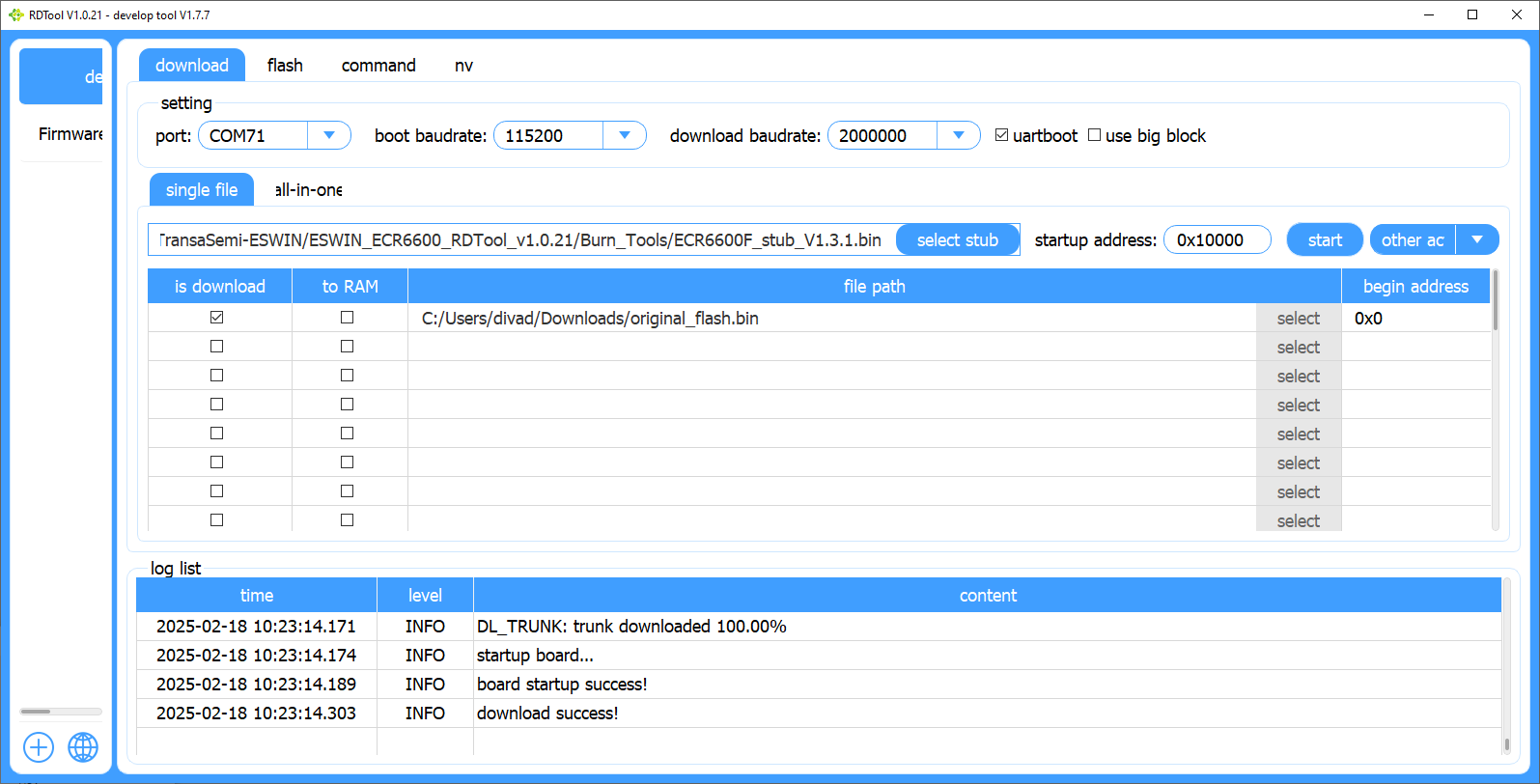
    boot log from IO13 on WG236 after burning your backup

    Code: Text
    Log in, to see the code


    Screenshot of RDTool V1.0.21 showing download settings and logs.

    not getting to pairing mode I guess because I don't have BL0937 present. IO24 appears to be reset/btn

    Added after 3 [hours] 36 [minutes]:

    @Jamiwi have you traced out each pin/gpio to btn, rel, led, bl0937?
  • #10 21445454
    Jamiwi
    Level 2  
    Posts: 3
    Rate: 2
    Board Language: german
    I didn't investigate anything further, for me the most important thing was to preserve the Flash content.
    At the moment there is no ready-made alternative firmware for these plugs
  • Helpful post
    #11 21499705
    miegapele
    Level 16  
    Posts: 173
    Help: 15
    Rate: 29
    Here is my backup, seems mostly the same as others with minor (data?) differences.
    Looks like wifi performs good, RSSI is reported similar to bk7231n nearby, and gpio finder performs well.

    No way to get boot log on TX0?
    Attachments:
    • ECR6600 Tuya Wifi Smart Plug With Energy Measurement.bin (2 MB) You must be logged in to download this attachment.
  • Helpful post
    #12 21500105
    miegapele
    Level 16  
    Posts: 173
    Help: 15
    Rate: 29
    And here is full config:
    Led for relay is hardwired, not controllable individually.

    {
      "vendor": "Tuya",
      "bDetailed": "0",
      "name": "Wifi Smart Plug With Energy Measurement",
      "model": "Smart plug",
      "chip": "ECR6600",
      "board": "TODO",
      "flags": "1028",
      "keywords": [
        "TODO",
        "TODO",
        "TODO"
      ],
      "pins": {
        "14": "BL0937CF;0",
        "15": "BL0937SEL;0",
        "20": "BL0937CF1;0",
        "22": "WifiLED;0",
        "24": "Btn;1",
        "25": "Rel;1"
      },
      "command": "",
      "image": "https://obrazki.elektroda.pl/3315507700_1739607137.jpg",
      "wiki": "https://www.elektroda.com/rtvforum/topic4106357.html"
    }
  • #13 21500150
    divadiow
    Level 38  
    Posts: 4839
    Help: 420
    Rate: 852
    thanks for confirming assignments. we've seen a couple of these in recent weeks. The template was added from this thread not too long ago https://www.elektroda.com/rtvforum/topic4112667.html

    Added after 7 [minutes]:

    I've still to get lucky and get one of these for myself. I'm keen to see what the AT firmware/RDTool running on there will read from efuse, if anything. ref: https://www.elektroda.com/rtvforum/topic4097544-30.html#21488380
  • #14 21500183
    miegapele
    Level 16  
    Posts: 173
    Help: 15
    Rate: 29
    efuses appears to be not readable in my plug either. But why they are important? We already can read and write firmware, so that means there is no encryption anyway.
  • #16 21500203
    miegapele
    Level 16  
    Posts: 173
    Help: 15
    Rate: 29
    What is AT?
  • #17 21500213
    divadiow
    Level 38  
    Posts: 4839
    Help: 420
    Rate: 852
    well, I assume the Skylab firmware that came on the WG236 modules can be used in conjunction with RDTool to read the efuse. @insmod could maybe elaborate...?

    https://github.com/openshwprojects/FlashDumps/tree/main/IoT/ECR6600

    My plan was to get one of these real Tuya devices using ECR6600, flash the WG236 firmware to it, then try reading efuse config in RDTool. Dunno if that's worth a try. Also, are the right UARTs even accessible on this plug with its limited number of test pads. Might not even be possible without a lot of effort I guess.
  • #18 21500523
    miegapele
    Level 16  
    Posts: 173
    Help: 15
    Rate: 29
    It seems you can read efuses by just modifying firmware to do that.
    My plug has first 21 bytes set to something, others are 0.
    17,e2,19,82,04,8d,0d,80
    9d,24,00,1c,66,0a,07,2d
    25,00,c0,30,10


    It's hard to understand what this is. Looks like some chip config/calibration, not likely to be any sort of encryption keys
  • #19 21500615
    divadiow
    Level 38  
    Posts: 4839
    Help: 420
    Rate: 852
    Oh cool. Nice. Can I ask what address(es) this was done at? If that's a valid question...
  • ADVERTISEMENT
  • #20 21500643
    miegapele
    Level 16  
    Posts: 173
    Help: 15
    Rate: 29
    These are first 21 bytes as read by basically this.
    So basically addresses 0x00 to 0x14 as I understand.
  • #21 21515880
    epolet
    Level 6  
    Posts: 11
    Rate: 1
    miegapele wrote:
    Might be easy to flash, 5 pads, could be VCC, GND, TX, RX, BOOT
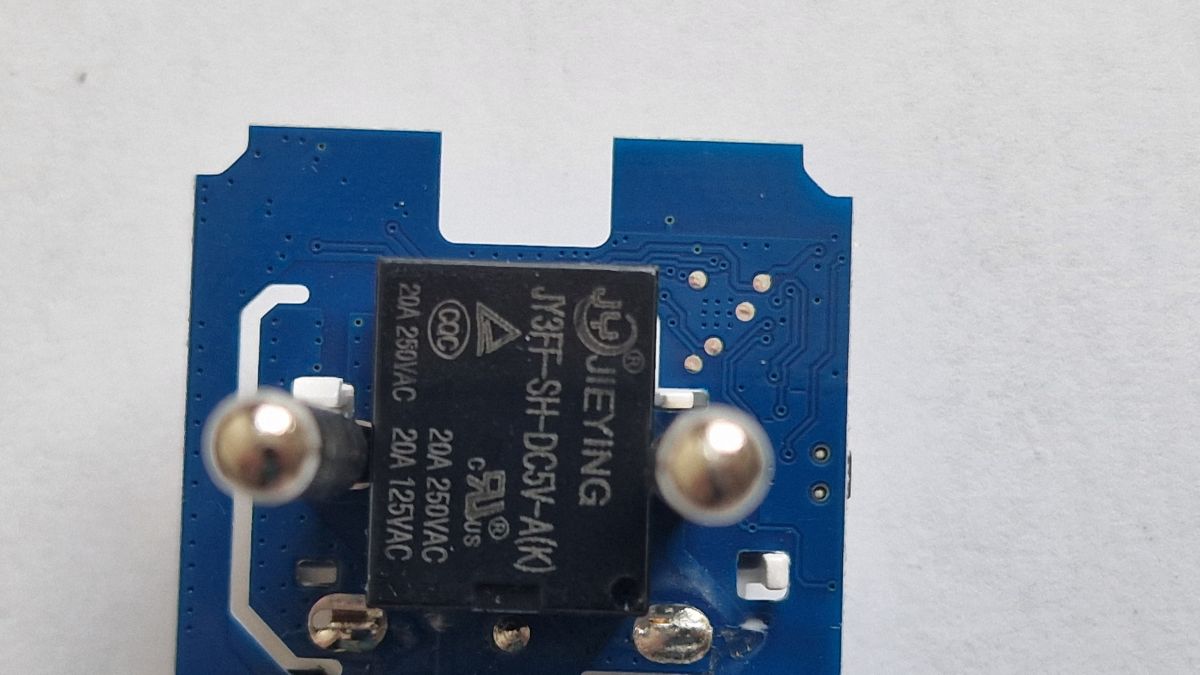
    Hello, guys.
    May I ask you is that fifth pad put aside of row of others really boot pad?
    If yes, could you please advise how to use it to upload firmware to the chip?
    If not then how put chip to program mode to upload new firmware? I read about "reset (ground CEN/RST) or power-on 3.3V to the device" but really do not understand it. Where is that cen/rst pin is or how can I power-on it when it is always under power. Sorry for dilettantish question. I'm really confused with this chip.
    Thanks.
  • #22 21515988
    divadiow
    Level 38  
    Posts: 4839
    Help: 420
    Rate: 852
    Quote:
    May I ask you is that fifth pad put aside of row of others really boot pad?


    I can trace it shortly, but it is not needed to backup and program the flash.

    Quote:
    If yes, could you please advise how to use it to upload firmware to the chip?


    backup and flash procedure https://www.elektroda.com/rtvforum/topic4111822.html

    Added after 18 [minutes]:

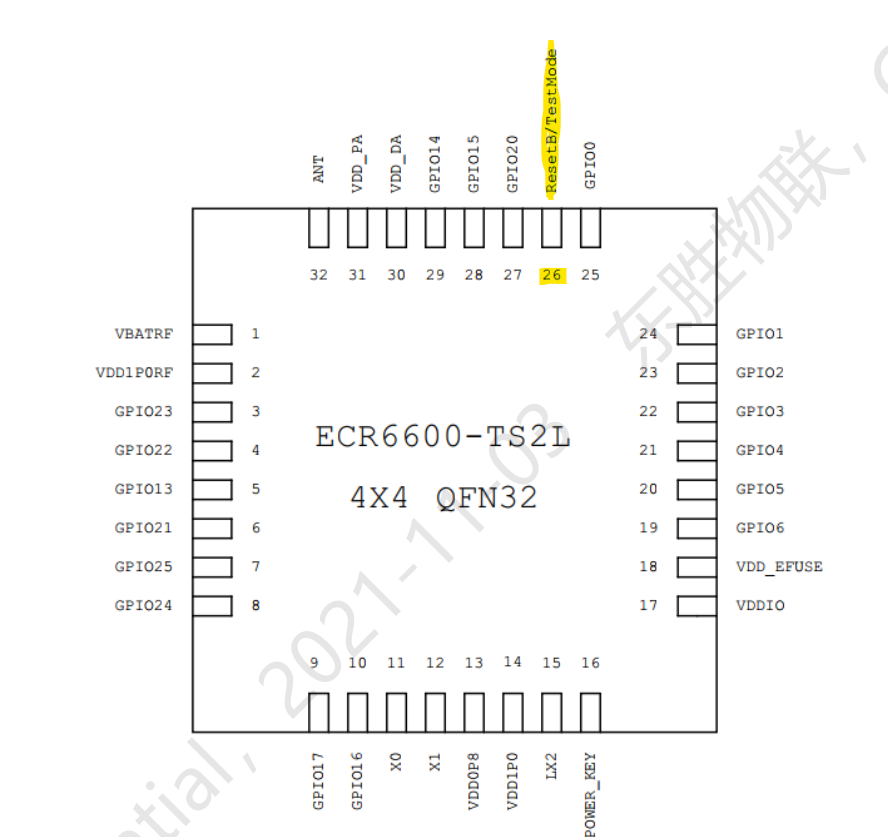
    it's pin 26
    Fragment of a table with technical information related to number 26 and assigned PIN functions.

    Package diagram of ECR6600-TS2L integrated circuit with pins.
  • #23 21517031
    epolet
    Level 6  
    Posts: 11
    Rate: 1
    Thank you for your info.
    I checked by multimeter and mentioned pad is shorted to 26 pin of chip. So I used it to program flash. As described under link you provided I shortly connected that pad to GND right after programming start. I don't know was it the reason but now BurnTool gives errors sync failed and download failed (log below for two bin-files).

    ECR6600F_standalone_allinone.bin
    2025-04-12 21:53:03.341 INFO PARSE_AIO: find 5 bin in all-in-one file
    2025-04-12 21:53:03.341 INFO PARSE_AIO: get file 0 info: dlType: 0 startAddr: 0x10000 len: 0x28e4
    2025-04-12 21:53:03.341 INFO PARSE_AIO: get file 1 info: dlType: 2 startAddr: 0x00 len: 0x1000
    2025-04-12 21:53:03.341 INFO PARSE_AIO: get file 2 info: dlType: 2 startAddr: 0x1000 len: 0x4dd0
    2025-04-12 21:53:03.341 INFO PARSE_AIO: get file 3 info: dlType: 2 startAddr: 0x7000 len: 0xab1d4
    2025-04-12 21:53:03.353 INFO PARSE_AIO: get file 4 info: dlType: 2 startAddr: 0x1fb000 len: 0x3000
    2025-04-12 21:53:04.345 ERROR sync failed!
    2025-04-12 21:53:04.463 ERROR download failed!

    OpenECR6600_1.18.76.bin
    2025-04-12 21:53:42.779 INFO PARSE_AIO: find 4 bin in all-in-one file
    2025-04-12 21:53:42.779 INFO PARSE_AIO: get file 0 info: dlType: 0 startAddr: 0x10000 len: 0x3704
    2025-04-12 21:53:42.780 INFO PARSE_AIO: get file 1 info: dlType: 2 startAddr: 0x00 len: 0x1000
    2025-04-12 21:53:42.780 INFO PARSE_AIO: get file 2 info: dlType: 2 startAddr: 0x1000 len: 0x4fe8
    2025-04-12 21:53:42.781 INFO PARSE_AIO: get file 3 info: dlType: 2 startAddr: 0x7000 len: 0xaf6c4
    2025-04-12 21:53:43.800 ERROR sync failed!
    2025-04-12 21:53:43.909 ERROR download failed!

    Maybe someone met such situation and can advise how to overcome?

    BTW. Before that I, seems, successfully uploaded file ECR6600F_standalone_allinone.bin to the chip without usage of RST pin. Just clicking "start" button in BurnTool.
    I noted new wifi appeared instead of previous one. Now it has CMQLINK-590488-38ca. I'm able to connect to it. But don't know to which IP-address to go to open any site. Lan scan doesn't help.
    Does anyone know is there any use for that change?
    Thanks in advance.
  • #24 21521544
    epolet
    Level 6  
    Posts: 11
    Rate: 1
    >>21517031
    No advice. So I moved forward alone and reached success.
    Two secrets helped me in this.
    1) I just clicked button "Start" of RDTool again and again
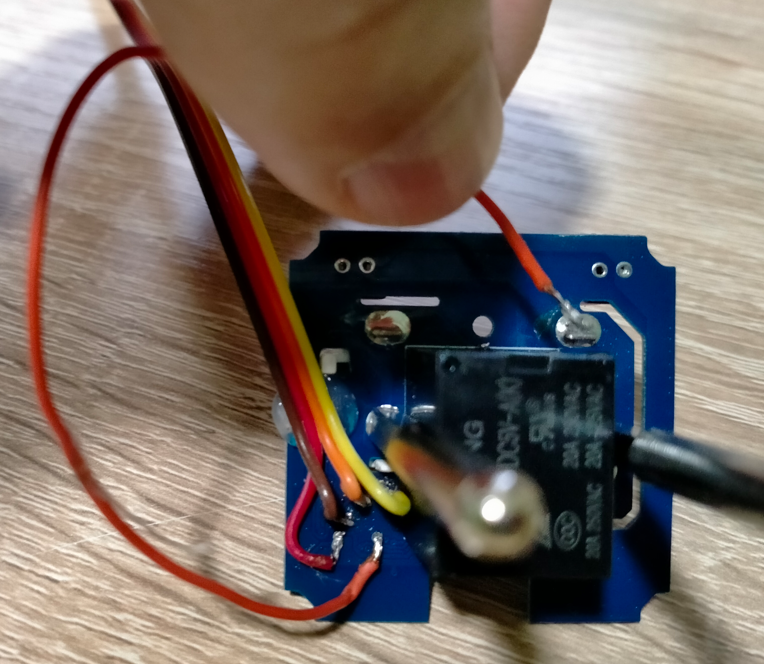
    2) After click wait 1 second, connect RST to GND and disconnect immediately. When you will lucky download (as for me it is more upload than download but ok, let it be called download, what confused a lot nevertheless) file OpenECR6600_1.18.76.bin will start and finish successfully.
    Btw. I found much more convenient location to touch RST to GND See picture below.
    Close-up of a printed circuit board with a relay and colored wires soldered to it.
    Hope all is clear.
    Going that way I successfully reprogrammed the socket, connected to it via WiFi, configured its WiFi connection and accessed to it via my home lan. Thanks to all who helped me to reach this result.

    Now the question, if you allow.
    AFAIK this socket has power meter. Could anyone clarify me how to use it?
    Thanks in advance.
  • #25 21521656
    divadiow
    Level 38  
    Posts: 4839
    Help: 420
    Rate: 852
    Glad you got there in the end. BL0937 support was added in v1.18.61 so if you are on that version or higher simply importing the template or settings pin as below for this device and rebooting should be enough
    Code: Text
    Log in, to see the code
  • ADVERTISEMENT
  • #26 21522523
    epolet
    Level 6  
    Posts: 11
    Rate: 1
    >>21521656
    Thank you. It works. Now I see status of electricity on socket site and MQTT messages.
    Thank you.
    I'm pretty sure more questions will happen. But later.
    Thanks again.
  • #27 21595107
    Michaelred
    Level 11  
    Posts: 6
    Board Language: polish
    How do these TNCE plugins from ECR660 vs the older ones on BK7321 perform with the original firmware on tuya cloud? How about the wifi coverage? Is it actually better on this Wifi 6. That antenna printed flat on the PCB somehow doesn't encourage :) The power consumption meter is reasonably accurate?
    EDIT: The plug has now arrived. Looks like I got the same as the subject author. Bought a 16A plug but got a 20A one. The wattmeter seems to work ok , However, the wattmeter readings are worse than those on the Aubess and on such a normal meter without wifi.
    The socket opens them very easily because they are only lightly glued. In the promos on aliexpress in the combined offers tab for about 9zł each were.
    Wattmeter readings after 24 hours from the same socket
    Silvercrest 1.41 kWh
    TNCE 1.46kWh
    Aubess 1.38kWh
    This shows that after subtracting the consumption of the 2 smart sockets (approx. 0.03 kWh/24h) the Aubess has virtually identical readings with the Silvercrest wattmeter. It assumes an intake of about 0.7w per socket. The TNCE socket overestimates the consumption a little. It also shows a higher mains voltage than the Silvercrest and Aubess.

    [ECR6600][BL0937] Tuya Wifi Smart Plug With Energy Measurement .
    [ECR6600][BL0937] Tuya Wifi Smart Plug With Energy Measurement .
    [ECR6600][BL0937] Tuya Wifi Smart Plug With Energy Measurement .
    [ECR6600][BL0937] Tuya Wifi Smart Plug With Energy Measurement .
  • #28 21637677
    mlb
    Level 12  
    Posts: 22
    Help: 1
    Board Language: polish
    WiFi from tasmotized ECR6600 is not great. I have 3 plugs with uploaded Tasmota, and often they have issues with connect to my MikroTik routers after restart. I have also many older smart plugs, and multiple other IoT devices based on ESP32/8266, and they connect without any issues...
  • #29 21642261
    divadiow
    Level 38  
    Posts: 4839
    Help: 420
    Rate: 852
    are you running latest release of OpenECR6600?
  • #30 21644267
    mlb
    Level 12  
    Posts: 22
    Help: 1
    Board Language: polish
    divadiow wrote:
    are you running latest release of OpenECR6600?


    Thanks, it seems the latest version 1.18.158 has fixed it :)

Topic summary

✨ The discussion centers on a Tuya WiFi Smart Plug featuring energy measurement, equipped with the ECR6600 chip and BL0937 energy metering IC, differing from the expected BL0942. The plug's PCB lacks markings and includes components such as BP2525, AMS1117, and polymer capacitors without fusible resistors or MOVs. The ECR6600 chip is not yet fully supported, but flashing is possible via five test pads identified as VCC, GND, TX, RX, and BOOT. Flash backup was performed without a boot log due to insufficient power from the serial converter, but a boot log was later obtained showing TuyaOS V3.8.3 firmware compiled in January 2024. The device's WiFi performance and GPIO assignments were confirmed, with the relay LED hardwired and not individually controllable. Attempts to read efuse data revealed limited and non-encrypted calibration/configuration bytes. Programming the flash requires grounding the reset (RST) pin briefly after initiating the download in RDTool; the RST pad was identified and a more convenient grounding point was found. Firmware version 1.18.61 or higher supports BL0937, enabling power measurement and MQTT integration. The community shared templates and procedures for backup, flashing, and configuration, facilitating successful reprogramming and network connection of the plug. Questions remain about detailed usage of the power metering feature.
Generated by the language model.

FAQ

TL;DR: A confirmed 6-pin mapping and a working template make this ECR6600 smart plug practical to flash and use. One tester said, "It works" after applying the BL0937 pin setup, which enabled relay control plus voltage, current, power, and MQTT reporting for users replacing Tuya firmware or recovering a stubborn plug. [#21522523]

Why it matters: This FAQ gives owners of the ECR6600/BL0937 Tuya plug the shortest path to identify pins, flash OpenECR6600, restore Wi‑Fi, and enable energy monitoring.

Reported energy readings after 24 hours: [#21595107]

Device Reported energy after 24 h Notes
TNCE ECR6600 plug 1.46 kWh Read slightly high
Aubess plug 1.38 kWh Closest to reference after self-consumption adjustment
Silvercrest wattmeter 1.41 kWh Standalone reference

Key insight: The breakthrough is not the chip alone but the confirmed GPIO map: once pins 14, 15, 20, 22, 24, and 25 are assigned correctly, OpenECR6600 can drive the relay and read BL0937 energy data on this plug.

Quick Facts

  • BL0937 date code 2439 indicates the plug was made after week 39 of 2024, even though the PCB had no printed board marking. [#21441371]
  • The exposed programming area has 5 pads, and the isolated fifth pad was later traced to pin 26, used as RST/BOOT access during flashing. [#21515988]
  • A successful OpenECR6600 configuration used 6 functional GPIOs: BL0937 on pins 14, 15, 20, WiFi LED on 22, button on 24, and relay on 25. [#21500105]
  • One user measured approximate standby overhead of 0.03 kWh per 24 h for 2 smart plugs, or about 0.7 W per socket, when comparing TNCE and Aubess plugs against a Silvercrest meter. [#21595107]
  • A field reset worked by power-cycling the plug about 4–5 times with short pauses, after which its open Wi‑Fi AP reappeared for reconfiguration. [#21819463]

How can I identify the GPIO pin assignments on this Tuya smart plug with ECR6600 and BL0937 for the relay, button, WiFi LED, and energy metering pins?

You can identify them from the confirmed device config posted for this exact plug. The working map is relay on GPIO25, button on GPIO24, WiFi LED on GPIO22, and BL0937 on GPIO14, GPIO15, and GPIO20. The relay LED is hardwired, so you cannot control it separately. That means the useful functional map is six GPIO roles, not seven. [#21500105]

What is the correct OpenECR6600 template for the ECR6600 Tuya WiFi smart plug with BL0937 energy measurement?

The correct template assigns GPIO14=BL0937CF, GPIO15=BL0937SEL, GPIO20=BL0937CF1, GPIO22=WifiLED, GPIO24=Btn, and GPIO25=Rel. Importing that template, or setting those pins manually, is enough on OpenECR6600 versions with BL0937 support. The same config was later confirmed to expose electricity status on the web UI and MQTT. [#21521656]

What steps are needed to flash OpenECR6600 onto this ECR6600 smart plug using RDTool or BurnTool?

You flash it by wiring UART, using the all-in-one image, and briefly resetting the chip at the right moment. 1. Connect the plug to a separate 3.3V-capable supply and UART pads. 2. In RDTool or BurnTool, load the OpenECR6600 all-in-one file and press Start. 3. About 1 second later, momentarily short RST to GND so programming begins. One user reported this exact timing finally produced a complete successful write. [#21521544]

Why does RDTool show "sync failed" or "download failed" when trying to program an ECR6600 plug, and how can that be fixed?

RDTool shows those errors when the chip misses programming sync or the wrong flashing method is selected. The thread fixed it by retrying Start several times, then shorting RST to GND about 1 second later. Another user also fixed repeated failure by lowering the baud rate and using the correct all-in-one workflow instead of selecting the firmware as a stub. Those are the two concrete recovery steps reported. [#21716613]

Where is the BOOT or RST pad on this ECR6600 smart plug, and how do you use it to enter programming mode?

The separate fifth test pad is connected to chip pin 26 and was used as the reset/programming access point. You do not need it for every flash attempt, but it helps when sync is unreliable. To enter programming mode, start the transfer in the tool, then briefly short that pad to GND. A user verified the pad-to-pin-26 continuity with a multimeter before using it successfully. [#21515988]

How do I enable BL0937 power monitoring in OpenECR6600 so the plug reports voltage, current, power, and MQTT telemetry?

Set the three BL0937 pins correctly and reboot. Use GPIO14 for BL0937CF, GPIO15 for BL0937SEL, and GPIO20 for BL0937CF1, with GPIO22 as WifiLED, GPIO24 as Btn, and GPIO25 as Rel. BL0937 support was added in OpenECR6600 v1.18.61, so version 1.18.76 already works. After applying the pin map, one user immediately saw electricity values on the device page and in MQTT. [#21522523]

What is BL0937, and how does it handle energy measurement inside Tuya smart plugs?

"BL0937" is an energy-metering IC that measures electrical parameters, using dedicated pulse outputs for power-related data inside low-cost smart plugs. In this plug, OpenECR6600 uses three BL0937-related GPIOs: CF on pin 14, SEL on pin 15, and CF1 on pin 20. Once mapped correctly, the plug reports electricity status through the web UI and MQTT. [#21500105]

What is AT firmware on ECR6600 and how is it related to RDTool, efuse access, and WG236 modules?

In this thread, AT firmware means the Skylab firmware used on WG236 modules and discussed as a way to read efuse data with RDTool. The idea was to flash WG236 firmware onto a real Tuya ECR6600 device, then inspect efuse configuration in RDTool. The thread never confirmed that method on this exact plug, but it clearly links AT firmware, WG236 hardware, and RDTool-based efuse experiments. [#21500213]

Why doesn’t the ECR6600 plug enter pairing mode properly after flashing a backup without the BL0937 connected?

It can fail because the firmware expects the BL0937 hardware to be present during startup. One tester restored a backup onto a WG236 board and found it never reached pairing mode, likely because BL0937 was absent. The boot log still started TuyaOS, but the device stayed in a broken state instead of pairing normally. The same tester noted that IO24 appeared to be the reset or button input. [#21444807]

How can I read efuse data on an ECR6600 device, and what do the first bytes usually represent?

You can read efuse by modifying firmware to dump it directly. One user reported that the first 21 bytes, addresses 0x00 through 0x14, contained non-zero data while the rest were 0. The posted bytes looked more like chip configuration or calibration than encryption keys. That matters because the same thread also noted normal firmware read and write access, which argues against mandatory flash encryption here. [#21500643]

Is there any way to get a boot log from TX0 on the ECR6600 smart plug, and what UART pin should be used instead?

No confirmed boot log from TX0 was provided for this plug. The successful shared boot log came from IO13 on a WG236 after flashing a backup, not from TX0 on the original smart plug. Later, another user explicitly asked whether boot log output was possible on TX0, which shows that point remained unresolved in the thread. So the only demonstrated boot-log pin here is IO13 on WG236 hardware. [#21444807]

How does WiFi performance on ECR6600 plugs compare with older BK7231-based smart plugs under stock firmware or OpenECR6600?

Results were mixed. One owner said stock-style Wi‑Fi performance looked good and RSSI was similar to a nearby BK7231N device. Another later reported poor reconnect behavior on flashed ECR6600 plugs compared with ESP32, ESP8266, and older smart plugs, especially after router restarts. So the thread supports a split conclusion: basic signal strength looked competitive, but OpenECR6600 stability was inconsistent across versions and setups. [#21499705]

Why do some ECR6600 plugs stop reconnecting to WiFi after a few reboots on newer OpenECR6600 versions, and what troubleshooting steps help?

Some units reconnect for only the first 2 or 3 reboots, then fail until recovery mode or OTA reflashing. Users reproduced that pattern on versions 1.18.158, 1.18.187, 1.18.188, and 1.18.189. The useful troubleshooting steps were updating to a newer build, testing whether safe mode restores access, and reflashing OTA when the device stops rejoining Wi‑Fi. One report said a newer SDK seemed promising, but the fix did not hold. [#21713072]

What should I do if my ECR6600 smart plug LED keeps blinking, ignores the button, and won’t reconnect after repeated power outages?

Power-cycle the plug about five times to force it back into its default open Wi‑Fi mode. A later report said the AP actually reappeared on the fourth plug-in, after which reconfiguration worked. The same user suspected multiple rapid outages had pushed the plug into a bad state. Check for an open Wi‑Fi network before reflashing, because this reset may recover the device without opening it. [#21819463]

How accurate is the BL0937-based power meter in these TNCE or Tuya ECR6600 plugs compared with Aubess plugs and a standalone Silvercrest wattmeter?

It was usable but read a little high in the shared 24-hour comparison. The TNCE ECR6600 plug reported 1.46 kWh, the Silvercrest wattmeter showed 1.41 kWh, and the Aubess plug showed 1.38 kWh. After subtracting about 0.03 kWh per 24 hours for two smart plugs, the Aubess result matched the reference more closely. The thread’s practical verdict was that the TNCE wattmeter worked, but overestimated consumption slightly. [#21595107]
Generated by the language model.
ADVERTISEMENT