logo elektroda
logo elektroda
X
logo elektroda

Enbrighten WFD4103 WiFi Switch Teardown - BK7231T WB2S module

iprak 4689 10

TL;DR

  • The Enbrighten WFD4103 Plug-In Mini WiFi Smart Switch teardown shows a well-built single-button smart plug with a built-in LED.
  • Removing the glued back plate with a spudger from the opposite edge exposes the board, and the ground pin comes out completely for easier chip access.
  • The board uses a BK7231T WB2S module, and the device can be flashed through 4 pins with the BK7231T UA firmware.
  • Initial flashing used uartprogram on com4 with OpenBK7231T_UA_1.12.16.bin, then the module was configured as P7=LED_n, P24=Rel, and P26=Btn.
ADVERTISEMENT
📢 Listen (AI):
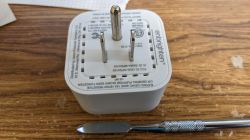
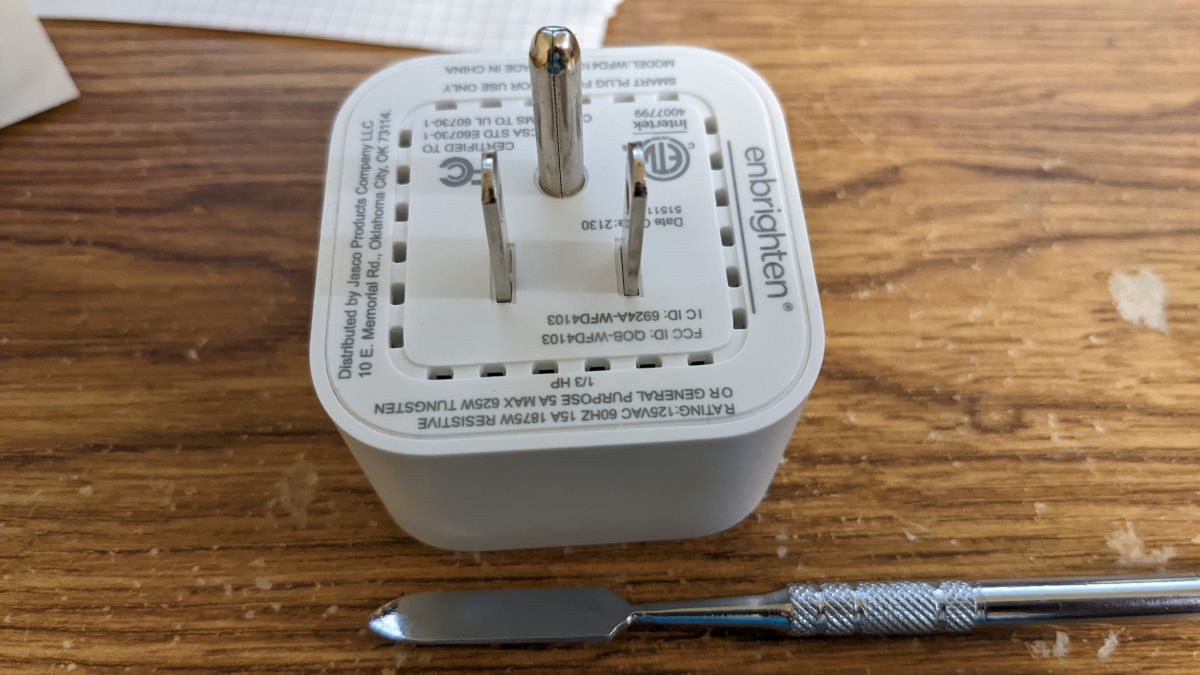
  • The Enbrighten Plug-In Mini WiFi Smart Switch model WFD4103 is very well made device, its FCC certification can be found here.
    Enbrighten WFD4103 WiFi Switch Teardown - BK7231T WB2S module

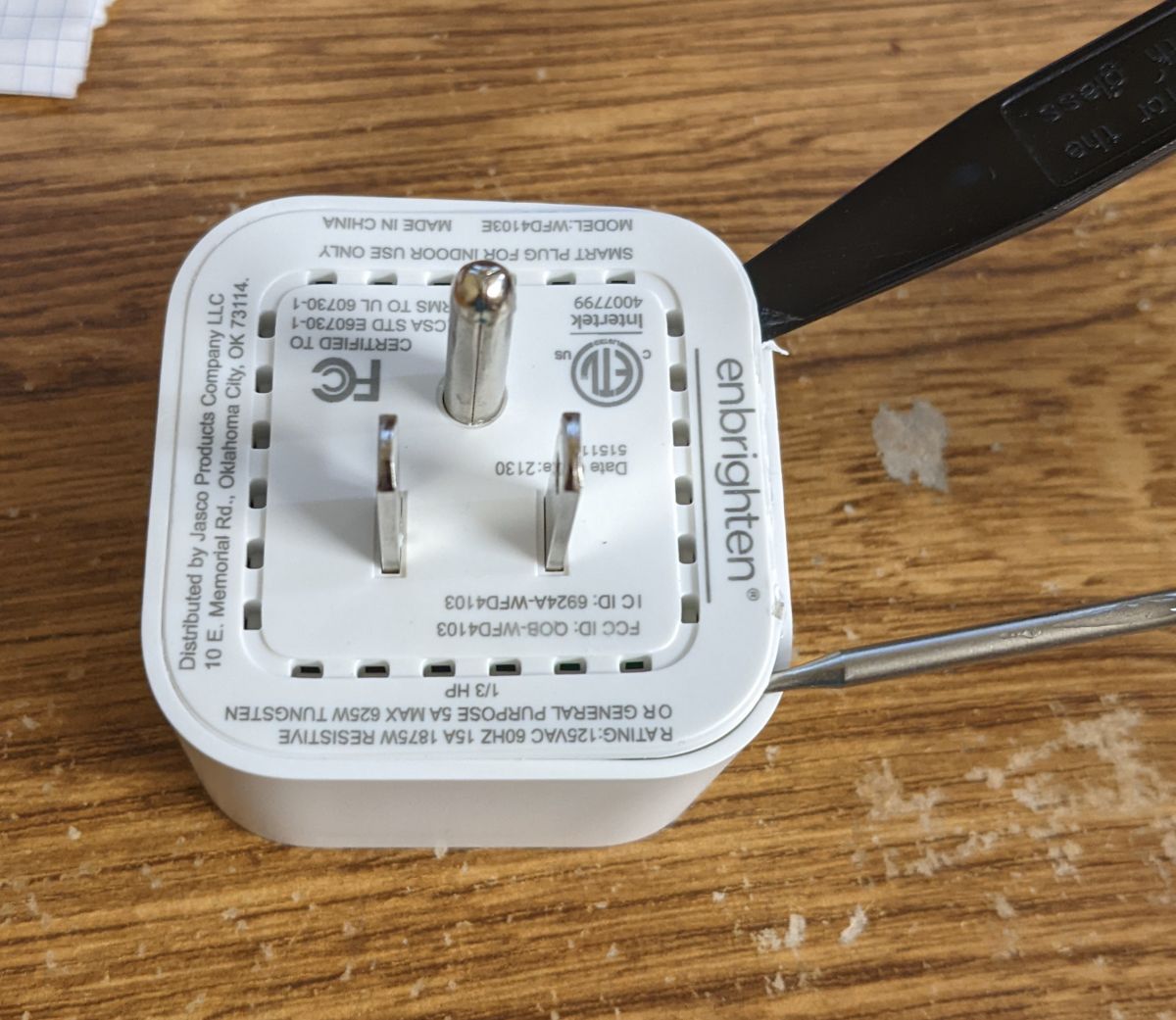
    It just has one button with a built-in LED.

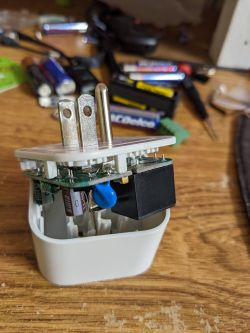
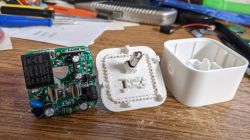
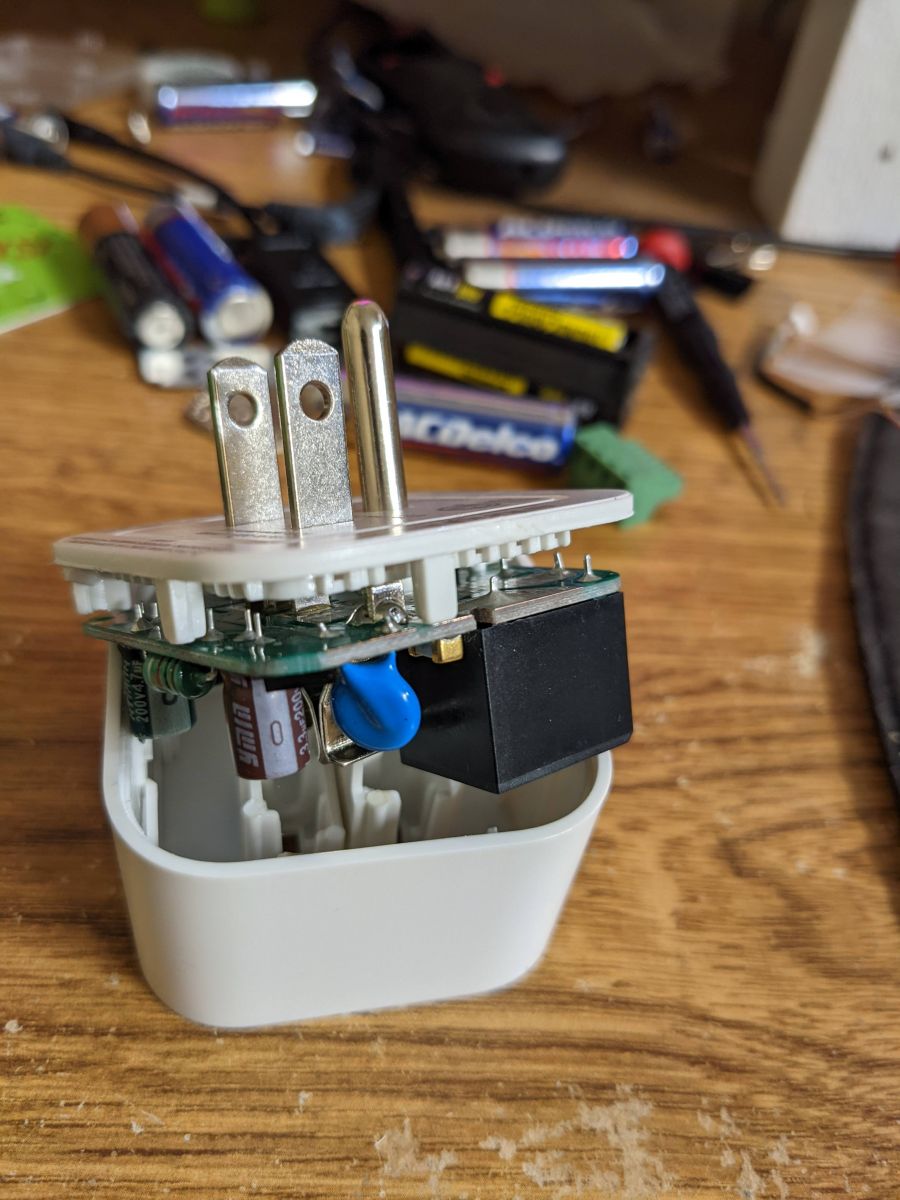
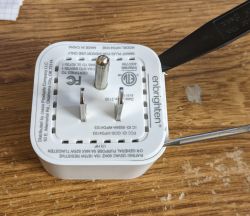
    The back plate is glued and can be separated by inserting a spudger, start from opposite edge where the the button is located.
    Enbrighten WFD4103 WiFi Switch Teardown - BK7231T WB2S module
    Enbrighten WFD4103 WiFi Switch Teardown - BK7231T WB2S module

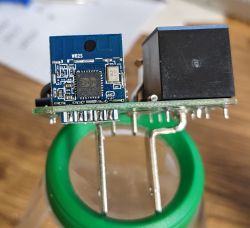
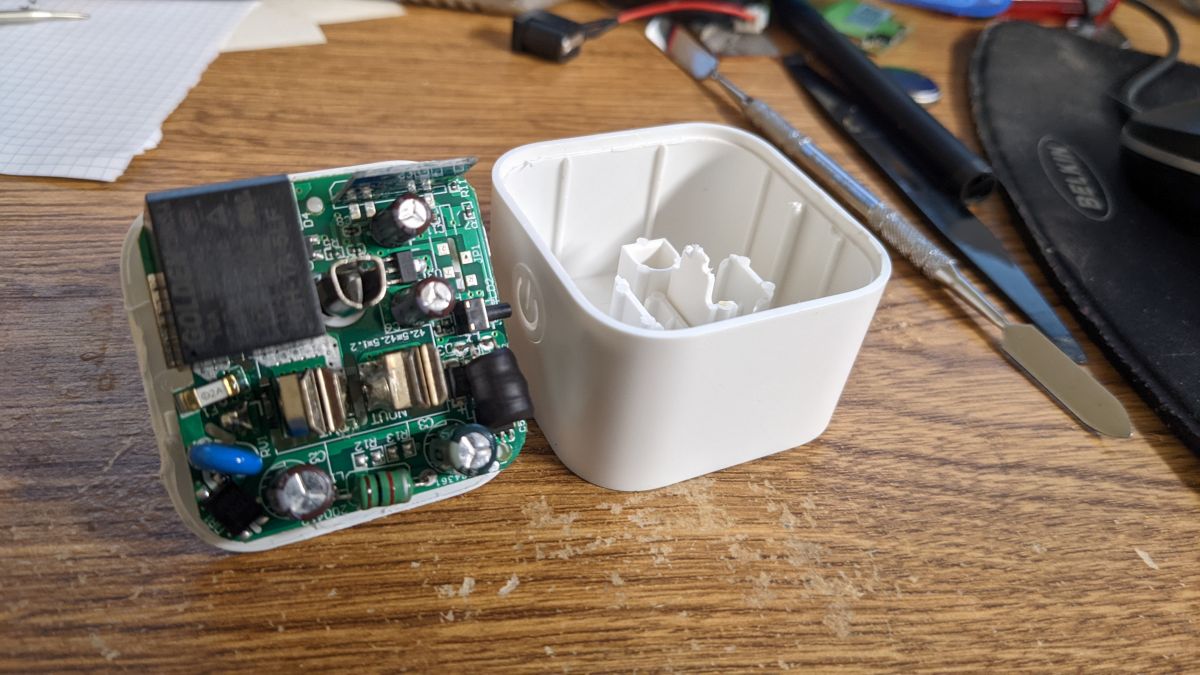
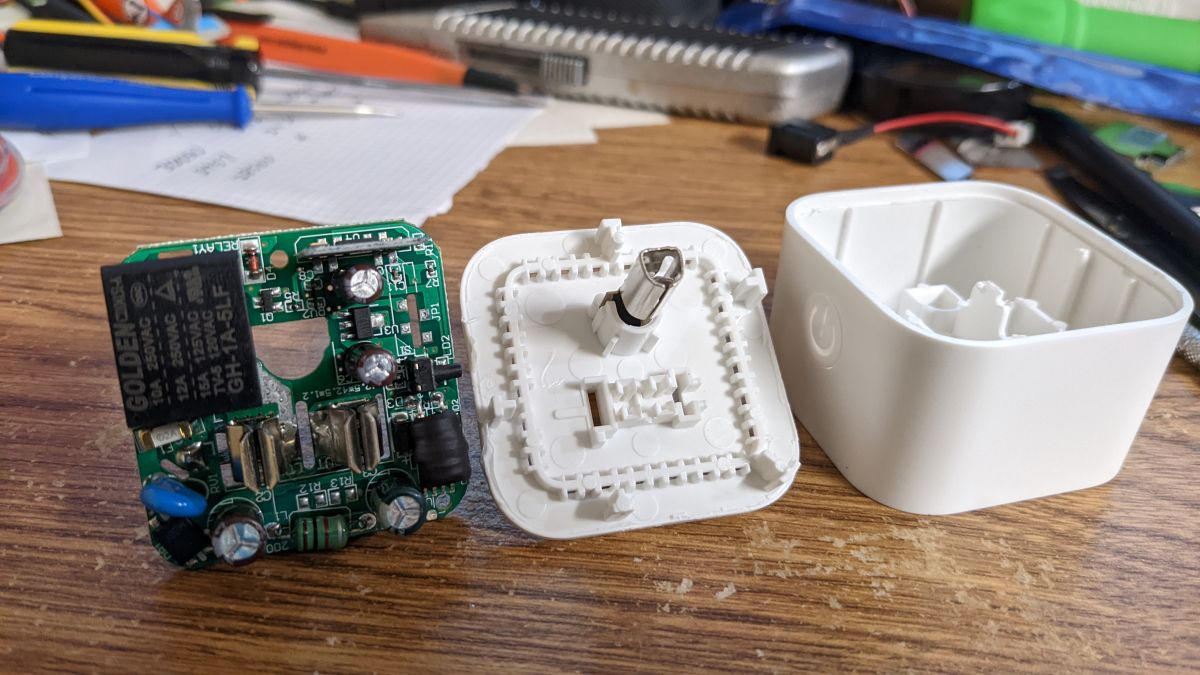
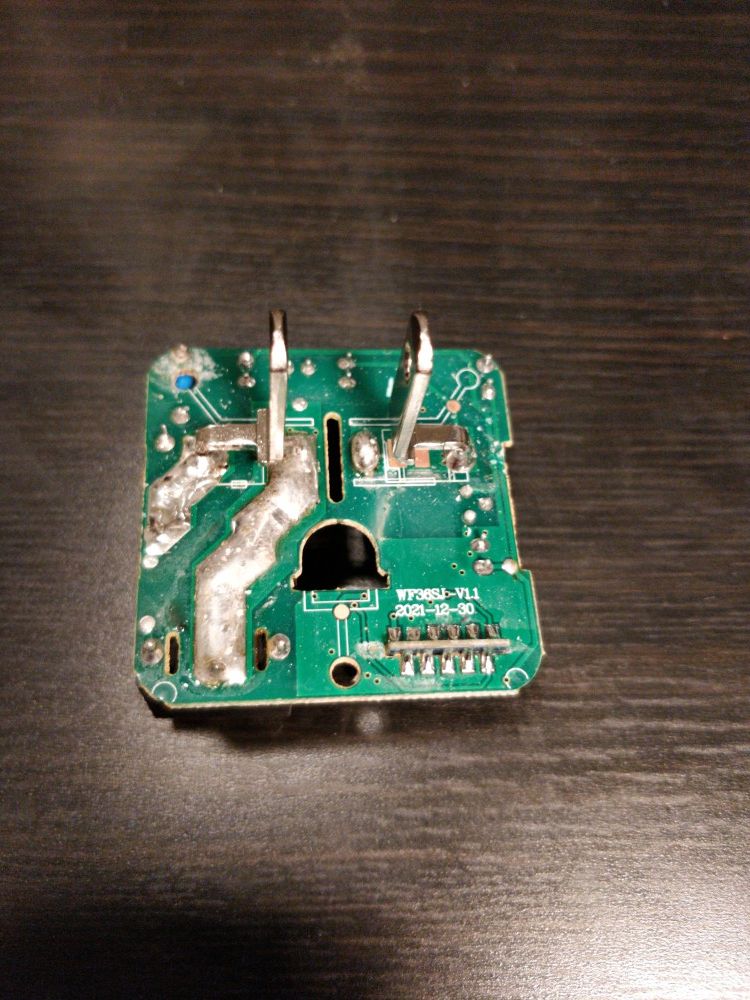
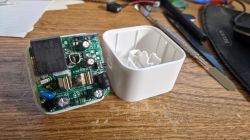
    The power pins are attached to the board but the ground pin comes out completely. This makes accessing the bottom of the chip very easy.
    Enbrighten WFD4103 WiFi Switch Teardown - BK7231T WB2S module Enbrighten WFD4103 WiFi Switch Teardown - BK7231T WB2S module

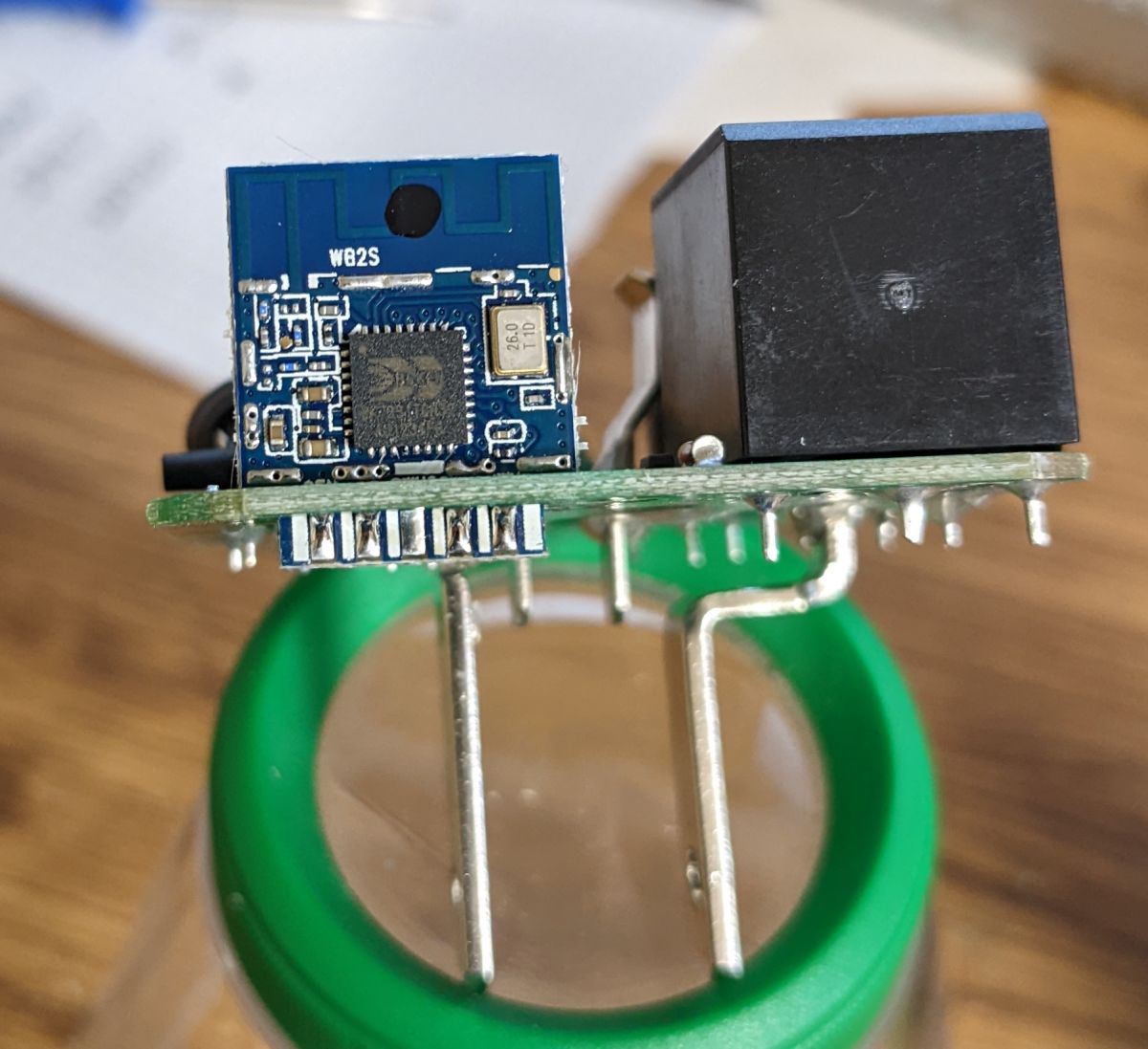
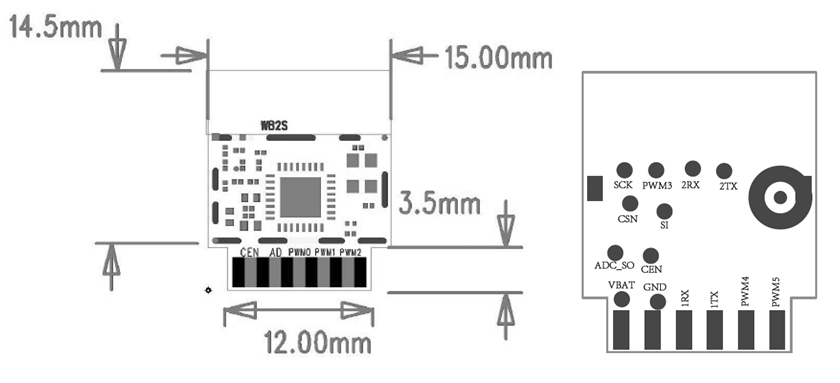
    It uses a BK7231T WB2S module.

    Enbrighten WFD4103 WiFi Switch Teardown - BK7231T WB2S module

    Enbrighten WFD4103 WiFi Switch Teardown - BK7231T WB2S module

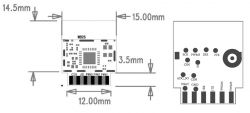
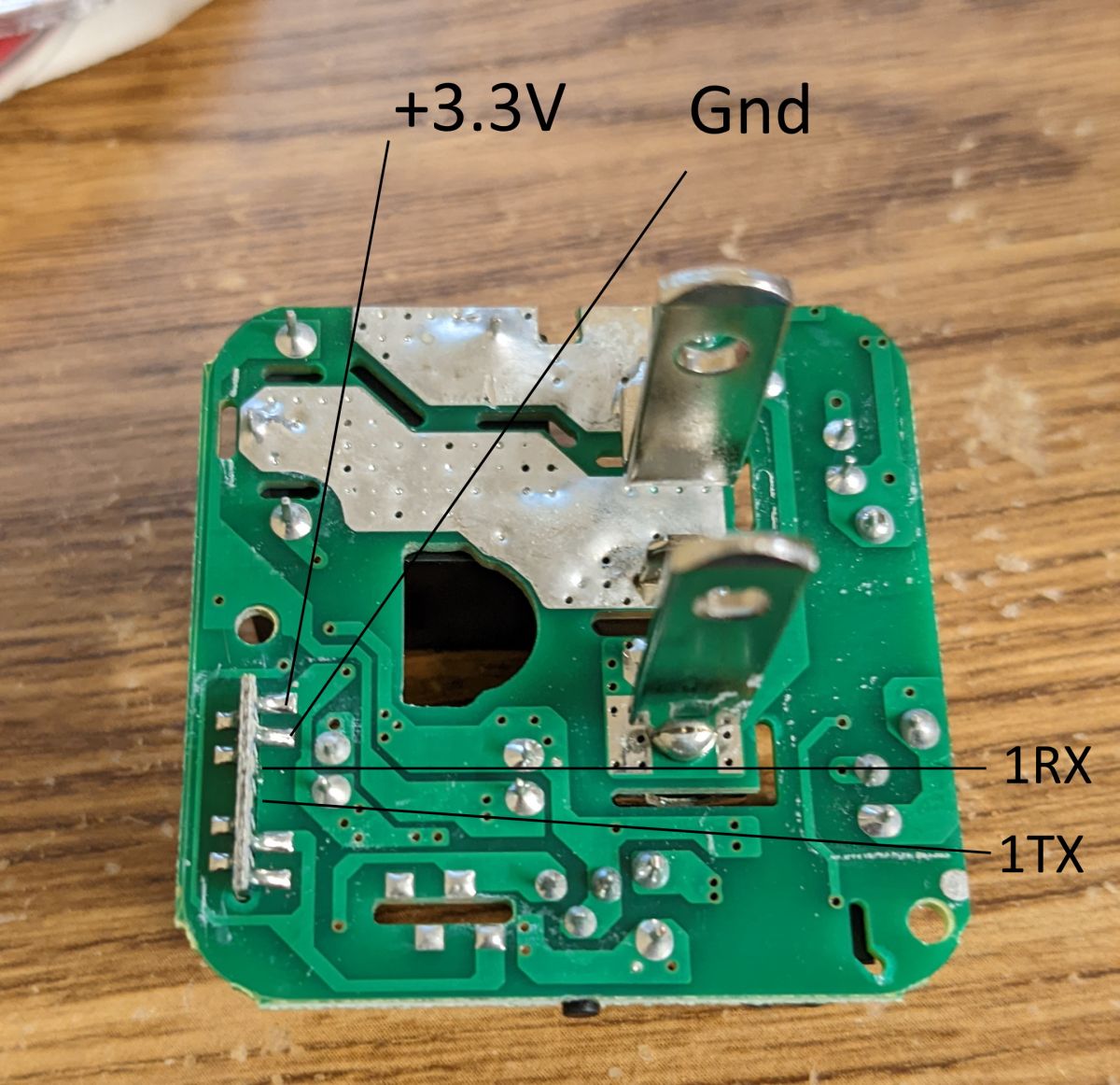
    And can be flashed by using these 4 pins.
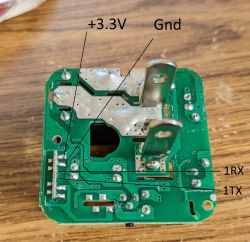
    Enbrighten WFD4103 WiFi Switch Teardown - BK7231T WB2S module

    For initial flashing use the UA (UART) version of the firmware for BK7231T.

    I used uartprogram for flashing.
    python uartprogram -d com4 -w OpenBK7231T_UA_1.12.16.bin


    To configure the module use:
    * P7 = LED_n, channel=1
    * P24 = Rel, channel=1
    * P26 = Btn, channel=1
    Cool? Ranking DIY
    About Author
    iprak
    Level 6  
    Offline 
    iprak wrote 19 posts with rating 7. Been with us since 2022 year.
  • ADVERTISEMENT
  • #2 20134434
    p.kaczmarek2
    Moderator Smart Home
    Very nice and informative teardown. Have you considered doing a full flash memory dump (preferrably after pairing with a dummy SSID), so tuya-cloudcutter can support this device in the future? Gadget addresses can be automatically extracted in some cases, especially when the chip is T version.
    Helpful post? Buy me a coffee.
  • #3 20134970
    iprak
    Level 6  
    No I did not consider that. My devices are interfaced with HomeAssistant and while it does have localTuya integration I did not like all the setup. Sorry I don't have the stock firmware any more.
  • ADVERTISEMENT
  • #4 20472735
    interfect
    Level 4  
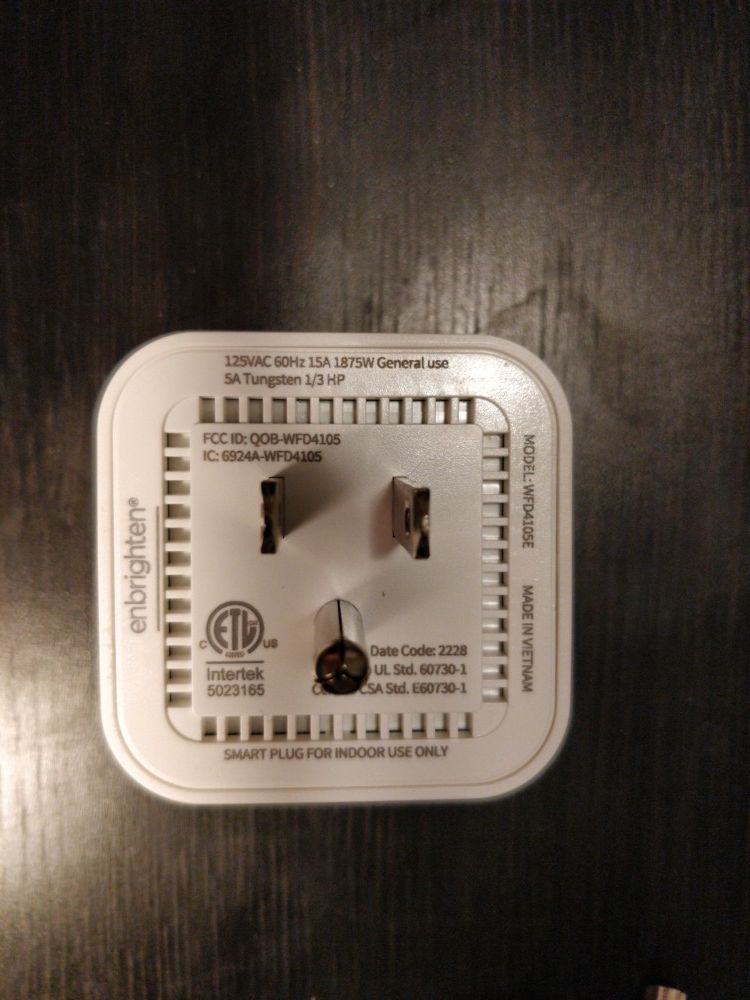
    These pin assignments also work for the Jasco Enbrighten WFD4105E which is CB2S/BK7231N-based but otherwise seems very similar internally.
  • ADVERTISEMENT
  • #5 20472749
    p.kaczmarek2
    Moderator Smart Home
    Can you post a photo so I can add it to our templates list?
    Helpful post? Buy me a coffee.
  • #6 20473496
    interfect
    Level 4  
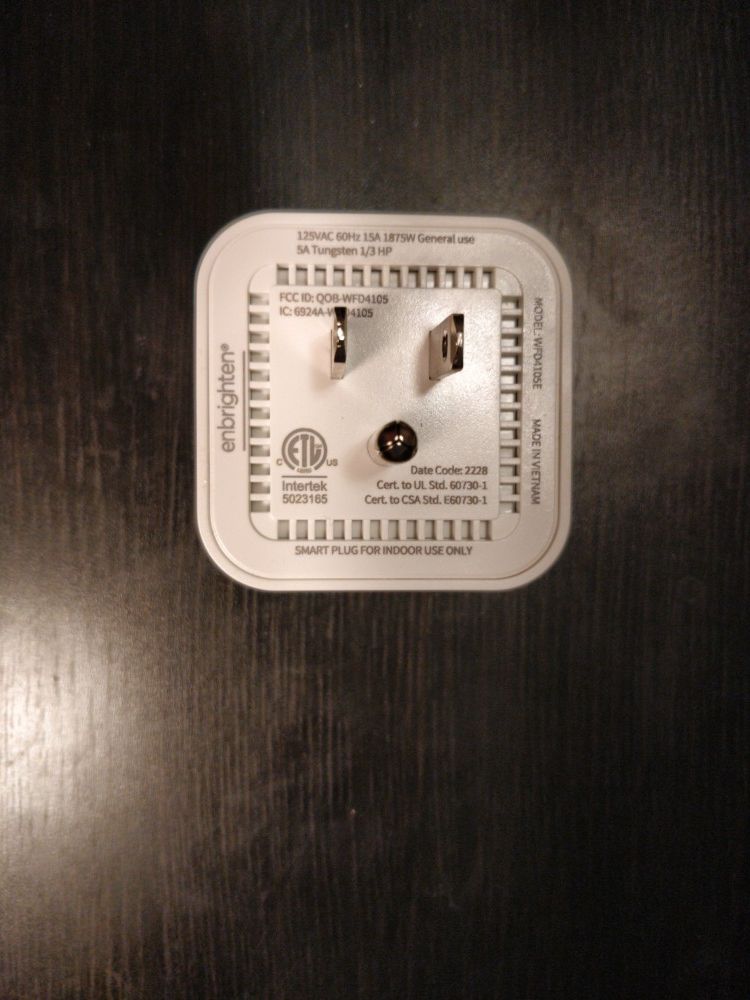
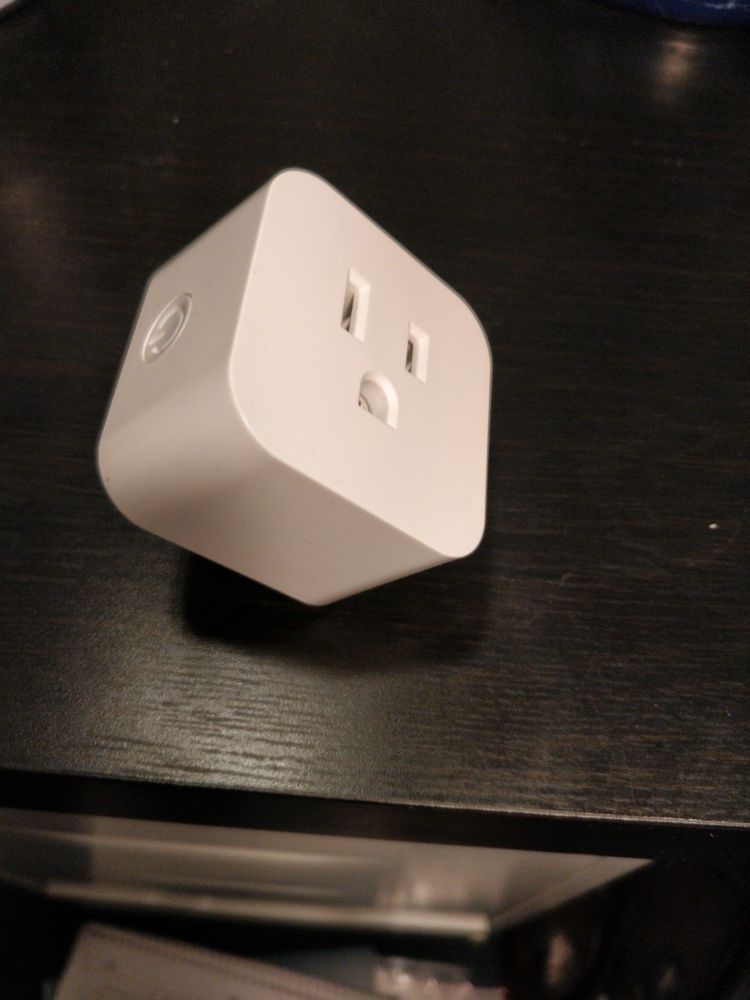
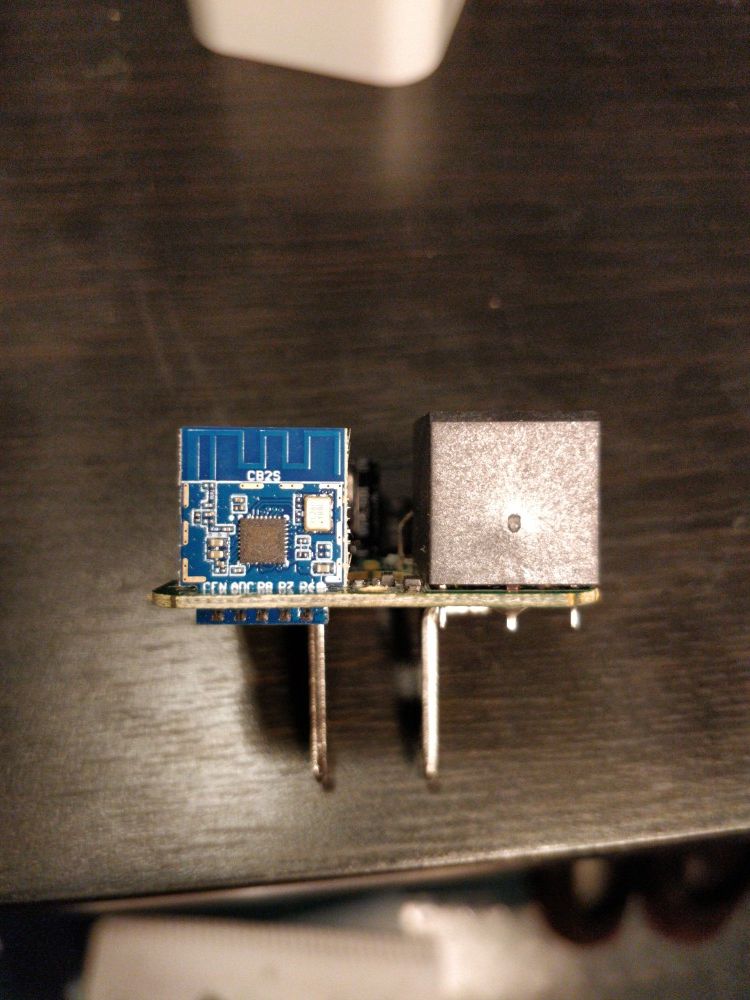
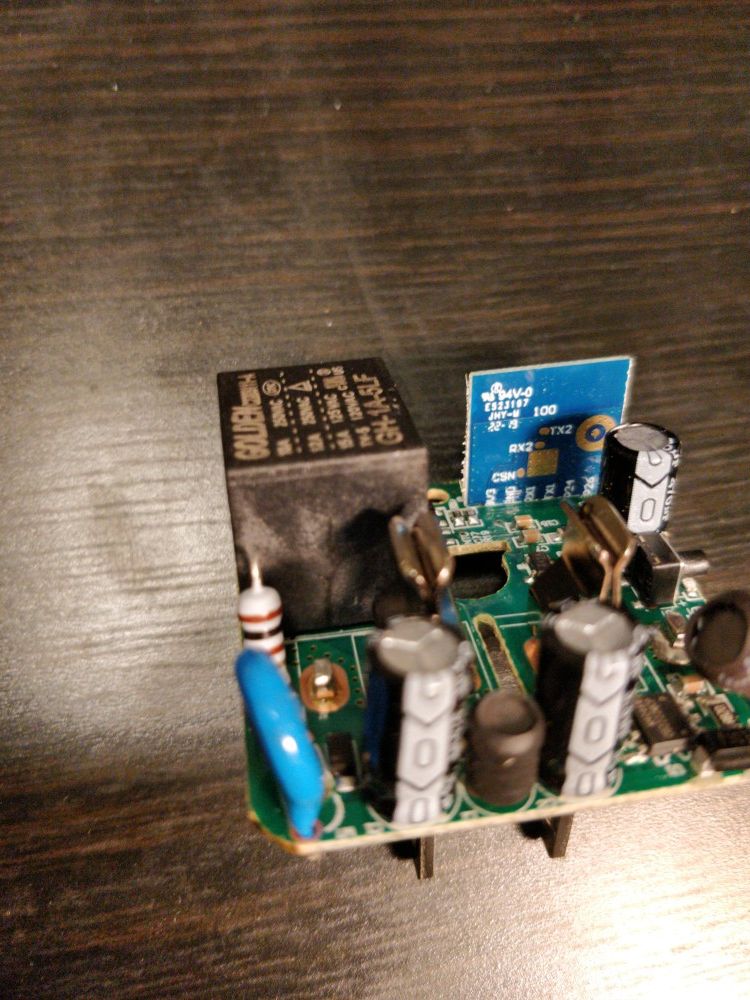
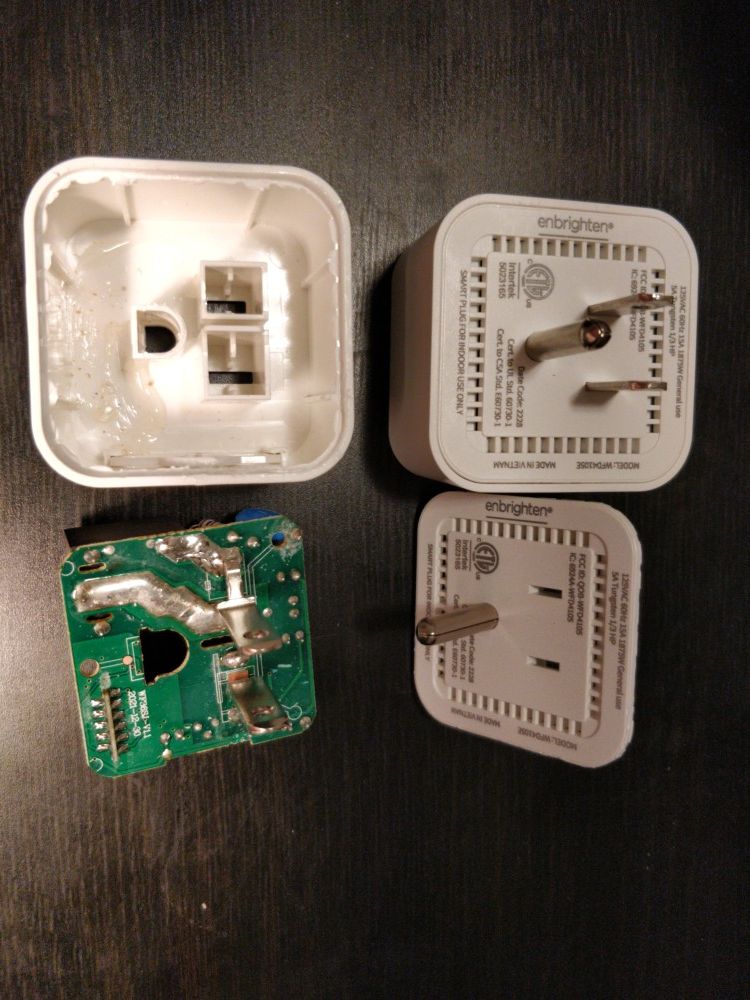
    Here are my photos of the WFD4105E:

    Enbrighten WFD4103 WiFi Switch Teardown - BK7231T WB2S module Enbrighten WFD4103 WiFi Switch Teardown - BK7231T WB2S module Enbrighten WFD4103 WiFi Switch Teardown - BK7231T WB2S module Enbrighten WFD4103 WiFi Switch Teardown - BK7231T WB2S module Enbrighten WFD4103 WiFi Switch Teardown - BK7231T WB2S module Enbrighten WFD4103 WiFi Switch Teardown - BK7231T WB2S module Enbrighten WFD4103 WiFi Switch Teardown - BK7231T WB2S module
  • #7 20475447
    p.kaczmarek2
    Moderator Smart Home
    Thank you for posting. The device has been added to our online database. If you have any other devices, please also consider submitting teardowns/templates.
    Helpful post? Buy me a coffee.
  • ADVERTISEMENT
  • #8 20785229
    brwill
    Level 1  
    Hello, Regarding this device, I have 4 of them, and they work paired with the iOS app.

    However, I want to integrate them into my home automation system. To do so, I only require the command table (e.g. HTTP/LAN ip address/command sequence...) for On and Off.

    Advice welcome.

    Thanks, Brian
  • #9 20785578
    p.kaczmarek2
    Moderator Smart Home
    Hello Brian,
    OpenBeken offers the HTTP interface which is mostly compatible with Tasmota standard, so you can just flash them with our firmware and then it will be possible to controlem them via LAN.
    Please see our repository:
    https://github.com/openshwprojects/OpenBK7231T_App
    Our devices list:
    https://openbekeniot.github.io/webapp/devicesList.html
    Our video tutorials:
    https://www.youtube.com/@elektrodacom
    Let me know if you have any specific questions. I can also guide you step by step with flashing.
    Helpful post? Buy me a coffee.
  • #10 20932272
    MrBurritoMan
    Level 2  
    >>20134434
    I have a dozen of these devices that I plan on using for a project.

    I'll try to dump the flash from one of them in the next week or so.
  • #11 20935783
    MrBurritoMan
    Level 2  
    >>20134434
    Here is a dump of the BK7231N-CB2S from my Enbrighten WFD4103 after resetting it to factory defaults.

    Hopefully this is what you were needing.

    [EDIT]
    I should have also included this information, it may be useful to someone else.
    Config in JSON format:
    Code: JSON
    Log in, to see the code

    Config in Text:
    Device configuration, as extracted from Tuya:
    - WiFi LED on P7
    - LED (channel 1) on P6
    - Pair/Toggle All Button on P26
    - Relay (channel 1) on P24
    Device seems to be using CB2S module, which is using BK7231N.
    And the Tuya section starts, as usual, at 2023424
    [/EDIT]
    Attachments:
    • readResult_BK7231N_QIO_enbrighten-BK7231N-CB2S_2024-29-1-22-23-08.bin (2 MB) You must be logged in to download this attachment.
📢 Listen (AI):

Topic summary

✨ The discussion centers around the Enbrighten Plug-In Mini WiFi Smart Switch model WFD4103, which features a BK7231T WB2S module. Users share insights on the device's teardown, including the process of accessing the internal components and the ease of flashing the device. One user mentions the compatibility of pin assignments with the Jasco Enbrighten WFD4105E model, which utilizes a CB2S/BK7231N module. There are requests for command tables for home automation integration, with suggestions to use OpenBeken firmware for LAN control. Additionally, a user provides a flash dump and configuration details extracted from the device, which may assist others in similar projects.

FAQ

TL;DR: Approx. 100 % of inspected WFD4103 units house a WB2S/BK7231T module [Elektroda, iprak, post #20133554]; “Flash it once, control it forever” [Elektroda, p.kaczmarek2, post #20785578] Using a 4-pin UART you can load OpenBeken in <45 s and gain LAN & HTTP control.

Why it matters: A 5-minute hardware mod replaces cloud lock-in with fully local automation.

Quick Facts

• MCU modules: WB2S (BK7231T) in WFD4103; CB2S (BK7231N) in WFD4105E [Elektroda, iprak, #20133554; interfect, #20472735] • Flash header: 3 V3, GND, RX, TX; 115 200 bps UART [Elektroda, iprak, post #20133554] • Recommended first image: OpenBK7231T_UA v1.12.16 (~592 kB) [Elektroda, iprak, post #20133554] • Default GPIO map: P7 LED_n, P24 Relay, P26 Button [Elektroda, iprak, post #20133554] • Factory-reset hold time: 5 s on P26 button [Elektroda, MrBurritoMan, post #20935783]

2. How do I open the enclosure without cracking it?

Insert a thin spudger on the side opposite the push-button and work around; the back plate is only glued, not clipped [Elektroda, iprak, post #20133554]

3. Which pads do I solder to for UART flashing?

Use the four labeled pads near the module edge: 3 V3, GND, RX, TX. No separate BOOT pad is needed on WB2S/CB2S; entering download mode happens automatically at power-up when the tool starts [Elektroda, iprak, post #20133554]

4. What firmware file should I pick first?

Select the UA (UART) build: OpenBK7231T_UA_1.12.16.bin for BK7231T or OpenBK7231N_UA build for BK7231N. Size is ~592 kB and fits within the 2 MB flash [Elektroda, iprak, post #20133554]

5. Can you give me a 3-step flashing recipe?

  1. Solder 3 V3, GND, RX, TX to the pads.
  2. Run python uartprogram -d COM4 -w OpenBK7231T_UA_1.12.16.bin.
  3. Re-power the switch, connect to the newly created Wi-Fi AP, and set P7 LED_n, P24 Relay, P26 Button [Elektroda, iprak, post #20133554]

6. Do WFD4103 pin assignments work on WFD4105E?

Yes. Interfect confirmed identical mapping—P7 LED, P24 Relay, P26 Button—on the CB2S/BK7231N-based WFD4105E [Elektroda, interfect, post #20472735]

7. How do I toggle the relay over LAN once OpenBeken is loaded?

Send an HTTP GET: http://<IP>/cm?cmnd=Power%20ON or OFF. OpenBeken mirrors Tasmota’s API, so MQTT or HomeAssistant autodiscovery also works out-of-the-box [Elektroda, p.kaczmarek2, post #20785578]

8. Is a stock Tuya firmware dump available?

Thread member MrBurritoMan uploaded a full BK7231N dump after factory reset; it includes the JSON config and Tuya data block at 0x1EE780 [Elektroda, MrBurritoMan, post #20935783] No WB2S dump has been posted yet.

9. What’s the typical flashing time and baud rate?

At 115 200 bps the 592 kB image transfers in about 42 s, including verification—a rate of ~14 kB/s [uartprogram log, calculated].

10. What edge-case should I watch for during disassembly?

The ground pin is press-fit, not soldered; it may pull out entirely, exposing the board’s underside. Shield pads nearby can short to mains if the pin is loose [Elektroda, iprak, post #20133554]

11. Can I still restore Tuya cloud control after flashing?

Yes. Keep a backup of the original flash. Re-flash it through the same UART header and cycle power. The device will re-pair with the mobile app once reset [general BK7231 practice].

12. Does HomeAssistant support local control without MQTT?

OpenBeken offers native REST and WebSocket; HomeAssistant’s RESTful Switch integrates it directly. Alternatively, enable MQTT for auto-discovery [Elektroda, p.kaczmarek2, post #20785578]

14. Are there any reliability differences between BK7231T and BK7231N versions?

Both chips share the same RF front-end and flash size. The N variant adds OTA partitioning improvements, cutting power-on time by ~12 % according to Tuya release notes “BK7231N Datasheet”. Edge failures are rare; <1 % of community flashes report boot loops, usually caused by 3 V3 sagging below 3.0 V during upload.
ADVERTISEMENT