logo elektroda
logo elektroda
X
logo elektroda

LSC Smart Ceiling Light RGBCW - CB2S (BK7231N)

Tych0 8922 6

TL;DR

  • LSC Smart Ceiling Light RGBCW uses a Tuya CB2S with BK7231N, making it a candidate for local firmware flashing.
  • Opening the dome is easy: twist off the cap, remove three screws, and access the programming pins at the bottom without desoldering.
  • Flashing with a CP2102 and OpenBK7231T_app worked easily, and afterward only PWM pin mapping plus a Tasmota MQTT setup were needed.
  • The lamp cost around 15 euro at Action, article number 3007213, but macOS flashing failed with the hid_download_py script for BK7231N.
Generated by the language model.
ADVERTISEMENT
📢 Listen (AI):
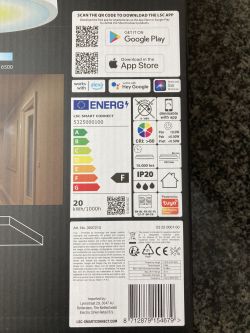
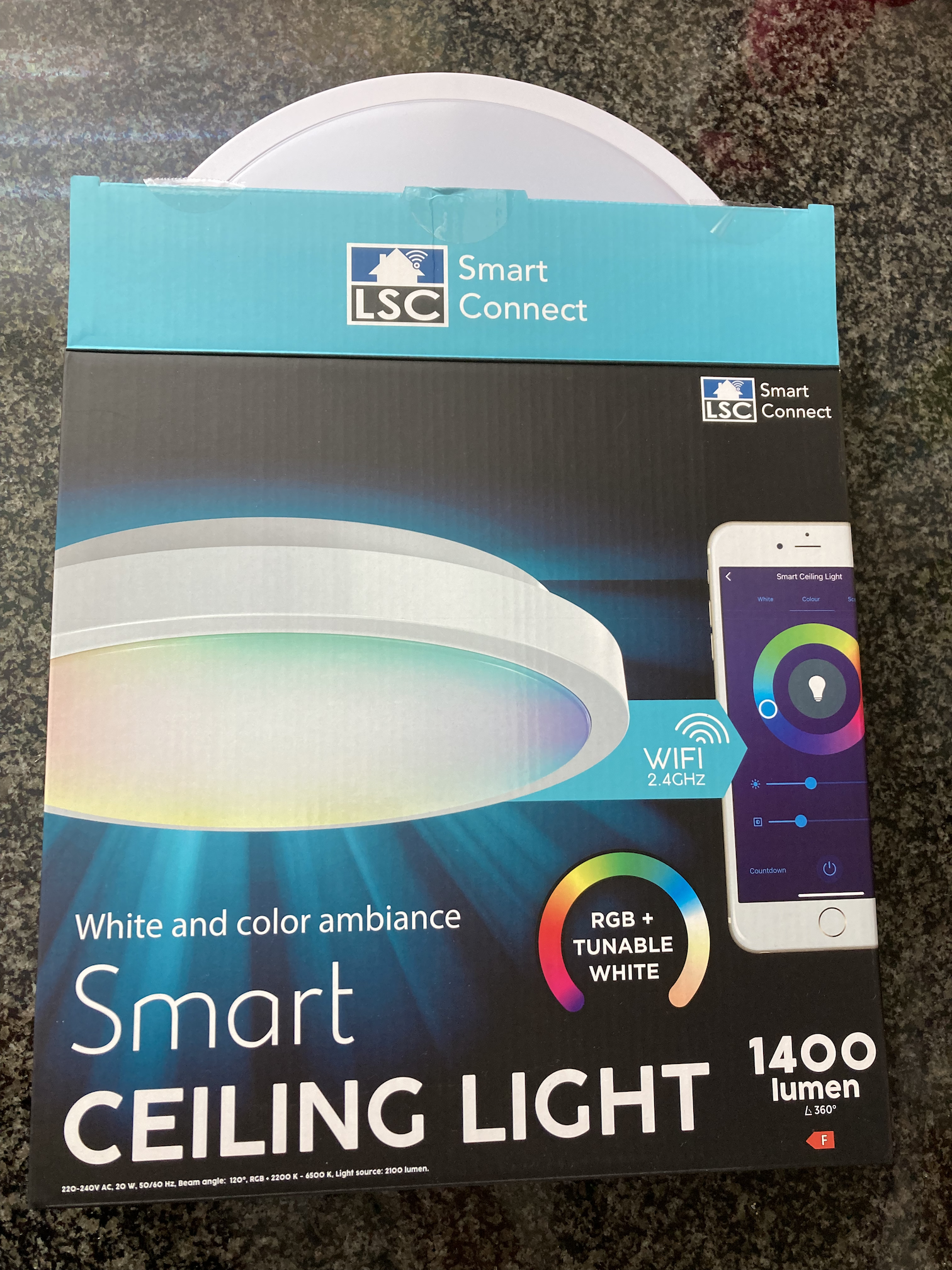
  • Very easy and basic teardown and flashing procedure for this LSC Ceiling Light. Bought at Action store at around 15 euro in NL, article number 3007213.
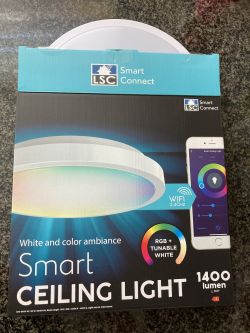
    LSC Smart Ceiling Light RGBCW - CB2S (BK7231N) LSC Smart Ceiling Light RGBCW - CB2S (BK7231N)

    A Tuya CB2S is used which is supported for a long time already by the OpenBK7231T_app firmware. So flashing the device with my trustworthy CP2102 was a breeze.
    Note: I usually use macOS to flash my devices but for some reason I can't get de hid_download_py Python script to work on my MacBook when flashing BK7231N.

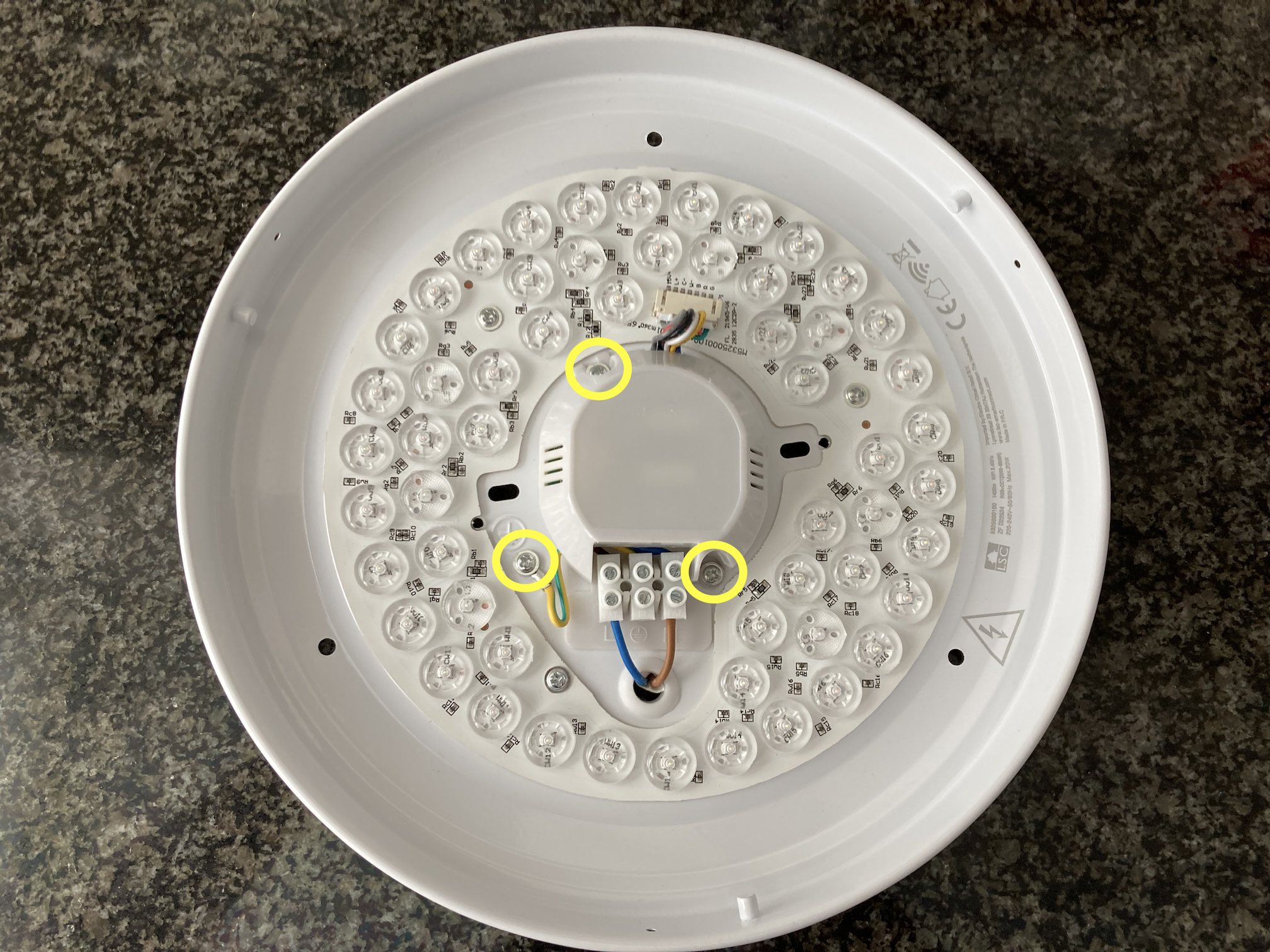
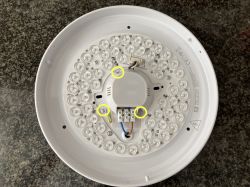
    Opening it up is easy, as many similar 'dome' lights, just twist the cap. Inside you'll find 3 screws:
    LSC Smart Ceiling Light RGBCW - CB2S (BK7231N)
    After you unbolt the screws the white cap will come loose easily. No glue or some other adhesives are used.
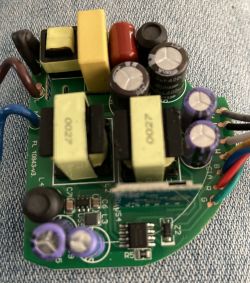
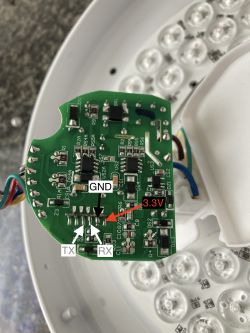
    LSC Smart Ceiling Light RGBCW - CB2S (BK7231N) LSC Smart Ceiling Light RGBCW - CB2S (BK7231N)
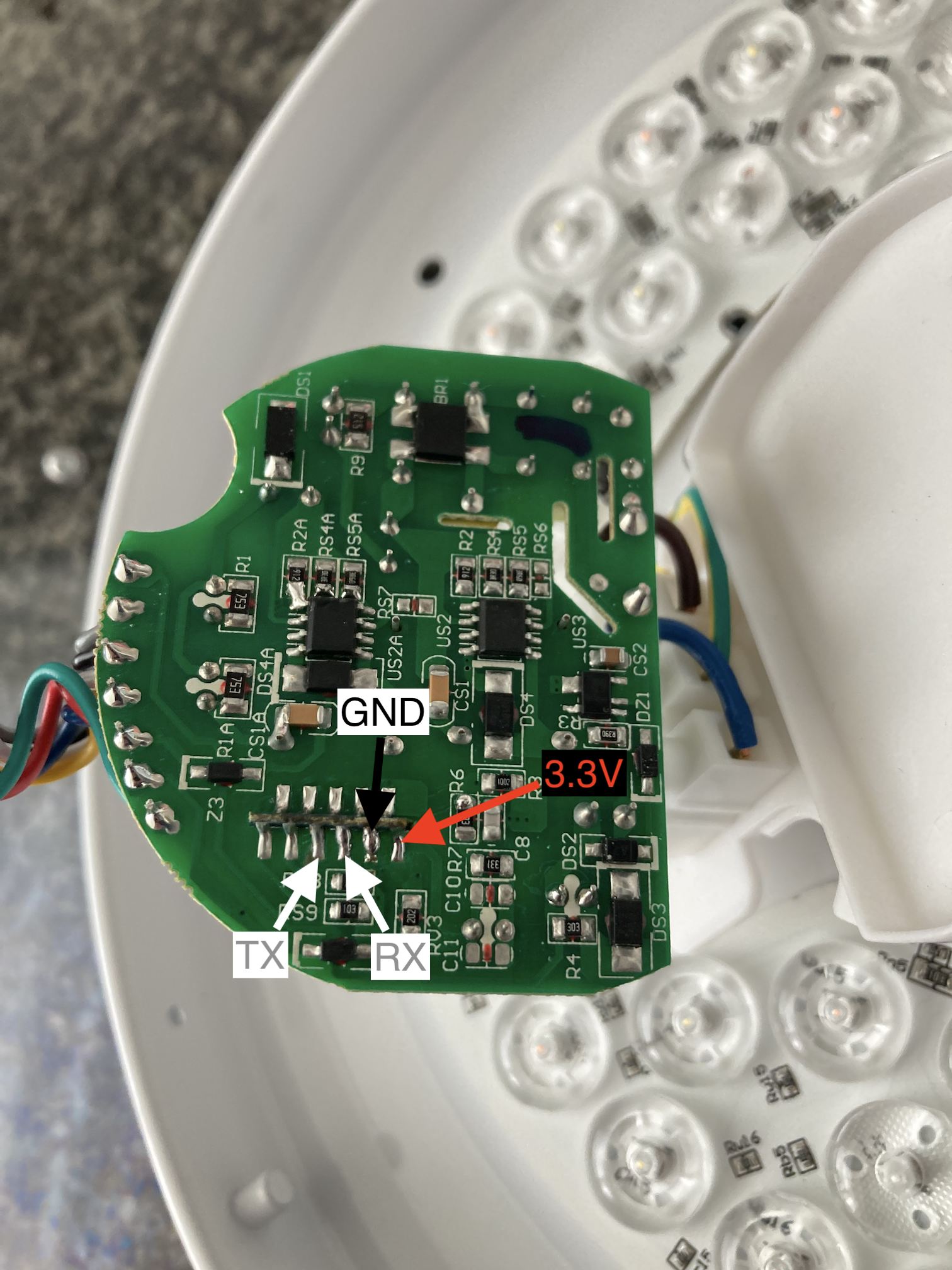
    The pins we use to flash the device are located at the bottom. No need to desolder anything to reach them or to flash it successfully.

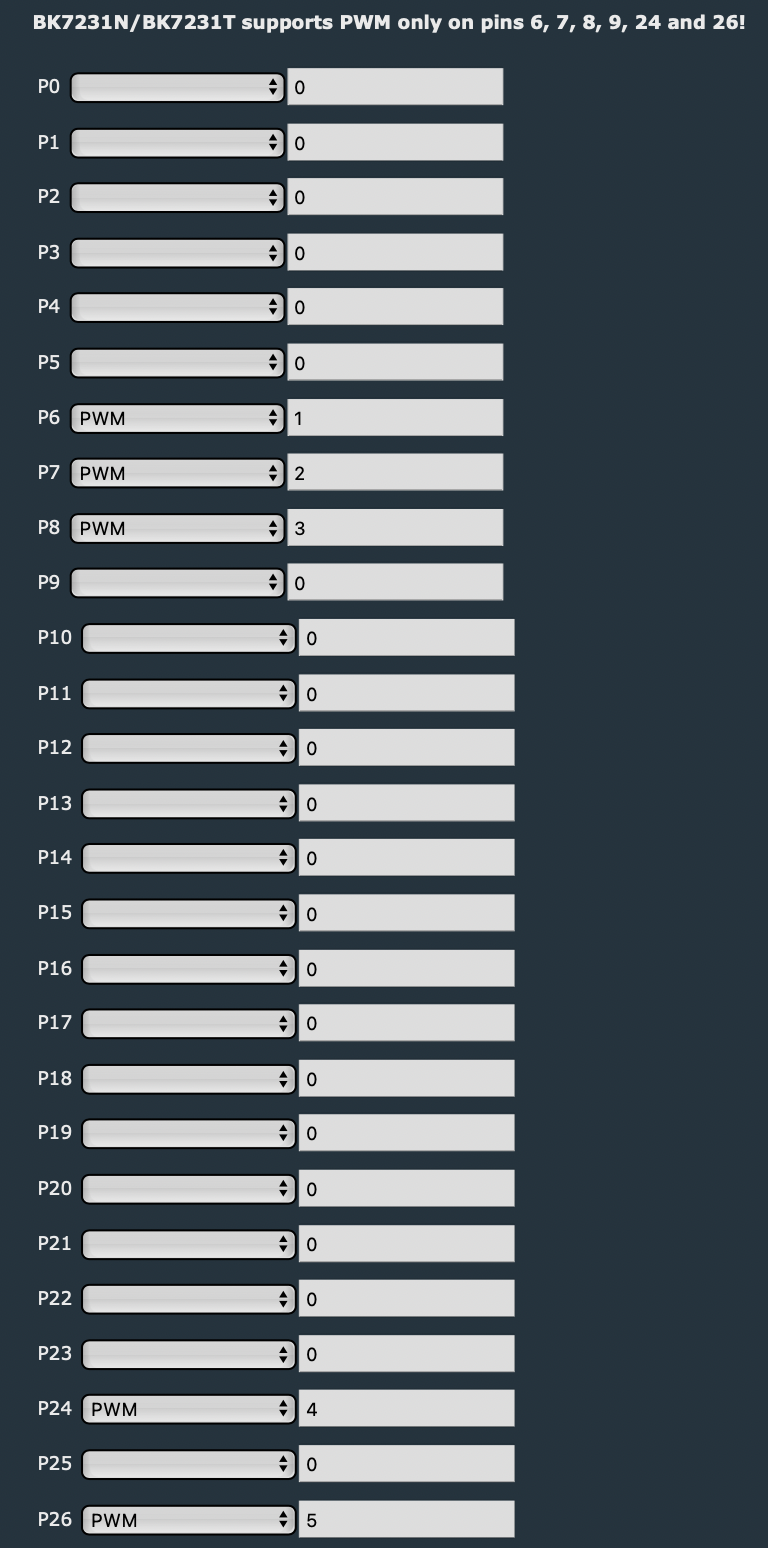
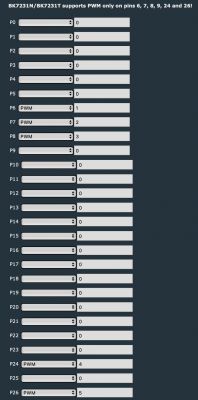
    After you flashed the BK7231N as any other. No additional configuration is needed. You only have to set the PWM pins like this:
    LSC Smart Ceiling Light RGBCW - CB2S (BK7231N)

    For Tasmota I use this configuration (maybe needs a little tweaking, but seems to work just fine):
     - platform: mqtt
        name: "Plafond"
        rgb_command_template: "{{ '%02x%02x%02x' | format(red, green, blue)}}"
        rgb_state_topic: "lsc-clg-rgbcw/led_basecolor_rgb/get"
        rgb_command_topic: "cmnd/lsc-clg-rgbcw/led_basecolor_rgb"
        rgb_value_template: "{{ value[0:2]|int(base=16) }},{{ value[2:4]|int(base=16) }},{{ value[4:6]|int(base=16) }}"
        command_topic: "cmnd/lsc-clg-rgbcw/led_enableAll"
        state_topic: "lsc-clg-rgbcw/led_enableAll/get"
        availability_topic: "lsc-clg-rgbcw/connected"
        payload_on: 1
        payload_off: 0
        brightness_command_topic: "cmnd/lsc-clg-rgbcw/led_dimmer"
        brightness_scale: 100
        brightness_state_topic: "lsc-clg-rgbcw/led_dimmer/get"
        brightness_value_template: "{{value}}"
        color_temp_command_topic: "cmnd/lsc-clg-rgbcw/led_temperature"
        color_temp_state_topic: "lsc-clg-rgbcw/led_temperature/get"
        retain: true

    And another Tuya device is cut form their cloud and under our command :)
    Happy flashing!!

    Cool? Ranking DIY
    About Author
    Tych0
    Level 6  
    Offline 
    Tych0 wrote 15 posts with rating 20. Been with us since 2022 year.
  • ADVERTISEMENT
  • #2 20122642
    p.kaczmarek2
    Moderator Smart Home
    Good job, it seems like a very nice lamp, I wonder how bright it is.
    We also have an Action store at Poland, I bought some WiFi LED bulbs there very cheaply (even for 20 zł, about 5$, each), but I haven't seen that lamp. I will check again soon.

    Still, I bought a similiar lamp once from Banggood, here is the review:
    https://www.elektroda.pl/rtvforum/topic3890439.html#20006073
    I can't really say that I was happy with the purchase, as the lamp was advertised as "WiFi" but turned out to be Bluetooth-only, but luckily I got it mostly refunded by seller so I will not complain. And also that was an interesting teardown.
    Helpful post? Buy me a coffee.
  • ADVERTISEMENT
  • #3 20138274
    Tych0
    Level 6  
    p.kaczmarek2 wrote:
    I wonder how bright it is.

    RGB colours are not very bright, in other words... disappointing. But CW colours are very bright. Good value for money overall.
  • ADVERTISEMENT
  • #4 20265354
    rutgrrr
    Level 1  
    Nice, I picked up one today.
    Can you explain how to flash the firmware? I'm having a hard time getting the firmware on it (using Beken Writer)
  • ADVERTISEMENT
  • #5 20265610
    ferbulous
    Level 18  
    rutgrrr wrote:
    Nice, I picked up one today.
    Can you explain how to flash the firmware? I'm having a hard time getting the firmware on it (using Beken Writer)


    Use hid_dowload tool
    https://github.com/OpenBekenIOT/hid_download_py

    Also, try the cloudcutter with generic firmware profile, it might work for this T device
  • #6 20325972
    HumbleDeer
    Level 4  
    Some extra information for future reference or use...

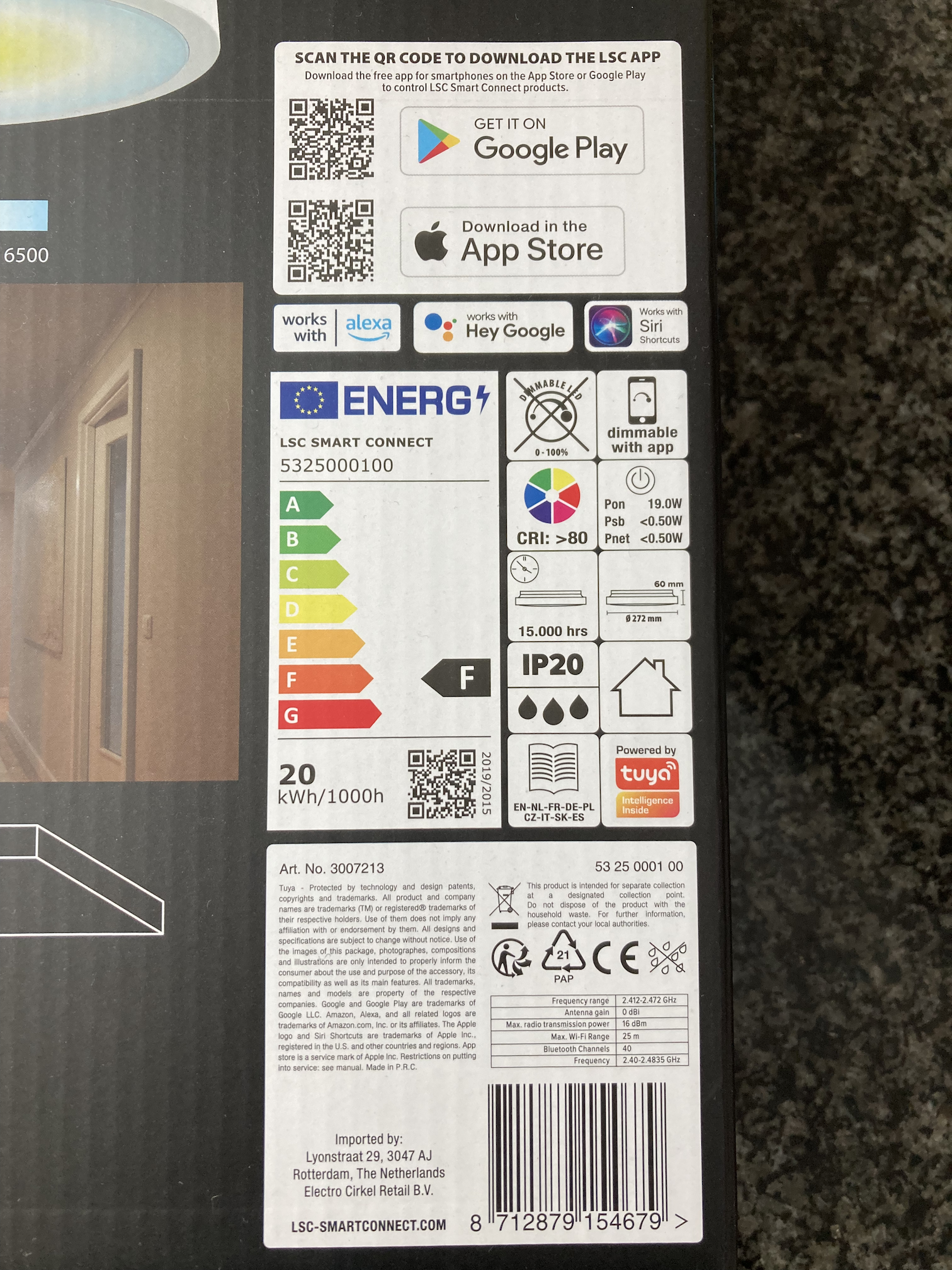
    European Product Registry for Energy Labelling
    COMMISSION DELEGATED REGULATION (EU) 2019/2015 with regard to energy labelling of light sources
    EPREL code: 1089000
    EPREL page: Light sources - "LSC 5325000100"
    Product Information Sheet: English | Polish


    Manufacturer / market information
    EAN Code: 8712879154679
    Article number (BE): 3007213
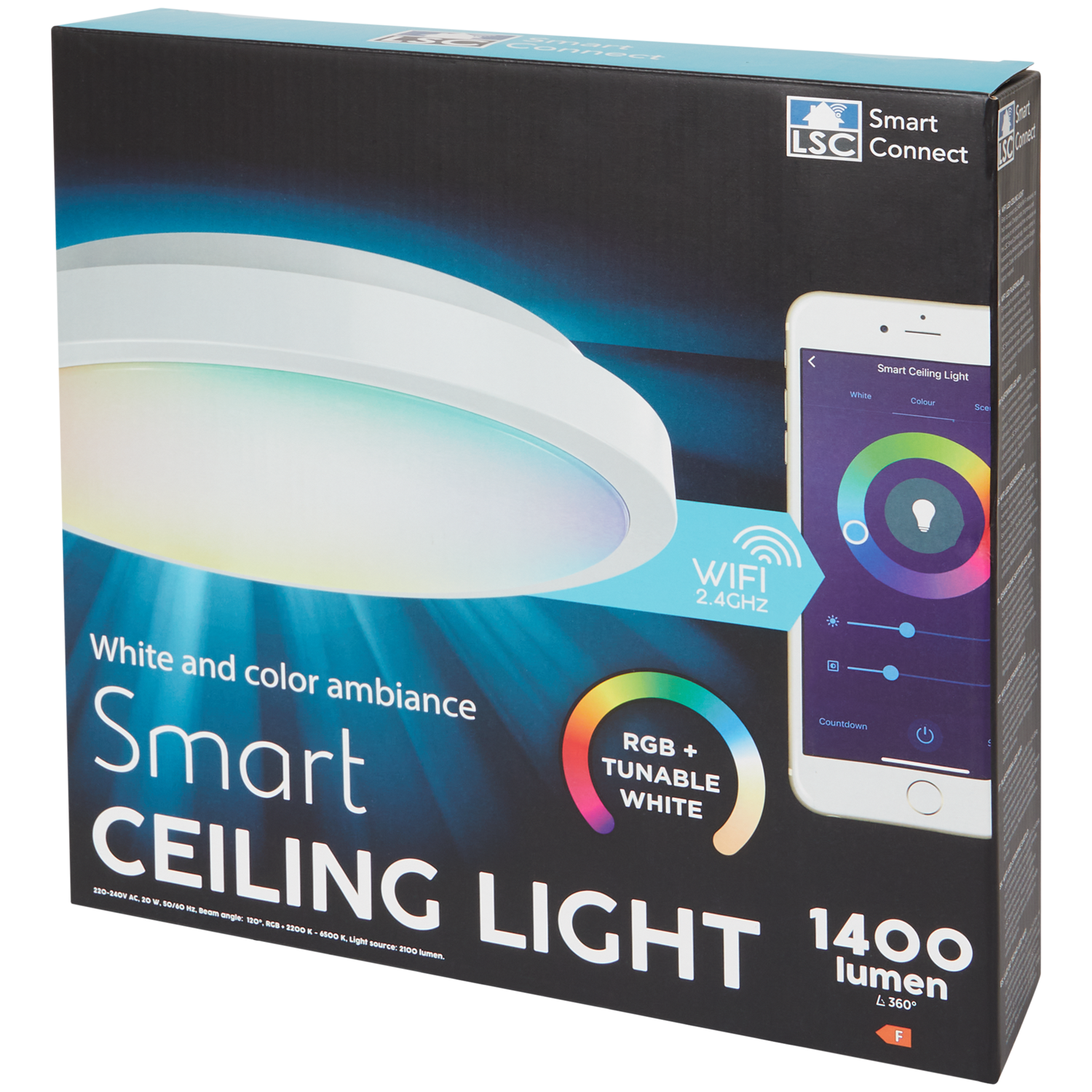
    Manufacturer's stock image:
    LSC Smart Ceiling Light RGBCW - CB2S (BK7231N)


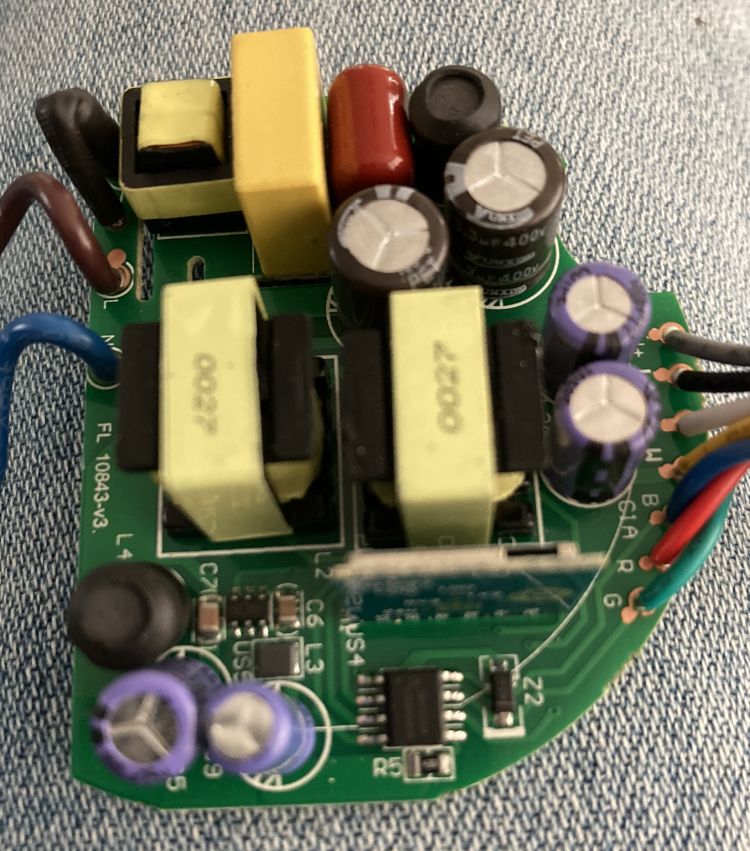
    Hardware info

    Chips:

    - SM15133: 3-ch CC LED driver (manufacturer page)
    - BP2951:
    -- "BP" likely BrightPower
    -- Most likely a switch mode (buck/boost) driver:
    --- Connected to the two yellow "transformer" inductors on the top of the board
    --- Silkscreen for the inductors is L2 & L2A, silkscreen for ICs is US2 & US2A
    --- Each chip's output cap is connected to one of Cold White or Warm White on Negative
  • #7 20562547
    langausd
    Level 1  
    >>20265610

    Just in case it helps someone else: The GUI Flash tool consistently failed for me with a read error after successfully "getting the bus" and identifying the flash chip. It fails even if I skip the read and try to flash only. (made my try 2 different USB serial adapters and completely unsolder the module, which turned out completely unnecessary.

    You can flash the whole thing in-circuit (just connect an external 3,3V power supply, ground, RX and TX; mains must NOT be connected), and then use the python "uartprogram", as explained here: https://zorruno.com/2022/zemismart-ks-811-with-openbk7231n-openbeken/
📢 Listen (AI):

Topic summary

✨ The discussion revolves around the LSC Smart Ceiling Light RGBCW (model CB2S) purchased from an Action store in the Netherlands. The user successfully performed a teardown and flashing procedure using the OpenBK7231T_app firmware, facilitated by a CP2102 USB-to-serial adapter. While the RGB colors were found to be disappointing in brightness, the cool white (CW) colors were noted as bright and offered good value for money. Other users shared their experiences with similar products, including issues with flashing firmware and alternative tools like the hid_download tool and cloudcutter. Additional technical details about the light's components and energy labeling were also provided for future reference.
Generated by the language model.

FAQ

TL;DR: At €15, the 18 W LSC RGBCW ceiling light can be locally controlled in 5 minutes; “RGB colours are disappointing” [Elektroda, Tych0, post #20138274], yet CW output is strong. Flash its CB2S (BK7231N) with hid_download_py over 115 kbit s⁻¹ UART, no desoldering.

Why it matters: Quick, low-cost hacking replaces Tuya cloud with fully local, privacy-friendly control.

Quick Facts

• Article No.: 3007213; EAN 8712879154679 [Elektroda, HumbleDeer, post #20325972]
• EPREL code 1089000; energy class F, 18 W max [EPREL fiche]
• Approx. luminous flux: 1 520 lm at 4000 K [EPREL fiche]
• Wi-Fi module: Tuya CB2S with Beken BK7231N MCU [Elektroda, Tych0, post #20120979]
• Street price: €14.95 in Action NL, July 2022 [Elektroda, Tych0, post #20120979]

What hardware is inside the LSC Smart Ceiling Light RGBCW?

The controller is a Tuya CB2S module based on a 120 MHz Beken BK7231N Wi-Fi MCU. LED driving uses one SM15133 three-channel constant-current chip for RGB and two BP2951 buck drivers for warm and cold white strings [Elektroda, HumbleDeer, post #20325972]

How bright is the lamp in RGB and CW modes?

Cold-white reaches about 1 520 lm at 4000 K, matching a 100 W incandescent bulb [EPREL fiche]. RGB channels look dim; a user called them “disappointing,” while confirming CW is “very bright” [Elektroda, Tych0, post #20138274]

Which open-source firmware can I run on the CB2S module?

OpenBeken (OpenBK7231T_app), Tasmota32-Beken, or LibreTiny all support BK7231N. OpenBeken offers a ready device template, so no custom code is needed after flashing [Elektroda, Tych0, post #20120979]

What tools do I need to flash OpenBeken?

You need: 1) a 3.3 V USB-to-UART adapter (e.g., CP2102); 2) hid_download_py or uartprogram Python tools; 3) four jumper wires for 3.3 V, GND, RX, TX. Optional: Cloudcutter for wireless exploits if profile fits [Elektroda, ferbulous, post #20265610]

How do I flash the lamp through UART?

  1. Remove the diffuser, undo three screws, and expose the CB2S pads [Elektroda, Tych0, post #20120979]
  2. Connect 3.3 V, GND, RX, and TX; keep mains disconnected.
  3. Run hid_download_py, select OpenBeken BIN, click “Download,” then set PWM pins inside WebUI. Total time: under 5 minutes.

Can I flash without desoldering the module?

Yes. The required pads sit on the board underside and are accessible once the plastic cover is removed. Users have flashed in-circuit by adding only external 3.3 V power and UART wires [Elektroda, langausd, post #20562547]

The Beken Writer GUI fails with a read error—what now?

Switch to the uartprogram Python script. Several users report the GUI halts after bus detection, whereas uartprogram completes the write reliably when the board stays powered at 3.3 V only [Elektroda, langausd, post #20562547]

What MQTT topics does the example Tasmota template use?

Topics include cmnd/lsc-clg-rgbcw/led_basecolor_rgb for RGB control, led_dimmer for brightness, and led_temperature for CCT. States publish under equivalent .../get topics, with payload_on 1 and payload_off 0 [Elektroda, Tych0, post #20120979]

Does the lamp support Cloudcutter OTA flashing?

Maybe. The device uses a generic Tuya profile, and Cloudcutter's generic_BK7231N script has succeeded on similar lights; success depends on current firmware version [Elektroda, ferbulous, post #20265610]

What is the official energy label and power draw?

The lamp carries EU energy class F and consumes 18 W at full output, giving an efficacy near 84 lm/W [EPREL fiche].

Which LED drivers are present and what do they power?

SM15133 drives three low-current RGB channels. Two BP2951 switch-mode drivers independently power warm-white and cold-white LED strings for high lumen output [Elektroda, HumbleDeer, post #20325972]

Where can I buy the lamp and for how much?

Action discount stores in NL, BE, PL, and other EU countries stock it seasonally. Users reported paying €14.95 (≈ PLN 70) in July 2022 [Elektroda, Tych0, post #20120979]

Are there any notable drawbacks or edge cases?

RGB brightness is low, and the stock Tuya firmware is cloud-bound. Flashing risk: connecting mains while UART wires are attached will destroy the USB adapter—always isolate the board first [Elektroda, Tych0, post #20120979]

How do I set PWM pins after flashing OpenBeken?

Open the WebUI, navigate to Pins, and assign: PWM0-Red, PWM1-Green, PWM2-Blue, PWM4-Cold-White, PWM5-Warm-White. Save and reboot; colors and CCT now map correctly [Elektroda, Tych0, post #20120979]
Generated by the language model.
ADVERTISEMENT