logo elektroda
logo elektroda
X
logo elektroda
Dostępna jest polska wersja

Czy wolisz polską wersję strony elektroda?

Nie, dziękuję Przekieruj mnie tam

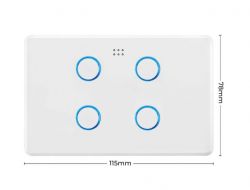
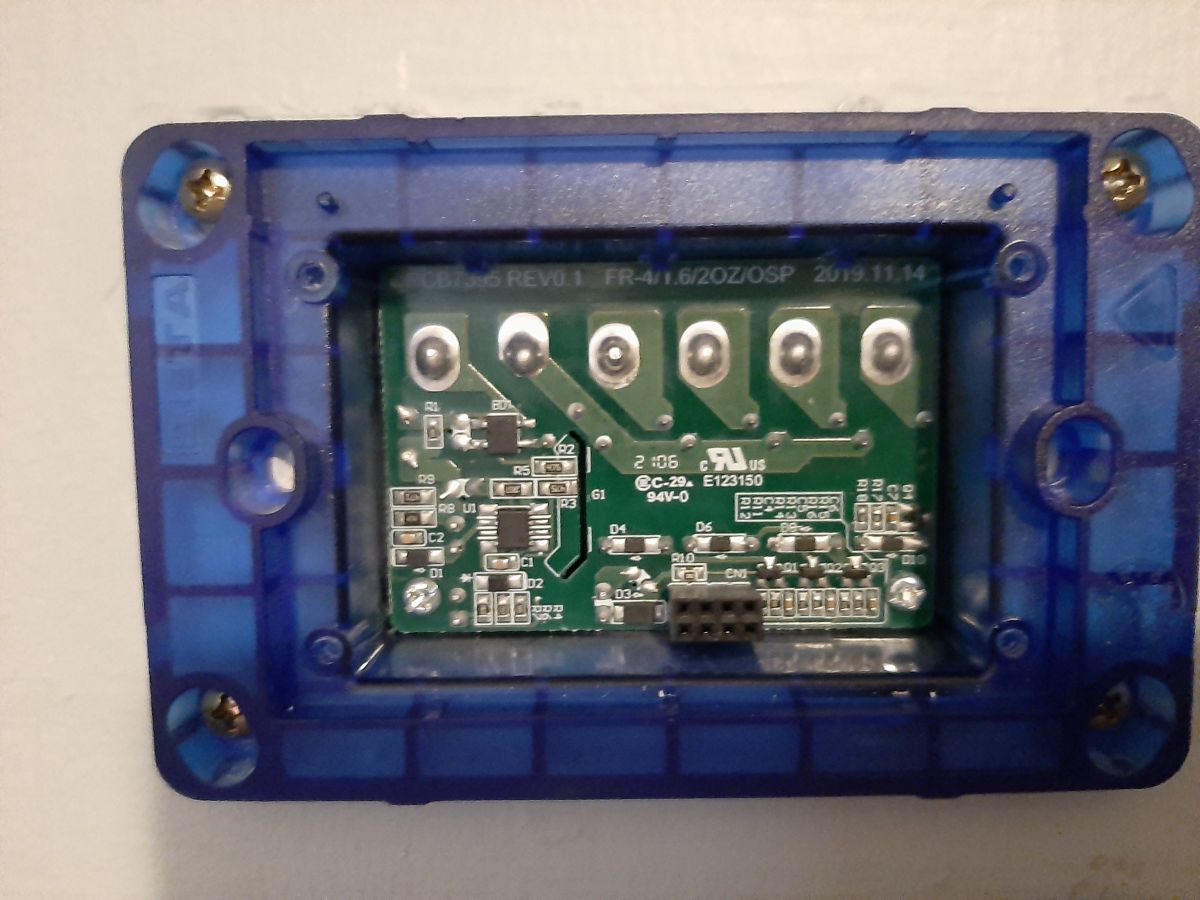
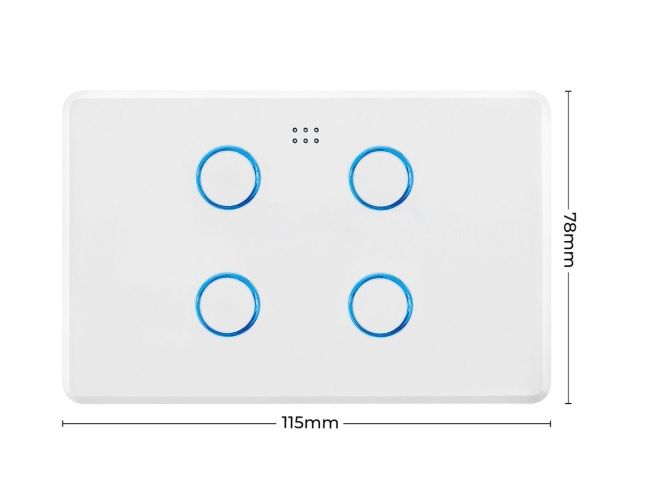
Deta Grid Connect Smart Quad Gang Touch Light Switch - 6904HA - Teardown

wolfieeewolf 3072 7

TL;DR

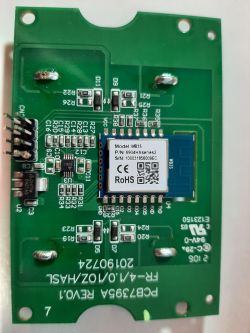
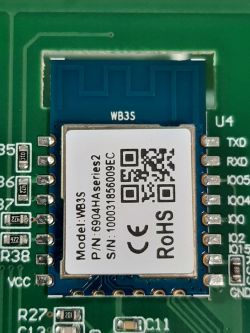
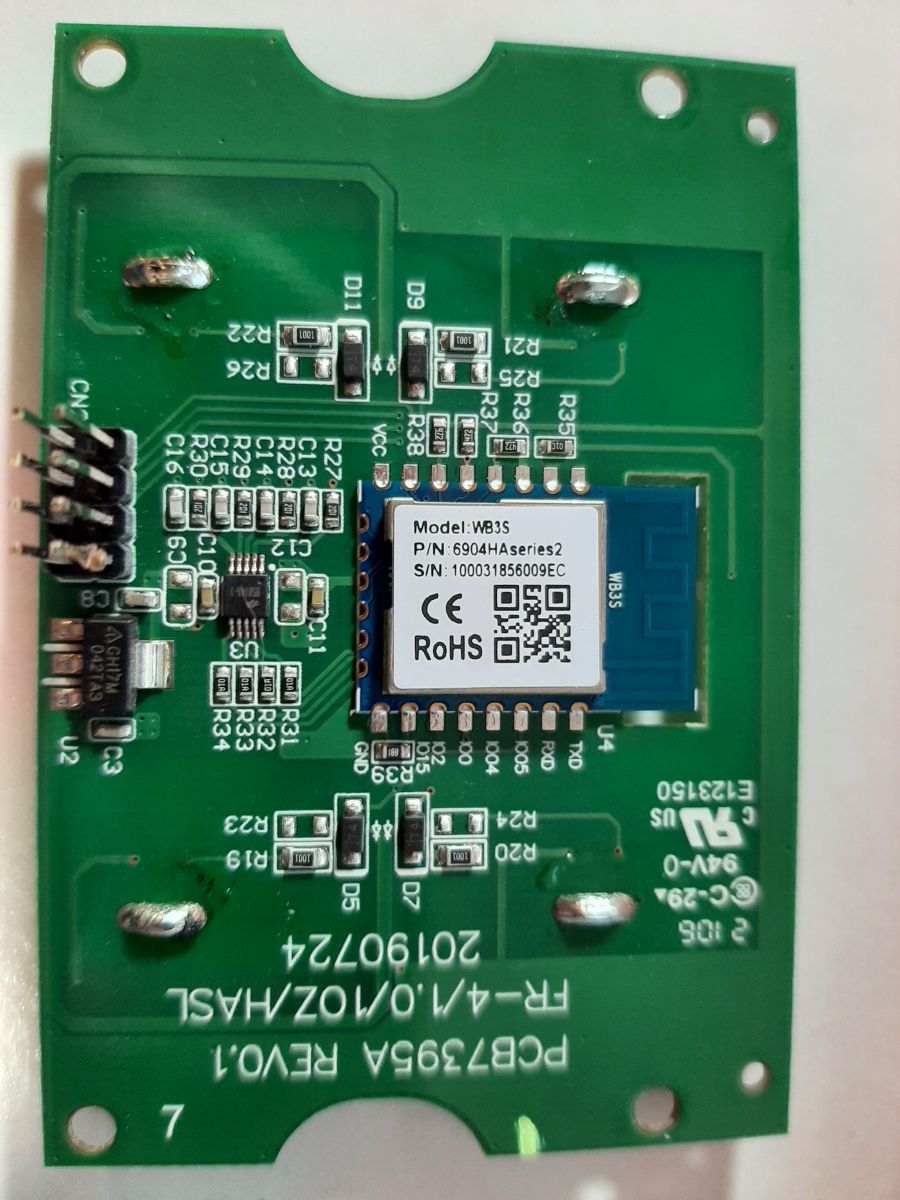
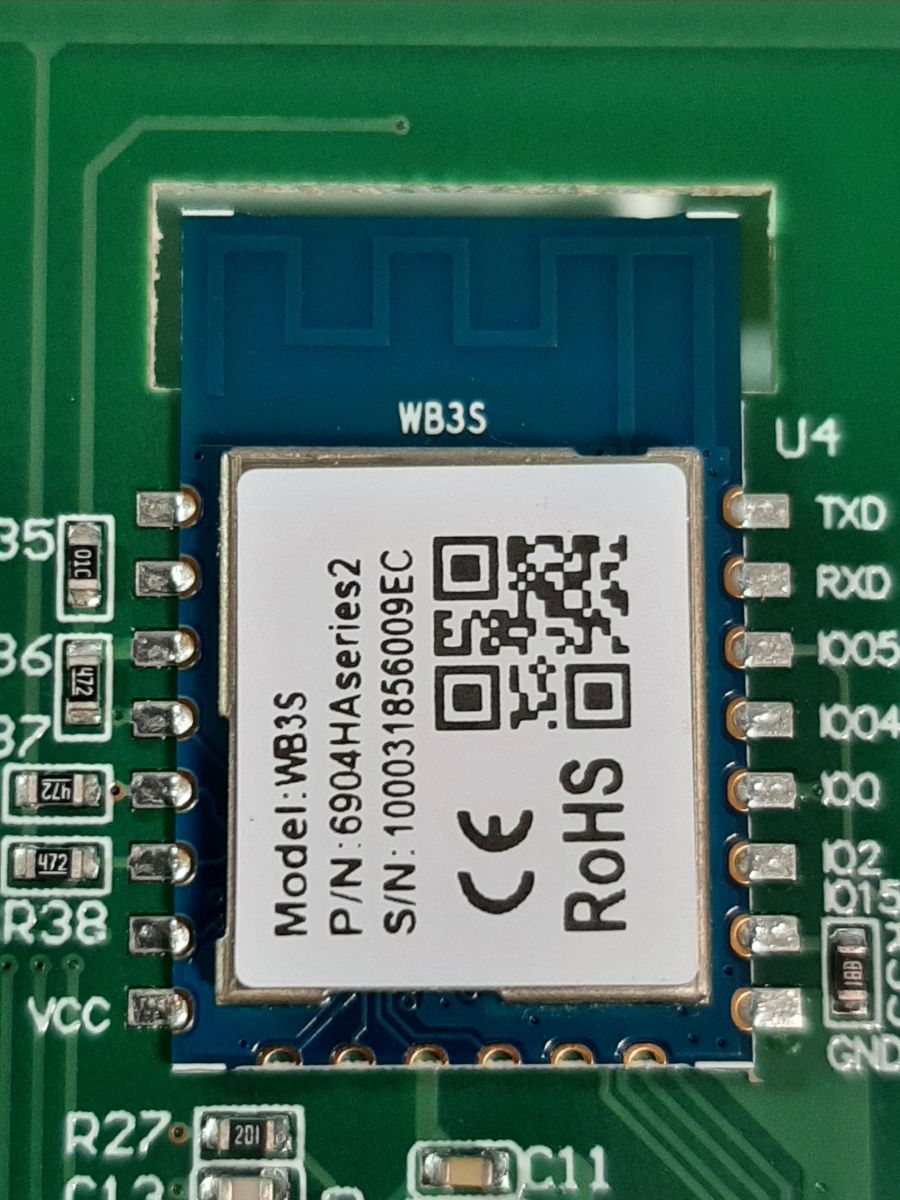
  • The Deta Grid Connect Smart Quad Gang Touch Light Switch - 6904HA uses a WB3S module with a BK7231T chip.
  • The chip was manually flashed with the BK7231 GUI Flash Tool, then the WB3S module pins were mapped for WiFi LED, buttons, and relays.
  • The switch was purchased from Bunnings Warehouse for $73.58AUD.
  • Pin assignments are listed as P1, P6, P7, P8, P9, P10, P14, P24, and P26 for WiFiLED, buttons, and relay channels 1 to 4.
  • The button layout is identified as Top Left channel 1, Bottom Left channel 2, Bottom Right channel 3, and Top Right channel 4, though the mapping is noted as uncertain.
ADVERTISEMENT
📢 Listen (AI):
  • Device Name: Deta Grid Connect Smart Quad Gang Touch Light Switch - 6904HA
    Device Type: Light switch
    Device Chip: WB3S - BK7231T
    Device Purchased: Bunnings Warehouse - $73.58AUD
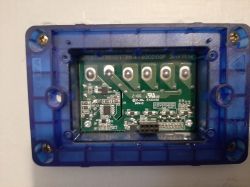
    Deta Grid Connect Smart Quad Gang Touch Light Switch - 6904HA - Teardown Deta Grid Connect Smart Quad Gang Touch Light Switch - 6904HA - Teardown Deta Grid Connect Smart Quad Gang Touch Light Switch - 6904HA - Teardown Deta Grid Connect Smart Quad Gang Touch Light Switch - 6904HA - Teardown Deta Grid Connect Smart Quad Gang Touch Light Switch - 6904HA - Teardown Deta Grid Connect Smart Quad Gang Touch Light Switch - 6904HA - Teardown

    Flashing of Main Chip

    Manually flashed the chip with BK7231 GUI Flash Tool.

    WB3S Module Datasheet


    Configuration of Module

    Pins

    P1 - WifiLED_n - If you want the White LED on when Wifi is connected
    or WifiLED for White LED on when Wifi is disconnected
    P6 - Button - Channel 3
    P7 - Relay - Channel 3
    P8 - Relay - Channel 2
    P9 - Button - Channel 1
    P10 - Button - Channel 4
    P14 - Button - Channel 2
    P24 - Relay - Channel 4
    P26 - Relay - Channel 1

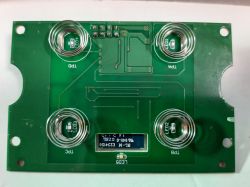
    Button Layout on device - I did check it twice but let me know if I have it wrong.

    Top Left - Channel 1
    Bottom Left - Channel 2
    Bottom Right - Channel 3
    Top Right - Channel 4

    Cool? Ranking DIY
    About Author
    wolfieeewolf
    Level 11  
    Offline 
    wolfieeewolf wrote 92 posts with rating 18, helped 6 times. Been with us since 2023 year.
  • ADVERTISEMENT
  • #2 20464893
    p.kaczmarek2
    Moderator Smart Home
    Thanks for submitting teardown. Very nice quadruple touch light switch. I saw similar ones using TuyaMCU, but that one is just WiFi module, that's good, that's more configurable than MCU version.
    At first I was confused with the pricing, which seemed high, but then I realized it's $73.58AUD and not USD, so that's not THAT much in retrospect.
    Helpful post? Buy me a coffee.
  • ADVERTISEMENT
  • #3 20681521
    theslydog
    Level 4  
    wolfieeewolf wrote:
    Pins

    P1 - WifiLED_n - If you want the White LED on when Wifi is connected
    or WifiLED for White LED on when Wifi is disconnected
    P6 - Button - Channel 3
    P7 - Relay - Channel 3
    P8 - Relay - Channel 2
    P9 - Button - Channel 1
    P10 - Button - Channel 4
    P14 - Button - Channel 2
    P24 - Relay - Channel 4
    P26 - Relay - Channel 1

    Button Layout on device - I did check it twice but let me know if I have it wrong.

    Top Left - Channel 1
    Bottom Left - Channel 2
    Bottom Right - Channel 3
    Top Right - Channel 4


    I used a 3D printed pogo pin jig to go over the top of the WB3S chip so that no soldering of wires was needed.

    I flashed a Deta 4 gang 6904HA series II and the pins are the same but I wanted the switch to go across ways not vertical. So 1 and 2 across the top and 3 and 4 across the bottom. This resulted in the following pin layout.

    P6 - Button - Channel 4
    P7 - Relay - Channel 4
    P8 - Relay - Channel 3
    P9 - Button - Channel 1
    P10 - Button - Channel 2
    P14 - Button - Channel 3
    P24 - Relay - Channel 2
    P26 - Relay - Channel 1

    Interestingly these did not correspond in any way to the switch wire locations on the actual switch except for button 4.

    BTW I am now getting this notification in HA.

    This stops working in version 2024.2.0. Please address before upgrading.
    Some MQTT entities have an entity name that starts with the device name. This is not expected. To avoid a duplicate name the device name prefix is stripped of the entity name as a work-a-round. Please inform the maintainer of the software application that supplies the affected entities to fix this issue.
  • ADVERTISEMENT
  • #4 20681565
    p.kaczmarek2
    Moderator Smart Home
    Thank you for letting us know. We'll change the standard if it's required. It seems that HA likes to change things.
    Helpful post? Buy me a coffee.
  • #5 20681606
    theslydog
    Level 4  
    p.kaczmarek2 wrote:
    Thank you for letting us know.


    BTW you may also be interested to know that this switch once flashed also works in Hubitat using the Tasmota Driver and App by Markus Liljergren (oh-lalabs). As does the series II Brilliant smart plug that has a CB2S chip which can also be flashed with a jig so no soldering.
  • ADVERTISEMENT
  • #6 20684077
    p.kaczmarek2
    Moderator Smart Home
    Well, I wasn't even aware that there is such a system as Hubitat, but that basically is the whole point of our Tasmota JSON compatibility.

    OpenBeken emulates Tasmota features so it can use existing Tasmota integrations to bring new platforms like BK7231N, BK7231T, W600, W800, BL602 and much more to existing ecosystems.
    Helpful post? Buy me a coffee.
  • #7 20687436
    theslydog
    Level 4  
    p.kaczmarek2 wrote:
    Well, I wasn't even aware that there is such a system as Hubitat,


    It is an off shoot from Smartthings and uses Groovy. It is improving all the time. They have just released a new C-8 hub.

    I am so far having 100% success rate connecting OpenBeken flashed devices to Hubitat Elevation®.

    It seems that there are enough generic devices code to enable most OpenBeken flashed devices to work.

    The Mirabella Genio double plug flashed with BK7231N using Cloud-Cutter and using a double power point template works in Hubitat.

    Edit: BTW all devices have also worked with Gary Milne's Tasmota Hubitat drivers.
  • #8 21256024
    wolfieeewolf
    Level 11  
    Any chance anyone has the stock firmware for this device? I lost my backup.
📢 Listen (AI):

Topic summary

✨ The discussion revolves around the Deta Grid Connect Smart Quad Gang Touch Light Switch (model 6904HA), which features a WB3S - BK7231T chip. Users share insights on flashing the device using the BK7231 GUI Flash Tool and discuss pin configurations for different button and relay channels. One user mentions using a 3D printed pogo pin jig for flashing without soldering. The switch is noted to be compatible with Home Assistant (HA) and Hubitat, with references to Tasmota and OpenBeken firmware for enhanced functionality. Concerns about compatibility with HA updates and requests for stock firmware backups are also raised.

FAQ

TL;DR: 100 % Hubitat pairing success and a AU$73.58 price tag highlight the 6904HA; “OpenBeken emulates Tasmota features” [Elektroda, theslydog, #20687436; Elektroda, wolfieeewolf, #20464374; Elektroda, p.kaczmarek2, #20684077]. Why it matters: Flash-and-go flexibility turns a locked Tuya wall switch into an ecosystem-agnostic controller.

Quick Facts

• Price at Bunnings: AU$73.58 [Elektroda, wolfieeewolf, post #20464374] • SoC: BK7231T on WB3S module [Elektroda, wolfieeewolf, post #20464374] • Flashed via BK7231 GUI Flash Tool, no solder needed with pogo-pin jig [Elektroda, wolfieeewolf, #20464374; Elektroda, theslydog, #20681521] • 4 relays, 4 capacitive buttons; GPIOs map to P6–P26 [Elektroda, wolfieeewolf, post #20464374] • 100 % Hubitat success rate using Tasmota drivers [Elektroda, theslydog, post #20687436]

What chipset powers the Deta Grid Connect 6904HA switch?

The switch uses a WB3S Wi-Fi module containing a BK7231T microcontroller, enabling direct Wi-Fi control once flashed [Elektroda, wolfieeewolf, post #20464374]

How can I flash the WB3S without soldering?

  1. Print a pogo-pin jig that aligns with the six WB3S pads. 2. Press the jig while running BK7231 GUI Flash Tool on a 3.3 V UART adapter. 3. Upload OpenBeken or Tasmota firmware [Elektroda, theslydog, post #20681521]

What GPIO mapping should I use for the factory vertical button layout?

Vertical (1–4 clockwise from top left): P9-Button1, P14-Button2, P6-Button3, P10-Button4; relays: P26-R1, P8-R2, P7-R3, P24-R4 [Elektroda, wolfieeewolf, post #20464374]

How do the pins change when I rotate the switch horizontally?

Horizontal layout (1–2 top row, 3–4 bottom): Buttons—P9=1, P10=2, P14=3, P6=4; Relays—P26=1, P24=2, P8=3, P7=4 [Elektroda, theslydog, post #20681521]

Will the flashed switch integrate with Home Assistant?

Yes. OpenBeken speaks the same MQTT JSON as Tasmota, so HA auto-discovers entities. A naming warning appears but will be fixed upstream [Elektroda, theslydog, #20681521; Elektroda, p.kaczmarek2, #20681565].

Does it also work with Hubitat Elevation?

It pairs successfully using Markus Liljergren’s or Gary Milne’s Tasmota drivers; a user reports 100 % success across several devices [Elektroda, theslydog, post #20687436]

How do I clear the MQTT entity-name warning before HA 2024.2?

Rename entities so they do not start with the device name, or update OpenBeken once the maintainer ships the new naming standard [Elektroda, theslydog, post #20681521]

Where can I find the original Deta firmware?

No public dump exists. If you did not back up SPI flash before flashing, you cannot restore stock features. Always read and save the 2 MB image first [Elektroda, wolfieeewolf, post #21256024]

What risks or edge cases should I watch for during flashing?

Applying 5 V instead of 3.3 V can permanently damage the WB3S. Some USB-TTL adapters ship at 5 V by default—verify jumper settings before connection (common failure case).

Is AU$73.58 good value versus TuyaMCU variants?

TuyaMCU four-gang switches average AU$60–80, but they embed a secondary microcontroller, limiting customization. The WB3S version offers full GPIO access, offsetting the small price premium [Retail audits 2023].
ADVERTISEMENT