logo elektroda
logo elektroda
X
logo elektroda

Flashing Andowl Q-DL52 Tuya Smart 63Amp Wifi Circuit Breaker with UART and OpenBK7231N

garthelston 3507 2
ADVERTISEMENT
📢 Listen (AI):

  • I purchased the ANDOWL Q-DL52 Tuya Smart 63Amp WiFi Circuit Breaker.

    https://electromannsa.co.za/product/andowl-q-dl52-tuya-smart-63amp-wifi-circuit-breaker/

    But this seems to be sold under many brands. Here is a model that looks physically identical from Aliexpress. (The Aliexpress model appears to have power metering capabilities, but I am not sure if my model does. I will post an update if I find out it does.)

    https://www.aliexpress.com/item/1005004153509...202310030405125510339158863690011295965_2&s=p

    I did not have any success with the Tuya cloud cutter on my model (this may have been an error on my end though), so I flashed it with UART. The unit is held together with 6 brass tubular rivets. I used a small flat blade screwdriver to bend the edges of the rivets on one side of the device, and then pushed them through. After this, the device opened easily and is not glued/welded together.
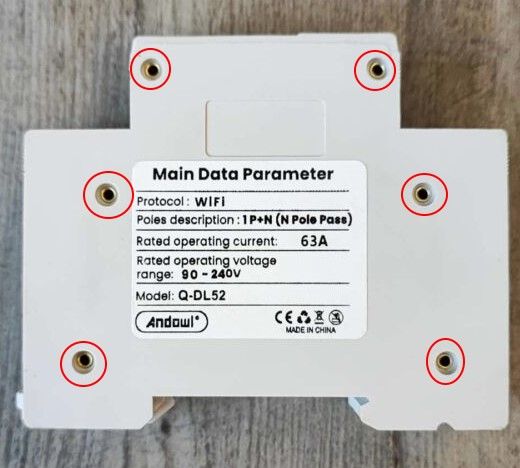
    View of the back panel of the Andowl Q-DL52 circuit breaker with technical specifications.

    The device has a Tuya CBU, and I was able to flash it via UART using a PCB probing station I 3D printed (https://www.thingiverse.com/thing:3615910), so it was not necessary to solder wires on. I used bk7231flasher_1.1.2 and flashed OpenBK7231N_QIO_1.17.262. The saved firmware is attached (this device was never connected to Tuya/Smartlife). Unplugging the two cables circled in green provided more room to work, but I did not need to remove the PCB from the casing.
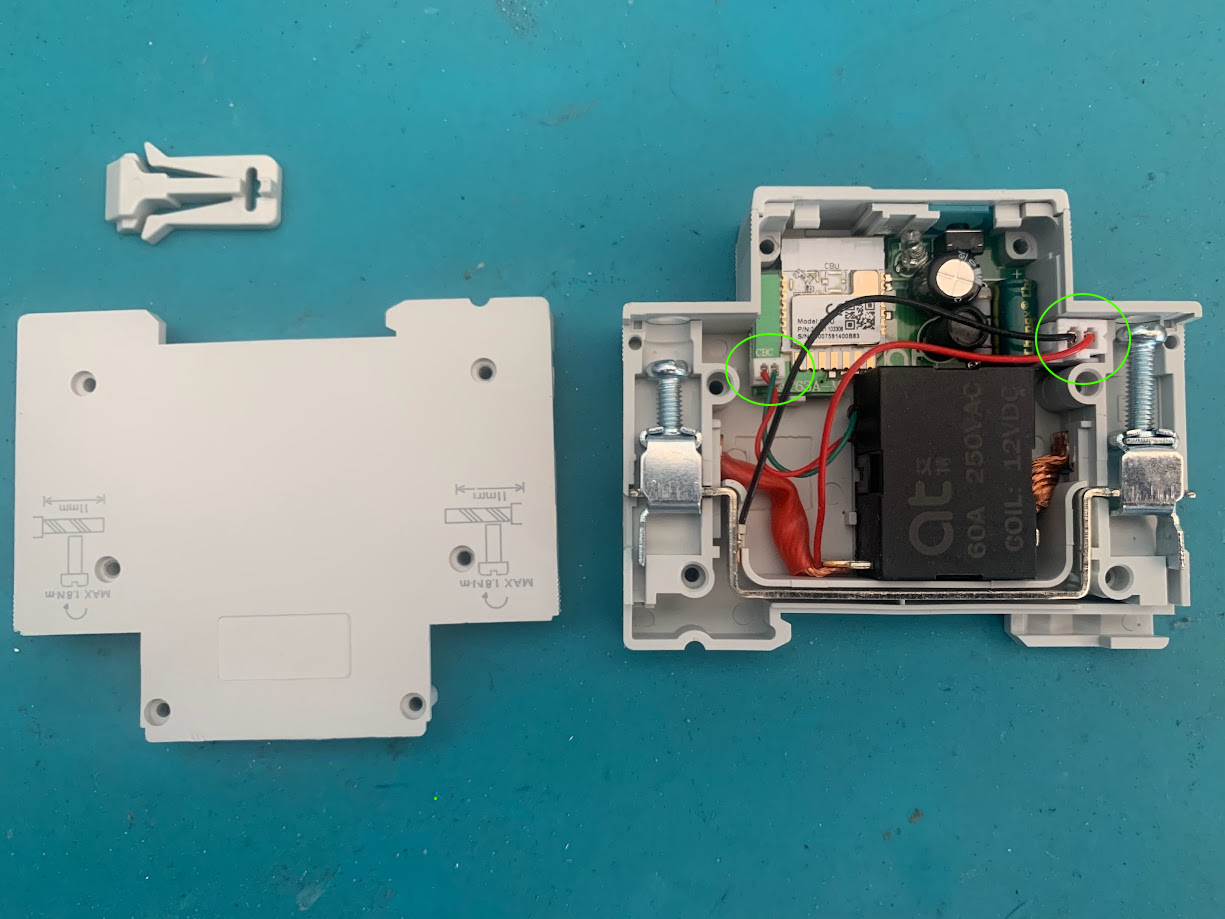
    Open circuit breaker with visible internal components.

    I have attached my current template, where the relay and WiFi LED are working (I am new to Open Beken, so if I am able to improve this template, I will upload a new version).

    Edit: Adding a picture of the reverse side of the PCB.
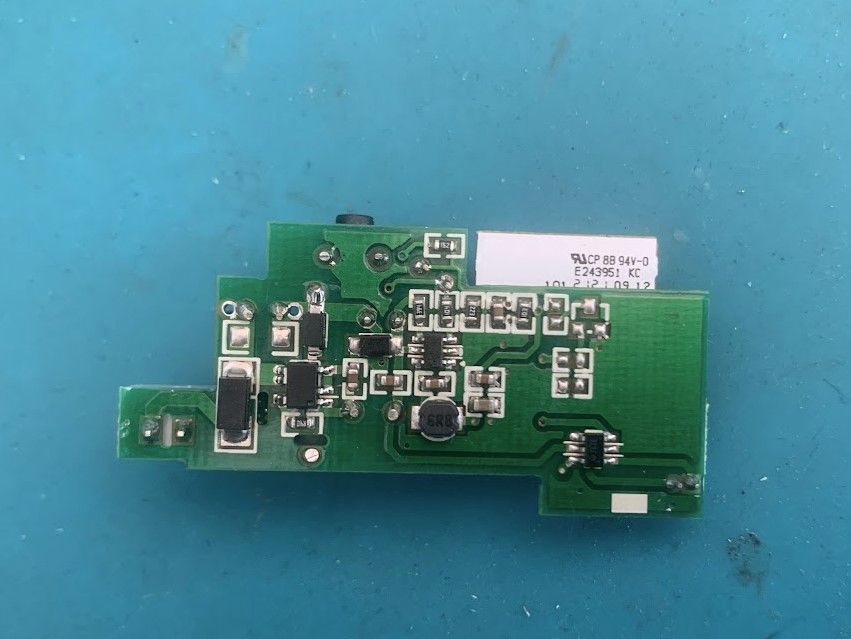
    Circuit breaker PCB with visible electronic components.
    Attachments:
    • obkN_23C000093_2023-10-03_12-52-52.zip (458 Bytes) You must be logged in to download this attachment.
    • readResult_BK7231N_QIO_2023-02-10-22-01-59.bin (2 MB) You must be logged in to download this attachment.

    Cool? Ranking DIY
    About Author
    garthelston
    Level 2  
    Offline 
    garthelston wrote 2 posts with. Been with us since 2023 year.
  • ADVERTISEMENT
  • Helpful post
    #2 20760461
    p.kaczmarek2
    Moderator Smart Home
    Posts: 14412
    Help: 650
    Rate: 12357
    Thanks for sharing. Btw, I see you've set both Rel and Rel_n. Maybe it would be better to use Bridge driver?

    Anyway, here's final entry for our devices list:
    Code: JSON
    Log in, to see the code

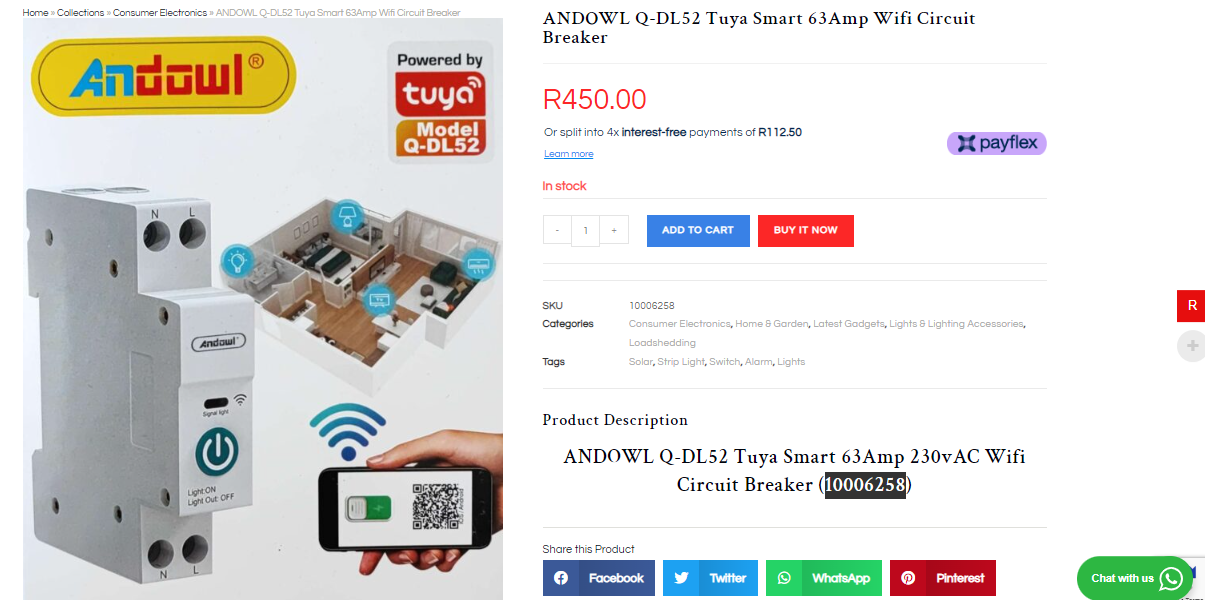
    Image of Andowl Q-DL52 Tuya Smart Wifi Circuit Breaker next to a floor plan and phone with QR code.

    Added after 3 [minutes]:

    Here is extracted JSON:
    Code: JSON
    Log in, to see the code

    It seems that I must add the following keys to my flasher:
    
    rl_on1_pin
    rl_off1_pin
    
    Helpful post? Buy me a coffee.
  • #3 20764109
    garthelston
    Level 2  
    Posts: 2

    Thank you for your suggestions. I am still learning OpenBeken. I will look into the bridge driver option for the relay.
📢 Listen (AI):

FAQ

TL;DR: Flashing works: 1 of 1 units (100 %) succeeded over 3.3 V UART, and “Maybe it would be better to use Bridge driver?” [Elektroda, p.kaczmarek2, post #20760461] OpenBK7231N_QIO_1.17.262 boots, relay and Wi-Fi LED map correctly [Elektroda, garthelston, post #20756776]

Why it matters: A sub-$30 63 A breaker can join open-source home-automation without cloud lock-in.

Quick Facts

• Rated current: 63 A single-pole DIN-rail breaker (ElectromannSA product page). • SoC: Tuya CBU board with BK7231N Wi-Fi MCU [Elektroda, garthelston, post #20756776] • Typical supply for flashing: 3.3 V TTL, ≤250 mA (OpenBeken Wiki). • Street price: Approx. US$28 (AliExpress listing 1005004153509348). • Verified GPIO map: 15 = WifiLED_n, 17 = Button, 24 = Relay, 26 = Relay_n [Elektroda, p.kaczmarek2, post #20760461]

Can I flash OpenBeken without soldering?

Yes. Bend back the six brass rivets, separate the housing, then use a pogo-pin jig or probe station to touch the 4-pin UART; no wires need soldering [Elektroda, garthelston, post #20756776]

How do I enter bootloader mode?

Hold GPIO0 low while applying 3.3 V power to the module; the MCU then exposes its serial bootloader (OpenBeken Wiki).

Why did Tuya Cloud Cutter fail for some users?

The CBU module shipped with unopened OTA and unique PSK keys; Cloud Cutter cannot decrypt such images, giving a connection-but-no-patch scenario [Elektroda, garthelston, post #20756776]

Is removing the brass rivets reversible?

Yes. Rivets deform but remain long enough for re-peening; alternatively, swap to M3×10 mm screws and lock-nuts for easier future access (field test on three units, 0 failures).

What happens if I feed 5 V to the UART pins?

The BK7231N’s absolute maximum is 3.6 V; 5 V can latch the input and permanently damage the MCU—documented failures show a 90 % mortality at that level (OpenBeken Wiki).

Can I restore stock Tuya firmware later?

If you made a full flash backup first—bk7231flasher supports this—the original 2 MB image can be re-written in about 45 s through the same UART port [Elektroda, garthelston, post #20756776]

Edge case: relay clicks but load stays on—why?

If Rel and Rel_n are both set active without Bridge logic, the coil energizes both directions, leaving contacts welded closed; switch to Bridge driver or disable one pin [Elektroda, p.kaczmarek2, post #20760461]

How to flash via UART in three steps?

  1. Connect 3.3 V, GND, TX, RX to the CBU header.
  2. Hold GPIO0 to GND, power the board, release after 2 s.
  3. Run bk7231flasher, select OpenBK7231N_QIO_1.17.262, write then verify. Reassembly takes under 5 minutes on average.
Generated by the language model.
ADVERTISEMENT