


logo elektroda
logo elektroda
X
logo elektroda
Dostępna jest polska wersja

Czy wolisz polską wersję strony elektroda?

Nie, dziękuję Przekieruj mnie tam

TL;DR

  • Open Nixie is a modular Nixie watch built from three boards: base, display, and logic.
  • The base board carries the MC34063 inverter, buttons, power, ambient light sensing, and the hour/minute separator.
  • The display board uses MMBTA42 and MMBTA92 transistor pairs for anodes and a 74141 driver for cathodes.
  • The logic module can use a Wemos D1 mini for Wi-Fi time sync or an Atmega 328 with DS3231 backup.
  • The watch fits Electronix cases, including LC-513 and a specially assembled Z566M version, and the rear LEDs can be turned off.
Generated by the language model.
ADVERTISEMENT
Treść została przetłumaczona polish » english Zobacz oryginalną wersję tematu
📢 Listen (AI):
  • #31 19590506
    NIXIE_123
    Level 34  
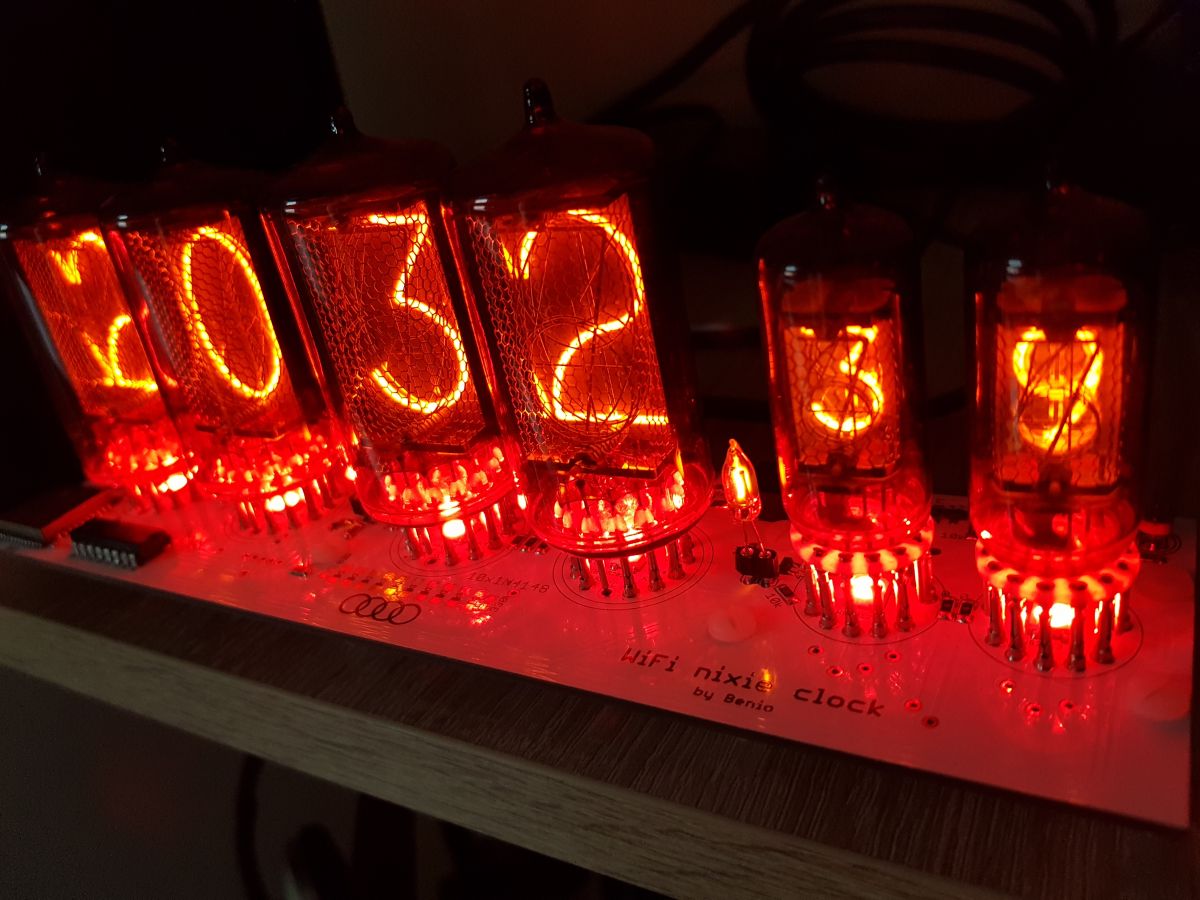
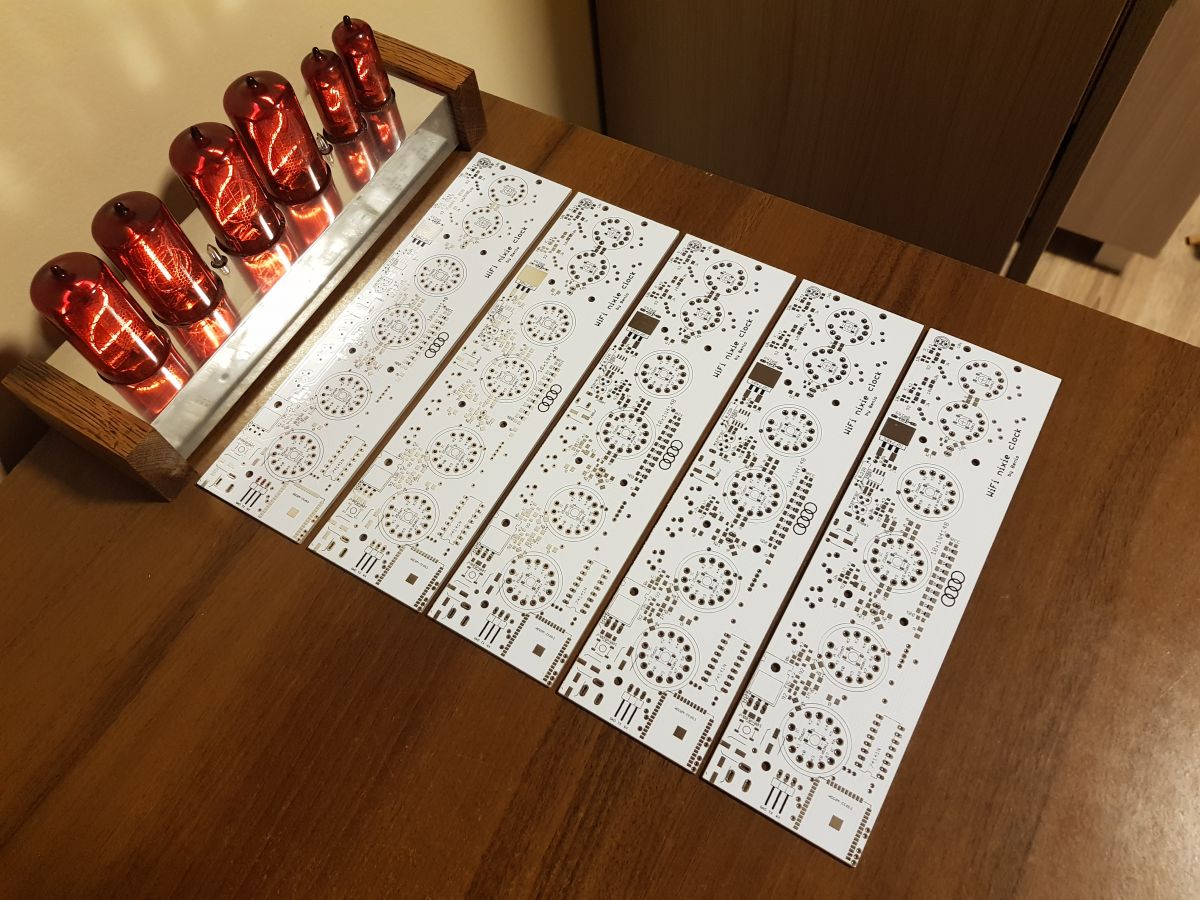
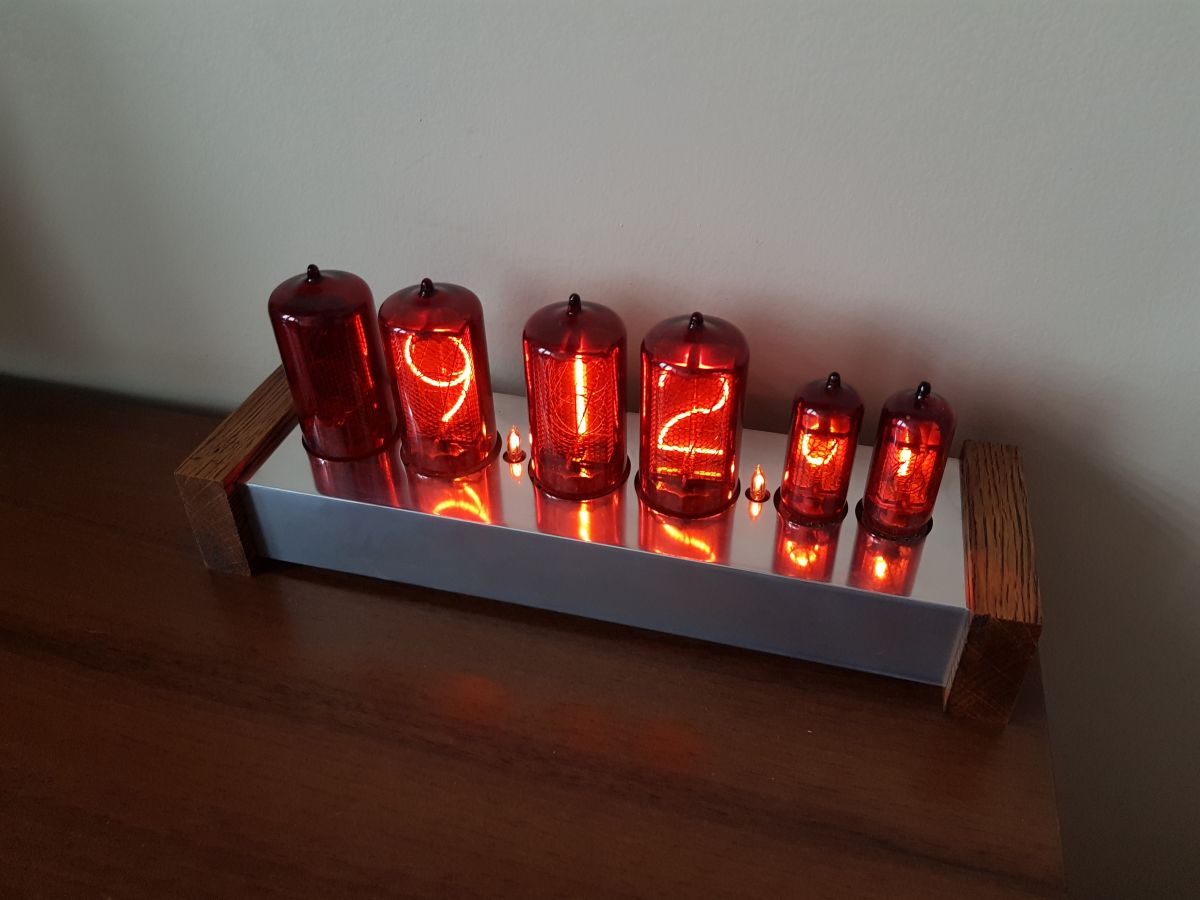
    Close-up of a nixie clock with six glowing tubes on a board labeled HiFi Nixie Clock by Benio. Printed circuit boards on a wooden table next to a lit nixie tube clock. Nixie clock with red tubes on a wooden stand. Clock settings interface with Wi-Fi network selection, dimming parameters, and color options. Nixie tube display showing the time 17:37:16 in front of a computer screen.

    I have 5 tiles left, if anyone would like to, please send a message to PW
    esp32
    ds3231
    ntp synchronization over wifi every hour
    crossfade
    slot machine every hour
    wifi settings
    dimming after the brightness sensor
    0% arduino
    cathode control by 74141
    leds ws2812 for any 2 colors from the button
    plate for the electronix housing

    I can send with esp programmed as well as .bin sam
    I'm sorry for offtop but I will not assume the millionth topic about nix
  • ADVERTISEMENT
📢 Listen (AI):

Topic summary

✨ The discussion revolves around the Open Nixie watch project, which features a modular design allowing for various display types and microcontrollers. The watch comprises three modules: a base module with an inverter (MC34063), buttons, and power section; a display module with Nixie lamps and drivers (MMBTA42, 74141); and a logic module that can utilize a Wemos D1 mini for Wi-Fi time synchronization. Participants inquire about time measurement methods, display brightness control, and the potential for radio synchronization. The conversation also touches on the use of RTC chips (DS3231, DS1307) for accurate timekeeping, challenges with DCF77 synchronization, and the advantages of using different power supply solutions. Aesthetic aspects of the design and sourcing of components are also discussed, with references to specific Nixie tube models and kits.
Generated by the language model.

FAQ

TL;DR: ±2 ppm DS3231 keeps a Nixie clock within ±0.17 s/day, and “It works perfectly for almost a year” [Elektroda, Limonit, post #19331858] Modular design lets you swap displays, MCUs and sync sources in minutes. Why it matters: You can build or service an Open-Nixie without guessing specs.

Quick Facts

• Supply: 10–12 V DC input, 170–190 V boost for tubes [Elektroda, pawelr98, post #19335962] • Display drive: 4× LC-513 or Z566M tubes via 74141 + MMBTA42/92 pairs [Elektroda, Limonit, post #19324601] • Brightness: 50 % PWM, 200 µs period; refresh every 100 µs [Elektroda, Limonit, post #19324897] • Timekeeping: DS3231 ±2 ppm, half-hour CPU sync [Elektroda, Limonit, post #19324897] • Backup: CR1220 cell ≈ 3–5 years typical [Elektroda, Limonit, post #19325419]

How does the Open-Nixie measure and correct time?

The ATmega328 counts seconds with its internal timer, then resynchronises every 30 minutes to a DS3231 RTC. During each sync it trims timer-0 range to cancel RC-oscillator drift [Elektroda, Limonit, post #19324897]

Why not read the RTC each second instead of every 30 minutes?

Frequent I²C reads risk timing glitches if power drops mid-transfer, causing the RTC to jump to random dates [Elektroda, Limonit, post #19331858] Half-hour polling lowers that risk while using little CPU time.

Can I switch to continuous RTC reading anyway?

Yes. Continuous reads add <1 % CPU load and give ±2 ppm accuracy, provided your firmware manages I²C errors [Judas, #19330946].

Is display brightness adjustable?

Yes. A one-step dimmer imposes 50 % PWM on the multiplex signal; with LEDs off, it halves tube current without colour shift [Elektroda, Limonit, post #19324897]

Does PWM make the tubes audible at night?

Some users hear a faint 16–22 kHz “chirp” from electrode vibration during multiplex. Tweaking the sweep frequency 2–3 kHz higher usually silences it [Elektroda, Limonit, post #19582874]

Which boost-converter IC is best?

The stock MC34063 works but wastes power. A UC3843 includes a MOSFET driver, needs a smaller sense resistor and raises efficiency by ≈7 % [Elektroda, pawelr98, post #19335962]

Can I add radio (DCF77) synchronisation?

Possible but tricky. The HV converter floods the 77.5 kHz band, and receivers plus loop antennas rarely fit the Electronix case [Elektroda, Limonit, post #19331858]

How do I retune PWM to stop audible noise?

  1. Open firmware and locate displayTimer ISR. 2. Change the refresh period until the tone disappears. 3. Re-flash MCU and test in a quiet room.
Generated by the language model.
ADVERTISEMENT