logo elektroda
logo elektroda
X
logo elektroda
Dostępna jest polska wersja

Czy wolisz polską wersję strony elektroda?

Nie, dziękuję Przekieruj mnie tam

[BL602] Elivco smart plug with energy monitor BL0937 RMC004

sverd2 24339 84

TL;DR

  • An Elivco RMC004 Wi‑Fi smart plug from AliExpress was opened and examined, revealing a BL602 controller, BL0937 energy monitor, and BP2525 power supply.
  • The PCB was removed by desoldering it from the plug pins, then traces were followed with a multimeter to map the BL602 GPIO assignments.
  • The relay is marked for 16A max even though the plug is rated for 20A max, raising a safety and sizing question.
  • BL602 firmware flashing works, and the LED, relay, and button respond with GPIO20, GPIO2, and GPIO22 configured correctly.
  • BL0937 energy monitoring still does not show up, despite identifying CF1 on GPIO3, CF on GPIO14, and SEL on GPIO21.
ADVERTISEMENT
📢 Listen (AI):
  • #61 20909904
    atomiquepingouin
    Level 4  
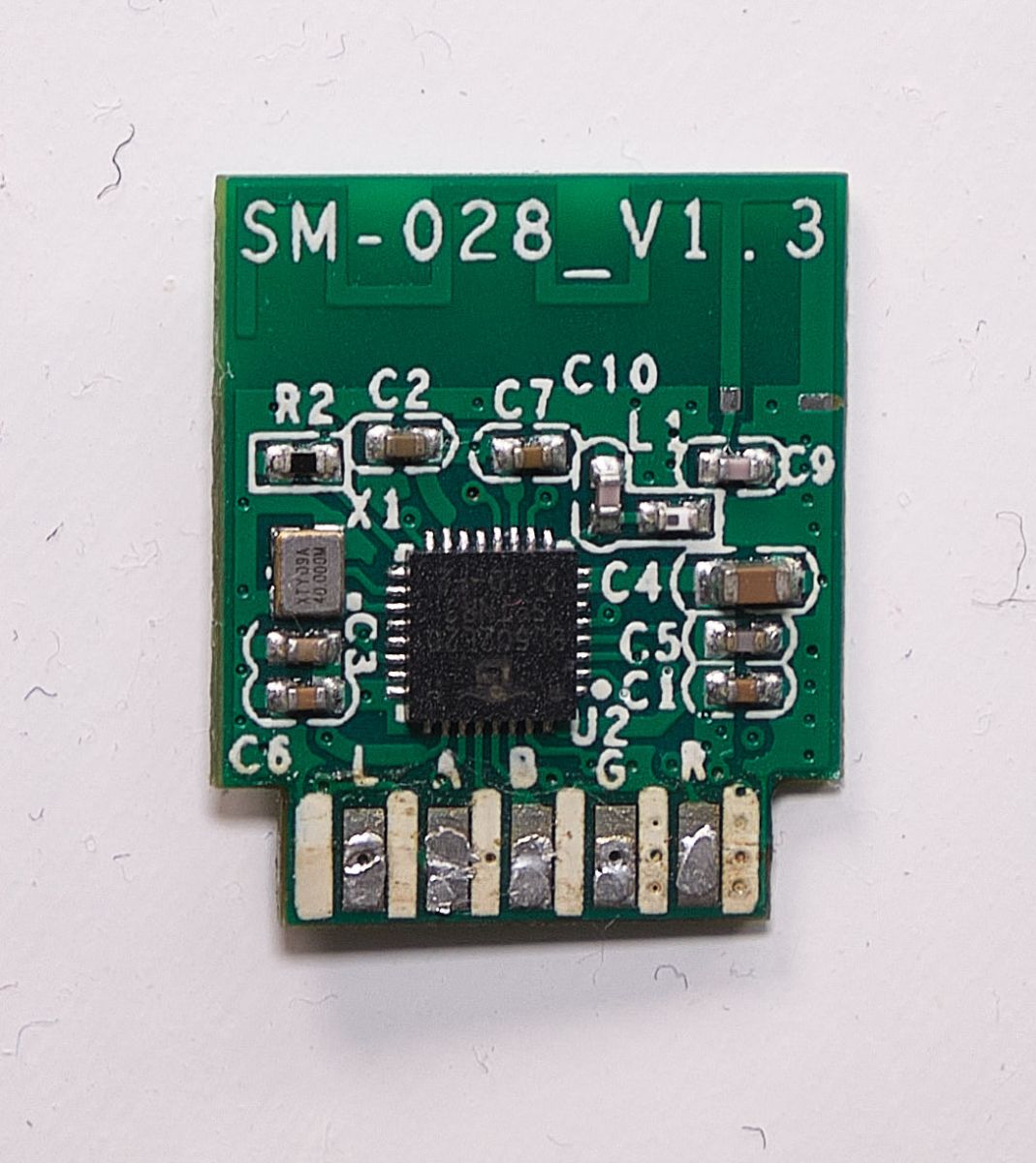
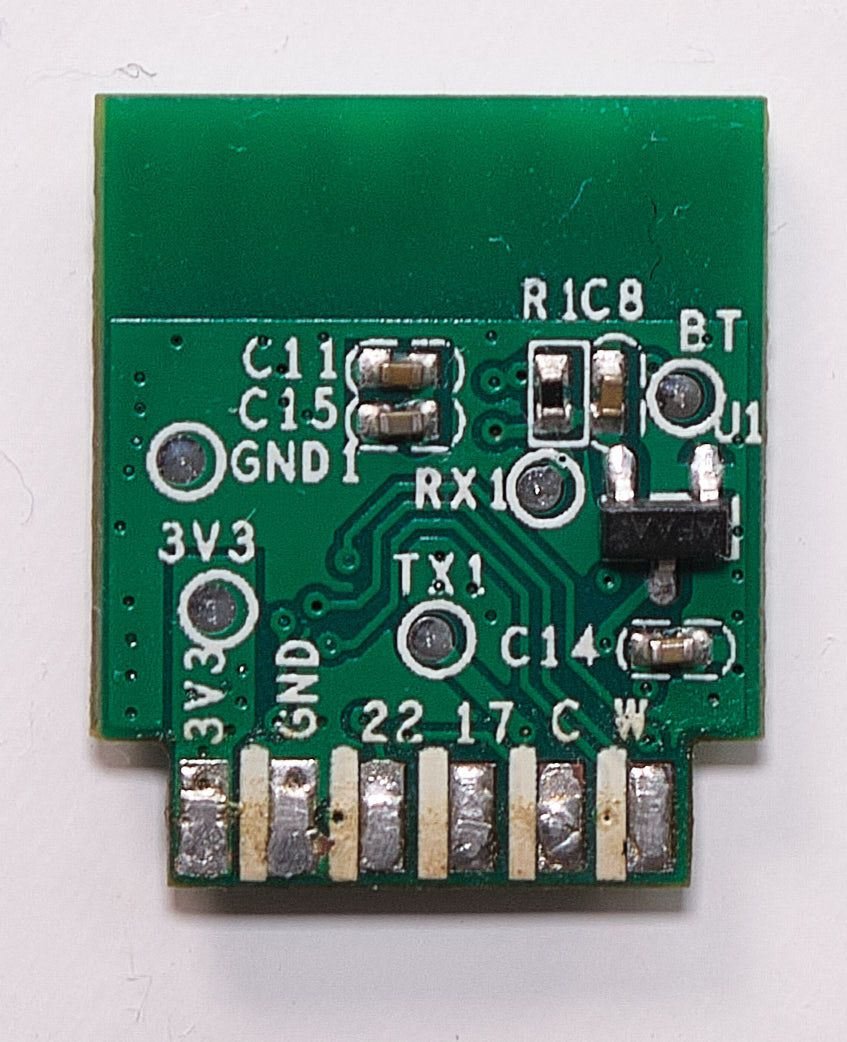
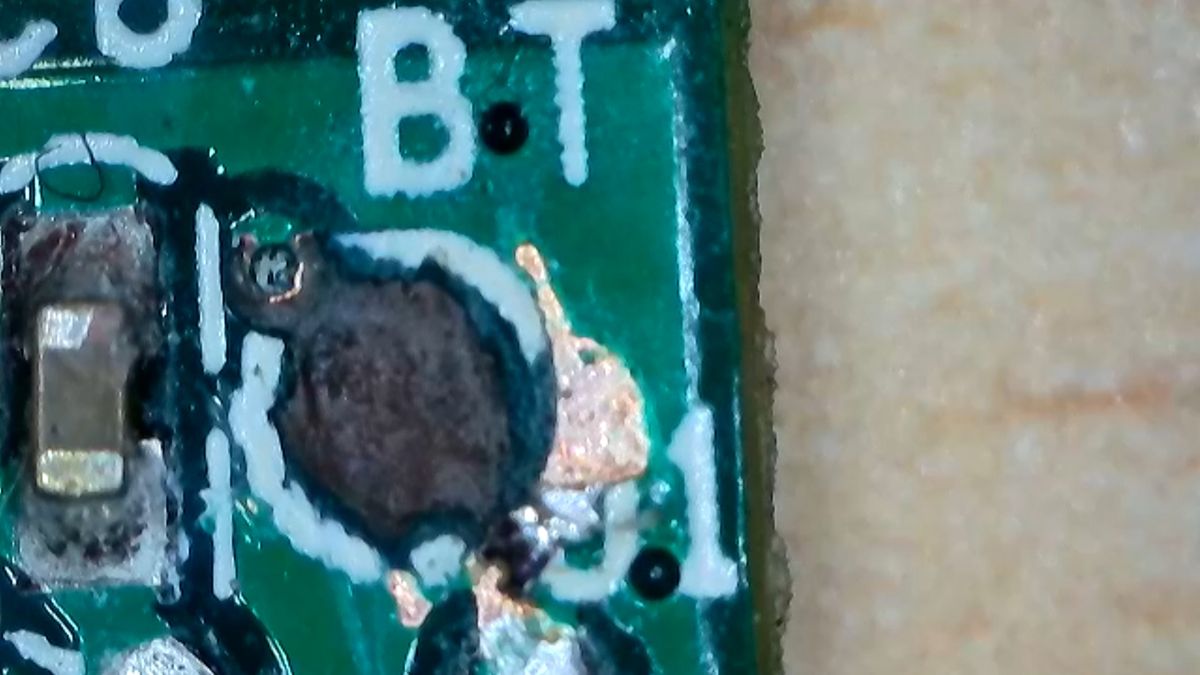
    i have accidentally remove pin. i've scratched pcb but i'm not sure is good
  • ADVERTISEMENT
  • #62 20909965
    p.kaczmarek2
    Moderator Smart Home
    Can you show a photo? Do you have IPA to clean the PCB?
    Helpful post? Buy me a coffee.
  • ADVERTISEMENT
  • #63 20910031
    atomiquepingouin
    Level 4  
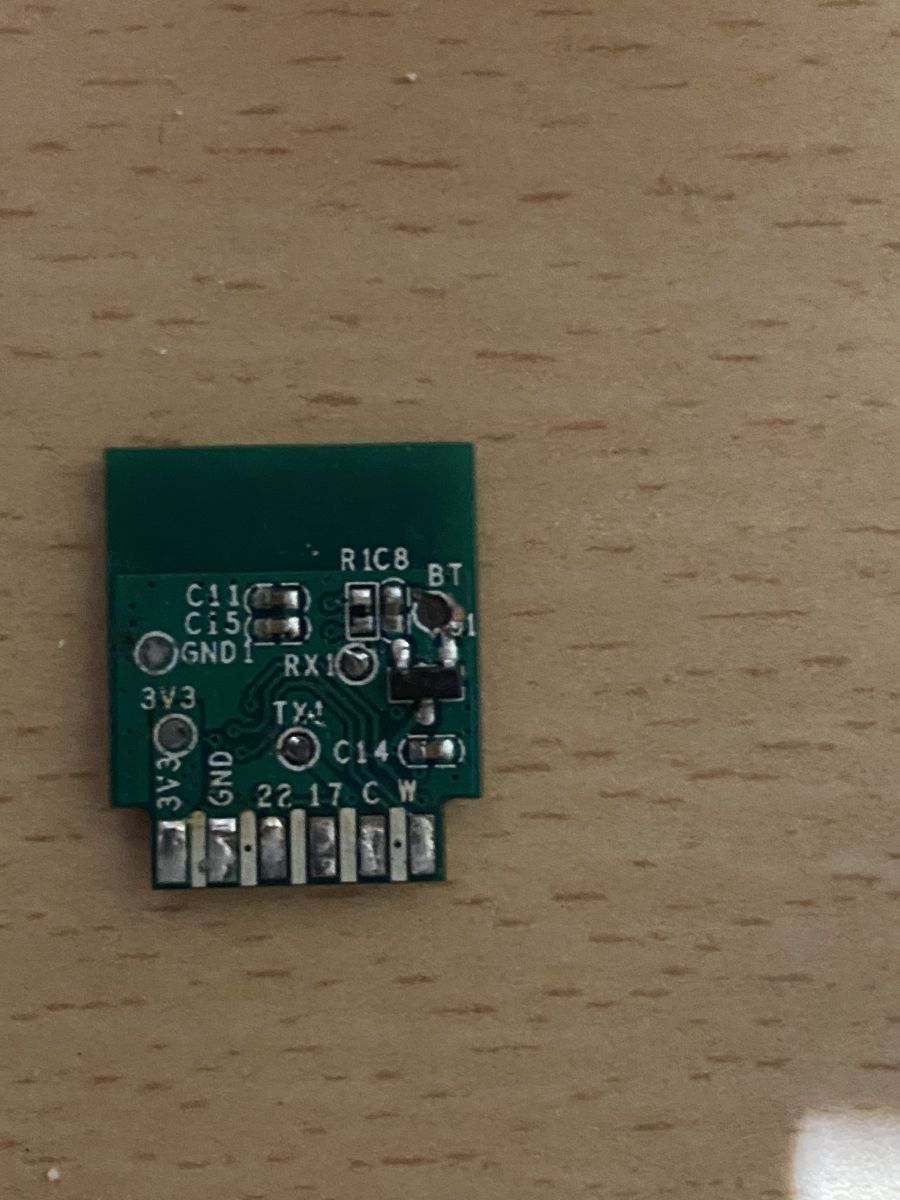
    yes i have IPA (but i don't like beer /j). Close-up of a small green circuit board with electronic components. Close-up of a circuit board with markings B and T.
  • #64 20912402
    p.kaczmarek2
    Moderator Smart Home
    That looks hard. I could try to help, but you're not from Poland, aren't you?
    Helpful post? Buy me a coffee.
  • #65 20912543
    atomiquepingouin
    Level 4  
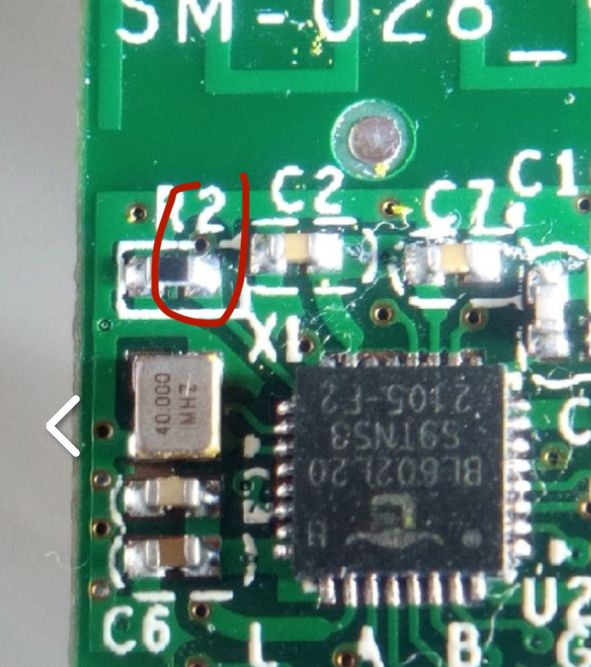
    I come from France. Do you think I can solder directly on R2? Close-up of a PCB with the R2 component highlighted.
  • #66 20912564
    p.kaczmarek2
    Moderator Smart Home
    Hey, so that's the same trace that's BOOT pin? Of course you can. This is a very good solution, I must admit I have assumed that there are no futher solder points when I read your message.
    Helpful post? Buy me a coffee.
  • #68 20915287
    atomiquepingouin
    Level 4  
    hi after resoldering the socket does not light up. i have use web application for config
  • #69 20915506
    p.kaczmarek2
    Moderator Smart Home
    Can you provide any more information, what do you mean by "does not light up"?
    Helpful post? Buy me a coffee.
  • ADVERTISEMENT
  • #70 20915860
    atomiquepingouin
    Level 4  
    the LED does not light up and neither does the relay. I have no current between phase and neutral and no change when I press the button
  • #71 20916559
    p.kaczmarek2
    Moderator Smart Home
    Excuse me, did you configure the GPIO for your device after flashing? You know, you need to set a relay role for a proper GPIO first before the device can work.
    Helpful post? Buy me a coffee.
  • #72 20916727
    atomiquepingouin
    Level 4  
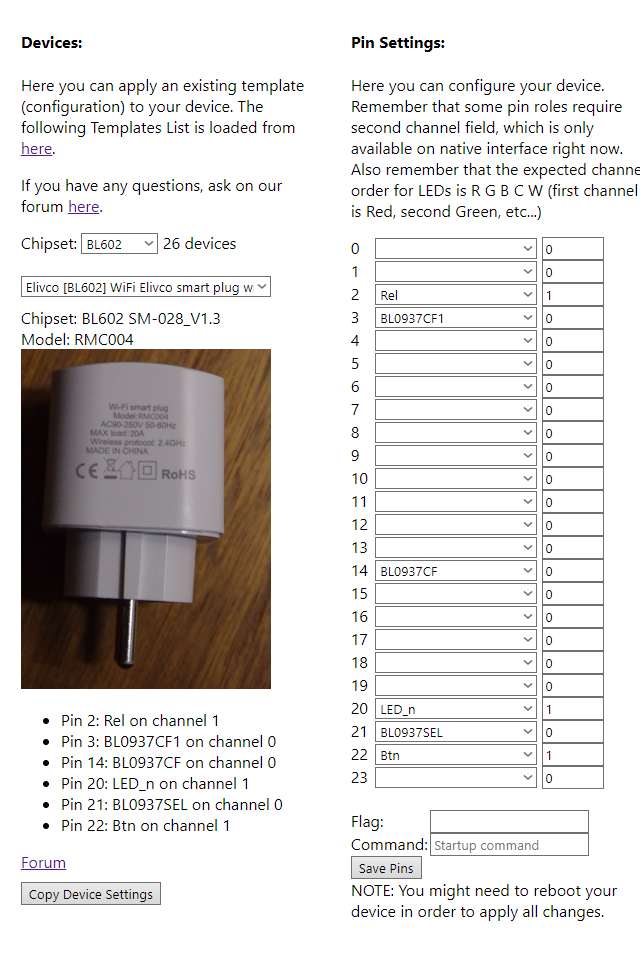
    yes i use web application Web application interface for configuring the Elicvo WiFi plug with a list of devices and pin settings.
  • #73 20917414
    Mad_Maxs
    Level 12  
    Hello, I bought an Elivco BSD33 socket with BL602L20 and BL0937 on Ali, on the SM-28_V1.3 board.

    Is there a chance to run reading from BL0937 in this device? After following the thread from the beginning, I know that there were some attempts, but I guess it was not possible to finish the topic.
  • #74 20917935
    p.kaczmarek2
    Moderator Smart Home
    @atomiquepingouin well, manufacturer may have changed the GPIOs used for relay and button. Please open the Web App and use GPIO Doctor to check which pins are used for relay and button in your device.

    @Mad_Maxs I'm afraid that BL0937 is still missing interrupt counter on BL602 platform: https://github.com/openshwprojects/OpenBK7231T_App/pull/862 it needs to be finished first and then BL0937 will work
    Helpful post? Buy me a coffee.
  • #75 20919651
    Mad_Maxs
    Level 12  
    What is the chance that a hero will be found in the near future who will manage it to the end? 😀 I did some coding, but I think it`s too high a level for me 😉

    In my socket, the pin from the button has changed to gpio17, but after tracing the paths, the pins from bl0937 are still valid
  • #76 20919824
    p.kaczmarek2
    Moderator Smart Home
    User @miegapele has some progress on BL602 + BL0937 combo in this thread:
    https://www.elektroda.com/rtvforum/topic4020634.html#20919632
    Helpful post? Buy me a coffee.
  • #77 20923215
    Mad_Maxs
    Level 12  
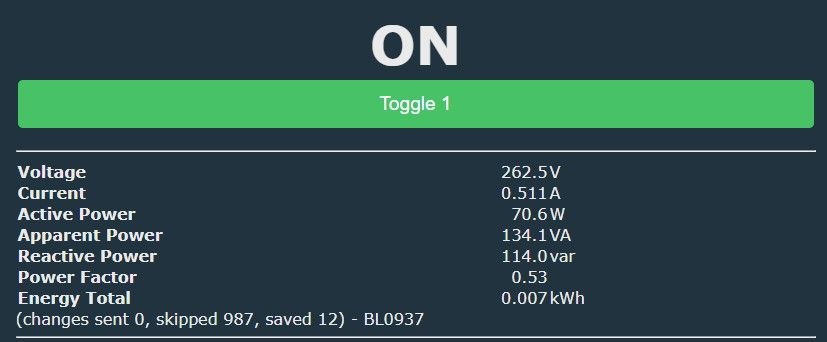
    Currently 1.17.421 version of OpenBL for 602 support BL0937. Thanks everyone, who make it happen :)

    Screenshot of a user interface showing the on state with energy information for device BL0937.
  • #78 20923291
    p.kaczmarek2
    Moderator Smart Home
    How accurate is it? I see you have 260V AC, I think you need to calibrate it first.
    Helpful post? Buy me a coffee.
  • #79 20923500
    hojnikb
    Level 11  
    p.kaczmarek2 wrote:
    How accurate is it? I see you have 260V AC, I think you need to calibrate it first.


    pretty inaccurate both in terms of current and voltage. Mine showed 265-270V while being 235V, amps were off by at least 10-15% too.
  • #80 20923577
    p.kaczmarek2
    Moderator Smart Home
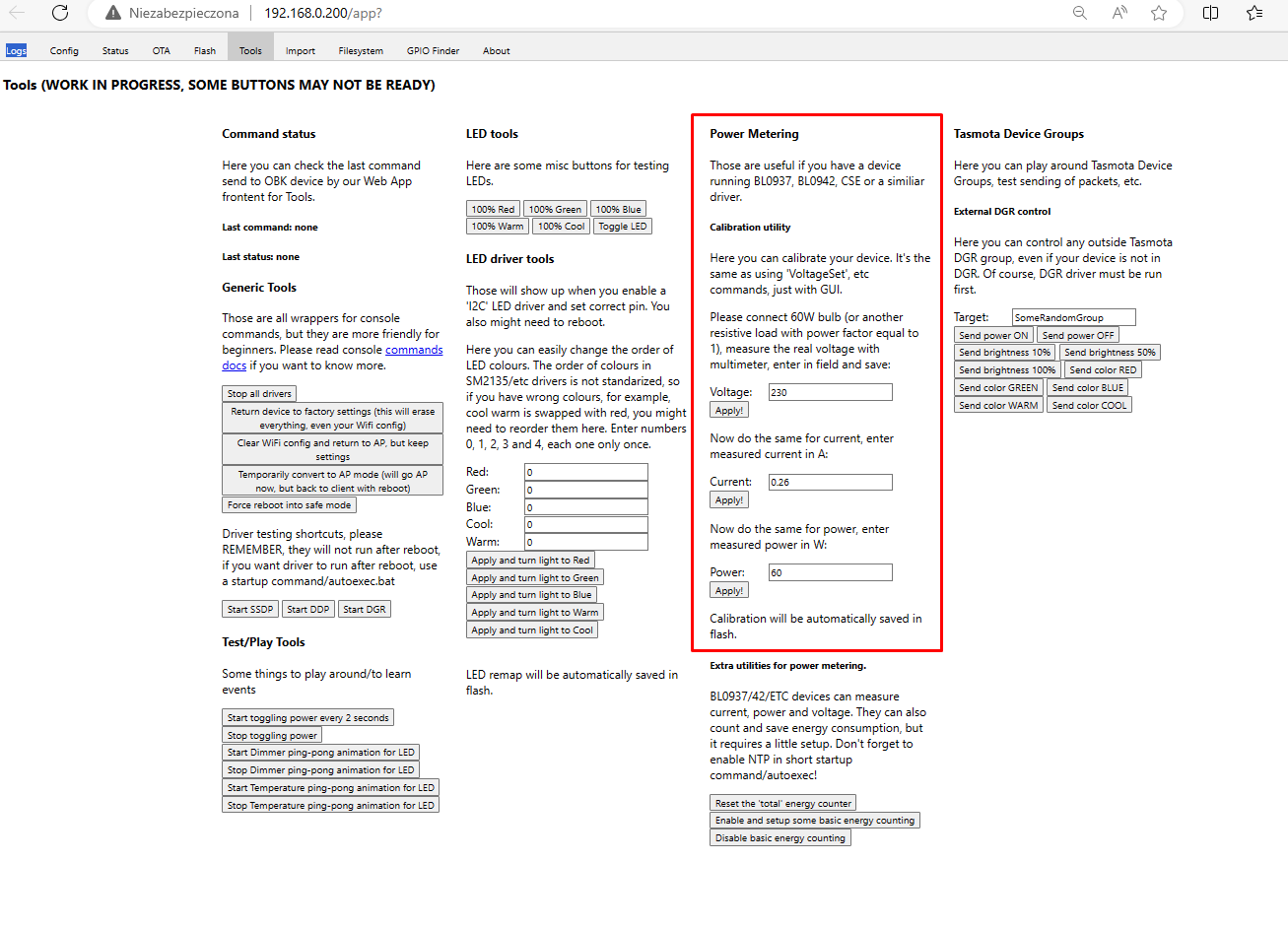
    Yea, but did you calibrate? This is a necessary step. Calibration is done like in Tasmota, via VoltageSet, etc, commands, but you also have a GUI wrapper for that at Open Web App -> Tools Tab, here:
    Screenshot of a configuration interface for power metering tools with a calibration section.
    So let me ask you again - did you calibrate your devices, guys? @hojnikb @Mad_Maxs
    Helpful post? Buy me a coffee.
  • ADVERTISEMENT
  • #81 20923833
    hojnikb
    Level 11  
    p.kaczmarek2 wrote:
    Yea, but did you calibrate? This is a necessary step. Calibration is done like in Tasmota, via VoltageSet, etc, commands, but you also have a GUI wrapper for that at Open Web App -> Tools Tab, here:
    Screenshot of a configuration interface for power metering tools with a calibration section.
    So let me ask you again - did you calibrate your devices, guys? @hojnikb @Mad_Maxs

    Yep, absolutly, did a calibration via resistive load (halogen lamp) against a decent power meter. Now it's showing almost bang on.
  • #82 20924584
    Mad_Maxs
    Level 12  
    p.kaczmarek2 wrote:

    So let me ask you again - did you calibrate your devices, guys? @hojnikb @Mad_Maxs
    Of course i didn't :) that's why it shows 260V. After calibration, looks like measuring is correct
  • #83 20924653
    p.kaczmarek2
    Moderator Smart Home
    Calibration is necessary to get useable results. All those devices are calibrated per-piece in factory.
    Helpful post? Buy me a coffee.
  • #84 20927224
    atomiquepingouin
    Level 4  
    @p.kaczmarek2 hi after two days the socket no longer starts and when I connect to it I only have this Text OpenBL602_4CA573CD on a gray background I reflash but it's still the same
  • #85 21016900
    Raufaser
    Level 10  
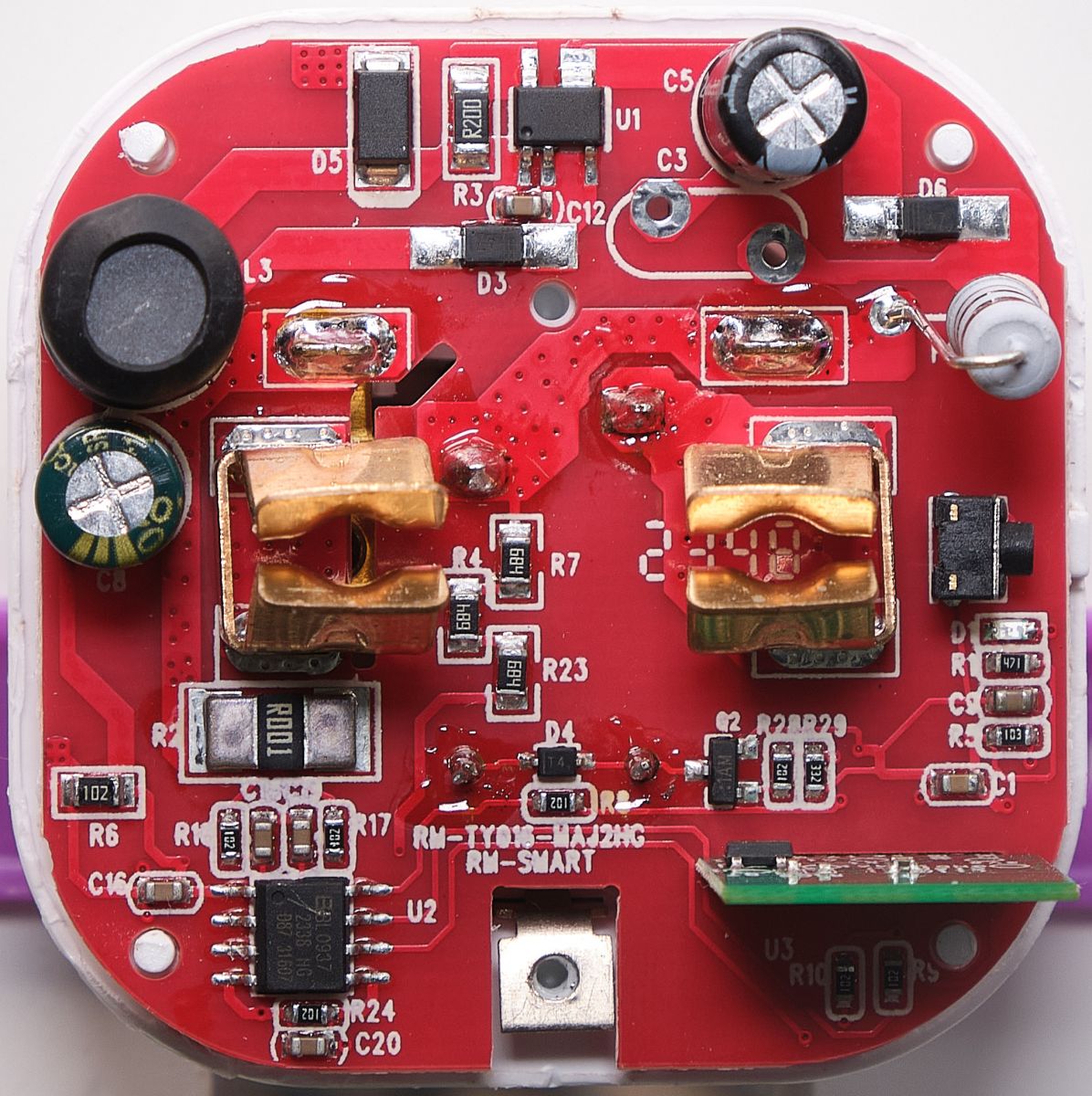
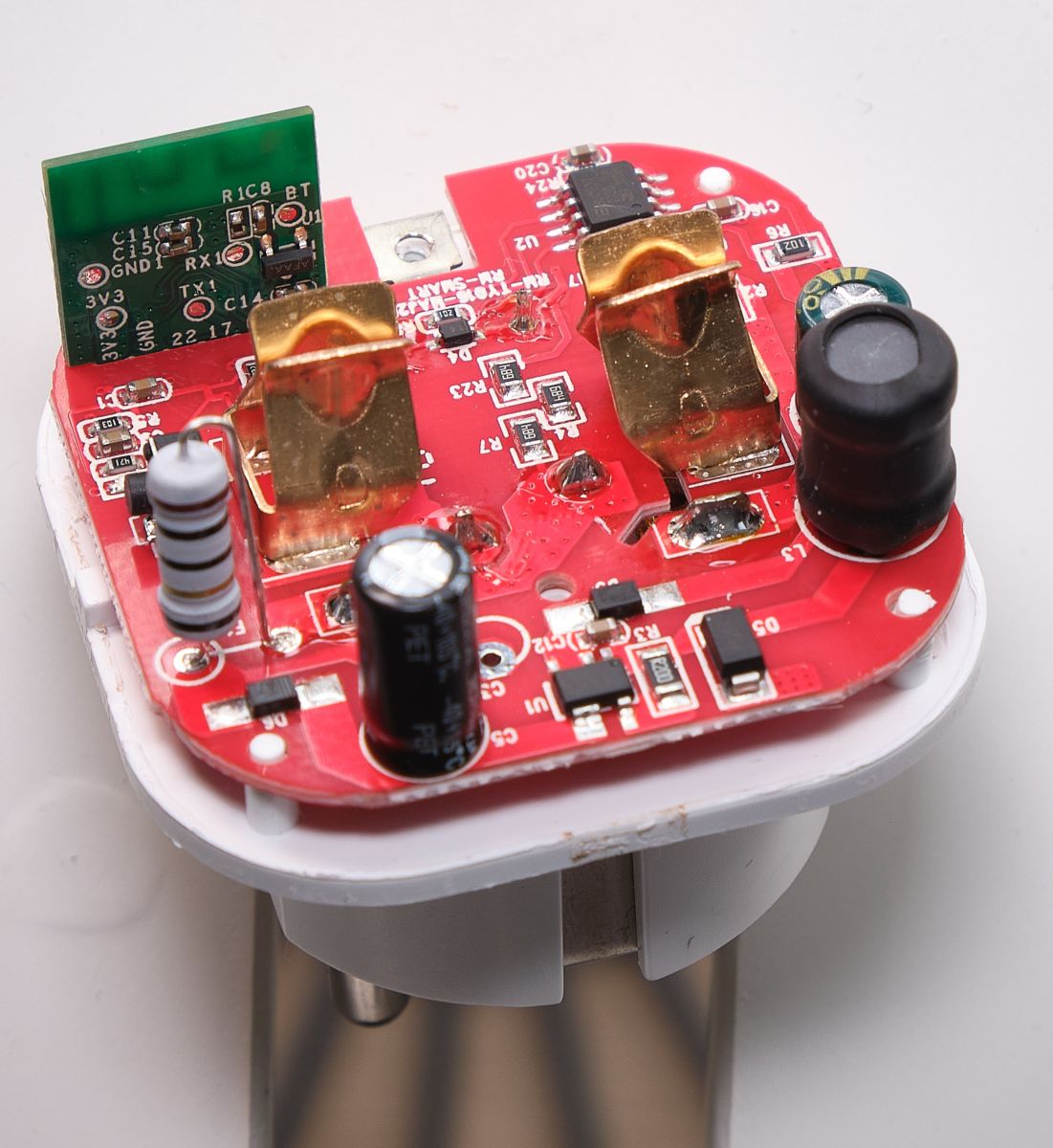
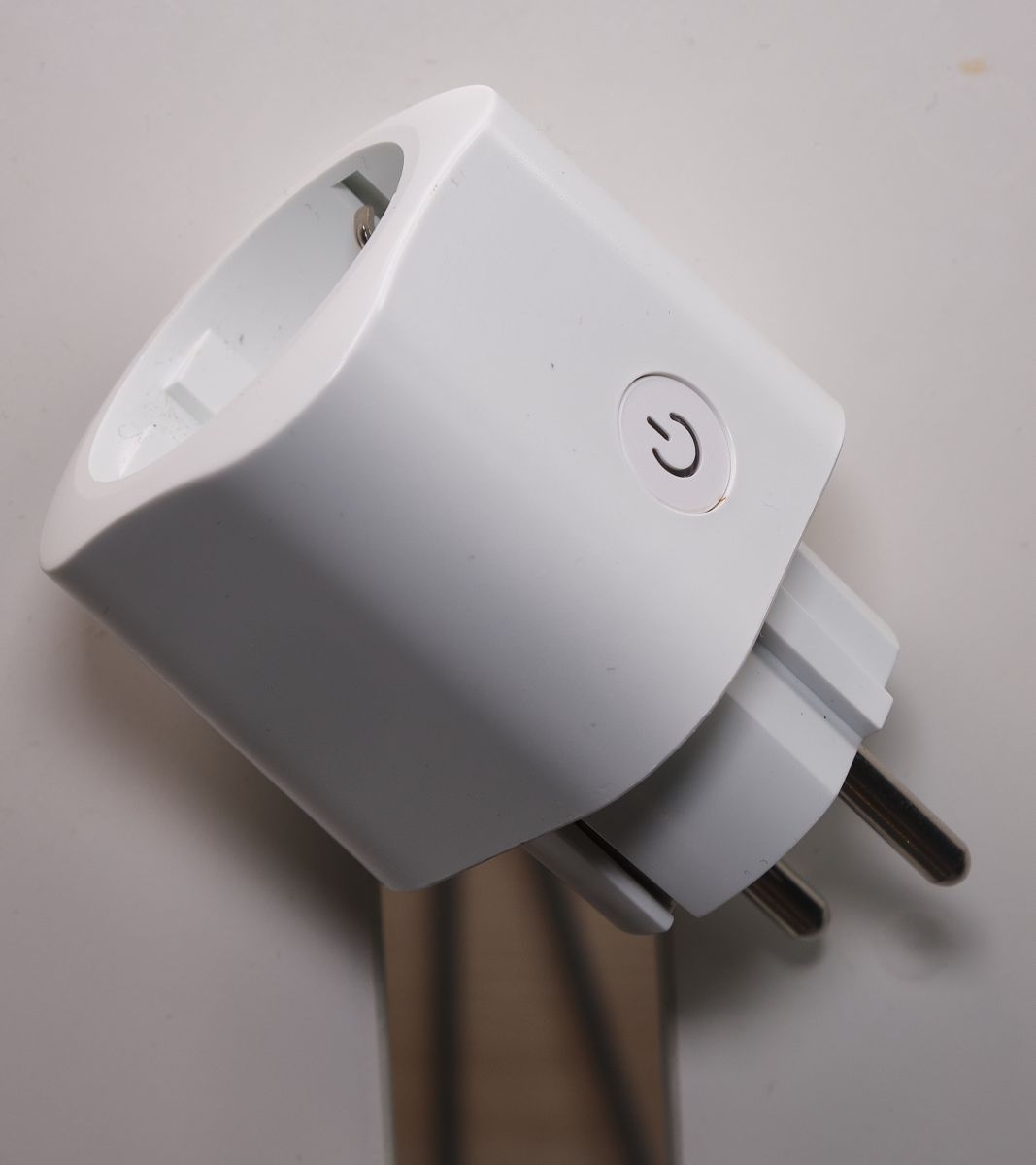
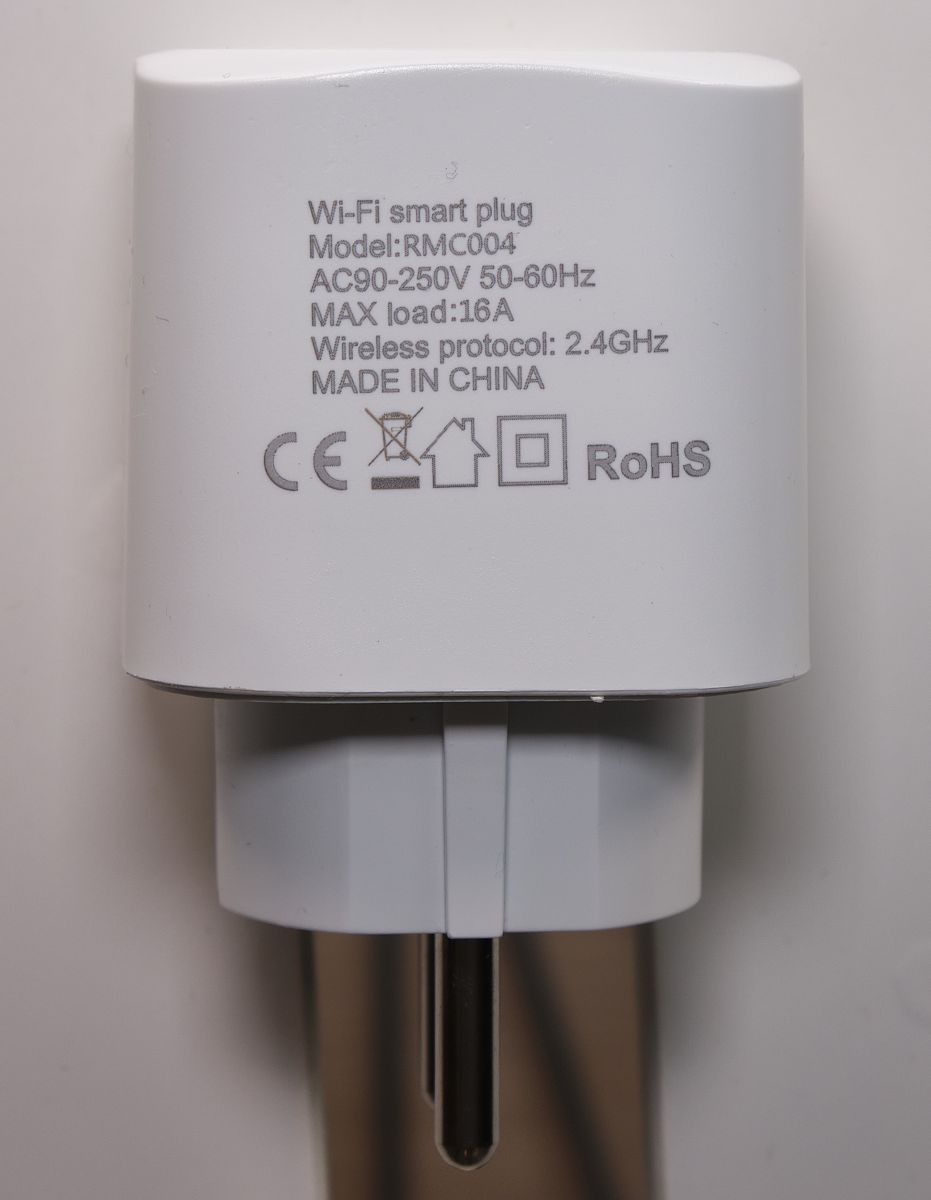
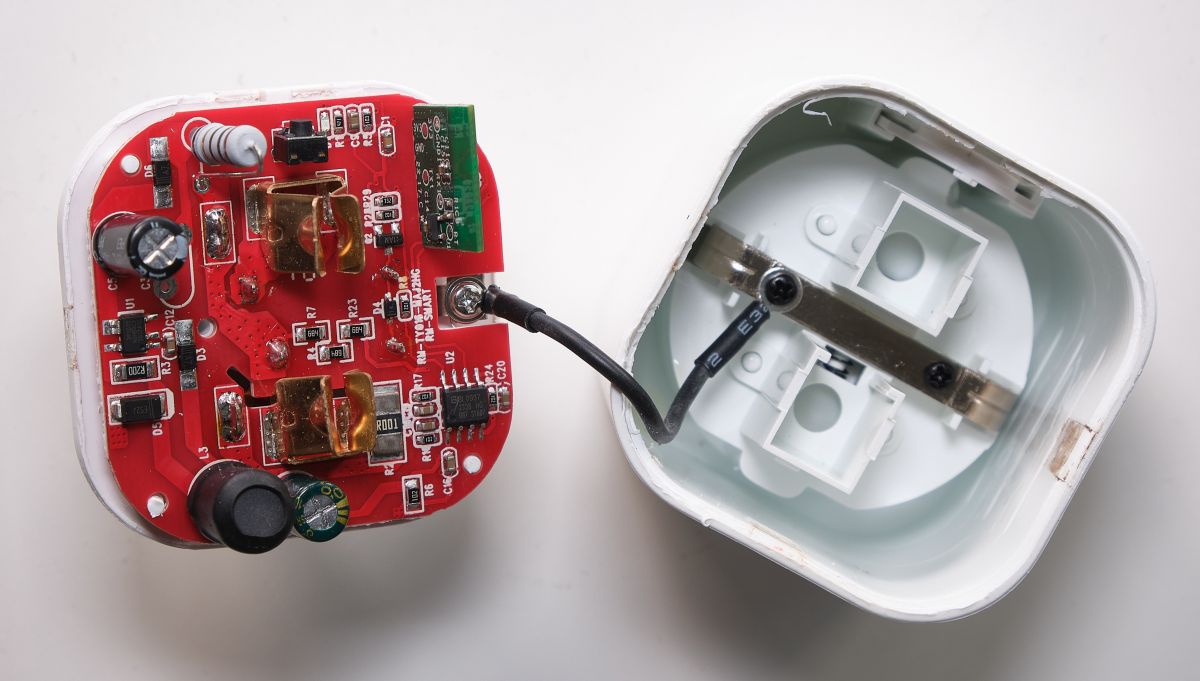
    I got an RMC004 with BL602 from Aliexpress. But it has red main PCB. I guess a different revision. There is for example C3 missing on my board. So I thought why not take a few pictures and document my way to flashing the smart plug:

    Smart plug with power button at an angle. White Wi-Fi smart plug with model RMC004 markings.

    Unscrew the neutral cable from the PCB holder:

    Red PCB with relays and electronic components inside a smart plug housing. Red RMC004 circuit board with electronic components.

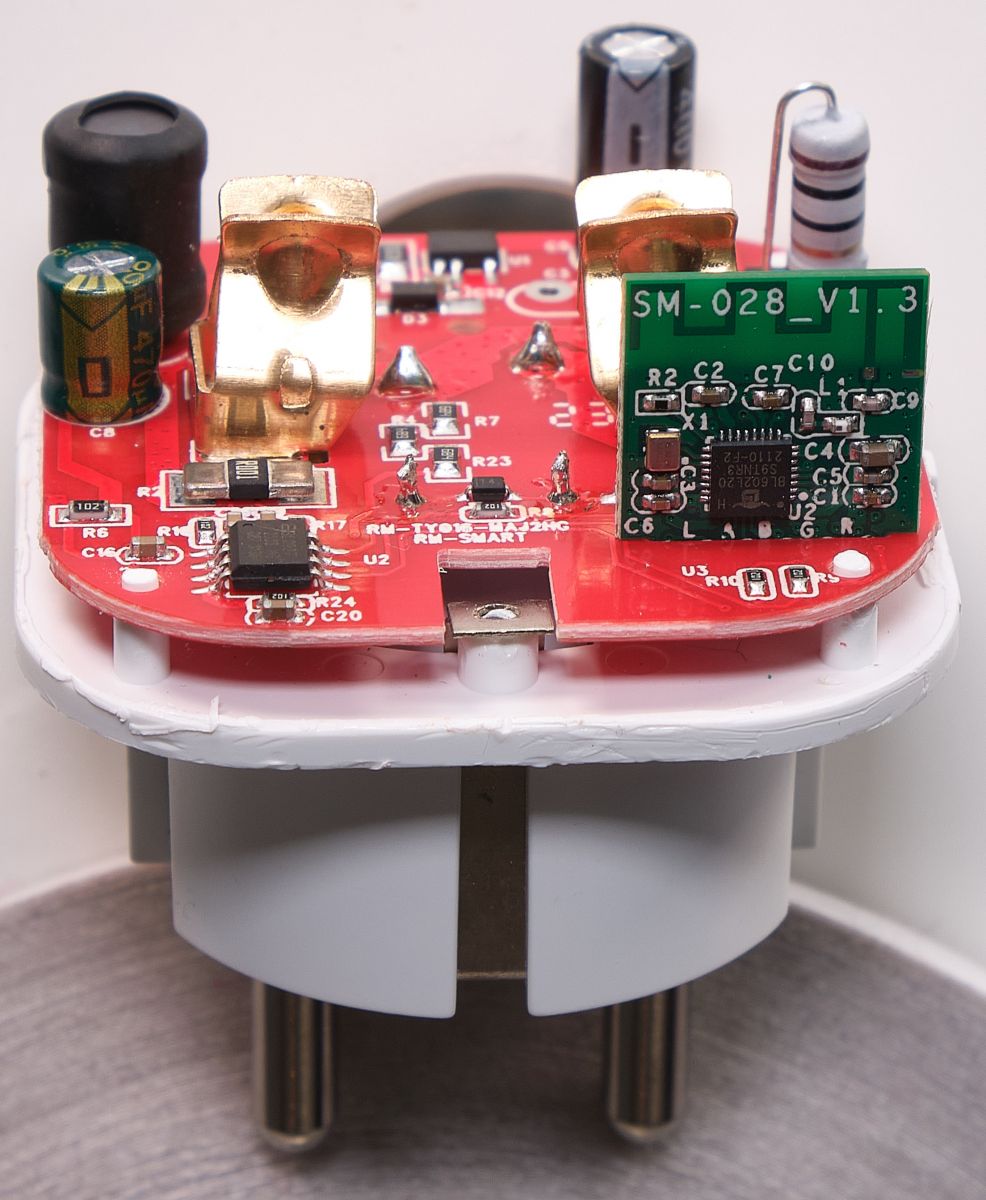
    Beautiful views of the communication PCB in its place on the main PCB:
    Close-up of a red circuit board with electronic components and relays. Close-up of a red PCB smart plug labeled SM-028_V1.3 with attached electronic components.

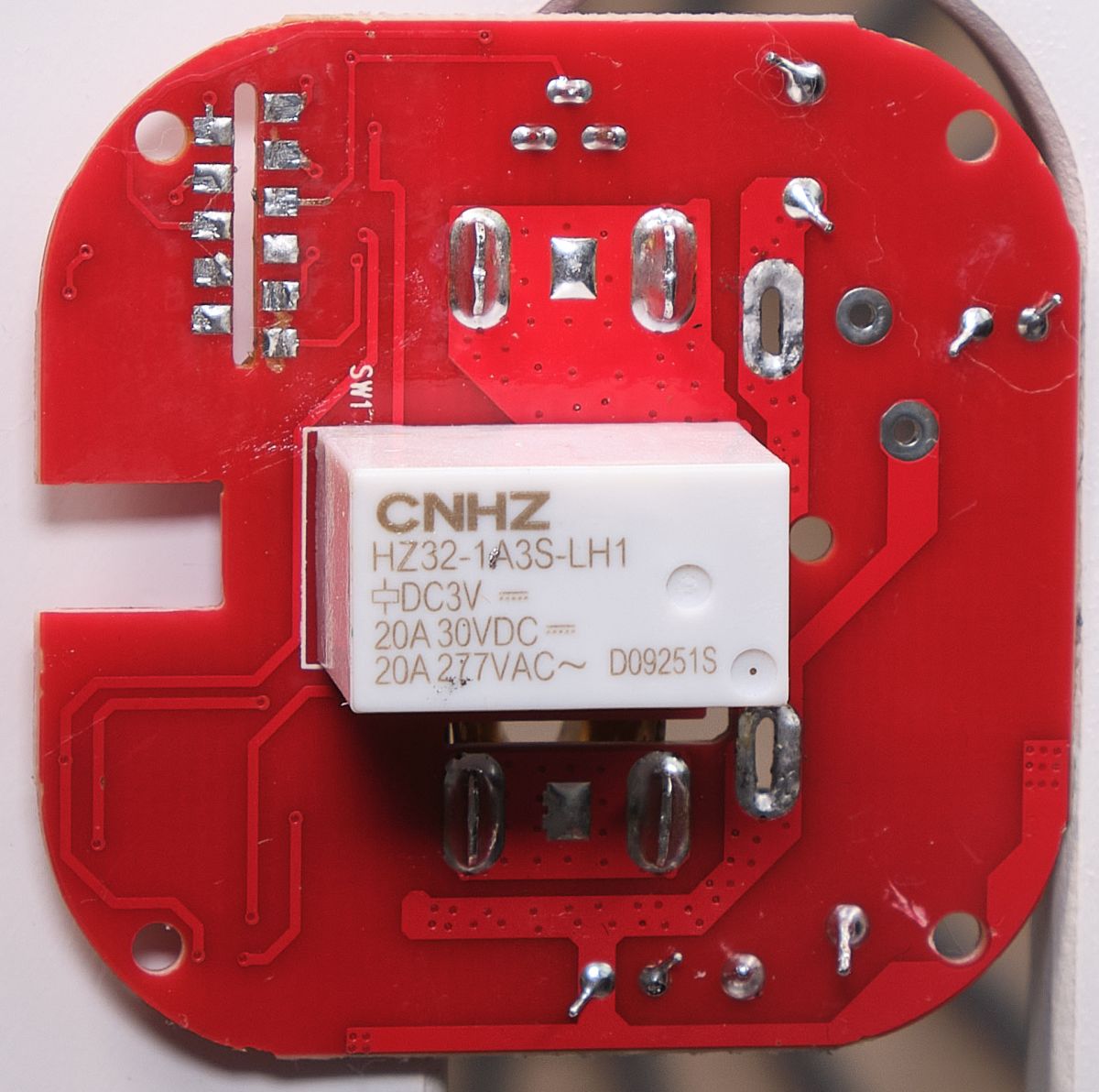
    Desoldering the main PCB from the PCB-Holder/Plug lets you view the relais:
    Red printed circuit board with a component labeled CNHZ HZ32-1A3S-LH1.
    It's always nice to have a 20A relais in a 16A socket :)

    And here is the BL602 board:
    SM-028 circuit board version 1.3 with electronic components. BL602 PCB with component markings.

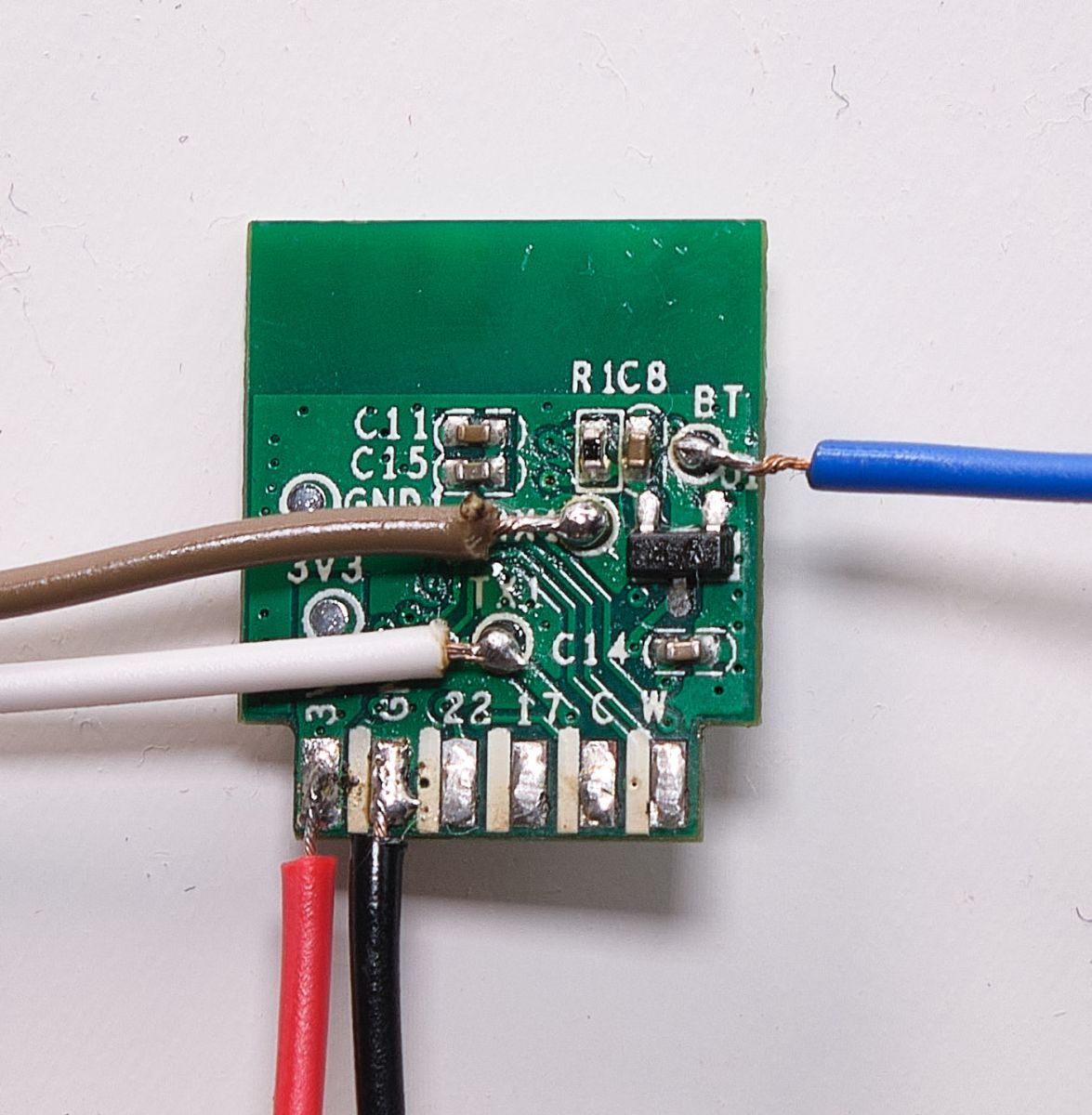
    And this is how i soldered the wires to flash this little guy:
    Close-up of a BL602 PCB with soldered wires.
    The only special thing is the blue wire must be pulled high. In line with 10kOhm to 3,3V

    Before I flashed OpenBeken i dumped the original firmware using this tool.
    BL602_0x10...150000.zip (554.75 kB)You must be logged in to download this attachment.

    Flashing worked like normal. And here is my config:

    {
      "vendor": "Tuya",
      "bDetailed": "0",
      "name": "Wi-Fi smart plug",
      "model": "RMC004",
      "chip": "BL602",
      "board": "SM-028_V1.3",
      "flags": "1024",
      "keywords": [
        "power metering",
        "smart plug",
        "bl0937"
      ],
      "pins": {
        "2": "Rel;1",
        "3": "BL0937CF1;0",
        "14": "BL0937CF;0",
        "20": "LED_n;1",
        "21": "BL0937SEL;0",
        "22": "Btn;1"
      },
      "command": "backlog startDriver BL0937; startDriver NTP",
      "image": "https://obrazki.elektroda.pl/8014289700_1711242720.jpg",
      "wiki": "https://www.elektroda.com/rtvforum/viewtopic.php?p=21016900#21016900"
    }
📢 Listen (AI):

Topic summary

✨ The discussion revolves around the Elivco smart plug model RMC004, which incorporates a BL602 microcontroller and a BL0937 energy monitoring IC. Users report challenges with the energy monitoring functionality, primarily due to the absence of a necessary interrupt counter in the BL602 driver for the BL0937. Some users have successfully opened the plug and attempted to modify the firmware, while others have suggested replacing the BL602 with an ESP-02S module for better compatibility. Calibration of the energy monitoring feature is also highlighted as essential for accurate readings. Recent updates indicate that the OpenBL602 firmware now supports the BL0937, although users still report issues with accuracy and functionality. Various methods for opening the plug and flashing the firmware are discussed, including using Arduino as a USB-TTL adapter and troubleshooting connection issues.

FAQ

TL;DR: OpenBeken v1.17.421 adds BL0937 energy-meter support for BL602-based Elivco RMC004 plugs, cutting voltage error to under 1 % after calibration [Elektroda, Mad_Maxs, post #20923215] “Calibration is necessary” [Elektroda, p.kaczmarek2, post #20923577]

Why it matters: You can now get accurate, cloud-free power monitoring on a $10 smart plug.

Quick Facts

• Rated load: 16 A relay on EU RMC004, despite 20 A label [Elektroda, sverd2, post #20357626] • Energy IC: BL0937, ±0.5 % active-power accuracy (typical) [BL0937 Datasheet, 2020] • Wi-Fi SoC: Bouffalo BL602L20 @ 192 MHz [Elektroda, p.kaczmarek2, post #20359721] • Latest supported firmware: OpenBeken 1.17.421 or newer [Elektroda, Mad_Maxs, post #20923215] • Typical flashing baud rate: 115 200 bps (fallback to 57 600 if handshake fails) [Elektroda, p.kaczmarek2, post #20733220]
What hardware is inside the Elivco RMC004 smart plug?

The EU version uses a BL602L20 Wi-Fi module, a BL0937 energy-meter IC and a BP2525 power supply. The relay is Songle-branded, rated 16 A, while the case is labelled 20 A [Elektroda, sverd2, post #20357626]

Is it safe to draw 20 A through this plug?

No. The internal relay is specified for 16 A; exceeding it risks overheating and contact welding. Keep continuous loads ≤ 16 A (≈ 3.5 kW at 230 V) [Elektroda, sverd2, post #20357626]

How accurate are the readings after calibration?

Users report < 1 % voltage error and < 3 % current error after single-point calibration with a resistive load [Elektroda, hojnikb, post #20923833] The BL0937 chip itself is specified at ±0.5 % for active power [BL0937 Datasheet, 2020].

Which GPIO mapping works for the SM-028 V1.3 red PCB?

• Relay GPIO2 • LED (active-low) GPIO20 • Button GPIO22 • BL0937 CF1 GPIO3, CF GPIO14, SEL GPIO21 [Elektroda, Raufaser, post #21016900]

How do I flash OpenBeken to the BL602 module?

  1. Solder wires to 3.3 V, GND, RX, TX and BOOT; pull BOOT high via 10 kΩ.
  2. Connect a 3.3 V USB-TTL (CH340) at 115 200 bps.
  3. Use BLDevCube → UART → Load & Burn the latest BL602 build. [Elektroda, p.kaczmarek2, post #20732063]

Handshake fail during flashing—what now?

Swap RX/TX, ensure BOOT is high before power-up, shorten wires, and lower baud to 57 600. Damaged BOOT pads can be bypassed by soldering to the R2 resistor pad on the same trace [Elektroda, atomiquepingouin, post #20912543]

How do I calibrate the BL0937 in OpenBeken?

Open WebApp → Tools → Energy Cal. Enter a known mains voltage (e.g., 230 V) and known load wattage, press “Set & Save”. Calibration values are stored in flash [Elektroda, p.kaczmarek2, post #20923577]

Can I replace the BL602 module with an ESP-02S?

Yes. The footprint matches TYWE2S/ESP-02S. You may need to add bias resistors, then flash ESPHome/Tasmota. “Replacing it with ESP-02S is also a good idea” [Elektroda, p.kaczmarek2, post #20386004]

What’s the simplest way to open the plug without damage?

Clamp the body, then cut 1.5 mm below the seam with a Dremel or < 1 mm metal-saw blade, making a 360° cut ~1.5 mm deep [Elektroda, P0intLess, post #20617278]

Edge case: no Wi-Fi AP after a ‘successful’ flash.

Keep the UART connected and watch boot logs; missing GPIO config often blocks startup. Use GPIO Doctor to identify correct pins, then set Relay/LED/Button roles and reboot [Elektroda, p.kaczmarek2, post #20917935]

What voltage does the factory firmware report?

Uncalibrated plugs reported 260–270 V on 235 V mains, an error of about 12 % [Elektroda, hojnikb, post #20923500] Calibration removes this offset.
ADVERTISEMENT