logo elektroda
logo elektroda
X
logo elektroda
Dostępna jest polska wersja

Czy wolisz polską wersję strony elektroda?

Nie, dziękuję Przekieruj mnie tam

Guide for WiFi Flashing of OpenBeken for Tuya Generic Power Strip ZLD-44EU-W - step by step tutorial

jrhenk 2844 2

TL;DR

  • Flashes a Tuya generic power strip ZLD-44EU-W with OpenBeken after replacing the original Tuya firmware.
  • Uses Tuya Cloudcutter, AP/EZ button sequencing, and manual OpenBeken configuration because the strip now uses a CB2S chip and different GPIOs than the older ESP version.
  • The strip has 4 individually switched outlets, 4 USB ports switched together, a separately controllable status LED, and a main button.
  • Flashing succeeded, but it needed two tries; the main button still toggled all outlets at first, and click-counting button scripts like On5Click were sometimes unreliable.
Generated by the language model.
ADVERTISEMENT
📢 Listen (AI):
  • Guide for WiFi Flashing of OpenBeken for Tuya Generic Power Strip ZLD-44EU-W - step by step tutorial
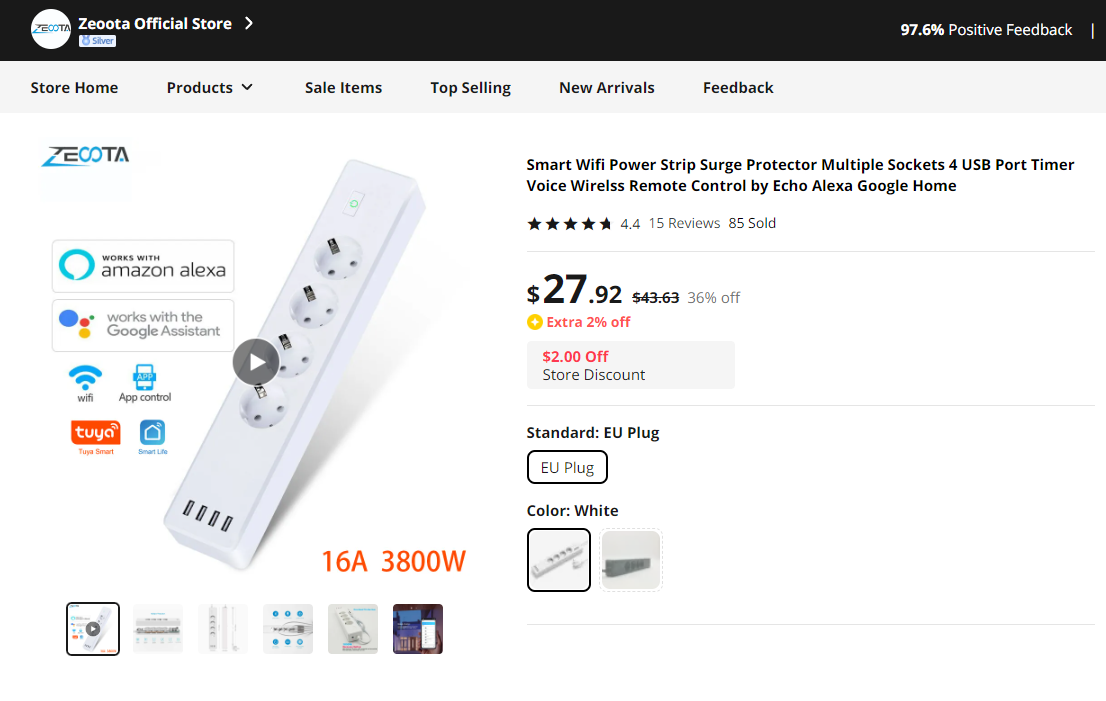
    After profiting so much from the help I got here, I'm a bit proud but mainly happy to finally be able to add to the database! I managed to successfully flash a Tuya generic power strip with tuya cloudcutter. It looks quite nice, has 4 outlets that can be switched individually (their relays are hardwired to status leds), 4 usb connections that are switched together, a status led under the main button that can be controlled independently and that main button. The blackadder page underneath shows three buttons, yet I couldn't see any additional ones next to the main button.

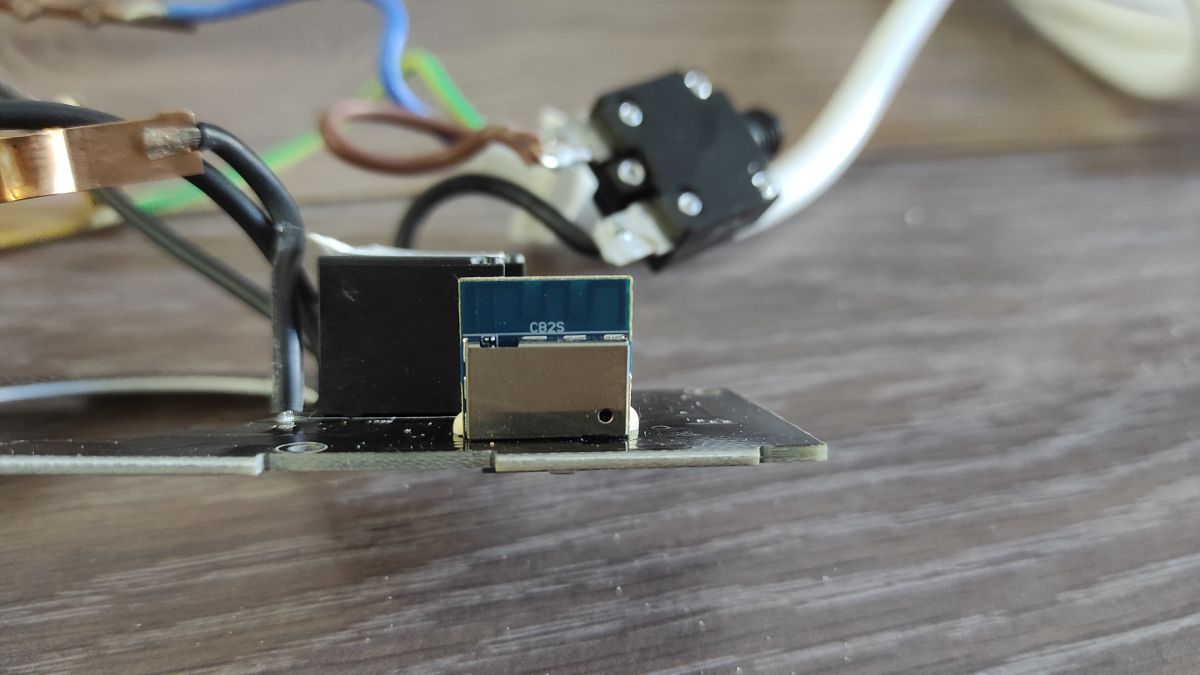
    On the device itself there is no device name whatsoever, on the package the product number ZLD-44EU-W is printed. After googling it looks like this power strip used to have an esp chip: https://templates.blakadder.com/ZLD-44EU-W.html, it now sports an CB2S chip and the GPIO numbers are also different compared to the ESP version.

    I bought it via this link (it was on discount for 10 Euros less)
    https://www.aliexpress.com/item/32864068545.html?
    Guide for WiFi Flashing of OpenBeken for Tuya Generic Power Strip ZLD-44EU-W - step by step tutorial
    and it might be the same device as this one, that actually shares the product number:
    https://www.blitzwolfeurope.com/spd/RSH-ZLD-4...LD-44-EU-W-SMART-WiFi-USB-charger-distributor

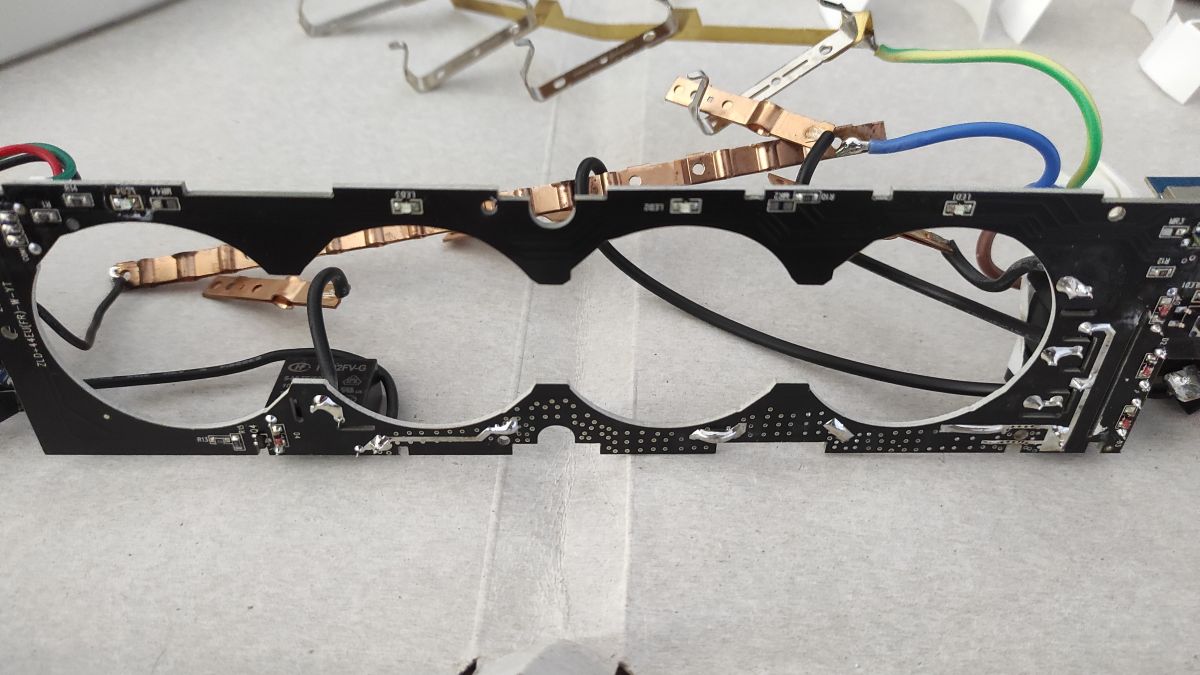
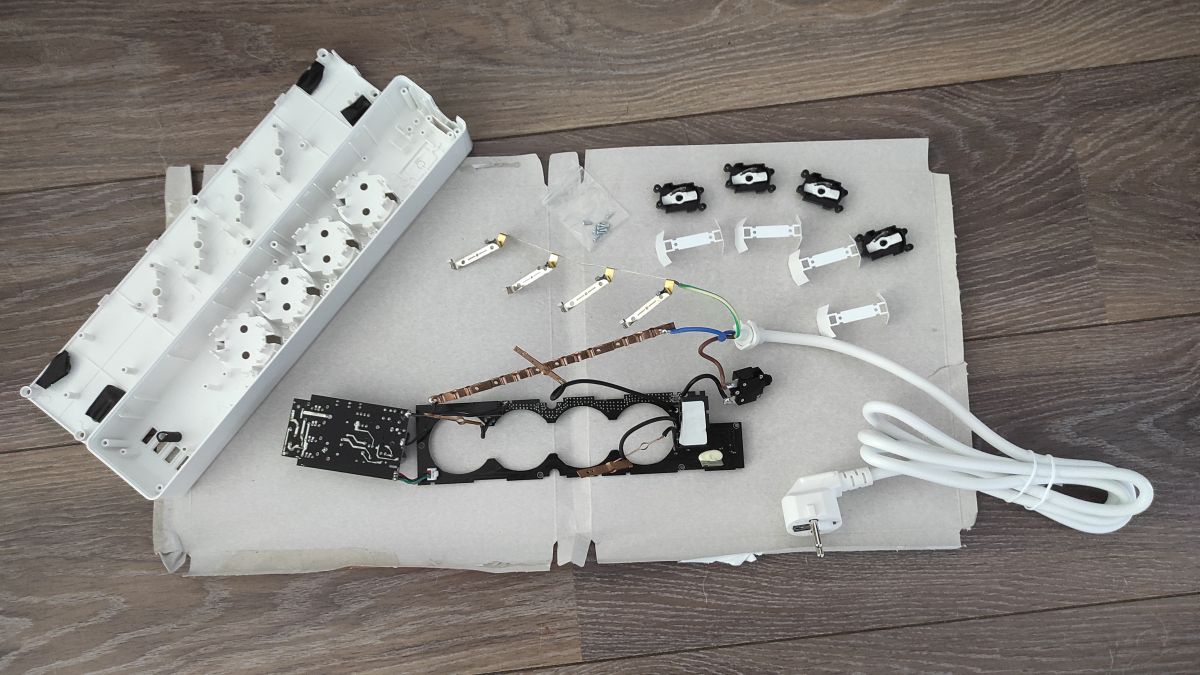
    Only way to find out which chip it's using was to completely disassemble it, here are some pictures. Note: Also it's not needed to disassemble it with this howto, it might be good to do it anyway, as I noticed that the cables where not very nicely soldered to the contacts for the outlets and need some retouching.
    Guide for WiFi Flashing of OpenBeken for Tuya Generic Power Strip ZLD-44EU-W - step by step tutorial

    Guide for WiFi Flashing of OpenBeken for Tuya Generic Power Strip ZLD-44EU-W - step by step tutorial

    Guide for WiFi Flashing of OpenBeken for Tuya Generic Power Strip ZLD-44EU-W - step by step tutorial

    ===============================
    Flashing with Tuya Cloudcutter:
    - Startup cloudcutter and choose an Openbeken firmware with "N"
    - Choose "Select Firmware Version and Name"
    - Choose 1.1.8 and any device (we have to configure it manually anyway at this moment)

    - Put device into AP mode:
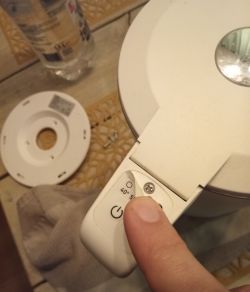
    - Hold the main button on the device, the led next to the USB connection will light up but keep holding until the led behind the main button starts blinking fast (now device is in what Tuya calls EZ mode)
    - While fast blinking hold the button again, the LED next to the usb will light up again, keep holding until the led behind the button starts blinking slowly (This is what Tuya calls AP mode)

    - Cloudcutter will now run the initial exploit
    - When being prompted power cycle device 6x and repeat the button procedure from above
    - If everything goes well, Openbeken should be uploaded now
    - If after a power cycle the main button still switches all outlets on and off try again, I needed two tries

    =================================================

    Configuration:

    Via the web application use this configuration. Note: I configured the button as "9" so you can program it instead of it just toggling the first outlet
    Code: JSON
    Log in, to see the code


    =======================================

    Just for laughs I created a little autoexec.bat that toggles all 4 outlets depending on how often you click the button - you have to train your clicking skills to make this work dependably though ... sometimes the number of clicks is not correctly identified. Playing around I noticed you can click much slower than you might think but just by guessing I found out that even On5click exists :)

    Quote:
    addEventHandler OnClick 10 power1 toggle
    addEventHandler OnDblClick 10 power2 toggle
    addEventHandler On3Click 10 power3 toggle
    addEventHandler On4Click 10 power4 toggle
    addEventHandler On5Click 10 power5 toggle


    Have fun!

    Cool? Ranking DIY
    About Author
    jrhenk
    Level 10  
    Offline 
    jrhenk wrote 59 posts with rating 8, helped 1 times. Been with us since 2023 year.
  • ADVERTISEMENT
  • #2 20663288
    p.kaczmarek2
    Moderator Smart Home
    Posts: 14637
    Help: 655
    Rate: 12649
    Very good and detailed guide. I only slightly modified your post to use syntax tag for JSON code because it looks nice this way.

    Yes, you are right, even On5click exists :D I've created this event to make it easier for users and I knew there are potential use cases for such even, even tough I myself have troubles with such clicking precision.

    Regarding wifi flashing method - I have basically never flashed via WiFi (well, maybe once to test the profile I made myself in the old times) so it's interesting to read about, even I can learn from that. Thanks!

    I always just solder wires, as you can see on our Elektroda YT channel:
    https://www.youtube.com/@elektrodacom
    Helpful post? Buy me a coffee.
  • #3 20663883
    jrhenk
    Level 10  
    Posts: 59
    Help: 1
    Rate: 8
    Hi!
    The config indeed looks nicer that way and thanks for the positive feedback! About the wifi flashing: I setup a Raspi 3 I had lying around a while ago only for cloudcutter and can really recommend this - the most frustrating but also interestingly challenging part about it was to find out about all the well and maybe not at all documented methods to bring devices into AP mode. But now the whole openbeken and cloudcutter experience just became another amazing demonstration about the power of opensource projects: Not so long ago I just jealously looked at all the nice and often much cheaper Tuya/Beken devices and felt very limited by only being able to use ESP based ones. Fast forward one year and I now actually prefer the beken chips over esp ones since flashing them and using openbeken just works so much better. I highly appreciate all the work you have and keep putting into this!
📢 Listen (AI):

FAQ

TL;DR: This FAQ helps OpenBeken users flash a 4-outlet, 4-USB Tuya ZLD-44EU-W over WiFi. "Very good and detailed guide," wrote the forum editor. Choose an OpenBeken firmware with "N," select Tuya firmware 1.1.8, switch EZ mode to AP mode, then let Cloudcutter run the exploit and upload. [#20663288]

Why it matters: It shows a repeatable, cable-free path for converting a CB2S/BK7231N power strip that older ESP-based templates no longer match.

Variant Module/chip Flashing approach discussed GPIO situation
Older ZLD-44EU-W version ESP chip Older template exists Different from current unit
Current ZLD-44EU-W in the thread CB2S / BK7231N WiFi flashing with Tuya Cloudcutter Requires manual OpenBeken mapping

Key insight: The most important step is forcing the strip from fast-blinking EZ mode into slow-blinking AP mode; without AP mode, the Cloudcutter workflow in this guide does not proceed as described. [#20663247]

Quick Facts

  • The strip discussed here has 4 individually switched AC outlets, 4 USB ports switched together, 1 main button, and 1 independently controllable status LED under that button. [#20663247]
  • The author bought the unit at a €10 lower sale price than usual and identified the package model as ZLD-44EU-W. [#20663247]
  • Cloudcutter setup used an OpenBeken build with "N", then "Select Firmware Version and Name", then Tuya firmware 1.1.8 before manual pin setup. [#20663247]
  • If Cloudcutter asks for a retry step, the device must be power-cycled 6 times and returned to AP mode again. [#20663247]
  • For repeat jobs, the author recommends a dedicated Raspberry Pi 3 used only for Cloudcutter flashing. [#20663883]

How do I flash a Tuya ZLD-44EU-W power strip with OpenBeken over WiFi using Tuya Cloudcutter step by step?

You can flash it over WiFi with a short 3-step process. 1. Start Tuya Cloudcutter, choose an OpenBeken firmware with "N," then pick "Select Firmware Version and Name" and firmware 1.1.8. 2. Put the strip into EZ mode, then AP mode by holding the main button through the two blink states. 3. Let Cloudcutter run the initial exploit, then if prompted, power-cycle the strip 6 times and repeat the button sequence. If the main button still controls all outlets after reboot, try again; this unit needed 2 attempts. [#20663247]

What is Tuya Cloudcutter, and how does it work for WiFi flashing BK7231N-based devices like the CB2S power strip?

"Tuya Cloudcutter" is a WiFi flashing tool that runs an initial exploit, then uploads replacement firmware without soldering, a key advantage for compatible Tuya devices. In this guide, it is used with an OpenBeken build marked "N" on a CB2S-based strip, then completed after AP mode entry and, when prompted, 6 power cycles. The thread does not describe Cloudcutter internals beyond that workflow. [#20663247]

How do I put the ZLD-44EU-W power strip into Tuya EZ mode and then AP mode for Cloudcutter?

Hold the main button until the LED behind the main button starts blinking fast; that is EZ mode. Then hold the button again while it is fast blinking. The LED next to the USB connection lights up first, and you keep holding until the main-button LED starts blinking slowly. That slow blink is AP mode, which the guide uses for Cloudcutter. [#20663247]

Why does the main button still switch all outlets on and off after flashing OpenBeken, and how can I fix it?

It usually means the first flashing pass did not fully take effect on this strip. The guide states that if a power cycle still leaves the main button switching all outlets together, you should run the process again. On the documented unit, OpenBeken worked only after 2 tries. Re-enter AP mode and repeat the Cloudcutter sequence exactly. [#20663247]

What OpenBeken pin configuration should I use for the Tuya generic power strip ZLD-44EU-W with a CB2S/BK7231N chip?

Use the posted BK7231N mapping: GPIO 6 = Rel;1, 7 = Rel;2, 8 = Rel;4, 10 = Btn;9, 11 = WifiLED;0, 24 = Rel;3, and 26 = Rel_n;5. The JSON also sets vendor to Tuya, chip to BK7231N, and flags to 1028. The author chose Btn;9 so the main button can be programmed instead of directly toggling outlet 1. [#20663247]

How are the relays, USB control, WiFi LED, and main button mapped on the BK7231N version of the ZLD-44EU-W?

The BK7231N version maps four outlet relays and one USB relay separately. GPIO 6 controls relay 1, 7 controls relay 2, 24 controls relay 3, and 8 controls relay 4. GPIO 26 is Rel_n;5 for the USB group, GPIO 11 is WifiLED;0, and GPIO 10 is the main button as Btn;9. The thread also notes the four outlet relays are hardwired to their status LEDs. [#20663247]

What is BK7231N, and how is it different from the ESP chip used in older versions of the ZLD-44EU-W?

"BK7231N" is a device chip used in this power strip version that runs the current OpenBeken target here, replacing the older ESP-based module and changing the GPIO layout. The thread says older ZLD-44EU-W units appeared to use an ESP chip, while the documented strip uses a CB2S module with BK7231N. The practical difference in this guide is simple: the old template no longer matches, and the GPIO numbers are different. [#20663247]

OpenBeken on Beken chips vs ESP-based Tuya devices: which is easier to flash and configure today?

In this thread, the Beken route is described as easier today. The author says that one year earlier, ESP-based devices felt limiting, but now they prefer Beken chips because flashing them and using OpenBeken "just works so much better." That is a user conclusion from hands-on experience, not a benchmark, but it directly compares current OpenBeken usability across both chip families. [#20663883]

What does AP mode mean in Tuya devices, and why is it required during the Cloudcutter flashing process?

"AP mode" is a Tuya connection state that exposes the device for direct wireless setup, identified here by a slow-blinking LED after the fast-blinking EZ mode stage. This guide requires AP mode because the Cloudcutter procedure is performed only after the strip is switched into that slow-blink state. The thread treats AP mode as the necessary precondition for the WiFi exploit and upload path. [#20663247]

How can I program the main button in OpenBeken with addEventHandler for single-click, double-click, and multi-click actions?

Map the main button as Btn;9, then add click handlers in autoexec.bat. The posted example uses addEventHandler OnClick 10 power1 toggle, OnDblClick 10 power2 toggle, On3Click 10 power3 toggle, On4Click 10 power4 toggle, and On5Click 10 power5 toggle. That gives 1-click through 5-click actions from one button, including separate control of all 4 outlets and the USB relay. [#20663247]

Why might On3Click, On4Click, or On5Click events be detected inconsistently in OpenBeken, and how can I improve reliability?

They can be inconsistent because click timing is hard to reproduce exactly on this device. The author says the number of clicks is "not correctly identified" sometimes, even though slower clicking works better than expected and On5Click exists. Improve reliability by reducing reliance on 3-, 4-, or 5-click actions and reserving critical functions for single-click or double-click events. [#20663247]

What does the OpenBeken setting "Btn;9" do, and why use it instead of mapping the button to directly toggle outlet 1?

Btn;9 turns the main button into a programmable event source instead of a fixed outlet-1 switch. The author explicitly chose Btn;9 so they could attach addEventHandler actions for 1, 2, 3, 4, and 5 clicks. That gives much more flexibility than binding the button directly to one relay, especially on a strip with 4 outlets plus 1 USB relay group. [#20663247]

How can I tell whether my Tuya power strip uses an ESP module or a CB2S/BK7231N module before trying to flash it?

You may not be able to confirm it from the outside on this model. The author says the device itself had no printed device name, and they had to completely disassemble it to identify the module as CB2S. They also note that disassembly is not required for the flashing method itself, but it was the only way they found to verify the chip family before mapping GPIOs. [#20663247]

What safety issues should I inspect inside a Tuya power strip like the ZLD-44EU-W before putting it back into service?

Inspect the soldering on the outlet contact wiring before reuse. The author noticed the internal cables were "not very nicely soldered" to the outlet contacts and said they needed retouching. That makes internal visual inspection worthwhile after opening the strip, even though disassembly is not required for the WiFi flashing procedure itself. [#20663247]

What is the best setup for running Tuya Cloudcutter on a Raspberry Pi for repeated WiFi flashing of Tuya and Beken devices?

A dedicated Raspberry Pi 3 is the best setup described in this thread. The author says they configured a Raspi 3 only for Cloudcutter and strongly recommend that approach for repeated flashing work. They add that the hardest part was learning the various AP-mode entry methods, not the Pi-based Cloudcutter workflow itself. [#20663883]
Generated by the language model.
ADVERTISEMENT