logo elektroda
logo elektroda
X
logo elektroda
Dostępna jest polska wersja

Czy wolisz polską wersję strony elektroda?

Nie, dziękuję Przekieruj mnie tam

[BK7231N CB2S] 2- and 3-channel WiFi flush-mount switches - description, photos, configuration OpenB

@GUTEK@ 5259 20

TL;DR

  • MINI-W1 2- and 3-gang flush-mount WiFi wall switches from AliExpress use a BK7231N CB2S module and ship as unlabeled MINI-W1-2CH and MINI-W1-3CH variants.
  • The pin mapping was extracted from Tuya, and both versions can be programmed without desoldering if an external 3.3V supply powers the module alongside UART.
  • Both units run firmware 1.3.10, and Smart Life detects them as PSW-2CH-CB2S and PSW-3CH-CB2S.
  • OpenBeken WebApp configurations list relay, button, and WiFi LED pins, including P6/P7/P10/P11/P23/P24 for 2CH and P8/P26 for 3CH.
  • CloudCutter cannot flash them yet, so the posted configurations and original firmware attachment are the main practical value.
ADVERTISEMENT
Treść została przetłumaczona polish » english Zobacz oryginalną wersję tematu
📢 Listen (AI):
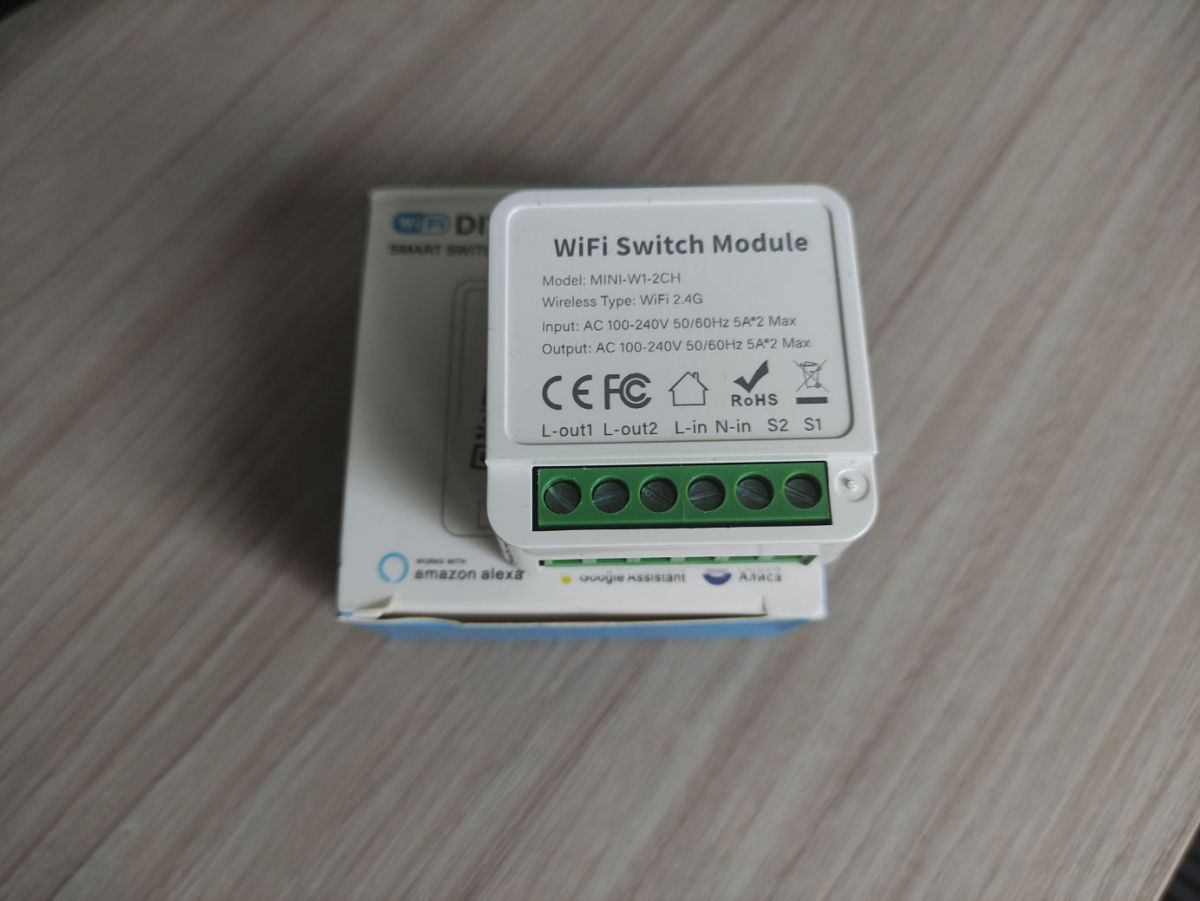
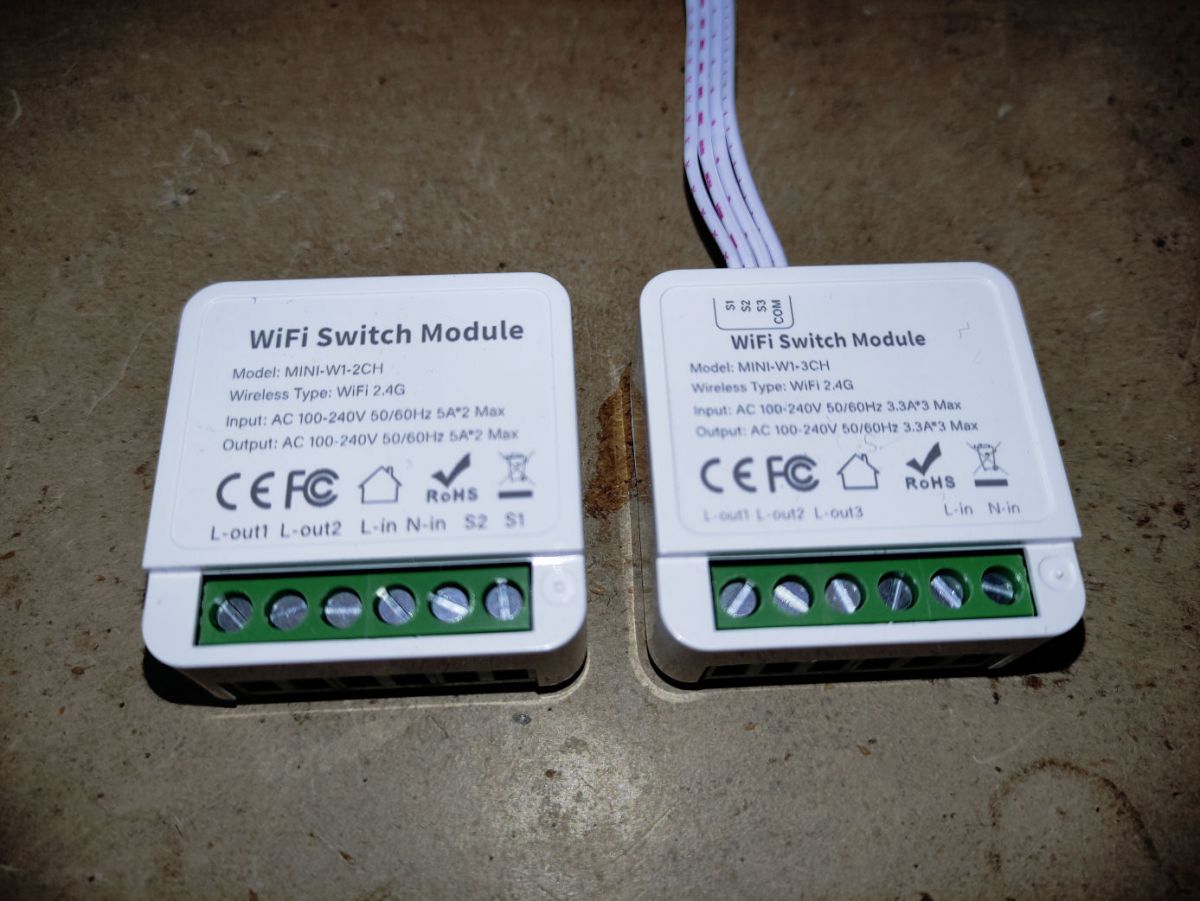
  • Two WiFi switch modules MINI-W1-2CH and MINI-W1-3CH lying on a surface.

    Hello.
    I haven`t found a configuration for these wall switches, so I`m posting my own. Bought on AliExpress: https://www.aliexpress.com/item/1005005773648155.html
    They are available in 1/2/3/4 channel versions. I have the 2 and 3 channel version.
    They have no manufacturer, neither on them nor on the box. Only the general model is MINI-W1, while specific versions are MINI-W1-2CH and MINI-W1-3CH.
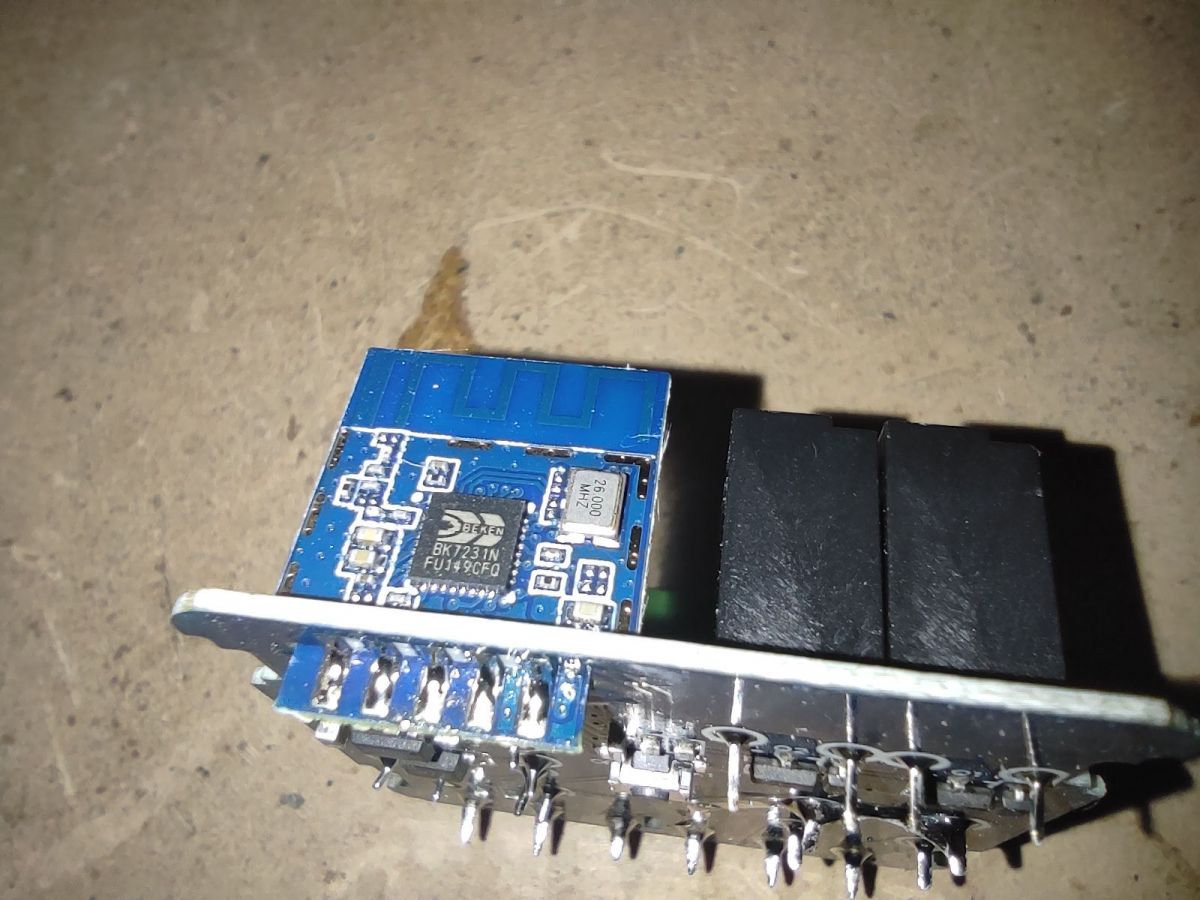
    They are based on the BK7231N CB2S system and firmware 1.3.10. So at the moment they cannot be reprogrammed using CloudCutter.
    In the Smart Life application they are detected as PSW-2CH-CB2S and PSW-3CH-CB2S.

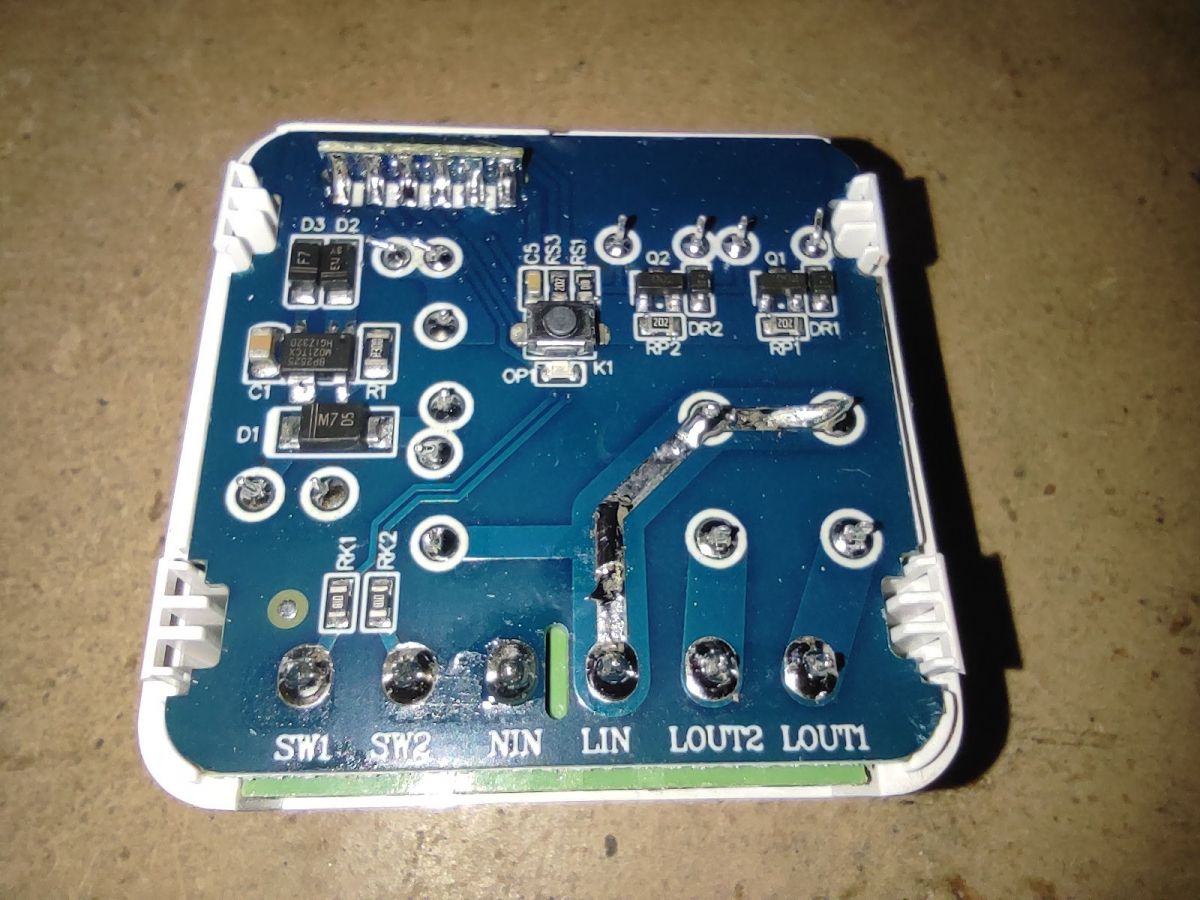
    The housing is assembled with 4 latches, which release quite easily when lifted. You can program without desoldering the module, but you need to connect an additional 3.3V power supply. Because it does not produce current from the UART converter.
    Pinout:
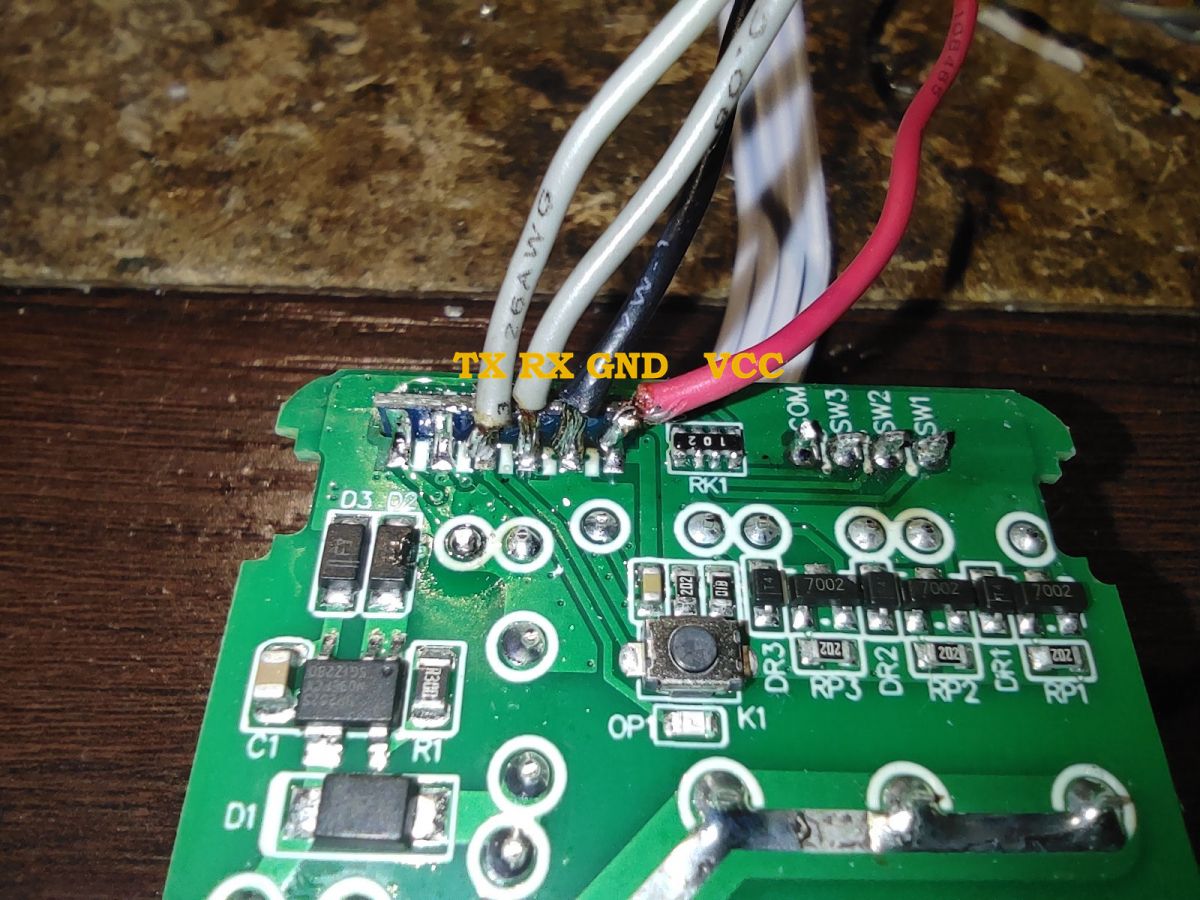
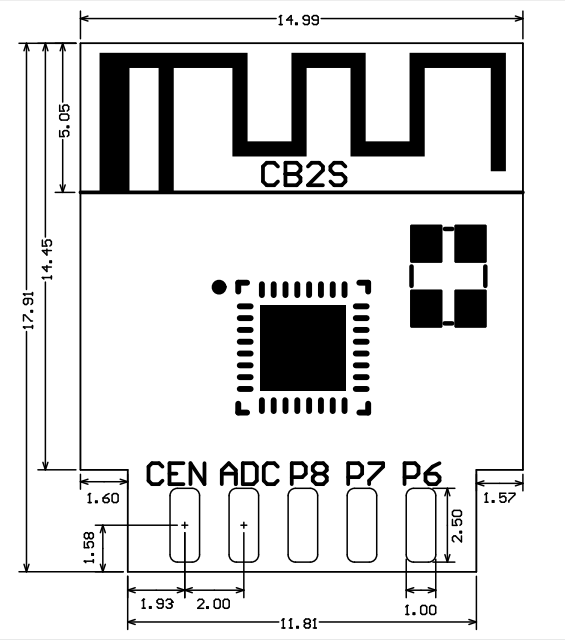
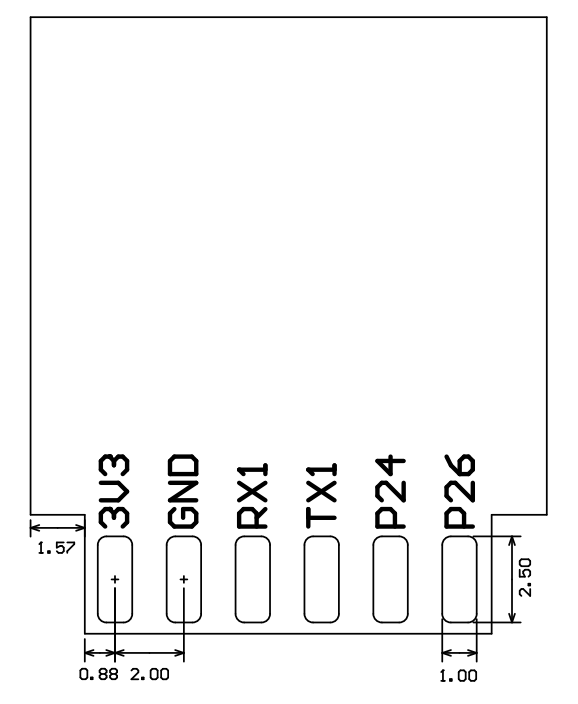
    Close-up of a printed circuit board with pin labels: TX, RX, GND, VCC and connected wires. Technical drawing of the CB2S module. Diagram of electrical module pins labeled 3V3, GND, RX1, TX1, P24, and P26.

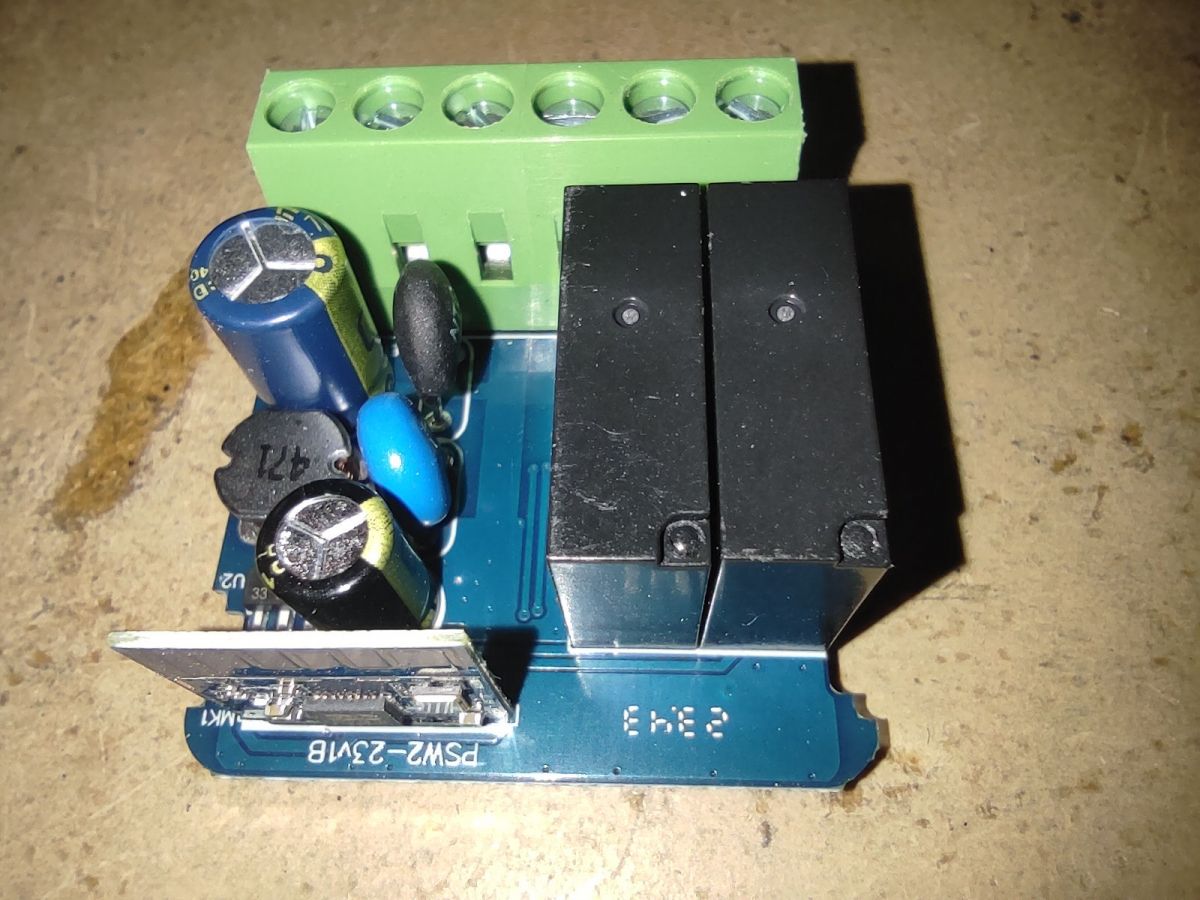
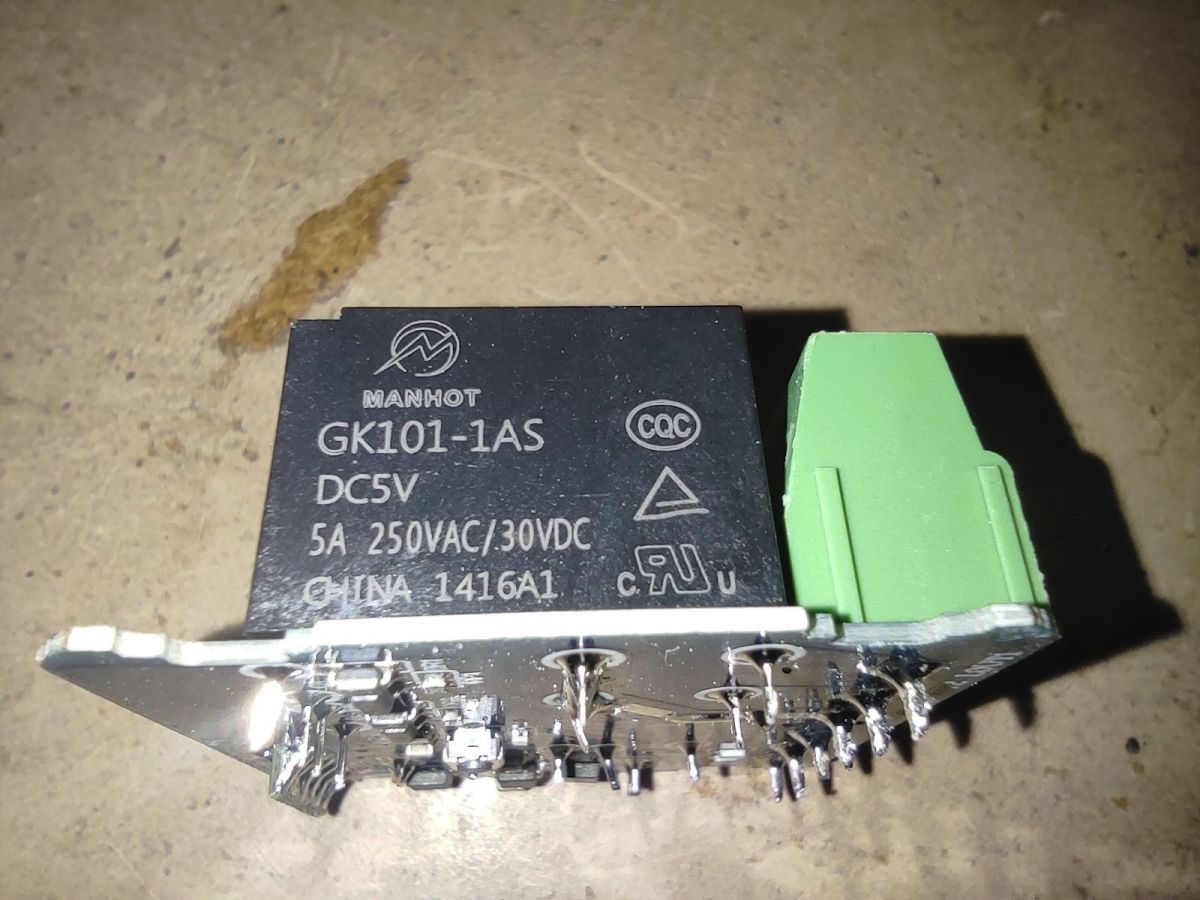
    2 channel version (2 Gang):
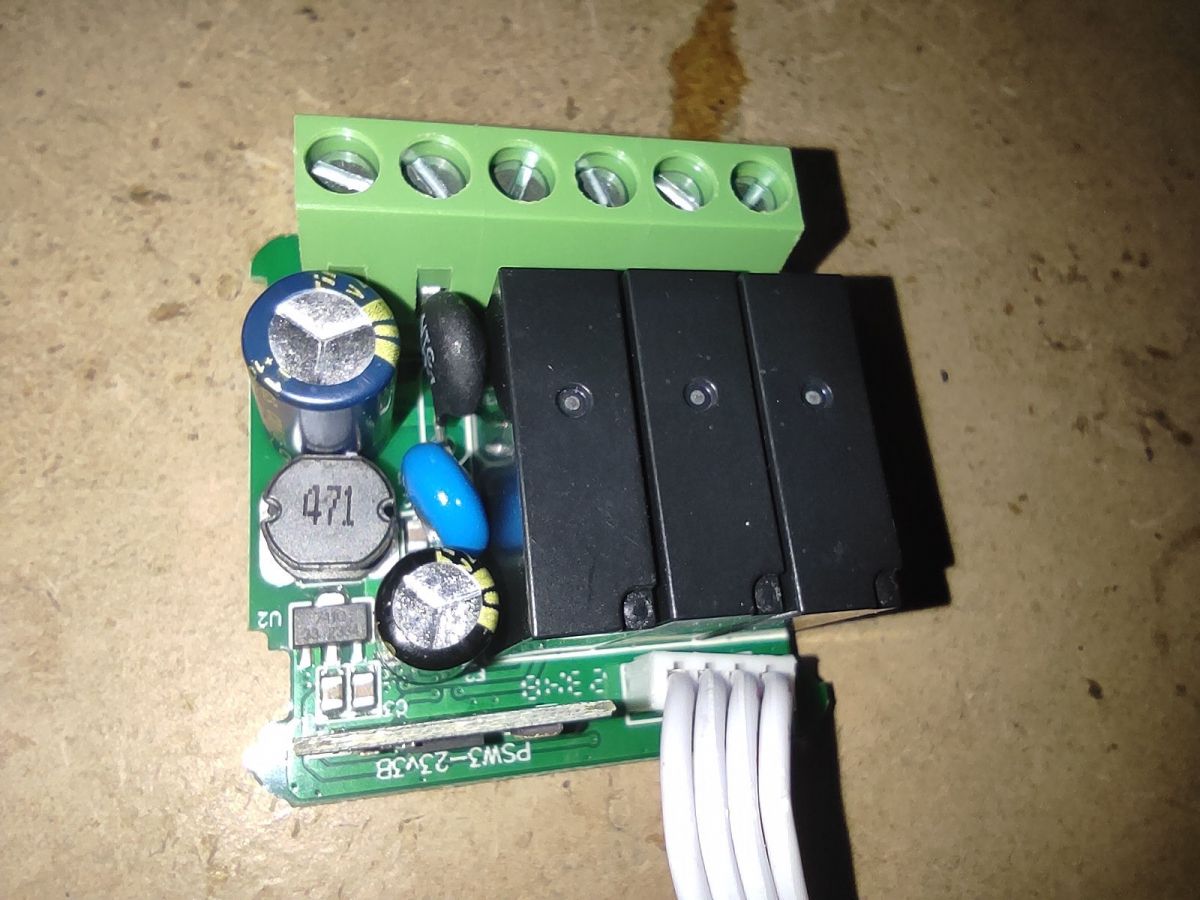
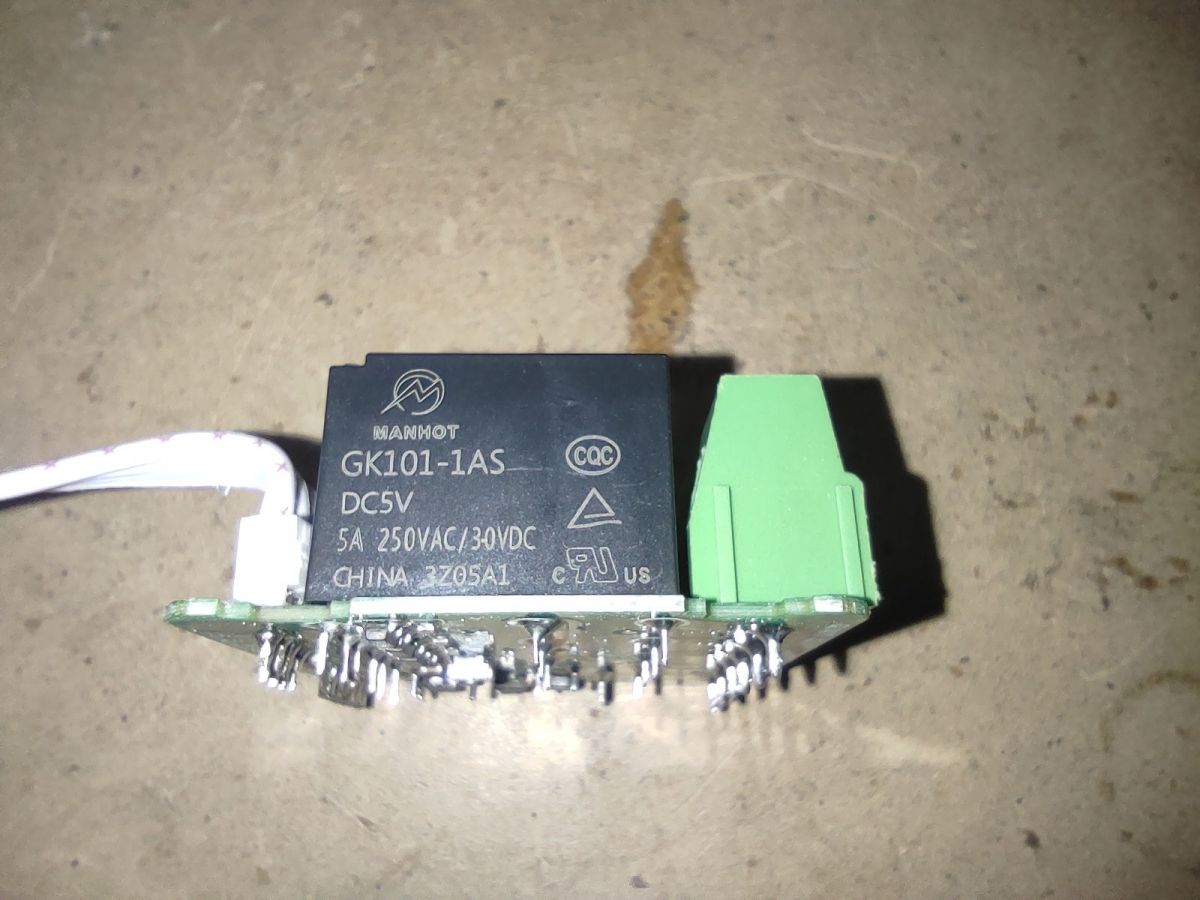
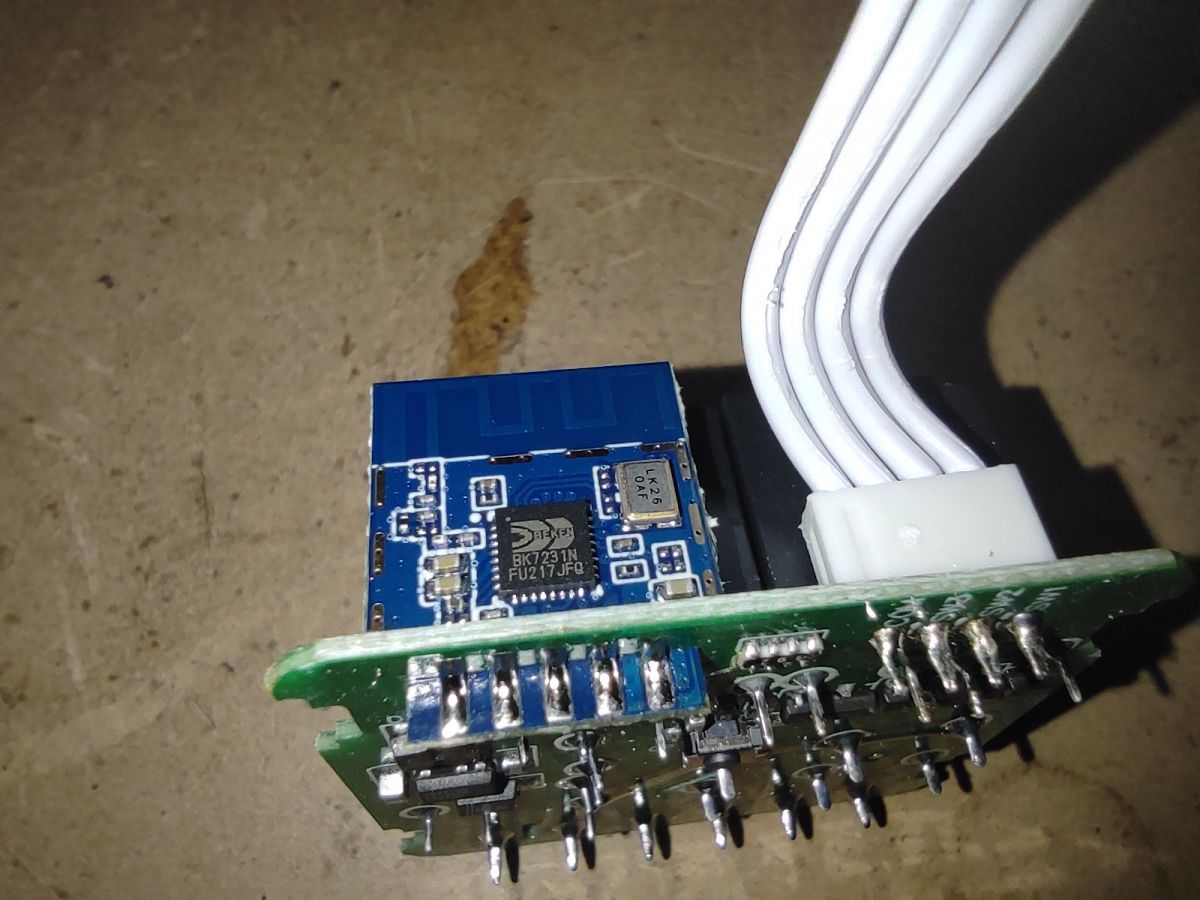
    MINI-W1-2CH WiFi switch module on packaging. PCB of a flush-mounted switch module WiFi switch module with two relays and electronic components. MANHOT GK101-1AS relay module on a work surface. WiFi switch module with BK7231N chip

    JSON configuration:
    {
    	"rl1_lv":"1",
    	"on_off_cnt":"10",
    	"onoff_rst_m":"1",
    	"onoff_clear_t":"10",
    	"rand_dpid":"42",
    	"net_trig":"4",
    	"onoff_n":"5",
    	"netled1_lv":"1",
    	"jv":"110.0.0",
    	"onoff_rst_type":"2",
    	"ffc_select":"2",
    	"total_bt_pin":"23",
    	"nety_led":"2",
    	"total_stat":"0",
    	"reset_t":"5",
    	"netled1_pin":"11",
    	"rl2_lv":"1",
    	"remote_add_dp":"49",
    	"remote_list_dp":"50",
    	"net_type":"0",
    	"inch_dp":"44",
    	"module":"CB2S",
    	"ch_cddpid1":"9",
    	"inch_en2":"0",
    	"inch_en1":"0",
    	"onoff1":"6",
    	"ble_pair_time":"30",
    	"onoff2":"7",
    	"clean_t":"5",
    	"init_conf":"38",
    	"rl2_pin":"24",
    	"zero_select":"0",
    	"onoff_type":"0",
    	"series_ctrl":"0",
    	"ch_cddpid2":"10",
    	"total_bt_lv":"0",
    	"cyc_dpid":"43",
    	"ch_num":"2",
    	"rl1_pin":"10",
    	"netn_led":"2",
    	"ch_dpid1":"1",
    	"ch_dpid2":"2",
    	"crc":"94",
    	"}>$Agw_di{abi":"0",
    	"id":"null",
    	"swv":"1.3.10",
    	"bv":"40.00",
    	"pv":"2.2",
    	"lpv":"3.4",
    	"pk":"keyjnuy4s3kre7m7",
    	"firmk":"keyjnuy4s3kre7m7",
    	"cadv":"1.0.5",
    	"cdv":"1.0.0",
    	"dev_swv":"1.3.10",
    	"s_id":"null",
    	"dtp":"0",
    	"sync":"0",
    	"attr_num":"1",
    	"mst_tp_0":"9",
    	"mst_ver_0":"1.3.10",
    	"mst_md5_0":"null",
    	"mst_tp_1":"0",
    	"mst_ver_1":"null",
    	"mst_md5_1":"null",
    	"mst_tp_2":"0",
    	"mst_ver_2":"null",
    	"mst_md5_2":"null",
    	"mst_tp_3":"0",
    	"mst_ver_3":"null",
    	"mst_md5_3":"null }Ainch_time_key 0KAgw_wsm{nc_tp",
    	"ssid":"null",
    	"passwd":"null",
    	"md":"0",
    	"random":"0",
    	"wfb64":"1",
    	"stat":"0",
    	"token":"null",
    	"region":"null",
    	"reg_key":"null",
    	"dns_prio":"0 }{uuid",
    	"psk_key":"FDItek6yQeqW9EdJPm5SYUUf6XuntIwPvPwnO",
    	"auth_key":"5X00RcxhgeHaxlRPn9levSBYGlfAfjM7",
    	"ap_ssid":"SmartLife",
    	"ap_passwd":"null",
    	"country_code":"null",
    	"bt_mac":"null",
    	"bt_hid":"null",
    	"prod_test":"false",
    	"fac_pin":"sqgfy9njgvghohai }{nc_tp"
    }

    Device configuration, as extracted from Tuya: 
    - Pair/Toggle All Button on P23
    - WiFi LED on P11
    - TglChannelToggle (channel 1) on P6
    - TglChannelToggle (channel 2) on P7
    - Relay (channel 2) on P24
    - Relay (channel 1) on P10
    Device seems to be using CB2S module, which is using BK7231N.
    And the Tuya section starts, as usual, at 2023424


    Configuration for WebApp:
    {
      "vendor": "Tuya",
      "bDetailed": "0",
      "name": "MINI-W1 2-Gang WiFi Switch Module",
      "model": "MINI-W1-2CH",
      "chip": "BK7231N",
      "board": "PSW2-23v1B",
      "flags": "1024",
      "keywords": [
        "TODO",
        "TODO",
        "TODO"
      ],
      "pins": {
        "6": "TglChanOnTgl;1",
        "7": "TglChanOnTgl;2",
        "10": "Rel;1",
        "11": "WifiLED_n;0",
        "23": "Btn_Tgl_All;0",
        "24": "Rel;2"
      },
      "command": "",
      "image": "https://obrazki.elektroda.pl/4786852700_1704633029.jpg",
      "wiki": "https://www.elektroda.pl/rtvforum/topic4026798.html"
    }


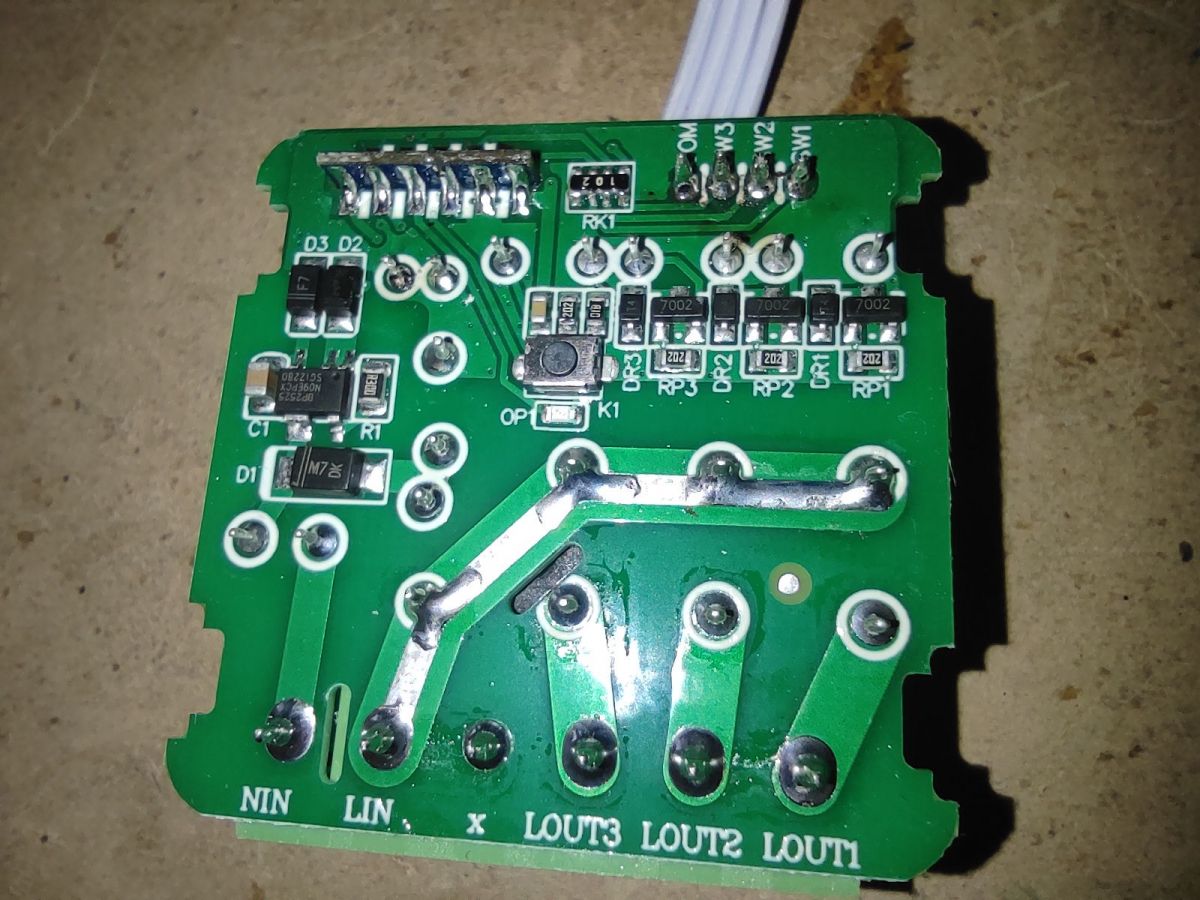
    3 channel version (3 Gang):
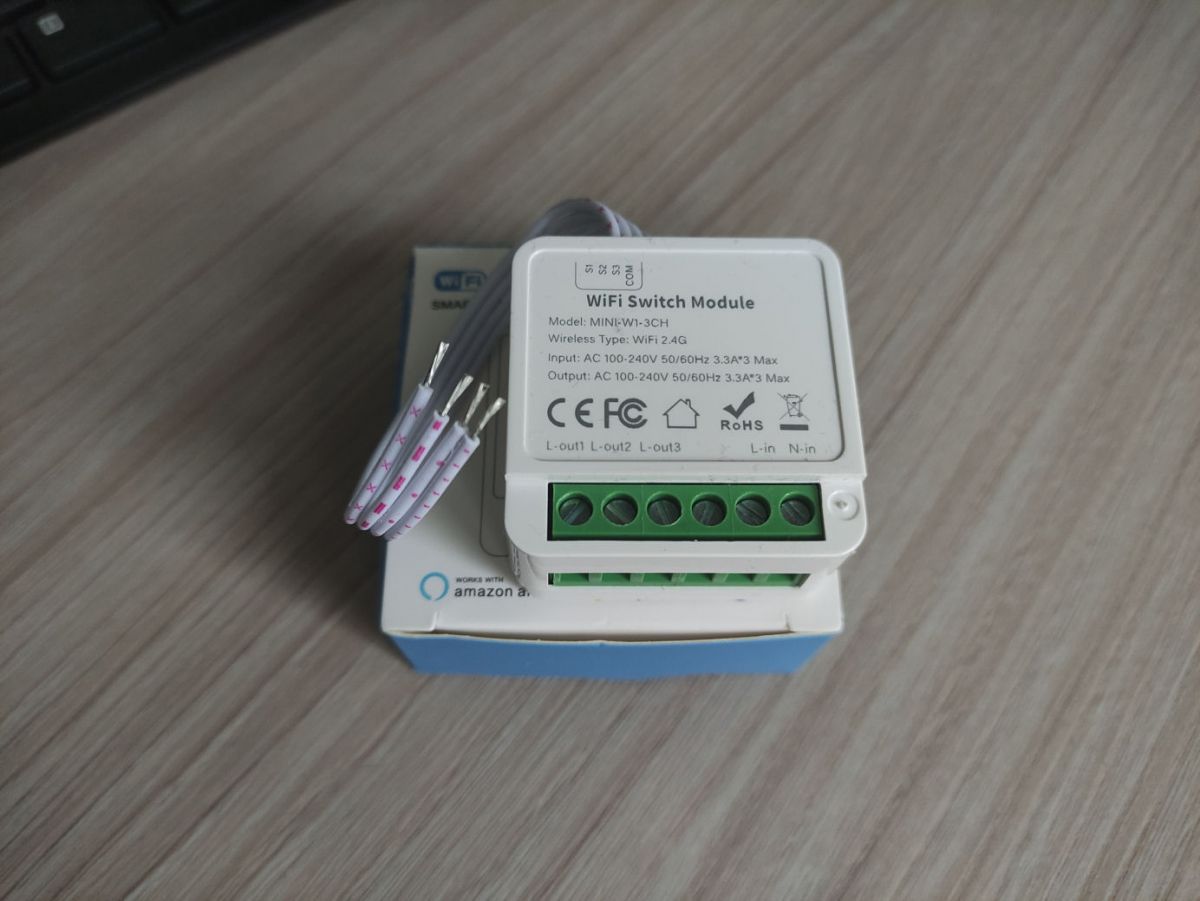
    MINI-W1-3CH WiFi switch module on a box with wiring Circuit board of the MINI-W1 WiFi switch module without casing. Photo of an electronic relay module from AliExpress Electronic relay module against a concrete surface. WiFi switch module with CB2S circuit and BK7231N chip on a circuit board.

    JSON configuration:
    {
    	"rl1_lv":"1",
    	"on_off_cnt":"10",
    	"onoff_rst_m":"1",
    	"rl3_pin":"26",
    	"rl3_lv":"1",
    	"onoff_clear_t":"10",
    	"rand_dpid":"42",
    	"net_trig":"4",
    	"onoff_n":"5",
    	"netled1_lv":"1",
    	"jv":"110.0.0",
    	"onoff_rst_type":"2",
    	"ffc_select":"2",
    	"total_bt_pin":"23",
    	"nety_led":"2",
    	"total_stat":"0",
    	"reset_t":"5",
    	"netled1_pin":"11",
    	"rl2_lv":"1",
    	"remote_add_dp":"49",
    	"remote_list_dp":"50",
    	"net_type":"0",
    	"inch_dp":"44",
    	"module":"CB2S",
    	"ch_cddpid1":"9",
    	"inch_en2":"0",
    	"inch_en3":"0",
    	"inch_en1":"0",
    	"onoff1":"6",
    	"ble_pair_time":"30",
    	"onoff2":"7",
    	"clean_t":"5",
    	"init_conf":"38",
    	"onoff3":"8",
    	"rl2_pin":"24",
    	"zero_select":"0",
    	"onoff_type":"0",
    	"series_ctrl":"0",
    	"ch_cddpid2":"10",
    	"ch_cddpid3":"11",
    	"total_bt_lv":"0",
    	"cyc_dpid":"43",
    	"ch_num":"3",
    	"rl1_pin":"10",
    	"ch_dpid3":"3",
    	"netn_led":"2",
    	"ch_dpid1":"1",
    	"ch_dpid2":"2",
    	"crc":"20",
    	"}Agw_di0Ainch_time_keyv":"40.00",
    	"pv":"2.2",
    	"lpv":"3.4",
    	"pk":"keyjnuy4s3kre7m7",
    	"firmk":"keyjnuy4s3kre7m7",
    	"cadv":"cdv",
    	"dev_swv":"1.3.10",
    	"s_id":"null",
    	"dtp":"0",
    	"sync":"0",
    	"attr_num":"1",
    	"mst_tp_0":"9",
    	"mst_ver_0":"1.3.10",
    	"mst_md5_0":"null",
    	"mst_tp_1":"0",
    	"mst_ver_1":"null",
    	"mst_md5_1":"null",
    	"mst_tp_2":"0",
    	"mst_ver_2":"null",
    	"mst_md5_2":"null",
    	"mst_tp_3":"0",
    	"mst_ver_3":"null",
    	"mst_md5_3":"null "
    }

    Device configuration, as extracted from Tuya: 
    - Relay (channel 3) on P26
    - Pair/Toggle All Button on P23
    - WiFi LED on P11
    - TglChannelToggle (channel 1) on P6
    - TglChannelToggle (channel 2) on P7
    - TglChannelToggle (channel 3) on P8
    - Relay (channel 2) on P24
    - Relay (channel 1) on P10
    Device seems to be using CB2S module, which is using BK7231N.
    And the Tuya section starts, as usual, at 2023424


    Configuration for WebApp:
    {
      "vendor": "Tuya",
      "bDetailed": "0",
      "name": "MINI-W1 3-Gang WiFi Switch Module",
      "model": "MINI-W1-2CH",
      "chip": "BK7231N",
      "board": "PSW3-23v3B",
      "flags": "1024",
      "keywords": [
        "TODO",
        "TODO",
        "TODO"
      ],
      "pins": {
        "6": "TglChanOnTgl;1",
        "7": "TglChanOnTgl;2",
        "8": "TglChanOnTgl;3",
        "10": "Rel;1",
        "11": "WifiLED_n;0",
        "23": "Btn_Tgl_All;0",
        "24": "Rel;2",
        "26": "Rel;3"
      },
      "command": "",
      "image": "https://obrazki.elektroda.pl/9026804300_1704633863.jpg",
      "wiki": "https://www.elektroda.pl/rtvforum/topic4026798.html"
    }


    The original firmware is downloaded in the attachments.
    Attachments:
    • readResult_BK7231N_QIO_MINI-W1_3CH_2024-04-1-19-51-11.bin (2 MB) You must be logged in to download this attachment.
    • readResult_BK7231N_QIO_MINI-W1_2CH_2024-04-1-19-25-59.bin (2 MB) You must be logged in to download this attachment.

    Cool? Ranking DIY
    About Author
    @GUTEK@
    Level 31  
    Offline 
    @GUTEK@ wrote 1561 posts with rating 367, helped 163 times. Live in city Gliwice. Been with us since 2005 year.
  • ADVERTISEMENT
  • #2 20896541
    p.kaczmarek2
    Moderator Smart Home
    Posts: 14649
    Help: 655
    Rate: 12660
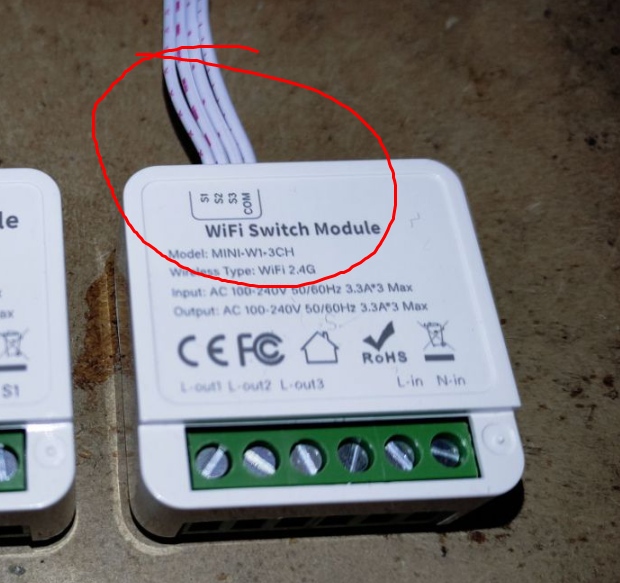
    I don`t think I`ve seen this version with the cables leading outside:
    WiFi switch module with external wires.
    I hope that the instructions contain appropriate warnings, because these devices have non-isolated converters, so there may be network potential on these cables led outside the housing... for this reason, it is worth being very careful, also when making any modifications, e.g. the firmware can be very easily connected to a free DHT11 pin and also receive humidity and temperature measurements in the HA.

    In addition, you must enable PowerSave 1 on these devices, otherwise there will be a repetition of:
    How to fix a smart device that is chirping, squeaking and making strange sounds?
    The data on these converters is limited, the manufacturer probably chose the cheapest ones available
    Helpful post? Buy me a coffee.
  • #3 20896674
    @GUTEK@
    Level 31  
    Posts: 1561
    Help: 163
    Rate: 367
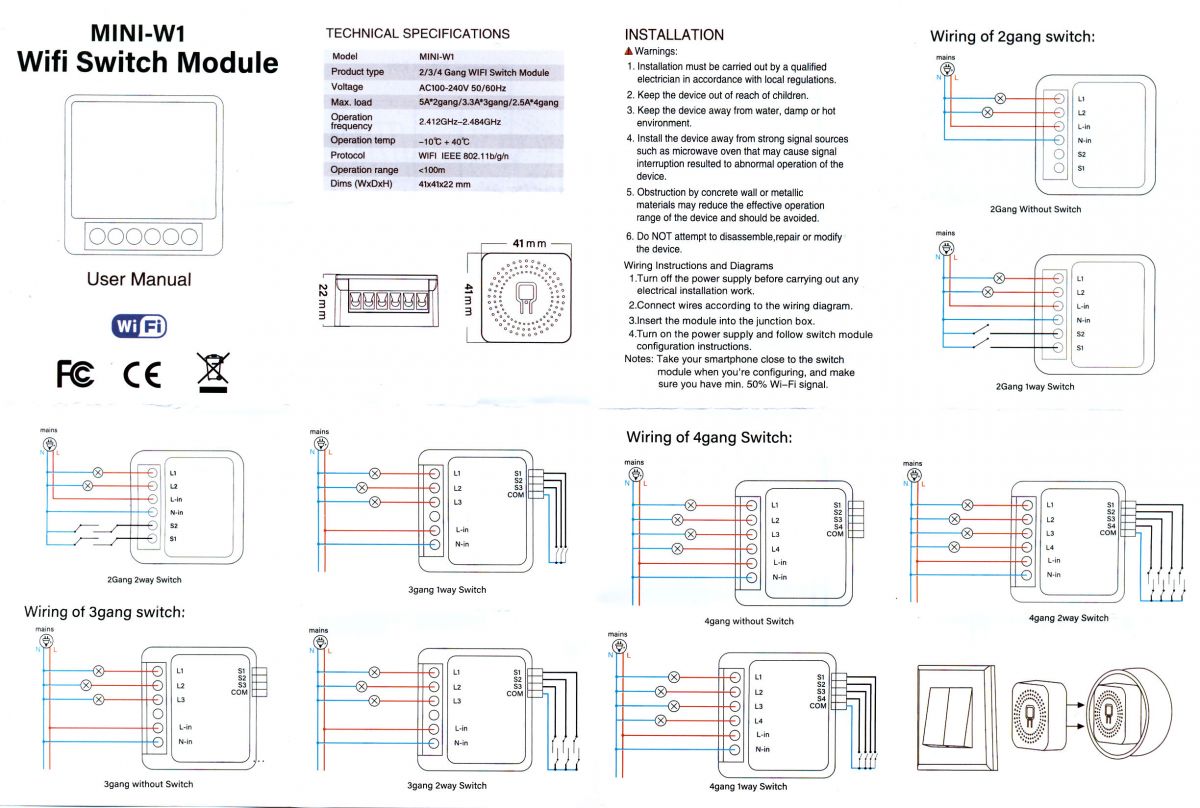
    Yes, the manual contains a warning, information that it should be connected by a qualified electrician, and connection diagrams for various versions.
    From what I measured, the cable described as COM is shorted to N-in and it is generally a ground on the board. Also, accidental reverse connection of the phase will also cause the phase to appear on the cable and the system will smoke when it is shorted.
    The remaining cables are connected to the inputs of the system and have 3.3V on them.

    Yes, you can connect some additional sensors, but is it worth buying a more expensive version with several weaker relays? You might as well buy a single one and run these 3 cables to the sensor, since you still have to open the housing and solder it in order to reprogram it.

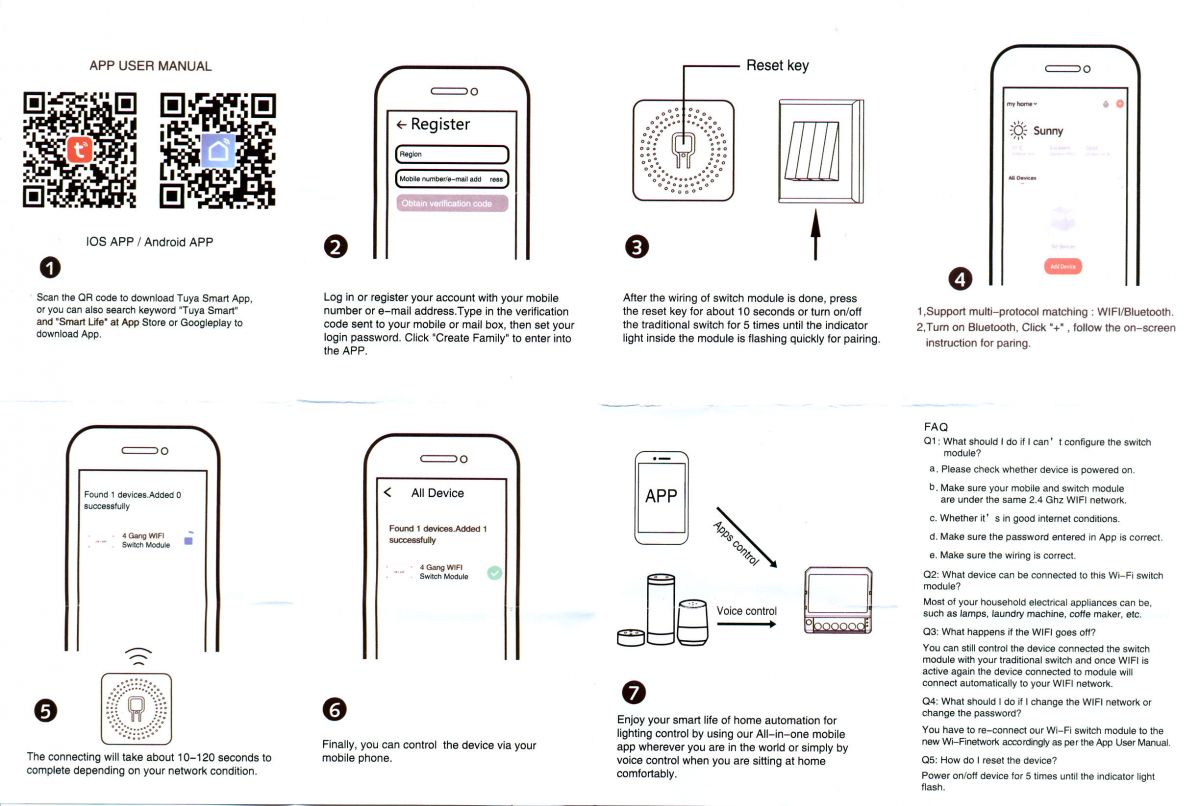
    I am also attaching scans of the instructions.

    User manual of MINI-W1 WiFi switch module with wiring diagrams. Scans of the user manual for the iOS and Android app to operate the Wi-Fi switch module.
  • #4 20934967
    @GUTEK@
    Level 31  
    Posts: 1561
    Help: 163
    Rate: 367
    I noticed a strange problem. I installed a 2-channel switch and after connecting the switch - bistable. When the switch is reset or started, the relay corresponding to the S2 input turns on. I have both inputs set as in the configuration above, i.e. TglChanOnTgl. Interestingly, if I do not set anything for P6 corresponding to S1, it does not happen. Also this does not occur when I change the configuration to Btn.
    For now I have added to autoexec.bat:
    SetChannel 1 0
    SetChannel 2 0
    However, despite this, the lamp flashes during startup.
  • #5 20935047
    p.kaczmarek2
    Moderator Smart Home
    Posts: 14649
    Help: 655
    Rate: 12660
    The 2-channel version has one TglChanOnTgl on channel one and another TglChanOnTgl on channel two. Try swapping their channels.

    If only the S2 input is still to blame (those signed as S2, physically, not channel 2 from OBK), it is possible that it is a hardware issue.

    Alternatively, you could think about the role of TglChanOnTgl with configurable pull up or down resistors.
    Helpful post? Buy me a coffee.
  • ADVERTISEMENT
  • #6 20935199
    @GUTEK@
    Level 31  
    Posts: 1561
    Help: 163
    Rate: 367
    I have it set like this:
    "6": "TglChanOnTgl;1",
    "7": "TglChanOnTgl;2",
    "10": "Rel;1",
    "11": "WifiLED_n;0",
    "23": "Btn_Tgl_All;0",
    "24": "Rel;2
    - if I physically disconnect the cable from S2, the problem does not occur
    - if I replace the wires between S1 and S2, it still occurs on S2
    - if you do not set any function on P6 (empty field), the problem does not occur, even though it concerns S2 -P7
    - if I set Btn to P6, the problem with S2 occurs
    - if I set Btn to P7, the problem does not occur and the input responds correctly to the monostable switch
    - if I set Btn_Tgl_All to P7, the problem does not occur

    This is a bit strange, it looks to me as if the software read the low state on this pin at startup before activating pull-up.

    Added after 1 [hour] 6 [minutes]:

    I will say that this is an interesting phenomenon, I connected this 3-channel switch on the desk. And all I had to do was connect a 1.5 m cable with a switch to it and this problem started to occur for both S2 and S3. The system is clearly reacting to something.
    When restarting, the meter shows a voltage drop at all outputs. I can`t measure it exactly, but it`s a flash and at that moment the relay reacts. Is it possible that the software reads the input state too quickly before the pull-up works?

    By the way, the second question is why if I add, for example, two commands in the Startup command: SetChannel 3 1; SetChannel 2 1;
    Only the first one is executed at startup? This is now unrelated to the problem above, the outputs are not connected, the switch behaves normally, it starts with all relays turned off and I want to execute these two commands. Only the first one will work.

    I also looked at how it is connected on the board, all these outputs go through 1kΩ resistors to the system. There are no additional elements, e.g. pull-ups. So it`s hard to say anything about a hardware problem, unless it`s the system itself.
  • #7 20936949
    @GUTEK@
    Level 31  
    Posts: 1561
    Help: 163
    Rate: 367
    However, I conclude that this is a software problem.

    I have now reprogrammed another switch, exactly the same one with a blue plate as in this topic: https://www.elektroda.pl/rtvforum/topic3945316.html#20853216
    It lies on the desk, nothing is connected to it, and after the reset it also turns on the relay. This did not occur on the original software.
    This configuration:
    "8": "WifiLED_n;0",
    "10": "Btn_Tgl_All;0",
    "23": "TglChanOnTgl;1",
    "26": "Rel;1"
  • ADVERTISEMENT
  • #8 20941774
    @GUTEK@
    Level 31  
    Posts: 1561
    Help: 163
    Rate: 367
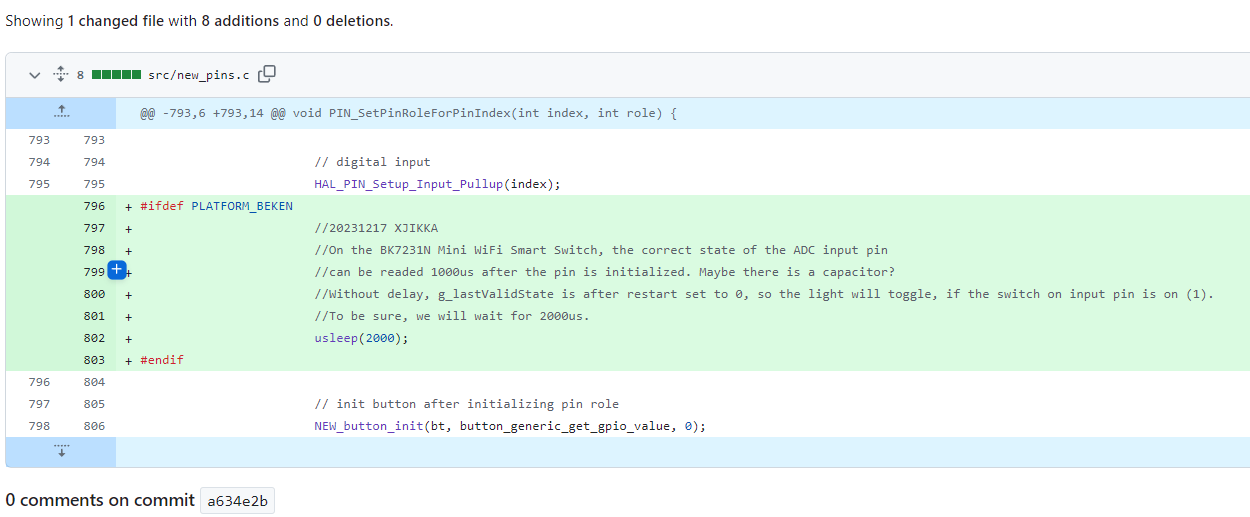
    I found the same problem and solution on github. The problem is that the input state is read too quickly at startup.
    Here is the corrected version of the software: https://github.com/openshwprojects/OpenBK7231T_App/issues/1000
    After uploading, all the switches I had that had this problem started working properly.

    Unfortunately, the fix is not included in major releases.
  • ADVERTISEMENT
  • #9 20944252
    p.kaczmarek2
    Moderator Smart Home
    Posts: 14649
    Help: 655
    Rate: 12660
    Since it helps in your case, I decided to add it to the main code:
    https://github.com/openshwprojects/OpenBK7231...mmit/a634e2b8b30f12eccd94e421d2c4fc8af0199176
    It should be publicly available from the next release.
    Helpful post? Buy me a coffee.
  • #10 20946698
    @GUTEK@
    Level 31  
    Posts: 1561
    Help: 163
    Rate: 367
    Something is still wrong. In the version shared on XJIKKA`s github, the problem does not occur.
    However, I have just uploaded today`s version 1.17.450 and it still starts after restart. As I understand it, the patch should be applied from version 448?
  • #11 20946805
    p.kaczmarek2
    Moderator Smart Home
    Posts: 14649
    Help: 655
    Rate: 12660
    You`re right, I added the correction, try it now, thank you.

    This is what happens when you do a big project in your free time.
    Helpful post? Buy me a coffee.
  • #12 20946860
    @GUTEK@
    Level 31  
    Posts: 1561
    Help: 163
    Rate: 367
    Now it`s ok. On version 1.17.451 the problem does not occur. Thank you.
  • #13 20947091
    p.kaczmarek2
    Moderator Smart Home
    Posts: 14649
    Help: 655
    Rate: 12660
    Thank you for testing and for your donation. If you have any problems, please write to the forum.
    Helpful post? Buy me a coffee.
  • #14 20950393
    LordZiemniak
    Level 15  
    Posts: 158
    Help: 8
    Rate: 51
    I have this device and the gateway from Tuya and I can find it without any problems, but I bought the Sonoff Zigbee2mqtt and all the devices from Tuya, including temperature sensors, but I can`t find it, any ideas? or just lack of compatibility? sonoff runs on HA on mosqito broker
  • #15 20950842
    p.kaczmarek2
    Moderator Smart Home
    Posts: 14649
    Help: 655
    Rate: 12660
    Check the logs for any additional information about the failure. Make sure you are entering the pairing state correctly.
    Helpful post? Buy me a coffee.
  • #16 21019518
    Advian1
    Level 7  
    Posts: 41
    Rate: 1
    replying here, since I can't find this topic over at the english version.

    I've one of these 3 channel module. Flashed it successfully.
    But after a day of usage, it started acting weird.
    Switch 2 randomly toggles.
    then I set P7 to none, and the random toggle stopped.

    After 2 days Switch 1 started doing this.
    What could be the issue? how do I go about debugging it?

    Edit: it is always 2 toggles. I mean if the light was off, it briefly turns on then off again.
    This happens at random. sometimes several times within a minute.

    Please help.

    update log file content during random switching:
    Info:MAIN:Time 45, idle 190902/s, free 75816, MQTT 0(3), bWifi 1, secondsWithNoPing -1, socks 2/38 
    Info:MAIN:Time 46, idle 190281/s, free 75816, MQTT 0(3), bWifi 1, secondsWithNoPing -1, socks 2/38 
    Info:MAIN:Time 47, idle 188643/s, free 75816, MQTT 0(3), bWifi 1, secondsWithNoPing -1, socks 2/38 
    Info:MAIN:Time 48, idle 189235/s, free 75816, MQTT 0(3), bWifi 1, secondsWithNoPing -1, socks 2/38 
    Info:MQTT:Channel has changed! Publishing 1 to channel 2 
    Info:MQTT:Channel has changed! Publishing 0 to channel 2 
    Info:MAIN:Time 49, idle 190056/s, free 75816, MQTT 0(3), bWifi 1, secondsWithNoPing -1, socks 2/38 
    Info:MAIN:Time 50, idle 188732/s, free 75816, MQTT 0(3), bWifi 1, secondsWithNoPing -1, socks 2/38 
    Info:GEN:dhcp=0 ip=192.168.x.xx gate=192.168.x.1 mask=255.255.255.0 mac=d8:d6:68:fc:xx:xx
    Info:GEN:sta: 1, softap: 0, b/g/n
    Info:GEN:sta:rssi=-63,ssid=ssb-wifi3,bssid=f8:d1:11:62:20:4e,channel=2,cipher_type:CCMP
    Info:MQTT:Channel has changed! Publishing 1 to channel 2 
    Info:MQTT:Channel has changed! Publishing 0 to channel 2 
    Info:MAIN:Time 51, idle 184866/s, free 75512, MQTT 0(3), bWifi 1, secondsWithNoPing -1, socks 2/38 
    Info:MAIN:Time 52, idle 193026/s, free 75816, MQTT 0(3), bWifi 1, secondsWithNoPing -1, socks 2/38 
    Info:MQTT:Channel has changed! Publishing 1 to channel 2 
    Info:MQTT:Channel has changed! Publishing 0 to channel 2 
    Info:MAIN:Time 53, idle 192481/s, free 75816, MQTT 0(3), bWifi 1, secondsWithNoPing -1, socks 2/38 
    Info:MAIN:Time 54, idle 189124/s, free 75816, MQTT 0(3), bWifi 1, secondsWithNoPing -1, socks 2/38 
    Info:MAIN:Time 55, idle 190096/s, free 75816, MQTT 0(3), bWifi 1, secondsWithNoPing -1, socks 2/38 
    Info:MAIN:Time 56, idle 191351/s, free 75512, MQTT 0(3), bWifi 1, secondsWithNoPing -1, socks 2/38 
    Info:MAIN:Time 57, idle 192618/s, free 75816, MQTT 0(3), bWifi 1, secondsWithNoPing -1, socks 2/38


    current configuration:
    "pins": {
    "8": "TglChanOnTgl;3",
    "10": "Rel;1",
    "11": "WifiLED_n;0",
    "23": "Btn_Tgl_All;0",
    "24": "Rel;2",
    "26": "Rel;3"
    },
    Pin 7 and 9 set to none, as they toggles randomly if set to TglChanOnTgl

    Thanks.
  • #18 21195075
    p.kaczmarek2
    Moderator Smart Home
    Posts: 14649
    Help: 655
    Rate: 12660
    Example of changes in a source code file with 8 additions.
    It seems to be still in place:
    https://github.com/openshwprojects/OpenBK7231T_App/blob/main/src/new_pins.c
    Can you track which commit/update breaks things for you?
    Helpful post? Buy me a coffee.
  • #20 21461561
    luudi1
    Level 9  
    Posts: 4
    Rate: 2
    Gentlemen. I have these modules in 1, 2 and 3 circuit versions. I used the 2-circuit version for the lighting in the bedroom. That is, channel one turns on one. chandelier bulb and channel two turns on the other two. Mounting the module in a flush-mounted box at the main entrance to the bedroom (incoming power, branch to the chandelier, branch to the next switch and short wires to the switch in this box).
    Generally, the system seemingly works, both via the app on the phone and via the two double short-circuit switches (double bell switches), however it happens to switch one of the circuits on or off by itself.

    I've started digging into the subject and I'm betting that the problem is controlling the neutral wire instead of the phase. I have a 5x1.5 wire laid between the boxes. And in this second distant box, between the neutral wire and the two that go to terminals S1 and S2, a phantom voltage of about 80V appears, because there is also a phase in one conductor of this multi-conductor wire (we have capacitance, two potentials separated by an insulator, i.e. a capacitor).
    Do you have any ideas how this problem can be solved?
  • #21 21461571
    p.kaczmarek2
    Moderator Smart Home
    Posts: 14649
    Help: 655
    Rate: 12660
    I haven't tested this, but there was once a publication like this on Elektroda.com:
    How to fix random relay switching on BL602 IoT devices with SM-028_V1.3? .
    Original: https://www.elektroda.com/rtvforum/topic4027953.html#20904492

    Maybe this will help somehow, try it and let us know.
    Helpful post? Buy me a coffee.
📢 Listen (AI):

Topic summary

✨ The discussion focuses on the BK7231N CB2S-based MINI-W1 series WiFi flush-mount switches (2- and 3-channel versions) purchased from AliExpress, identified in the Smart Life app as PSW-2CH-CB2S and PSW-3CH-CB2S. These devices lack manufacturer branding and use firmware version 1.3.10, which currently cannot be reprogrammed with CloudCutter. The switches feature a housing secured by four latches and require an external 3.3V power supply for UART programming due to the module's inability to supply current. The COM cable is internally connected to neutral (N-in), acting as ground, and incorrect wiring can cause hazardous conditions including phase presence on the COM line and potential damage.

Users reported a software issue where relays activate unexpectedly on startup, particularly with the S2 input configured as TglChanOnTgl. This was traced to the firmware reading input states too early before pull-ups activate. A patch addressing this startup input state reading delay was developed and shared on GitHub (OpenBK7231T_App issue #1000), improving behavior in custom firmware versions. The fix was later integrated into the main OpenBK7231T_App codebase from version 1.17.451 onward. Despite this, some official firmware releases still exhibit the problem.

Additional hardware concerns include the presence of phantom voltages (~80V) on neutral wires in multi-conductor cables, potentially causing random relay switching. The devices use non-isolated converters, requiring caution due to network potential on external cables. Users also discussed the possibility of connecting external sensors (e.g., DHT11) via free pins, but questioned the value compared to using dedicated sensor modules.

Compatibility issues were noted with Sonoff Zigbee2mqtt gateways, which do not detect these switches, unlike Tuya gateways. Troubleshooting advice includes verifying pairing procedures and checking logs. Some users experience random toggling of relays, which may relate to wiring or firmware configuration.

Overall, the discussion provides detailed hardware pinout information, wiring warnings, firmware configuration examples, and software patch references to address startup relay activation and improve device stability.

FAQ

TL;DR: These BK7231N CB2S MINI-W1 switches come in 2- and 3-channel versions, and “you need to connect an additional 3.3V power supply” to flash them without desoldering. This FAQ helps OpenBeken users map pins, avoid unsafe wiring mistakes, and fix the boot-time relay glitch that affected early builds. [#20896104]

Why it matters: These modules are cheap and flexible, but incorrect flashing, unsafe external wiring, or the wrong OpenBeken build can cause dangerous behavior or random relay toggles.

Variant Board / model detail Input pins Relay pins Shared pins
MINI-W1-2CH PSW2-23v1B P6, P7 P10, P24 P11 WiFi LED, P23 Pair/Toggle All
MINI-W1-3CH PSW3-23v3B P6, P7, P8 P10, P24, P26 P11 WiFi LED, P23 Pair/Toggle All
Boot-bug status 1.17.450 vs 1.17.451 issue still present in .450 fixed in .451 fix tied to startup input timing

Key insight: The main real-world issue was not basic pin mapping. It was startup input timing and noisy external switch wiring, especially on S2 and S3, which could briefly energize relays or cause random double-toggles.

Quick Facts

  • The devices discussed are labeled MINI-W1, sold in 1/2/3/4-channel versions, while the tested units were the 2-channel and 3-channel models using a CB2S module with a BK7231N chip and original firmware 1.3.10. [#20896104]
  • The flash procedure can be done without desoldering, but the UART adapter alone is not enough; the module needs an additional 3.3 V supply during programming. [#20896104]
  • Measured field wiring data matters here: the COM lead was reported shorted to N-in, the input leads carried 3.3 V, and one user measured about 80 V phantom voltage on long switch wiring in a 5x1.5 cable run. [#20896674]
  • Hardware access is straightforward because the housing uses 4 latches, but the external switch leads deserve caution because the power supply is non-isolated and mains potential can appear outside the enclosure. [#20896104]
  • Long external leads can trigger instability: one bench test used a 1.5 m cable with a switch, and that alone was enough to make the startup issue appear on S2 and S3. [#20935199]

How do I flash OpenBeken on a BK7231N CB2S MINI-W1 flush-mount switch without desoldering the module?

You can flash it in-circuit without desoldering the CB2S module. 1. Open the housing by releasing its 4 latches. 2. Connect to the UART programming pads shown in the thread pinout. 3. Add a separate 3.3 V supply, because the UART converter does not provide enough current for this board. The tested switches used a BK7231N-based CB2S module, and the author explicitly confirmed that external 3.3 V power was required during programming. [#20896104]

What is the pinout and OpenBeken configuration for the MINI-W1-2CH WiFi switch module based on CB2S/BK7231N?

The 2-channel mapping is P6=TglChanOnTgl;1, P7=TglChanOnTgl;2, P10=Rel;1, P11=WifiLED_n;0, P23=Btn_Tgl_All;0, and P24=Rel;2. The WebApp config also names the board PSW2-23v1B and the module MINI-W1-2CH. That gives you two local switch inputs, two relay outputs, one Wi-Fi LED pin, and one pair/toggle-all button pin on a BK7231N CB2S design. [#20896104]

What is the correct pin mapping for the 3-channel MINI-W1-3CH switch in OpenBeken?

The correct 3-channel mapping is P6=TglChanOnTgl;1, P7=TglChanOnTgl;2, P8=TglChanOnTgl;3, P10=Rel;1, P11=WifiLED_n;0, P23=Btn_Tgl_All;0, P24=Rel;2, and P26=Rel;3. The posted WebApp profile identifies the board as PSW3-23v3B, chip BK7231N, and module name MINI-W1 3-Gang WiFi Switch Module. This is the reference mapping to start from before troubleshooting noisy inputs. [#20896104]

Why does the relay on S2 or S3 turn on briefly at boot when TglChanOnTgl is used on these BK7231N switches?

The relay blips because the firmware read the input state too early at startup. Users reproduced it on S2 and S3, especially with TglChanOnTgl assigned and longer external wires attached. The thread later linked the cause directly to startup timing, and a corrected build removed the false state read that briefly energized the relay before pull-up behavior stabilized. [#20941774]

Which OpenBeken version fixes the startup input-read bug on MINI-W1 switches, and why did 1.17.450 still fail while 1.17.451 worked?

Version 1.17.451 fixed the reported startup bug, while 1.17.450 still failed on the tested switch. The user flashed 1.17.450 and still saw relays start after reboot, then confirmed that 1.17.451 solved it. The follow-up reply admitted the correction had not been fully added at first, which explains why the earlier build still behaved incorrectly. [#20946860]

How can I debug random double-toggles on channels P7 or P8 after flashing a 3-channel CB2S switch with OpenBeken?

Start by isolating the input pin and watching whether the MQTT log still shows paired 1 then 0 events. One user saw random double-toggles on channel 2, then stopped them by setting P7 to none; later the same behavior appeared on another channel. 1. Remove the external wire from the suspect input. 2. Set that pin to none and retest. 3. Reconnect only after confirming whether wiring length or input mode triggers the false toggles. [#21019518]

What is TglChanOnTgl in OpenBeken, and how is it different from Btn or Btn_Tgl_All for wall switch inputs?

TglChanOnTgl is an input role that toggles a specific channel when the input changes state, while Btn is treated as a button-style input and Btn_Tgl_All controls all channels together. In this thread, TglChanOnTgl on S2 or S3 exposed the boot-time glitch, but Btn and Btn_Tgl_All often did not. That makes the choice of input role a practical workaround when bistable wall switches behave badly at startup. [#20935199]

What is CloudCutter, and why can't firmware 1.3.10 on these CB2S/BK7231N switches be reprogrammed with it?

CloudCutter is a firmware reprogramming method mentioned here as an unavailable path for this device and firmware combination. The author stated that these MINI-W1 switches use BK7231N CB2S hardware with firmware 1.3.10 and therefore “cannot be reprogrammed using CloudCutter” at that time. For this thread, the actionable path was UART flashing with an added 3.3 V supply, not CloudCutter. [#20896104]

Why do non-isolated power supplies in Tuya flush-mount switches make the external switch wires potentially dangerous?

They are dangerous because a non-isolated converter can place mains potential onto wires that leave the enclosure. One reply warned that these devices have non-isolated converters and that “there may be network potential on these cables led outside the housing.” Another measurement found COM shorted to N-in, and an accidental reversed phase connection could put live voltage on the cable and destroy the circuit if shorted. [#20896674]

How do I enable PowerSave 1 in OpenBeken to stop chirping or squeaking in low-cost smart switch power supplies?

Enable PowerSave 1 in OpenBeken on these switches if they chirp or squeak. The maintainer wrote that “you must enable PowerSave 1 on these devices,” otherwise the power supply issue can repeat on these low-cost converters. That advice was specific to this MINI-W1 family and tied to the limited performance of the cheapest onboard AC-DC section used by the manufacturer. [#20896541]

What is the difference between the Tuya Smart Life identifiers PSW-2CH-CB2S and PSW-3CH-CB2S and the MINI-W1 hardware models?

PSW-2CH-CB2S and PSW-3CH-CB2S are the Smart Life app identifiers, while MINI-W1-2CH and MINI-W1-3CH are the hardware model names printed for the product family. The thread states that the same devices appeared in Smart Life under those PSW names even though the hardware itself was described generically as MINI-W1, with no visible manufacturer branding on the unit or box. [#20896104]

Why would only the first Startup command run in OpenBeken when I enter multiple SetChannel commands?

Because the thread shows that chaining startup commands as entered there did not execute both actions reliably. The user reported that with “SetChannel 3 1; SetChannel 2 1;” only the first command ran at boot. No final fix was posted in the discussion, so the safe conclusion is that this exact startup-command format was not working as expected on that build and needed different handling or separate testing. [#20935199]

Sonoff Zigbee2MQTT vs a Tuya gateway: which is the right platform for discovering this MINI-W1 device, and why might it not appear in Zigbee2MQTT?

The Tuya gateway is the right platform from the thread evidence, not Zigbee2MQTT. The user could discover the device with a Tuya gateway but not with Sonoff Zigbee2MQTT, while the replies did not confirm any Zigbee2MQTT compatibility. That strongly suggests this MINI-W1 is not a Zigbee2MQTT-target device in the reported setup, so failure to appear there is expected unless logs show a different pairing problem. [#20950393]

How can phantom voltage on long switch wires cause random switching when the module controls neutral instead of phase?

Phantom voltage can capacitively couple into long input wires and falsely trigger the switch input. One user described a 5x1.5 cable run, neutral switching, and about 80 V appearing between neutral and the S1/S2 conductors because a live conductor shared the same multicore cable. That creates a capacitor-like effect, and on sensitive 3.3 V logic inputs it can produce random on/off events even when the physical wall switch looks idle. [#21461561]

What's the best workaround for unstable external switch inputs on these MINI-W1 modules: firmware fix, pull-up changes, shorter wiring, or hardware filtering?

Start with the firmware fix, then shorten or clean up wiring, and only then consider hardware filtering. The thread proved that version 1.17.451 removed one startup bug, but later reports still linked instability to long wires, phantom voltage, and sensitive inputs on S2 or S3. “TglChanOnTgl” is an input mode that toggles a channel on state change, which makes it sensitive to brief false edges on noisy lines. If noise remains, reduce wire length or apply the external filtering approach referenced later in the discussion. [#21461571]
ADVERTISEMENT