logo elektroda
logo elektroda
X
logo elektroda

Avatto DMS16-W1 CBU Dimmer + Puya PY32F002A MCU: OpenBeken Flashing and Autoexec Setup

divadiow 4668 62

TL;DR

  • Avatto DMS16-W1 1-channel dimmer smart switch uses a CBU module talking to a Puya PY32F002A TSSOP-20 MCU.
  • The CBU riser was de-soldered, the factory firmware dumped with Easy Flasher, and TuyaMCU traffic captured with TuycaMCU Analyser and dual USB-TTL adapters.
  • The extracted firmware config showed baud 115200, and the full dpID map includes values the user still never saw for dpIDs 13 and 47.
  • OpenBeken autoexec now works for most functions and mirrors factory MCU communications, but mains testing is pending and the brightness-range dpID3 behavior remains unresolved.
Generated by the language model.
ADVERTISEMENT
📢 Listen (AI):
  • #31 21707545
    p.kaczmarek2
    Moderator Smart Home
    Posts: 14416
    Help: 650
    Rate: 12371
    No, just replacing addChannel with setChannel in script won't help us much. I was rather thinking, that since you suspect that some odd/even values might not work, that maybe you can try to reproduce slowly the scenario from log with setChannel from command line (obk web app log) and see if the problem repeats.
    Helpful post? Buy me a coffee.
  • ADVERTISEMENT
  • #32 21707738
    sp4rk1e
    Level 10  
    Posts: 37
    Help: 3
    Rate: 5
    ok, I will try.

    I got another idea though. I recently bought this one: the successor of OpenBeken and TuyaMCU dimmer - configuration guide/tutorial . It is the Moyes MS-105 (1 channel version). I will setup the same configuration there and then I can compare the two systems. Same software on different hardware. That makes it much easier to find flaws I hope...

    Added after 3 [hours] 3 [minutes]:

    I now setup the moyes the same way. There also exists the problem that hardware dimmer values reported back to the WIFi chip lag behind software dimmer values previously issued to the MCU. It's now clear why :-)

    Because both DMS16-W1 and Moyes MS-105 always change dimming very smootly in MCU. No matter if you use the standard button or WiFi Chip to change the dim value.
  • #33 21707931
    p.kaczmarek2
    Moderator Smart Home
    Posts: 14416
    Help: 650
    Rate: 12371
    Do you know C?
    I changed "bDPCache" argument to "flags", 1 means dpCache, 2 means "do not read"
    
    linkTuyaMCUOutputToChannel [dpId] [varType] [channelID] [obkFlags] [mult] [inv] [delta]
    

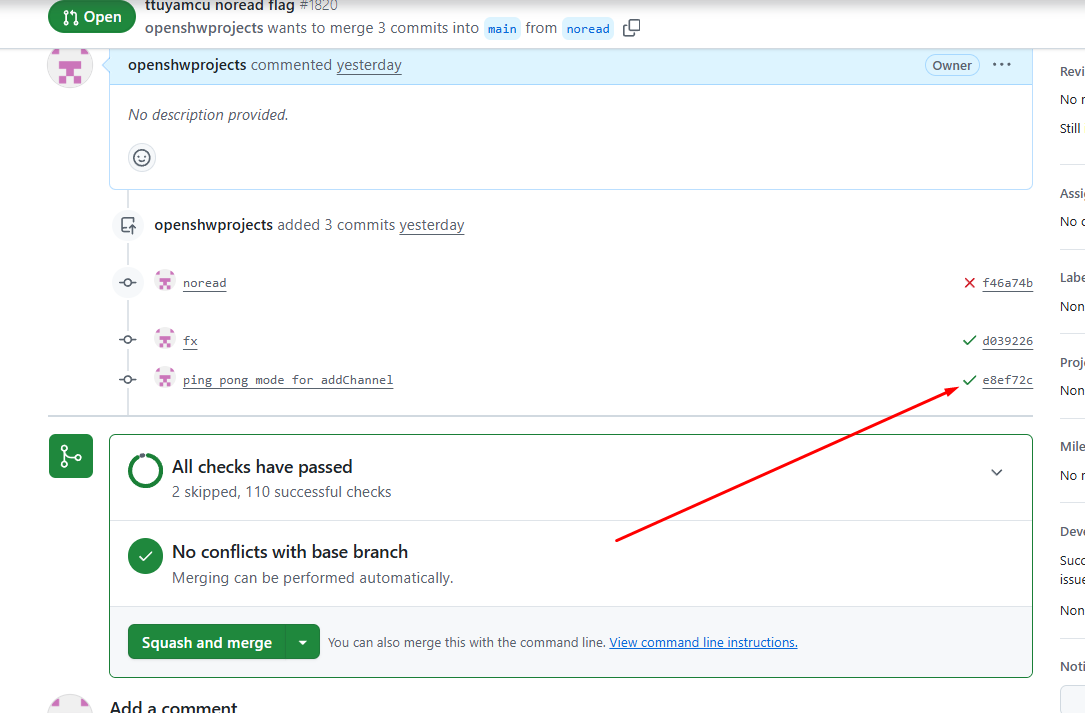
    If you use obkFlags value 2 for your mapping, it will ignore read. Can you check? Is it even acceptable for us to ignore that read? I am not sure, could it break other things?

    get binary here
    https://github.com/openshwprojects/OpenBK7231T_App/pull/1820
    Helpful post? Buy me a coffee.
  • #34 21707948
    sp4rk1e
    Level 10  
    Posts: 37
    Help: 3
    Rate: 5
    p.kaczmarek2 wrote:
    Do you know C?

    no problem

    p.kaczmarek2 wrote:
    Can you check?

    thanks! if binary is available I will check

    p.kaczmarek2 wrote:
    Is it even acceptable for us to ignore that read? I am not sure, could it break other things?

    I don't know. I'm completely new to Tasmota and/or OpenBK
  • #35 21708000
    p.kaczmarek2
    Moderator Smart Home
    Posts: 14416
    Help: 650
    Rate: 12371
    Build has finished, do you know how to download binary from PR?

    Here is explanation how to download it: https://www.elektroda.com/rtvforum/topic4033833.html
    Helpful post? Buy me a coffee.
  • ADVERTISEMENT
  • #36 21708021
    sp4rk1e
    Level 10  
    Posts: 37
    Help: 3
    Rate: 5
    p.kaczmarek2 wrote:
    do you know how to download binary from PR

    sorry, never dealt with this. Some hourglasses are still rotating in github. Really ready? I'll try to find out

    Added after 30 [minutes]:

    looking at the huge masses of 'Artifacts' of 'ttuyamcu noread flag #7229' how do I know which one is suitable for OTA? I'm used to look for .rbl suffix but none of them got that :-(
  • #37 21708313
    p.kaczmarek2
    Moderator Smart Home
    Posts: 14416
    Help: 650
    Rate: 12371
    There is 93MB file which contains all binaries. Alternatively, you can download OpenBK7231T_App_1820_merge_fb5f7b416567_OpenBK7231N, which is pure OpenBK7231N, this should match CBU from the topic.
    Helpful post? Buy me a coffee.
  • #38 21708368
    sp4rk1e
    Level 10  
    Posts: 37
    Help: 3
    Rate: 5
    your fix works very well, thank you. I tested with Moyes MS-105 and Avatto DMS16-W1.

    observations:
    - ignoring the dim level reported by the MCU allows a quite smooth dim effect with exactly the dim step size we specify
    - for both models we now can safely lower 'SetButtonTimes' from standard [10 3 5] to [10 3 1] giving a quite responsive dim effect
    - unfortunately the sporadic flicker of 'DMS16-W1' is still there. This appears to be device specific. The 'MS-105' has no such issues at all

    conclusion:
    - the idea replacing the standard S1 terminals of a dimmer by a custom port of the WiFi module allows interesting new features the original device is lacking. e.g:
    - ping-pong dim direction (instead wrapping brightness) when reaching range limits
    - custom behavior on long press, double press...

    both autoexecs:
    
    // device: Moyes MS-105
    // because standard S1 functionality does not allow to revert the dimming direction at any time
    // we replace S1 by a push button connected between P6 of the WiFi module and ground
    
    // new functionality:
    // short press now switches on/off
    // long press is dimming either up or down
    // double press toggles dim direction up/down
    
    startdriver tuyamcu
    tuyaMcu_defWiFiState 4
    
    SetButtonTimes 10 3 1       // works with bDPCache==2 only (see below)
    SetFlag 43 1                // Flag 43 - [TuyaMCU] Use queue
    SetFlag 10 0                // Flag 10 - [MQTT] Broadcast self state on MQTT connect DONT CLUTTER LOG
    
    // P6 connected to the push button
    SetPinChannel 6 35
    SetPinRole 6 Btn
    SetChannel 34 4             // define dim stepsize
    addEventHandler OnClick 6 toggleChannel 1
    addEventHandler OnHold 6 addChannel 2 $CH34 0 100 0
    addEventHandler OnDblClick 6 setChannel 34 -$CH34   // reverse direction on double click
    
    // Power On/Off dpID 1  - Channel 1
    setChannelType 1 toggle
    setChannelLabel 1 "CH1 On/Off"
    linkTuyaMCUOutputToChannel 1 bool 1
    
    // Brightness dpID 2  - Channel 2
    setChannelType 2 Dimmer
    tuyaMcu_setDimmerRange  100 1000
    // as of: https://www.elektroda.com/rtvforum/viewtopic.php?p=21707931#21707931
    // linkTuyaMCUOutputToChannel dpId verType tgChannel [ bDPCache ]
    linkTuyaMCUOutputToChannel 2 val 2 2    // new "bDPCache" "flags" arg: 2 means "do not read"
    
    PowerSave 1


    // device: Avatto DMS16-W1
    // because standard S1 functionality allows only switching but not dimming
    // we replace S1 by a push button connected between P28 of the WiFi module and ground
    
    // new functionality:
    // short press now switches on/off
    // long press is dimming either up or down
    // double press toggles dim direction up/down
    
    startdriver tuyamcu
    tuyaMcu_defWiFiState 4
    tuyaMcu_setBaudRate 115200
    
    SetButtonTimes 10 3 1       // works with bDPCache==2 only (see below)
    SetFlag 43 1                // Flag 43 - [TuyaMCU] Use queue
    SetFlag 10 0                // Flag 10 - [MQTT] Broadcast self state on MQTT connect DONT CLUTTER LOG
    
    // P28 connected to the push button
    SetPinChannel 28 35
    SetPinRole 28 Btn
    SetChannel 34 4             // define dim stepsize
    addEventHandler OnClick 28 toggleChannel 1
    addEventHandler OnHold  28 addChannel 2 $CH34 0 100 0
    addEventHandler OnDblClick 28 setChannel 34 -$CH34 // reverse direction on double click
    
    // Power On/Off dpID 1  - Channel 1
    setChannelType 1 toggle
    setChannelLabel 1 "CH1 On/Off"
    linkTuyaMCUOutputToChannel 1 bool 1
    
    // Brightness dpID 2  - Channel 2
    setChannelType 2 Dimmer
    tuyaMcu_setDimmerRange  90 600          //Set hardware dimmer range (is mapped to 0, 100 in GUI)
    // as of: https://www.elektroda.com/rtvforum/viewtopic.php?p=21707931#21707931
    // linkTuyaMCUOutputToChannel dpId verType tgChannel [ bDPCache ]
    linkTuyaMCUOutputToChannel 2 val 2 2    // new "bDPCache" "flags" arg: 2 means "do not read"
    
    startDriver httpButtons
    
    //Switch Type dpId=6 Enum V=<seconds>
    setChannelType 6 Textfield
    setChannelLabel 6 "toggle power after given time in seconds. Set 0 to cancel."
    linkTuyaMCUOutputToChannel 6 val 6
    
    // Power-On State dpID 14  - Channel 14
    setChannelType 14 OffOnRemember
    setChannelLabel 14 "power-on behavior"
    linkTuyaMCUOutputToChannel 14 enum 14
    
    PowerSave 1
    
  • #39 21708475
    p.kaczmarek2
    Moderator Smart Home
    Posts: 14416
    Help: 650
    Rate: 12371
    So... are you saying that everything works okay now? Including ping pong? Or is there a feature that you'd like to add?

    Is the OBK also working correctly with flags set to 0, I mean, in mapping DP? I didn't break anything, right? Can I merge this change into the main release, so other users can benefit from it as well?
    Helpful post? Buy me a coffee.
  • #40 21708719
    sp4rk1e
    Level 10  
    Posts: 37
    Help: 3
    Rate: 5
    p.kaczmarek2 wrote:
    So... are you saying that everything works okay now? Including ping pong?

    ping pong must be implemented in autoexec.bat.
    Is there some documentation (besides the examples) what maths can be done in autoexec,bat?
    My first (working) attempt (for Moyes MS-105). I don't know if that can be done more efficiently:
    
    // device: Moyes MS-105
    // because standard S1 functionality does not allow to revert the dimming direction at any time
    // we replace S1 by a push button connected between P6 of the WiFi module and ground
    
    // new functionality:
    // short press: now switches on/off
    // long press: is dimming either up or down
    // double press: toggles dim direction up/down
    // ping pong: if brightness reaches the upper or lower bound: reverse dim direction
    
    startdriver tuyamcu
    tuyaMcu_defWiFiState 4
    
    SetButtonTimes 10 3 1       // works with bDPCache==2 only (see below)
    SetFlag 43 1                // Flag 43 - [TuyaMCU] Use queue
    SetFlag 10 0                // Flag 10 - [MQTT] Broadcast self state on MQTT connect DONT CLUTTER LOG
    
    // P6 connected to the push button
    SetPinChannel 6 35
    SetPinRole 6 Btn
    SetChannel 34 4             // define dim stepsize
    
    alias reverse_dim_dir setChannel 34 -$CH34
    alias check_bounds if $CH2==100||$CH2==0 then reverse_dim_dir
    
    addEventHandler OnClick 6 toggleChannel 1
    addEventHandler OnHold 6 addChannel 2 $CH34 0 100 0
    addEventHandler OnDblClick 6 reverse_dim_dir
    addEventHandler OnChannelChange 2 check_bounds
    
    // Power On/Off dpID 1  - Channel 1
    setChannelType 1 toggle
    setChannelLabel 1 "CH1 On/Off"
    linkTuyaMCUOutputToChannel 1 bool 1
    
    // Brightness dpID 2  - Channel 2
    setChannelType 2 Dimmer
    tuyaMcu_setDimmerRange  100 1000
    // as of: https://www.elektroda.com/rtvforum/viewtopic.php?p=21707931#21707931
    // linkTuyaMCUOutputToChannel dpId verType tgChannel [ bDPCache ]
    linkTuyaMCUOutputToChannel 2 val 2 2    // new "bDPCache" "flags" arg: 2 means "do not read"
    
    PowerSave 1


    p.kaczmarek2 wrote:
    everything works okay now

    as said the Avatto DMS16-W1 sporadically flickers, when brightness is changed per 'addChannel'. I don't know how to debug this.

    p.kaczmarek2 wrote:
    Or is there a feature that you'd like to add?

    ATM no other wishes :-)

    p.kaczmarek2 wrote:
    working correctly with flags set to 0, I mean, in mapping DP?

    I haven't seen any issues. But as said I'm absolute beginner in terms of OpenBK. Don't know all test cases
    p.kaczmarek2 wrote:
    Can I merge this change into the main release, so other users can benefit from it as well?

    that would be fine
  • #41 21708759
    p.kaczmarek2
    Moderator Smart Home
    Posts: 14416
    Help: 650
    Rate: 12371
    Oh, I see! There is no ping pong yet. Well, how about this - let me add it for you. I have some idea how to do it in OBK firmware itself. We'll change argument "use wrap instead of clamp", use value 2 to set ping pong mode. Would that solve issue better, without autoexec.bat?
    Helpful post? Buy me a coffee.
  • ADVERTISEMENT
  • #42 21708830
    sp4rk1e
    Level 10  
    Posts: 37
    Help: 3
    Rate: 5
    p.kaczmarek2 wrote:
    We'll change argument "use wrap instead of clamp", use value 2

    ok, but the problem is who will change the sign of the added dim step constant?
    What would the code snippet in autoexec.bat for changing the dim brightness look like if the ping pong is implemented in OBK firmware ?

    Added after 8 [minutes]:

    current implementation with ping pong. I don't know how we could port some things thereof to firmware:
    
    // device: Moyes MS-105
    // because standard S1 functionality does not allow to revert the dimming direction at any time
    // we replace S1 by a push button connected between P6 of the WiFi module and ground
    
    // new functionality:
    // short press: switches on/off
    // long press if device is on: dim either up or down
    // long press if device is off: turn on at brightness zero, continue from there with dim
    // double press: toggles dim direction up/down
    // ping pong: if brightness reaches the upper or lower bound: reverse dim direction
    
    startdriver tuyamcu
    tuyaMcu_defWiFiState 4
    
    SetButtonTimes 10 3 1       // works with bDPCache==2 only (see below)
    SetFlag 43 1                // Flag 43 - [TuyaMCU] Use queue
    SetFlag 10 0                // Flag 10 - [MQTT] Broadcast self state on MQTT connect DONT CLUTTER LOG
    
    // P6 connected to the push button
    SetPinChannel 6 35
    SetPinRole 6 Btn
    SetChannel 34 4             // define dim stepsize
    
    alias reverse_dim_dir setChannel 34 -$CH34
    alias check_bounds if $CH2==100||$CH2==0 then reverse_dim_dir
    alias turn_on_at_zero backlog SetChannel 1 1; SetChannel 2 1
    
    addEventHandler OnClick 6 toggleChannel 1 
    // long press if off: switch on in the first place
    addEventHandler OnHold 6 if $CH1==0 then turn_on_at_zero else "addChannel 2 $CH34 0 100 0"
    addEventHandler OnDblClick 6 reverse_dim_dir
    addEventHandler OnChannelChange 2 check_bounds
    
    // Power On/Off dpID 1  - Channel 1
    setChannelType 1 toggle
    setChannelLabel 1 "CH1 On/Off"
    linkTuyaMCUOutputToChannel 1 bool 1
    
    // Brightness dpID 2  - Channel 2 
    setChannelType 2 Dimmer
    tuyaMcu_setDimmerRange  100 1000
    // as of: https://www.elektroda.com/rtvforum/viewtopic.php?p=21707931#21707931
    // linkTuyaMCUOutputToChannel dpId verType tgChannel [ bDPCache ]
    linkTuyaMCUOutputToChannel 2 val 2 2    // new "bDPCache" "flags" arg: 2 means "do not read"
    
    PowerSave 1
    
  • ADVERTISEMENT
  • #43 21708837
    p.kaczmarek2
    Moderator Smart Home
    Posts: 14416
    Help: 650
    Rate: 12371
    I've implemented a ping pong by remembering sign of the value. Here's a self test code I used in the Simulator:
    Code: C / C++
    Log in, to see the code

    So the obk command is:
    
    addChannel 1 24 0 100 2
    

    The last argument, here "2", means "use ping pong" mode. So, once it reaches max, it will remember to use inverted sign for 24 (delta value).

    The logic is designed in such a way, that it always stops at min and max, so you can relatively easily hit max and min value....
    All tests passed, no conflicts when merging noread branch into main.

    No futher configuration is needed, can you update and retry, and tell me whether it's ready to be merged with public release?
    Helpful post? Buy me a coffee.
  • #44 21708859
    sp4rk1e
    Level 10  
    Posts: 37
    Help: 3
    Rate: 5
    p.kaczmarek2 wrote:
    and tell me whether it's ready to be merged with public release

    thanks, works like a charm with following autoexec.bat on Moyes MS-105

    compared to my previous autoexec one feature is now missing:

    if we use the new OBK feature:
    we no longer can reverse the dim direction on double press (as in my example before). Except we could make the current dim direction chosen by the firmware visible to the autoexec variables.

    
    // device: Moyes MS-105
    // because standard S1 functionality does not allow to revert the dimming direction at any time
    // we replace S1 by a push button connected between P6 of the WiFi module and ground
    
    // new functionality:
    // short press: switches on/off
    // long press if device is on: dim either up or down
    // long press if device is off: turn on at brightness zero, continue from there with dim
    // ping pong: if brightness reaches the upper or lower bound: reverse dim direction
    
    startdriver tuyamcu
    tuyaMcu_defWiFiState 4
    
    SetButtonTimes 10 3 1       // works with bDPCache==2 only (see below)
    SetFlag 43 1                // Flag 43 - [TuyaMCU] Use queue
    SetFlag 10 0                // Flag 10 - [MQTT] Broadcast self state on MQTT connect DONT CLUTTER LOG
    
    // P6 connected to the push button
    SetPinChannel 6 35
    SetPinRole 6 Btn
    SetChannel 34 4             // define dim stepsize
    
    alias turn_on_at_zero backlog SetChannel 1 1; SetChannel 2 1
    
    addEventHandler OnClick 6 toggleChannel 1
    // long press if off: switch on in the first place
    // test new OBK feature: addChannel ping-pong flag
    addEventHandler OnHold 6 if $CH1==0 then turn_on_at_zero else "addChannel 2 $CH34 0 100 2"
    
    // Power On/Off dpID 1  - Channel 1
    setChannelType 1 toggle
    setChannelLabel 1 "CH1 On/Off"
    linkTuyaMCUOutputToChannel 1 bool 1
    
    // Brightness dpID 2  - Channel 2
    setChannelType 2 Dimmer
    tuyaMcu_setDimmerRange  100 1000
    // as of: https://www.elektroda.com/rtvforum/viewtopic.php?p=21707931#21707931
    // linkTuyaMCUOutputToChannel dpId verType tgChannel [ bDPCache ]
    linkTuyaMCUOutputToChannel 2 val 2 2    // new "bDPCache" "flags" arg: 2 means "do not read"
    
    PowerSave 1
    
  • #45 21708863
    p.kaczmarek2
    Moderator Smart Home
    Posts: 14416
    Help: 650
    Rate: 12371
    So you want a command to reverse ping pong direction? Just that? Or what do you mean by visible?
    Helpful post? Buy me a coffee.
  • #46 21708864
    sp4rk1e
    Level 10  
    Posts: 37
    Help: 3
    Rate: 5
    p.kaczmarek2 wrote:
    So you want a command to reverse ping pong direction

    exactly that.

    But I don't know if it would complicate things unnecessarily if all ping ponging is now done in firmware?
    Because at least all these flags newly added are not so obvious compared to a self contained script. At least for somebody who did not read this thread :-)
  • #47 21709027
    p.kaczmarek2
    Moderator Smart Home
    Posts: 14416
    Help: 650
    Rate: 12371
    But.... is it really needed, from a user point of view? Wouldn't it be better to have:
    - single click - toggle on and off
    - hold - ping pong dimmer
    - double click - 100% brightness?
    Helpful post? Buy me a coffee.
  • #48 21709140
    sp4rk1e
    Level 10  
    Posts: 37
    Help: 3
    Rate: 5
    if you want to dim down but dimmer currently dims up it's annoying to wait for the ping pong and to further wait until it passes the brightness you target,
    So you need some means (e.g double click) to fix that. But it's easily implemented in autoexec,bat

    The ignore flag support is the only change really required in firmware. Because you can't handle that in user space.

    Added after 11 [hours] 47 [minutes]:

    sp4rk1e wrote:
    So you need some means (e.g double click) to fix that.

    most commercial dimmers reverse the dim direction after each dimming step (i.e. after a long press). This IMHO is a good approach to speed up the dimming process.
    It allows for some kind of successive approximation of the targeted dim level :-)

    maybe that could (optionally) be supported directly in firmware? This could be done with a small modification to your existing solution:

    Quote:

    So the obk command is:
    
    addChannel 1 24 0 100 2


    The last argument, here "2", means "use ping pong" mode. So, once it reaches max, it will remember to use inverted sign for 24 (delta value).


    we need not to wait for 'once it reaches max, or min' . Instead we could invert the sign after each "grouped sequence of calls" (done with a "long press") to 'addChannel' in this mode. Maybe with flag set to '3' instead of '2'
  • #49 21709514
    p.kaczmarek2
    Moderator Smart Home
    Posts: 14416
    Help: 650
    Rate: 12371
    sp4rk1e wrote:

    we need not to wait for 'once it reaches max, or min' . Instead we could invert the sign after each "grouped sequence of calls" (done with a "long press") to 'addChannel' in this mode. Maybe with flag set to '3' instead of '2'


    We don't have a reliable way to detect it in the addChannel, but maybe we can bind some command to "on release" event of the button? When button stops being pressed?
    Helpful post? Buy me a coffee.
  • #50 21709522
    sp4rk1e
    Level 10  
    Posts: 37
    Help: 3
    Rate: 5
    p.kaczmarek2 wrote:
    we can bind some command to "on release" event

    right. We actually just need *any* command that allows the user to switch the dim direction at any time. If it's bound to a release or something else is up the the user
  • #51 21711591
    sp4rk1e
    Level 10  
    Posts: 37
    Help: 3
    Rate: 5
    just rechecked with current OpenBK7231N_1.18.188.rbl
    something is going wrong. Even though the log appears to be ok, the dimming values do not reach the hardware. Switching on/off works. But brightness stays always on the same level. If I then issue
    
    linkTuyaMCUOutputToChannel 2 val 2 0
    

    on console dimming starts to work as expected. I then can even reactivate the new flag:
    
    linkTuyaMCUOutputToChannel 2 val 2 2    
    

    and it still works properly. Is it an initialization thing?

    I then rechecked with 'OpenBK7231N_noread_d039226dedd6.rbl': there are no such issues
    My test autoexec:
    
    // device: Moyes MS-105
    //
    // features:
    // short press: switches on/off
    // long press if device is on: dim either up or down
    // long press if device is off: turn on at brightness zero, continue from there with dim up
    // if brightness reaches the upper or lower bound: reverse dim direction (ping pong)
    // after long press: reverse dim direction
    
    startDriver TuyaMCU
    tuyaMcu_defWiFiState 4
    PowerSave 1
    //SetFlag 43 1                // Flag 43 - [TuyaMCU] Use queue
    SetFlag 10 0                // Flag 10 - [MQTT] Broadcast self state on MQTT connect DONT CLUTTER LOG
    SetButtonTimes 2 3 2        // provides fast response and low lag, works with bDPCache==2 only (see below)
                                // must use FW Version: OpenBK7231N_noread_d039226dedd6.rbl for that
    SetChannel 14 4             // define dim stepsize
    
    // P6 connected to the push button
    SetPinChannel 6 10
    SetPinRole 6 Btn
    
    alias reverse_dim_dir setChannel 14 -$CH14
    alias turn_on_at_zero backlog SetChannel 1 1; SetChannel 2 1
    alias dim_step backlog if $CH2==100||$CH2==0 then reverse_dim_dir; addChannel 2 $CH14 0 100 0; SetChannel 15 1
    alias reverse_and_clear backlog reverse_dim_dir; SetChannel 15 0
    
    setChannelType 1 toggle
    linkTuyaMCUOutputToChannel 1 bool 1
    
    setChannelType 2 dimmer
    tuyaMcu_setDimmerRange 0 1000
    linkTuyaMCUOutputToChannel 2 val 2 2    // new "bDPCache" "flags" arg: 2 means "do not read"
    
    addEventHandler OnClick    6 toggleChannel 1
    addEventHandler OnHold     6 if $CH1==0 then turn_on_at_zero else dim_step
    addEventHandler OnRelease  6 if $CH15==1 then reverse_and_clear
    
  • #52 21711681
    p.kaczmarek2
    Moderator Smart Home
    Posts: 14416
    Help: 650
    Rate: 12371
    PR has reused bDPCache argument for flags, and you set it to 2.
    https://github.com/openshwprojects/OpenBK7231T_App/pull/1820/files
    On old Release, 2 is intepreted as "true" and value is not sent at all because OBK thinks it's for dp cache request.

    Ok, I added "switch direction" hack for you.
    https://github.com/openshwprojects/OpenBK7231...mits/9bfeae5706a35498f5c7b7ed4b00c5acdbe4a570
    It is fairly simple - if you use mode 3 instead of 2, then max/min/delta values are ignored, and just direction is inverted. I think you know how to use it, right?
    Helpful post? Buy me a coffee.
  • #53 21711738
    sp4rk1e
    Level 10  
    Posts: 37
    Help: 3
    Rate: 5
    p.kaczmarek2 wrote:
    PR has reused bDPCache argument for flags, and you set it to 2.
    https://github.com/openshwprojects/OpenBK7231T_App/pull/1820/files
    On old Release, 2 is intepreted as "true" and value is not sent at all because OBK thinks it's for dp cache request.

    thank you.
    with 'OpenBK7231N_1820_merge_db247b9d377d.rbl' it works again.

    p.kaczmarek2 wrote:
    I think you know how to use it,

    unfortunately no. How do you decide when to invert the direction? In our last discussion we came to the conclusion the user must do something in 'ButtonRelease'.

    But as you can see from my last script to ease things maybe we don't really need support for this feature directly in firmware? Even in autoexec the direction switch on 'release' is easily managed...
  • #54 21711755
    p.kaczmarek2
    Moderator Smart Home
    Posts: 14416
    Help: 650
    Rate: 12371
    Ok, so you know the OnHold event, right? So there is also... OnRelease event, which gets called, when button is released. Do you think it could be suitable?
    Helpful post? Buy me a coffee.
  • #55 21711781
    sp4rk1e
    Level 10  
    Posts: 37
    Help: 3
    Rate: 5
    I assume you meant the use of the new flag this way?

    
    startDriver TuyaMCU
    tuyaMcu_defWiFiState 4
    PowerSave 1
    SetFlag 10 0                // Flag 10 - [MQTT] Broadcast self state on MQTT connect DONT CLUTTER LOG
    SetButtonTimes 2 3 2        // provides fast response and low lag, works with bDPCache==2 only (see below)
                                // must use Version: noread_e8ef72c891b1 for that
    SetChannel 14 4             // define dim stepsize
    
    // P6 connected to the push button
    SetPinChannel 6 10
    SetPinRole 6 Btn
    
    alias turn_on_at_zero backlog SetChannel 1 1; SetChannel 2 1
    alias dim_step backlog addChannel 2 $CH14 0 100 0; SetChannel 15 1
    alias reverse_and_clear backlog addChannel 2 $CH14 0 100 3; SetChannel 15 0
    
    setChannelType 1 toggle
    linkTuyaMCUOutputToChannel 1 bool 1
    
    setChannelType 2 dimmer
    tuyaMcu_setDimmerRange 0 1000
    linkTuyaMCUOutputToChannel 2 val 2 2    // new "bDPCache" "flags" arg: 2 means "do not read"
    
    addEventHandler OnClick    6 toggleChannel 1
    addEventHandler OnHold     6 if $CH1==0 then turn_on_at_zero else dim_step
    addEventHandler OnRelease  6 if $CH15==1 then reverse_and_clear
    
  • #56 21711805
    p.kaczmarek2
    Moderator Smart Home
    Posts: 14416
    Help: 650
    Rate: 12371
    No. I was referring to automatic ping-pong.
    This will add value to 10 to channel 2 in range 0 100 with mode 2 (automatic ping pong)
    
    addChannel 2 10 0 100 2
    

    This will toggle automatic ping pong direction in place for channel 2 (mode 3 means 'revert'):
    
    addChannel 2 0 0 100 3
    
    Helpful post? Buy me a coffee.
  • #57 21711810
    sp4rk1e
    Level 10  
    Posts: 37
    Help: 3
    Rate: 5
    ok thank you, modified the script - works 👍‍

    
    startDriver TuyaMCU
    tuyaMcu_defWiFiState 4
    PowerSave 1
    SetFlag 10 0                // Flag 10 - [MQTT] Broadcast self state on MQTT connect DONT CLUTTER LOG
    SetButtonTimes 2 3 2        // provides fast response and low lag, works with bDPCache==2 only (see below)
                                // must use Version: noread_e8ef72c891b1 for that
    SetChannel 14 4             // define dim stepsize
    
    // P6 connected to the push button
    SetPinChannel 6 10
    SetPinRole 6 Btn
    
    alias turn_on_at_zero backlog SetChannel 1 1; SetChannel 2 1
    alias dim_step backlog addChannel 2 $CH14 0 100 2; SetChannel 15 1
    alias reverse_and_clear backlog addChannel 2 $CH14 0 100 3; SetChannel 15 0
    
    setChannelType 1 toggle
    linkTuyaMCUOutputToChannel 1 bool 1
    
    setChannelType 2 dimmer
    tuyaMcu_setDimmerRange 0 1000
    linkTuyaMCUOutputToChannel 2 val 2 2    // new "bDPCache" "flags" arg: 2 means "do not read"
    
    addEventHandler OnClick    6 toggleChannel 1
    addEventHandler OnHold     6 if $CH1==0 then turn_on_at_zero else dim_step
    addEventHandler OnRelease  6 if $CH15==1 then reverse_and_clear
    
  • #58 21711811
    p.kaczmarek2
    Moderator Smart Home
    Posts: 14416
    Help: 650
    Rate: 12371
    Thanks for testing, what do we next? Or can I merge this PR into release?
    Helpful post? Buy me a coffee.
  • #59 21711817
    sp4rk1e
    Level 10  
    Posts: 37
    Help: 3
    Rate: 5
    from my point of perspective all works.

    The mandatory fix IMHO is the ignore flag in 'linkTuyaMCUOutputToChannel'. Otherwise you can't safely migrate buttons from MCU to the WiFi chip. Because responses of the MCU (if not ignored) possibly interfere with values expected by the user script.

    After all the support of 'toggle automatic ping pong direction' in firmware is questionable. Because some effort to handle the situation is still necessary in the user script. If you compare my 2 scripts the benefit of a firmware support there is not that particularly significant.
  • #60 21711851
    p.kaczmarek2
    Moderator Smart Home
    Posts: 14416
    Help: 650
    Rate: 12371
    Why do you have conditionals? Wouldn't this be enough:
    
    addEventHandler OnClick    6 toggleChannel 1
    addEventHandler OnHold     6 addChannel 2 10 0 100 2
    addEventHandler OnRelease  6 addChannel 2 0 0 100 3
    

    On hold add 10 with ping pong (mode 2), on release just add 0 (no change) with direction swap (mode 3).
    Helpful post? Buy me a coffee.
📢 Listen (AI):

Topic summary

✨ The discussion focuses on the Avatto DMS16-W1 1-channel dimmer smart switch featuring a CBU module communicating with a Puya PY32F002A MCU (TSSOP-20). Users explore flashing the device with OpenBeken firmware, identifying and mapping Tuya dpIDs for channel control, and configuring autoexec.bat scripts for proper operation. Key findings include dpID assignments for power on/off, brightness control, brightness range, switch type, power-on status, and timer functions, with variations noted in similar models like the Avatto DMS16-Y1 and 2-channel versions. Contributors share firmware dumps, flashing experiences, and configuration examples, including setting dimmer ranges, linking TuyaMCU outputs to channels, and enabling HTTP button drivers. The conversation also references tools and resources for sniffing dpIDs, restoring original firmware, and improving UI via REST pages. Overall, the thread provides practical insights into customizing and controlling Avatto dimmer switches using OpenBeken firmware and Puya MCU integration.
Generated by the language model.

FAQ

TL;DR: For OpenBeken users modding Avatto dimmers, the proven path is 115200 baud with a TuyaMCU mapping; as one expert put it, "the ignore flag support is the only change really required" for stable scripted dimming. This FAQ shows how to flash the CBU, map 1CH/2CH dpIDs, and build reliable autoexec dimming with MCU feedback control. [#21711817]

Why it matters: This thread turns a partly working Tuya dimmer conversion into a repeatable OpenBeken setup, including stable dimming, dual-channel mapping, and custom button behavior.

Wariant Kanały Kluczowe dpIDs jasności Baud TuyaMCU Stan w wątku
Avatto DMS16-W1 1 2, 3, 5 115200 Działa z autoexec; min/max nadal niestandardowe
Avatto DMS16-Y1 1 2, 3, 6 115200 Potwierdzony timer i test z żarówką tradycyjną
Avatto 2CH 2 CH1: 2/3/5, CH2: 8/9/11 115200 Działa po mapowaniu dpID 7–12
Moyes MS-105 1 2 niewskazany w cytowanym skrypcie Użyty do porównania zachowania ping-pong

Key insight: Najlepsze efekty dało przeniesienie przycisku z MCU na GPIO modułu BK7231N/CBU i sterowanie jasnością zdarzeniami OpenBeken. Gdy MCU odsyła opóźnione poziomy dimmera, flaga mapowania 2 może ignorować ten odczyt i wygładzić działanie. [#21708368]

Quick Facts

  • Puya PY32F002A to MCU ARM Cortex-M0+ do 24 MHz, z do 20 KB Flash, 3 KB SRAM i zasilaniem 1.7–5.5 V; w tym dimmerze współpracuje z modułem CBU przez UART. [#21164436]
  • Dla Avatto DMS16-W1 autor potwierdził konfigurację fabryczną "baud":"115200", a ten sam baud wykorzystano potem w tuyaMcu_setBaudRate 115200. [#21164436]
  • Zakresy DP dla 1CH są konkretne: jasność 10–1000, timer 0–86400 s, a pamięć stanu po zasileniu ma trzy tryby: off / on / memory. [#21164436]
  • W wersji 2CH drugi kanał kontynuuje numerację logicznie od dpID 7 do 12, co pozwoliło uruchomić osobne On/Off, brightness, min, max i countdown dla CH2. [#21441155]
  • Dla szybkiego ściemniania po przepięciu przycisku na GPIO działały ustawienia SetButtonTimes nawet 2 3 2 lub 10 3 1, ale stabilność zależała od ignorowania sprzężenia zwrotnego dimmera i czasem od kolejki TuyaMCU. [#21711591]

How do I flash OpenBeken onto an Avatto DMS16-W1 dimmer with a CBU module and a Puya PY32F002A MCU?

Flash the CBU, not the Puya MCU. 1. De-solder the CBU riser so you can dump or flash the Wi-Fi module separately with Easy Flasher. 2. Read the factory dump first and note the extracted UART config, which was 115200 on this device. 3. Reinstall the CBU, boot OpenBeken, then use TuyaMCU mapping to talk to the Puya over UART. J-Link access to the Puya failed in the thread even with NRST held low, so the working route was replacing only the CBU firmware. [#21164436]

What is TuyaMCU Analyzer, and how does it help capture dpIDs and UART traffic on Avatto dimmers?

"TuyaMCU Analyzer" is a UART analysis tool that captures Tuya MCU packets, identifies dpIDs, and correlates app actions with serial traffic in real time. In this thread it was the winning method for recording what changed when the official Tuya app toggled power, brightness, countdown, switch type, and memory settings. With the CBU riser removed and two USB-TTL adapters connected, the author could compare factory behavior against OpenBeken autoexec commands and build a correct mapping for dpIDs 1, 2, 6, and 14. [#21164436]

Which dpIDs are used by the Avatto DMS16-W1 1-channel dimmer for power, brightness, min/max brightness, countdown, switch type, and power-on state?

The 1-channel Avatto DMS16-W1 uses dpID 1 for power, 2 for brightness, 3 for minimum brightness, 5 for maximum brightness, 6 for countdown, 47 for switch type, and 14 for power-on state. The thread also lists dpID 4 as led_type_1 and dpID 13 as work_mode. Specific ranges are given: brightness and min/max are 10–1000, countdown is 0–86400 s, and power-on state supports off, on, and memory. [#21164436]

How should I write an OpenBeken autoexec.bat for the Avatto DMS16-W1 using startDriver TuyaMCU, tuyaMcu_setBaudRate 115200, and linkTuyaMCUOutputToChannel?

Use a minimal TuyaMCU mapping first, then add extras. Start with startDriver TuyaMCU, tuyaMcu_setBaudRate 115200, and tuyaMcu_defWiFiState 4. Map dpID 1 as bool to channel 1, dpID 2 as val to channel 2, dpID 6 as a text/countdown field, and dpID 14 as enum for power-on behavior. Set channel 2 as Dimmer and apply a hardware range such as 90 600 or 200 1000. The thread’s working scripts also add httpButtons, SetFlag 43 1, and event handlers when the physical switch is rewired to a GPIO. [#21708368]

Why does OpenBeken show a 0-100 dimmer slider in the GUI even when tuyaMcu_setDimmerRange is set to 200 1000 or 90 600?

OpenBeken shows the dimmer as a normalized 0–100 GUI value even when the TuyaMCU hardware range is different. The author explicitly observed that tuyaMcu_setDimmerRange 200 1000 still displayed a fixed 0-100 slider, while UART traffic proved the module sent correct raw Tuya values to the MCU. Later scripts kept the same pattern with ranges like 90 600 and comments that this hardware range is mapped to 0, 100 in the GUI. [#21164436]

What is the difference between the Avatto DMS16-W1/W1 and DMS16-Y1 dimmer variants discussed in the thread?

The thread treats DMS16-W1 and DMS16-Y1 as very similar 1-channel dimmers, but the Y1 variant added a visible countdown-to-off behavior in testing. The Y1 owner reported it worked great with a traditional incandescent bulb and listed the same core dpIDs: 1 for power, 2 for brightness, 3 for brightness range, 4 for switch type, 6 for timer, and 14 for power-on state. The reported baud in extracted config was also 115200, matching the W1 workflow. [#21173417]

How can I map the 2-channel Avatto dimmer dpIDs in OpenBeken, including CH2 values like dpID 7, 8, 9, 10, 11, and 12?

Map the 2-channel unit as CH1 on dpID 1–6 and CH2 on dpID 7–12. In the working 2CH autoexec, CH2 used dpID 7 for On/Off, 8 for brightness, 9 for minimum brightness, 10 for switch type, 11 for maximum brightness, and 12 for countdown. dpID 14 stayed global for power-on behavior. The author confirmed this layout by extracting the Tuya model JSON, where switch_led_2, bright_value_2, brightness_min_2, led_type_2, brightness_max_2, and countdown_2 followed the first channel directly. [#21441155]

What is the best way to handle brightness_min and brightness_max dpIDs in OpenBeken when the Tuya app uses a custom dual-ended range control?

The practical solution is to expose brightness_min and brightness_max as separate controls, not to mimic Tuya’s custom dual-ended slider. OpenBeken did not have a built-in channel type for that UI, and the firmware author said it would need to handle two dpIDs at once. The suggested fallback was two independent sliders, one for minimum and one for maximum, or a custom REST page if you want a better UI. That matches the thread’s conclusion: the Tuya range widget is custom, while OBK’s core mapping stays simpler. [#21164833]

Why does dimming flicker or jump on some TuyaMCU dimmers when using addChannel from OpenBeken event handlers?

Dimming can jump because the MCU reports delayed brightness feedback after OBK already sent a newer value. In logs, a hold event raised channel 2 to 91, but the MCU then reported raw value 554, which OBK mapped back to 90; the same pattern repeated at 93→92 and 95→94. Later testing showed these dimmers change brightness smoothly inside the MCU, so feedback can lag scripted commands. On Avatto DMS16-W1, that lag still caused sporadic flicker even after other fixes, while the compared Moyes MS-105 did not show the same issue. [#21707334]

How does Flag 43 '[TuyaMCU] Use queue' affect stability when sending rapid dimmer commands to a TuyaMCU device?

Flag 43 enables a TuyaMCU send queue so OBK does not push two packets at once. The firmware author described it as a stability aid for rapid command bursts, especially during hold-based dimming. It improved the theory of packet timing, but it did not fully cure Avatto flicker in this thread; the user still saw sporadic brightness flashes during addChannel dimming. The flag was also reported as a GUI/template inconsistency at one point, but it could be set with SetFlag 43 1 in autoexec and was shown correctly in the main flags page. [#21706850]

What does the new linkTuyaMCUOutputToChannel flags argument do, and how does flag value 2 ignore dimmer feedback from the MCU?

The new flags argument extends linkTuyaMCUOutputToChannel so 2 means “ignore read” for that mapping. In practice, linkTuyaMCUOutputToChannel 2 val 2 2 lets OBK send brightness to the MCU while discarding the MCU’s delayed dimmer feedback. That mattered because user scripts on rewired buttons expected their own channel values to win. The firmware author changed the older bDPCache argument into a flags field, where 1 keeps DP cache behavior and 2 suppresses incoming readback for that mapped channel. [#21707931]

How can I rewire the external S1 switch from the MCU to a BK7231N/CBU GPIO and use OpenBeken OnClick, OnHold, and OnRelease events for dimming?

Move S1 off the MCU and wire it to a CBU GPIO plus ground, then let OpenBeken handle the logic. 1. Physically isolate the switch terminal from the old MCU trace and connect it to a GPIO such as P28 on Avatto or P6 on Moyes; users noted terminal N was already tied to 3.3 V circuit ground. 2. Set that pin as Btn. 3. Bind OnClick to toggle power, OnHold to addChannel dimming, and OnRelease to reverse direction if needed. This gave short-press, long-press, and custom dimming behaviors the factory MCU logic did not provide. [#21706499]

What is ping-pong dimming mode in OpenBeken addChannel, and how is mode 2 different from mode 3?

Ping-pong mode makes addChannel bounce between the minimum and maximum instead of clamping or wrapping. With mode 2, OBK remembers direction and automatically reverses when the channel reaches limits such as 0 or 100; the author’s self-test showed a sequence like 0, 25, 50, 75, 100, 75, 50. With mode 3, OBK does not change brightness; it only flips the stored ping-pong direction in place. That let users dim on hold and reverse direction on release or another event. [#21711805]

OpenBeken event scripting vs the original MCU-controlled switch logic on Avatto and Moyes dimmers — which approach works better for custom dimming behavior?

OpenBeken event scripting works better when you want custom dimming behavior. The original MCU-controlled external switch on these dimmers mainly handled On/Off, and users could not get brightness control from the stock Avatto switch logic even after trying flip, sync, and button modes. By moving the switch to a BK7231N GPIO, users added short-press toggle, long-press dimming, release-triggered direction changes, and ping-pong dimming. One thread expert summarized the benefit clearly: rewiring to the Wi-Fi module “allows interesting new features the original device is lacking.” [#21708368]

How long does it take these OpenBeken-configured Avatto or Moyes dimmers to go from minimum to maximum brightness, and what happens on power-on: instant full brightness or a smooth ramp-up?

The thread does not give a confirmed low-to-high timing for Avatto or Moyes after the final scripts, and one later user asked whether the MS-105 still took about 5 s. What is clear is that both devices dim smoothly inside the MCU, and the user scripts often turn the light on at a very low level first, for example with SetChannel 2 1, then continue dimming upward on hold. That means power-on in the custom script can be a controlled low-start rather than an instant jump to 100%, but no final benchmark in seconds was posted. [#21773291]
Generated by the language model.
ADVERTISEMENT