logo elektroda
logo elektroda
X
logo elektroda

New teardown of Magic home WIFI RGB CTT controller

wouter 4074 5

TL;DR LABEL_AI_GENERATED

  • A teardown of a Magic Home WiFi RGB+CCT LED controller revealed that the expected Tasmota-friendly chip was replaced by a BL602.
  • Tracing and measuring the board produced the correct pinout for all channels, enabling custom configuration of the RGB and white outputs.
  • The PCB identification reads ZJ-BWCG-VC-RGBWW V1.1.
  • The working configuration mapped P3 to green, P4 to red, P17 to cool white, P20 to warm white, and P21 to blue.
AI summary based on the discussion. May contain errors.
ADVERTISEMENT
Listen:
  • Hi,

    Like many perhaps I bought a Magic home controller expecting to flash Tasmota onto it and go from there...
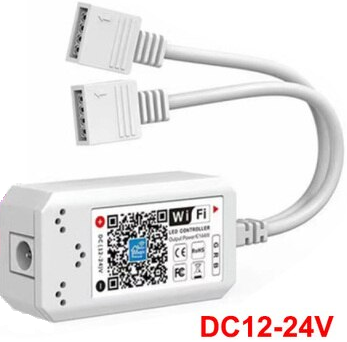
    Turns out there is a different chip in side, and there you go down the rabbit hole. Thanks to someone with, I guess, a lot of perseverance and this beautiful community I could get this controller Magic home Wifi Led controller rgb + cct:
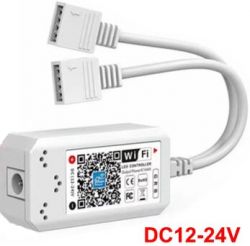
    New teardown of Magic home WIFI RGB CTT controller

    with what turned out to be a BL602 chip inside to work.
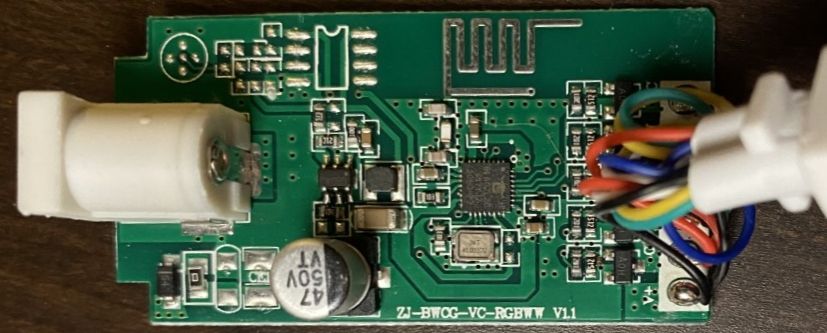
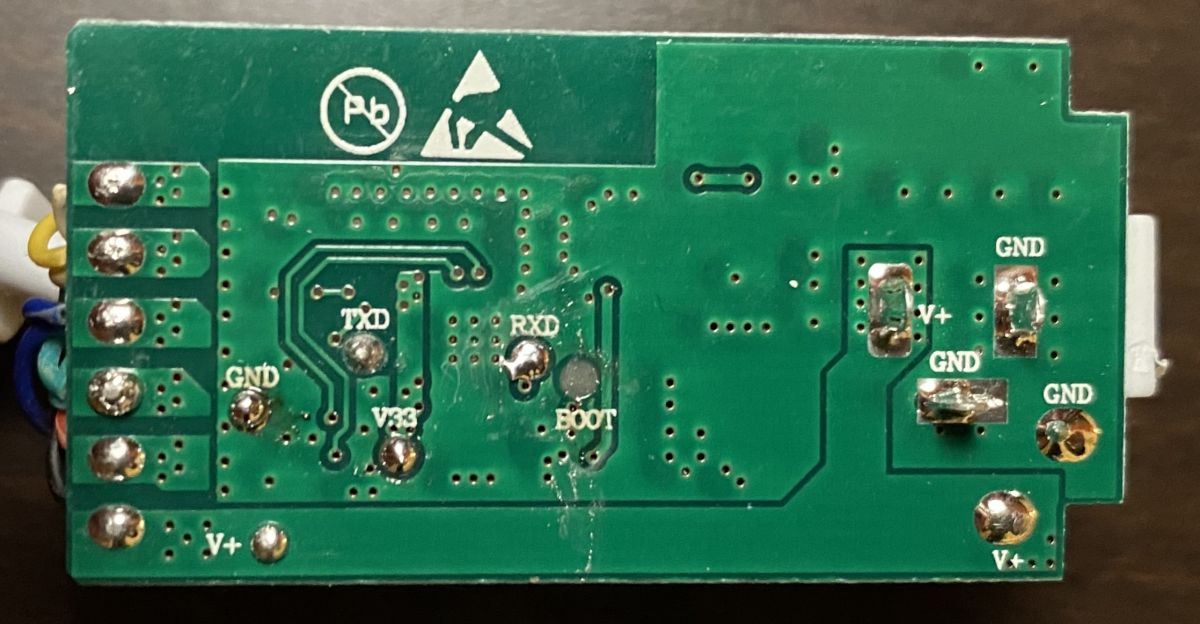
    The insides, front and back are show below:
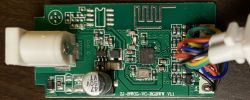
    New teardown of Magic home WIFI RGB CTT controller
    New teardown of Magic home WIFI RGB CTT controller

    The PCB identification read ZJ-BWCG-VC-RGBWW V1.1

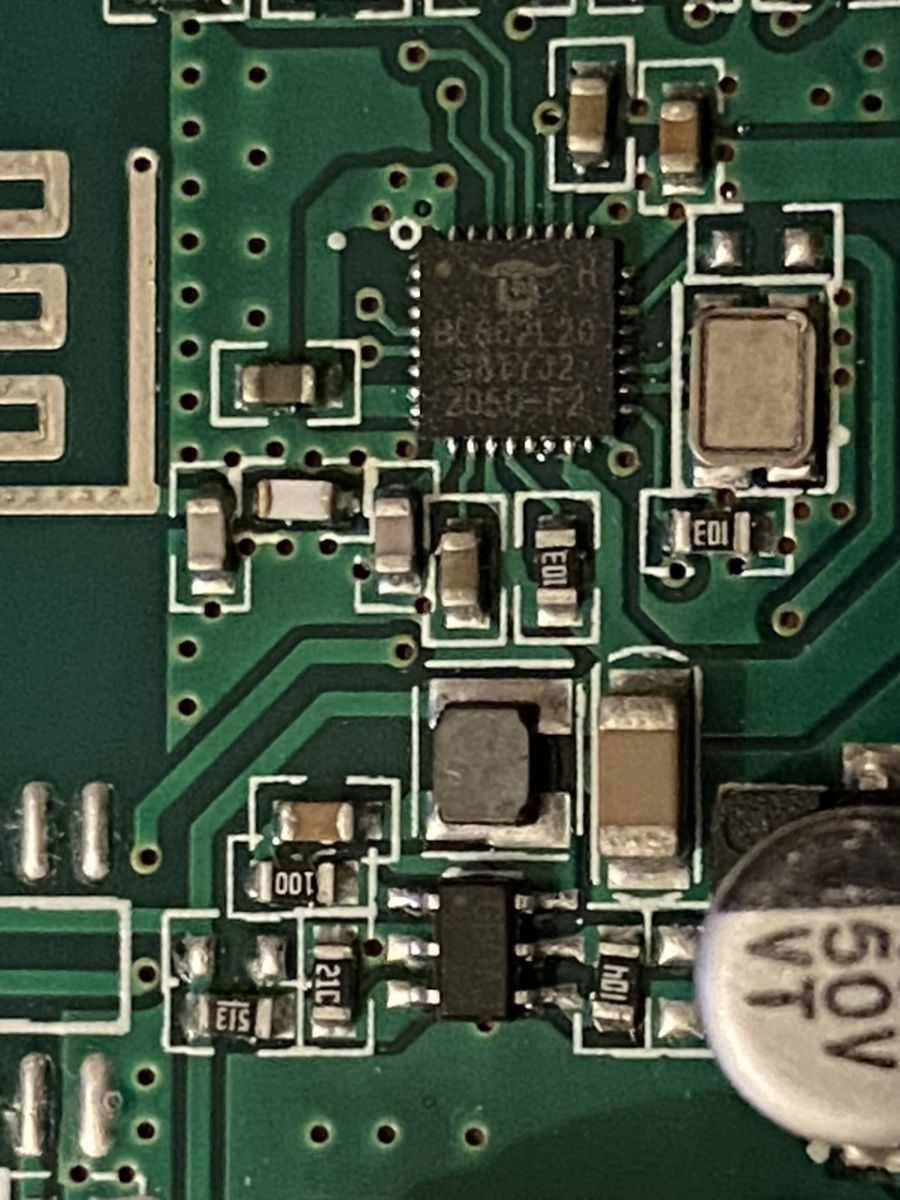
    Chip close-up attempt:
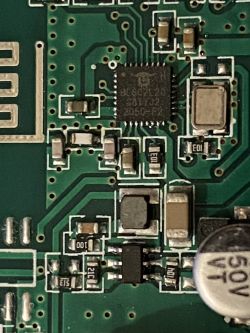
    New teardown of Magic home WIFI RGB CTT controller

    It took some tracing and measuring but I found the correct pinout for all channels and though I give something back to the community.
    The configuration I entered worked for me:
    P3 PWM Channel 2 / Green
    P4 PWM Channel 0 / Red
    P17 PWM Channel 3 / Cool white
    P20 PWM Channel 4 / Warm white
    P21 PWM Channel 1 / Blue

    Many thanks!

    Cool? Ranking DIY
    About Author
    wouter
    Level 2  
    Offline 
    wouter wrote 2 posts with. Been with us since 2023 year.
  • ADVERTISEMENT
  • #2 20399595
    p.kaczmarek2
    Moderator Smart Home
    Posts: 14797
    Help: 659
    Rate: 12955
    Thank you for your presentation. It's good to mention that our OpenBL602 firmware supports now OTA - updating firmware via WiFi. It was not possible in the past but now you can just flash once by wires and then update many times wirelessly.
    Update is done here:
    New teardown of Magic home WIFI RGB CTT controller
    Helpful post? Buy me a coffee.
  • ADVERTISEMENT
  • #3 20400022
    wouter
    Level 2  
    Posts: 2
    Thank you!
    Yes I found the OTA option, and I was banking on it too, as the device is now boarded up and only accessible with a lot of effort. That was why I could not post a picture of the case after forgetting about it previously.

    Do you know if, and how, this template will be made available to others?
  • ADVERTISEMENT
  • #4 20400412
    p.kaczmarek2
    Moderator Smart Home
    Posts: 14797
    Help: 659
    Rate: 12955
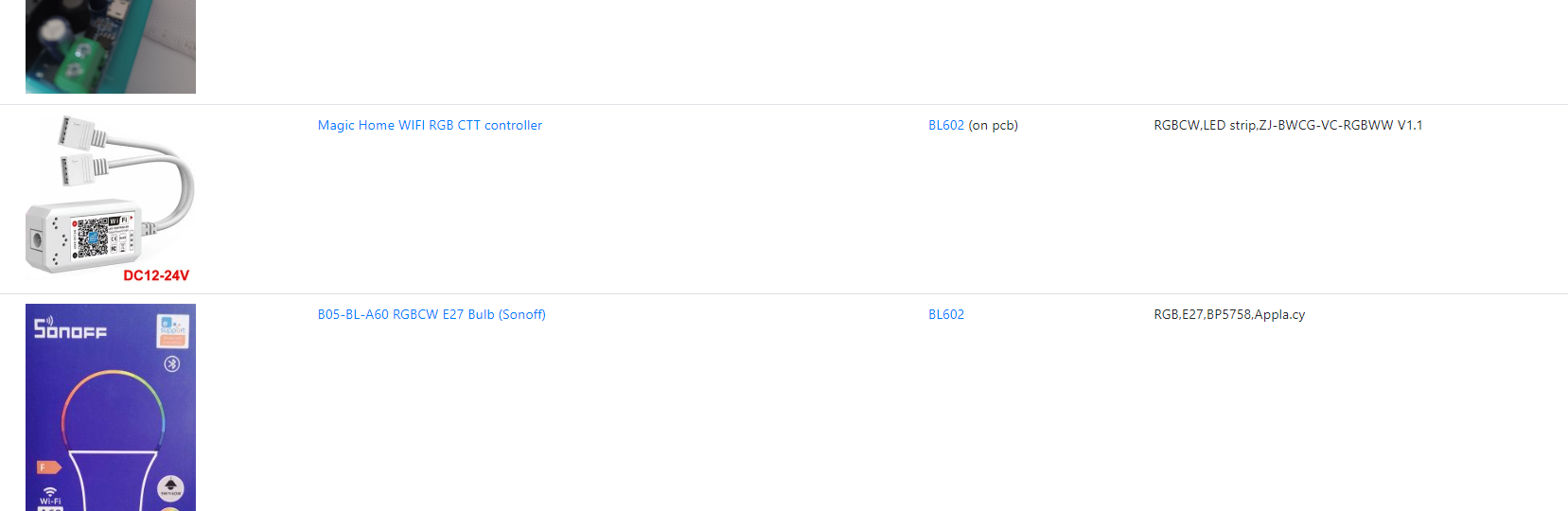
    Your device is now visible on our list, thanks
    New teardown of Magic home WIFI RGB CTT controller
    Helpful post? Buy me a coffee.
  • ADVERTISEMENT
  • #6 20405821
    p.kaczmarek2
    Moderator Smart Home
    Posts: 14797
    Help: 659
    Rate: 12955
    I've also heard that BL602 is used in some of the Sonoff products. It's used in at least one kind of Sonoff bulb (which I will receive soon, thanks to one of our readers) and in one of Sonoff power-metering switches (with CSE chip, as far as I know)
    Helpful post? Buy me a coffee.
Listen:

FAQ LABEL_AI_GENERATED

TL;DR: BL602 packs a 192 MHz RISC-V core [Bouffalo, 2021]; "OTA finally works out-of-the-box" [Elektroda, p.kaczmarek2, post #20399595] This teardown confirms the ZJ-BWCG-VC-RGBWW V1.1 board and a 5-channel PWM pinout [Elektroda, wouter, post #20399553]

Why it matters: You can now flash once by wire, update wirelessly, and run local cloud-free lighting.

Quick Facts

• MCU: Bouffalo BL602, 32-bit RISC-V @ 192 MHz, WiFi b/g/n + BLE 5.0 [Bouffalo, 2021] • Output: 5 × PWM channels (RGB + CW + WW) [Elektroda, wouter, post #20399553] • Supply range: Typical 5–24 V DC, ≤ 12 A load (Magic-Home Datasheet) • OTA: Supported since OpenBL602 v0.6.0 [Elektroda, p.kaczmarek2, post #20399595] • Street price: €5–€8 in Poland [Allegro listing, 2023]

1. Which chipset does the latest Magic Home RGB CCT controller use?

It uses the Bouffalo BL602 WiFi/BLE SoC mounted on PCB ZJ-BWCG-VC-RGBWW V1.1 [Elektroda, wouter, post #20399553]

4. Where can I grab the ready-made template?

The template appears automatically in the OpenBL602 device list after you first flash; it was added by the maintainer on 23 Jan 2023 [Elektroda, p.kaczmarek2, post #20400412]

5. How do I flash OpenBL602 the first time?

  1. Solder temporary 3.3 V, GND, TX, RX, and BOOT0 pads.
  2. Use BLDevCube or open-blflash to flash OpenBL602.bin at 2 Mb/s.
  3. Reboot; connect to the device AP and finish setup. [Bouffalo, 2021]

6. Can I revert to the stock Magic-Home firmware?

Only if you made a full 2 MB SPI-flash backup before flashing; otherwise the original code is lost [Bouffalo Forum Thread].

7. What current can the controller safely switch?

The MOSFET stage is rated for approx. 4 A per channel and 12 A total at 12 V DC (Magic-Home Datasheet).

8. Are there edge-case hardware variants to watch for?

Yes. Some 2021 units still ship with ESP8285 or WB2S modules; the BL602 pinout will brick those boards [Blakadder, 2022].

10. How secure is the new OTA mechanism?

OTA images are SHA256-verified and can be TLS-served; however keys stored in flash are unencrypted, so physical attackers could extract them [Bouffalo, 2021].

11. What happens if an OTA update is interrupted?

The bootloader keeps the last known-good partition; the device rolls back automatically on checksum failure—update simply retries on next power-up [Bouffalo, 2021].

12. How do I integrate the controller with Home Assistant?

Enable MQTT in OpenBL602, point it to your broker, then add an rgbww light entity in configuration.yaml; discovery works with homeassistant:true flag (Home-Assistant Docs).
AI summary based on the discussion. May contain errors.
ADVERTISEMENT