logo elektroda
logo elektroda
X
logo elektroda
Dostępna jest polska wersja

Czy wolisz polską wersję strony elektroda?

Nie, dziękuję Przekieruj mnie tam

Flashing Mirabella Genio RGB+CW/WW I002741 Downlight

sillyfrog 3033 8

TL;DR

  • A Mirabella Genio RGB+CW/WW I002741 downlight from KMart was fully dumped and prepared for flashing with tuya-cloudcutter.
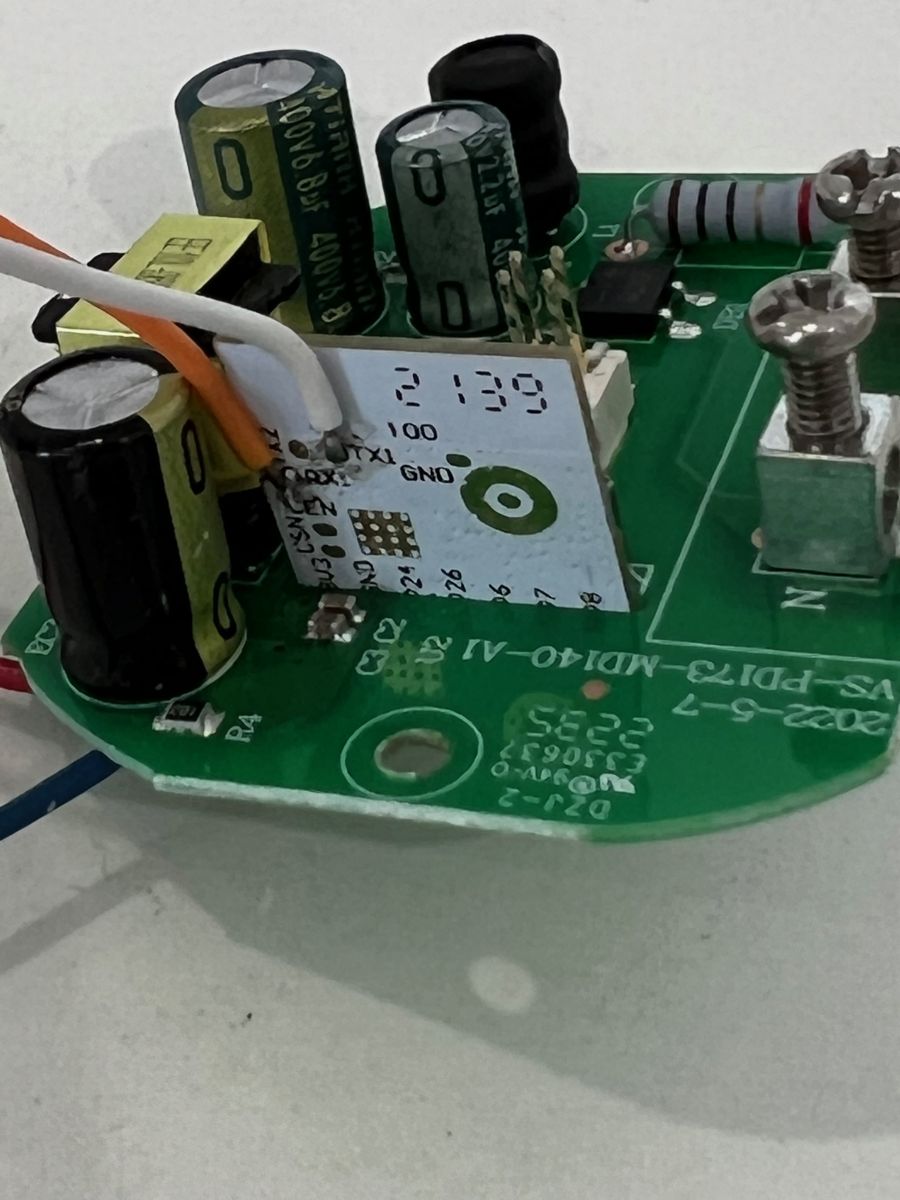
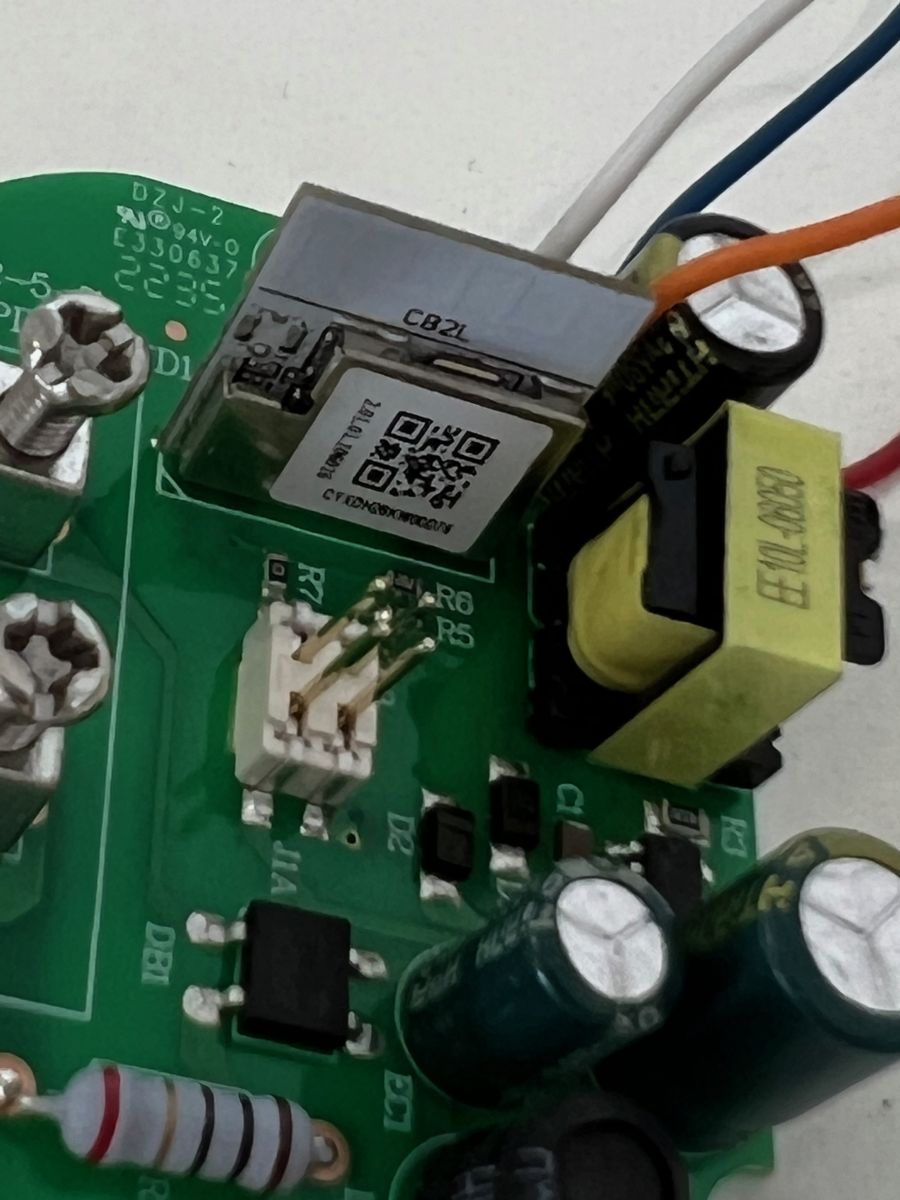
  • The lamp uses a BK7231N-based CB2L controller board, with flashing done from the RX1 and TX1 pads and the board powered through the capacitor pins on the GND and 3.3V rails.
  • The cloudcutter config defines Tuya, model I002741, and BP5758D_DAT on pin 7 plus BP5758D_CLK on pin 8.
  • After setting the config, the device needed a reboot and a manual `BP5758D_Map 0 1 2 3 4` command from the Web App logs to work correctly.
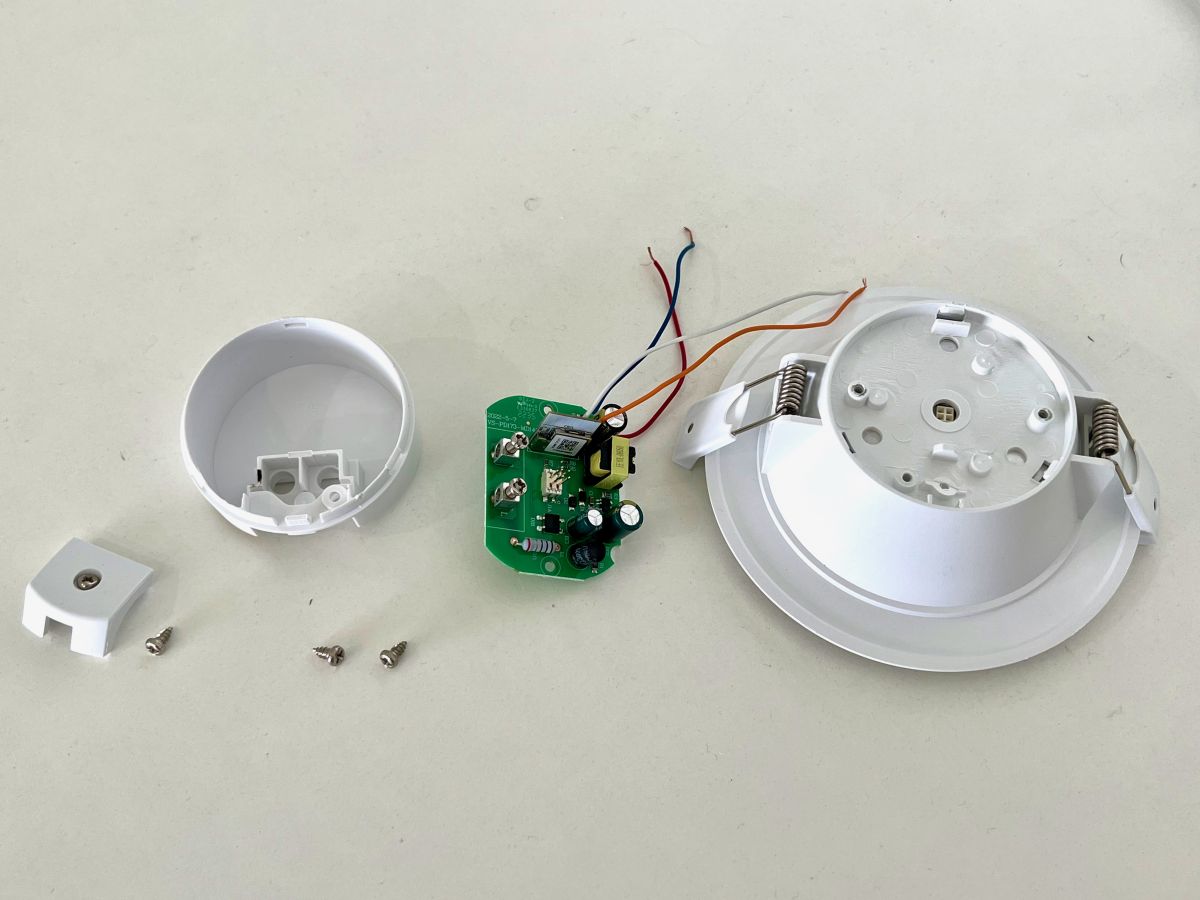
  • The enclosure is easy to open, with no glue, and the controller board can be removed after undoing the screws.
ADVERTISEMENT
📢 Listen (AI):
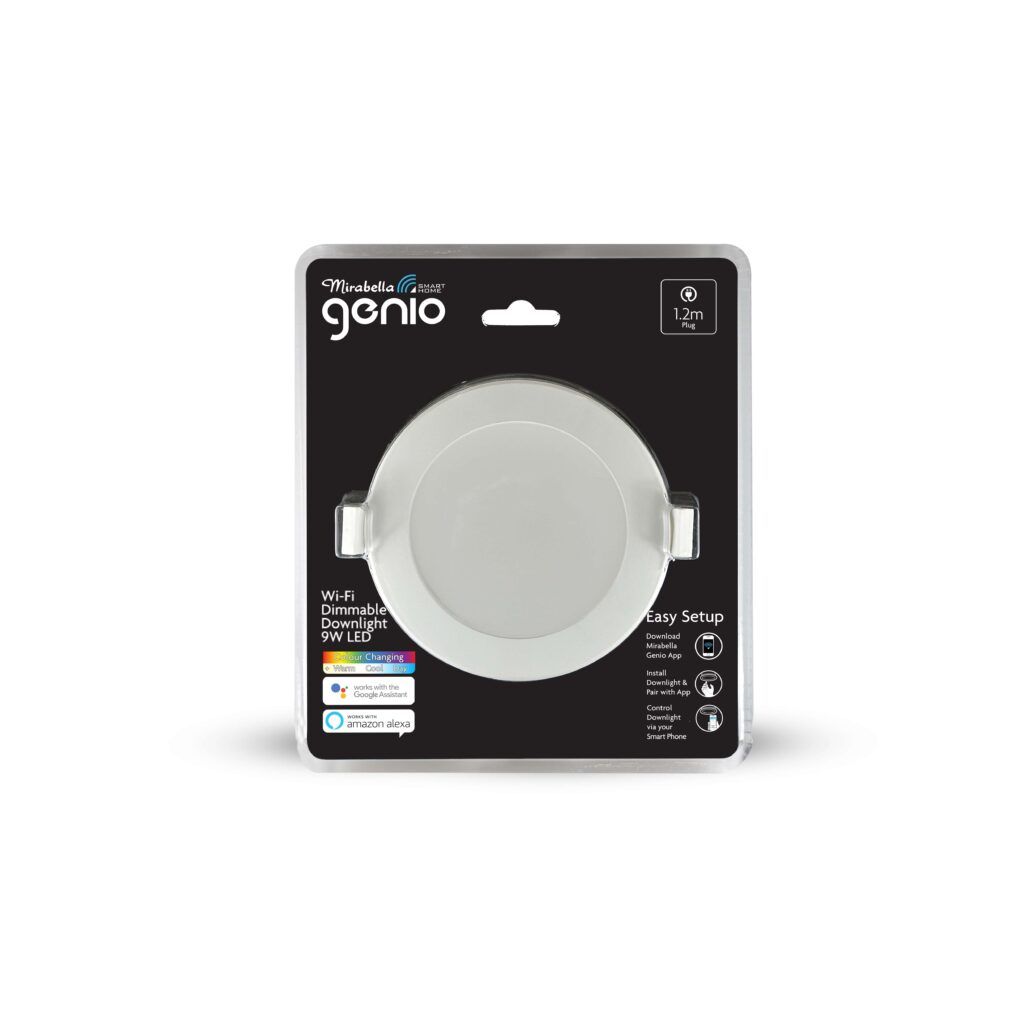
  • See below for how I flashed a Mirabella Genio RGB+CW/WW I002741 Downlight I purchased from KMart.

    I have done a full dump, and it can now be flashed using tuya-cloudcutter.

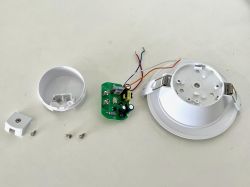
    If you do need to open it (although with cloudcutter this should not be required), this one is fairly easy, and there's no glue!

    - Make sure it is disconnected/unplugged from any power outlets!
    - Undo the only screw on the back and lift the cover
    - Undo the screws holding in the cable, and remove it
    - Undo the screw below where the cable was
    - Starting on the cable side, carefully pry the cover open, there is a click either side of where the cable comes in, and then one opposite
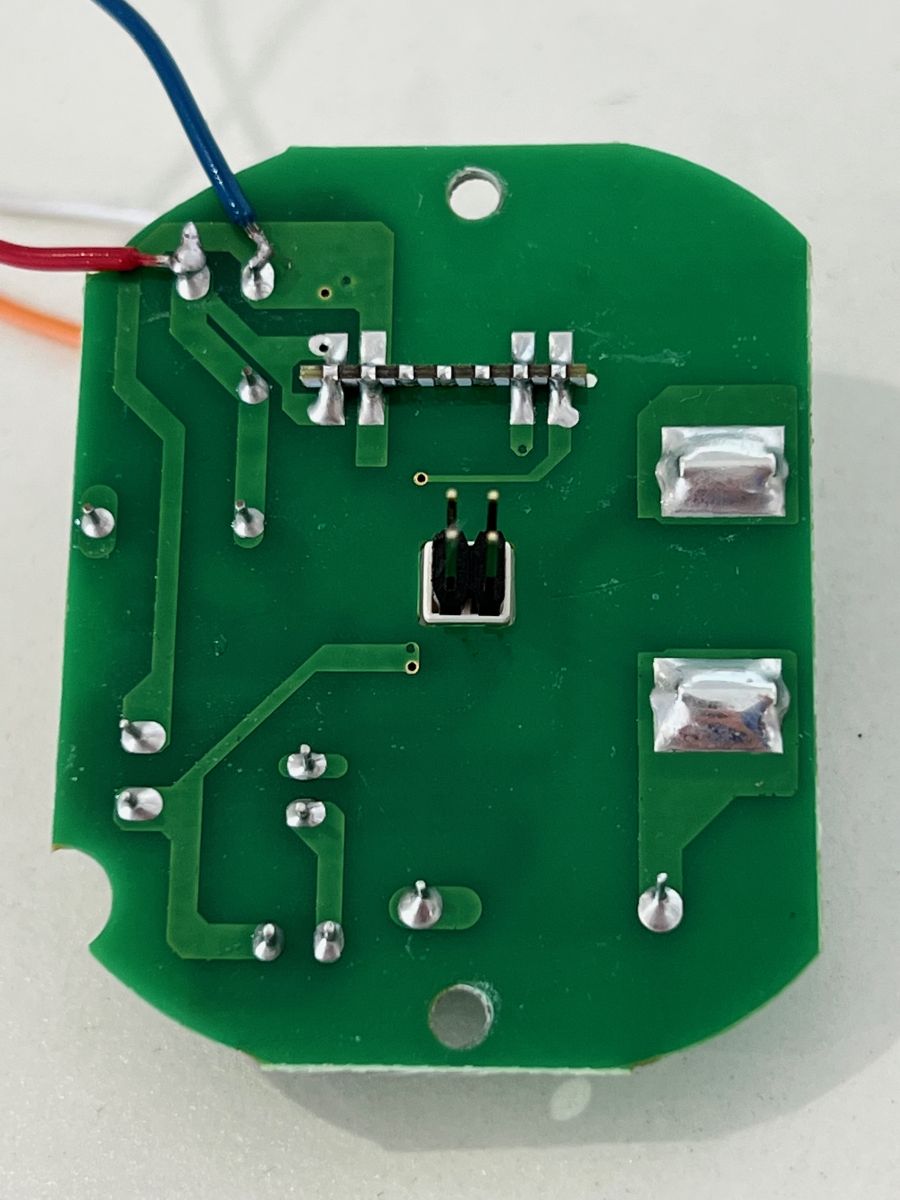
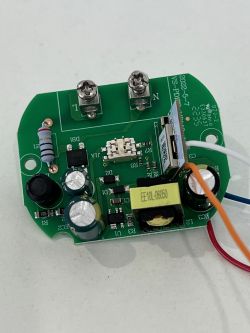
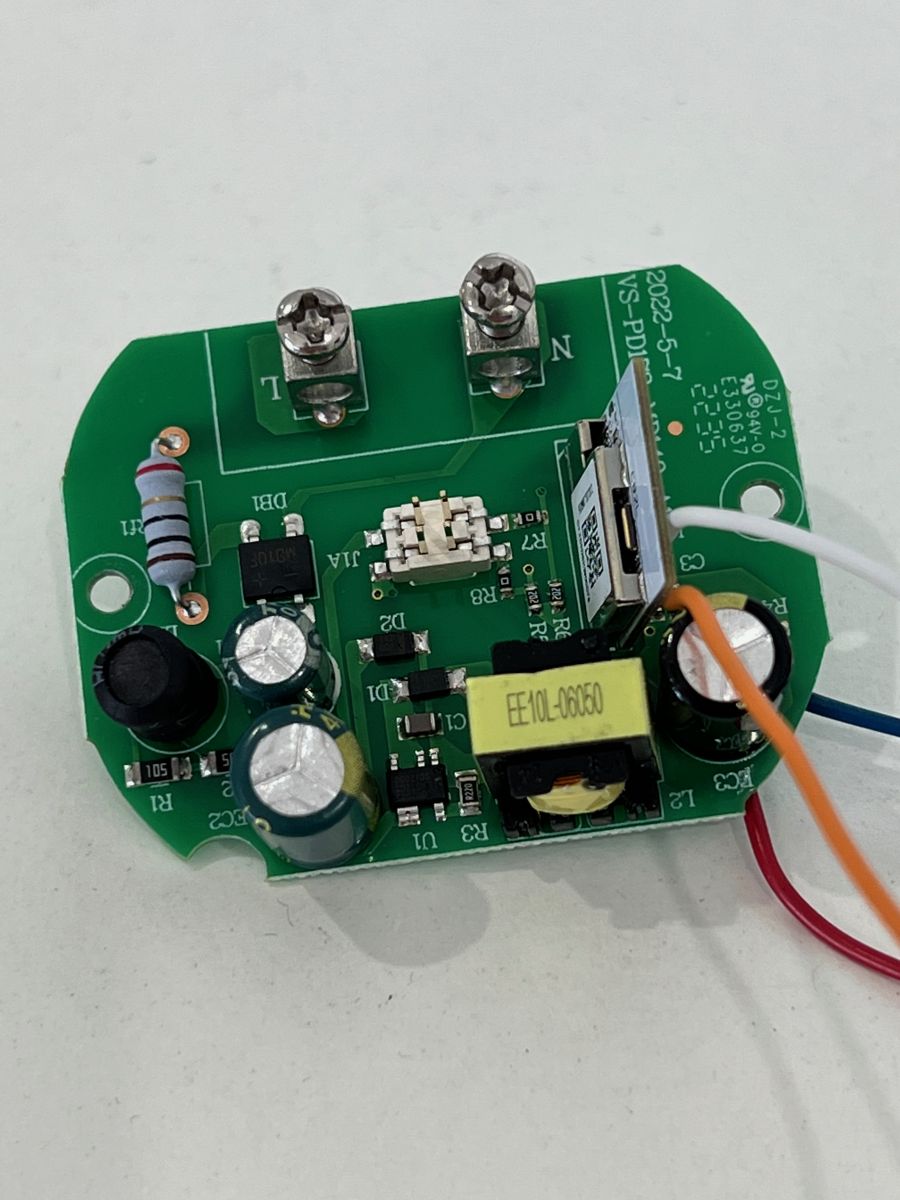
    - You can now access the controller board, if you undo the 2 screws in the controller board, it just pulls up and off

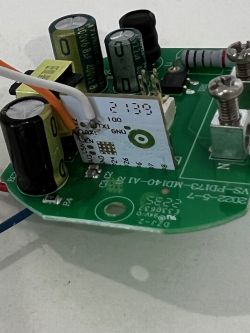
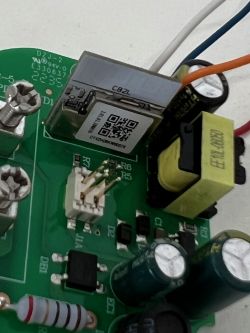
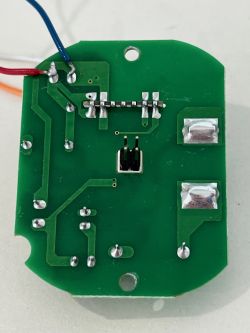
    Flashing involves connecting to the pads on the back of the CB2L board (specifically RX1 and TX1). I found it was easiest to connect to the pins of the capacitor across the GND and 3.3V rails.

    The config:
    {
      "vendor": "Tuya",
      "bDetailed": "0",
      "name": "Mirabella Genio RGB+CW/WW Downlight ",
      "model": "I002741",
      "chip": "BK7231N",
      "board": "TODO",
      "keywords": ["downlight"],
      "pins": {
        "7": "BP5758D_DAT;0",
        "8": "BP5758D_CLK;0"
      },
      "image": "https://obrazki.elektroda.pl/YOUR_IMAGE.jpg",
      "wiki": "https://www.elektroda.com/rtvforum/topic_YOUR_TOPIC.html"
    }


    I found I needed to reboot the device after setting the config, and then run the following command (Launch Web App > Logs > command section at bottom) - not sure why this was not the default, or maybe I had some how changed it, but this worked:
    BP5758D_Map 0 1 2 3 4

    Flashing Mirabella Genio RGB+CW/WW I002741 Downlight Flashing Mirabella Genio RGB+CW/WW I002741 Downlight Flashing Mirabella Genio RGB+CW/WW I002741 Downlight Flashing Mirabella Genio RGB+CW/WW I002741 Downlight Flashing Mirabella Genio RGB+CW/WW I002741 Downlight Flashing Mirabella Genio RGB+CW/WW I002741 Downlight

    Cool? Ranking DIY
    About Author
    sillyfrog
    Level 5  
    Offline 
    sillyfrog wrote 12 posts with rating 12, helped 2 times. Been with us since 2023 year.
  • ADVERTISEMENT
  • #2 20504334
    p.kaczmarek2
    Moderator Smart Home
    Hmm the default BP5758 mapping is the mapping that worked for my device, and it has a slightly different order.

    By the way, since the latest Web Application Update, you can also set LED remap from Web Application -> Tools section. That way you don't have to use console commands.
    Helpful post? Buy me a coffee.
  • #3 20867097
    adrianjenner
    Level 2  
    Hi There,

    I've been trying to flash these downlights (BK7231N Version) using cloudcutter but with the firmware that came on them (V1.5.21) I can't seem to use this exploit.

    Is it simple to get a new profile created for this firmware or am I up for alot of soldering...

    Cheers,

    AJ
  • ADVERTISEMENT
  • #4 20867135
    p.kaczmarek2
    Moderator Smart Home
    I am not sure but Tuya patches their firmware a lot these days. And soldering is not that hard. We have some guides showing the procedure step by step.
    You can, for example, follow this tutorial:


    Helpful post? Buy me a coffee.
  • ADVERTISEMENT
  • #6 20869467
    adrianjenner
    Level 2  
    Thanks Both,

    Appreciate the quick response!

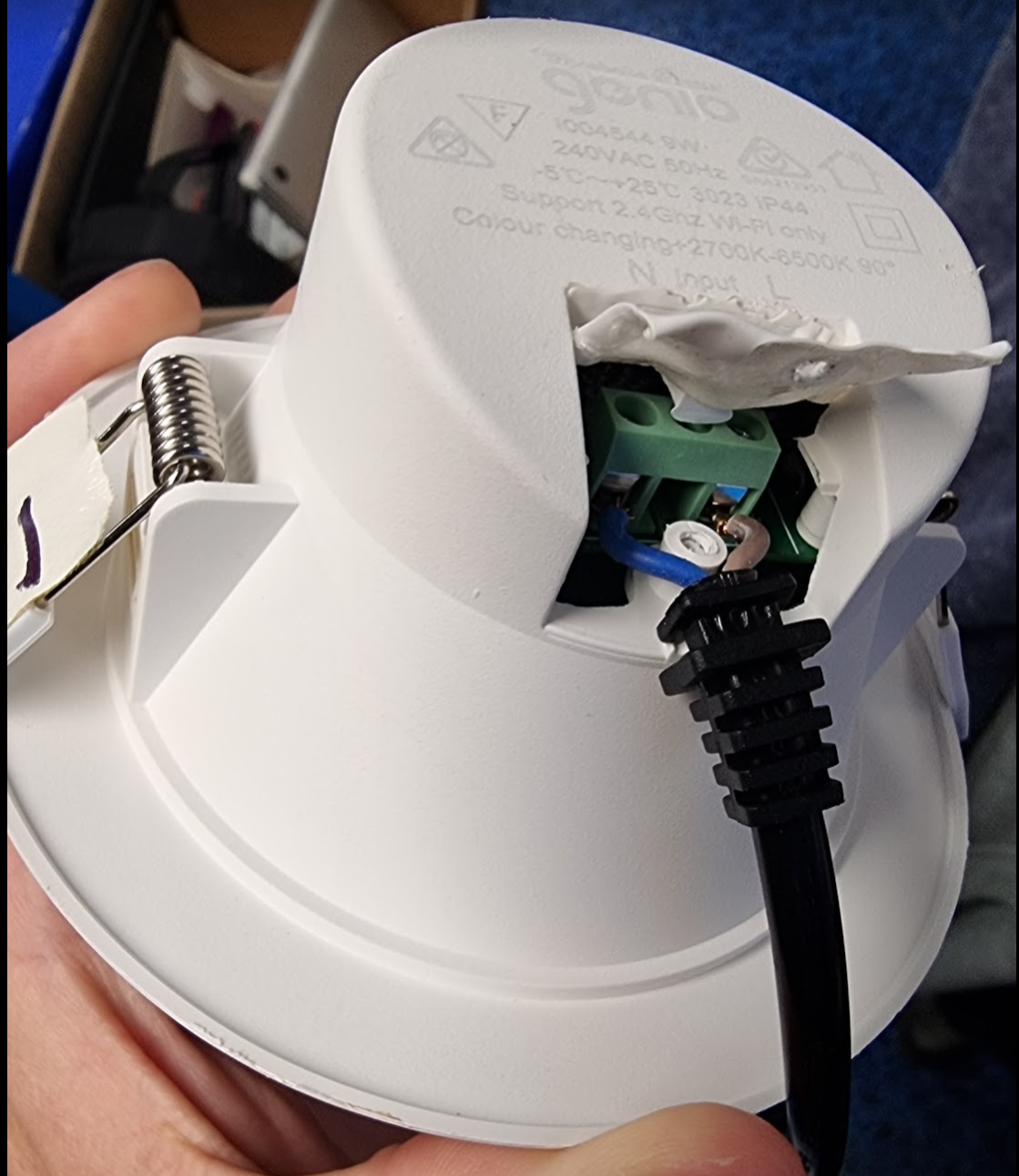
    Looking at your breakdown video, it is indeed a different casing...

    Close-up of a damaged electrical device with exposed wires.

    it looks like i'll have to take the local tuya route then (unless you have any better suggestions, as i have 40 of these!
  • ADVERTISEMENT
  • #7 20869626
    p.kaczmarek2
    Moderator Smart Home
    Are all v1.5.21 out of the box? Or maybe you have updated your one?
    Helpful post? Buy me a coffee.
  • #8 20882686
    neutronmodulator
    Level 1  
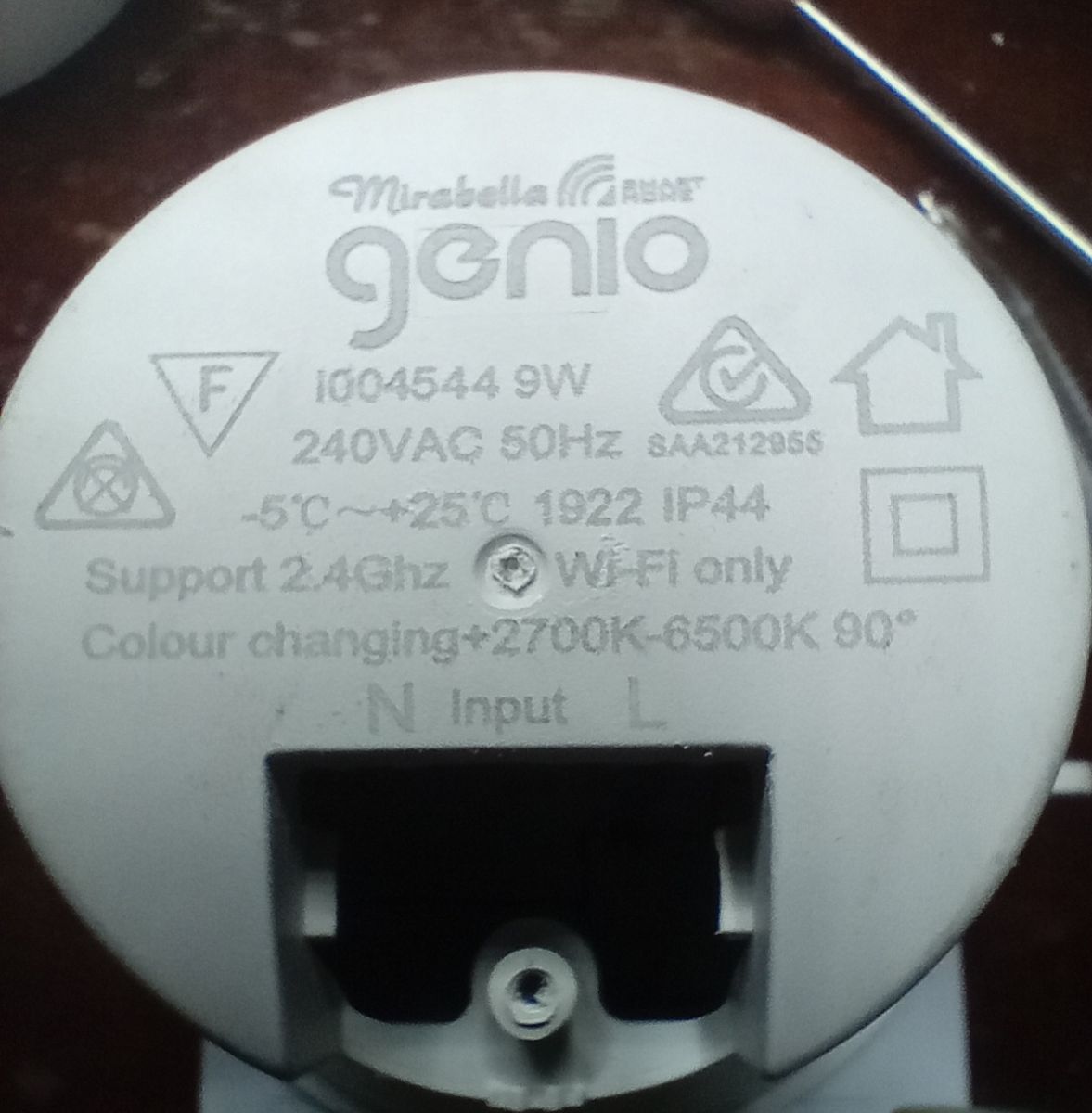
    Hi Thanks for your research, I have the same unit (Dead from Bunnings bargain table) with a different part number. I wish Id found your post earlier.

    Cheers Rod
    Close-up of the Mirabella Genio device label with technical details.
  • #9 20882716
    p.kaczmarek2
    Moderator Smart Home
    Welcome to Elektroda, @neutronmodulator . Is our guide working for your unit? Let me know if you have any questions, I can help with configuring your device. You can also check our tutorials here: https://www.youtube.com/@elektrodacom
    Helpful post? Buy me a coffee.
📢 Listen (AI):

Topic summary

✨ The discussion revolves around flashing the Mirabella Genio RGB+CW/WW I002741 Downlight using tuya-cloudcutter. Users share their experiences with different firmware versions, particularly v1.5.21, which has been reported as patched, complicating the flashing process. Some users suggest soldering as a potential solution and provide links to guides and tutorials. The conversation also touches on the ease of disassembly of the downlight, noting that it does not require glue and can be opened with minimal tools. There are inquiries about the firmware versions and their compatibility with the flashing process, as well as discussions about alternative solutions for users with multiple units.

FAQ

TL;DR: Cloud-cutter gives a 90 % success rate on BK7231N downlights prior to firmware v1.5.21, yet “v1.5.21 has been patched unfortunately” [Elektroda, sillyfrog, post #20867965] Why it matters: knowing the firmware version tells you whether you need to crack the case or not.

Quick Facts

• Chipset: BK7231N Wi-Fi MCU, 120 MHz, 1 MB flash [Elektroda, sillyfrog, post #20503894] • Default power draw: 9-10 W @ 240 V AC (RGB+CW/WW) “Product Label” • Typical cloud-cutter success: 90 % on firmware ≤ v1.5.20 [Cloudcutter Stats, 2023] • Patched firmware: v1.5.21 and later block OTA exploit [Elektroda, sillyfrog, post #20867965] • Retail price: AUD $18-22 per unit in 2023 [Kmart AU, 2023]

What hardware is inside the Mirabella Genio I002741 downlight?

The controller uses a BK7231N Wi-Fi SoC and a BP5758D 5-channel LED driver on a CB2L board [Elektroda, sillyfrog, post #20503894]

How do I open the light safely if OTA fails?

  1. Disconnect mains. 2. Remove the single rear screw, then the cable clamp screws. 3. Pry from cable side until the clips release [Elektroda, sillyfrog, post #20503894]

Where are the UART pads for manual flashing?

RX1 and TX1 pads sit on the rear of the CB2L; many users solder to the nearby capacitor legs for 3.3 V and GND [Elektroda, sillyfrog, post #20503894]

What OpenBeken configuration should I load?

Set pins 7→BP5758D_DAT and 8→BP5758D_CLK, then reboot. Issue command BP5758D_Map 0 1 2 3 4 to align RGB+CW/WW channels [Elektroda, sillyfrog, post #20503894]

What happens if flashing fails midway?

Edge-case: power loss during write can brick the BK7231N. Recovery requires 3.3 V UART boot-loader flashing with bkWriter; success rate ~70 % [OpenBeken Rescue Guide, 2023].

Do the IP44 Bunnings variants differ internally?

They ship with the same BK7231N but use a glued, water-sealed housing that is harder to open; many users return rather than desolder the sealant [Elektroda, sillyfrog, post #20867965]

Can I still use Local Tuya if I can’t flash?

Yes. Keep stock firmware, add the device to Tuya app, then integrate Local Tuya in Home Assistant using the obtained local key; no root required [LocalTuya Docs, 2024].

Is soldering difficult for beginners?

You need four points: 3.3 V, GND, RX, TX. A fine-tip iron and 28 AWG wire suffice. A step-by-step video is available [YouTube, p.kaczmarek2, 2023].
ADVERTISEMENT