logo elektroda
logo elektroda
X
logo elektroda

LED glass clock with ESP8266 and LED SK6812 mini-E

efi222 10890 76
ADVERTISEMENT
Treść została przetłumaczona polish » english Zobacz oryginalną wersję tematu
📢 Listen (AI):
  • #61 21754319
    efi222
    Level 21  
    It depends on what you mean by 'smoothing'. I simply sand on sandpaper. Silicone to restore the colour after sanding (it can evaporate after a long time). There can also be a thin layer of matt clear varnish. It depends on what effect you want to achieve. PLA is quite hard to work with. A lot also depends on the shape of the solid.

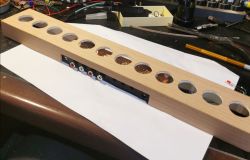
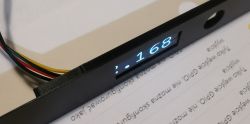
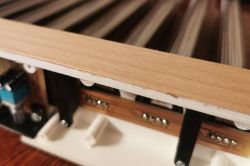
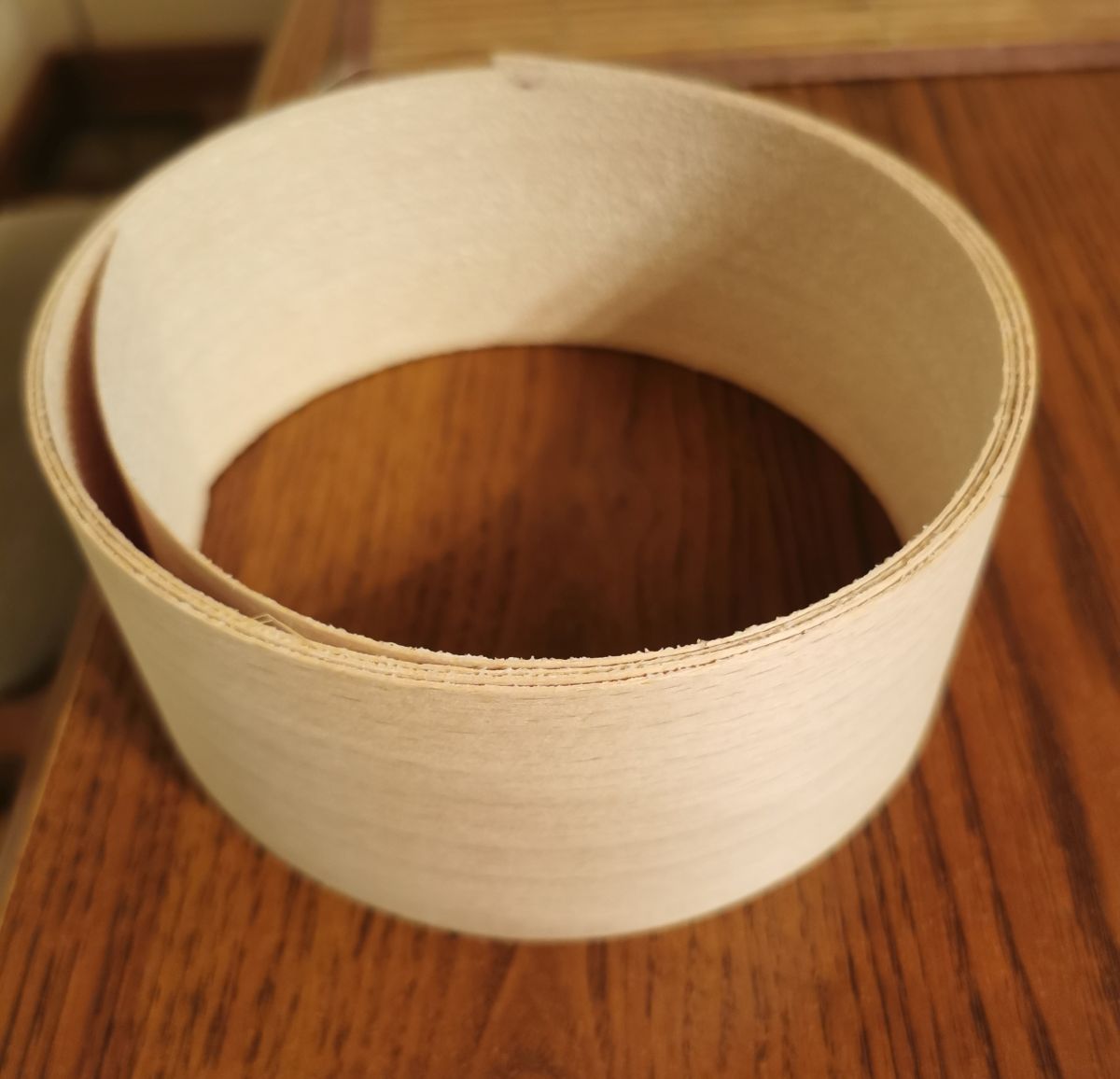
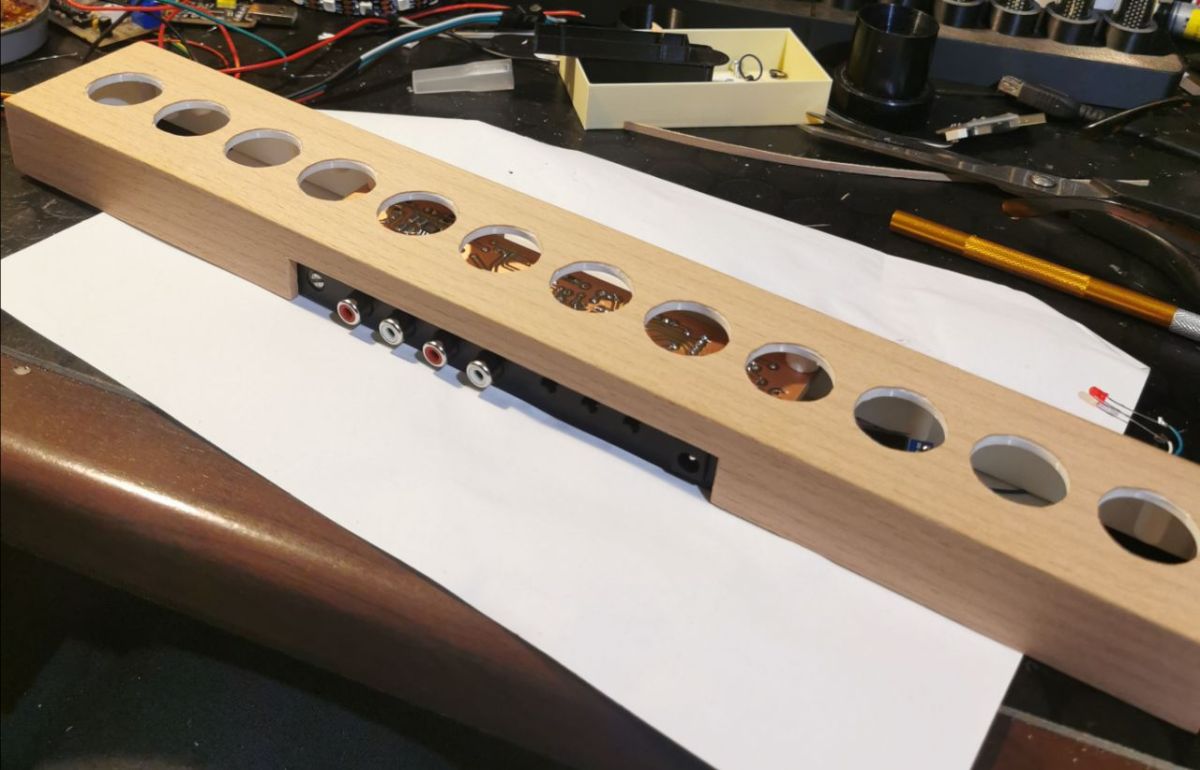
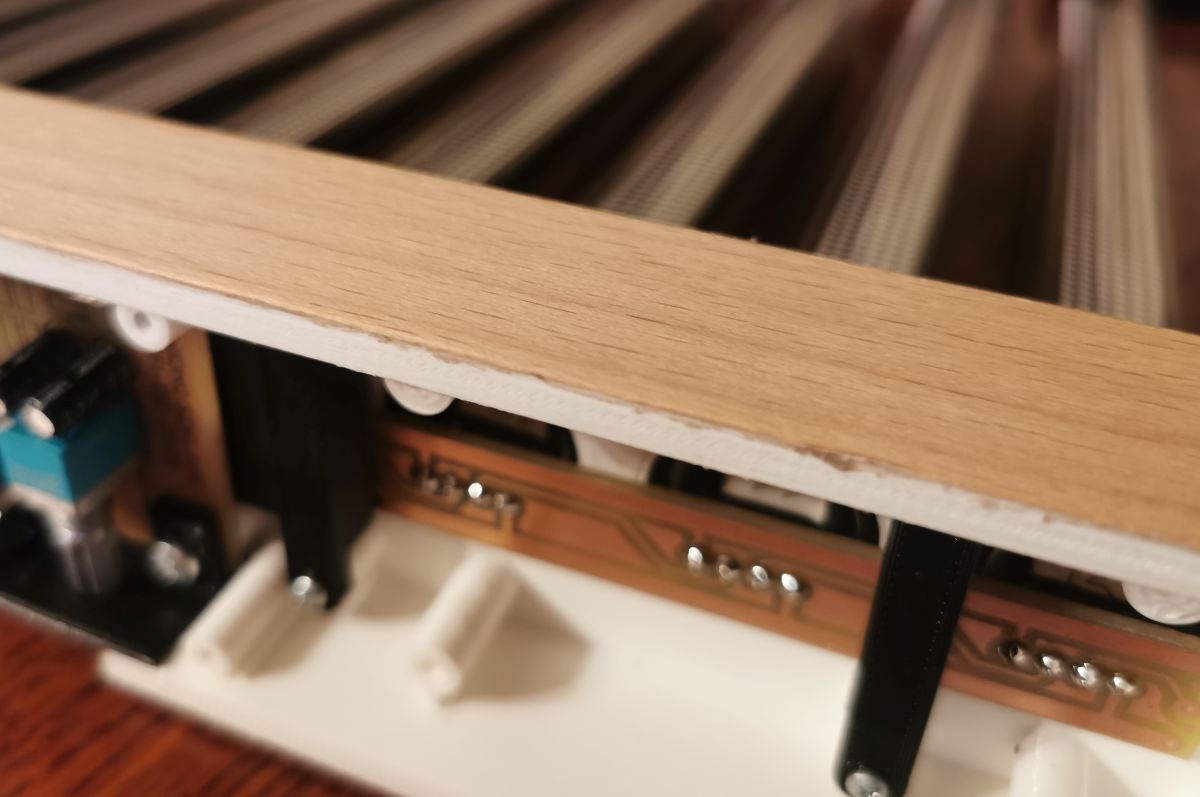
    Instead of "stroking" a solid, you can also use different veneers for simple solids. Be careful with iron-on veneers, as the melting point of the glue is similar to that of PLA. But it is possible :) . Complex solids are certainly more difficult to process. Sometimes I prefer to print something from smaller pieces and after machining them together. I print on glass, so one wall is like a mirror. Worse with vertical ones.
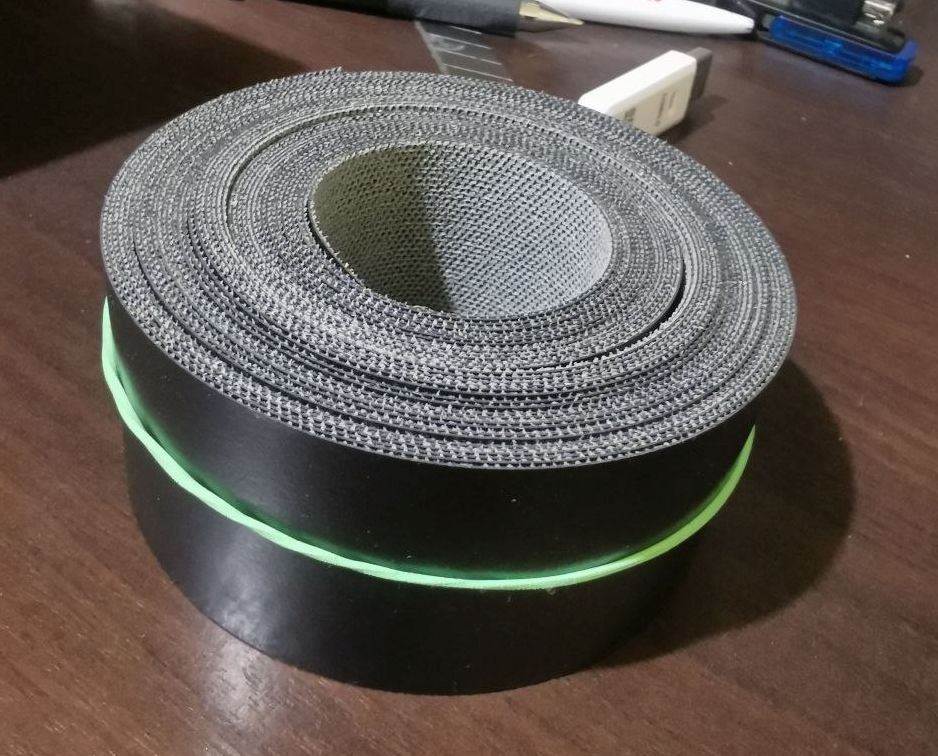
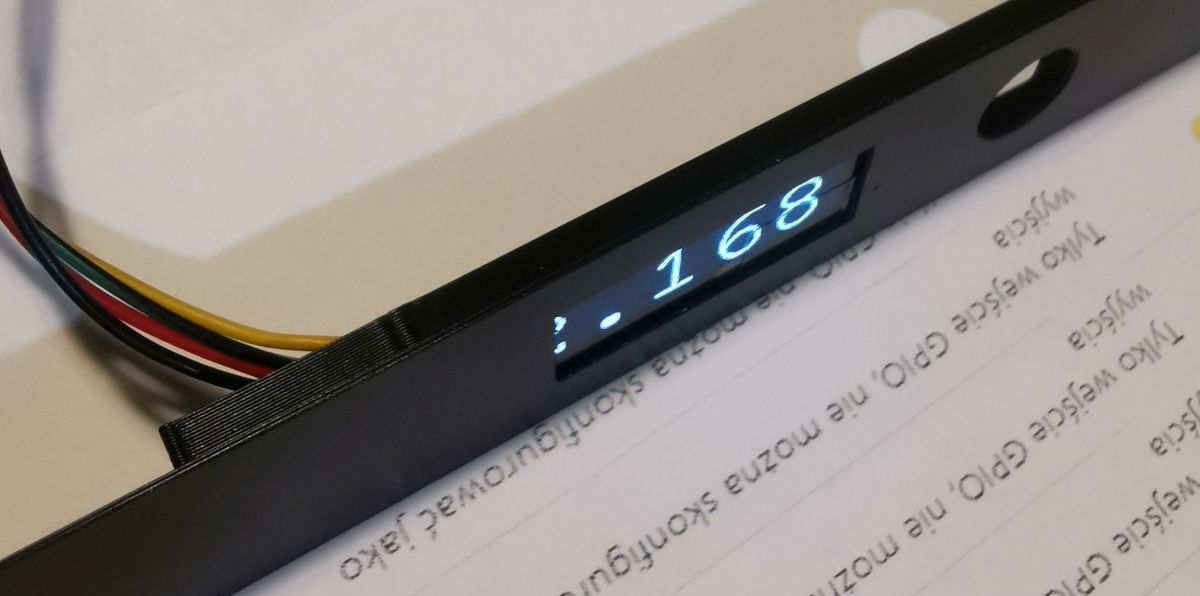
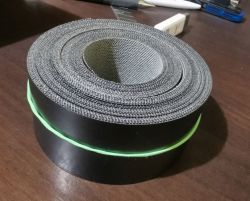
    Examples of veneer: here it is thicker on filament (0.6mm), but there are also thin furniture veneers with glue in sheets.
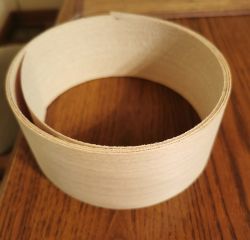
    Rolled thick furniture veneer on a wooden surface

    Roll of thick black thermal adhesive veneer with textured underside

    Enclosure with veneer finish and circular cutouts, showing RCA connectors and internal PCB

    Digital display embedded in black PLA case with multicolor wires on the left

    Close-up of corner with wood veneer applied to 3D-printed PLA enclosure
  • ADVERTISEMENT
  • #62 21755926
    ArturAVS
    Moderator
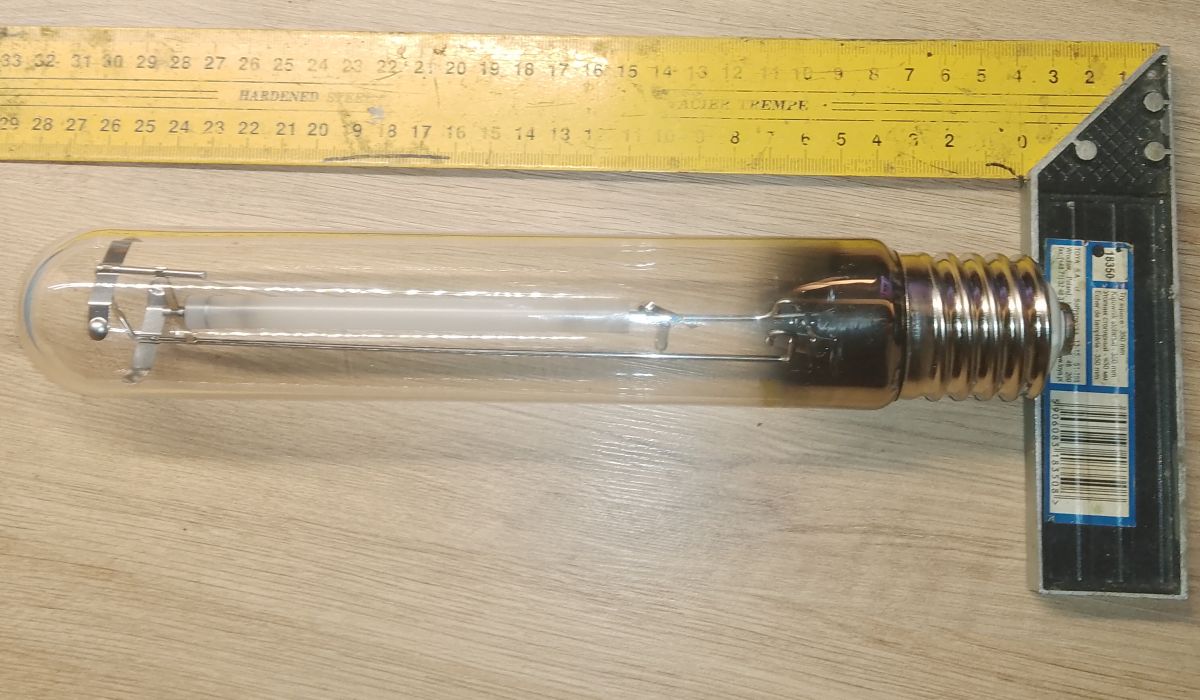
    @efi222 I got one brand new in a 400w carton yesterday;


    400W discharge lamp measured using a square ruler and a folding meter


    I don't have a caliper at home and the measured "vinyl" diameter is ~ 45mm. I am waiting for a response about the larger ones.
  • #63 21755950
    efi222
    Level 21  
    It looks inconspicuous in the picture. Only the scale of the angle iron gives an idea :D
    And how do you see the construction on similar bubbles? :)
  • ADVERTISEMENT
  • #64 21755953
    ArturAVS
    Moderator
    In the hand, it looks huge. I'm curious to see how the 1000 watts. Need to think about the cutting/cutting method. How would one go about organising and mastering the art of cutting....
    @efi222 Let me know on PW and I'll send you one. You can judge the suitability yourself.
  • ADVERTISEMENT
  • #65 21755962
    efi222
    Level 21  
    I cut the 30mm bulbs first at the thread to get rid of the vacuum. Then a mini diamond cut to size. I wonder how thick the glass is in these big incandescent bulbs.
  • #66 21777549
    ArturAVS
    Moderator
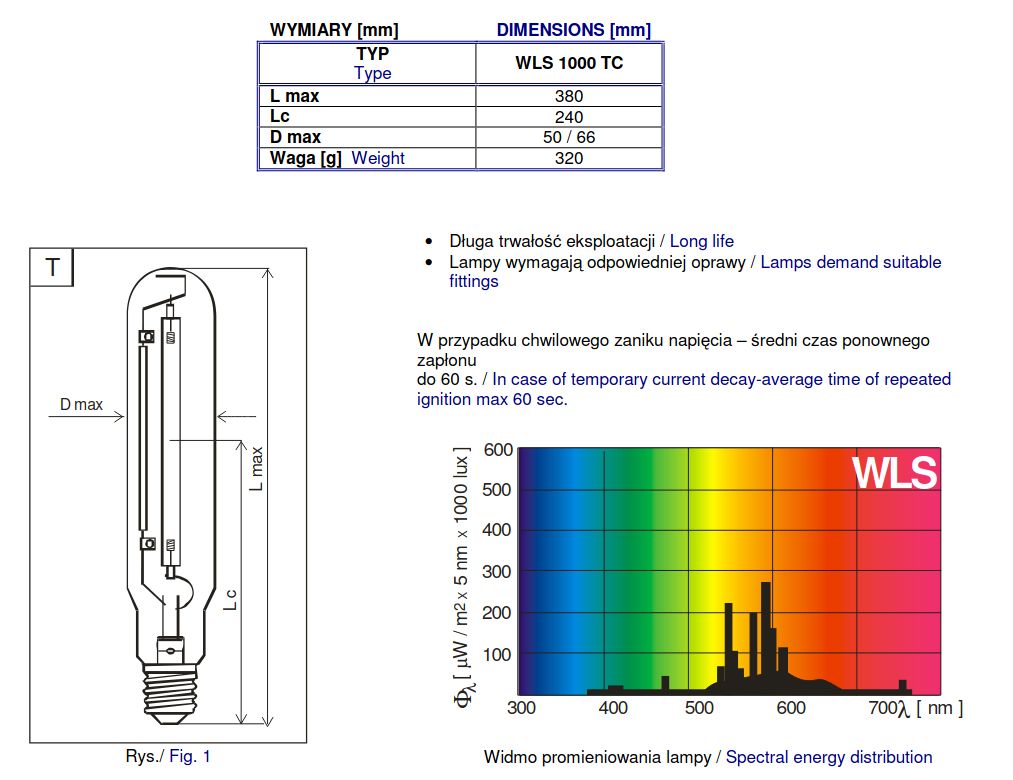
    Sodium 1000W have a diameter of ~67 mm.

    Edit;

    @efi222 I had a look at the website of the national manufacturer, Polamp Ozarow Mazowiecki (POLAMP-Warsaw). For the WLS 1000W;


    Datasheet of WLS 1000W sodium lamp with schematic, technical specs, and spectral chart


    I tried to call the sales department. To no avail. The bubbles themselves should be affordable. Then it actually could;


    gulson wrote:
    An idea from tradition, with a modern twist.


    Do you know that you have just stumbled into a good business?

    Animated character holding money with text Shut up and take my money!


    https://www.polamp.pl/kontakt

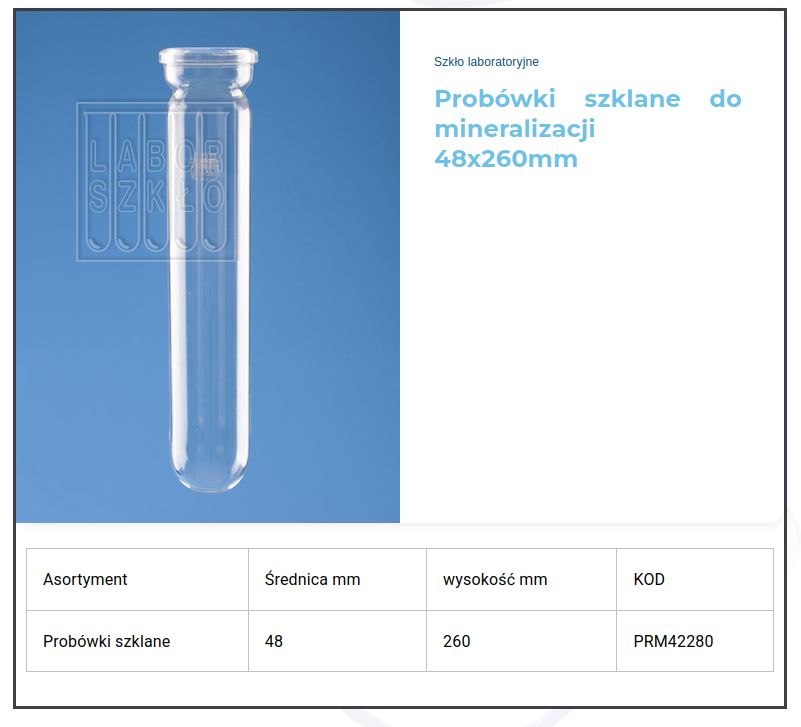
    How about.


    Glass mineralization test tube 48x260 mm against a blue background
  • #67 21778639
    efi222
    Level 21  
    Thank you for your commitment to the topic. I have been rolling out the subject of glass thickly on the internet. In general, glass costs a bit. Even at Chinese sellers. Maybe glass bulbs alone for the bulbs would get somewhere, but bulk quantities would probably be involved. Large diameter glass tubes are priced from space. So far I have found sodium tubes at a retail price of £17 each and in my opinion the price is quite attractive at 45mm diameter.

    I will soon introduce a lamp of this diameter here.
  • #68 21781258
    efi222
    Level 21  
    ArturAVS wrote:
    Let's move on. Perhaps in the role of "test tubes" , use the bulbs from typical high-powered "sodium" lamps with E40 threads?

    So there I went... :)
    I received such a "soda" from @ArturAVS for testing.

    There was a bit of stress when cutting this slide. One - that the size scared me a bit. Two - only one piece... It will be sad if it falls apart.
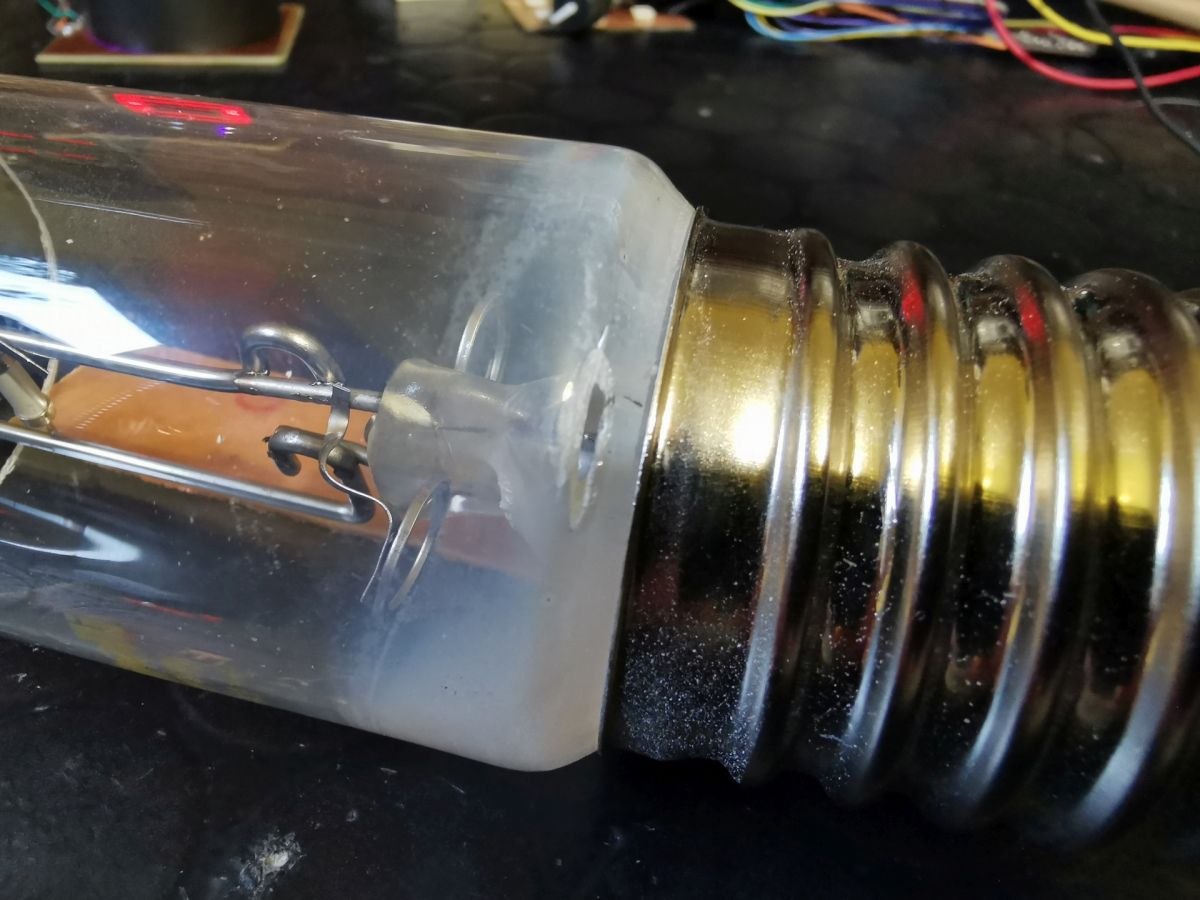
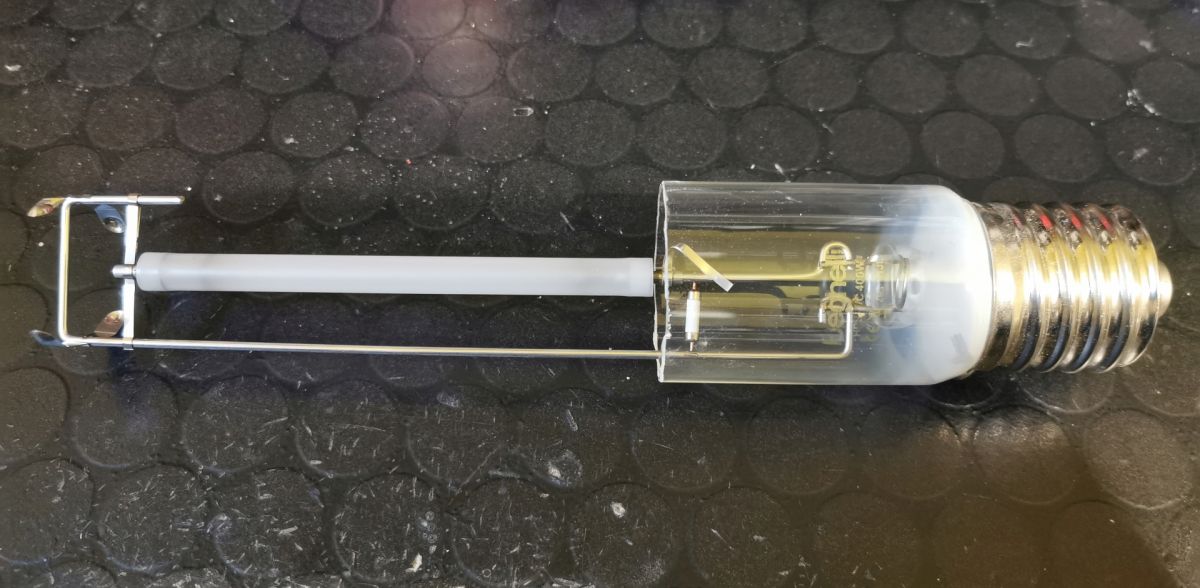
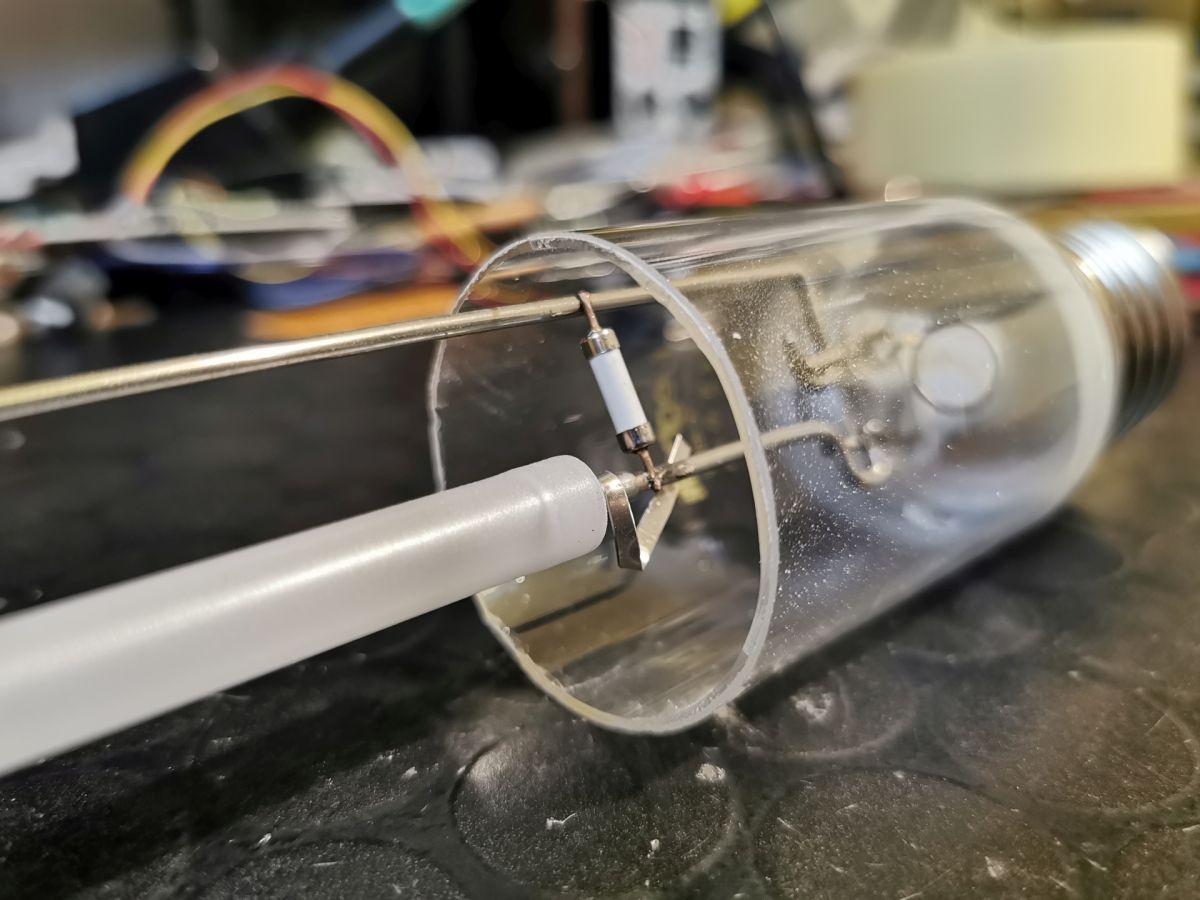
    I first cut at the thread to get rid of the vacuum.


    Close-up of a screw base and interior of a large vacuum tube bulb

    Interesting phenomenon with the getter. I thought it would turn white immediately. Nothing of the sort. It slowly started to sort of go down towards the thread (I think it was fighting the oxygen :) ). The glass at this point was clear. It only turned white after a click of a dozen seconds. I wish I had had time to film this....

    Then cutting to the correct size. This took about two minutes. I must admit that I expected a thicker wall. It is about 1.2mm at the cut point.

    Glass bulb with E27 socket and internal components on black textured surface

    Close-up of a cut glass bulb showing internal parts of an electronic tube

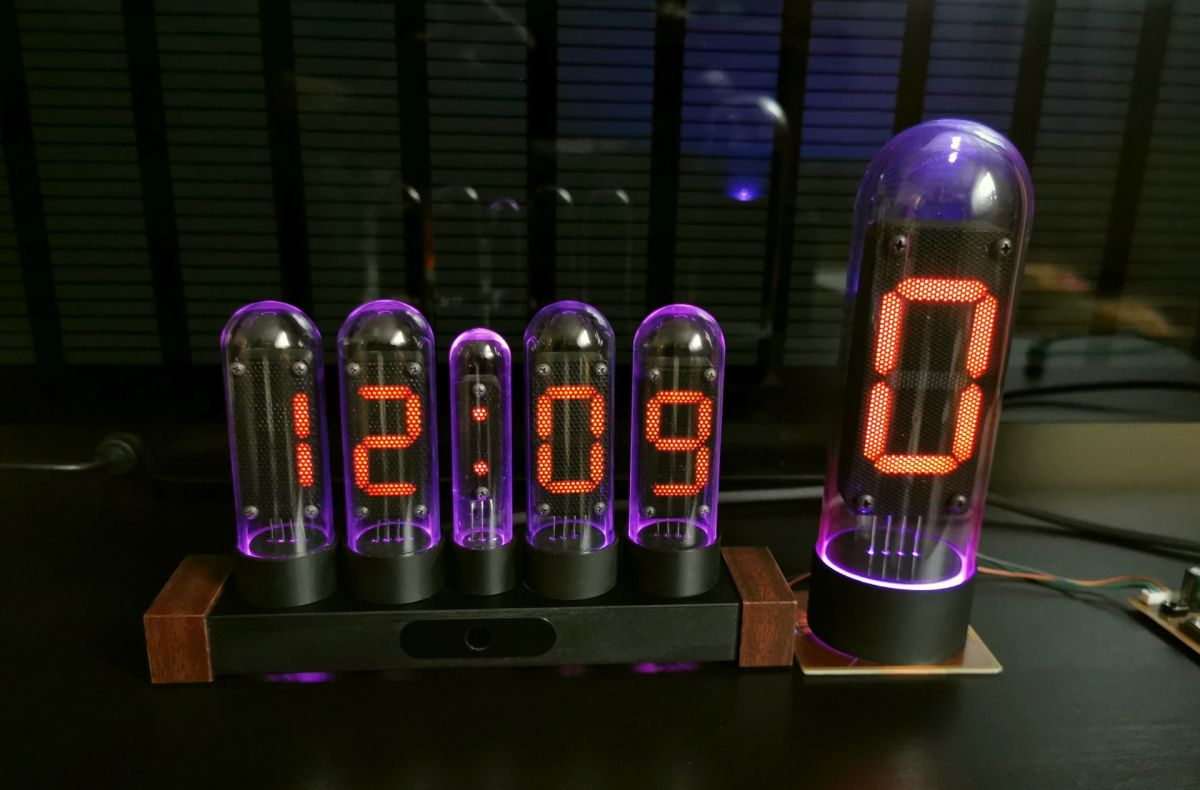
    I have constructed a prototype digital from this glass and in comparison with the original it looks like this:
    The photos, as usual, don't do the full justice. I will say that this size is really impressive :D . "The 'lamp' with plinth is 155mm high.

    Digital tube clock with purple backlight and large standalone digit “0”

    Finally, thanks to @ArturAVS for making this great glass available for testing. :)
    After the New Year I plan to assemble a complete clock using just such glass bubbles.
  • #69 21781272
    ArturAVS
    Moderator
    Great! And as if that 1000W would cut down.... Echhhh, I'm dreaming....
  • ADVERTISEMENT
  • #70 21781290
    efi222
    Level 21  
    ArturAVS wrote:
    And as if those 1000W would cut down...

    I don't think I can imagine it anymore.... :D

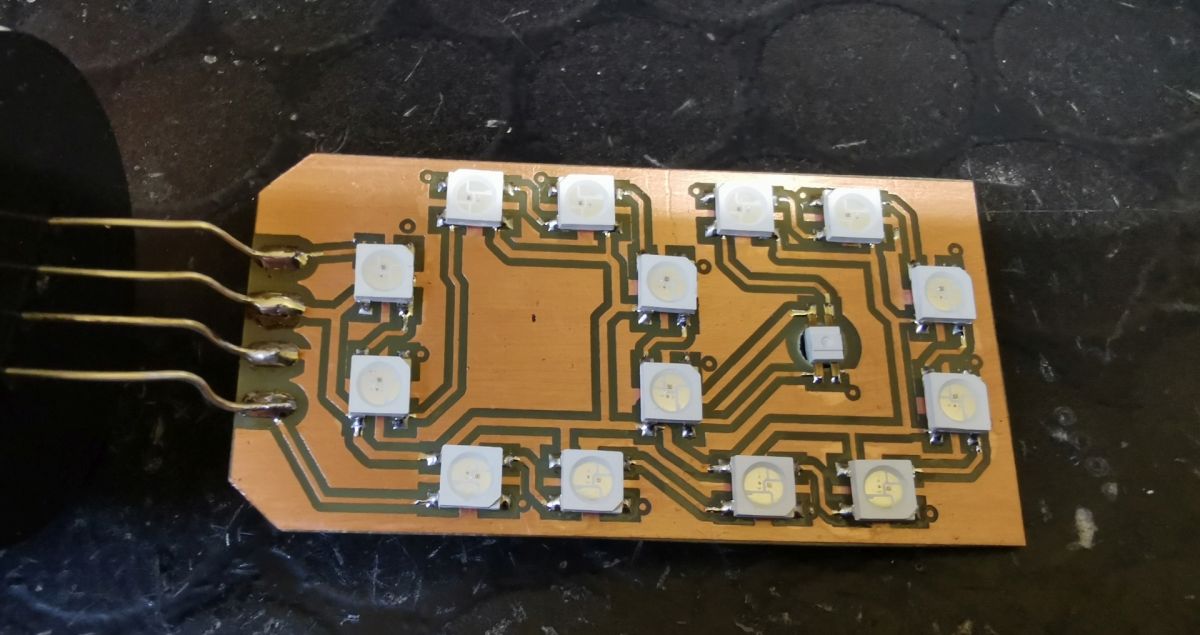
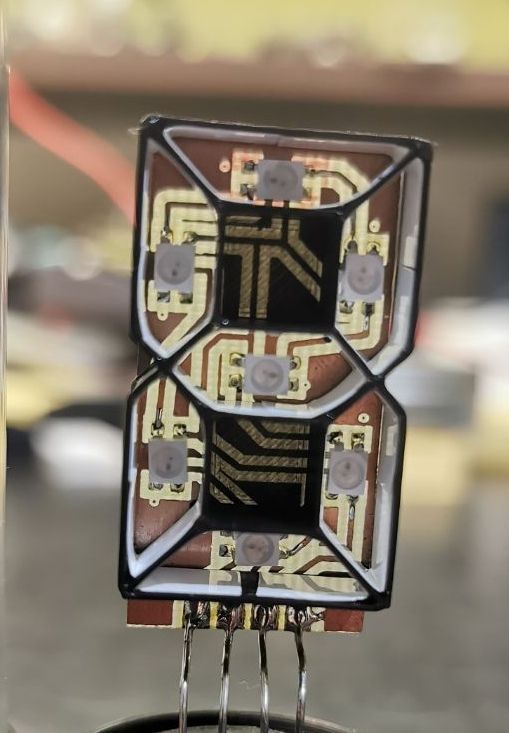
    Here I already had to give two LEDs under each segment and not any mini ones, but WS2812B (5050), because one LED no longer illuminated the entire segment.


    PCB with 15 WS2812B LEDs arranged in a seven-segment display pattern
  • #71 21781299
    ArturAVS
    Moderator
    Pole can do it! I have a few metres of redundant WS2812 SMD 5050 tape, I can send...


    Edit;

    Try filling the spaces above the diodes with glass beads;


    Close-up of custom LED display using WS2812 SMD 5050 modules in segmented pattern


    I used to fill with plain sugar and then a drop of epoxy resin. The effect exceeded my expectations.

    Edit2;

    What about using photo-etched elements as a grid? Precision of workmanship unattainable with other methods. https://www.precisionmicro.com/pl/odpowiednie...rawienie-wszechstronna-obrobka-prawie-metalu/ I have the necessary workshop equipment (I have been making tiles using this method for years). How do you source for this?
  • #72 21782822
    efi222
    Level 21  
    ArturAVS wrote:
    Try filling the spaces above the diodes with glass beads;

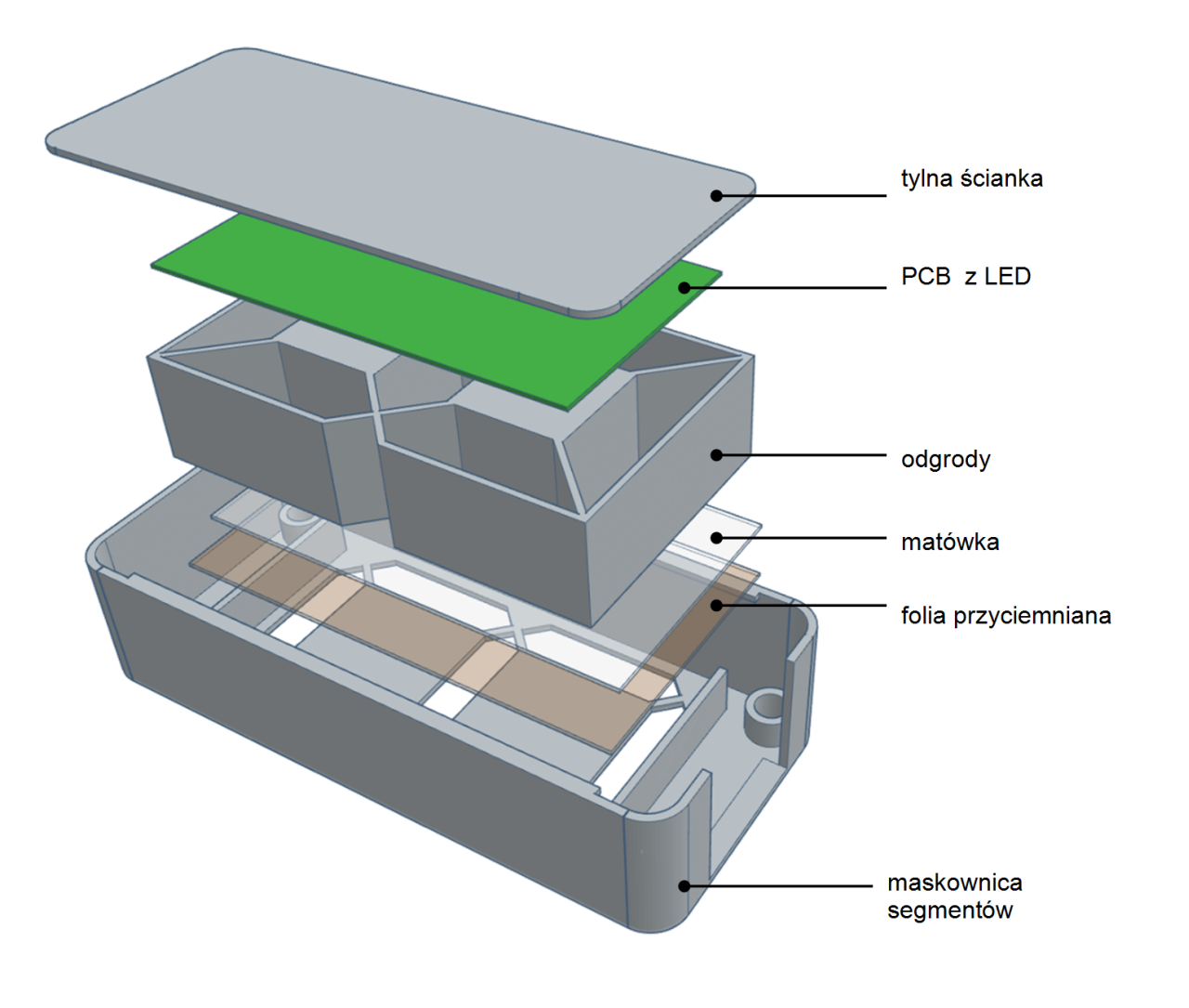
    With such a digital design it will be rather difficult. And this is where service will be difficult. All components are assembled in the position and order as shown in the picture below. No component is permanently connected to the adjacent one. The whole is enclosed by a "snap-on" rear panel. But I will experiment out of curiosity as to how these beads diffuse the light.

    Diagram of an LED display with layers and components.

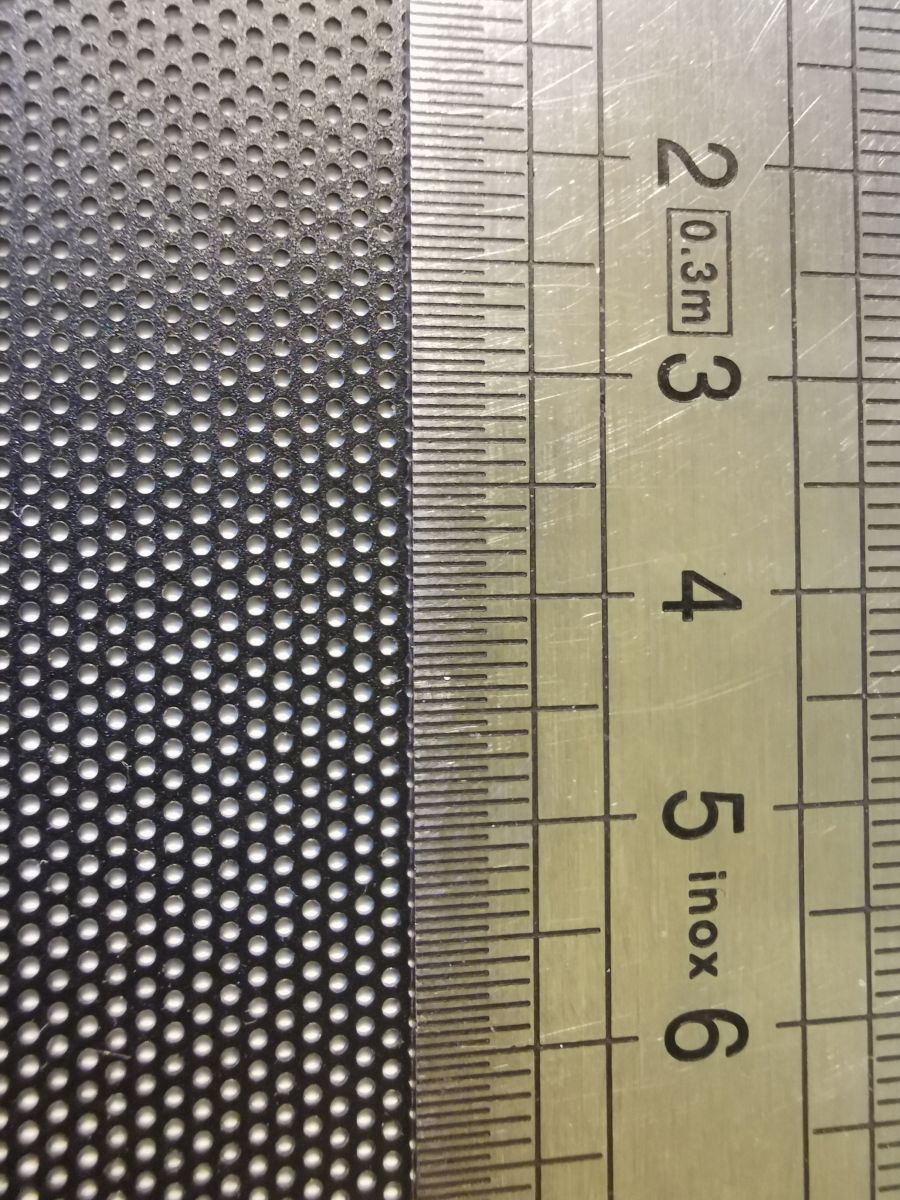
    Regarding the masking grid, there is room for improvement here. This mesh gives the whole visual effect. In my opinion, a mesh with a hexagonal pattern would look best. I looked for such a mesh with a fine raster, but what I found has too big "meshes". I also tried 3D printing, but it doesn't look too good (at least printed with a 0.4 nozzle). And whether it's worth etching such a bezel, it's hard to say how it would look in the end.
    You can always experiment. The grid is screwed in place and its purpose is to create an optical effect. It has no structural connection to the other components.
  • #73 21783649
    ArturAVS
    Moderator
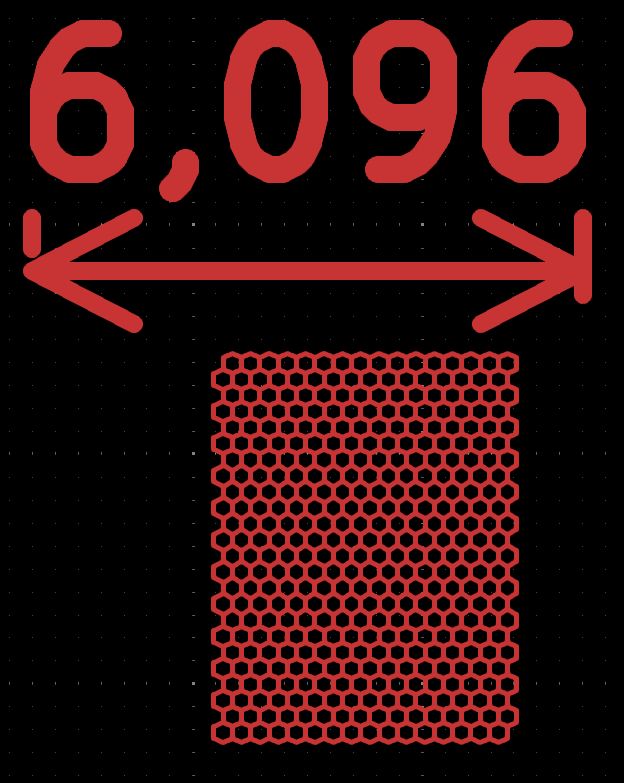
    I drew myself a sample of the film for photo etching;


    Red hexagonal mesh pattern with 6.096 mm width label on a black grid background.


    The width of the grid outline is 0.05 mm. I'm curious to see what comes out of this myself (the narrowest repeatable paths I could manage were 0.15 mm). I'll print a "test" film with different widths.
  • #75 21783701
    ArturAVS
    Moderator
    I'll paprub, I'll taste... As a test, I'll do on phenolic laminate.
  • #77 21783731
    efi222
    Level 21  
    bsw wrote:
    Where can such a net be purchased?

    I buy it on Aliexpress. It is a dust net for fans. It's probably available in Poland too.
    https://pl.aliexpress.com/item/10050036481825...n.473.772c1c2444w3gA&gatewayAdapt=glo2pol

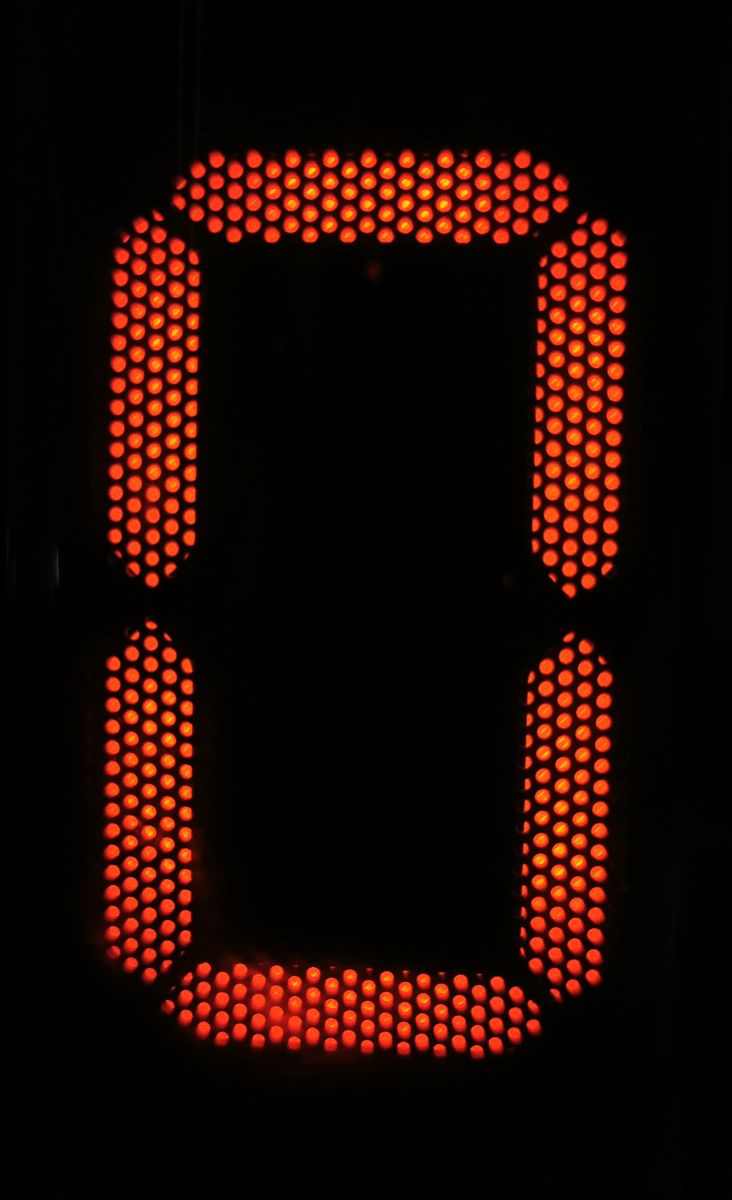
    Glass bubble digit 45mm.
    Height of digit 55mm.

    Red digit “0” formed by LED dots in a seven-segment display style

    Added after 2 [hours] 23 [minutes]:

    ArturAVS wrote:
    I'll taste, taste, taste.... For a test, I'll do on phenolic laminate.

    Maybe I'll send you such an assembled digit (even without glass) with a controller?, because now your work, is a bit of art for art's sake.
    The best work is done on a living organism. You unassemble the original grid and you can do experiments.
  • 📢 Listen (AI):

    Topic summary

    A user presented a unique LED clock design utilizing SK6812 mini-E LEDs and glass tubes, aiming to replicate the aesthetic of vintage tube displays. The project involved 3D printing components and using glass bulbs sourced from test tubes. The design sparked discussions about construction techniques, alternative display technologies like Nixie and VFDs, and the potential for creating similar devices at home. Participants shared insights on materials, cutting techniques for glass, and the possibility of using OLED displays. The conversation highlighted the challenges of sourcing affordable components and the creativity involved in DIY electronics projects.
    Summary generated by the language model.
    ADVERTISEMENT