FAQ
TL;DR: Flash a Tuya 4‑channel (433 MHz) relay with OpenBeken, map RCRecv, run startDriver RC, then bind button codes—“all basics covered.” [Elektroda, p.kaczmarek2, post #21781577]
Why it matters: This turns a cheap RF relay into a local, cloud‑free RF hub that can trigger Wi‑Fi devices, scenes, and Home Assistant automations.
Quick Facts
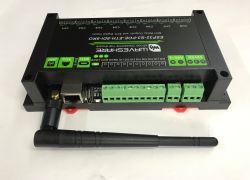
- Hardware demo: Tuya 4‑channel 220 V AC Wi‑Fi relay with SYN590R receiver and CB3S (BK7231) module. [Elektroda, p.kaczmarek2, post #21781577]
- Firmware: OpenBeken (OBK) supports an RC driver; start it with `startDriver RC` after assigning the RCRecv pin. [Elektroda, p.kaczmarek2, post #21781577]
- Event model: First press held-state=0; repeats when held=1; bind with `addEventHandler2`. [Elektroda, p.kaczmarek2, post #21781577]
- Interop: RF format aligns with Tasmota; OBK shows decimal codes that match Tasmota after conversion. [Elektroda, p.kaczmarek2, post #21781577]
- Integrations: Control local devices via HTTP/MQTT now; Home Assistant support is imminent with Tasmota-style RF format. [Elektroda, p.kaczmarek2, post #21781577]
What is OpenBeken and why use it here?
OpenBeken is open firmware for BK7231 modules. It adds an RF driver so the SYN590R receiver connects directly to the Wi‑Fi chip. You read button codes, then trigger relays or other devices over HTTP/MQTT. It avoids vendor clouds and works as a flexible RF-to‑Wi‑Fi bridge. “RF buttons can trigger virtually any action.” [Elektroda, p.kaczmarek2, post #21781577]
How do I flash the BK7231 (CB3S) module and detect the device template?
Use the BK7231 GUI Flash Tool from the OpenBeken project. The tool flashes the CB3S module and can auto-detect configuration. Import the detected template into OBK, then proceed to RF setup. Keep the console open to capture RF codes during testing. [Elektroda, p.kaczmarek2, post #21781577]
How do I enable the RF receiver and start seeing codes?
Trace the PCB to find the RCRecv pin, assign it in OBK, then run startDriver RC. Press a remote button and watch OBK’s console to see the decimal RF code and the held-state flag. Use those values in event handlers. [Elektroda, p.kaczmarek2, post #21781577]
What’s the quickest way to bind a remote button to a relay?
Three steps: 1) Capture the button code in the console. 2) Add to autoexec.bat: addEventHandler2 RC <code> 0 ToggleChannel <n>. 3) Save and re-run autoexec to test without rebooting. Map channels 1–4 as needed. [Elektroda, p.kaczmarek2, post #21781577]
Can I control other devices (like smart bulbs or LED strips) from this RF hub?
Yes. Use event handlers to send HTTP commands directly to device IPs, or publish via MQTT. The example shows an RF button toggling a Wi‑Fi LED strip at 192.168.0.58 using SendGet. This provides local, low‑latency control with no cloud. [Elektroda, p.kaczmarek2, post #21781577]
How does held vs. single press work in OBK’s RC driver?
OBK exposes a held-state parameter in events. First press sets the third argument to 0. Holding the button generates repeats with the value 1. Use addEventHandler2 to branch behavior by that flag. This enables press-and-hold actions. [Elektroda, p.kaczmarek2, post #21781577]
Does this approach work if the RF receiver is behind an external MCU?
If the SYN590R output goes into a separate MCU, the Wi‑Fi chip will not see raw RF data. OBK’s RC driver needs the receiver wired to a BK7231 pad. In MCU‑mediated designs, use the MCU’s protocol or modify hardware. [Elektroda, p.kaczmarek2, post #21781577]
How does OpenBeken compare to Tasmota for 433 MHz remotes?
The demo feeds the same RF signal to OBK and a Tasmota ESP32. After converting OBK’s decimal code, both match. This means remotes and automations are interchangeable. Upcoming HA support will follow Tasmota’s RF format. [Elektroda, p.kaczmarek2, post #21781577]
What is the SYN590R and why was it chosen?
SYN590R is a 433 MHz RF receiver used on the Tuya 4‑channel board. It connects directly to a BK7231 pad, making it ideal for OBK’s RC driver. This eliminates a middle MCU and reduces latency and complexity. [Elektroda, p.kaczmarek2, post #21781577]
What is Tuya in this context?
Here, “Tuya” refers to the showcased 4‑channel 220 V AC Wi‑Fi relay module sourced from AliExpress. It ships with one RF remote, and you can add more. The board carries a CB3S (BK7231) module and a SYN590R receiver. [Elektroda, p.kaczmarek2, post #21781577]
How do I structure an autoexec.bat for multiple buttons and scenes?
Use one line per button code. Example shows mappings for channels 1–4, plus all‑on and all‑off. Add HTTP calls to control other IP devices. You can re-run autoexec without rebooting for fast iteration. Keep codes readable and documented. [Elektroda, p.kaczmarek2, post #21781577]
Is there a Home Assistant integration?
Yes, support is being finalized. The published RF format will match Tasmota’s documented standard. That ensures simple pairing with existing RF automation flows in HA once released. Watch for builds in the coming days. [Elektroda, p.kaczmarek2, post #21781577]
What failures should I expect, and how do I debug them?
If no codes appear, verify the RCRecv pin mapping and that startDriver RC ran. Check whether the RF path goes through an external MCU, which OBK cannot read. Use the console to confirm codes and the held-state flag. [Elektroda, p.kaczmarek2, post #21781577]
Can one RF hub trigger multiple Wi‑Fi devices at once?
Yes. Use multiple addEventHandler2 lines for the same code to call several actions. You can toggle relays locally and fire HTTP/MQTT commands to other devices for scenes. This scales from one relay to whole‑home actions. [Elektroda, p.kaczmarek2, post #21781577]
Do I need internet or cloud accounts for this to work?
No. All examples use local networking. OBK handles RF reception on‑device, and actions run via local HTTP or MQTT. This yields privacy, resilience, and fast response even if the internet drops. [Elektroda, p.kaczmarek2, post #21781577]
What concrete example stats should I copy from the guide?
The sample uses RF codes like 591944–591950, mapping to four channels, all‑on, and all‑off. First press=0, hold=1. Reuse this structure with your own captured codes for consistent behavior. [Elektroda, p.kaczmarek2, post #21781577]